
Music producer, engineer, and recording artist Tessa Ying, whose musical passion ignited at the tender age of 4, is revolutionizing the landscape of music education by reimagining both its curriculums and delivery methods.
A talented Boston-based Singaporean musician who has led notable music education projects across the globe, Ying is well known for creating in-the-box productions, arranging, playing, producing, and recording music education content that would otherwise be tackled by a large group of musicians.
This gives Ying an edge over other creators, as she can produce numerous tracks without worrying about the cost of studio booking or hiring musicians. It also increases the speed of her production and flexibility in accommodating her client’s needs.
But how are the contributions of this Jill of all trades re-shaping the music education industry?
“I grew up with a fast paced, achievement-oriented approach to learning music,” recalls Ying. “It was not until I moved to the US that I really learned to appreciate the process of learning, of developing students’ metacognition and viewing music education from a holistic perspective.”
Through her personal learning journey Ying developed an insightful understanding of what methods of learning are most supportive to others, specifically when it comes to music– insights she has since contributed to “Kinder Notes,” a top music education curriculum, and “KB SAX,” a leading sheet music publisher and creator of saxophone lesson tutorials.

Ying has been a musician for most of her life. She has been teaching piano for the past ten years and has been playing for over 20. Her original releases as a solo-artist have included hits such as “Baby Bear’s Idea” and “Be on My Own.” As a producer who runs her own production company, Tessa Ying Music, which she founded in 2018, she has worked with standout artists including the likes of singer-songwriters Elisabeth Waters and Angelique World. Their collaborations include Waters’ popular tracks “Blue” and “Pet Names,” and World’s live shows “Unplugged” and “The Voice Within.”
In addition, Ying’s recent projects “Hold,” which she co-produced with Grammy Award nominee Abhi Acharya, and “Dreaming in Flight ” with Hollywood composer Tomasso Annoni, have been released to critical acclaim.
In 2020 Ying was approached by award-winning pianist Rosy Chua, who is the principal of the prestigious Prelude Music Studio in Singapore, to work on a new music education project, “Kinder Notes.” Ying, who taught at Prelude 12 years prior, had previously worked as a consultant helping Chua to compose her famous works “Kaleidoscope” and “Rhapsody.” These works have been played all over the world, from Carnegie Hall in the United States and the Esplanade in Singapore to the SCECGS Redlands Piano Competition in Australia.
“Kinder Notes,” Chua’s music teaching curriculum series, was designed for young preschool through elementary school aged children, and Ying was the perfect music educator and producer to join on the project.
Complete with supplementary materials and tracks, “the curriculum includes three modules based on the developmental stages of various age groups. Since its release, the “Kinder Notes” curriculum has transformed the way music education is being taught in preschool and kindergarten in the country and has been adopted by schools across Singapore. It is quickly becoming the number one child-centered music education program available.
“When I first started teaching at Prelude 12 years ago, that was when I started working with children. Through this experience, I knew I wanted to work on this project because of our history and because I love working with children,” said Ying. “It is something magical when you connect with a child and make a positive, lasting impact on them.”
“I also believe strongly in the importance of music education especially in early childhood,” she continued. “There is strong evidence that effective music education supports brain development in many ways. I was excited to use my music production skills to support these children so they can become the best version of themselves.”
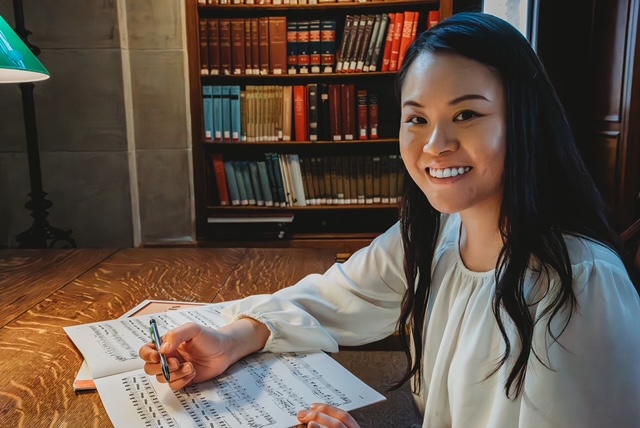
Ying was brought on the project to consult on its development and produce the musical tracks needed for classroom teachers to utilize the materials in the syllabus. The design process of “Kinder Notes” included first choosing and writing educationally relevant pieces that follow a specifically designed set of steps, such as introducing a new note at the right time and in the right way. They then needed to choose the purpose of each activity to be introduced, for example training the ear or sight-reading notes.
Ying would then produce a track for each activity using her in-the-box production techniques. The tracks were designed to be highly interactive, so children will want to sing and dance along to the music, and they include plenty of repetition to reinforce each concept.
“Without the music recordings Tessa created for the “Kinder Notes” curriculum, we would not be able to complete the activities in the course. There’s a lot of singing and movement activities, and the recordings are designed to help to reinforce the children’s solfège and pitch training. It also teaches them to keep on the beat,” explained Rosy Chua while discussing how “Kinder Notes” tailors music education to fit best practices for engaging younger children.
“By using Tessa’s recordings that she thoughtfully arranged and recorded using appropriate pedagogies for group activities, my students reap the benefits of group learning,” she continued. “This is so important at their age because it teaches them teamwork and helps to build their social skills. I am a firm believer of training these skills at a young age because it is so important for laying the musical foundation.”
Innovating music education content delivery online
Another example of how Ying is reshaping the industry is through her work with leading sheet music publisher and saxophone lesson video tutorial creator KB Sax Lessons. This partnership cemented her place as an innovative music education content creator, particularly in the online space, as she married traditional best practices with technological advancements.
Founded by professional saxophonist Kevin Busse, KB Sax Lessons began as a music transcription and publishing company. In 2016 they brought Ying in to help them elevate the quality of their product by having her consult on the creation of videos, tutorials, and backing tracks for their audiences to play along to.
With Ying’s help, they grew to become number three on SheetMusicPlus’s “Top Publishers for Digital Sheet Music Downloads” list in 2019, outperforming popular publishers like Alfred Music. As of 2023, KB Sax Lessons continues to hold its place as one of the “Top 99 publishers” on SheetMusicPlus.com.
Thanks to Ying’s guidance, which advised them to offer a wide variety of notated transcriptions, accompanied by the content on their Youtube channel, such as saxophone videos of popular pieces, KB Sax Lessons was able to scale-up. Their model is to first release the notated transcriptions for purchase, then collaborate with Ying to film saxophone tutorial videos of exactly how to play these transcriptions. Next, they give a performance along with the background tracks Ying arranges and performs on a variety of instruments to give listeners an example.
Part of what drew Ying to this project was the innovative way it furthers music education. “I was excited to learn about how other music educators were utilizing platforms such as youtube to deliver content in a multimodal way,” Ying explained. “The internet’s reach is truly amazing and its potential uses for music educators is in its infancy.”
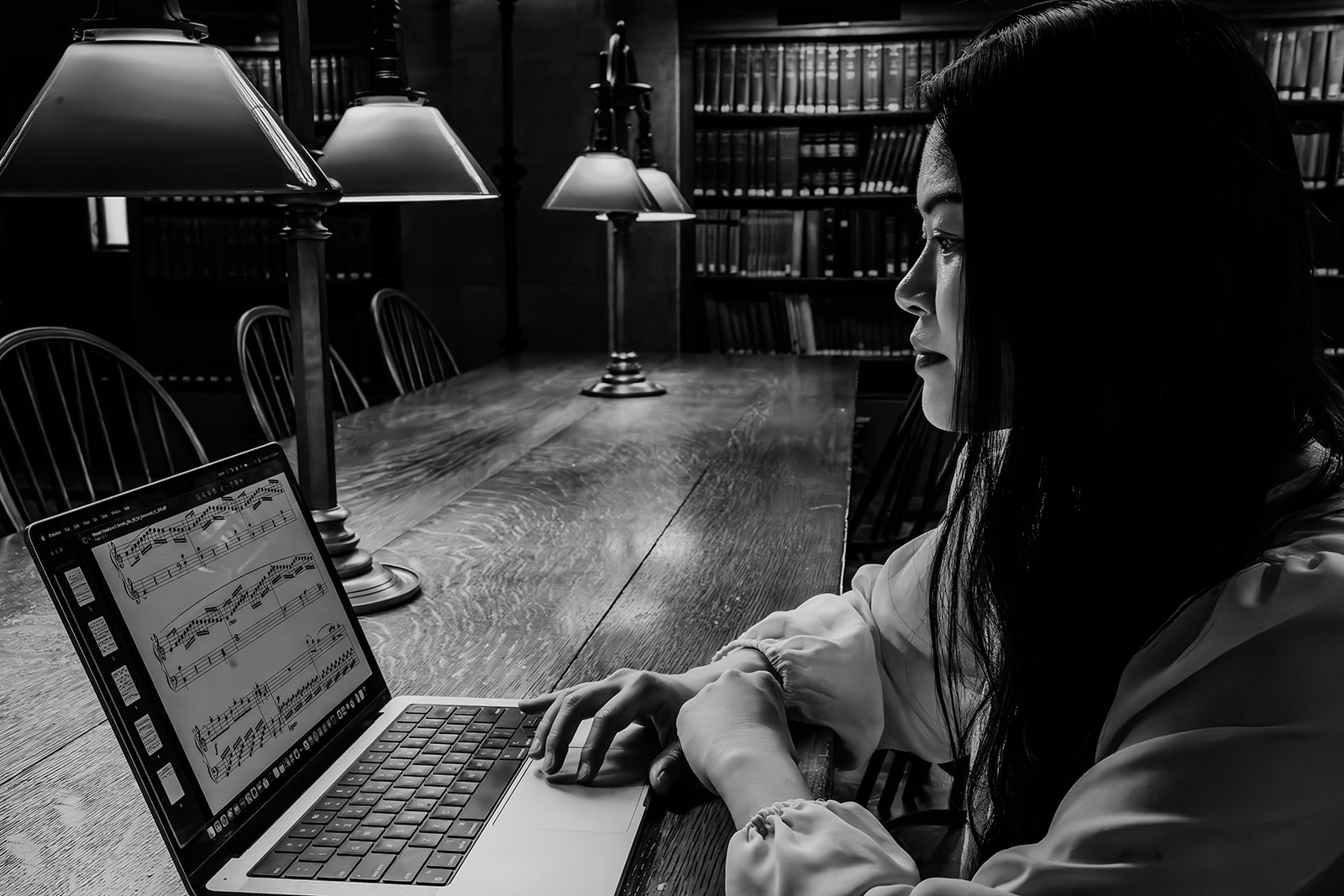
Tessa Ying has since built upon this model on her own YouTube channel, Tessa Ying Music, which she started in 2022. The channel is an extension of her production company founded in 2018 and includes original releases, performances, and piano playing tutorials. Ying’s channel serves as a study in innovative best practices for music education content creators, garnering over 100,000 views of her 40 music videos in only a year.
Using what Ying calls a holistic approach to music education, she focuses not only on the subject matter of her lessons, but also on the well-being and continual improvement of the learner. Informed by best practices in music education psychology for creating a positive and engaging learning environment. Her ethos and teaching methods give particular importance to student’s motivation, self-efficacy, and the role of emotions in learning. Compared to the endless “scroll traps” of typical social media, her content motivates people to get up, gain a new skill, and improve themselves.
The true innovative genius of her channel is the multitude of ways she presents content to her audience. This includes creating audio and visual learning aids, as well as composing level specific sheet music arrangements to accompany her piano video tutorials. While a lot of popular songs have sheet music available, Ying found them unsuitable for her audience’s skill level and abilities, creating a mismatch that would often frustrate her students.
“People have varied learning styles and preferences, making content that is accessible and inclusive takes this into account. This, in turn, makes music education more effective, helping students progress faster and stay motivated,” explained Ying.
“Some people prefer written materials, while others do better with audio or visual content. That’s why I create and share supplemental sheet music for my audience to read, pairing them with my video tutorials.”
The challenges and opportunities of tailoring music education content to learner’s skill levels
It’s hard to overstate the expertise needed to create curriculum and supplementary materials, such as videos, tutorials, and sheet music of original releases and existing songs tailored for different skill levels. In addition to needing to have a deep mastery of musical theory, composition, transcription, and notation, the composer also needs to have a working understanding of musical education concepts and pedagogies.
For example, when adapting sheet music for their students, a music educator must be able to analyze existing sheet music and identify elements that may suit or challenge their students’ skill level and developmental stage, and make changes accordingly. They also will need to be able to know how to break down complex concepts into smaller, manageable parts and design instructional strategies that align with their students’ ages and learning styles. To accomplish this, music educators need to be able to quickly assess the difficulty of a piece of sheet music and determine if it aligns with a student’s playing and music reading capabilities.
Research has shown that learning to play an instrument has numerous positive cognitive, social and emotional, as well as cultural effects, so having programs and platforms that democratize music education and helps music educators expand their reach benefits everyone.
It is through the combination of content creation that is accessible and inclusive, non-discriminatory and user-friendly, that Ying has been able to successfully innovate music education curriculum and delivery. But most importantly, with the success of the projects she spearheads, lending her technical expertise and musical acumen, Ying has been able to achieve her ultimate goal. Sharing the joy of music with the masses.
“Music provides you the greatest joy when you play it,” Ying said. “Through rethinking how technology is used and lessons are delivered, music educators can help everyone, regardless of their circumstances or skill level, have the chance to learn to play music.”

 Tinsel Town News Now