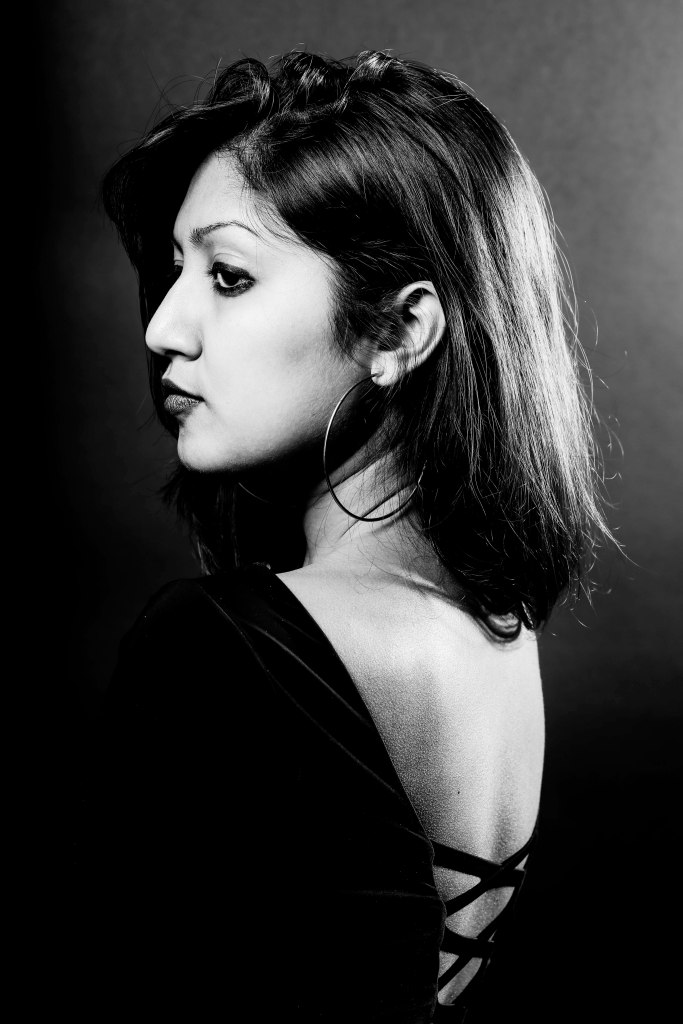
One of the greatest challenges for a working artist is finding a balance between their commercial projects and their personal creative projects. Photographer Nilangana Banerjee, who’s originally from Mumbai, India but is currently based in Los Angeles, CA, is one of the rare individuals who has managed to establish an inspiring career as a successful commercial photographer who continues to produce powerful personal projects as well.
As a commercial photographer Banerjee has shot for massive brands including Forever21, Nordstrom, GLAM LA, Walmart, Urban Outfitters, Beauty Influence, Hanhoo, Masqueology, Ross, Olivia Care, Dr. Skin Feed and more. In between shooting for international clients, she is also the in-house photographer for the fashion brand Jill Roberts, as well as the beauty and lifestyle company Beauty Architects. At the same time Banerjee maintains a relentless level of dedication to shooting her personal creative projects, for which she’s gained extensive international praise.
For Banerjee, balancing a demanding commercial photography schedule and maintaining the energy and creativity to continue shooting her personal vision is all about time management and keeping the inspiration flowing.
“I read, research and undertake creative writing of the topics I want to work on in the near future, in order to line up my projects. This allows me to stay engaged and motivated to retain my creative edge and keep productive,” explains Banerjee.
“I also make sure I shuffle my artistic medium to take the productive break from the photographic medium by parallelly engaging in creating art across different domains like painting, making mixed media projects, composing music, playing the guitar and singing.”
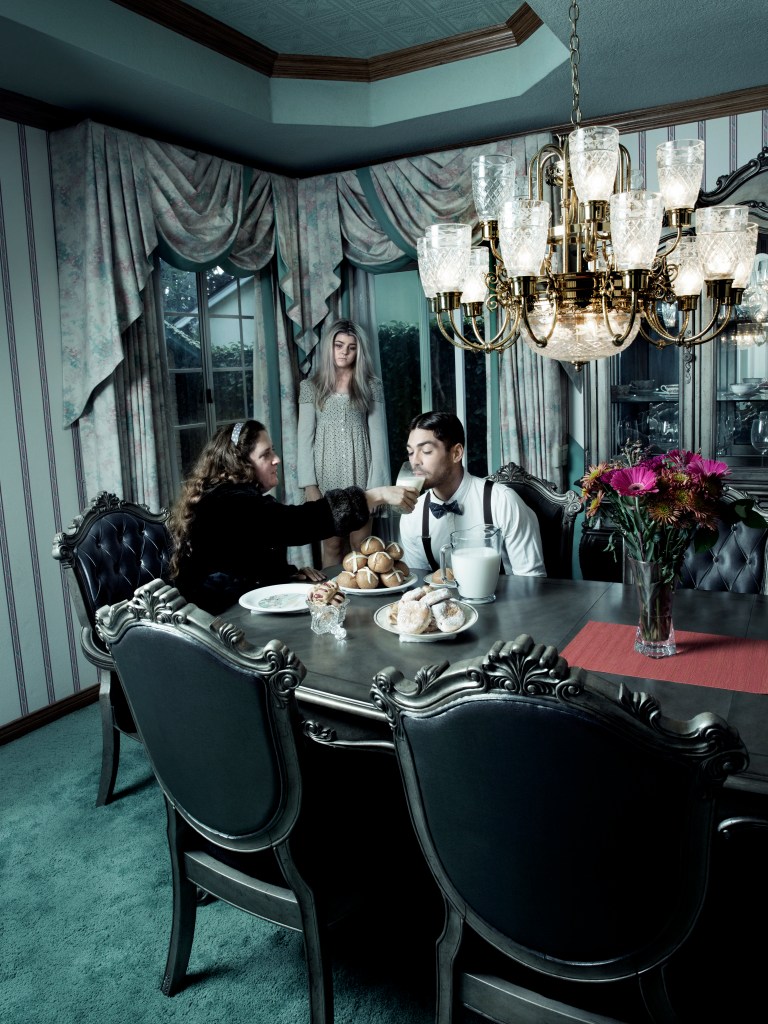
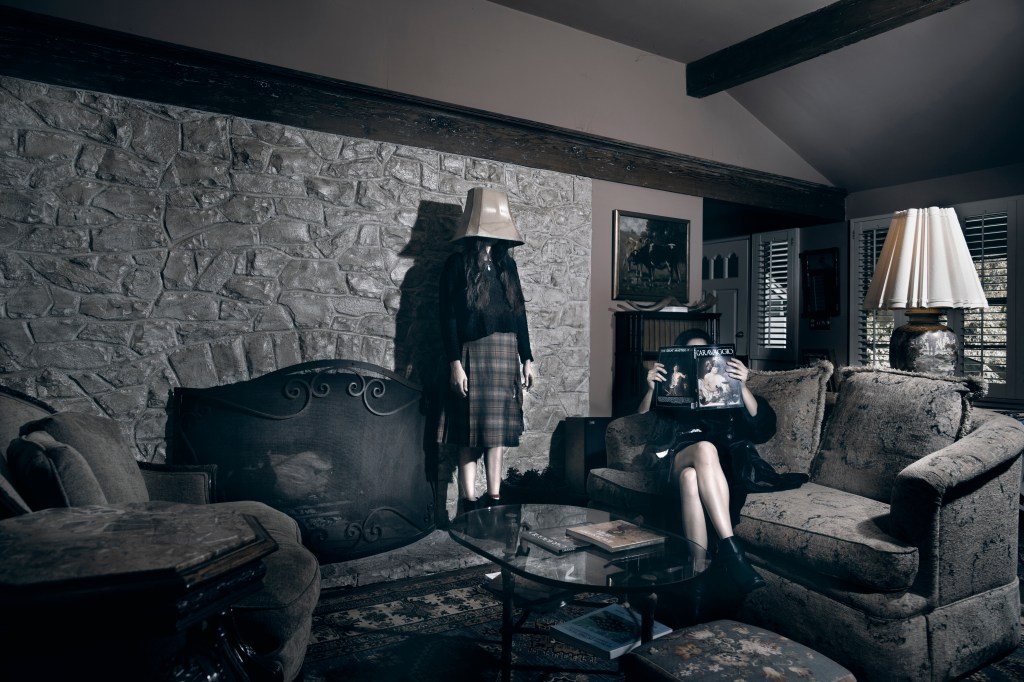
“Hot Cross Buns” by Nilangana Banerjee (winner of the 2017 Chromatic Awards in Conceptual Category at the International Color Photography Contest)
Over the years Banerjee has earned numerous awards for her work as a photographer, which includes being named ViewBug Photo Contest’s 2020 Community Choice Award winner in the Image of the Month, Inspiring Landscapes, The Wonder of the World and Change of Seasons categories, as well as the contest’s 2020 Choice Award winner in the Monochrome Masters Project category, and their 2019 Peer Choice Award winner in the Image of the Month and Emerging Talent categories. She also earned the 2018 Peer Award in the Fashion category and the Celebrity Award in the Image of the Month category from the ViewBug Photo Contest, in addition to being named the 2017 winner of the Monochrome Awards (conceptual category) at the International Black and White Photography Contest, the International Color Photography Contest’s Chromatic Award winner (conceptual category) and many more.
Banerjee is lauded for her creative eye and her ability to capture photos that lead viewers to think deeply about the subjects she tackles– such as social issues and those concerning mental health.
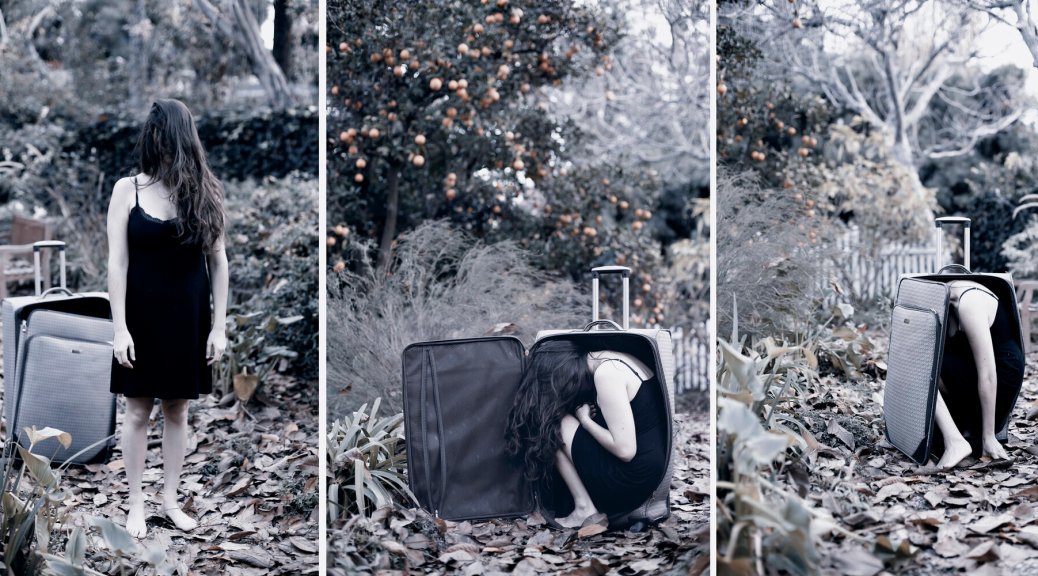
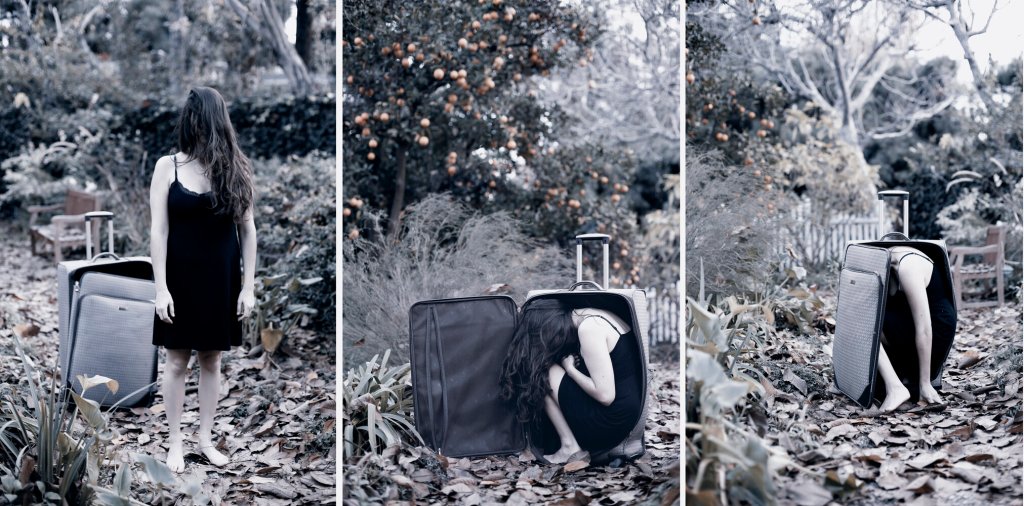
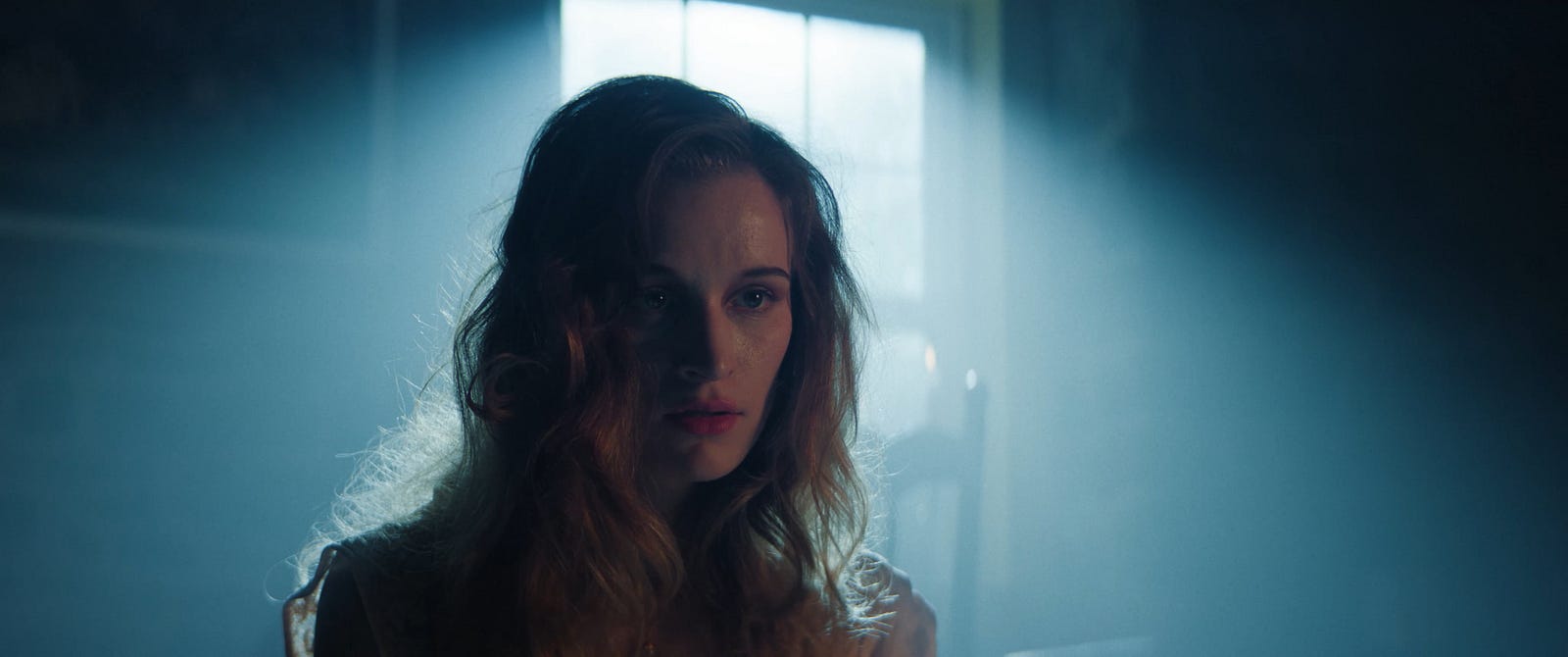
One photo series that has made Banerjee stand out in a big way is her open-ended narrative project “The Selves,” which focuses on the psychological craving people have to become an ideal individual and the utter dissatisfaction they experience when judging their existing self to be somehow less than ideal.
“The Selves” by Nilangana Banerjee
“The Selves,” which Banerjee is continually expanding, was featured in the 2017 Photo Ville global exhibition in Brooklyn, NY and the Dark Arts Exhibition at the Squid Ink gallery in Los Angeles, CA, as well as by the California Council of Arts and at the Black Box Gallery in Portland, Oregon.
“The series ‘The Selves’ is an artistic manifestation of the internal dialogue… a conflict an individual has with their inner selves in the process of choosing who they truly are or who they shouldbe,” explains Banerjee.
“The message of this series is simple– it aims to provide a face to the abstract psychological headspace of an individual plagued with the necessity to fulfill the un-demanded and unwanted responsibility of being the ideal self.”
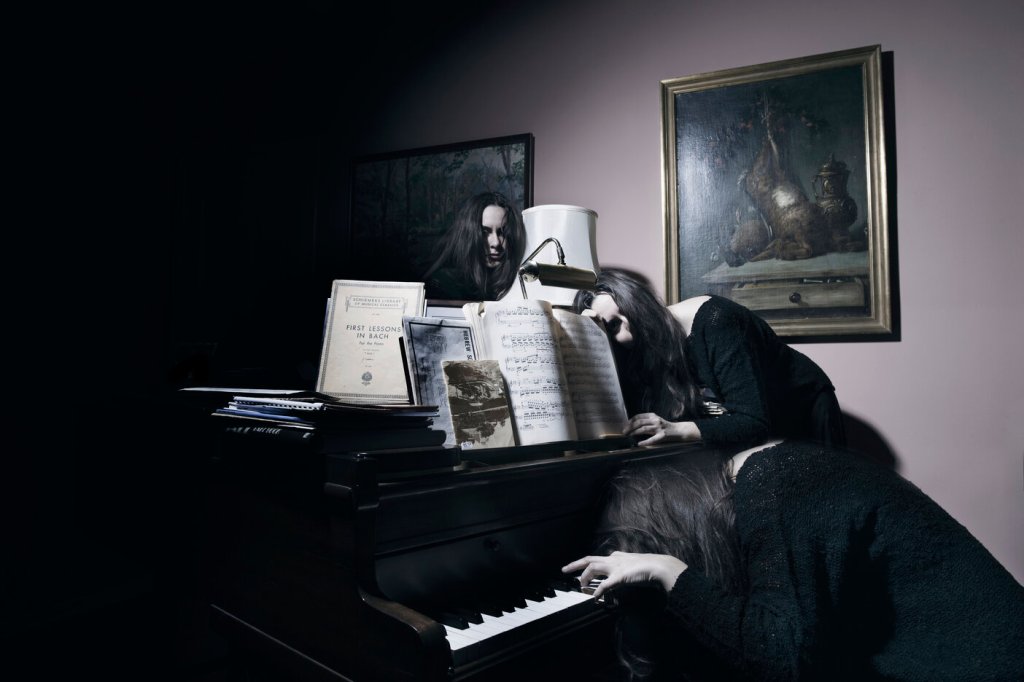
“The Selves” by Nilangana Banerjee
Through Banerjee’s lens and visionary art direction, “The Selves” captures the sense of exhaustion and self-loathing that ensues when a person is entangled in an endless effort to become something or someone different. The series is filled with dark, almost gothic elements, with the photos giving way to the overall feeling that the subjects are trying to submerge parts of themselves.
Growing up in India, Banerjee experienced first hand the way societal expectations lead people to ignore their true nature in pursuit of an ideal, oftentimes at the expense of their mental health.
“I drew my inspiration from being a part of a culture that stresses the need to be one’s ideal self at any cost,” Banerjee explains. “In most societies or generally in the world we don’t see these mental turmoil being acknowledged as real issues unless they present themselves in their aggravated forms.”
As an artist, Banerjee uses her craft as a way to shed light on many of these issues in a palpable and poignant way.
She adds, “Believing in the quote that a picture is worth a thousand words, I feel that it is important to create art that spreads awareness and initiates the conversation about these preliminary issues which is required for the social stir we need to un-plant these seeds giving rise to an unhealthy society.”
“The Selves” by Nilangana Banerjee
Some of Banerjee’s other successful personal series include “The Anomalous,” which was featured on the June 2020 cover of the fashion editorial magazine GMARO, and “The Lullaby,” which has been featured in Daily Style entertainment, Brooklyn PR Girl, Hollywood Patch, So Reckless and more.
“She works harder than anyone else and puts as much into her shoot preparation and execution as she does on her post-production. Her avocation and relaxation is by doing artwork,” says fashion model Daniel Kinske. “Her candid stills are also artistic in her approach to the finishing touches. Her care and attention to detail are the same for all subjects and her direction is very easy to follow and reassuring.”
When she’s not shooting personal projects that carry powerful messages, Banerjee is busy working as the inhouse photographer for Jill Roberts where she is in charge of shooting the fashion brands products, accessories and clothing line. Along with photographing all of the Jill Roberts products, as well as those for the company Beauty Architects, Banerjee’s role as an inhouse photographer includes handling all of the post-production and editing, as well as wardrobe styling and art direction for the shoots.
Banerjee says, “Since I work as an inhouse photographer at two companies while simultaneously dealing with numerous brands and freelance commercial clientele, which all run on present project timelines, balancing the time between the commercial photoshoots while still working on my personal creative fine art conceptual project is the main challenge,”
While the process of balancing commercial photography and personal projects is a tricky one, Banerjee has managed to accomplish just that by creating an efficient schedule, something that she believes, along with self-discipline, have been key to her success.
“Planning and effective time management is key… I am able to maintain this balance by having a very planned timetable for myself that enables me to achieve every single thing I want to accomplish on a daily basis and meet all my goals, without compromising the quality of my work,” she explains.
“I have a disciplined schedule which starts very early and I follow the habit of creating a detailed plan map which I draw out for the following day, the night before. I follow it, religiously every single day and utilize time efficiently. This is what allows me to achieve everything I set.”
While most of us have encountered the image of the artist who struggles to get by as they spend their time doing nothing but following their creative and often sporadic inspiration, it doesn’t have to be that way. More and more artists, like Nilangana Banerjee, are proving that it’s possible to successfully meet the demands of their clients in the commercial sphere while simultaneously maintaining a strong creative output of personal work.
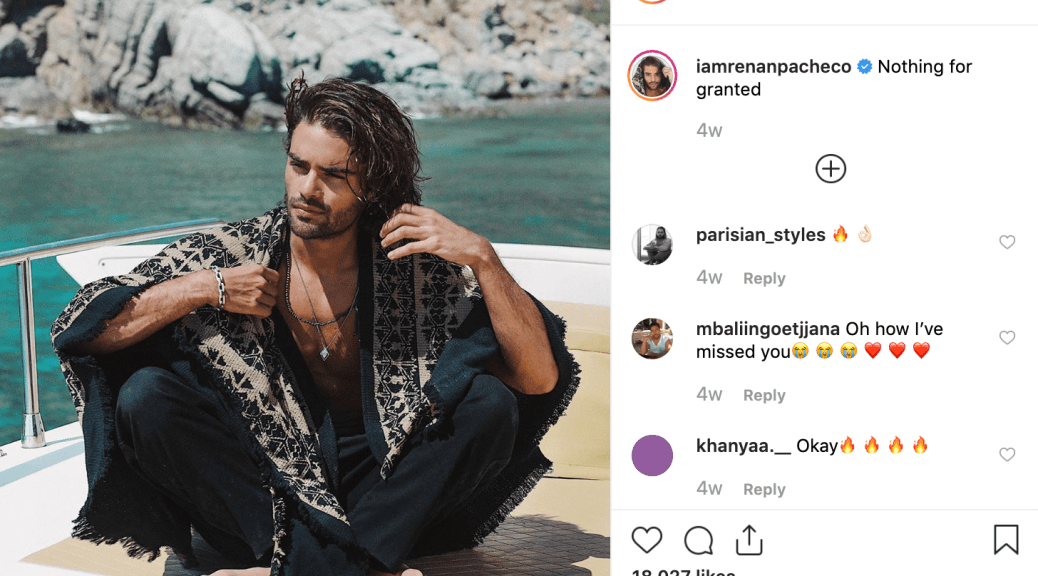
Digital Influencer Renan Pacheco in Mykonos, Greece
As you scroll Instagram, have you ever seen someone beautiful, in an equally breathtaking setting, and wondered how they managed to land hundreds of thousands of followers? These digital influencers indeed have what seems like the best job in the world. By amassing a loyal following, they have the unique position of traveling the world as a digital influencer where their costs are footed by sponsorships from international brands.
Of course, there are millions of exceptionally beautiful faces out there, so what is it specifically that makes a digital influencer stand out? Look no further than Renan Pacheco, a French digital influencer and undeniable heartthrob with thousands of fans across the globe.
I was lucky enough to catch up with this global Instagram sensation to find out what it’s like being a digital influencer, and how he got his start. He is currently nominated for two Monaco Influencer Awards, which will take place in October.
While his insta profile currently boasts nearly 650K followers, Renan was dazzling cameras long before he made his way into his incredibly profitable career as a digital influencer, where he admits that he often earns “a five figure number per post.” Earning a minimum of $20,000 per post is a pretty impressive figure, one that makes it quite obvious that Renan’s reputation for engaging viewers with his creativity is a major profit source for the brands that ask him to come on board as an influencer in their market.
Renan Pacheco for Havaianas Europe
Though he was raised in France, Renan was born in Sao Paulo, Brazil — and you can bet that the combination of his multicultural upbringing and looks work to his benefit as an influencer. Renan was first ushered into the spotlight at the age of 14 when he won a modeling competition.
“A friend of mine sent my Facebook pictures to an online contest and only told me about it when I got selected to attend a catwalk in Paris,” Renan recalls.
“Once I got there, I looked around at the other models that were far more experienced and it seemed like they were feeling no pressure or stress whatsoever. We were all competing for some very valuable prizes and opportunities. It was my first time feeling ‘under pressure’ as a teenager and I’m proud I took it head on… Having 650,000 people seeing every day what I’m doing is something young Renan in that contest with an audience of 100 could probably not fathom!”
That seemingly destined contest win led Renan to land numerous other modeling contracts, at the same time while still a teen in Paris, he went on to make a name for himself as an actor. Back in 2014, he starred in a national commercial for Danone, followed by social media campaigns for Zadig and Voltaire, L’Oréal and Jean Paul Gaultier.
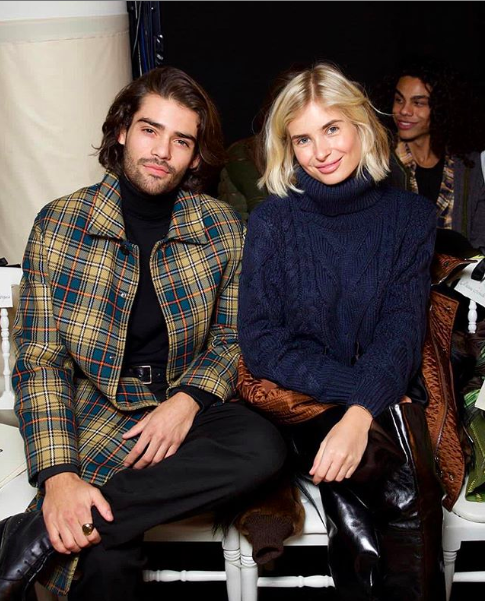
Renan Pacheco with Xenia Adonts at a Jean Paul Gaultier show
Filmmaker Matthieu Khalaf says, “Renan is a ‘one cut’ actor. I rarely ever have to re-shoot something with him or edit things out which is very convenient. Renan is an artist with an engineer-like discipline. He brings creativity as well as punctuality, discipline and work ethic which inevitably compounds to putting him ahead of the pack.”
Over the past few years Renan has played leading roles in films such as “Partons, dans un baiser,” the crime series “Falco,” and the French hit “Nos Chers Voisins,” where he took on a comedy role as the love interest of the lead character. And his ease as an actor and model have definitely lent themselves to his skill as an Instagram influencer.
As Instagram grew so did brand interest in what Renan had to offer. His first contracts were for L’Oréal and French footwear giant Courir.
“I had to post about them on Instagram. Instagram was a very new tool at the time, and my follower count being only in the low 5 figures, the required posts were made as a verbal request,” recalls Renan. “No one thought at the time that there would be written contracts for this one day! My first written contract for an Instagram post was for Kapten & Son, a famous eyewear company.”
For Renan there are undoubtedly perks that include traveling the world, attending posh parties and awards ceremonies, and making a pretty penny for posting on behalf of brands. But that doesn’t mean he doesn’t have to put effort into what he posts. He has a unique understanding and awareness of what his audience wants to see and makes incredible efforts to deliver. On top of that, he has to bring a high level of creativity to the images and stories he posts in order to serve the high-profile brands that support him.
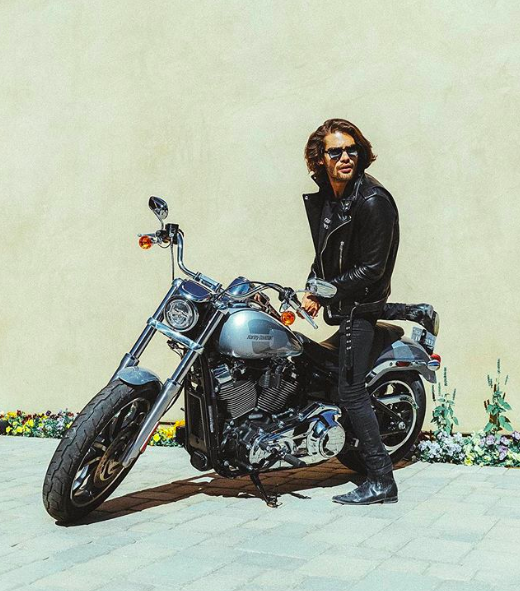
Renan Pacheco for Harley Davidson
In terms of blending media exposure and creativity into his posts, Renan explains, “My pictures must take both criteria into account. ‘Media exposure’ means taking into account what my community wants to see. ‘Creativity’ means including the story the brand wants to tell. Often, the picture is what will satisfy the follower, and the caption is what will satisfy the storytelling.”
While a photo can say a thousand words, Instagram photos still require some catchy and thoughtful captions, and Renan is a pro at coming up with tidbits that will keep his audience engaged.
“I love reading and listening to audiobooks. I take active notes and like to share them as short nuggets of wisdom to complement my pictures. My followers gave such fantastic feedback that I decided to start posting pictures that complement the caption and not the other way around,” admits Renan.
“Approximately 1 out of 5 of my pictures are now about a story, a painting, an artist, a movie etc. It’s challenging but very rewarding and my community has definitely responded with the best feedback.”
On top of creating engaging posts to serve both the brand and the audience, one of the reasons that Renan has developed such a loyal following is the fact that he interacts so consistently with his audience. For most us, responding to countless direct messages and comments from over 650k followers would get exhausting, but Renan admits that is something that he actually enjoys.
Another aspect of Renan’s ability to maintain such a strong following and keep his career moving forward is the fact that he doesn’t just support any old brand that approaches him, for him remaining authentic and supporting brands that he can whole-heartedly get behind have been key.
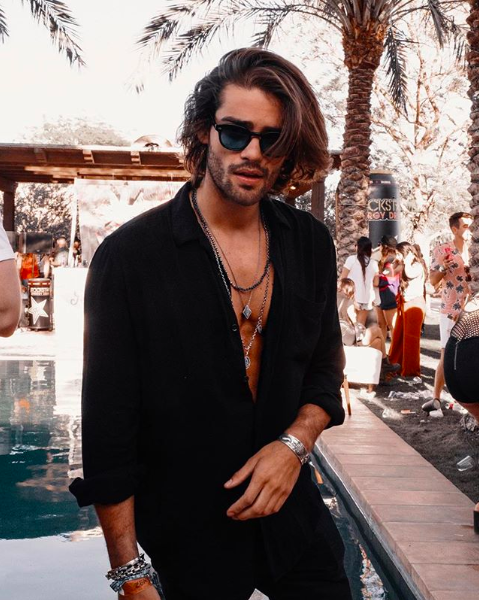
Renan Pacheco at a Vampped Event in Palm Springs, CA
“If I don’t like the product, service or storytelling, I have to pass regardless of the financial compensation. People have a sixth sense for detecting what is truthful and what isn’t, and particularly now, I I think a big part of my success is always focusing on my follower experience.”
Renan is an avid traveller and brilliant visual storyteller renown in the social media world for his hard working spirit, integrity, and exceptional track record with leading brands. Outside from all the glitz and glamour, he admits that at the end of the day his favorite part of his career as a digital influencer is, “Meeting different people from all walks of life have been the most rewarding moments across my travels. Their stories, their lessons and most often their pains have been the building blocks for my life since college and I don’t think any other experience could be a substitute to that.”
Italian Actress Francesca Ravera shot by Mario Buscaglia
Italian actress Francesca Ravera, who has made a huge mark for herself in the U.S. film and theater industry over the past few years, recently brought her talents back to her home country where she wowed audiences with her lead role as Beth in the acclaimed production of “The Way We Get By.”
After a hugely successful run at the Urban Stages Theater in New York earlier this year, “The Way We Get By” embarked on an Italian summer tour with performances in Milan, Turin and Genoa.
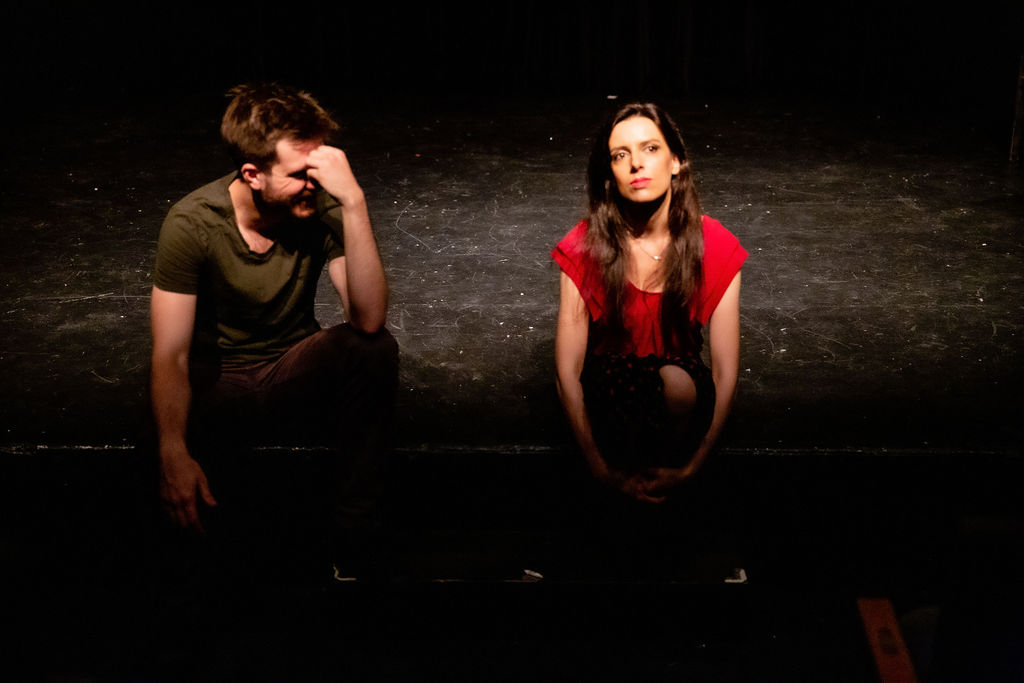
Written by American playwright Neil LaBute and directed by Kim T. Sharp, “The Way We Get By” revolves around Beth, played by Ravera,and Doug, two young attractive singles who meet at a drunken wedding reception and end up having sex at the apartment Beth shares with her control freak roommate. However, the intimacy that commences between the two is far from organic, and the underlying root of that is one of the main complexities of the story that makes it so intriguing.
“Beth is a sweet and sensitive girl who has been hurt by fleeting flings with boys who only wanted her for her body. Used to being seen as an object or a trophy, Beth tries to connect with Doug the only way she knows how- through seduction,” explains Ravera.
“I enjoyed exploring her needs, her desire to connect with Doug and be free to love him. I dug into her dreams, fears and contradictions.”
After waking Beth up with his insomniac fidgeting, Doug deflects her sexual advances and she reveals that they share a surprising bond from the past. Beyond this startling discovery, we also learn that Beth is dealing, or in the moment, not dealing, with a riddled sexual history where, having been previously objectified by men, she’s learned to rely upon her sexuality as her only way to connect.
“The role [of Beth] called for an actor who could commit to the moment while still having a complicated, conflicting history she needed to access as the action shifted,” explains director Kim T. Sharp.
A sexy and fast-paced rom com about love, lust and life, there’s no doubt about it, Francesca Ravera was the perfect actress to play the starring role of Beth in the production.
“It was fabulous to see [Francesca] unlock one moment after another as she found the foundation of Beth. When the action shifted and Beth was faced with her past it was both surprising and, yet, understandable. Francesca brought Beth’s two worlds together in a richly satisfying way.”
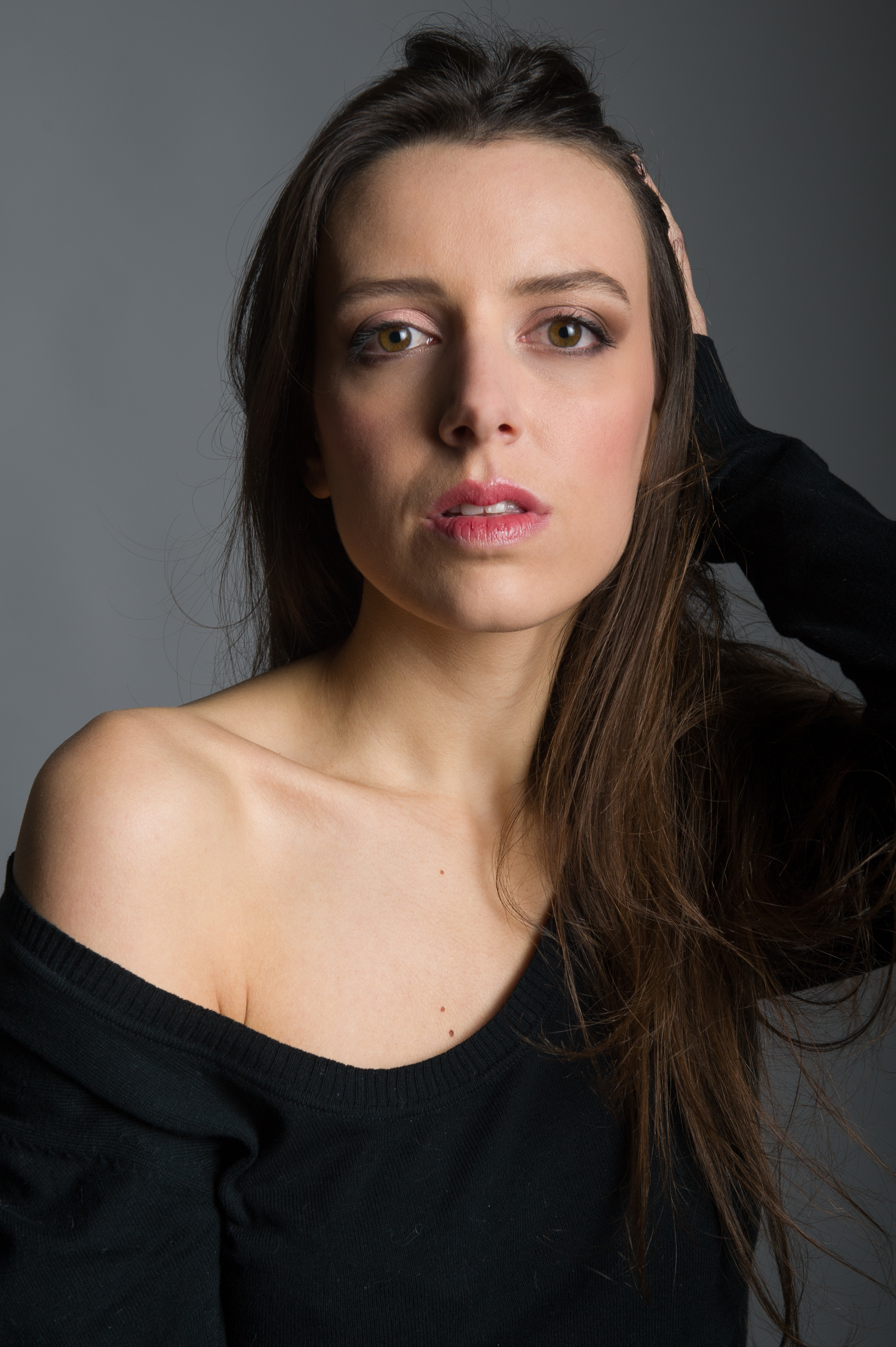
Actress Francesca Ravera shot by Giada Lefebvre
“The Way We Get By” depended heavily on Ravera, and her performances in both Italy and the U.S. did not disappoint.
“In addition to her talent and commitment, she possessed a presence on stage. ‘Presence’ is an elusive quality that keeps the audience engaged even when the actor is not talking, moving or doing business; the audience is simply drawn to the character,” says Sharp.
“In my experience as a director, it is a rare and intriguing quality that even very talented actors don’t have access to. Francesca’s presence was an essential part of the success of the project.”
For Ravera, who moved to the States a few years ago, where she has little expectations other than to complete her training and become a better actor, coming back to Italy with the production of “The Way We Get By,” which was performed in English, is like coming full circle.
“When I moved to New York I was focusing on what I had to give and offer, as a person, and as an actor. Little did I know back then that so many offers would come my way here in the U.S.,” admits Francesca. “‘I began feeling, every day, overwhelming gratitude, which translated into an urge to give even more. It was about then that this amazing opportunity opportunity came my way, and I was able to bring my work, and the work of an incredible American Playwright, to Europe, and perform it in its original language.”
In addition to illustrious list of powerful theatrical performances, Ravera has been praised internationally for her film work. She recently took home numerous Awards for Best Actress from the Oniros Film Awards, Care Awards, the Diamond Film Awards, Best Actor Award, Milestone Worldwide Film Festival, Mindfield Film Festival Albuquerque, Five Continents International Film Festival, and Los Angeles Film Awards for her titular role in the dramatic film Claire.
Actress Francesca Ravera shot by Claudio Catania
Directed by Andrea Silvestro and produced by Adrama, which Ravera previously worked with on the film Ulysses: A Dark Odyssey, where she shared the screen with four-time Primetime Emmy nominee Danny Glover, Claire tells the story of a young woman who is trying to hold on to a failing relationship despite knowing deep down that her fiance no longer loves her.
Claire screened in July at the at the Venus Italian Film Festival in Las Vegas, where Ravera took home yet another Award for Best Actress, as well as the at the Chain Film Festival last month.
Up next for the actress is the production of Canadian playwright Lucia Frangione’s “Espresso,” which is slated to run in New York in 2020.
Earlier this month “Espresso” had its first NYC premiere via a staged reading at Urban Stages Theatre in NYC directed by Kim T. Sharp, who directed Ravera in “The Way We Get By,” where it earned powerful and positive reviews.
UK media outlet The 730 Review writes, “Clever banter and meticulous metaphors abound in Ms. Frangione’s bold and brilliant script, yet no word ever feels misplaced, forced, or indulgently included for the sake of ostentatiousness. The actors confidently give convincing performances, no matter the role they are playing in any given moment.”
Jesse Koehler & Francesca Ravera in the Staged Reading of “Espresso” by ACV Photography
“Espresso” revolves largely around Ravera’s character Rosa Dolores, a first generation Canadian, and her Italian family. In fact, Ravera takes on three pivotal and starkly different roles in the production, the first as Rosa, the co-narrator of the story and the daughter of the now hospitalized patriarch Vito, her grandmother Nonna, and her stepmother Cinzella.
Ravera says, “This story is inspired by the playwright’s life, and I could feel this. ‘Espresso’ is a generous and beautifully written gift, filled with humanity and passion. It makes you laugh, and cry, and ache and think, and hope. It’s a blessing for me to have been cast in it.”
Ravera plays opposite Jesse Koehler, who interchangeably takes on the roles of Vito, Jesus and Amante, who serves as both the Holy Spirit and a symbol of Eros.
A passionate story about family values, religion, oppression and transformation centered around three women very different women in need of deep healing, “Espresso” is definitely one production theatre goers won’t want to miss.
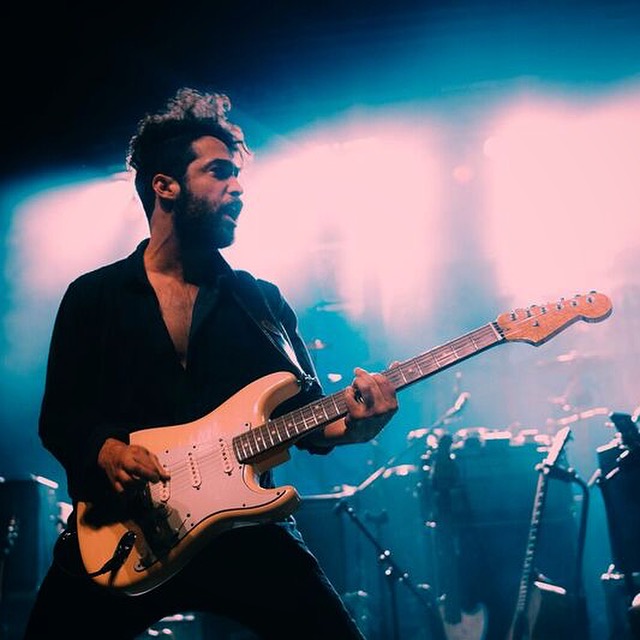
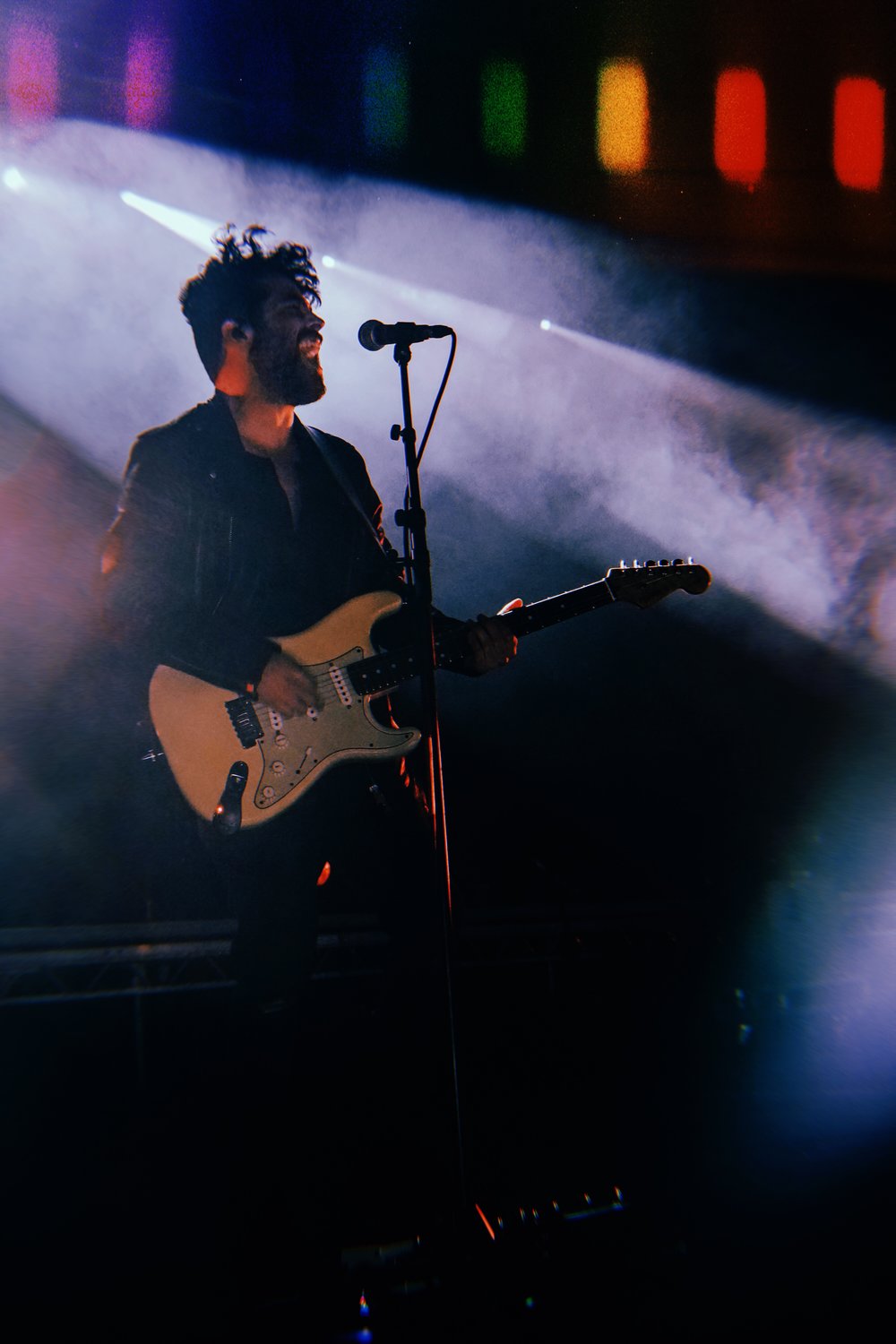
While the frontman in a band usually gets most, if not all, of the media’s attention, the bands we love would not be what they are without the integral contributions of the rest of the members. When it comes to the guitar stylings and overall musical contributions of Israeli musician Agam Timor, his are ones that deserve exponential recognition.
You may know Timor as the lead guitarist for the Barns Courtney band, whom he’s been touring the globe with for the past year. Signed to Capitol Records, the band has skyrocketed to international acclaim in recent years with sold out shows and several of their singles topping the charts.
“After so many gigs together, almost every night, it creates a really warm environment, like a family,” says Timor.
Timor’s rhythmic fluidity, precision on the guitar, and mesmerizing stage presence have proven to be a powerful addition to the Barns Courtney band, just as they have for a long list of other bands over the years. While Timor’s talent has helped bring him into the spotlight, his success didn’t just happen overnight. It’s the result of years of dedication and an inexhaustible passion for what he does.
Growing up in Tel Aviv, Israel, Timor discovered his love for music at the budding age of 6. Quickly picking up the violin, piano and saxophone, his passion for music grew, but it was upon discovering his connection with guitar that he found his true love.
“Since I was 12 I never put the guitar down,” admits Timor. “I immediately fell in love with it.”
Most Israeli citizens living in Israel serve in the military at some point in their lives, and while Timor is no different, he served the country in a rather unique capacity. During his three year military service he was the guitarist and arranger for Israel’s military band.
Timor says, “I enjoyed the fact that although people from different places can be very different, love different things and going through different experiences in life before joining the army . They can still go through a similar experience while watching the show, at the end of the day, people want to feel something. They want to feel the energy and forget about the tough day they had on the base”
After completing his military service Timor was free to take his musicianship to new heights and it wasn’t long before he became a national sensation in Israel. He would go onto share stages with some of the country’s most idolized talents, including singer and actress Ruthi Navon, Momi Levi and Moran Mazor, who competed in Israel’s Eurovision Song Contest, Chen Aharoni, who appeared on The X Factor UK, The X Factor Israel and Kokhav Nolad (Israel’s version of American Idol), vocalist Meital De Razon, and many more. Timor would also go on to perform as the house guitarist on the hit series The X Factor Israel, in the hit musical “Mary Lou,” as well as on Sports Channel 5 Israel, where he played the morning show hosted by Slutzki and Dominguez. Timor actually played the morning show on more than one occasion, often being called in to play a few songs each time with a new rising artist, and then chatting with the hosts on air about life and music.
Agam Timor shot by Arielle Kassulke
“I assume that any musician that keeps practicing and listening to music eventually would play great. The difference between being a professional and an amateur is pretty much the attitude and the amount of dedication one has to the project, always aim higher and keep evolving your craft,” says Timor.
Though there is definitely substantial truth in the age old saying ‘practice makes perfect,’ few will make it quite as far as Timor has over the span of his short life no matter how much they practice. At age 26, he has already proven himself to be among the world’s top guitarists. With his virtuosic talent, it’s not surprising that Timor was accepted to the Berklee College of Music, one of the most competitive music schools out there. Not only was he accepted, but he was given a scholarship, a rare award that few receive, and in 2018 he went on to graduate Summa Cum Laude.
While Timor’s strength and versatility as a guitarist has led him to be tapped to play with a pretty long list of heavy hitters in the music industry, it’s not the spotlight that drives him to perform. Behind the scenes, he is a powerhouse when it comes to writing and arranging music, and he’s used his talents in that area to create music for other artists over the years. In 2014 he worked alongside legendary producer Luis Lahav on the album for artist Or Colenberg.
“For this project I recorded all the guitars and arranged the album with my colleagues Amit Shtriker and Tom Lahav. I will never forget this project and how much we felt involved in the recorded music,” recalls Timor. “The most incredible thing is to add your own personal taste to someone else’s music and watch it become something whole.”
Another project that Timor holds dear to his heart was when he recorded the album Beit-Aba with the artist Doron Raphaeli, the founder of the popular music group Tararam.
“We spent days in the studio working on this album, I especially remember the day when we recorded the guitar solo for ‘Aguim’ that it was so late at night and Doron fell asleep in the control room while the engineer and I finished recording the song.”
With a plethora of cultural influences and experience playing diverse genres such as pop, funk, r&b, blues-rock, gospel, middle-eastern, fusion and jazz, Timor brings the full-package to the table as both a guitarist and arranger.
“When I work with artists, I first try to understand their character and what I can add from my perspective that would complement their music. When I succeed in doing that I feel that’s when the artist is being satisfied the most. Add your flavor to the same field.”
Last year Timor made another huge mark in the Israeli music industry when he was tapped to compose the intro for Omer Adam’s show, which was the first concert to be performed at the Sammy Ofer Stadium and was a sold out success. Having competed on the series Kokhav Nolad, and releasing four hit albums over the last few years, Omer Adam is arguably one of Israel’s most famous contemporary artists.
Timor admits, “I got amazing comments about the musical intro to his show and how much it enhanced Omer’s character as an artist.”
Though playing in shows such as the celebrated Israeli musical “Mary Lou” have led Agam Timor to become a celebrity in Israel, and his role in the Barns Courtney Band has led him to play in front of hundreds of thousands of fans across the globe, what Timor enjoys most is the simple art of creating music.
Guiding his life and career by the famous quote, “Do what you love, and you will never work a day in your life,” Timor is an inimitable pro at doing what he loves and doing it in a big way.
While many of us have seen famous soccer players break into dance in celebration of a hard earned goal on the field or a breakdancer who weaves a few ball tricks into their act, the idea of a performance sport that intertwines soccer skills and dance at a professional level is relatively new. Those in the know refer to it as ‘Freestyle Football,’ and former Guinean soccer player Abou Traore is among the top performers in this amazing discipline.
Regardless of whether he’s performing for street crowds or in front of the audiences of thousands of people attending Luzia, the hit international Cirque Du Soleil show he’s performed with since 2016, Abou Traore moves with flawless style, stamina and grace, and the smile never once leaves his face.
After spending a decade playing soccer semi-professionally for the clubs ES Parisienne, MFC Montrouge, Paris FC and Paris Saint Germain, Abou took his soccer ball to the streets in 2011 and began experimenting with a new style of performance art. Blending his athleticism and technical soccer skills with fluid movement, dance and astonishing choreography, Abou’s innovative freestyle football performances quickly turned him into an international celebrity.
Though being chosen as a lead performer in the mesmerizing Cirque Du Soleil show Luzia has undoubtedly put Abou in the spotlight, his groundbreaking talent had begun earning extensive attention well before he joined the show.
Some of the tricks that have made Abou so exciting to watch are his signature moonwalk move, where he glides across the floor with the ball on his head, and his windmill trick, which is inspired by the eponymous breakdance move, but brings the added difficulty of gripping a soccer ball between his flexed foot and shin– only to move it around to other parts of his body as he flows through the move. Take a look at the video here to see Abou’s windmill trick in action.
When asked what gets audiences most excited, Abou says “It is when I mix breakdance moves with the ball. “Every time the audience is wowed because they don’t think it’s possible. Some people think I have glue on my feet to hold the ball, so I did it barefoot to prove it.”
From the moment Abou began performing on the streets, fans couldn’t get enough of him; and they made sure to spread the word through social media. With onlookers around the world capturing countless live videos of Abou working his magic, his profile rose exponentially.
In 2013 the social media buzz around Abou landed him his first “professional” job when the entertainment company Brazil Fever discovered him through a YouTube video. They signed Abou on as a part of the act and he began performing at high-profile events across France as a lead member of the Brazilian Samba performance troupe. At the same time, he was consistently being invited to perform regularly on major television shows airing across multiple continents alongside his brother Iya Traore, who is another key figure in the discipline of freestyle football.
Becoming a celebrated figure on the small screen, Abou wowed German audiences when he performed on the popular RTL TV series “Unschlagbar” aka “Unbeatable,” a challenge series that earned No. 1 ratings and averaged 3.89 million viewers per episode. Japan got a taste of his impressive skill when he performed on Nippon TV, and his presence in France grew even more when he was invited to perform on NRJ12’s hit series “Le Mag.”
Moving from performing for street crowds to international audiences through major televised events, Abou’s journey is a rare and inspiring success story. Since 2016 he has continued to impress audiences across Canada, the U.S. and Mexico with his agility and magnetic stage presence through his performances in over 700 shows with Luzia. He even performed in front of Mexican President Enrique Peña Nieto, and last year he was invited to speak at Google about the show.
Inspired by rich Mexican culture, Luzia weaves elements of light (luz) and rain (lluvia) into it’s succession of highly stylized acts, and when Abou takes the stage, audiences know something special is coming. The only performer on stage at the beginning of the act, Abou playfully moves around with his soccer ball revealing a little sliver of his skill.
He says, “The audience is very interested because at first, there is no music, and they are not ready to see football in a Cirque show.”
He is then joined by football freestyler Laura Biondo. Together, the two performers enact a scene of a boy and girl playing ball in the street, each inspiring one another to push their skills further, followed by their solo performances. A soundtrack of laughter and children’s voices plays in the background, and a palpable feeling of wonder and joyful innocence is felt as they move across the stage. The 38th show that Cirque Du Soleil has put on since 1984, Luzia has received rave reviews.
In promotion of the show, Abou has performed live on the Toronto morning show “Breakfast Television,” FOX 31 News in Denver, Colorado, “The Late Late Show with James Corden” on CBS, Access Hollywood Live, and more. He’s also been featured in a plethora of popular newspapers and online platforms including Montreal’s Metro, The Chicago Tribune, The Globe and Mail, The Orange County Register, Redmond Reporter, 303 Magazine, and countless others.
Since the beginning of human history there has been a drive to use performance as a means of expression and a way to unite communities, and that’s no different today. Right when we think that we’ve innovated as far as we can, someone like Abou Traore breaks onto the scene and shows us something completely new and previously unimaginable. Though it is safe to say that most people around the world probably didn’t know much about this performance discipline prior to Abou Traore’s arrival on the scene, with all the attention he’s received from media outlets across the globe for his powerful performances over the last few years, he’s turned freestyle football into something that is now recognizable on a global scale.
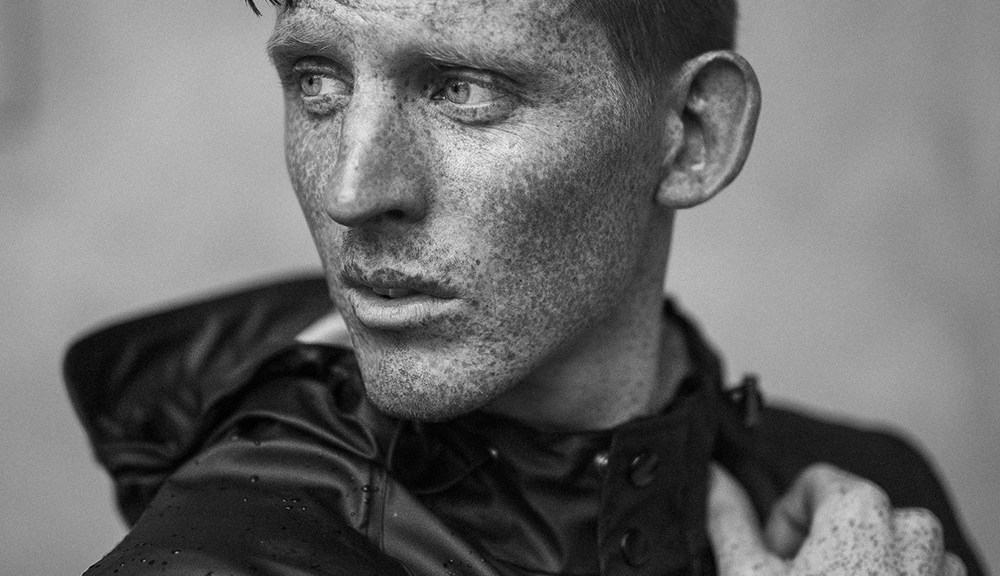
Hailing from Copenhagen, Denmark international actor and model Andreas Holm-Hansen was born with perfect bone structure, fiery red hair and a freckled and fit physique that effortlessly turns heads.
Over the last few years redheaded models with a healthy dose of freckles have gotten a major boost in the eyes of the public thanks to the work of leading photographers like Michelle Marshall, Maja Topcagic and her 2015 photo series “Freckled,” and Keith Barraclough’s “The Redhead Project,” but the list would not be complete without mentioning the innovative work of Thomas Knights.
In 2014 Knights released the Red Hot 100 book, a photo series that has been called ‘the ultimate bible for hot ginger men,’ and with his good looks and natural red hair it’s not at all surprising that Andreas Holm-Hansen made the cut, which makes him one of ‘the 100 sexiest Red Hot Guys in the World.’
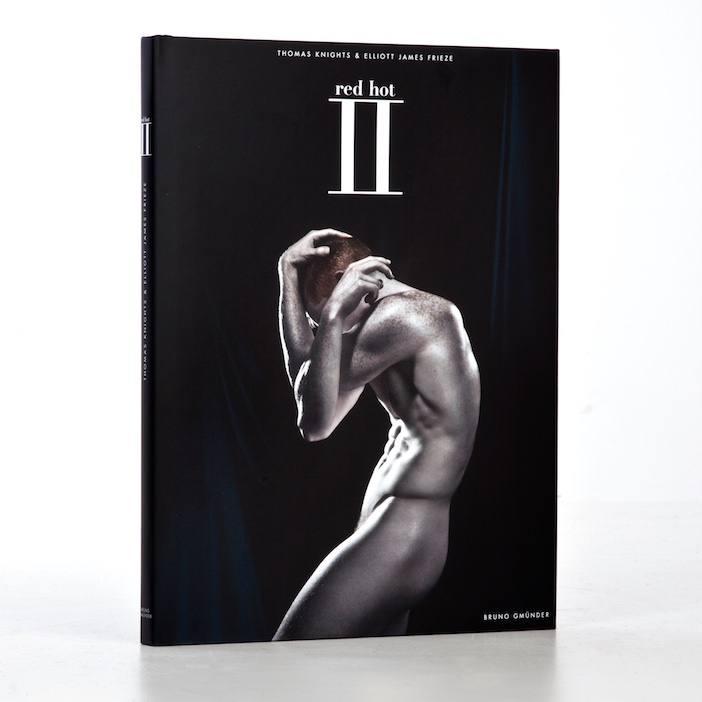
Knights and Holm-Hansen clearly had a successful collaboration as the photographer called him back to shoot his newest exhibition and book “Red Hot II” earlier this year. Not only is Holm-Hansen featured throughout the book, but he also nabbed the cover shot for the “Red Hot II,” which was released in October. You can also check out Holm-Hansen in the highly seductive video that was made to promote the book, which reveals him in all is red headed freckled glory. Anyone who watches the video would find it difficult to say that Holm-Hansen is anything but on fire.
Andreas Holm-Hansen on the cover of Red Hot II by Thomas Knights
In 2012 Holm-Hansen also landed a featured role in the music video for three-time Grammy Award winning artist P!nk’s “Blow Me (One Last Kiss),” which has been astonishingly well-received by fans earning more than 72 million views on YouTube.
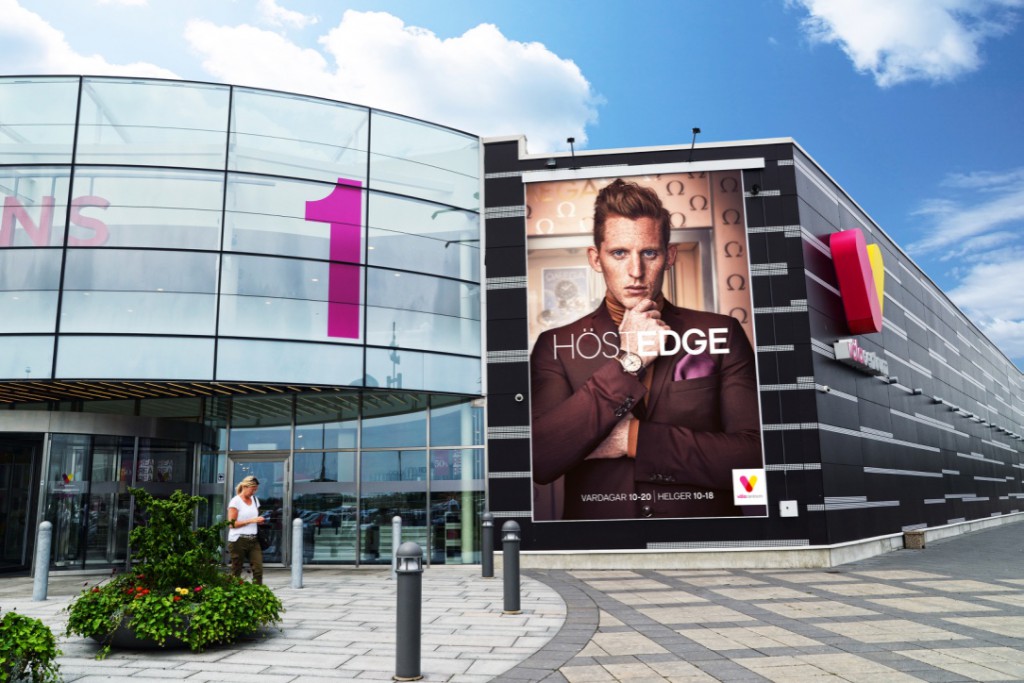
As a model Holm-Hansen’s international appeal has been a driving force in his success. Earlier this year he landed a massive campaign for Väla Centrum in Helsingborg, Sweden; if the local Swedes didn’t know him before, they definitely know him now, considering his face is plastered to the outer walls of the popular shopping center, and he is featured on the cover of the center’s Winter issue of Väla Magazine.
Andreas Holm-Hansen on a billboard at Väla Centrum
From massive billboards to a lengthy list of high-profile commercials, Holm-Hansen’s captivating aesthetic appeal has made him a go-to talent among advertisers across the world. Audiences across Europe will immediately recognize him for his featured roles in popular commercials for brands and organizations such as Miracle Whip, Telmore Play, Eovendo, Synoptik, Danske Bank, Norwegian Airlines, Komplett, The Zulu Comedy Festival and others.
In addition to being featured in a number of magazines such as Tantalum Magazine, Visionarios Magazine, Elléments Magazine and PAF Magazine, he’s also been the face of a number of massive print campaigns including B&O’s H6 Limited Edition, Phoamy, Arbejdernes Landsbank, DSB and Sundhedsstyrelsen’s Stop for 5.
This slideshow requires JavaScript.
While his unique look has definitely put him in the spotlight, Andreas Holm-Hansen has a whole lot more than a just good-looking face going for him. Through a series of lead acting roles in productions such as Benjamin Murray’s crime mystery “The Hit” and “Don’t Bring Guns to a Knife Fight,” Jose Rico’s “Blood Legacy,” Jesper Holm Pedersen’s “Shit Happens” and David B. Sørensen’s “Bellum,” Holm-Hansen has proven himself to be a diversely talented actor who can bring virtually any character to life. His knock-out performances to date have revealed him as the rare kind of actor who is capable of captivating his audience regardless of the genre.
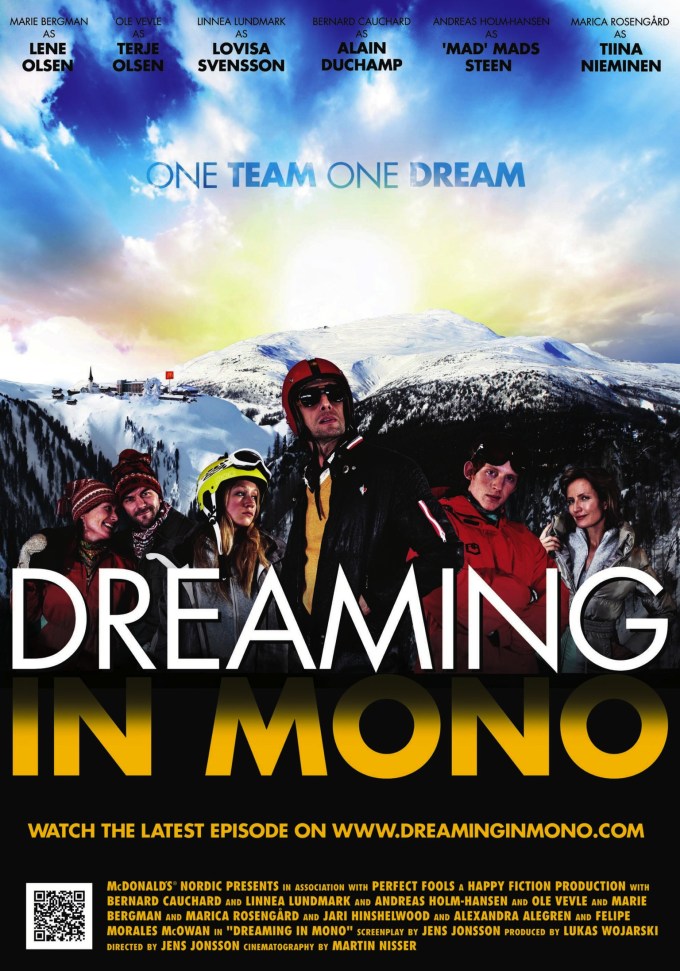
One performance that really stands out though was when Holm-Hansen took to the screen in the recurring lead role of ‘Mad’ Mads Steen in the satirical series “Dreaming in Mono.” Presented mockumentary style, “Dreaming in Mono” follows the rivalry of two Nordic ski champions, one of which desperately wants to break a record on a monoski and starts his own team of underdog skiers who actually think it’s possible, they are Team Monoski!
We first encounter Holm-Hansen’s character ‘Mad’ Mads Steen trying to fix his broken down car in the middle of blizzard wearing nothing but his underwear, furry hat and boots, making it easy to see how he earned the nickname ‘Mad.’ Unfortunately for Mad his skiing skills have something to be desired, which makes total sense considering his prior ski experience consisted of using his ski poles to thrust himself across the flat grass-covered lands of Denmark. It’s not a stretch to say that Holm-Hansen is one of the leading comedy highlights in the series, as we continually watch his character lose his balance and flail uncontrollably down the slope every time he clicks into his skis and sets down on actual snow.
Mad could easily be considered Team Monoski’s awkward rebel, but his constant boundary pushing ways eventually put him on thin ice with his teammates. In fact, “Dreaming in Mono” dedicates an entire episode to an intervention with Holm-Hansen’s character where the team tries to get the brash Dane to curb his unsportsmanlike ways, which leads Mad to huff and puff and storm his way all the way back to his hotel room; but thankfully for the team he comes around in the end.
Poster from “Dreaming in Mono”
Produced by the Swedish production company Happy Fiction and created by the international creative agency Perfect Fools “Dreaming in Mono” was written and directed by multi-award winner Jens Jonsson, who earned the Grand Jury Prize from the prestigious Sundance Film Festival for the film “Ping-pongkingen” in addition to being nominated for two Guldbagge Awards, which are the Sweden’s equivalent of an Academy Award.
The seven episode series was broadcast by four major TV networks in the Nordic countries, with Andreas Holm-Hansen dazzling audiences the whole way through. The series, which was ironically created to promote McDonald’s in the Nordic countries, but rarely, if ever, mentions the fast food chain verbally, also stars Bernard Cauchard (“Superhjältejul,” “It’s My Turn Now”) and Alexandra Alegren (“Gåsmamman,” “Madness of Many,” “Olivia Twist”).
With a rather astonishing list of leading roles in film and television projects, and even more high-profile modeling campaigns already under his belt, Andreas Holm-Hansen is one of the few actor/models we can confidently say will be doting his wide-spread talents upon both industries for years to come, so make sure to keep your eyes peeled for this talented Dane.
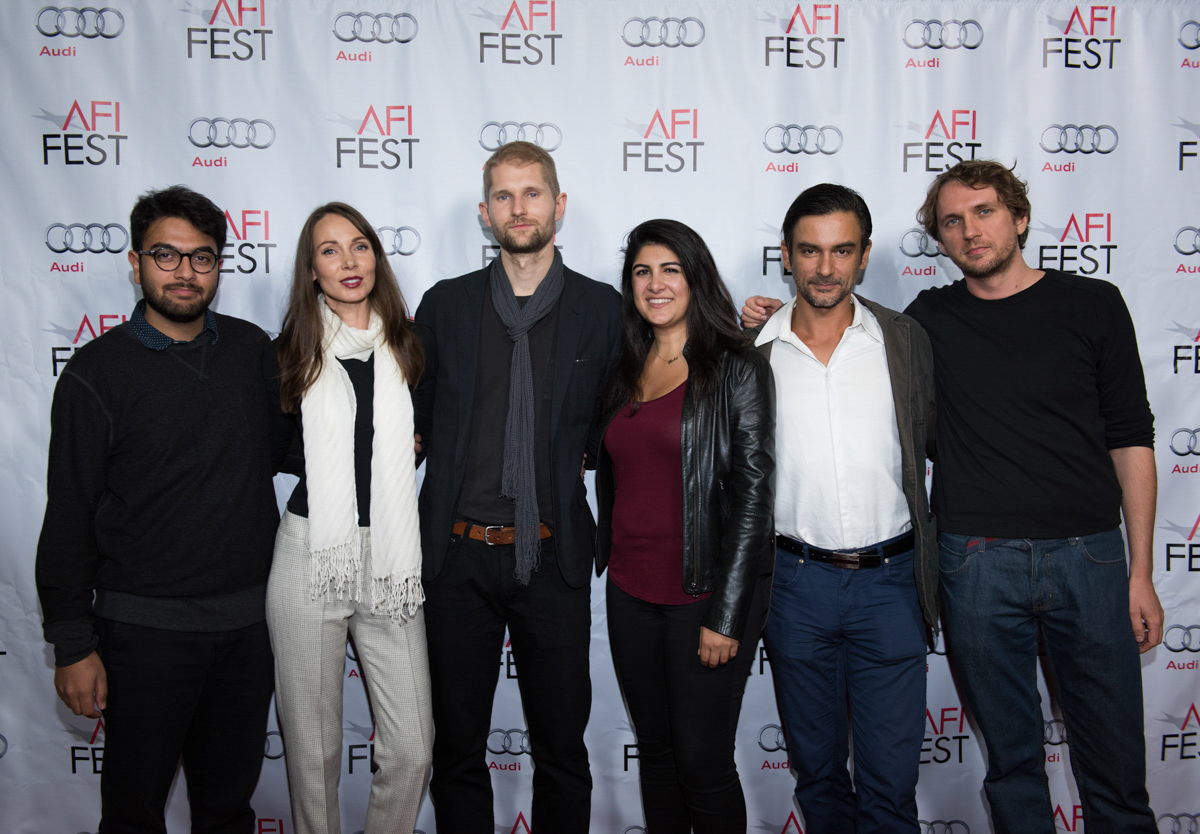
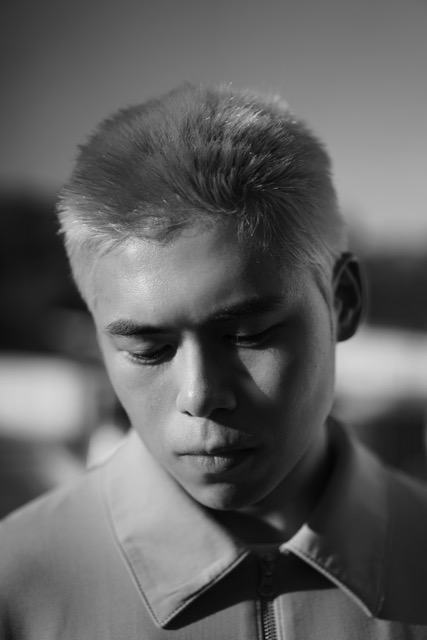
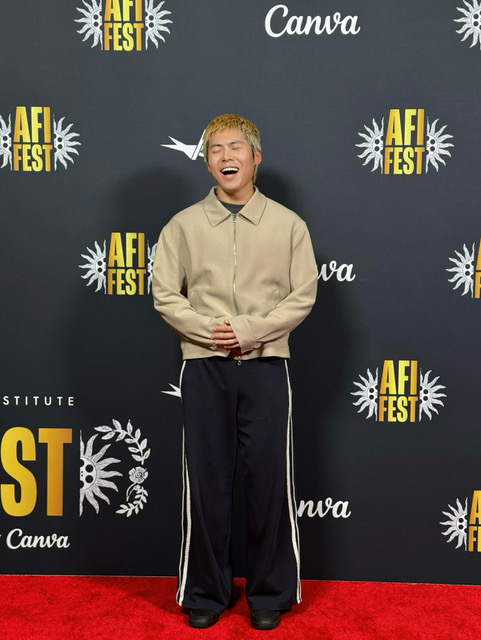
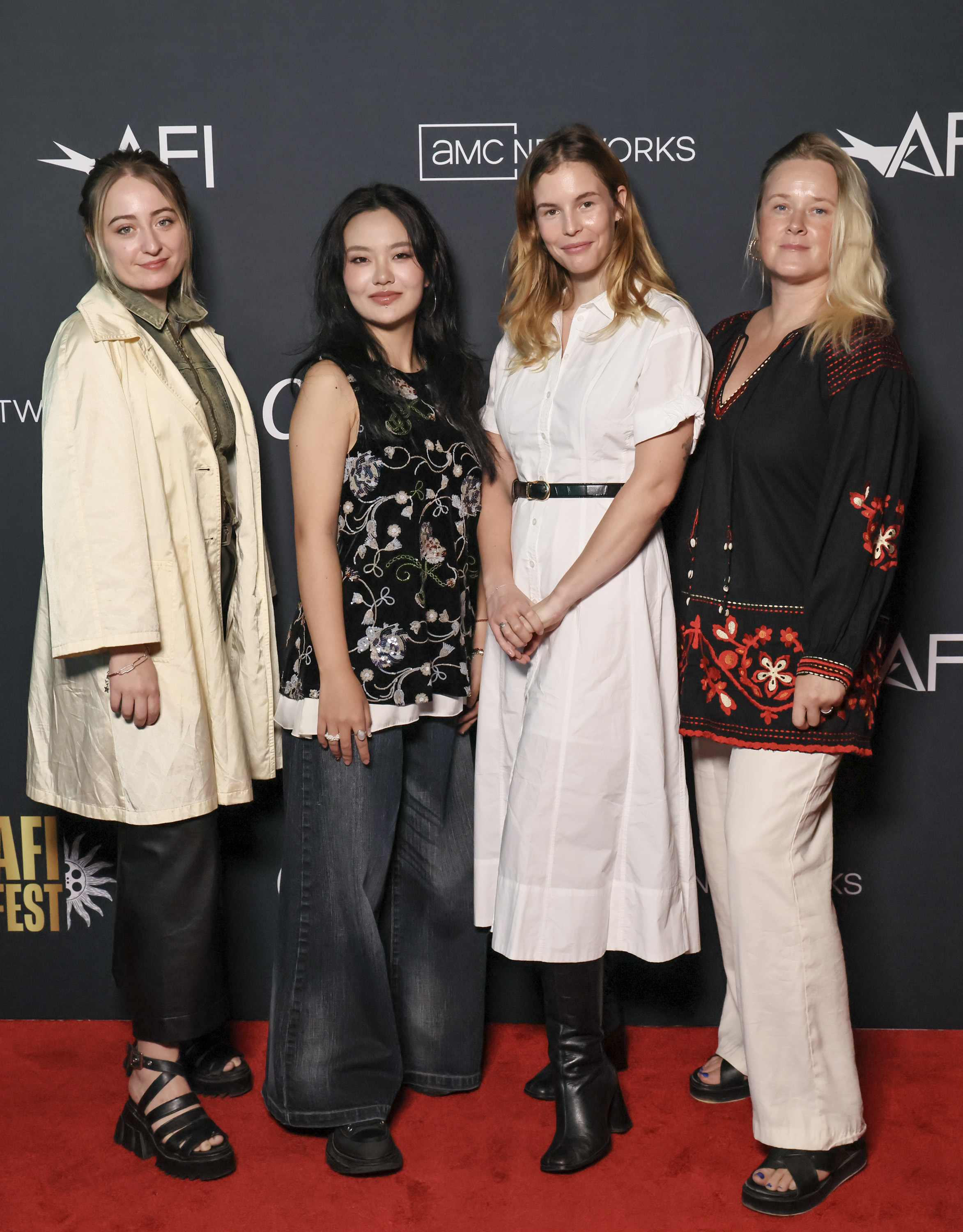
“Against Night” team from left to right: editor Shayar Bhansali, Elena Caruso (actor), Stefan Kubicki (writer/director), Saba Zerehi (producer), Konstantin Lavysh (actor) and Lucas Lechowski (composer) at AFI Fest in Los Angeles
Getting his start as an editor in the world of narrative film with none other than the iconic India based production company, Yash Raj Films International, Shayar Bhansali seemed destined for greatness even at the very the beginning of his career. And, the international success he’s received over the last few years through his work on multi-award winning films including “Wild & Precious” and “Kicks” make it undeniably clear that he’s already made it to the top.
One of Bhansali’s recent projects as lead editor, and one that proves why he is such a sought after talent in the film industry, is “Against Night” from writer/director Stefan Kubicki.
Set in the 1960s, “Against Night” starring Konstantin Lavysh (“Five Days of War,” “Karaganda,” “Juke Box Hero”) as Vitali, multi-award winning actress Elena Caruso (“Paper,” “Cloverfield”) as Marina, and Eve Korchkov (“Joseph,” “A Night at Christmas”) as Lenka, follows Vitali, a cosmonaut who crash lands in a seemingly desolate stretch of snow-covered land in Mongolia.
Climbing out of the small capsule, Vitali stumbles his way through the ostensibly endless miles of snow and nothingness in the midst of a blizzard until he finds himself at the door of a lamp lit yurt in the middle of nowhere. The home of a reticent and shaman-like man, once Vitali steps into the yurt, the real emotional drama and the film’s underlying story begins to reveal itself. As he drifts into a deep and feverish dream-state, Vitali’s present world intermixes, through a series of flashbacks that serve as a major source of plot development, with painful memories of the daughter and wife he lost in a tragic accident years prior.
“[The film] explores the relationship we have with time and memory,” explains Bhansali. “Part of the challenge with the project was to find a good handle on tone, and to be able to maintain the style and rhythm achieved by production through the edit.”
The numerous awards Bhansali earned from festivals across continents prove that he nailed the task with his work taking home the Festival Prize for Best Editing at India’s 2015 Kolkata International Film Festival and the LAIFF June Award for Best Editing from the 2015 Los Angeles Independent Film Festival Awards.
Immediately drawing viewers in with a heart-pumping scene of Vitali and his co-pilot struggling to remain calm as their capsule malfunctions and begins to crash, Bhansali’s precise edits created a beautiful and dynamic rhythm for the unfolding story throughout the entirety of the film. Through his edits Bhansali provides the necessary pauses to allow viewers to really understand and feel the pain of Vitali’s loss when the emotional aspects of the dram are at their height.
While “Against Night” was shot with Russian dialogue, Bhansali admits that there were many similarities in his approach to editing regardless of the language. “I’ve worked with other languages before and the interesting thing for me is how similar the process is – I still spend a lot of time watching dailies and making decisions about performance, thinking about structure and the emotional rhythm of the piece and putting together a first cut within the time frame that’s expected for a project like this. The thing that’s a little different is how the director and I end up spending our time – initially a lot more of it was spent looking at dialogue delivery and sculpting performance.”
A film that has had an incredible impact on audiences, “Against Night” actors Konstantin Lavysh and Eve Korchkov earned the Best Actor and Best Actress Awards at the Long Island International Film Expo for their performances in the film. Aside from the awards Bhansali and the two lead actors earned for their work on the film, “Against Night” also won the Cinematic Achievement Award from THESS International Short Film Festival, the National Jury Award from the USA Film Festival, the Maverick Award and the Jury Prize from the Woodstock Film Festival, the Best Narrative Award from the Ojai Film Festival and several others.
You check out the trailer for the multi-award winning film “Against Night” edited by Shayar Bhansali below:
Some of Shayar Bhansali’s other work includes Mattson Tomlin’s drama “Persuasion,” Sahirr Sethhi’s “Zoya,” Shuming He’s comedy “La Bella” and the drama “Loveland.”
About the powerful force Bhansali brings to the table as an editor, “Persuasion” director Mattson Tomlin (whose film “Rene” Bhansali is currently editing) explains, “The work of the director, cinematographer, and the actors very often falls on the editor’s shoulders. A great editor is able to champion the best of the best performances and manipulate even those at their worst into something emotional and resonating. In the case of Mr. Bhansali, I have seen him time and time again act as both a problem solver and a treasure hunter, often finding the key moments to make a scene work in the most unintended places.”
Over the years Bhansali has proven his ability to tackle some of the most challenging stories and translate them into seamless visual productions through his precision as an editor. While he earned his master’s in film editing from AFI, he initially began his collegiate career many years ago studying psychology, something that has proven to be incredibly useful in his work as an editor because it allows him to understand the mindsets and emotions of the characters in the stories he creates with his edits.
“As filmmakers, I believe we are constantly working with the medium to guide the way our viewers feel – and to do this successfully one has to have to be sensitive to the way we think.I’m not sure I realized this at the time but my interest in psychology and the way our minds work definitely helped me shape emotions and characters,” explains Bhansali.
“Whether it’s a fictionalized post apocalyptic world with a robot as it’s protagonist or a based-on-reality story about a soldier fighting in WWII – the thing that makes these movies resonate with me is the humanity within the story and characters.”
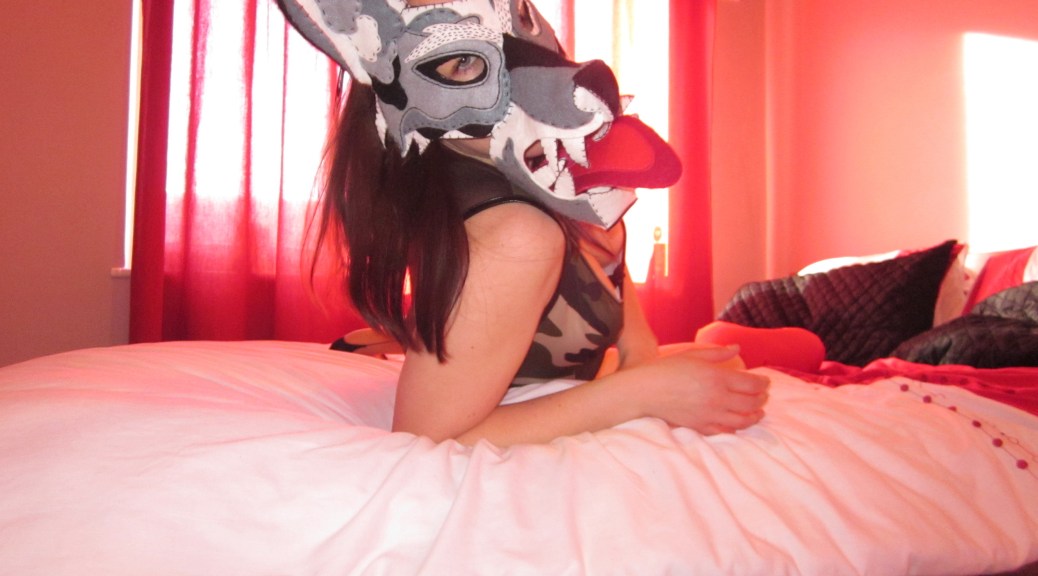
Katie Bright in one of her hand made wolf garments in “Showgirls” shot by Kaliisa Conlon
There is an “art” that comes with fashion, be it style or design, which is why the transition from fashion to art was a smooth one for creative mastermind and performer Katie Bright, also known by her artist name, Miss BrightSide. The extraordinary artist recently held a runway performance exhibiting her art pieces at New York’s Melrose Ballroom entitled “Pre-loved Past Loves.”
The show consisted of 7 models, starring Miss Brightside herself, all dolled up and sporting unique dresses each constructed with various soft, plush fur-like, wolf mask designs, all hand sewn and crafted by the artist. Each unique mask represents Miss Brightside’s previous lovers and conveys her love for fantasy, play and storytelling.
The British born, 36 year old artist originally graduated with a B.A. in Fashion, and designed for major Italian fashion brand United Colors of Benetton, as well as celebrated Australian fashion designer Akira Isogawa, whose fashion designs are displayed at Sydney’s Powerhouse Museum.
“Over the years most of the fashion collections I have created have been transmuted from work seen in galleries. Whether it was a colour palette from a painting or clothing informed by a sculpture,” says Bright regarding her designs, which were inspired by other art works.
Bright’s fixation and zeal for art led to her evolution as a visual artist and performer. In 2012, she decided to put together her first solo exhibit “My Fairytale Perspective on Love” with aMBUSH gallery, which was a sensation with over 1,000 supporters. Bright’s phenomenal success confirmed her footprint in the art world and allowed her to pursue her Masters in Fine Art at the esteemed Central Saint Martins in London. The renowned art and design school is known for such distinguished alumni as designer and “Project Runway” judge Zac Posen, singer -songwriter PJ Harvey, rapper MIA, artist Lee Wagstaff, and the illustrious designer Alexander McQueen.
Reminiscent of prominent artists such as Andy Warhol and Banksy, Brightside utilizes iconography and visual imagery to express her message in her art work. She says, “I would describe myself as a performance and installation artist interested in iconography, Hollywood, fairytales and feminine representation.”
However, for Brightside, it’s the subject matter of scopophilia (the pleasure or love of looking) that is near and dear to her heart as scopophilia is the driving force behind most of her art pieces, with the female, in this case iconic Disney characters such as Minnie Mouse, Aerial the mermaid, and Jessica Rabbit, as the objects of desire that are being gazed upon.
Throughout her first exhibit, Brightside used a screen printing technique, applying her prints onto a mirror, to reflect her enchanted, fairytale theme. The artist’s explanation was that, “I would hope the audience could entertain the position of a voyeur or scopophiliac. There is also the view that through my journey the observer could interpret their position of being a woman.”
The visual artist continues to play with iconic imagery and the topic of scopophilia by pushing the subject to new boundaries as Miss Brightside opened her latest New York art performance by coming out to the classic song “I Want to Be Loved by You” by Marilyn Monroe (from the Oscar nominated picture Some Like It Hot), wearing a white wedding dress, along with a blonde short wig, to personify the Hollywood legend.
Check out the live performance below:
“I believe Marilyn Monroe developed a formula. Famous for the bleach blonde hair, Nike ‘swoosh’ eyebrows, a full red lip pout and that iconic mole. Monroe’s ‘perfecting oneself’ beauty regime has been reproduced over the decades; whether blonde or brunette, we all accentuate what God gave us, and for some, to the point of becoming unrecognizable to our own mothers, ” says Bright, who intends to develop a full series of work on the voluptuous icon.
Aside from taking the art world by storm, Miss Brightside also has her designs set to premier this summer at the Surftides Lincoln City Hotel in Oregon, and at Tart Restaurant and Farmer’s Daughter Hotel in Los Angeles. She’s also currently organizing her third art exhibit entitled “Preloved II,” and if her show is anything like her first exhibit Miss Brightside will be sure to make room for new art, and fashion, enthusiasts alike.
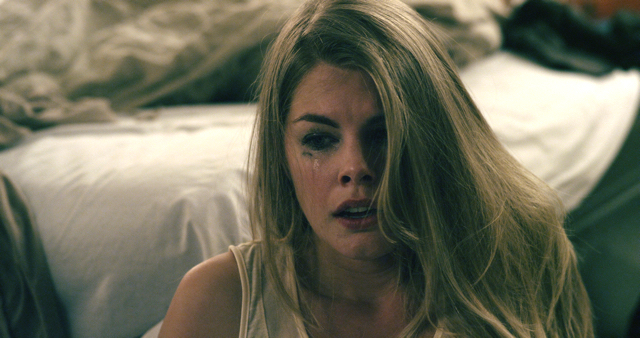
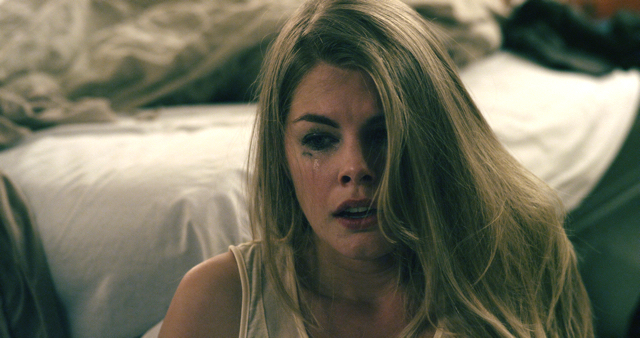
Actress Sarah Jurgens in “The Man in the Shadows” taken by Andrew Cymek
For all the fans that feel a bit sad every time an episode of the hit show Trailer Park Boys ends after only 30 minutes, the release of Swearnet: The Movie probably came as quite a delight. Distributed by E1 Films Canada, Netflix and Dada Films, the 2014 release of the film Swearnet: The Movie pulled together the stars of Trailer Park Boys, with the added bonus of Tom Green, Carrot Top and Sarah Jurgens, for 112 minutes of crude laugh out loud comedy.
When CNT denies the next season of their show due to offensive language, Mike Smith, Rob Wells, John Paul Tremblay and Patrick Roach decide to form their own television network known as Swearnet, a haven for all those anti-censorship swear-a-holics, who just can’t seem to curb their tongue.
It seems the boys are back on top, as long as Wells can keep the new network a secret from his psycho girlfriend Julie, played by Jurgens, who brings the perfect dichotomy of anxiety and comedy to the film. The epitome of that crazy, overbearing girlfriend we’ve all known at one time or another, Julie makes Wells’ life a living hell throughout the film.
“I anchored her destructive behavior in deep insecurity and an insatiable desire for attention and drama. It was such a blast to be able to run wild with her,” recalls Sarah Jurgens.
Most viewers will recognize Jurgens from her more dramatic roles on the television shows Covert Affairs, Lost Girl, Republic of Doyle and Beauty and the Beast, but we get to see a totally different side of her in this film.
About working on Swearnet: The Movie, Jurgens says, “The director, Warren P. Sonoda, created a working environment that was fast-paced and creatively freeing. We were often encouraged to stretch the boundaries of the characters behavior, and the improv really kept me on my toes.”
Viewers will have the chance to see Jurgens in a starkly different role than Julie in the psychological drama film The Man in the Shadows, where she plays the role of Rachel Darwin. The film revolves around Jurgens’ character, a newlywed photographer who is haunted by a mysterious man in the shadows who continually appears wearing a brimmed hat.
Based on hundreds of accounts from people around the world who have had similar experiences with this mysterious presence, The Man in the Shadows premiered recently at the Dances with Films Festival in Los Angeles and is slated to screen again at the Cinefest Sudbury International Film Festival on September 22.
“‘The Man In The Shadows’ gave me the permission to explore the experience of being haunted, hunted and stalked,” explains Jurgens. “I was given the opportunity to live in a state of mental unraveling. I enjoyed the challenge of playing a character who was wrestling with truth and illusion, experiencing the slippage of her own sanity.”
The film was also chosen as an Official Selection of the 2015 SCARE-A-CON Film Festival where Jurgens is nominated for a Best Actress Award, and the film is nominated for a Best Feature Award.
A Canadian citizen who was originally born in Belgium, Miss Adina Doria has travelled the world with a camera since she was three-years-old. Through photography Adina Doria has been able to communicate that which is often incommunicable through words. Doria, who is currently working as a lead photographer for Sinko Branding in Los Angeles, has shot some of the world’s hottest fashion campaigns. Her work has been featured in magazines including Germany’s Huff magazine, Milan’s Trent Prive,LA Fashion Magazine, and countless others.
With her unique vision and unparalleled creativity, Doria’s photographs have provided a spotlight for many models in a way that has led them to great success.
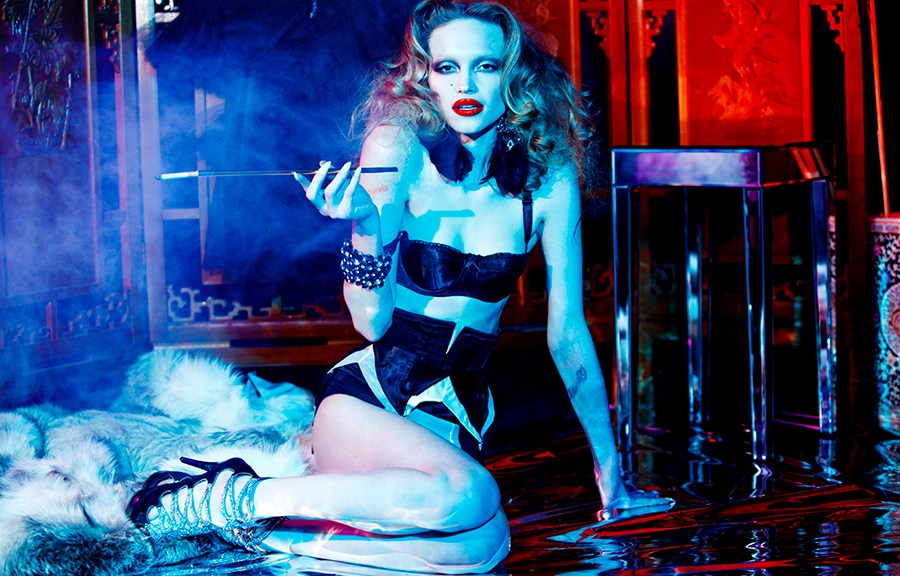
Doria’s work with Ivy Levan depicts the well-known model, musician and actress as a luscious bombshell in a series of photographs that are so striking it is simply impossible for viewers to take their eyes off of her. When it comes to lighting, Doria uses her artistry to capture Levan’s fierce sexuality in a way that is both cinematic and provocative.
While Levan is undoubtedly breathtaking in each photograph, the way Doria poses her model and incorporates various lighting techniques in accordance with the model’s wardrobe and make-up is a testament to her unrivalled artistic vision.
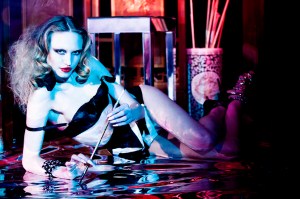
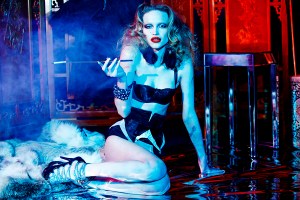
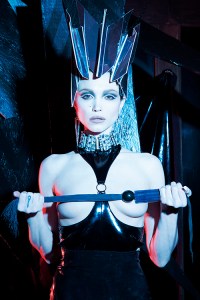
For example, in the shots where Levan is dressed like a futuristic dominatrix, Doria uses the perfect hint of blue lighting to capture her subject in a way that makes her look like a fierce ice queen. Doria’s use of subtle red lighting in the background of the shots where we see Levan dressed in 50’s-esque pinup lingerie holding a long bone cigarette holder is the perfect compliment to Levan’s blood red lipstick and sultry stare.
Aside from her incredible use of light and impeccable eye, Adina Doria is a magician when it comes to getting the shot. She has a way of accessing her subjects most photogenic angles within seconds of meeting them, a trait which not only makes her one of the best of photographers in the world, but one of the most sought after in the fashion industry.
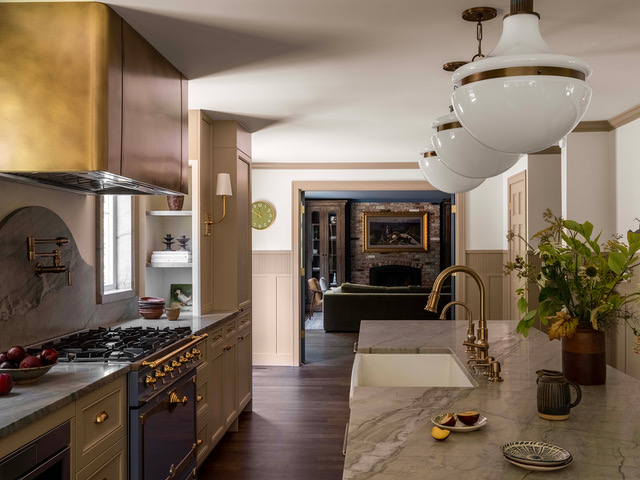
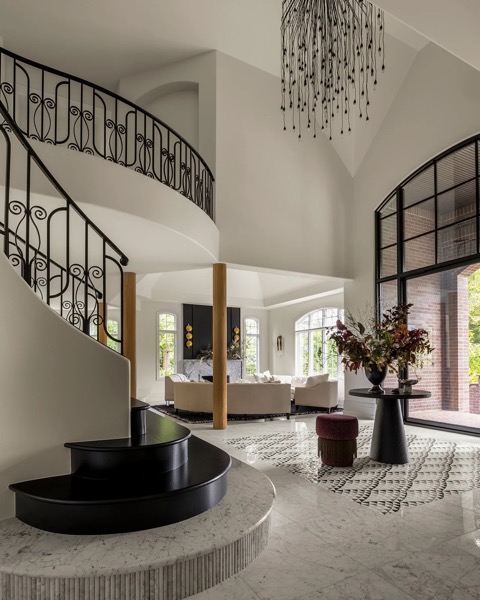
Interior designer Nishtha Vashist understands that a successful home should reflect the people who live in it. That principle can take many forms, from the considered restraint of a residential remodel to the expansive possibilities of a large estate. Through her work with Allison Lind Interiors, Vashist brings a combination of architectural sensitivity, material expertise, and practical thinking to projects that are distinct in scale and character yet connected by a consistent commitment to thoughtful design. Two projects illustrate this approach particularly well: the Kotick Residence in Mercer Island and Highland Estate in Renton (both located in Washington state). Although they differ considerably in size and expression, both demonstrate how careful planning, attention to detail, and close collaboration can transform a house into a cohesive and highly personal living environment.
Kotick Residence: Tradition With a Twist
Kotick Residence
Located in Mercer Island the approximately 2,900-square-foot Kotick Residence was completed in 2026 with construction by Remont Constructions. The project called for a design approach that balanced architectural character with the practical requirements of contemporary residential life. Vashist approached the home with an appreciation for the relationship between established design principles and modern living. Rather than relying on decorative gestures alone, the work centered on proportion, material selection, and the way individual elements relate to the larger interior. The result reflects a design sensibility in which character emerges through considered decisions rather than excess.
Materiality played an important role in this approach with the selection and coordination of finishes helping to establish continuity throughout the home while carefully considered details gave individual spaces their own identity. This balance is central to creating interiors that feel distinctive without becoming visually disconnected. This also demonstrates the importance of resolving design ideas in a way that works beyond the drawing board, as residential interiors must accommodate daily routines, circulation, storage, lighting, and the many practical demands of a functioning household. Vashist’s contributions involved carrying the design vision through planning and material decisions while coordinating with the construction team to help ensure that the intended details could be executed successfully.
That relationship between design ambition and construction reality is particularly important in custom residential work where the success of a project depends not only on the strength of the original concept but also on the ability to translate it into a finished environment with consistency and care. By considering the visual and functional dimensions of a home together, Vashist helps create interiors in which aesthetic character supports the experience of everyday living.
Highland Estate: Grandeur With a Human Touch
Highland Estate
At approximately 10,020 square feet, Highland Estate in Renton presented a very different set of opportunities. The project was built by Emerald City Build and required a design approach capable of addressing a much larger residential environment. A home of this scale can easily become defined by its dimensions alone, making it essential to create a sense of cohesion while allowing individual rooms to serve different purposes and establish their own atmosphere. Vashist’s work on the Highland Estate reflects an understanding that grandeur is most effective when balanced by livability.
The design process required attention to the relationships between spaces, the transitions from one area to another, and the type of details which allow a large home to avoid a tone that can feel overwhelming. Material choices, architectural elements, and finish selections contribute to an overall visual language, helping the residence maintain a sense of unity while accommodating its many functions. The scale of Highland Estate also makes coordination especially significant, since decisions involving finishes, lighting, millwork, and architectural detailing can affect numerous rooms and construction phases. Maintaining a coherent vision requires both a clear understanding of the intended result and an ability to communicate that vision to the people responsible for realizing it.
Vashist’s role extended across the design process, helping connect the creative direction with the practical decisions required during execution. The project illustrates how thoughtful interior design can give a substantial residence a sense of identity and refinement without losing sight of the people who will ultimately inhabit it. Highland Estate also received a Design Icons Award, adding professional recognition to a project distinguished by its scale and complexity.
The Details and the People Behind the Design
While the Kotick Residence and Highland Estate differ in size and character, both underscore a central truth about residential design: a compelling concept is only the beginning. The quality of the finished work depends on the decisions made throughout the process and on the relationships among the people bringing the project to life. Vashist sees the process as working across creative and technical considerations, ensuring that spatial planning, material and finish selection, architectural detailing, and contractor coordination to function as parts of a single process. A decision that looks straightforward in a presentation can have implications for fabrication, installation, sequencing, or the relationship between adjoining materials.
This is where collaboration becomes more than a procedural necessity. Designers and builders bring different forms of expertise to a project, and the best outcomes often emerge when those perspectives inform one another. Clear communication allows the design intent to remain intact while giving the construction team the information and flexibility needed to address real-world conditions. Victor Turchik of Remont Constructions has emphasized Vashist’s collaborative approach, describing her as someone who understands that design and construction must work together. “She understands that great design and great construction have to work together, and she treats us as a true partner in getting the best result for the client,” Turchik notes.
Turchik also highlighted Vashist’s response to the unexpected challenges that arise during construction, explaining, “Construction inevitably brings unexpected conditions and moments where decisions need to be made quickly and she approaches those situations with a calm, solutions-oriented mindset.” For him, the strength of that partnership lies in Vashist’s ability to communicate clearly, listen to the expertise of the trades, and recognize when a particular design detail is essential to the overall vision. That combination allows creative ambition and practical problem-solving to reinforce rather than undermine one another.
The collaborative dimension of her work is significant because even the most sophisticated design depends on execution. Proportions must translate accurately, materials must meet as intended, and the details that give a space its character must be resolved with care. Achieving that level of consistency requires both design conviction and a willingness to work constructively with others, qualities that help ensure the finished home remains faithful to its original vision while responding to the realities of construction.
Recognition Built on Thoughtful Design
Interior Designer Nishtha Vashist
Vashist’s professional recognition reflects a body of work that extends beyond a single residential style. Her earlier honors include awards from the VM&RD Retail Design Awards for House of Raisons in Noida in 2018 and a VM&RD Gold Store Design Award in the Service Retail category for Century Veneer in 2020. The Design Icons Award for Highland Estate represents further recognition of her work in residential interiors. These distinctions span different project types, but they share a common underlying concern: the relationship between visual identity, material expression, and the experience of a space.
Whether working in retail or residential design, Vashist’s approach depends on understanding what a project needs to communicate and how its physical details can support that purpose. The Kotick Residence and the Highland Estate offer complementary examples of that philosophy, with one representing a more compact residential project and the other a substantial estate. Their differences make the comparison particularly revealing because, rather than applying a single aesthetic formula, Vashist adapts her approach to the demands and possibilities of each home while maintaining a consistent level of care in the design process. Ultimately, thoughtful residential design is measured by more than its first impression. It is found in the way rooms relate to one another, how materials respond to light, how details hold together, and how comfortably a home supports everyday life.
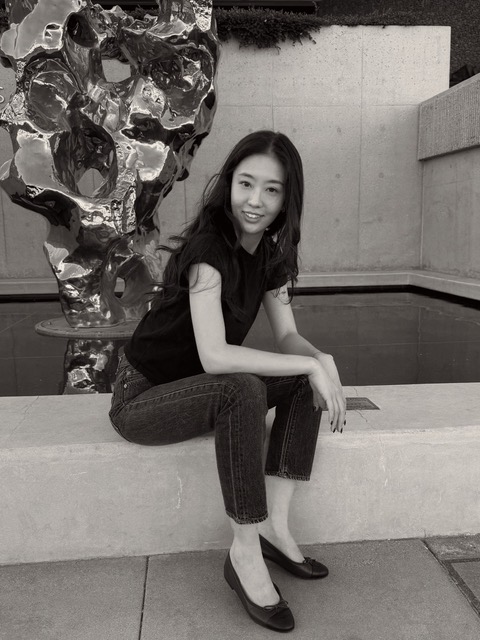
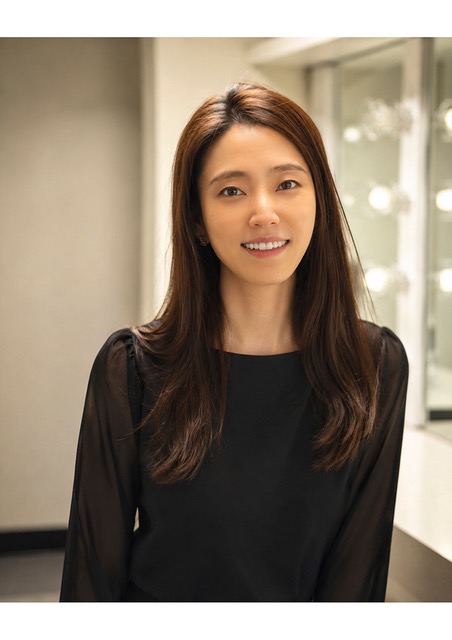
Daisy Huang’s usual title is that of Creative Director but the scope of her work extends well beyond what this title might initially suggest. Her professional experience has placed her at the intersection of creative direction, marketing strategy, editorial development, food retail, brand building, and consumer experience, with digital platforms providing a common thread through many of these activities. Whether she is helping an emerging food product find an audience, developing a retail campaign, contributing to fashion media, or building a new consumer brand, Huang approaches the challenge from the same fundamental perspective: creativity is most effective when it gives people a reason to notice, understand, and engage with something.
Creative Director Daisy Huang
Food, Retail, and the Digital Consumer
Huang’s work with food brands demonstrates how she applies creative thinking to an industry in which consumer decisions are often made quickly and visually. Her work with Super King Markets on the “Taste Beyond Borders” multicultural retail campaign involved more than creating attractive promotional materials. As Creative Director and Marketing Strategist, Daisy developed a broader system of visual storytelling and retail experience design intended to introduce shoppers to less familiar global cuisines while making the discovery process feel approachable and relevant to everyday life. This campaign extended across digital, print, social media, and physical retail environments, while also influencing the way products were presented within sushi, deli, specialty, and international-food areas.
An important part of Huang’s approach was understanding the consumer before deciding how to market to said consumer. Rather than relying on broad assumptions about who might be interested in international foods, she used field observations and structured questions to identify patterns in how shoppers behaved. Huang considered whether customers were already entering a particular aisle or asking about its products, whether interest was being limited by uncertainty about what to choose, whether better explanations or demonstrations could reduce that uncertainty, and whether the store had the inventory and operational capacity to support a new presentation. This process allowed her to treat marketing not simply as promotion but as an ongoing cycle of observation, testing, and refinement.
Such a philosophy became particularly useful when introducing customers to foods they might not immediately recognize. Huang understood that asking someone to purchase an unfamiliar product requires more than telling them that it is good; the customer needs some idea of what to do with it once they take it home. Sampling and hands-on experiences could make discovery less intimidating, while simple points of comparison could provide a familiar starting place without suggesting that two different culinary traditions were interchangeable. Her approach was therefore less about persuading consumers through a hard sell and more about giving them enough confidence and curiosity to make the decision for themselves.
Daisy also brought this philosophy into the presentation of individual products. Inspired in part by an experience at Kismet Rotisserie in Los Angeles, where familiar ingredients were presented in combinations that encouraged experimentation, she began thinking about how grocery shoppers could be shown practical ways to use emerging food products. Instead of simply describing chili oil, for example, a display could suggest adding it to hummus, giving the shopper an immediate idea for incorporating the unfamiliar ingredient into a meal. Similar thinking informed her recommendations for product placement, short explanatory messages, and even distinctive shopping bags that extended the visual experience beyond the shelf.
For Huang, this is where storytelling becomes an important marketing tool. A product description tells consumers what something is, while a well-designed story can help them imagine where it belongs in their own lives. Such a distinction is particularly valuable for emerging food brands because the objective is not merely to create an attractive package or generate a single purchase; it is to establish familiarity, confidence, and a reason to return. Daisy’s work with Super King Markets illustrates how digital thinking, visual communication, retail design, and consumer psychology can operate together as one creative strategy.
That same combination of creativity and commercial thinking is now informing Huang’s development of DAEDATE, an original sushi burrito concept. The project represents a move from advising and developing existing food businesses toward creating a consumer brand of her own, with responsibility for both the creative and commercial sides of the operation. She is developing the concept’s positioning, visual identity, products, packaging, customer experience, and operating model, while considering from the beginning how a distinctive idea can become a consistent and scalable business.
From Fashion Media to Digital Brand Communication
Before expanding her work across food and consumer brands, Daisy Huang developed an important part of her creative perspective at Vogue China. Her position as Creative Market Lead placed her within an environment where editorial judgment, fashion communication, digital marketing, and audience development were closely connected. The experience taught her to think about content not merely as something that informs an audience, but as something that establishes a relationship between a publication, its visual identity, and the people encountering it through digital platforms.
Working within fashion media also strengthened Ms. Huang’s ability to recognize the difference between a trend and a meaningful story. The digital environment moves quickly and audiences are exposed to an enormous volume of visual information every day, making attention itself a creative challenge. Daisy’s work required her to evaluate cultural and fashion developments, consider their relevance to readers, and determine how an idea could be translated into content that was both visually compelling and editorially appropriate. This remains visible in her current approach to consumer marketing, where she continues to ask not only how something should look, but why an audience should care about it.
Her experience at Vogue China also gave Daisy an international perspective on communication. Fashion operates across borders, but the meaning of a trend can change significantly depending on the audience encountering it. Huang became attentive to the process of translating global creative ideas for Chinese audiences while maintaining their cultural context, an experience that now informs her interest in bringing Chinese creative talent and cultural influence to international markets.
That perspective is central to an upcoming initiative connected with Vogue China involving New York Fashion Week, international luxury brands, and cross-cultural fashion promotion. Huang envisions the project as an opportunity to explore how Chinese fashion, entertainment, and creative talent can communicate with audiences in the United States and other major markets. Her proposed role includes developing visual and storytelling direction, identifying culturally relevant ways to connect Chinese talent with global fashion audiences, and shaping promotional concepts that can function effectively across different cultural environments.
The project’s working theme, “Vision Abroad,” reflects an extension of the role Huang has been developing throughout her career. Rather than treating international marketing as a matter of simply transferring an existing campaign from one country to another, she is interested in the creative decisions required to make cultural ideas understandable and compelling in a new environment. Her experience in both China and the United States gives her a perspective on the visual language, references, and storytelling choices that can help audiences connect with material that originates outside their own cultural experience.
Digital platforms are particularly important to that process because they can make cultural exchange more immediate and personal. Ms. Huang sees short-form video, visual campaigns, social media, and other digital formats as opportunities to move beyond generalized representations of culture and instead show people, products, places, and creative ideas in ways that feel contemporary and specific. Her interest is not simply in reaching larger audiences, but in creating enough curiosity for those audiences to look more closely and begin forming their own understanding.
A Career Built Across Creative and Commercial Worlds
Huang’s professional path has been shaped by her willingness to move between disciplines. Originally from Kaifeng in Henan, China, she moved to the United States at the age of 13 and began working during her senior year of college. Her decision to build a career in the United States was influenced by what she describes as a sense of possibility: an environment where different cultural perspectives meet and where she could explore more than one creative direction rather than being confined to a single professional category.
That background has become an important component of the perspective Daisy brings to her work today. She describes herself as deeply interested in art, fashion, and visual storytelling while also being drawn to the practical discipline involved in developing and operating a business. Her experience has allowed her to test creative ideas in real marketplaces, interact directly with consumers, and take responsibility for the operational details that determine whether an attractive concept can actually be delivered consistently. In this respect, her work has evolved beyond conventional creative direction into a hybrid practice that combines aesthetic judgment with commercial and operational understanding.
Ms. Huang’s cross-cultural background has also influenced the way she thinks about communication. She believes that American audiences can benefit from seeing Chinese culture as contemporary, diverse, and continually evolving rather than limiting their understanding to familiar historical traditions. Daisy points to digital storytelling as one particularly effective way of communicating that complexity because a photograph, video, meal, fashion choice, or everyday experience can provide a personal entry point into a culture without attempting to reduce it to a single definition.
Food offers Huang an accessible way to create those connections. A person may become curious about another culture by first encountering a dish, a design, or an unfamiliar visual style, and that initial curiosity can develop into a deeper interest in the people and traditions behind it. Daisy’s approach is to use those moments of discovery as invitations rather than explanations, allowing consumers to participate, ask questions, and develop their own relationship with what they have encountered.
The result is a professional identity that does not fit neatly into one conventional category. Huang has worked in fashion media, digital content, food retail, marketing strategy, brand development, and creative direction, while increasingly taking responsibility for projects from their earliest conceptual stages through their presentation to consumers. Her recent recognition, including the China Creative Director Young Entrepreneurship recognition at the end of 2025, a 2025 Titan Award, and a 2026 Muse Award, reflects a career that continues to develop across multiple creative and commercial disciplines.
What connects these seemingly different chapters is Daisy’s understanding that creativity does not end with an idea. A successful concept must be translated into a visual language, communicated through the appropriate channels, understood by its intended audience, and supported by the practical systems necessary to deliver the promised experience. Whether she is working with a grocery retailer, developing a food brand, contributing to an international fashion initiative, or creating a new consumer concept, Huang continues to approach digital platforms as tools for building that connection.
Her career has consequently become less about choosing between creative and commercial work and more about demonstrating how the two can reinforce one another. The skills she developed in editorial environments help her recognize stories; her marketing experience helps her understand audiences; her food and retail work gives her direct experience with consumers; and her cross-cultural background helps her consider how ideas travel between markets. Together, those experiences have positioned Daisy Huang as a creative professional whose work is increasingly defined not by one industry or job title, but by her ability to turn ideas into experiences that people can see, understand, and ultimately choose to engage with.
When South African filmmaker and cinematographer Daniel Lewis came to the United States, he came with the ambition to expand his career and find new ways to tell stories through film. What he did not necessarily anticipate was how quickly his path would lead him into American reality and unscripted television.
Over the past year, Lewis has traveled across the United States contributing his cinematography and production expertise to a remarkably varied collection of projects. His camera has followed high school football across Florida, captured an intensive reality television production in West Virginia and documented stories connected to American agriculture in Missouri.
It is an unconventional and distinctly original trajectory for a filmmaker who began his journey thousands of miles away in South Africa.
“Being able to live, work and travel the U.S. filming for a living, professionally, under my own business name and seeing my name on TV show credits is awesome,” Lewis says.
Lewis has not confined himself to a single genre, production format or geographic market. Instead, his career reflects the qualities of a trailblazing independent filmmaker: adaptability, creative instinct, entrepreneurial initiative and a willingness to enter unfamiliar environments in search of compelling stories.
Filmmaker and Cinematographer Daniel Lewis
Finding His Place in American Reality Television
One of the projects that helped accelerate Lewis’s transition into American unscripted television was Country Ball, a reality docuseries centered on Coach Jesse Chinchar and his work with talented but often overlooked high school football players from smaller communities.
Lewis was hired to film football games for the returning television production, traveling between St. Petersburg and Orlando, Florida, throughout the season while following Chinchar and capturing the developing story.
For Lewis, Country Ball became a significant professional opportunity within American unscripted television. The assignment required more than technical command of a camera. Reality television demands an ability to anticipate action, identify the interactions that matter and capture critical moments that may never happen twice.
The footage Lewis filmed was delivered to American Stories TV for the upcoming The Return of Country Ball. The existing Country Ball series has been made available through streaming outlets including Prime Video, The Roku Channel and Apple TV, as well as through American Stories TV.
Lewis’s work on the production also led to additional opportunities.
Daniel Lewis behind the lens
From Florida to West Virginia
Lewis was subsequently brought onto additional television projects, including Surviving Mann All Stars, Season 4, filmed at Summit Point Motorsports Park in West Virginia.
The production involved participants and professionals from military, law-enforcement and combat backgrounds and was filmed over an intensive five-day schedule that included early mornings and late-night shoots.
For Lewis, the experience represented another significant step in developing a distinguished and increasingly diverse body of professional television work in the United States.
During the same production period, Lewis also contributed behind the scenes or as a second camera operator to several other reality television projects, including Wild Shots, The Big Reveal, Face Off and Boom America.
One particularly memorable assignment came while working as a second camera operator on Boom America, where Lewis filmed a scene involving entrepreneur and television personality Kevin Harrington, known as one of the original personalities from Shark Tank.
The experience demonstrated Lewis’s ability to move between different productions, subjects and responsibilities within a demanding professional environment—an adaptability that has become one of the distinguishing characteristics of his work.
Capturing Another Side of America
More recently, Lewis traveled to St. Louis, Missouri, where he worked as a second camera operator on Farm Hero.
The upcoming docuseries focuses on American farmers, ranchers and land stewards and their work in regenerative agriculture, exploring subjects including soil health, biodiversity, holistic grazing and the relationship between consumers and food producers.
In a relatively short period, Lewis had moved from filming high school football in Florida to a military-oriented reality production in West Virginia and then to American agriculture in Missouri.
The subjects could hardly be more different, yet Lewis’s ability to move between them demonstrates an extraordinary degree of versatility.
Rather than allowing himself to become defined by one genre, he has made that versatility part of his creative identity.
From Capturing Stories to Creating Original Projects
Lewis’s trajectory is now expanding beyond individual camera assignments toward original projects and creative collaborations.
Among those efforts is a developing television collaboration with another Florida media agency concerning the Kyminasi System and its work within the agricultural sector. Contracts surrounding the project are still being finalized, while Lewis has also been editing testimonial content involving farms in California contemplated for use in the developing production.
At the same time, he intends to continue pursuing production opportunities with American Stories Entertainment while expanding his relationships with filmmakers, media agencies and production companies throughout the United States.
But one of the projects Lewis considers particularly important could bring his American filmmaking experience back to the continent where his own story began.
Turning the Camera Toward Africa
Lewis has been working with Kimberly Quigley, founder and CEO of Skyrocket Productions, toward the development of a documentary film centered on one of Africa’s wealthiest tribes.
The project remains in development, and the two have been working on the concept for several months. Lewis considers it one of his priority projects.
There is a natural symmetry to the idea.
Lewis came from South Africa to the United States determined to expand his career in film. In America, his camera has taken him through an extraordinary range of subjects—football, competition, entrepreneurship and agriculture. Now, one of the original projects occupying his attention would turn his lens back toward Africa.
It also signals an important evolution in his career. Lewis is no longer focused solely on capturing stories conceived by others. He is increasingly becoming involved in determining which stories should be told and how they can be brought to the screen.
An Original Path Through an Evolving Industry
Lewis’s trajectory is an example of what can happen when a filmmaker refuses to define himself by a single format, market or conventional career path.
An opportunity to film football in Florida led to additional television production work. That relationship took him to West Virginia, where he contributed to several productions. His work then took him to Missouri for Farm Hero, while his developing projects have expanded into agriculture, documentary filmmaking and new creative collaborations.
For a filmmaker who arrived from South Africa determined to establish himself within the American entertainment industry, that progression represents a significant professional achievement and an extraordinarily diverse creative journey.
Lewis’s experience reflects technical expertise, creative judgment, entrepreneurial initiative and originality. Increasingly, he is moving from contributing to established productions toward helping develop projects of his own.
For Lewis, being a trailblazer does not necessarily mean following the most obvious road. Sometimes it means recognizing an unexpected opportunity, bringing an original perspective to it and allowing one extraordinary experience to lead to the next.
The South African filmmaker who came to the United States with a camera and an ambition is now creating a path that is distinctly his own.
Though she has become known for dreaming up fantastical worlds and elaborate stories through her work as a filmmaker, Hollis Sherman-Pepe insists she’s not a dreamer, she is a doer. And after looking at all that she has accomplished over the course of her more than two-decade career in the industry, it is a statement one can only agree with.
Writer-Director-Producer Hollis Sherman-Pepe
Hollis began her industry journey as an actress. Over the years she has played a wide range of roles in films such as Between Wars starring Primetime Emmy Award winner Michael Imperioli (The Sopranos), Twenty-Minute Exotic Getaway, Adrenochrome, Green Piece, and series such as NCIS and 1000 Ways to Die.
She wrote, directed and starred in the short film To Quiet My Mind, her directorial debut, which was the Festival Award winner for Best Experimental Film at the California Women’s Film Festival, as well as Valediction, for which she received Best Actress Awards from the Los Angeles Cinema Festival of Hollywood and the Los Angeles International Underground Film Festival, along with the Women Filmmakers Award of Merit from the Best Shorts Competition. In 2021 she also wrote, directed and starred in the sci-fi fantasy film Twenty Minute Exotic Getaway, which took home two Best Sci-fi Awards from the Jim Thorpe Independent Film Festival and Pasadena International Film Festival. Additionally it was the winner of Best Cinematography and Best Set Design at NewArk Independent Film Festival.
One of the aspects that makes Hollis such a unique talent is her curiosity; and it is something that has led her to step outside the path of acting, and explore the myriad of other production roles that bring a film to life. Early on in her career she worked as a production assistant, using the opportunity to learn as much as she could from every department willing to take her under their wing. She says, “I still approach filmmaking this way: ask questions, stay curious, work hard and be proactive.”
In 2015 she started Farmer’s Daughter Productions, a women-helmed production company dedicated to bringing powerful cinematic experiences to the screen. Over the years she has produced numerous award-winning films through Farmer’s Daughter Productions, including YES, the winner of Planet Female’s Best Festival Short Award and Noci Film Fest’s Audience Award and Young Jury Award, A Couple of Secrets, which won the awards for Best Film Trailer at Mindfield Film Festival, the screenplays Foxes, a Semi-Finalist at Richmond International Film Festival and Cordillera International Film Fest, and Right Hand Man, which took home the Bronze Medal Award at LGBTQ Unbordered International Film Festival.
Now, as she prepares to release her first feature film, Tenants of Carver Hill, we were lucky enough to catch up with Hollis for an interview about her creative inspirations, her evolution as a filmmaker, and the deeply personal experiences that helped shape her latest project.
For Hollis, the impulse to tell stories has always been rooted in curiosity. She is fascinated by the space between what we know and what remains unexplained, and that fascination has become a recurring thread throughout her work. “There is far more unknown than known to humankind,” she explains, describing the questions that arise from that uncertainty as a source of endless inspiration.
That curiosity doesn’t stop at the page. Hollis approaches filmmaking as an exploratory process, researching everything from philosophy and science to poetry and the ideas of thinkers who have grappled with the mysteries of human existence. She then looks for ways to weave those discoveries into her stories, often using fantastical beings and supernatural spaces to give physical form to thoughts and emotions that might otherwise remain invisible.
It is perhaps fitting, then, that her first feature would be a supernatural thriller — and even more fitting that it would draw on experiences that are very close to home.
“I grew up in a haunted house,” Hollis says. “I think it was perhaps my destiny to make a cinematic ghost story.”
Film Poster for “Tenants of Carver Hill”
With Tenants of Carver Hill, Hollis has taken those real-life experiences and transformed them into a story that explores the mysterious and unseen while remaining deeply connected to its characters, its setting, and the history embedded within it.
A supernatural thriller, Tenants of Carver Hill follows a stranded young couple who spend the night at Carver Hill, only to awaken the spirits haunting the house — transforming one fateful night into an inescapable nightmare. The film features standout performances by Shelby Hightower (HBO’s Task, Netflix’s Tires), Searra Sawka (Hell House LLC: Lineage), Paden James (Prime’s No Rest For The Wicked) and features legendary opera diva, Maureen O’Flynn and theater luminary, Peter DeLaurier.
Welcome Hollis, such an honor to catch up with you. Can you start by telling us where you’re from originally and when you started getting into film?
I am so grateful to be speaking with you. I grew up in rural Southeastern Pennsylvania, outside of Philadelphia. I was always a very creative child and began writing at a very young age. I wrote my first novella by age ten. By my teens, my first camcorder changed how I saw and interacted in the world. I was obsessed with turning our games of playing dress-up into real stories. I made movies all the time: live action, stop motion, documentary. I simply just loved to shoot what I saw.
I was able to save most of my childhood tapes, digitizing them some years back. One of my favorite early films documented an architectural preservation event on our family farm. I set the whole event to Moby’s album Play, and dragged around a boom box on a 100-foot extension cord as I shot beautiful images of construction against a backdrop of blue sky, puffy clouds, and all these wonderful people who came to celebrate the event. I recently dug out the footage and recut it, using the same music and presented it to my family as a special screening. This absolute nostalgia gem meant as much to them as it meant to me.
How did you know that film would be a part of your life for the long haul? And how has it influenced your life?
I was an actor. As young as preschool, I was determined that acting would be my life’s pursuit. I chased that dream, earning my BFA degree at University of the Arts in Philadelphia and making a move to Los Angeles where I continued the work and the training. I loved being on set and wanted to learn as much as I could about production. I started as a hardworking and eager production assistant, garnering as much knowledge as I could from every department that was willing to take me under their wing. I still approach filmmaking this way: ask questions, stay curious, work hard and be proactive.
The first time I wrote and starred in my own short film was in 2012. In that, I found what I was really searching for, creative fulfillment and control of the narrative. It snowballed from there. In 2015 I started my production company, Farmer’s Daughter Productions. I have been producing, directing and shepherding other filmmakers ever since.
My passion for storytelling and art is in consistent bloom. I find my inspiration in nature, art, books, and in folklore. I go to the movie theater often and watch films across all genres and time periods, finding inspiration and studying — how did they shoot that? The language of film is my vernacular, my orbit. I love talking about both the art and the business of film and I feel incredibly fortunate to be surrounded by an ever-growing circle of filmmakers who support, challenge, and celebrate one another.
Making movies is difficult, expensive and time-consuming. These truths are ever present, but they also make the community around filmmaking all the more meaningful. I believe there is room at the top for everyone. Every artist has a voice that can only belong to them. Cinema speaks on such a deep level, providing hope, catharsis and offering windows into experiences we may never otherwise know. I feel incredibly lucky to spend my life creating within that sphere.
Director Hollis Sherman-Pepe checking the shot
“Tenants of Carver Hill” marks your feature directorial debut. Looking back, what does reaching this milestone mean to you personally and creatively?
I am proud of the work it has taken to get here. I am not a dreamer; I am a doer. My gosh, I have learned so much as a filmmaker over my two-plus decade career and have profoundly grown as an artist. Cultivating my vision and translating it clearly with my team so we can work toward a common goal feels really satisfying. I have never been afraid to ask questions and push my abilities beyond my comfort zone.
Completing a first feature film, particularly one with financial limitations and visual effects demands, feels like an awesome launching pad into the next film and the one after that, and so forth. I intend to keep learning and pushing myself to expand upon what I believe I can create.
Over the past 20 years You’ve worked as an actor, writer, producer, and director. How has your experience in front of the camera influenced the way you direct actors?
Acting is such a vulnerable and beautiful art form. My job as the director is to provide the incubator for the actor to thrive in. As a screenwriter, I love the exploratory aspect. As a director, I like to share the pearls I found along the way with the actors. The pearls include reading material, inspirational art, poetry, music, anything I can offer for their character development. That said, ultimately, I trust them to make unique and honest choices. Often actors will find their own inspiration that they share with me and I then find ways to incorporate their ideas into the story.
As an actor for most of my life, one with a BFA degree and endless training, I have a good eye for what is working and honest within a performance. Sometimes a spark needs a bit of coaxing to become real fireworks and that is when my own training comes out. I love that I can sometimes share the perfect tool from my own toolbox to help an actor realize their fullest potential. I have some absolute favorite acting exercises that I employ behind the scenes. I’ve used them during casting, in rehearsals, and on set to help guide an actor’s sensitivity, connection to co-stars, or even to break a repetitive performance. I would encourage all directors to dive into some acting classes, not scene study, but rather classes that focus on the more subtle aspects of the art.
Sometimes the acting exercises can be physical and I will get right in there with the actor and engage them. The crew on Tenants Of Carver Hill got a real hoot out of watching me jumping and shouting alongside one of the actors. I needed intense frustration and anger from a particular moment, so I got down and dirty with my roots. We jumped up and down to a point of exhaustion. I had him shout the line in my face. I told him to scare me. I would shout it back. We got there. He got there and it paid off tenfold in the cut.
Director Hollis Sherman-Pepe looking through script notes with actor Adam Provo
You often describe your work as exploring the unseen forces that shape our lives. What draws you to stories where mystery, folklore, or the supernatural become a lens for examining human nature?
Unseen forces shaping our lives have been a through line in my work thus far. As human beings, our life cycle is short, and our place in the universe is a marvelous mystery. We are all story tellers; functionally recounting events, replacing lost facts with emotional impressions, as well as inventing explanations for the unknown. From prehistoric cave painters to the legends of the Qing Dynasty, and the traditions of the modern American ghost story, as a species we love to share, imagine and invent. Here on Earth, we are but a pin prick in the vast and ever-expanding Universe. There is far more unknown than known to humankind.
I love the questions that arise from that uncertainty. They give me a reason to research, to read books, papers, and studies written by philosophers, scientists, poets and thinkers. My private holiday is to lose myself in it all, then find clever ways to hide the gems within the stories I build.
Characters interacting with fantastical beings and supernatural spaces gives me an avenue to materialize thoughts and feelings that would otherwise be difficult to see. It opens the door to humanizing concepts and questions. People are marvelously complex. Behavior for most of us is multifaceted. The choices we make are based on morals, emotions and culture. When you introduce spirit realms like magic, faith, consciousness, and new dimensions the possibilities are endless. The supernatural isn’t an escape from human nature, it is a way of looking at it from a different angle.
Although “Tenants of Carver Hill” includes supernatural elements, it feels rooted in history, place, and character. What inspired the story, and what were you most interested in exploring beneath the mystery?
I grew up in a haunted house, so I think it was perhaps my destiny to make a cinematic ghost story. This film became my opportunity to share some of my real-life haunting experiences as well as honor my appreciation for the past.
Tenants of Carver Hill was written specifically for our filming location. Setting the story on a property dating back to the 1700s allowed me to intertwine the real-life history of the house and the Pennsylvania Dutch culture into my story. These early American settlers had their own language, faith, and traditions, and their simple farming lifestyle helped lay the groundwork for the Mennonite communities that followed. I loved the idea that one house could carry all of those eras, lives, and people’s stories vibrating within the walls.
I am fascinated by the idea of destiny versus free will. As modern Americans, we are constantly driven toward success. Our culture is always evolving toward better, bigger, newer, and more efficient. We celebrate the idea that we are free to command our own destiny, but what if we aren’t? What if our position in life was actually predetermined? Like, what if we are part of a much older cycle, a cog in a never-ending wheel, destined to repeat the history of those who came before us?
Our culture prizes youth and beauty. I wanted to play with these roles and expectations, so I set my hopeful heroes in a world that forces them to experience the past, confront duty and preservation. I gave them this challenge but funneled it through a supernatural lens, letting it be enchanting and simultaneously unsettling.
(L-R) Stil of Paden James, Peter DeLaurier, Maureen O’Flynn, and Shelby Hightower conjuring the spirits in “Tenants of Carver Hill”
Your films are known for layered storytelling and richly imagined worlds. What makes “Tenants of Carver Hill” different from other supernatural thrillers audiences may have seen?
I love creating worlds that invite you in, only to later reveal something much darker underneath. Spooky but charming. Warm but secretive. Beauty that fills you with unease. The world of Carver Hill is dreamy. Springtime blooms are as welcoming as the tenants that live there. The perfect misdirection.
I wanted to try something fresh with the look of our ghosts and chose to make them photosensitive. Developing this look with the artist was a lot of fun. The mysterious house was to feel mazelike at times, filled with a collocation of museum-like antiquities and preternatural relics, alive and watching, offering clues to the decades encapsulated within the walls.
I don’t think genre films have to be simple or formulaic. Of course, some formulas work for a reason and Tenants of Carver Hill includes some of those familiar beats and the inevitable “don’t go in there” moments. But ultimately, I love to find ways to break the mold. I’m not a fan of stereotypical characters. I would rather build characters with layers and contradictions. When a character fights with their own belief system or moral code, we as an audience become more invested in the cause and consequence. Watching a complex character make choices is far more intriguing to me.
World building is certainly a specialty for me as a filmmaker. My previous Sci-Fi film, Twenty Minute Exotic Getaway explored a wild variety of environments, from dead planets with suns on the verge of burning out to creatures and ghosts that walked through dimensions that would feel familiar and yet foreign. My unproduced folklore horror scripts also push the envelope of imagination with worlds and creatures. I can’t wait to bring them to life next.
The film incorporates both early American settler history and Native American perspectives, including tailoring your lead character’s background to reflect your lead actor’s Navajo heritage. Why was authenticity so important, and how did those cultural influences enrich the story?
At its core, this ghost story is one about history repeating itself, and memories being alive within the walls. Because the story was site specific, it was important to be authentic with the historical storyline. I wanted the multi-cultural aspects to be organic, not just a flavor enhancer. The male lead is Native American. This felt right for the story because I wanted his connection to the land to be old, an inheritance bestowed for the Settlers arrived, and before the House itself. I left some of the integral parts of his scripted dialogue and action open-ended until we completed our casting. That way my actor could inform some of these choices with their own tribal heritage.
The character is played by a Navajo actor, Paden James. I worked with him directly as well as with a Navajo consultant so I could approach the language and tradition authentically and respectfully. I learned a lot and found meaningful ways to include what I had learned into the story. I learned that a specific prayer is said aloud when a Navajo person enters and exits a graveyard. I included this into one of the earlier scenes of the film. I also included blessings with corn pollen and a prayer song in Navajo asking for protection.
I also wanted the house itself to feel like a character in the story. Using real historical events allowed me to honor the home and memories associated with it. I wove in documented stories, such as how an 1800s patriarch died after being kicked by his horse. The tenants of the estate, characters played by Maureen O’Flynn and Peter DeLaurier, both express their admiration for the home and bestow history of the Pennsylvania Dutch settlers. I sought out consultation for that unique language as well.
Ultimately, by weaving together these various histories allowed me to give the house a truer sense of memory. Not just a haunted-house, but one where generations have left their mark and that is what makes it feel so alive.
Pennsylvania becomes almost another character in the film. What made it the perfect location, and how did filming there shape the atmosphere of “Tenants of Carver Hill”?
Being from Southeastern Pennsylvania, it was personal and meaningful to return and shoot my first feature film here. It was a wild full-circle moment. I knew I wanted my ghost story to feel like a fantasy, harkening back to Ridley Scott’s Legend. We used a variety of filters to create ghostly blooms of light, and we built our shooting schedule around the Springtime blossoms. We planned for scenes around particular trees and flowers as they came into bloom, racing to capture them before the petals fell.
Pennsylvania is incredibly green and lush. This helped our location to feel particularly isolated, making it a little fantastical bubble all on its own. The heroes, played by Shelby Hightower and Paden James arrive at Carver Hill after an ill-fated, cross-country truck breakdown, but soon they are completely enraptured by the beauty surrounding them. The green floral atmosphere feels more like a gift than a warning, a wolf in sheep’s clothing.
And of course, there is the history. Philadelphia was the first capital of the United States. The Northeast is old. If ghosts are the echoes of the past, these walls have a lot to say. There is something inherently uncanny about being alone in a big, old space. It gives you the feeling that you are not really alone. I wanted to capture that feeling in my film.
The production also received Pennsylvania’s film tax incentive. How did that opportunity impact what you were able to accomplish as an independent filmmaker?
We are incredibly grateful for the Pennsylvania film tax incentive. The story takes place in the Keystone State, so shooting there was non-negotiable for us. We took the time to carefully prepare our application and raise the full production capital prior to filming, as required by the Pennsylvania Film Office.
Creating a truly independent film is a monumental undertaking at every step. After completing the project, receiving this incentive feels like a gift. Having fresh funds available to put toward marketing and bringing the film to audiences is an invaluable final piece of the filmmaking process.
Every independent production comes with unexpected challenges. What was the biggest obstacle during production, and what did you learn from overcoming it?
Being ready for anything and willing to adapt and shift gears is essential for independent filmmaking. My show bible is extensive. The script pages are filled with color coded notes and hand drawn diagrams. I keep the pages in plastic sleeves and consult them while shooting. My shot lists are specific and detailed. My cinematographer Nick Pietroniro and I were so incredibly in-tune with one another, creating the shot list, the look books, camera and filter testing well ahead of time. The more you can control and discover in the preparation, the easier it is to change course for the unexpected.
We were shooting in April and May in Pennsylvania, so the potential for rain was a concern. Our 1st Assistant Director, Katrina Gerlach was a wizard juggling our everchanging scheduling needs, child actors that could only work on weekends or after school, talent that needed to fly out mid-shoot for a wedding, talent leaving the country on a set date. There were so many moving parts and sometimes more than 40 camera setups in a day, yet we never once hit overtime and we were able to capture everything I intended to shoot. The vibes were high on this production. I am truly proud of that.
Our principal location was a historical landmark, which brought another set of challenges. The rooms were small, our equipment couldn’t be fastened to the walls or placed on surfaces, and we had to be constantly mindful of protecting the property. Our entire crew took that responsibility incredibly seriously, and we finished without a single incident.
A favorite challenge on set was a shot with my star Shelby Hightower. The camera would spin around her as she was experiencing paranormal contact and sense memories from the past. This type of shot would normally require specialized gear and a larger space. Instead, we were working in a room with a six-foot ceiling and uneven floors. Pietroniro would have to shoot it with a Movi gimbal rather than a crane or circular dolly track. We were shooting anamorphic and had some beautiful lens flares coming in through the windows, but as the camera circled, the operator and equipment began throwing enormous shadows across Shelby. While braving the unexpected rain shower, gaffer, Colin Passman, key grip, Morgan Hartman and team kept adjusting the lights, trying to preserve the flares while eliminating the shadows. We were losing time and falling further behind schedule. Eventually, we had to get scrappy. On each pass of the camera between Shelby and the key light, we verbally cued the gaffer to kill the light. It was whacky but it worked. We captured the quintessential moment using the bare bones, a lot of ingenuity, and a determined crew, and still caught up with our schedule that day.
My takeaways from the experience are to prepare intensely but be ready to adapt, combine and adjust. Always work in service of the film. Stay true to the vision, but ultimately stay true to what the film decides it wants to be. It’s easier to make jazz when the foundation is strong.
On the other hand, was there a moment on set that reminded you, “This is exactly the film I wanted to make”?
That is such an interesting question. From conception through production and post, my expectations evolved with the film. Putting together this stellar ensemble cast really brought it to life uniquely. No other combination of actors would breathe life the same way. Choosing key crew like my cinematographer gave a specific flavor to the film. Working with my editor Brian Ufberg to craft the final picture gave birth to yet another new perspective. Killing my darlings was a powerful benchmark as well, eliminating five scenes from the director’s cut, more tightly crafted the vision. During my pickup days, I added new scenes, and new characters. I also expanded the role played by Searra Sawka, which gifted the final picture in such a paramount way. From the first draft to the final cut, Tenants of Carver Hill developed into something unique. In a funny way, it will never be exactly what I envisioned, but rather it is its own being. The film speaks for itself, a culmination of choices I made along the way with the support of a dedicated team of collaborators.
(L-R) Producer Scott Fleisher, actors Peter DeLauier and Maureen O’Flynn, and HMUA Jessica Saint gathered around the custom built spirit board, perform last looks before shooting a “Tenants of Carver Hill” scene
Your bio mentions that you’re a collector of art and antiquities, and that you’re drawn to color, texture, and layered imagery. How do those personal passions find their way into your filmmaking?
I am a more is more person. It’s in the clothes I wear and how I style my home. I’ve always been drawn to color, pattern, art with feeling, fashion with flair. I am drawn to quality craftsmanship and artisan made pieces. I approach my filmmaking this way. Every element is considered and imbued with care. I love to travel, to read, to absorb art and nature. My personality inevitably splashes onto the screen. All of my films have been slightly off-skew from the straight and narrow. Despite what genre I happen to be tinkering in, my voice is clear. I love to fold in layers, ask questions that reveal more questions, explore and invent. Art gives us the ability to expand ourselves in magical ways. Cinema is a particularly limitless medium to do just that.
After completing your first feature, what surprised you most about yourself as a filmmaker?
I might be allergic to keeping it simple.
Every filmmaker grows from one project to the next. What lessons from Tenants of Carver Hill will you carry into your future films?
I have ambitious projects in the queue. A lesson learned from Tenants Of Carver Hill is the value of bringing key collaborators to the table earlier in the game. Having a strong Executive Producer that wants to meet me on that quest will be a game changer.
I would prefer to have my editor on board prior to shooting so that way we can work in tandem as we shoot. With each project, my visual effects needs have expanded. Each time I have had marvelous consultation prior to shooting and exceptional guidance during post. For Carver Hill we created a playbook for how to tackle each shot and we executed accordingly. Going forward I would prefer to have my Visual Effects Supervisor on set, that way we can more easily switch gears, adapt, adjust on the fly, solving problems creatively and professionally as they arise. Ambitious filmmaking requires incredible collaboration. The earlier the right people are in the room, the more possibilities you have when it comes time to make the movie.
Beyond festival recognition or distribution, what do you hope audiences take away after experiencing “Tenants of Carver Hill”?
My hope was to bring a fresh perspective to the genre film world, bridging the gap between the hardcore horror hounds and the introspective indie aficionados. I wanted to celebrate the charm of Pennsylvania with all its history, natural beauty, open spaces, historical landmarks, and hopefully inspire people to appreciate and want to preserve those things.
I’d be tickled if viewers walked away considering that consciousness may be deeper than human thought. That perhaps it is an energy within physical spaces or that conversely, material objects are living within a greater cosmic consciousness. Memories and emotions are alive and transferable, whether we consider them spirits, ghosts, faith or something beyond our current understanding.
My film is chocked full of Easter eggs. If someone picks up on the clues and metaphors, I hope they’ll be moved to watch it a second time and discover something they missed the first time around. Ultimately, I hope audiences appreciate the nuance and craftsmanship behind my picture. If Tenants of Carver Hill leaves you curious and questioning what lies beyond our human experience, I feel as though I did my job.
Actress Searra Sawka as Mable Marie, the origin story, in “Tenants of Carver Hill”
Looking ahead, what stories are calling to you next? Are there themes or worlds you’re excited to explore in future projects?
Oh gosh, I have quite a few scripts ready to go and projects in development, so I would hate to let the cat out of the bag. I explore a variety of genres and am eager to dive into new worlds, so I’ll keep the specifics under wraps for now. Interested collaborators can find me through Farmer’s Daughter Productions.
At the end of the day, I believe an artist always needs to be arting. The need to create is as important as the need to breathe. No matter the next picture, I will breathe my life into it and give it my heart.
When Brandon Li first came to PaperBoy, he was not simply being asked to assemble a fantasy short. The film, directed by Saulius Baradinskas, follows Luke, a dyslexic comic artist who retreats into an imaginative Paper World of his childhood as he confronts the painful memories surrounding his dying mother. The story moves between the physical world and a fantastical universe constructed from paper, but its emotional center remains firmly rooted in Luke. As the film’s editor, that distinction was crucial for Mr. Li. The Paper World could easily have become an opportunity for visual spectacle. Instead, Brandon approached the material from Luke’s subjective experience, using pacing, transitions, shot selection and scene structure to make the fantasy world feel like an extension of the character’s emotional life. His challenge was not simply to make the Paper World convincing, but to make the audience understand why Luke needs it. “PaperBoy is a fantasy story with a highly imaginative world,” Li explains, “but at its core it is also a very personal story about its protagonist.” This approach became the North Star of his edit.
Editor Brandon Li
Finding the Film in the Edit
Brandon joined this project after conversations with Baradinskas, an award-winning European director whose previous work had been selected by the Venice International Film Festival. Baradinskas had already seen three films Li edited during his first year at AFI (Factory Boy, Fisher vs. Hayes and Nosebleed) and had developed an understanding of his approach. What particularly interested the director was Brandon’s ability to make strong creative choices without losing sight of the character. Li did not see editing as an opportunity to display technical virtuosity for its own sake. His approach was to understand what a character was experiencing and allow that emotional logic to guide the edit. That made him a particularly natural collaborator for PaperBoy. The film required an editor who could embrace its fantasy elements without allowing those elements to overwhelm the story. Li was involved from the script and shot-list development through production and post-production. That early involvement gave him something an editor does not always have: an understanding not only of what the director wanted the film to look like, but what he wanted the audience to feel.
Once the footage arrived, the two were willing to question virtually everything. They removed shots. They restructured sequences. They experimented with pacing and transitions. Ideas developed during production were reconsidered in post. Rather than treating the script and shot list as instructions that could no longer be challenged, Li and Baradinskas treated the edit as a place where the film could discover what it actually needed. It’s a philosophy that would prove especially important in the film’s final hospital scene.
The Paper World
The central challenge of PaperBoy was the Paper World itself. Luke enters a fantastical universe created from paper, where the imaginative landscapes of childhood expand into paper cities and fantastical creatures. But the world is not simply an escape into whimsy. As Luke moves through it, memories of his childhood and his complicated relationship with his mother begin to surface. The fantasy gradually reveals the pain underneath it. Li was concerned that the sequence could become a collection of beautiful images rather than an emotional experience. “There was a great deal of material that could potentially be included in this section,” he says. His task was to determine which moments were necessary to communicate Luke’s childhood and emotional relationship with his mother and which could disappear without damaging the audience’s understanding.
The solution was to build the sequence around Luke’s emotional experience rather than chronology. That distinction changes the way the audience experiences the Paper World. Rather than simply moving from one event to another, the edit allows the audience to feel the fluctuations of Luke’s memories. Some moments are given room to register; others move more quickly. The rhythm is continually responding to the character. The fantasy world therefore begins to feel subjective. We are not simply watching Luke walk through a strange environment. We are entering the world as Luke experiences it, with the sometimes erratic cadence that emotions can impose. For Li, this was essential because the Paper World is simultaneously a physical fantasy environment and an external representation of Luke’s inner life. The edit must preserve both realities at once.
Crossing the Boundary
One of the film’s most important transitions occurs when Luke first discovers the Paper World. After returning from the hospital emotionally unsettled, Luke tries to draw but cannot concentrate. He accidentally pushes his pen through the paper, creating a small hole. The pen disappears. When Luke looks through the opening, he sees another world. Eventually, he closes his eyes, takes a breath and crosses through. The scene could have been edited as an abrupt transition: ordinary world, magical hole, fantasy world. Instead, Brandon wanted the audience to experience the discovery alongside Luke. That meant resisting the temptation to rush. The mystery needed time to unfold. Luke’s curiosity and confusion needed to become part of the audience’s experience. The moment when he closes his eyes and breathes before entering the Paper World was especially important because it transforms the transition from a visual effect into an emotional decision. Luke is not merely transported somewhere. He chooses to enter.
That also establishes the Paper World as something more psychologically meaningful than a conventional fantasy setting. Luke has just left the hospital carrying the emotional weight of his relationship with his mother. The world he discovers is connected to his memories, his imagination and the emotional refuge he developed during childhood. The pacing of the edit allows the audience to feel that connection. “We were entering the Paper World together with Luke,” Li says of his goal. The edit therefore becomes a bridge between the real and imagined worlds.
When the Fantasy Becomes Reality
The deeper Luke travels into his Paper World, the less secure the separation between fantasy and reality becomes. This ambiguity is central to the film. The Paper World is fantastical but the emotions Luke experiences there are not. His memories of childhood, his relationship with his mother and the pain he has carried into adulthood remain completely real. Brandon’s editing has to maintain that emotional continuity. The audience needs to be able to enjoy the strange and theatrical qualities of the Paper World while understanding that every movement through it is also movement through Luke’s emotional history. That is why pacing becomes so important. If the fantasy moves too quickly, the audience may admire it without feeling it. If it moves too slowly, the emotional journey risks becoming repetitive. Li describes the challenge as finding enough breathing room for the audience to experience Luke’s emotional fluctuations without allowing the sequence to lose momentum. The resulting rhythm is not simply a rhythm of images. It is a rhythm of memory.
The Final Encounter
Luke’s journey through the Paper World eventually brings him back to the reality he has been avoiding: his dying mother. The original scripted approach to the final hospital encounter changed substantially during editing. Li and Baradinskas recognized that the scene could communicate something more powerful by resisting a conventional confrontation. Instead of relying on dialogue to explain everything that remained unresolved between Luke and his mother, the final encounter became largely silent. They look at one another. What has been left unsaid becomes part of the scene’s emotional meaning. For an editor concerned with character perspective, this is an especially revealing choice. The film does not need to tell the audience precisely what Luke has decided or what his mother feels. The emotional information exists in the space between them. The silence becomes active. Luke has spent much of the film retreating into imagination to avoid the pain of reality. By the end, he no longer needs the Paper World to protect him from that encounter. The fantasy has brought him back to the place he was trying to escape. And the edit allows that return to feel earned.
Brandon Li at AFI Fest
Editing as Discovery
Brandon’s work on PaperBoy ultimately reflects a philosophy he has brought to his editing across different kinds of films: the editor’s responsibility is not simply to assemble what was planned. It is to discover what the film wants to become. That meant questioning the script, testing different structures, removing material that no longer served the story and allowing the emotional rhythm of the character to determine the pace. The fantasy elements of PaperBoy made the process particularly demanding because the film had to operate on two levels at once. The Paper World needed to feel imaginative and visually distinctive but it could never become disconnected from Luke’s emotional reality. Li’s editing keeps those two worlds in conversation. The real world gives the Paper World its emotional stakes. The Paper World gives Luke a way to confront what the real world has made difficult to face. The edit is the mechanism that allows the audience to move between them. PaperBoy was completed in 2025 and screened at AFI FEST 2025 as part of the AFI Conservatory Showcase. The film’s fantasy may be made of paper but the emotions are real. Brandon Li’s edit made sure the audience never lost sight of that.
Every orchestra develops its own personality. Some are celebrated for technical brilliance, others for adventurous programming or distinctive sound. The Phoenix Symphony Orchestra has cultivated a reputation for combining artistic excellence with an openness to fresh ideas, and for violinist Haekyung Ju, becoming part of that culture has marked one of the most rewarding chapters of her career.
Since joining the orchestra as a First Violin member in March 2026, Ju has embraced a role that demands far more than technical mastery. As one of the musicians responsible for presenting many of an orchestra’s principal melodic lines, she helps shape the character, color, and emotional impact of every performance. Her journey to Phoenix followed a successful season with the Baltimore Symphony Orchestra, but her arrival in Arizona represented more than simply changing orchestras—it signaled a new stage of artistic confidence, leadership, and creative expression.
Violinist Haekyung Ju
Winning a position with the Phoenix Symphony Orchestra was no small accomplishment. The audition attracted an exceptionally competitive field of professional violinists from across the United States. Candidates advanced through preliminary, semifinal, and final rounds, each requiring increasingly demanding orchestral excerpts and solo repertoire that tested technical command, stylistic versatility, consistency, and ensemble awareness. By the conclusion of the final round, only two candidates remained. Both received appointments, but Ju earned the coveted First Violin position and later learned that her audition had received the highest overall evaluation from the committee. For a musician who had spent years refining her craft through conservatory training and professional orchestral experience, the result represented both validation and a springboard toward the next phase of her career. That achievement also reflected the artistic maturity she had developed during her time with the Baltimore Symphony Orchestra. There she learned the discipline, preparation, and collaborative mindset required of professional orchestral musicians. In Phoenix, however, those qualities would be expanded in new ways.
Unlike her previous role in the Second Violin section, Ju now performs among the First Violins, a section often entrusted with carrying the orchestra’s most recognizable melodies. While she is careful to emphasize that neither violin section is more important than the other, she recognizes that First Violins frequently establish the orchestra’s musical character through phrasing, articulation, tone color, and expressive leadership. Her earlier experience in the Second Violin section proved invaluable. It taught her how harmony, rhythmic stability, and attentive listening form the foundation of orchestral performance. Moving into the First Violins added another dimension—projecting musical ideas with confidence while remaining deeply connected to the surrounding ensemble. Rather than viewing leadership as individual prominence, Ju approaches it as a form of collaboration, where expressive playing and careful listening exist in equal measure. That collaborative philosophy is one of the qualities she believes distinguishes the Phoenix Symphony Orchestra.
From her very first rehearsal, Ju noticed an atmosphere unlike any she had previously experienced. The orchestra maintained exceptional precision while simultaneously encouraging musicians to contribute their own artistic personalities. Instead of expecting every player to suppress individual interpretation, the ensemble embraced a diversity of musical ideas, allowing those perspectives to merge into a unified artistic voice. That openness has been transformative for Haekyung.
She describes rehearsals as environments where conductors and musicians freely explore different approaches to phrasing, articulation, color, and character. Curiosity is welcomed rather than discouraged, creating performances that feel fresh and alive rather than routine. As a First Violin player, she finds particular inspiration in performing alongside colleagues with distinct musical personalities who nevertheless blend into a remarkably cohesive section. The result is an orchestra that combines technical polish with genuine spontaneity. Audiences may hear a beautifully unified ensemble, but Ms. Ju knows that beneath that sound lies an ongoing artistic conversation among musicians who continually challenge and inspire one another. It is precisely this balance between individuality and unity that gives the Phoenix Symphony Orchestra much of its vitality and excitement. Her own contributions reflect that philosophy.
Almost immediately after joining the orchestra, Haekyung found herself assuming significant responsibilities, including serving as Associate Concertmaster for several demanding performances during her first season. The assignment required not only exceptional preparation but also the confidence to help guide the First Violin section through an extraordinary variety of repertoire. One particularly memorable stretch demonstrated the remarkable versatility required of today’s professional orchestral musicians. Within just nine days, Ju performed three entirely different concert programs while serving in a leadership capacity. The first featured symphonic arrangements of Elton John’s music, requiring her to shift from traditional classical performance into a Pops setting built around groove, amplification, and stylistic flexibility. Only days later she performed Dolly Parton’s Threads: My Songs in Symphony, a production that included nearly one hundred pages of First Violin music and demanded constant changes in articulation, tone production, and musical character across an expansive program.
Less than twenty-four hours later, she traveled to Prescott to perform Beethoven, Brahms, and Dvořák in a traditional classical concert. The rapid transitions between these dramatically different musical worlds tested every aspect of her musicianship. Yet they also demonstrated one of her greatest strengths: the ability to adapt instantly while maintaining artistic consistency. Whether performing beloved popular music or cornerstone works of the symphonic repertoire, Ju approached each performance with the same commitment to excellence, helping the orchestra deliver engaging experiences for audiences across Arizona.
Another memorable highlight came during the orchestra’s Opera Gala, where Haekyung encountered some of the most technically demanding First Violin writing of her career. Opera excerpts require constant shifts in style, color, phrasing, and expressive character, leaving little opportunity for musicians to settle comfortably into a single musical language. Rather than viewing the program simply as a technical challenge, Ms. Ju embraced it as an opportunity to deepen her artistry. The experience reinforced an important lesson she has carried throughout her career: virtuosity only matters when it serves musical expression.
Haekyung ‘s enthusiasm for the orchestra extends well beyond her own performances. She is especially excited about the arrival of Paolo Bortolameolli as the Phoenix Symphony Orchestra’s new Music Director, a transition that has generated widespread anticipation among musicians and audiences alike. She is eagerly anticipating the performance of monumental works such as Rachmaninoff’s Piano Concerto No. 3, Stravinsky’s The Rite of Spring, Mahler’s Symphony No. 5, and a celebration honoring the music of John Williams. These ambitious programs reflect an orchestra committed to presenting repertoire that is both artistically demanding and broadly engaging—a combination that perfectly matches Ju’s own musical interests.
For Ju, the excitement surrounding the Phoenix Symphony Orchestra is not created by any single performance or celebrated guest artist. It grows from something deeper: musicians who continually inspire one another, audiences eager to share meaningful musical experiences, and an artistic culture that welcomes creativity while pursuing the highest standards of orchestral excellence. As a First Violin member, she contributes to that excitement every time she steps onto the stage. Through expressive leadership, thoughtful collaboration, and an unwavering commitment to artistic growth, Haekyung Ju helps shape performances that are technically refined, emotionally compelling, and vibrantly alive. Her career has already taken her from South Korea to some of America’s finest concert halls, but in Phoenix she has found something especially meaningful—an orchestra that encourages musicians not only to perform beautifully, but to think creatively, listen deeply, and bring their full artistic voices to every note they play. That spirit of collaboration continues to define both Haekyung Ju’s own journey and the exciting future of the Phoenix Symphony Orchestra.
Hollywood has always attracted performers willing to cross borders in pursuit of a bigger artistic vision. For Polish-born actress Ewa Sobiczewska, the journey to Los Angeles has been about more than geography. It has meant combining the emotional sensibility she developed in Europe with the rigorous professional training and creative possibilities she discovered in the heart of the American film industry.
Actress Ewa Sobiczewska
Still early in her career, Sobiczewska has already begun building a diverse body of screen work on both sides of the Atlantic, taking on prominent roles in productions including Family Trust, in which she portrayed the lead female character Naomi, and the Polish film Alastor, in which she played Marika. Rather than gravitating toward one type of character, the young actress has shown a particular interest in roles that demand emotional complexity and allow her to explore the contradictions beneath the surface of a character.
That instinct was further developed during her training at the American Academy of Dramatic Arts in Los Angeles, where Sobiczewska refined her craft and expanded her understanding of acting for the American entertainment industry. For the Polish-born performer, studying in Los Angeles did more than sharpen her technique—it broadened her creative horizons and helped shape the kind of actress she wants to become.
One of the projects that illustrates that direction is Family Trust. Sobiczewska stars as Naomi, one of two siblings attempting to navigate the death of their parents while confronting a painful disagreement over money, personal ambitions, and the futures they envision for themselves. The role required Sobiczewska to balance grief, familial tension, vulnerability, and determination within a character positioned at the center of the film’s emotional conflict.
Her performance in Family Trust also brought her recognition on the independent film-festival circuit, including a Best Actress award from the Alternative Film Festival, marking an important milestone in her developing screen career.
Back in Poland, Sobiczewska appeared in Alastor as Marika, a daughter forced to grapple with a sudden shift in her family’s dynamics after an unexpected event disrupts their seemingly peaceful life. The role provided Sobiczewska with another opportunity to explore the complexities of family relationships and emotional upheaval, while adding to a body of work that now spans both European and American productions.
Actress Ewa Sobiczewska on camera
Yet what may distinguish Sobiczewska most is the perspective she brings to her work. Moving between Poland and the United States has exposed her to different cultures, approaches to storytelling, and ideas about performance. Rather than leaving one artistic identity behind for another, she sees that international background as something she can bring into her characters.
Now, with new professional projects and creative opportunities on the horizon, Sobiczewska is entering the next stage of her career with the opportunity to combine her professional training, international perspective, and growing screen experience. As she continues building her career in Los Angeles, she remains focused on challenging herself through increasingly complex roles and developing a body of work that reflects both her versatility and her commitment to the craft of acting.
For Sobiczewska, Los Angeles represents not simply a destination, but an opportunity to continue evolving as an artist—and to bring something distinctly her own to the characters she takes on next.
When audiences sit down to watch a sports documentary, they often focus on the visible elements—the athlete, the competition, the victories and defeats. What they rarely consider is how profoundly sound shapes their emotional connection to the story. In The Long Game: Saurabh Netravalkar, Between Two Worlds, the first original feature-length documentary from Willow by Cricbuzz, production sound mixer Ethan Xie played a vital role in transforming a remarkable true story into an immersive cinematic experience.
Directed by Pierre Friquet and produced by Academy Award-winning producer Adam Leipzig, whose credits include the acclaimed documentary March of the Penguins, The Long Game premiered on Willow TV on June 17 before arriving on Amazon Prime Video the following day to coincide with the opening of the 2026 Major League Cricket season. This film tells the extraordinary story of Saurabh Netravalkar, a cricketer whose life defies conventional expectations. Once a promising young player in India who competed alongside future international stars at the 2010 Under-19 Cricket World Cup, Netravalkar saw his dream of representing his country fade after an early setback. Rather than surrendering his ambitions, he pursued a different path, moving to the United States, earning a master’s degree from Cornell University, and building a successful career as a software engineer in Silicon Valley. All the while, he never abandoned cricket and this persistence culminated during the 2024 ICC Men’s T20 World Cup, when he helped lead Team USA to a stunning victory over Pakistan in what many observers consider one of the greatest upsets in cricket history. The film explores not only this achievement but also the years of sacrifice, uncertainty, and determination which made it possible.
For Ethan Xie, whose responsibility was to capture all production audio for the film’s United States unit, the assignment represented something fundamentally different from his work on scripted productions. “This is a story about persistence and identity,” Xie explains. “My job was to make sure audiences could hear that story directly from the people who lived it.” Unlike narrative filmmaking, where performances are rehearsed and repeated, documentary production relies on authentic moments that occur only once. For Xie, that authenticity is what makes documentary sound uniquely powerful. “Everything you’re hearing actually happened,” he says. “As the person closest to the action with headphones on, you’re hearing details of something real. It lands differently than anything scripted.”
That authenticity begins with trust. One of the first challenges Xie faced was working with a documentary subject who had little experience wearing professional audio equipment. Unlike actors, who are accustomed to being wired with microphones, documentary participants often enter the process with no understanding of the technical requirements involved. For Netravalkar, whose scenes frequently involved physical activity, workouts, and athletic movement, capturing clean dialogue required carefully concealing wireless microphones and transmitters while ensuring they remained secure throughout long shooting days. “The first job wasn’t technical at all,” Xie recalls. “It was earning enough trust that he’d let me into his personal space to rig him, day after day, while staying comfortable enough to forget the equipment was there.” The solution involved specialized microphone rigs designed to hold transmitters firmly against the body, minimizing movement and protecting equipment from sweat during physically demanding scenes. Yet the technology itself was only part of the equation.
Throughout production, Xie prioritized communication, carefully explaining each step of the process and repeatedly checking to ensure his subjects felt comfortable. That same sensitivity extended to interviews with Netravalkar’s family members, friends, and teammates. Each participant required a different approach, balancing technical considerations with the need to maintain a relaxed and natural environment.
In documentary filmmaking, preserving authenticity often means making choices that prioritize immersion over technical perfection. One lesson crystallized for Xie after watching the finished film. Audio professionals are traditionally taught that lavalier microphones sound best when visible and unobstructed. Yet documentaries present a different challenge. The visible presence of production equipment can remind viewers that they are watching a filmed event rather than experiencing a genuine moment. “If you see the microphone, it pulls you out of the story,” Xie explains. “You stop experiencing the moment and start watching a production get made.” As a result, he intentionally accepted minor technical compromises in favor of maintaining the film’s emotional realism. Combined with the work of the post-production sound team, those decisions helped preserve the documentary’s intimate tone.
The production itself frequently demanded creative problem-solving. One particularly memorable sequence took place aboard a small boat traveling along a river. The cramped vessel carried only essential crew members while producer Adam Leipzig monitored the shoot remotely from miles away on shore. Traditional wireless systems could not bridge that distance. Rather than accept this limitation, Xie quickly devised an improvised solution. Using a compact audio interface connected to his mixer and a private livestream running from his phone, he created a real-time audio feed that allowed the production team on land to monitor the interview as it unfolded. It was exactly the kind of behind-the-scenes innovation that audiences never see but which often determines whether a documentary succeeds.
The boat sequence also illustrates Xie’s broader philosophy toward sound design. Many productions attempt to eliminate every trace of environmental noise. Xie prefers a more nuanced approach. “We could see we were on a boat,” he explains. “So we expected to hear the boat.” Instead of aggressively removing engine noise, he focused on capturing strong dialogue while preserving enough environmental sound to maintain a sense of place. The goal was not perfection but authenticity. That philosophy shaped the film’s sports sequences as well.
Because much of the documentary’s audience may be unfamiliar with cricket, Ethan understood that the sport needed to be experienced as much as explained. During training sessions, club matches, and athletic exercises, he carefully recorded the sounds that define the game: the crack of the bat, the movement of players across the field, the reactions of spectators, and the subtle ambience of competition. Rather than placing microphones directly on athletes during gameplay, which could interfere with performance, he strategically deployed shotgun microphones and stereo recording setups to capture both close-up detail and broader environmental atmosphere.
Even moments destined for slow-motion montages received the same attention. “I kept rolling sound because that real audio gives the post team something authentic to build on,” he says. The result is a film in which audiences do not merely watch cricket—they feel its rhythm, energy, and emotional significance. Xie’s commitment to preparation proved equally valuable during unscripted moments. One evening, as the crew raced against a fading sunset, an unexpected opportunity emerged. A musician and close friend of Netravalkar arrived at a lakeside location, prompting director Pierre Friquet to organize an impromptu conversation between the two men. The production moved quickly, leaving limited camera coverage of Netravalkar himself. Recognizing the situation, Xie improvised. While continuing to manage audio responsibilities, he pulled out his phone, opened a professional camera application, and began recording supplemental footage. Because he had previously synchronized timecode settings and configured his device to match production specifications, the footage integrated seamlessly into the final edit. That shot ultimately appeared in the finished documentary. The moment reflects how Xie views his role—not simply as a sound technician but as a filmmaker contributing to the larger creative vision. “I don’t see myself as only the sound person,” he says. “I’m constantly asking what I can do that helps the final film.”
Perhaps the most meaningful moments occurred not during technical challenges but during the interviews themselves. One day was devoted almost entirely to conversations with Netravalkar in his living room. As director Pierre Friquet guided the athlete through memories of childhood, professional setbacks, personal sacrifices, and career triumphs, Xie listened quietly through his headphones. Hour after hour, he heard the story unfold. “Sitting there with his whole life playing in my head, I felt myself connect to him,” he recalls. It was a reminder that documentaries are ultimately about people rather than production logistics. By the end of the shoot, Xie had become more than an observer. Through the act of listening, he had become a participant in preserving a story that resonates far beyond sports.
That contribution is woven throughout The Long Game: Saurabh Netravalkar, Between Two Worlds. Whether capturing an intimate interview, solving technical challenges on a moving boat, recording the atmosphere of a cricket match, or preserving fleeting moments that might otherwise have been lost, Ethan Xie’s work helps audiences experience the world of the film rather than simply observe it. In a documentary centered on persistence, identity, and the pursuit of seemingly impossible dreams, Xie’s sound work provides something invaluable: a sense of presence. Through his recordings, viewers hear not only what happened, but what it felt like to be there. And in documentary filmmaking, there may be no greater achievement than that.
Daisy Anderson’s emergence as a screenwriter marks the arrival of a bold and distinctive voice—one that is deeply invested in the contradictions, complexities, and emotional interiority of women. Across her work, Anderson demonstrates a clear commitment to crafting female characters who resist simplification. They are messy, often contradictory, sometimes morally ambiguous, and always human. Whether through dark comedy or dystopian thriller, her writing consistently interrogates the expectations placed on women while allowing her characters the freedom to exist beyond them.
Anderson’s creative trajectory began not behind the camera, but in front of it. With a background in acting, her transition into screenwriting during the COVID-19 lockdowns was both a personal risk and a natural evolution. That leap resulted in her debut film, The Unrequited Life of Farrah Bruce (2023), a dark comedy which set the tone for her thematic interests. Writing, directing, and acting in the project, Anderson established herself as a storyteller willing to examine uncomfortable emotional truths through humor and heightened narrative situations.
At the center of The Unrequited Life of Farrah Bruce is Farrah, a young woman admitted to a surreal, new-age rehabilitation facility designed to treat her “love of love.” This premise alone signals Anderson’s willingness to explore female desire and romantic fixation without judgment, but also without romanticization. Farrah is not a passive victim of heartbreak; she is an active participant in her own destructive patterns. As the narrative unfolds, her introspection leads to increasingly extreme behavior, culminating in the attempted murder of one of her lovers—a narrative turn that is as shocking as it is thematically revealing.
Farrah exemplifies Anderson’s interest in what she herself describes as “bad” women, characters who contain both vulnerability and volatility. Rather than presenting a sanitized version of femininity, Anderson leans into the discomfort of these contradictions. Farrah’s longing for connection exists alongside her capacity for obsession and harm, creating a character who feels both exaggerated and deeply recognizable. It is precisely this duality which gives the film its emotional and comedic power.
The success of The Unrequited Life of Farrah Bruce won Best Short Film at the Adelaide Film Festival and received multiple accolades, including recognition for editing and cinematography. This serves to underscore the resonance of Anderson’s approach. The film’s festival run, including selections at St Kilda Film Festival and the Short Com International Comedy and Animation Festival in Glasgow, further highlights its ability to connect with diverse audiences. Yet beyond its accolades, the film’s lasting impact lies in its unapologetic portrayal of a woman grappling with her own emotional contradictions.
HOLLYWOOD, CALIFORNIA – OCTOBER 24: AFI FEST 2025: (L-R) Elli Kypriadis, Yuntong “Hazel” Dai, Daisy Anderson, and Dominika Podczaska attend the AFI Conservatory Showcase presented by AMC Networks at TCL Chinese 6 Theatres on October 24, 2025 in Hollywood, California. (Photo by Rodin Eckenroth/Getty Images for AFI)
If Farrah Bruce introduced Anderson’s voice, her 2025 film Song of Silence expands it into new and ambitious territory. Co-written with director Vasilisa Kuzmina, the film is a dystopian thriller set in the year 2071 which follows a matriarchal society that has emerged from the ruins of a patriarchal past. The story centers on Greta, a powerful leader navigating the delicate balance between protecting her community and confronting the return of her son, Adam—a figure whose presence threatens the fragile order the women have built.
Here, Anderson’s focus on female characters evolves from the personal to the societal. The women of Song of Silence are not simply individuals; they are architects of an entirely new world. Yet even within this speculative framework, Anderson grounds the story in emotional truth. Greta’s central conflict, her love for her son versus her duty to her community, anchors the narrative in a deeply human dilemma. It is this emphasis on relationships rather than spectacle which allows the film to maintain authenticity despite its extraordinary setting.
The film’s use of American Sign Language (ASL) further clarifies Anderson’s unique approach to storytelling. Although not initially conceived as an ASL-driven project, the decision to translate the script into a predominantly visual language adds a captivating dimension to the narrative. For Anderson, this process reinforced the idea that storytelling extends beyond words. Watching her dialogue transformed into physical expression offered a rare opportunity to see her writing interpreted in a completely different medium, deepening the emotional impact of the story.
Song of Silence also continues Anderson’s commitment to female-driven narratives by featuring an almost entirely female cast and creative team. This emphasis is not merely representational; it is integral to the film’s thematic core. The matriarchal society depicted in the story is both a response to and a critique of patriarchal systems, raising complex questions about power, survival, and morality. The revelation that the women have been systematically killing returning men to preserve their way of life complicates any simplistic reading of the narrative. Once again, Anderson resists easy answers, instead presenting a world where right and wrong are deeply entangled.
The film’s critical success—including premieres at Fantasia Film Festival and selections at AFI FEST, Brussels International Fantastic Film Festival, and others, as well as multiple awards—further cementing Anderson’s reputation as a writer capable of balancing ambitious concepts with intimate character work. Importantly, these achievements reflect not only the strength of the films themselves but also the clarity of Anderson’s artistic vision. Central to that vision is her belief in the value of complexity. Anderson has spoken about her attraction to stories that explore duality, often through female protagonists who embody conflicting traits. This perspective challenges traditional narrative expectations which have historically favored more linear and morally clear character arcs for women. In contrast, Anderson’s characters are allowed to be flawed, impulsive, and even destructive—qualities which make them feel more real and, ultimately, more compelling. Her writing process reflects this commitment to authenticity. Drawing from her own experiences and those of people around her, Anderson approaches character creation through emotional truth rather than surface detail. She focuses on understanding what her characters want, what stands in their way, and how those tensions shape their actions. This method allows her to create characters who resonate across different contexts, from contemporary romantic settings to dystopian futures.
Anderson’s perspective on storytelling also embraces the collaborative nature of filmmaking. While she acknowledges the existence of an “ideal” version of a script in a writer’s mind, she recognizes that the process of bringing a story to life inevitably transforms it. Rather than resisting this evolution, she views it as an opportunity for growth, trusting in the contributions of other creatives to enhance the final product. This openness is evident in her collaborations, particularly with Kuzmina, with whom she is currently developing a feature film.
Looking ahead, Anderson’s upcoming projects suggest a continued exploration of female-driven narratives on a larger scale. The aforementioned feature, set to shoot in Spain, represents a significant step forward in her career, building on the thematic and stylistic foundations established in her previous films. With an already impressive track record and a clear artistic identity, she is well-positioned to bring her distinctive voice to longer-form storytelling. Daisy Anderson’s screenwriting stands out for its fearless engagement with the complexities of womanhood. Her characters are not defined by their likability or moral clarity, but by their depth and authenticity. In giving space to the contradictions that define human experience, particularly for women, Anderson creates stories that are both challenging and deeply relatable.
Storytelling has seen many evolutions in the manner that it is imparted to an audience. Regardless, the constant has been leveraging imagination for both the audience and the author. Rage against technology all you want but it can be utilized in highly beneficial ways when placed in responsible and skilled hands. Today’s cutting-edge soundstages bear little resemblance to those of the past except in the way they are inhabited by adventurous creatives.
Virtual Extension
Fathead is a film that utilizes the same LED Volume Stage technology as the prestigious Disney shows The Mandalorian, Obi-Wan Kenobi, and The Book of Boba Fett. Merging the physical world the actors inhabited on the sound stage with virtual environments, this film offers a twist on the concept of children left to inhabit a world void of adults, at least for the most part. There is an obvious parallel to William Golding’s Lord of the Flies, but the initial concept is where this ends. Filmed at Amazon Studios with a complex set up of LED screens around a stage and utilizing the Epic Games Unreal engine, this on-set virtual production methodology generates backdrops around the actors in real time to seamlessly blend with the stage and create environments that would otherwise take months of CGI in post-production.
A Test of Character
The story revolves around a 10-year-old girl named Fathead and her 8-year-old brother Tudaloo, who are the last members of a tribe known as DUMS – the last free children in the world of Junkyard Paradise. They are pursued by the Ragamuffins tribe who capture Tudaloo. To obtain his freedom, Fathead must challenge Ragamuffin’s leader “Ruler” (a 14-year-old) for the right to free her brother and preserve the history of the DUMS. This involves Fathead facing an unseen creature simply known as “The Beast”, a frightening entity who ends up enacting its rage with unexpected results. In the process of deciding between self-preservation and loyalty, Fathead surprises everyone including her brother’s captors.
Technology Requires Communication
Producer Irina Slepneva is known for her work on films that reject a typical approach, such as the Horror Rom-Com Hide Your Crazy and the Comedy How Was Your Weekend?. Referring to the high-tech immersion process of making Fathead, Slepneva notes, “A new technology always brings challenges to a production. A technology that completely changes how you operate on a studio stage requires an entirely new level of coordination between production departments that previously did not have a department such as a virtual production team. Traditionally, environments created on the LED screens around a stage that can now be accomplished live, in-camera were all made in post-production with CGI and did not involve in-person coordination on set with Camera, Lighting, Grip, Production Design, Sound, Wardrobe and Makeup departments.” The creation of the Virtual Production department means recalibration but also offers new opportunities in this emerging area. Additionally, this learning curve and the new additional layer of coordination needed between Production, Virtual Production, and each Department Head can result in issues that could possibly derail a production if communication is not highly prioritized.
Embracing the Future
Every film may not be suited to be created on a virtual soundstage but in an industry that must evolve along with the technology seen in much of modern life, this avenue certainly offers benefits that will serve some quite well. This process is still developing when it comes to live action filmmaking, which indicates that new vocations will be cultivated around it. In choosing to explore this manner of film production, the cast and crew of Fathead have aligned themselves with a future that embraces optimism. While the technology may be new, the same heartfelt storytelling that is evergreen is the foundation of this film. How filmmakers decide to utilize this technology will likely steer the trajectory of the industry itself. There’s an analogous choice in the final choice Fathead (the character) makes near the end of this film and the decision of filmmakers themselves as to how they will wield the power offered them.
Producer Irina Slepneva
Everything you ever wanted to know about Hollywood's who's-who.