When South African filmmaker and cinematographer Daniel Lewis came to the United States, he came with the ambition to expand his career and find new ways to tell stories through film. What he did not necessarily anticipate was how quickly his path would lead him into American reality and unscripted television.
Over the past year, Lewis has traveled across the United States contributing his cinematography and production expertise to a remarkably varied collection of projects. His camera has followed high school football across Florida, captured an intensive reality television production in West Virginia and documented stories connected to American agriculture in Missouri.
It is an unconventional and distinctly original trajectory for a filmmaker who began his journey thousands of miles away in South Africa.
“Being able to live, work and travel the U.S. filming for a living, professionally, under my own business name and seeing my name on TV show credits is awesome,” Lewis says.
Lewis has not confined himself to a single genre, production format or geographic market. Instead, his career reflects the qualities of a trailblazing independent filmmaker: adaptability, creative instinct, entrepreneurial initiative and a willingness to enter unfamiliar environments in search of compelling stories.
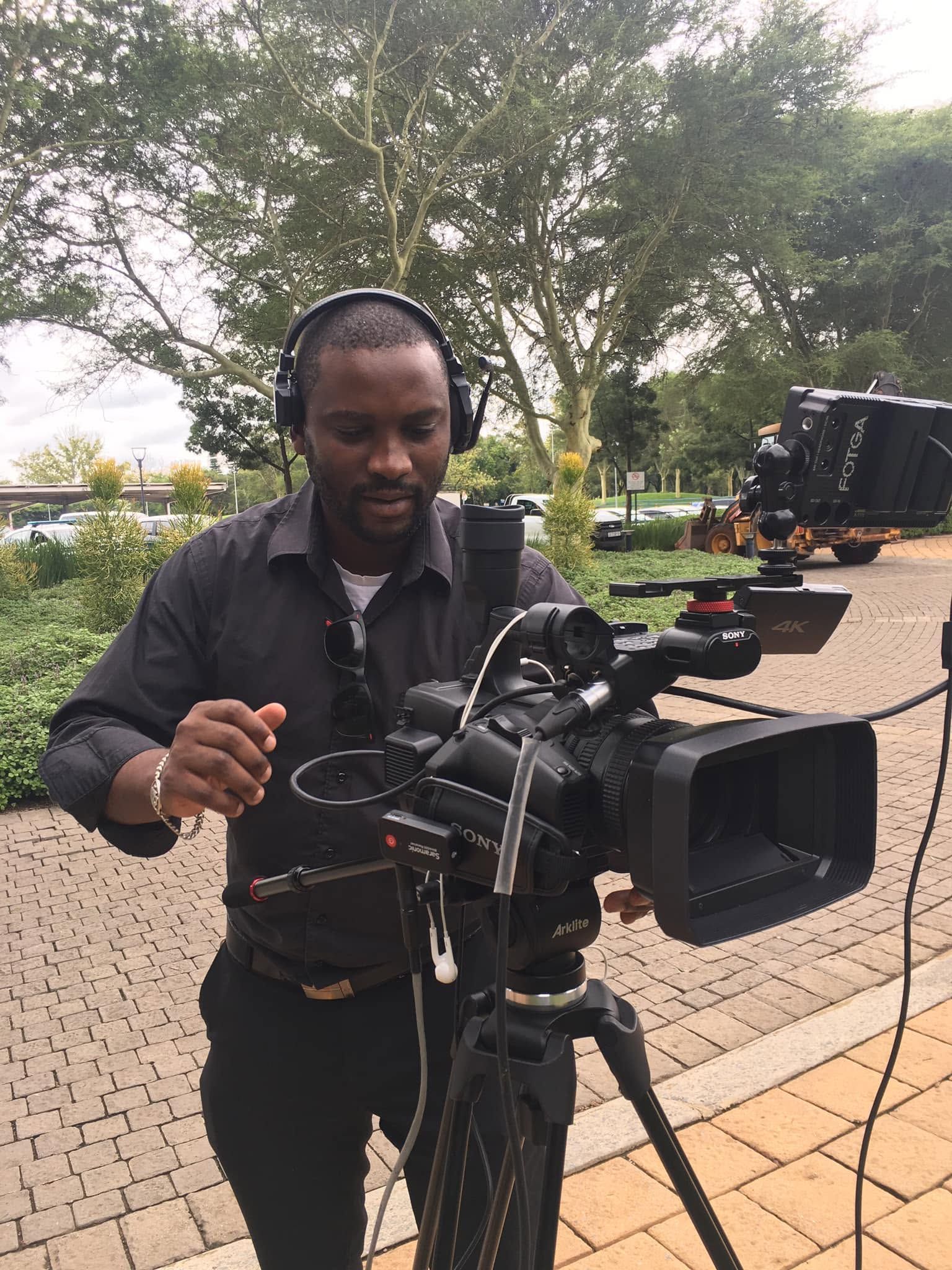
Filmmaker and Cinematographer Daniel Lewis
Finding His Place in American Reality Television
One of the projects that helped accelerate Lewis’s transition into American unscripted television was Country Ball, a reality docuseries centered on Coach Jesse Chinchar and his work with talented but often overlooked high school football players from smaller communities.
Lewis was hired to film football games for the returning television production, traveling between St. Petersburg and Orlando, Florida, throughout the season while following Chinchar and capturing the developing story.
For Lewis, Country Ball became a significant professional opportunity within American unscripted television. The assignment required more than technical command of a camera. Reality television demands an ability to anticipate action, identify the interactions that matter and capture critical moments that may never happen twice.
The footage Lewis filmed was delivered to American Stories TV for the upcoming The Return of Country Ball. The existing Country Ball series has been made available through streaming outlets including Prime Video, The Roku Channel and Apple TV, as well as through American Stories TV.
Lewis’s work on the production also led to additional opportunities.
Daniel Lewis behind the lens
From Florida to West Virginia
Lewis was subsequently brought onto additional television projects, including Surviving Mann All Stars, Season 4, filmed at Summit Point Motorsports Park in West Virginia.
The production involved participants and professionals from military, law-enforcement and combat backgrounds and was filmed over an intensive five-day schedule that included early mornings and late-night shoots.
For Lewis, the experience represented another significant step in developing a distinguished and increasingly diverse body of professional television work in the United States.
During the same production period, Lewis also contributed behind the scenes or as a second camera operator to several other reality television projects, including Wild Shots, The Big Reveal, Face Off and Boom America.
One particularly memorable assignment came while working as a second camera operator on Boom America, where Lewis filmed a scene involving entrepreneur and television personality Kevin Harrington, known as one of the original personalities from Shark Tank.
The experience demonstrated Lewis’s ability to move between different productions, subjects and responsibilities within a demanding professional environment—an adaptability that has become one of the distinguishing characteristics of his work.
Capturing Another Side of America
More recently, Lewis traveled to St. Louis, Missouri, where he worked as a second camera operator on Farm Hero.
The upcoming docuseries focuses on American farmers, ranchers and land stewards and their work in regenerative agriculture, exploring subjects including soil health, biodiversity, holistic grazing and the relationship between consumers and food producers.
In a relatively short period, Lewis had moved from filming high school football in Florida to a military-oriented reality production in West Virginia and then to American agriculture in Missouri.
The subjects could hardly be more different, yet Lewis’s ability to move between them demonstrates an extraordinary degree of versatility.
Rather than allowing himself to become defined by one genre, he has made that versatility part of his creative identity.
From Capturing Stories to Creating Original Projects
Lewis’s trajectory is now expanding beyond individual camera assignments toward original projects and creative collaborations.
Among those efforts is a developing television collaboration with another Florida media agency concerning the Kyminasi System and its work within the agricultural sector. Contracts surrounding the project are still being finalized, while Lewis has also been editing testimonial content involving farms in California contemplated for use in the developing production.
At the same time, he intends to continue pursuing production opportunities with American Stories Entertainment while expanding his relationships with filmmakers, media agencies and production companies throughout the United States.
But one of the projects Lewis considers particularly important could bring his American filmmaking experience back to the continent where his own story began.
Turning the Camera Toward Africa
Lewis has been working with Kimberly Quigley, founder and CEO of Skyrocket Productions, toward the development of a documentary film centered on one of Africa’s wealthiest tribes.
The project remains in development, and the two have been working on the concept for several months. Lewis considers it one of his priority projects.
There is a natural symmetry to the idea.
Lewis came from South Africa to the United States determined to expand his career in film. In America, his camera has taken him through an extraordinary range of subjects—football, competition, entrepreneurship and agriculture. Now, one of the original projects occupying his attention would turn his lens back toward Africa.
It also signals an important evolution in his career. Lewis is no longer focused solely on capturing stories conceived by others. He is increasingly becoming involved in determining which stories should be told and how they can be brought to the screen.
An Original Path Through an Evolving Industry
Lewis’s trajectory is an example of what can happen when a filmmaker refuses to define himself by a single format, market or conventional career path.
An opportunity to film football in Florida led to additional television production work. That relationship took him to West Virginia, where he contributed to several productions. His work then took him to Missouri for Farm Hero, while his developing projects have expanded into agriculture, documentary filmmaking and new creative collaborations.
For a filmmaker who arrived from South Africa determined to establish himself within the American entertainment industry, that progression represents a significant professional achievement and an extraordinarily diverse creative journey.
Lewis’s experience reflects technical expertise, creative judgment, entrepreneurial initiative and originality. Increasingly, he is moving from contributing to established productions toward helping develop projects of his own.
For Lewis, being a trailblazer does not necessarily mean following the most obvious road. Sometimes it means recognizing an unexpected opportunity, bringing an original perspective to it and allowing one extraordinary experience to lead to the next.
The South African filmmaker who came to the United States with a camera and an ambition is now creating a path that is distinctly his own.
Though she has become known for dreaming up fantastical worlds and elaborate stories through her work as a filmmaker, Hollis Sherman-Pepe insists she’s not a dreamer, she is a doer. And after looking at all that she has accomplished over the course of her more than two-decade career in the industry, it is a statement one can only agree with.
Writer-Director-Producer Hollis Sherman-Pepe
Hollis began her industry journey as an actress. Over the years she has played a wide range of roles in films such as Between Wars starring Primetime Emmy Award winner Michael Imperioli (The Sopranos), Twenty-Minute Exotic Getaway, Adrenochrome, Green Piece, and series such as NCIS and 1000 Ways to Die.
She wrote, directed and starred in the short film To Quiet My Mind, her directorial debut, which was the Festival Award winner for Best Experimental Film at the California Women’s Film Festival, as well as Valediction, for which she received Best Actress Awards from the Los Angeles Cinema Festival of Hollywood and the Los Angeles International Underground Film Festival, along with the Women Filmmakers Award of Merit from the Best Shorts Competition. In 2021 she also wrote, directed and starred in the sci-fi fantasy film Twenty Minute Exotic Getaway, which took home two Best Sci-fi Awards from the Jim Thorpe Independent Film Festival and Pasadena International Film Festival. Additionally it was the winner of Best Cinematography and Best Set Design at NewArk Independent Film Festival.
One of the aspects that makes Hollis such a unique talent is her curiosity; and it is something that has led her to step outside the path of acting, and explore the myriad of other production roles that bring a film to life. Early on in her career she worked as a production assistant, using the opportunity to learn as much as she could from every department willing to take her under their wing. She says, “I still approach filmmaking this way: ask questions, stay curious, work hard and be proactive.”
In 2015 she started Farmer’s Daughter Productions, a women-helmed production company dedicated to bringing powerful cinematic experiences to the screen. Over the years she has produced numerous award-winning films through Farmer’s Daughter Productions, including YES, the winner of Planet Female’s Best Festival Short Award and Noci Film Fest’s Audience Award and Young Jury Award, A Couple of Secrets, which won the awards for Best Film Trailer at Mindfield Film Festival, the screenplays Foxes, a Semi-Finalist at Richmond International Film Festival and Cordillera International Film Fest, and Right Hand Man, which took home the Bronze Medal Award at LGBTQ Unbordered International Film Festival.
Now, as she prepares to release her first feature film, Tenants of Carver Hill, we were lucky enough to catch up with Hollis for an interview about her creative inspirations, her evolution as a filmmaker, and the deeply personal experiences that helped shape her latest project.
For Hollis, the impulse to tell stories has always been rooted in curiosity. She is fascinated by the space between what we know and what remains unexplained, and that fascination has become a recurring thread throughout her work. “There is far more unknown than known to humankind,” she explains, describing the questions that arise from that uncertainty as a source of endless inspiration.
That curiosity doesn’t stop at the page. Hollis approaches filmmaking as an exploratory process, researching everything from philosophy and science to poetry and the ideas of thinkers who have grappled with the mysteries of human existence. She then looks for ways to weave those discoveries into her stories, often using fantastical beings and supernatural spaces to give physical form to thoughts and emotions that might otherwise remain invisible.
It is perhaps fitting, then, that her first feature would be a supernatural thriller — and even more fitting that it would draw on experiences that are very close to home.
“I grew up in a haunted house,” Hollis says. “I think it was perhaps my destiny to make a cinematic ghost story.”
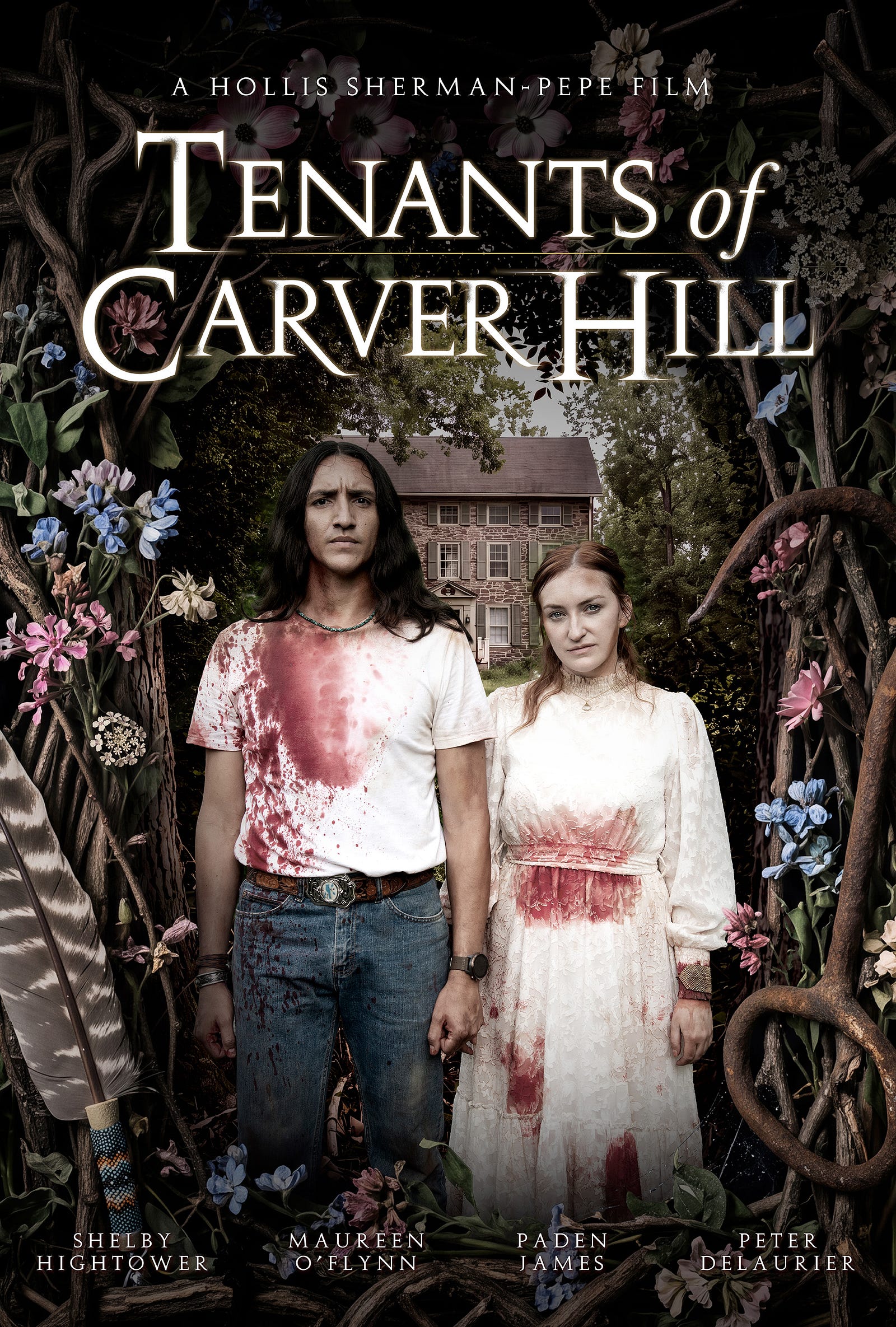
Film Poster for “Tenants of Carver Hill”
With Tenants of Carver Hill, Hollis has taken those real-life experiences and transformed them into a story that explores the mysterious and unseen while remaining deeply connected to its characters, its setting, and the history embedded within it.
A supernatural thriller, Tenants of Carver Hill follows a stranded young couple who spend the night at Carver Hill, only to awaken the spirits haunting the house — transforming one fateful night into an inescapable nightmare. The film features standout performances by Shelby Hightower (HBO’s Task, Netflix’s Tires), Searra Sawka (Hell House LLC: Lineage), Paden James (Prime’s No Rest For The Wicked) and features legendary opera diva, Maureen O’Flynn and theater luminary, Peter DeLaurier.
Welcome Hollis, such an honor to catch up with you. Can you start by telling us where you’re from originally and when you started getting into film?
I am so grateful to be speaking with you. I grew up in rural Southeastern Pennsylvania, outside of Philadelphia. I was always a very creative child and began writing at a very young age. I wrote my first novella by age ten. By my teens, my first camcorder changed how I saw and interacted in the world. I was obsessed with turning our games of playing dress-up into real stories. I made movies all the time: live action, stop motion, documentary. I simply just loved to shoot what I saw.
I was able to save most of my childhood tapes, digitizing them some years back. One of my favorite early films documented an architectural preservation event on our family farm. I set the whole event to Moby’s album Play, and dragged around a boom box on a 100-foot extension cord as I shot beautiful images of construction against a backdrop of blue sky, puffy clouds, and all these wonderful people who came to celebrate the event. I recently dug out the footage and recut it, using the same music and presented it to my family as a special screening. This absolute nostalgia gem meant as much to them as it meant to me.
How did you know that film would be a part of your life for the long haul? And how has it influenced your life?
I was an actor. As young as preschool, I was determined that acting would be my life’s pursuit. I chased that dream, earning my BFA degree at University of the Arts in Philadelphia and making a move to Los Angeles where I continued the work and the training. I loved being on set and wanted to learn as much as I could about production. I started as a hardworking and eager production assistant, garnering as much knowledge as I could from every department that was willing to take me under their wing. I still approach filmmaking this way: ask questions, stay curious, work hard and be proactive.
The first time I wrote and starred in my own short film was in 2012. In that, I found what I was really searching for, creative fulfillment and control of the narrative. It snowballed from there. In 2015 I started my production company, Farmer’s Daughter Productions. I have been producing, directing and shepherding other filmmakers ever since.
My passion for storytelling and art is in consistent bloom. I find my inspiration in nature, art, books, and in folklore. I go to the movie theater often and watch films across all genres and time periods, finding inspiration and studying — how did they shoot that? The language of film is my vernacular, my orbit. I love talking about both the art and the business of film and I feel incredibly fortunate to be surrounded by an ever-growing circle of filmmakers who support, challenge, and celebrate one another.
Making movies is difficult, expensive and time-consuming. These truths are ever present, but they also make the community around filmmaking all the more meaningful. I believe there is room at the top for everyone. Every artist has a voice that can only belong to them. Cinema speaks on such a deep level, providing hope, catharsis and offering windows into experiences we may never otherwise know. I feel incredibly lucky to spend my life creating within that sphere.
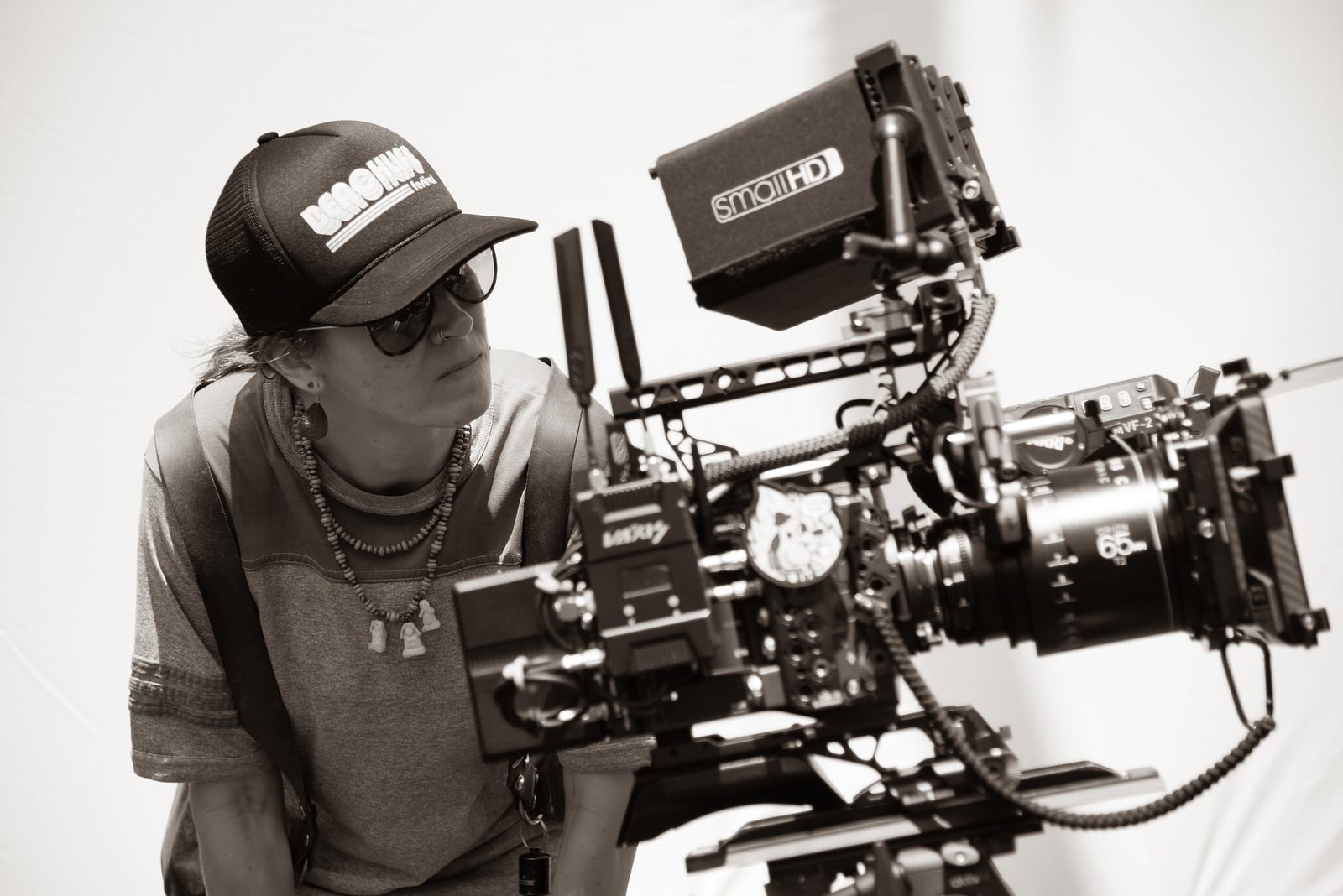
Director Hollis Sherman-Pepe checking the shot
“Tenants of Carver Hill” marks your feature directorial debut. Looking back, what does reaching this milestone mean to you personally and creatively?
I am proud of the work it has taken to get here. I am not a dreamer; I am a doer. My gosh, I have learned so much as a filmmaker over my two-plus decade career and have profoundly grown as an artist. Cultivating my vision and translating it clearly with my team so we can work toward a common goal feels really satisfying. I have never been afraid to ask questions and push my abilities beyond my comfort zone.
Completing a first feature film, particularly one with financial limitations and visual effects demands, feels like an awesome launching pad into the next film and the one after that, and so forth. I intend to keep learning and pushing myself to expand upon what I believe I can create.
Over the past 20 years You’ve worked as an actor, writer, producer, and director. How has your experience in front of the camera influenced the way you direct actors?
Acting is such a vulnerable and beautiful art form. My job as the director is to provide the incubator for the actor to thrive in. As a screenwriter, I love the exploratory aspect. As a director, I like to share the pearls I found along the way with the actors. The pearls include reading material, inspirational art, poetry, music, anything I can offer for their character development. That said, ultimately, I trust them to make unique and honest choices. Often actors will find their own inspiration that they share with me and I then find ways to incorporate their ideas into the story.
As an actor for most of my life, one with a BFA degree and endless training, I have a good eye for what is working and honest within a performance. Sometimes a spark needs a bit of coaxing to become real fireworks and that is when my own training comes out. I love that I can sometimes share the perfect tool from my own toolbox to help an actor realize their fullest potential. I have some absolute favorite acting exercises that I employ behind the scenes. I’ve used them during casting, in rehearsals, and on set to help guide an actor’s sensitivity, connection to co-stars, or even to break a repetitive performance. I would encourage all directors to dive into some acting classes, not scene study, but rather classes that focus on the more subtle aspects of the art.
Sometimes the acting exercises can be physical and I will get right in there with the actor and engage them. The crew on Tenants Of Carver Hill got a real hoot out of watching me jumping and shouting alongside one of the actors. I needed intense frustration and anger from a particular moment, so I got down and dirty with my roots. We jumped up and down to a point of exhaustion. I had him shout the line in my face. I told him to scare me. I would shout it back. We got there. He got there and it paid off tenfold in the cut.
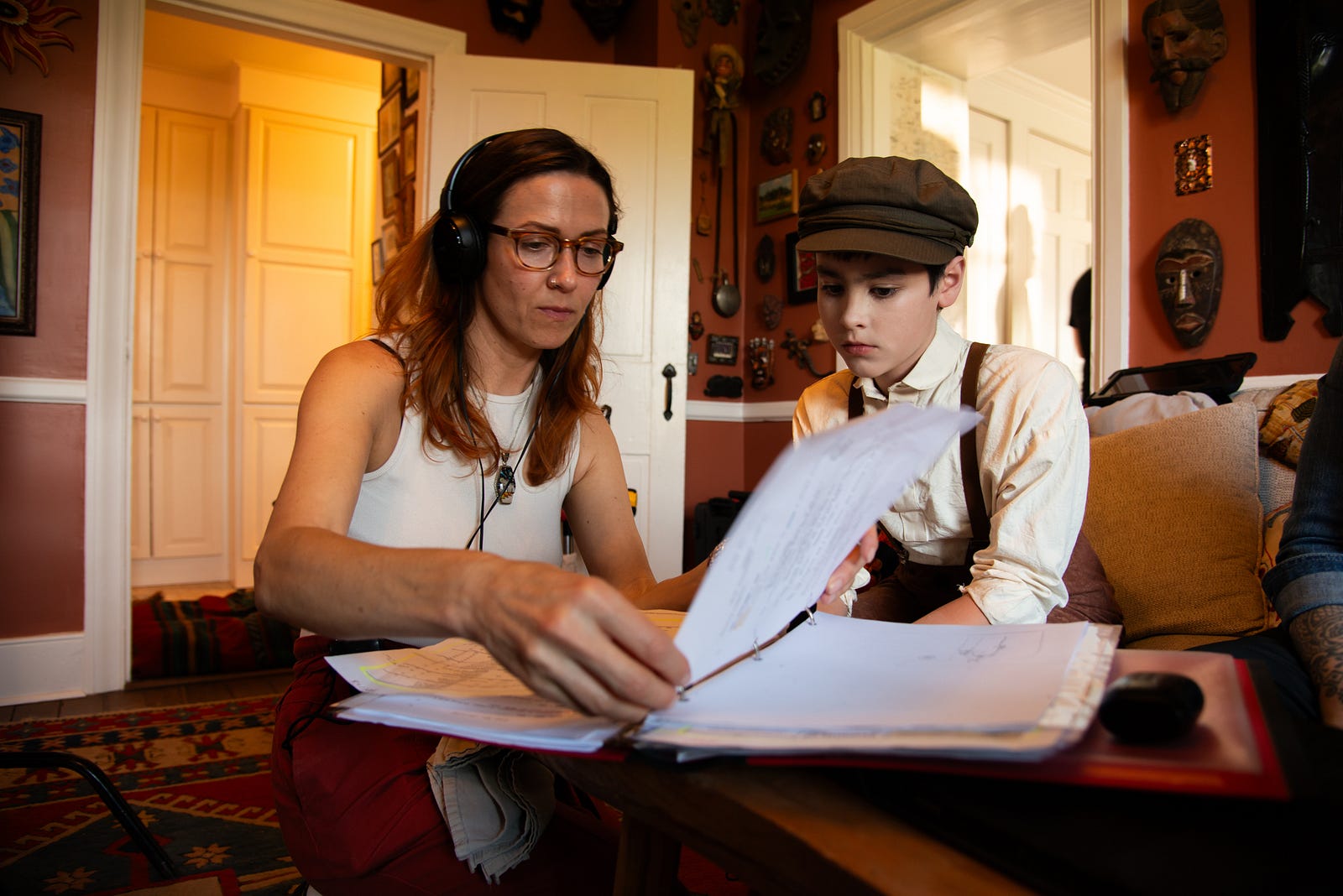
Director Hollis Sherman-Pepe looking through script notes with actor Adam Provo
You often describe your work as exploring the unseen forces that shape our lives. What draws you to stories where mystery, folklore, or the supernatural become a lens for examining human nature?
Unseen forces shaping our lives have been a through line in my work thus far. As human beings, our life cycle is short, and our place in the universe is a marvelous mystery. We are all story tellers; functionally recounting events, replacing lost facts with emotional impressions, as well as inventing explanations for the unknown. From prehistoric cave painters to the legends of the Qing Dynasty, and the traditions of the modern American ghost story, as a species we love to share, imagine and invent. Here on Earth, we are but a pin prick in the vast and ever-expanding Universe. There is far more unknown than known to humankind.
I love the questions that arise from that uncertainty. They give me a reason to research, to read books, papers, and studies written by philosophers, scientists, poets and thinkers. My private holiday is to lose myself in it all, then find clever ways to hide the gems within the stories I build.
Characters interacting with fantastical beings and supernatural spaces gives me an avenue to materialize thoughts and feelings that would otherwise be difficult to see. It opens the door to humanizing concepts and questions. People are marvelously complex. Behavior for most of us is multifaceted. The choices we make are based on morals, emotions and culture. When you introduce spirit realms like magic, faith, consciousness, and new dimensions the possibilities are endless. The supernatural isn’t an escape from human nature, it is a way of looking at it from a different angle.
Although “Tenants of Carver Hill” includes supernatural elements, it feels rooted in history, place, and character. What inspired the story, and what were you most interested in exploring beneath the mystery?
I grew up in a haunted house, so I think it was perhaps my destiny to make a cinematic ghost story. This film became my opportunity to share some of my real-life haunting experiences as well as honor my appreciation for the past.
Tenants of Carver Hill was written specifically for our filming location. Setting the story on a property dating back to the 1700s allowed me to intertwine the real-life history of the house and the Pennsylvania Dutch culture into my story. These early American settlers had their own language, faith, and traditions, and their simple farming lifestyle helped lay the groundwork for the Mennonite communities that followed. I loved the idea that one house could carry all of those eras, lives, and people’s stories vibrating within the walls.
I am fascinated by the idea of destiny versus free will. As modern Americans, we are constantly driven toward success. Our culture is always evolving toward better, bigger, newer, and more efficient. We celebrate the idea that we are free to command our own destiny, but what if we aren’t? What if our position in life was actually predetermined? Like, what if we are part of a much older cycle, a cog in a never-ending wheel, destined to repeat the history of those who came before us?
Our culture prizes youth and beauty. I wanted to play with these roles and expectations, so I set my hopeful heroes in a world that forces them to experience the past, confront duty and preservation. I gave them this challenge but funneled it through a supernatural lens, letting it be enchanting and simultaneously unsettling.
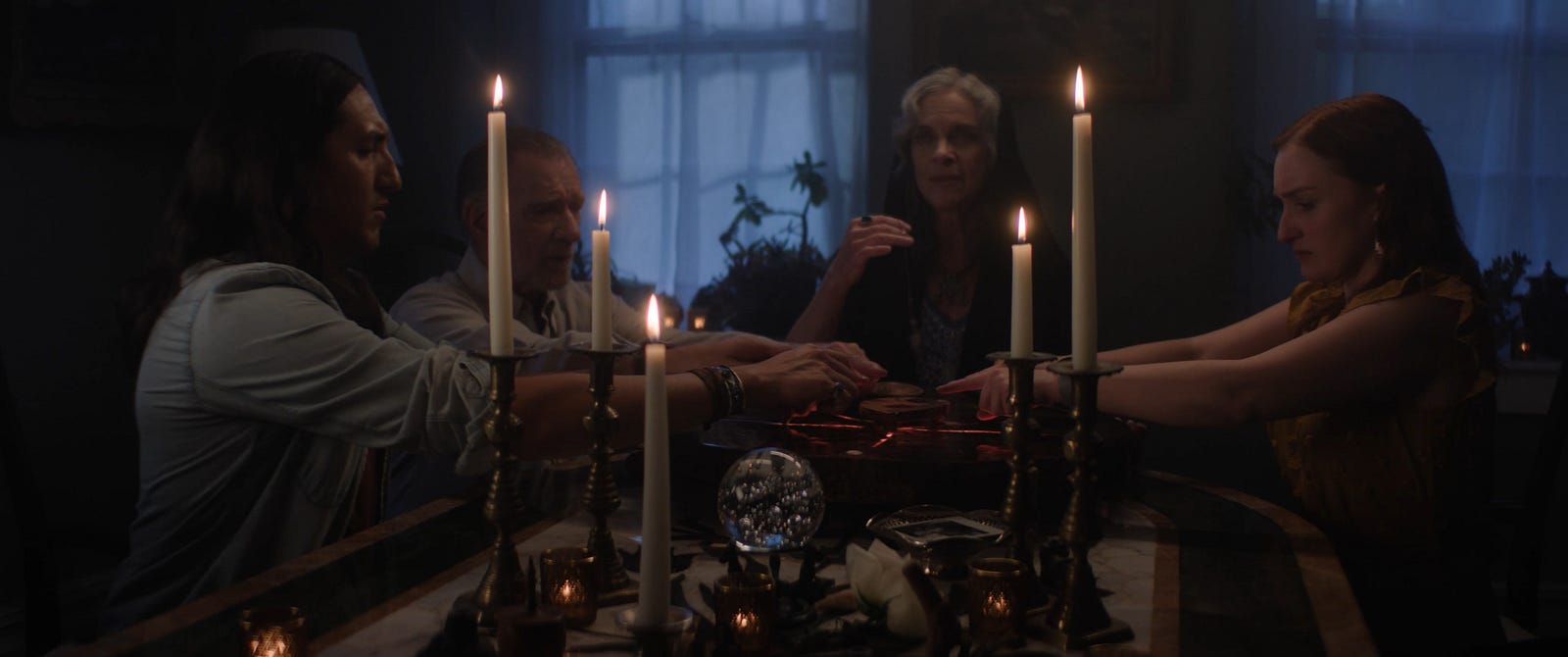
(L-R) Stil of Paden James, Peter DeLaurier, Maureen O’Flynn, and Shelby Hightower conjuring the spirits in “Tenants of Carver Hill”
Your films are known for layered storytelling and richly imagined worlds. What makes “Tenants of Carver Hill” different from other supernatural thrillers audiences may have seen?
I love creating worlds that invite you in, only to later reveal something much darker underneath. Spooky but charming. Warm but secretive. Beauty that fills you with unease. The world of Carver Hill is dreamy. Springtime blooms are as welcoming as the tenants that live there. The perfect misdirection.
I wanted to try something fresh with the look of our ghosts and chose to make them photosensitive. Developing this look with the artist was a lot of fun. The mysterious house was to feel mazelike at times, filled with a collocation of museum-like antiquities and preternatural relics, alive and watching, offering clues to the decades encapsulated within the walls.
I don’t think genre films have to be simple or formulaic. Of course, some formulas work for a reason and Tenants of Carver Hill includes some of those familiar beats and the inevitable “don’t go in there” moments. But ultimately, I love to find ways to break the mold. I’m not a fan of stereotypical characters. I would rather build characters with layers and contradictions. When a character fights with their own belief system or moral code, we as an audience become more invested in the cause and consequence. Watching a complex character make choices is far more intriguing to me.
World building is certainly a specialty for me as a filmmaker. My previous Sci-Fi film, Twenty Minute Exotic Getaway explored a wild variety of environments, from dead planets with suns on the verge of burning out to creatures and ghosts that walked through dimensions that would feel familiar and yet foreign. My unproduced folklore horror scripts also push the envelope of imagination with worlds and creatures. I can’t wait to bring them to life next.
The film incorporates both early American settler history and Native American perspectives, including tailoring your lead character’s background to reflect your lead actor’s Navajo heritage. Why was authenticity so important, and how did those cultural influences enrich the story?
At its core, this ghost story is one about history repeating itself, and memories being alive within the walls. Because the story was site specific, it was important to be authentic with the historical storyline. I wanted the multi-cultural aspects to be organic, not just a flavor enhancer. The male lead is Native American. This felt right for the story because I wanted his connection to the land to be old, an inheritance bestowed for the Settlers arrived, and before the House itself. I left some of the integral parts of his scripted dialogue and action open-ended until we completed our casting. That way my actor could inform some of these choices with their own tribal heritage.
The character is played by a Navajo actor, Paden James. I worked with him directly as well as with a Navajo consultant so I could approach the language and tradition authentically and respectfully. I learned a lot and found meaningful ways to include what I had learned into the story. I learned that a specific prayer is said aloud when a Navajo person enters and exits a graveyard. I included this into one of the earlier scenes of the film. I also included blessings with corn pollen and a prayer song in Navajo asking for protection.
I also wanted the house itself to feel like a character in the story. Using real historical events allowed me to honor the home and memories associated with it. I wove in documented stories, such as how an 1800s patriarch died after being kicked by his horse. The tenants of the estate, characters played by Maureen O’Flynn and Peter DeLaurier, both express their admiration for the home and bestow history of the Pennsylvania Dutch settlers. I sought out consultation for that unique language as well.
Ultimately, by weaving together these various histories allowed me to give the house a truer sense of memory. Not just a haunted-house, but one where generations have left their mark and that is what makes it feel so alive.
Pennsylvania becomes almost another character in the film. What made it the perfect location, and how did filming there shape the atmosphere of “Tenants of Carver Hill”?
Being from Southeastern Pennsylvania, it was personal and meaningful to return and shoot my first feature film here. It was a wild full-circle moment. I knew I wanted my ghost story to feel like a fantasy, harkening back to Ridley Scott’s Legend. We used a variety of filters to create ghostly blooms of light, and we built our shooting schedule around the Springtime blossoms. We planned for scenes around particular trees and flowers as they came into bloom, racing to capture them before the petals fell.
Pennsylvania is incredibly green and lush. This helped our location to feel particularly isolated, making it a little fantastical bubble all on its own. The heroes, played by Shelby Hightower and Paden James arrive at Carver Hill after an ill-fated, cross-country truck breakdown, but soon they are completely enraptured by the beauty surrounding them. The green floral atmosphere feels more like a gift than a warning, a wolf in sheep’s clothing.
And of course, there is the history. Philadelphia was the first capital of the United States. The Northeast is old. If ghosts are the echoes of the past, these walls have a lot to say. There is something inherently uncanny about being alone in a big, old space. It gives you the feeling that you are not really alone. I wanted to capture that feeling in my film.
The production also received Pennsylvania’s film tax incentive. How did that opportunity impact what you were able to accomplish as an independent filmmaker?
We are incredibly grateful for the Pennsylvania film tax incentive. The story takes place in the Keystone State, so shooting there was non-negotiable for us. We took the time to carefully prepare our application and raise the full production capital prior to filming, as required by the Pennsylvania Film Office.
Creating a truly independent film is a monumental undertaking at every step. After completing the project, receiving this incentive feels like a gift. Having fresh funds available to put toward marketing and bringing the film to audiences is an invaluable final piece of the filmmaking process.
Every independent production comes with unexpected challenges. What was the biggest obstacle during production, and what did you learn from overcoming it?
Being ready for anything and willing to adapt and shift gears is essential for independent filmmaking. My show bible is extensive. The script pages are filled with color coded notes and hand drawn diagrams. I keep the pages in plastic sleeves and consult them while shooting. My shot lists are specific and detailed. My cinematographer Nick Pietroniro and I were so incredibly in-tune with one another, creating the shot list, the look books, camera and filter testing well ahead of time. The more you can control and discover in the preparation, the easier it is to change course for the unexpected.
We were shooting in April and May in Pennsylvania, so the potential for rain was a concern. Our 1st Assistant Director, Katrina Gerlach was a wizard juggling our everchanging scheduling needs, child actors that could only work on weekends or after school, talent that needed to fly out mid-shoot for a wedding, talent leaving the country on a set date. There were so many moving parts and sometimes more than 40 camera setups in a day, yet we never once hit overtime and we were able to capture everything I intended to shoot. The vibes were high on this production. I am truly proud of that.
Our principal location was a historical landmark, which brought another set of challenges. The rooms were small, our equipment couldn’t be fastened to the walls or placed on surfaces, and we had to be constantly mindful of protecting the property. Our entire crew took that responsibility incredibly seriously, and we finished without a single incident.
A favorite challenge on set was a shot with my star Shelby Hightower. The camera would spin around her as she was experiencing paranormal contact and sense memories from the past. This type of shot would normally require specialized gear and a larger space. Instead, we were working in a room with a six-foot ceiling and uneven floors. Pietroniro would have to shoot it with a Movi gimbal rather than a crane or circular dolly track. We were shooting anamorphic and had some beautiful lens flares coming in through the windows, but as the camera circled, the operator and equipment began throwing enormous shadows across Shelby. While braving the unexpected rain shower, gaffer, Colin Passman, key grip, Morgan Hartman and team kept adjusting the lights, trying to preserve the flares while eliminating the shadows. We were losing time and falling further behind schedule. Eventually, we had to get scrappy. On each pass of the camera between Shelby and the key light, we verbally cued the gaffer to kill the light. It was whacky but it worked. We captured the quintessential moment using the bare bones, a lot of ingenuity, and a determined crew, and still caught up with our schedule that day.
My takeaways from the experience are to prepare intensely but be ready to adapt, combine and adjust. Always work in service of the film. Stay true to the vision, but ultimately stay true to what the film decides it wants to be. It’s easier to make jazz when the foundation is strong.
On the other hand, was there a moment on set that reminded you, “This is exactly the film I wanted to make”?
That is such an interesting question. From conception through production and post, my expectations evolved with the film. Putting together this stellar ensemble cast really brought it to life uniquely. No other combination of actors would breathe life the same way. Choosing key crew like my cinematographer gave a specific flavor to the film. Working with my editor Brian Ufberg to craft the final picture gave birth to yet another new perspective. Killing my darlings was a powerful benchmark as well, eliminating five scenes from the director’s cut, more tightly crafted the vision. During my pickup days, I added new scenes, and new characters. I also expanded the role played by Searra Sawka, which gifted the final picture in such a paramount way. From the first draft to the final cut, Tenants of Carver Hill developed into something unique. In a funny way, it will never be exactly what I envisioned, but rather it is its own being. The film speaks for itself, a culmination of choices I made along the way with the support of a dedicated team of collaborators.
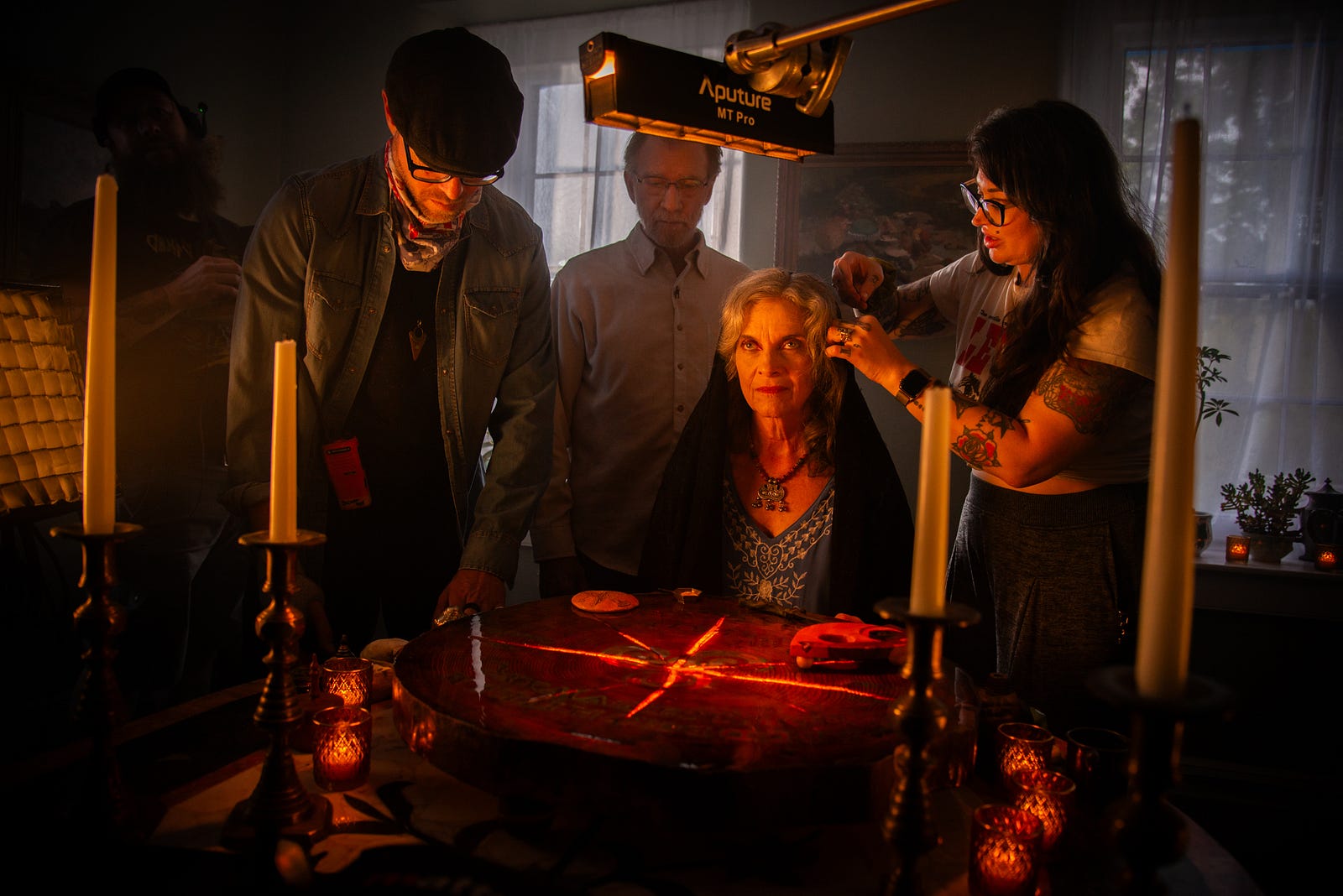
(L-R) Producer Scott Fleisher, actors Peter DeLauier and Maureen O’Flynn, and HMUA Jessica Saint gathered around the custom built spirit board, perform last looks before shooting a “Tenants of Carver Hill” scene
Your bio mentions that you’re a collector of art and antiquities, and that you’re drawn to color, texture, and layered imagery. How do those personal passions find their way into your filmmaking?
I am a more is more person. It’s in the clothes I wear and how I style my home. I’ve always been drawn to color, pattern, art with feeling, fashion with flair. I am drawn to quality craftsmanship and artisan made pieces. I approach my filmmaking this way. Every element is considered and imbued with care. I love to travel, to read, to absorb art and nature. My personality inevitably splashes onto the screen. All of my films have been slightly off-skew from the straight and narrow. Despite what genre I happen to be tinkering in, my voice is clear. I love to fold in layers, ask questions that reveal more questions, explore and invent. Art gives us the ability to expand ourselves in magical ways. Cinema is a particularly limitless medium to do just that.
After completing your first feature, what surprised you most about yourself as a filmmaker?
I might be allergic to keeping it simple.
Every filmmaker grows from one project to the next. What lessons from Tenants of Carver Hill will you carry into your future films?
I have ambitious projects in the queue. A lesson learned from Tenants Of Carver Hill is the value of bringing key collaborators to the table earlier in the game. Having a strong Executive Producer that wants to meet me on that quest will be a game changer.
I would prefer to have my editor on board prior to shooting so that way we can work in tandem as we shoot. With each project, my visual effects needs have expanded. Each time I have had marvelous consultation prior to shooting and exceptional guidance during post. For Carver Hill we created a playbook for how to tackle each shot and we executed accordingly. Going forward I would prefer to have my Visual Effects Supervisor on set, that way we can more easily switch gears, adapt, adjust on the fly, solving problems creatively and professionally as they arise. Ambitious filmmaking requires incredible collaboration. The earlier the right people are in the room, the more possibilities you have when it comes time to make the movie.
Beyond festival recognition or distribution, what do you hope audiences take away after experiencing “Tenants of Carver Hill”?
My hope was to bring a fresh perspective to the genre film world, bridging the gap between the hardcore horror hounds and the introspective indie aficionados. I wanted to celebrate the charm of Pennsylvania with all its history, natural beauty, open spaces, historical landmarks, and hopefully inspire people to appreciate and want to preserve those things.
I’d be tickled if viewers walked away considering that consciousness may be deeper than human thought. That perhaps it is an energy within physical spaces or that conversely, material objects are living within a greater cosmic consciousness. Memories and emotions are alive and transferable, whether we consider them spirits, ghosts, faith or something beyond our current understanding.
My film is chocked full of Easter eggs. If someone picks up on the clues and metaphors, I hope they’ll be moved to watch it a second time and discover something they missed the first time around. Ultimately, I hope audiences appreciate the nuance and craftsmanship behind my picture. If Tenants of Carver Hill leaves you curious and questioning what lies beyond our human experience, I feel as though I did my job.
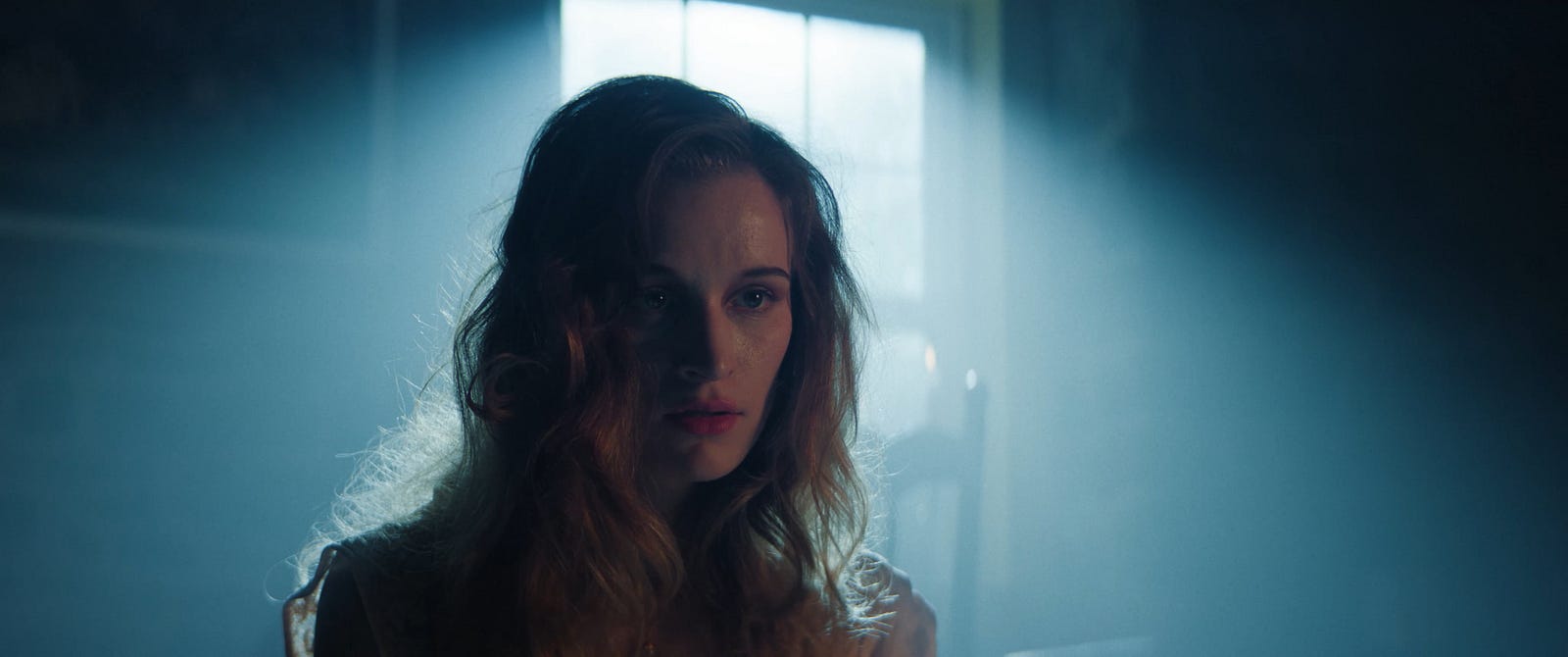
Actress Searra Sawka as Mable Marie, the origin story, in “Tenants of Carver Hill”
Looking ahead, what stories are calling to you next? Are there themes or worlds you’re excited to explore in future projects?
Oh gosh, I have quite a few scripts ready to go and projects in development, so I would hate to let the cat out of the bag. I explore a variety of genres and am eager to dive into new worlds, so I’ll keep the specifics under wraps for now. Interested collaborators can find me through Farmer’s Daughter Productions.
At the end of the day, I believe an artist always needs to be arting. The need to create is as important as the need to breathe. No matter the next picture, I will breathe my life into it and give it my heart.
Hollywood has always attracted performers willing to cross borders in pursuit of a bigger artistic vision. For Polish-born actress Ewa Sobiczewska, the journey to Los Angeles has been about more than geography. It has meant combining the emotional sensibility she developed in Europe with the rigorous professional training and creative possibilities she discovered in the heart of the American film industry.
Actress Ewa Sobiczewska
Still early in her career, Sobiczewska has already begun building a diverse body of screen work on both sides of the Atlantic, taking on prominent roles in productions including Family Trust, in which she portrayed the lead female character Naomi, and the Polish film Alastor, in which she played Marika. Rather than gravitating toward one type of character, the young actress has shown a particular interest in roles that demand emotional complexity and allow her to explore the contradictions beneath the surface of a character.
That instinct was further developed during her training at the American Academy of Dramatic Arts in Los Angeles, where Sobiczewska refined her craft and expanded her understanding of acting for the American entertainment industry. For the Polish-born performer, studying in Los Angeles did more than sharpen her technique—it broadened her creative horizons and helped shape the kind of actress she wants to become.
One of the projects that illustrates that direction is Family Trust. Sobiczewska stars as Naomi, one of two siblings attempting to navigate the death of their parents while confronting a painful disagreement over money, personal ambitions, and the futures they envision for themselves. The role required Sobiczewska to balance grief, familial tension, vulnerability, and determination within a character positioned at the center of the film’s emotional conflict.
Her performance in Family Trust also brought her recognition on the independent film-festival circuit, including a Best Actress award from the Alternative Film Festival, marking an important milestone in her developing screen career.
Back in Poland, Sobiczewska appeared in Alastor as Marika, a daughter forced to grapple with a sudden shift in her family’s dynamics after an unexpected event disrupts their seemingly peaceful life. The role provided Sobiczewska with another opportunity to explore the complexities of family relationships and emotional upheaval, while adding to a body of work that now spans both European and American productions.
Actress Ewa Sobiczewska on camera
Yet what may distinguish Sobiczewska most is the perspective she brings to her work. Moving between Poland and the United States has exposed her to different cultures, approaches to storytelling, and ideas about performance. Rather than leaving one artistic identity behind for another, she sees that international background as something she can bring into her characters.
Now, with new professional projects and creative opportunities on the horizon, Sobiczewska is entering the next stage of her career with the opportunity to combine her professional training, international perspective, and growing screen experience. As she continues building her career in Los Angeles, she remains focused on challenging herself through increasingly complex roles and developing a body of work that reflects both her versatility and her commitment to the craft of acting.
For Sobiczewska, Los Angeles represents not simply a destination, but an opportunity to continue evolving as an artist—and to bring something distinctly her own to the characters she takes on next.
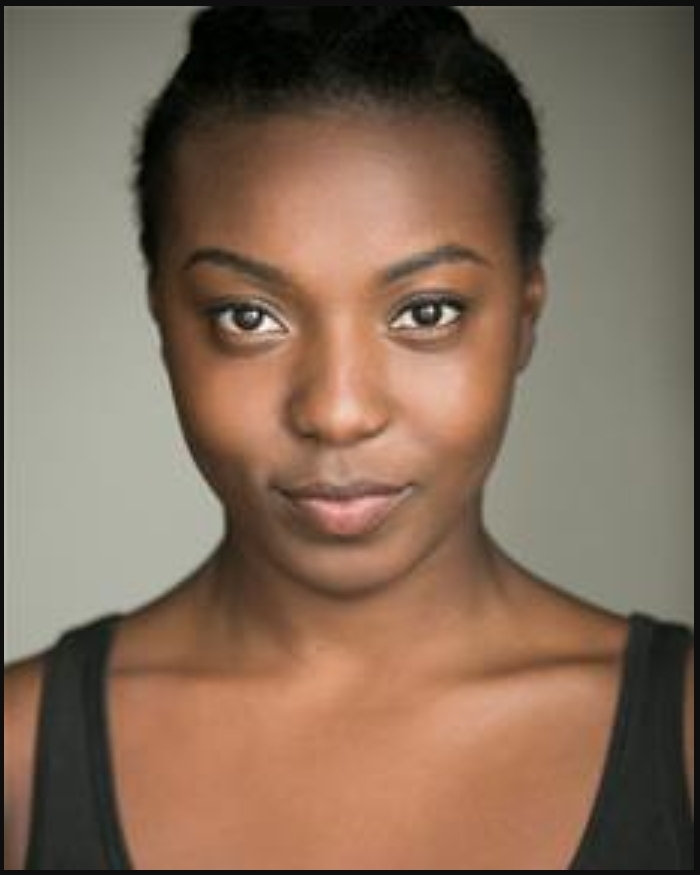
British actress Scherrikar Bell’s combination of natural talent, technical skill and intuitive gift for manifesting an emotional reality qualifies her as an extraordinary force. From her 2011 start on stage in London’s West End to her extensive film and television work (credits include roles on BBC’s “EastEnders,” “Famalam,” “Doctors”), Bell unfailingly radiates an engaging quality that profoundly enhances every portrayal.
Her memorable performance as a professional assassin in masked British rapper SL’s “FWA-Boss” music video is a prime example of the inescapable Bell charisma.
With over 100 million streams of his music to date, the enigmatic, teenaged SL is one of UK hip hop’s most important and fastest rising artists, and landing her role in the video (SL’s first single of 2019) was a plum assignment for Bell.
Helmed by the award winning director Myles Whittingham, the deeply cinematic film short showcases the masked rapper’s downbeat, almost nonchalant UK drill sound—a smooth, minimalist mid-tempo style—and Bell’s lead character anchors the video from it’s opening through to its final shot.
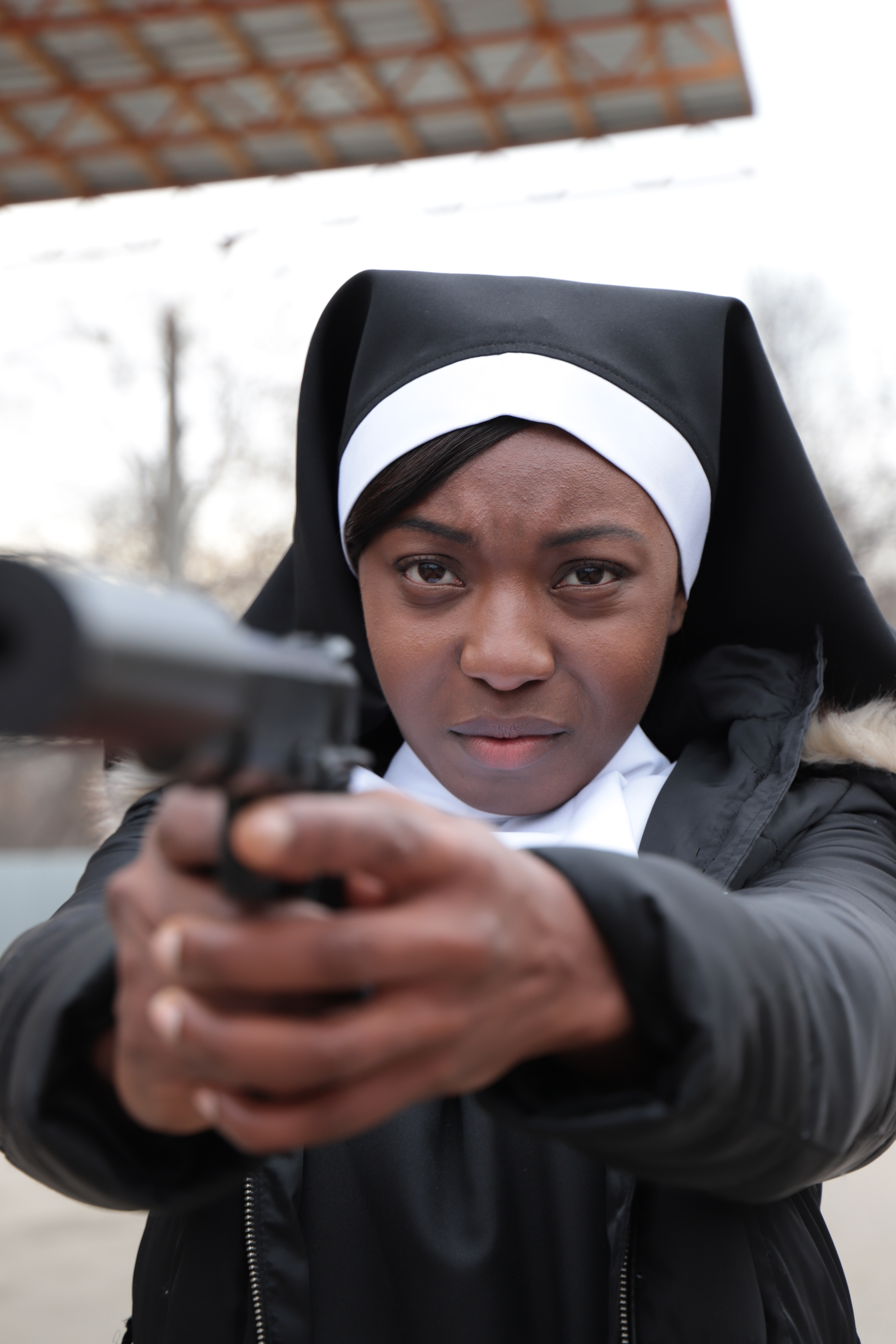
As SL’s low key rhymes roll above the track’s glimmering, almost meditative beats, we see Bell donning a nun’s habit, then cut away to an exterior where the Mother Superior calmly approaches an automobile, produces a wicked looking automatic handgun and shoots the vehicle’s occupant at point blank range.
It’s downright startling moment—made all the more so by Bell’s serene demeanor and measured pace—and she draws the viewer in close as we witness a series of similarly deadly encounters.
A subsequent sequence find her clad head to toe in black leather (an updated Emma Peel comes delightfully to mind) and wielding a high powered sniper’s rifle which she uses to coolly dispatch a trio of obvious ne’er do wells before breaking into a lethal Mona Lisa smile and slowly sauntering over to retrieve chrome-plated brief case from one of her victims.
The unforgettable instant when she cracks that malevolent grin is so subtly evil and cold-blooded that it qualifies as an absolutely masterly piece of acting, one that Bell makes look so easy but is, in truth, an example of deep stagecraft.
It’s the ideal set up for the next murderous tableau, a scene straight out of Hitchcock—Bell strolls wordlessly up to an approaching woman, suddenly produces a nasty looking shank from within her sleeve to adroitly deliver a swift shocking stab, another deadly encounter stunning in its almost mechanical precision.
Bell’s comprehensive involvement with the role allows her to inhabit this icy-hearted murderer so convincingly that it made the video a fan favorite, with almost 4.5 million views since its March 2019 release. Intriguingly, the video ends with her appearing in SL’s living room then fades to black with a lingering “To be continued” screen title and an open-ended question as to what she was doing there—reporting to her employer or preparing to dispatch him?
The mood and mystery of the video inspired multiple fan-made reaction videos and cemented SL’s reputation as one of the UK’s fastest rising stars, and there’s no question that Bell (currently featured on the BBC “Teach The Victorians”) and her blood curdling contributions to the video played a significant part in making it such a sensational, feverishly viral internet and commercial success.
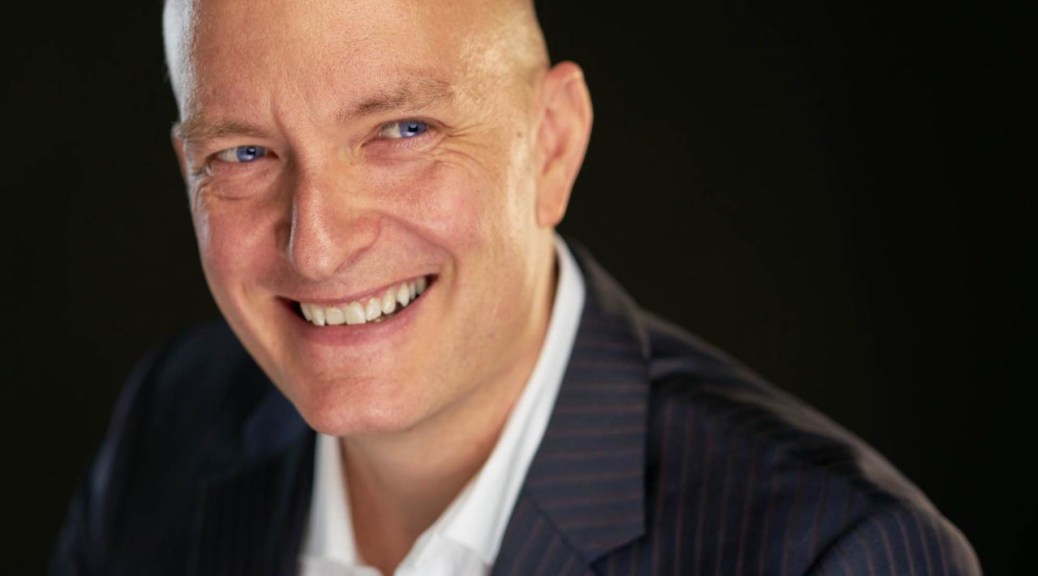
Whenever John Wate steps onto a film set, puts his eye to a camera lens, and starts making a movie, he is living his dream. Directing is a pleasure he can’t compare to anything else; it allows him to be in tune with what is happening in front of him, and all his senses go into overdrive. He spends every day doing what he truly loves, and this passion translates directly into his beautiful work.
For this German native, making a good movie is all about the research. He always aims to find the perfect story and the right characters, with the singular goal of leaving an impression on his audience. With his work on the Smithsonian’s Epic Warrior Women film series and movies like Samurai Warrior Queens, he does just that, showcasing why he is an industry-leading director in his country.
“I would say as a director you are a storyteller, and the way you have lived and seen the world will organically shape how you tell your stories. I found that the world is a treasure trove that has so much to offer in terms of stories and characters. Once I find that ‘one thing’ that interests me, I can start digging and I usually find gold,” said Wate.
Wate has spent many years directing masterful films and television series, including the TV movie Samurai Headhunters in 2013, that allowed him to explore a unique part of world history. It is a documentary on the dark and brutal side of the samurai warrior clans featuring the life of peasant Masa who is forced into the ruthless world of the samurai.
For over a thousand years, the samurai have been celebrated as an aristocratic warrior class. Exceptionally skilled and loyal until death, their very name has become a byword for honor and dignity. This film reveals the unknown dark side of the samurai – a fascinating tale of greed, treachery, extreme cruelty and violent death. Based on newly discovered samurai war manuals, Samurai Headhunters reconstructs the life of a young peasant farmer who is press-ganged into a warlord’s army. Driven by his love for a village girl of noble birth, young Masa quickly rises through the ranks from simple foot soldier to venerated samurai commander. But his reward is to be one of betrayal, lies and finally forced suicide by his fellow samurai. Interwoven with this dramatic story, two British historians track down remarkable new evidence from ancient war manuals that show the true, dark world of the samurai. The drama documentary also features a living samurai master and his students, as well as CG animation, stunning re-enactments, original costumes and historic locations.
“Everyone knows the samurai as loyal, courageous fighters with a strong moral code – but not many people know that this is only part of the story. During the almost 200 years of civil war in Japan the samurai got rewarded for their deeds in battle, which often meant for the number of heads they had taken. The film explores the unknown dark side of the samurai, how they cheated, lied and murdered to gain favors and advance their careers, the forbidden love between warriors, the atrocities of samurai warfare, and the danger to rise to fame in such an environment. I found all these facts about the dark side of the samurai as grizzly as they were fascinating,” said Wate.
After great success with his previous film, Ninja Shadow Warriors, Wate teamed up once again with Urban Canyons Producer Sebastian Peiter and together with researcher Anthony Cummins, they researched and built the concept for the film. Living in Japan at the time, Wate not only had extensive experience, but he also had direct links to the famous Japanese film studios in Kyoto, and through all his previous other documentaries had direct access to Japanese cultural icons, such as sword masters, swordsmiths or traditional armourers. He was the ideal director for the job.
“You need to have a feeling for Japanese manners and that what they say is not always what they mean. I think a lot of the fascination for the samurai comes from the exotic mixture of stoic readiness, their manners and proper conduct in life and in battle. But if you want to show that, you have to know HOW they did certain things and why. You can’t just use a Western blue-print to invent what the character would do. At that time I lived in Japan, I spoke the language and understood their manners and hints, like that a certain gesture can reveal the opposite of what has been said. The timing, the tempo or movement of people speaking at formal gatherings. These are all subtle things that can build an authentic exotic flavor that is fun to watch,” he said.
Samurai Headhunters has been extremely popular since its release. It has aired in over thirty countries, not only on television channels but also various exhibitions about the samurai culture. It is currently showing in the prestigious Kunsthalle Munich, a German national art museum.
As a seasoned and celebrated actor, Kevin Clayette still tries to approach his craft, and his life, from the mindset of a child, by always being open to and excited by new experiences, and to love and believe like a kid. With this approach, every time he steps onto a film set, he is excited by the opportunity to play make believe and tell stories. He gets to be that little five-year-old that is always inside of him, not caring what others think and simply enjoying his life. For this New Caledonia native, there is no greater sense of joy.
At only 25, Clayette has already had a formidable career, becoming a recognized leader in Australia’s entertainment industry. Audiences everywhere recognize him from the long running soap opera Neighbours, in which he played fan favorite Dustin Oliver, and in the award-winning feature film Emo the Musical, in which he showed off his versatility as a triple-threat.
Another hit on Clayette’s resume came with the 2015 science fiction horror flick Doktor. Shot at the legendary Fox Studios in Australia where many popular films, including The Matrix, have been filmed, this award-winning film tells the story of an ancient man who is awake during surgery, triggering an hallucination, but also an allusion of a disturbing new reality.
“I liked that even though this story is set in a dystopian world and therefore quite far fetched from our current reality, it deals with themes such as money and power that are very real in our world. By talking about the reality of those issues, of those vices, we allow very important conversations to happen. Projects like these make you think and question our society and yourself. It’s a very interesting topic to reflect on,” said Clayette. “What does money do to you? Would you rather live a happy and fulfilled but short-lived life, or a lonely but long life thanks to money and corruption?”
In Doktor, Clayette plays the lead character of Gulham. In the dystopian world, Gulham is taken from the ones he loves after receiving a mysterious phone call. During that phone call, he made a deal with the devil and agreed to give his life in exchange for his family and loved one’s safety. He is then mistreated and drugged and dragged into a room before the film’s big reveal. Gulham is very ambiguous, but he is a good man, trying to do whatever it takes to save his family and loved ones. He is very brave.
Clayette knew that as the star of the film, he had to put everything he had into creating an authentic and captivating performance. Every morning, he would go through the entire script and storyboard before going on set, and every evening after leaving he would focus on creating the backstory for his character, imagining what he had been through, and then visualise what the next day would look like.
Clayette also had to prepare for his many emotional scenes, needing to portray a devastated character who sacrificed his life and knew he would never see his family again. In another scene, he was dragged down a corridor on a leash like a dog, and he had to show that hopelessness just with facial expressions. Such a challenge was exciting for the actor, who exceeded all expectations.
“Everyone in the crew was absolutely lovely, from the director to the producer to the makeup artists. It was very challenging emotionally on many levels to shoot some of the scenes I had in the movie. I liked having to get in the mindset and shoes of someone that lives a completely different life than the one I have,” he said.
Clayette had to portray a vastly emotional and dynamic performance despite the role being action focused with minimal dialogue. Using only his body language, he put everything he had into the role, creating many intense and dramatic moments in the film that greatly contributed to its later success.
Doktor was screened at many prestigious international festivals around the world. It took home Best Experimental Short Film at the Cutting Edge International Film Festival and was also selected to be showcased within the open competition category of AACTA’s Social Shorts (the Australian Academy of Cinema and Television Arts). Clayette still feels honored by the film’s vast success.
“I’m really proud of this project and the hard work that everyone put in. It’s incredible to know that independent movies with smaller budgets can still have such an impact on our world,” he concluded.
The importance of cinematography, says Zichen Tang, a master of his craft, does not lie with whether an image is real or not, but if one can make the audience believe it is real. With this approach, Tang continuously transports audiences to different places and times, immersing his viewers in the world he has created through his work. He likes to express himself through his art, knowing his fans enjoy his individualistic approach.
“Cinematography is sharing your story not by telling it, but showing it,” he said.
Throughout his esteemed career, Tang has proven time and time again why he is a sought-after cinematographer in his home of China and internationally. Whether creating a viral video, like the humorous and enlightening Unspoken Rules of Chinese Gift Giving or an award-winning film such as The Last Lesbian, Tang’s talents are always on display.
Yet another success story for Tang came last year with his award-winning film The Somnium. It is the story of a single mother who can’t recover from the loss of her beloved son and joins a research program to live in a dream state of her memories, while her mom fights with her to keep her in the present reality.
“The story was interesting. When I first read the story, it reminded me of an episode of my favorite show, Black Mirror. I always wanted to make a film like that. I like it because it’s not an ordinary ‘happy ending’ film, but the type of story that makes people think. On the surface, it alarms the potential harm that technology could bring to us, but deep down it was the mom’s choice that caused the tragedy. So, the core is really about humanity,” said Tang.
The Somnium premiered last year at the Los Angeles Independent Film Awards, where Tang was nominated for Best Cinematography. He was awarded Best Cinematography at the Los Angeles Film Awards, where the film also took home Best Director and Best Editing. The film made its way to several more festivals throughout the year, winning more awards and enthralling audiences all over the world with the help of Tang’s work.
“I was thrilled when the awards started to be announced one by one, while at the same time I feel we deserved it. Everyone on this project was talented and worked really hard. They believe in the story,” said Tang.
Tang was asked to come on board by Director Jingyu Liu, who had always wanted to work with the cinematographer after seeing his work. Tang was eager to form a partnership, advising her on her previous film, Shallow Grave, which was nominated for Golden Reel Award. When Liu sent Tang the script, he knew instantly this would be a great project for them to take on together.
“I was thrilled after reading the script. It was still a draft, but I could already tell its potential. The director and I have very similar tastes, so during pre-production, instead of trying to convince each other of things, we were inspiring each other. Often there would be many disagreements between cinematographers and directors, but on this project, we seldom had a disagreement. Instead, we have been focusing on finding better and more creative ways to tell the story, making the process rather delightful,” said Tang.
Making The Somnium was fun and rewarding for Tang. As a cinematographer, he was heavily involved in the script, putting his heart into the project from the very beginning to the very end, going through almost 20 drafts as it changed from the first draft to the final production.
“I was developing the story with the director all the time, and during that process, we had been talking about how we should shoot it as well. Often filmmakers have a problem when they find out something in the script is wonderful in theory but can’t be expressed visually. That was never a problem for this project. I was a visual consultant during script development and made sure this is a story that would be best told in the form of film,” he described.
The Somnium was just one of Tang’s many award-winning projects last year, and he has a lot lined up this year to continue his success and keep showing the world his outstanding talent as a cinematographer. It wasn’t always an easy path to get to where he is today, but he always persevered, and it was well worth it. He knows he will never stop learning new tricks of the trade and is eager for every new project he takes on.
“The best way to make it in cinematography is to learn from others. There’s a saying, ‘good artists copy, but great artists steal.’ It’s not encouraging plagiarism or anything, but saying that we should watch what other artists have done, think why they did it, and learn from them,” he advised.
Xueou Yu was just a teenager when her mother bought her a book titled Top 250 IMDb Ranking Films. At the time, it seemed like a simple gift, but it quickly changed her life forever. She began watching some of the films in the book, and before she knew it, she had watched all 250. After immersing herself in the dynamic artform, Yu became in love with cinema. She could travel to far lands, go back in time, learn about different cultures, all while sitting on her couch.
Now, Yu is a celebrated film director and producer in China and abroad. She is known for her work on films like Vincent, Ka Ka Ka Ka, and Donna, as well as commercials such as Sirui Pocket. She is known for her expertise in her craft, with over 60 thousand followers on social media, who look for her posts providing feedback on current movies and television shows.
“I think film is a tool to expand our lives. To me film can maximize our life experiences. I want to spend my life giving others this kind of experience,” said Yu.
One of Yu’s first tastes of international success came with her dynamic drama Asa Nisi Masa. At the time, she was very drawn to magical realism in film, the mix of surreal and reality greatly attracting her artistic mind. She wondered what she could create with this in mind, and began exploring ideas that would draw people in while also challenging them. That is when Asa Nisi Masa was born.
Asa Nisi Masa follows a man who has never believed in magic, when one day he walks into a bar and finds out the bartender has found his true love by the help of a genie. The genie lives in the men’s bathroom in the bar, and is there to grant wishes. Yu also wrote the script, on top of producing and directing the film. It is a simple and funny story, and she wanted to convey that one never knows what will happen, even if it is something you never thought possible.
When Yu first started working on the film, she had difficulties finding a cast and crew as many were unsure of what they deemed a “weird” story. However, Yu had an important outlook: when making films, if the crew doesn’t believe in what they are creating, they won’t create a work of art. Commitment, she finds, is one of the most important aspects of filmmaking, as it is such a collaborative effort. With that in mind, she worked tirelessly to find the right people who not only could execute her vision, but who believed in it as well, and her hard work paid off.
Xueou Yu on the set of Asa Nisi Masa, photo by Reina Du
Asa Nisi Masa premiered at the 2017 Blow-Up International Arthouse Film Fest, where it was an Official Selection. From there, it saw great success, and went on to win awards at the International Independent Film Awards and the NYC Indie Film Awards 2017. Such success could never have happened without Yu, who was the driving force of the film.
“I created this project to experiment with the language of film. I think I successfully created a mysteriously odd world. I was able to spread many of my weird thoughts and I had a lot of freedom to really do what I wanted, because I was also producing it. Experimenting is always fun, and even though there are some technical aspects that some would question, I created exactly what I wanted, and it really resonated with audiences. It is a reminder for myself to never stop experimenting,” she said.
At the early stages of pre-production, the most pressing question was asked: how will they show a genie? Was it going to be animated, or an actor in costume? Yu decided on the latter. She thought that by making the genie seem like a regular person, it further portrayed the idea that although the idea was magical, it could happen in the real world, with genies walking among us. To blend the magical aspect, she had two characters sitting at the bar based on a painting by René Magritte, adding that artistic touch for viewers. She truly mixes the surreal and real together to create a unique feeling.
“They call it magic realism, but to me the realism part is always more important because that’s how we live in this world. In this film you still see the realism play a big part,” she said.
Needless to say, Yu is a determined and talented filmmaker. She is a leader and an artist, and knows how to captivate an audience through her work. Asa Nisi Masa is just one example of what she is capable of, and audiences around the world can continue to expect great things from this filmmaker.
She believes her passion is why she has seen the success that she has, and encourages all those looking to follow in her footsteps to truly be in love with filmmaking.
“Don’t go into filmmaking because you think it looks cool or can bring you fame and you make what would please a crowd. Do it because it is what is in your heart and find the subjects you really love and just keep going. Don’t pretend to be the person who you are not, and don’t be ashamed of what you can’t become. Focus more on doing the things that you really love. This is an art, it takes talent and a lot of commitment,” she advised. “If you have both those things, never give up.”
Love has been the inspiration of art since the dawn of time. From Shakespeare writing “I love thee with a love that shall not die, till the sun grows cold and the stars grow old” to the Beatles harmonizing “All You Need Is Love” to Jack giving Rose his share of the iconic door in Titanic, love has been one of the most captivating themes throughout art, literature, and film. Throughout his life, it has been the unsuccessful pursuit of love, intimacy and relationships that, for Ricky Cruz, have made such great stories. These stories were always something that he wanted to share with the world because they are so universally enjoyable and uncomfortable.
“I began working on an anthology of quirky romantic comedy short films centered around unsuccessful endeavors into love and relationships. These were supposed to highlight the flip side of the coin when it came to conventional love stories. I always wanted to see the growth behind the guy who is left at the altar, because there’s something so familiar with that element of tragedy,” said Cruz.
With a celebrated career as a producer, Cruz had dedicated his life to telling stories that enchant audiences, and love is an underlying theme in most of his most decorated works, from the LGBTQ coming of age story Foible to drama Honor, telling the story of a woman forced into an arranged marriage by her parents. Another of his more recent projects, Mixed Orders, dives deep into such ideas. Cruz was keen to create the film because he believes seeing love stories through this specific lens is a great way to get a sense of the sort of films he is eager to bring to life in the future.
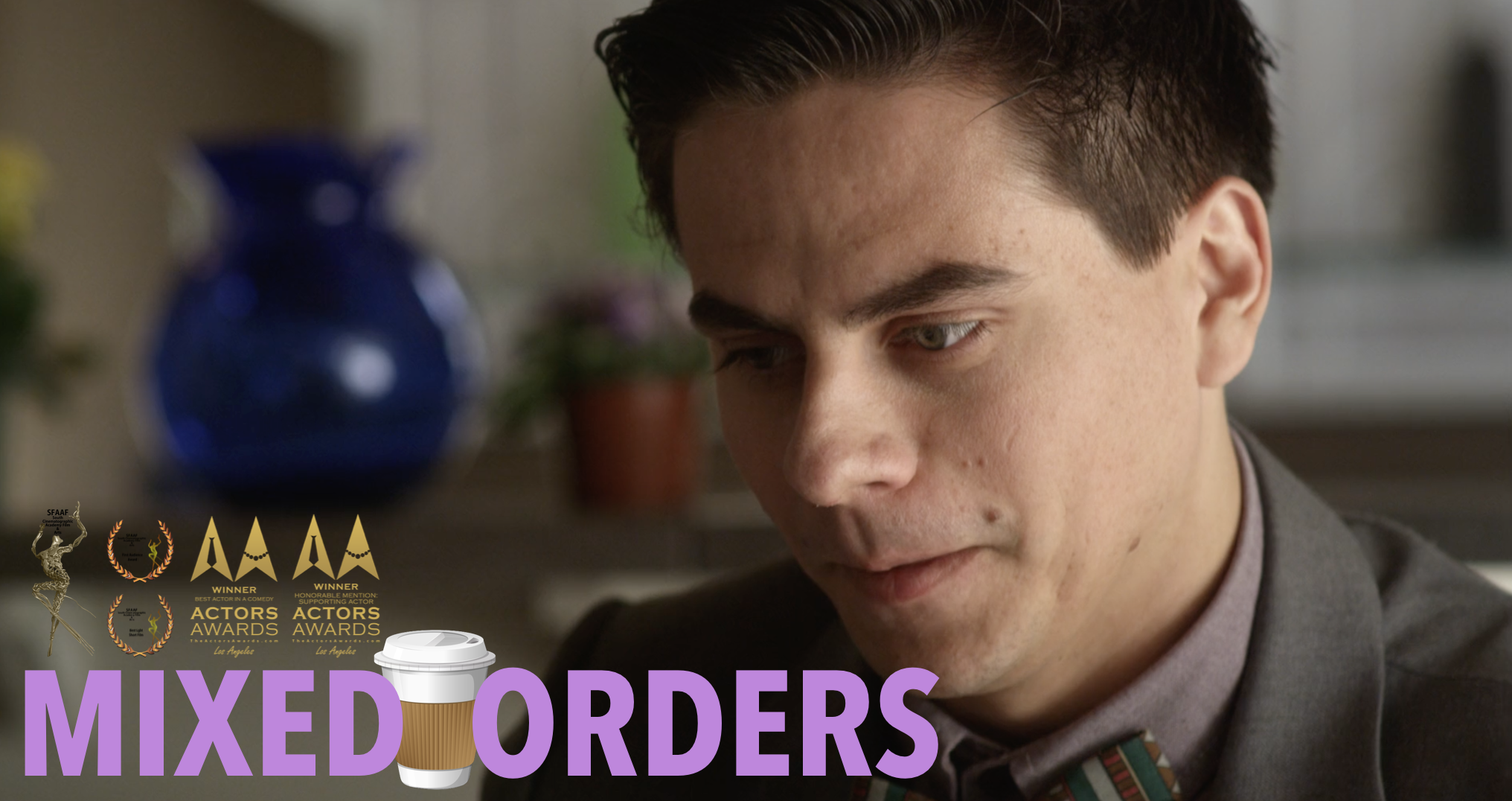
Mixed Ordersis the first film of the anthology and introduces audiences to the main character and repeat offender of the series, an offbeat lovable innocent who hopefully most will relate with because of his terrible instincts regarding intimacy. It explores the idea of knowing who you are and the importance of patience. Embracing a light-hearted tone and quirky voice, Mixed Orders gives a glimpse into Darren’s uncomfortable and premature marriage proposal to his girlfriend Clare, who is finally coming to terms with her own homosexuality.
“Mixed Orders is a film that is pleasant and bitter sweet with a moment of incredible self-realization and personal growth and sometimes that’s what we need or want to see as an audience. I love the unconventional and going against the grain, and what I believe this film does is turn what would and should be a messy scene into a beautiful feel good exchange in a display of the unconventional being made easily palatable. The film has such an honest and charming tone that it’s hard not to just smile at the end of the whole thing. There are no bad people in this sort of situation, just two people who are trying to be honest with themselves and happen to generate some friction because they’re on different pages, which happens in life all the time,” said Cruz.
Not only did Cruz produce Mixed Orders, but he also wrote the script and directed the film. He wrote the series of films a while ago and was eager to get the first one off paper. He wanted to articulate his quirky twist on a love story. He felt he owed the material an accurate rendition of the story he saw in his head because he wanted it to be familiar with some variables that he threw the audience, which is why he also took on the role of director. Leading the team, he knew he could create just the masterpiece he envisioned.
“I think selfishly, I considered myself the expert on these sorts of situations in real life which made me feel more than qualified to bring the story to life on screen and show the audience how absurd but true this character and story may be.
Cruz wanted the film to be a short and sweet story with unconventional and off beat elements. There was a lot of footage, with the actors often going off script and improvising certain takes, and Cruz managed to keep his vision throughout while incorporating such unique twists and turns. Often, some of the lines he never expected to be memorable when writing became his favorites once the scene had been shot and edited, creating a final cut he couldn’t be more proud of.
“I recommend Ricky Cruz for any and all projects, he will not only bring them to life but make them better than you could ever imagine,” said Reinaldo Garcia, who played Darren in the film.
Mixed Orders has won Best Actor and Supporting Actor in a Short Comedy at the Actors Awards, Best Romantic Comedy at TopShorts Film Festival and Best LGBT Short Film, First Audience Award, Best Actor, Best Supporting Actor, Best Editing and an Honorable Mention for Direction at the South Film and Arts Academy Festival. Such success could never have been possible without Cruz, as the film was his brainchild.
“Mixed Orders‘ successful reception makes me excited for the release of the remaining films comprising the anthology of unsuccessful love endeavors. It’s a huge relief to finally have a reference film to ensure the tone and approach remain consistent. While the styles of the upcoming films may differ, I feel more settled knowing that this comedy is understood and appreciated by audiences so I’m very excited at the prospect of being able to watch our repeat offender from the series in back to back short films and truly explore the uncomfortable and bittersweet romance I’m very familiar with on screen,” he said.
Be sure to keep an eye out for the remaining films in this delightful series.
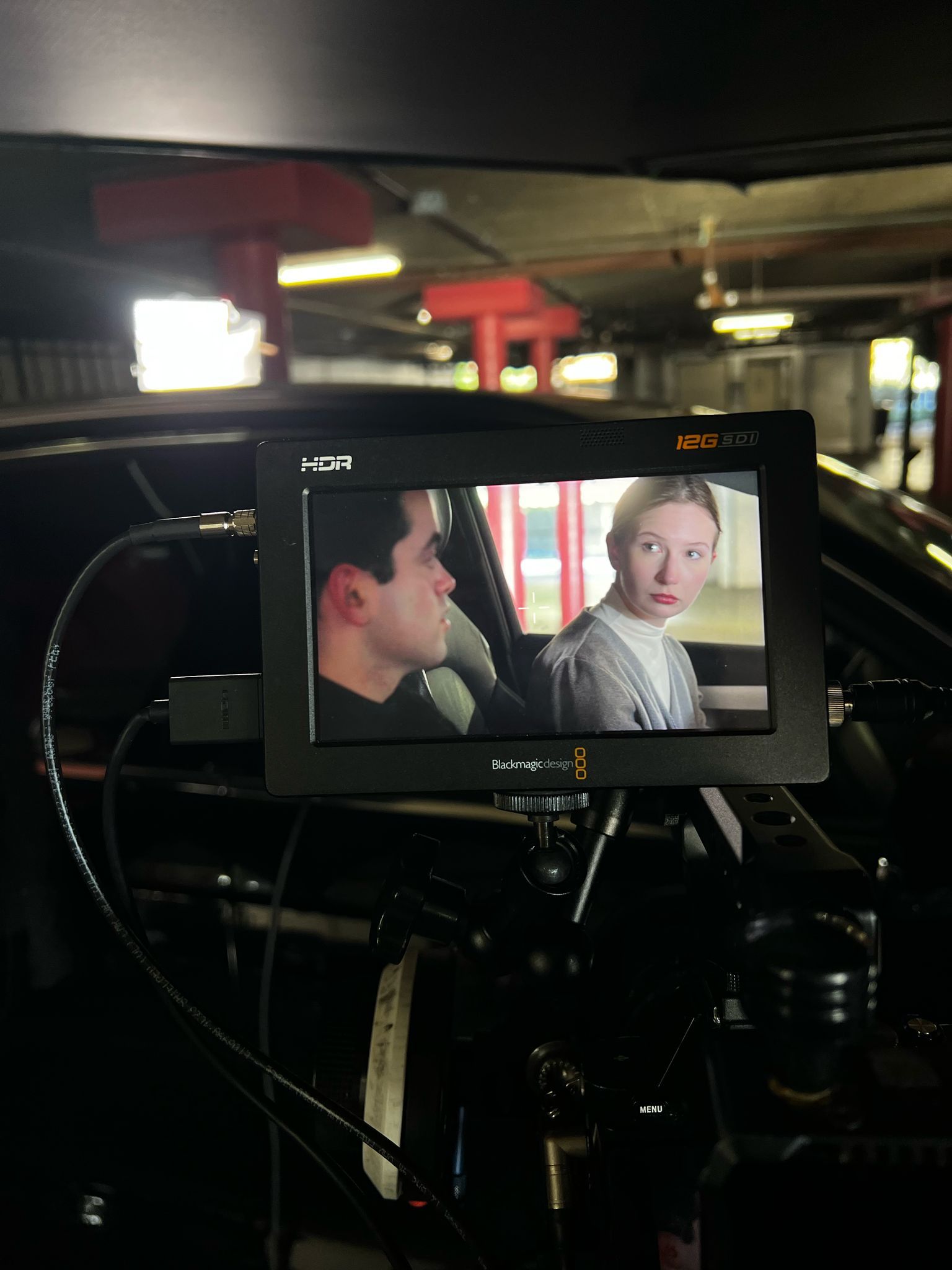
As a film producer, Elena Bawiec works tirelessly each day to ensure a project comes together, and that is what she loves. Each time she steps onto a set, she is living her dream: sharing stories with a worldwide audience. She has always had a predisposition for this type of work, where it is a mixture of communication, organization, and managing people. Most importantly however, she knows that as a producer she has to understand the story, what works and doesn’t work dramatically, and what will resonate with audiences. It is this final piece of the puzzle that has allowed Bawiec to excel to the forefront of her field, as a natural born storyteller. She knows that no matter the project, film or stage or even a commercial, it comes down to people and the story that is being told.
“I enjoy watching a story begin as an idea on a blank page and then morph into a screenplay draft; then into a bustling film set with hundreds of people making one vision come to life; to visual effects, sound, and music taking over in post; and finally, when we see the first shot in a dark movie theater with an audience,” she said.
Throughout her esteemed career, Bawiec has worked on countless acclaimed films, showing the world just what she is capable of as a producer. These include award-winning hits such as The Suitcase, Blood Brothers, Megan, Only Light, and much more. She has a lot to look forward to this year as well, with many projects in the works. Her highly anticipated film, Incendium, will soon be making its way to the festival circuit.
Incendium is about the essence of creation and the correlation between life and death, visually expressed through movement. This story takes audiences on a breathtaking journey that emphasizes the equilibrium that everything with a beginning inevitable must have an ending; this is the beauty of the inescapable cycle of life. The concept behind this cinematic essay is that contrary forces cannot coexist without one another.
In conjunction with cinematic beauty, this filmic essay focuses on dance – in particular a bold reinterpretation of Flamenco. The language of dance is universally relatable, as dance is communicated via showing, not telling. Creation is further displayed through the interplay between the heroine and the four mighty forces of nature: water, fire, earth and wind. The film explores an unpredictable force of kinetic grace, centering on the personification of the cycle of life.
“When do we get to work on something so purely visual, so raw, so fascinating? Incendium is a rare visual feast. It is one of those projects that seldom comes along, and you just have to grab it. Incendium completely captivates you with its beauty and power,” said Bawiec.
The director, Greg Strasz (VFX: Independence Day: Resurgence, Stonewall It Follows) has tremendous experience in Visual Effects and Bawiec knew that he is an exceptionally visual person who could create magic with a project like this.
“There was no question as to whether I wanted to be part of this project. The dancer, Mariam Vardanyan, is so talented, passionate, driven. The sheer hours and effort she put into training for this shoot were awe-inspiring. Now I, as the producer, needed to create the support system to have this project come to life,” said Bawiec.
As producer, Bawiec handled budgeting, scheduling, hiring and managing the crew, pre-production, location scouting, logistics of the production, and post production. Elena had agreed upon keeping the footprint small. This was a very intimate experience for Mariam, and for her performance it was beneficial to have as few people as possible, and Bawiec and her team accomplished great things with a much smaller crew than they are used to.
“We went all out with this film. We shot underwater stunt sequences, we shot with fire, we shot on a dry lake bed, and in Death Valley, at night, during the day, in the heat and in the rain. This was quite an adventure. Sometimes we literally fought the wind,” said Bawiec.
The result of the crew’s efforts is a visual spectacle that is a can’t miss. Be sure to check out Incendium and to be carried away by the artistry of the dance and the film as a whole. It is exactly films like Incendium that drive Bawiec, and she plans to spend the rest of her life dedicated to bringing powerful and visually stunning stories to the big and small screens.
“My goal is to tell stories that matter, stories that come from the heart and take the audience on a journey. Entertainment will always be a business; there will always be the bottom line and the investors to get paid, but I do not think you can really be financially successful in the long term if you do not make films that mean something to people, that spark a reaction. I think finding this balance between the creative aspect of our work and the money aspect is very important. Projects that I have currently lined up, are these kinds of stories, which show complex characters trying to make sense of the world around them. Some are based on true stories, some are thrillers or action, and others may be sci-fi, but it’s always the human condition we talk about no matter the genre. Films help us make sense of this world and to understand ourselves better,” she concluded.
Everything you ever wanted to know about Hollywood's who's-who.




 As a film producer, Elena Bawiec works tirelessly each day to ensure a project comes together, and that is what she loves. Each time she steps onto a set, she is living her dream: sharing stories with a worldwide audience. She has always had a predisposition for this type of work, where it is a mixture of communication, organization, and managing people. Most importantly however, she knows that as a producer she has to understand the story, what works and doesn’t work dramatically, and what will resonate with audiences. It is this final piece of the puzzle that has allowed Bawiec to excel to the forefront of her field, as a natural born storyteller. She knows that no matter the project, film or stage or even a commercial, it comes down to people and the story that is being told.
