Category Archives: Director

Filmmaker Hollis Sherman-Pepe on Craft, Creativity, and Her Feature Debut

Though she has become known for dreaming up fantastical worlds and elaborate stories through her work as a filmmaker, Hollis Sherman-Pepe insists she’s not a dreamer, she is a doer. And after looking at all that she has accomplished over the course of her more than two-decade career in the industry, it is a statement one can only agree with.

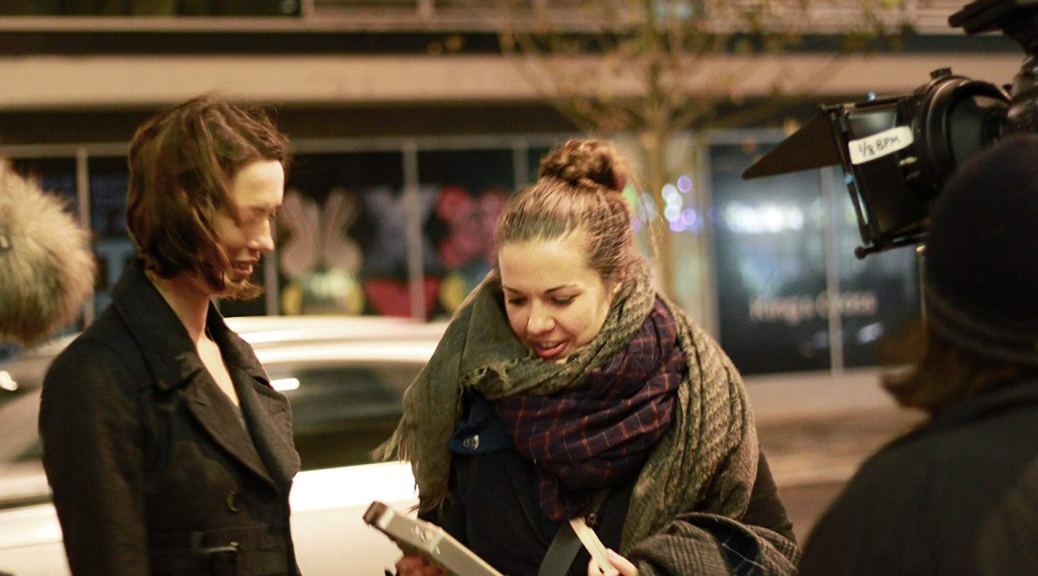
Writer-Director-Producer Hollis Sherman-Pepe

Hollis began her industry journey as an actress. Over the years she has played a wide range of roles in films such as Between Wars starring Primetime Emmy Award winner Michael Imperioli (The Sopranos), Twenty-Minute Exotic Getaway, Adrenochrome, Green Piece, and series such as NCIS and 1000 Ways to Die.

She wrote, directed and starred in the short film To Quiet My Mind, her directorial debut, which was the Festival Award winner for Best Experimental Film at the California Women’s Film Festival, as well as Valediction, for which she received Best Actress Awards from the Los Angeles Cinema Festival of Hollywood and the Los Angeles International Underground Film Festival, along with the Women Filmmakers Award of Merit from the Best Shorts Competition. In 2021 she also wrote, directed and starred in the sci-fi fantasy film Twenty Minute Exotic Getaway, which took home two Best Sci-fi Awards from the Jim Thorpe Independent Film Festival and Pasadena International Film Festival. Additionally it was the winner of Best Cinematography and Best Set Design at NewArk Independent Film Festival.

One of the aspects that makes Hollis such a unique talent is her curiosity; and it is something that has led her to step outside the path of acting, and explore the myriad of other production roles that bring a film to life. Early on in her career she worked as a production assistant, using the opportunity to learn as much as she could from every department willing to take her under their wing. She says, “I still approach filmmaking this way: ask questions, stay curious, work hard and be proactive.”

In 2015 she started Farmer’s Daughter Productions, a women-helmed production company dedicated to bringing powerful cinematic experiences to the screen. Over the years she has produced numerous award-winning films through Farmer’s Daughter Productions, including YES, the winner of Planet Female’s Best Festival Short Award and Noci Film Fest’s Audience Award and Young Jury Award, A Couple of Secrets, which won the awards for Best Film Trailer at Mindfield Film Festival, the screenplays Foxes, a Semi-Finalist at Richmond International Film Festival and Cordillera International Film Fest, and Right Hand Man, which took home the Bronze Medal Award at LGBTQ Unbordered International Film Festival.

Now, as she prepares to release her first feature film, Tenants of Carver Hill, we were lucky enough to catch up with Hollis for an interview about her creative inspirations, her evolution as a filmmaker, and the deeply personal experiences that helped shape her latest project.

For Hollis, the impulse to tell stories has always been rooted in curiosity. She is fascinated by the space between what we know and what remains unexplained, and that fascination has become a recurring thread throughout her work. “There is far more unknown than known to humankind,” she explains, describing the questions that arise from that uncertainty as a source of endless inspiration.

That curiosity doesn’t stop at the page. Hollis approaches filmmaking as an exploratory process, researching everything from philosophy and science to poetry and the ideas of thinkers who have grappled with the mysteries of human existence. She then looks for ways to weave those discoveries into her stories, often using fantastical beings and supernatural spaces to give physical form to thoughts and emotions that might otherwise remain invisible.

It is perhaps fitting, then, that her first feature would be a supernatural thriller — and even more fitting that it would draw on experiences that are very close to home.

“I grew up in a haunted house,” Hollis says. “I think it was perhaps my destiny to make a cinematic ghost story.”
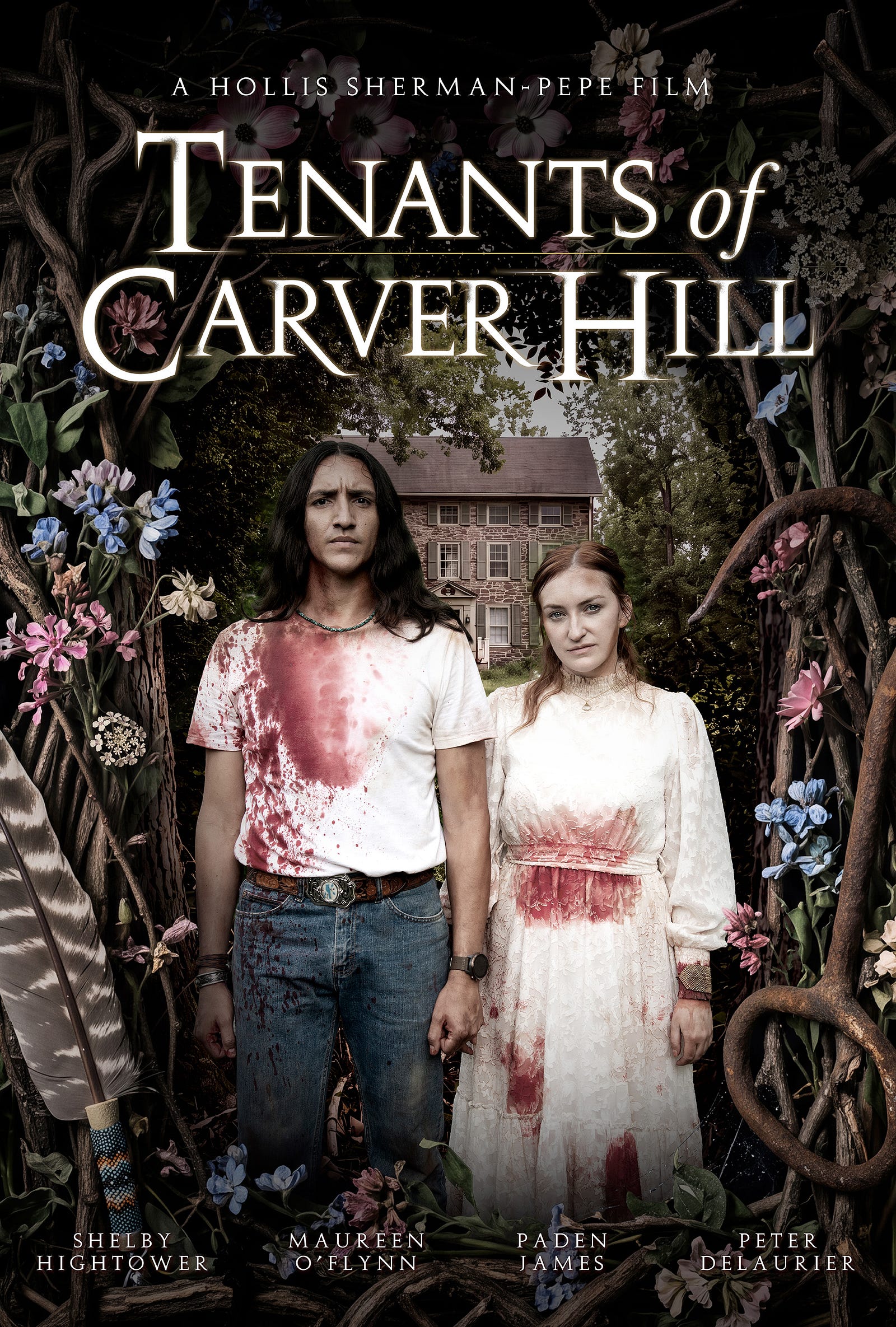
Film Poster for “Tenants of Carver Hill”

With Tenants of Carver Hill, Hollis has taken those real-life experiences and transformed them into a story that explores the mysterious and unseen while remaining deeply connected to its characters, its setting, and the history embedded within it.

A supernatural thriller, Tenants of Carver Hill follows a stranded young couple who spend the night at Carver Hill, only to awaken the spirits haunting the house — transforming one fateful night into an inescapable nightmare. The film features standout performances by Shelby Hightower (HBO’s Task, Netflix’s Tires), Searra Sawka (Hell House LLC: Lineage), Paden James (Prime’s No Rest For The Wicked) and features legendary opera diva, Maureen O’Flynn and theater luminary, Peter DeLaurier.

Welcome Hollis, such an honor to catch up with you. Can you start by telling us where you’re from originally and when you started getting into film?

I am so grateful to be speaking with you. I grew up in rural Southeastern Pennsylvania, outside of Philadelphia. I was always a very creative child and began writing at a very young age. I wrote my first novella by age ten. By my teens, my first camcorder changed how I saw and interacted in the world. I was obsessed with turning our games of playing dress-up into real stories. I made movies all the time: live action, stop motion, documentary. I simply just loved to shoot what I saw.

I was able to save most of my childhood tapes, digitizing them some years back. One of my favorite early films documented an architectural preservation event on our family farm. I set the whole event to Moby’s album Play, and dragged around a boom box on a 100-foot extension cord as I shot beautiful images of construction against a backdrop of blue sky, puffy clouds, and all these wonderful people who came to celebrate the event. I recently dug out the footage and recut it, using the same music and presented it to my family as a special screening. This absolute nostalgia gem meant as much to them as it meant to me.

How did you know that film would be a part of your life for the long haul? And how has it influenced your life?

I was an actor. As young as preschool, I was determined that acting would be my life’s pursuit. I chased that dream, earning my BFA degree at University of the Arts in Philadelphia and making a move to Los Angeles where I continued the work and the training. I loved being on set and wanted to learn as much as I could about production. I started as a hardworking and eager production assistant, garnering as much knowledge as I could from every department that was willing to take me under their wing. I still approach filmmaking this way: ask questions, stay curious, work hard and be proactive.

The first time I wrote and starred in my own short film was in 2012. In that, I found what I was really searching for, creative fulfillment and control of the narrative. It snowballed from there. In 2015 I started my production company, Farmer’s Daughter Productions. I have been producing, directing and shepherding other filmmakers ever since.

My passion for storytelling and art is in consistent bloom. I find my inspiration in nature, art, books, and in folklore. I go to the movie theater often and watch films across all genres and time periods, finding inspiration and studying — how did they shoot that? The language of film is my vernacular, my orbit. I love talking about both the art and the business of film and I feel incredibly fortunate to be surrounded by an ever-growing circle of filmmakers who support, challenge, and celebrate one another.

Making movies is difficult, expensive and time-consuming. These truths are ever present, but they also make the community around filmmaking all the more meaningful. I believe there is room at the top for everyone. Every artist has a voice that can only belong to them. Cinema speaks on such a deep level, providing hope, catharsis and offering windows into experiences we may never otherwise know. I feel incredibly lucky to spend my life creating within that sphere.
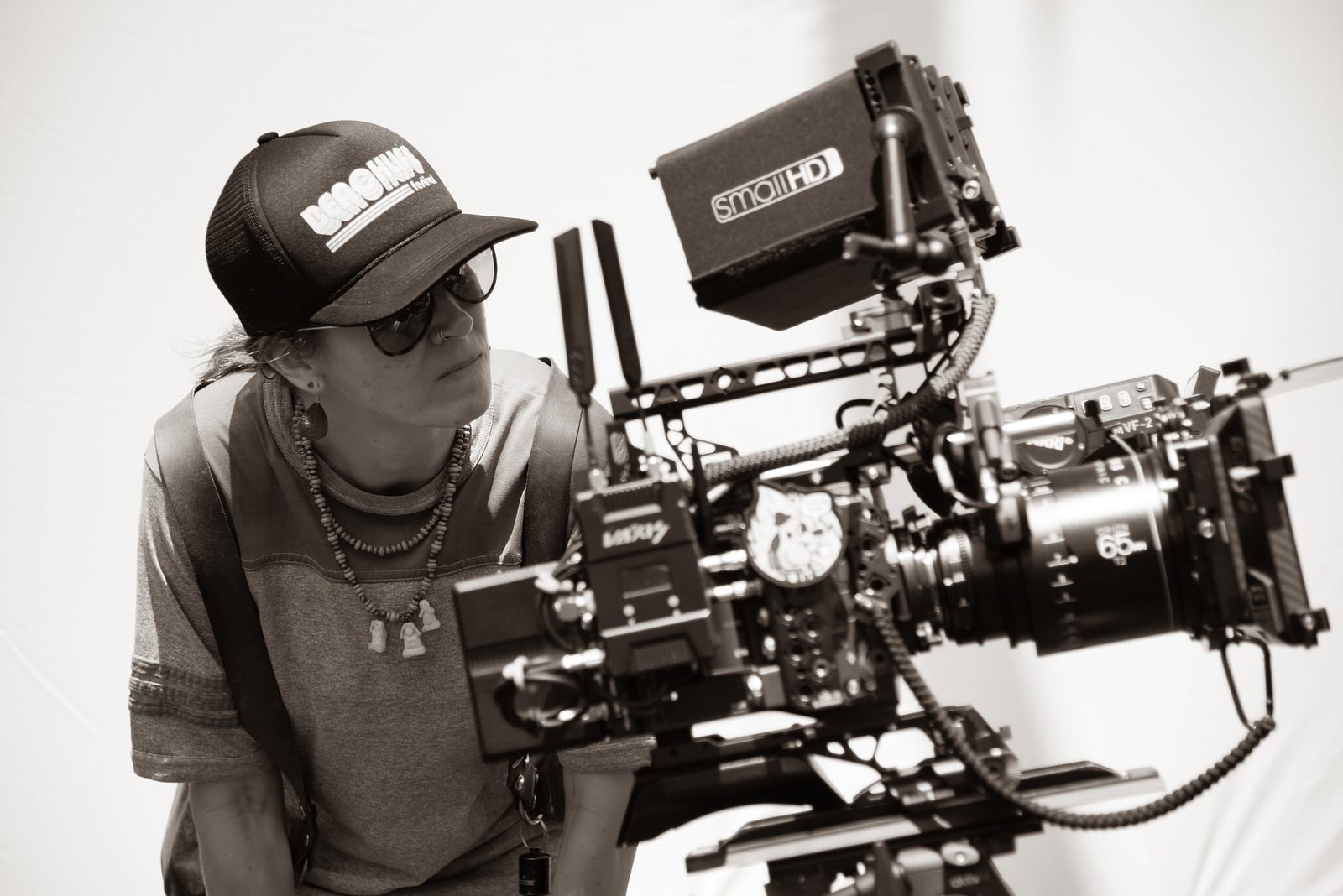
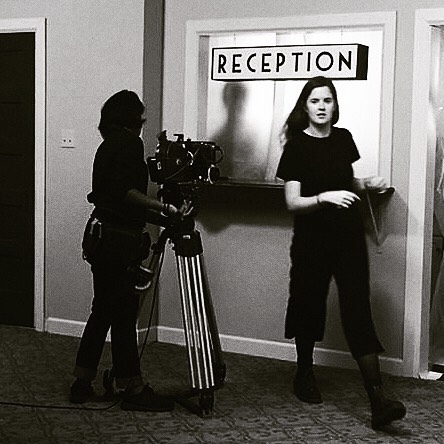
Director Hollis Sherman-Pepe checking the shot

“Tenants of Carver Hill” marks your feature directorial debut. Looking back, what does reaching this milestone mean to you personally and creatively?

I am proud of the work it has taken to get here. I am not a dreamer; I am a doer. My gosh, I have learned so much as a filmmaker over my two-plus decade career and have profoundly grown as an artist. Cultivating my vision and translating it clearly with my team so we can work toward a common goal feels really satisfying. I have never been afraid to ask questions and push my abilities beyond my comfort zone.

Completing a first feature film, particularly one with financial limitations and visual effects demands, feels like an awesome launching pad into the next film and the one after that, and so forth. I intend to keep learning and pushing myself to expand upon what I believe I can create.

Over the past 20 years You’ve worked as an actor, writer, producer, and director. How has your experience in front of the camera influenced the way you direct actors?

Acting is such a vulnerable and beautiful art form. My job as the director is to provide the incubator for the actor to thrive in. As a screenwriter, I love the exploratory aspect. As a director, I like to share the pearls I found along the way with the actors. The pearls include reading material, inspirational art, poetry, music, anything I can offer for their character development. That said, ultimately, I trust them to make unique and honest choices. Often actors will find their own inspiration that they share with me and I then find ways to incorporate their ideas into the story.

As an actor for most of my life, one with a BFA degree and endless training, I have a good eye for what is working and honest within a performance. Sometimes a spark needs a bit of coaxing to become real fireworks and that is when my own training comes out. I love that I can sometimes share the perfect tool from my own toolbox to help an actor realize their fullest potential. I have some absolute favorite acting exercises that I employ behind the scenes. I’ve used them during casting, in rehearsals, and on set to help guide an actor’s sensitivity, connection to co-stars, or even to break a repetitive performance. I would encourage all directors to dive into some acting classes, not scene study, but rather classes that focus on the more subtle aspects of the art.

Sometimes the acting exercises can be physical and I will get right in there with the actor and engage them. The crew on Tenants Of Carver Hill got a real hoot out of watching me jumping and shouting alongside one of the actors. I needed intense frustration and anger from a particular moment, so I got down and dirty with my roots. We jumped up and down to a point of exhaustion. I had him shout the line in my face. I told him to scare me. I would shout it back. We got there. He got there and it paid off tenfold in the cut.
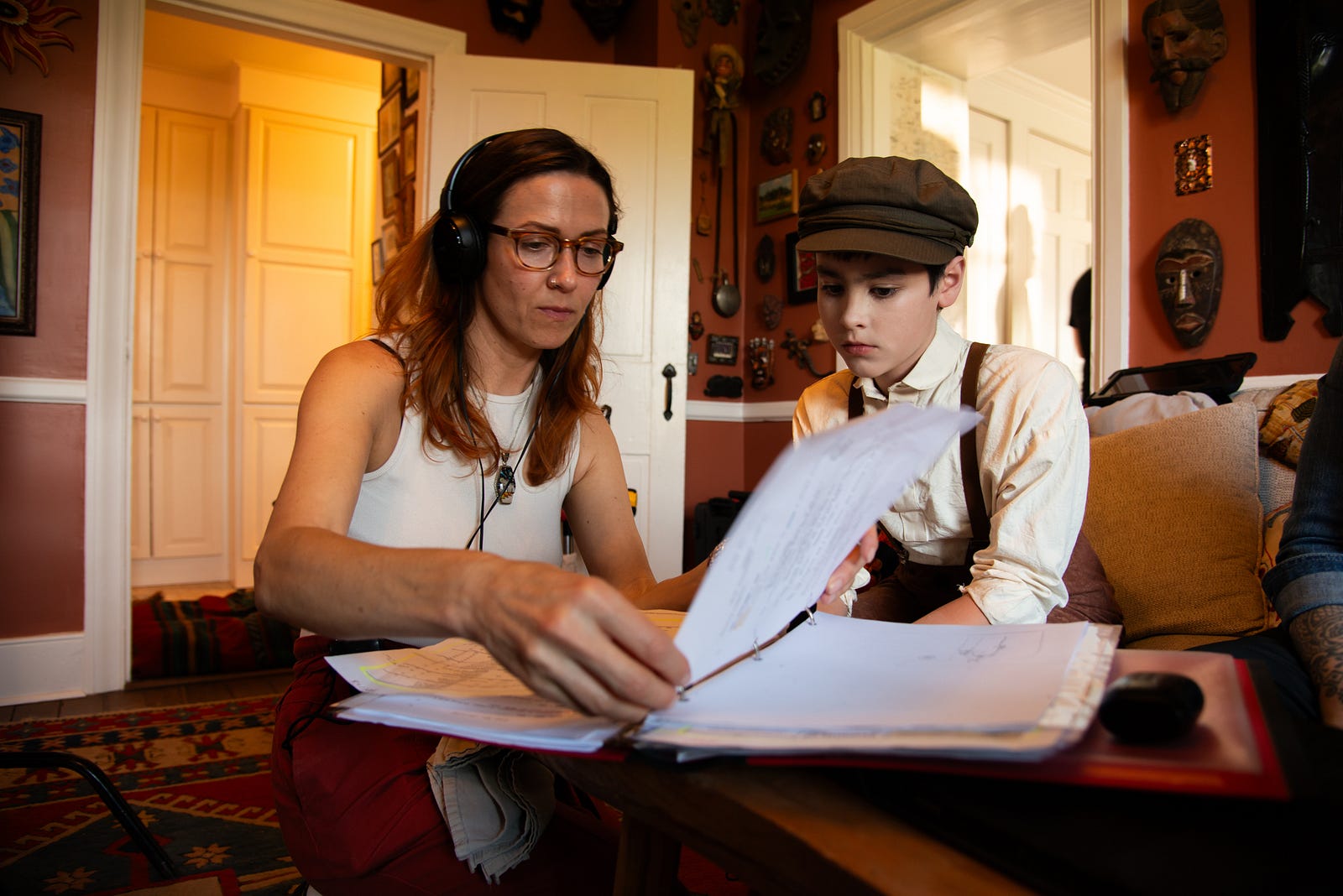
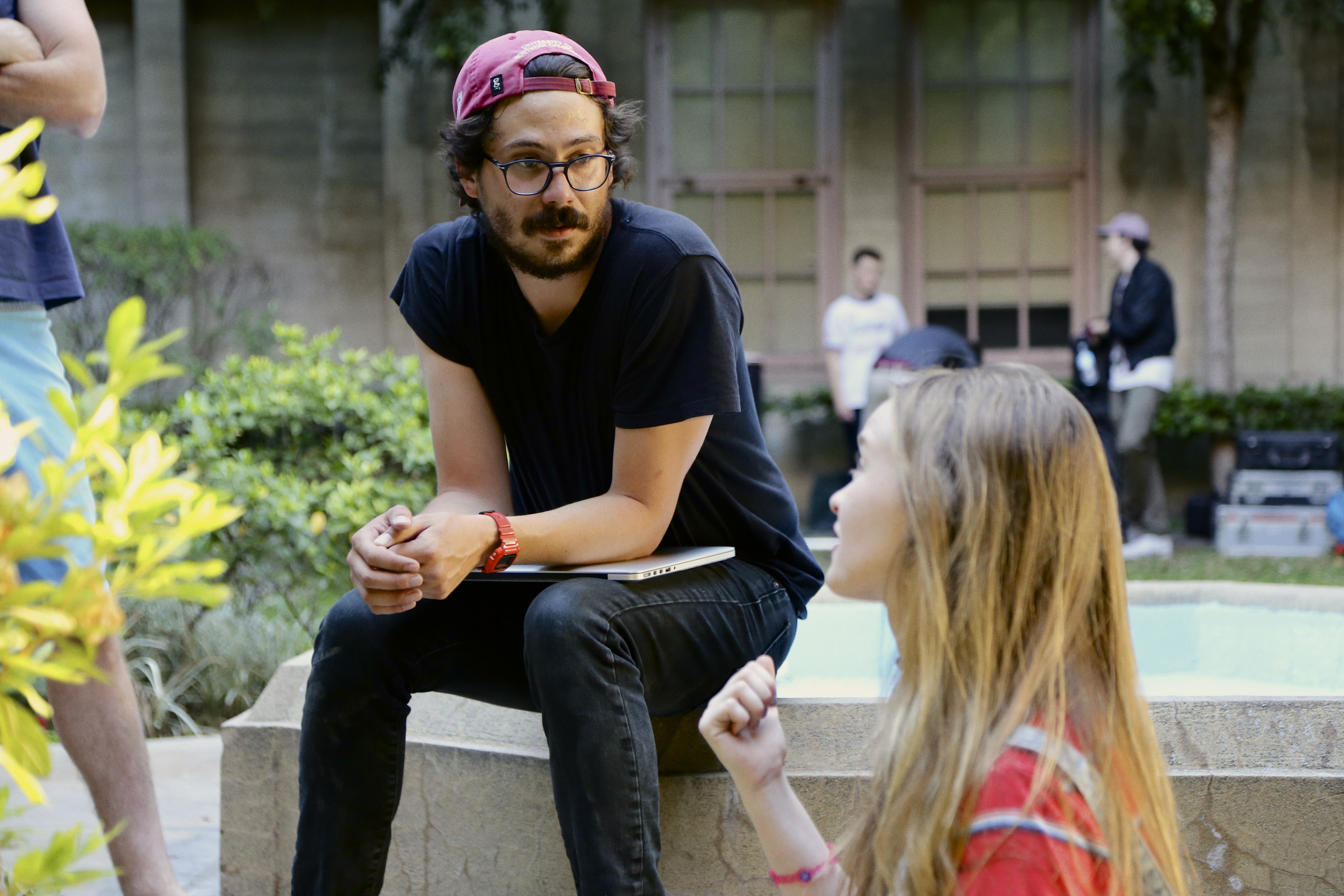
Director Hollis Sherman-Pepe looking through script notes with actor Adam Provo

You often describe your work as exploring the unseen forces that shape our lives. What draws you to stories where mystery, folklore, or the supernatural become a lens for examining human nature?

Unseen forces shaping our lives have been a through line in my work thus far. As human beings, our life cycle is short, and our place in the universe is a marvelous mystery. We are all story tellers; functionally recounting events, replacing lost facts with emotional impressions, as well as inventing explanations for the unknown. From prehistoric cave painters to the legends of the Qing Dynasty, and the traditions of the modern American ghost story, as a species we love to share, imagine and invent. Here on Earth, we are but a pin prick in the vast and ever-expanding Universe. There is far more unknown than known to humankind.

I love the questions that arise from that uncertainty. They give me a reason to research, to read books, papers, and studies written by philosophers, scientists, poets and thinkers. My private holiday is to lose myself in it all, then find clever ways to hide the gems within the stories I build.

Characters interacting with fantastical beings and supernatural spaces gives me an avenue to materialize thoughts and feelings that would otherwise be difficult to see. It opens the door to humanizing concepts and questions. People are marvelously complex. Behavior for most of us is multifaceted. The choices we make are based on morals, emotions and culture. When you introduce spirit realms like magic, faith, consciousness, and new dimensions the possibilities are endless. The supernatural isn’t an escape from human nature, it is a way of looking at it from a different angle.

Although “Tenants of Carver Hill” includes supernatural elements, it feels rooted in history, place, and character. What inspired the story, and what were you most interested in exploring beneath the mystery?

I grew up in a haunted house, so I think it was perhaps my destiny to make a cinematic ghost story. This film became my opportunity to share some of my real-life haunting experiences as well as honor my appreciation for the past.

Tenants of Carver Hill was written specifically for our filming location. Setting the story on a property dating back to the 1700s allowed me to intertwine the real-life history of the house and the Pennsylvania Dutch culture into my story. These early American settlers had their own language, faith, and traditions, and their simple farming lifestyle helped lay the groundwork for the Mennonite communities that followed. I loved the idea that one house could carry all of those eras, lives, and people’s stories vibrating within the walls.

I am fascinated by the idea of destiny versus free will. As modern Americans, we are constantly driven toward success. Our culture is always evolving toward better, bigger, newer, and more efficient. We celebrate the idea that we are free to command our own destiny, but what if we aren’t? What if our position in life was actually predetermined? Like, what if we are part of a much older cycle, a cog in a never-ending wheel, destined to repeat the history of those who came before us?

Our culture prizes youth and beauty. I wanted to play with these roles and expectations, so I set my hopeful heroes in a world that forces them to experience the past, confront duty and preservation. I gave them this challenge but funneled it through a supernatural lens, letting it be enchanting and simultaneously unsettling.
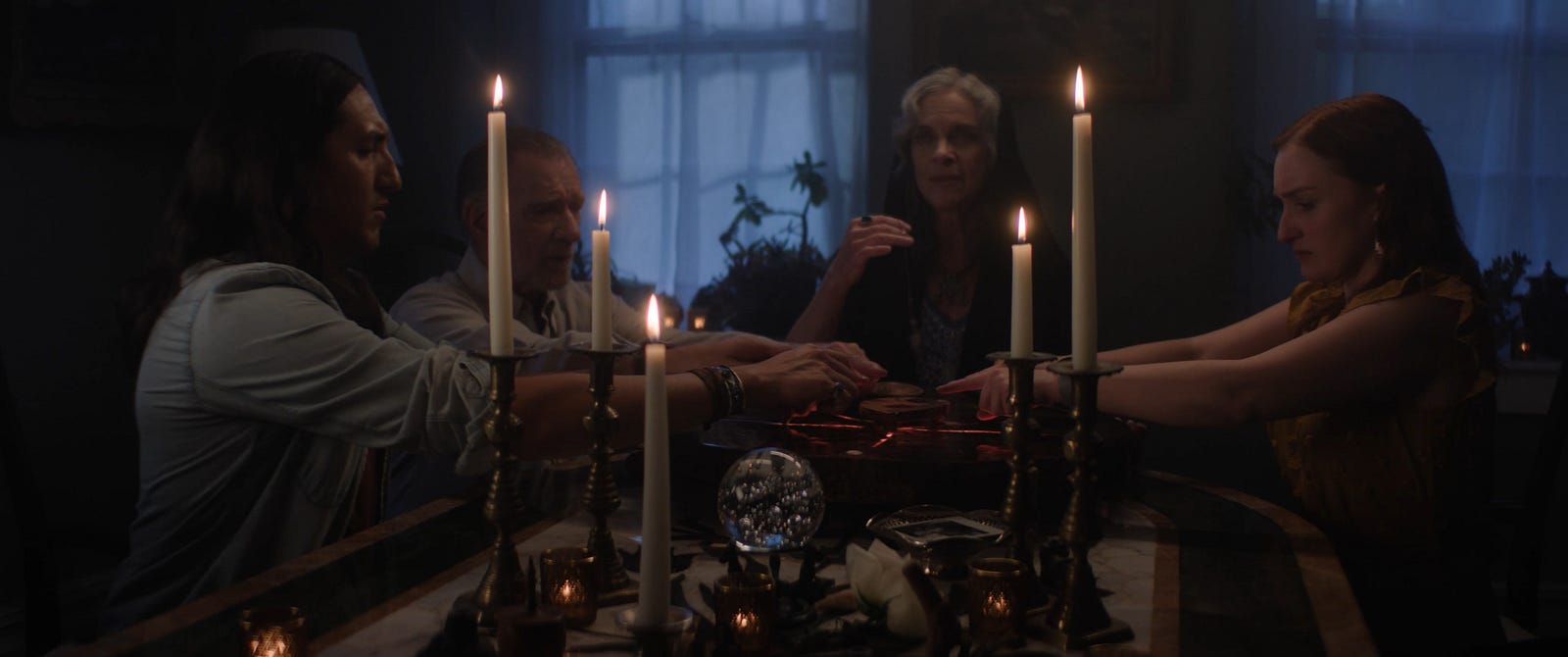
(L-R) Stil of Paden James, Peter DeLaurier, Maureen O’Flynn, and Shelby Hightower conjuring the spirits in “Tenants of Carver Hill”

Your films are known for layered storytelling and richly imagined worlds. What makes “Tenants of Carver Hill” different from other supernatural thrillers audiences may have seen?

I love creating worlds that invite you in, only to later reveal something much darker underneath. Spooky but charming. Warm but secretive. Beauty that fills you with unease. The world of Carver Hill is dreamy. Springtime blooms are as welcoming as the tenants that live there. The perfect misdirection.

I wanted to try something fresh with the look of our ghosts and chose to make them photosensitive. Developing this look with the artist was a lot of fun. The mysterious house was to feel mazelike at times, filled with a collocation of museum-like antiquities and preternatural relics, alive and watching, offering clues to the decades encapsulated within the walls.

I don’t think genre films have to be simple or formulaic. Of course, some formulas work for a reason and Tenants of Carver Hill includes some of those familiar beats and the inevitable “don’t go in there” moments. But ultimately, I love to find ways to break the mold. I’m not a fan of stereotypical characters. I would rather build characters with layers and contradictions. When a character fights with their own belief system or moral code, we as an audience become more invested in the cause and consequence. Watching a complex character make choices is far more intriguing to me.

World building is certainly a specialty for me as a filmmaker. My previous Sci-Fi film, Twenty Minute Exotic Getaway explored a wild variety of environments, from dead planets with suns on the verge of burning out to creatures and ghosts that walked through dimensions that would feel familiar and yet foreign. My unproduced folklore horror scripts also push the envelope of imagination with worlds and creatures. I can’t wait to bring them to life next.

The film incorporates both early American settler history and Native American perspectives, including tailoring your lead character’s background to reflect your lead actor’s Navajo heritage. Why was authenticity so important, and how did those cultural influences enrich the story?

At its core, this ghost story is one about history repeating itself, and memories being alive within the walls. Because the story was site specific, it was important to be authentic with the historical storyline. I wanted the multi-cultural aspects to be organic, not just a flavor enhancer. The male lead is Native American. This felt right for the story because I wanted his connection to the land to be old, an inheritance bestowed for the Settlers arrived, and before the House itself. I left some of the integral parts of his scripted dialogue and action open-ended until we completed our casting. That way my actor could inform some of these choices with their own tribal heritage.

The character is played by a Navajo actor, Paden James. I worked with him directly as well as with a Navajo consultant so I could approach the language and tradition authentically and respectfully. I learned a lot and found meaningful ways to include what I had learned into the story. I learned that a specific prayer is said aloud when a Navajo person enters and exits a graveyard. I included this into one of the earlier scenes of the film. I also included blessings with corn pollen and a prayer song in Navajo asking for protection.

I also wanted the house itself to feel like a character in the story. Using real historical events allowed me to honor the home and memories associated with it. I wove in documented stories, such as how an 1800s patriarch died after being kicked by his horse. The tenants of the estate, characters played by Maureen O’Flynn and Peter DeLaurier, both express their admiration for the home and bestow history of the Pennsylvania Dutch settlers. I sought out consultation for that unique language as well.

Ultimately, by weaving together these various histories allowed me to give the house a truer sense of memory. Not just a haunted-house, but one where generations have left their mark and that is what makes it feel so alive.

Pennsylvania becomes almost another character in the film. What made it the perfect location, and how did filming there shape the atmosphere of “Tenants of Carver Hill”?

Being from Southeastern Pennsylvania, it was personal and meaningful to return and shoot my first feature film here. It was a wild full-circle moment. I knew I wanted my ghost story to feel like a fantasy, harkening back to Ridley Scott’s Legend. We used a variety of filters to create ghostly blooms of light, and we built our shooting schedule around the Springtime blossoms. We planned for scenes around particular trees and flowers as they came into bloom, racing to capture them before the petals fell.

Pennsylvania is incredibly green and lush. This helped our location to feel particularly isolated, making it a little fantastical bubble all on its own. The heroes, played by Shelby Hightower and Paden James arrive at Carver Hill after an ill-fated, cross-country truck breakdown, but soon they are completely enraptured by the beauty surrounding them. The green floral atmosphere feels more like a gift than a warning, a wolf in sheep’s clothing.

And of course, there is the history. Philadelphia was the first capital of the United States. The Northeast is old. If ghosts are the echoes of the past, these walls have a lot to say. There is something inherently uncanny about being alone in a big, old space. It gives you the feeling that you are not really alone. I wanted to capture that feeling in my film.

The production also received Pennsylvania’s film tax incentive. How did that opportunity impact what you were able to accomplish as an independent filmmaker?

We are incredibly grateful for the Pennsylvania film tax incentive. The story takes place in the Keystone State, so shooting there was non-negotiable for us. We took the time to carefully prepare our application and raise the full production capital prior to filming, as required by the Pennsylvania Film Office.

Creating a truly independent film is a monumental undertaking at every step. After completing the project, receiving this incentive feels like a gift. Having fresh funds available to put toward marketing and bringing the film to audiences is an invaluable final piece of the filmmaking process.

Every independent production comes with unexpected challenges. What was the biggest obstacle during production, and what did you learn from overcoming it?

Being ready for anything and willing to adapt and shift gears is essential for independent filmmaking. My show bible is extensive. The script pages are filled with color coded notes and hand drawn diagrams. I keep the pages in plastic sleeves and consult them while shooting. My shot lists are specific and detailed. My cinematographer Nick Pietroniro and I were so incredibly in-tune with one another, creating the shot list, the look books, camera and filter testing well ahead of time. The more you can control and discover in the preparation, the easier it is to change course for the unexpected.

We were shooting in April and May in Pennsylvania, so the potential for rain was a concern. Our 1st Assistant Director, Katrina Gerlach was a wizard juggling our everchanging scheduling needs, child actors that could only work on weekends or after school, talent that needed to fly out mid-shoot for a wedding, talent leaving the country on a set date. There were so many moving parts and sometimes more than 40 camera setups in a day, yet we never once hit overtime and we were able to capture everything I intended to shoot. The vibes were high on this production. I am truly proud of that.

Our principal location was a historical landmark, which brought another set of challenges. The rooms were small, our equipment couldn’t be fastened to the walls or placed on surfaces, and we had to be constantly mindful of protecting the property. Our entire crew took that responsibility incredibly seriously, and we finished without a single incident.

A favorite challenge on set was a shot with my star Shelby Hightower. The camera would spin around her as she was experiencing paranormal contact and sense memories from the past. This type of shot would normally require specialized gear and a larger space. Instead, we were working in a room with a six-foot ceiling and uneven floors. Pietroniro would have to shoot it with a Movi gimbal rather than a crane or circular dolly track. We were shooting anamorphic and had some beautiful lens flares coming in through the windows, but as the camera circled, the operator and equipment began throwing enormous shadows across Shelby. While braving the unexpected rain shower, gaffer, Colin Passman, key grip, Morgan Hartman and team kept adjusting the lights, trying to preserve the flares while eliminating the shadows. We were losing time and falling further behind schedule. Eventually, we had to get scrappy. On each pass of the camera between Shelby and the key light, we verbally cued the gaffer to kill the light. It was whacky but it worked. We captured the quintessential moment using the bare bones, a lot of ingenuity, and a determined crew, and still caught up with our schedule that day.

My takeaways from the experience are to prepare intensely but be ready to adapt, combine and adjust. Always work in service of the film. Stay true to the vision, but ultimately stay true to what the film decides it wants to be. It’s easier to make jazz when the foundation is strong.

On the other hand, was there a moment on set that reminded you, “This is exactly the film I wanted to make”?

That is such an interesting question. From conception through production and post, my expectations evolved with the film. Putting together this stellar ensemble cast really brought it to life uniquely. No other combination of actors would breathe life the same way. Choosing key crew like my cinematographer gave a specific flavor to the film. Working with my editor Brian Ufberg to craft the final picture gave birth to yet another new perspective. Killing my darlings was a powerful benchmark as well, eliminating five scenes from the director’s cut, more tightly crafted the vision. During my pickup days, I added new scenes, and new characters. I also expanded the role played by Searra Sawka, which gifted the final picture in such a paramount way. From the first draft to the final cut, Tenants of Carver Hill developed into something unique. In a funny way, it will never be exactly what I envisioned, but rather it is its own being. The film speaks for itself, a culmination of choices I made along the way with the support of a dedicated team of collaborators.
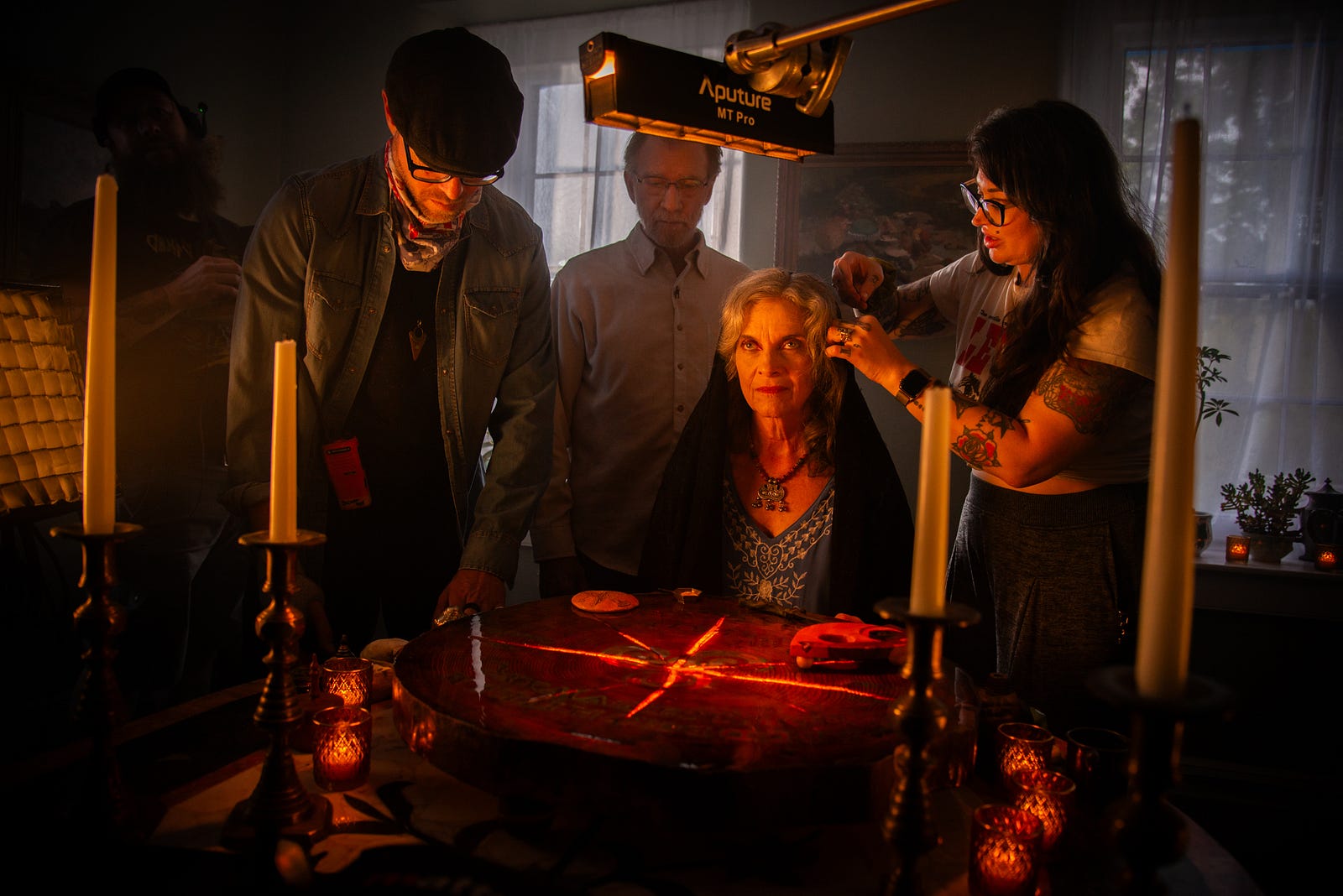
(L-R) Producer Scott Fleisher, actors Peter DeLauier and Maureen O’Flynn, and HMUA Jessica Saint gathered around the custom built spirit board, perform last looks before shooting a “Tenants of Carver Hill” scene

Your bio mentions that you’re a collector of art and antiquities, and that you’re drawn to color, texture, and layered imagery. How do those personal passions find their way into your filmmaking?

I am a more is more person. It’s in the clothes I wear and how I style my home. I’ve always been drawn to color, pattern, art with feeling, fashion with flair. I am drawn to quality craftsmanship and artisan made pieces. I approach my filmmaking this way. Every element is considered and imbued with care. I love to travel, to read, to absorb art and nature. My personality inevitably splashes onto the screen. All of my films have been slightly off-skew from the straight and narrow. Despite what genre I happen to be tinkering in, my voice is clear. I love to fold in layers, ask questions that reveal more questions, explore and invent. Art gives us the ability to expand ourselves in magical ways. Cinema is a particularly limitless medium to do just that.

After completing your first feature, what surprised you most about yourself as a filmmaker?

I might be allergic to keeping it simple.

Every filmmaker grows from one project to the next. What lessons from Tenants of Carver Hill will you carry into your future films?

I have ambitious projects in the queue. A lesson learned from Tenants Of Carver Hill is the value of bringing key collaborators to the table earlier in the game. Having a strong Executive Producer that wants to meet me on that quest will be a game changer.

I would prefer to have my editor on board prior to shooting so that way we can work in tandem as we shoot. With each project, my visual effects needs have expanded. Each time I have had marvelous consultation prior to shooting and exceptional guidance during post. For Carver Hill we created a playbook for how to tackle each shot and we executed accordingly. Going forward I would prefer to have my Visual Effects Supervisor on set, that way we can more easily switch gears, adapt, adjust on the fly, solving problems creatively and professionally as they arise. Ambitious filmmaking requires incredible collaboration. The earlier the right people are in the room, the more possibilities you have when it comes time to make the movie.

Beyond festival recognition or distribution, what do you hope audiences take away after experiencing “Tenants of Carver Hill”?

My hope was to bring a fresh perspective to the genre film world, bridging the gap between the hardcore horror hounds and the introspective indie aficionados. I wanted to celebrate the charm of Pennsylvania with all its history, natural beauty, open spaces, historical landmarks, and hopefully inspire people to appreciate and want to preserve those things.

I’d be tickled if viewers walked away considering that consciousness may be deeper than human thought. That perhaps it is an energy within physical spaces or that conversely, material objects are living within a greater cosmic consciousness. Memories and emotions are alive and transferable, whether we consider them spirits, ghosts, faith or something beyond our current understanding.

My film is chocked full of Easter eggs. If someone picks up on the clues and metaphors, I hope they’ll be moved to watch it a second time and discover something they missed the first time around. Ultimately, I hope audiences appreciate the nuance and craftsmanship behind my picture. If Tenants of Carver Hill leaves you curious and questioning what lies beyond our human experience, I feel as though I did my job.
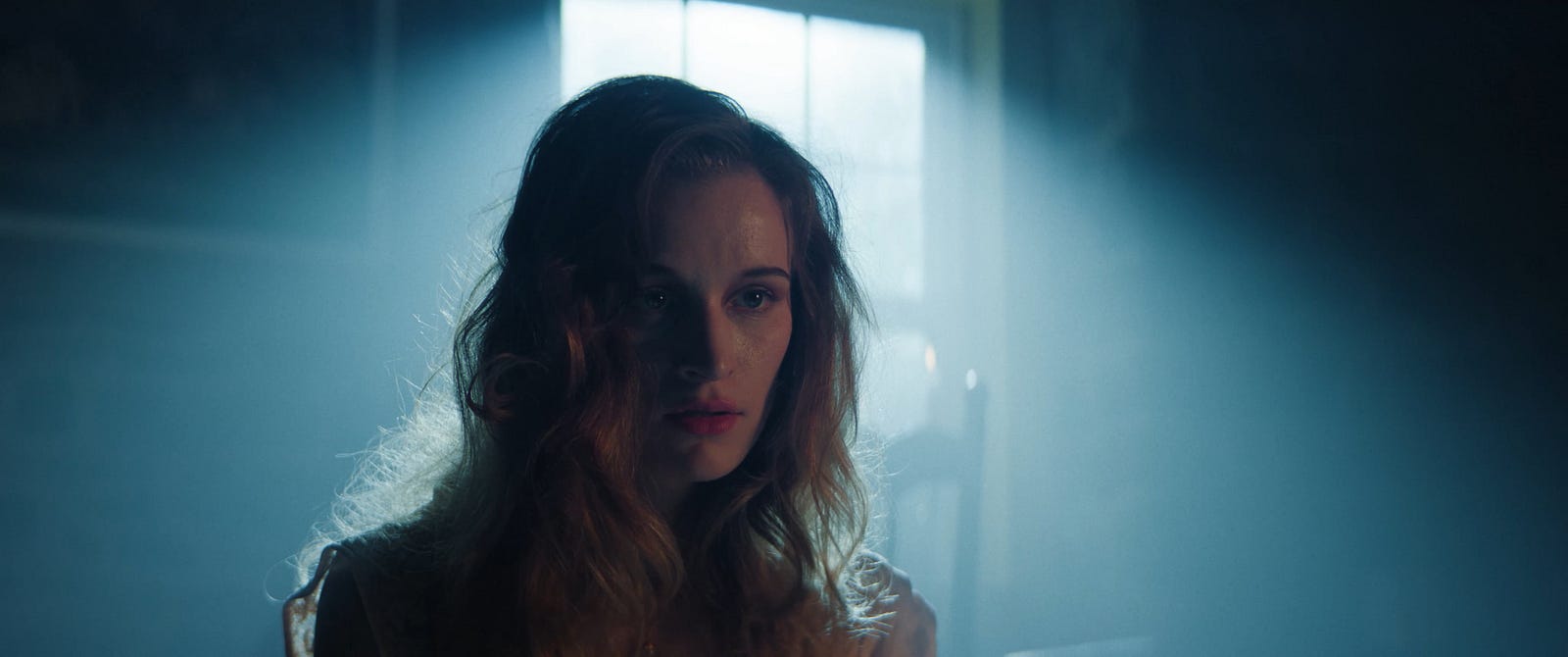
Actress Searra Sawka as Mable Marie, the origin story, in “Tenants of Carver Hill”

Looking ahead, what stories are calling to you next? Are there themes or worlds you’re excited to explore in future projects?

Oh gosh, I have quite a few scripts ready to go and projects in development, so I would hate to let the cat out of the bag. I explore a variety of genres and am eager to dive into new worlds, so I’ll keep the specifics under wraps for now. Interested collaborators can find me through Farmer’s Daughter Productions.

At the end of the day, I believe an artist always needs to be arting. The need to create is as important as the need to breathe. No matter the next picture, I will breathe my life into it and give it my heart.
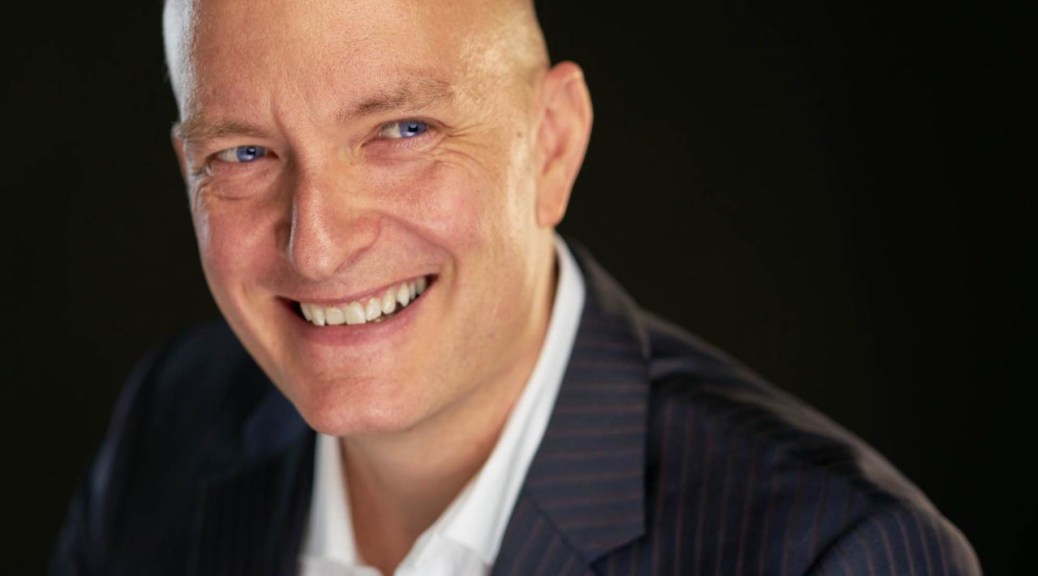
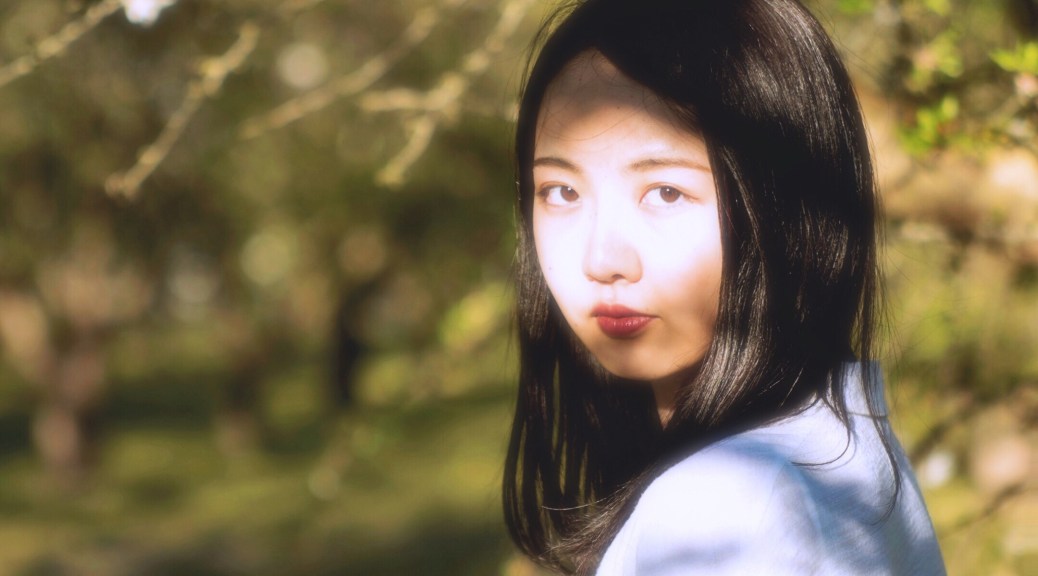
John Wate brings authentic Japanese culture to ‘Samurai Headhunters’ documentary

Whenever John Wate steps onto a film set, puts his eye to a camera lens, and starts making a movie, he is living his dream. Directing is a pleasure he can’t compare to anything else; it allows him to be in tune with what is happening in front of him, and all his senses go into overdrive. He spends every day doing what he truly loves, and this passion translates directly into his beautiful work.

For this German native, making a good movie is all about the research. He always aims to find the perfect story and the right characters, with the singular goal of leaving an impression on his audience. With his work on the Smithsonian’s Epic Warrior Women film series and movies like Samurai Warrior Queens, he does just that, showcasing why he is an industry-leading director in his country.

“I would say as a director you are a storyteller, and the way you have lived and seen the world will organically shape how you tell your stories. I found that the world is a treasure trove that has so much to offer in terms of stories and characters. Once I find that ‘one thing’ that interests me, I can start digging and I usually find gold,” said Wate.

Wate has spent many years directing masterful films and television series, including the TV movie Samurai Headhunters in 2013, that allowed him to explore a unique part of world history. It is a documentary on the dark and brutal side of the samurai warrior clans featuring the life of peasant Masa who is forced into the ruthless world of the samurai.

For over a thousand years, the samurai have been celebrated as an aristocratic warrior class. Exceptionally skilled and loyal until death, their very name has become a byword for honor and dignity. This film reveals the unknown dark side of the samurai – a fascinating tale of greed, treachery, extreme cruelty and violent death. Based on newly discovered samurai war manuals, Samurai Headhunters reconstructs the life of a young peasant farmer who is press-ganged into a warlord’s army. Driven by his love for a village girl of noble birth, young Masa quickly rises through the ranks from simple foot soldier to venerated samurai commander. But his reward is to be one of betrayal, lies and finally forced suicide by his fellow samurai. Interwoven with this dramatic story, two British historians track down remarkable new evidence from ancient war manuals that show the true, dark world of the samurai. The drama documentary also features a living samurai master and his students, as well as CG animation, stunning re-enactments, original costumes and historic locations.

“Everyone knows the samurai as loyal, courageous fighters with a strong moral code – but not many people know that this is only part of the story. During the almost 200 years of civil war in Japan the samurai got rewarded for their deeds in battle, which often meant for the number of heads they had taken. The film explores the unknown dark side of the samurai, how they cheated, lied and murdered to gain favors and advance their careers, the forbidden love between warriors, the atrocities of samurai warfare, and the danger to rise to fame in such an environment. I found all these facts about the dark side of the samurai as grizzly as they were fascinating,” said Wate.

After great success with his previous film, Ninja Shadow Warriors, Wate teamed up once again with Urban Canyons Producer Sebastian Peiter and together with researcher Anthony Cummins, they researched and built the concept for the film. Living in Japan at the time, Wate not only had extensive experience, but he also had direct links to the famous Japanese film studios in Kyoto, and through all his previous other documentaries had direct access to Japanese cultural icons, such as sword masters, swordsmiths or traditional armourers. He was the ideal director for the job.

“You need to have a feeling for Japanese manners and that what they say is not always what they mean. I think a lot of the fascination for the samurai comes from the exotic mixture of stoic readiness, their manners and proper conduct in life and in battle. But if you want to show that, you have to know HOW they did certain things and why. You can’t just use a Western blue-print to invent what the character would do. At that time I lived in Japan, I spoke the language and understood their manners and hints, like that a certain gesture can reveal the opposite of what has been said. The timing, the tempo or movement of people speaking at formal gatherings. These are all subtle things that can build an authentic exotic flavor that is fun to watch,” he said.

Samurai Headhunters has been extremely popular since its release. It has aired in over thirty countries, not only on television channels but also various exhibitions about the samurai culture. It is currently showing in the prestigious Kunsthalle Munich, a German national art museum.

Producer/Director Xueou Yu experiments with magical realism in award-winning film

Xueou Yu was just a teenager when her mother bought her a book titled Top 250 IMDb Ranking Films.  At the time, it seemed like a simple gift, but it quickly changed her life forever. She began watching some of the films in the book, and before she knew it, she had watched all 250. After immersing herself in the dynamic artform, Yu became in love with cinema. She could travel to far lands, go back in time, learn about different cultures, all while sitting on her couch.

Now, Yu is a celebrated film director and producer in China and abroad. She is known for her work on films like Vincent, Ka Ka Ka Ka, and Donna, as well as commercials such as Sirui Pocket. She is known for her expertise in her craft, with over 60 thousand followers on social media, who look for her posts providing feedback on current movies and television shows.

“I think film is a tool to expand our lives. To me film can maximize our life experiences. I want to spend my life giving others this kind of experience,” said Yu.

One of Yu’s first tastes of international success came with her dynamic drama Asa Nisi Masa. At the time, she was very drawn to magical realism in film, the mix of surreal and reality greatly attracting her artistic mind. She wondered what she could create with this in mind, and began exploring ideas that would draw people in while also challenging them. That is when Asa Nisi Masa was born.

Asa Nisi Masa follows a man who has never believed in magic, when one day he walks into a bar and finds out the bartender has found his true love by the help of a genie. The genie lives in the men’s bathroom in the bar, and is there to grant wishes. Yu also wrote the script, on top of producing and directing the film. It is a simple and funny story, and she wanted to convey that one never knows what will happen, even if it is something you never thought possible.

When Yu first started working on the film, she had difficulties finding a cast and crew as many were unsure of what they deemed a “weird” story. However, Yu had an important outlook: when making films, if the crew doesn’t believe in what they are creating, they won’t create a work of art. Commitment, she finds, is one of the most important aspects of filmmaking, as it is such a collaborative effort. With that in mind, she worked tirelessly to find the right people who not only could execute her vision, but who believed in it as well, and her hard work paid off.

By Reina Du
Xueou Yu on the set of Asa Nisi Masa, photo by Reina Du

Asa Nisi Masa premiered at the 2017 Blow-Up International Arthouse Film Fest, where it was an Official Selection. From there, it saw great success, and went on to win awards at the International Independent Film Awards and the NYC Indie Film Awards 2017. Such success could never have happened without Yu, who was the driving force of the film.

“I created this project to experiment with the language of film. I think I successfully created a mysteriously odd world. I was able to spread many of my weird thoughts and I had a lot of freedom to really do what I wanted, because I was also producing it. Experimenting is always fun, and even though there are some technical aspects that some would question, I created exactly what I wanted, and it really resonated with audiences. It is a reminder for myself to never stop experimenting,” she said.

At the early stages of pre-production, the most pressing question was asked: how will they show a genie? Was it going to be animated, or an actor in costume? Yu decided on the latter. She thought that by making the genie seem like a regular person, it further portrayed the idea that although the idea was magical, it could happen in the real world, with genies walking among us. To blend the magical aspect, she had two characters sitting at the bar based on a painting by René Magritte, adding that artistic touch for viewers. She truly mixes the surreal and real together to create a unique feeling.

“They call it magic realism, but to me the realism part is always more important because that’s how we live in this world. In this film you still see the realism play a big part,” she said.

Needless to say, Yu is a determined and talented filmmaker. She is a leader and an artist, and knows how to captivate an audience through her work. Asa Nisi Masa is just one example of what she is capable of, and audiences around the world can continue to expect great things from this filmmaker.

She believes her passion is why she has seen the success that she has, and encourages all those looking to follow in her footsteps to truly be in love with filmmaking.

“Don’t go into filmmaking because you think it looks cool or can bring you fame and you make what would please a crowd. Do it because it is what is in your heart and find the subjects you really love and just keep going. Don’t pretend to be the person who you are not, and don’t be ashamed of what you can’t become. Focus more on doing the things that you really love. This is an art, it takes talent and a lot of commitment,” she advised. “If you have both those things, never give up.”


Photo by Daren You

Producer and Director Ace Yue tells heartwarming LGBTQ love story with new film

As a filmmaker, Ace Yue takes an idea and brings it to life. Originally from Shenyang, a north east city of China, Yue has always had a passion for the art form and has dedicated her life to bringing captivating stories to the big and small screen. As a producer, she finds just the script and team to make a vision a reality, and as a director, she follows her instincts and provides a sound voice of leadership for her entire team.

“I like to give every character in my stories an entire life, no matter how old they are. I am building up an entire world for my cast, allowing them to feel the character, making friends with them, then, becoming them. I want the audience to be taken away by the story, creating a cathartic experience for every viewer,” said Yue.

This in-demand producer and director made headlines last year with her award-winning film Gum Gum, which she wrote based off her own life experiences, but Yue is no stranger to success. She also has highlights on her resume such as By Way of Guitar, La Pieta, K.a.i., and many more.

“I think this is a job that requires a sense of responsibility. It’s fun and full of creativity. In fact, creativity and on-the-spot ability are my most important skills of being a producer and director, because we can never predict what will happen on the set. So, having a very high ability to adapt is key,” said Yue.

Recently, Yue has seen great success with one of her newest films, the drama Hank. The film tells the story of Hank and his husband Tommy who are struggling to save their 15-year marriage and entertain the idea of an open relationship. While this might be working well for Tommy, Hank struggles to cope with the change as well as the challenges of being old.

Telling an LGBTQ story was important for Yue, who immediately said yes to the film after reading the script. She has worked on many genres and is incredibly versatile, but this was her first time telling a story about this community. She feels film can provide a voice for underrepresented groups and educate viewers on key issues, and taking such a heartfelt look into the loving marriage of two homosexual men touches on all the reasons she wanted to become a filmmaker to begin with.

“Learning to understand who we are, and respect everyone as they are, is of the utmost importance. It is the greatest aspect of this film. In real life, most people like to look at things with a preconceived perspective. In other words, people just want to see what they want to see. Rarely will we analyze and understand the problem from the perspective of others, and then everyone will have such a state of mind that they are freaks and not understood by others, and then generate inferiority and escape from life. What this film tells is that no matter how others treat themselves, they must first face themselves honestly, don’t treat themselves as aliens, bravely accept themselves, pursue what they want, each of us is equal. The gender orientation, the preference of the things themselves can be different. Don’t worry about the eyes of others. It’s right to be happy for being myself,” she said.

Hank premiered at the Burbank International Film Festival and was an Official Selection at the Hollywood International Film Festival. It was an Honorable Mention at the Los Angeles Music Awards 2019 and has a lot more expected for the year. This month, Yue and Hongyu Li, the director of Hank, are heading to HRIFF 2019, the Hollywood Reel Independent Film Festival Red Carpet Press Event on February 15th.It is also an Official Selection for the world-renowned Cannes Film Festival later this year.

“The success is sensational. We use our profession to tell meaningful stories in a visual way, working hard on every detail. Being recognized by audiences around the world is also a way to make us more motivated and more determined to go do what we want to do, to tell the story, to shoot the film,” she said.

As the co-producer on the film, Yue made sure that any unexpected situation that arose on set was instantly taken care of. She helped the director create a good working environment, allowing everyone to focus solely on creating a work of art.

Yue knew the importance of the film they were creating, making it her sole focus and drive every day she was on set. The feeling was infectious, with the entire cast and crew feeling the same.

“I have a lot of LGBTQ friends. We are just like them, everyone is human, there is no difference. What I want to say is that they are not special groups. The discrimination of many people is that their own starting point is wrong. True love does not mean that men and women together breed the next generation, but a soul meets another soul that can truly understand each other,” she concluded.

Filmmaker Tom Edwards Strikes a Balance between Producing and Directing

Tom Edwards
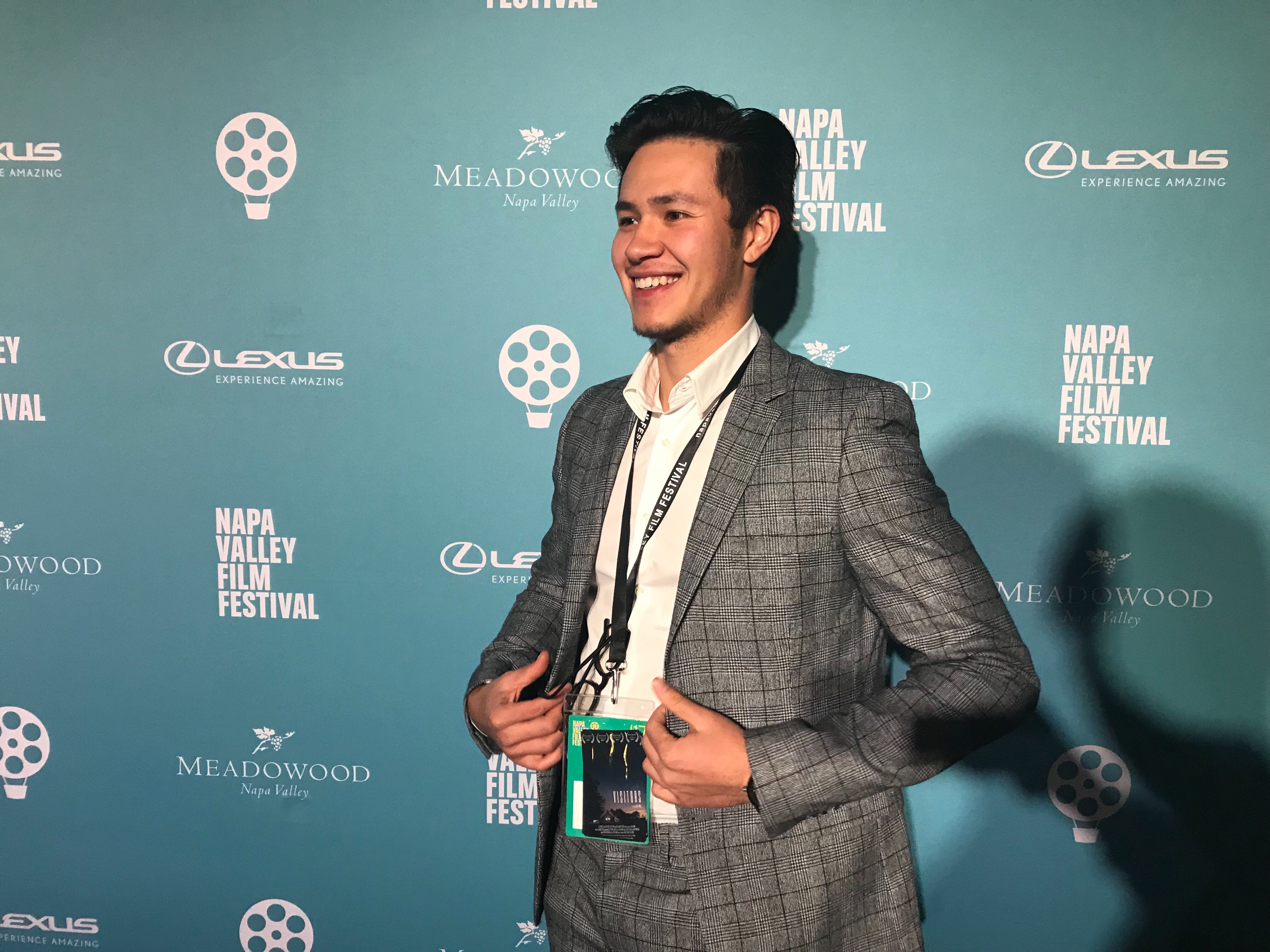
Producer and director Tom Edwards at the Napa Valley Film Festival

It takes a very unique talent to effectively balance the work of a producer and director simultaneously on a project. Though it is no easy task, it is one where filmmaker Tom Edwards has proven his skill time and time again.

One of Edwards’ recent projects as producer and director is the music video for folk-punk artist Sunny War’s single “Gotta Live It,” which premiered last year to great praise on Vice’s Noisey outlet, which is known for showcasing hot new music and music videos.

Edwards captures the juxtaposition of melancholy sadness and perseverance present in Sunny War’s “Gotta Live It,” which the artist says is “a very personal song about my struggle with alcoholism, my dysfunctional love life and the confusion I face daily participating in this rat race society.”

Prior to directing and producing “Gotta Live It,” Edwards directed and produced the music video for Sunny War’s  “Goodbye LA.” That first time collaboration obviously ran smoothly because the artist called him back again for “Gotta Live It.”

“Working with Tom is very chill. He has a nice easy going personality but at the same time he is very organized. [He] is good at what he does… he plans every shot, communicates the ideas with you beforehand… and actually follows through,” says Sunny War. “He is also always willing to listen to any crazy ideas you might have and is kind when explaining why those ideas are crazy and won’t work.”

Though Tom Edwards’ boundless creativity as a visionary director is evident in his work, his ability to balance what does and doesn’t work from the standpoint of a producer in terms of managing the budget, shoot days and all of the other odds and ends that go into producing are what make him such a sought after talent.

“As the producer I was working with a very limited budget. It was important to find the right location and that the filming could be completed in one day. As director I needed to make sure that my vision aligned with Sunny’s and that she was happy with the idea before I started to shoot. The last thing you want when working with an artist is to find out after shooting that they don’t like the final video,” explains Edwards.

“It’s essential to have good communication skills to ensure both sides of the party agree on the expectations. My role as producer was about coordinating crew, finding locations, getting permits and making sure we had the right amount of gear to tell the story. I like to keep all the logistics out of the way when I’m directing, it’s important to make sure I have my undivided attention on the artistic choices and performance.”

Some of the other music videos Edwards has produced and directed include “Fire” from  American ukulele virtuoso Taimane, The Main Squeeze’s “Only Time,” Westside FX “War ft. Bro Burch,” Calix’s “California Dream’n,” “Bad Blood,” and more. He’s also directed and produced commercials for brands including Lamborghini, The Sirius, Garrison Bespoke and the Shaolin Temple.

While he’s made a name for himself as a powerful producer and director in the world of commercials and music videos he’s no stranger to producing and directing narrative films.

In 2013 Edwards wrote, directed and produced the film “Ninety One: A Tainted Page,” which earned multiple awards including those for Best Overall Film, Best Actor and Best International Baccalaureate Film at the Shanghai Student Film Festival.

Actor Anson Lau, who plays the lead in the film, says, “I’ve always known Tom for his passion for making films… When he puts together a project he’s always enthusiastic… When he directs he knows exactly what he wants.”

Over the years Edwards strength as a producer has also led him to be tapped to produce a long list of projects for other directors.

He explains, “Aside from directing and producing my own films, I find a lot of pleasure helping others and bringing their visions to life. I enjoy being critical and being able to provide valuable feedback.”

One such film where Edwards proved critical in the success of the film as a producer behind the scenes is the 2016 dramatic sci-fi film “Visitors” starring Kei’la Ryan from “Escape the Night,” “The Doctors” and “American Hashtag.”

“I worked with Tom on a large number of projects, from commercials and music videos to narrative films. He always blew me away with his creativity and hard work. His work on the film ‘Visitors’ was significantly important and was one of our best collaborations,” says “Visitors” director Alon Juwal. “Tom had a large creative input both in the development phase and in the production phase. He contributed greatly in the writing of the screenplay and managed to lock some amazing crew members for the project.”

A film about two siblings who return home to their estranged father’s house after a long absence, only to find their home being invaded by a group of uninvited visitors from another world as the night progresses, “Visitors” made a strong impact on audiences and festival judges across the globe.

In addition to earning the Honorable Mention Award from the Boston Sci-Fi Film Festival and the Festival Award from the New York International Film Festival “Visitors” was nominated for several awards at festivals including the USA Film Festival, Vail Film Festival, Phoenix Comic-Con, Newport Beach Film Festival, and more.

“After careful review of the [Visitors] script, there were a few scenes that needed more attention. In one scene, the main character is blasted with a beam of light as if a spaceship about to abduct him. We had to make sure that we could get a rig and the right people to achieve this,” recalls Edwards about some of his key contributions to the project.

Edwards’ personal experience writing and directing projects have endowed him with an unparalleled understanding of what needs to happen on set for a director to be able to effectively make their vision come to life; and this is one reason why he has proven himself as such a powerful producer.

Director Alon Juwal adds, “All of my collaborations with Tom ended in successful productions. He brings a great deal of enthusiasm and grace to each project that he signs up for. Tom takes every small task that he is given with great seriousness and simply brings amazing results. He is fast, extremely efficient and a very hard worker.”

The ever busy producer and director is currently working with writer Phil Giangrande on the upcoming dystopian film “Now It Begins,” which takes place in a future society where resources are scarce and poses the question over whether it is ethical for a father to be replaced by artificial intelligence.

Edwards is also working with an a LA based production company on what he says is a “Very exciting series of educational videos that will launch sometime this year.”

Though he’s not yet able to announce the details on the upcoming video project, with such a track record of successful productions already under his belt we know it’s one you will be hearing about very soon.

Hollywood Recognizes Filmmaker Livi Zheng as Asian Pioneer

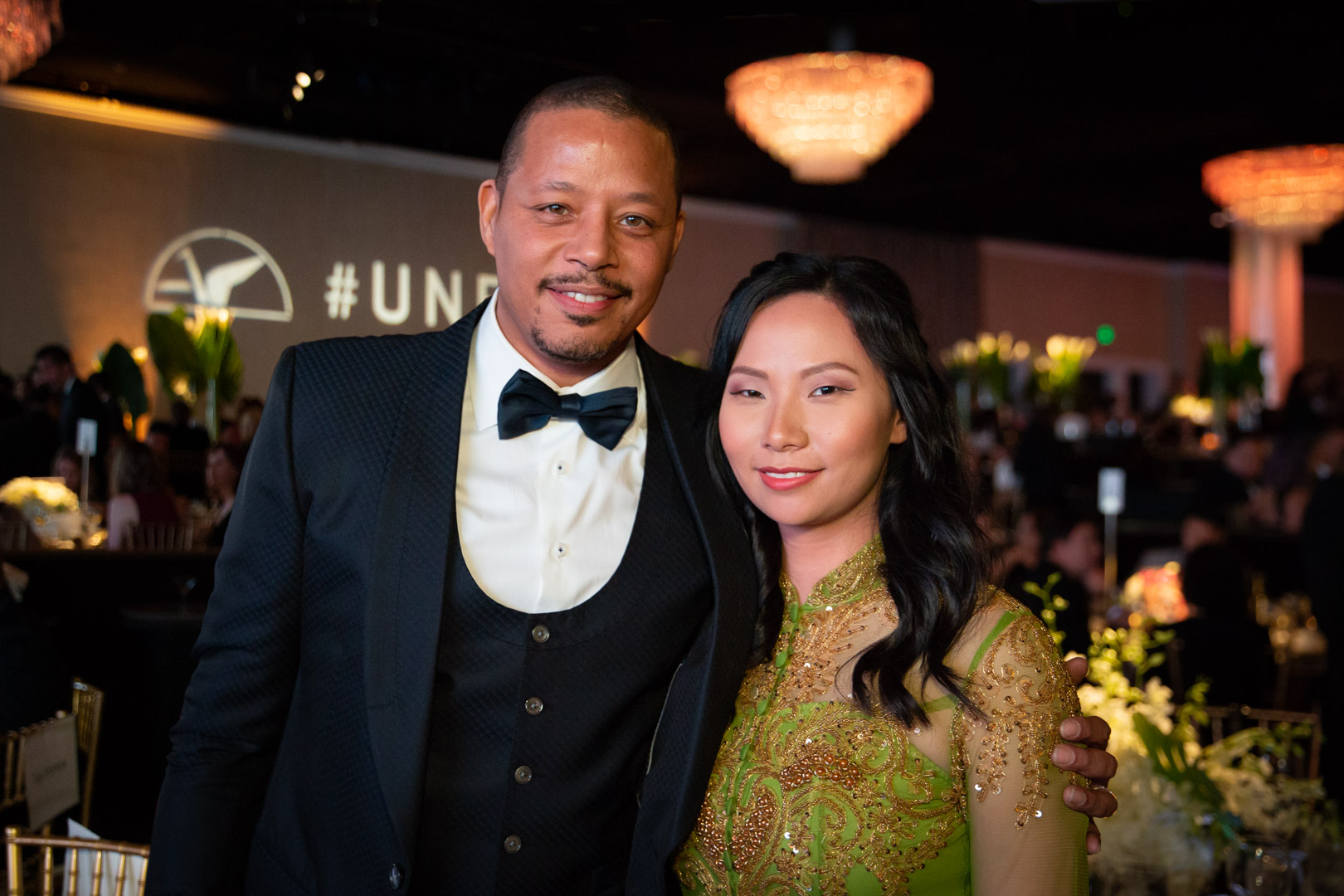
Livi Zheng and Terrence Howard at the Unforgettable Gala

“When I first started my career in film someone told me that I am everything wrong about a director, because I am Asian,  I am a woman and I am young.” That was the opening salvo in Livi Zheng’s speech at the Unforgettable Gala. Zheng was honored with an award as an Asian pioneer in Hollywood along with the actor John Cho and the Director of Crazy Rich Asians, Jon M. Chu.  The speech was unforgettable; the crowd cheered for the young director at the conclusion of her speech.

Already a household name in Indonesia, Zheng’s rise to fame in the United States is not a surprise to her many followers back home. She is the product of three countries: Indonesia, China, and the United States. A simple search of her name will show Zheng’s popularity amongst Indonesians and Chinese and the enthusiasm they express for this talented young filmmaker.

Who is Livi Zheng? She’s an Chinese-Indonesian director who directed her first feature film at the young age of twenty-three. Her directing debut Brush with Danger released theatrically in the US and was distributed internationally. Besides directing, Zheng has spoken and lectured at more than 30 universities worldwide including Yale University, University of Southern California (USC) and University of California at Los Angeles (UCLA), Communications University of China, and the University of Indonesia. Zheng graduated with a bachelor’s degree in Economics from the University of Washington-Seattle and a Masters in Film Production from USC. She is a prolific and respected speaker and was invited to speak at the Annual Meetings of the World Bank Group and International Monetary Fund (IMF) at the World Bank Headquarters in Washington D.C..

Zheng spent her young adult life as a martial artist. She got her start as a stuntwoman but soon realized the power of storytelling. She embarked on an odyssey to realize her dreams; that decision has catapulted her as a leader in the new generation of upcoming directors in the film business. Her remarkable confidence and bubbly personality is paired with her humility. When interviewed, Zheng never forgets to mention her roots.

Just this year, Zheng brought the vibrant world of Bali: Beats of Paradise to screens when it premiered at the Academy of Motion Pictures and Sciences and Arts in Samuel Goldwyn Theater in Beverly Hills.  The 1010 seat theater was filled to capacity.  The Academy security was even surprised at the draw this movie had compared to many big studio movies that have premiered at the same venue. The documentary narrative did so well that a Disney Animation Executive in attendance invited Zheng to screen the film for other heads of departments at Disney.

Zheng is not only an inspiration to young women and people of color within the United States but also to people around the world. She’s truly a one of a kind director who bridges the West and the East .

Writer and Director Claire Leona Apps takes showcases the Great North Run in acclaimed film

Writing has always come naturally to Claire Leona Apps. She loves telling stories and loves how they serve society; they can teach us and warn us, they can entertain while serving a greater purpose. A good story can create conversation and express ideas that help us relate to new points of view. It’s a powerful tool, and Apps understands that. Her passion for storytelling translates directly into her work as both a screenwriter and a director, from the words she puts down on a page to the way she puts it together in front of a camera, and she captivates worldwide audiences with films.

Apps is an in-demand writer and director, with a series of decorated projects highlighting her esteemed resume. These include her acclaimed films Gweipo, Aceh Recovers, Ruminate, and And Then I Was French. She is known for her ability to showcase the lives of underrepresented characters and bring a dark sense of humour to a story.

“I try not to get so caught up on the real world with my work. I have to deal with that every day anyway. I like a little surrealism, a little irony, and films that are a little self-aware,” she said.

That is exactly the message Apps puts out with her film Girl Blue Running Shoe. The film follows the daughter of a runner participating in the Bupa Great North Run as she makes a film as he trains and runs the race. The film begins calmly with a serene domestic set-up, building pace as the race begins, cutting between the training day and the marathon. At points which demonstrate the intensity of running, a special zoetrope effect is used, breaking down the movement of running into paused actions, reflecting the rhythm of the action – the steady thumping of shoes on gravel, a beating heart, breathing. The piece is shot solely on Super 8, edited to emulate both the excitement of the daughter as an observer and the adrenaline of the participator. With a soundtrack of enhanced natural noises, Girl Blue Running Shoeis an evocative celebration of the human body whilst also telling the simple story of a father-daughter relationship.

“It’s a story about loving and sharing in the experiences of the people you love. It also dissects the movements of running,” said Apps. “Usually I do pretty dark things. It was nice to do something that ended up in a children’s film festival line up. It’s nice to just show love, simple straight forward love between a father and daughter,” she said.

Apps wrote the story and pitched it to the British Arts Council to commission the film. When she got the commission, she immediately began directing, coming up with a new camera technique for the film. The story has two components. One is a daughter watching her father run the race. He is doing his hobby, running, and she is doing hers, filmmaking. She films him running on a Super 8 camera. Therefore, as the director, Apps decided to shoot the whole film on Super 8 cameras. This truly allowed audiences to immerse themselves in the girl’s point of view. Apps also had the idea to use the sprocket holes of the physical film and the division between the different pictures to create a zoetrope like film effect. She did this all by hand: slowing the footage down and cranking it through a projector to be re-filmed.

Shooting took place at the Great North Run in Newcastle, England, one of the biggest half marathons in the world. This presented a unique challenge for Apps, who had to shoot a fictional story around a live marathon. Therefore, the actual shoot was extremely fast. She had to make quick decisions to deal with whatever came their way. There were roads shut off, spectators everywhere, and of course the runners themselves, and they had to move all around them with a child actress.

“The hardest thing about this project was finding the right kid to play the lead. It is a large ask to have a child give you full energy for a few hours of extreme intensity, but Adrianna Bertola, who played the lead, was a dream,” said Apps.

The film premiered on BBC during the Great North Run the following year. It went on to be at the Great North Museum for an exhibition. It was also an Official Selection at the Cork International Film Festival. The success was wonderful for Apps, as the shoot was a chaotic and fun experience.

Now, Apps is currently working on another feature film. She is a truly exceptional filmmaker, engaging viewers of all ages, which is evident with her work on Girl Blue Running Shoe. She knows the key to her success is working hard, and she encourages all those looking to follow in her footsteps to do the same.

“Prepare yourself for a lot of hard work and don’t expect anyone to discover you. We live in a world at the moment where you can generate a lot of attention by yourself and you can make films on your phone. Make something and keep going,” she advised.

Director Eliza Brownlie’s Unique Visual Style Captivates Audiences

By Portia Leigh
Director Eliza Brownlie shot by Leonard Smith

It’s impossible not to watch director Eliza Brownlie’s work and not feel something. Over the past few years she’s directed commercials and fashion films for well-known brands including Dove, Canon, Cast + Combed, Top Expert, Angie Bauer Lingerie and many more. Diverging from the bright colors and over the top emotions utilized by most mainstream commercials to grab our attention, Brownlie brings a delicate subtlety to her work that is appealing enough to capture our interest. She doesn’t need to bombard or distract us with bells, whistles and bright lights.

“With commercials you are often working for a brand or a client, so you have to consider their needs and objectives. That’s always in the back of your mind when making directorial choices,” says Brownlie. “At the same time, the client often hires you because they like your filmmaking style, so I try and find a good balance of giving them what they’re looking for and putting my unique spin on it.”

The soft tones, atmospheric visuals and the fluidity of the camera movements present in most of her work gives Brownlie a recognizable style that is feminine, honest and intriguing, not to mention highly cinematic. And it is these aspects that have made her such a sought after director internationally. Though we’ll rarely see a face forcing a smile in any one of her commercials, the emotions of her actors are palpable and authentically human; and as a director, one of her strengths is working with her actors to bring out those qualities on camera.

Brownlie says, “I love collaborating with actors in developing the characters and performance, as well as creating a safe space for them to feel supported and bring ideas to the table. This always makes for a better performance and working environment in general. It can be easy to get lost in making beautiful visuals and forget about performance. I always try to remind myself that story, character, and performance are everything.”

The women featured in Imperfectionists, a series of branded documentary films Brownlie recently directed for Dove’s Self-Esteem Project, are not actors; but that says even more about her skill as a director. With each film focusing on a different artist and exploring how they overcame insecurity and learned to embrace their so-called ‘flaws,’ Brownlie brilliantly captures the story of each woman with a refreshing level of vulnerability.

In order to highlight how each artist turned their ‘imperfection’ into a strength, Brownlie had to create the space for them to open up and allow her to peer into their lives, and the way she captures it is beautiful. Through one on one interviews she manages to elicit the most intricate and personal details about their human experience, and the way she puts it all together combined with sequences of each artist fully involved in their passion makes each film incredibly inspirational.

“I used dynamic camera work to convey the uplifting tone and the joy and power that each of them derived from their art, whether that was painting, dance or music,” Brownlie explains. “I always made sure to direct the women in a way in which they felt as confident and beautiful as they are.”

The goal of Dove’s Self-Esteem Project is to empower young women of every shape, size and color to accept and love their bodies as they are, and to see themselves as strong and valuable human beings regardless of societal expectations.

Brownlie says, “I think for the majority of women, and humans in general, the journey to self-acceptance is a rocky and complicated process. It’s never a straight line. But I know that I feel my best when I’m creating, not when I’m focused on my appearance.”

Through her emphasis on the positivity and self-confidence that emerges through the process of creating, Brownlie nails the mark with the Imperfectionist series. It’s nearly impossible not to be inspired after watching one of these films.

Growing up in a small suburban community by the sea in West Vancouver, Canada, Brownlie was surrounded by natural beauty where the sky remained grey throughout most of the year, bringing a certain level of isolation. For her, the juxtaposition of bucolic scenery and melancholy weather patterns was something beneficial.

“You had a lot of time to think and find your own fun, which I guess made it conducive to creativity. I did a lot of painting, writing and photography, and also played tons of sports,” recalls Brownlie. “Since as far back as I can remember I’ve always loved film. I recall watching Kubrick’s The Shining as a kid and being completely blown away by the imagery, my parents weren’t very good at filtering what my brothers and I watched, which in retrospect I’m grateful for now.”

Though Brownlie studied communications as an undergrad, she started creating visual work on the side during her second year of college. One of her first professional projects was the music video for the Canadian alt rock band The Darcys’ single “Itchy Blood” off their debut album Warring. After reaching out to cinematographer and friend Peter Hadfield (The Basement, Is There a Picture) to collaborate, Brownlie and Hadfield joined forces and came up with a concept for the video and then pitched their idea to the band and their label, Arts & Crafts. Arts & Crafts and The Darcys were immediately on board with the concept, and just like that, Brownlie and Hadfield went to work directing the music video.

Starring Eva Bourne from ABC’s seven-time Primetime Emmy nominated series Once Upon a Time and model Jordan Swail, “Itchy Blood” explores the monotony of money and suburban life through the absurd ways two teenage girls kill time in their mid-century modern mansion.

Brownlie says, “The video is a subtle commentary on the disenchanting effects of wealth on youth, and the things young women do to escape suburban ennui. The song has a soft, dreamy quality about it that gradually builds to a haunting climax. I wanted the narrative and the visuals to reflect that.”

Featured by Vice outlet Noisey, Photogmusic, The Stranger, ION Magazine and many more, the music video garnered major international attention upon release. A rare accomplishment for any director’s first work, the ‘Itchy Blood’ music video was the proverbial gateway that opened the door to the industry and set her off on her way as a director. Even then, the unique style that makes her stand-out today was evident.

Since that first music video for The Darcys several years ago to her recent narrative horror film The After Party, which was an Official Selection of the Williamsburg Independent Film Festival and the Sacramento Horror Film Festival and stars Isabel Dresden (Castle, Scandal) and Tarryn Lagana (Wonderland Ave., Too Far Gone), director Eliza Brownlie has continued to make a powerful name for herself in the industry as an exceptionally talented filmmaker.

Never one to follow in the footsteps of another, Brownlie has channeled her gift for creative expression into a definitive personal style that offers up a unique kind of intimacy accompanied by the underlying feeling that something bad is about to happen. She is definitely in a league of her own and we can’t wait to see what she creates next.

Captivating Producer and Director Federico Torrado Tobón on Filmmaking

Radiator Behind The Scenes by David Liu
Producer and Director Federico Torrado Tobón shot by David Liu

Fresh off premiering his latest film “The Plague” at the Oscar-qualifying LA Shorts Fest, visionary filmmaker Federico Torrado Tobón is one filmmaker in Hollywood we should all take note of. Now in its 22nd year, LA Shorts is the first and longest running short film festival in Los Angeles. The festival attracts Hollywood industry professionals, and is one of many eminent groups shining a light on Federico’s critically acclaimed work. The multi-hyphenate, who has experience as a writer, director and producer, speaks about his work with the grounded authority of someone who’s gained a great deal of knowledge since beginning his work in the industry nearly a decade ago.

Federico’s unique style is distinguished from other filmmakers by way of his innovative incorporation of surreal and fantastic elements into conventional narratives, an exceptionally difficult task that he continues to explore with finesse through an array of complex film projects.

“I’m a big fan of magical realism,” Federico explains. “I love stories that are grounded in reality but that have one element that doesn’t belong to this world.”

The Colombian native, who has been featured in his country’s most circulated newspaper, El Tiempo, for his achievements as a filmmaker, is clear on his artistic intentions for his career.

“I hope to create strong emotions in the viewers and produce unique feelings and atmospheres, like when you look at a painting and you don’t know exactly what’s going on yet it still manages to creates a very specific feeling.”

These intentions are clearly apparent in all of his work, and they are especially obvious when looking at his films “The Plague” and “Wytches.”


Federico, who also directed the compelling and award-winning music video for the popular band Spaceface’s song ‘Radiator,’ which has been featured on the popular site Lost at E Minor and the prolific IndieWire, talks in earnest when asked about visuals.

He explains, “When directing a project I start with the visuals. I start pulling images and sounds, atmospheres of how I want the project to look and feel. After having that clear, I start to find the colleagues that I think are going to elevate the project…to me everything lies on the cast and crew that you bring in as a director and producer.”

Indeed, Federico has had the opportunity to direct and produce applauded projects with incredibly talented individuals in the industry today. Spaceface member Jake Ingalls is also a member of the three-time Grammy Award winning band, The Flaming Lips. When the music video Federico directed for “Radiator” won Best Music Video at New York’s Lower East Side Film Festival, the judging panel included “Sin City” and “Men in Black II” star Rosario Dawson and “Lady Bird” cinematographer, Sam Levy. Adding to this long list of endorsements for the project itself was its selection to screen at the recent 2018 LA Music Video Awards, the 2018 Bellingham Music Film Festival, which is considered to be one of the Top 50 Music Video Festivals by Radar Music Creatives, and HollyShorts, an Oscar-qualifying event that showcases only the best and brightest films from around the globe.

The instrumental role Federico plays in his projects as a director and producer shows through his capacity to assemble a top-tier cast and crew, another aspect that is apparent when looking at “The Plague.” In the film, which screened all over the world at festivals such as the LA Shorts Fest, L’Étrange Festival in Paris, and the 2017 Aesthetic Short Film Festival in York, England, Federico had the pleasure of working with some A-list talent. Dylan Riley Snyder of AMC’s “Better Call Saul” and Disney fame played the leading role of Julian, while ABC’s “The Middle” actor Casey Burke played the leading role of Julie.

Federico Torrado Tobón
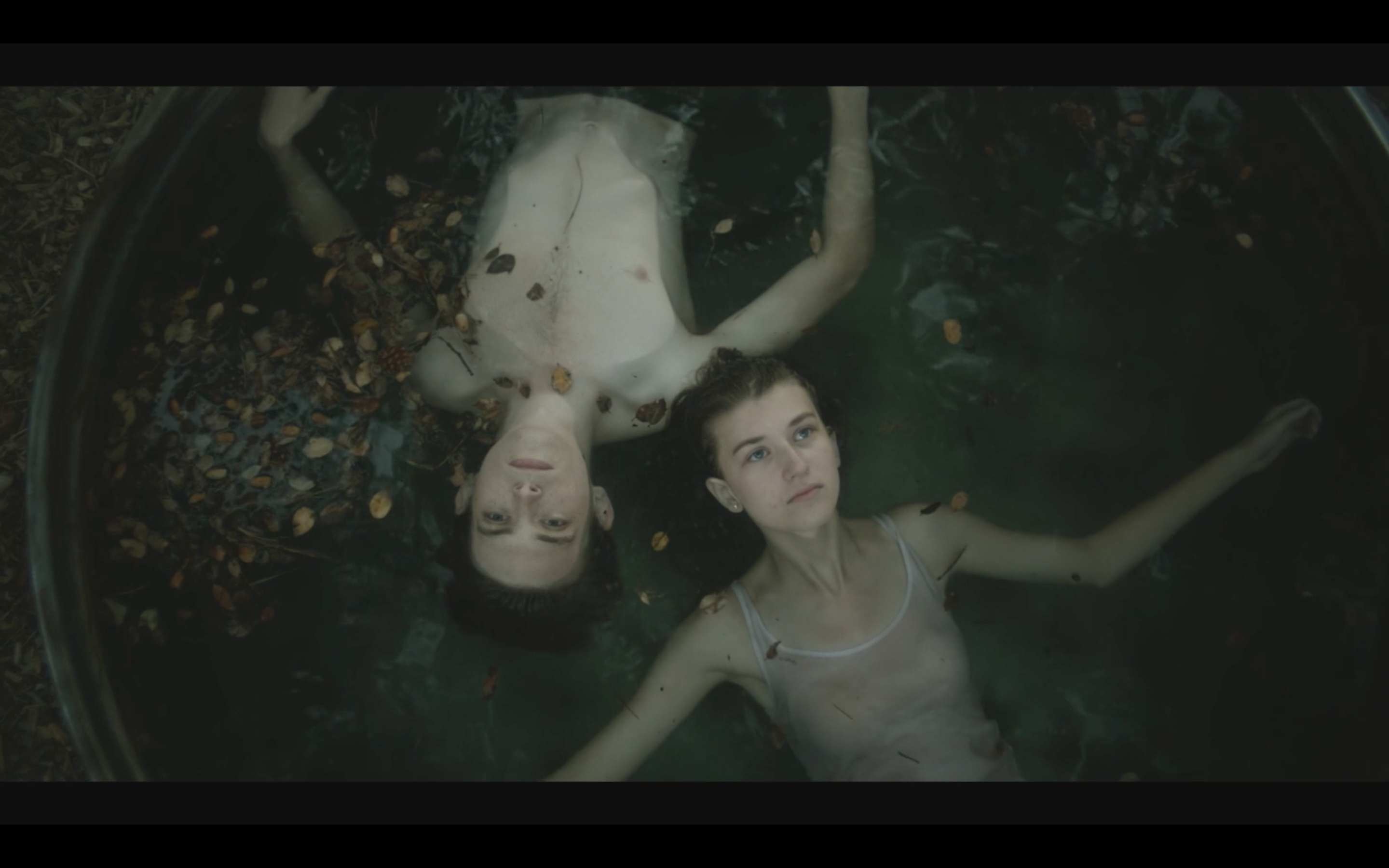
Still of Casey Burke as Julie in “The Plague”

“Federico brought a unique perspective to my experience on the set and to the project itself. Both writer and director, Federico managed to create and explore a world outside just a ‘horror’ or ‘dystopian disaster’ genre,” says actress Casey Burke. “From an extensive rehearsal period to valuable personal moments with each actor on set to ensure unbreakable connections in the portrayal of complicated characters in a unfortunate world, Fed’s passion for storytelling was obvious from the beginning until the end.”

Federico is humble but proud when asked about his team. The reassuring aspect of Federico’s attitude is that he is clearly invested in his career because he loves the craft, and the joys of being on set and collaborating with the talented creatives it affords him. In the case of “The Plague” and its numerous prestigious festival selections, Federico’s project bypassed some stringent criteria but he still emphasizes the experiences of shooting and collaborating with a great crew as its highlight.

“What made the project special to me was the people that worked on it. I had the chance to collaborate with a great cast and crew that made the whole experience amazing.”

Federico Torrado Tobón’
Still of Dylan Riley Snyder (left) and Casey Burke (right) in “The Plague”

When asked about the story, which concerns teenage siblings who take refuge in a secluded forest cabin to avoid becoming infected by a mysterious and deadly plague, Federico’s answer points to the mysterious and remarkable way by which a gifted filmmaker like himself formulates an idea.

“The story came about from an image I saw of a set of female twins looking into the camera wearing the same outfit,” Federico excitedly explains.

“That desire of telling something dual and aesthetically parallel and balanced is what motivated me to make the plague. Usually when I write something the idea comes from just a picture or a photo. That image is what fuels the rest of the script.”

While Federico might stress his enjoyment in the creative process, it’s nevertheless worth emphasizing the significance of his achievements in having his films selected and screened by such esteemed organizations like the NewFilmmakers Los Angeles (NFMLA). NFLMA is cost-hosted in partnership with The Academy of Motion Picture Arts and Sciences and will screen Federico’s work at The Academy’s Samuel Goldwyn Theater in Beverly Hills this September.

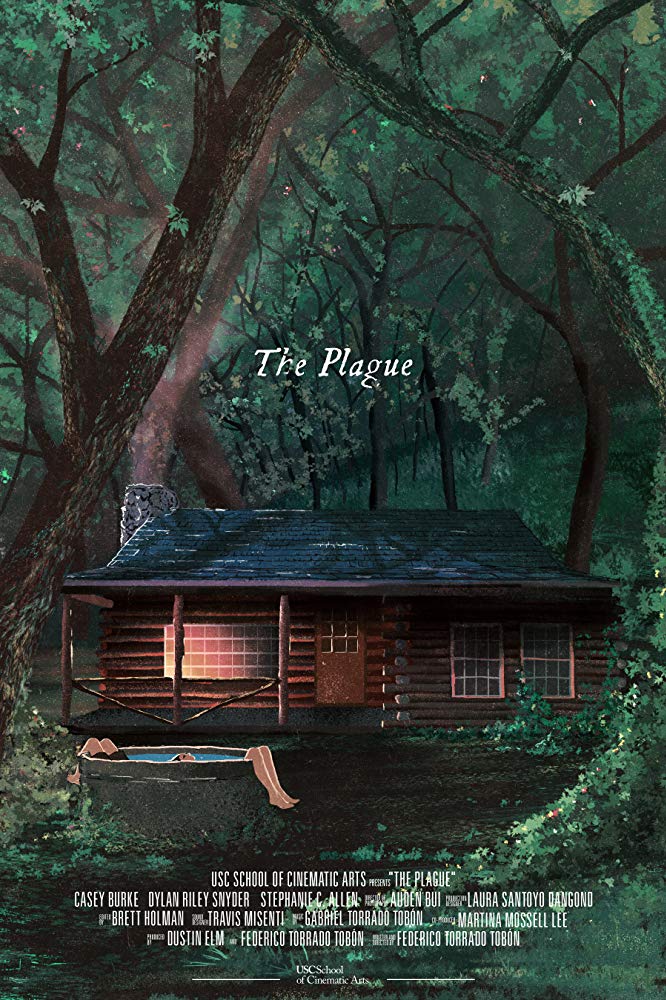
The Plague
Poster for “The Plague”

“I’m very happy that The Plague is doing well in its festival circuit,” Federico adds. “Winning best short film and having the opportunity to screen with in The New Filmmaker’s LA In Focus Latinx at Hispanic cinema exhibit at the Academy Goldwyn theater means a lot to me.”

The heightened level that Federico’s career has reached is not simply a consequence of his skills as a director. As mentioned at the beginning of this article, Federico is most definitely a multi-hyphenate, a creative who enjoys working across many fields, especially the combination of directing and producing.

“My work as a producer came from the necessity to make the stories I wanted to direct,” he attests. “When I started there was no chance of having a big team so I had to be thinking about producing it as well. Since that moment I started to produce everything I was directing.”

Elaborating with conviction Federico says, “To me a perfect production is one where the producer is fully synced with the director…What makes me capable of handling these two different roles is that I think about both simultaneously.”

Federico also exercised his diversity as a filmmaker in terms of genre with the film “Wytches,” a horror about a woman learning about her mysterious powers while staying at a strange hotel with her aunt.

“Wytches was my first attempt at making horror. The goal was to explore the genre and… find a way to tell a story by collaborating with two other directors…Three minds creating one piece.”

For Federico, the experience was both humbling and gratifying. “I learned a lot from their skills and their storytelling,” he claims. “And we all learned from each other.”

The experience has paid off, as the film was selected for competition at the Calgary Horror Con, one of the world’s best horror film festivals, as well as the first and largest convention in Canada dedicated to Horror, not to mention one that is notorious for its tough competition in terms of the films it accepts. In other exciting news, it also screened at the Midnight series at the celebrated Dances with Films festival, which was described by IndieWire as being “widely recognized as the premiere showcase of innovative cinema in the U.S.” and considered LA’s best indie film festival by the Huffington post.

While Federico’s bustling schedule keeps him quite busy as he continues to balance his work as a producer and director, his passion and motivation to share his work audiences is one of the reasons we got lucky enough to nail him down for an interview and we couldn’t be more thrilled. He’s definitely inspired us, and we hope his story will do the same for you.


Maria Venturini’s Style Reminds Viewers of the Creative Power of Cinema

Maria C. Venturini
Maria C. Venturini on set of “Waiting for Adams”

Throughout cinematic history, the most exalted and iconic filmmakers have been those who’ve had the vision and audacity to defy convention and blur the line between narrative and art. Italian director Maria Chiara Venturini is reminding audiences of cinema’s origin as an extension of the imagination.

Through her films, Venturini lovingly channels a nostalgic, avant-garde aesthetic that’s been absent from the silver screen for too long. Among her productions is the 2015 film “Ancien Régime,” an ode to the French New Wave and a thinly-veiled critique of vapid materialism. The film captured critics’ attention at festivals around the globe, and was chosen as the winner by judges at the Sprockets Film Festival in Toronto. At the heart of the sophisticated send-up is the iconic brand Chanel and its instantly recognizable style of highbrow black-and-white advertising.

“This was my first approach to black-and-white 16mm film. I liked the idea of creating something that would fit the look of the media itself — a dystopian world where a fashion dictator imposes his fashion rules on society seemed perfect,” Venturini described. “The film takes place in a classroom where the only word that people are allowed to say and teach is ‘Chanel,’ and the only solution for arithmetic problems is ‘N°5,’ like the perfume.”

To the untrained eye “Ancien Régime” is virtually indistinguishable from any of Chanel’s countless ad campaigns. Stark black-and-white cinematography, minimalist mise en scène and a strong focus on physical acting and borderline absurdism are defining characteristics of both “Ancien Régime” and the perfume giant it satirizes. To a great extent, however, Venturini’s affectionately ironic admonishment uses the iconic brand as a synecdochic catch-all for the kind of fanatical devotion many high-fashion brands elicit.

“We live in a society where sometimes we [confuse] real priorities with what’s [secondary]. Fashion… for some people comes before many more important issues. I wanted to pay homage to such a great brand, but also shake that part of the audience that behaves this way,” explained Venturini adding that, “with a smile you can make people understand the concept better too.”

Drawing inspiration from the surrealism of Salvador Dali and the eccentricity of Henry Selick, her 2015 film “The Laboratory of Dr. Enerd” offers a brilliantly dreamlike glimpse into the director’s mind.

“‘The Laboratory of Dr. Enerd’ is made with a stop-motion technique called pixelation that merges animation with human characters,” Venturini described. “I was exploring this new part of the world of animation but I still wanted to make a piece that will make the audience feel the same way I feel when I see other pixelation projects.”

Using the experimental new technology in combination with her years of experience in fine art photography, Venturini created a film which can only be described as simultaneously stop-motion and live-action. What may sound like a contradiction in terms is actually a mesmerizing, almost magical film about a young scientist and the outré experiments she conducts in her laboratory.

“Dr. Enerd is trying to follow her mother’s recipe to make something a little unusual,” explained Venturini. “Also bizarre are the ingredients and tools she decides to use in this preparation: unicorns, gummy bears, syringes and a stethoscope.”

The film is a meticulously calculated spectacle of imagination. From costuming and set design down to the finest details of every prop in the whimsical lab, every frame of “The Laboratory of Dr. Enerd” was crafted and vetted by Venturini with enormous care. That level of attention to color and design are perhaps what most distinguish the director as an artist first, filmmaker second. It’s also what earned the film the honor of being an official selection at the Citizen Jane Film Festival, as well as enabling it to reach audiences as far away as the Chinese festival circuit.

Venturini built on some of the stylistic eccentricities of “The Laboratory of Dr. Enerd” with her 2016 film “Waiting For Adams.” A much less vibrant film in comparison, “Waiting For Adams” instead takes on a more dreary aesthetic in its focus on a mysterious waiting room that seems disconnected from time and reality.

“‘Waiting for Adams’ is so far the most ethereal piece I’ve ever done. The whole project could be seen as just a dream,” she described. “People gave me lots of different interpretations of the story, and I felt like a psychiatrist that shows those inkblots to his patients.”

The film opens on a nun signing in at the reception desk of an indescript doctor’s office. As she takes a seat, keen-eyed cinephiles will recognize that she and the other waiting room patients are all characters from films that were nominated-but-snubbed at the Academy Awards.

“Only a movie geek could possibly know that all those characters are from movies that were nominated for an Oscar but lost. Thus, a desire for redemption brought them to consult one of the craziest plastic surgery doctors in order to change their look and have a second chance,” Venturini explained “Dr. Adams, inspired by Patch Adams, has no real surgery skills and ends up transforming everybody into monsters.”

One-by-one, a string of familiar characters enter the office of the insane Dr. Adams, and one-by-one they return as horrific beasts that would seem right at home in a Tim Burton movie. Meanwhile, the characters in the waiting room engage in awkward banter and show off their idiosyncrasies. The entire film is delightfully unusual and thoroughly original. Every detail is deliberately and painstakingly crafted to be like a dream — ethereal and open to interpretation. With “Waiting For Adams,” Venturini once again proved herself both a visionary director and artiste. Critics in Venturini’s native Italy rallied behind “Waiting For Adams,” choosing the film as an official selection at the Scrittura e Immagine Corto Film Festival.

More than a century ago, cinema began as an exciting new medium for artistic experimentation. Every few years since then, some brilliant mind will break through the mundane and familiar, uncovering for the first time some virgin territory in the limitless expanse of cinema’s artistic potential. In this generation of filmmakers, there are few figures as likely to follow in those revolutionary footsteps as Maria Venturini.