Storytelling has seen many evolutions in the manner that it is imparted to an audience. Regardless, the constant has been leveraging imagination for both the audience and the author. Rage against technology all you want but it can be utilized in highly beneficial ways when placed in responsible and skilled hands. Today’s cutting-edge soundstages bear little resemblance to those of the past except in the way they are inhabited by adventurous creatives.
Virtual Extension
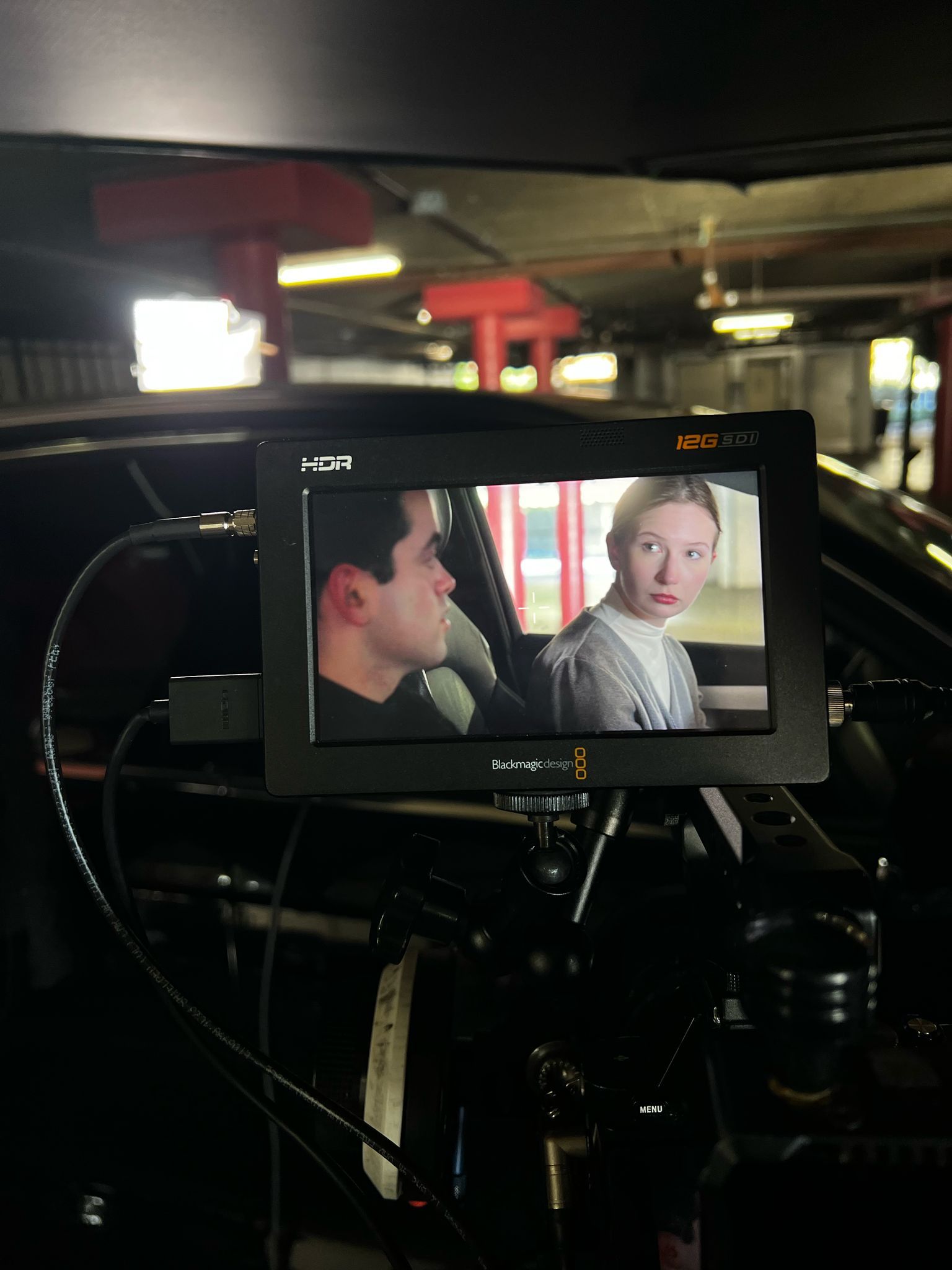
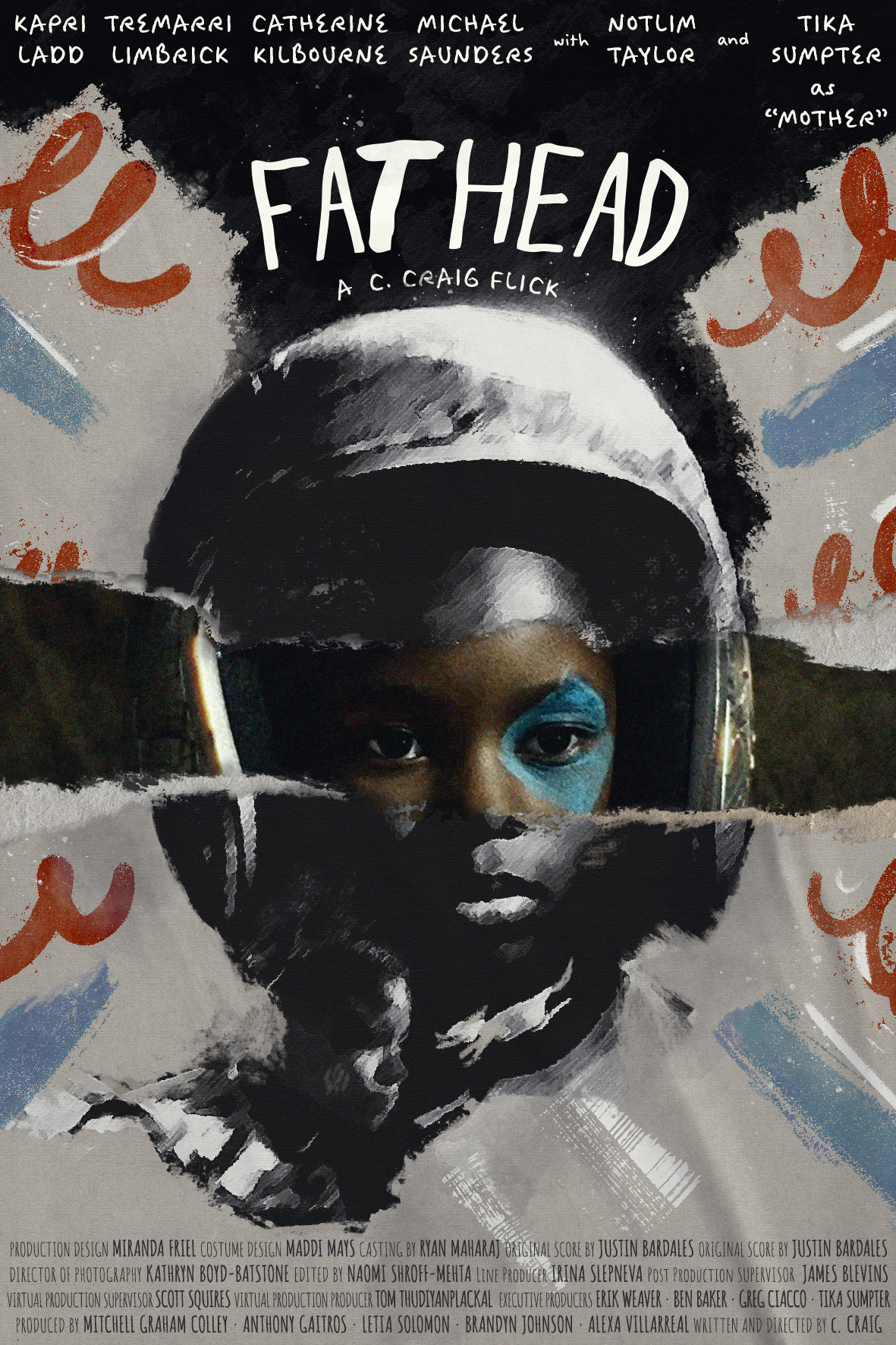
Fathead is a film that utilizes the same LED Volume Stage technology as the prestigious Disney shows The Mandalorian, Obi-Wan Kenobi, and The Book of Boba Fett. Merging the physical world the actors inhabited on the sound stage with virtual environments, this film offers a twist on the concept of children left to inhabit a world void of adults, at least for the most part. There is an obvious parallel to William Golding’s Lord of the Flies, but the initial concept is where this ends. Filmed at Amazon Studios with a complex set up of LED screens around a stage and utilizing the Epic Games Unreal engine, this on-set virtual production methodology generates backdrops around the actors in real time to seamlessly blend with the stage and create environments that would otherwise take months of CGI in post-production.
A Test of Character
The story revolves around a 10-year-old girl named Fathead and her 8-year-old brother Tudaloo, who are the last members of a tribe known as DUMS – the last free children in the world of Junkyard Paradise. They are pursued by the Ragamuffins tribe who capture Tudaloo. To obtain his freedom, Fathead must challenge Ragamuffin’s leader “Ruler” (a 14-year-old) for the right to free her brother and preserve the history of the DUMS. This involves Fathead facing an unseen creature simply known as “The Beast”, a frightening entity who ends up enacting its rage with unexpected results. In the process of deciding between self-preservation and loyalty, Fathead surprises everyone including her brother’s captors.
Technology Requires Communication
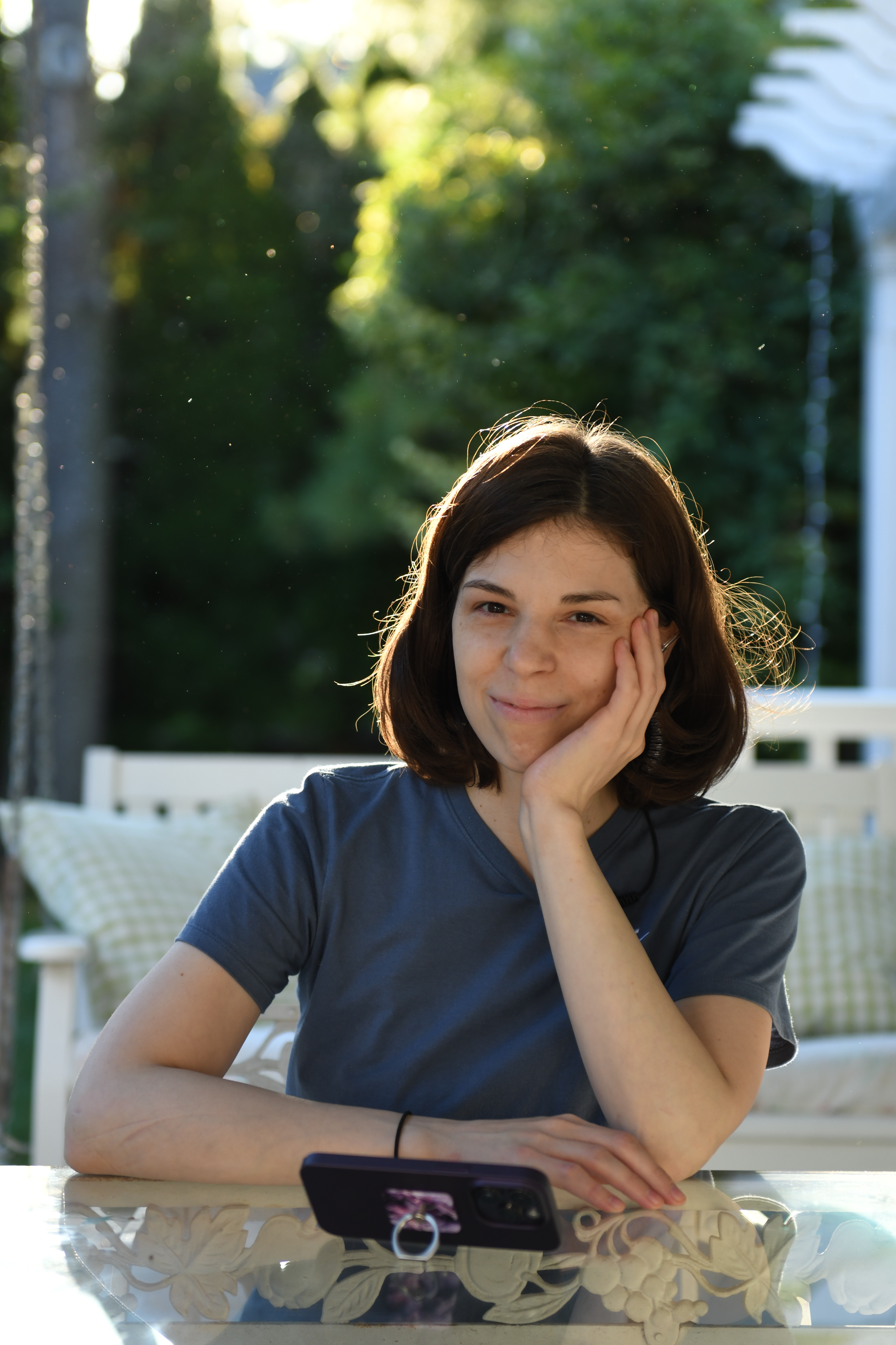
Producer Irina Slepneva is known for her work on films that reject a typical approach, such as the Horror Rom-Com Hide Your Crazy and the Comedy How Was Your Weekend?. Referring to the high-tech immersion process of making Fathead, Slepneva notes, “A new technology always brings challenges to a production. A technology that completely changes how you operate on a studio stage requires an entirely new level of coordination between production departments that previously did not have a department such as a virtual production team. Traditionally, environments created on the LED screens around a stage that can now be accomplished live, in-camera were all made in post-production with CGI and did not involve in-person coordination on set with Camera, Lighting, Grip, Production Design, Sound, Wardrobe and Makeup departments.” The creation of the Virtual Production department means recalibration but also offers new opportunities in this emerging area. Additionally, this learning curve and the new additional layer of coordination needed between Production, Virtual Production, and each Department Head can result in issues that could possibly derail a production if communication is not highly prioritized.
Embracing the Future
Every film may not be suited to be created on a virtual soundstage but in an industry that must evolve along with the technology seen in much of modern life, this avenue certainly offers benefits that will serve some quite well. This process is still developing when it comes to live action filmmaking, which indicates that new vocations will be cultivated around it. In choosing to explore this manner of film production, the cast and crew of Fathead have aligned themselves with a future that embraces optimism. While the technology may be new, the same heartfelt storytelling that is evergreen is the foundation of this film. How filmmakers decide to utilize this technology will likely steer the trajectory of the industry itself. There’s an analogous choice in the final choice Fathead (the character) makes near the end of this film and the decision of filmmakers themselves as to how they will wield the power offered them.
Within the film and television advertising industry, a legendary“Impossible Triangle” theorem has long prevailed: one cannot simultaneously attain Cost, Speed, and Quality. However, producer Axue Wei refuses to acquiesce to this dogma. As the co-founder of THG Films, a leading production company in China, and an internationally award-winning producer, she has successfully shattered this curse across numerous projects by introducing an original“End-to-End Agile Production System.” Recently, we conducted an exclusive interview with Axue Wei to delve into how she infuses industrial thinking into emotional creation and compels the market to embrace her vision.
Core Positioning — Not a“Blockbuster Specialist,” but a“Problem Solver”
Tinseltown News (TTN): The outside world, upon learning about the nearly 4-million-yuan production cost of the 3-minute Jade Dynasty Mobile Game Short Film might readily label you as someone associated with “blockbuster-scale productions.” Yet, after witnessing the creation of Spring Rolls, which was made with a mere production budget of 280,000 yuan, they may also conclude that you excel in crafting “small-scale yet exquisitely beautiful” works. How would you define such a wide-ranging disparity in your creative endeavors?
Axue Wei (AW): To me, there is essentially no distinction between these projects; they are all “equations”requiring solutions. The crux of high-budget projects (such as Jade Dynasty Short Film) lies in “entropy”—the intricate art of managing complexity; for low-budget endeavors (like The Spring Roll Episode), the challenge is “precision”—the relentless pursuit of maximizing resource utilization to its absolute limits; whereas in rapid-deployment projects (as exemplified by The Versatile Dalan Is Here), the pivotal difficulty is “velocity”—the audacious reengineering of workflows to achieve breakneck speed. I am not confined to serving merely a single category of projects; instead, I offer clients a universally applicable “systematic filmmaking solution.” My core mission revolves around fine-tuning the parameters within this framework—resources, technological tools, managerial processes, and creative rationale—to seamlessly adapt to any set of boundary conditions specified by clients. Under these constraints, I strive to uncover and deliver the “optimal solution” tailored precisely to their needs.
System Architecture – Dynamically Adapting to Diverse Challenges
TTN: You have consistently emphasized the concept of a “filmmaking system.” How does this system address entirely distinct challenges?
AW: I refer to this system as the “Agile Filmmaking System.” It operates like a finely engineered gearbox, equipped with different gears to navigate varying terrains:
When confronted with complexity (Complexity), we activate the “modular locking mechanism” to uphold industrialized standards; In the face of resource constraints (Constraint), we employ “visual reverse-driving” to ensure the explosive impact of core highlights; Under time pressure(Speed), we adopt “parallel process restructuring” to break free from sequential workflows; When encountering cultural barriers(Culture), we engage in “audiovisual language translation” to guarantee emotional resonance. No matter how demanding the conditions at the input stage may be, the sole objective of this system remains unwavering: to ensure that the output is a resounding success, of high quality, and aligned with commercial objectives.
The Extreme of Complexity – Jade Dynasty Short Film
TTN: Let’s delve into the practical applications of these dimensions. How did your system operate in the case of Jade Dynasty?
AW: The core challenge of this project was “systemic risk.” With a multinational team, the top-tier celebrity, and a substantial volume of CG, coupled with a tight shooting schedule and post-production spanning the Chinese and Japanese Spring Festivals, any disconnection in any link could trigger a domino effect. Here, my system prioritized “standardized control.” Leveraging the 20 years of big-budget production experience from THG Films, we dissected emotional artistic creation into rational production modules. A high budget does not equate to reckless spending; rather, the higher the budget, the greater the demand for precision. Through rigorous process locking, we eliminated friction in collaboration, ensuring that every cent of the budget was tangibly transformed into visual assets on screen. This project ultimately clinched the Silver Award at the 2025 Cannes Corporate Media & TV Awards, generating 2 million APP downloads for the client within just one month of its release. Furthermore, this case was shared within the industry by the China Advertising Association (the largest and most influential organization in China’s advertising sector) in 2025 as a classic example of production process innovation. This stands as a testament to the successful mastery of “high-complexity projects.”
Challenge II: The Extreme of Efficacy — Ele.me: The Spring Roll Episode
TTN: How did your system adapt for a low-budget project like Ele.me: The Spring Roll Episode?
AW: The challenge here shifted entirely to “resource scarcity.” My system swiftly transitioned into “efficiency mode.” Under traditional workflows, a budget of just $39,000 would only support a rather mediocre shoot. However, we adopted a “visual reverse-driving” logic: instead of “shooting whatever we want,” we focused on “leveraging available resources to their absolute fullest.” We eliminated all mediocre intermediate steps and concentrated all efforts on crafting a single, highly memorable visual symbol. Despite the minimal budget, through systematic resource allocation, we produced a highly shareable film. After its launch in February 2025, the project garnered over 630 million views, 3 million+ interactions, and nearly 2.8 million discussions. It was recognized by industry media as one of the most culturally valuable commercial short films of the year, proving that my system not only excels at managing substantial budgets but also delivers exceptional ROI (Return on Investment) even when funds are scarce.
Challenge III: The Revolution of Speed and Process — Ele.me: The Versatile Dalan Is Here
TTN: The Versatile Dalan Is Herehas garnered numerous prestigious global awards. What was the primary challenge of this project?
AW: The challenge lay in the paradox between time and quality. With over 30 co-branded partners involved and the brand audit process alone taking 40 days, the standard 60-day production timeline was compressed to just 20 days. Adhering to the traditional animation TVC workflow would have made it impossible to complete the production task before the launch date. Here, we implemented “process-dimensional innovation.” I dismantled the conventional linear animation workflow into a multi-track parallel mode. This was not merely a matter of adding more personnel or working overtime; it required a completely new SOP (Standard Operating Procedure for Aesthetics and Technical Standardization). Ultimately, we not only delivered on time but also won six authoritative advertising awards, including the Grand Prize at the NYX Awards and the Best Animation Award at the US International Awards, due to the exceptional quality of the film. This underscores the system’s adaptive capability in terms of “agility.”
Challenge IV: Cross-Cultural Soft Connection — D-Cal Short Film
TTN: Finally, let’s discuss D-Cal Brand Short Film – The Imperfect Mom, a project focused on localizing an American brand in the Chinese market. What was the challenge here?
AW: The challenge here was subtle yet profound—it was about “resonance.” The client possessed strong brand equity but faced “cultural misalignment” in the Chinese market. This issue could not be resolved through mere financial investment or accelerated speed; it required “meticulous audiovisual translation.” My system fulfilled a “emotional calibration” function in this context. In this project, while the agency had an excellent creative concept, my approach went beyond simply selecting skilled storytellers as screenwriters and directors. Crucially, all core creative personnel were parents themselves—either fathers or mothers. Upon the film’s release, its authentic details instantly sparked intense resonance among new mothers, propelling the marketing campaign to far exceed expectations: targeting only approximately 17 million new mothers, the project generated over 87 million social buzz. The film’s first-week viewership surpassed 32 million, and during the dissemination period, D-Cal’s Weibo index soared to 212,000, surpassing competitors by over a thousandfold. This case became a classic industry benchmark in 2019 and was honored with the IAI Awards – Creativity & Marketing | Video – Silver Award. The exceptional communication effectiveness stemmed from the agency’s sound strategy, while our role was to “materialize” this strategy into a high-quality video. Without this high-caliber vehicle, the strategy would have remained unimplemented.
The System as the Bedrock of Success
TTN: Looking back, each of your cases represents a typical filmmaking challenge.
AW: Precisely. As a commercial production company, we have no control over how much budget, time, or script a client provides. However, my value lies in the fact that, regardless of the “raw materials” and “constraints” given by clients, our filmmaking system can transform them into high-quality finished products through innovative production mechanisms. The success of our clients—whether it be box office hits, viral dissemination, or successful brand localization—is the inevitable outcome of the system’s meticulous operation at the backend. This is precisely why I am committed to continuously constructing a more efficient filmmaking system by integrating AI and other cutting-edge technologies from the industry—to make “success” a replicable industrial standard. Nevertheless, I have consistently emphasized that AI cannot replace aesthetic sensibility; it can only replace repetitive labor. My innovative goal is to build a more efficient “human-machine collaboration” system in the future, enabling technology to truly serve artistic expression.
Global storytelling has expanded far beyond traditional mediums, and few projects reflect that shift as clearly as Reverse: 1999, Bluepoch Games’ internationally acclaimed RPG. Designed as a cinematic, narrative-driven experience within an interactive format, the game brings together creative teams across countries and languages to build a richly layered world shaped by history, conflict, and time itself. Its ambitious scope and international collaboration make it a standout example of how modern game production operates on a truly global scale.
Reverse: 1999 is built on a premise rooted in real-world anxiety. As the real world once braced for technological collapse at the turn of the millennium, the world of the game experiences an event called The Storm, which disrupts time itself and fractures different eras of the previous century. Within this chaos unfolds a layered social conflict between the Arcanum and the Manus Vindictae. Like Star Trek or Les Misérables, the narrative prompts reflection on persecution, war, and morality. The story operates on both epic and deeply personal levels, making empathy for its characters central to the player experience.
For players to become fully immersed, emotional investment is essential. The creators pursued a cinematic approach to storytelling, ensuring that character motivations, turning points, and revelations were treated with dramatic weight. This required powerful performances from voice actors as well as meticulous preservation of subtle performance details. At the same time, the game’s intense combat and high-stakes gameplay sequences demand equally strong sonic impact. The emotional spectrum ranges from restrained vulnerability to explosive intensity, and every moment must remain technically flawless to maintain immersion. Even minor audio distractions can weaken narrative impact and pull players out of the experience.
Capturing this range requires careful technical oversight. Quieter lines must retain intimacy without introducing noise, while sudden emotional bursts must remain clean and controlled. The engineering process must track dynamic shifts closely, ensuring that the emotional arc of a performance remains intact. In narrative anchor moments especially, clarity and transparency allow the pacing and emotional intention of the developers to reach players without interference. The goal is always to place the player inside the world of the game.
The creative workflow in gaming differs significantly from that of film and television. In traditional linear storytelling, dialogue unfolds within a fixed sequence. In gaming, voice work must be modular, repeatable, and flexible, functioning across countless potential player paths. Dialogue is no longer simply a performance within a scene; it becomes an adaptable asset that must operate seamlessly in an interactive environment. This shift from linear to interactive storytelling requires a fundamentally different engineering mindset.
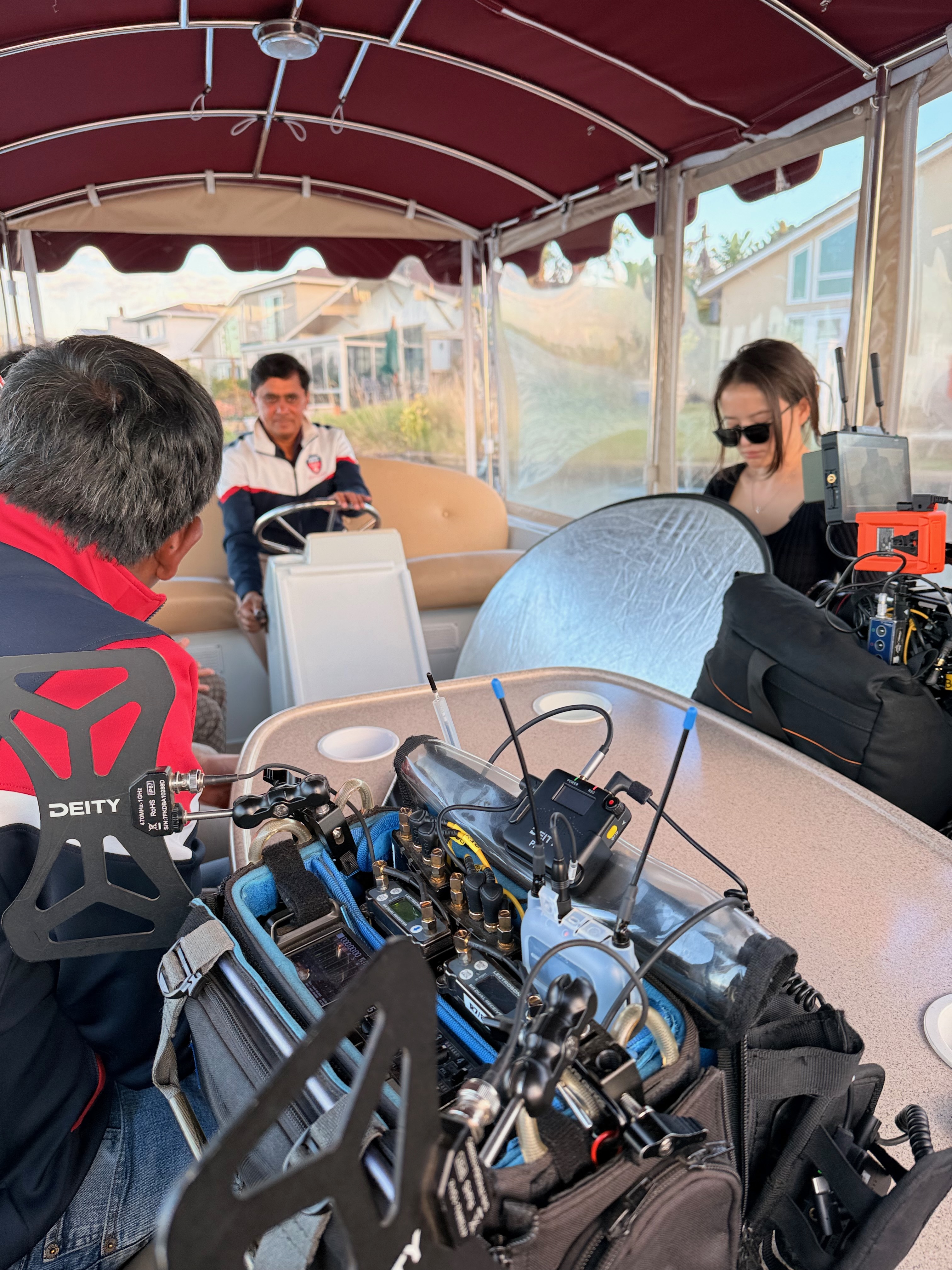
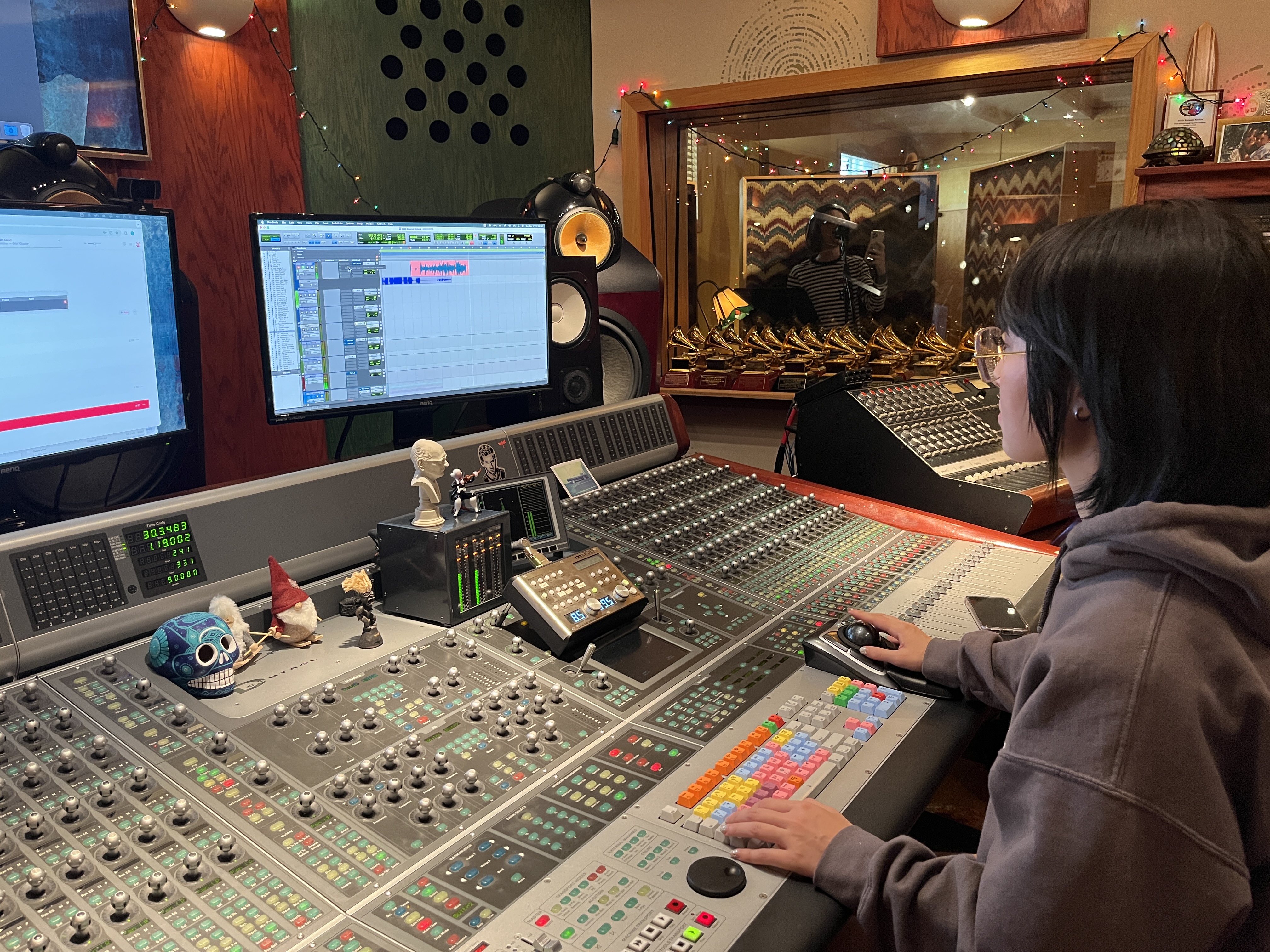
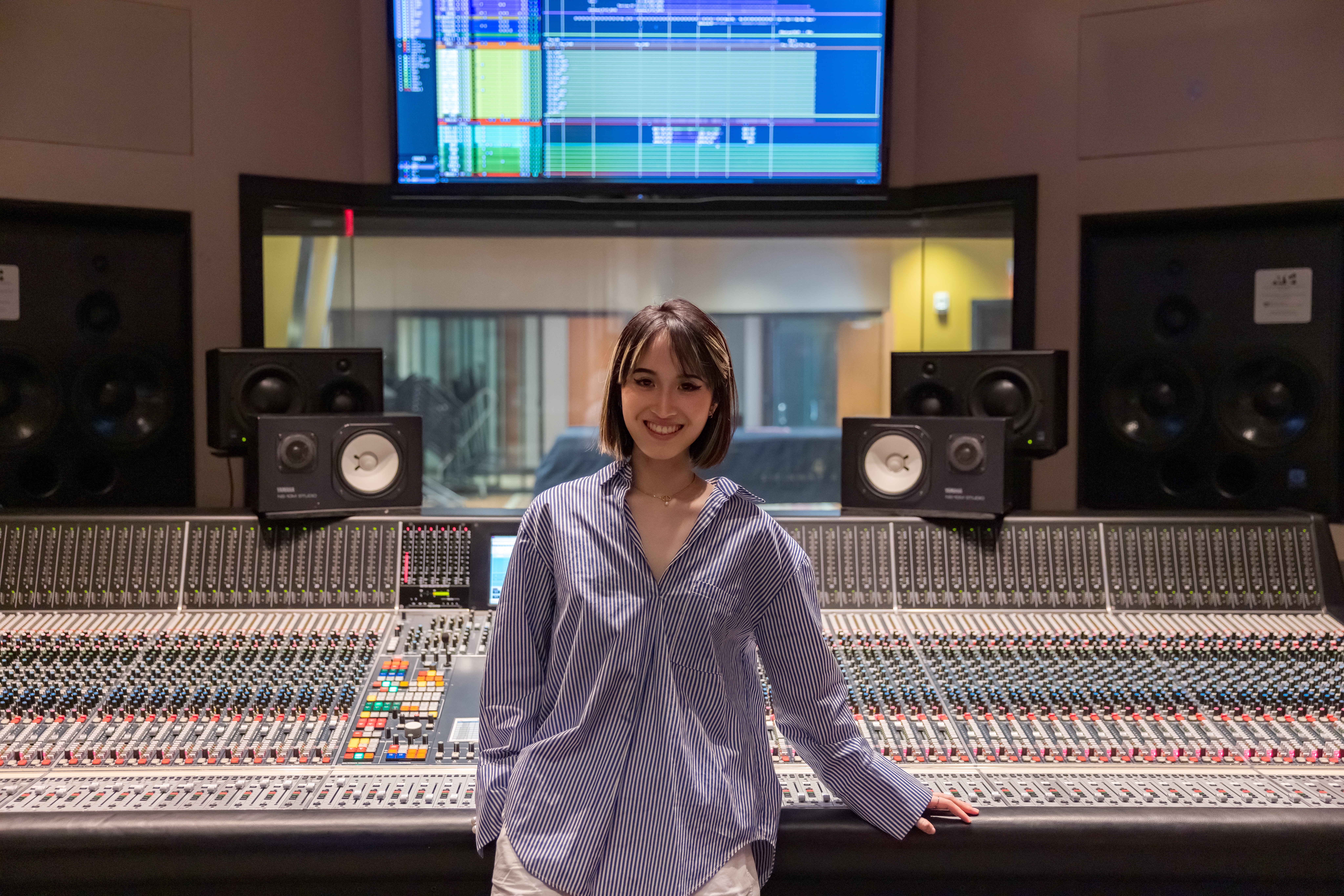
Syllous Mai stepped into this world of interactive storytelling as the voice-over audio engineer for Reverse: 1999 during sessions at One Line Studios. Known for her work as a sound designer and sound editor in numerous acclaimed international film and television productions, this marked her venture into video game production. Her transition into gaming highlights not only her technical versatility but also her ability to adapt creatively across mediums.
What made her particularly valuable on Reverse: 1999 was her recording studio expertise and her fluency in English, Mandarin, and Cantonese. Given the international collaboration behind the project, her multilingual abilities helped streamline communication among teams. Even when English served as the primary working language, the ability to clarify direction, confirm pronunciation, and ensure alignment across languages reduced friction and made sessions more seamless. This cross-cultural facilitation enhanced both efficiency and creative cohesion.
Her role on Reverse: 1999 also placed her within a large-scale international production environment. Game development often involves collaboration across multiple countries, departments, and time zones, requiring streamlined communication and technical precision to maintain workflow efficiency. Her fluency in English, Mandarin, and Cantonese supported alignment during recording sessions, particularly in clarifying pronunciation, direction, and performance intent. This contributed to smoother sessions and reduced the potential for miscommunication in a multilingual production setting.
At the same time, her background in film and television informed her handling of narrative material within the game. Maintaining emotional pacing, preserving subtle performance details, and ensuring technical stability remained central priorities. The experience reflects an expansion of her professional scope, demonstrating the ability to apply cinematic storytelling sensibilities within an interactive framework while meeting the structural and technical demands unique to gaming.
As gaming continues to expand worldwide, professionals who can combine technical mastery, narrative sensitivity, and cross-cultural communication will remain essential. In that evolving landscape, Syllous represents a new generation of audio professionals equally at home in film studios and interactive worlds.
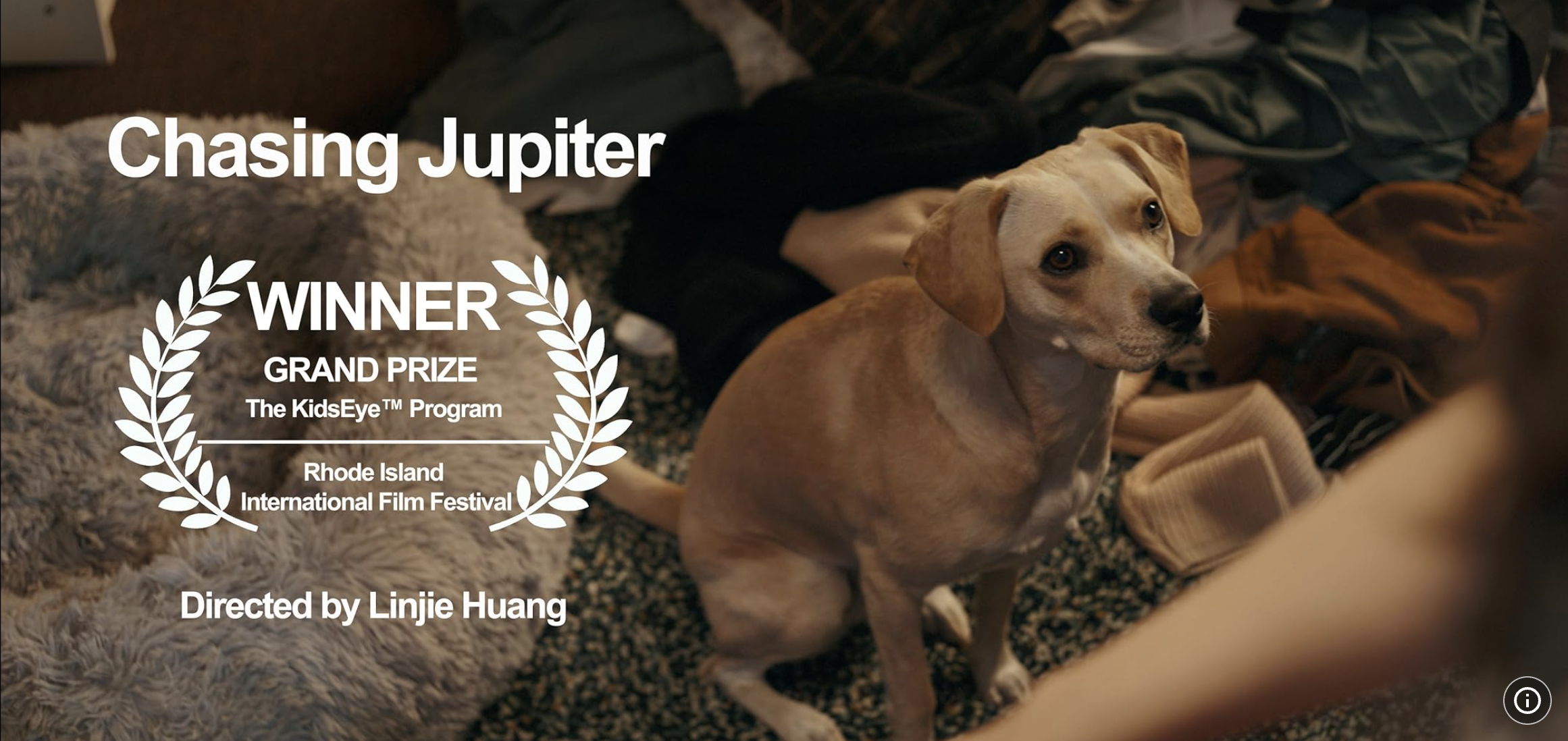
Film is a medium which allows us to share an experience. This might take place at any point in time and with any set of circumstances but at its essence, film is about a unified sharing of an experience. There is no closer relationship in this process of filmmaking than that of director and editor. The ability of an audience to perceive the emotional intent of a story resides in this collaboration. Director Linjie Huang refers to editor April Liu, with whom she collaborated on the film Chasing Jupiter, as truly extraordinary in her abilities declaring, “April has a gift for shaping stories with heart and intention. She doesn’t just cut images together—she reveals layers of emotion and meaning that deepen the audience’s experience. She approaches editing with empathy, patience, and a strong sense of intuition, which makes every project with her feel alive and deeply resonant. April brings out the best in the films she touches, and I feel fortunate to have partnered with her.” There’s an abundance of evidence which confirms this in Chasing Jupiter. Though it might be the simple story of a woman and her dog, this film reminds us that a commitment of love can be too often taken for granted in today’s world. This story prompts us to be the better version of ourselves.
Tara (actress Flora Hwang), one of the film’s two main characters, is a proxy for the audience. She is hyper-focused on astrophotography to a point that borders on obsession. The fixation she has is communicated through tight cuts of hands adjusting knobs, the scratching of pencil on paper, and the sound of her breath. This editing tactic establishes a sense of anxious anticipation. While her drive might be admirable, Tara’s tunnel vision implies that she is perhaps more concerned with the process than the beauty of what surrounds her with a myopic perspective. The catalyst for the unravelling of Tara’s plan is found in the vehicle of her dog Cosmo who knocks over her tripod. Cosmo is eager and happy while Tara is visibly unhappy and frustrated with the situation. Comedy and tension are siblings in this moment, with jump cuts between Tara’s face and the toppling tripod establishing a sense of slapstick comedy. As this escalates, Tara breaks down into tears while the camera lingers on her. Her despondency is unvarnished as she sits amidst the destruction. In the most endearing moment of this story, Tara appears to have the revelation that life and the world are to some extent out of our control, revealing the importance of recognizing the love that is offered freely to us. As she strokes Cosmo’s fur, she lifts her camera up to begin once again, but with a more enlightened approach. The juxtaposition of the cosmic and the personal are potent in this scene. Tara’s newfound acceptance that life’s beauty lies in shared imperfection speaks profoundly.
Only in contemplating “what could have been” with Chasing Jupiter can one come to an understanding of how exceptionally skilled Ms. Liu’s editing actually is. “A woman’s photography is interrupted by her dog”, this single sentence might generalize the plot of the film but it communicates no sense of emotional depth. Through discussions with Linjie Huang and her own perception of the footage captured, April has sculpted the type of cathartic journey that borders on spiritual in its message. The skill of any great artist lies not in spectacle but in the ability to reach into different people from different walks of life and remind them of the humanity that we all share in our emotions. Chasing Jupiter may only be a story about a woman and her dog but the manner in which it is told makes it a primer for how to be a human being who lives for the present and appreciates the good things rather than focusing on impediments. What April Liu’s editing has achieved in this capacity is astounding. Audiences and filmmakers alike agree with this as Chasing Jupiter received the Grand Prize at the prestigious Flickers’ Rhode Island International Film Festival (an Oscar and BAFTA qualifying film festival) in addition to being an official selection of numerous others including Dances With Films and the Philadelphia Asian American Film Festival.
Australia has long been a breeding ground for exceptional talent, producing iconic actors who have left an indelible mark on cinema worldwide. Among these remarkable individuals is Suzanne Gullabovska, a rising star set to make her mark in Hollywood with two exciting upcoming feature films. While she has already garnered acclaim in her homeland, Suzanne is quickly becoming a name to watch on the international stage.
Having shared the screen with Oscar winner Cate Blanchett and SAG Award winner Hugo Weaving in the acclaimed miniseries Bordertown, Suzanne’s impressive body of work reflects her undeniable talent. Her early experiences in lead roles in classic plays by Shakespeare and Chekhov paved the way for her transition to film, where her charisma and skill have truly shone.
Her journey into feature films began with a standout performance in Katusha, where she portrayed Maria Medun, a schoolteacher turned soldier during World War II. Suzanne brought a profound sense of vulnerability to the role, capturing the essence of a woman who joins the army to find her husband and ultimately faces the harsh realities of war. Critics and audiences alike were captivated by her magnetic and emotionally charged performance, which paid homage to the bravery of real soldiers.
In stark contrast, Suzanne showcased her versatility in the comedy film Death in the Afternoon. As Grace, the lead character who maintains her poise amid escalating tensions at a funeral, Suzanne demonstrated her ability to balance humor and grace. The film’s recognition as an Official Selection at prestigious festivals such as the South African International Film Festival and the Ireland International Film Festival helped introduce her to a broader audience.
Looking ahead, Suzanne is poised to take center stage in two highly anticipated feature films. Currently in pre-production, Hemispheres will see her in the lead role of Genevieve, a character crafted specifically for her extraordinary talent. The film is described as a romantic time travel tale about a ballet dancer who relocates from Australia to Los Angeles in search of a fresh start. Suzanne shares her enthusiasm for the project, stating, “I’m a romantic at heart and am looking forward to bringing the role of Genevieve to life in this wonderful and original story that celebrates the beauty of love transcending time. I also love that I get to play a ballet dancer, having studied ballet for many years when I was much younger.”
In addition to Hemispheres, Suzanne will also star as Freya in Oil of Freya, a gripping drama/thriller that promises to showcase her range as an actress. Reflecting on her journey to Hollywood, Suzanne expresses her gratitude and excitement: “Moving to Hollywood to pursue acting has always been my dream. I have always known that I want to be an actress and grew up enchanted by classic films like Rear Window starring Grace Kelly, among many others. I believe movies possess a kind of magic, the ability to evoke wonder, and as an actress, I love the opportunity to create that for others.”
With her impressive talent and diverse roles, Suzanne Gullabovska is a name to watch in the world of film. As she embarks on this exciting chapter of her career.
A truly exceptional actor is distinguished by their ability to immerse themselves completely in character arcs, turning personal experiences into layered performances that strike a chord with audiences worldwide. Australian actress Emily Mutimer is recognised for her grounded approach to character development, taking on roles that explore emotional depth and complex personal dynamics.
“I pick roles that have meaning to them and I find parts of myself in each role,” Mutimer shares. “I empathise with the characters I read, and become excited to tell the story using what I know and collaborating with all different types of creators, writers and directors.”
Emily Mutimer shot by Isabelle Ohse
One standout role in particular was Mutimer’s compelling portrayal of Astrid in the groundbreaking award-winning drama “Flunk,” an Australian series that explores the lives of LGBTQ+ high school students. The critically acclaimed series, which can be streamed via global giants Amazon, Tubi and Vimeo, became a milestone in queer representation, resonating with viewers and providing an honest, heartfelt look into modern high school relationships.
Mutimer’s unwavering talent shone through during her 2019 chemistry read, leaving a lasting impression on “Flunk” writer, producer, and director Ric Forster (“Lost & Found You,” “The Summer Before Forever”). Her audition perfectly captured the essence of Astrid, a fundamental character who is both deeply emotional and strategically insightful. Forster quickly recognised Mutimer’s rare ability to portray the character’s emotional range, casting her in a pivotal role that would put her on the map as an actress.
“Astrid and myself are both similar in the way that we share empathy for other people,” explains Mutimer. “I love being able to live this out in a character, it feels very freeing to play someone who knows this about herself and isn’t caught up in things that don’t serve her.”
Mutimer’s skillful depiction brought Astrid’s intricate inner world to life, elevating her as a central figure whose journey from heartbreak to self-assurance unfolds over the course of the series.
Madeline Sunshine (left) and Emily Mutimer (right) in season 5 of “Flunk”
Emily Mutimer (left) and Holly Monks (right) on set of “Flunk” Season 5
After nailing Astrid’s introduction in season 3, Mutimer flawlessly transforms her into a key character who provides emotional support to her friends while navigating her own changing relationships. By season 5, Astrid’s personal growth is remarkable—emerging from the depths of heartbreak to a place of confident self-acceptance.
“Playing a character over three years has been more of a rewarding than a challenging experience. My own mental barrier and ideas were challenging me, but over the course of time I realised the character also grows and changes which was fun to play with,” Mutimer explains. “I found myself being able to drop into the character easier, it made me take more risks with Astrid which felt freeing and fun to explore.”
Riding on its immense popularity, the award-winning “Flunk” franchise expanded into six feature-length film spin-offs, including “Flunk: After School” (2022) and “The Sleepover” (2021), with the latter gaining significant recognition in Tubi’s top-ten LGBTQ films in 2023.
The feature films provided Mutimer the opportunity to further explore Astrid’s identity, driving her character evolution and placing her personal growth at the forefront. Through these projects, Mutimer not only shaped Astrid’s range, but also nurtured her artistic confidence and honed her professional skills as an actress—qualities that clearly distinguish her from others.
Emily Mutimer (left) and Liv Rian (right) in the Flunk film “The Sleepover”
The feature films provided Mutimer the opportunity to further explore Astrid’s identity, driving her character evolution and placing her personal growth at the forefront. Through these projects, Mutimer not only shaped Astrid’s range, but also nurtured her artistic confidence and honed her professional skills as an actress—qualities that clearly distinguish her from others.
“Playing Astrid has helped me gain confidence as an actress. I’ve been able to bring new ideas to my character and sustain the longevity of it,” shares Mutimer. “It’s taught me a lot about being on set and what it means to work hard and be prepared.. it’s given me permission to take a risk or make a choice and be confident in that choice.”
With its raw take on relationships, the fan-favourite “Flunk” franchise resonates deeply with audiences across the globe, including in the USA, Brazil, Europe, and South Africa, creating moments that feel like reflections of their own lives. Mutimer’s magnetic performance as Astrid has not only fueled this connection, but continues to draw fans in episode after episode.
The long-running series also sparked a passionate fandom, inspiring fan art, re-edited videos, and Tumblr communities centered around the show, with Astrid at the heart of this engagement highlighting the strong emotional bond viewers share with the beloved queer characters.
Since its debut in 2018, “Flunk” has become a major cultural milestone, racking up an impressive 200 million views on its official YouTube channel. With its massive reach, the series has set a new benchmark for LGBTQ+ storytelling, showcasing the creative potential of online narratives aimed at younger queer audiences.
“The story isn’t necessarily about people coming out and needing to feel accepted, it’s in a world where everybody is accepted for who they are, and being a lesbian is not a defining factor at all, which is something I love about the series,” says Mutimer. ” I think it’s important to share these stories because it allows audience members to feel comfortable and confident about who they are regardless of how they sexually identify.”
In an open conversation with Australian media platform FilmInk, “Flunk” executive producer Melanie Rowland (“Significant Others”) offered a candid glimpse into the series’ creative journey, sharing: “There’s a huge fanbase for ‘Flunk’ in the US, as well as the UK, Asia and South America. It’s been amazing to see our series, produced by a small team in Melbourne, gain so much traction across the globe. We’re thrilled that the show will now reach an even bigger audience in Europe”.
When asked about working with Mutimer on “Flunk,” Rowland adds: “Emily’s talent is evident in her strong work ethic and dedication to her craft. She effectively interprets and conveys complex emotions, consistently delivering high-quality performances.”
Mutimer’s remarkable talent as an actress lies in her ability to fully embody each character, bringing them to life with richness and authenticity. Her tremendous success as Astrid has propelled her to stardom, positioning Mutimer as a leading talent in several upcoming roles, including the series “Queens of the Desert” alongside Sonia Rockwell, best known for her role in the 2022 Emmy-Award winning series “Pam & Tommy.”
Drawing upon her own experiences, Emily Mutimer crafts performances that feel real and compelling, creating moments that linger in viewers’ minds long after the final credits roll. With her undeniable acting prowess, there’s absolutely no doubt she will continue to captivate audiences worldwide in the years to come.
Whenever John Wate steps onto a film set, puts his eye to a camera lens, and starts making a movie, he is living his dream. Directing is a pleasure he can’t compare to anything else; it allows him to be in tune with what is happening in front of him, and all his senses go into overdrive. He spends every day doing what he truly loves, and this passion translates directly into his beautiful work.
For this German native, making a good movie is all about the research. He always aims to find the perfect story and the right characters, with the singular goal of leaving an impression on his audience. With his work on the Smithsonian’s Epic Warrior Women film series and movies like Samurai Warrior Queens, he does just that, showcasing why he is an industry-leading director in his country.
“I would say as a director you are a storyteller, and the way you have lived and seen the world will organically shape how you tell your stories. I found that the world is a treasure trove that has so much to offer in terms of stories and characters. Once I find that ‘one thing’ that interests me, I can start digging and I usually find gold,” said Wate.
Wate has spent many years directing masterful films and television series, including the TV movie Samurai Headhunters in 2013, that allowed him to explore a unique part of world history. It is a documentary on the dark and brutal side of the samurai warrior clans featuring the life of peasant Masa who is forced into the ruthless world of the samurai.
For over a thousand years, the samurai have been celebrated as an aristocratic warrior class. Exceptionally skilled and loyal until death, their very name has become a byword for honor and dignity. This film reveals the unknown dark side of the samurai – a fascinating tale of greed, treachery, extreme cruelty and violent death. Based on newly discovered samurai war manuals, Samurai Headhunters reconstructs the life of a young peasant farmer who is press-ganged into a warlord’s army. Driven by his love for a village girl of noble birth, young Masa quickly rises through the ranks from simple foot soldier to venerated samurai commander. But his reward is to be one of betrayal, lies and finally forced suicide by his fellow samurai. Interwoven with this dramatic story, two British historians track down remarkable new evidence from ancient war manuals that show the true, dark world of the samurai. The drama documentary also features a living samurai master and his students, as well as CG animation, stunning re-enactments, original costumes and historic locations.
“Everyone knows the samurai as loyal, courageous fighters with a strong moral code – but not many people know that this is only part of the story. During the almost 200 years of civil war in Japan the samurai got rewarded for their deeds in battle, which often meant for the number of heads they had taken. The film explores the unknown dark side of the samurai, how they cheated, lied and murdered to gain favors and advance their careers, the forbidden love between warriors, the atrocities of samurai warfare, and the danger to rise to fame in such an environment. I found all these facts about the dark side of the samurai as grizzly as they were fascinating,” said Wate.
After great success with his previous film, Ninja Shadow Warriors, Wate teamed up once again with Urban Canyons Producer Sebastian Peiter and together with researcher Anthony Cummins, they researched and built the concept for the film. Living in Japan at the time, Wate not only had extensive experience, but he also had direct links to the famous Japanese film studios in Kyoto, and through all his previous other documentaries had direct access to Japanese cultural icons, such as sword masters, swordsmiths or traditional armourers. He was the ideal director for the job.
“You need to have a feeling for Japanese manners and that what they say is not always what they mean. I think a lot of the fascination for the samurai comes from the exotic mixture of stoic readiness, their manners and proper conduct in life and in battle. But if you want to show that, you have to know HOW they did certain things and why. You can’t just use a Western blue-print to invent what the character would do. At that time I lived in Japan, I spoke the language and understood their manners and hints, like that a certain gesture can reveal the opposite of what has been said. The timing, the tempo or movement of people speaking at formal gatherings. These are all subtle things that can build an authentic exotic flavor that is fun to watch,” he said.
Samurai Headhunters has been extremely popular since its release. It has aired in over thirty countries, not only on television channels but also various exhibitions about the samurai culture. It is currently showing in the prestigious Kunsthalle Munich, a German national art museum.
As a seasoned and celebrated actor, Kevin Clayette still tries to approach his craft, and his life, from the mindset of a child, by always being open to and excited by new experiences, and to love and believe like a kid. With this approach, every time he steps onto a film set, he is excited by the opportunity to play make believe and tell stories. He gets to be that little five-year-old that is always inside of him, not caring what others think and simply enjoying his life. For this New Caledonia native, there is no greater sense of joy.
At only 25, Clayette has already had a formidable career, becoming a recognized leader in Australia’s entertainment industry. Audiences everywhere recognize him from the long running soap opera Neighbours, in which he played fan favorite Dustin Oliver, and in the award-winning feature film Emo the Musical, in which he showed off his versatility as a triple-threat.
Another hit on Clayette’s resume came with the 2015 science fiction horror flick Doktor. Shot at the legendary Fox Studios in Australia where many popular films, including The Matrix, have been filmed, this award-winning film tells the story of an ancient man who is awake during surgery, triggering an hallucination, but also an allusion of a disturbing new reality.
“I liked that even though this story is set in a dystopian world and therefore quite far fetched from our current reality, it deals with themes such as money and power that are very real in our world. By talking about the reality of those issues, of those vices, we allow very important conversations to happen. Projects like these make you think and question our society and yourself. It’s a very interesting topic to reflect on,” said Clayette. “What does money do to you? Would you rather live a happy and fulfilled but short-lived life, or a lonely but long life thanks to money and corruption?”
In Doktor, Clayette plays the lead character of Gulham. In the dystopian world, Gulham is taken from the ones he loves after receiving a mysterious phone call. During that phone call, he made a deal with the devil and agreed to give his life in exchange for his family and loved one’s safety. He is then mistreated and drugged and dragged into a room before the film’s big reveal. Gulham is very ambiguous, but he is a good man, trying to do whatever it takes to save his family and loved ones. He is very brave.
Clayette knew that as the star of the film, he had to put everything he had into creating an authentic and captivating performance. Every morning, he would go through the entire script and storyboard before going on set, and every evening after leaving he would focus on creating the backstory for his character, imagining what he had been through, and then visualise what the next day would look like.
Clayette also had to prepare for his many emotional scenes, needing to portray a devastated character who sacrificed his life and knew he would never see his family again. In another scene, he was dragged down a corridor on a leash like a dog, and he had to show that hopelessness just with facial expressions. Such a challenge was exciting for the actor, who exceeded all expectations.
“Everyone in the crew was absolutely lovely, from the director to the producer to the makeup artists. It was very challenging emotionally on many levels to shoot some of the scenes I had in the movie. I liked having to get in the mindset and shoes of someone that lives a completely different life than the one I have,” he said.
Clayette had to portray a vastly emotional and dynamic performance despite the role being action focused with minimal dialogue. Using only his body language, he put everything he had into the role, creating many intense and dramatic moments in the film that greatly contributed to its later success.
Doktor was screened at many prestigious international festivals around the world. It took home Best Experimental Short Film at the Cutting Edge International Film Festival and was also selected to be showcased within the open competition category of AACTA’s Social Shorts (the Australian Academy of Cinema and Television Arts). Clayette still feels honored by the film’s vast success.
“I’m really proud of this project and the hard work that everyone put in. It’s incredible to know that independent movies with smaller budgets can still have such an impact on our world,” he concluded.
The importance of cinematography, says Zichen Tang, a master of his craft, does not lie with whether an image is real or not, but if one can make the audience believe it is real. With this approach, Tang continuously transports audiences to different places and times, immersing his viewers in the world he has created through his work. He likes to express himself through his art, knowing his fans enjoy his individualistic approach.
“Cinematography is sharing your story not by telling it, but showing it,” he said.
Throughout his esteemed career, Tang has proven time and time again why he is a sought-after cinematographer in his home of China and internationally. Whether creating a viral video, like the humorous and enlightening Unspoken Rules of Chinese Gift Giving or an award-winning film such as The Last Lesbian, Tang’s talents are always on display.
Yet another success story for Tang came last year with his award-winning film The Somnium. It is the story of a single mother who can’t recover from the loss of her beloved son and joins a research program to live in a dream state of her memories, while her mom fights with her to keep her in the present reality.
“The story was interesting. When I first read the story, it reminded me of an episode of my favorite show, Black Mirror. I always wanted to make a film like that. I like it because it’s not an ordinary ‘happy ending’ film, but the type of story that makes people think. On the surface, it alarms the potential harm that technology could bring to us, but deep down it was the mom’s choice that caused the tragedy. So, the core is really about humanity,” said Tang.
The Somnium premiered last year at the Los Angeles Independent Film Awards, where Tang was nominated for Best Cinematography. He was awarded Best Cinematography at the Los Angeles Film Awards, where the film also took home Best Director and Best Editing. The film made its way to several more festivals throughout the year, winning more awards and enthralling audiences all over the world with the help of Tang’s work.
“I was thrilled when the awards started to be announced one by one, while at the same time I feel we deserved it. Everyone on this project was talented and worked really hard. They believe in the story,” said Tang.
Tang was asked to come on board by Director Jingyu Liu, who had always wanted to work with the cinematographer after seeing his work. Tang was eager to form a partnership, advising her on her previous film, Shallow Grave, which was nominated for Golden Reel Award. When Liu sent Tang the script, he knew instantly this would be a great project for them to take on together.
“I was thrilled after reading the script. It was still a draft, but I could already tell its potential. The director and I have very similar tastes, so during pre-production, instead of trying to convince each other of things, we were inspiring each other. Often there would be many disagreements between cinematographers and directors, but on this project, we seldom had a disagreement. Instead, we have been focusing on finding better and more creative ways to tell the story, making the process rather delightful,” said Tang.
Making The Somnium was fun and rewarding for Tang. As a cinematographer, he was heavily involved in the script, putting his heart into the project from the very beginning to the very end, going through almost 20 drafts as it changed from the first draft to the final production.
“I was developing the story with the director all the time, and during that process, we had been talking about how we should shoot it as well. Often filmmakers have a problem when they find out something in the script is wonderful in theory but can’t be expressed visually. That was never a problem for this project. I was a visual consultant during script development and made sure this is a story that would be best told in the form of film,” he described.
The Somnium was just one of Tang’s many award-winning projects last year, and he has a lot lined up this year to continue his success and keep showing the world his outstanding talent as a cinematographer. It wasn’t always an easy path to get to where he is today, but he always persevered, and it was well worth it. He knows he will never stop learning new tricks of the trade and is eager for every new project he takes on.
“The best way to make it in cinematography is to learn from others. There’s a saying, ‘good artists copy, but great artists steal.’ It’s not encouraging plagiarism or anything, but saying that we should watch what other artists have done, think why they did it, and learn from them,” he advised.
Xueou Yu was just a teenager when her mother bought her a book titled Top 250 IMDb Ranking Films. At the time, it seemed like a simple gift, but it quickly changed her life forever. She began watching some of the films in the book, and before she knew it, she had watched all 250. After immersing herself in the dynamic artform, Yu became in love with cinema. She could travel to far lands, go back in time, learn about different cultures, all while sitting on her couch.
Now, Yu is a celebrated film director and producer in China and abroad. She is known for her work on films like Vincent, Ka Ka Ka Ka, and Donna, as well as commercials such as Sirui Pocket. She is known for her expertise in her craft, with over 60 thousand followers on social media, who look for her posts providing feedback on current movies and television shows.
“I think film is a tool to expand our lives. To me film can maximize our life experiences. I want to spend my life giving others this kind of experience,” said Yu.
One of Yu’s first tastes of international success came with her dynamic drama Asa Nisi Masa. At the time, she was very drawn to magical realism in film, the mix of surreal and reality greatly attracting her artistic mind. She wondered what she could create with this in mind, and began exploring ideas that would draw people in while also challenging them. That is when Asa Nisi Masa was born.
Asa Nisi Masa follows a man who has never believed in magic, when one day he walks into a bar and finds out the bartender has found his true love by the help of a genie. The genie lives in the men’s bathroom in the bar, and is there to grant wishes. Yu also wrote the script, on top of producing and directing the film. It is a simple and funny story, and she wanted to convey that one never knows what will happen, even if it is something you never thought possible.
When Yu first started working on the film, she had difficulties finding a cast and crew as many were unsure of what they deemed a “weird” story. However, Yu had an important outlook: when making films, if the crew doesn’t believe in what they are creating, they won’t create a work of art. Commitment, she finds, is one of the most important aspects of filmmaking, as it is such a collaborative effort. With that in mind, she worked tirelessly to find the right people who not only could execute her vision, but who believed in it as well, and her hard work paid off.
Xueou Yu on the set of Asa Nisi Masa, photo by Reina Du
Asa Nisi Masa premiered at the 2017 Blow-Up International Arthouse Film Fest, where it was an Official Selection. From there, it saw great success, and went on to win awards at the International Independent Film Awards and the NYC Indie Film Awards 2017. Such success could never have happened without Yu, who was the driving force of the film.
“I created this project to experiment with the language of film. I think I successfully created a mysteriously odd world. I was able to spread many of my weird thoughts and I had a lot of freedom to really do what I wanted, because I was also producing it. Experimenting is always fun, and even though there are some technical aspects that some would question, I created exactly what I wanted, and it really resonated with audiences. It is a reminder for myself to never stop experimenting,” she said.
At the early stages of pre-production, the most pressing question was asked: how will they show a genie? Was it going to be animated, or an actor in costume? Yu decided on the latter. She thought that by making the genie seem like a regular person, it further portrayed the idea that although the idea was magical, it could happen in the real world, with genies walking among us. To blend the magical aspect, she had two characters sitting at the bar based on a painting by René Magritte, adding that artistic touch for viewers. She truly mixes the surreal and real together to create a unique feeling.
“They call it magic realism, but to me the realism part is always more important because that’s how we live in this world. In this film you still see the realism play a big part,” she said.
Needless to say, Yu is a determined and talented filmmaker. She is a leader and an artist, and knows how to captivate an audience through her work. Asa Nisi Masa is just one example of what she is capable of, and audiences around the world can continue to expect great things from this filmmaker.
She believes her passion is why she has seen the success that she has, and encourages all those looking to follow in her footsteps to truly be in love with filmmaking.
“Don’t go into filmmaking because you think it looks cool or can bring you fame and you make what would please a crowd. Do it because it is what is in your heart and find the subjects you really love and just keep going. Don’t pretend to be the person who you are not, and don’t be ashamed of what you can’t become. Focus more on doing the things that you really love. This is an art, it takes talent and a lot of commitment,” she advised. “If you have both those things, never give up.”
Photo by Daren You
Everything you ever wanted to know about Hollywood's who's-who.