
Tag Archives: news

Nishtha Vashist: Two Distinct Homes with One Thoughtful Design Philosophy

Interior designer Nishtha Vashist understands that a successful home should reflect the people who live in it. That principle can take many forms, from the considered restraint of a residential remodel to the expansive possibilities of a large estate. Through her work with Allison Lind Interiors, Vashist brings a combination of architectural sensitivity, material expertise, and practical thinking to projects that are distinct in scale and character yet connected by a consistent commitment to thoughtful design. Two projects illustrate this approach particularly well: the Kotick Residence in Mercer Island and Highland Estate in Renton (both located in Washington state). Although they differ considerably in size and expression, both demonstrate how careful planning, attention to detail, and close collaboration can transform a house into a cohesive and highly personal living environment.

Kotick Residence: Tradition With a Twist
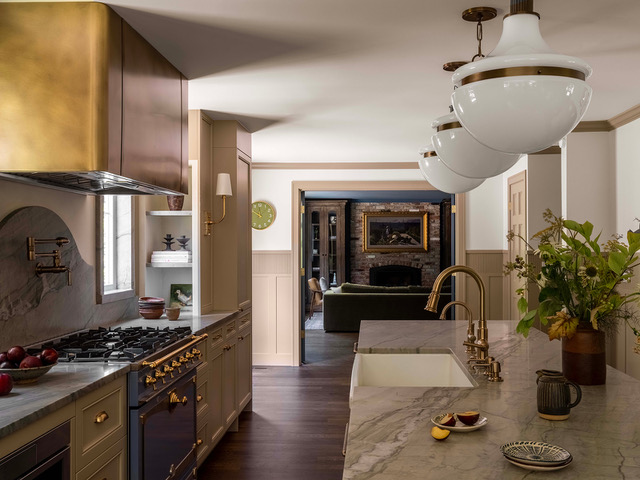
Kotick Residence

Located in Mercer Island the approximately 2,900-square-foot Kotick Residence was completed in 2026 with construction by Remont Constructions. The project called for a design approach that balanced architectural character with the practical requirements of contemporary residential life. Vashist approached the home with an appreciation for the relationship between established design principles and modern living. Rather than relying on decorative gestures alone, the work centered on proportion, material selection, and the way individual elements relate to the larger interior. The result reflects a design sensibility in which character emerges through considered decisions rather than excess.

Materiality played an important role in this approach with the selection and coordination of finishes helping to establish continuity throughout the home while carefully considered details gave individual spaces their own identity. This balance is central to creating interiors that feel distinctive without becoming visually disconnected. This also demonstrates the importance of resolving design ideas in a way that works beyond the drawing board, as residential interiors must accommodate daily routines, circulation, storage, lighting, and the many practical demands of a functioning household. Vashist’s contributions involved carrying the design vision through planning and material decisions while coordinating with the construction team to help ensure that the intended details could be executed successfully.

That relationship between design ambition and construction reality is particularly important in custom residential work where the success of a project depends not only on the strength of the original concept but also on the ability to translate it into a finished environment with consistency and care. By considering the visual and functional dimensions of a home together, Vashist helps create interiors in which aesthetic character supports the experience of everyday living.

Highland Estate: Grandeur With a Human Touch
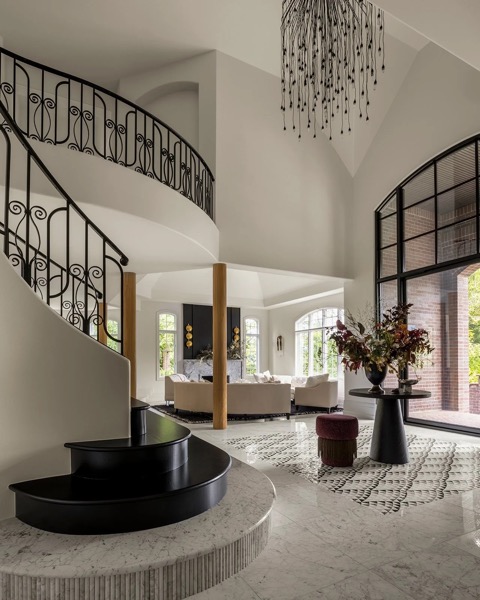
Highland Estate

At approximately 10,020 square feet, Highland Estate in Renton presented a very different set of opportunities. The project was built by Emerald City Build and required a design approach capable of addressing a much larger residential environment. A home of this scale can easily become defined by its dimensions alone, making it essential to create a sense of cohesion while allowing individual rooms to serve different purposes and establish their own atmosphere. Vashist’s work on the Highland Estate reflects an understanding that grandeur is most effective when balanced by livability.

The design process required attention to the relationships between spaces, the transitions from one area to another, and the type of details which allow a large home to avoid a tone that can feel overwhelming. Material choices, architectural elements, and finish selections contribute to an overall visual language, helping the residence maintain a sense of unity while accommodating its many functions. The scale of Highland Estate also makes coordination especially significant, since decisions involving finishes, lighting, millwork, and architectural detailing can affect numerous rooms and construction phases. Maintaining a coherent vision requires both a clear understanding of the intended result and an ability to communicate that vision to the people responsible for realizing it.

Vashist’s role extended across the design process, helping connect the creative direction with the practical decisions required during execution. The project illustrates how thoughtful interior design can give a substantial residence a sense of identity and refinement without losing sight of the people who will ultimately inhabit it. Highland Estate also received a Design Icons Award, adding professional recognition to a project distinguished by its scale and complexity.

The Details and the People Behind the Design

While the Kotick Residence and Highland Estate differ in size and character, both underscore a central truth about residential design: a compelling concept is only the beginning. The quality of the finished work depends on the decisions made throughout the process and on the relationships among the people bringing the project to life. Vashist sees the process as working across creative and technical considerations, ensuring that spatial planning, material and finish selection, architectural detailing, and contractor coordination to function as parts of a single process. A decision that looks straightforward in a presentation can have implications for fabrication, installation, sequencing, or the relationship between adjoining materials.

This is where collaboration becomes more than a procedural necessity. Designers and builders bring different forms of expertise to a project, and the best outcomes often emerge when those perspectives inform one another. Clear communication allows the design intent to remain intact while giving the construction team the information and flexibility needed to address real-world conditions. Victor Turchik of Remont Constructions has emphasized Vashist’s collaborative approach, describing her as someone who understands that design and construction must work together. “She understands that great design and great construction have to work together, and she treats us as a true partner in getting the best result for the client,” Turchik notes.

Turchik also highlighted Vashist’s response to the unexpected challenges that arise during construction, explaining, “Construction inevitably brings unexpected conditions and moments where decisions need to be made quickly and she approaches those situations with a calm, solutions-oriented mindset.” For him, the strength of that partnership lies in Vashist’s ability to communicate clearly, listen to the expertise of the trades, and recognize when a particular design detail is essential to the overall vision. That combination allows creative ambition and practical problem-solving to reinforce rather than undermine one another.

The collaborative dimension of her work is significant because even the most sophisticated design depends on execution. Proportions must translate accurately, materials must meet as intended, and the details that give a space its character must be resolved with care. Achieving that level of consistency requires both design conviction and a willingness to work constructively with others, qualities that help ensure the finished home remains faithful to its original vision while responding to the realities of construction.

Recognition Built on Thoughtful Design

Interior Designer Nishtha Vashist

Vashist’s professional recognition reflects a body of work that extends beyond a single residential style. Her earlier honors include awards from the VM&RD Retail Design Awards for House of Raisons in Noida in 2018 and a VM&RD Gold Store Design Award in the Service Retail category for Century Veneer in 2020. The Design Icons Award for Highland Estate represents further recognition of her work in residential interiors. These distinctions span different project types, but they share a common underlying concern: the relationship between visual identity, material expression, and the experience of a space.

Whether working in retail or residential design, Vashist’s approach depends on understanding what a project needs to communicate and how its physical details can support that purpose. The Kotick Residence and the Highland Estate offer complementary examples of that philosophy, with one representing a more compact residential project and the other a substantial estate. Their differences make the comparison particularly revealing because, rather than applying a single aesthetic formula, Vashist adapts her approach to the demands and possibilities of each home while maintaining a consistent level of care in the design process. Ultimately, thoughtful residential design is measured by more than its first impression. It is found in the way rooms relate to one another, how materials respond to light, how details hold together, and how comfortably a home supports everyday life.
Haekyung Ju Brings Precision, Passion, and New Energy to the Phoenix Symphony Orchestra

Every orchestra develops its own personality. Some are celebrated for technical brilliance, others for adventurous programming or distinctive sound. The Phoenix Symphony Orchestra has cultivated a reputation for combining artistic excellence with an openness to fresh ideas, and for violinist Haekyung Ju, becoming part of that culture has marked one of the most rewarding chapters of her career.

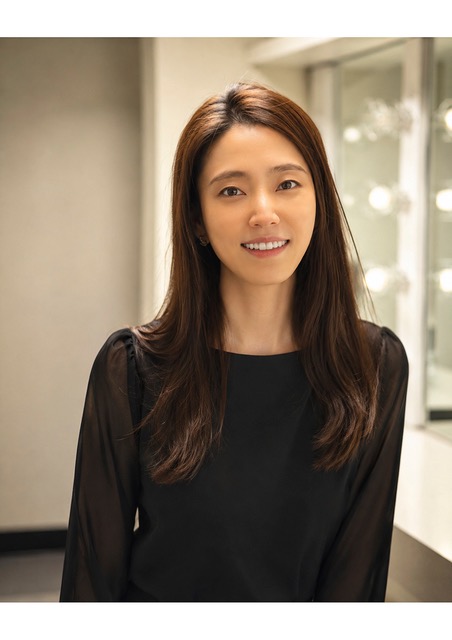
Since joining the orchestra as a First Violin member in March 2026, Ju has embraced a role that demands far more than technical mastery. As one of the musicians responsible for presenting many of an orchestra’s principal melodic lines, she helps shape the character, color, and emotional impact of every performance. Her journey to Phoenix followed a successful season with the Baltimore Symphony Orchestra, but her arrival in Arizona represented more than simply changing orchestras—it signaled a new stage of artistic confidence, leadership, and creative expression.

Violinist Haekyung Ju

Winning a position with the Phoenix Symphony Orchestra was no small accomplishment. The audition attracted an exceptionally competitive field of professional violinists from across the United States. Candidates advanced through preliminary, semifinal, and final rounds, each requiring increasingly demanding orchestral excerpts and solo repertoire that tested technical command, stylistic versatility, consistency, and ensemble awareness. By the conclusion of the final round, only two candidates remained. Both received appointments, but Ju earned the coveted First Violin position and later learned that her audition had received the highest overall evaluation from the committee. For a musician who had spent years refining her craft through conservatory training and professional orchestral experience, the result represented both validation and a springboard toward the next phase of her career. That achievement also reflected the artistic maturity she had developed during her time with the Baltimore Symphony Orchestra. There she learned the discipline, preparation, and collaborative mindset required of professional orchestral musicians. In Phoenix, however, those qualities would be expanded in new ways.

Unlike her previous role in the Second Violin section, Ju now performs among the First Violins, a section often entrusted with carrying the orchestra’s most recognizable melodies. While she is careful to emphasize that neither violin section is more important than the other, she recognizes that First Violins frequently establish the orchestra’s musical character through phrasing, articulation, tone color, and expressive leadership. Her earlier experience in the Second Violin section proved invaluable. It taught her how harmony, rhythmic stability, and attentive listening form the foundation of orchestral performance. Moving into the First Violins added another dimension—projecting musical ideas with confidence while remaining deeply connected to the surrounding ensemble. Rather than viewing leadership as individual prominence, Ju approaches it as a form of collaboration, where expressive playing and careful listening exist in equal measure. That collaborative philosophy is one of the qualities she believes distinguishes the Phoenix Symphony Orchestra.

From her very first rehearsal, Ju noticed an atmosphere unlike any she had previously experienced. The orchestra maintained exceptional precision while simultaneously encouraging musicians to contribute their own artistic personalities. Instead of expecting every player to suppress individual interpretation, the ensemble embraced a diversity of musical ideas, allowing those perspectives to merge into a unified artistic voice. That openness has been transformative for Haekyung.

She describes rehearsals as environments where conductors and musicians freely explore different approaches to phrasing, articulation, color, and character. Curiosity is welcomed rather than discouraged, creating performances that feel fresh and alive rather than routine. As a First Violin player, she finds particular inspiration in performing alongside colleagues with distinct musical personalities who nevertheless blend into a remarkably cohesive section. The result is an orchestra that combines technical polish with genuine spontaneity. Audiences may hear a beautifully unified ensemble, but Ms. Ju knows that beneath that sound lies an ongoing artistic conversation among musicians who continually challenge and inspire one another. It is precisely this balance between individuality and unity that gives the Phoenix Symphony Orchestra much of its vitality and excitement. Her own contributions reflect that philosophy.

Almost immediately after joining the orchestra, Haekyung found herself assuming significant responsibilities, including serving as Associate Concertmaster for several demanding performances during her first season. The assignment required not only exceptional preparation but also the confidence to help guide the First Violin section through an extraordinary variety of repertoire. One particularly memorable stretch demonstrated the remarkable versatility required of today’s professional orchestral musicians. Within just nine days, Ju performed three entirely different concert programs while serving in a leadership capacity. The first featured symphonic arrangements of Elton John’s music, requiring her to shift from traditional classical performance into a Pops setting built around groove, amplification, and stylistic flexibility. Only days later she performed Dolly Parton’s Threads: My Songs in Symphony, a production that included nearly one hundred pages of First Violin music and demanded constant changes in articulation, tone production, and musical character across an expansive program.

Less than twenty-four hours later, she traveled to Prescott to perform Beethoven, Brahms, and Dvořák in a traditional classical concert. The rapid transitions between these dramatically different musical worlds tested every aspect of her musicianship. Yet they also demonstrated one of her greatest strengths: the ability to adapt instantly while maintaining artistic consistency. Whether performing beloved popular music or cornerstone works of the symphonic repertoire, Ju approached each performance with the same commitment to excellence, helping the orchestra deliver engaging experiences for audiences across Arizona.

Another memorable highlight came during the orchestra’s Opera Gala, where Haekyung encountered some of the most technically demanding First Violin writing of her career. Opera excerpts require constant shifts in style, color, phrasing, and expressive character, leaving little opportunity for musicians to settle comfortably into a single musical language. Rather than viewing the program simply as a technical challenge, Ms. Ju embraced it as an opportunity to deepen her artistry. The experience reinforced an important lesson she has carried throughout her career: virtuosity only matters when it serves musical expression.

Haekyung ‘s enthusiasm for the orchestra extends well beyond her own performances. She is especially excited about the arrival of Paolo Bortolameolli as the Phoenix Symphony Orchestra’s new Music Director, a transition that has generated widespread anticipation among musicians and audiences alike. She is eagerly anticipating the performance of monumental works such as Rachmaninoff’s Piano Concerto No. 3, Stravinsky’s The Rite of Spring, Mahler’s Symphony No. 5, and a celebration honoring the music of John Williams. These ambitious programs reflect an orchestra committed to presenting repertoire that is both artistically demanding and broadly engaging—a combination that perfectly matches Ju’s own musical interests.

For Ju, the excitement surrounding the Phoenix Symphony Orchestra is not created by any single performance or celebrated guest artist. It grows from something deeper: musicians who continually inspire one another, audiences eager to share meaningful musical experiences, and an artistic culture that welcomes creativity while pursuing the highest standards of orchestral excellence. As a First Violin member, she contributes to that excitement every time she steps onto the stage. Through expressive leadership, thoughtful collaboration, and an unwavering commitment to artistic growth, Haekyung Ju helps shape performances that are technically refined, emotionally compelling, and vibrantly alive. Her career has already taken her from South Korea to some of America’s finest concert halls, but in Phoenix she has found something especially meaningful—an orchestra that encourages musicians not only to perform beautifully, but to think creatively, listen deeply, and bring their full artistic voices to every note they play. That spirit of collaboration continues to define both Haekyung Ju’s own journey and the exciting future of the Phoenix Symphony Orchestra.

Actress Suzanne Gullabovska talks about her upcoming films and living her dream

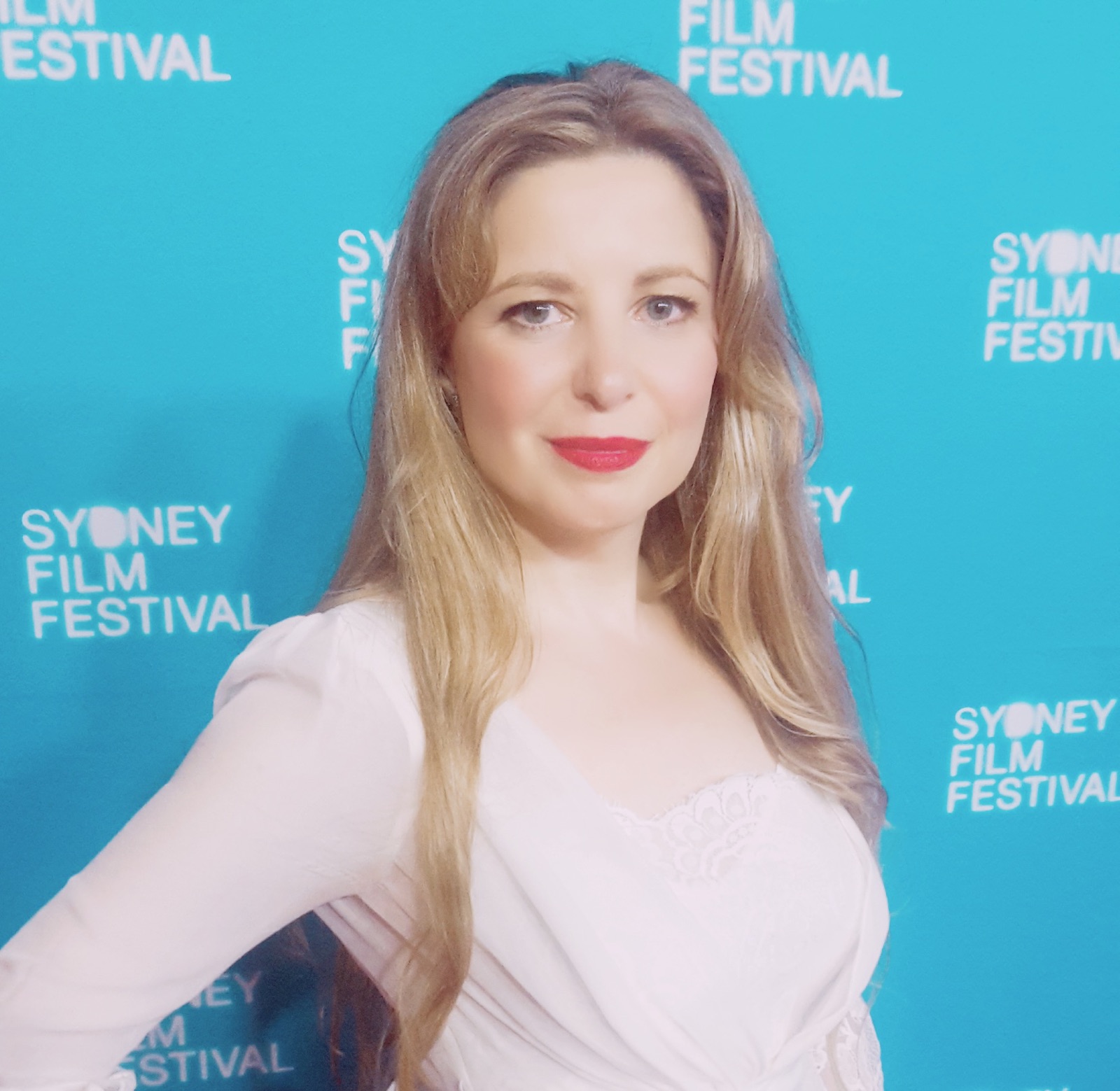
Australia has long been a breeding ground for exceptional talent, producing iconic actors who have left an indelible mark on cinema worldwide. Among these remarkable individuals is Suzanne Gullabovska, a rising star set to make her mark in Hollywood with two exciting upcoming feature films. While she has already garnered acclaim in her homeland, Suzanne is quickly becoming a name to watch on the international stage.

Having shared the screen with Oscar winner Cate Blanchett and SAG Award winner Hugo Weaving in the acclaimed miniseries Bordertown, Suzanne’s impressive body of work reflects her undeniable talent. Her early experiences in lead roles in classic plays by Shakespeare and Chekhov paved the way for her transition to film, where her charisma and skill have truly shone.

Her journey into feature films began with a standout performance in Katusha, where she portrayed Maria Medun, a schoolteacher turned soldier during World War II. Suzanne brought a profound sense of vulnerability to the role, capturing the essence of a woman who joins the army to find her husband and ultimately faces the harsh realities of war. Critics and audiences alike were captivated by her magnetic and emotionally charged performance, which paid homage to the bravery of real soldiers.

In stark contrast, Suzanne showcased her versatility in the comedy film Death in the Afternoon. As Grace, the lead character who maintains her poise amid escalating tensions at a funeral, Suzanne demonstrated her ability to balance humor and grace. The film’s recognition as an Official Selection at prestigious festivals such as the South African International Film Festival and the Ireland International Film Festival helped introduce her to a broader audience.

Looking ahead, Suzanne is poised to take center stage in two highly anticipated feature films. Currently in pre-production, Hemispheres will see her in the lead role of Genevieve, a character crafted specifically for her extraordinary talent. The film is described as a romantic time travel tale about a ballet dancer who relocates from Australia to Los Angeles in search of a fresh start. Suzanne shares her enthusiasm for the project, stating, “I’m a romantic at heart and am looking forward to bringing the role of Genevieve to life in this wonderful and original story that celebrates the beauty of love transcending time. I also love that I get to play a ballet dancer, having studied ballet for many years when I was much younger.”

In addition to Hemispheres, Suzanne will also star as Freya in Oil of Freya, a gripping drama/thriller that promises to showcase her range as an actress. Reflecting on her journey to Hollywood, Suzanne expresses her gratitude and excitement: “Moving to Hollywood to pursue acting has always been my dream. I have always known that I want to be an actress and grew up enchanted by classic films like Rear Window starring Grace Kelly, among many others. I believe movies possess a kind of magic, the ability to evoke wonder, and as an actress, I love the opportunity to create that for others.”

With her impressive talent and diverse roles, Suzanne Gullabovska is a name to watch in the world of film. As she embarks on this exciting chapter of her career.