When South African filmmaker and cinematographer Daniel Lewis came to the United States, he came with the ambition to expand his career and find new ways to tell stories through film. What he did not necessarily anticipate was how quickly his path would lead him into American reality and unscripted television.
Over the past year, Lewis has traveled across the United States contributing his cinematography and production expertise to a remarkably varied collection of projects. His camera has followed high school football across Florida, captured an intensive reality television production in West Virginia and documented stories connected to American agriculture in Missouri.
It is an unconventional and distinctly original trajectory for a filmmaker who began his journey thousands of miles away in South Africa.
“Being able to live, work and travel the U.S. filming for a living, professionally, under my own business name and seeing my name on TV show credits is awesome,” Lewis says.
Lewis has not confined himself to a single genre, production format or geographic market. Instead, his career reflects the qualities of a trailblazing independent filmmaker: adaptability, creative instinct, entrepreneurial initiative and a willingness to enter unfamiliar environments in search of compelling stories.
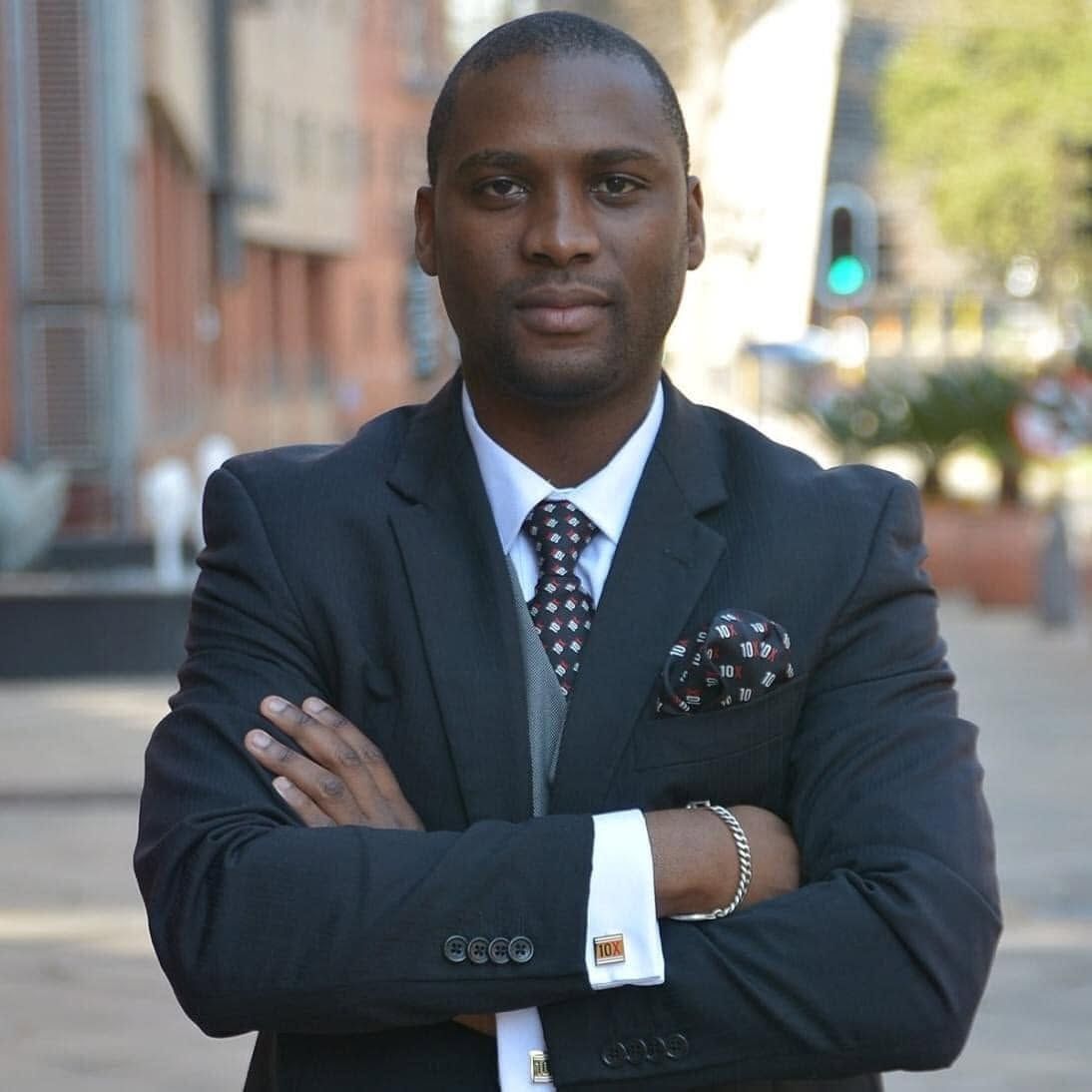
Filmmaker and Cinematographer Daniel Lewis
Finding His Place in American Reality Television
One of the projects that helped accelerate Lewis’s transition into American unscripted television was Country Ball, a reality docuseries centered on Coach Jesse Chinchar and his work with talented but often overlooked high school football players from smaller communities.
Lewis was hired to film football games for the returning television production, traveling between St. Petersburg and Orlando, Florida, throughout the season while following Chinchar and capturing the developing story.
For Lewis, Country Ball became a significant professional opportunity within American unscripted television. The assignment required more than technical command of a camera. Reality television demands an ability to anticipate action, identify the interactions that matter and capture critical moments that may never happen twice.
The footage Lewis filmed was delivered to American Stories TV for the upcoming The Return of Country Ball. The existing Country Ball series has been made available through streaming outlets including Prime Video, The Roku Channel and Apple TV, as well as through American Stories TV.
Lewis’s work on the production also led to additional opportunities.
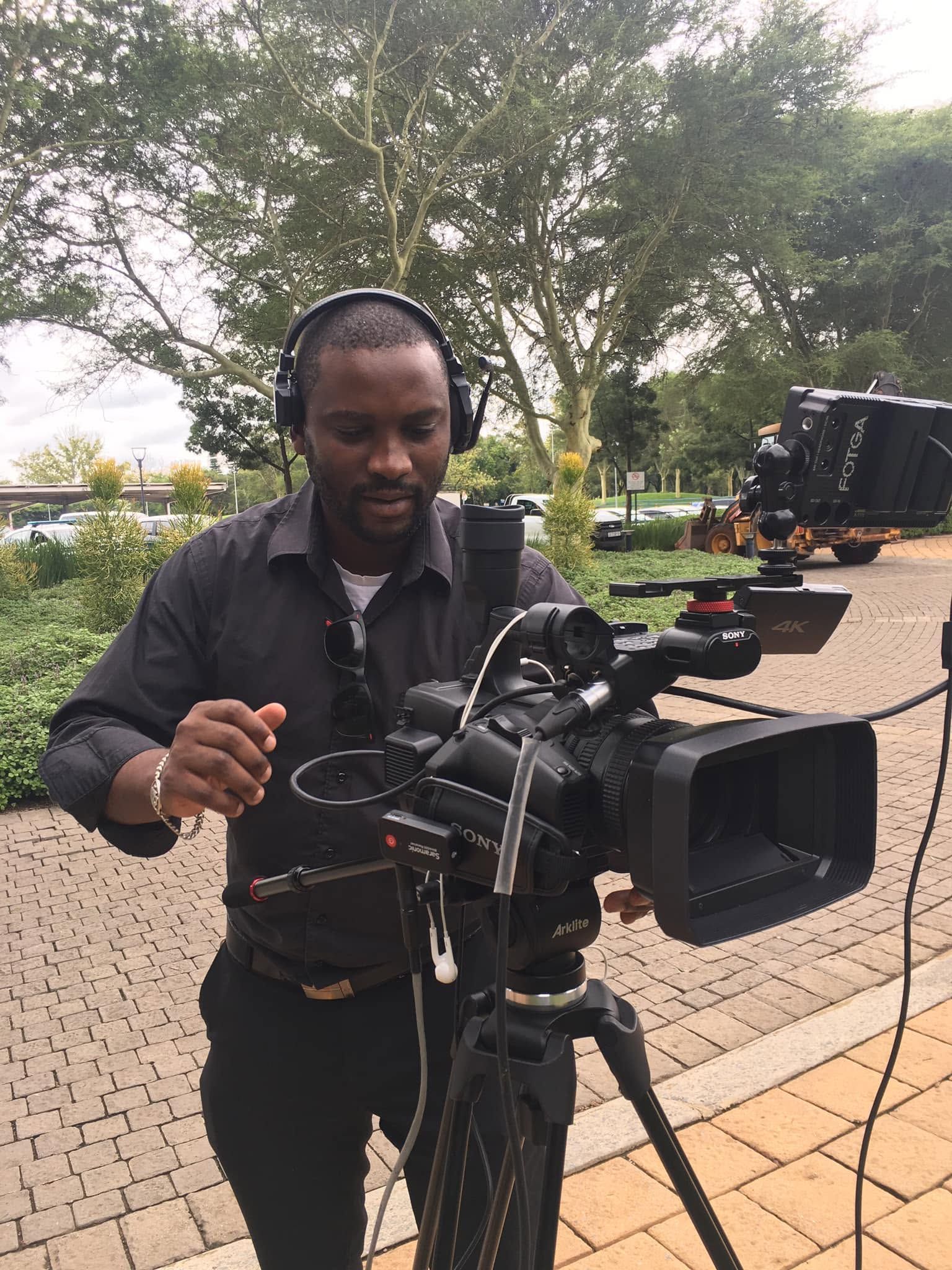
Daniel Lewis behind the lens
From Florida to West Virginia
Lewis was subsequently brought onto additional television projects, including Surviving Mann All Stars, Season 4, filmed at Summit Point Motorsports Park in West Virginia.
The production involved participants and professionals from military, law-enforcement and combat backgrounds and was filmed over an intensive five-day schedule that included early mornings and late-night shoots.
For Lewis, the experience represented another significant step in developing a distinguished and increasingly diverse body of professional television work in the United States.
During the same production period, Lewis also contributed behind the scenes or as a second camera operator to several other reality television projects, including Wild Shots, The Big Reveal, Face Off and Boom America.
One particularly memorable assignment came while working as a second camera operator on Boom America, where Lewis filmed a scene involving entrepreneur and television personality Kevin Harrington, known as one of the original personalities from Shark Tank.
The experience demonstrated Lewis’s ability to move between different productions, subjects and responsibilities within a demanding professional environment—an adaptability that has become one of the distinguishing characteristics of his work.
Capturing Another Side of America
More recently, Lewis traveled to St. Louis, Missouri, where he worked as a second camera operator on Farm Hero.
The upcoming docuseries focuses on American farmers, ranchers and land stewards and their work in regenerative agriculture, exploring subjects including soil health, biodiversity, holistic grazing and the relationship between consumers and food producers.
In a relatively short period, Lewis had moved from filming high school football in Florida to a military-oriented reality production in West Virginia and then to American agriculture in Missouri.
The subjects could hardly be more different, yet Lewis’s ability to move between them demonstrates an extraordinary degree of versatility.
Rather than allowing himself to become defined by one genre, he has made that versatility part of his creative identity.
From Capturing Stories to Creating Original Projects
Lewis’s trajectory is now expanding beyond individual camera assignments toward original projects and creative collaborations.
Among those efforts is a developing television collaboration with another Florida media agency concerning the Kyminasi System and its work within the agricultural sector. Contracts surrounding the project are still being finalized, while Lewis has also been editing testimonial content involving farms in California contemplated for use in the developing production.
At the same time, he intends to continue pursuing production opportunities with American Stories Entertainment while expanding his relationships with filmmakers, media agencies and production companies throughout the United States.
But one of the projects Lewis considers particularly important could bring his American filmmaking experience back to the continent where his own story began.
Turning the Camera Toward Africa
Lewis has been working with Kimberly Quigley, founder and CEO of Skyrocket Productions, toward the development of a documentary film centered on one of Africa’s wealthiest tribes.
The project remains in development, and the two have been working on the concept for several months. Lewis considers it one of his priority projects.
There is a natural symmetry to the idea.
Lewis came from South Africa to the United States determined to expand his career in film. In America, his camera has taken him through an extraordinary range of subjects—football, competition, entrepreneurship and agriculture. Now, one of the original projects occupying his attention would turn his lens back toward Africa.
It also signals an important evolution in his career. Lewis is no longer focused solely on capturing stories conceived by others. He is increasingly becoming involved in determining which stories should be told and how they can be brought to the screen.
An Original Path Through an Evolving Industry
Lewis’s trajectory is an example of what can happen when a filmmaker refuses to define himself by a single format, market or conventional career path.
An opportunity to film football in Florida led to additional television production work. That relationship took him to West Virginia, where he contributed to several productions. His work then took him to Missouri for Farm Hero, while his developing projects have expanded into agriculture, documentary filmmaking and new creative collaborations.
For a filmmaker who arrived from South Africa determined to establish himself within the American entertainment industry, that progression represents a significant professional achievement and an extraordinarily diverse creative journey.
Lewis’s experience reflects technical expertise, creative judgment, entrepreneurial initiative and originality. Increasingly, he is moving from contributing to established productions toward helping develop projects of his own.
For Lewis, being a trailblazer does not necessarily mean following the most obvious road. Sometimes it means recognizing an unexpected opportunity, bringing an original perspective to it and allowing one extraordinary experience to lead to the next.
The South African filmmaker who came to the United States with a camera and an ambition is now creating a path that is distinctly his own.
Though she has become known for dreaming up fantastical worlds and elaborate stories through her work as a filmmaker, Hollis Sherman-Pepe insists she’s not a dreamer, she is a doer. And after looking at all that she has accomplished over the course of her more than two-decade career in the industry, it is a statement one can only agree with.
Writer-Director-Producer Hollis Sherman-Pepe
Hollis began her industry journey as an actress. Over the years she has played a wide range of roles in films such as Between Wars starring Primetime Emmy Award winner Michael Imperioli (The Sopranos), Twenty-Minute Exotic Getaway, Adrenochrome, Green Piece, and series such as NCIS and 1000 Ways to Die.
She wrote, directed and starred in the short film To Quiet My Mind, her directorial debut, which was the Festival Award winner for Best Experimental Film at the California Women’s Film Festival, as well as Valediction, for which she received Best Actress Awards from the Los Angeles Cinema Festival of Hollywood and the Los Angeles International Underground Film Festival, along with the Women Filmmakers Award of Merit from the Best Shorts Competition. In 2021 she also wrote, directed and starred in the sci-fi fantasy film Twenty Minute Exotic Getaway, which took home two Best Sci-fi Awards from the Jim Thorpe Independent Film Festival and Pasadena International Film Festival. Additionally it was the winner of Best Cinematography and Best Set Design at NewArk Independent Film Festival.
One of the aspects that makes Hollis such a unique talent is her curiosity; and it is something that has led her to step outside the path of acting, and explore the myriad of other production roles that bring a film to life. Early on in her career she worked as a production assistant, using the opportunity to learn as much as she could from every department willing to take her under their wing. She says, “I still approach filmmaking this way: ask questions, stay curious, work hard and be proactive.”
In 2015 she started Farmer’s Daughter Productions, a women-helmed production company dedicated to bringing powerful cinematic experiences to the screen. Over the years she has produced numerous award-winning films through Farmer’s Daughter Productions, including YES, the winner of Planet Female’s Best Festival Short Award and Noci Film Fest’s Audience Award and Young Jury Award, A Couple of Secrets, which won the awards for Best Film Trailer at Mindfield Film Festival, the screenplays Foxes, a Semi-Finalist at Richmond International Film Festival and Cordillera International Film Fest, and Right Hand Man, which took home the Bronze Medal Award at LGBTQ Unbordered International Film Festival.
Now, as she prepares to release her first feature film, Tenants of Carver Hill, we were lucky enough to catch up with Hollis for an interview about her creative inspirations, her evolution as a filmmaker, and the deeply personal experiences that helped shape her latest project.
For Hollis, the impulse to tell stories has always been rooted in curiosity. She is fascinated by the space between what we know and what remains unexplained, and that fascination has become a recurring thread throughout her work. “There is far more unknown than known to humankind,” she explains, describing the questions that arise from that uncertainty as a source of endless inspiration.
That curiosity doesn’t stop at the page. Hollis approaches filmmaking as an exploratory process, researching everything from philosophy and science to poetry and the ideas of thinkers who have grappled with the mysteries of human existence. She then looks for ways to weave those discoveries into her stories, often using fantastical beings and supernatural spaces to give physical form to thoughts and emotions that might otherwise remain invisible.
It is perhaps fitting, then, that her first feature would be a supernatural thriller — and even more fitting that it would draw on experiences that are very close to home.
“I grew up in a haunted house,” Hollis says. “I think it was perhaps my destiny to make a cinematic ghost story.”
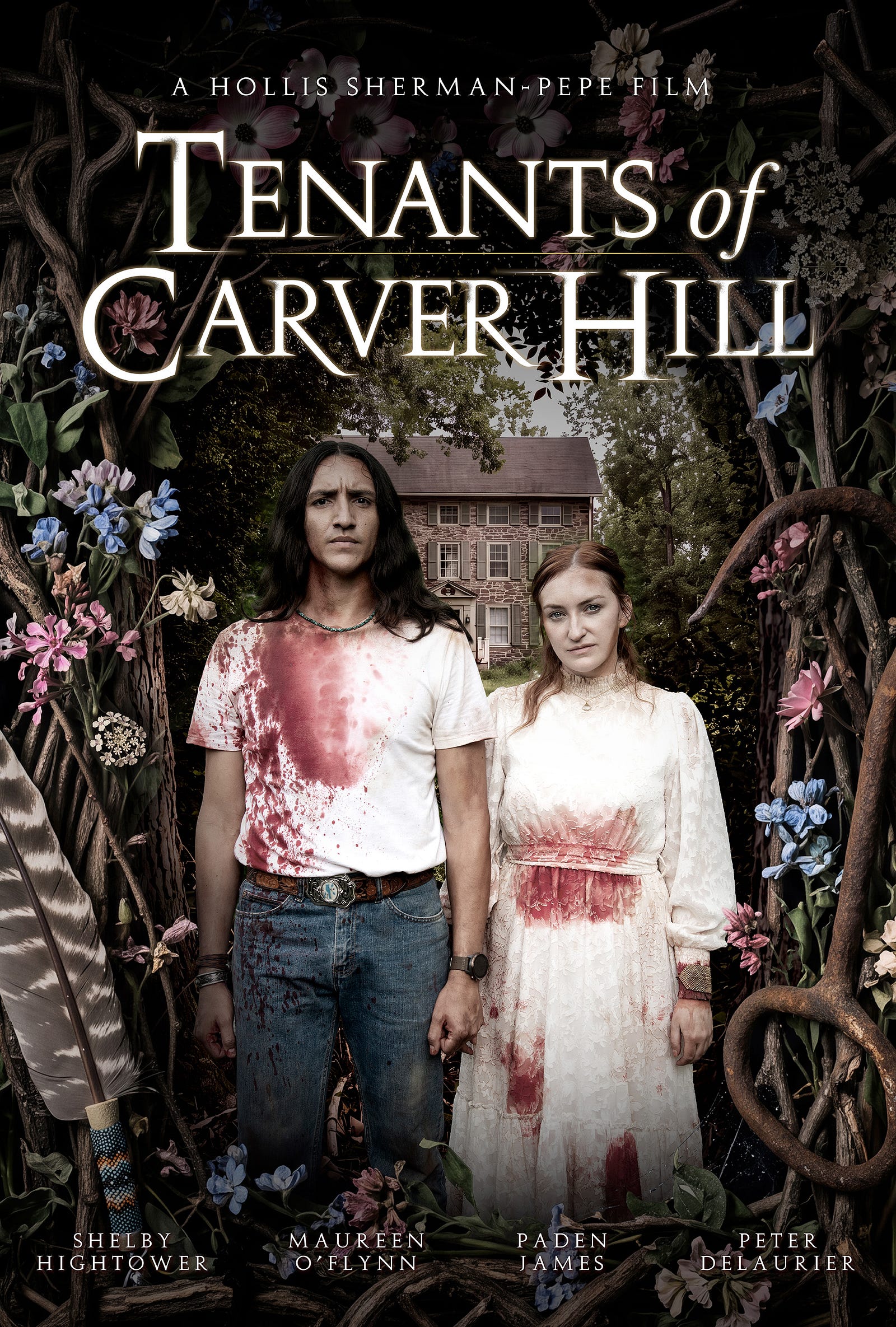
Film Poster for “Tenants of Carver Hill”
With Tenants of Carver Hill, Hollis has taken those real-life experiences and transformed them into a story that explores the mysterious and unseen while remaining deeply connected to its characters, its setting, and the history embedded within it.
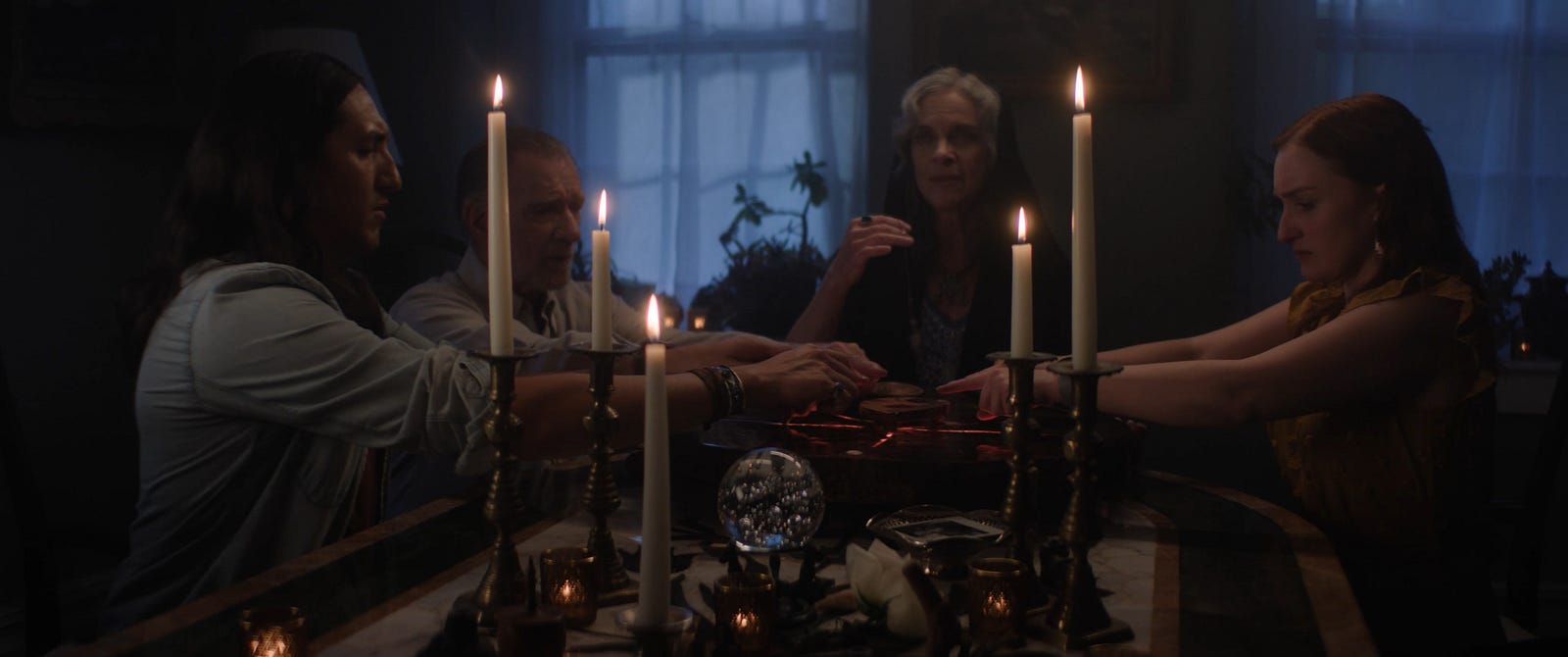
A supernatural thriller, Tenants of Carver Hill follows a stranded young couple who spend the night at Carver Hill, only to awaken the spirits haunting the house — transforming one fateful night into an inescapable nightmare. The film features standout performances by Shelby Hightower (HBO’s Task, Netflix’s Tires), Searra Sawka (Hell House LLC: Lineage), Paden James (Prime’s No Rest For The Wicked) and features legendary opera diva, Maureen O’Flynn and theater luminary, Peter DeLaurier.
Welcome Hollis, such an honor to catch up with you. Can you start by telling us where you’re from originally and when you started getting into film?
I am so grateful to be speaking with you. I grew up in rural Southeastern Pennsylvania, outside of Philadelphia. I was always a very creative child and began writing at a very young age. I wrote my first novella by age ten. By my teens, my first camcorder changed how I saw and interacted in the world. I was obsessed with turning our games of playing dress-up into real stories. I made movies all the time: live action, stop motion, documentary. I simply just loved to shoot what I saw.
I was able to save most of my childhood tapes, digitizing them some years back. One of my favorite early films documented an architectural preservation event on our family farm. I set the whole event to Moby’s album Play, and dragged around a boom box on a 100-foot extension cord as I shot beautiful images of construction against a backdrop of blue sky, puffy clouds, and all these wonderful people who came to celebrate the event. I recently dug out the footage and recut it, using the same music and presented it to my family as a special screening. This absolute nostalgia gem meant as much to them as it meant to me.
How did you know that film would be a part of your life for the long haul? And how has it influenced your life?
I was an actor. As young as preschool, I was determined that acting would be my life’s pursuit. I chased that dream, earning my BFA degree at University of the Arts in Philadelphia and making a move to Los Angeles where I continued the work and the training. I loved being on set and wanted to learn as much as I could about production. I started as a hardworking and eager production assistant, garnering as much knowledge as I could from every department that was willing to take me under their wing. I still approach filmmaking this way: ask questions, stay curious, work hard and be proactive.
The first time I wrote and starred in my own short film was in 2012. In that, I found what I was really searching for, creative fulfillment and control of the narrative. It snowballed from there. In 2015 I started my production company, Farmer’s Daughter Productions. I have been producing, directing and shepherding other filmmakers ever since.
My passion for storytelling and art is in consistent bloom. I find my inspiration in nature, art, books, and in folklore. I go to the movie theater often and watch films across all genres and time periods, finding inspiration and studying — how did they shoot that? The language of film is my vernacular, my orbit. I love talking about both the art and the business of film and I feel incredibly fortunate to be surrounded by an ever-growing circle of filmmakers who support, challenge, and celebrate one another.
Making movies is difficult, expensive and time-consuming. These truths are ever present, but they also make the community around filmmaking all the more meaningful. I believe there is room at the top for everyone. Every artist has a voice that can only belong to them. Cinema speaks on such a deep level, providing hope, catharsis and offering windows into experiences we may never otherwise know. I feel incredibly lucky to spend my life creating within that sphere.
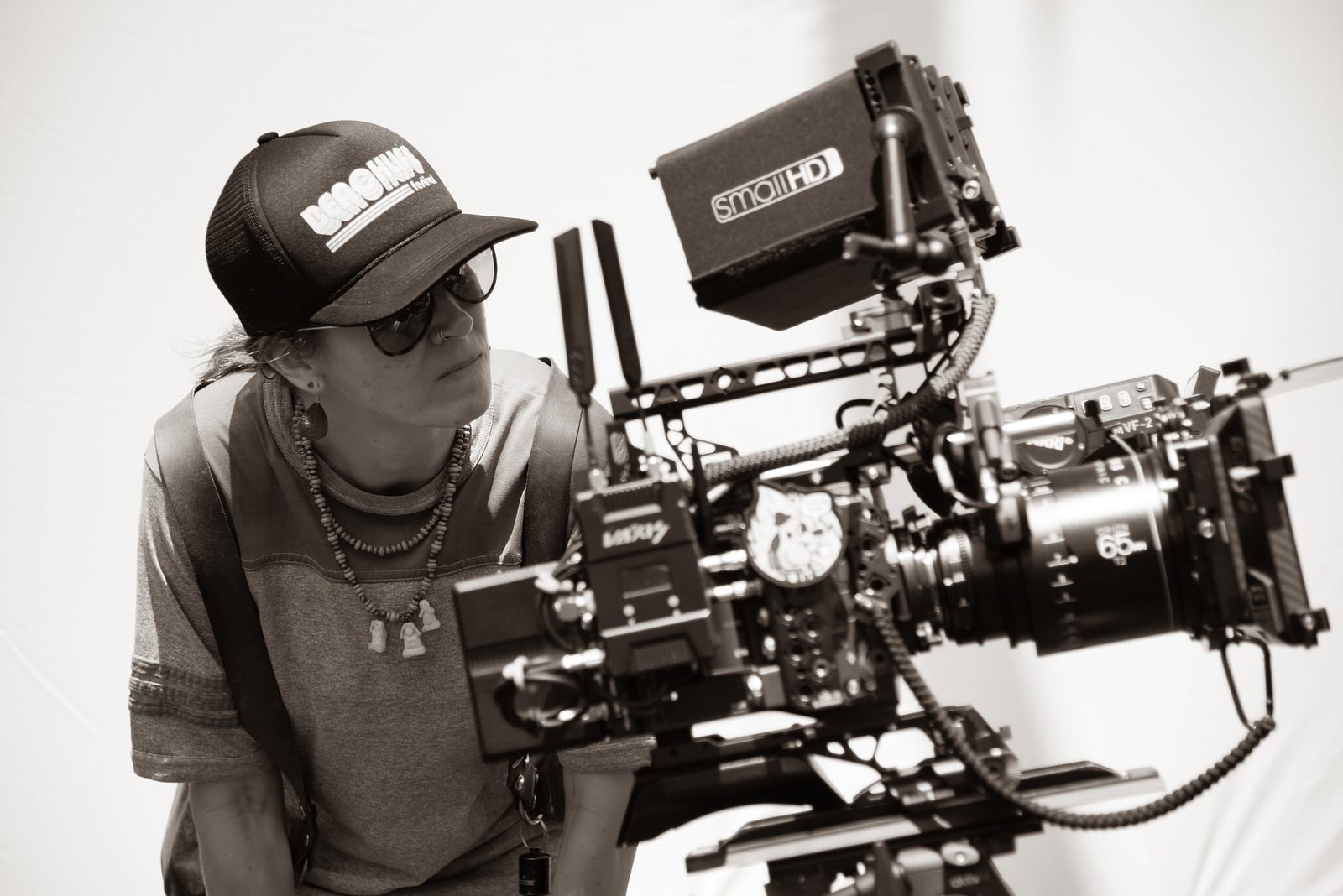
Director Hollis Sherman-Pepe checking the shot
“Tenants of Carver Hill” marks your feature directorial debut. Looking back, what does reaching this milestone mean to you personally and creatively?
I am proud of the work it has taken to get here. I am not a dreamer; I am a doer. My gosh, I have learned so much as a filmmaker over my two-plus decade career and have profoundly grown as an artist. Cultivating my vision and translating it clearly with my team so we can work toward a common goal feels really satisfying. I have never been afraid to ask questions and push my abilities beyond my comfort zone.
Completing a first feature film, particularly one with financial limitations and visual effects demands, feels like an awesome launching pad into the next film and the one after that, and so forth. I intend to keep learning and pushing myself to expand upon what I believe I can create.
Over the past 20 years You’ve worked as an actor, writer, producer, and director. How has your experience in front of the camera influenced the way you direct actors?
Acting is such a vulnerable and beautiful art form. My job as the director is to provide the incubator for the actor to thrive in. As a screenwriter, I love the exploratory aspect. As a director, I like to share the pearls I found along the way with the actors. The pearls include reading material, inspirational art, poetry, music, anything I can offer for their character development. That said, ultimately, I trust them to make unique and honest choices. Often actors will find their own inspiration that they share with me and I then find ways to incorporate their ideas into the story.
As an actor for most of my life, one with a BFA degree and endless training, I have a good eye for what is working and honest within a performance. Sometimes a spark needs a bit of coaxing to become real fireworks and that is when my own training comes out. I love that I can sometimes share the perfect tool from my own toolbox to help an actor realize their fullest potential. I have some absolute favorite acting exercises that I employ behind the scenes. I’ve used them during casting, in rehearsals, and on set to help guide an actor’s sensitivity, connection to co-stars, or even to break a repetitive performance. I would encourage all directors to dive into some acting classes, not scene study, but rather classes that focus on the more subtle aspects of the art.
Sometimes the acting exercises can be physical and I will get right in there with the actor and engage them. The crew on Tenants Of Carver Hill got a real hoot out of watching me jumping and shouting alongside one of the actors. I needed intense frustration and anger from a particular moment, so I got down and dirty with my roots. We jumped up and down to a point of exhaustion. I had him shout the line in my face. I told him to scare me. I would shout it back. We got there. He got there and it paid off tenfold in the cut.
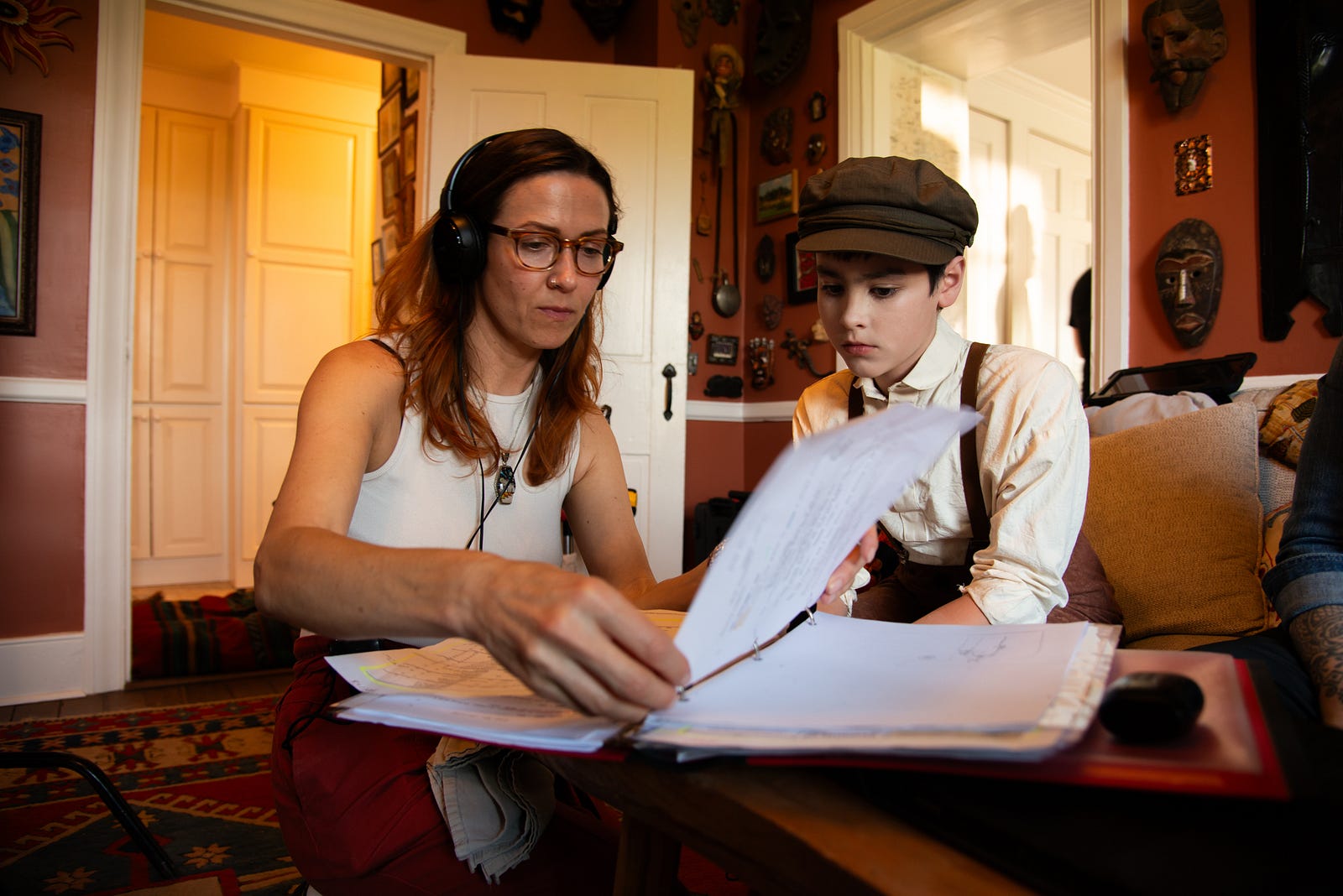
Director Hollis Sherman-Pepe looking through script notes with actor Adam Provo
You often describe your work as exploring the unseen forces that shape our lives. What draws you to stories where mystery, folklore, or the supernatural become a lens for examining human nature?
Unseen forces shaping our lives have been a through line in my work thus far. As human beings, our life cycle is short, and our place in the universe is a marvelous mystery. We are all story tellers; functionally recounting events, replacing lost facts with emotional impressions, as well as inventing explanations for the unknown. From prehistoric cave painters to the legends of the Qing Dynasty, and the traditions of the modern American ghost story, as a species we love to share, imagine and invent. Here on Earth, we are but a pin prick in the vast and ever-expanding Universe. There is far more unknown than known to humankind.
I love the questions that arise from that uncertainty. They give me a reason to research, to read books, papers, and studies written by philosophers, scientists, poets and thinkers. My private holiday is to lose myself in it all, then find clever ways to hide the gems within the stories I build.
Characters interacting with fantastical beings and supernatural spaces gives me an avenue to materialize thoughts and feelings that would otherwise be difficult to see. It opens the door to humanizing concepts and questions. People are marvelously complex. Behavior for most of us is multifaceted. The choices we make are based on morals, emotions and culture. When you introduce spirit realms like magic, faith, consciousness, and new dimensions the possibilities are endless. The supernatural isn’t an escape from human nature, it is a way of looking at it from a different angle.
Although “Tenants of Carver Hill” includes supernatural elements, it feels rooted in history, place, and character. What inspired the story, and what were you most interested in exploring beneath the mystery?
I grew up in a haunted house, so I think it was perhaps my destiny to make a cinematic ghost story. This film became my opportunity to share some of my real-life haunting experiences as well as honor my appreciation for the past.
Tenants of Carver Hill was written specifically for our filming location. Setting the story on a property dating back to the 1700s allowed me to intertwine the real-life history of the house and the Pennsylvania Dutch culture into my story. These early American settlers had their own language, faith, and traditions, and their simple farming lifestyle helped lay the groundwork for the Mennonite communities that followed. I loved the idea that one house could carry all of those eras, lives, and people’s stories vibrating within the walls.
I am fascinated by the idea of destiny versus free will. As modern Americans, we are constantly driven toward success. Our culture is always evolving toward better, bigger, newer, and more efficient. We celebrate the idea that we are free to command our own destiny, but what if we aren’t? What if our position in life was actually predetermined? Like, what if we are part of a much older cycle, a cog in a never-ending wheel, destined to repeat the history of those who came before us?
Our culture prizes youth and beauty. I wanted to play with these roles and expectations, so I set my hopeful heroes in a world that forces them to experience the past, confront duty and preservation. I gave them this challenge but funneled it through a supernatural lens, letting it be enchanting and simultaneously unsettling.
(L-R) Stil of Paden James, Peter DeLaurier, Maureen O’Flynn, and Shelby Hightower conjuring the spirits in “Tenants of Carver Hill”
Your films are known for layered storytelling and richly imagined worlds. What makes “Tenants of Carver Hill” different from other supernatural thrillers audiences may have seen?
I love creating worlds that invite you in, only to later reveal something much darker underneath. Spooky but charming. Warm but secretive. Beauty that fills you with unease. The world of Carver Hill is dreamy. Springtime blooms are as welcoming as the tenants that live there. The perfect misdirection.
I wanted to try something fresh with the look of our ghosts and chose to make them photosensitive. Developing this look with the artist was a lot of fun. The mysterious house was to feel mazelike at times, filled with a collocation of museum-like antiquities and preternatural relics, alive and watching, offering clues to the decades encapsulated within the walls.
I don’t think genre films have to be simple or formulaic. Of course, some formulas work for a reason and Tenants of Carver Hill includes some of those familiar beats and the inevitable “don’t go in there” moments. But ultimately, I love to find ways to break the mold. I’m not a fan of stereotypical characters. I would rather build characters with layers and contradictions. When a character fights with their own belief system or moral code, we as an audience become more invested in the cause and consequence. Watching a complex character make choices is far more intriguing to me.
World building is certainly a specialty for me as a filmmaker. My previous Sci-Fi film, Twenty Minute Exotic Getaway explored a wild variety of environments, from dead planets with suns on the verge of burning out to creatures and ghosts that walked through dimensions that would feel familiar and yet foreign. My unproduced folklore horror scripts also push the envelope of imagination with worlds and creatures. I can’t wait to bring them to life next.
The film incorporates both early American settler history and Native American perspectives, including tailoring your lead character’s background to reflect your lead actor’s Navajo heritage. Why was authenticity so important, and how did those cultural influences enrich the story?
At its core, this ghost story is one about history repeating itself, and memories being alive within the walls. Because the story was site specific, it was important to be authentic with the historical storyline. I wanted the multi-cultural aspects to be organic, not just a flavor enhancer. The male lead is Native American. This felt right for the story because I wanted his connection to the land to be old, an inheritance bestowed for the Settlers arrived, and before the House itself. I left some of the integral parts of his scripted dialogue and action open-ended until we completed our casting. That way my actor could inform some of these choices with their own tribal heritage.
The character is played by a Navajo actor, Paden James. I worked with him directly as well as with a Navajo consultant so I could approach the language and tradition authentically and respectfully. I learned a lot and found meaningful ways to include what I had learned into the story. I learned that a specific prayer is said aloud when a Navajo person enters and exits a graveyard. I included this into one of the earlier scenes of the film. I also included blessings with corn pollen and a prayer song in Navajo asking for protection.
I also wanted the house itself to feel like a character in the story. Using real historical events allowed me to honor the home and memories associated with it. I wove in documented stories, such as how an 1800s patriarch died after being kicked by his horse. The tenants of the estate, characters played by Maureen O’Flynn and Peter DeLaurier, both express their admiration for the home and bestow history of the Pennsylvania Dutch settlers. I sought out consultation for that unique language as well.
Ultimately, by weaving together these various histories allowed me to give the house a truer sense of memory. Not just a haunted-house, but one where generations have left their mark and that is what makes it feel so alive.
Pennsylvania becomes almost another character in the film. What made it the perfect location, and how did filming there shape the atmosphere of “Tenants of Carver Hill”?
Being from Southeastern Pennsylvania, it was personal and meaningful to return and shoot my first feature film here. It was a wild full-circle moment. I knew I wanted my ghost story to feel like a fantasy, harkening back to Ridley Scott’s Legend. We used a variety of filters to create ghostly blooms of light, and we built our shooting schedule around the Springtime blossoms. We planned for scenes around particular trees and flowers as they came into bloom, racing to capture them before the petals fell.
Pennsylvania is incredibly green and lush. This helped our location to feel particularly isolated, making it a little fantastical bubble all on its own. The heroes, played by Shelby Hightower and Paden James arrive at Carver Hill after an ill-fated, cross-country truck breakdown, but soon they are completely enraptured by the beauty surrounding them. The green floral atmosphere feels more like a gift than a warning, a wolf in sheep’s clothing.
And of course, there is the history. Philadelphia was the first capital of the United States. The Northeast is old. If ghosts are the echoes of the past, these walls have a lot to say. There is something inherently uncanny about being alone in a big, old space. It gives you the feeling that you are not really alone. I wanted to capture that feeling in my film.
The production also received Pennsylvania’s film tax incentive. How did that opportunity impact what you were able to accomplish as an independent filmmaker?
We are incredibly grateful for the Pennsylvania film tax incentive. The story takes place in the Keystone State, so shooting there was non-negotiable for us. We took the time to carefully prepare our application and raise the full production capital prior to filming, as required by the Pennsylvania Film Office.
Creating a truly independent film is a monumental undertaking at every step. After completing the project, receiving this incentive feels like a gift. Having fresh funds available to put toward marketing and bringing the film to audiences is an invaluable final piece of the filmmaking process.
Every independent production comes with unexpected challenges. What was the biggest obstacle during production, and what did you learn from overcoming it?
Being ready for anything and willing to adapt and shift gears is essential for independent filmmaking. My show bible is extensive. The script pages are filled with color coded notes and hand drawn diagrams. I keep the pages in plastic sleeves and consult them while shooting. My shot lists are specific and detailed. My cinematographer Nick Pietroniro and I were so incredibly in-tune with one another, creating the shot list, the look books, camera and filter testing well ahead of time. The more you can control and discover in the preparation, the easier it is to change course for the unexpected.
We were shooting in April and May in Pennsylvania, so the potential for rain was a concern. Our 1st Assistant Director, Katrina Gerlach was a wizard juggling our everchanging scheduling needs, child actors that could only work on weekends or after school, talent that needed to fly out mid-shoot for a wedding, talent leaving the country on a set date. There were so many moving parts and sometimes more than 40 camera setups in a day, yet we never once hit overtime and we were able to capture everything I intended to shoot. The vibes were high on this production. I am truly proud of that.
Our principal location was a historical landmark, which brought another set of challenges. The rooms were small, our equipment couldn’t be fastened to the walls or placed on surfaces, and we had to be constantly mindful of protecting the property. Our entire crew took that responsibility incredibly seriously, and we finished without a single incident.
A favorite challenge on set was a shot with my star Shelby Hightower. The camera would spin around her as she was experiencing paranormal contact and sense memories from the past. This type of shot would normally require specialized gear and a larger space. Instead, we were working in a room with a six-foot ceiling and uneven floors. Pietroniro would have to shoot it with a Movi gimbal rather than a crane or circular dolly track. We were shooting anamorphic and had some beautiful lens flares coming in through the windows, but as the camera circled, the operator and equipment began throwing enormous shadows across Shelby. While braving the unexpected rain shower, gaffer, Colin Passman, key grip, Morgan Hartman and team kept adjusting the lights, trying to preserve the flares while eliminating the shadows. We were losing time and falling further behind schedule. Eventually, we had to get scrappy. On each pass of the camera between Shelby and the key light, we verbally cued the gaffer to kill the light. It was whacky but it worked. We captured the quintessential moment using the bare bones, a lot of ingenuity, and a determined crew, and still caught up with our schedule that day.
My takeaways from the experience are to prepare intensely but be ready to adapt, combine and adjust. Always work in service of the film. Stay true to the vision, but ultimately stay true to what the film decides it wants to be. It’s easier to make jazz when the foundation is strong.
On the other hand, was there a moment on set that reminded you, “This is exactly the film I wanted to make”?
That is such an interesting question. From conception through production and post, my expectations evolved with the film. Putting together this stellar ensemble cast really brought it to life uniquely. No other combination of actors would breathe life the same way. Choosing key crew like my cinematographer gave a specific flavor to the film. Working with my editor Brian Ufberg to craft the final picture gave birth to yet another new perspective. Killing my darlings was a powerful benchmark as well, eliminating five scenes from the director’s cut, more tightly crafted the vision. During my pickup days, I added new scenes, and new characters. I also expanded the role played by Searra Sawka, which gifted the final picture in such a paramount way. From the first draft to the final cut, Tenants of Carver Hill developed into something unique. In a funny way, it will never be exactly what I envisioned, but rather it is its own being. The film speaks for itself, a culmination of choices I made along the way with the support of a dedicated team of collaborators.
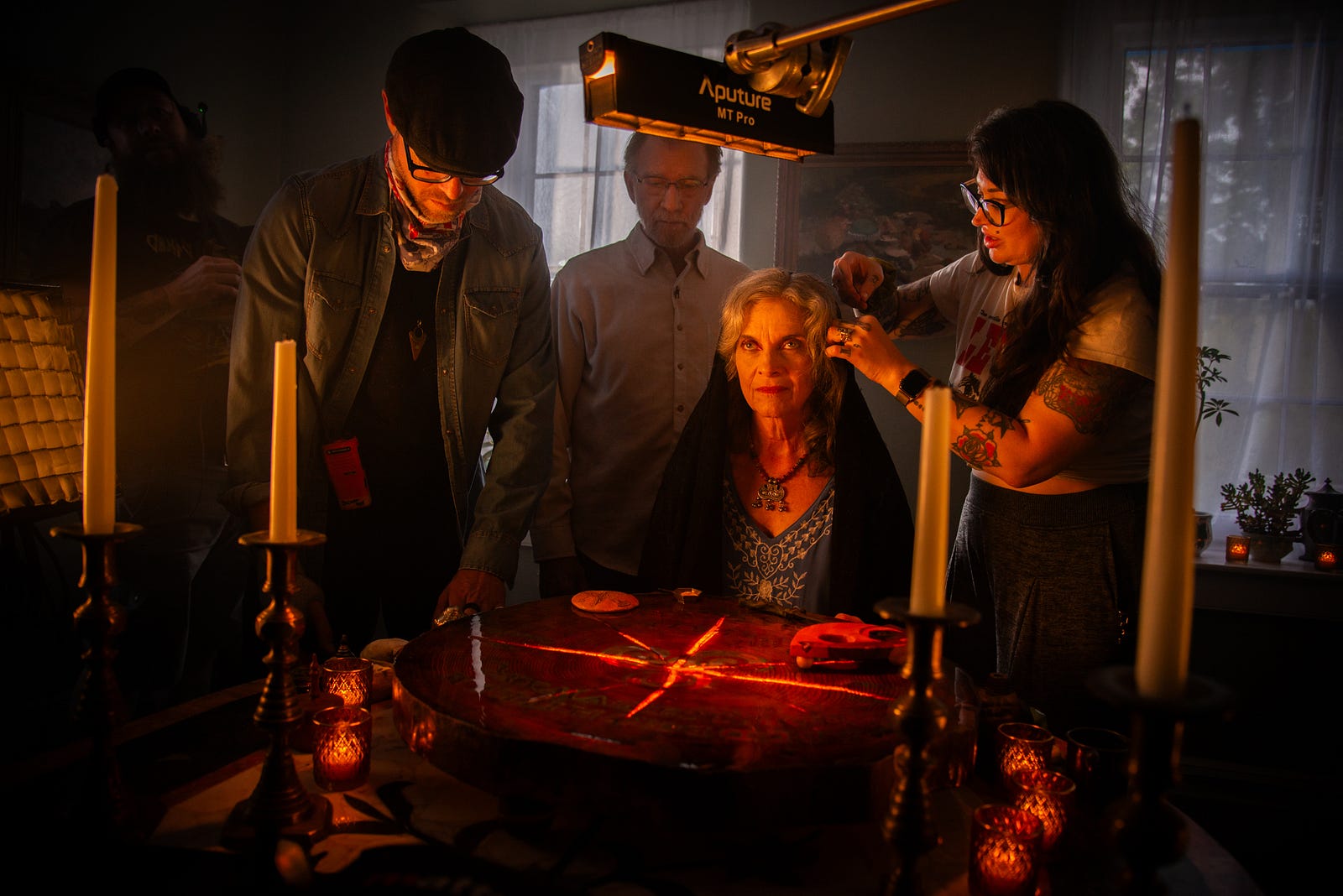
(L-R) Producer Scott Fleisher, actors Peter DeLauier and Maureen O’Flynn, and HMUA Jessica Saint gathered around the custom built spirit board, perform last looks before shooting a “Tenants of Carver Hill” scene
Your bio mentions that you’re a collector of art and antiquities, and that you’re drawn to color, texture, and layered imagery. How do those personal passions find their way into your filmmaking?
I am a more is more person. It’s in the clothes I wear and how I style my home. I’ve always been drawn to color, pattern, art with feeling, fashion with flair. I am drawn to quality craftsmanship and artisan made pieces. I approach my filmmaking this way. Every element is considered and imbued with care. I love to travel, to read, to absorb art and nature. My personality inevitably splashes onto the screen. All of my films have been slightly off-skew from the straight and narrow. Despite what genre I happen to be tinkering in, my voice is clear. I love to fold in layers, ask questions that reveal more questions, explore and invent. Art gives us the ability to expand ourselves in magical ways. Cinema is a particularly limitless medium to do just that.
After completing your first feature, what surprised you most about yourself as a filmmaker?
I might be allergic to keeping it simple.
Every filmmaker grows from one project to the next. What lessons from Tenants of Carver Hill will you carry into your future films?
I have ambitious projects in the queue. A lesson learned from Tenants Of Carver Hill is the value of bringing key collaborators to the table earlier in the game. Having a strong Executive Producer that wants to meet me on that quest will be a game changer.
I would prefer to have my editor on board prior to shooting so that way we can work in tandem as we shoot. With each project, my visual effects needs have expanded. Each time I have had marvelous consultation prior to shooting and exceptional guidance during post. For Carver Hill we created a playbook for how to tackle each shot and we executed accordingly. Going forward I would prefer to have my Visual Effects Supervisor on set, that way we can more easily switch gears, adapt, adjust on the fly, solving problems creatively and professionally as they arise. Ambitious filmmaking requires incredible collaboration. The earlier the right people are in the room, the more possibilities you have when it comes time to make the movie.
Beyond festival recognition or distribution, what do you hope audiences take away after experiencing “Tenants of Carver Hill”?
My hope was to bring a fresh perspective to the genre film world, bridging the gap between the hardcore horror hounds and the introspective indie aficionados. I wanted to celebrate the charm of Pennsylvania with all its history, natural beauty, open spaces, historical landmarks, and hopefully inspire people to appreciate and want to preserve those things.
I’d be tickled if viewers walked away considering that consciousness may be deeper than human thought. That perhaps it is an energy within physical spaces or that conversely, material objects are living within a greater cosmic consciousness. Memories and emotions are alive and transferable, whether we consider them spirits, ghosts, faith or something beyond our current understanding.
My film is chocked full of Easter eggs. If someone picks up on the clues and metaphors, I hope they’ll be moved to watch it a second time and discover something they missed the first time around. Ultimately, I hope audiences appreciate the nuance and craftsmanship behind my picture. If Tenants of Carver Hill leaves you curious and questioning what lies beyond our human experience, I feel as though I did my job.
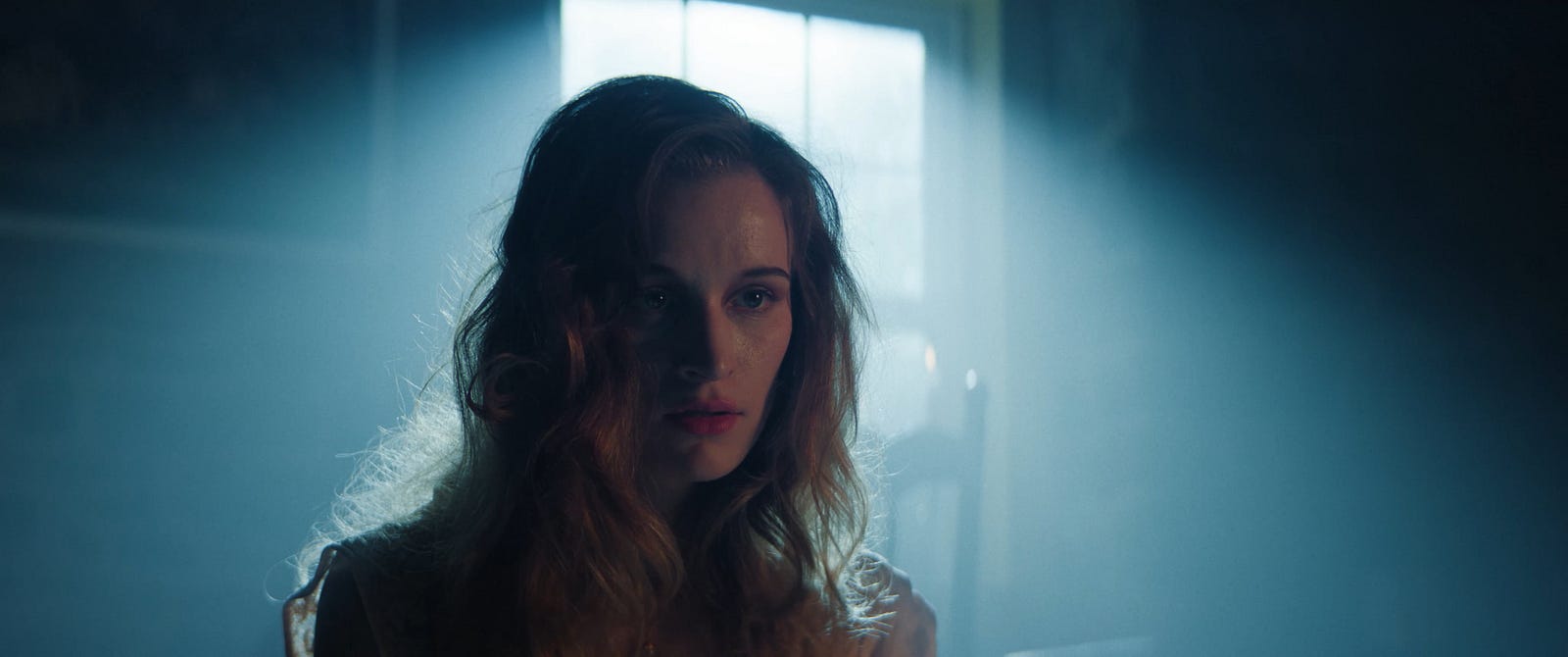
Actress Searra Sawka as Mable Marie, the origin story, in “Tenants of Carver Hill”
Looking ahead, what stories are calling to you next? Are there themes or worlds you’re excited to explore in future projects?
Oh gosh, I have quite a few scripts ready to go and projects in development, so I would hate to let the cat out of the bag. I explore a variety of genres and am eager to dive into new worlds, so I’ll keep the specifics under wraps for now. Interested collaborators can find me through Farmer’s Daughter Productions.
At the end of the day, I believe an artist always needs to be arting. The need to create is as important as the need to breathe. No matter the next picture, I will breathe my life into it and give it my heart.
When Brandon Li first came to PaperBoy, he was not simply being asked to assemble a fantasy short. The film, directed by Saulius Baradinskas, follows Luke, a dyslexic comic artist who retreats into an imaginative Paper World of his childhood as he confronts the painful memories surrounding his dying mother. The story moves between the physical world and a fantastical universe constructed from paper, but its emotional center remains firmly rooted in Luke. As the film’s editor, that distinction was crucial for Mr. Li. The Paper World could easily have become an opportunity for visual spectacle. Instead, Brandon approached the material from Luke’s subjective experience, using pacing, transitions, shot selection and scene structure to make the fantasy world feel like an extension of the character’s emotional life. His challenge was not simply to make the Paper World convincing, but to make the audience understand why Luke needs it. “PaperBoy is a fantasy story with a highly imaginative world,” Li explains, “but at its core it is also a very personal story about its protagonist.” This approach became the North Star of his edit.
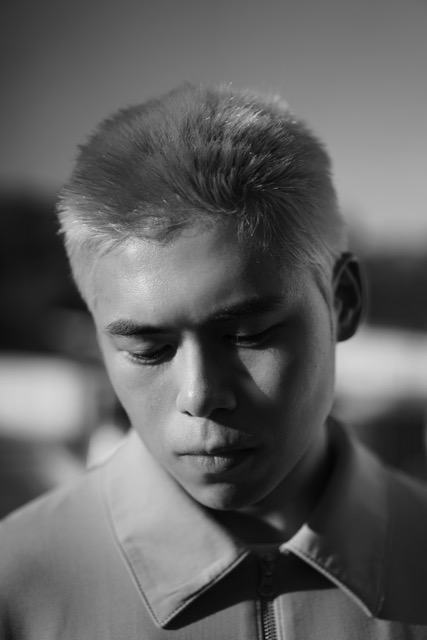
Editor Brandon Li
Finding the Film in the Edit
Brandon joined this project after conversations with Baradinskas, an award-winning European director whose previous work had been selected by the Venice International Film Festival. Baradinskas had already seen three films Li edited during his first year at AFI (Factory Boy, Fisher vs. Hayes and Nosebleed) and had developed an understanding of his approach. What particularly interested the director was Brandon’s ability to make strong creative choices without losing sight of the character. Li did not see editing as an opportunity to display technical virtuosity for its own sake. His approach was to understand what a character was experiencing and allow that emotional logic to guide the edit. That made him a particularly natural collaborator for PaperBoy. The film required an editor who could embrace its fantasy elements without allowing those elements to overwhelm the story. Li was involved from the script and shot-list development through production and post-production. That early involvement gave him something an editor does not always have: an understanding not only of what the director wanted the film to look like, but what he wanted the audience to feel.
Once the footage arrived, the two were willing to question virtually everything. They removed shots. They restructured sequences. They experimented with pacing and transitions. Ideas developed during production were reconsidered in post. Rather than treating the script and shot list as instructions that could no longer be challenged, Li and Baradinskas treated the edit as a place where the film could discover what it actually needed. It’s a philosophy that would prove especially important in the film’s final hospital scene.
The Paper World
The central challenge of PaperBoy was the Paper World itself. Luke enters a fantastical universe created from paper, where the imaginative landscapes of childhood expand into paper cities and fantastical creatures. But the world is not simply an escape into whimsy. As Luke moves through it, memories of his childhood and his complicated relationship with his mother begin to surface. The fantasy gradually reveals the pain underneath it. Li was concerned that the sequence could become a collection of beautiful images rather than an emotional experience. “There was a great deal of material that could potentially be included in this section,” he says. His task was to determine which moments were necessary to communicate Luke’s childhood and emotional relationship with his mother and which could disappear without damaging the audience’s understanding.
The solution was to build the sequence around Luke’s emotional experience rather than chronology. That distinction changes the way the audience experiences the Paper World. Rather than simply moving from one event to another, the edit allows the audience to feel the fluctuations of Luke’s memories. Some moments are given room to register; others move more quickly. The rhythm is continually responding to the character. The fantasy world therefore begins to feel subjective. We are not simply watching Luke walk through a strange environment. We are entering the world as Luke experiences it, with the sometimes erratic cadence that emotions can impose. For Li, this was essential because the Paper World is simultaneously a physical fantasy environment and an external representation of Luke’s inner life. The edit must preserve both realities at once.
Crossing the Boundary
One of the film’s most important transitions occurs when Luke first discovers the Paper World. After returning from the hospital emotionally unsettled, Luke tries to draw but cannot concentrate. He accidentally pushes his pen through the paper, creating a small hole. The pen disappears. When Luke looks through the opening, he sees another world. Eventually, he closes his eyes, takes a breath and crosses through. The scene could have been edited as an abrupt transition: ordinary world, magical hole, fantasy world. Instead, Brandon wanted the audience to experience the discovery alongside Luke. That meant resisting the temptation to rush. The mystery needed time to unfold. Luke’s curiosity and confusion needed to become part of the audience’s experience. The moment when he closes his eyes and breathes before entering the Paper World was especially important because it transforms the transition from a visual effect into an emotional decision. Luke is not merely transported somewhere. He chooses to enter.
That also establishes the Paper World as something more psychologically meaningful than a conventional fantasy setting. Luke has just left the hospital carrying the emotional weight of his relationship with his mother. The world he discovers is connected to his memories, his imagination and the emotional refuge he developed during childhood. The pacing of the edit allows the audience to feel that connection. “We were entering the Paper World together with Luke,” Li says of his goal. The edit therefore becomes a bridge between the real and imagined worlds.
When the Fantasy Becomes Reality
The deeper Luke travels into his Paper World, the less secure the separation between fantasy and reality becomes. This ambiguity is central to the film. The Paper World is fantastical but the emotions Luke experiences there are not. His memories of childhood, his relationship with his mother and the pain he has carried into adulthood remain completely real. Brandon’s editing has to maintain that emotional continuity. The audience needs to be able to enjoy the strange and theatrical qualities of the Paper World while understanding that every movement through it is also movement through Luke’s emotional history. That is why pacing becomes so important. If the fantasy moves too quickly, the audience may admire it without feeling it. If it moves too slowly, the emotional journey risks becoming repetitive. Li describes the challenge as finding enough breathing room for the audience to experience Luke’s emotional fluctuations without allowing the sequence to lose momentum. The resulting rhythm is not simply a rhythm of images. It is a rhythm of memory.
The Final Encounter
Luke’s journey through the Paper World eventually brings him back to the reality he has been avoiding: his dying mother. The original scripted approach to the final hospital encounter changed substantially during editing. Li and Baradinskas recognized that the scene could communicate something more powerful by resisting a conventional confrontation. Instead of relying on dialogue to explain everything that remained unresolved between Luke and his mother, the final encounter became largely silent. They look at one another. What has been left unsaid becomes part of the scene’s emotional meaning. For an editor concerned with character perspective, this is an especially revealing choice. The film does not need to tell the audience precisely what Luke has decided or what his mother feels. The emotional information exists in the space between them. The silence becomes active. Luke has spent much of the film retreating into imagination to avoid the pain of reality. By the end, he no longer needs the Paper World to protect him from that encounter. The fantasy has brought him back to the place he was trying to escape. And the edit allows that return to feel earned.
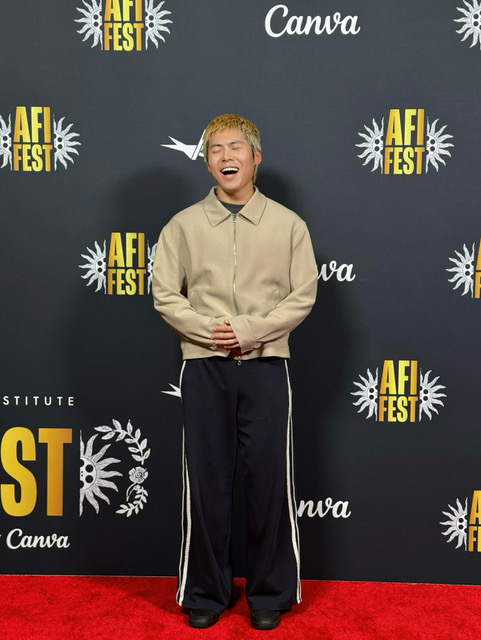
Brandon Li at AFI Fest
Editing as Discovery
Brandon’s work on PaperBoy ultimately reflects a philosophy he has brought to his editing across different kinds of films: the editor’s responsibility is not simply to assemble what was planned. It is to discover what the film wants to become. That meant questioning the script, testing different structures, removing material that no longer served the story and allowing the emotional rhythm of the character to determine the pace. The fantasy elements of PaperBoy made the process particularly demanding because the film had to operate on two levels at once. The Paper World needed to feel imaginative and visually distinctive but it could never become disconnected from Luke’s emotional reality. Li’s editing keeps those two worlds in conversation. The real world gives the Paper World its emotional stakes. The Paper World gives Luke a way to confront what the real world has made difficult to face. The edit is the mechanism that allows the audience to move between them. PaperBoy was completed in 2025 and screened at AFI FEST 2025 as part of the AFI Conservatory Showcase. The film’s fantasy may be made of paper but the emotions are real. Brandon Li’s edit made sure the audience never lost sight of that.
Every orchestra develops its own personality. Some are celebrated for technical brilliance, others for adventurous programming or distinctive sound. The Phoenix Symphony Orchestra has cultivated a reputation for combining artistic excellence with an openness to fresh ideas, and for violinist Haekyung Ju, becoming part of that culture has marked one of the most rewarding chapters of her career.
Since joining the orchestra as a First Violin member in March 2026, Ju has embraced a role that demands far more than technical mastery. As one of the musicians responsible for presenting many of an orchestra’s principal melodic lines, she helps shape the character, color, and emotional impact of every performance. Her journey to Phoenix followed a successful season with the Baltimore Symphony Orchestra, but her arrival in Arizona represented more than simply changing orchestras—it signaled a new stage of artistic confidence, leadership, and creative expression.
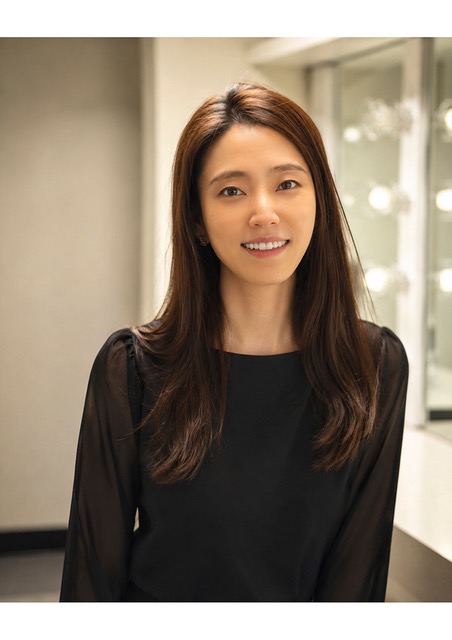
Violinist Haekyung Ju
Winning a position with the Phoenix Symphony Orchestra was no small accomplishment. The audition attracted an exceptionally competitive field of professional violinists from across the United States. Candidates advanced through preliminary, semifinal, and final rounds, each requiring increasingly demanding orchestral excerpts and solo repertoire that tested technical command, stylistic versatility, consistency, and ensemble awareness. By the conclusion of the final round, only two candidates remained. Both received appointments, but Ju earned the coveted First Violin position and later learned that her audition had received the highest overall evaluation from the committee. For a musician who had spent years refining her craft through conservatory training and professional orchestral experience, the result represented both validation and a springboard toward the next phase of her career. That achievement also reflected the artistic maturity she had developed during her time with the Baltimore Symphony Orchestra. There she learned the discipline, preparation, and collaborative mindset required of professional orchestral musicians. In Phoenix, however, those qualities would be expanded in new ways.
Unlike her previous role in the Second Violin section, Ju now performs among the First Violins, a section often entrusted with carrying the orchestra’s most recognizable melodies. While she is careful to emphasize that neither violin section is more important than the other, she recognizes that First Violins frequently establish the orchestra’s musical character through phrasing, articulation, tone color, and expressive leadership. Her earlier experience in the Second Violin section proved invaluable. It taught her how harmony, rhythmic stability, and attentive listening form the foundation of orchestral performance. Moving into the First Violins added another dimension—projecting musical ideas with confidence while remaining deeply connected to the surrounding ensemble. Rather than viewing leadership as individual prominence, Ju approaches it as a form of collaboration, where expressive playing and careful listening exist in equal measure. That collaborative philosophy is one of the qualities she believes distinguishes the Phoenix Symphony Orchestra.
From her very first rehearsal, Ju noticed an atmosphere unlike any she had previously experienced. The orchestra maintained exceptional precision while simultaneously encouraging musicians to contribute their own artistic personalities. Instead of expecting every player to suppress individual interpretation, the ensemble embraced a diversity of musical ideas, allowing those perspectives to merge into a unified artistic voice. That openness has been transformative for Haekyung.
She describes rehearsals as environments where conductors and musicians freely explore different approaches to phrasing, articulation, color, and character. Curiosity is welcomed rather than discouraged, creating performances that feel fresh and alive rather than routine. As a First Violin player, she finds particular inspiration in performing alongside colleagues with distinct musical personalities who nevertheless blend into a remarkably cohesive section. The result is an orchestra that combines technical polish with genuine spontaneity. Audiences may hear a beautifully unified ensemble, but Ms. Ju knows that beneath that sound lies an ongoing artistic conversation among musicians who continually challenge and inspire one another. It is precisely this balance between individuality and unity that gives the Phoenix Symphony Orchestra much of its vitality and excitement. Her own contributions reflect that philosophy.
Almost immediately after joining the orchestra, Haekyung found herself assuming significant responsibilities, including serving as Associate Concertmaster for several demanding performances during her first season. The assignment required not only exceptional preparation but also the confidence to help guide the First Violin section through an extraordinary variety of repertoire. One particularly memorable stretch demonstrated the remarkable versatility required of today’s professional orchestral musicians. Within just nine days, Ju performed three entirely different concert programs while serving in a leadership capacity. The first featured symphonic arrangements of Elton John’s music, requiring her to shift from traditional classical performance into a Pops setting built around groove, amplification, and stylistic flexibility. Only days later she performed Dolly Parton’s Threads: My Songs in Symphony, a production that included nearly one hundred pages of First Violin music and demanded constant changes in articulation, tone production, and musical character across an expansive program.
Less than twenty-four hours later, she traveled to Prescott to perform Beethoven, Brahms, and Dvořák in a traditional classical concert. The rapid transitions between these dramatically different musical worlds tested every aspect of her musicianship. Yet they also demonstrated one of her greatest strengths: the ability to adapt instantly while maintaining artistic consistency. Whether performing beloved popular music or cornerstone works of the symphonic repertoire, Ju approached each performance with the same commitment to excellence, helping the orchestra deliver engaging experiences for audiences across Arizona.
Another memorable highlight came during the orchestra’s Opera Gala, where Haekyung encountered some of the most technically demanding First Violin writing of her career. Opera excerpts require constant shifts in style, color, phrasing, and expressive character, leaving little opportunity for musicians to settle comfortably into a single musical language. Rather than viewing the program simply as a technical challenge, Ms. Ju embraced it as an opportunity to deepen her artistry. The experience reinforced an important lesson she has carried throughout her career: virtuosity only matters when it serves musical expression.
Haekyung ‘s enthusiasm for the orchestra extends well beyond her own performances. She is especially excited about the arrival of Paolo Bortolameolli as the Phoenix Symphony Orchestra’s new Music Director, a transition that has generated widespread anticipation among musicians and audiences alike. She is eagerly anticipating the performance of monumental works such as Rachmaninoff’s Piano Concerto No. 3, Stravinsky’s The Rite of Spring, Mahler’s Symphony No. 5, and a celebration honoring the music of John Williams. These ambitious programs reflect an orchestra committed to presenting repertoire that is both artistically demanding and broadly engaging—a combination that perfectly matches Ju’s own musical interests.
For Ju, the excitement surrounding the Phoenix Symphony Orchestra is not created by any single performance or celebrated guest artist. It grows from something deeper: musicians who continually inspire one another, audiences eager to share meaningful musical experiences, and an artistic culture that welcomes creativity while pursuing the highest standards of orchestral excellence. As a First Violin member, she contributes to that excitement every time she steps onto the stage. Through expressive leadership, thoughtful collaboration, and an unwavering commitment to artistic growth, Haekyung Ju helps shape performances that are technically refined, emotionally compelling, and vibrantly alive. Her career has already taken her from South Korea to some of America’s finest concert halls, but in Phoenix she has found something especially meaningful—an orchestra that encourages musicians not only to perform beautifully, but to think creatively, listen deeply, and bring their full artistic voices to every note they play. That spirit of collaboration continues to define both Haekyung Ju’s own journey and the exciting future of the Phoenix Symphony Orchestra.
Everything you ever wanted to know about Hollywood's who's-who.