
Tag Archives: AFI

Between Two Worlds: Editor Brandon Li on “PaperBoy”

When Brandon Li first came to PaperBoy, he was not simply being asked to assemble a fantasy short. The film, directed by Saulius Baradinskas, follows Luke, a dyslexic comic artist who retreats into an imaginative Paper World of his childhood as he confronts the painful memories surrounding his dying mother. The story moves between the physical world and a fantastical universe constructed from paper, but its emotional center remains firmly rooted in Luke. As the film’s editor, that distinction was crucial for Mr. Li. The Paper World could easily have become an opportunity for visual spectacle. Instead, Brandon approached the material from Luke’s subjective experience, using pacing, transitions, shot selection and scene structure to make the fantasy world feel like an extension of the character’s emotional life. His challenge was not simply to make the Paper World convincing, but to make the audience understand why Luke needs it. “PaperBoy is a fantasy story with a highly imaginative world,” Li explains, “but at its core it is also a very personal story about its protagonist.” This approach became the North Star of his edit.
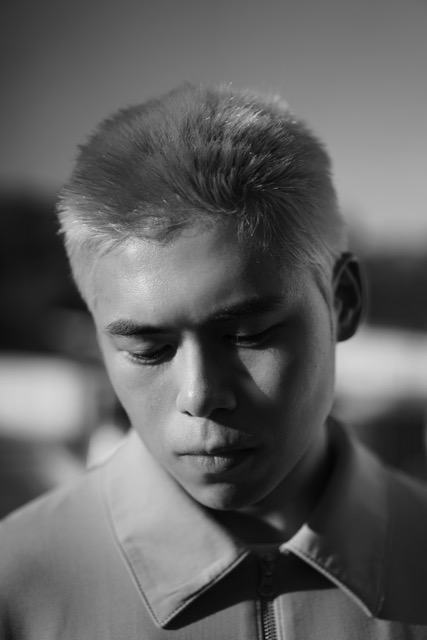
Editor Brandon Li

Finding the Film in the Edit

Brandon joined this project after conversations with Baradinskas, an award-winning European director whose previous work had been selected by the Venice International Film Festival. Baradinskas had already seen three films Li edited during his first year at AFI (Factory Boy, Fisher vs. Hayes and Nosebleed) and had developed an understanding of his approach. What particularly interested the director was Brandon’s ability to make strong creative choices without losing sight of the character. Li did not see editing as an opportunity to display technical virtuosity for its own sake. His approach was to understand what a character was experiencing and allow that emotional logic to guide the edit. That made him a particularly natural collaborator for PaperBoy. The film required an editor who could embrace its fantasy elements without allowing those elements to overwhelm the story. Li was involved from the script and shot-list development through production and post-production. That early involvement gave him something an editor does not always have: an understanding not only of what the director wanted the film to look like, but what he wanted the audience to feel.

Once the footage arrived, the two were willing to question virtually everything. They removed shots. They restructured sequences. They experimented with pacing and transitions. Ideas developed during production were reconsidered in post. Rather than treating the script and shot list as instructions that could no longer be challenged, Li and Baradinskas treated the edit as a place where the film could discover what it actually needed. It’s a philosophy that would prove especially important in the film’s final hospital scene.

The Paper World

The central challenge of PaperBoy was the Paper World itself. Luke enters a fantastical universe created from paper, where the imaginative landscapes of childhood expand into paper cities and fantastical creatures. But the world is not simply an escape into whimsy. As Luke moves through it, memories of his childhood and his complicated relationship with his mother begin to surface. The fantasy gradually reveals the pain underneath it. Li was concerned that the sequence could become a collection of beautiful images rather than an emotional experience. “There was a great deal of material that could potentially be included in this section,” he says. His task was to determine which moments were necessary to communicate Luke’s childhood and emotional relationship with his mother and which could disappear without damaging the audience’s understanding.

The solution was to build the sequence around Luke’s emotional experience rather than chronology. That distinction changes the way the audience experiences the Paper World. Rather than simply moving from one event to another, the edit allows the audience to feel the fluctuations of Luke’s memories. Some moments are given room to register; others move more quickly. The rhythm is continually responding to the character. The fantasy world therefore begins to feel subjective. We are not simply watching Luke walk through a strange environment. We are entering the world as Luke experiences it, with the sometimes erratic cadence that emotions can impose. For Li, this was essential because the Paper World is simultaneously a physical fantasy environment and an external representation of Luke’s inner life. The edit must preserve both realities at once.

Crossing the Boundary

One of the film’s most important transitions occurs when Luke first discovers the Paper World. After returning from the hospital emotionally unsettled, Luke tries to draw but cannot concentrate. He accidentally pushes his pen through the paper, creating a small hole. The pen disappears. When Luke looks through the opening, he sees another world. Eventually, he closes his eyes, takes a breath and crosses through. The scene could have been edited as an abrupt transition: ordinary world, magical hole, fantasy world. Instead, Brandon wanted the audience to experience the discovery alongside Luke. That meant resisting the temptation to rush. The mystery needed time to unfold. Luke’s curiosity and confusion needed to become part of the audience’s experience. The moment when he closes his eyes and breathes before entering the Paper World was especially important because it transforms the transition from a visual effect into an emotional decision. Luke is not merely transported somewhere. He chooses to enter.

That also establishes the Paper World as something more psychologically meaningful than a conventional fantasy setting. Luke has just left the hospital carrying the emotional weight of his relationship with his mother. The world he discovers is connected to his memories, his imagination and the emotional refuge he developed during childhood. The pacing of the edit allows the audience to feel that connection. “We were entering the Paper World together with Luke,” Li says of his goal. The edit therefore becomes a bridge between the real and imagined worlds.

When the Fantasy Becomes Reality

The deeper Luke travels into his Paper World, the less secure the separation between fantasy and reality becomes. This ambiguity is central to the film. The Paper World is fantastical but the emotions Luke experiences there are not. His memories of childhood, his relationship with his mother and the pain he has carried into adulthood remain completely real. Brandon’s editing has to maintain that emotional continuity. The audience needs to be able to enjoy the strange and theatrical qualities of the Paper World while understanding that every movement through it is also movement through Luke’s emotional history. That is why pacing becomes so important. If the fantasy moves too quickly, the audience may admire it without feeling it. If it moves too slowly, the emotional journey risks becoming repetitive. Li describes the challenge as finding enough breathing room for the audience to experience Luke’s emotional fluctuations without allowing the sequence to lose momentum. The resulting rhythm is not simply a rhythm of images. It is a rhythm of memory.

The Final Encounter

Luke’s journey through the Paper World eventually brings him back to the reality he has been avoiding: his dying mother. The original scripted approach to the final hospital encounter changed substantially during editing. Li and Baradinskas recognized that the scene could communicate something more powerful by resisting a conventional confrontation. Instead of relying on dialogue to explain everything that remained unresolved between Luke and his mother, the final encounter became largely silent. They look at one another. What has been left unsaid becomes part of the scene’s emotional meaning. For an editor concerned with character perspective, this is an especially revealing choice. The film does not need to tell the audience precisely what Luke has decided or what his mother feels. The emotional information exists in the space between them. The silence becomes active. Luke has spent much of the film retreating into imagination to avoid the pain of reality. By the end, he no longer needs the Paper World to protect him from that encounter. The fantasy has brought him back to the place he was trying to escape. And the edit allows that return to feel earned.
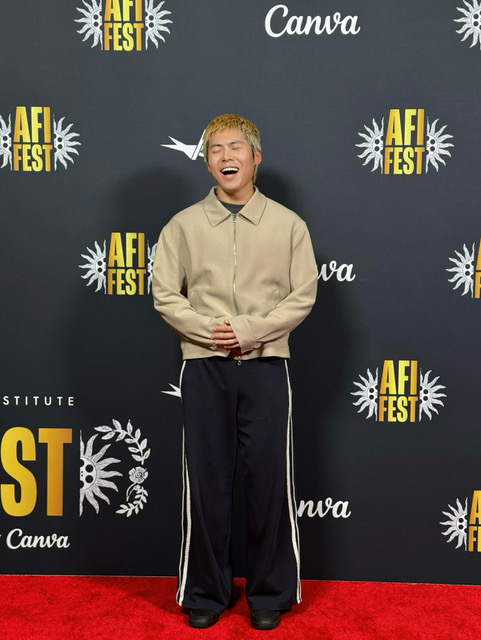
Brandon Li at AFI Fest

Editing as Discovery

Brandon’s work on PaperBoy ultimately reflects a philosophy he has brought to his editing across different kinds of films: the editor’s responsibility is not simply to assemble what was planned. It is to discover what the film wants to become. That meant questioning the script, testing different structures, removing material that no longer served the story and allowing the emotional rhythm of the character to determine the pace. The fantasy elements of PaperBoy made the process particularly demanding because the film had to operate on two levels at once. The Paper World needed to feel imaginative and visually distinctive but it could never become disconnected from Luke’s emotional reality. Li’s editing keeps those two worlds in conversation. The real world gives the Paper World its emotional stakes. The Paper World gives Luke a way to confront what the real world has made difficult to face. The edit is the mechanism that allows the audience to move between them. PaperBoy was completed in 2025 and screened at AFI FEST 2025 as part of the AFI Conservatory Showcase. The film’s fantasy may be made of paper but the emotions are real. Brandon Li’s edit made sure the audience never lost sight of that.
Editor Oliver Harwood turns Good Stories into Great Films

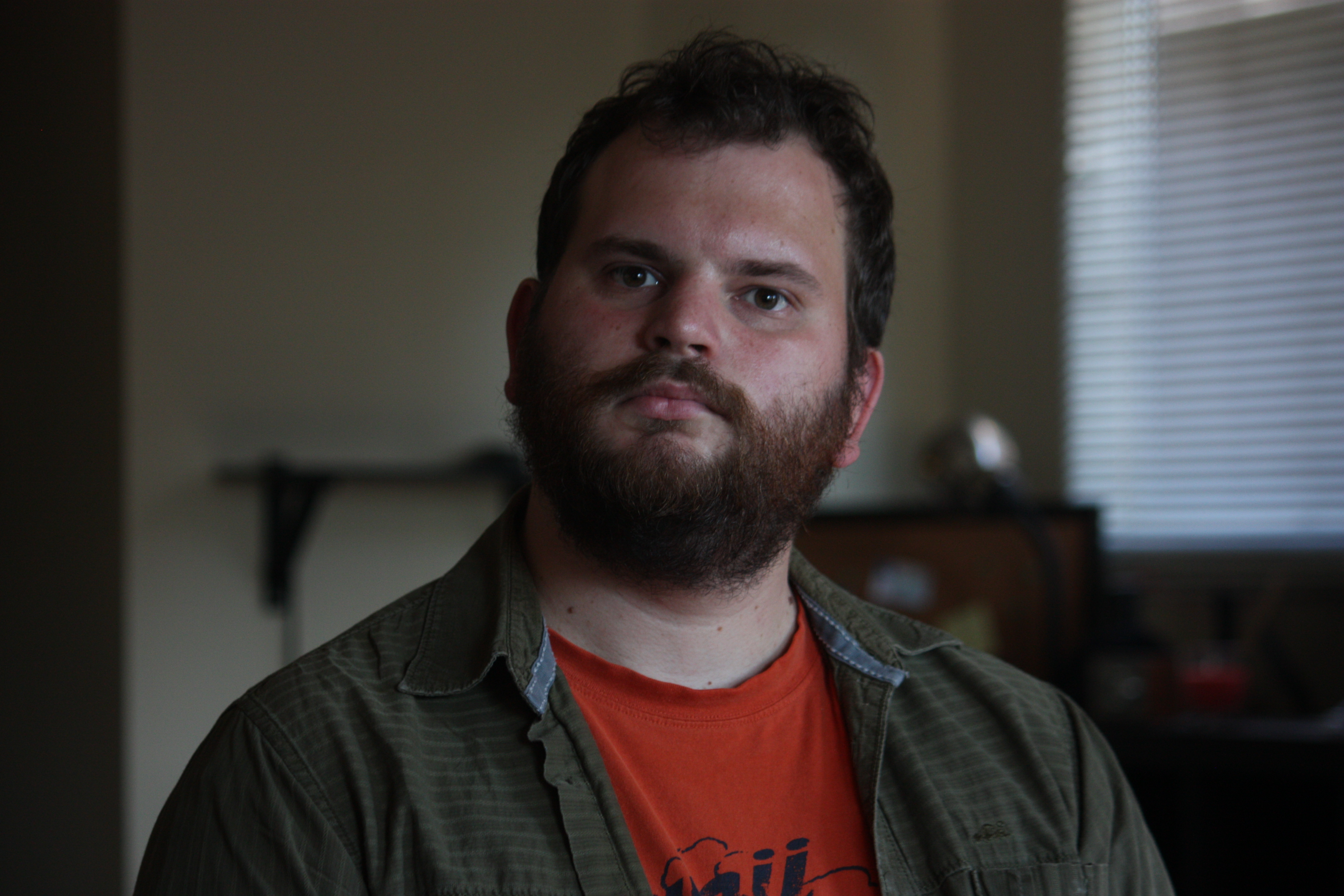
Editor Oliver Harwood
                                                                 Editor Oliver Harwood

Oliver Harwood understands better than most what it takes to turn a good story into a great story. His work spans the Atlantic, he’s been trained in one of the most exclusive and prestigious film schools in the world, and his talent has been essential to the success of an ever-growing list of award-winning films. So what does it take to make a good story great? It takes the keen eyes and ears of an editor.

Just this year, Share, a film edited by Harwood and directed by Pippa Bianco, premiered at the massive Austin-based SXSW 2015 festival where it won the Special Jury Recognition Award for Narrative Short. Share tells the story of a young girl’s return to school after being in a sex tape that gets shared online.

Harwood fell in love with film-editing inadvertently, when as a teenager he and a friend began filming their own comedy sketches. He became enthralled with cutting, splicing and arranging the clips, and in so doing found that the way stories are told on film come down to decisions made by the editor. Within a few short years, the young Brit was enrolled at the American Film Institute, known the world over for producing some of the biggest names in entertainment and filmmaking.

In 2013, Harwood edited Gala Goliani’s (What the Monkey Saw, Worship) film Red Rider, a dystopian thriller set eight years after a disaster turns the world into a wasteland. The intense action follows Adena, played by Abigail Wilson (Cigarette, The Half Man), as she roams the wastes seeking revenge on a vicious biker gang. A marvelous editing job to say the least, Harwood uses the character’s voice to narrate her thought process as she plans her mission, which gives viewers entry into her world without the overuse of dialogue to explain her plight.

The film was an Official Selection by several film festivals in 2014 including the San Jose International Short Film Festival, the La Femme International Film Festival and the NewFilmmakers New York Winter Festival. It also won the awards for Best Actor and Best Cinematographer at the Los Angeles New Wave Intl’ Film Festival.

After Red Rider, Harwood was tapped by director Leonard LoBiondo (Inheritance) to edit the film Reaver starring Kelly Blatz (Prom Night, 90210, Chicago Fire). A hair-raising chiller, Reaver is the haunting story of two siblings who come face-to-face with the evil specter that spirited-away their father. Reaver won the festival prize for Best Lovecraft Short at the 2014 A Night Of Horror Film Festival.

“Starting Reaver, I was pretty comfortable with myself as an editor, and was ready to experiment with my approach to collaborating with a director,” Harwood said.

A huge part of making a great film comes from knowing how to communicated and collaborate best with your fellow filmmakers. Harwood has been editing films long enough to what he needs to achieve the best possible film, and for him, that has to do with having his own space to create without someone looking over his shoulder. So, when it came time to start editing Reaver, Harwood suggested the use of a separate monitor where the director could view the progress without looking over his shoulder.

That decision really paid off. Harwood recalled, “It helped the director keep a better sense of perspective on the movie… he was much more able to astutely observe how much tension we could bring out from each shot, and how the following shot could be used to further enhance and build on that tension.”

Hot on the heels of Reaver, Harwood began work on Contrapelo in 2014. Directed by Gareth Dunnet Alcocer (Dig!, Exodo), Contrapelo was a huge change of scenery for Harwood. While the film’s dialogue was in Spanish, a language Harwood didn’t speak a word of, he managed not only to do the job, but to edit it into an awe-inspiring and gripping film. Contrapelo focuses on a cartel boss, a barber, a straight razor, and one of the most difficult decisions a person can be forced to make.

“Because I was unable to understand what was being said, I was able to decontextualize the line and turn the dialogue into something like music,” said Harwood, explaining that in a way the language barrier helped him with editing. “The rhythm and tone of the words being spoken helped me guide each cut based on feeling.”

The film’s recognitions included countless awards including Best Indie Short Film and the Audience Award at the 2014 Cine Gear Expo, the Best Short Awards from the Las Vegas International Film Festival and the Los Cortos International Film Festival, as well as nominations for Best Overall Short Film at the Calgary International Film Festival, the German Independence Award for Best Short Film at the 2014 Oldenburg Film Festival, and Best Narrative Short at the world-renowned Tribeca Film Festival.

Harwood’s mastery of his craft is the result of his incredible training, extensive experience and raw, innate talent. He possesses the rare skill to find the exact crossroads between technical genius and creative visionary. His work is certain to leave viewers not just satisfied with the cinematic experience, but contemplating some of the most serious issues facing the world today. And that, after all, is the difference between a good story, and a great story.

Acclaimed Cinematographer Kristin Fieldhouse!

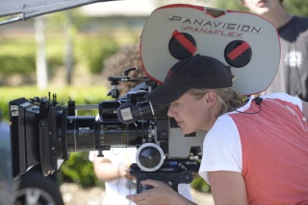
Cinematographer Kristin Fieldhouse
                                                     Cinematographer Kristin Fieldhouse

Although Kristin Fieldhouse first obtained a Bachelors and Masters in International Development and Politics at the University of Sussex in England, an area of concentration that led her to spend several years working for the United Nations across Africa and Asia, her love of photography and it’s integral role in filmmaking was something too powerful to ignore. The now highly sought after cinematographer discovered her passion for photography in her youth.

“I lost my dad and my sister at a young age – so photography helped me through that period. It was my salvation in a way, a chance to connect with people through an artist medium and express what I was feeling and going through,” admits Kristin Fieldhouse. “Later on, cinematography offered me a new and exciting challenge. The moving image was fascinating for me and I loved the idea of sequences of images to tell a story.”

After spending several years working for the UN, Fieldhouse moved to Canada where she further honed and perfected her skills behind the camera lens. “I worked and studied as a camera technician for many years working my way up through the Cinematographer’s Guild I.A.T.S.E before starting to shoot my own work,” explains Fieldhouse.

A testament to her unparalleled skill in the field, Kristin Fieldhouse was accepted as one of only 28 cinematographers admitted into the American Film Institute’s competitive conservatory program where she received her MFA. With an impressive list of award-winning projects already under her belt, Fieldhouse’s work undoubtedly speaks for itself. The cinematographer received the Kodak Student Cinematography Award for her work on the film The Man Who Found DB Cooper, as well as the award for Best Cinematography at the Milledgeville Film Festival and the John Kelly Award for Excellence in Cinematography at the Fresno Film Festival for her work on the film Young Americans, and the award for Best Cinematography at the Real Teal Film Festival for her work on the film TESS.

One of Kristin Fieldhouse’s other recent projects, Kepler X-47, has also had an incredibly successful run on the film festival circuit as it was chosen as an Official Selection at The LA Asian Pacific Film Festival, Comikazee Expo, ImagineNative Film & Media Arts Festival, NewFilmmakers Los Angeles Film Festival, The Geekie Awards, Dragon Con Film Festival, and many others. Directed by Erin Li Kepler X-47 is a sci-fi film that follows a woman as she struggles to adjust to her new life as part of a human zoo exhibit on an alien planet 5,000 light years from earth. The film put Fieldhouse’s talents to the test as it required extensive period costumes, futuristic locations and dynamic lighting choices.

Fieldhouse explains, “This project was demanding in terms of budget and I had to come up with cheap lighting solutions that gave a large range of looks from candlelight dinner scenes at tables to large soft sources above actors to give them freedom to move, but would also create an eerie look. Panavision came onboard and helped us by providing great lenses, which I netted to give a softer image and raise the black levels. I remember spending many hours testing out different kinds of stockings from stores around LA.”

Kristin Fieldhouse’s vast knowledge, dedication and substantial creative contributions to Kepler X-47 show through in the film’s end product and are proven by the film’s incredible success.

“I was inspired by the painters such as Caravaggio and wanted to be able to paint with light the way they would paint with oils,” says Fieldhouse. “We used a combination of in-camera effects and glass, with dramatic lighting, and I believe this gave the film an elevated look that took the audience on a beautiful and believable journey.”

Some of Kristin Fieldhouse’s other work as a cinematographer includes the films My Little Eye, Palm Swings, Brown Bag, He’s The Best, Borja, Future Me, Release, The Tent, Life In The Gutter, Hide & Seek and Things Go Wrong, as well as commercials for globally known brands like Nike, Coors Light and Kodak. The cinematographer has also contributed heavily to the camera departments on the films The Echo, Total Recall, The Incredible Hulk, Diary Of The Dead, House At The End of The Street, Resident Evil: Afterlife and A Beginner’s Guide To Endings, as well as the hit television shows Flashpoint, Happy Town, Bloodletting & Miraculous Cures Fairfield Road, Abra Ca Debra, Nikita, Covert Affairs, Warehouse 13, Unrivaled, Latest Buzz, Unnatural History, The Night Before The Night Before Christmas, Alphas, Kenny v. Spenny and many more.

To find out more about Kristin Fieldhouse’s incredible work as a cinematographer be sure to check out her website http://kristinfieldhouse.com/ and her IMDb page http://www.imdb.com/name/nm2465060/?ref_=fn_al_nm_1