
Nishtha Vashist: Two Distinct Homes with One Thoughtful Design Philosophy

Interior designer Nishtha Vashist understands that a successful home should reflect the people who live in it. That principle can take many forms, from the considered restraint of a residential remodel to the expansive possibilities of a large estate. Through her work with Allison Lind Interiors, Vashist brings a combination of architectural sensitivity, material expertise, and practical thinking to projects that are distinct in scale and character yet connected by a consistent commitment to thoughtful design. Two projects illustrate this approach particularly well: the Kotick Residence in Mercer Island and Highland Estate in Renton (both located in Washington state). Although they differ considerably in size and expression, both demonstrate how careful planning, attention to detail, and close collaboration can transform a house into a cohesive and highly personal living environment.

Kotick Residence: Tradition With a Twist
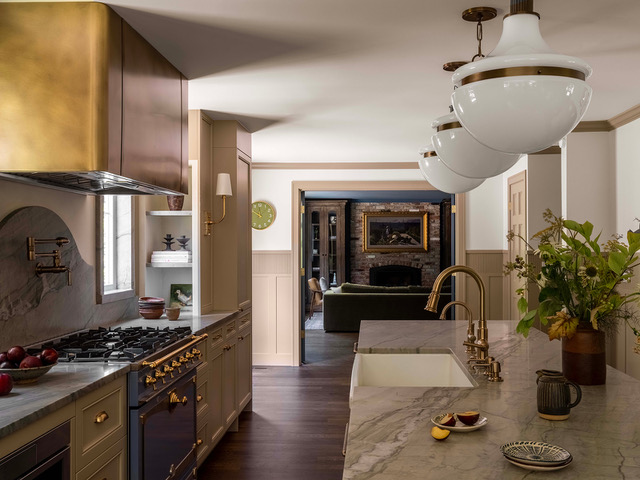
Kotick Residence

Located in Mercer Island the approximately 2,900-square-foot Kotick Residence was completed in 2026 with construction by Remont Constructions. The project called for a design approach that balanced architectural character with the practical requirements of contemporary residential life. Vashist approached the home with an appreciation for the relationship between established design principles and modern living. Rather than relying on decorative gestures alone, the work centered on proportion, material selection, and the way individual elements relate to the larger interior. The result reflects a design sensibility in which character emerges through considered decisions rather than excess.

Materiality played an important role in this approach with the selection and coordination of finishes helping to establish continuity throughout the home while carefully considered details gave individual spaces their own identity. This balance is central to creating interiors that feel distinctive without becoming visually disconnected. This also demonstrates the importance of resolving design ideas in a way that works beyond the drawing board, as residential interiors must accommodate daily routines, circulation, storage, lighting, and the many practical demands of a functioning household. Vashist’s contributions involved carrying the design vision through planning and material decisions while coordinating with the construction team to help ensure that the intended details could be executed successfully.

That relationship between design ambition and construction reality is particularly important in custom residential work where the success of a project depends not only on the strength of the original concept but also on the ability to translate it into a finished environment with consistency and care. By considering the visual and functional dimensions of a home together, Vashist helps create interiors in which aesthetic character supports the experience of everyday living.

Highland Estate: Grandeur With a Human Touch
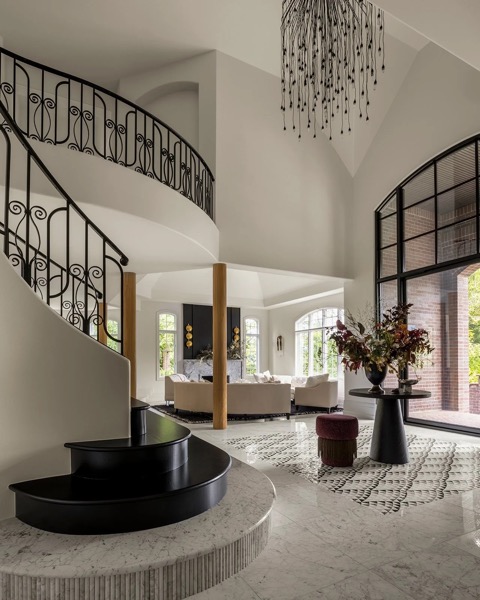
Highland Estate

At approximately 10,020 square feet, Highland Estate in Renton presented a very different set of opportunities. The project was built by Emerald City Build and required a design approach capable of addressing a much larger residential environment. A home of this scale can easily become defined by its dimensions alone, making it essential to create a sense of cohesion while allowing individual rooms to serve different purposes and establish their own atmosphere. Vashist’s work on the Highland Estate reflects an understanding that grandeur is most effective when balanced by livability.

The design process required attention to the relationships between spaces, the transitions from one area to another, and the type of details which allow a large home to avoid a tone that can feel overwhelming. Material choices, architectural elements, and finish selections contribute to an overall visual language, helping the residence maintain a sense of unity while accommodating its many functions. The scale of Highland Estate also makes coordination especially significant, since decisions involving finishes, lighting, millwork, and architectural detailing can affect numerous rooms and construction phases. Maintaining a coherent vision requires both a clear understanding of the intended result and an ability to communicate that vision to the people responsible for realizing it.

Vashist’s role extended across the design process, helping connect the creative direction with the practical decisions required during execution. The project illustrates how thoughtful interior design can give a substantial residence a sense of identity and refinement without losing sight of the people who will ultimately inhabit it. Highland Estate also received a Design Icons Award, adding professional recognition to a project distinguished by its scale and complexity.

The Details and the People Behind the Design

While the Kotick Residence and Highland Estate differ in size and character, both underscore a central truth about residential design: a compelling concept is only the beginning. The quality of the finished work depends on the decisions made throughout the process and on the relationships among the people bringing the project to life. Vashist sees the process as working across creative and technical considerations, ensuring that spatial planning, material and finish selection, architectural detailing, and contractor coordination to function as parts of a single process. A decision that looks straightforward in a presentation can have implications for fabrication, installation, sequencing, or the relationship between adjoining materials.

This is where collaboration becomes more than a procedural necessity. Designers and builders bring different forms of expertise to a project, and the best outcomes often emerge when those perspectives inform one another. Clear communication allows the design intent to remain intact while giving the construction team the information and flexibility needed to address real-world conditions. Victor Turchik of Remont Constructions has emphasized Vashist’s collaborative approach, describing her as someone who understands that design and construction must work together. “She understands that great design and great construction have to work together, and she treats us as a true partner in getting the best result for the client,” Turchik notes.

Turchik also highlighted Vashist’s response to the unexpected challenges that arise during construction, explaining, “Construction inevitably brings unexpected conditions and moments where decisions need to be made quickly and she approaches those situations with a calm, solutions-oriented mindset.” For him, the strength of that partnership lies in Vashist’s ability to communicate clearly, listen to the expertise of the trades, and recognize when a particular design detail is essential to the overall vision. That combination allows creative ambition and practical problem-solving to reinforce rather than undermine one another.

The collaborative dimension of her work is significant because even the most sophisticated design depends on execution. Proportions must translate accurately, materials must meet as intended, and the details that give a space its character must be resolved with care. Achieving that level of consistency requires both design conviction and a willingness to work constructively with others, qualities that help ensure the finished home remains faithful to its original vision while responding to the realities of construction.

Recognition Built on Thoughtful Design
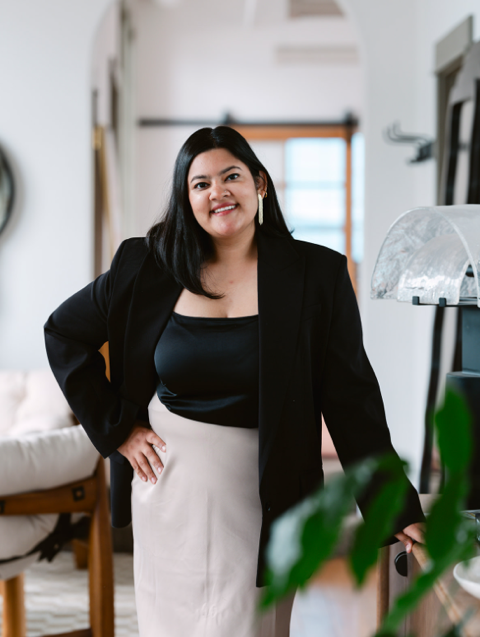
Interior Designer Nishtha Vashist

Vashist’s professional recognition reflects a body of work that extends beyond a single residential style. Her earlier honors include awards from the VM&RD Retail Design Awards for House of Raisons in Noida in 2018 and a VM&RD Gold Store Design Award in the Service Retail category for Century Veneer in 2020. The Design Icons Award for Highland Estate represents further recognition of her work in residential interiors. These distinctions span different project types, but they share a common underlying concern: the relationship between visual identity, material expression, and the experience of a space.

Whether working in retail or residential design, Vashist’s approach depends on understanding what a project needs to communicate and how its physical details can support that purpose. The Kotick Residence and the Highland Estate offer complementary examples of that philosophy, with one representing a more compact residential project and the other a substantial estate. Their differences make the comparison particularly revealing because, rather than applying a single aesthetic formula, Vashist adapts her approach to the demands and possibilities of each home while maintaining a consistent level of care in the design process. Ultimately, thoughtful residential design is measured by more than its first impression. It is found in the way rooms relate to one another, how materials respond to light, how details hold together, and how comfortably a home supports everyday life.
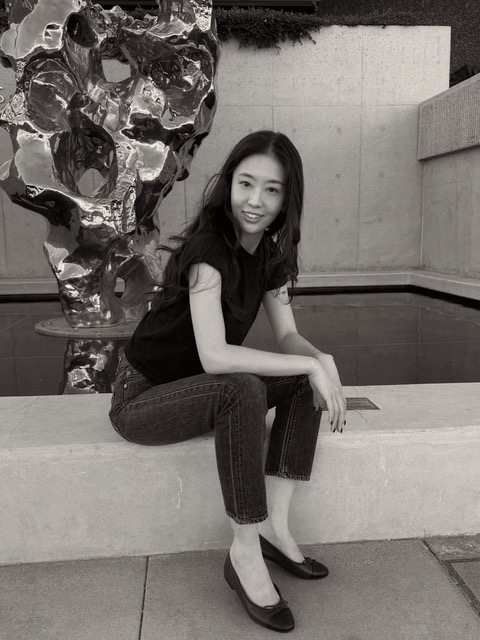
Creative Direction at the Intersection of Culture, Commerce, and Digital Storytelling with Daisy Huang

Daisy Huang’s usual title is that of Creative Director but the scope of her work extends well beyond what this title might initially suggest. Her professional experience has placed her at the intersection of creative direction, marketing strategy, editorial development, food retail, brand building, and consumer experience, with digital platforms providing a common thread through many of these activities. Whether she is helping an emerging food product find an audience, developing a retail campaign, contributing to fashion media, or building a new consumer brand, Huang approaches the challenge from the same fundamental perspective: creativity is most effective when it gives people a reason to notice, understand, and engage with something.

Creative Director Daisy Huang

Food, Retail, and the Digital Consumer

Huang’s work with food brands demonstrates how she applies creative thinking to an industry in which consumer decisions are often made quickly and visually. Her work with Super King Markets on the “Taste Beyond Borders” multicultural retail campaign involved more than creating attractive promotional materials. As Creative Director and Marketing Strategist, Daisy developed a broader system of visual storytelling and retail experience design intended to introduce shoppers to less familiar global cuisines while making the discovery process feel approachable and relevant to everyday life. This campaign extended across digital, print, social media, and physical retail environments, while also influencing the way products were presented within sushi, deli, specialty, and international-food areas.

An important part of Huang’s approach was understanding the consumer before deciding how to market to said consumer. Rather than relying on broad assumptions about who might be interested in international foods, she used field observations and structured questions to identify patterns in how shoppers behaved. Huang considered whether customers were already entering a particular aisle or asking about its products, whether interest was being limited by uncertainty about what to choose, whether better explanations or demonstrations could reduce that uncertainty, and whether the store had the inventory and operational capacity to support a new presentation. This process allowed her to treat marketing not simply as promotion but as an ongoing cycle of observation, testing, and refinement.

Such a philosophy became particularly useful when introducing customers to foods they might not immediately recognize. Huang understood that asking someone to purchase an unfamiliar product requires more than telling them that it is good; the customer needs some idea of what to do with it once they take it home. Sampling and hands-on experiences could make discovery less intimidating, while simple points of comparison could provide a familiar starting place without suggesting that two different culinary traditions were interchangeable. Her approach was therefore less about persuading consumers through a hard sell and more about giving them enough confidence and curiosity to make the decision for themselves.

Daisy also brought this philosophy into the presentation of individual products. Inspired in part by an experience at Kismet Rotisserie in Los Angeles, where familiar ingredients were presented in combinations that encouraged experimentation, she began thinking about how grocery shoppers could be shown practical ways to use emerging food products. Instead of simply describing chili oil, for example, a display could suggest adding it to hummus, giving the shopper an immediate idea for incorporating the unfamiliar ingredient into a meal. Similar thinking informed her recommendations for product placement, short explanatory messages, and even distinctive shopping bags that extended the visual experience beyond the shelf.

For Huang, this is where storytelling becomes an important marketing tool. A product description tells consumers what something is, while a well-designed story can help them imagine where it belongs in their own lives. Such a distinction is particularly valuable for emerging food brands because the objective is not merely to create an attractive package or generate a single purchase; it is to establish familiarity, confidence, and a reason to return. Daisy’s work with Super King Markets illustrates how digital thinking, visual communication, retail design, and consumer psychology can operate together as one creative strategy.

That same combination of creativity and commercial thinking is now informing Huang’s development of DAEDATE, an original sushi burrito concept. The project represents a move from advising and developing existing food businesses toward creating a consumer brand of her own, with responsibility for both the creative and commercial sides of the operation. She is developing the concept’s positioning, visual identity, products, packaging, customer experience, and operating model, while considering from the beginning how a distinctive idea can become a consistent and scalable business.

From Fashion Media to Digital Brand Communication

Before expanding her work across food and consumer brands, Daisy Huang developed an important part of her creative perspective at Vogue China. Her position as Creative Market Lead placed her within an environment where editorial judgment, fashion communication, digital marketing, and audience development were closely connected. The experience taught her to think about content not merely as something that informs an audience, but as something that establishes a relationship between a publication, its visual identity, and the people encountering it through digital platforms.

Working within fashion media also strengthened Ms. Huang’s ability to recognize the difference between a trend and a meaningful story. The digital environment moves quickly and audiences are exposed to an enormous volume of visual information every day, making attention itself a creative challenge. Daisy’s work required her to evaluate cultural and fashion developments, consider their relevance to readers, and determine how an idea could be translated into content that was both visually compelling and editorially appropriate. This remains visible in her current approach to consumer marketing, where she continues to ask not only how something should look, but why an audience should care about it.

Her experience at Vogue China also gave Daisy an international perspective on communication. Fashion operates across borders, but the meaning of a trend can change significantly depending on the audience encountering it. Huang became attentive to the process of translating global creative ideas for Chinese audiences while maintaining their cultural context, an experience that now informs her interest in bringing Chinese creative talent and cultural influence to international markets.

That perspective is central to an upcoming initiative connected with Vogue China involving New York Fashion Week, international luxury brands, and cross-cultural fashion promotion. Huang envisions the project as an opportunity to explore how Chinese fashion, entertainment, and creative talent can communicate with audiences in the United States and other major markets. Her proposed role includes developing visual and storytelling direction, identifying culturally relevant ways to connect Chinese talent with global fashion audiences, and shaping promotional concepts that can function effectively across different cultural environments.

The project’s working theme, “Vision Abroad,” reflects an extension of the role Huang has been developing throughout her career. Rather than treating international marketing as a matter of simply transferring an existing campaign from one country to another, she is interested in the creative decisions required to make cultural ideas understandable and compelling in a new environment. Her experience in both China and the United States gives her a perspective on the visual language, references, and storytelling choices that can help audiences connect with material that originates outside their own cultural experience.

Digital platforms are particularly important to that process because they can make cultural exchange more immediate and personal. Ms. Huang sees short-form video, visual campaigns, social media, and other digital formats as opportunities to move beyond generalized representations of culture and instead show people, products, places, and creative ideas in ways that feel contemporary and specific. Her interest is not simply in reaching larger audiences, but in creating enough curiosity for those audiences to look more closely and begin forming their own understanding.

A Career Built Across Creative and Commercial Worlds

Huang’s professional path has been shaped by her willingness to move between disciplines. Originally from Kaifeng in Henan, China, she moved to the United States at the age of 13 and began working during her senior year of college. Her decision to build a career in the United States was influenced by what she describes as a sense of possibility: an environment where different cultural perspectives meet and where she could explore more than one creative direction rather than being confined to a single professional category.

That background has become an important component of the perspective Daisy brings to her work today. She describes herself as deeply interested in art, fashion, and visual storytelling while also being drawn to the practical discipline involved in developing and operating a business. Her experience has allowed her to test creative ideas in real marketplaces, interact directly with consumers, and take responsibility for the operational details that determine whether an attractive concept can actually be delivered consistently. In this respect, her work has evolved beyond conventional creative direction into a hybrid practice that combines aesthetic judgment with commercial and operational understanding.

Ms. Huang’s cross-cultural background has also influenced the way she thinks about communication. She believes that American audiences can benefit from seeing Chinese culture as contemporary, diverse, and continually evolving rather than limiting their understanding to familiar historical traditions. Daisy points to digital storytelling as one particularly effective way of communicating that complexity because a photograph, video, meal, fashion choice, or everyday experience can provide a personal entry point into a culture without attempting to reduce it to a single definition.

Food offers Huang an accessible way to create those connections. A person may become curious about another culture by first encountering a dish, a design, or an unfamiliar visual style, and that initial curiosity can develop into a deeper interest in the people and traditions behind it. Daisy’s approach is to use those moments of discovery as invitations rather than explanations, allowing consumers to participate, ask questions, and develop their own relationship with what they have encountered.

The result is a professional identity that does not fit neatly into one conventional category. Huang has worked in fashion media, digital content, food retail, marketing strategy, brand development, and creative direction, while increasingly taking responsibility for projects from their earliest conceptual stages through their presentation to consumers. Her recent recognition, including the China Creative Director Young Entrepreneurship recognition at the end of 2025, a 2025 Titan Award, and a 2026 Muse Award, reflects a career that continues to develop across multiple creative and commercial disciplines.

What connects these seemingly different chapters is Daisy’s understanding that creativity does not end with an idea. A successful concept must be translated into a visual language, communicated through the appropriate channels, understood by its intended audience, and supported by the practical systems necessary to deliver the promised experience. Whether she is working with a grocery retailer, developing a food brand, contributing to an international fashion initiative, or creating a new consumer concept, Huang continues to approach digital platforms as tools for building that connection.

Her career has consequently become less about choosing between creative and commercial work and more about demonstrating how the two can reinforce one another. The skills she developed in editorial environments help her recognize stories; her marketing experience helps her understand audiences; her food and retail work gives her direct experience with consumers; and her cross-cultural background helps her consider how ideas travel between markets. Together, those experiences have positioned Daisy Huang as a creative professional whose work is increasingly defined not by one industry or job title, but by her ability to turn ideas into experiences that people can see, understand, and ultimately choose to engage with.