Tag Archives: Marketing

Creative Direction at the Intersection of Culture, Commerce, and Digital Storytelling with Daisy Huang

Daisy Huang’s usual title is that of Creative Director but the scope of her work extends well beyond what this title might initially suggest. Her professional experience has placed her at the intersection of creative direction, marketing strategy, editorial development, food retail, brand building, and consumer experience, with digital platforms providing a common thread through many of these activities. Whether she is helping an emerging food product find an audience, developing a retail campaign, contributing to fashion media, or building a new consumer brand, Huang approaches the challenge from the same fundamental perspective: creativity is most effective when it gives people a reason to notice, understand, and engage with something.
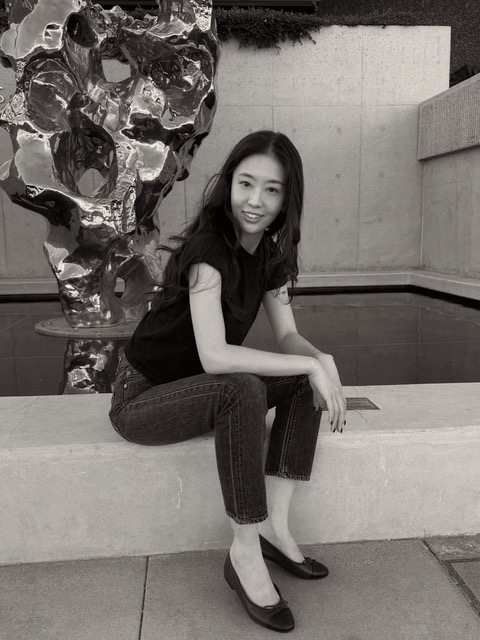
Creative Director Daisy Huang

Food, Retail, and the Digital Consumer

Huang’s work with food brands demonstrates how she applies creative thinking to an industry in which consumer decisions are often made quickly and visually. Her work with Super King Markets on the “Taste Beyond Borders” multicultural retail campaign involved more than creating attractive promotional materials. As Creative Director and Marketing Strategist, Daisy developed a broader system of visual storytelling and retail experience design intended to introduce shoppers to less familiar global cuisines while making the discovery process feel approachable and relevant to everyday life. This campaign extended across digital, print, social media, and physical retail environments, while also influencing the way products were presented within sushi, deli, specialty, and international-food areas.

An important part of Huang’s approach was understanding the consumer before deciding how to market to said consumer. Rather than relying on broad assumptions about who might be interested in international foods, she used field observations and structured questions to identify patterns in how shoppers behaved. Huang considered whether customers were already entering a particular aisle or asking about its products, whether interest was being limited by uncertainty about what to choose, whether better explanations or demonstrations could reduce that uncertainty, and whether the store had the inventory and operational capacity to support a new presentation. This process allowed her to treat marketing not simply as promotion but as an ongoing cycle of observation, testing, and refinement.

Such a philosophy became particularly useful when introducing customers to foods they might not immediately recognize. Huang understood that asking someone to purchase an unfamiliar product requires more than telling them that it is good; the customer needs some idea of what to do with it once they take it home. Sampling and hands-on experiences could make discovery less intimidating, while simple points of comparison could provide a familiar starting place without suggesting that two different culinary traditions were interchangeable. Her approach was therefore less about persuading consumers through a hard sell and more about giving them enough confidence and curiosity to make the decision for themselves.

Daisy also brought this philosophy into the presentation of individual products. Inspired in part by an experience at Kismet Rotisserie in Los Angeles, where familiar ingredients were presented in combinations that encouraged experimentation, she began thinking about how grocery shoppers could be shown practical ways to use emerging food products. Instead of simply describing chili oil, for example, a display could suggest adding it to hummus, giving the shopper an immediate idea for incorporating the unfamiliar ingredient into a meal. Similar thinking informed her recommendations for product placement, short explanatory messages, and even distinctive shopping bags that extended the visual experience beyond the shelf.

For Huang, this is where storytelling becomes an important marketing tool. A product description tells consumers what something is, while a well-designed story can help them imagine where it belongs in their own lives. Such a distinction is particularly valuable for emerging food brands because the objective is not merely to create an attractive package or generate a single purchase; it is to establish familiarity, confidence, and a reason to return. Daisy’s work with Super King Markets illustrates how digital thinking, visual communication, retail design, and consumer psychology can operate together as one creative strategy.

That same combination of creativity and commercial thinking is now informing Huang’s development of DAEDATE, an original sushi burrito concept. The project represents a move from advising and developing existing food businesses toward creating a consumer brand of her own, with responsibility for both the creative and commercial sides of the operation. She is developing the concept’s positioning, visual identity, products, packaging, customer experience, and operating model, while considering from the beginning how a distinctive idea can become a consistent and scalable business.

From Fashion Media to Digital Brand Communication

Before expanding her work across food and consumer brands, Daisy Huang developed an important part of her creative perspective at Vogue China. Her position as Creative Market Lead placed her within an environment where editorial judgment, fashion communication, digital marketing, and audience development were closely connected. The experience taught her to think about content not merely as something that informs an audience, but as something that establishes a relationship between a publication, its visual identity, and the people encountering it through digital platforms.

Working within fashion media also strengthened Ms. Huang’s ability to recognize the difference between a trend and a meaningful story. The digital environment moves quickly and audiences are exposed to an enormous volume of visual information every day, making attention itself a creative challenge. Daisy’s work required her to evaluate cultural and fashion developments, consider their relevance to readers, and determine how an idea could be translated into content that was both visually compelling and editorially appropriate. This remains visible in her current approach to consumer marketing, where she continues to ask not only how something should look, but why an audience should care about it.

Her experience at Vogue China also gave Daisy an international perspective on communication. Fashion operates across borders, but the meaning of a trend can change significantly depending on the audience encountering it. Huang became attentive to the process of translating global creative ideas for Chinese audiences while maintaining their cultural context, an experience that now informs her interest in bringing Chinese creative talent and cultural influence to international markets.

That perspective is central to an upcoming initiative connected with Vogue China involving New York Fashion Week, international luxury brands, and cross-cultural fashion promotion. Huang envisions the project as an opportunity to explore how Chinese fashion, entertainment, and creative talent can communicate with audiences in the United States and other major markets. Her proposed role includes developing visual and storytelling direction, identifying culturally relevant ways to connect Chinese talent with global fashion audiences, and shaping promotional concepts that can function effectively across different cultural environments.

The project’s working theme, “Vision Abroad,” reflects an extension of the role Huang has been developing throughout her career. Rather than treating international marketing as a matter of simply transferring an existing campaign from one country to another, she is interested in the creative decisions required to make cultural ideas understandable and compelling in a new environment. Her experience in both China and the United States gives her a perspective on the visual language, references, and storytelling choices that can help audiences connect with material that originates outside their own cultural experience.

Digital platforms are particularly important to that process because they can make cultural exchange more immediate and personal. Ms. Huang sees short-form video, visual campaigns, social media, and other digital formats as opportunities to move beyond generalized representations of culture and instead show people, products, places, and creative ideas in ways that feel contemporary and specific. Her interest is not simply in reaching larger audiences, but in creating enough curiosity for those audiences to look more closely and begin forming their own understanding.

A Career Built Across Creative and Commercial Worlds

Huang’s professional path has been shaped by her willingness to move between disciplines. Originally from Kaifeng in Henan, China, she moved to the United States at the age of 13 and began working during her senior year of college. Her decision to build a career in the United States was influenced by what she describes as a sense of possibility: an environment where different cultural perspectives meet and where she could explore more than one creative direction rather than being confined to a single professional category.

That background has become an important component of the perspective Daisy brings to her work today. She describes herself as deeply interested in art, fashion, and visual storytelling while also being drawn to the practical discipline involved in developing and operating a business. Her experience has allowed her to test creative ideas in real marketplaces, interact directly with consumers, and take responsibility for the operational details that determine whether an attractive concept can actually be delivered consistently. In this respect, her work has evolved beyond conventional creative direction into a hybrid practice that combines aesthetic judgment with commercial and operational understanding.

Ms. Huang’s cross-cultural background has also influenced the way she thinks about communication. She believes that American audiences can benefit from seeing Chinese culture as contemporary, diverse, and continually evolving rather than limiting their understanding to familiar historical traditions. Daisy points to digital storytelling as one particularly effective way of communicating that complexity because a photograph, video, meal, fashion choice, or everyday experience can provide a personal entry point into a culture without attempting to reduce it to a single definition.

Food offers Huang an accessible way to create those connections. A person may become curious about another culture by first encountering a dish, a design, or an unfamiliar visual style, and that initial curiosity can develop into a deeper interest in the people and traditions behind it. Daisy’s approach is to use those moments of discovery as invitations rather than explanations, allowing consumers to participate, ask questions, and develop their own relationship with what they have encountered.

The result is a professional identity that does not fit neatly into one conventional category. Huang has worked in fashion media, digital content, food retail, marketing strategy, brand development, and creative direction, while increasingly taking responsibility for projects from their earliest conceptual stages through their presentation to consumers. Her recent recognition, including the China Creative Director Young Entrepreneurship recognition at the end of 2025, a 2025 Titan Award, and a 2026 Muse Award, reflects a career that continues to develop across multiple creative and commercial disciplines.

What connects these seemingly different chapters is Daisy’s understanding that creativity does not end with an idea. A successful concept must be translated into a visual language, communicated through the appropriate channels, understood by its intended audience, and supported by the practical systems necessary to deliver the promised experience. Whether she is working with a grocery retailer, developing a food brand, contributing to an international fashion initiative, or creating a new consumer concept, Huang continues to approach digital platforms as tools for building that connection.

Her career has consequently become less about choosing between creative and commercial work and more about demonstrating how the two can reinforce one another. The skills she developed in editorial environments help her recognize stories; her marketing experience helps her understand audiences; her food and retail work gives her direct experience with consumers; and her cross-cultural background helps her consider how ideas travel between markets. Together, those experiences have positioned Daisy Huang as a creative professional whose work is increasingly defined not by one industry or job title, but by her ability to turn ideas into experiences that people can see, understand, and ultimately choose to engage with.

Art Director Li Li talks living her dream and working with Only in Beverly Hills

10625162_10202971608393258_9079929232043761374_nLi Li spent her teenage years captivated by the popular television series Mad Men. The iconic series, following Don Draper and one of the most prestigious advertising agencies in the world, did not only entertain Li, but inspired her. She wanted to be a part of the same world, working with prolific brands and creating unique advertising content. With a passion for the arts and business savvy, it didn’t take her long to emerge as an in-demand art director in her home country of Taiwan and abroad.

Li spends every day doing what she loves, and that passion translates directly into her work. Award-Winning Jewelry Designer Evelyn Huang has been greatly impressed with Li’s work, bringing her on board to promote both her brands EvelynH Jewelry and Light Legion, seeing tremendous growth from Li’s efforts. She saw similar success working with lifestyle brand Neon Beige and has no plans on slowing down.

“There’s no limitation to how you want to complete a project as an art director, as long as you have a great team and good connections. It is always interesting to work with various talents around you. It is also very rewarding when I can bring the best out of someone and put everything together as a masterpiece,” said Li.

Li currently works with the exclusive brand Only in Beverly Hills. One of the city’s newest boutiques has become the number one spot for gifts that celebrate the inimitable glamour of Beverly Hills.

“I like the idea of celebrating Beverly Hills and especially that the products are not limited to apparel but accessories, home goods, and books. I thought it would be a great opportunity to discover art direction in a different category,” said Li. “I like how the owners are very open to new ideas and are always willing to try something new. The idea of the brand is also original, and I think it’s one of the keys to success of building a business.”

Li took over as Art Director for the store almost a year ago and has a variety of tasks that are essential to its success. She arranges/directs photoshoots for marketing materials and lookbooks, manages the social media and creates original content for the channels, and designs promotional artwork such as posters, store cards, and flyers.

“I love to be included in the design process as well as promotion decisions. The two owners value my marketing ideas and aesthetics. This gives me a lot of opportunities to grow the business,” said Li.

Processed With DarkroomOn top of her everyday responsibilities, Li has found other ways to help the brand grow. She brought in Vogue model Hanna Gebrehiwet to be featured in the promotional material for Only in Beverly Hills. Besides photoshoots, she also brainstorms with the owners each week regarding new promotional ideas.
Li has improved the aesthetic of the brand, allowing the new business to emerge as a Beverly Hills staple. She feels grateful when she sees continued sales increases due to her efforts, her hard work paying off. Most importantly, in her opinion, she builds content for daily posts online.

“When people hear of a brand, they go on its Instagram and scroll through to get an idea of what the brand is about, especially millennials. This is why social media is so important to business nowadays. It can be a good catalogue as well as a bridge between business and consumer,” she concluded.

Go to Li’s website and follow her Instagram @li58li.

Photographer Hubert Kang combines artistry and storytelling for Metropolis Mall campaign

Hubert Kang Bio Photo by Peter Yang
Hubert Kang, photo by Peter Yang

For Canada’s Hubert Kang, his hobby and his career are the same. Being a professional photographer allows him to do what he is truly passionate about every day. He believes that is the key to driving himself forward, as he never loses interest in his work.

“I like photography as an art form. I also like working with people. Being a professional photographer allows me to work with different projects and different people almost daily. It’s exciting and interesting,” he said.

This attitude has allowed Kang to soar to the forefront of his industry in Canada. His photos have been featured in the Globe and Mail, a leading Canadian newspaper, and his images have helped large brands for campaigns for Fairmont Hotels and Fairmont Royal York, as well as Canadian Tourism.

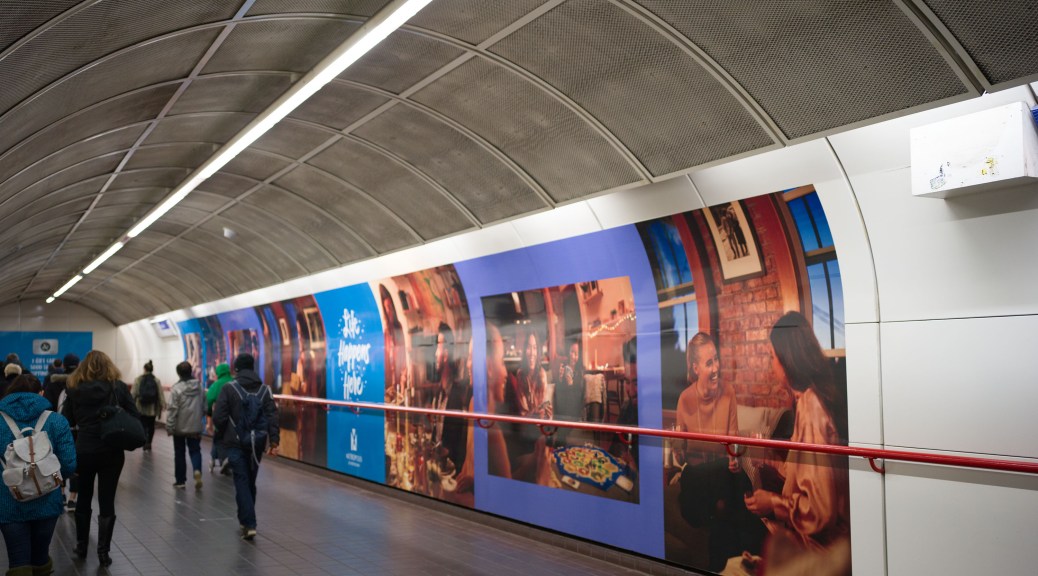
Kang often shoots advertising campaigns for travel and tourism companies and destinations. He continued this pattern when he created imagery for the last three seasonal campaigns for Metropolis at Metrotown Mall, the largest and most successful mall in the Vancouver Area. His images were used extensively for outdoor billboards, especially in the busiest subway station in Vancouver. They were also used online and in print. The video he directed was used as a spot in cinema as pre-roll advertising before the feature movie.

Traditionally, Metropolis used mostly fashion photography for their campaigns. For their new brand, however, they wanted to take a storytelling approach showing sweet moments in life. Twice Brand therefore reached out to Kang, knowing that he would excel at such a feat. His efforts helped boost customer interaction at the mall.

“I am really proud to see the success of the campaign. Metropolis took a risk to try my photography skills, which is very different from what they usually did in the past. It was great to see that I was able to create these beautiful and effective images to reward the client taking the risk,” he said.

The central theme of the campaign is “life happens here”. Right away in the brainstorming process, Kang and the team at Twice were looking for activities that are photographically compelling and yet at the same time showing enough emotional quality and products so that they could advertise the mall. Kang came up with unique ideas for the Christmas shoot. For example, he shot a group of friends at a dinner party, showcasing all the food, gifts, decorations, cookware, and more that highlighted what could be purchased at the mall. The ad also told a story and evoked an emotional connection that people could resonate with when they looked at it.

“It is very inspiring that I can return to my documentary photography roots and apply it to a commercial project. I was also attracted to the project because of the large print implementation they planned to do with the images. It’s a very photography driven campaign and I was intrigued to lead it,” said Kang.

It was exciting and refreshing for Kang to bring a new photography concept to the largest mall in Vancouver. He and his team elevated the standard of productions for Metropolis. He was a big part of the creative process in coming up with the stories and finding locations. Then when it comes to actually shooting the photos, his approach and thoughtfulness in considering everything from production, art direction, lighting, and model performance led to images that look natural and interesting, and at the same time help Metropolis’ reach out to the targets they want to reach. This is a combination of Kang’s artistic sense and experience in both commercial and documentary photography, exemplifying what a unique skill set he possesses.

“I enjoyed this project for so many reasons, but most of all it was the people I worked with. I have worked with Twice many times throughout my career so there is a lot of trust between us. The creative team at Twice was very collaborative and open to new ideas from all members of the crew. It was a great feeling to work with a group of like minded professionals who are on top of their game in this field. I really like the execution of the project as well. Metropolis took up ads that took over one of the largest subway stations in Vancouver. It was an immersive experience to see these images printed large scale plastered all over the station. With so much advertising moving to digital these days, I really enjoyed seeing the images in print,” he said.

Kang credits his vast success as an advertising photographer to the work he does as a documentary photographer. His eagerness to tell stories for his clients rather than simply taking a photo is what makes him so in demand.

One of Kang’s most heartfelt projects in his career is the work he does in Uganda. He has gone there to document the progress of baseball development in the country, showing how the sport positively impacts the lives of the children in the country. In the future, he would like to extend the project to other sports as well, as he has seen the incredible power it has to positively influence one’s life.

“I have enjoyed teaching quite a bit. I guest lecture in our local colleges from time to time. I like being able to give back to my community since this profession has given me such an incredible life so far. I like spending time in Uganda to teach photography to the local children as I see they enjoy having another way to express themselves and tell their stories,” he said.

Kang also will soon be starting a new photo project on the relationship between people and animal. He is passionate about animal rights and likes to utilize his skills to help promote the causes he cares about. Be sure to keep an eye out for it.

Jeff Venida talks honor of creating a shift in today’s branding culture with Paradam

IMG_7681
Creative Director Jeff Venida

There are two types of people in this world: those with compelling stories to tell and those who actually tell them. One of those people is highly sought-after creative director, Jeff Venida. What sets Venida apart from most is the fact that his storytelling doesn’t come bound between two book covers or scattered through carefully arranged music notes. On the contrary, Venida uses creative branding to stimulate the minds of consumers and to take them on quests they wouldn’t have otherwise imagined traveling. He takes a thought-based, captivating approach to creative branding and shares stories with the world in a way that keeps him at the top of his industry.

Throughout his career, Venida has earned himself the opportunity to work with some of the world’s biggest brands, allowing his talents to captivate consumers in a number of different markets. He prides himself on the fact that his job, unlike many others, requires him to have a keen understanding not only of top brands and their target audiences, but also of some of the world’s most niche industries. He realized from an early stage in his career, that being a creative director would require far more than an eye for design. He would need to be able to identify important trends in society and determine how best to gauge the audiences consuming them. It has been a journey rich with learning opportunities and chances to look at parts of the world in a new light. In addition, after several years spent working for other brands and striving to bring other people’s visions to life, Venida realized that he needed to shift his focus towards putting his own ideas first and bringing them to life on a large scale. For these reasons and more, he decided that his talents could be best offered to the world by starting his own company: Paradam.

Per Venida’s vision, Paradam is focused on developing a thought-based, storytelling approach to creative brand building and marketing. He sees great importance in communicating complex ideas to his clients that tap into their emotions and connect intimately with their minds. His reputation, along with his business savvy, allowed him to build a strong client base and to leave a lasting impression on all of his clients, everywhere from start-up companies to major brands. His venture has been so successful, in fact, that Paradam was featured on AdWeek’s podcast in 2017, reaching audiences on a mass scale.

“I wanted to change the way people consume media and I wanted to have a larger impact on the culture I was so clearly contributing to. I knew that I didn’t want to create a product that was ‘for sale’ because I don’t really believe that any product will have a larger impact on people’s lives. Having said that, I do believe that awareness and an opening of the mind can have a great impact on the collective consciousness of the world. I wanted to streamline my beliefs and processes in a way that others might be able to take something away from. I started Paradam so that I could disseminate my approach to a brand communication for a larger audience and hopefully leave a positive, lasting impact on the way we experience the world. It is so much more than just an agency or a company; it’s an ideology and a way of viewing the world,” told Venida.

When developing Paradam accordingly, Venida endeavored to become an agency that specializes in conscious consumerism. To the world, this may seem like too large of a feat to tackle; however, for Venida, it is unfathomable to build an agency in any other way. During Paradam’s inception, the idea of generating a fundamental change in the way people think about marketing and branding motivated Venida to honor the ideas and intentions that are embedded in Paradam’s foundation and he was shocked by how easily his ideas came to fruition. Using his photography and videography skills, he shot content for his website and created a brand video that would later draw clients into soliciting his services. He also created icons and logos to match his brand’s concept, and focused his efforts on developing a unified, coherent branding strategy to show prospective clients the sort of output they could expect from working with him. For clients like Paul Andre Pinces, knowing Paradam’s ethos and seeing the calibre of content it housed were nothing compared to what he experienced when he actually worked first hand with Venida.

“I first worked with Jeff on a project for Native Shoes in Vancouver. He had a vital role on all 2014 and 2015 seasonal campaigns, contributing to brand messaging, look-books, and online content. He defined the brand tone throughout each campaign, giving the company its distinctive voice in the market during their most vital period of growth. His company, Paradam, is an exceptional example of his command in the industry and he is certainly one of the best creative directors I’ve ever had the pleasure of working with,” raved Pinces.

Testaments from clients like Pinces serve as a reminder that the risk of stepping back from his work to focus on a passion project paid off in the end. He is humbled by the thought that through Paradam, he is able to practice what he preaches and to bring something fresh to the market.

“I can’t tell you how much it means to me that this project has become such a success. When people call me just to tell me they’ve discovered Paradam and that it really speaks to them on a personal level is indescribable.  It makes me feel like I’m on the right path. Some of the creative individuals I’ve worked with on this project have called me to tell me that the completed project is something they thought they could only dream of, and that makes me feel honored. I feel inspired to push the envelope more and try my next creative endeavor,” he concluded.

Copywriter Aahana Pereira teams up with celebrity DJs for Motul Rhythm campaign

Despite always having a love for writing, Aahana Pereira never expected in her youth that her passion would translate into advertising. In junior college, she was studying science and math, but she hated it. She quickly switched to Mass Media, not because of an interest in communications, but simply because it would mean she no longer had to take math. However, those three years changed her life. The more she learned about advertising, the more she knew she would be happy in the field. She would watch old advertisements from all over the world, read long copy print ads and learned a great deal about famous copywriters. She wanted to be like them. Combining her interests in writing and advertising, Pereira decided to pursue a career in copywriting, and has never looked back.

“On most days as a copywriter I follow a brief and write copy with as many options I have time for. It is not every day that we get an exciting brief or a project, so day to day is, so to say, average. That being said, I still push to make average better. Most days we work on small budget campaigns, and I aim to make each and every campaign, whatever the size, achieve greatness and make something I am proud of. Then, once in a while, we do get a brief where we get to showcase our creativity at the highest level, and that is just plain fun,” said Pereira.

Throughout her esteemed career, Pereira has worked on many projects for prolific corporations known worldwide. She has travelled the world doing what she loves, and consistently finds unique approaches to promote a product. This is exemplified with her work on commercials for Palmolive, Colgate, IBN 7, and many more. The highlight of her career came when she was given the opportunity to work on the Drink Up campaign, an initiative by First Lady, Michelle Obama in partnership for a Healthier America that encourages people to drink more water. Most recently, she worked with Falcon Agency in Malaysia on several successful campaigns, impressing all she collaborated with.

“Aahana and I have worked on several projects since we first met in 2017 – Motul Rhythm, Meet the Sydneyporeans, just to name a few. I really enjoy working with Aahana as her ideas are strong and always on brief. I love the passion she has for her work,” said Liz Leow, Regional Account Director, Falcon Agency Malaysia.

Working on Motul Rhythm was a project that excited Pereira. It was one of the first projects she worked on at Falcon Agency as a solo copywriter. Motul, a company that produces high-performance motor oils and lubricants, is not typically associated with music, making the campaign extremely original. The idea was to hold an online contest across the Asia-Pacific area where anybody could submit their original music, made completely from the sounds of their motorcycles. They asked fans to create sounds and upload it to the Motul Rhythm website. The prize for the winners was a chance to co-produce their own music track with Asia’s most well-known DJs, such as Terence c, Idham and Flickswitch. The selected winners were also sent to the MOTO GP event held in Malaysia in 2017, and the music track mixed by the DJs was then launched at an event in Kuala Lumpur.

“I thought the idea was good. A brand like Motul, which is such a low involvement category, was getting its fans excited. The idea was true to the brand values that stands by performance. In this campaign, performance has dual application – performance of the lubricant and oils meets performance in music. It was a synergy,” said Pereira.

Although the idea of Motul Rhythm already existed before, Pereira and her team adapted it. The idea was to get audiences to participate in a competition, where they had to submit sounds from their bike and reputable DJs would take the best sounds and mix it into a music track especially for Motul. However, the challenge was to entice them in a way that would encourage motorbike fans. As a team, they concluded that the hook would be that participants would get a chance to co-produce the music track by submitting their audio clip. This was discussed over a period of discussions. However, Pereira had never worked on Motul before or even the oil and lubricant category, so this meant she had to do a lot of research to figure out just the right way to target consumers. She had a sense of the Asian market but wanted to find just the right way to reach bike enthusiasts. It was more than just making them aware of the competition, it was getting them to participate in it. With the help from the team in Singapore and support from the team in Malaysia, they managed to launch this campaign, and those lucky few consumers managed to have their dream come true by working with DJs to create a track.

Other than launching the Motul Rhythm microsite, Pereira’s team created Facebook advertisements and digital banners to get the word across. This was the first point of communication and a way to generate awareness. It was very important to write copy that would make people stop and click, not to mention character limits in digital ads. Pereira met the task with determination and commitment.

“This project was fun. It incorporated bikes and music. I loved working on it and it was amazing to hear what people could create with the sounds of their bikes,” she said.

The Motul Rhythm campaign is just one example of Pereira’s creativity and determination. She took a unique idea and targeted just the right audience. Such talent is required to be a success in her industry, and for those looking to follow in her footsteps, she offers some important advice.

“One, be persistent. Keep aiming for good work even if they are not the big budget briefs.

Two, watch films, shows, read books that will expose you to different stories and styles of writing. You never know what will inspire you. Three, have a voice in your team. No matter what your title is, say something,” she advised.


Photo by Biel Calderon

Videographer Maria Aguado takes us back in time with Button Barcelona

Maria Aguado has always known she was meant to be a filmmaker. Since the age of seven, she wrote screenplays and made movies. At the time, just a small child in Barcelona, she filmed her dolls, editing the footage, unaware of what she was really doing. She grew up holding a camera, and to this day, nearly twenty years later, that remains true.

Aguado’s unique eye has greatly contributed to the success of many brands who seek her services. Just last year, the company Button Barcelona reached out to the videographer to make a promotional and informative video about the brand that would be played at a Button Barcelona event, as well as two other videos to be used to promote the brand on social media.

“I really liked the romanticism that creates Button Barcelona and I wanted to be a part of it. They emphasize how everything worked in the old times, enjoying every step with serenity and a slower rhythm. I was happy to express this through audio-visual,” said Aguado.

Button Barcelona is a company inspired by the way people used to live sixty years before the industrial revolution in a small village in Barcelona. They sell all type of products with one thing in common: bringing back the traditional methods of production and elaboration with hand-made products. As a videographer and editor, Aguado had to transmit this idea to the audience. She filmed and edited three videos for Button Barcelona. The first one was a series of interviews explaining the story of Button Barcelona. The second was the “making of” of the photo shoot. For the third video, she edited the previous two videos together, for the Button Barcelona event. All three were posted and used on social media as their marketing campaign.

“The shooting was really fun. We immediately became a good team from the start. The event was also amazing, my video was screened and we were all there, overwhelmed by the story the video shows and the whole experience,” Aguado described.

While shooting, Aguado filmed the models in different parts of the village doing antiquated activities, such as washing clothes in a bucket of water, going to an antique cinema, and sewing clothes. She truly shows really the audience how these people used to live, emphasizing the essence of the company.

“Button Barcelona is everything that defines us, differentiates us and reaffirms our personality. That’s why I decided to select every single piece that showed a narrative in order to create a story inside a fashion video,” said Aguado. “Through the shooting and the editing, I transformed models into characters. This is the nice and tricky thing about editing, with just one look, a movement, a step, you can create a story, a narrative structure. The tricky part is to know when you are cutting a video and why, it all has to end up making sense in order to touch the audience. Also, remembering all the material in order to be fluent and creative. The brand’s idea is the opposite of frenetic; it’s all about taking your time to produce with love. I showed this by carefully selecting pieces of music and mixing them together. The rhythm plays a very important part too, music and video have to dance together.”

The final video is eight minutes long. It begins documentary style, interviewing the various people at Button Barcelona, and explaining the story behind the company. The final five minutes feature the “making of” from the photoshoots. Aguado perfectly blends the shots to the music, editing the cuts to the exact beat of the song. It does not appear to be a promotional video, but instead an artistic music video, where the models are simply people enjoying their life rather than working. The result is outstanding.

“Maria was given full freedom to create both videos and the result was even better than what we had expected. She is a very hard worker with a positive attitude and creative mind! Her creativity and passion for what she does is what makes her so good at it,” said Candelaria Turrens, CEO and Founder of Button Barcelona.

The three videos were crucial in branding Button Barcelona. They explain the company’s idea, and introduce the world to the members of the brands Button distributes. Without Aguado, the event would not have been the success that it was, and the brand itself could not have achieved what it has today. She captured the company’s essence through the lens of her camera.

“It felt like we were teleported to another time; the times Button Barcelona tries to keep in our lives. The story was clearly shown to the audience, they could feel the essence of the brand and really enjoyed it. The video was repeated every half an hour, people kept asking to see it over and over again. It was amazing,” Aguado concluded. “I believe I showed the value of the simple way people used to live, the romanticism of the old times, enjoying every step with happiness, calm and serenity.”