
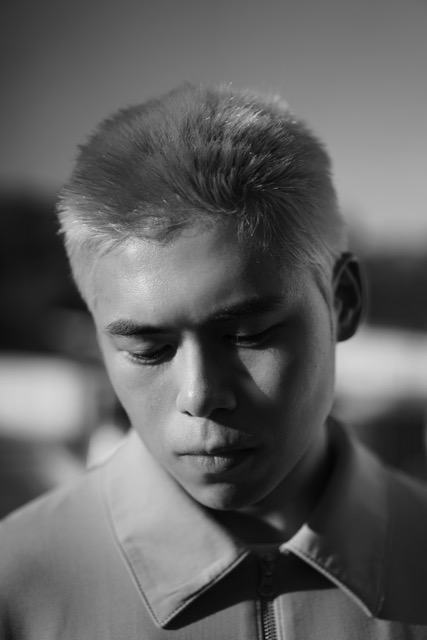
When Brandon Li first came to PaperBoy, he was not simply being asked to assemble a fantasy short. The film, directed by Saulius Baradinskas, follows Luke, a dyslexic comic artist who retreats into an imaginative Paper World of his childhood as he confronts the painful memories surrounding his dying mother. The story moves between the physical world and a fantastical universe constructed from paper, but its emotional center remains firmly rooted in Luke. As the film’s editor, that distinction was crucial for Mr. Li. The Paper World could easily have become an opportunity for visual spectacle. Instead, Brandon approached the material from Luke’s subjective experience, using pacing, transitions, shot selection and scene structure to make the fantasy world feel like an extension of the character’s emotional life. His challenge was not simply to make the Paper World convincing, but to make the audience understand why Luke needs it. “PaperBoy is a fantasy story with a highly imaginative world,” Li explains, “but at its core it is also a very personal story about its protagonist.” This approach became the North Star of his edit.
Finding the Film in the Edit
Brandon joined this project after conversations with Baradinskas, an award-winning European director whose previous work had been selected by the Venice International Film Festival. Baradinskas had already seen three films Li edited during his first year at AFI (Factory Boy, Fisher vs. Hayes and Nosebleed) and had developed an understanding of his approach. What particularly interested the director was Brandon’s ability to make strong creative choices without losing sight of the character. Li did not see editing as an opportunity to display technical virtuosity for its own sake. His approach was to understand what a character was experiencing and allow that emotional logic to guide the edit. That made him a particularly natural collaborator for PaperBoy. The film required an editor who could embrace its fantasy elements without allowing those elements to overwhelm the story. Li was involved from the script and shot-list development through production and post-production. That early involvement gave him something an editor does not always have: an understanding not only of what the director wanted the film to look like, but what he wanted the audience to feel.
Once the footage arrived, the two were willing to question virtually everything. They removed shots. They restructured sequences. They experimented with pacing and transitions. Ideas developed during production were reconsidered in post. Rather than treating the script and shot list as instructions that could no longer be challenged, Li and Baradinskas treated the edit as a place where the film could discover what it actually needed. It’s a philosophy that would prove especially important in the film’s final hospital scene.
The Paper World
The central challenge of PaperBoy was the Paper World itself. Luke enters a fantastical universe created from paper, where the imaginative landscapes of childhood expand into paper cities and fantastical creatures. But the world is not simply an escape into whimsy. As Luke moves through it, memories of his childhood and his complicated relationship with his mother begin to surface. The fantasy gradually reveals the pain underneath it. Li was concerned that the sequence could become a collection of beautiful images rather than an emotional experience. “There was a great deal of material that could potentially be included in this section,” he says. His task was to determine which moments were necessary to communicate Luke’s childhood and emotional relationship with his mother and which could disappear without damaging the audience’s understanding.
The solution was to build the sequence around Luke’s emotional experience rather than chronology. That distinction changes the way the audience experiences the Paper World. Rather than simply moving from one event to another, the edit allows the audience to feel the fluctuations of Luke’s memories. Some moments are given room to register; others move more quickly. The rhythm is continually responding to the character. The fantasy world therefore begins to feel subjective. We are not simply watching Luke walk through a strange environment. We are entering the world as Luke experiences it, with the sometimes erratic cadence that emotions can impose. For Li, this was essential because the Paper World is simultaneously a physical fantasy environment and an external representation of Luke’s inner life. The edit must preserve both realities at once.
Crossing the Boundary
One of the film’s most important transitions occurs when Luke first discovers the Paper World. After returning from the hospital emotionally unsettled, Luke tries to draw but cannot concentrate. He accidentally pushes his pen through the paper, creating a small hole. The pen disappears. When Luke looks through the opening, he sees another world. Eventually, he closes his eyes, takes a breath and crosses through. The scene could have been edited as an abrupt transition: ordinary world, magical hole, fantasy world. Instead, Brandon wanted the audience to experience the discovery alongside Luke. That meant resisting the temptation to rush. The mystery needed time to unfold. Luke’s curiosity and confusion needed to become part of the audience’s experience. The moment when he closes his eyes and breathes before entering the Paper World was especially important because it transforms the transition from a visual effect into an emotional decision. Luke is not merely transported somewhere. He chooses to enter.
That also establishes the Paper World as something more psychologically meaningful than a conventional fantasy setting. Luke has just left the hospital carrying the emotional weight of his relationship with his mother. The world he discovers is connected to his memories, his imagination and the emotional refuge he developed during childhood. The pacing of the edit allows the audience to feel that connection. “We were entering the Paper World together with Luke,” Li says of his goal. The edit therefore becomes a bridge between the real and imagined worlds.
When the Fantasy Becomes Reality
The deeper Luke travels into his Paper World, the less secure the separation between fantasy and reality becomes. This ambiguity is central to the film. The Paper World is fantastical but the emotions Luke experiences there are not. His memories of childhood, his relationship with his mother and the pain he has carried into adulthood remain completely real. Brandon’s editing has to maintain that emotional continuity. The audience needs to be able to enjoy the strange and theatrical qualities of the Paper World while understanding that every movement through it is also movement through Luke’s emotional history. That is why pacing becomes so important. If the fantasy moves too quickly, the audience may admire it without feeling it. If it moves too slowly, the emotional journey risks becoming repetitive. Li describes the challenge as finding enough breathing room for the audience to experience Luke’s emotional fluctuations without allowing the sequence to lose momentum. The resulting rhythm is not simply a rhythm of images. It is a rhythm of memory.
The Final Encounter
Luke’s journey through the Paper World eventually brings him back to the reality he has been avoiding: his dying mother. The original scripted approach to the final hospital encounter changed substantially during editing. Li and Baradinskas recognized that the scene could communicate something more powerful by resisting a conventional confrontation. Instead of relying on dialogue to explain everything that remained unresolved between Luke and his mother, the final encounter became largely silent. They look at one another. What has been left unsaid becomes part of the scene’s emotional meaning. For an editor concerned with character perspective, this is an especially revealing choice. The film does not need to tell the audience precisely what Luke has decided or what his mother feels. The emotional information exists in the space between them. The silence becomes active. Luke has spent much of the film retreating into imagination to avoid the pain of reality. By the end, he no longer needs the Paper World to protect him from that encounter. The fantasy has brought him back to the place he was trying to escape. And the edit allows that return to feel earned.
Editing as Discovery
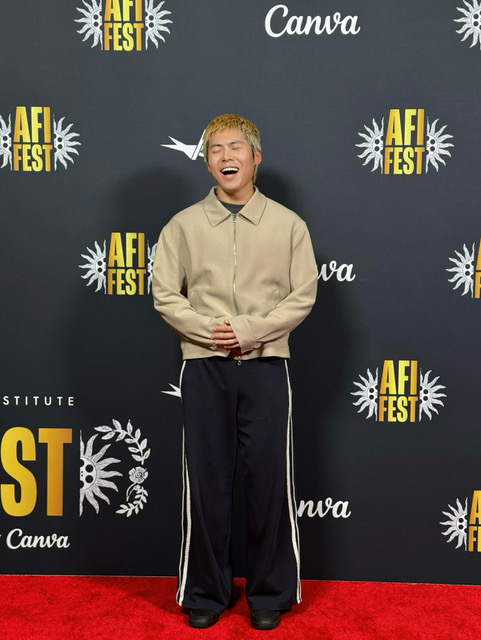
Brandon’s work on PaperBoy ultimately reflects a philosophy he has brought to his editing across different kinds of films: the editor’s responsibility is not simply to assemble what was planned. It is to discover what the film wants to become. That meant questioning the script, testing different structures, removing material that no longer served the story and allowing the emotional rhythm of the character to determine the pace. The fantasy elements of PaperBoy made the process particularly demanding because the film had to operate on two levels at once. The Paper World needed to feel imaginative and visually distinctive but it could never become disconnected from Luke’s emotional reality. Li’s editing keeps those two worlds in conversation. The real world gives the Paper World its emotional stakes. The Paper World gives Luke a way to confront what the real world has made difficult to face. The edit is the mechanism that allows the audience to move between them. PaperBoy was completed in 2025 and screened at AFI FEST 2025 as part of the AFI Conservatory Showcase. The film’s fantasy may be made of paper but the emotions are real. Brandon Li’s edit made sure the audience never lost sight of that.

