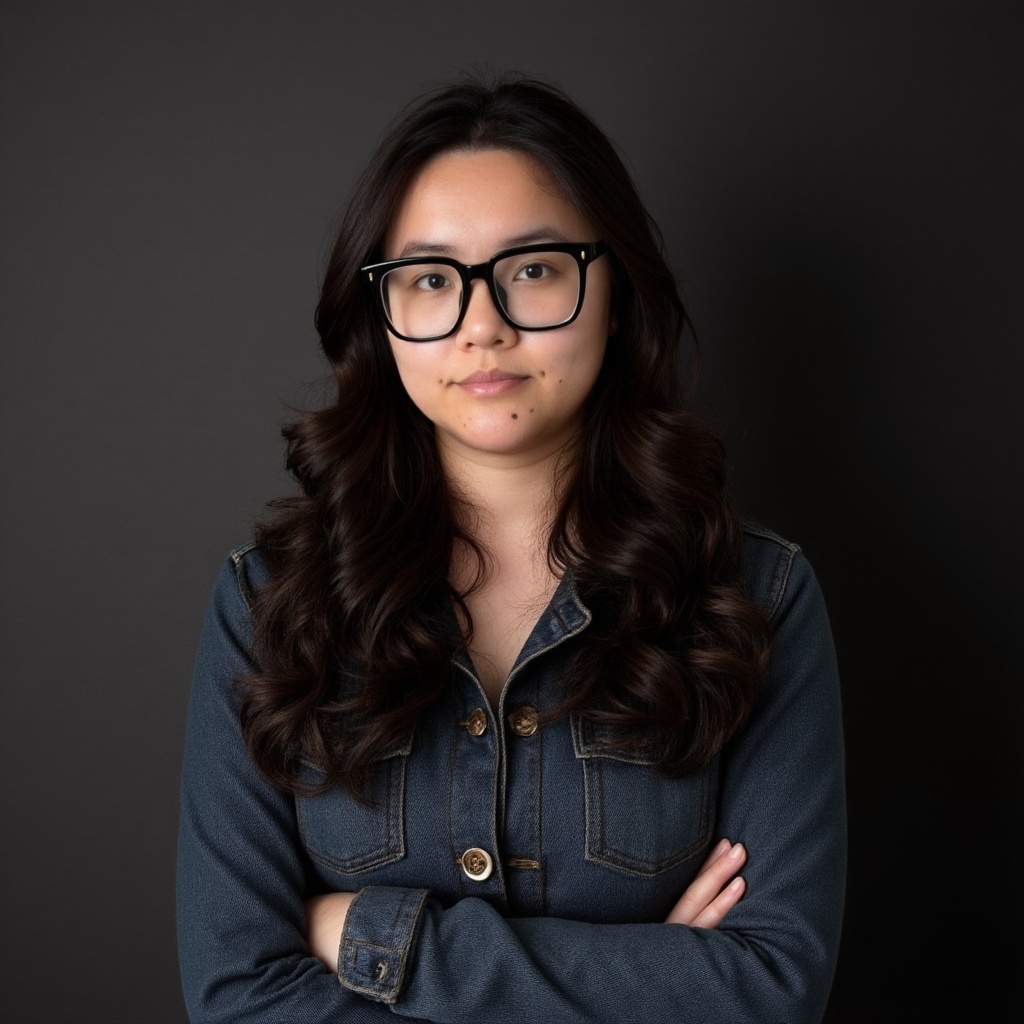
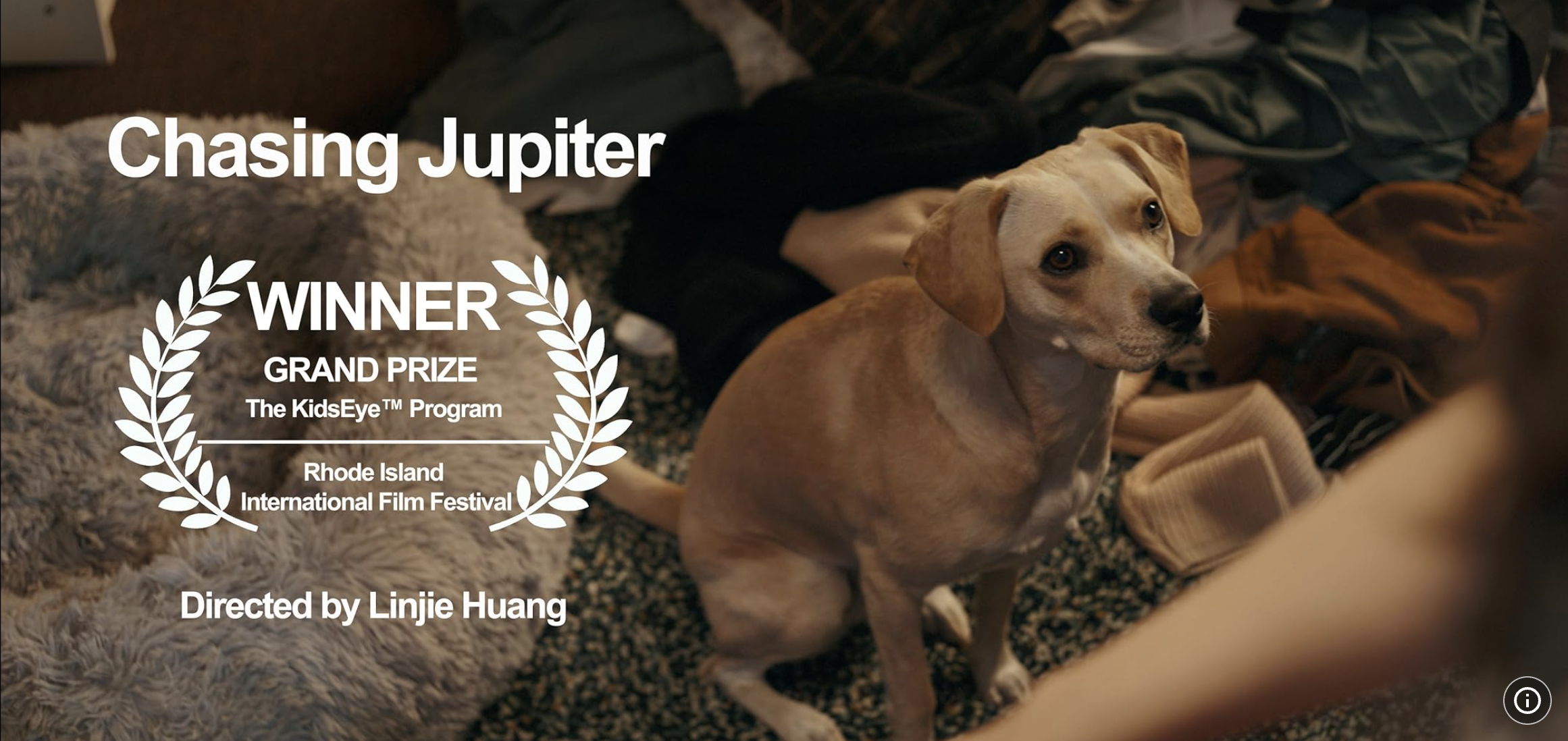
Film is a medium which allows us to share an experience. This might take place at any point in time and with any set of circumstances but at its essence, film is about a unified sharing of an experience. There is no closer relationship in this process of filmmaking than that of director and editor. The ability of an audience to perceive the emotional intent of a story resides in this collaboration. Director Linjie Huang refers to editor April Liu, with whom she collaborated on the film Chasing Jupiter, as truly extraordinary in her abilities declaring, “April has a gift for shaping stories with heart and intention. She doesn’t just cut images together—she reveals layers of emotion and meaning that deepen the audience’s experience. She approaches editing with empathy, patience, and a strong sense of intuition, which makes every project with her feel alive and deeply resonant. April brings out the best in the films she touches, and I feel fortunate to have partnered with her.” There’s an abundance of evidence which confirms this in Chasing Jupiter. Though it might be the simple story of a woman and her dog, this film reminds us that a commitment of love can be too often taken for granted in today’s world. This story prompts us to be the better version of ourselves.
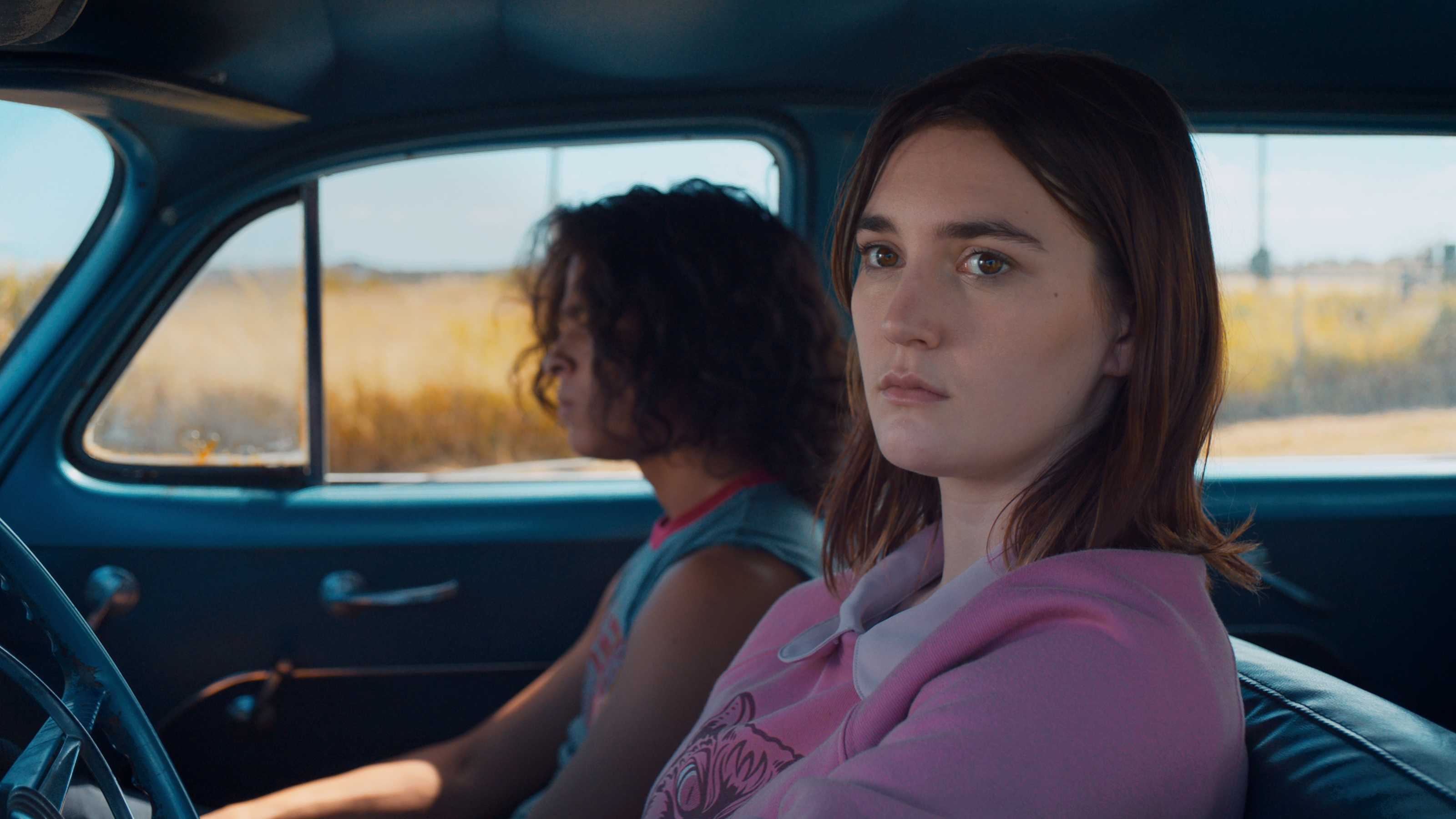
Tara (actress Flora Hwang), one of the film’s two main characters, is a proxy for the audience. She is hyper-focused on astrophotography to a point that borders on obsession. The fixation she has is communicated through tight cuts of hands adjusting knobs, the scratching of pencil on paper, and the sound of her breath. This editing tactic establishes a sense of anxious anticipation. While her drive might be admirable, Tara’s tunnel vision implies that she is perhaps more concerned with the process than the beauty of what surrounds her with a myopic perspective. The catalyst for the unravelling of Tara’s plan is found in the vehicle of her dog Cosmo who knocks over her tripod. Cosmo is eager and happy while Tara is visibly unhappy and frustrated with the situation. Comedy and tension are siblings in this moment, with jump cuts between Tara’s face and the toppling tripod establishing a sense of slapstick comedy. As this escalates, Tara breaks down into tears while the camera lingers on her. Her despondency is unvarnished as she sits amidst the destruction. In the most endearing moment of this story, Tara appears to have the revelation that life and the world are to some extent out of our control, revealing the importance of recognizing the love that is offered freely to us. As she strokes Cosmo’s fur, she lifts her camera up to begin once again, but with a more enlightened approach. The juxtaposition of the cosmic and the personal are potent in this scene. Tara’s newfound acceptance that life’s beauty lies in shared imperfection speaks profoundly.
Only in contemplating “what could have been” with Chasing Jupiter can one come to an understanding of how exceptionally skilled Ms. Liu’s editing actually is. “A woman’s photography is interrupted by her dog”, this single sentence might generalize the plot of the film but it communicates no sense of emotional depth. Through discussions with Linjie Huang and her own perception of the footage captured, April has sculpted the type of cathartic journey that borders on spiritual in its message. The skill of any great artist lies not in spectacle but in the ability to reach into different people from different walks of life and remind them of the humanity that we all share in our emotions. Chasing Jupiter may only be a story about a woman and her dog but the manner in which it is told makes it a primer for how to be a human being who lives for the present and appreciates the good things rather than focusing on impediments. What April Liu’s editing has achieved in this capacity is astounding. Audiences and filmmakers alike agree with this as Chasing Jupiter received the Grand Prize at the prestigious Flickers’ Rhode Island International Film Festival (an Oscar and BAFTA qualifying film festival) in addition to being an official selection of numerous others including Dances With Films and the Philadelphia Asian American Film Festival.
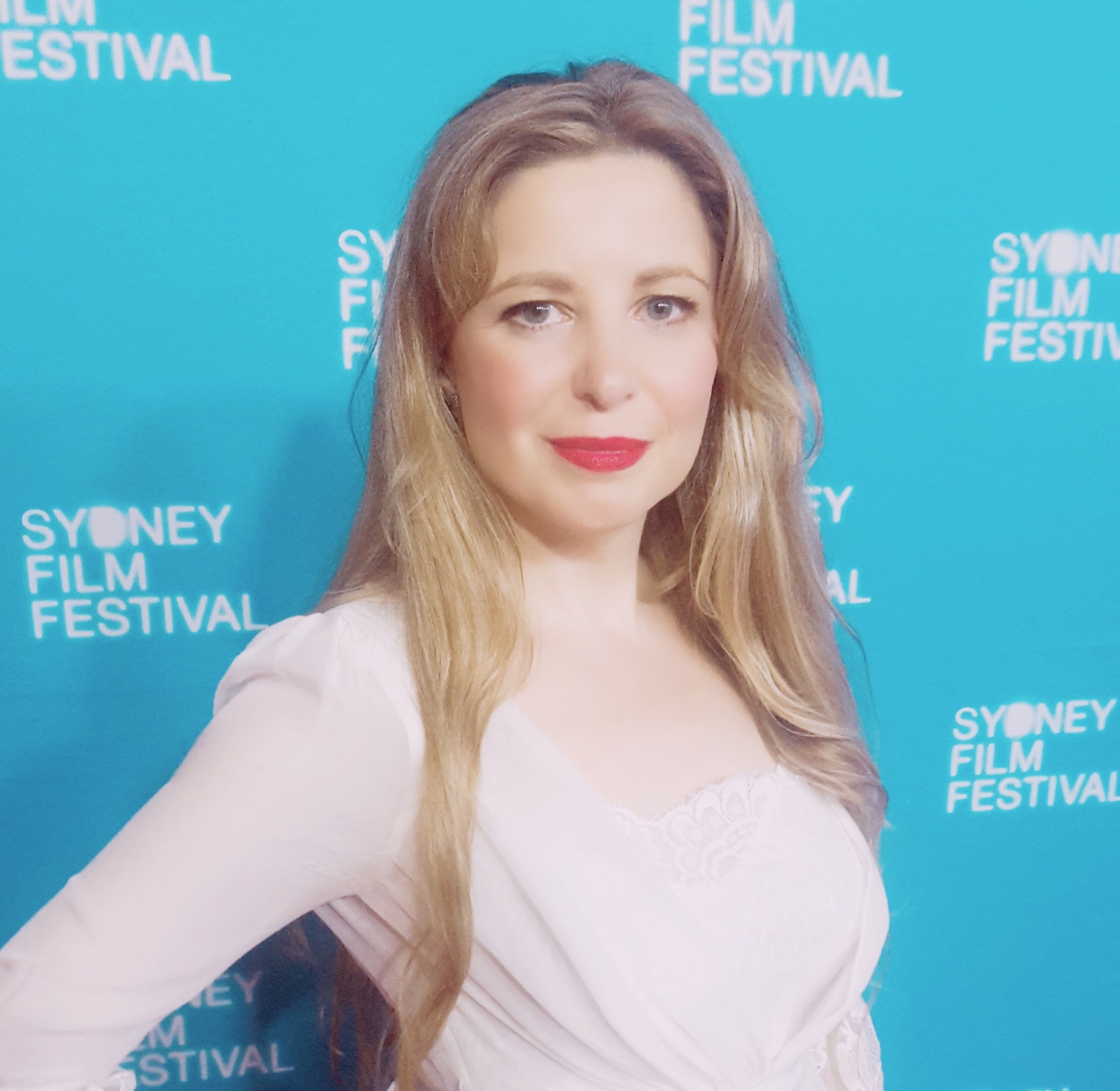
Australia has long been a breeding ground for exceptional talent, producing iconic actors who have left an indelible mark on cinema worldwide. Among these remarkable individuals is Suzanne Gullabovska, a rising star set to make her mark in Hollywood with two exciting upcoming feature films. While she has already garnered acclaim in her homeland, Suzanne is quickly becoming a name to watch on the international stage.
Having shared the screen with Oscar winner Cate Blanchett and SAG Award winner Hugo Weaving in the acclaimed miniseries Bordertown, Suzanne’s impressive body of work reflects her undeniable talent. Her early experiences in lead roles in classic plays by Shakespeare and Chekhov paved the way for her transition to film, where her charisma and skill have truly shone.
Her journey into feature films began with a standout performance in Katusha, where she portrayed Maria Medun, a schoolteacher turned soldier during World War II. Suzanne brought a profound sense of vulnerability to the role, capturing the essence of a woman who joins the army to find her husband and ultimately faces the harsh realities of war. Critics and audiences alike were captivated by her magnetic and emotionally charged performance, which paid homage to the bravery of real soldiers.
In stark contrast, Suzanne showcased her versatility in the comedy film Death in the Afternoon. As Grace, the lead character who maintains her poise amid escalating tensions at a funeral, Suzanne demonstrated her ability to balance humor and grace. The film’s recognition as an Official Selection at prestigious festivals such as the South African International Film Festival and the Ireland International Film Festival helped introduce her to a broader audience.
Looking ahead, Suzanne is poised to take center stage in two highly anticipated feature films. Currently in pre-production, Hemispheres will see her in the lead role of Genevieve, a character crafted specifically for her extraordinary talent. The film is described as a romantic time travel tale about a ballet dancer who relocates from Australia to Los Angeles in search of a fresh start. Suzanne shares her enthusiasm for the project, stating, “I’m a romantic at heart and am looking forward to bringing the role of Genevieve to life in this wonderful and original story that celebrates the beauty of love transcending time. I also love that I get to play a ballet dancer, having studied ballet for many years when I was much younger.”
In addition to Hemispheres, Suzanne will also star as Freya in Oil of Freya, a gripping drama/thriller that promises to showcase her range as an actress. Reflecting on her journey to Hollywood, Suzanne expresses her gratitude and excitement: “Moving to Hollywood to pursue acting has always been my dream. I have always known that I want to be an actress and grew up enchanted by classic films like Rear Window starring Grace Kelly, among many others. I believe movies possess a kind of magic, the ability to evoke wonder, and as an actress, I love the opportunity to create that for others.”
With her impressive talent and diverse roles, Suzanne Gullabovska is a name to watch in the world of film. As she embarks on this exciting chapter of her career.
A truly exceptional actor is distinguished by their ability to immerse themselves completely in character arcs, turning personal experiences into layered performances that strike a chord with audiences worldwide. Australian actress Emily Mutimer is recognised for her grounded approach to character development, taking on roles that explore emotional depth and complex personal dynamics.
“I pick roles that have meaning to them and I find parts of myself in each role,” Mutimer shares. “I empathise with the characters I read, and become excited to tell the story using what I know and collaborating with all different types of creators, writers and directors.”
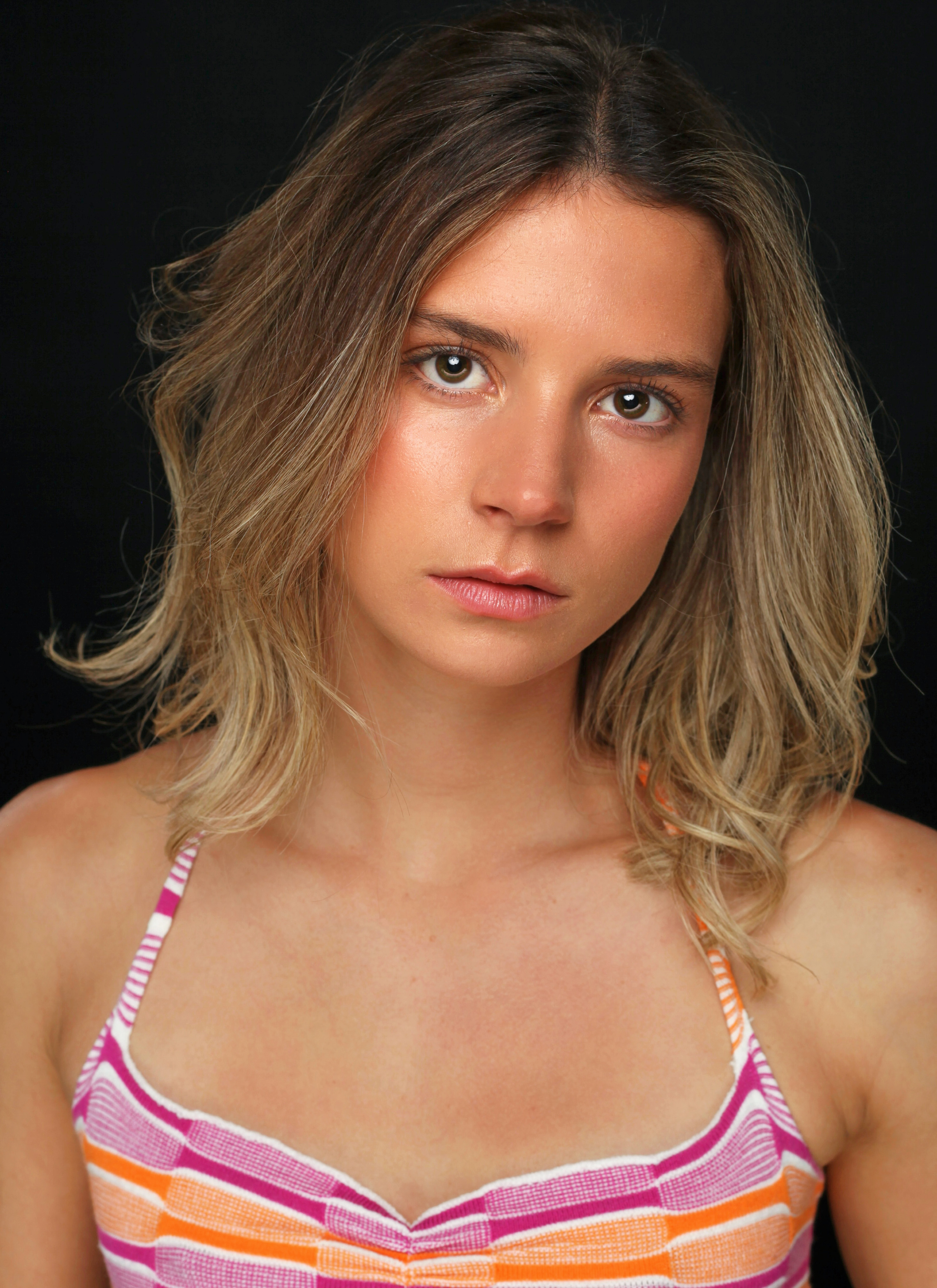
Emily Mutimer shot by Isabelle Ohse
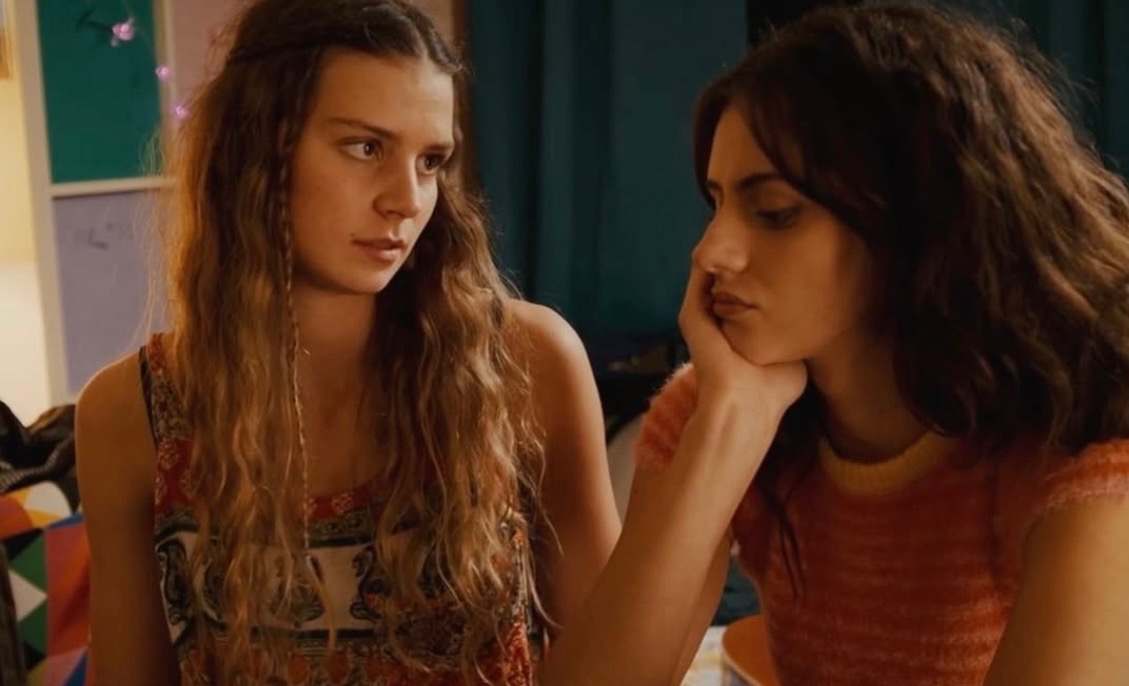
One standout role in particular was Mutimer’s compelling portrayal of Astrid in the groundbreaking award-winning drama “Flunk,” an Australian series that explores the lives of LGBTQ+ high school students. The critically acclaimed series, which can be streamed via global giants Amazon, Tubi and Vimeo, became a milestone in queer representation, resonating with viewers and providing an honest, heartfelt look into modern high school relationships.
Mutimer’s unwavering talent shone through during her 2019 chemistry read, leaving a lasting impression on “Flunk” writer, producer, and director Ric Forster (“Lost & Found You,” “The Summer Before Forever”). Her audition perfectly captured the essence of Astrid, a fundamental character who is both deeply emotional and strategically insightful. Forster quickly recognised Mutimer’s rare ability to portray the character’s emotional range, casting her in a pivotal role that would put her on the map as an actress.
“Astrid and myself are both similar in the way that we share empathy for other people,” explains Mutimer. “I love being able to live this out in a character, it feels very freeing to play someone who knows this about herself and isn’t caught up in things that don’t serve her.”
Mutimer’s skillful depiction brought Astrid’s intricate inner world to life, elevating her as a central figure whose journey from heartbreak to self-assurance unfolds over the course of the series.
Madeline Sunshine (left) and Emily Mutimer (right) in season 5 of “Flunk”
Emily Mutimer (left) and Holly Monks (right) on set of “Flunk” Season 5
After nailing Astrid’s introduction in season 3, Mutimer flawlessly transforms her into a key character who provides emotional support to her friends while navigating her own changing relationships. By season 5, Astrid’s personal growth is remarkable—emerging from the depths of heartbreak to a place of confident self-acceptance.
“Playing a character over three years has been more of a rewarding than a challenging experience. My own mental barrier and ideas were challenging me, but over the course of time I realised the character also grows and changes which was fun to play with,” Mutimer explains. “I found myself being able to drop into the character easier, it made me take more risks with Astrid which felt freeing and fun to explore.”
Riding on its immense popularity, the award-winning “Flunk” franchise expanded into six feature-length film spin-offs, including “Flunk: After School” (2022) and “The Sleepover” (2021), with the latter gaining significant recognition in Tubi’s top-ten LGBTQ films in 2023.
The feature films provided Mutimer the opportunity to further explore Astrid’s identity, driving her character evolution and placing her personal growth at the forefront. Through these projects, Mutimer not only shaped Astrid’s range, but also nurtured her artistic confidence and honed her professional skills as an actress—qualities that clearly distinguish her from others.
Emily Mutimer (left) and Liv Rian (right) in the Flunk film “The Sleepover”
The feature films provided Mutimer the opportunity to further explore Astrid’s identity, driving her character evolution and placing her personal growth at the forefront. Through these projects, Mutimer not only shaped Astrid’s range, but also nurtured her artistic confidence and honed her professional skills as an actress—qualities that clearly distinguish her from others.
“Playing Astrid has helped me gain confidence as an actress. I’ve been able to bring new ideas to my character and sustain the longevity of it,” shares Mutimer. “It’s taught me a lot about being on set and what it means to work hard and be prepared.. it’s given me permission to take a risk or make a choice and be confident in that choice.”
With its raw take on relationships, the fan-favourite “Flunk” franchise resonates deeply with audiences across the globe, including in the USA, Brazil, Europe, and South Africa, creating moments that feel like reflections of their own lives. Mutimer’s magnetic performance as Astrid has not only fueled this connection, but continues to draw fans in episode after episode.
The long-running series also sparked a passionate fandom, inspiring fan art, re-edited videos, and Tumblr communities centered around the show, with Astrid at the heart of this engagement highlighting the strong emotional bond viewers share with the beloved queer characters.
Since its debut in 2018, “Flunk” has become a major cultural milestone, racking up an impressive 200 million views on its official YouTube channel. With its massive reach, the series has set a new benchmark for LGBTQ+ storytelling, showcasing the creative potential of online narratives aimed at younger queer audiences.
“The story isn’t necessarily about people coming out and needing to feel accepted, it’s in a world where everybody is accepted for who they are, and being a lesbian is not a defining factor at all, which is something I love about the series,” says Mutimer. ” I think it’s important to share these stories because it allows audience members to feel comfortable and confident about who they are regardless of how they sexually identify.”
In an open conversation with Australian media platform FilmInk, “Flunk” executive producer Melanie Rowland (“Significant Others”) offered a candid glimpse into the series’ creative journey, sharing: “There’s a huge fanbase for ‘Flunk’ in the US, as well as the UK, Asia and South America. It’s been amazing to see our series, produced by a small team in Melbourne, gain so much traction across the globe. We’re thrilled that the show will now reach an even bigger audience in Europe”.
When asked about working with Mutimer on “Flunk,” Rowland adds: “Emily’s talent is evident in her strong work ethic and dedication to her craft. She effectively interprets and conveys complex emotions, consistently delivering high-quality performances.”
Mutimer’s remarkable talent as an actress lies in her ability to fully embody each character, bringing them to life with richness and authenticity. Her tremendous success as Astrid has propelled her to stardom, positioning Mutimer as a leading talent in several upcoming roles, including the series “Queens of the Desert” alongside Sonia Rockwell, best known for her role in the 2022 Emmy-Award winning series “Pam & Tommy.”
Drawing upon her own experiences, Emily Mutimer crafts performances that feel real and compelling, creating moments that linger in viewers’ minds long after the final credits roll. With her undeniable acting prowess, there’s absolutely no doubt she will continue to captivate audiences worldwide in the years to come.
For French photographer and director Chris Roman, the world of beauty and fashion is an ever-evolving and exciting industry, full of opportunities and possibilities. Over the years, Chris Roman has worked on high-profile luxury campaigns featuring A-list celebrities such as Emily Ratajkowski, Nina Dobrev, Lee Hanee, and Mayumi Sada, as well as Lily Collins, Ashley Park, and Camille Razat from the hit series Emily in Paris. His work has taken him around the globe, giving him unique insight into how the world of fashion works, and what it takes to create a magnificent and lasting campaign.
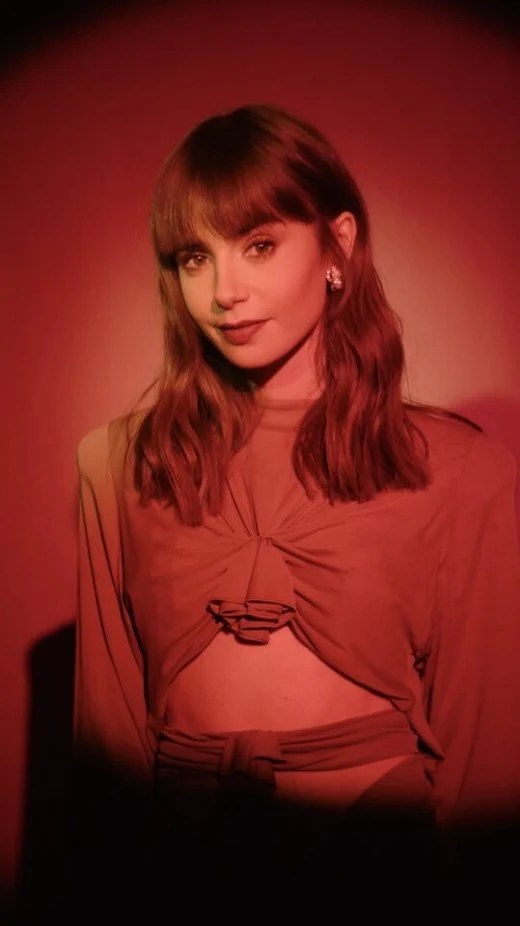
Actress Lily Collins from “Emily in Paris” shot by Chris Roman
One of Chris’ most recent projects took him to Sofia, Bulgaria where he shot the digital stills and video for the new Davidoff perfume campaign, which is set for international release later this year. Featuring Golden Globe nominee Charles Melton (Riverdale, The Sun Is Also a Star), the campaign was shot in a massive studio outside of the city where the team came together to create an environment that feels otherworldly.
“We had to build everything from scratch,” recalls Chris. “Thanks to everyone involved, the magic happened. This is what I like most about big projects, the way the vision of the creatives and the client’s ambitions lead us to enter into incredible universes, like another dimension.”
Chris developed a love for photography at a young age, quickly realising during a trip through Vietnam just how powerful a tool a camera can be for capturing fleeting moments, emotions, and the essence of a place in a single frame.
“I will always remember being awake on a train passing through the Vietnamese countryside by the sunrise on the rice fields. Since then, I’ve been obsessed with light and colors,” he explains. “After high school, I studied photography in Montpellier for a year and in Toulouse for another year, while shooting parties and events for a local magazine as a student job. I dreamt about fashion, but I needed to learn better English, so I decided to move to London for a year.”
While in London, Chris immersed himself in the world of professional photography, starting as a studio manager. He was responsible for prepping shoots, assisting photographers on set, and refining images in post-production—an experience that gave him a well-rounded understanding of the craft. These formative years allowed him to hone his skills as a fashion photographer, but it wasn’t long before an opportunity arose to expand into directing. After his time in London, Chris returned to Paris to be at the heart of the fashion industry. While shooting for The Sartorialist, a well-known New York fashion blog, as well as and Garance Doré during fashion weeks and campaigns, he picked up a video camera and began capturing behind-the-scenes content—a move that would soon shape the next phase of his career.
“I edited my first videos at home and showed them to my boss the following day. She was quite impressed and she quickly posted them online. After that, everything went fast. The Sartorialist called me to come to NY to shoot BTS for Vogue Italy, then BTS in Milan for an Oviesse campaign… I travelled the world with them for one year filming fashion weeks and campaigns,” he recalls.
The transition from photography to directing unlocked new creative avenues for Chris, allowing him to collaborate with some of the most prestigious brands in the fashion industry. After five years with Vogue Paris, where he was responsible for shooting all video content and worked alongside the biggest names in fashion—both on set and backstage at fashion weeks in New York, London, Milan, and Paris—Chris established himself as a sought-after director. His portfolio quickly expanded to include luxury houses such as Dior, Chanel, Givenchy, Longchamp, Lancôme, Tommy Hilfiger, Louis Vuitton, Hermès, and Burberry.
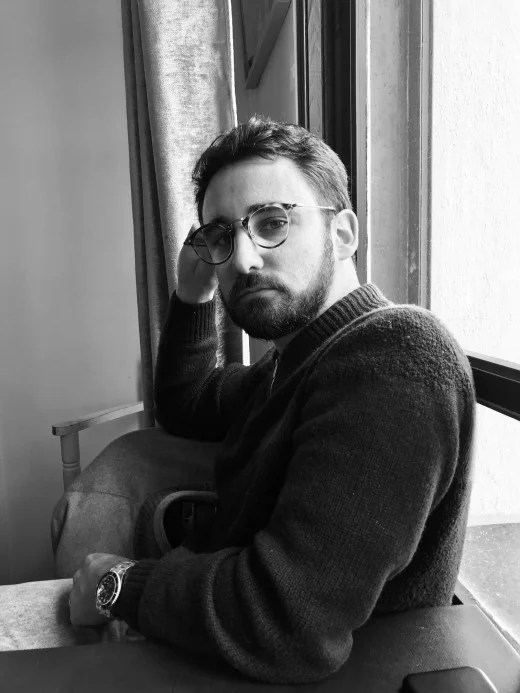
Photographer and director Chris Roman
When approaching a project, Chris begins by understanding and translating the brand’s DNA, identifying the product’s unique benefits and how it stands out from competitors, all while bringing his own creative vision to the campaign. He listens closely to the client’s needs, translates them into a distinctive creative direction, and then determines how to execute the vision within the constraints of budget and deadlines.
Chris’ exposure to working with A-list celebrities and talented crews has made directing fashion shoots an incredibly fulfilling leap. It has also granted him the opportunity to shoot in a vast range of locations, from the most isolated deserts of Namibia to the fashion capitals of the world, such as Paris and Madrid. Whether directing on his own, camera in hand in locations like Namibia, Malaysia, London, and Paris, or leading large-scale productions with 30 to 40 crew members on high-pressure shoots in Madrid, Moscow, Cape Town, Prague, Tokyo, and Seoul, Chris thrives on the challenge and energy of the work.
In 2019, Chris embarked on what would become one of his most exciting and fulfilling ventures—founding his own creative agency. After meeting Vogue Paris beauty and fashion journalist Theodora Aspart, the two realized they shared a deep understanding of the industry and a vision for blending words, imagery, and film into compelling narratives. Their complementary expertise led to the creation of Atelier Roman, a boutique agency specializing in high-end fashion and beauty content.
Chris and Theodora were searching for similar clients at the time, so launching a full-service creative agency was a natural next step. From initial concept development and storytelling to production, post-production, and campaign releases, Atelier Roman offers a seamless, end-to-end approach. Over the years, Atelier Roman has collaborated with some of the most prominent names in fashion and beauty, including Dior, Givenchy, Gérard Darel, and Maison Francis Kurkdjian, producing visually stunning campaigns that balance artistic vision with brand identity.
Still of Mayumi Sada in the “Dior Beauty Lessons” video Chris Roman shot for Dior’s Capture Totale campaign
One campaign that stands out as a career highlight is the digital campaign they created through Atelier Roman for Dior Capture Totale in late 2019 and early 2020, just before the pandemic. Dior Beauty placed their trust in him to handle every aspect of the campaign—production, direction, video and still photography, and post-production. The project was an ambitious global undertaking, featuring one celebrity per country, with shoots spanning the U.S., U.K., Paris, Seoul, Tokyo, and China. The campaign was a massive success, reinforcing Chris’ ability to bring a seamless creative vision to an international stage.
Yet, despite his success in directing, Chris remains deeply connected to his roots in photography, recognizing how it continues to shape his artistic approach. “Photography is all about framing and lighting,” he explains. “You learn how to compose an image and tell a story depending on the camera, the lenses, and how you use them.”
His expertise behind the lens has not only secured him directing opportunities but has also made him a sought-after talent in an industry increasingly demanding versatility. “Most of my work now is directing,” Chris notes, “but clients often look for creatives who can handle both stills and motion simultaneously.”
Chris continues to work in both photography and directing but now spends most of his time overseeing entire productions. Through years of dedication to the industry, he has built an exceptional reputation that is respected by his peers, clients, and collaborators alike. Whether fine-tuning edits in the studio or directing shoots in remote locations, Chris remains a master of his craft, bringing a distinct creative vision to every project.
Music producer, engineer, and recording artist Tessa Ying, whose musical passion ignited at the tender age of 4, is revolutionizing the landscape of music education by reimagining both its curriculums and delivery methods.
A talented Boston-based Singaporean musician who has led notable music education projects across the globe, Ying is well known for creating in-the-box productions, arranging, playing, producing, and recording music education content that would otherwise be tackled by a large group of musicians.
This gives Ying an edge over other creators, as she can produce numerous tracks without worrying about the cost of studio booking or hiring musicians. It also increases the speed of her production and flexibility in accommodating her client’s needs.
But how are the contributions of this Jill of all trades re-shaping the music education industry?
“I grew up with a fast paced, achievement-oriented approach to learning music,” recalls Ying. “It was not until I moved to the US that I really learned to appreciate the process of learning, of developing students’ metacognition and viewing music education from a holistic perspective.”
Through her personal learning journey Ying developed an insightful understanding of what methods of learning are most supportive to others, specifically when it comes to music– insights she has since contributed to “Kinder Notes,” a top music education curriculum, and “KB SAX,” a leading sheet music publisher and creator of saxophone lesson tutorials.
Producer Tessa Ying (Photo by Mountain Leaf Photography)
Ying has been a musician for most of her life. She has been teaching piano for the past ten years and has been playing for over 20. Her original releases as a solo-artist have included hits such as “Baby Bear’s Idea” and “Be on My Own.” As a producer who runs her own production company, Tessa Ying Music, which she founded in 2018, she has worked with standout artists including the likes of singer-songwriters Elisabeth Waters and Angelique World. Their collaborations include Waters’ popular tracks “Blue” and “Pet Names,” and World’s live shows “Unplugged” and “The Voice Within.”
In addition, Ying’s recent projects “Hold,” which she co-produced with Grammy Award nominee Abhi Acharya, and “Dreaming in Flight ” with Hollywood composer Tomasso Annoni, have been released to critical acclaim.
In 2020 Ying was approached by award-winning pianist Rosy Chua, who is the principal of the prestigious Prelude Music Studio in Singapore, to work on a new music education project, “Kinder Notes.” Ying, who taught at Prelude 12 years prior, had previously worked as a consultant helping Chua to compose her famous works “Kaleidoscope” and “Rhapsody.” These works have been played all over the world, from Carnegie Hall in the United States and the Esplanade in Singapore to the SCECGS Redlands Piano Competition in Australia.
“Kinder Notes,” Chua’s music teaching curriculum series, was designed for young preschool through elementary school aged children, and Ying was the perfect music educator and producer to join on the project.
Complete with supplementary materials and tracks, “the curriculum includes three modules based on the developmental stages of various age groups. Since its release, the “Kinder Notes” curriculum has transformed the way music education is being taught in preschool and kindergarten in the country and has been adopted by schools across Singapore. It is quickly becoming the number one child-centered music education program available.
“When I first started teaching at Prelude 12 years ago, that was when I started working with children. Through this experience, I knew I wanted to work on this project because of our history and because I love working with children,” said Ying. “It is something magical when you connect with a child and make a positive, lasting impact on them.”
“I also believe strongly in the importance of music education especially in early childhood,” she continued. “There is strong evidence that effective music education supports brain development in many ways. I was excited to use my music production skills to support these children so they can become the best version of themselves.”
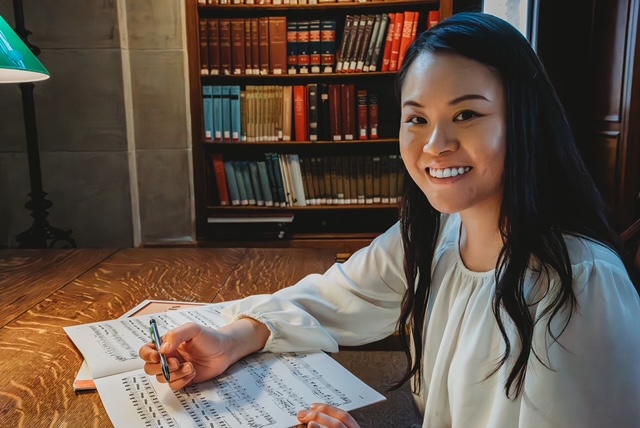
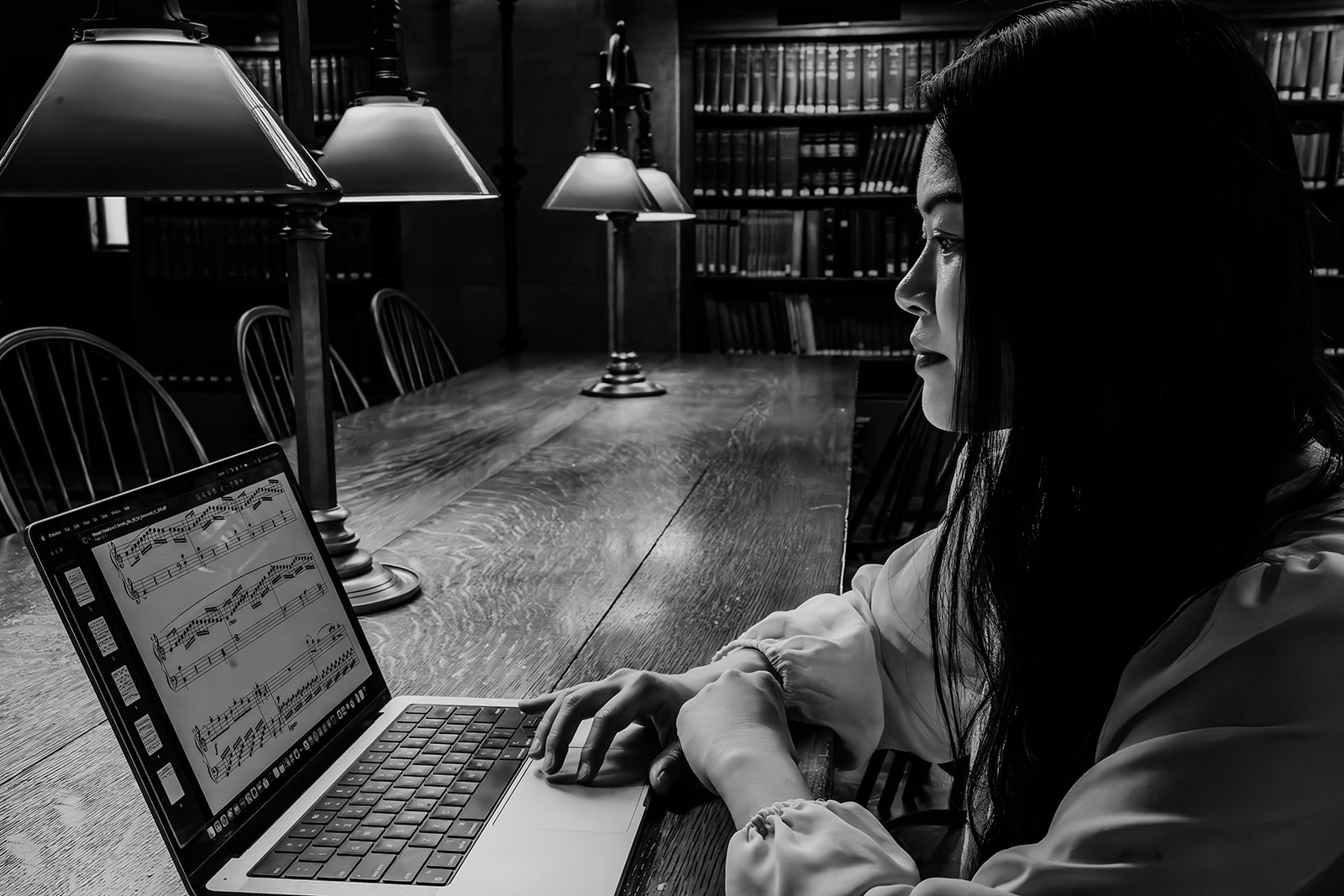
Producer Tessa Ying creating sheet music (Photo by Mountain Leaf Photography)
Ying was brought on the project to consult on its development and produce the musical tracks needed for classroom teachers to utilize the materials in the syllabus. The design process of “Kinder Notes” included first choosing and writing educationally relevant pieces that follow a specifically designed set of steps, such as introducing a new note at the right time and in the right way. They then needed to choose the purpose of each activity to be introduced, for example training the ear or sight-reading notes.
Ying would then produce a track for each activity using her in-the-box production techniques. The tracks were designed to be highly interactive, so children will want to sing and dance along to the music, and they include plenty of repetition to reinforce each concept.
“Without the music recordings Tessa created for the “Kinder Notes” curriculum, we would not be able to complete the activities in the course. There’s a lot of singing and movement activities, and the recordings are designed to help to reinforce the children’s solfège and pitch training. It also teaches them to keep on the beat,” explained Rosy Chua while discussing how “Kinder Notes” tailors music education to fit best practices for engaging younger children.
“By using Tessa’s recordings that she thoughtfully arranged and recorded using appropriate pedagogies for group activities, my students reap the benefits of group learning,” she continued. “This is so important at their age because it teaches them teamwork and helps to build their social skills. I am a firm believer of training these skills at a young age because it is so important for laying the musical foundation.”
Innovating music education content delivery online
Another example of how Ying is reshaping the industry is through her work with leading sheet music publisher and saxophone lesson video tutorial creator KB Sax Lessons. This partnership cemented her place as an innovative music education content creator, particularly in the online space, as she married traditional best practices with technological advancements.
Founded by professional saxophonist Kevin Busse, KB Sax Lessons began as a music transcription and publishing company. In 2016 they brought Ying in to help them elevate the quality of their product by having her consult on the creation of videos, tutorials, and backing tracks for their audiences to play along to.
With Ying’s help, they grew to become number three on SheetMusicPlus’s “Top Publishers for Digital Sheet Music Downloads” list in 2019, outperforming popular publishers like Alfred Music. As of 2023, KB Sax Lessons continues to hold its place as one of the “Top 99 publishers” on SheetMusicPlus.com.
Thanks to Ying’s guidance, which advised them to offer a wide variety of notated transcriptions, accompanied by the content on their Youtube channel, such as saxophone videos of popular pieces, KB Sax Lessons was able to scale-up. Their model is to first release the notated transcriptions for purchase, then collaborate with Ying to film saxophone tutorial videos of exactly how to play these transcriptions. Next, they give a performance along with the background tracks Ying arranges and performs on a variety of instruments to give listeners an example.
Part of what drew Ying to this project was the innovative way it furthers music education. “I was excited to learn about how other music educators were utilizing platforms such as youtube to deliver content in a multimodal way,” Ying explained. “The internet’s reach is truly amazing and its potential uses for music educators is in its infancy.”
Tessa Ying working on sheet music (Photo by Mountain Leaf Photography)
Tessa Ying has since built upon this model on her own YouTube channel, Tessa Ying Music, which she started in 2022. The channel is an extension of her production company founded in 2018 and includes original releases, performances, and piano playing tutorials. Ying’s channel serves as a study in innovative best practices for music education content creators, garnering over 100,000 views of her 40 music videos in only a year.
Using what Ying calls a holistic approach to music education, she focuses not only on the subject matter of her lessons, but also on the well-being and continual improvement of the learner. Informed by best practices in music education psychology for creating a positive and engaging learning environment. Her ethos and teaching methods give particular importance to student’s motivation, self-efficacy, and the role of emotions in learning. Compared to the endless “scroll traps” of typical social media, her content motivates people to get up, gain a new skill, and improve themselves.
The true innovative genius of her channel is the multitude of ways she presents content to her audience. This includes creating audio and visual learning aids, as well as composing level specific sheet music arrangements to accompany her piano video tutorials. While a lot of popular songs have sheet music available, Ying found them unsuitable for her audience’s skill level and abilities, creating a mismatch that would often frustrate her students.
“People have varied learning styles and preferences, making content that is accessible and inclusive takes this into account. This, in turn, makes music education more effective, helping students progress faster and stay motivated,” explained Ying.
“Some people prefer written materials, while others do better with audio or visual content. That’s why I create and share supplemental sheet music for my audience to read, pairing them with my video tutorials.”
The challenges and opportunities of tailoring music education content to learner’s skill levels
It’s hard to overstate the expertise needed to create curriculum and supplementary materials, such as videos, tutorials, and sheet music of original releases and existing songs tailored for different skill levels. In addition to needing to have a deep mastery of musical theory, composition, transcription, and notation, the composer also needs to have a working understanding of musical education concepts and pedagogies.
For example, when adapting sheet music for their students, a music educator must be able to analyze existing sheet music and identify elements that may suit or challenge their students’ skill level and developmental stage, and make changes accordingly. They also will need to be able to know how to break down complex concepts into smaller, manageable parts and design instructional strategies that align with their students’ ages and learning styles. To accomplish this, music educators need to be able to quickly assess the difficulty of a piece of sheet music and determine if it aligns with a student’s playing and music reading capabilities.
Research has shown that learning to play an instrument has numerous positive cognitive, social and emotional, as well as cultural effects, so having programs and platforms that democratize music education and helps music educators expand their reach benefits everyone.
It is through the combination of content creation that is accessible and inclusive, non-discriminatory and user-friendly, that Ying has been able to successfully innovate music education curriculum and delivery. But most importantly, with the success of the projects she spearheads, lending her technical expertise and musical acumen, Ying has been able to achieve her ultimate goal. Sharing the joy of music with the masses.
“Music provides you the greatest joy when you play it,” Ying said. “Through rethinking how technology is used and lessons are delivered, music educators can help everyone, regardless of their circumstances or skill level, have the chance to learn to play music.”
Perspective is everything. It shapes history. It determines sense of self. Quite often we sacrifice our own sense of this for what others dream of. Only the Good Survive, which premiered at the SXSW Film Festival, is a film that takes this concept into a very dark place and in doing so, challenges us to rethink our own identity and motivations. As the editor of this film, Mengyao Mia Zhang engages her own sense of perspective in a very powerful manner and establishes a riveting tone. Director Dutch Southern believed so strongly in Mia’s abilities that he often gave her free reign creatively. This is the filmmaking equivalent of offering your child to someone else to raise. Ms. Zhang concurs that this was the process stating, “Dutch would often say during our editing sessions ‘Whatever you think is best’ and ‘That’s up to you,’ which is quite uncommon. While he had a clear vision in the broader direction, he gave me a lot of freedom to play around with.” Certainly some of this belief is based on Mia’s enthusiasm for the story as she remarks, “Only the Good Survive has a very unique style, which was fun for me to work on because this kind of film doesn’t come along often. The first time I read the script, I was immediately captivated. The writing was exceptional and conveyed a distinct tone. I could almost see the film unfolding through the pages.” Only the Good Survive is a convoluted and bizarre thriller/horror with prominent dark comedy elements and moments, presented in a genre-blending punk-rock approach. To echo Mia’s statement, who wouldn’t’t be excited to see this manifested through the camera?
It’s immediately apparent that the editing has a strong presence in this film. The first few seconds are a mix of surreal animation with action scenes and a police interrogation, sewn together as a means of transference of the emotional state of the main character. Brea Dunlee (Sidney Flanigan of Berlin International Film Festival Silver Bear Grand Jury Prize Winner Never Rarely Sometimes Always) takes us along her journey during her “interview” by sheriff Cole Mack (Fred Weller of Oscar Award Winning Spike Lee film BlacKkKlansman). It’s one that involves romance, robbery, and an self-defined air of moral highground from many different characters. That’s true whether in regards to Brea, a local cult leader (Jon Gries of Primetime Emmy Award Winning Series The White Lotus and cult classic Napoleon Dynamite), or Faye Dunlee (Lachlan Watson known for her work on the Primetime Emmy Nominated Series Nashville). When sheriff Cole asks Brea “Have you ever heard of Faye Dunlee?”, Mia makes a masterful edit with a subtle pause which delicately hints that something is amiss without drawing too much attention or suspicion on Cole’s part. The moment is delicate while marking a pivotal moment for astute audience members. Even greater evidence of Mia’s gentle yet commanding presence is felt in the final scene of this film. She describes, “I believe that the ending of a film is just as important as the opening, as it is what the audience will be left with. The ending scene of this film is morally contradictory. On one hand, Brea loves the baby and her late sister wholeheartedly. We root for her successful revenge and trust that she and Ry will be good parents to the baby but at the same time, to achieve this she chooses to sacrifice two innocent people who have no idea about her plan. This seemingly twisted moral standard harkens back to the film’s title ‘Only The Good Survive’. What is goodness? Are they the good ones? I wanted to bring out their human and vulnerable sides the most so that the audience could temporarily set aside moral judgments about her entire course of action and focus on this small family, feeling joy in their reunion and a sense of triumph in ridding themselves of the cult monsters.” Audiences at this film’s SXSW Film Festival premier concurred that this is extraordinary filmmaking. Full of real world danger but careful not to be preachy, Only the Good Survive makes you feel and think.
Mia’s contributions to another morally nebulous story can be seen in filmmaker Michael Sarrow’s Smile As You Kill, winner of Best Feature Film at the Iowa Independent Film Festival. This crime thriller stars Rey Goyos (of Apple + Primetime Emmy Nominated Series Shrinking) as Rico Allende, a man willing to go to extremes to obtain proper medical treatment. A criticism of the present day healthcare system, Smile As You Kill combines realistic scenarios with a dark humor which seems to say, “This is what happens when business usurps medical treatment.” Mia communicates, In this film, one of the primary goals was to evoke empathy for Rico, allowing the audience to understand his motivations behind the kidnapping and to root for him in achieving his objectives. Simultaneously, it was important to make the audience like Terry’s character (Michael Teh of Primetime Emmy Nominated Series Criminal Minds), even though he displays some selfish and egotistical traits. I like the challenge of my work when it requires me to try and convince the audience to like a character when it would be so easy not to.”
Music director-composer Ian Yan is a rapidly emerging force in New York’s highly competitive theater and music scenes. Yan’s dynamic mix of originality, raw talent and extensive formal training have allowed him to gain significant traction amongst his colleagues, and his impressive roster of credits was recently enhanced by serving as Music Associate for the White House State Dinner hosting the President of the South Korean Republic Yoon Suk Yeol.
“The Music Associate’s role is to assist the Music Supervisor and Music Director with any and all tasks that could arise,” Yan said. “This includes transcription, copy work, arranging, orchestrating, playing piano in rehearsals and conducting. Even though my work was remote, it was a once in a lifetime thrill, absolutely.”
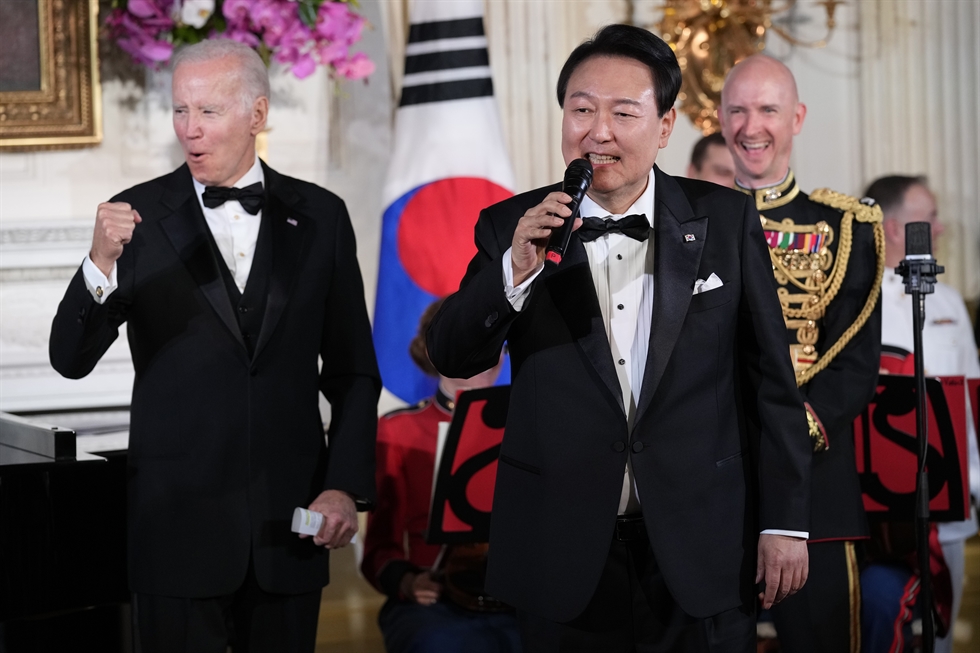
President Biden enjoying President Yoon Suk Yeol’s performance (AP-Yonhap)
It was a glamorous, black-tie affair celebrating the two nations’ 70-year alliance. Attendees included Angelina Jolie and her son Maddox, Home Design stars Chip and Joanna Gaines, Olympic gold medalist Chloe Kim, cabinet members Antony Blinken, General Mark Milley and leading political figures such as Chuck Schumer, Mitt Romney and, of course, the President and First Lady.
The White House state dinner is a distinguished addition to his professional quiver of exceptional achievements—a resume which the Hong Kong-born Yan has dedicated virtually his entire life to. A child prodigy with perfect pitch, Yan’s prodigious skills quickly gained international attention, leading Britain’s prestigious Associated Board of the Royal Schools of Music to rank the 11-year-old at an impressive Grade 8.
At age 13, Yan was attending boarding school in England, where he added jazz and pop to his classical repertoire and began composing some strikingly original pieces. Moving on to New York’s venerable Columbia University, studying music theory, conducting, ear training, jazz orchestration and instrumentation while concurrently serving as Music Director for the Columbia Musical Theater Society, the annual Varsity Show and the Columbia Pops Orchestra.
His career plays out on multiple artistic fronts. Yan’s remarkable versatility allows him to serve as music director in theatrical, concert and studio settings as well as composer for film and musical shows including—thanks to the honor of being selected for the inaugural cohort of non-profit musical organization Musicians United for Social Equity (MUSE)—composing music, lyrics and libretto for his groundbreaking socio-cultural themed musical Re-Orient. The spectacularly original show was created during a one-on-one mentorship with Tony-Pulitzer winning Broadway powerhouse Tom Kitt (Flying Over Sunset, Next to Normal), and caught the attention of influential Broadway lyricist-librettist Sam Carner, who invited Yan to join his new Musical Theater Writer’s Collective.
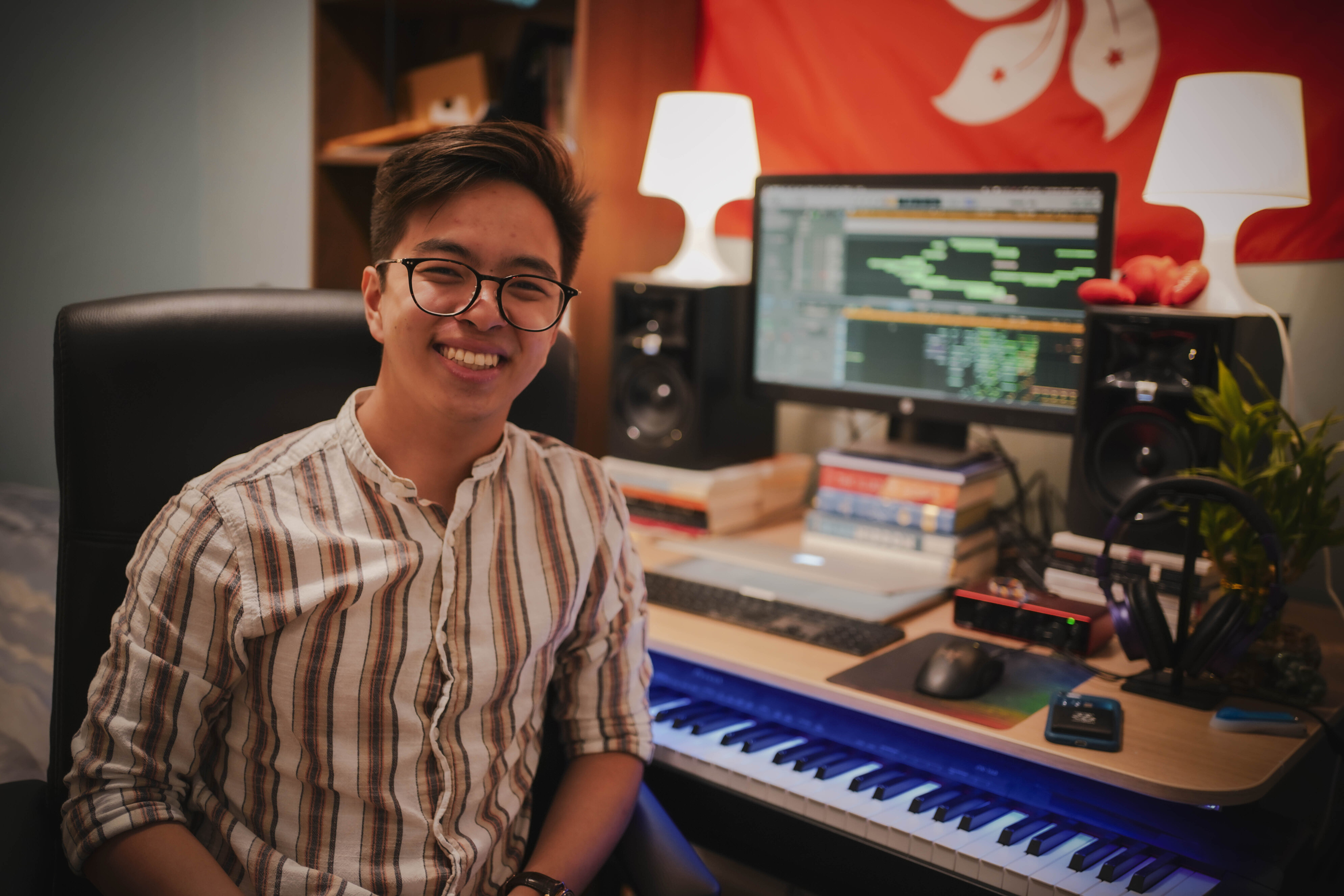
Music Director Ian Yan
Yan’s expressive melodics and deep technical prowess unfailingly garner professional attention, and the White House state dinner gig is a classic example: he was working as music assistant for the annual, high-profile Broadway Cares/Equity Fights AIDS Easter Bonnet Competition show—the celebratory conclusion of six weeks of competitive, in-theater fundraising by 42 Broadway, Off-Broadway and national touring companies—where he quickly impressed renown music director Ted Arthur (Diana, Cyrano, Mean Girls).
“I was in the middle of rehearsals for the annual BC/EFA Easter Bonnet Competition, which was being Music Supervised by Ted Arthur, who was also the Music Director for the White House State Dinner,” Yan said. “I had proved my skills useful at Easter Bonnet, and so Ted brought me on to the White House State Dinner, as well.”
Arthur’s confidence in Yan constituted a sterling professional endorsement, and he eagerly rose to the occasion.
“I was brought in around a week before the dinner, and there was a rehearsal process that happened in the lead-up towards the event,” Yan said. “The music was performed by the United States Marine Band—’The President’s Own’—directed by Colonel Jason K. Fettig, who is also the music adviser to the President of the United States.”
Already notable as the Biden administration’s second state dinner and President Yoon Suk Yeol’s first official visit to the US, it was a major affair. With some 200 VIP guests being served in the East Room (largest in the Executive Mansion), everything, from the Korean-American fusion menu to the cherry blossom floral arrangements, had to perfect.
“I was in charge of creating the piano transcriptions that were used to do the full orchestrations,” Yan said. “The program featured Broadway stars Lea Salonga, Norm Lewis and Jessica Vosk and included hit showtunes such as ‘On My Own’ from Les Miserables, ‘Somewhere (There’s a Place for Us)’ from West Side Story, ‘This is the Moment’ from Jekyll and Hyde, ‘If I Loved You’ from Carousel and ‘American Pie’ by Don McLean.”
That last title was a special entry, one which made a minor bit of history—President Yoon Suk Yeol had indicated that he, himself, would like to perform the song (a personal favorite), and President Biden was also prepared—with a guitar autographed by composer McLean.
“We had been informed that Yoon wanted to sing the song but were unsure whether it would actually happen or not,” Yan said. “We prepared the arrangement in case he decided to—which he eventually did at the end of the night, singing a surprise encore of ‘American Pie,’ for which I prepared the piano arrangement.”
Yoon’s climactic performance made headlines around the world and Yan, despite his physical absence, had a direct hand in an extraordinary musical moment on the world stage, a clear signal that the talented, fast-rising young artist is capable of just about anything.
“It was surreal to see the videos of the President singing my piano transcription online and, in real time, getting hundreds of thousands of views,” Yan said. “I felt very honored to have been a part of this experience and for Ted and the White House music team to have trusted me with this huge responsibility.”
New York’s contemporary dance scene is a fast-moving, kaleidoscopic arena where different genres and disciplines entwine in fascinating new iterations. And at its core are thousands of highly disciplined, fiercely competitive artists whose lives are dedicated to the pursuit of pure creative expression. Prominent among these is performer Shreya Rawat, who has distinguished herself as an emerging force with a singular athletics-informed aesthetic and high-voltage on-stage style.
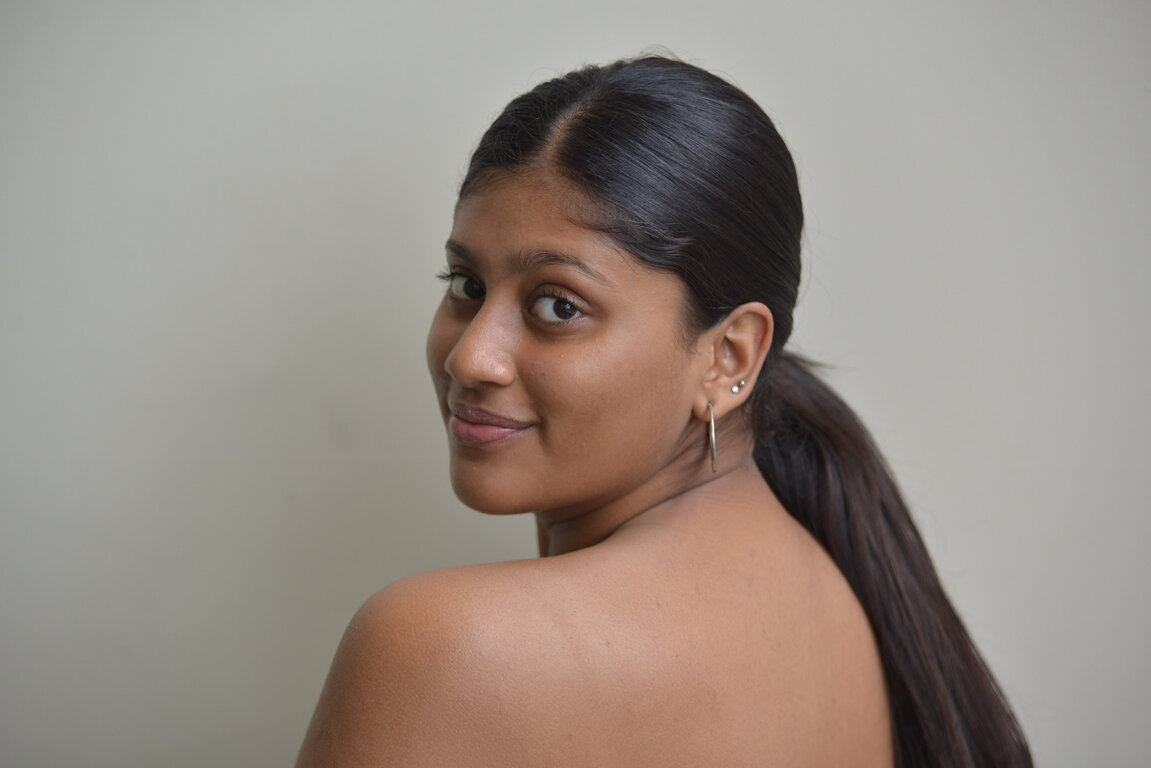
Performer Shreya Rawat
The New Delhi-born Rawat radiates a warm, appealing confidence, and her exceptional skill as a dancer, singer and actor has allowed her to establish a strong professional reputation in the New York theater community. A performer whose dynamic presence unfailingly commands audience attention, Rawat can currently be seen on an East Coast tour with the acclaimed Gotham Dance Theater Company, and she couldn’t be happier about it.
“What makes Gotham Dance Theater so beautiful is how they don’t claim a single dance style, like a lot of other companies do,” Rawat said. “They are very experimental in the productions and projects they delve into, and it’s a very diverse company, from the members to the performances. I take pride in being a versatile dancer and I find Gotham to be the perfect place for me to embrace that.”
(From L to R) Gotham Dancers Khayla Mcleod, Shreya Rawat, Stephanie Shin and Sarina Gonzales (Photo courtesy of Shreya Rawat)
That remarkable versatility is the result of her near lifelong creative pursuit: she began dancing at six and resolved to make performing her career as a teenager. After high school, the ambitious Rawat attended Delhi’s renown DanceworX Performing Arts Academy, mastering ballet, jazz and contemporary dance and became an integral part of the academy’s Senior Repertoire Company. Following graduation, she headed for the United States and a Bachelor of Fine Arts in Dance degree from Point Park University in Pennsylvania. Then, it was on to New York, where she knew exactly which troupe to try out for.
“Gotham’s amazing work is what attracted me in the first place,” Rawat said. “I had them shortlisted when I was first planning on moving to New York, but they weren’t holding any auditions. I was pretty disappointed—but I guess it was meant to be, because a month later they sent out an audition notice, casting for their Spring and Summer Season.”
Rawat did not hesitate.
“The first step in their audition was virtual submissions,” she said. “Next, a select few were invited to an in-person audition and I was blessed to have been among those invited.”
Overseen by Gotham’s founder-director Marc Nunez and esteemed choreographer-dancer Candace Brown, the dancers were given a number tag, followed by company members demonstrating specific passages from the Gotham repertoire, which the competitors performed for the selection panel in successive rounds of auditions. Rawat ably rose to the occasion.
(From L to R) Gotham Dancers Khayla Mcleod, Shreya Rawat, Stephanie Shin and Sarina Gonzales (Photo courtesy of Shreya Rawat)
“They made some cuts along the way until the final round,” she said. “A week later I got the acceptance notice!”
Rawat’s exceptional skills and far-reaching capabilities virtually guaranteed such an outcome—on a similar occasion, auditioning as an ensemble dancer for the cabaret revue How I Almost Died at Prom, the show’s writer-producer, on the spot, handed Rawat the starring role.
As an official Gotham Dance Theater company member, Rawat happily fell into her new tribe’s embrace.
“I must say we are all extremely fun and it feels very much like a family,” she said. “Each member is so different and having those varied perspectives really add to what we are trying to achieve as a company.”
“Our current repertoire for the Summer Suite Tour comprises a medley of Lavani [a South Asian music and dance form], Dabke [a Middle Eastern folk style], Salsa and Street Jazz,” she said. “We have weekly rehearsals and extra brush up rehearsals closer to performance dates.”
The performer has a busy schedule at Gotham, with five upcoming dance festival performances scheduled across the city’s boroughs, appearances certain to further bolster her fast-rising professional stature.
“It has been a season of growth for me,” Rawat said. “Challenging myself not only with the versatility of the set but also the physical demands. The fact that I get to now perform with such a reputable dance company at prominent events and locations throughout New York is a dream come true for me.”
As the film industry continues to expand and globalize, the teams behind Hollywood’s massive productions must continue to diversify their perspectives and experiences. That’s why talent like screenwriter and producer Shlok Shukla, with his tri-cultural background, are key to the evolution of this multi-billion dollar industry.
Shlok Shukla was born in Russia, a country more known for its literature, dance and classical music than its movies. However, Shukla’s parents were avid cinephiles, so from a young age, he developed a love for movies.
“I always wanted to be in the film industry, for as long as I can remember,” Shukla reminisces. “Initially, I wanted to be an actor, but as time went on, I began to feel like I had stories to share with the world.”
Shukla’s story took an intriguing turn when, as a child, his family moved to India. Imagine having your whole life upturned, and being thrust into the heart of a land and culture so entirely different from your own! The young Shukla observed and absorbed India’s vast cultural riches, incredible sights and magnificent arts.
Shukla’s time in India eventually came to an end, when his family relocated to the USA, bringing Shlok within reach of the proper education, connections, and setting to realize his dream of working in Hollywood.
Now, years later, armed with experience, degrees, and a wealth of cultural experience, Shlok has thrust himself fully into the film industry. Two of his feature-length scripts, “All My Friends are Dead” and “Hangman,” have won multiple awards such as Best Script, Best Dialogue and Best Characters, among many others in festivals across the world, including the Rome Prisma Film Awards, Los Angeles Film Awards and Medusa Film Festival, among others.
In addition to telling his unique stories, Shukla has fallen in love with being a producer. “A producer’s tasks range far and wide, from finding projects and launching them, to budgeting, casting, post-production, and even release,” explains Shukla. “A producer’s job is never over, which makes it a lot of fun!”
Shukla began his production career while at the New York Film Academy, offering to assist his friends and classmates with their films. At first, he handled small tasks, such as location scouting and casting, but as he spent more time and effort learning the trade, he got involved in larger projects.
Recently, Shukla produced a music video for Los Angeles-based artist, Rocky Rose, titled “Let’s Ride.” Shukla was approached by the production team for this project and asked to come on board, and he jumped at the chance to help out. Shukla researched different artists and cinematographers to work with, and handled location scouting for the video, which takes place across various areas in L.A. Shukla also utilized his writing and storytelling skills to conceptualize scenes for the video that would hook the audience and keep them engaged.
“Working with Shlok means a project will be completed not only on time, but with the
highest quality possible,” remarked Elizabet Collins, co-producer of “Let’s Ride”. “If I could clone Shlok and work only with him, I would.”
Shukla’s experience working on this project made him a natural fit to work on another music video, this time for the Chilean rock band Temple Agents. Shukla’s company, I’m Not Famous Films, was hired by the band’s guitarist to create a music video in secret, titled “Young Soul,” as a surprise to Temple Agents’ frontman, Ale Solar. Solar’s father had recently passed away, and this project was meant to be a celebration of life, and a gift to Solar.
Cinematographer Joshua Fraser, Kevin Amaya and producer Shlok Shukla on set of “Young Soul” shot by Elizabeth Collins
Shukla wrote an initial script to capture the concept and vision for the video, then budgeted the video based on his script. After that, Shukla handled just about everything, from casting, scouting, and logistics to the video’s distribution and release.
“Shlok balances the creative and business mindsets in his empathetic approach to people,” said Julian Santiesteban, co-producer of the “Young Soul” music video. “He is honestly looking out for his crew and talent because he is really someone that goes beyond what is needed: he cares.”
Shlok Shukla’s unique view of the world is informed by his experiences; his childhood, spread across three wildly different cultures; his studies of business and screenwriting; and his experiences working in the film industry as he brings his stories to life. This unique vision, which only Shukla possesses, is what distinguishes him among other producers and screenwriters in the film industry, and is a big part of what makes his projects special. If you see Shukla’s name in the credits, you’re in for a treat. He is also the producer behind the films “ALonely”, “Love is a Game” and “Flesh Fresh.”
Although still at the dawn of her career, Canadian-born actor-singer Rebecca Codas is already recognized as a world class entertainer. Her high-voltage vocals command audience attention, effortlessly drawing her listeners in as she explores the full emotional depth of a lyric. A natural born thriller, Codas’ flawless execution and interpretive manner of phrasing supercharges each individual syllable with rich, empathic warmth—rare and valuable qualities for any singer—and has allowed Codas to appear before sell-out crowds at her own solo cabaret shows in hometown Toronto.
In Codas’ case, this sweet gift manifested itself very early in life. Unfortunately, so too did a bevy of emotional issues that the child was ill-equipped to deal with.
“Around age 3, I started developing a lot of anxiety, depression, and obsessive-compulsive tendencies,” she said. “As a kid I didn’t know how to handle it. Years later I was diagnosed with ADHD which explains it all.”
Yet these bouts of malaise were invariably offset by forays into her youthful passion, music and songs. And she never missed a chance to take advantage of this, albeit no matter how awkward the scenario may have been.
“At my brother’s bris—I was 3 years old mind you—I stole the microphone from the Rabbi and started singing ‘If You’re Happy and You Know It,’” Codas said. “All of those [mental issues] melted away when I was on stage. Relative getting married? School concert need a singer? I’m your gal! My poor brother was forced into so many living-room plays, I think he was relieved when I finally started doing them outside of the house. My parents quickly realized this performer-train was leaving the station and they needed to board or watch me go without them.”
Codas immersed herself in all things related to theater, performing in elementary school musicals (she played the lead in Joseph & the Amazing Technicolor Dreamcoat), gained valuable experience with the Toronto Youth Theatre, devoted 5 full summers to the Performing Arts Project, a theatrical training program where she enjoyed invaluable collaborations with some of Canada’s leading stage and film actors. At 16, she boldly entered CBC network’s reality TV talent competition Over the Rainbow, competing against over a thousand others for the role of Dorothy in a planned production of Sir Andrew Lloyd Webber’s musical adaptation of The Wizard of Oz. Despite the tremendous pressure, Codas joyously rose to challenge and made it into the top twenty finalists. The final step was study at the world-famous William Esper Studio, a distinguished NYC school dedicated to the groundbreaking behavioral-based post-Method Meisner technique. There, Codas, through intensive study of virtually aspect of theater, put the finishing touches on her deep well of stagecraft.
Returning to Toronto, she began preparing for a permanent relocation to New York and came across a golden opportunity for an onstage farewell—the offer to present an evening of solo cabaret at beloved venue Hugh’s Room, an intimate performance space known both for its great acoustics and attentive audiences.
“In Toronto, I’d always been known as a kid obsessed with movie musicals,” Codas said. “But this was my opportunity to introduce my whole self. I sorted the stories from my experiences as a kid going through those mental health struggles. The whole show was about how I came to be who I am and finally releasing all of that—I almost felt like I should’ve credited my psychologist in the show’s program.”
She assembled a team of her most talented musical friends and began to craft the evening’s flow through song selection and sequence.
“I collaborated with my friend, Broadway conductor Madeline Benson (née Smith) who flew in from New York to be my music director,” Codas said. “We’d formed a great bond and friendship years ago at the Performing Arts Project, and I knew there was no one else I’d want to do this with.”
Madeline, a music director, arranger, conductor, and instrumentalist based in New York, had made history in 2016 as the youngest woman to conduct on Broadway when she served as in that capacity for the hit show Waitress. Others drafted to participate included performer Paris Martino and the ensemble of Cameron Fox-Revett, Laila Kharouba and Allister MacDonald, but Codas sang the majority of the program’s 17 songs.
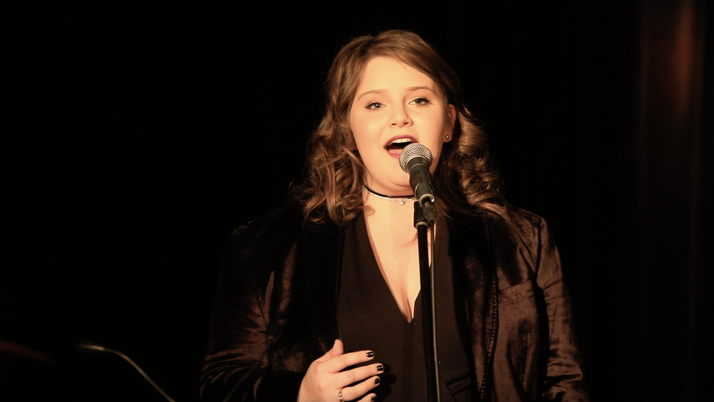
Rebecca Codas on stage
Shrewdly assembled for both maximum entertainment value and sheer emotional impact, it was an intimate set of Broadway and pop tunes from such diverse sources as Bonnie Raitt, Pink and Beyonce, along with a handful of her Toronto colleague’s fine original compositions. Taken together, they represented a unique, symbolic retrospective of Codas’ own spectrum of artistic and personal experience. As the evening approached, her excitement mounted. Every seat in the hose had sold out in advance, and finally it was upon her.
“There’s nothing like the relationship between a singer and her musicians performing together,” she said. “And there’s nothing the relationship between a singer and their audience—they share an unbreakable bond that can’t be recreated anywhere else. You’ll never have the same show twice, how exciting and terrifying is that? The amount work it takes to get to that moment is astounding. But when that moment comes, and you take a deep breath, and you forget all of the work, and just sing.”
The crowd loved it, as did her collaborators, “Performing alongside Rebecca Codas in her cabaret show was a highlight of my career,” Martino said. “Watching a true-talent doing what she was born to do inspires me as I continue my own journey in the entertainment industry.”
Codas had the time of her life that night and it was such an overall success that popular demand led to a second cabaret presentation the following year—one that sold out even faster than the first. Codas, in a sense, came full circle, finally shrugging off the internal discord of her childhood and embracing her fast-rising professional reputation as an exceptional actor-singer in New York. For Codas, the best is yet to come.
“In the past, at times, I’ve been terrified that I would fail,” she said. “Terrified that my fear and mental health struggles would win. But I pushed. The show was a phenomenal experience that I’ll never forget, and it did wonders for my confidence in my abilities. I loved every minute of it! And I am incredibly proud of myself for doing so. Now I know I have the strength to try. Here I am!”
Everything you ever wanted to know about Hollywood's who's-who.