Tag Archives: technology

Exploring Reverse 1999 with Syllous Mai

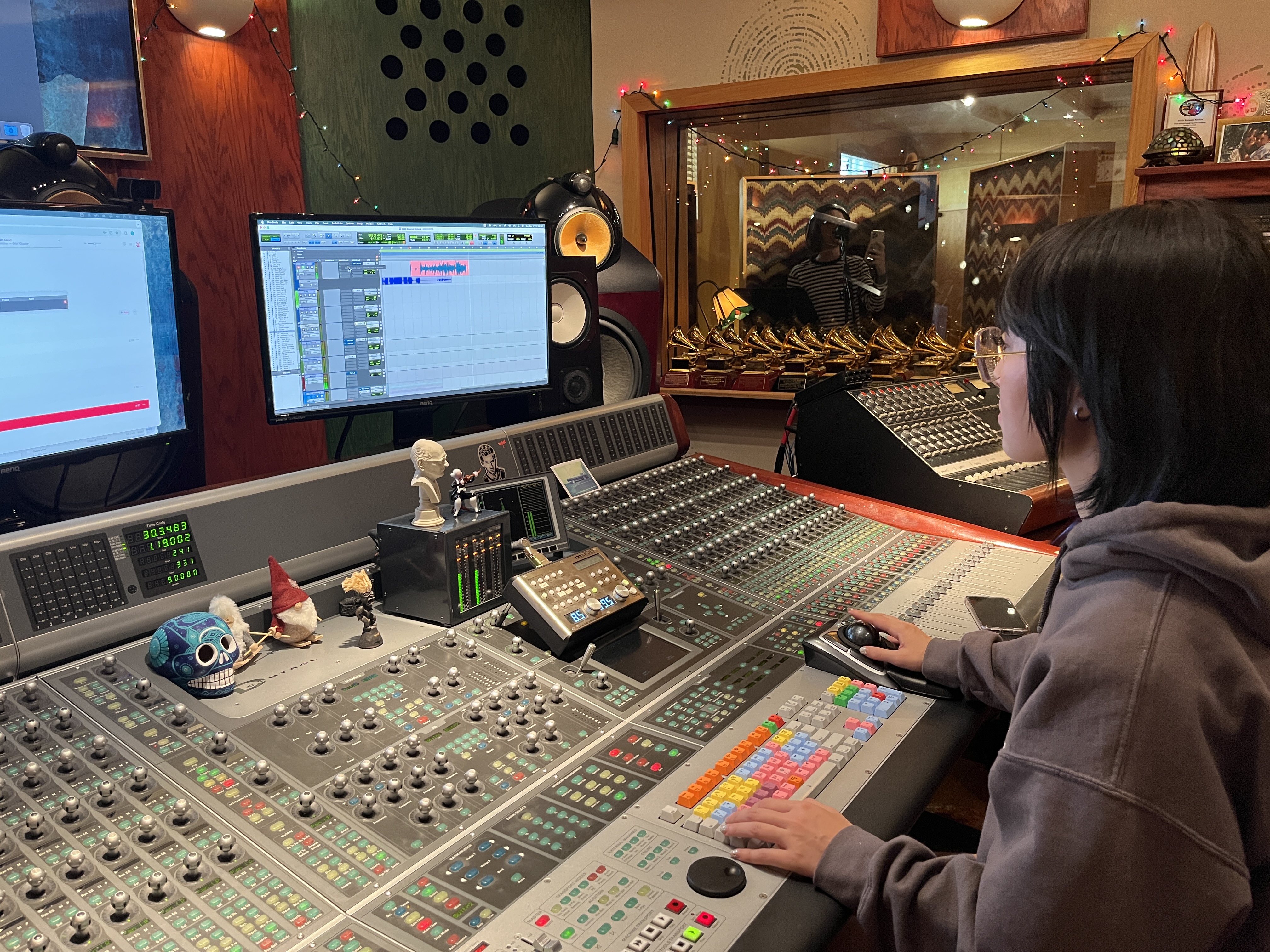
Photo Credit Craig Dikes

Global storytelling has expanded far beyond traditional mediums, and few projects reflect that shift as clearly as Reverse: 1999, Bluepoch Games’ internationally acclaimed RPG. Designed as a cinematic, narrative-driven experience within an interactive format, the game brings together creative teams across countries and languages to build a richly layered world shaped by history, conflict, and time itself. Its ambitious scope and international collaboration make it a standout example of how modern game production operates on a truly global scale.

Reverse: 1999 is built on a premise rooted in real-world anxiety. As the real world once braced for technological collapse at the turn of the millennium, the world of the game experiences an event called The Storm, which disrupts time itself and fractures different eras of the previous century. Within this chaos unfolds a layered social conflict between the Arcanum and the Manus Vindictae. Like Star Trek or Les Misérables, the narrative prompts reflection on persecution, war, and morality. The story operates on both epic and deeply personal levels, making empathy for its characters central to the player experience.

For players to become fully immersed, emotional investment is essential. The creators pursued a cinematic approach to storytelling, ensuring that character motivations, turning points, and revelations were treated with dramatic weight. This required powerful performances from voice actors as well as meticulous preservation of subtle performance details. At the same time, the game’s intense combat and high-stakes gameplay sequences demand equally strong sonic impact. The emotional spectrum ranges from restrained vulnerability to explosive intensity, and every moment must remain technically flawless to maintain immersion. Even minor audio distractions can weaken narrative impact and pull players out of the experience.

Capturing this range requires careful technical oversight. Quieter lines must retain intimacy without introducing noise, while sudden emotional bursts must remain clean and controlled. The engineering process must track dynamic shifts closely, ensuring that the emotional arc of a performance remains intact. In narrative anchor moments especially, clarity and transparency allow the pacing and emotional intention of the developers to reach players without interference. The goal is always to place the player inside the world of the game.

The creative workflow in gaming differs significantly from that of film and television. In traditional linear storytelling, dialogue unfolds within a fixed sequence. In gaming, voice work must be modular, repeatable, and flexible, functioning across countless potential player paths. Dialogue is no longer simply a performance within a scene; it becomes an adaptable asset that must operate seamlessly in an interactive environment. This shift from linear to interactive storytelling requires a fundamentally different engineering mindset.

Syllous Mai stepped into this world of interactive storytelling as the voice-over audio engineer for Reverse: 1999 during sessions at One Line Studios. Known for her work as a sound designer and sound editor in numerous acclaimed international film and television productions, this marked her venture into video game production. Her transition into gaming highlights not only her technical versatility but also her ability to adapt creatively across mediums.

What made her particularly valuable on Reverse: 1999 was her recording studio expertise and her fluency in English, Mandarin, and Cantonese. Given the international collaboration behind the project, her multilingual abilities helped streamline communication among teams. Even when English served as the primary working language, the ability to clarify direction, confirm pronunciation, and ensure alignment across languages reduced friction and made sessions more seamless. This cross-cultural facilitation enhanced both efficiency and creative cohesion.

Her role on Reverse: 1999 also placed her within a large-scale international production environment. Game development often involves collaboration across multiple countries, departments, and time zones, requiring streamlined communication and technical precision to maintain workflow efficiency. Her fluency in English, Mandarin, and Cantonese supported alignment during recording sessions, particularly in clarifying pronunciation, direction, and performance intent. This contributed to smoother sessions and reduced the potential for miscommunication in a multilingual production setting.

At the same time, her background in film and television informed her handling of narrative material within the game. Maintaining emotional pacing, preserving subtle performance details, and ensuring technical stability remained central priorities. The experience reflects an expansion of her professional scope, demonstrating the ability to apply cinematic storytelling sensibilities within an interactive framework while meeting the structural and technical demands unique to gaming.

As gaming continues to expand worldwide, professionals who can combine technical mastery, narrative sensitivity, and cross-cultural communication will remain essential. In that evolving landscape, Syllous represents a new generation of audio professionals equally at home in film studios and interactive worlds.

Photo by Caffrey Chen


Connecting Hollywood with One Billion Consumers: Chinese Production Leader Axue Wei and Her Global Network

Axue Wei

In the global realm of advertising and film production, a classic predicament has long persisted; it’s nearly impossible to simultaneously possess time, quality, and budget. For American brands yearning to unlock the vast Chinese market, or for American creative talents aspiring to secure international projects, additional formidable barriers of culture and systems loom large before them. However, a premier commercial video producer from China is poised to challenge the status quo with a solution of her own creation. Axue Wei, the Co-founder and Producer of THG Films, a leading film and TV advertising production company in China. In a recent exclusive interview with our publication, she elucidated in detail the “Global Production Network” and “Agile Production” system she has constructed.

From a Cross-Border Pioneer to an Architect of Industry Systems

Axue Wei’s professional trajectory is, in itself, a narrative of defying conventions. Her background in medicine and entrepreneurial experience in the technology sector have endowed her with a unique analytical mindset and business acumen, ultimately leading to the dedication to her greatest passion: film and television creation. In 2006, she co-founded THG Films, molding it into one of the benchmark entities in China’s film and TV advertising industry. The company has been distinguished as a “TOP 10 Production/Communication Agency of the Year” for three times—in 2019, 2022, and 2025—by “AdQuan”, China’s authoritative advertising platform.

“Axue Wei’s role transcends the mere management of individual projects,” notes Ling Wei, the CEO of THG Films. “Her core endeavor lies in constructing production infrastructure and systems capable of continuously generating creative content of high quality and high efficiency. These efforts are cemented in THG Films’ two major competitive advantages: a global production resource network, and an ‘Agile Production’ methodology that has been tested to the limit by the Chinese market.”

Global Network: A “United Nations” and “Logistics Headquarters” Serving Creativity

According to the official website of THG Films, the company has established a resource pool encompassing over 1,000 collaborative directors from China, Europe, the United States, Japan, South Korea, and other regions, having engaged in deep project collaborations with more than 80 of these outstanding global directors and producers. Concurrently, with eight major film and TV production bases in Beijing, Tokyo, Paris, Vancouver, Los Angeles, and other cities serving as the core, its production network radiates across the globe.

“This network functions like a ‘United Nations’ and a ‘Logistics Headquarters’ dedicated to serving video creativity,” says Axue Wei. “It signifies that regardless of whether a creative concept requires execution in Shanghai, Vancouver, or Tokyo, we can swiftly match the most suitable Director and production team, ensuring unified quality through standardized processes.” For American Directors and freelance producers, this network serves as an efficient and credible access point, enabling them to connect with high-budget, high-specification projects from top-tier Chinese brands such as Shinho Liu Yue Xian, Jade Dynasty, and Mengniu without having to single-handedly navigate the complexities of cross-border production affairs.

Local Wisdom: A “Strategic Partner” in Decoding Chinese Consumer Sentiment

“For American brands, Axue Wei’s value is profoundly manifested in her deep ‘local wisdom,'” states Geng Congzhi, Creative Partner at Tian Yu Kong. Citing the case of the American calcium brand D-Cal, he recounts how Ms. Axue Wei successfully facilitated the emotional integration of an American product into the minds of Chinese consumers.

“While all other brands were eulogizing the greatness of maternal love, we discovered that the genuine pain points of new mothers were actually ‘anxiety’ and ‘self-blame for imperfection.’ However, this remained merely an abstract creative concept; we needed to translate it into a brand story short film capable of moving Chinese new mothers. Axue assembled a film and television creative team consisting entirely of fathers and mothers, ranging from screenwriters to the Director. This team even included renowned Director Dapeng Zhang, a Gold Award–Winner at the One Show Creative Awards—known as the ‘Oscars’ of the global advertising world. The film details, derived from the authentic experiences of the core creative team, instantly triggered a strong resonance among new mothers. This resulted in the marketing campaign far exceeding all expectations, Despite targeting a group of only approximately 17 million new mothers, the project generated over 87 million in social media buzz, with the video’s views exceeding 32 million in its first week. The relevant social media index for the D-Cal brand reached a peak more than ten times that of its competitors. This case became an industry classic in 2019 and was honored with the IAI Awards – Silver Award.”

“Axue Wei acts as a cultural interpreter for brands,” summarizes Geng Congzhi. “The production services she provides are grounded in a profound understanding of market insights and brand strategies, helping international brands bridge cultural chasms and establish deep emotional connections with Chinese consumers through the language of sight and sound.”

Agile Production: An “Efficiency Engine” Born from the Chinese Market

Underpinning all of this is the “Agile Production” system honed by Axue Wei’s team in practice. This system emphasizes data-driven decision-making, rapid iteration, and parallel engineering, validated through extreme stress testing the world’s most fiercely competitive market that is China. According to data from recent collaborative projects provided by Geng Congzhi (Creative Partner at Tian Yu Kong), some outstanding successful examples are: 

Ele.me “Spring Roll” short film whose ultra-low budget of $39,000 generated 630 million reads and over 3 million interactions to become a classic case of low-budget, massive dissemination in 2025.

Ele.me IP Video “The Versatile Big Blue is here!”: Completion of a complex animation project in 20 days that originally required 60 days. In 2025, this swept six authoritative advertising awards, including the NYX Awards – Grand Award and the US International Awards – Best Animation.

Xu Lan, a professor at Shantou University who has previously served as the Creative Director at the 4A advertising agency Dentsu, and as a Judge for the New York Festival and the Effie Awards, commented that these data demonstrate this “Agile Production” system can shatter the industry’s traditional “impossible triangle” of “budget-time-quality.” This will provide brands with a new path that offers a higher probability of success in a market of high uncertainty.

“The requirements for speed and efficiency in the Chinese market have spawned this methodology forged under ‘stress testing’,” states Geng Congzhi. “I believe that introducing it into the Hollywood system will inject newfound flexibility into American domestic production processes, helping production teams gain a competitive advantage in budget control and scheduling certainty. This essentially provides an ‘efficiency code’ for the American creative industry.”

Future Vision: Building a Two-Way Value Bridge in Los Angeles

Looking to the future, Axue Wei has a clear strategic plan: she intends to establish a new film and television production company in Los Angeles. “This is by no means a simple overseas expansion,” she emphasizes. “I aspire to conduct a ‘bidirectional value grafting’.”

On one hand, she will bring the “Agile Production” system validated by the Chinese market, the global resource network, and a profound understanding of Chinese consumers to American clients and partners. On the other hand, she also yearns to deeply integrate Hollywood’s top-tier narrative technology with Silicon Valley’s cutting-edge AI technology to upgrade the existing production management systems. “Ultimately, I hope to create a new business paradigm characterized by ‘Hollywood quality, Asian speed, and a global network,'” Axue Wei articulated her vision. “This will create more diverse and stable global employment opportunities for the American Directors and Producers we collaborate with while enhancing the overall collaborative efficiency of the American film and TV advertising industry, but more importantly, it will provide a battle-tested ‘China growth solution’ for American brands seeking to win the next super market.”

At a time when the process of globalization faces new challenges, what Axue Wei and her THG Films represent is precisely a solution that dissolves divides and creates win-win outcomes by building a systematic collaborative network. Professor Xu Lan remarks that Wei’s practice demonstrates that when creativity encounters systems, and when local wisdom connects with a global network, the exchange of commerce and culture has the potential to unleash value beyond imagination.

Axue Wei, Co-founder and Producer of THG Films, possesses nearly two decades of experience in film and TV advertising creation and video marketing, having served over a hundred top-tier international and domestic brands. Axue Wei has been honored with more than 10 international and Chinese awards, including the TITAN Women in Business Awards – Outstanding Female in Video Marketing, MUSE Creative Awards – Platinum Award, US International Awards – Best Animation, NYX Awards – Grand Award, and Cannes Corporate Media & TV Awards – Silver Awards. She has also been invited to serve as a Judge for numerous authoritative international advertising awards, such as the Effie Awards, Shop! OMA Awards, and MMA-SMARTIES™ China Awards. Due to her practice in the field of AI video marketing, Ms. Axue Wei was appointed as a Final Review Expert for the inaugural “AI+Martech Business Awards.”

Beyond Augmented Reality

Written by Director of Emerging Technology Dan Phillips

Article by Dan Phillips

Reality is subjective. Not everyone or everything experiences the world in the same way. Sometimes differences are subtle, sometimes markedly extreme. Whether it’s how you react to an election result, hear a tone in a song, or taste a delicious dish, see a rainbow, observable reality and consistency of perception is often not as objective as we think it is.

Emerging technologies such as augmented and mixed reality will over time further expand and blur this line of perception. With AR on mobile devices and head-mounted displays, we’re well within the beginnings of what it means to live an augmented life. Humans are doing a lot of fun things right now, like bringing gaming into our physical world and making our faces into playthings of fun with endless filters and enhancements and props. We’re also starting to find utility for AR in enterprise and education and in customer experience, and with the emergence of hardware designed for specific applications in business.

But AR is not just about the future of vision changing. AR can be the technological prism through which we see the world, but for humans it will also become the common device for the combined knowledge of the species. We will expand our tech parameters beyond display technology to deeper integration with machine learning and artificial intelligences and instantly searchable databases. We will tap into the power of 5G connectivity and beyond to create new merged physical environments. We will be able to intuitively read the reactions of people we encounter based on the dilation of each other’s pupils and the pulses under our skin. Opinions and choices will be made through instantly accessible shared data. Want to make a key purchase, for example? Analyze the salesperson’s biometric response to your questions, and scan satellite imagery to see how much bargaining power you have based on how long the product has remained on the shelf.

Magic Leap, Microsoft’s Hololens and much anticipated but never confirmed moves into the wearable space by Apple give us mainstream hardware for AR. We also have next generation AR-enabled spectacles and contact lenses on the near horizon, or perhaps we will just jump straight to implants and nerve-driven control systems. If that sounds ridiculous and farfetched to you consider how the inventors of past innovations in spectacles could not have anticipated our use of laser corrected vision or human-computer interfaces used in experimental therapy today. If we think the oblong devices we carry in our pockets are the end of screen interface technology then we have learned nothing about the power and pace of technology to change and be adopted. Technologists have the free reign to debate the ethics of data driven modification where politicians and bioethicists do not. The question is not if these technologies will change our experience of reality, but how quickly.

Many animals already sense things we can’t and on spectrums not available to humans. Think of that when you put on an AR headset and find yourself motioning to the invisible. Your own visual experience can be completely unseen by the people around you, whilst remaining entirely real to you. What you see and your understanding of it will soon be different from the person next to you, and we will no longer have a common experience of our shared environment. When AR arrives in its fuller and more integrated state, the challenge for our technologically tiered society will be how we stay in sync with one another.