
In today’s media landscape, animation is no longer confined to movie theaters or television screens. It appears on the sides of buildings, inside immersive venues, across interactive installations, within live concerts, and throughout public spaces where audiences do not simply watch the work; they move through it. Few artists embody that evolution more fully than Xiaobo “Daniel” Ma.
Based in Los Angeles, Daniel Ma has built a career that moves fluidly between feature films, commercial campaigns, immersive media, public art, and experimental visual systems. As an animator, animation director, motion graphics designer, and visual problem-solver, his work spans projects connected to companies and institutions such as 20th Century Studios/Disney, MSG Sphere, Lenovo, Under Armour, Airbnb, Nike/Jordan, USC Visions & Voices, LOGAN, and Retina Imageworks.
What unites this unusually broad body of work is Daniel’s ability to translate complex ideas into visual experiences that feel emotionally clear, technically polished, and spatially aware. Whether designing cinematic HUD graphics for Alien: Romulus, immersive content for the Sphere in Las Vegas, or interactive public installations at USC, Daniel consistently approaches animation not as decoration, but as a way of shaping how people experience space, story, and emotion.
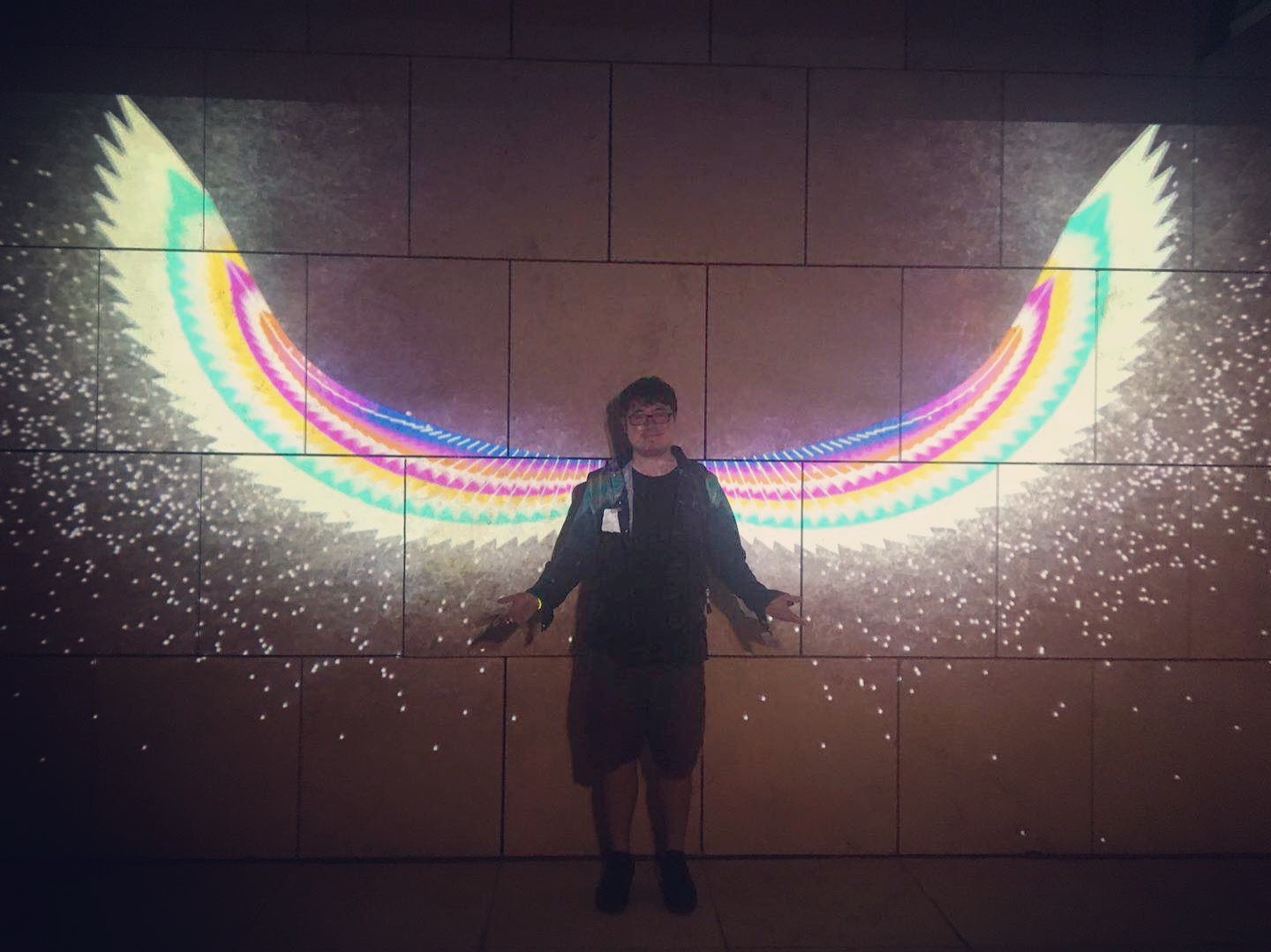
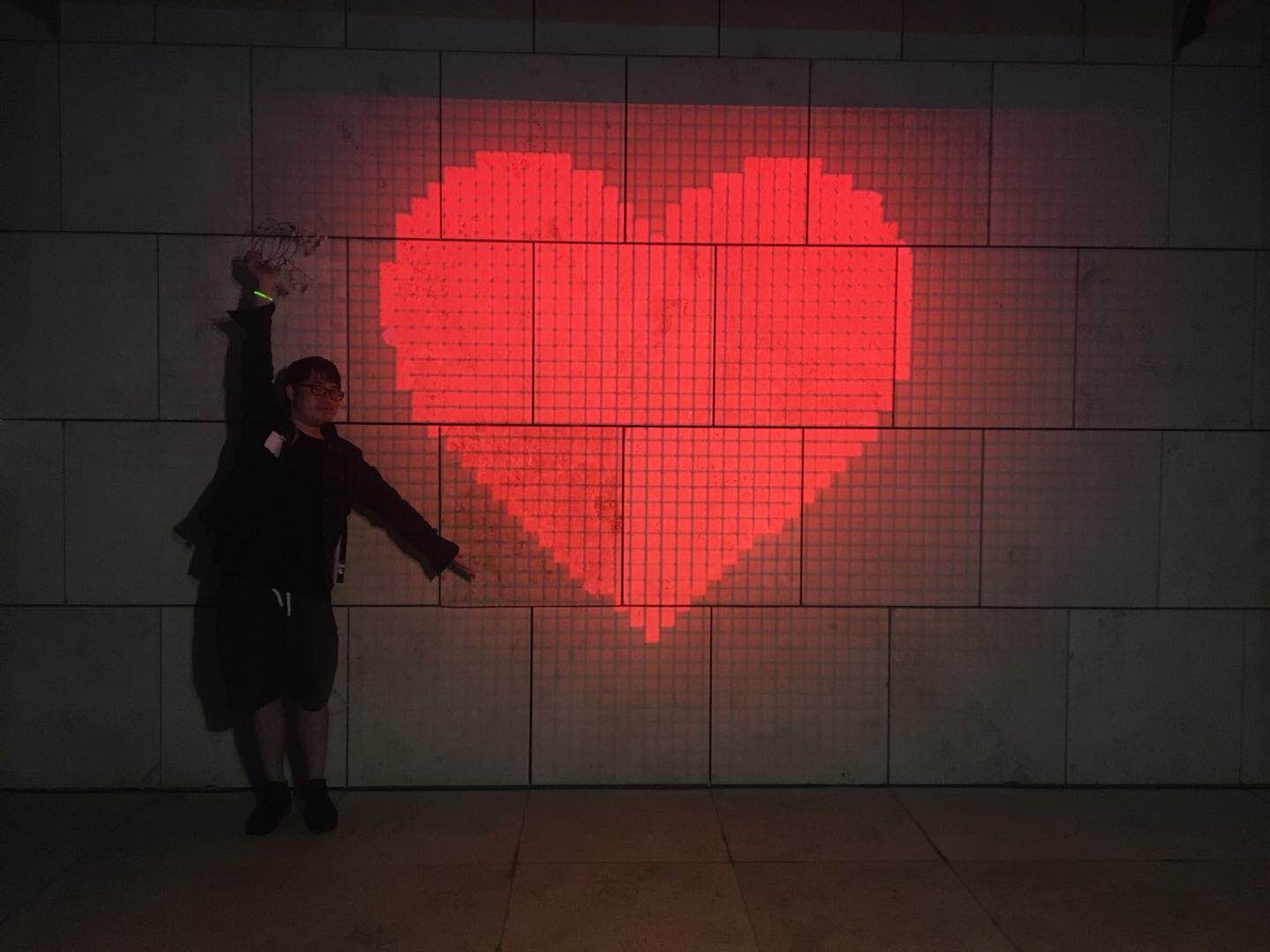
His work on projects during his time at USC reflects this philosophy clearly. A prime example is the Interactive Animated Selfie Wall installation created for USC Visions & Voices SPARK 2024 in which colorful animated visuals surround participants as they pose, interact, and become part of the artwork itself. Rather than functioning as passive projection, the imagery transforms the environment into a playful social experience. The installation feels less like a screen and more like a living digital environment designed to invite participation. Daniel’s role as Animator/Designer on the Interactive Animated Selfie Wall team demanded a completely different mindset from his film work where animation unfolds through a fixed sequence controlled entirely by the artist. “In traditional animation, I make something and the audience receives it,” Daniel explains. “In interactive animation, the audience becomes part of the artwork.” That shift deeply appeals to him professionally because it transforms animation into a social and participatory medium. Instead of merely observing a finished piece, viewers interact with it physically and emotionally, creating shared experiences through movement, photography, and spontaneous participation. “People do not only watch it,” Daniel injects. “They take photos with it, move around it, laugh with friends, and remember themselves inside it.”
Designing for this kind of public interaction also creates new creative challenges. Unlike cinema, where every frame is controlled, interactive installations must account for unpredictable human behavior. Some viewers may only glance at the work briefly, while others engage deeply. Some may approach from unexpected angles or misunderstand the interaction initially. “The design has to be robust and generous,” Daniel stipulates. “It has to work even when the audience does not behave perfectly.” That challenge forces simplification and clarity. Interactive animation must communicate instantly without requiring explanation, while still remaining visually rich enough to sustain attention in a busy public environment.
For Daniel, projects like SPARK 2024 reveal a larger transformation happening within animation itself. Increasingly, motion design is becoming part of architecture, live events, education, and civic space rather than existing only inside traditional entertainment formats. “I think animation will increasingly move beyond the traditional categories of entertainment and advertising,” he said. “Screens are no longer only rectangles on a wall. They are becoming buildings, rooms, glasses, cars, stages, and interactive surfaces.”
This vision also shaped his work on R&V 4, another USC-affiliated arts project connected to Michael Patterson and Candace Reckinger. Serving as Lead Animator, Daniel contributed animation and projection-based visual content for a live event staged in April 2024 within USC’s School of Cinematic Arts courtyard environment. Unlike conventional single-channel video, the work existed as part of a larger live experience combining projected visuals, architecture, music, performers, and audience movement. Daniel approached the project as environmental storytelling rather than isolated screen-based animation. “In this context, animation has to support atmosphere and rhythm,” he explained. “The goal can be to shape mood, transform space, and support a collective experience.” The projected visuals interacted directly with architectural surfaces and audience presence, making scale, speed, and composition especially important. Daniel focused on creating imagery that could function immersively within the physical environment rather than simply display content.
These interdisciplinary projects represent one side of Daniel’s career. Another involves high-level commercial and entertainment production through companies like LOGAN and Retina Imageworks. His broader recent work includes music visuals, commercial animation, VFX production, Huawei-related content, KUN concert visuals, and music video collaborations involving artists such as Rosé and Alex Warren. These projects also reveal another important shift within Daniel’s evolving practice: the growing integration of AI-assisted workflows into animation and visual effects production. For the Rosé/Alex Warren music video project, Daniel worked as a VFX Artist and Animator, contributing effects-driven animation and visual components that supported the final look of the piece. More importantly, the project marked a turning point in how he thought about production itself. Before this period, Daniel approached most technical problems individually, solving them shot by shot. During this project, however, he began thinking more systematically about workflow design. “I started asking whether I was only solving a one-time issue or building a method that could help solve an entire category of similar problems later,” he recalls. That mindset gradually shifted his role beyond traditional animation into something closer to pipeline development and creative systems design. Instead of creating isolated solutions, he began building reusable tools and workflows capable of improving future production processes.
The KUN concert visuals pushed this approach even further. The project incorporated significant AI-generated imagery as part of the visual production process, particularly for large-scale atmospheric environments and rapidly evolving visual sequences. Concert visuals proved especially well-suited to AI-assisted experimentation because of their scale, abstraction, and speed. AI tools enabled the team to explore ambitious imagery that would have been extremely difficult or expensive to create entirely through traditional CG methods alone.
Still, Daniel emphasizes that AI does not replace artistic judgment. “AI can generate images, ideas, textures, or directions very quickly but it still needs artistic control.” he specifies. His background in animation remains central to evaluating rhythm, continuity, timing, composition, and whether AI-generated visuals can actually function effectively in motion. Daniel recalls, “I became interested in how traditional animation knowledge can guide AI production and how AI can also accelerate parts of a traditional animation workflow.” That balance between technical innovation and artistic craft increasingly defines Daniel’s broader creative profile. Across feature films, immersive media, commercial campaigns, public installations, and experimental visual systems, he consistently combines motion design with larger questions about audience experience, spatial interaction, and evolving production technology.
His career already reflects remarkable range. He has contributed to Oscar-recognized visual effects work on Alien: Romulus, participated in award-winning productions such as The Wandering Earth II, designed immersive Sphere-scale animation, developed interactive public installations, and explored new AI-assisted workflows within music and concert media. Daniel does not view these projects as separate disciplines. To him, they are all connected through the same underlying purpose: using motion to make ideas emotionally understandable. “All of these are different expressions of the same skill,” he reflected. “Using motion to make ideas visible and emotionally understandable.” As screens increasingly merge with architecture, public space, live performance, and adaptive technologies, artists capable of thinking across these boundaries will likely define the next era of animation. Daniel Ma’s career suggests that future has already begun.
 Tinsel Town News Now