Tag Archives: Cinematographer

Q & A with Cinematographer Ross Radcliffe

Cinematographer Ross Radcliffe
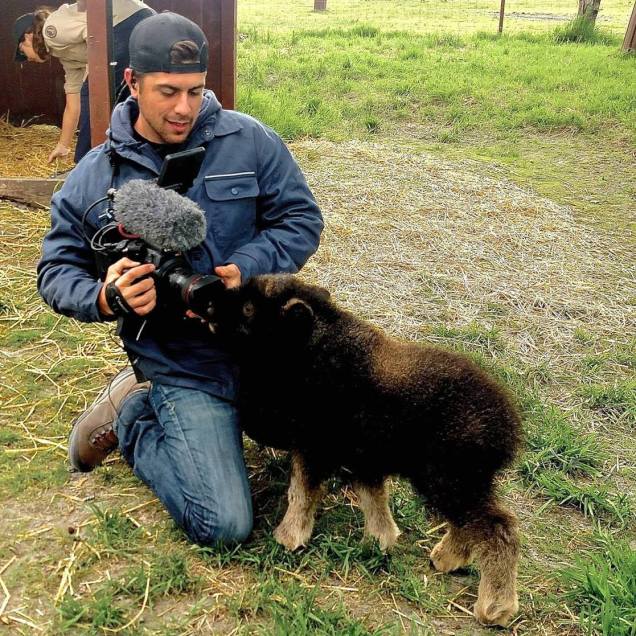
Cinematographer Ross Radcliffe on set of “Dr. Oakley, Yukon Vet” shot by Dallas Childers

It’s not often you’ll find a cinematographer with the eye of a skilled artist and the mindset of a trained athlete, but that’s just what cinematographer Ross Radcliffe brings to the table. Well-versed in the technological aspects of filmmaking and seemingly indestructible in any harsh environment, Radcliffe possesses a unique combination of talents invaluable to the industry. He is able to keep up with the greatest extreme athletes in the world, giving viewers the opportunity to experience life’s adventures in corners of the globe we’d otherwise never see.

Radcliffe has been directly responsible for capturing cutting edge footage included in some of the nation’s top-rated shows including Travel Channel’s critically acclaimed series Jackson Wild as well as The Last Alaskans, Animal Planet’s second-most-watched series last year.  A professional lacrosse player turned cinematographer, Radcliffe has dedicated thousands of hours to perfecting his craft, and has captured breathtaking images from the Alaskan Yukon to the great African plains while keeping up physically with the world’s most extreme sporting.

No stranger to the frigid Alaskan temperatures, Radcliffe displays his strengths flawlessly for multiple shows based in the Alaskan climate. One show in particular, National Geographic’s Dr. Oakley: Yukon Vet, showcases this cinematographer’s visions magnificently. Without Radcliffe’s sharp eye, technological ingenuity, and physical stamina, Dr. Oakley’s life-saving emergency surgeries performed in season 2 may have never been captured. Radcliffe’s contribution to the production not only brings picturesque scenery and landscapes into homes worldwide, but it also opens up the doors to catch a glimpse of science and biology so uniquely fascinating, yet otherwise unobtainable.  

Last week I got the opportunity to interview Radcliffe about his work as a cinematographer. In our interview, he opens up about what led him to pursue a career in the field, his views on the relationship between technology and storytelling, and the importance of physical fitness in his field of work. For more information on Ross Radcliffe, be sure to check out the interview below.


Where are you from? When and how did you become a cinematographer?

RR: I’m from Nanaimo, British Columbia, Canada, on Vancouver Island. I became a cinematographer in college; I was actually a star athlete on both the lacrosse and track & field teams- I was even drafted to play professional lacrosse- but unfortunately, after sustaining a series of bad injuries, I made the tough decision to put an end to my athletic career. I quickly turned my attention to camera work, dedicating all the time I’d previously spent training my body into training my eye behind a camera. Before long, I was producing my own videos, which lead to an internship with Susie Films, a full service, pitch to post production company. That internship turned into a full-time job, and before I knew it, I was shooting content for reality TV, commercials and short films. I now work as a freelance cinematographer for National Geographic, Animal Planet, Discovery Channel, and Travel Channel. As a cinematographer, I specialize in the projects that are both physically and technically demanding.

What does the work of a cinematographer entail? What are your responsibilities?

RR: To be a cinematographer is to be a visual storyteller. I get to craft images that effectively move the audience through a story, with all the twists and turns of emotions along the way.  As a cinematographer, I test and select camera and lighting packages that will best tell the story at hand, and I communicate with the director to best craft the image of the story they strive to tell. I think a big responsibility of mine, due to the type of projects I shoot, is to stay on top of my physical conditioning. When I film a subject, I want to make sure their are no barriers between the story and the audience, so I have to be a pro at following along, no matter the conditions or situations might be. In my field, a good cinematographer blends into the situation to let it play out as naturally as possible.

What do you think makes good cinema?

RR: I believe that good cinema comes from the relationship between technology and storytelling. When those two things work well together, people will watch.

What has been your favorite camera to use so far and why?

RR: My favorite camera is the Sony FS7. This new camera, capable of filming footage in 4K resolution, is the perfect camera for adventure-based cinematographers like myself since it is lighter than its predecessors, and has the ability to shoot a wide variety of profiles to suit all types of projects, and can be outfitted with a variety of third-party accessories. To that end, the Sony FS7’s native E-mount lensing system can easily be adapted to use both Sony and Canon lenses, which are both phenomenal lines of lenses.

Can you tell me a little bit about the projects you’ve done?

RR: I was the director of photography on The Travel Channel’s show, Jackson Wild. The show revolved around the Jacksons, a family comprised of the world’s best professional kayakers. During this production, I followed the Jackson family to Germany, Austria, South Africa, England and Zambia, where I faced the crazy challenge of keeping up with them- physically. Being an athlete myself, I was able to capture mountain biking through Europe and waterfall jumping in Africa but, for the record, running around Africa with a 40 lb camera on your shoulder isn’t easy!

I also worked on National Geographic’s Dr. Oakley: Yukon Vet, as the director of photography. I really enjoyed being just one step behind Dr. Oakley, a famous wildlife veterinarian, through Alaska and the Yukon as she gave aide to all different types of animals. While this project was extremely demanding physically and sometimes entailed stepping in stinky animal droppings or running from an angry muskox, I was honored to be part of such a small, handselected team. Each member demonstrated such an amazing ability to wear many different hats, so to speak, and the results were well worth it. Looking back on the experience, I really loved capturing the vast personalities of the beautiful Alaskan backdrop, and using it as almost another character in the show.

Perhaps one of the most fun and challenging project I have contributed to is The Animal Planet/ Discovery Channel’s The Last Alaskans, where I was worked as a specialty camera operator and equipment mechanic for the entire second season. The Last Alaskans has garnered critical praise from top international publications around the world for its genre-busting take on the people and families who reside in the Alaskan Wildlife Refuge, located just above the arctic circle. During production, the crew lives out in the field with the talent; to give you an idea of what this is like, I can tell you that every morning I woke up in a tent in -30 degree weather, and immediately started a fire. Long story short, making this show wasn’t easy, so producers gathered only the best crew in the TV industry to execute the show’s production because of its extreme physical and technical nature. With the great success of this show discussed in the New York Times and the Washington Post, I am proud of my important contributions to the production.  

What would you say your strongest qualities are as a cinematographer?

RR: I take great pride in my physical ability to endure extremely harsh and exhausting environments while capturing content. I also keep myself well versed on the latest and greatest camera technology as it hits the market, and I figure out how it can be best utilized in the field.

What projects do you have coming up?

RR: I am the Director of Photography for the next season of Dr. Oakley, Yukon Vet. I have also been offered a job with Discovery Channel’s Alaska: The Last Frontier, but until I have a visa, it will be impossible for me to accept this opportunity.

What are your plans for the future?

RR: I plan on continuing to travel the world, gathering and telling stories of unique people in captivating places. I am also interested in working on feature films.

What do you hope to achieve in your career?

RR: I want to create a body of work that I am proud of; ultimately, I’m determined to tell stories that inspire and move people.

Why are you passionate about working as a cinematographer and why is it your chosen profession?

RR: Being a cinematographer is the only job I have ever had that doesn’t feel like work.  Every day that I wake up on location, I truly cannot believe how lucky I am. I’m honored and humbled to be instrumental in telling stories about people and places that would have gone otherwise unnoticed. It gives me a beautiful opportunity to put myself in the shoes of people living a different life experience than me, and I love trying to see the world from their eyes.
 

Talented Cinematographer Brings the Film “Dirty Laundry” To Life

Cinematographer Guy Pooles
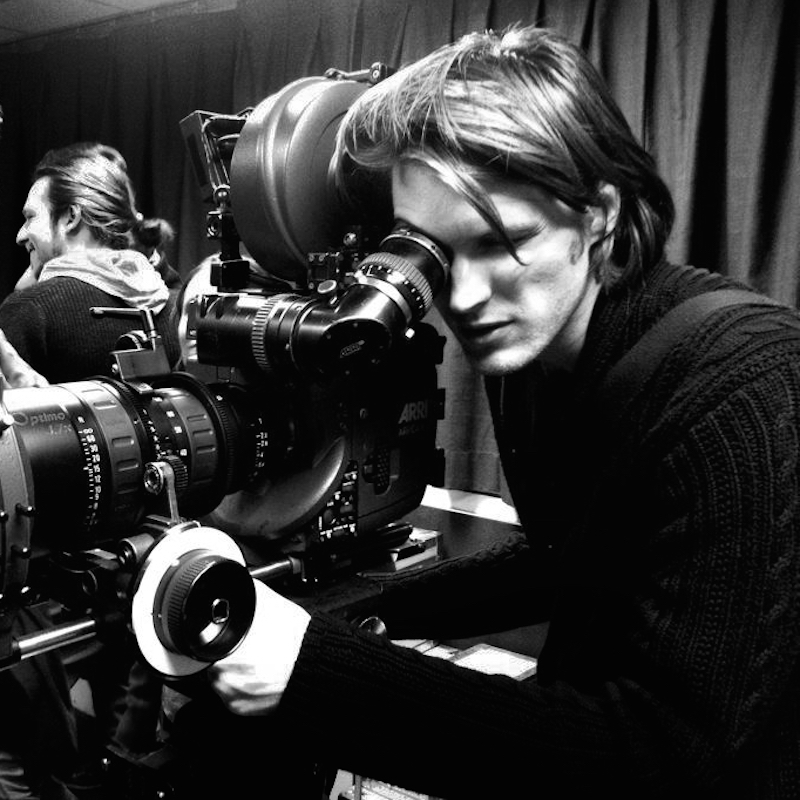
             Cinematographer Guy Pooles shot by Michel Copeland Toft

A common theme among many Los Angeles transplants is a desire to make it big in one aspect or another of the film industry. Whether it is because they were a big fish in a small pond who have been told since they were young that they belong on camera, or they have worked their whole life to be accepted as a filmmaker in Hollywood, there is so much more to film than just being talented in one’s creative field; film is a collaboration between countless departments who must individually put their egos aside in favor of the story they are creating for the audience.

For internationally respected cinematographer Guy Pooles, this foundational aspect of filmmaking is basic knowledge; and, the process as a whole is something that allows for a level of fulfillment that far surpasses anything that stems from ego-driven motives.

According to Pooles, “Cinema is a fusion of many different art forms, from writing, to music, to costume design and so on. Good cinema is brought into being by every one of those crafts working in harmony to achieve a collective vision.”

An incredible asset to every production to which he lends his name, and believe me, there have been many as he has worked non-stop over the last five years in both the UK and the United States, Pooles is the kind of cinematographer who is not only able to bring stories to life in an extraordinary manner, but he is also heavily conscious of how is work will blend with the work of each and every other department in the final product, the mark of a true collaborative genius. He explains this necessary attitude toward filmmaking by saying, “If I’m too preoccupied with how I’m lighting a scene to notice how it destroys the subtlety of a set design, or how it distracts from an actor’s performance, then a couple of audience members might leave the cinema saying “I liked the lighting” but no one will be saying “I liked the film”.”

Originally from England, Guy Pooles reached international acclaim after working as the cinematographer on the film Dirty Laundry, which was released in 2013. Directed by Aaron Martinez (Substrata), Dirty Laundry received incredible praise, as well as an impressive list of awards last year at film festivals around the world. To name a few, Dirty Laundry garnered an award from the Directors Guild of America for Outstanding Directorial Achievement, a Golden Starfish Award at the Hampton’s International Film Festival, as well as was an Official Selection at the BUSTER Children’s Film Festival Copenhagen, LA Shorts Fest and the DC Shorts Film Festival, and a Special Mention Award at the Oberhausen International Short Film Festival. Pooles was also honored on an individual level for his cinematography work on the film with the Linwood Dunn Heritage Award from the American Society of Cinematographers.

A beautifully shot film, Dirty Laundry follows a young boy named Sam (Zander Faden) as he traverses his beyond heartbreaking childhood full of real life bullies and those of which only he can see like that of the laundry monster. After Sam’s father abandons his family, and Sam’s mother falls into a dark and paralyzing depression, the young boy is forced to fend for himself on every level from the unrelenting bullies at school to the monster inside the ever piling dirty laundry within the basement. The level of collaboration and creativity that went into Dirty Laundry all the way down to the way the team managed to bring the laundry monster to life is staggering. Using miscellaneous clothing pieces, all of which were chosen by color and texture in order to fit the film’s palette, and a hand & rod puppet that required three performers to operate, they miraculously brought the laundry monster to life in a way that was not only believable, but frighteningly beautiful as well.

Shamim Seifzadeh, the production designer on Dirty Laundry, says, “I removed the common purpose from each piece of clothing, only to re-assign them to the monsters body parts. In the end, pants became the head; back pockets became his eyes; a zipper became his mouth; and socks became his fingers…. The final design concept became a giant, hunch-backed creature. His weight would not allow him to run fast but his sheer size made him intimidating. It is important to note that the Laundry Monster isn’t evil, but rather, misunderstood.”

Pooles used his expertise as the film’s cinematographer to create a dark and eerie atmosphere within the film that fully supports Sam’s mother’s debilitating depression and the cold world Sam lives in by using little, if any, artificial light. The film is shot solely from Sam’s point of view, a choice that posed challenges, but ultimately made Dirty Laundry a riveting masterpiece that allowed the audience to feel Sam’s struggle and experience his reality with little effort.

In reference to the technical cinematographic decisions that went into the film Pooles recalls, “Our first rule was that the camera would always be at the exact eye- height of Sam… This meant that when the other characters of the film towered over Sam in height, they were towering over the camera, and thus, the audience too. Another tool we utilized was to maintain the relative distance of objects and other characters. So if Sam sees something that’s on the other side of the room from him, the camera will then observe it from the other side of the room.”

While these elements combined to create the film’s general perspective as it unfolds before the audience, there was another more philosophical approach that went into providing the film with its capacity to touch the audience emotionally.

“The strongest tool we utilized was the notion of Pathetic Fallacy, where we render the world surrounding Sam, not how it would realistically appear, but rather how it feels to Sam. Examples of us doing this were: lighting each scene to feel de-saturated and overcast, helping the audience to feel the lack of warmth and colour in Sam’s life,” explains Pooles. “We would also often place Sam in a frame so that he was very small in relation to his empty environment, allowing the audience to understand the extent of the isolation that he feels.”

An even greater testament to this talented young Englishman’s auteur is the fact that Pooles wrote the film in addition to working as its cinematographer, no small feat, but one he seamlessly accomplished as proven by the shear number of awards the film received. Aside from Pooles’ work on Dirty Laundry, he has worked as the cinematographer on the films Happenstance, Martha, Jobe, What Must Be Done. What The Monkey Saw, Wake, Chronophobia, as well as the music video for Bryarly’s hit song ‘In The Bright Daylight’ and the documentary Best of The Pacific Northwest.

Guy Pooles is undoubtedly a cinematographer whose creative vision, backed by his highly specialized technical skills, will continue to impress for decades to come; and frankly, we can’t wait to see what he comes up with next!


Acclaimed Cinematographer Kristin Fieldhouse!

Cinematographer Kristin Fieldhouse
                                                     Cinematographer Kristin Fieldhouse

Although Kristin Fieldhouse first obtained a Bachelors and Masters in International Development and Politics at the University of Sussex in England, an area of concentration that led her to spend several years working for the United Nations across Africa and Asia, her love of photography and it’s integral role in filmmaking was something too powerful to ignore. The now highly sought after cinematographer discovered her passion for photography in her youth.

“I lost my dad and my sister at a young age – so photography helped me through that period. It was my salvation in a way, a chance to connect with people through an artist medium and express what I was feeling and going through,” admits Kristin Fieldhouse. “Later on, cinematography offered me a new and exciting challenge. The moving image was fascinating for me and I loved the idea of sequences of images to tell a story.”

After spending several years working for the UN, Fieldhouse moved to Canada where she further honed and perfected her skills behind the camera lens. “I worked and studied as a camera technician for many years working my way up through the Cinematographer’s Guild I.A.T.S.E before starting to shoot my own work,” explains Fieldhouse.

A testament to her unparalleled skill in the field, Kristin Fieldhouse was accepted as one of only 28 cinematographers admitted into the American Film Institute’s competitive conservatory program where she received her MFA. With an impressive list of award-winning projects already under her belt, Fieldhouse’s work undoubtedly speaks for itself. The cinematographer received the Kodak Student Cinematography Award for her work on the film The Man Who Found DB Cooper, as well as the award for Best Cinematography at the Milledgeville Film Festival and the John Kelly Award for Excellence in Cinematography at the Fresno Film Festival for her work on the film Young Americans, and the award for Best Cinematography at the Real Teal Film Festival for her work on the film TESS.

One of Kristin Fieldhouse’s other recent projects, Kepler X-47, has also had an incredibly successful run on the film festival circuit as it was chosen as an Official Selection at The LA Asian Pacific Film Festival, Comikazee Expo, ImagineNative Film & Media Arts Festival, NewFilmmakers Los Angeles Film Festival, The Geekie Awards, Dragon Con Film Festival, and many others. Directed by Erin Li Kepler X-47 is a sci-fi film that follows a woman as she struggles to adjust to her new life as part of a human zoo exhibit on an alien planet 5,000 light years from earth. The film put Fieldhouse’s talents to the test as it required extensive period costumes, futuristic locations and dynamic lighting choices.

Fieldhouse explains, “This project was demanding in terms of budget and I had to come up with cheap lighting solutions that gave a large range of looks from candlelight dinner scenes at tables to large soft sources above actors to give them freedom to move, but would also create an eerie look. Panavision came onboard and helped us by providing great lenses, which I netted to give a softer image and raise the black levels. I remember spending many hours testing out different kinds of stockings from stores around LA.”

Kristin Fieldhouse’s vast knowledge, dedication and substantial creative contributions to Kepler X-47 show through in the film’s end product and are proven by the film’s incredible success.

“I was inspired by the painters such as Caravaggio and wanted to be able to paint with light the way they would paint with oils,” says Fieldhouse. “We used a combination of in-camera effects and glass, with dramatic lighting, and I believe this gave the film an elevated look that took the audience on a beautiful and believable journey.”

Some of Kristin Fieldhouse’s other work as a cinematographer includes the films My Little Eye, Palm Swings, Brown Bag, He’s The Best, Borja, Future Me, Release, The Tent, Life In The Gutter, Hide & Seek and Things Go Wrong, as well as commercials for globally known brands like Nike, Coors Light and Kodak. The cinematographer has also contributed heavily to the camera departments on the films The Echo, Total Recall, The Incredible Hulk, Diary Of The Dead, House At The End of The Street, Resident Evil: Afterlife and A Beginner’s Guide To Endings, as well as the hit television shows Flashpoint, Happy Town, Bloodletting & Miraculous Cures Fairfield Road, Abra Ca Debra, Nikita, Covert Affairs, Warehouse 13, Unrivaled, Latest Buzz, Unnatural History, The Night Before The Night Before Christmas, Alphas, Kenny v. Spenny and many more.

To find out more about Kristin Fieldhouse’s incredible work as a cinematographer be sure to check out her website http://kristinfieldhouse.com/ and her IMDb page http://www.imdb.com/name/nm2465060/?ref_=fn_al_nm_1


Cinematographer Johanna Coelho, A Visual Psychologist

One of the most captivating things about a film, or rather, a good film, is the compelling nature of its imagery. The way a single shot can effect our emotions as an audience provides cinematographers with the powerful tool to create a visual language that runs along with the film’s story.

French cinematographer Johanna Coelho falls into the group of cinematographers who are known for making films that draw viewers in with their film’s visually stimulating imagery and leaves them with an emotional experience.

Coelho explains, “Images have always been a passion for me. From an early age onward I was very interested in understanding how we can visually transmit feelings and emotions.”

What separates the best cinematographers from the mediocre is their ability to shift the mood and style of the images in a way that is cohesive to the ever-changing elements of the story— but more importantly, they need to accomplish this without the audience noticing.

If viewers become preoccupied with the images in a film to the point of overshadowing the story, then the purpose of film as a medium for expression has been lost.

This subtle balance is something that Johanna Coelho, and the rest of the world’s most renowned cinematographers, recognize and execute on a daily basis in their work.

“My job is to create images that represent the vision of the director in the film,” said Johanna Coelho. “I have to be able to interpret emotions visually and create the story’s various atmospheres in the best possible way. I like to say cinematographers are visual psychologists.”

Coelho, who is originally from France, has worked on an impressive list of projects that not only show her diversity when it comes to choosing what images strike the perfect balance in the way of what’s appropriate for contrasting genres, but also display her unparalleled abilities to propel the overall energy of the story to a place that visually impacts viewers’ on an emotional level.

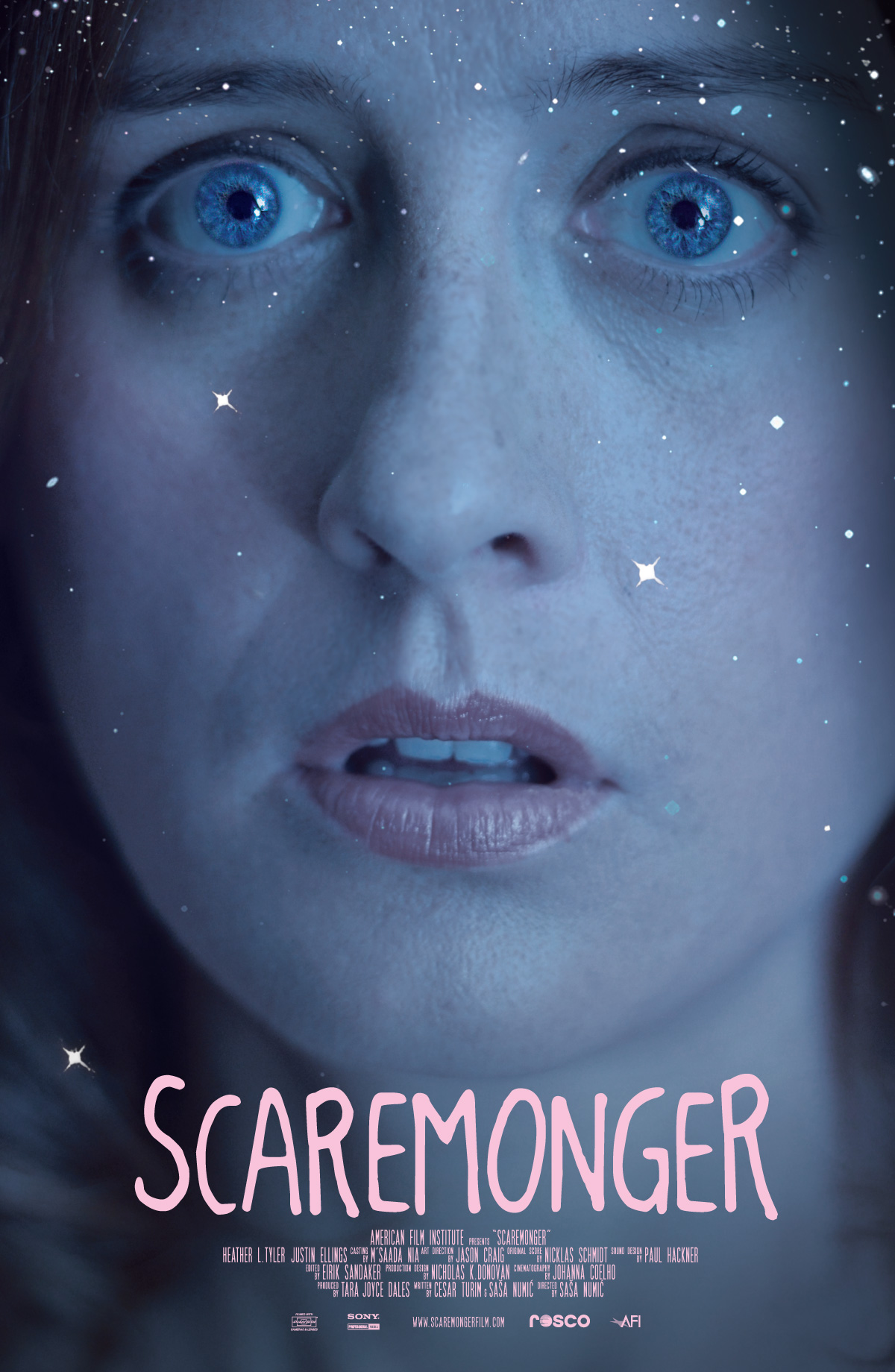
As the cinematographer, also known as the director of photography, of the film Scaremonger, which debuted earlier this year, Coelho was in charge of creating a juxtaposition of imagery that had elements of both realism and fantasy. The film centers on the story of a mother worried for her son who is being bullied by the neighborhood kids.

“The director wanted to treat this social issue as a dark fairytale,” said Coelho. “I had to create this magical atmosphere for the mom’s nightmares versus a pretty realistic look for the day scenes. We created gigantic shadows representing monsters appearing on the walls, we tried to make them happen as much as we could on set, and for some of them we had to use VFX. It was very interesting to see what the limits of what we could achieve on set with the resources we had were.”

The outcome of the film serves as a testament to Johanna Coelho’s extraordinary creativity and skill as a cinematographer. The film did astonishingly well on the festival circuit where it received the awards for Best Narrative Film at the 2014 California International Shorts Festival and Best LGBT Film at the 2014 Fulbright Film Festival, as well as was an Official Selection at the IFS Film Festival, Serbia’s Cinema City Festival, Costa Rica’s International Film Festival, and the renowned Montreal World Film Festival.

Poster from the film Scaremonger