Tag Archives: reviews

Exploring Reverse 1999 with Syllous Mai

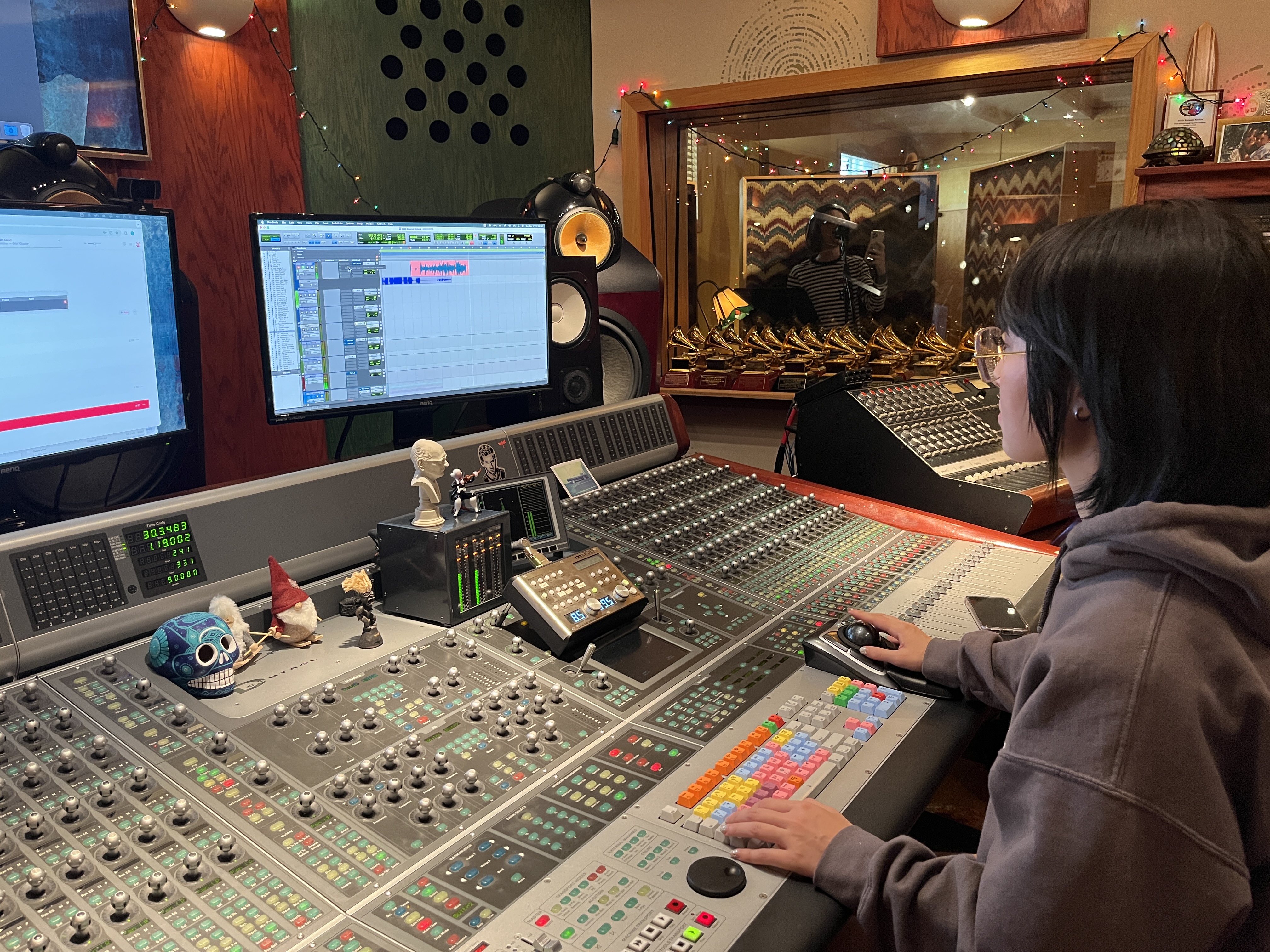
Photo Credit Craig Dikes

Global storytelling has expanded far beyond traditional mediums, and few projects reflect that shift as clearly as Reverse: 1999, Bluepoch Games’ internationally acclaimed RPG. Designed as a cinematic, narrative-driven experience within an interactive format, the game brings together creative teams across countries and languages to build a richly layered world shaped by history, conflict, and time itself. Its ambitious scope and international collaboration make it a standout example of how modern game production operates on a truly global scale.

Reverse: 1999 is built on a premise rooted in real-world anxiety. As the real world once braced for technological collapse at the turn of the millennium, the world of the game experiences an event called The Storm, which disrupts time itself and fractures different eras of the previous century. Within this chaos unfolds a layered social conflict between the Arcanum and the Manus Vindictae. Like Star Trek or Les Misérables, the narrative prompts reflection on persecution, war, and morality. The story operates on both epic and deeply personal levels, making empathy for its characters central to the player experience.

For players to become fully immersed, emotional investment is essential. The creators pursued a cinematic approach to storytelling, ensuring that character motivations, turning points, and revelations were treated with dramatic weight. This required powerful performances from voice actors as well as meticulous preservation of subtle performance details. At the same time, the game’s intense combat and high-stakes gameplay sequences demand equally strong sonic impact. The emotional spectrum ranges from restrained vulnerability to explosive intensity, and every moment must remain technically flawless to maintain immersion. Even minor audio distractions can weaken narrative impact and pull players out of the experience.

Capturing this range requires careful technical oversight. Quieter lines must retain intimacy without introducing noise, while sudden emotional bursts must remain clean and controlled. The engineering process must track dynamic shifts closely, ensuring that the emotional arc of a performance remains intact. In narrative anchor moments especially, clarity and transparency allow the pacing and emotional intention of the developers to reach players without interference. The goal is always to place the player inside the world of the game.

The creative workflow in gaming differs significantly from that of film and television. In traditional linear storytelling, dialogue unfolds within a fixed sequence. In gaming, voice work must be modular, repeatable, and flexible, functioning across countless potential player paths. Dialogue is no longer simply a performance within a scene; it becomes an adaptable asset that must operate seamlessly in an interactive environment. This shift from linear to interactive storytelling requires a fundamentally different engineering mindset.

Syllous Mai stepped into this world of interactive storytelling as the voice-over audio engineer for Reverse: 1999 during sessions at One Line Studios. Known for her work as a sound designer and sound editor in numerous acclaimed international film and television productions, this marked her venture into video game production. Her transition into gaming highlights not only her technical versatility but also her ability to adapt creatively across mediums.

What made her particularly valuable on Reverse: 1999 was her recording studio expertise and her fluency in English, Mandarin, and Cantonese. Given the international collaboration behind the project, her multilingual abilities helped streamline communication among teams. Even when English served as the primary working language, the ability to clarify direction, confirm pronunciation, and ensure alignment across languages reduced friction and made sessions more seamless. This cross-cultural facilitation enhanced both efficiency and creative cohesion.

Her role on Reverse: 1999 also placed her within a large-scale international production environment. Game development often involves collaboration across multiple countries, departments, and time zones, requiring streamlined communication and technical precision to maintain workflow efficiency. Her fluency in English, Mandarin, and Cantonese supported alignment during recording sessions, particularly in clarifying pronunciation, direction, and performance intent. This contributed to smoother sessions and reduced the potential for miscommunication in a multilingual production setting.

At the same time, her background in film and television informed her handling of narrative material within the game. Maintaining emotional pacing, preserving subtle performance details, and ensuring technical stability remained central priorities. The experience reflects an expansion of her professional scope, demonstrating the ability to apply cinematic storytelling sensibilities within an interactive framework while meeting the structural and technical demands unique to gaming.

As gaming continues to expand worldwide, professionals who can combine technical mastery, narrative sensitivity, and cross-cultural communication will remain essential. In that evolving landscape, Syllous represents a new generation of audio professionals equally at home in film studios and interactive worlds.
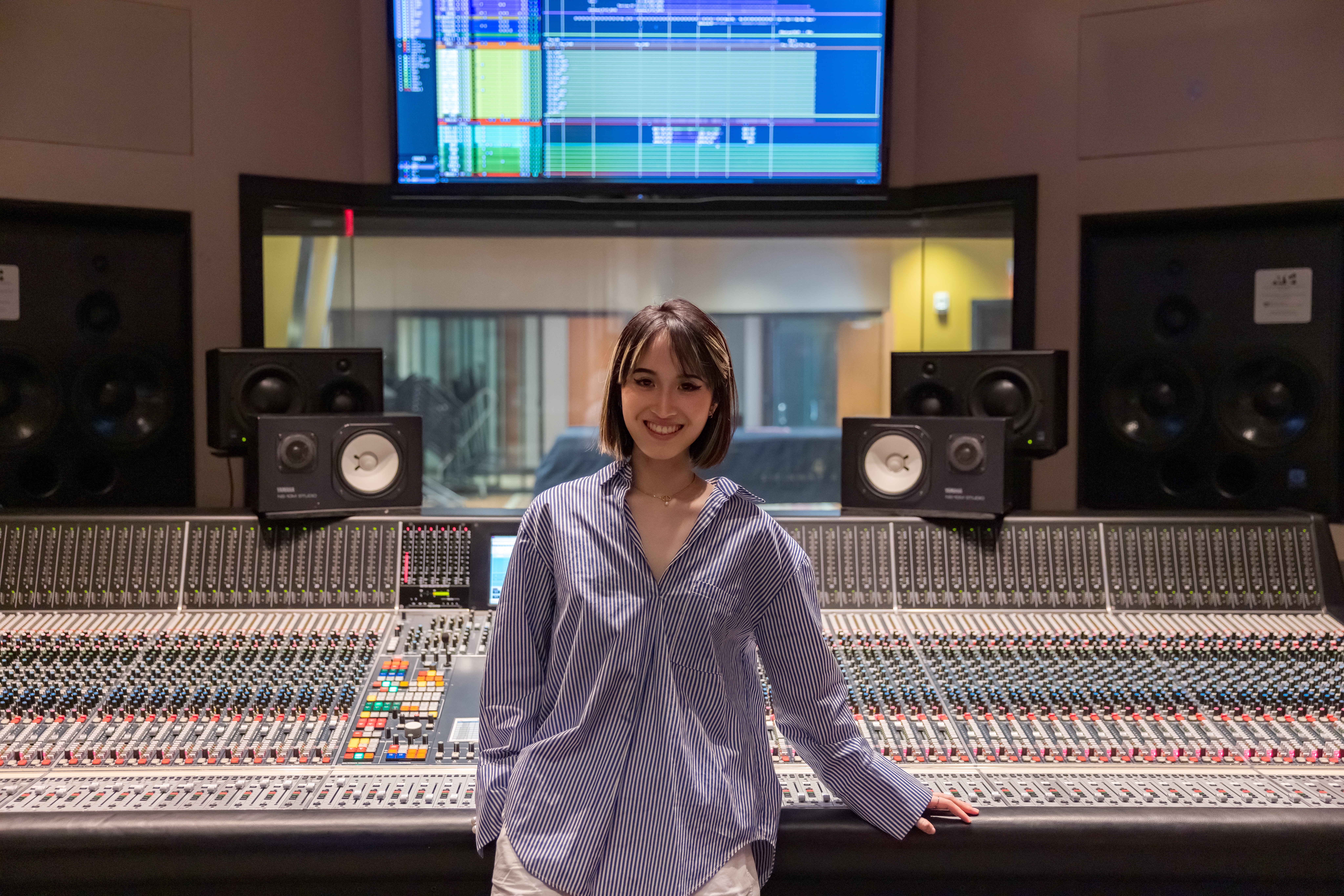
Photo by Caffrey Chen

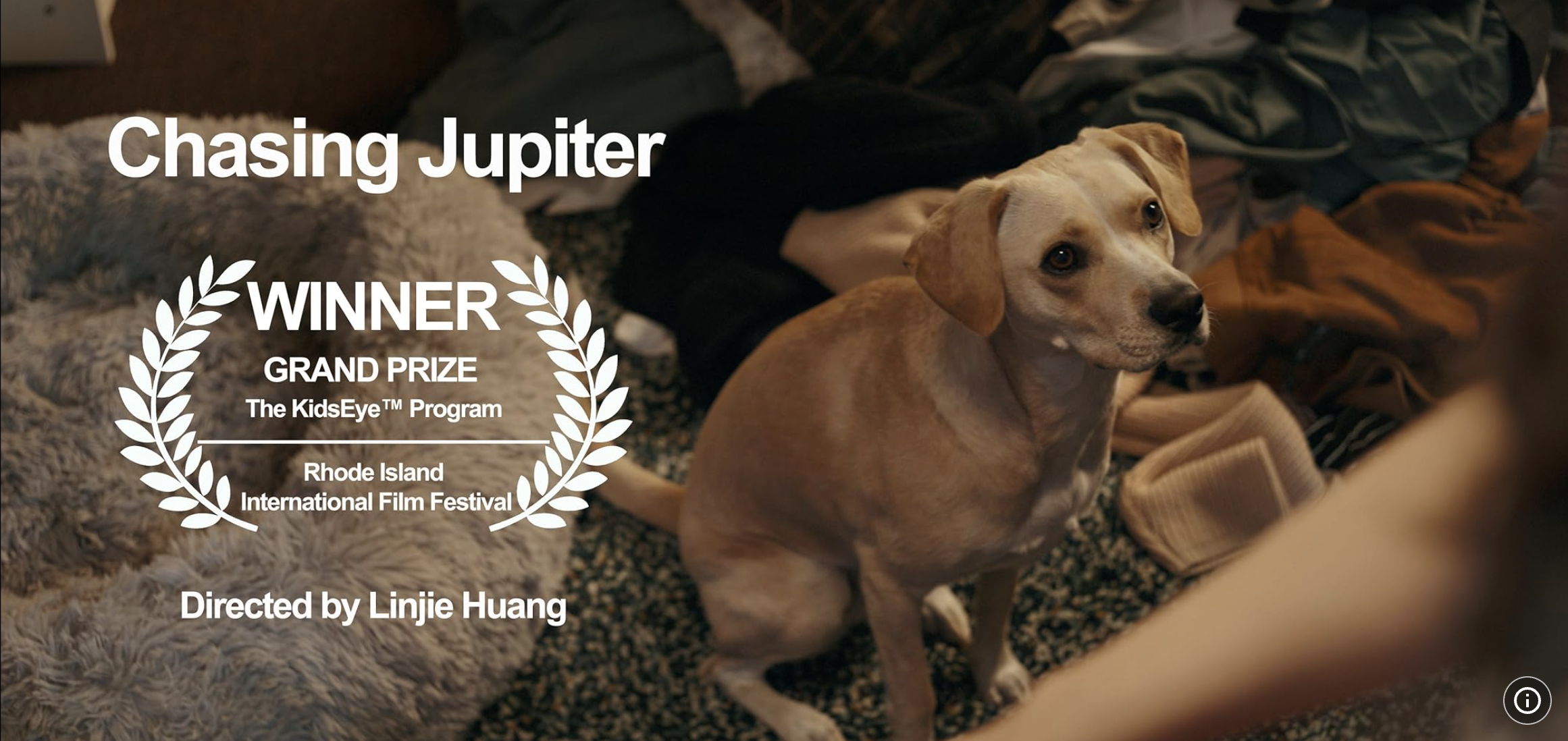
Chasing Jupiter with April Liu

  Film is a medium which allows us to share an experience. This might take place at any point in time and with any set of circumstances but at its essence, film is about a unified sharing of an experience. There is no closer relationship in this process of filmmaking than that of director and editor. The ability of an audience to perceive the emotional intent of a story resides in this collaboration. Director Linjie Huang refers to editor April Liu, with whom she collaborated on the film Chasing Jupiter, as truly extraordinary in her abilities declaring, “April has a gift for shaping stories with heart and intention. She doesn’t just cut images together—she reveals layers of emotion and meaning that deepen the audience’s experience. She approaches editing with empathy, patience, and a strong sense of intuition, which makes every project with her feel alive and deeply resonant. April brings out the best in the films she touches, and I feel fortunate to have partnered with her.” There’s an abundance of evidence which confirms this in Chasing Jupiter. Though it might be the simple story of a woman and her dog, this film reminds us that a commitment of love can be too often taken for granted in today’s world. This story prompts us to be the better version of ourselves. 

  Tara (actress Flora Hwang), one of the film’s two main characters, is a proxy for the audience. She is hyper-focused on astrophotography to a point that borders on obsession. The fixation she has is communicated through tight cuts of hands adjusting knobs, the scratching of pencil on paper, and the sound of her breath. This editing tactic establishes a sense of anxious anticipation. While her drive might be admirable, Tara’s tunnel vision implies that she is perhaps more concerned with the process than the beauty of what surrounds her with a myopic perspective. The catalyst for the unravelling of Tara’s plan is found in the vehicle of her dog Cosmo who knocks over her tripod. Cosmo is eager and happy while Tara is visibly unhappy and frustrated with the situation. Comedy and tension are siblings in this moment, with jump cuts between Tara’s face and the toppling tripod establishing a sense of slapstick comedy. As this escalates, Tara breaks down into tears while the camera lingers on her. Her despondency is unvarnished as she sits amidst the destruction. In the most endearing moment of this story, Tara appears to have the revelation that life and the world are to some extent out of our control, revealing the importance of recognizing the love that is offered freely to us. As she strokes Cosmo’s fur, she lifts her camera up to begin once again, but with a more enlightened approach. The juxtaposition of the cosmic and the personal are potent in this scene. Tara’s newfound acceptance that life’s beauty lies in shared imperfection speaks profoundly. 

  Only in contemplating “what could have been” with Chasing Jupiter can one come to an understanding of how exceptionally skilled Ms. Liu’s editing actually is. “A woman’s photography is interrupted by her dog”, this single sentence might generalize the plot of the film but it communicates no sense of emotional depth. Through discussions with Linjie Huang and her own perception of the footage captured, April has sculpted the type of cathartic journey that borders on spiritual in its message. The skill of any great artist lies not in spectacle but in the ability to reach into different people from different walks of life and remind them of the humanity that we all share in our emotions. Chasing Jupiter may only be a story about a woman and her dog but the manner in which it is told makes it a primer for how to be a human being who lives for the present and appreciates the good things rather than focusing on impediments. What April Liu’s editing has achieved in this capacity is astounding. Audiences and filmmakers alike agree with this as Chasing Jupiter received the Grand Prize at the prestigious Flickers’ Rhode Island International Film Festival (an Oscar and BAFTA qualifying film festival) in addition to being an official selection of numerous others including Dances With Films and the Philadelphia Asian American Film Festival. 

The Star Power Behind “Flunk”: Meet Emily Mutimer

A truly exceptional actor is distinguished by their ability to immerse themselves completely in character arcs, turning personal experiences into layered performances that strike a chord with audiences worldwide. Australian actress Emily Mutimer is recognised for her grounded approach to character development, taking on roles that explore emotional depth and complex personal dynamics. 

“I pick roles that have meaning to them and I find parts of myself in each role,” Mutimer shares. “I empathise with the characters I read, and become excited to tell the story using what I know and collaborating with all different types of creators, writers and directors.”

Emily Mutimer shot by Isabelle Ohse

One standout role in particular was Mutimer’s compelling portrayal of Astrid in the groundbreaking award-winning drama “Flunk,” an Australian series that explores the lives of LGBTQ+ high school students. The critically acclaimed series, which can be streamed via global giants Amazon, Tubi and Vimeo, became a milestone in queer representation, resonating with viewers and providing an honest, heartfelt look into modern high school relationships.

Mutimer’s unwavering talent shone through during her 2019 chemistry read, leaving a lasting impression on “Flunk” writer, producer, and director Ric Forster (“Lost & Found You,” “The Summer Before Forever”). Her audition perfectly captured the essence of Astrid, a fundamental character who is both deeply emotional and strategically insightful. Forster quickly recognised Mutimer’s rare ability to portray the character’s emotional range, casting her in a pivotal role that would put her on the map as an actress.

“Astrid and myself are both similar in the way that we share empathy for other people,” explains Mutimer. “I love being able to live this out in a character, it feels very freeing to play someone who knows this about herself and isn’t caught up in things that don’t serve her.” 

Mutimer’s skillful depiction brought Astrid’s intricate inner world to life, elevating her as a central figure whose journey from heartbreak to self-assurance unfolds over the course of the series.

Madeline Sunshine (left) and Emily Mutimer (right) in season 5 of “Flunk”
Emily Mutimer (left) and Holly Monks (right) on set of “Flunk” Season 5

After nailing Astrid’s introduction in season 3, Mutimer flawlessly transforms her into a key character who provides emotional support to her friends while navigating her own changing relationships. By season 5, Astrid’s personal growth is remarkable—emerging from the depths of heartbreak to a place of confident self-acceptance.

“Playing a character over three years has been more of a rewarding than a challenging experience. My own mental barrier and ideas were challenging me, but over the course of time I realised the character also grows and changes which was fun to play with,” Mutimer explains. “I found myself being able to drop into the character easier, it made me take more risks with Astrid which felt freeing and fun to explore.”  

Riding on its immense popularity, the award-winning “Flunk” franchise expanded into six feature-length film spin-offs, including “Flunk: After School” (2022) and “The Sleepover” (2021), with the latter gaining significant recognition in Tubi’s top-ten LGBTQ films in 2023.

The feature films provided Mutimer the opportunity to further explore Astrid’s identity, driving her character evolution and placing her personal growth at the forefront. Through these projects, Mutimer not only shaped Astrid’s range, but also nurtured her artistic confidence and honed her professional skills as an actress—qualities that clearly distinguish her from others.

Emily Mutimer (left) and Liv Rian (right) in the Flunk film “The Sleepover”

The feature films provided Mutimer the opportunity to further explore Astrid’s identity, driving her character evolution and placing her personal growth at the forefront. Through these projects, Mutimer not only shaped Astrid’s range, but also nurtured her artistic confidence and honed her professional skills as an actress—qualities that clearly distinguish her from others.

“Playing Astrid has helped me gain confidence as an actress. I’ve been able to bring new ideas to my character and sustain the longevity of it,” shares Mutimer. “It’s taught me a lot about being on set and what it means to work hard and be prepared.. it’s given me permission to take a risk or make a choice and be confident in that choice.”

With its raw take on relationships, the fan-favourite “Flunk” franchise resonates deeply with audiences across the globe, including in the USA, Brazil, Europe, and South Africa, creating moments that feel like reflections of their own lives. Mutimer’s magnetic performance as Astrid has not only fueled this connection, but continues to draw fans in episode after episode.

The long-running series also sparked a passionate fandom, inspiring fan art, re-edited videos, and Tumblr communities centered around the show, with Astrid at the heart of this engagement highlighting the strong emotional bond viewers share with the beloved queer characters.

Since its debut in 2018, “Flunk” has become a major cultural milestone, racking up an impressive 200 million views on its official YouTube channel. With its massive reach, the series has set a new benchmark for LGBTQ+ storytelling, showcasing the creative potential of online narratives aimed at younger queer audiences.

“The story isn’t necessarily about people coming out and needing to feel accepted, it’s in a world where everybody is accepted for who they are, and being a lesbian is not a defining factor at all, which is something I love about the series,” says Mutimer. ” I think it’s important to share these stories because it allows audience members to feel comfortable and confident about who they are regardless of how they sexually identify.” 

In an open conversation with Australian media platform FilmInk, “Flunk” executive producer Melanie Rowland (“Significant Others”) offered a candid glimpse into the series’ creative journey, sharing: “There’s a huge fanbase for ‘Flunk’ in the US, as well as the UK, Asia and South America. It’s been amazing to see our series, produced by a small team in Melbourne, gain so much traction across the globe. We’re thrilled that the show will now reach an even bigger audience in Europe”.

When asked about working with Mutimer on “Flunk,” Rowland adds: “Emily’s talent is evident in her strong work ethic and dedication to her craft. She effectively interprets and conveys complex emotions, consistently delivering high-quality performances.”

Mutimer’s remarkable talent as an actress lies in her ability to fully embody each character, bringing them to life with richness and authenticity. Her tremendous success as Astrid has propelled her to stardom, positioning Mutimer as a leading talent in several upcoming roles, including the series “Queens of the Desert” alongside Sonia Rockwell, best known for her role in the 2022 Emmy-Award winning series “Pam & Tommy.”

Drawing upon her own experiences, Emily Mutimer crafts performances that feel real and compelling, creating moments that linger in viewers’ minds long after the final credits roll. With her undeniable acting prowess, there’s absolutely no doubt she will continue to captivate audiences worldwide in the years to come.