An Interview with Costume Set Supervisor Dawn Climie!

 Dawn Climie
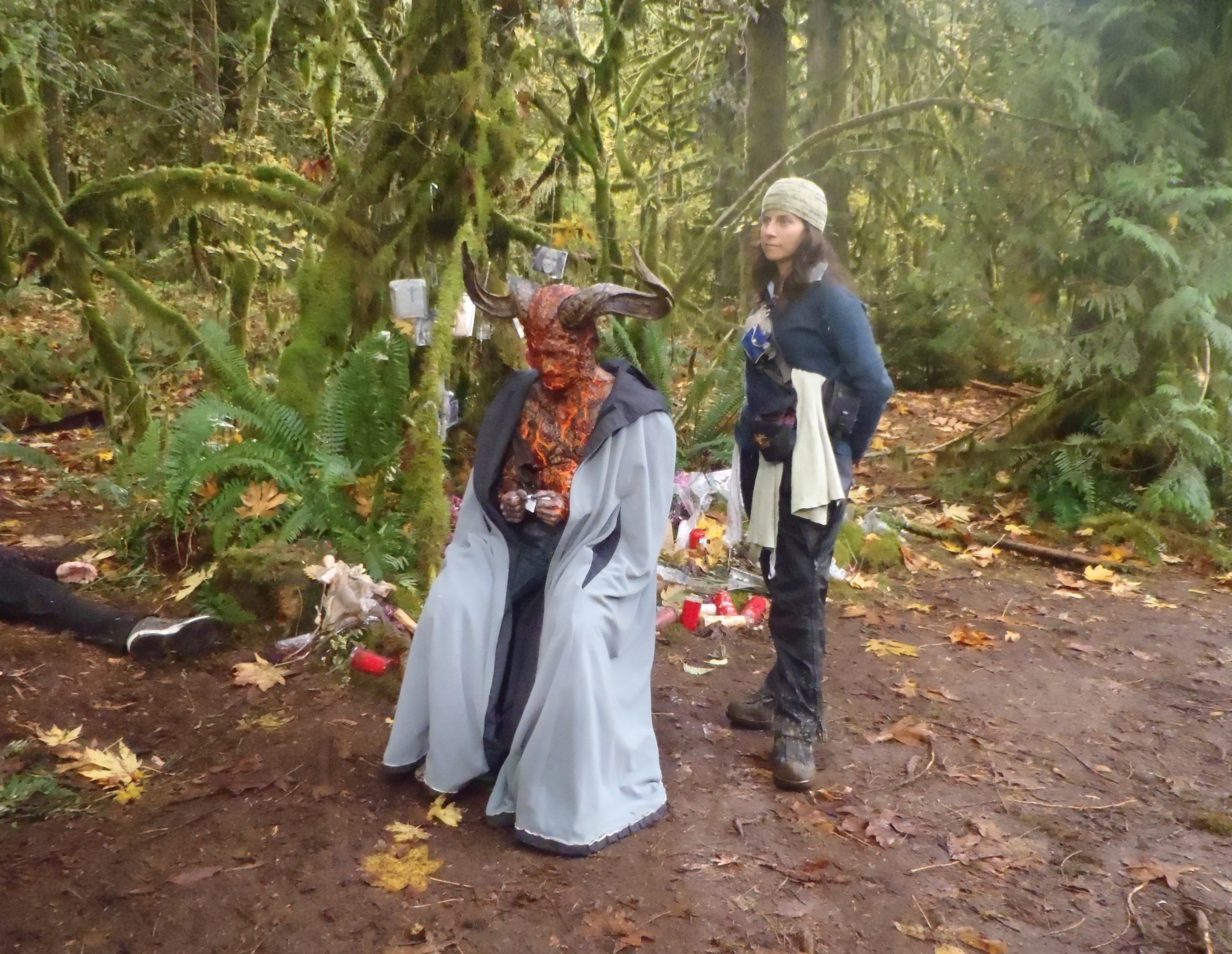
Daneil Radcliffe (Left) as Ig Perrish and Dawn Climie (Right) on set of the award-winning film “Horns”

When a major Hollywood film production plans to bring a story to the screen filled with complex costumes with intricate details that change over the course of the story, ones that require someone capable of staying on top of all of these changes, predicting possible malfunctions and liaising between the costume designer and director to make sure the costume department nails the overall vision for the film—they call in Costume Set Supervisor Dawn Climie.

In fact, Climie’s title in the industry is actually a Canadian title, it doesn’t exist in the U.S. and that’s because usually, at least on smaller productions, Climie’s position is filled by various people, which she touches on in our interview.

Climie, who was nominated for a Primetime Emmy Award along with Costume Designer Bob Mackie back in 2006 for their work on the series Once Upon a Mattress, has amassed an overwhelming list of diverse credits in the industry over the course of her 25-year career.

Some of Climie’s credits to date include the films The Chronicle of Riddick starring Vin Diesel and Judy Dench, Miami Vice starring Jamie Foxx and Colin Farrell, The A-Team starring Liam Neeson and Bradley Cooper, the Oscar Award nominated film Tron: Legacy and many, many more.

While Climie’s work in film is beyond dazzling, the sought after costume set supervisor has also been pulled in to lend her skills to massive television undertakings as well, an intense challenge considering that scripts change daily, sometimes just before the production is scheduled to begin shooting. Climie’s contributions to TV series including Once Upon a Time, Exes & Ohs, Secret Agent Man and Kyle XY, have helped ensure the continuity of the costumes, and in the end, the credibility of each show.

If you’re interested in the magical world of costume design for film and television, specifically the intricate and vast work of a costume set supervisor, then this interview is a must read.

Not only will you learn about the responsibilities that this integral creative contributor takes on during a film and television production, but Dawn Climie generously gives us a thorough break down of what it takes to be the best in the profession, tools of the trade, as well as dishes about some of her most memorable projects.

To find out more about Dawn and her work you can also check out her blog: Don’t Shoot The Costumer

TTNN: Where are you from?

DC: I was born in Kitchener Ontario but I grew up in Leduc Alberta, a small city 20 minutes south of Edmonton, the capital of Alberta. I moved to Vancouver BC, in 1997 and have been living and working here for the last 18 years.

TTNN: How did you become interested in working as a costume set supervisor on film and television projects?

DC: I had grown up in this industry in a way. My father worked at a TV station in Edmonton, Alberta. My sister and I would spend time at the station where we would get to sit in the booth and watch live news broadcasts, or the back of the sound stage when movies were being shot.

My memories of the dark room blinking with lights on the boards, the feeds from each camera… it was magical. I can remember watching the filming of a dance number for “Bye Bye Blues”… the swing of the period dresses, the wonderful hair and the music filling the space. I was in awe the first time I saw the set for a road and an entire forest built inside a building. For a kid this is beyond imagination, this is magic, and it still is for me.

Costumes became my favorite expression of that magic. The transformation that occurs in a performer when they don a costume designed to be the outward expression of their character is truly a gift to behold. I wanted to be a part of that so the costume department was a natural fit.

The costume department has many different areas in which we can apply our skills. I started in sewing and building the costumes. I have had my hand at dyeing and ageing. I was an assistant designer and a designer, as well as a supervisor/coordinator. Those experiences were invaluable, but it was as a costume set supervisor that I found my calling. Having tried all the positions in our department, and gained the skills and expertise required to be fortunate enough to work at the highest levels, I have known for many years that the combination of the intensity, creativity and the problem-solving environment of working on-set as a costume set supervisor is the position that not only fulfills me professionally but suits my personal skill set best as well.

TTNN: What does the work of a costume set supervisor entail?

DC: Costume set supervisor is a job with many hats, but the guiding philosophy of the work is that I am the eyes and ears for the designer on set. The designer and I talk about the look he or she has created for each character. Although the designer creates the costumes for each character, but it is the way the costumes are worn, the nuances that help create the humanity within each character. When the characters leave the designer and come under my care on set, I maintain all the things that the designer and I have discussed to make each character unique and personalized… the tilt of the hat, the knot in the tie, the neatness or the disheveled appearance of the costume, the shiny spot on the coat where a man might clean his pocket watch… all these nuances are essential to creating believable characters and every detail falls under my supervision.

Just as important as the look is, how that look changes over time for each character is essential to the storytelling as well. I take all the particulars for each character’s look and help maintain and evolve the look from the beginning to the end of the project. Aging and breakdown on fabrics helps indicate the time, effort and circumstance of the journey. Using breakdown and aging techniques on set I ensure that each costume piece reflects the place in time that the character inhabits for each scene, that the proper time within the story is represented by the wear on the costume.

The Set Supervisor is also responsible for the continuity for each character for the show. We don’t shoot a movie in linear script sequence so we need to track which costume pieces are worn and how those pieces are worn from scene to scene. If in scene 1 our leading character walks out of the house with his hat on and a coat over his arm, in scene 2 (which may be shot a month later and possibly in another country) they must be outside the house looking exactly the same.

As a Set Supervisor I am also responsible for the costume crew that we work with. I directly supervise and manage on-set costume crews from 3 to 50 people on a daily basis depending on what the day’s shooting requires. Each scene requires different resources whether it be a stunt scene which requires doubles of the costumes and extra labor to help with those sequences or underwater scenes which require I higher level of cast comfort and logistics planning.

I use our shooting schedule to coordinate with my team for labor requirements, additional costume pieces or doubles, the logistics of our equipment trucks and having the resources we need close to us and I coordinate with each of the departments that may impact how we deal with each circumstance. For example, a stunt sequence requires that I coordinate with, at the very least, the stunt department, the special effects department and the AD department in regards to safety, shooting elements and continuity.

Each day I coordinate with my Truck or base camp Costumer to reconfirm long term schedules and plan each upcoming day’s costume requirements, our lines-ups, and address any details that may have changed. I have to make sure that we have all the costume pieces we need when we go to camera, and we have to be ready to work on the fly and adapt to moment-to-moment changes that may and do occur.

I am responsible for costume specific effects such as bullet hits and blood effects. This involves a culmination of most of the skills and requirements of my job. I schedule any extra resources I might need for the shooting that day and request any additional costume pieces or technical equipment needed. I then plan ahead to the following scenes to be shot after the effect and plan out the breakdown and matching for continuity I will have to do on each costume piece to shoot the next scenes. When we actually shoot the effect I coordinate with Stunts and Special Effects and often the Makeup Department to design and execute the aftermath of the effects (damaged clothing, blood, debris and dirt) then I must match that effect on all multiple costumes for that character.

Ultimately no matter what we do on set, we must track what we do and the look of the costumes before, during and after each scene is shot. I keep notes, photos and scene-by-scene descriptions so that all the info needed can be shared with the entire costume department. This is essential when coordinating scenes that are shot out of my direct supervision such as a second unit or a unit shooting in another country.

TTNN: What is the typical workflow for a costume set supervisor from the beginning phase of a production to the end?

DC: The beginning of a show always starts with reading the script several times and using costume specific software to break down the elements in the script that indicate costume department considerations.

I go through the script scene-by-scene and separate out the cast, day sequences, costume changes, and what will happen in the scene. This can be anything from a stunt sequence to just making dinner during a scene. Breaking down all the details helps me make a list so when I talk to the costumes team I will be able to have a projection on how many costumes that I think may be required for each section of the script, what special elements may be needed and a rough estimate of additional labor for our department.

Once my breakdown is completed I assist with the prep process. I help the designer with cast and background fittings, assist with the aging and breakdown process to help prepare the costume pieces for shooting, and I deal with cast, costumes and specific fabrics during camera and lighting tests.

Much of my prep is spent in production meetings and departmental meetings addressing cast costume and safety concerns in relations to stunts, rigging, special effects, extreme locations and other vital elements.

Once I get on set, my main tasks are two-fold; to work with the designer to make sure that their vision is maintained for the look of the show, and to track and maintain costume continuity. I keep notes and photos on everything pertaining to the costumes each day.

I need to ensure that my team of costumers are all working to achieve the same goals. That means coordinating the continuity across all the team members and working units and ensuring that each team member has a clear visual understanding of the designer’s vision.

I also need to keep an eye on our upcoming schedule so I can plan ahead and make sure myself and my team will be ready for the days ahead.

I work with our costume coordinator in the Costume Office to organize crew and equipment we should bring in depending on the requirements of each scene we are shooting and the logistics of each day’s shooting.

Planning for weather is vital to our process. I must assess on an hourly basis, as well as days in advance, what my requirements may be on-set each day in relation to weather.

The creative side of my work is to ensure that the costumes are having the impact that the director and designer want, this ranges from ensuring that the drape and flow of a Princess’ gown is as glamorous as possible to making sure that the flack jacket on a veteran soldier looks like he has been wearing it all his life to ensuring that blood work, bullet hits and wound damage conform to the desires of the director and the restrictions of standards and practices.

Once the filming of the production is finished, my main focus during wrap is to complete and deliver the continuity book to the designer and the creative production team. The continuity book contains all my photos and notes detailing each every scene of the production. This is the reference that will be referred to should any additional footage be necessary or if the production is to continue either through series or sequels in the future.

TTNN: Can you describe some of the film projects you’ve worked on and some of the challenges you’ve faced?

DC: The sets for The Chronicles of Riddick were some of the largest indoor studio sets that I have ever worked on… also one of the hottest. We did one shot inside the main space ship that had 150 fully latex and foam armor suited soldiers standing shoulder to shoulder. It was crazy hot. We had to do more than watch the costumes, we had to be very aware of Vin Diesel and the rest of the cast and background players that were covered from head to foot in latex rubber and spandex. There was very little ability for their bodies to cool easily. Just standing was unbelievably hot for everybody, but when they had to run across the stages, do stunts or rigged cable falls or jumps these were times that we needed to be aware of the potential for heat related maladies! Costuming is often much more than the costume being worn, it is about the people that are wearing them and what needs to be accomplished in that costume that makes the movie.

The Mission Impossible series of films is known for its constant drive for bigger better faster action sequences. The crew has to adapt! I can’t think of a day on Mission Impossible: Ghost Protocol that didn’t involve jumping onto or off of something that was either very high or moving very fast.

But I think the most memorable time were the days we spent in Dubai on the Burj Khalifa, the tallest man-made structure in the world. We were filming the sequence where Tom Cruise’s character has to free climb on the outside of the building using some high tech gloves. Myself and a few other crew members had to spend our days in 5 point harnesses attached to the cement ceiling of the building, while helping strap Tom into the different harnesses that would be needed to do each piece of the stunt. I spent a lot of time with the stunt and rigging teams. We had to plan and prepare each harness, pads and costume piece that would be needed to get the shots safely and seamlessly for the sequence.   I can still remember the feeling of lying on my stomach leaning out the open window on the 123rd floor, as myself and the props person tried to repair a malfunctioning light on one of Tom’s climbing gloves. The view was astounding but my prayers were, ‘Oh lord don’t let me let go of the glove!’

Tron: Legacy was visually stunning and a challenge to work on. We were continuing a story that had started almost 30 years before, the original Tron was filmed in 1982. The costumes were an amazing advancement that had never been tried in film costuming before. The foam latex superhero suit is a costume item that has seen a definite rise over the last three decades. With Tron: Legacy we added electricity and light. As costumers on set we had to take our skills to a whole new level. The foam costume material was impregnated with thin wiring that fed battery power to external light strips. Light in a costume was something that had never crossed my path before. So learning about a dressing a light grid suit, dealing with the replacing of broken lights, and re-patching broken wires was something that we all had to grasp on the fly.

For this show when our actors over heated in the suit, we had more to deal with than just a sweaty cast member. Our usual on-set repair kits that carried top stick, thread and lint brushes were changed out for tattoo ink, wire connectors, light strips, glues and powerful cooling fans.

I joined the Bourne Legacy team in Alberta for the snow sequence that starts the movie. We had an impressive challenge in this. The cold and snow are always hard to work in. Dealing with the correct layering to combat the extreme weather conditions and still create a costume that looks great on camera can be a challenge for all those involved, especially the cast.

For the opening sequence in Kananaskis, Alberta, our lead actor Jeremy Renner had to helicopter onto a mountaintop, climb rock outcrops and glacier falls, and swim in an almost frozen river below a waterfall. All of these locations were a challenge in keeping the actor warm and safe during the shoot. But the biggest challenge was the logistics of providing that care to Jeremy and all the stunt performers as well as packing and carrying all the gear required to do that job in each location. Luggage restrictions are much tighter in helicopters!

Miami Vice was an amazing and rewarding challenge because of the weather and the incredible amount of travel that was involved. Fortunately the basic requirements of how to do my job don’t really change, no matter where I am or what language I am speaking… but the hurricanes definitely provided a unique experience!

While we were in Miami we had 6 tropical storms and 2 hurricanes; Katrina and Wilma. It was something I will never forget. I was so impressed with the local crew and how they dealt with the weather, they definitely have my highest respect. The travel was also extreme. We went from Miami to the Dominican Republic, to Uruguay then to Paraguay, back to Miami and returned to Uruguay. The biggest challenge was managing the international shipping demands on our extremely tight travel schedule. We boxed, loaded shipped and then unboxed the costumes… and did it all again… and again… and again. Together with some top-notch local costumers we managed it all and made some memories that will last forever.

TTNN: What was it like working on the series Once Upon A Time?

DC: Once Upon a Time was a wonderful chance to get to work with the incredible Eduardo Castro, who is the costume designer of the show. I loved watching him dash off flawless sketches of the stunning fairytale outfits we use on the show each day. It was even more magical when those costumes finally arrived on set for us to use during shooting… the magnificent leather capes, headdresses of lace and crystal, sequins and shimmering gold thread. But on set we have mud, horses and rain!

Our challenge was to maintain the magic throughout the Pacific Northwest winter. A princess can never look soggy, a king muddy or a charming prince waterlogged. We developed some intense strategies to keep our cast and their costumes dry-ish and magical. Neither the cast, myself, or the horses were all that impressed with having a muddy cape wrung out all over us, but it does make for a few good soggy laughs!

TTNN: What has been your favorite project so far and why?

DC: This is always a hard question… I have had so many wonderful projects and all for different reasons; but I think that Once Upon a Mattress has been my favorite project so far!

It was not a big budget and we had huge challenges trying to keep up each day, but I had an amazing team of people to work with. The costume department as a whole, and a brilliant group of people on set, starting with the cast and director right through to the PA’s, were wonderful to work with.

The cast were people that I had grown up watching as a child; Carol Burnet from Annie and of course The Carol Burnette Show, Tommy Smothers who taught me how to use a yoyo, Edward Hibbert from Fraser and all the other amazing and talented cast.

I was introduced and walked through all of Carol’s costumes by the infamous American designer Bob Mackie on the day they arrived. This for me was beyond a dream, for any costumer just meeting Bob Mackie would be a lifetime achievement!

Invariably it is not how successful a project is at the box office, the locations or the scope of the work that makes a project truly memorable… it is the people you go into the trenches with. In the case of Once Upon a Mattress, the cast and crew were both down to earth and the very best at their crafts, a combination that etches this production in my heart.

 TTNN: What projects are you currently working on?

DC: I just wrapped on the The Man in the High Castle, a TV series for Amazon based on the Philip K Dick novel of that name. It is based in 1962 but with a scary twist; the Nazi’s and the Japanese won the war in 1948 and the US has been under occupation for the last 14 years.

For me the scripts are intriguing, the story is fabulous, although disturbing in the possibilities. But the costumes are a very subtle combination of period and fantasy, and what happens to the cast each episode keep us on our toes with helping create that believable world. Our costume designer Audrey Fischer is astounding. She keeps a smile on her face even while creating the costumes for our complicated world.   And our cast is beyond measure. The passion they put forward in to each day keeps us all pushing ourselves to take the bar higher and higher to create an astounding finished project.

TTNN: What projects do you have coming up?

DC: I am soon to start a Bruce Lee biopic, Birth of the Dragon. I am thrilled to be joining this team. As it is another period story set in the 60’s, this project proposes to be fascinating and challenging.

TTNN: Do you have a passion for working on a specific kind of film or project, if so what kind of project and why?

DC: I love to work on it all, super heroes in foam suits, sci-fi green screen, any period piece and Disney fairytales. I mean how many people get to say, “ I have to go put Rumpelstiltskin in his suit of armor, can I call you back?”

But if I had to choose… I truly love working on projects where I get to make a mess!   I love shows with lots of blood. I teach classes in film blood, and I volunteer at museum film related events to show kids all about film blood, so it is definitely a passion of mine. But really, if I get to use my creative skills with breakdown, time-wear, dirt and blood, these projects add that extra dimension of deeper creativity to the intellectual challenges of planning and logistics, and tracking continuity.

TTNN: As a costume set supervisor, are you usually hired by the production company or the head costume designer?

DC: The Costume Designer always hires their crew. I have had the pleasure to work with some truly talent and wonderful costume designers from around the world including Michael Kaplan, Mark Bridges, Janty Yates, Shay Cunliff, Eduardo Castro, Audrey Fisher, Monique Prodhomme, Karen Patch, John Bloomfield, Chris Hargadon and Bob Mackie.

Some of the production companies I’ve worked with on projects over the years include Disney, 20th Centery Fox, Universal Studios, ABC, Focus Features, Paramount Pictures, Amazon, Sony Pictures, Warner bros pictures, New line cinema and Bad Robot.

TTNN: What makes a good costume set supervisor?

DC: Deep technical understanding of costume construction, fabrics and other costume elements, and film related techniques for manipulating costumes and fabrics is essential to being an excellent set costumer. As in any profession, an instinctive understanding of your basic tools is vital to operating at the highest technical and creative level possible.

A brilliant costume set supervisor is highly organized. From breaking down script elements to tracking and documenting costume continuity, the Set Supervisor must be able to plan and organize the work flow of that information, have vital details at their fingertips and be able to disseminate resources and information effectively. Today this means working with the most effective and efficient software and technologies available and being able to adapt technologies and strategies to constantly changing conditions.

A respected set supervisor is a strong leader. A film set is a high intensity, high-pressure environment where ethics are sometimes challenged. The set supervisor as well as organizing and running the onset costume crew, must have a working knowledge of the contracts that we work under and the production goals for an efficient shooting production. The Set Supervisor must be able to stand up firmly and respectfully for their cast and crew in matters of safety and due diligence.

An invaluable costume set supervisor is an effective communicator– they are often at the center of questions and issues between the costume designer, the actors and the director. In order to effectively negotiate these questions and concerns for a best possible outcome, the costume set supervisor must be first and foremost an empathetic listener and communicator. Efficiency as a communicator becomes vital when disseminating vital and changing information to the rest of the on-set team and to the designer and costume office personnel and to the other departments affected by costume decisions.

TTNN: What specific skills do you have that separate you from the rest of the costume set supervisors working in Hollywood?

DC: The position of costume set supervisor is a Canadian designation, there is not a position in Hollywood that is comparable. When I work in the United States I am usually given the title of Key Set Costumer and this is a very unique designation… let me explain. In my experience, the costumers working in Los Angeles are some of the very best in the world. But the costume departments in Canada and the US are structured differently. Because my job as a Costume Set Supervisor in Canada gives me the combined experience of being responsible for the continuity of the entire cast, organizing and running the set costume crew, liaising with the production regarding workplace issues, and being the designated on-set head of department, I am considered a unique resource in the Hollywood and US industry.

Technically my formal education in Period Costume Construction and over 2 decades as a seamstress provides the backbone for my 25 years in film, theatre and television in all aspects of costuming. My leaderships and organizational skills have been honed on multiple international blockbuster feature films and hundreds of North American Productions.

I am tremendously fortunate that when US Designers are looking for that unique skill set and level of experience I get to throw my hat in the ring. To me, that kind of consideration from Designers is an incredible honour and one I do not take lightly.

TTNN: What do you hope to achieve in your career?

DC: To continue learning! As the entertainment industry evolves… and it is evolving at an incredible rate… I am finding now more than ever it is imperative for me to continue learning my craft. This encompasses everything from understanding how digital delivery platforms are affected by different costume fabrics and patterns, to keeping ahead of the curve in on-set technology and techniques, to experiencing filmmaking in different regions of the world to see how indigenous industries have evolved… and more importantly how different cultures approach and celebrate our shared passion.

TTNN: What kind of training have you done in order to work in this field?

DC: My mother brought me into a passion for sewing and creating when I was young. This passion has shaped my formal education as well as my extra-curricular enthusiasms.

After high school, I enrolled in the Northern Alberta Institute of Technology (NAIT) where I studied Tailoring, Dressing Making and Drafting. I followed that with a scholarship to Banff Theater of Fine Arts where I studied the art of Costuming, drafting and building period costumes from ancient Egypt to present day.

I believe as a film industry member it is incumbent on me to self-govern my continuing education. I have taken an immense number of courses and workshops to broaden my skill base and add flair and creativity to my work. Just a few of these include:

  • The Craft of Tying Formal Kimono,
  • Silk Screening,
  • Camera Basics for On-Set Image Assessment,
  • Supervisory Skills for Film and Television,
  • WHYMS workshop on Safety and Hazards in the Workplace,
  • Contract and Union Liaison Workshop,
  • Excel for Spreadsheets and Continuity Templates,
  • Photoshop

TTNN: What would you say was your first foot in the door to the industry? Any advice as to how to maximize your chances for landing that first gig?

DC: My first foot in the door came from my exposure to our local television studio as a young woman. From observing the filming process whenever I could, the crew members at the station could see the passion and curiosity I had for the work. An opportunity came up for a volunteer position with the Costume Department and I jumped at the chance.

Getting your first foot in the door… as an educator (I have the honor of teaching the Blood for Film and Television course for Capilano University here in Vancouver) I always tell any one who asks me how to break into Costuming to look in your area first. Build a resume of volunteer jobs on short films, music videos, anything you can to get some practical experience. Contact your nearest film union office (our national union is IATSE) because they will often have an application that will tell you what skills and prerequisites they are looking for.

If you have the option of a film school then take a look at that as well, this is a great building block.

But if you are at the basics, then learn how to sew. You don’t have to be a couture seamstress if you do not want to go into the sewing room. But you should know how to put up a hem, sew on a button, and repair garments on the fly. These are all things that we need to do every day, from fitting background players and cast in the mornings to closing the holes on an outfit after we have finished with harnesses and stunt rigging in the afternoon.

Understand that you are entering a workplace that is directly connected to the fashion industry and its history. Know your silhouettes. Study period and cultural dress. Know the difference in what the costumes of the 1920’s look like compared to the 1880’s… the difference between desert headwear from the Saharan and Arabian regions… learn how to tie a tie in every knot including a bow tie… yes we use them all!

And most importantly, when you get your opportunity, be willing, be eager to work and don’t tell anybody that you are too good, too smart or too educated to sort hangers or sweep the floor!

Actor Ian Fisher Continues his Success after the Series “Covert Affairs”

Ian Fisher
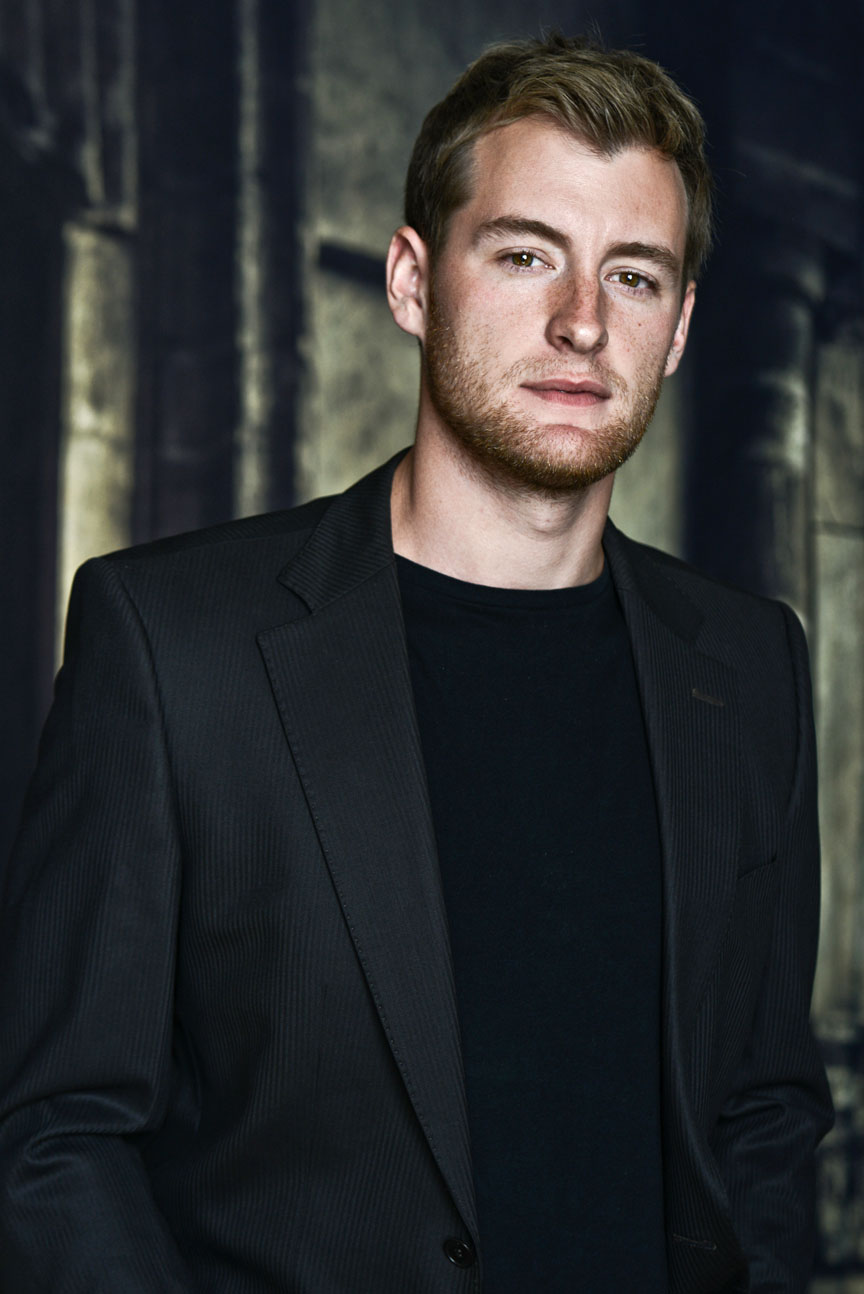
                                           Actor Ian Fisher shot by Denise Grant

High-level CIA officials filled the room, but all he wanted to do was get in, deliver a message and get out without overhearing something above his pay grade.

This was the day-to-day experience of a CIA agent named Patrick, a popular character that Canadian actor Ian Fisher thoughtfully brought to life on the USA Network’s hit spy-action-drama show Covert Affairs.

While Fisher is no newcomer, he was much younger than many of his counterparts on the series, which included accomplished actors such as Piper Perabo (The Prestige, Looper, Coyote Ugly), Christopher Gorham (Justice League: War, Ugly Betty, Felicity) and Peter Gallagher (American Beauty, The O.C., While You Were Sleeping). However, the dynamic approach Fisher brought to his character on the series made his performances flow seamlessly in line with those of the veteran actors as though the cast had been working together for years.

When Fisher first landed his role on Covert Affairs, he decided early on during the process of developing his character that he would approach Patrick with a quote from the film Ocean’s Eleven in mind.

In Ocean’s Eleven, Rusty explained to Linus, “He’s got to like you, then forget you, the moment you’ve left his side”; and, as Fisher’s character in Covet Affairs was continually the show’s bearer of bad news, the quote was the perfect inspiration. Ironically, though Patrick was known over the course of the fifth season for bringing the kind of news that would throw a monkey wrench into the CIA’s plans, this was actually good news for Fisher as his character gained traction with fans and social media.

“My character did this so often that the writers of the show once tweeted ‘Patrick, the harbinger of doom’ during an episode broadcast,” Fisher said.

Fisher’s roles span the gamut. The actor has proven his prowess in practically every genre, but where he truly thrives is in the world of comedy and drama. Last year he guest starred on the series Reign, which received a People’s Choice Award for Favorite New TV Drama the very same year, as well as Beauty & the Beast, which won the People’s Choice Award for Favorite Sci-Fi/Fantasy TV Show that year as well.

Fisher’s impressive career has allowed him the rare opportunity to become a range of different people through his characters, but few have hit home for him like his recent role in Glory River, a film about a small town obsessed with its hockey team.

“It’s kind of along the same lines of what Friday Night Lights did with football,” Fisher said.

Fisher connected with Glory River because he grew up in the small Canadian town of Vernon, British Columbia. Vernon’s local hockey team of 17- to 20-year-olds was so popular that its players were “treated like gods,” he said.

Fisher used his experience of living in such a hockey-crazed town to his advantage for his role as the film’s star, Noah Gallagher, the town’s most-admired player with long shot hopes of someday playing professional hockey.

“I loved playing Noah in Glory River because of the personal connection I felt to him,” Fisher said. “We came from very similar worlds. We both were raised by single mothers, both from small towns, and both have big goals.”

The story of Noah has been the story of countless Canadians, Fisher said. Hockey’s deep and meaningful roots in Canadian culture was a large reason for Fisher wanting to play the part, and play it well.

“I knew I could do him and that story justice,” Fisher said. “It’s a story that is so ingrained in the lives of Canadians. I was really excited to be able to bring it to the screen.”

Glory River, which opened at the 2015 Calgary International Film Festival on September 29 and will screen again on October 4, was directed by Blake McWilliam, whose films have previously been nominated for awards at the Sundance Film Festival and SXSW Film Festival.

With Fisher’s passion for his craft, there’s no doubt that the talented actor will continue to shine for years to come, and his role in Glory River is definitely going to clinch some award nominations on the festival circuit this year.

Actress Aleksandra Kovacevic Showcases her Talent Across Genres

Aleksandra Kovacevic
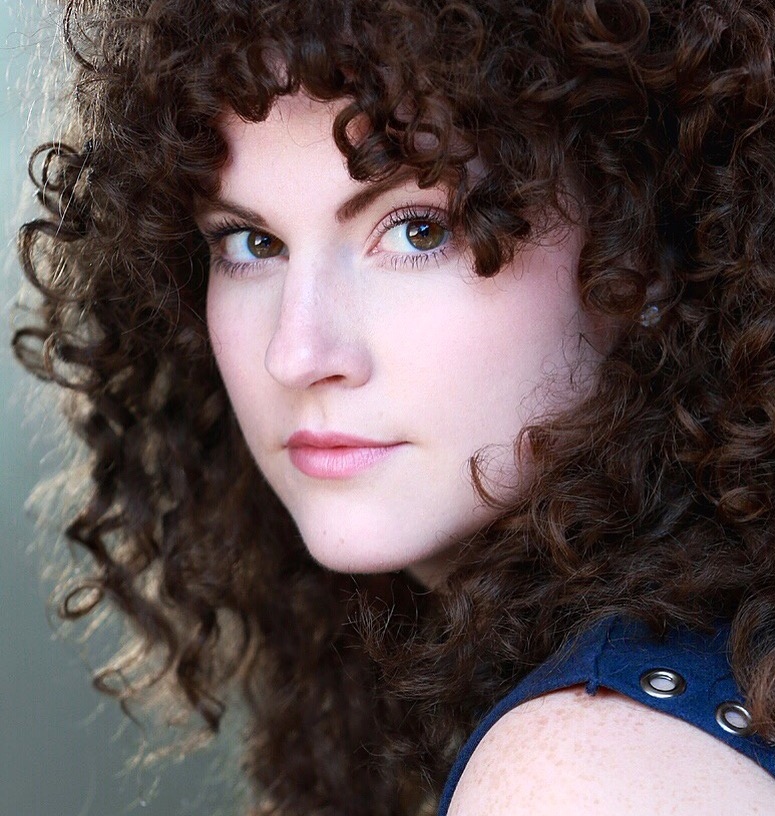
Actress Aleksandra Kovacevic shot by Travis Tanner

Hailing from Sarajevo, raised in Germany and trained in Los Angeles, trilingual star of the stage and screen Aleksandra Kovacevic has won over audiences on both sides of the Atlantic and become a mainstay in the industry.

In the play 4.48 Psychosis, Kovacevic takes on the difficult task of portraying both a therapist and the therapist’s patient. The play has a deeply tragic history, which is as important to the plot as the actual performance. 4.48 Psychosis was written by British playwright Sarah Kane who suffered from debilitating depression herself. After she completed writing the play, Kane committed suicide before its debut. The unsettling and grim context of the story makes it that much more powerful, and Kovacevic brought that sense of emotional magnitude to her performance in the play.

“The role of the patient was a paradox, like a free spirit trapped in her own prison. She suppresses her path and tries to reflect her fate on others,” Kovacevic said of the role. “She is Sarah Kane, and still can’t accept that she is ill. If she dies both of them die. My character is basically telling her not to give up on herself.”

4.48 Psychosis
Flyer for the production of “4.48 Psychosis”

Kovacevic’s work is not bound by the conventions of genre; she is as at home in comedic roles as she is in psychological dramas. In the 2015 hit Netflix Original Series Wet Hot American Summer: First Day of Camp, she plays a counselor who auditions for the Camp Talent Show. The series is directed by David Wain (Stella, They Came Together, Role Models), two-time Emmy Award-winning co-creator of the Adult Swim live-action comedy Children’s Hospital. The role sees Kovacevic act alongside an enormous all-star cast, including Amy Poehler (Parks and Recreation, Saturday Night Live, They Came Together), who plays the camp counselor and brutal camp play director Susie.

In an incredible display of her talents as both an actor and a writer, Kovacevic played the lead role in Bertilda, a film she wrote herself. As the title character Bertilda, Kovacevic portrays a marionette, which serves as a symbol for the restrictions placed on women in the past and present. Throughout the film, Bertilda gradually begins to break away from those limits. Kovacevic spoke about the ways in which she planned and visualized the production from start-to-finish.

“I started thinking about the role of the female and what I could relate to,” she said. “Things like being seen as an object, being underestimated, men thinking females can’t have a position of leadership and women being seen as the weak link. The change of the female role, now and then.”

She spent countless hours studying not only the history of women’s struggles, but also the finer details like set design and of course, the style with which she would take on the role of a marionette puppet. It takes careful choreography and precise movements to perfectly embody and portray a wooden puppet whose movements are controlled and restricted by strings, and Kovacevic did so masterfully.

“I started to develop my character in her full motion when I started to practice with strings,” said Kovacevic, who actually used both bungee cords and ropes to help her become a living puppet. “To bring this project to life, I needed to practice a lot. A puppet doesn’t have a mind, her head is made out of wood.”

Everything – from the gorgeous set, painstakingly designed like an idyllic dollhouse and overflowing with symbolism to set the mood for observant viewers, to the ‘50s style of decor and wardrobe, down to the Nutcracker-esque living doll at the core of the film – are carefully and thoroughly planned and intended to create what Kovacevic calls “a fairy tale for grown-ups.”

Audiences can catch Kovacevic in the film Bertilda, and in Wet Hot American Summer: First Day of Camp now on Netflix. Other upcoming projects include Sebudai, set to begin shooting in winter, and Animal Lovers Anonymous, a feature length mockumentary-style comedy set to begin production in 2016.

An Interview with Dazzling Polish Star Diana Matlak

Diana Matlak
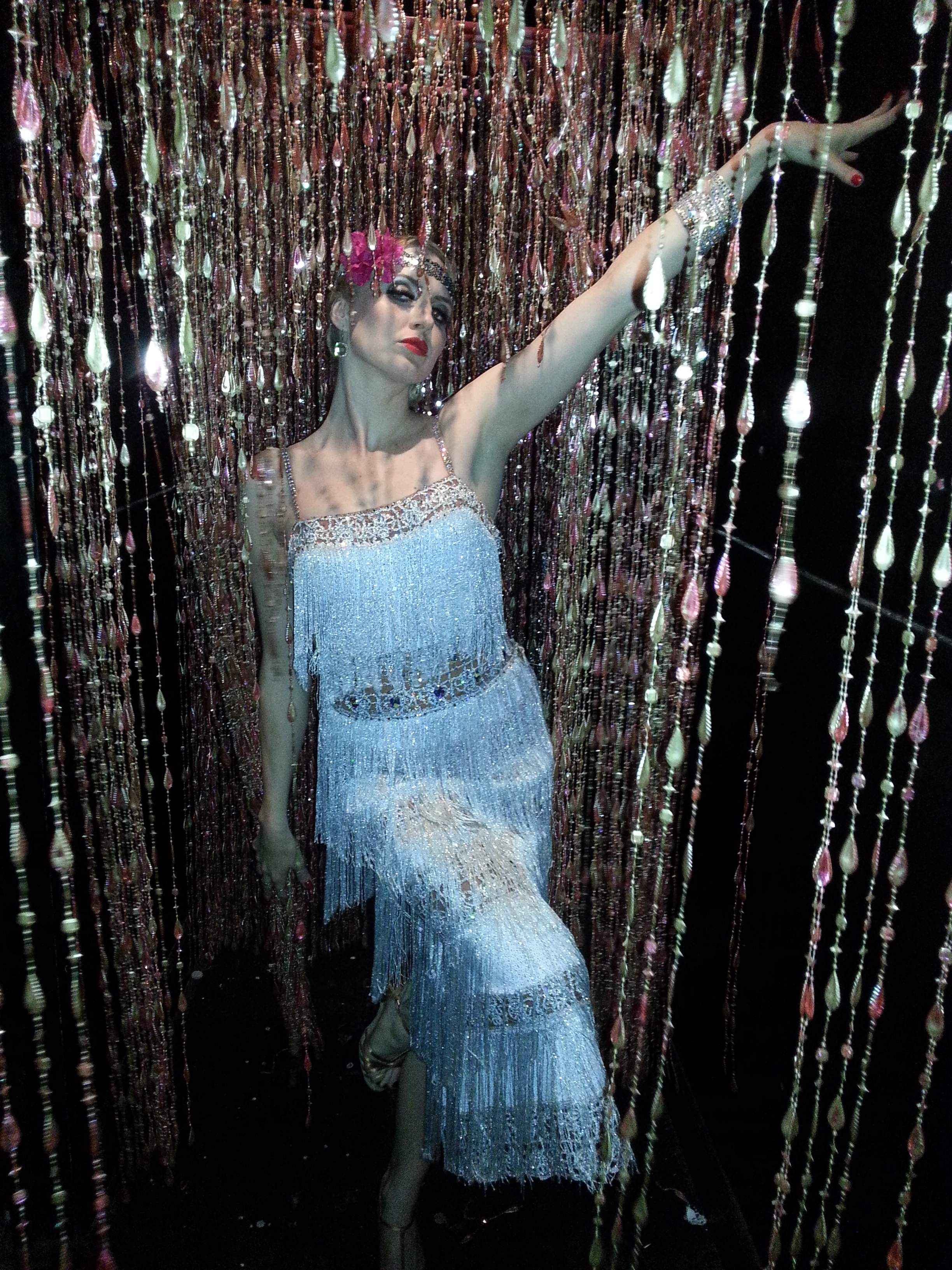
Still of Diana Matlak in the music video for Celeste Stoney’s “Kool” shot by Maksim Leonov

We over at Tinsel Town News Now recently had the pleasure of interviewing dynamic Polish actress Diana Matlak, the captivating star who played Deena Kravitz in Aditya J. Patwardhan’s dramatic film Red House by the Crossroads, which screened at the prestigious Cannes Film Festival earlier this year, Sarah in Allen Obisesan’s film Beneath the Surface and Jenny in Yi Zhang’s film Packing Up. In 2015 alone Matlak starred in more than eight films, each one showcasing a different side of her unparalleled talent.

The kind of actress that captivates her audience with little effort, Diana Matlak has also been featured in several hit television shows including Bones, American Crime Story, The Real O’Neals, Scandal, Black-ish and many others.

Back home in Poland, Matlak was landed a role on Na dobre I na zle aka For Better or For Worse, a highly popular medical drama that is one of the country’s longest running series, as well as roles in two national commercials for Zywiec Beer and Vanish, a massive cleaning products company.

Matlak’s successful film and television career places her in the upper echelon of Polish actresses currently working in the entertainment industry internationally. One aspect of her talent that separates her from others in the industry is her long history as a professional Latin dancer, which has endowed her with a rare level of grace and an ability to move through scenes like few others can.

To find out how this inspiring artist got to where she is today, and what’s next for her in terms of upcoming projects, make sure to check out our interview below!


TTNN: Where are you from? When and how did you get into acting?

DM: I was born and raised in Poland. I got into acting after I finished my dancing career. I am a professional Latin dancer. I have been training and competing for 15 years. I have the highest, international Class in Latin, and after I finished dancing I started to teach. Even though I liked it, I felt empty and I wasn’t completely satisfied. I knew I had to be on stage. So I started taking different acting classes: theater, acting for film, Meisner etc., and I fell in love with acting and I knew that this is it. I landed an agent and started going out on auditions. I did a couple of commercials in Poland as well as a TV show and in 2012 I started considering coming to the US.

TTNN: Can you tell me a little bit about the film, television and commercials projects you’ve done?

DM: In Poland I was in a national Zywiec Beer commercial, which aired on all of the main Polish TV stations, as well as a commercial for Vanish cleaning products. Both times I had a blast on set. I played a patient on the Polish TV series Na dobre i na złe, (For better or For Worse), a medical drama series broadcast on TVP2. The show is currently on its 17th season, and with over 600 episodes, it is the longest-running primetime drama on Polish TV. The show revolves around the lives of doctors and patients in a hospital in Leśna Góra near Warsaw.

I played Deena Kravitz in the film Red House by the Crossroads directed by Aditya J. Patwardhan. The film follows Ester Kravitz, my character’s mother, whose husband was murdered during the Second World War at the hands of a fleeing Nazi officer, and as fate would have it, that officer’s estranged son, Edward Melies, is her doctor. The story is about a man’s face-off with the sins of his father and a woman’s contemplation for finishing the cycle of revenge.

My character was responsible for her mother, who was struggling with the illness and who couldn’t forget about what happened during the war. Deena was also responsible for her mentally sick, younger brother. My role was very demanding, because Deena was supposed to be a very strong young woman who helps her family, in fact she is responsible for the family, but it was a challenge because of all of the obstacles in her life, for example: the situation in the house, no father, a mentally ill younger brother and a sick mother. Deena was actually very sad and overwhelmed, but she never shows it.

In the film Stay directed by Yining Yan I played Lady in Red. The film has two parallel stories, one where a pregnant woman is having contractions with her husband standing by her side, and the other where the husband, who dresses like a detective, chases a drug-dealer. In the film, as the wife’s time-line goes backwards into the past, the husband’s time-line goes forward with the ending revealing that the detective actually died in the mission and chose to stay with his wife as a ghost. My character, which is the couple’s neighbor, watches the sees the detective get shot and does everything she can to save his life.

I played the leading lady in the music video for Gaurav Bhatt & Shikha Bhatt hit song “Katra- Katra,” which was directed by Aditya J. Patwardhan. The video revolves around a girl who finds unfinished sheet music on the beach. She is very intrigued and curious about the composer that created it and she wants to finish the piece. She is almost obsessed with finishing it. She meets a friend and tells him that it looks like the composer couldn’t express the feelings he wanted to, and when she finally finishes the music, she meets the composer.

In the film Bring me flowers directed by Siru Wen I played the lead role of Emma, a former photographer who works in a brothel. Emma suffered from depression for years; and when her boyfriend, the biggest love of her life, breaks up with her she doesn’t know what to do, her depression only gets worse until she finally decides to start working in a brothel. She hates it. She is very unhappy, and doesn’t know how to deal with all of the issues she has. Ultimately she wants love and understanding. Sage comes into the brothel and develops feelings for her and slowly falls in love with her. But she still thinks about her ex boyfriend. Emma likes Sage but everything reminds her of her ex boyfriend. Emma is overwhelmed and she doesn’t know what to do, and finally depression wins. She decides to finish her life committing suicide. While Sage is in her room she jumps out of the window.

I was also in the films Mac Daddys Vegas Adventure directed by Mac Jay, Perfect Illusion, a comedy directed by Allen Obisesan, Dead Heart directed by Ogemdi Udegbumam, Speak Softly, a dramedy directed by Chad Figuredo, Something good and Packing up directed by Yi Zhang, With You directed by Colin Yan, Beneath the Surface directed by Allen Obisesan, Touch directed by Rishab Gulati, Shameless directed by Monique Oberholzer, Bethany directed by James Cullen Bressack, Buddy Solitaire, a comedy directed by Kuang Lee, Cans and Candles directed by Tarak Ojaghi, Restoration, a horror film directed by Zack Ward, Coincidental Romance directed by Joseph Brandon and Roller Coaster directed by Bradley Howkins.

I’ve also been featured on the television shows Scandal, Bones, American Crime Story, The Real O’Neals, Black-ish, Heartbreaker, Rosewood and Grace and Frankie.

In terms of commercials outside of Poland, I’ve been in major international campaigns for Greetings from Europe – EXPO 2015, Heineken Beer, and a Super Bowl commercial for Chambord. I was also in music videos for the artists Arash, and Neo.

TTNN: They are all very different, what made you choose to participate in these projects?

DM: All of the projects are very different, but they have one thing in common – all of them are very interesting. The scripts are well written, the stories are exciting and the people working on these projects are fun to work with, but at the same time very professional.

TTNN: You get approached all the time to work on projects with people, what makes you pick one role over another?

DM: I always read the script first, and then if I like the story and my character, most of the time I’ll want to do the project. For me stories are very important.

TTNN: What has been your favorite role so far and why?

DM: It is a very difficult question because over the course of my career I’ve played a lot of challenging roles. But there are some roles that because, either they were more challenging than others, or because I had more fun with them, they became my favorite.

I enjoyed playing the depressed girl from Bring me flowers because it was really challenging, it was so dark and I had to find these dark situations within my character. I am not a pessimistic person, instead I am super optimistic and I always trying to find a positive side, so it was really challenging to play this character, because she is so different from who I am. I stayed very focused on set– always with headphones on just trying to get into my dark place… I had a lot of fun and it was a great lesson for me.

My second favorite role was Hannah from Coincidental Romance. This role on the other hand was very challenging, because the character was very similar to me. Hannah is a dancer and she wanted to pursue her dancing career in Los Angeles, but after her boyfriend breaks up with her and she gets depressed, it is very difficult for her to move forward… It was really very interesting to play this role, because even though the character and I had a lot of in common, Hannah is a different person, she’s not me. I remember when I was preparing for the role I had to find Hanna’s motivation and her unique objective in life.

TTNN: What is your favorite genre to work in as an actor?

DM: I like all genres. I worked on comedies, horrors and dramas, and I’ve had fun with all of them. Comedies are always fun to work on because the atmosphere is really great. When it comes to dramas, I like to get really deep into my character, so many times I listen to music on set so I can stay focused and concentrate…I’ve worked on two horror films so far, and I would like to work in this genre more as well.

TTNN: What separates you from other actors?

DM: I think that every actor is very unique and exceptional. I know I have a lot to offer as I am a professional Latin dancer, as well as a fitness, aqua aerobic and snowboard instructor. I have trained as a downhill skier for 8 years and I also studied Physical Education at the Academy of Physical Education in Warsaw. I am a sports teacher as well. I have been training Stage Combat for a year and I am really fit. I speak several different languages including Polish, German, English and basic Russian, and I can also do Russian, German and Polish accents.

TTNN: What would you say your strongest qualities as an actor are?

DM: I think the fact that I am committed and hardworking, and that I always prepare for my roles really sets me apart. I am not afraid of preparing for my roles, and I really take my time. I use different acting techniques to create the best character I can. I love to rehearse. I’ve also travelled a lot, and got to know different cultures and interesting people, which I think is very important for actors, because we have to portray people that are often so different from us. I am always open to learn, I observe people and try to learn from them and understand their behavior.

TTNN: What projects do you have coming up?

DM: In December I will be in a music video, directed by Aditya J. Patwardhan. I worked with Aditya on two projects, and I think that he is a great director. I can’t wait. Red House by the Crossroads, a drama that I was in, which was written and directed by Aditya J. Patwardhan, premiered at the Cannes Film Festival in 2015. I am very excited to start working with Aditya again. In January 2016 I will be playing one of the leads in Lotta-ditsy flirt, a film directed by Stephanie Nauli.

TTNN: What are your plans for the future?

DM: My plans are to act, act and act. I love being on set, and I plan to work as much as possible, and of course audition, because without auditioning getting a role is pretty hard. I still take classes at Ivan Chubbuck Studio and I want to continue taking classes, because I think as an actor it is very important to work on your craft all of the time.

TTNN: What do you hope to achieve in your career as an actor?

DM: I would love to make beautiful movies, tell amazing stories and work with great actors and directors. I would love to get challenging roles.

TTNN: Why is acting your passion and chosen profession?

DM: I must say that I never thought that I would become an actress, but acting chose me, and I am very happy that happened. I love my job. I love everything about it: studying the roles, working on sets and even the entire audition process. The best part is, that I get to portray different characters

From “Swearnet: The Movie” to “The Man in the Shadows,” Sarah Jurgens is an Actress We Love to Watch

 Sarah Jurges
Actress Sarah Jurgens in “The Man in the Shadows” taken by Andrew Cymek

For all the fans that feel a bit sad every time an episode of the hit show Trailer Park Boys ends after only 30 minutes, the release of Swearnet: The Movie probably came as quite a delight. Distributed by E1 Films Canada, Netflix and Dada Films, the 2014 release of the film Swearnet: The Movie pulled together the stars of Trailer Park Boys, with the added bonus of Tom Green, Carrot Top and Sarah Jurgens, for 112 minutes of crude laugh out loud comedy.

When CNT denies the next season of their show due to offensive language, Mike Smith, Rob Wells, John Paul Tremblay and Patrick Roach decide to form their own television network known as Swearnet, a haven for all those anti-censorship swear-a-holics, who just can’t seem to curb their tongue.

It seems the boys are back on top, as long as Wells can keep the new network a secret from his psycho girlfriend Julie, played by Jurgens, who brings the perfect dichotomy of anxiety and comedy to the film. The epitome of that crazy, overbearing girlfriend we’ve all known at one time or another, Julie makes Wells’ life a living hell throughout the film.

“I anchored her destructive behavior in deep insecurity and an insatiable desire for attention and drama. It was such a blast to be able to run wild with her,” recalls Sarah Jurgens.

Most viewers will recognize Jurgens from her more dramatic roles on the television shows Covert Affairs, Lost Girl, Republic of Doyle and Beauty and the Beast, but we get to see a totally different side of her in this film.

About working on Swearnet: The Movie, Jurgens says, “The director, Warren P. Sonoda, created a working environment that was fast-paced and creatively freeing. We were often encouraged to stretch the boundaries of the characters behavior, and the improv really kept me on my toes.”

Viewers will have the chance to see Jurgens in a starkly different role than Julie in the psychological drama film The Man in the Shadows, where she plays the role of Rachel Darwin. The film revolves around Jurgens’ character, a newlywed photographer who is haunted by a mysterious man in the shadows who continually appears wearing a brimmed hat.

Based on hundreds of accounts from people around the world who have had similar experiences with this mysterious presence, The Man in the Shadows premiered recently at the Dances with Films Festival in Los Angeles and is slated to screen again at the Cinefest Sudbury International Film Festival on September 22.

“‘The Man In The Shadows’ gave me the permission to explore the experience of being haunted, hunted and stalked,” explains Jurgens. “I was given the opportunity to live in a state of mental unraveling. I enjoyed the challenge of playing a character who was wrestling with truth and illusion, experiencing the slippage of her own sanity.”

The film was also chosen as an Official Selection of the 2015 SCARE-A-CON Film Festival where Jurgens is nominated for a Best Actress Award, and the film is nominated for a Best Feature Award.

Producer Wows Audiences Across Cultures

Producer Min Dai shot by  Jan Cain
                                                                  Producer Min Dai shot by Jan Cain

In today’s global economy, cultural exchange is a valuable tool to possess. So has been the experience of producer Min Dai, who will attest that running productions in both China and the United States has greatly developed her ability to work in varying cultural conditions.

Throughout the last 10 years, Min has been in charge of the production process for countless film, television, and musical projects in both China and the US.

In addition to her work in editing and production, Min has extensive experience in writing, directing, visual effects, sound and cinematography. With such rich, far-reaching expertise in these areas, one can safely say that Min fully knows the ins and outs of the filmmaking process.

Her knowledge about the production process began long before she was able to contribute. As a child, Min learned what it took to run a successful production company from her mother. As a teenager, Min began writing, producing, and directing her own films, as well as those for independent filmmakers.

As a young adult, she began her professional career with the China International Television Corporation. During her time there, Min was put in charge of the production for several television series, including Mission for Peace and King of Silk, which starred major Chinese actors such as Ma Yili and Zhang Guangbei.

While in China, Min also served as executive producer for the King’s Film Company as well as the WIN China Group, where she spearheaded the production and editing processes for many films and commercials.

Min began to collaborate on projects in the United States upon partnering with Jackie Subeck of Footprint Worldwide, a company that works closely with Chinese productions. While working with Footprint, Min led live production for Linkin Park and 30 Seconds to Mars for the Chinese portion of their international tours.

It was not long after these experiences that Min brought her talent to the United States. During her time in the US, Min has focused on film, which she describes as her favorite type of production.

While Min has produced many dramatic films, including Eat a Hot Dumpling Slowly, Device, Icebox, Meeting Gary and 4 Latas, she has also thrived as a producer of documentary films.

“At times,” Min said, “I find documentaries have a much stronger social impact, [and are] sometimes more intense than a thriller.”

Two of these documentaries that were of particular social impact were A Trip to Tibet and You and Me.

A Trip to Tibet followed a group of teachers from Beijing who volunteered to help in a Tibetan school. During their time there, they found that the conditions were far worse than they had imagined, calling attention to the current struggle in Tibet and the country’s need for support.

You and Me offered a somber glimpse into “the dark side of elderly care taking” in the Washington region. The film showed how many senior citizens are abandoned and treated poorly, and highlighted the Washington County Home, which takes in many elderly lacking resources and access to care.

Min recently worked with InterMix Productions on another documentary, entitled Wake Up With Me, which is currently in post-production. The film features a group of people living in New York, and attempted to answer the question: does social media help people connect, or does it prevent them from doing so?

As she has continued to demonstrate her abilities in the US, Min has developed relationships with high-ranking figures in the entertainment industry. One such example is Carl Gilliard, whom Min met during the filming of Meeting Gary.

Gilliard is not only known for his role as an actor in more than 70 films, including Inception, Coach Carter, and the television series 24, but he is also the founder of the Gilliard Media Group. Min is currently working with the Gilliard Media Group on several upcoming projects.

Min’s dedication to making the best decisions in the production process is evident, as she has had a tremendous role as producer of countless critically acclaimed films, television series’, commercials, and events to which she has lent her talent; and she shows no signs of stopping.


RazoracK Takes EDM to New Heights

EDM Artist Omri Efrat
                              EDM Artist Omri Efrat aka RazoracK

Multi-instrumentalist musician, composer and producer Omri Efrat has been making waves with his innovative cross-genre style of electronic music for years, both in his native Israel and in the U.S. At the age of just 11, Efrat began working with digital compositions, combining samples and loops while still in grade school. In addition to creating and performing his original work under the stage name RazoracK, he uses his years of experience to produce work for artists whose styles range from electronic dance music to metal to traditional rock.

As a producer, Efrat has worked with a wide array of performers, including the immensely popular Israeli progressive metal band Distorted Harmony. Formed in 2009, the band has attained a huge following and immense success, and their album Utopia was nominated for Classic Rock Magazine’s Progressive Music Award for New Blood. Efrat said working with Distorted Harmony was fun and gave him a chance to mesh his unique style with theirs.

“I love to work with people from the metal community, they’re very open minded and enthusiastic about new ideas and new directions,” Efrat said. “When I was working with them I tried not to step on any toes and not to take over the production, but to be part of the band, which worked out great because everyone was very pleased with the fusion that we created.”

Efrat plays drums and keyboard and performs vocals, all of which he incorporates into much of his own work. His compositions encompass the full spectrum of electronic dance music, and while the common roots of those compositions are grounded in EDM their varied styles defy genre conventions.

“I feel like the EDM scene tends to sound very monotonic,” he said. “I wanted to prove that you can have EDM elements, a groove you can dance to and hard-hitting sounds, but at the same time you can have a story, a purpose and something of which to relate to.”

The massively popular EDM-centric YouTube channel VitalFM described Efrat’s work as “RockStep,” a label Efrat embraces but believes is too narrow. More often than not his work falls outside the dubstep category, and he prides himself on his genre-blending approach to composing and recording.

“I like the term ‘Electronic Rock,’” he said. “They’re rock songs – they all have a story and a meaning – they’re just built with electronic elements instead of traditional instruments.”

Showcasing his ability to work adaptively around artists’ personal styles, Efrat recently produced Israeli musician Evyatar Sivan’s EP Inside the Abalone. His touch can be felt on the title track, which centers around Sivan’s vocals and soft guitar but bears the mark of electronic ambiance, with a subtle chamber-like echo and rich harmonies.

“After some experimenting with sound design and different instruments we ended up having really huge and epic productions with many different and exotic instruments and it really gave a deep and unique tone to the production,” Efrat said. “We used a broken flute for the end of one of the songs and it sounded really weird at first, but after experimenting with different effects and secret sound design tricks we ended up with something that sounded like a war horn.”

That innovative, outside-the-box approach is what Efrat loves the most, and is perhaps his strongest asset as a producer. With each performance and artist collaboration, his repertoire grows and his style becomes even more distinct. Such a multi-faceted skillset is rare in a musician, and rarer in a producer, so Efrat has understandably become a hot commodity.

“Being AP” Producer Richard Moore Continues Production on the Film “The Baby Killers”  

Richard Moore
                  Producer Richard Moore shot by Charlie Hyams

After producing the documentary feature film Being AP, which focuses on the life and work of one of the most renowned jockeys in history, AP McCoy, producer Richard Moore continues his work on the upcoming documentary film The Baby Killers.

Directed by Alex Grazioli, the director of the film Odyssey in Rome starring Oscar Award winning actress Juliette Binoche, The Baby Killers will bring to light the dramatic true story of La Stidda, a Sicilian-based mafia group.

According to Moore, the film “documents the meteoritic rise of a clan of twenty teenagers in Gela the south of Sicily during the 80s, who after having been denied entry into the Cosa Nostra decided to start there own mafia faction known as La Stidda, which was more dangerous, more ruthless and more evil than anything before them.”

In the early 1990s, La Stidda waged a brutal war on the Sicilian Mafia, Cosa Nostra, a war, which according to Cosa Nostra News led to over 300 deaths. In Gela, Siciliy La Stidda recruited children who would come to be known as “The Baby Killers,” due to their young age and ruthless murder sprees.

“I took trip out to Sicily in April last year and was introduced through a Sicilian author to Orazio Vella who at the time was the youngest baby killer and murdered his first string of people at the age of 14,” recalls Moore. “After being arrested at 18 from years of murders, racketeering, drugs and prostitution, Orazio managed to escape a prison sentence after turning states evidence.”

Through the upcoming film, which Moore is producing with Unit9, audiences will witness first hand accounts of the violence inflicted on the people of the city and other mafia members from the perspective of former La Stidda members, and key features that made the organization far more dangerous than practically any other that came before.

Moore is a master of the game when it comes to producing projects that are both engaging and informative, hence his history of success producing documentary films. However, he has also brought to life shorter form projects that are just as informative and entertaining as his the feature-length productions.

“My goal in everything I work on is to produce a piece of work I can truly be proud of, which is incredibly difficult but it’s the challenge and risk that makes it so exciting. I like many other young producers fell in love with films because of directors like Bernardo Bertolucci, Paul Thomas Anderson and Martin Scorsese,” says Moore. “When I first started in the industry and began to understand who it was that put these epic films together and the tasks and difficulties they went through to make these scripts a reality, it truly inspired me.”

Earlier in his career, Moore served as the senior producer of the Google funded online docuseries Line 9, an extreme sports series that brings audiences some of the most compelling stories from inside the world of BMX, surfing, snowboarding and skateboarding led by Fergal Smith, Harry Main, Madars Apse and Stale Sandbech.

The series, which Moore produced with Bigballs Films, did exceptionally well thanks to Moore’s ability to not only manage the projects logistical and financial aspects, but more importantly, create, inspire and lead a great team.

His talent for understanding what a client is looking for in the end-product, build relationships with the right media outlets and infuse each work with a creative edge that is fascinating to its target audience has made him a sought after producer for a range of production companies and global clients. The mélange of Moore’s unparalleled capabilities as a producer can only be understood in full through an examination of the stark differences between all of the companies that he has worked with over the years.

“In the past I’ve predominantly worked with three very different production companies,” explains Moore. “Partizan, which has been running since the early 90s and is led by incredible directing talent and great ideas fundamentally. Bigballs Films, which works solely within sports media and programming… and Unit9, a tech-savvy contemporary hybrid production company that doesn’t have any barriers, they build software, apps, websites, 360 VR projects and films that live on any platform that exists today.”

While he was still a teenager Moore founded his own production company with Oliver Barron known as Mrs Grey. The company reached astonishing success in a relatively short time, and through the company Moore produced the music video for James Morrison’s “One Life,” which you can check out below, as well as several commercials and the television documentary Find the Torch.

Producer Richard Moore has undoubtedly secured himself as a top producer in the international entertainment industry; and, as the feature documentary prepares for its world premiere, which will take place next month at the 2015 Toronto International Film Festival, and production continues on The Baby Killers, audiences around the world can continue to expect great things from this rare talent.

Producer Filippo Nesci Brings Captivating Stories to the Screen

Producer Filippo Nesci shot by Steve Dabal
                                                                       Producer Filippo Nesci shot by Steve Dabal

Italian producer Filippo Nesci has established a career in the international entertainment industry that is as varied as it is impressive. With several multi-award winning films, documentaries, high-profile commercials and hit music videos already under his belt, Nesci has proven that his unparalleled talent as a producer make him a highly sought after leader in the industry.

In recent years, Nesci has produced the films The Carnival is on Fire, Lineman, Snippets of Wally Watkins, and Wrecks and Violins, as well as the music videos for Meg Myers’ “Monster” and KOAN Sound’s “80s Fitness.” He also produced the Clio Award winning commercial series for Lagavulin last year.

Directed by H.R. McDonald (Happy Birthday, Thomas), The Carnival is on Fire follows a young woman through the woods as she is stalked by a lustful but timid boy who disguises himself behind the trees that line their path whenever she turns around to face him. With beautiful imagery and a melancholic score, viewers witness the girl’s transition from childhood to adolescence through flashbacks as she reflects on the innocence she’s lost over the years.

The lighting included in the flashbacks of the film is magnificent; and, although a producer rarely has anything to do with lighting, in the case of The Carnival is on Fire, Filippo Nesci was an integral contributor to the unique lighting used in the film.

“I was aware that most of the art of the director had to do with his unique use of light. So, I thought that a professional I knew, who personally invents and builds equipment for cameras might invent a new equipment with lights that could be used specifically in this film,” recalls Nesci.

“Thanks to my very good and friendly relationship with this builder, I convinced him to do it having in mind two tasks, at the same time: a) make a tool that was able to generate a vortex of lights, b) make it nice, so that it could be filmed rather than go unnoticed, as usually happens to all camera equipment.”

Nesci’s ability to not only understand the needs and vision of his director, but also seek out the perfect people to make those ideas happen made The Carnival is on Fire a huge success, and the film went on to be chosen as an Official Selection of the Little Rock Film Festival in 2012.

Something that separates Nesci from the majority of other producers in the industry is that fact that he is passionate about changing the world through stories that touch audiences on an emotional level.

“All the projects for which I have been working as producer are very different indeed… However, they always have two factors in common: a) something intriguing from a psychodynamic point of view, b) something affective that really touches me at an emotional level,” explains Nesci.

“Be it a movie, a documentary, a music video, or even a commercial, I take the job only if there is a “narrative” quality in the project since I love stories: to tell stories, as well as to “view” and “listen” to stories.”

For him, a project’s emotional elements and its ability to tap into the viewers subconscious and cause them to contemplate ideas that extend beyond what is unfolding visually is a deciding factor in whether he will produce a project or not. What is even more astonishing however, is the fact that these characteristics are evident in the commercials he’s produced as well. Compared to the way the majority of commercials on television can be seen as shameless advertising, Nesci commercial projects to date shine brilliantly through the mediocre as nothing less than art.

As the producer behind the “Running Motivation” for Orange Mud, a California-based company that makes innovative athletic equipment, Nesci helped create a beautiful commercial for the company’s HydraQuiver hydration pack. The commercial follows a few different runners as they individually traverse some of the most captivating landscapes on the planet; and, no matter how far they travel, their no bounce hydration pack is always there to keep them hydrated.

You can check out the commercial Nesci did for Orange Mud below!

The Golden Girl of Advertising: Producer Susie Liu

Susie Liu
Advertising Producer Susie Liu shot by Robin Gaultier

Advertising ace Susie Liu knows everything there is to know about marketing. That’s because she has immense experience working hand-in-hand with clients – including titans of industry and Fortune 500 companies – to formulate strategies and campaigns specifically tailored to their needs. However, Liu has the added edge of having spent years as an artist, personally creating, drafting and implementing creative concepts to meet the needs of those clients.

“At a young age, I always gravitated towards anything visual or creative,” she said. “As I grew up, I enjoyed spending time in my own company, drawing on paper and eventually on the computer. I looked at ways to improve magazine articles and advertisements, and changed the style to my own liking by recreating visuals on the computer.”

Starting out with ZONE, a cutting-edge advertising production firm based in London, as a digital artist, her incredible talent helped her quickly move up through team leadership positions, and ultimately to the role of content advertising producer.

Prior to her work with ZONE, Liu worked with Wordsearch, a design and advertising company specializing in real estate advertising. In her time at Wordsearch, Liu applied her managerial and artistic skills to massive undertakings such as The Shard in London, One World Trade Center in Manhattan and the ambitious Masdar City in Abu Dhabi, United Arab Emirates.

The iconic One World Trade Center, completed in 2013, was built as a testament to American resilience after the destruction of the previous towers on September 11, 2001. However, beyond its symbolism and status as the tallest building in the western hemisphere, it is a financial and economic hub in the busiest city in the U.S., and as such it was critical that such a costly and labor-intensive project attract the maximum possible amount of renters, businesses and investors. That’s where Wordsearch and Liu came in.

“I was involved with the creative art-working as well as the management of the print production. It was imperative to be organized and have a structure from the start,” Liu said. “It was my role to organise and ascertain from the briefs how long each element would take to execute and deliver in a timely manner.”

The Shard skyscraper in London, the tallest building in the European Union at a fifth of a mile high, is another of Liu’s most monumental projects. Completed in 2012, The Shard relied on the creative mind of Liu and her team at Wordsearch to attract tenants such as Al Jazeera, Gallup, and the five star Shangri-La Hotel, who have all made the magnificent work of art-in-architecture their home.

 “The objective was to entice companies, investors and the sale of residential apartments into this new living, working and social space by demonstrating what was on offer and how it would look once complete,” Liu said. “This campaign was worked on by a team of designers, art directors, Project Managers and myself as a Production Manager, which involved the creative art-working and design of the technical brochures, as well as managing the production on all the other work.”

Liu also helped draw tenants and investors with her campaign for Masdar City, the eco-friendly metropolis currently in development and construction in Abu Dhabi. Built in the desert of the Arabian peninsula, the arcology – or “architecture/ecology” – city is founded on the principles of responsible environmental practices. Featuring a fleet of clean energy and electric vehicles in lieu of personal commuter vehicles, operating on solar and wind energy, and carefully designed with walls, streets and building meant to maximize the cooling power of the desert wind in the hostile region, Masdar City is what many climate scientists and environmentalists envision as the responsible future for humanity.

“Wordsearch was approached by the Masdar client to adapt its existing brand and produce a series of printed and digital marketing literature to entice people into this new, not yet built city. Over a period of 2 years, the requirements were to design and produce magazines, brochures, advertising, leaflets, internal forms, point of sale, exhibition stands/space (WFES), marketing suites, banners, computer generated images and a website,” she said of the intensive process. “The idea was to entice people and investors into this eco-city by demonstrating what was on offer and how it would look when the city would be finished.”

While working for Hogarth Worldwide, a multinational company that specializes in marketing implementation and centralized advertising production for clients worldwide, Liu helped ensure the success of the HTC One ad campaign.

“This was a global campaign that was rolled out to a very tight deadline and within strict security restrictions,” Liu said. “Our job included the translation and localization of all literature in up to 40 languages, and the creation of a variety of advertisements, both point of sale and signage.”

With such an impressive array of clients and projects under her belt, it’s no small surprise that Liu has become one of the most sought after players in the global advertising and marketing fields. With her immense creative and artistic talents surpassed only by her managerial skills and her ability to oversee teams working on large-scale campaigns, she is truly a master of the trade.

Everything you ever wanted to know about Hollywood's who's-who.