Category Archives: Uncategorized

RAFAEL THOMASETO KEEPS THEM COMING BACK FOR MORE

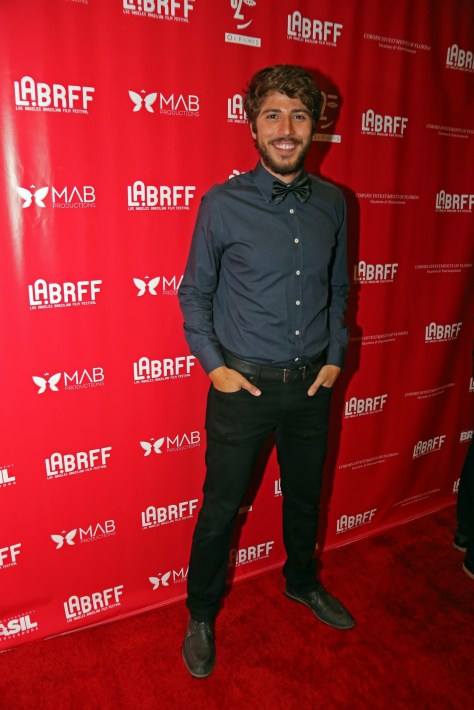
Los Angeles Brazilian Film Festival.JPG

A producer is the closest thing the entertainment industry has to a parental figure. As the head of any production, this individual oversees every aspect from beginning to end and ensures that it all runs smoothly. It’s a tiresome and exhausting vocation, the main reward of which is getting more of the same work. A producer will tell you that they choose this vocation because they love the creative process and being surrounded by others who take part in it. For a successful producer, diversity is the key. Similar to directors, a producer’s work on a notable ad campaign can mean as much (or more) recognition and compensation than on a film or TV presentation. The career of Rafael Thomaseto encompasses all of these different creations, leaving him in the enviable position of having an eclectic body of work and possibilities to pursue. His resume encompasses a strong list of production credits, including independent films, commercials for major brands (such as Chanel, Samsung, Nissan and Jose Cuervo), the clip of the song “Perfect Illusion” by the iconic Lady Gaga and the production of videos for the YouTube. The common thread among all these is the talent and work ethic he possesses. The best advertisement is performing your job with excellence and the word is out about Thomaseto.

As producer of the film “Inherent Greed” (Directed by Zachary Wanerman), Rafael oversaw this production which premiered at the Cannes Film Festival and also impressed Louie Torrellas (CEO of Ambitious Media Productions). Torrellas relates, “One of the executive producers on the film recommended Rafael to my company, Ambitious Media, which was in charge of producing Inherent Greed. We hired him and he instantly took over the project and made it work, to great acclaim. Our first partnership was such a success that as soon as I received the briefing of the entire media production for LA Style Fashion Week, Rafael was the first name that popped into my mind. It was going to be a challenging job but I was sure he was qualified and experienced enough to handle it. Again, my expectations were attained. Once Rafael joins a project, he will do anything possible to make it work and to make it the best.”

Hired by Ambitious Media as head of production for the city’s biggest fashion event would seem to be a completely different environment than that of a soundstage or location shoot for a film however, Thomaseto’s skill set is equally applicable to both. Though Los Angeles Style Fashion Week has been around in some incarnation since the 70’s, the past decade has seen it evolve into a much more expansive and widely attended event. The city and the industry have taken an obvious step towards using their entertainment producing infrastructure to promote the fashion scene as a major player worldwide. While the surroundings and the players are different than the ones he is so accustomed to, many of the applications of Rafael’s abilities are lateral. Instead of overseeing a film production, he developed a documentary which showed the increase of the fashion scene in LA. Locating and hiring the director, cinematographer, and film/photography crew to shoot interviews with the major players in the fashion industry as well as the big name models who would be appearing at the event; all these were familiar procedures for Rafael though they were in a wildly differing venue. The producer notes that his ability to bring aboard world renowned fashion photographer Lemuel Punderson as the main director for the production was a particular source of pride.

A complete dichotomous experience of working with the beautiful people, Thomaseto’s past success on a number of productions for Traverse Media resulted in them hiring him as part of the production team for the experimental “Crypt TV.” Traverse Media, a production and talent management company committed to creative and enterprising content and filmmakers, hired Thomaseto as part of their Production team coordinating the project for Crypt TV. Crypt TV is a digital genre brand co-founded by Jack Davis and horror icon Eli Roth. Declaring its motto as “#WeirdIsGood”, Crypt TV creates and distributes dark, edgy, and scary video content on Facebook and across its family of publisher sites. One year after launch, with 2 million direct social followers and a syndication network of 2.5 million unique monthly visitors on the sites in its network, Crypt TV has quickly become the fastest growing leader in digital productions of this genre. In addition to working with the best up-and-coming filmmakers across the world, Crypt TV creates engaging original video content directly for the Top Hollywood Studios including: Universal, Fox, Warner Brothers, Paramount, Netflix, and others. Crypt TV is uniting fans and creating a movement that’s redefining what the future of the genre among millennials.

Although hired on shortly before the shoot, Rafael quickly solidified all aspects of the production of the three short films which Traverse created for Crypt TV: “Lust Kills” (62,000 VIEWS), “Gluttony Kills” (371,000 views), & Sloth Kills (272,000 views). These three films were produced in just a matter of weeks and had received several thousand views in a mere matter of hours after being released. The expediency and process by which entertainment is created and delivered continues to evolve with technology and the public’s sensitivity to it but the need for professionals like Rafael Thomaseto will be a constant throughout these changes, as will the need of entities like Ambitious Media Productions and Traverse Media. The upcoming projects which Thomaseto is currently involved in with both companies assures this fact. The new edition of LA Fashion Week (which is a biannual event), an indie feature film in 2018, and several short films (a continuation of his partnership with Crypt TV) will all add to the association that Rafael has with both Ambitious Media Productions and Traverse Media in the very near future.


ALYYSA VENIECE BRINGS IT ALL, LIKE A WARRIOR

Alyssa Veniece describes herself as having alter egos which make appearances. This makes a lot of sense when you consider that she has experienced success as an actress, singer, stunt person, fitness model, swimsuit model, and dancer. It seems easier just to have the specific part of your talented personality show up that day for work while the others rest (it would actually allow her to get some rest). While she says this in half-jest/half-truth, it’s obvious that Alyssa is a driven and artistic individual who is capable of tremendous focus. Often the duality of her nature and talents is obvious in the work she presents. Her music is influenced by everyone from Boys II Men to 50 Cent. In productions like NBC’s “Warrior” she dances and acts while her modeling led to the production using stills of her face to adorn the scene. You can’t separate the ingredients of your favorite meal or dessert and still achieve the same satisfaction and this applies to the multiple talents of Alyssa Veniece as well.

What exists in 2017 is a multitalented and confident Alyssa but in the early days (back home in Canada), she was just a little girl in what she describes as a loud, crazy, and constantly laughing family. Her early predilection for casting and directing her sisters and cousins in plays was a strong indicator as to the direction she was headed. Witnessing the Olsen twins as child actors and a strong attraction to Disney movies assured young Alyssa that her career was a certainty, with the added benefit that she didn’t have to choose between acting, singing, and dancing. Her early attraction to acting still remains true all these years later. She notes, “The honesty is what it’s always been about for me. Whether someone plays a villain or a saint, they are honest with themselves in their actions. I’ve always been drawn to the truth of things, and I loved that during a movie I was constantly having realizations about life and the way people are. As an actor we get to tell stories, and teach people, while figuring ourselves out during the process. Certain shoots I’ve worked on have definitely been closure for me of times in my past.  It all connects us to each other and to something greater – anything is possible when you’re playing pretend! I hate limitations and acting frees you from any cage you ever could imagine. I love acting because it’s healing, helpful, hopeful… and ultimately, fun.”

Warrior Photo 2

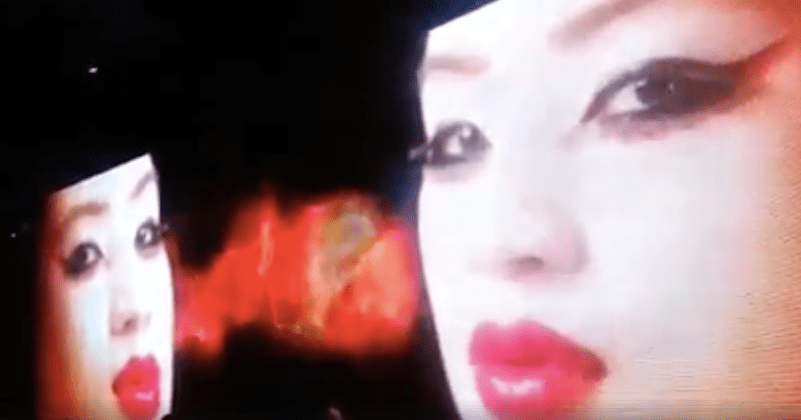
As audience members, we’ve all had that moment when a performance spontaneously created a strong emotional response. One of the talents that has served Veniece so well throughout her career is her ability to synthesize her different talents. Singing, acting, and dancing are different faces of the same person for this immensely versatile and creative Canadian. Her appearance on NBC’s Warrior as a Geisha was just as much due to her strength as a dancer as an actor. Her costar Jade Whitney (whose credits include Suicide Squad and FX’s “The Strain”) “Both Alyssa and I appeared as Geishas in ‘Warrior’. Not only is she an incredible actor and dancer, but she is one of the most hard working people I’ve had the pleasure to work with. One shoot was a particularly long overnight experience; it was grueling for all of us. Alyssa was focused and strived for perfection with every take yet didn’t complain or even show signs of fatigue. There are a lot of talented people in this business but I think it’s those with the right attitude that end up becoming successful throughout their career. I think Alyssa excels in this field because she cares about the craft, is open-minded, and willing to learn new things.”

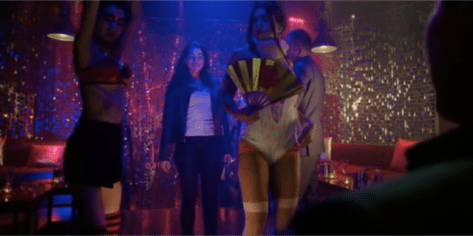
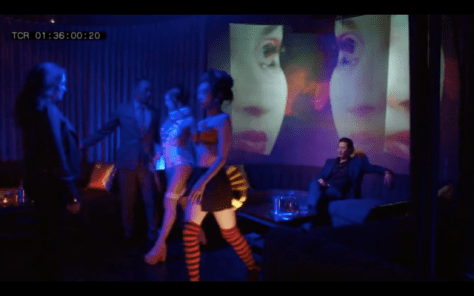
In “Warrior” Alyssa’s role is that of a Geisha for Will Yun Lee’s character, Susano. Her character is extremely well- trained, comfortable with being the center of attention, seductive, and completely at ease with her sexuality. While the mindset of this character does not correlate with Veniece’s own, she uses another of her passions to enable this…music. The actress reveals, “I’ve spent a lot of time studying my craft and using the methods that I’ve learned but I’ve also found that music is an incredibly strong tool. I like different types of music depending on what I’m doing. I typically steer towards hip-hop, trap, pop, r&b, and electronic. If I’m trying to get into character for a role, I will listen to music that I think that character would listen to. If I think they should be in a certain mood, my musical choices will reflect that to sustain my character, especially right before an audition. My song picks vary depending on the intensity of my training and I could easily be listening to a slow song by 6lack or something hardcore like Omelly or Casanova from OHB.”

Warrior photo 12

Alyssa Veniece is that type of creative individual who never suffers from interest or ability, only from lack of time to do everything she wants. The very fact that she acted and danced in “Warrior” while her very face adorned the club (add model to her credits on the show) attests that it’s not “if” she will be creative but rather “which” avenue will she choose. One thing is certain, if you keep watching you are going to see Alyssa in a film, TV production, or music video. In fact, you most likely already have.

Performer Jasynda Radanovic Achieves Success Across Mediums

Jasynda Radanovic
Actress Jasynda Radanovic

The world’s most successful artists, actors in particular, often source their creativity from a diverse set of experiences and lives that are not like any other. Jasynda Radanovic, with a rich cultural background that has placed her ancestral roots in Croatia, a childhood in Australia, work in the UK and now a successful career in the United States, is a clear example for how a unique biography endows an actor with an ability to excel and breathe life into a wide-range of high-profile roles and projects.

As she continues to build a successful screen career by stepping into a critical role in the American television series “Emergency: LA” starring “Warrior” actor and WWE superstar Kurt Angle, we look to Jasynda’s complex technique, expertise and successful career in live theatre as a driving force behind the powerful place she holds in the entertainment industry today.

The most obvious project which speaks to Jasynda’s excellence as an actor are her roles with one of the most well-known mass media companies in the world, Disney. Such is the breadth of Jasynda’s illustrious reputation within the entertainment industry, she was asked to perform in a critical role representing the Disney brand at Walt Disney World where she had to entertain the park’s thousands of visitors and ensure their visit was truly magical – a feat not just any actor could achieve but a task that Jasynda took to with gusto.

She tells us how her performance was not only creatively satisfying for her, but was also uniquely moving for audiences. “During the regular meet and greets there was a little girl in a wheelchair who had a disability…she could not react or move…she smile[d].” Jasynda recalled that when the girl smiled, “the family uttered that…it was the first time in the little girl’s life she had reacted to something.”

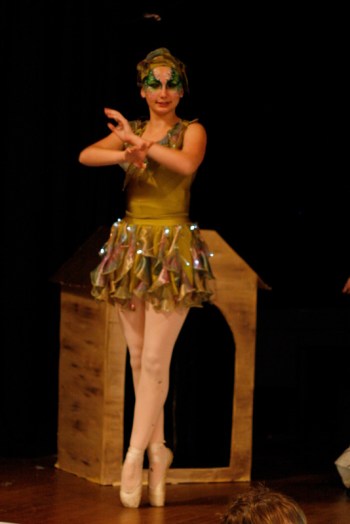
Jasynda’s outstanding body of work and critical roles in Disney productions extends to the iconic world of “Peter Pan.” In the Australian premiere of “Peter Pan: The Musical,” created by West End producers George Stiles and Anthony Drewe who are also well-known for their hugely successful production of “Mary Poppins,” Jasynda played the seminal character of Tinkerbell. A character somewhat difficult to prepare for, because of the physical challenges of the role including wire work and choreography, Jasynda gracefully stepped up to the plate and drew inspiration from the ‘Tinkerbell’ franchise and original “Peter Pan” films.

Jasynda Radanovic
Jasynda Radanovic as Tinkerbell in “Peter Pan”

Jasynda’s portrayal of Tinkerbell was crucial to the production’s success, as she not only brought the character to life in an interesting way, but Jasynda’s diverse and unique skill set in the areas of dance, choreography and puppetry were put on show and critical in ensuring the show impressed audiences. She mentions how renowned choreographer Mel Warwick and her “worked together every rehearsal to create new steps and [figure out] how to include props…Mel brought in a swing coach to teach us aerial movements, to create the illusion of flight.”

Jasynda’s achievements as an actor in the world of live entertainment have helped her build a reputation to the point where she was asked to perform the lead role in a production of Andrew Lloyd Webber’s “A Whistle Down the Wind.” As Swallow, Jasynda had to play a fifteen-year-old girl grieving the loss of her mother while managing a distant relationship with her father. On Christmas Eve, Swallow discovers a mysterious man hiding in her family’s barn, bleeding from his hands and feet, leading her to think the man is Jesus. Such an important role and production again called on Jasynda’s distinctive abilities as a triple-threat, using her voice, body and performance skills to entertain audiences in a sold-out UK-Wimbledon season directed by Roger Jones.

It’s rare nowadays to find triple threats and trained stage actors who use their experience treading the boards to lay the foundation for a successful career in film. Jasynda proves that the tradition of excellence – where an actor can refine and expand their skill sets, not just a social media following – is the real key to success.


TRANSFORMING THE SMALL PARTS INTO BIG ROLES WITH AVI AGARWAL

Here’s the secret that many involved in the arts don’t want to tell you; there are two types of professionals in these industries: those who desire esteem and those who just want to be creative. Everyone likes to be respected, that’s completely understandable but some need it more than anything else. It’s up to psychologists to explain the reasons for this. The true believers of the creative world simply want to create, it’s the oxygen to their career. Actors like Avi Agarwal can be seen in films, TV productions, theater plays, and commercials. For him, each of these is simply another opportunity to do what he wants to spend every day doing. These many differing productions not only flex different acting muscles for him but they also reach entirely different sections of the public. A famous and respected director might see his work in a play such as “The Crossover” (the LA production in which Avi performed multiple roles) while old friends on the opposite side of the planet reach out to him in excitement having seen him on a global Amazon Prime commercial. The lack of ego Agarwal possesses is palpable when speaking with him as it becomes easy to comprehend that he is best categorized as an actor who simply wants to spend his life acting. They say that variety is the spice of life and this actor’s commercial work alone attests that he is compiling an eclectic collection of vocational and acting experiences.Headshot 5

Appearing in the Amazon Prime commercial titled “Speed. Selection. Underwear for your hands. Get it all with Amazon Prime”, Avi was seen by more than three million viewers. This advertisement was presented through one of the most ubiquitous of all formats in the world, Facebook. Due to the extremely brief length of commercials, directors of these productions cast memorable and charismatic actors, the type of individuals who stick in your memory. Director Steve Mapp stipulates that both Agarwal’s appearance on camera and his ability to not over-perform made him effortless to work with. Avi comments, “It’s proof that you can’t try to make sense of this business, you just take each situation on its own merits. I’ve done plays where I rehearsed for more than half a year to perform and films where it was months of preparation. When I was cast in the Amazon Prime commercial, I simply showed up, had a conversation with Steve [Mapp] and then did a few takes. I had people from places as far as London reaching out to me with excitement when they saw me. It’s funny and it makes you thankful that people are excited about your career.”

It’s this humble perspective and staunch work ethic that have made Agarwal appreciated and desired by many professionals in the production industry. Director Justin Bookey confirms, “I hired Avi Agarwal for my production company’s shoot of an online commercial with a widespread management industry audience. His professionalism and skill made him shine in this role and the video garnered industry awards with his help. His great attitude and flexibility on the set also made him a valuable asset. He’s got a unique blend of quirkiness, timing, and expressiveness that will serve him well in a variety of comedic and dramatic roles. I feel lucky to have found him.”Headshot 6

This commercial is a sort of an innuendo on how not to run an agile meeting. It’s a comic take on the most common mistakes made by the employees and employers. Such occurrences as when an important topic is being discussed and someone interrupts with the silliest of questions, people being on their phone instead of paying attention, insecurity about their job resulting in hoarding information, people lying about their work, over enthused employees, etc. Avi portrays a nerd at an office meeting where everyone is quirky and the team leader pays more attention to his own interests than creating a cohesive team. The production was created for industry outreach and was shown at the Global Scrum Gathering in San Diego where it received enthusiastic praise and reactions.

In a bit of a stretch that called upon his heritage, Agarwal used his knowledge of Indian Culture to portray the character of Pastor Sanjay in “The Great Controversy.” The scene is set in a church where the younger pastor (played by Agarwal) is more inclined to understand and compromise to the senior pastor but we also see the senior pastor bending his rules to adapt to the younger generation. Avi appears as the same youthful pastor happily dancing to music in his office. In “Are You My Mother” Avi is seen in a tale which depicts how the older and younger generations are struggling to adjust to each other’s ideas and tastes. It’s displays the impact on two insanely big generation gaps. This commercial is all about how all single people are always pestered by the older women around them about finding a partner and getting married. It’s based on an Indian single man being imposed on by an elderly Indian woman whom he is not even related to. The goal of both commercials is to promote the idea of diversity in the church. This actor admits that he was more surprised than anyone to be given the role but concedes, “I was thrilled to be a part of such a commercial which is different because it is promoting diversity in the world. I mean, honestly…before this work, I did not know that people made commercials to invite different cultures to churches and these two were especially targeted towards the younger members of society. I feel blessed to do such a commercial. It promotes the fact that people from different cultures can be pastors at a young age and in most cases can be funny.” That would not be as possible without Agarwal and the director of the two projects, Philip Sherwood notes, “It’s so obvious that Avi takes great joy in his craft. He is a great actor and has the ability to lift everyone’s spirits on set…which is exactly what his character was doing in the action of these commercials. To this day I don’t know if that was who Avi is or if he was so deep in the character that he never left it. That’s a testament to just how truly great he is.”Headshot 3

WHY NICKY MARTIN LOOKS SO FUNNY

Comedy feels a certain way and it looks a certain way. There are not specific parameters which define this but it easily recognized. When you feel something is funny or see something that is funny, you know it. It’s a characteristic older than cinema itself. Before there was sound in films, comedy was more accurately conveyed than any other sentiment. Xing-Mai Deng displays this concept exceedingly well in Andrew Elliott’s “Nicky Martin: Country Superstar.” As a cinematographer with a highly diverse list of award-winning film credits (including this one which received an LAIFF award for Best Comedy/Dramedy and a Jury Award at the Melbourne Indie Film Festival), “Nicky Martin: Country Superstar” is yet another example of Deng’s ability to visually achieve the intent of the writers and directors he works with in an exception manner. With the ubiquity of the pursuit of fame, often via social media these days, the film’s story reveals the all too common hopes of someone who wants to be famous almost solely because they desire fame.

In an ironic turn, this written story necessitated studying reality TV productions in order to accurately be presented with authenticity. The look of the film needed to bring out the absurdity of the story while spoofing the standard reality TV show. The film’s director and Xing-Mai researched several American reality TV shows to study their lighting, framing, and documentary-like camera movement. The blocking and camera angles were all decided before the filming to achieve a deliberate chaotic appearance for the shots.

Much of the look of “Nicky Martin: Country Superstar” required Xing-Mai to use his extensive knowledge and talent to appear as if he did not possess these attributes. It’s an aspect that took him some time with which to relax. Constant second guessing and reassessment of going too far was required. He explains, “I purposely moved the camera in an amateur way in order to make the film look absurd. High-key lighting and amateurish camera movements brought the feel of a valid reality show to our film. There wasn’t any dramatic lighting. The camera movements followed the actors in a passive way rather than anticipating the characters’ actions as compared to a scripted production. We wanted to have the reality TV feeling but we also wanted some cinematic moments in the film. Some of the reality productions I researched were not lit at all. I added contrast for most of the scenes to give a cinematic touch to it but used it sparingly. Most of the reality TV shows I studied were not comedic so the usual reality TV look would not serve ‘Nicky Martin’ as it still desired to look funny. We did not want it to look like normal mockumentary as that look has become fairly common and we wanted something that stood out.”

12239655_939016469511700_6579762550975927828_n

The improv nature of the film and the actor’s performances kept Deng on his toes and required a fair amount of improvisation on his own part. As different cast members spontaneously changed and evolved their parts during the actual filming, Xing-Mai was required to essentially collaborate with them in terms of lighting and framing the scene, accepting what he could get away with in terms of these parameters. With knowledge of this potentiality in advance, he created general lighting schemes based on the blocking and devised a plan that would give the widest coverage possible while achieving the largest part of his goal. Because the film is a comedy, Deng used a wide warm color palate.

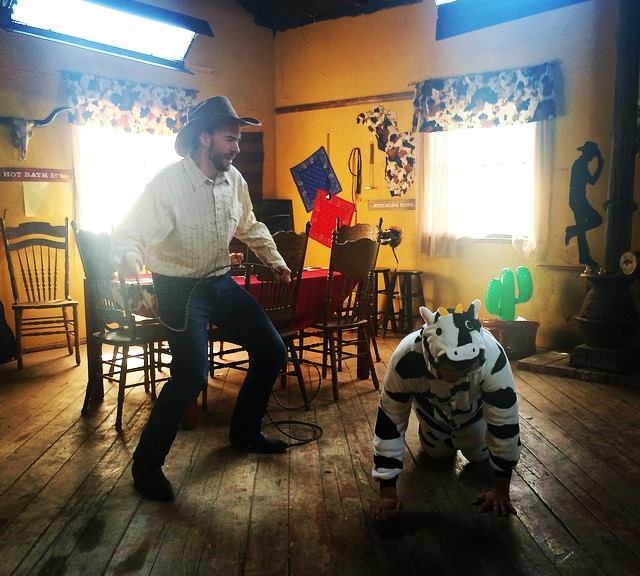
“Nicky Martin: Country Superstar” is a spoof comedy about a man who wants to be a country music star but doesn’t know how to sing or play guitar. He wants to be a cowboy but he’s afraid of all four-legged animals…so he rides on stools. Upon hearing about a singing contest at the County Fair, Nicky gathers his cohorts and prepares for what he believes is the chance of a lifetime. Numerous efforts towards achieving his goal of becoming a legitimate cowboy fall short. In a scene which drives this failure home and yet endears the audience to his tenacious drive, Nicky and his close friend Mickey reconcile by riding their stools together into the sunset as they have learned that being a cowboy is not about being famous but rather about possessing the cowboy spirit.

Andrew Elliott, the mastermind behind “Nicky Martin: Country Superstar” communicates, “I honestly had always planned to convince Xing-Mai to be the DOP for this film, since it’s very inception. Xing-Mai’s insight was invaluable to the success of the shoot. He was able to quickly and efficiently form a great crew and was always present with ideas and suggestions on how to make thing flow more smoothly. His work ethic was unquestionable on the shoot. Nicky Martin went on to success in the festival scene the following year, winning awards at several of these. Xing-Mai’s understanding of the story and unique ability to shoot the film played an integral part in winning these awards and in the success of the film as a whole.”

12196205_939014422845238_7081999955296816799_n

Immersing one’s self in an industry that contains some of the most skilled and creative minds and then attempting to shed the abilities you have come to rely upon as second nature in order to move you forward in said industry is disconcerting at best. Shakespeare often depicted the person who appears as the fool to often be the cleverest of all; communicating the idea that the misdirection of the depth of one’s knowledge and abilities is often the most difficult task of all. In “Nicky Martin: Country Superstar”, Xing-Mai Deng proves that he’s no fool but he knows how to convincingly present the appearance of one to the laughter and enjoyment of his audience…and does so as a master.

Cinematographer Yan Rymsha’s Creative Vision Flows Strong

Yan Rymsha
Yan Rymsha on set of “Zaar” shot by Ibrahim Nada

Yan Rymsha was born into a family of artists in St. Petersburg, the cultural capital of Russia and the historic home and muse to Vladimir Nabokov and Fyodor Dostoevsky, among others. A love of the arts is ingrained in the very fabric of his city and flows through his family’s veins, so it’s little wonder that Rymsha’s creative drive comes so naturally. Since childhood he has been drawn almost magnetically to the camera, a trait which was encouraged and fostered by his father.

“I [have dreamed of becoming] a director since I was 10. Of course, I had very little knowledge about directing craft,” Rymsha said, recalling how his love affair with cinematography began. “I remember my father brought me a video camera and taught me how to make very simple stop-motion films using old school techniques. He had experience with 8mm film cameras when he was my age, so he showed me dozens of awesome tricks with film.”

Rymsha swiftly mastered those first tricks, and in the years since he has mastered the craft and even invented a few tricks of his own. That mastery is evidenced in one of his most minimalistic, yet absolutely striking works, “Emerald Dream” directed by Leonid Andronov, who won the Festival Award at the International Filmmaker Festival of World Cinema in London for the film “The Admired.” The film’s dystopian story is told by an unseen narrator entirely through photographs, which required Rymsha to boil down the visual impact of an entire film and concentrate that into a series of still frames. Rymsha carefully calculated his style of photography for the film to convey as eerie and foreboding a tone as one could imagine.

Set in a dark, distant future, “Emerald Dream” tells the tale of Gary Jibbons, a man whose unusual job it is to extract dreams from donors in much the same way people donate blood. As the narrator’s story goes on, the photographs become more and more mysterious; it soon becomes clear that Jibbons has fallen hopelessly in love with a young woman with the most vivid dreams he’s ever encountered.

It speaks volumes about Rymsha’s skill as a cinematographer that using so little, he was able to create an entire world inhabited by characters whose highs and lows are so familiar they could easily be real. But it takes more than skill alone to create works of the magnitude he has; it demands a level of passion and devotion that Rymsha has in spades.

“You always want to make your current film better than anything you’ve done before. Otherwise you’ll never grow,” Rymsha beamed. “I put part of my soul into my work. It’s more than just time and energy.”

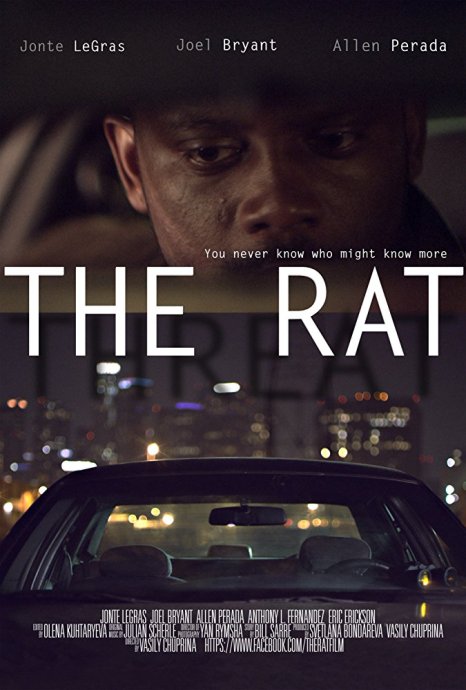
"The Rat"
Film poster for “The Rat”

That philosophy is a defining quality of Rymsha’s work, an excellent example being the 2015 film “The Rat.” Once again he was tasked with making a film that would test the extent of his talents. Rather than a series of photographs however, “The Rat” required Rymsha to shoot the entire film from inside a single car. As events spiral out of control, audiences share the tense, caged-up sensation with the characters onscreen.

“The challenging part of it was that the whole story took place in the car, so the main goal was to make the audience attracted to the visuals. I spent a huge amount of time picking locations,” Rymsha said. “A location must be interesting with some action going around. My favorite was the airport, with planes taking off and landing.”

It was up to Rymsha to leap into action and scout all possible filming locations. A whirlwind tour of the city later, and he had his list.

“When I got a script I was quite surprised because the whole story was happening in the car. It was challenging to figure out how to make the move visually attractive, and the same time follow rhythm and beat of the storyline,” he explained of the process. “The story was gradually intensifying, so the visuals also had to follow.”

The crime thriller starred Jonte LeGras (“Scandal,” “Grey’s Anatomy”), was nominated at the Burbank International Film Festival, and its director Vasily Chuprina has been recognized for his Outstanding Achievement in Filmmaking by the Newport Beach Film Festival for “The Boy By The Sea,” among a dozen other awards.

“When I got the synopsis of the movie, the first associations that popped into my head were of postmodernism with a huge element of restrained film noir style,” Rymsha said. “I thought that this combination will perfectly fit to the story of such genre.”

Rymsha also served as director of photography for director Ibrahim Nada’s 2016 “Zaar,” the dramatic story of a would-be suicide bomber who has second thoughts. A philosophical head turner fraught with suspense, the film has the distinction of being one of Rymsha’s favorite projects. The film itself has won prizes at more than half a dozen festivals, including a Best Cinematography win for Rymsha from the renowned Santa Monica Film Festival.

Constantly driven to take on the most challenging projects he can, Yan Rymsha has proven time and again what he can do with a camera and a little imagination. He has dedicated his entire life to the pursuit of cinematic greatness, and it would seem now that there is nothing left standing between him and that dream.

ARROW MAKES A BOOMERANG OUT OF ALISON ARAYA

Art can run in cycles or periods of fashion. As one of the most ubiquitous art forms, TV is as susceptible as any to being a part of this. It’s no news flash that we are in the heyday of superhero entertainment. Marvel, DC, and many independent comic book/graphic novels have been featured in production after production. There’s a good reason for this; these larger than life characters depict who we want to be, the stories are epic and provide an excellent form of escapism. When it comes down to it, people truly enjoy them. These Omni-present produtions provide many actors with opportunities to utilize their skills as well as live out some personal fantasies. How many times do you get the chance to save the world in tights? While Alison Araya’s character on Arrow (distributed by Warner Brothers Television) might not be Oliver Queen (based on DC comic’s Green Arrow), her recurring role places her in the “universe” as the fans say. Her continued presence comes with the fans and attention that the show and the genre are well known for. It’s not a new source of attention for this actress who has appeared in films based on comics (Avery has appeared in both X-Men Origins: Wolverine and Watchmen). Being a part of a fantasy world that is also grounded with a large dose of reality suits Araya just fine. By her presence throughout multiple seasons (Arrow is completing its sixth season), it appears that it suits the producers of this CW series as well.

With several seasons under its belt, “Arrow” is a vetted hit in the CW line-up. Exploits of these types of heroes are among the most popular of all action hits and “Arrow” is happy to be part of this movement. What drew Alison to the program is what most fans appreciate about it; the darker element of the story. This non-genetically enhanced hero who has earned his abilities through somewhat mysterious circumstances and is tenacious in the pursuit of criminals gives a realistic quality to “Arrow” that is part Batman, part Robin Hood, and a hint of LA Confidential. Flawed characters abound in the story but not in an overly defined moral sense. As a member of the SPCD, Araya’s character Officer Lopez was originally written as a more peripheral role but Alison’s on screen charisma quickly altered this. Lopez has continually appeared throughout the last three seasons of “Arrow” and has been a part of some of the most pivotal storylines in “Arrow.” For Araya, an accomplished actor with roles in action films, there was still a learning curve to playing a police officer. She somewhat hesitantly tells, “It was much harder than I thought. In my first scene I was arresting and handcuffing a perp…there was some fumbling on my part. No one would say I’m a natural when it comes to being a law enforcement professional. I even dropped the gun several times, but I was determined to see the scene through. Shortly after that first experience my agent called to say they had booked me on another episode and that was the beginning of the development of Officer Lopez.”images (3)

In the show’s world of superheroes and super villains, Lopez is a reality anchor for the show’s fans. A stoic member of the police department, she searches for the truth and is a more relatable element for the audience to connect with and bridge the gap with the more extraordinarily powered characters. Araya portrays this character with a calm demeanor which comes off surprisingly well considering Lopez is charged with enforcing the public safety in a community of such epic parameters. Even with the somewhat hyperbolic scenes, Lopez approaches her work as any urban officer would treat an everyday disturbance.

It increasingly becomes a required skill for the modern day actor to be comfortable working with what is not actually there but will appear later in post. Alison’s work on a number of feature films and TV productions has given her ample experience to master this craft. Actors are required to use their imagination but this modern technological facet takes the idea to a very literal place. Araya states, “It definitely makes for an interesting day on set. As actors we are asked to use our imaginations and drop into the reality of our scenes but days with VFX require big imagination. I love the challenge, I really have to work to create the world around me and say yes to it. You have to simply commit fearlessly!”

Alison concedes that the development of Officer Lopez into a character that would appear throughout numerous seasons of “Arrow” was as unexpected to her as anyone. Still, it’s something for which she has been continually thankful. It’s a perfect balance for the actress who has been able to accept roles in feature films, independent films, made for TV movies, and other productions simply because of the fact that Lopez is not a central part of every episode of “Arrow.” Her character’s recurring presence keeps her in the eyesight of fans of the show and gives her the freedom to pop up in other productions simultaneously. It’s the entertainment industry version of Johnny Appleseed. The situation can create a somewhat welcome growing pain for Alison who notes, “Working on the show is such a wonderful experience for me. Everyone involved is very kind and they truly interact like a family. Because I’m not there every day, I make sure to watch the show and stay on top of the story so it will make sense when I am on. That can be difficult sometimes when I’m trying to immerse myself in preparing for another role…but I’m not complaining; I’ll accept this kind of problem anytime I am fortunate enough to have it.”images (2)

These superheroes that we love to watch are exciting and inspiring to watch. They make us all feel that we are capable of doing great things and working for the common good. As Officer Lopez, Alison Araya reminds us that there are those among us who bridge that gap, that we all have the potential to aspire to service of others…and she is just plain ol’ fun to watch in the world of “Arrow.”

Unstoppable Actress Karishma Bhandari

Karishma Bhandari
Actress Karishma Bhandari shot by Karen Scott


The job description of an actor is unlike that of any other professional. With every role an actor must become a completely new person in a completely new world. For British actress Karishma Bhandari, that part of the job came naturally. As the London-born daughter of Indian immigrants, growing up hasn’t always been easy — but her experiences have been an immeasurable asset to her craft.

“I grew up with working class parents… The only time we sat down as a family was to go to the cinema, or watch films on TV. They were really busy working,” recalled Bhandari. “Because I grew up seeing them laugh at the TV, I always just wanted to be on TV to have their attention too. I know it may sound silly, but that’s how it all started and it really pushed me to become a good actress ― into something they would be proud of.”

Now, after devoting years to training and honing her craft, Bhandari has far exceeded her childhood goals. The long list of her credits includes the cult British comedy “The Inbetweeners 2,” Disney’s “The Muppets Most Wanted,” and even a guest appearance on the critically acclaimed series “24,” which starred Kiefer Sutherland and won 70 awards during its nine year run on FOX, including eight Primetime Emmys and two Golden Globes.

But of all Bhandari’s roles, no two better illustrate the breadth of her maneuverability as an actress than the flamboyant Bollywood musical “Club Dancer” and the gritty drama “Six Rounds.”

“‘Six Rounds’ was based around the 2011 London riots,” Bhandari said. “Between August 6th through 11th in 2011 thousands of people rioted in London’s boroughs, and in cities and towns across England.”

At its heart, “Six Rounds” is the story of a morally-conflicted boxer and the trials he faces during a dark week of unrest in Britain. The boxer finds himself forced to choose between leaving everything he knows behind him, or giving up what might be his last chance to make a brighter future for himself. Bhandari’s character is a member of the protagonist’s old street gang, and she serves as a symbol of the harsh life that awaits if he strays from his new course. By setting the story against the backdrop of the 2011 Riots, director Marcus Flemmings created the boxer as an allegory for the divisive choice facing England — stay in the past, or embrace the future.

“She is passionate about being successful and will go to great lengths to achieve what is required of her by others and herself,” said Flemmings when asked about Bhandari. “I can honestly say Karishma Bhandari is one of the most exceptional people I have worked with – both with her professional craft and as an outstanding individual.”

Being brought up immersed in the cultures of both East and West has given her an insight into and an understanding of the human condition that no amount of practice could bestow. For an actor, being able to recognize where cultural differences end and human commonalities begin is key to portraying characters that are not just believable, but real in their own rights.

That insight is what enabled Bhandari to seamlessly transition into the role of a gangster in “Six Rounds,” following her run on the dance floor as Geeta in the feelgood Bollywood musical “Club Dancer.” In the film, Bhandari plays the betrothed sister of a man who bears a striking resemblance to a murderer who has just been killed by police. The film follows the outlandish and hysterical events that unfold as Geeta’s brother works to save up for his sister’s wedding. The role presented Bhandari with a number of challenges, but rather than slowing her down, they only motivated her further.

“It felt great playing this character. I speak Punjabi at home, and the film was in Hindi, so I was faced with a different language and accent I had to learn. I had Bollywood dance training, but to do it on a massive set in front of a lot of people was scary,” Bhandari recalled humbly. “But everyone complimented me after I filmed the song, as that was my first thing I had to shoot.”

The time and energy it took to blend into a totally foreign role is staggering, but Bhandari’s commitment is resolute. That drive is exactly what directors have come to expect and rely on from the gifted actress.

“I believe as an actor you have to be willing to learn, willing to explore yourself,” she said. “Some people get put into brackets and characters because they play them well. But as an actor you should be a chameleon.”

That willingness to step outside her comfort zone is why she’s so respected as an actress. It’s also why her performances in a wildly diverse range of roles have been so successful. Bhandari’s range is unrivaled, her drive is unwavering, and she is blessed with a natural talent that shines brighter each time she steps in front of the cameras.


FILMMAKING WITH TALENT AND HEART: ZHENG HUANG

The role of producer is about money and schedules, correct? In its most simplistic terms, yes but it’s also about much more than that. For Zheng Huang it’s about art, personal connection, and the bonds that tie us to each other. While that might sound overly emotional, one should remember that we are dealing with the artist temperament; they are known to investigate feelings. A producer is the boss of a production. Everyone has experienced a boss who is only concerned with the bottom line as well as the one who is interested in you performing your job with excellence because you are happy to be there. Huang is very much the later. Every producer has a budget, schedules, etc., the nuts and bolts of their job. Approaching their role from an emotionally inspiring place is just as vital as a cinematographer who looks for the moving aesthetic in the frame (rather than one who simply makes sure everything is in focus). This approach is as intuitive as breathing for Zheng, which is likely why he has become such a sought after producer. Often the difference between good and great is how much you care; Zheng Huang cares a great deal.

Upon returning for the Cannes Film Festival, where his film “Lost” had been presented, Huang was interviewed about this by Neo. Neo was not only the host of an interview show but is also a director. Neo was instantly appreciative of Zheng’s passion for film and his unique perspective, so much that he enlisted him to take on the role of producer for his film “Never mind I Remember.”

LK2_5025

The film details the plight of a family who is forced to deal with an all too familiar difficulty in life. When seventy-year-old Lily loses her husband Frank to a heart attack, her son Jackie comes to her aid. He discovers very soon that his mother is dealing with a very acute case of Alzheimer’s. While Lily struggles to deal with her own constant sense of disorientation and unfamiliarity with those around her, Jackie comes to terms that he must now be the caretaker for his mother and realizes (perhaps somewhat selfishly) the impact on his own life. While both deal with the loss of Frank, Lily deals with the confusion of why her husband is not with her. The film is acted with mastery and captured with the same level of excellence. In one of the most tender and heart breaking scenes, mother and son find themselves in the same tent they used to play in decades before as Lily asks her son when Frank will return and he replies, “Let’s wait for him together.”

Zheng was drawn to this intensely emotional story by the script as well as a personal connection. He shares, “My mom’s aunt has had Alzheimer’s disease for many years but her only child never comes back home to see her. Luckily, her husband takes care of her very well. Because of genetic inheritance of Alzheimer’s, my own mother worries that one day she will begin to show signs of this disease. I am her only child and she has fears about my being too busy to take care of her properly. When she told me these fears of hers, I realized that this is a very deep and powerful topic, one which I want to explore. The son in the story is MYSELF but also every single child who has a busy career and big ambitions. Alzheimer patients can be a big burden for their children but there is no option here. Our mothers are our caretakers, our protectors from the moment we first come into this world. I directly relate to the story of this film and I know that there are many other people who do also. I knew that I wanted to be a part of telling this story and it demanded to be told with the proper emotional lens.”

The vast majority of a producer’s work for any project is in coordinating and scheduling, there’s no denying this fact. Obtaining permits, scouting locations, casting, “connecting the dots” is the norm for producers in a wide variety of settings. The secret ingredient of Huang’s approach is his focus on the communication and relationships of those he is involved with on each project. Neo, director of “Never mind I remember” reveals, “I feel extremely fortunate to have had such an excellent producer as Zheng Huang on my film.  As we were preparing for the shoot, I was having some problems with my 1st AD. This person has also directed and was giving a great deal of unsolicited opinions about the shot list. When I approached Zheng about the situation he said, ‘Neo, I will always support you whatever the decision you make in the end. If you tell me you will fire the 1st AD one day before shooting, I will be your 1st AD if you need; whatever you need, I’ll be there. The most important thing is: you have to be happy with what you do. You have to create your film, not your 1st AD’s film, or anyone else’s.’ This stirred something in me and I was able to confidently move forward and resolve the issue with my 1st AD, which meant that the entire production would benefit as well. Instances like this prove how Zheng is so much more than your average producer or someone who schedules events.”

LK2_5732

When discussing his definition of a producer, there are many familiar tasks and terms that Huang uses to describe his day to day. There’s a verbiage that he has in common with his peers and then there is one word which he continually refers to that stands out; empathy. It’s not something that you often hear a producer discuss as part of their skill set and yet Zheng professes that it is an essential part of what makes him successful as a producer. For someone who works with artists every day, it seems an obvious trait; to those who work with this producer, it is obviously Zheng Huang.

GORKEM CIFTCI: BEHIND “WOMAN WITH NO VOICE”

Gorkem Ciftci is pleased with himself, not in a smug manner but with a sense of satisfaction that he has made a positive impact. As the Art Director of the campaign “Woman with no Voice” Ciftci conceived of and created a campaign (with his team) to dramatically raise awareness of domestic abuse in his homeland of Turkey. While his vocation most often has him working with clients who are promoting everything from interior design/aesthetics to cars to TV programs, Gorkem has also utilized his talents to promote many socially minded ventures that exist in and border on altruism. The role of art director is itself steeped in both the creative mind and the business sense; it perfectly suits someone like Ciftci who thinks of helping others aspire to a better life and possesses the real world skills to enact this. While this may sound like an extremely benevolent view of those involved in the business/advertising realm, one need only consider Gorkem’s work on “Woman with no Voice” to understand it in a real world application. He passionately explains the situation and his motivation to become involved stating, “The real problem about domestic abuse in Turkey is that nobody is brave enough to speak out. The women who suffer from domestic violence are often economically dependent on their husband; this is why they choose to keep silent and not to talk about it. Silence of the oppressed makes this violent epidemic inevitable. Moreover, in rural parts of Turkey, religion and bigoted traditions contribute significantly to the suffering of women. They are often forced to get married in very early years, very few of them have chance to get education, and they are not really counted as human beings but rather the commodities of men. As a proud feminist, I have been seeking any chance to get involved in campaigns to combat patriarchy in Turkey. And I was fortunate to take part of a few over the course of my career. I knew that this one was going to be the boldest one. I knew from the start.”

This campaign was part of a greater movement named ‘’Every Breath, a Voice’’ that was dedicated to combating and ending domestic violence in Turkey. Numerous campaigns were created and events held annually to raise awareness on the issue. This group wanted a bold and provocative campaign that would spark national debate. As art director, Gorkem wanted to find a unique and dramatic way to convey the idea that the plight of these women was not receiving the attention that it deserved. He explains, “After researching and reading the stories from victims of domestic abuse, I had reached to the conclusion that a single major characteristic of victimized women is their silence, hopelessness in other words. With this focal point, we needed to come up with a creative execution that demonstrates the silence of these victimized women in an interesting and creative way; that execution was to associate this oppression with Facebook’s automatically playing mute videos (Facebook plays videos on mute in order to not disturb users while scrolling down on the newsfeed. This feature has been very significant to the Facebook users).


This idea was powerful but also created a major problem for Gorkem. This gravitas of the presentation rested on the idea of silence; if this silence was broken by a voice over it would diminish the power of the visual. The presentation would be decidedly simple. A woman cries out in front of the camera, wearing a plain dark shirt and a wedding ring while standing in front of a dark gray background. The drama is exponentially intensified by Ciftci’s decision to place text in the box to the right of the screen (the voice icon on Facebook video bar) corresponding to the Facebook feature. This communicated the twist that the cries for help from these women are not heard as the viewer attempts to increase the volume of the audio. It cannot be overstated how emotional and heart-wrenching the campaign is (https://vimeo.com/172093012).

Thirty Turkish actresses were viewed to portray this simple yet highly emotive role. The performance of the actress seen in the campaign is haunting, which is appropriate. Far from the glamour and excitement normally associated with being on set, Ciftci relates, “The set suddenly become a dark and depressing place as we began shooting. This was quite surprising for me. Even though we all knew that it was a screenplay, the screams of the actress were something terrible to witness knowing that millions of women suffer domestic abuse and had to face these horrors on daily basis. The original film had no audio, but we had to hear her screams in the studio for the sake of persuasiveness. Witnessing a re-enaction of such horror was upsetting to all on set that day. However, I also knew that this was a powerful cause and could not wait to have the film published so it would start contributing to the positive change.”

A significant difference between the “Woman with no Voice” campaign and those of a similar intention in the past is that the decision to use Facebook and Twitter to share its message resulted in a mass proliferation (via “shares”) and immediately accessible metrics. As opposed to traditional TV or print campaigns in which the public’s reaction is often uncertain, social media allows for immediate responses and feedback, without censorship. As the creators of “Woman with no Voice” had hoped, a national debate was triggered and millions viewed it. One of the most unexpected outcomes of the campaigns viral nature was that men were very eager to talk about the issue and were among the majority of those who “shared” it.

Polisan Woman with no voice Crystal Apple

(CRYSTAL APPLE FESTIVAL AWARD CEREMONY 2015, UNIQISTANBUL, ISTANBUL)

“Woman with no Voice” was overwhelmingly accepted and praised by the public. In addition, it received copious accolades that included: 1x Gold, 1x Silver, 1x Bronze at Crystal Apple Festival of Creativity (2015), 1x Gold Mixx Awards Turkey (2016), 1x Bronze Mixx Awards Europe (2016),
& 1x Gold, 1x Merit at Kırmızı Advertising Awards (2015). While awards always have a beneficial effect on a professional’s career, Gorkem states, “My involvement with this campaign truly deepened my understanding that I could use my role as an art director to really make a change. I think if we all found ways to use the abilities we have to help others rather than only to support ourselves, the world would be a much better place for everyone. I am humbled that I was able to do even a little bit to help the women of my country and I’ll be looking for opportunities in the future to do more.”

IMAGE0009

(KIRMIZI AD SHOW 2016, ZORLU PERFORMANCE HALL, ISTANBUL)