Category Archives: Uncategorized

THIS CANADIAN ACTRESS PROVES THAT HER ACTING AND DANCING ARE ON POINTE

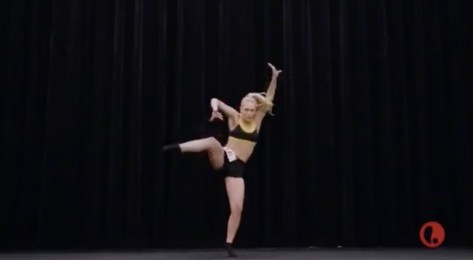
Lanie McAuley is a dancer, and she plays one on film. In real life, McAuley made the switch from concentrating on a dance career to choosing acting as her focus. However, she returned to dance with her role in Center Stage: On Pointe. It’s not often that one gets to appreciate who they were as a younger person and who they are just a few years later with such contrast. As a gifted young dancer from Canada, Lanie moved to New York when she won the audition for a production there. These days, as a successful actress she spends her days on film sets. Though she still pursues a creative life, the avenue which she pursues flexes different muscles, literally and figuratively. McAuley is a self-described practical person yet the vocations she has chosen to pursue seem to contradict that idea. A dreamer who began her professional career a little more than a week after high school graduation (with great success), it seems impossible to imagine her doing a job which involves a nine to five schedule and a 401K. Lanie’s view of herself is probably a product of her middle-class work ethic coupled with a desire to work her entire life at something which inspires passion in her. Even when she alters her path, Lanie McAuley always finds her way back to doing something creative…sometimes a number of things at the same time. It’s serendipitous that years after leaving dance for acting, Lanie’s acting career has brought her back to dance to star in the sequel to her all-time favorite dance film, the original Center Stage.

A young Lanie followed her sister’s footsteps into dance. At 18, McAuley attended a dance competition called New York City Dance Alliance, where auditions were being held for a tap/jazz show called Revolution. Her dance teacher suggested she go to the audition just for the experience; hundreds of female dancers were narrowed down to four and soon, Lanie was offered a spot in the show. She had just graduated from high school a week before. Suddenly she found herself moving into an apartment in Queens and taking the train to Manhattan every day for rehearsals. Literally overnight, she went from high school and living as her parents’ sheltered little girl to living alone in New York with a full time dance job. The hours were long and it was both physically and mentally exhausting. She was the youngest member in the cast and had to learn quickly. It was a quick and amazing kick off to adulthood and a professional career in dance. In addition to the achievement of being in a successful New York production, Lanie also made it into the finals of So You Think You Can Dance. Her focus changed from dance to acting as she became keenly aware of certain factors. She reveals, “I was clear on my love of dance but I started questioning how viable my career options were in that world. I’m a very practical person and the idea that an injury can blow your entire career seemed so frightening to me. I’d been acting since I was a toddler and acting had always been a part of my life. Though I still loved dance, I’d always wanted to make acting more of a focal point in my life rather than a side interest. I think my background in dance has been a huge asset in helping me gain roles as an actress. It made me very comfortable performing, whether on stage or in front of a camera. My dance training definitely gave me a posture and poise that I never would have had otherwise. I also think growing up in the dance world (particularly ballet) gave me a lot of discipline. Being an actor requires a lot of discipline, involving everything from memorizing sides, to committing to a scene, to taking care of yourself emotionally.”

lanie-mcauley-center-stage-1

It has often been said that nothing worth having comes easy. This can be true even if you have a head start. When McAuely’s agent called her about the audition for Center Stage: On Pointe, the actress was ecstatic. The original [Center Stage] is her favorite dance movie of all time and a highly motivated actress with a strong dance background was required for the role. Lanie’s character, Wendy, is meant to be a strong dancer who’s the measuring stick against which Bella (played by Nicole Munoz) is compared at the audition. The legendary Director X was involved in the production and ran a rigorous dance audition composed of ballet and modern dance styles. McAuley notes, “Auditioning for Director X was an intimidating experience. At the dance audition, I remember doing the ballet combo and him saying, ‘Again. Again. Again.’ I think he was testing my endurance. By the time I’d done it four or five times at 110%, I was exhausted. I had to hold my breath when they spoke with me afterward to hide how badly I was panting.” Lanie was awarded the role of Wendy in the film. Her costar, Nicole Munoz comments confirming the facets which made McAuley such a vital part of the film, “Captivating to watch, Lanie performed a contemporary dance solo. Her commitment and bright energy inspired the other dancers and raised morale on set. Multi-talented, Lanie was able to bring the character ‘Wendy’ to life by bringing an emotional depth that touched the cast and crew. We were filming on a tight schedule. Being a true professional, Lanie was able to bring a powerful energy to each take. Never once stumbling, she was always more than prepared. Lanie stands out from the crowd with her multiple talents, each and every one of them groomed and ready to go.”

Center Stage: On Pointe premiered with great success on the Lifetime network. While Lanie feels fortunate to have been in the cast of this popular film as well as challenging herself to unearth her dance proficiency, she concedes that she feels a reaffirmation that she made the correct choice in acting. She declares, “I think the main similarity between a career as a dancer and as an actress is that both careers are based on art and passion. Most people don’t enter these careers for the money; they enter them because they love the work. There are definitely some big differences between the two. Truthfully, acting is more lucrative, if you’re able to find success in it. There just doesn’t seem to be the same kind of funding and opportunity in the dance world that it deserves. There are certainly people who are enterprising enough to have thriving careers in dance (I’m so impressed by their drive and initiative) but for me, my passion for dance didn’t run deep enough to create those opportunities for myself. That’s likely because my practical brain couldn’t rationalize the risk of injury and the deterioration of opportunity with age. One of the coolest things about acting is that you can act professionally at any age. Acting is the art form of life…and life is all ages. When you’re 75 years old, there’s still a role for you. That’s a big part of why I focused on acting as my career.”

Processed with VSCOcam with p5 preset


SIMU FENG CREATES A DARK AND MYSTERIOUS CHINA IN “SHOP OF ETERNAL LIFE”

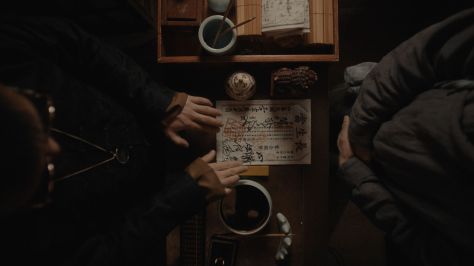
Shop of Eternal Life is the passion project of director/writer/producer Yizhou Xu. In the film, he uses an almost literal metaphor to show the dangers we humans can make in times of desperation. It’s an evergreen tale that applies to all peoples of this planet. It just so happens that Xu’s film takes place in two by gone eras of his homeland, 1920’s and 1950’s China. Not only is there an other-worldly occult thread in the film but the obstacle of transforming downtown Los Angeles into an almost hundred-year-old China. While giving great credit to his crew and cast, Xu admits that his secret weapon for this transformation appearing so convincingly on screen was Shop of Eternal Life’s cinematographer Simu Feng. The award-winning Yizhou Xu declares, ““Simu is the most professional cinematographer I have ever worked with. Simu is such a vital part of this project because he is the metronome of the production. The most time consuming part of any film production is the lighting and camera positioning. We had a lot of shots in the film and it was paramount to have a cinematographer with the confidence to finish those shots with the highest quality and to do so very quickly. Simu finished the task without wasting a single second; and his efficiency didn’t harm the result of the image at all. Simu knows how to take limitations and challenges and transfer them into creativity.” The filmmaker’s peers and public definitely agreed with the finished product as it was an official selection at: the 36th Hawaii International Film Festival, the 20th Los Angeles International Short Film Festival, the 10th Bali International Film Festival, and the 8th San Jose International Short Film Festival. The look which Feng bestowed upon Shop of Eternal Life belies the budgetary confines which Xu relates. A story which spans the struggles of its main character, his transformation, and the cautionary tale it communicates deserves a beautiful and elegant aesthetic; one which it richly possesses thanks to Simu Feng.

shop-of-eternal-life-screenshot-1

Shop of Eternal Life is a film full of fantasy and terror, relating the choices we sometimes make and the unexpected results they have on us as well as others. Even the best of intentions can result in malevolent outcomes for all involved parties. The film is the story of a poor man in 1920’s China who ventures to a pawnshop, hoping to sell his wedding ring to save his sick wife. The shop owner offers only a pittance…or a deal. Rather than money, the pawn shop owner suggests that the husband sell his heart for a great deal of money to him. The man feels he has no choice but to take the offer in hopes of saving his spouse’s life. Many years later, the husband returns to the shop to redeem his heart, but his time without a heart has transformed him into a monster. He discovers that his heart is no longer at the shop. Doomed to a heartless life (literally), he kills the pawnshop owner and assumes duties as its proprietor.

The storyline itself immediately conjures mental images of fright and fantasy infused characters and their surroundings. It was Simu’s task to make the images visible on screen to match the reality of China in the 20’ and 50’s as well as the mystic ideas presented by the subject matter. Feng relates, “The film’s visual dark tone is the key element for the story. We did this through lighting and camera work. I did thorough tech scouting with my long time gaffer Toshi Kizu and planned out the whole low key lighting scheme. I wanted the pawnshop owner character to be part of this darkness; I wanted him to feel inseparable from the shop itself. We hid several single tube kinoflos to give some small pools of light in the room and to add to the depth of the set. Camera movement was also very carefully planned out so the move was always motivated. We didn’t want the audience to feel the existence of the camera. Combined with the blocking of actors, we were able to create tension and a sense of the mystery at the same time. I’ve always felt that, by planning things out appropriately, you can help the audience forget about the technical aspects of a film and thereby lose themselves in the story…which is what we want as filmmakers and what the audience wants as well.” Yizhou Xu confirms, “Simu achieved a very strong visual style in Shop of Eternal Life; a mystery and a sense of darkness. I think this stylish look is the most important part of the film and it’s the first thing people talk about concerning this film. Because of the fascinating visual style, people have the patience to dig deeper on the subject and theme of the film. As a filmmaker, that helps me to tell the story.” Feng continues to explain the look of the film in commenting, “Because the film consists of two different time periods (the 1920’s and the 1950’s.), we wanted them to be really different, making sure the audience gets the idea that the poor man has changed into a monster. The production designer (Dara Zhao) did a great job building the set to be authentic to the time periods yet retaining our own dark and mysterious style. When we discussed the practical lights in the shop, we decided that for the 1920’s we would dress the shop with candle lanterns, and for the 1950s we went with tungsten bulbs. The practical lights are always important for me because all my lighting is motivated from these practical lights. The warm color given off by the lanterns, combined with the black pro-mist filter I put in front of the lenses, gave the 1920’s a softer and warmer tone. I shot the 1950’s with no filter and the tungsten bulbs flaring directly into the lens, making the look harsher and brighter. With more desaturation in color correction, the 1950’s looked pale and cold, fitting the change of the character.”

shop-of-eternal-life-3

Both the look of Shop of Eternal Life and the lesson of the film itself are entertaining and gripping. Yizhou Xu uses his film to communicate the idea that in our sacrificial attempts to help those we love; we risk the danger of turning into monsters. Making a deal with the devil may be very literal in this film but it has great relevance to many everyday choices. The film production itself conceals the challenges that the cast and crew overcame to create such a polished film. Simu Feng is thankful for the creative and unique approaches the production was forced to invent as he states, “Working on a small budget film is always difficult but it can be a truly fun experience if the filmmakers try to make a difference. Every filmmaker will face the situation in which they don’t have enough resources to achieve what they imagined and planned. I always believe certain limitations help yield better result by forcing creative people to come up with ‘poor man’ solutions. The luxury of a big budget does make a lot of things easier, but working on small-scale project helps me to keep the spirit of being flexible and the ability to adapt myself to changing circumstances.”


shop-of-eternal-life-4

shop-of-eternal-life-screenshot-poster

Featured Actor: Canada’s Nathan Mitchell!

nm
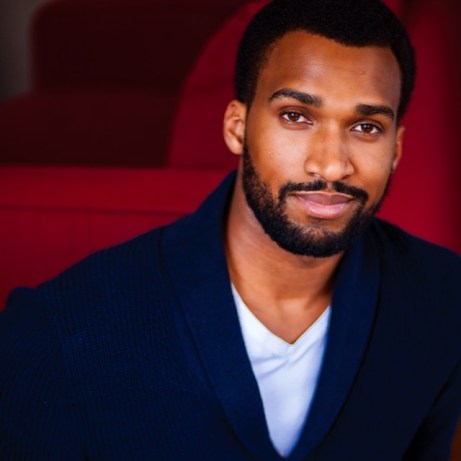
Canadian Actor Nathan Mitchell shot by Rebecca Eady


For Canadian born actor Nathan Mitchell, who is known for his roles in an impressive list of hit films such as “Twist of Fate,” “Newlywed and Dead” and Lifetime’s “The Real MVP: The Wanda Durant Story,” as well as the multi-award winning series “Arrow” and “Motive,” the acting bug bit at a young age, and he hasn’t turned back since.

Mitchell says, “What’s appealing about acting for me is that it’s an art form that requires genuine connection with other people. You really have to listen; you really have to let yourself be affected by the other person to create something dynamic. When you’re that tuned into someone else you have this fun, meaningful experience.”

Starting out in the industry nearly a decade ago, Mitchell skyrocketed to the top of the Canadian TV scene almost immediately when he took on the recurring lead role of Jeffrey on The CW’s comedy “Aliens in America.” Mitchell’s character Jeffrey is the on-and-off boyfriend of lead character Claire Tolchuck, played by Lindsay Shaw from the multi-award winning series “Pretty Little Liars.”

A coming of age comedy about a Pakistani exchange student who moves to America to live with the Tolchuck family and attend high school in a foreign country, “Aliens in America” was an immediate fan favorite thanks to the way it wove together relatable storylines about the dramatic experiences of being a teenager in a way that left viewers feeling good.

One of Mitchell’s funniest and most unforgettable moments in the series was in the second episode when Claire tries to break up with him. Instead of fading out, he stands on her front lawn with a boombox on his shoulder blasting ‘In Your Eyes,’ an icon and effective move on his part.

While “Aliens in America” was the perfect venue for Mitchell to show off his comedy side, but what audiences have come to know the actor best for is his unparalleled skill in drama.

Over the years he’s given numerous memorable performances on hit TV series such as the Golden Globe nominated crime series “Covert Affairs,” the two-time Primetime Emmy nominated sci-fi series “Falling Skies,” the Gemini and Canadian Screen Award winning series “How to Be Indie,” the Joey Award winning series “The Tomorrow People” and more.

motive-2
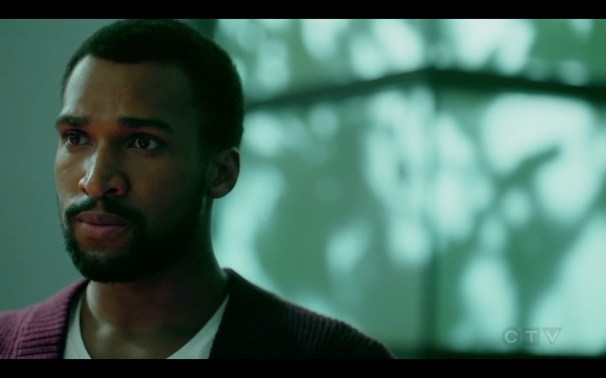
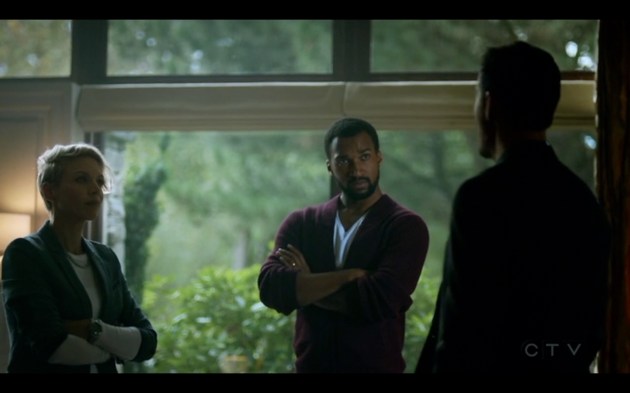
Nathan Mitchell in a dramatic moment as Russell Bowman in “Motive”

In season 4 of the dramatic crime series “Motive” Mitchell took on a starring role as famed BC Furies quarterback Russell Bowman, a distraught husband mourning the loss of his murdered wife.

“There was a weight to this character because he is dealing with the most monumental loss of his life. We get to see some of the happy times they had as a couple. But then you’re dealing with the heaviness of going through such a deep loss,” recalls Mitchell about playing Russell Bowman on the series.

“He has to deal with losing the most important person in his life. Seeing how he handles that is just as interesting as solving the murder itself. Those two parts of the narrative keep you on your toes.”

Nathan Mitchell
Kristin Lehman (left), Nathan Mitchell (center) & Brendan Penny (right) in “Motive”

Mitchell’s riveting performance as Bowman is emotional, honest and impossible to peel our eyes away from, the actor definitely has a gift for bringing challenging and multi-layered characters to life on screen.

With the craze of comic book inspired blockbuster films and hit television series that have swept the entertainment industry over the last few years, it’s not at all surprising that Mitchell is a part of that world too, the DC Universe to be specific.

In season 3 of The CW’s “Arrow,” Mitchell guest starred as Isaac Stanzler, a key character in the developing plot between Oliver aka Arrow, played by Stephen Amell (“The Flash,” “Legends of Tomorrow”), and Roy aka Arsenal, played by Colton Hayes (“San Andreas,” “Teen Wolf”).

The abandoned protege of Wildcat (J.R. Ramirez), Isaac appears on the scene embittered from the betrayal and ready to make Wildcat pay by framing him for a string of mysterious murders.

Mitchell explains, “I came out of the shadows to frame Wild Cat for giving up on me and leaving me in the hands of criminals. It was exhilarating getting to be a part of the DC Comics Universe and bring comic book lore to life.”

A critical subplot in “Arrow’s” overall story arc, the relationship between Isaac and Wildcat reveal what could happen to Arrow if he were to be abandoned by Arsenal in the future; but only time will tell how that plays out.

Nailing the mark with his performance in “Arrow,” Mitchell brings his character to life seamlessly by tapping into the hurt and resentment Isaac has towards Wildcat. In the heart pumping fight scene where Isaac takes on Arsenal, Mitchell makes it’s clear that what’s driving his character is the need for vengeance, which makes him a relatable villain that we hate and feel sorry for at the same time.

As an actor, Nathan Mitchell brings a rare level of diversity to the table thanks to his ability to find the root of what drives each of his characters, an asset that has allowed him to play a wide range roles across practically every genre.

He explains, “The more I truly explore my roles the more I become aware of different facets of myself. There’s a huge psychological component to it. You’re taking the script and deducing how one would act based on the circumstances. You’re always learning about human nature. It’s very fulfilling.”

Nathan Mitchell
Rose McIver (left), Nathan Mitchell (center) & Malcolm Goodwin (right) in the season 2 finale of “iZombie”

Up next for Nathan Mitchell is season 3 of the TV series “iZombie,” which airs in 2017, as well as the upcoming sci-fi film “Scorched Earth,” where he takes on the critical role of Zee. Audiences will also be able to catch him in the upcoming film “The Marine 5: Battleground,” where he takes on the key role of Cole.


NEW ZEALAND’S NATALIA GORELOVA ISN’T ALLERGIC TO FAME…OR THE HARD WORK NEEDED TO GET THERE.

What do the people on this list have in common: Angelina Jolie, Sofia Vergara, Cameron Diaz, Uma Thurman, Jennifer Connelly, and Amanda Seyfried? They all started their careers in modeling. In this day of YouTube stars, this and that Idol, and “Top (insert profession here )”, it’s easy to forget that there was a time when professionals in entertainment took the path of working slowly to gain the experience to make a career last for life. That’s not to say that there aren’t many highly talented individuals in the aforementioned productions, just that there is something to be gained through gradually experiencing the many opportunities and scenarios that a developing career bestows. Sometimes the factor which allows creative types to develop as an artist is the ability to learn from the challenges and inevitable mistakes that come their way in less obvious ways. Natalia Gorelova has been travelling this path and successfully making the move from magazine covers and the catwalk to the TV screen. The wide variety of situations she has been called upon to perform in have resulted with her becoming a model who understands all of the subtleties of using verbal and nonverbal communication to portray whatever her role requires. While you might previously have seen her on the cover of Idealog or Headwave magazine, you’d more likely see her these days on TV doing a spot for Jaguar or Green Giant. Taking risks, doing the hard work, and believing in herself is the MOD for Gorelova. She grew up in Russia, then moved to New Zealand and was discovered. Going to unfamiliar places and jumping in the deep end has always been an attribute well exercised by Natalia. It has served her well giving her new opportunities and granting her access to other professionals who empowered her vocational pursuits.

Most models have to learn to make peace with the idea of auditioning. It’s an essential part of the business that most people accept as necessary in order to gain access to the opportunities they desire. In strong contrast to shying away from this, Gorelova describes a recent international TV spot for Zyrtec stating, “I decided that I had to play it very confident and warm. In one scene I was a member of a couple so I just went for it. Spontaneous intimacy with a stranger in a room in front of a camera can be an awkward experience. The key is to make it look like this is real and commonplace; you are in love with this guy you’ve never met before but you’re happy cuddling. It has to happen instantly. I made the point of talking to my casting partner before we got inside the room to break the ice a little. It worked and the audition went well. We felt at ease with each other which made the casting director happy, of course. I got a callback right away.”

_mg_7762

An important reason for Gorelova’s casting was the director on the project, Gregor Nicholas. Nicholas in an Emmy Award finalist with international awards (at Cannes Lions for example) with films in the Permanent Film Collection at the Museum of Modern Art in New York (Pacific 3-2-1-Zero) and was called “One of New Zealand’s hottest directors” by the Hollywood Reporter. He communicates, “Natalia demonstrates an extraordinary range, both comedic and dramatic. Her versatility as a performer allows her to handle any theme or attitude, whether in a movie, television, or a commercial. Rarely have I collaborated with an artist who has worked so consistently with so many leading commercial and fashion brands. It is clear that Natalia is a truly gifted model with exceptional abilities.” Gregor was in the room during the casting session and recognized her talent immediately. His praise was particularly poignant for Gorelova as she had been aware of his work since first moving to New Zealand. She reveals, “I remember the time when I just moved to New Zealand from Russia and I was watching a lot of TV to help me learn English more quickly and I saw a Telecom commercial about a guy who travels a lot while his wife is back home pregnant and missing him. The man scans his hand and emails the image to his wife. Upon receiving the email, his wife touches the screen with her palm against the image of her husband’s. It was so emotional and cinematic. From casting, to music, to lighting, to the idea; all of it was wonderfully detailed and elegantly filmed. I never got sick of watching that commercial. Later, when I started working in the commercial world, I hoped that I would get to make something that beautiful and cinematic. When I realized that Gregor was directing this Zyrtec project, I became very nervous because I wanted the part so bad!”

The commercial aired frequently to great response, making Zyrtec quite happy. Gorelova admits that although she should focus on this, it is hard for her to get past enjoying the work so much because she works alongside professionals whom she respects. Having made a successful career in and being well-received by brands and customers alike is an achievement she is quite happy about. Of course, the fact that the Zyrtec campaign and her performance was successful is a happy outcome. Natalia confirms, “Working with the entire cast and crew, and learning from Gregor was incredible; but also, working for a huge American brand was really exciting. To me, it meant that I am marketable in the U.S. and that started giving me hope that I could one day end up doing what I love in the country that I also love.”


img_9933

VON SCHWERIN: A MODERN INTERPRETATION OF ORWELL IN PEACEFORCE

Award-winning director David Gerson describes Beatrice von Schwerin professing, “Beatrice is the epitome of a doer. A producer who always gets the job done as effectively as possible, inventively, and with deep respect for the directors she works with. She grew up a member of the Swedish nobility, spending her youth hunting in the south of Sweden. I believe that hunting nature in her is what makes her such an excellent producer. She treats a film shoot like the hunt; a task to be cautiously, precisely, and effectively maneuvered.” Gerson has worked with von Schwerin on a number of productions such as: Automatic at Sea, All These Voices, Destiny’s Child, and others. Having worked closely with her he knows well that Beatrice can be seen leading the charge just as should would during a hunt. These days, von Schwerin is respected as a producer with many productions to her credit. It’s fitting that Gerson views her as a huntress as we revisit the first film she produced, Peaceforce, as the subject matter is a hunt…a hunt which is much more complex than it appears to be. Beatrice concedes that her forthrightness, determination, and loud speaking voice, are all products of her noble lineage and rearing; attributes that serve her well in leading a film production. More at ease facing challenges on set than relaxing in her family’s castle, this Swedish baroness prefers a life of creative pursuits in an industry that cares nothing about her heritage and yet appreciates every ounce of her talent and hard-work ethic. A dissection of her first production shows that the very template for her approach was a solid foundation which has served her and the films she enables to result in many achievements.

unknown

Beatrice worked in the Danish film industry for 9 years before producing Peaceforce. Denmark is one of the strongest countries when it comes to film production in Europe. Copenhagen has a solid film industry and is equipped to modern standards. In many ways it mirrors the productivity of Hollywood’s industry and community. Peaceforce was the first film on von Schwerin’s long list of producing credits. She confirms, “This is the first production where I realized that I really, REALLY wanted to be a producer. I knew that if I could get the cast and crew through all the challenges, then I could do anything. This film was the ‘AHA’ moment in my career, the one that made me love my job even more than I did previously.” Jonas Allen of Miso Films recognized her talents and placed her in the Producer role for the film. Peaceforce is loosely based on the George Orwell essay “Shooting an Elephant.” The film is set in the near future, in a world where capitalism has run its course. Daniel, a young Peaceforce officer, meets Jesper, a prominent local citizen. Jesper claims that an elephant is running amok in the city and killing people. Spurred on by his idealism and desire to do good, Daniel follows Jesper deep into the heart of a desolate city. Daniel believes he can make a difference by helping the wounded and dealing with the elephant. Not long into his mission, Daniel discovers that he’s in way over his head when he meets a little girl who is the sole survivor of the group that cared for the elephant. Daniel understands that he has been misled by Jesper. Jesper and his hungry entourage keeps breathing down Daniel’s neck. Fearing for his life, Daniel feels forced to make conflicting promises to Jesper and the girl. Soon Daniel finds himself confronted by the magnificent beast, a live elephant. Daniel desperately searches for a way out of this dilemma as he has no desire to kill the beautiful animal. The mob grows ever more impatient and hungry for blood. Daniel finally relents and shoots the beast, thereby betraying not only his own word, but also all that he believes in. It’s an epic and tragic tale. The components used to portray the action on-screen were grand as well. Peaceforce was a challenging shoot, with many different pieces that needed to match. Beyond the typical cast, crew, and locations logisitics, there were elephants, children, extras, & VFX to contend with on this production. Recognizing early on that she could lead with positivity to create momentum, Beatrice began with the animals. She recalls, “We spent two days shooting in a field outside of Copenhagen, close to a circus, where we rented an elephant for the shoot. One day was spent with the elephant and one day with the extras. We had three elephants on set with us and we used one of them. Elephants are flock animals and if you split them up, they are not happy. To contend with this, we had the two elephants not used in front of camera, close by so that they could be in contact with one another. Every now and then during the shoot, we’d have our star [elephant] head over to the others for some down time. It was a great and exciting day for both us and the elephants. I always try to have a positive attitude, no matter how challenging the day may be. I know that if I’m smiling and keeping positive, it trickles down to the cast and crew. It’s always important to show kindness and respect and I try to do that. I don’t separate my crew members from cast members. I really want everyone to feel equal, like one big happy family!” It’s a template that resulted in a happy and committed production family and a successful film as well. Peaceforce received a nomination at the Robert awards (Danish equivalent to Academy Awards) and garnered a Canal+ Award at the Clermont-Ferrand International Short Film Festival. Director Peter Gornstein couldn’t be happier as he notes, “Making Peaceforce with Beatrice was such a positive experience. I have known and worked with Beatrice for more than 8 years. We have won international awards together as well as developing several other projects. Beatrice is truly a one of a kind person and producer. Her positive energy and go getter mentality is something that spreads to everyone that she works with. Not only does she have a fantastic personality but her skills, and more importantly, her moral compass are beyond reproach. I’ve had to face some tough obstacles in the course of projects we’ve worked on together and no matter how hard or difficult the situation was; Beatrice would always guide me towards taking the high road. When I’ve wavered I have always been able to count on Beatrice to help me make not only the right choices for the projects, but also the moral choices.”

It isn’t always easy to keep that sunshine attitude. Persevering through the sometimes tedious portions of filmmaking are the obstacles that teach von Schwerin how to remain cool and collected. She describes, “Sometimes it’s not going over schedules or obtaining a piece of gear that is the challenge. Quite often it is just getting all the bricks in the puzzle to fall into place! We had so many moving parts on this film. It took what felt like (at the time) an army to get it made. The shoot was only two weeks, but the VFX was done in post and took almost 10 months to complete. When you are coordinating between VFX artist Ivo Horvat being in LA and the Director being in Copenhagen, you sometimes wonder where you are and what time it is.” These days, Beatrice von Schwerin knows exactly where she has been and she is considering heading to Hollywood as she fields offers to be a part of city that is the epicenter of film. One thing is for certain, Hollywood could use another producer who puts a smile on everyone’s face.

892a1911


A CANADIAN’S PERSPECTIVE ON “AMERIKA”

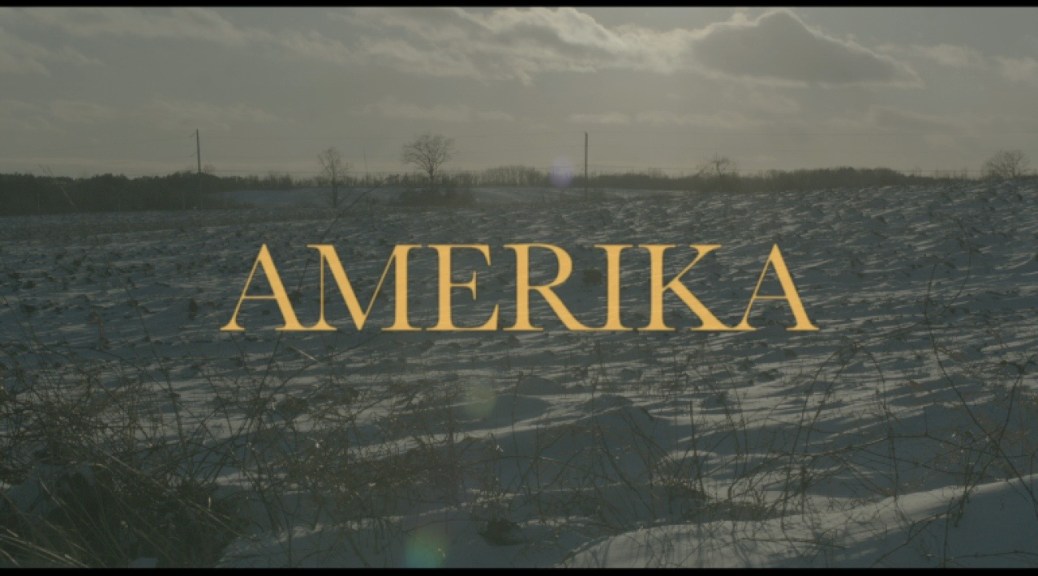
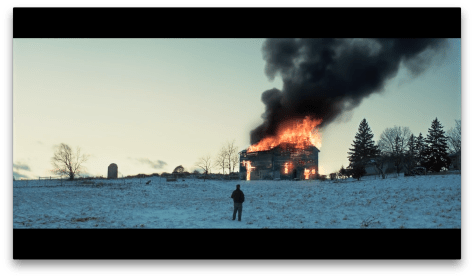
There’s no escaping the discussion of current events in America right now. That should come as a surprise to no one. With an election that has taken most of the past two years and a complete switch in the majority political party, it seems as if the entire planet is watching the US. You can’t turn on a news programs without getting the network’s opinion, so why should music be any different? Of course, musicians have long used their creativity to present their ideas, there’s nothing new to that. You can go back more than two hundred years to the protest song “Yankee Doodle” and see that even the founding fathers had musicians weighing in with their take on current events. The more overt and modern equivalent of this is the music video. “Amerika” is the song and video by Canadian band Wintersleep which presents their perspective of the modern US events and temperament. Just as with “Yankee Doodle”, “Amerika” is a protest song. The first person director Scott Cudmore thought of for the cinematographer position on “Amerika” was Peter Hadfield. This duo has worked on a number of high profile videos (including Vimeo Staff Pick “It’s Okay, I Promise” by Harrison x/Clairmont the Second and the sci-fi “Needs” video from Adonis Adonis) and both were eager to repeat the experience. Katy Maravala (producer for “Amerika”) was also keen to repeat her experience working with Peter as well. Maravala, whose client list includes; Drake, Rihanna, Arkells, and Halsey declares, “Peter has always been one of my first choices as director of photography. I feel confident in saying that Peter is one of the most genuine, humble, and talented humans I have ever met. As proof of his incredible talent, “Americka” was nominated for a UKMVA [United Kingdom Music Video Award]. The breathtaking images in this video were not easily earned. During the video we encountered some challenging locations; frozen waterfalls, old houses, a two-hour hike in the woods, and desolate buildings all in the middle of a Canadian winter. Peter remained positive, upbeat and an absolute joy to work with even during this tempestuous time.”

wa_screen-shot-2016-07-01-at-6-38-15-pm

While the relationship vignettes are compelling, the vistas in “Amerika” are grand and give the video a cinematic feeling. “Amerika” was shot in Hamilton, Ontario; a steel town on the coast of Lake Ontario that has come into hard times. The people of Ontario often refer to Hamilton as “The Hammer”. While the town possesses a great deal of beauty, it’s easy to see there many of its residents are surviving day to day. The opening shot was taken on the coldest day of the year with a temperature of -40 degrees F with wind chill. At times, Peter couldn’t operate the camera because the wind made his eyes water and the cold would freeze the tears. Hand warmers were taped to the camera batteries to keep them functioning. It was less than ideal circumstances. The crew shot for an uncommon five days in order to get shots at precisely the correct time of day for the desired effects. Their guerilla approach called for a lot of hiking through snow to reach some of the isolated locations. Again, less than ideal in subzero temperatures. It’s hard to find elite professionals whom are willing to endure these scenarios but Hadfield instills, “I am extremely passionate about creating socio political messages in film making. That’s what I’m here for. When I see it in other videos it makes me so happy and excited. When there’s anyone that’s willing to go out on a limb and say something truthful about the way our society is functioning, I couldn’t be more excited. Mainstream artists make art videos too. Kanye West has amazing music videos. There were parts of Beyoncé’s “Lemonade” that were beautiful and evocative. Radiohead just put out an incredible video shot by Paul Thomas Anderson and Robert Elswit that I definitely consider art. If I could make something as potent as that “Daydreaming” video, I’d be very pleased. The alternative artists like Wintersleep who put out videos that have less glamorization in them have the freedom to strive for more substance. They’re freer to say something political or polarizing because there isn’t as much money involved or pressure from the record companies and distributors. The music industry has fewer record companies directly involved, allowing artists to self-release. I think we’ll start seeing more videos with greater substance. We’ll start seeing more videos like Kanye West’s “Famous”. But there will always be artists on the fringe, making meaningful work and encouraging the next generation of people to develop their talent. The hope is that they use this to make a positive impact on the world. This is the agreement among all creative people; we are to use our talents to improve the lives of people and the world itself.”

wa_screen-shot-2016-07-01-at-6-39-10-pm

While this video may seem to be something of a mirror to hold up to the US, Hadfield professes his fondness for the artists and potential of the people found in the spirit of America. He recognizes that the film world finds its epicenter in the US. Peter comments, “There are great music videos and incredibly talented artists coming out of Canada, but most talented people here end up going to America and succeeding. There are amazing opportunities there, you can’t deny it. I think being on a set in Hollywood would be an amazing feeling. I think the greatest joy is being on set, with a camera on my shoulder. There’s nothing more satisfying than getting to the right location at the right time and capturing something special. It’s extremely satisfying and inspiring, and leaves me wanting more and more. Being a cinematographer takes a lot of self-discipline; staying focused and working towards an unattainable goal. That unattainable goal is being a great cinematographer. The challenge is getting than next great shot. I’ve got in insatiable appetite for capturing images, and as my taste and skill grow, I’ll always be reaching for the next shot that means something.” Striving for greatness, isn’t that what we all want for America?

img_6281


HEARING LOVE IN A “THUNDERSTORM” WITH XIAO’OU OLIVIA ZHANG

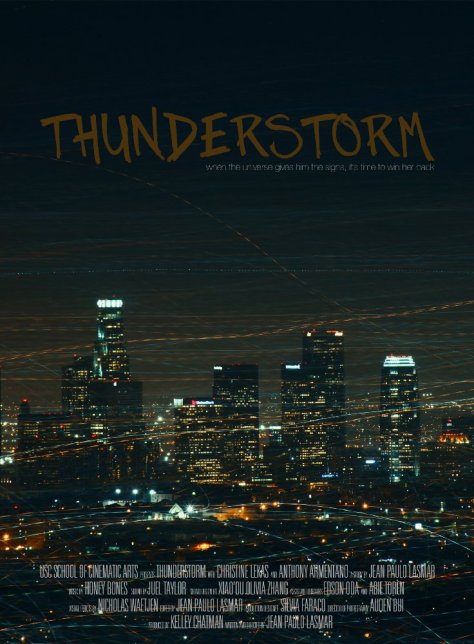
“There’s poetry in everything. Even in traffic.” It’s statements like this that led Jean Paulo Lasmar, writer/director of Thunderstorm to seek out Xiao’ou Olivia Zhang to supply the sound for this film. Zhang is a respected sound designer who has garnered acclaim in the film industry for her unique and creative approaches in the industry. Lasmar declares, “Olivia is a very clever, sensitive, and professional filmmaker and storyteller. She has worked on the film on set and in post. She knows how every aspect of filmmaking works and how they depend on each other. These skills give her a very mature and solid understand of story, emotion, and character, as well as production limitations. Due to this knowledge and proficiency, she was able to add different layers in Thunderstorm, through sound design and mixing, taking what we initially had and making it work by adding a personality to it, ultimately adding other layers to the story. Olivia was quickly persuaded to work on the film by Jean’s discussion of his interest in getting very creative with their approach to the cacophony that is downtown Los Angeles traffic and its personality in the film. For a sound designer like Zhang who finds her greatest excitement in the freedom that independent films afford, this easily became a production she wanted to be a part of creating. Olivia confirms, “He [Lasmar] came to me and said he wanted me to use sound to separate them [the two lead characters] and then to unite them together through these subjective moments. I couldn’t pass on the film because the story is so real and there’s so much I can do with sound to enhance the emotions.”

thunderstorm-poster

Thunderstorm is the story of Bella and Troy. Despite all the magic around their love story, they are no longer together. Broken hearted, Troy moved to LA to forget about Bella. Six months later, she arrives in town. One night when the universe gives him the signs, he tries to win her back.  On a rooftop in downtown LA, during the first snowfall of the year, amidst manic traffic, the two deal with their emotions and differing perspectives of each other. While there is resolution to the film’s plot, what impacts the viewer is the way in which these two different people can perceive the exact same circumstances. This was the crux of Zhang’s work in Thunderstorm; to give the audience the sense of viewing the character’s emotions in a subtle way. Olivia reveals, “Sound design in drama gives a lot of freedom to craft emotions. I pick moments that are subjective and try to mimic the way our brain neutralizes our environment. When you are close to someone or want to be close with someone, your mind focuses on the sound of their clothes rustling instead of the traffic because it is the sound that this person makes. When you really want someone to stop talking and leave you alone, you hear more of the background sound while the foreground sound that’s the voice of the person becomes the irrelevant background noise. So balancing the loudness of each sound and choosing the sounds the character would hear the most give energy and feeling to these subjective moments. At the beginning, when Troy and Bella are on the roof, she really wants to leave. Viewing things from her perspective, you hear lots of traffic and noise because her focus is not there. Troy, on the hand, wants to stay and remember this last moment with her, so he hears the night wind blowing on the roof while the traffic is more of a distant wash. At the end of the film, when they both reach closure, the way they hear the world becomes similar. The traffic become less irritating for her and more realistic for him. Of course, these are all done in a very subtle way, sound design in this film is mainly to build the mood.”

Zhang often thinks of her work as relating to other art forms. Analogies are a way for her to inspire the creative approaches she is known for in the industry. She used this in her approach to the sound of traffic as she explains, “A bus in traffic always stands out because it has a distinguished squeaking sound of a higher frequency than general engine sounds. In sound design, when we put a bus in the distance on top of a traffic wash, it brings more life and energy to it. I think of it as music. It’s like a piano. The bus and occasional horn honks are like the melody of the right hand, and the traffic wash would be the left hand chords that support and carry on the life of the song.”

To access inspiration, Zhang keeps a journal in which she makes note of her life experiences, allowing her to access “triggers” that she can refer to resuscitate the emotional states she needs to impart. It’s something that goes back to her earliest memories of film and sound. Olivia recalls, “When I was 12, during summer break, I was bored and I started to go through my parents’ video collections. On one cover I saw a short-haired lady, dressed in red and smiling at me against a green background. I put it in the VCD player and immediately heard this beautiful accordion music playing on the menu page. I have played accordion 2 hours a day since I was 5. The sound of that instrument is like a brother to me. And that was the first time I heard an accordion in film or any kind of media. I felt electricity in my body that was followed by a great sense of comfort and happiness. It was a French film called Amélie by Jean-Pierre Jeunet. The character Amélie does all these strange quirky things in a world full of color. I was so mesmerized and surprised that films can tell stories about people’s current life, and the current life is just as troubled and beautiful as it was in the past. Amélie carved the word “film” permanently in my heart. Nowadays when I think of film, I always see her and hear her faintly in the distance.” The poetry that Xiao’ou Olivia Zhang finds in common things like traffic sounds is obviously a product of the poetry that resides in her own heart.


SEBASTIAN SACCO PORTRAY’S THE CREATIVE STRUGGLE IN “THE PATH”

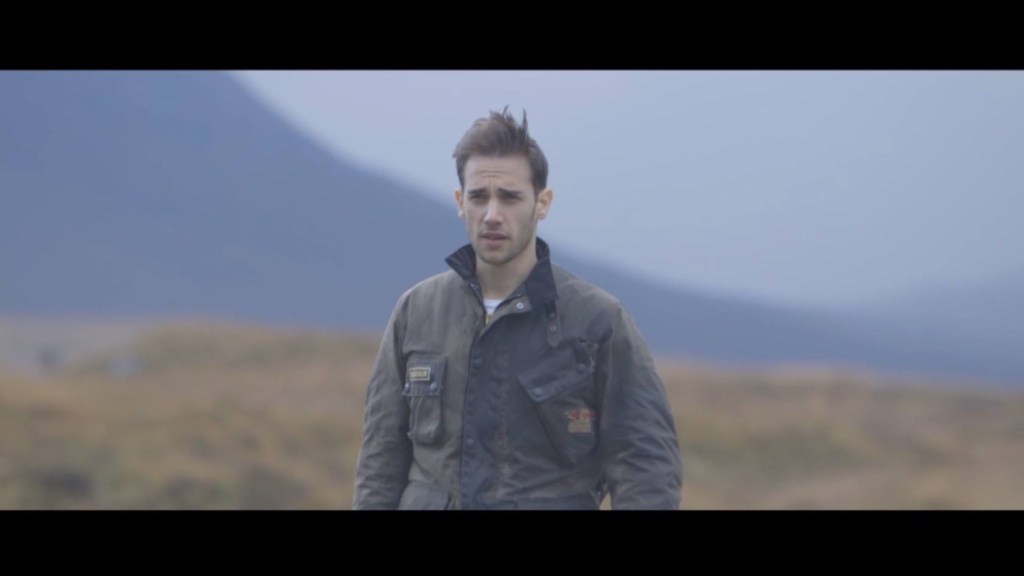
Art imitates life and life imitates art. Whether it is in the artistic presentation of the real life experience, people are fascinated by passion. Love, hate, greed, altruism, faith, family, all of these involve this provocative emotion. Some enjoy a calm lifestyle while others are driven to the flame by their desires. Either can be a soothing or precarious scenario. For actors like Sebastian Sacco, he cannot deny his pursuit of a creative lifestyle. It’s not all red-carpet premiers and adoring fans. Quite often it means freezing in the rain while being shot with (paintball) bullets on a war film (as he did in Tommy), or being held underwater for long periods of time (in the Flawes music video “Don’t Wait For Me”). Even when he is given a less physically demanding role to play, it is often emotionally taxing, as in the film The Path. This film delves into the mindset and emotional obstacles of someone who pursues a life as an actor and the everyday securities with which they must forego; it’s a role which Sacco is ideally suited to play. He stars as Seb in the film by writer Harry Chadwick and directed by Tobias Brebner. This 2015 film investigates the sacrifices and uncertainties made in the pursuit of a dream, and the measures it takes to stay on that path.

If you transferred the same fixation and enthusiasm that one might have for say…futbol (or football, depending on your place of origin) you would have an indication of what dancers, writers, musicians, actors, and other creative types feel for their vocation. The true immersion of your joys and pains, fixated on one specific thing…it can be overpowering. Many entertainers profess their love of their creative pursuits while also recognizing the fact that it often requires them to forego a “normal” life and relationships. These careers are never 9 to 5 jobs. Witnessing Sacco’s performance as Seb feels like watching a new form of audience-viewable intense therapy. His character deals with the same doubt, drive, insecurities, and relationship struggles that undoubtedly almost every creative centered individual experiences. Specifically, this film focuses on a relationship. The Path is the story of an actor pursuing his dream. In this pursuit, he meets and falls in love with someone. Seb is constantly divided in his motivation between love and the demands of pursuing his career. He desperately wants the relationship to work but he can’t help but become diverted from it by the focus needed to pursue his dream. Seb realizes that he can only pursue one end and must choose between her or his passion. He takes the plunge and heads back on his path towards his dream.

the-path6

Sebastian has played many leading roles. It’s any easy conclusion to make that the reason so many critics and viewers found his portrayal of Seb in The Path so authentic is because it is so close to his own life experience. He confirms, “I’m very close to who this character is and what he has lived. Seb really has to deal with one big question. Life is filled with so many little decisions that dictate the path we follow but this film wanted to focus on just the big stuff for Seb; the huge pull for a loved one or for your dream and passion. It’s a sad fact that sometimes the two cannot work together. Towing the line in-between just makes both unhappy. I denied this fact in my own life for a long time. I had wanted to be an actor ever since I was a kid. I didn’t allow myself to consider it as a real possibility for such a long time. As I grew up and felt pressures from other factors, I just slowly pretended I wanted other things. I tried to forget about acting or tell myself I’d do it later. I attempted to use other things to occupy my attention rather than allowing myself to pursue my true desire. Eventually, when I made the decision… nothing else mattered. I wasn’t going back. I wasn’t going to deny myself again. That’s the exact struggle my character endures. I’m certain that most people who pursue creative lives relate to this, I was just fortunate that I found a film which allowed me to tell the story that many of us relate to.”

the-path5

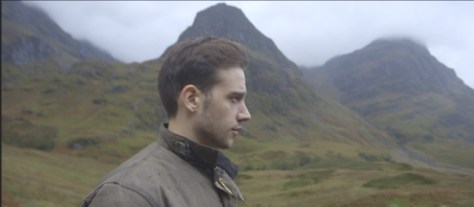
Many of the scenes in The Path are emotionally taxing but one scene in particular depicts a physical representation of Seb’s turmoil. It’s somewhat humorous that Sacco has had a number of roles in his career that require submersion in water for long periods of time. It’s not a scenario or achievement which one regularly associates with a particular actor. Director Tobias Brebner (who has worked with such acclaimed actors as Kevin Spacey) notes, “We had to shoot Sebastian in the freezing wind and rain in Scotland as he traversed through the wilderness. On top of all that, he had to perform a sequence in which he had to jump into a freezing cold lake in the lake district during each take. Despite the obvious physical discomfort he was in, Sebastian performed each take with the utmost professionalism, never complaining about the conditions and always able to stay in character. His performance is a testament to the theme of the film – always enduring and working toward a goal regardless of the external circumstances. The success we achieved would not have been possible without his amazing talent and commitment to the film. In fact, I would go so far as to say he is the film.”

Sebastian agrees that he is quite close to his character in The Path. While he may not have made immense personal discoveries working on this production, it reinforced a pillar of his beliefs as he comments, “Seb reminded me to always follow your dream. The path might change or you might go in a different direction than you thought but, always keep following your dream.”

the-path11

HUGO SHIH BRINGS “A GIFT” OF COLOR

There is a myriad of roles involved in film production. Each of these play an important role in enabling the story to be told with the vision that the writer and director share. Hundreds of years ago, thespians performed the works of playwrights, before that…orators weaved tales over the communal fire; both of these relied on the imagination of the audience to conjure up mental images which were hopefully as grand as the teller intended. Modern films have grown to such a high level of production that they can manifest creatures never before imagined in such a way that they seem as real as the people and surroundings among us. One of the most difficult things to communicate to an audience is the emotional intent that motivates a specific character. While an actor’s performance, camera angles, music, and other factors bear the brunt of this transference, one of the least obvious factors is coloring. As the title states, a colorist allows the Director to shade the emotions of the characters by shading the action on screen. As film audiences have become more astute and aware of the use of a colorist’s work in film, these professionals have become increasingly clever and decreasingly obvious in their application. Colorist Hugo Shih is a highly respected and valued colorist in today’s film industry. A conversation with him reveals the fine points of what a modern colorist does to help shape a film’s emotional intent as well as how it is achieved through the use of color. What might seem to be superficial to the uninformed movie goer, has a profound impact on the subconscious and heartfelt emotive catharsis which an audience experiences.

The 2016 film A Gift is a redemptive drama. It is the story of Jack, a young thief who breaks into the home of Margaret. Margaret is a blind elderly woman who mistakes Jack for her son. Although Margaret comes to realize that Jack is not her son, she still covers for him, protecting him from being discovered when police and neighbors come looking for Jack. The young thief comes to realize the error of his ways and is moved by Margaret’s gift of understanding, forgiveness, and non-judgement. A story such as this contains many intense emotions; fear, desperation, gratitude, and others. With such a small cast (consisting of Kaiso Hill as Jack and Sally Hogarty as Margaret) the actors are required to portray a diverse emotional palette. Hugo’s job as the colorist for A Gift meant that he needed to assist the character’s in hitting the “bullseye” which the film’s director intended. Yiqong Li is the director of A Gift (in addition to being one of the writers of this film). Li approached Hugo due to her familiarity with his work on many films. Li remarks, “Hugo has a reputation for being able to make just about anything happen for a director. Even if I didn’t plan on making use of all his abilities, it was nice to have in case I needed them…which it turns out I did. He did an amazing job on the color. Due to scheduling, there was one establishing shot that we just couldn’t get. Hugo worked his magic and literally created the shot we needed when it didn’t exist; I thought it was impossible to do it but he made it happen. We would never have been able to achieve this without the expertise of a master like Hugo.” Considering this all important shot, Shih explains, “We usually cut an establishing shot at the beginning to introduce the environment. A Gift started at night as the main character broke into the house. We knew that we should be looking for a night shot of the house. However, the production couldn’t get the shot at night, so they shot it during the day. It was the only establishing shot I could use. Normally, the editor would say ‘Let’s go buy some stock footage.’ In this case, I knew that ‘Day to Night’ was something I could create for the film. I said to director that I could make it work and there was no need to worry. To achieve this, I desaturated the shot and lowered the highlight, but brought up a little bit of gamma to make sure the details were all there. Following this, I did some secondary to pull out the sky and other details. In the end, I made a light at the front door because I knew that there was a light in the next shot. After I finished the color and cut into the timeline; when I showed it to the director, she was surprised and remarked that she had no idea this would even be possible. It’s a feeling of great achievement when you hear a director say this about your work.”

agift_before

agift_after

One of the unique parts about Shih’s work on A Gift is the fact that the film’s director asked him to serve as both a colorist and an editor on the film. Director Yiqiong Li had been working with major Chinese production companies and TV stations. Being involved in her film meant that Hugo would work with highly talented professionals as well as being a part of productions that would reach a massive viewing audience.  Hugo recalls, “She came to me and asked if I could do editing and color grading together. After I read the script and talked with her, I decided to take these two roles in post-production. There are some benefits of being editor and colorist at the same time. I always see the color as my creative tool for editing. It’s like assembling the puzzle pieces to the story while rebuilding the lighting. To illustrate how these roles worked in tandem to the benefit of A Gift, consider the following. In the film, there is a very long shot of Jack following Margaret to the kitchen. Usually it would be hard for an editor to keep this kind of shot because their job is to keep the story intense. However, Hugo was thinking ahead and was able to retain this shot by key framing the lighting when the main actor changed his location; using the key frame tool to adjust the lighting in the same way the aperture is adjusted on a camera. This can invisibly add the tension without the audience’s knowledge that it was made in post-production.

  A Gift has been highly recognized in 2016 with win’s for best film at: Hollywood Independent Moving Picture Film Festival and the 2016 StoneFair International Film Festival, as well as being an Official Selection at: the Berlin International Cinefest, the Roma Cinema Doc, the Los Angeles Independent Film Festival Awards, and the California Women’s Film Festival. As a member of the cast and crew of A Gift, Hugo Shih and his exemplary work are proof that a film about the change possible in each of us can move many people.

kuanyushih_wseniorcoloristwarreneagle

BRAZIL’S VICTOR LUCENA GAINS CRITICAL ACCLAIM AND FANS IN “ARRUFOS”

Stage actor Victor Lucena knows a great deal about love. Yes, he has leading man looks and charisma but that’s not the reason. As a lead actor in the play Arrufos (translated as “Tiffs” in English) by XIX Theater Group in Sao Paulo, Brazil, Lucena explored various representation of love. Every actor uses a part of themselves and takes something with them from a role. As a celebrated theater actor in Brazil, Victor is recognized for his willingness to take on complicated roles as he did in Arrufos. The play received awards from the Shell Theatre Awards, the Sao Paulo Art Critics Association Awards, the Sao Paulo Theatre Co-Op Association, and countless others. As the lead actor in this production, Lucena’s ability to emote and relate to the three different characters he performs as in Arrufos was the driving force which led to these achievements. We all know about love but to communicate its various representations in a way that we can all relate to takes an actor of great skill and sensitivity. This Brazilian thespian’s decision to focus on theater rather than film is because of the changing nature of each performance that he thrives upon. Rather than embracing the security of a perfect take, Victor basks in the uncertainty that performing in front of a live audience grants. This is an appropriate metaphor for the changing aspects of love in each of our lives, which again points directly to Lucena’s astute attitude and ability at performing his roles in Arrufos.

arrufos_picture_3

Victor’s work with the XIX Theater Group has driven them to become one of the most beloved and respected of their kind in Brazil; it’s an attribute that Luiz Fernando Marquez (director of XIX Theater Group) does not take lightly. Marques declares, “Victor has an endless collection of credits. There can be no question that our incredible critical acclaim and commercial success is entirely thanks to Mr. Lucena’s leading role. Arrufos consistently achieved massive commercial success through sold out shows with large audiences, resulting in numerous awards. Victor’s unprecedented skillset allowed him to convey three extraordinarily different and crucial characters in such a way that the audience was able to understand the overarching theme of the production. Victor’s versatility as an actor was an invaluable asset to the creation of this production.” Lucena is the type of actor who delights both his peers and his audience, a testament to his talent and his professionalism. He is also quick to throw accolades to his director and co-stars as reasons behind the acclaim that Arrufos received. The actor notes, “Luiz Fernando Marques is truly talented, particularly in the way that he is able to take on the audience’s perspective. He is able to approach it with a fresh set of eyes each time and understand how the audience will see things, rather than getting lost in a director’s mind. My co-stars: Rodolfo Amorim, Ronaldo Serruya, Juliana Sanches and Janaina Leite…they all have such passion and presence! I’m fortunate that their performances challenged me to work at such a high level. Working with the best forces you to become even better…which is why I do it.”

One of the reasons that Victor was so lauded for his work in Arrufos is in regards to his multiple performances in the play and their believability. The production is a research into the history of love in Brazil, and was written into numerous skits and sketches which show the differing ways love can be perceived, given, and received. Despite wildly different depictions of this highly complex emotion, the overall theme of the play is the strength and prevalence of love across time and space. As a leading actor for Arrufos, Mr. Lucena performed three leading characters: The Priest, The Doctor, and The Lonely. Each character is a different look into various aspects of love. The Priest acts as a conduit of the influence of the Catholic Church in the 1700’s on love and faith, the Doctor establishes opposition to the church and the science of love, and the Lonely represents the lack of hope in life when loneliness is prominent and how love conquers it. Victor explains the acts of the play, “It is a really fascinating emotional curve for the actors involved in this play. The first act is so deep, dark, and heavy. Regardless of all the speeches we all have in it; it seems too silent. In order to create that atmosphere, we all would breathe together for a few minutes and then, about 15 minutes before play starts, each actor and actress would get quiet and start concentrating for it. The second act is much lighter. We took the heaviness off of the atmosphere to break away from the First Act, which is kind of relief for the actors and the audience. The Third Act was a joy! It was especially fun because we break the fourth wall; that was something that I felt really confident and comfortable with. A play is a live organism and as so it is always varying. While a song can be performed in the same way night after night in an orchestra, that’s impossible for a play; it depends on so many different variables. I think consistency is the most important achievement for a good performance but you have to explore new places at the same time.”

arrufos_picture_2

When a performance is as recognized by both consumers and critics, it’s natural to be curious about the preparation of the actor. For his roles in Arrufos, Lucena immersed himself with inspiration for the mood by reading books and watching films about the different presentations of love. He even created a specific playlist which he would listen to for 30 minutes prior to each performance. This gives credence to the idea that art inspires art. While Victor admits to ignoring critics during the run of the play, he admits to one self-congratulatory moment. He reveals, “During the First Act, as the Priest, I’d have to hide under a tiny bed, change clothes and “sing” a prayer in the complete darkness. To do all this, I had only about two and a half minutes, which is the time the character of the father had to give his speech. I’m 5’11’’ and the bed is about 5’5”. I truly believed that there was no way I could do all of this in such a cramped space, but I did and every time. When  I finished I’d secretly celebrate.” Perhaps it is this attitude, that of a man who focuses on the little things rather than worrying about grand acceptance from critics, that communicates Lucena’s joy of the stage and all its possibilities to a welcoming group of admirers.