No medium exhibits the importance of collaborating with a wide array of creative minds quite like film production. And possibly no other title at the center of this marvelous art form holds it all together like the position of an editor.
An actor’s rehearsed lines have no meaning without the editor’s contribution. The director’s constant input lacks any sort of importance or cohesion without the editor working his or his magic. And most importantly, the writer’s story has no discernible narrative if not for the hard work fashioned by the editor, which ties everyone’s work together in the final product.
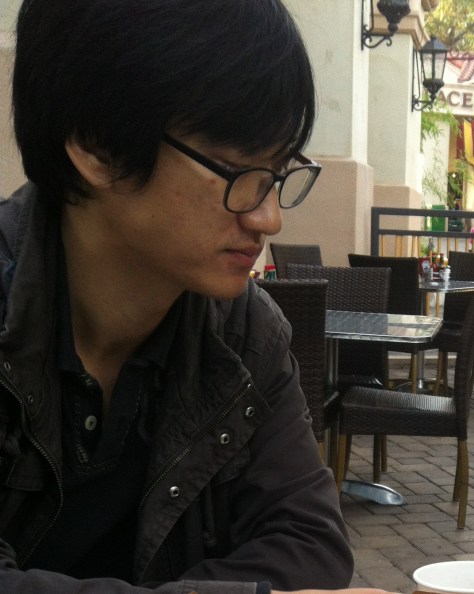
Sunghwan Moon knows this better than anyone. His hard work, dedication, resilience, and knack for working well with others have helped establish him as a remarkable editor in the world of film and television.
It is no wonder that the Korean-born Moon was one of only 14 film editors selected annually to participate in the renowned American Film Institute (AFI) conservatory program. His talents were quite apparent in the film and TV industries in Korea but once he moved to Los Angeles to attend AFI his career officially took off.
Attending AFI allowed Moon to build a significant and valuable network of relationships, including a couple of directors that would go on to provide him with some of the most challenging, yet satisfying jobs of his career to date.
One such film was director Kristine Namkung’s well-received romantic comedy Head Trauma. This film, which revolves around an Asian-American girl who gets a head injury and loses her ability to control her impulses, was right up Moon’s alley. The film’s simple yet elegant editing style helped gain attention noticed among festival goers including rave reviews at the Los Angeles Shorts Festival.
Shortly after receiving high praise for his work on the film, Moon’s successful momentum in the industry continued when he landed an editing position on writer-director Logan Sandler’s film Tracks. Starring Keith Stanfield (Straight Outta Compton, Selma) and Dominique Razon (Criminal Minds, Scorpion) the film follows the life of an amateur skater who is left to care for the young daughter of his girlfriend on the day of an important skateboard tournament.
“The director’s vision for this film was very clear…He and the DP shot the film in a way so that the camera looks at the main character all the time like a documentary,” says Moon.
In fact, in order to emulate the appropriate effect for Tracks, Moon reached out to veteran editor Nicholas Chaudeurge (Still Alice, Fish Tank) whose work inspired Moon’s editing on Tracks. His advice was immensely helpful and shortly thereafter they became close friends.
“I tried to respect how it was shot and edit accordingly. And this film got into many festivals around the world including this year’s AFI FEST,” adds Moon.
In addition to being chosen as an Official Selection of the Cambridge Film Festival, Rome International Film Festival, and the 24FPS International Short Film Festival where it received a Best Actor Award for Keith Stanfield’s performance.
“I’m happy that he won because a big part of editor’s job is to shape actors’ performance,” explains Moon.
.Moon’s precise edits coupled with the enthralling story and crafty camera work earned the film a Grand Jury Prize nomination at the 2015 AFI Fest.
Moon definitely understands the importance of paying close attention to the director’s vision of any project, as well as the DP’s shooting technique in order to properly accomplish the desired effect.
He says, “In general, I believe how the footage is shot tells you how to edit. The footage tells you how to cut.”
Some of Sunghwan Moon’s other films to date include The Confession, The Superman, Mrs. Alderman, The Lost Generation, Together Alone and many more. Through each of his projects as lead editor it is easy to see this truly talented editor’s intuitive relationship with footage and his ability to create a seamless story that fits the goal of the film, no matter how different one project is from the next.
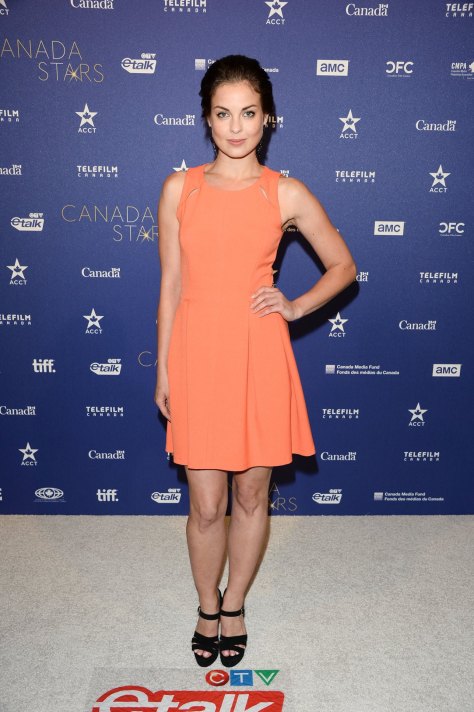
Vlada Verevko at Telefilm Canada Oscar Week Gala (Photo by George Pimintel )
For years, Russia has produced some of the fashion industry’s most stunning models. The cold winters of the motherland may seem more suited to layered clothing and parkas than sexy high-end fashion, but Russian women consistently rank among the most beautiful and best-known models and actresses in the world. Vlada Verevko is the perfect example. Verevko is a gorgeous model with incredible diversity on camera, as well as a talented actress and a driven, self-made woman. Her list of credits is as extensive as it is prestigious, and is further compounded by the unique story of her rise to success.
Born in Siberia, Verevko’s career practically took off overnight when she won the Miss European Beauty Pageant at just 18 years old. Her win at the high profile competition caught the eye of a talent scout from Moscow-based agency, Ultima Models. She began modeling immediately and never looked back.
“At the time I was a full-time student,” Verevko said, “But after graduation I decided to give the fashion world a quick try and that turned into a long-term commitment.”
Verevko has spent extensive time in front of every kind of camera and she is as comfortable being filmed as she is being photographed. Landing on-screen roles as the host of the shows Money Rain and Golden Bet, produced by the Netherlands-based Rosegarden Studios, helped Verevko develop a level of confidence on camera that has been crucial in her modeling career.
“I was lucky to work as a TV host for a few years,” she said, describing the crossroads between her acting and modeling careers. “That took away my camera shyness and allowed me to be confident in front of the camera. It is easy to tell a story through a video, but it takes quite a skill to bring it life in a still photo.”
In 2009, Verevko moved to Toronto and gained representation with Elite Models and began modeling full time. Her inimitable talent shines in the work she’s done modeling for a huge range of both fashion and commercial companies.
“I am mostly known for my beauty work. I was, and in some cases still am, a face of many international brands like Elizabeth Arden, Cargo, Sephora, Dermaglow, Sally Hansen, StriVectin and many more,” Verevko said. “For the past few years I’ve specialized mostly in commercial modeling, doing TV commercials. I’ve done it all and even more on Canada and US National scales.”
She has also been featured as a model in an impressive list of national and international campaigns for brands including MAC Cosmetics, McDonald’s, WalMart, Kraft, Quakers, Mr. Clean, L’Oreal and many more.
Since those early days, she has also had a plethora of roles in shows like USA Network’s Suits and the iconic Degrassi: The Next Generation, which has won over 50 awards in its many years on air. She’s also played supporting and lead roles in the 2015 films Hacker and A Beautiful Side.
Between her careers in modeling and acting, Verevko has proven herself to be a master of all trades. When modeling, her striking beauty is eye-catching and magnetic. As an actress, she blends into her roles like she was born on camera, becoming one with her characters. Vlada Verevko is by far the most diversely talented model-actress in the industry today.
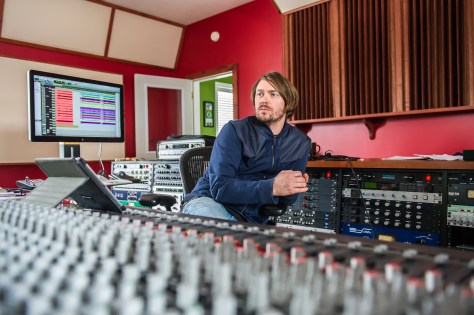
Producer Siegfried Meier at Beach Road Studios shot by Rob Boyce
Siegfried Meier is an internationally acclaimed music producer, audio engineer, mixer and musician who’s been doting his unparalleled talents upon the music industry for nearly three decades. While he first became enthralled with the magic of audio recording at a time when most of his peers were still learning to walk and memorize their ABC’s, it wasn’t until he hit high school that he actually started recording projects professionally. But, the instant love he developed for mixing and recording when he first discovered that he could create his own versions of the songs he heard on the radio using a tape recorder at the age of 2 was the initial step that led him towards the successful career he has today.
Something that separates Meier from most other producers and engineers is the fact that he is, above all, a musician. In the early 90s, when he was still in his teens, he cofounded the melodic rock/punk band Curtis. Meier has gone on to release six albums with Curtis since the band’s inception over 20 years ago, all of which he mixed, mastered, engineered and produced in addition to playing guitar, piano and serving as the band’s lead vocalist.
In 2006 Meier started Beach Road Studios, but the vision for the now incredibly well known recording studio was one that he had brewing a decade prior to when it first opened its doors to the public. Over the years he has recorded a plethora of bands and artists across practically every genre including Kittie, Thine Eyes Bleed, Woods of Ypres, Baptized in Blood, Dayna Manning, Painted Faces, Slouch, Gag Order and many more.
Meier’s vast experience as a multi-instrumentalist, songwriter and vocalist has been a major factor in the success of many of the bands that he has recorded and produced over the years, as he is able to easily jump in and play additional instruments when needed during the recording process.
When it comes to the metal and punk genres, Meier has left an indelible mark on the industry with his skill; and, in 2013 the album “Woods 5: Grey Skies & Electric Light,” which he produced and engineered for the band Woods of Ypres took home the Juno Award, the equivalent of a Grammy in the US, for Best Metal/Hard Music Album of the Year.
To find out more about how Siegfried Meier got to where he is today, some of his early influences and his plans for the future, make sure to check out our interview below. You can also find out more about him and the long list of projects he’s recorded and produced over the years through his website: http://www.siegfriedmeier.com/
Where are you from?
SM: I was born in Oberviechtach, Bavaria, Germany and moved to Canada when I was 5. I grew up in Goderich, Ontario, Canada on the same 220-acre family farm where Beach Road Studios now resides. Growing up, I was the one that was always interested in music – creating it, recording it, pretending I had new bands that I was in and creating album artwork for said “fake” bands. My mom was a huge fan of the Beatles when she was younger, having bought all the German versions of their singles back home, but didn’t really expose me to any of it because by the time I came around the focus was on the farm and raising 4 kids while my father was working construction in Berlin during the week as well as the farm on weekends – sadly leisure time came few and far between in those days. Being the youngest, and 5 years behind my next brother, having a babysitter to take care of me while my mother did the daily chores wasn’t always an option. To prevent me from getting killed on the farm while she was working, my mother would keep me in a locked, but safe, room in the house with toys to keep me occupied– yes, it sounds awful by today’s standards but times were different back then! My father had given me a tape recorder to play with by the age of 2, and even though it probably wasn’t the safest thing to be tinkering with (220v in Europe of course haha), pressing the buttons and recording my voice along with music off the radio became my favorite way to pass the time. My life would be forever be changed.
How and when did you get into music?
SM: Having moved to Canada in 1983, the first 3 music videos I was exposed to were Van Halen’s ‘Jump,’ Cyndi Lauper’s ‘Girls Just Wanna Have Fun’ and Michael Jackson’s ‘Thriller’…it instantly changed my life since all I’d ever really heard were Bavarian polka songs on German radio. Growing up I tinkered with playing synth and keyboards and always created fake bands that “made it” and toured around the world. It wasn’t until my early teens that I started to focus solely on guitar and recording/producing as a profession. I started to play in local bands at age 13 and focused on my first serious band Curtis by my mid teens – we released a few records, and I began my production career by recording all of our albums. It didn’t take long before I realized that by making records with bands that we shared the stage with that I could afford to buy more equipment to build up the studio. While our band is still together and making music to this day, for me the focus shifted quickly to producing for a living early on. I attended The Ontario Institute of Audio Recording Technology for Production and Engineering by age 21, and the rest is history!
What did music do for you when you discovered you were able to communicate through it?
SM: Music literally saved my life early on. Times were tough during the financial brutalness that was the 1980s and living on a farm when interest rates were high, and drought was ravaging the only income our family had. I would sing and create songs and melodies to keep myself occupied, and it often made me forget how bad things seemed at the time. As a teen, and going through the things teenagers do, music became the thing that got you through the day – the reward for putting up with what appeared to be general social unfairness. I listened to music when I went to bed every night at a very young age, and it would always put me in a relaxing, conscious state while I dreamt of what the next day would bring. It really was what got me from one moment of my life to the next, and continues to do so.
How many instruments do you play and how long have you been playing each?
SM: Guitar would be my longest running instrument – 25 years. I’ve played piano and keys for well over 30 years, but would hardly say I’m an accomplished player – I hear the melodies in my head and with the aid of Pro Tools and MIDI am able to create what I need (strings, piano, synths etc.). I’ve been drumming for over 25 years, and have been programming drums for well over 25 years. I’ve played bass for as long as I’ve played guitar, and often provide bass playing services on many projects I produce. I sing backup vocals on nearly every album I produce these days, and I am a vocalist as well in my own music and projects.
Which was your first? And which one do you currently get the most enjoyment out of it?
SM: Keyboards/piano would be my first, but I never became a prolific player beyond hearing what needs to be there and where a song needs to go. Guitar is certainly my main instrument, and the one I get the most enjoyment out of. I’m by no means a shredder– I’ve always focused on songwriting and chord voicings. An infinite amount of feelings and emotions can be created with a voice and a few guitar chords, it’s pretty incredible.
What was one of the first projects that you engineered for another artist?
SM: When I first started acquiring gear, having a space to record in wasn’t always available to me. While it was fine to record our own music in our bedrooms, it wasn’t always an answer when it came time to start working with other clients. In those days, I’d often take a small Mackie mixer, a 1/4” 8 track reel to reel and a case of mics and stands to the bands spaces to get the job done. One of my first was a band that was considering using my services, but wanted me to show them what I was capable of before they committed. So I dragged all my gear to their country home and we tracked the band live off the floor in their barn! I ran a long snake out to a desk I had sitting outside, and it was a nice and sunny day so there were no worries of the elements damaging any equipment. They loved the outcome of our demo so much that I got the record, which I ended up producing in a friend’s home where I later had the studio temporarily setup.
How has your approach to engineering changed since you first began?
SM: Incidentally, much of my approach really hasn’t. Being a musician first and doing so much work with my own band, I understand that the artist always comes first. You shouldn’t have to make it too complicated to capture a good source – it comes from the hands, heart and mind first, and when you have a great sounding room and a good instrument, it’s easy!! However, having this amazing facility these days has made things a little more complicated. I prefer to keep a lot of instruments and gear permanently set up and wired in at all times, so it’s very quick to lay down parts and keeps the artist in a creative mind. But I’d say the options available to us these days in the studio don’t necessarily make for better sounding music, but they do allow me to have certain effects and sounds ready to go for the artist, and being quick on the draw is what’s important when you’re dealing with outside clients.
When did you start producing music?
SM: I started producing our own bands music early on in my mid teens (Curtis). Our first studio experience with an engineer really changed my outlook on music, and it made me realize that the other side of the glass was more exciting. The technical side of things has always fascinated me, and my father used to manufacture and customize all sorts of machinery on the farm – it’s what gave me my interest in mechanical and electronic devices. Having always been a computer fanatic from an early age, once I realized that the music, the electronic and computer worlds could all work together, it became my trifecta of nerd awesomeness!
How does producing tie all of your talents together?
SM: Being a musician first, I’m able to get into the mind of the artist better than someone with just a technical background. So many bands have chosen to make records with me because of that. They know that I treat them the same way that I’d expect to be treated if I were the artist. A good producer is someone that is well rounded, and doesn’t necessarily cater to the band member that plays their instrument of choice – you can often hear the producers that are drummers or guitar players only, as those elements are in the forefront while others take a backseat. But I understand that the song is king, and whatever element is telling the story needs to be treated with the utmost importance.
When did you open Beach Road Studios?
SM: We broke ground on Beach Road in May of 2006, although the idea of it went back at least a decade prior. The studio was built with the help of family and friends, and I enlisted the help of the singer of a band I had produced an EP for, Robbie McCowan of Chasing Mercury. We worked out a wonderful barter deal where I would produce the bands forthcoming album, put them up here and take care of all costs, and he would build the studio for me, a nearly 3000 sq ft structure from scratch and from the ground up until completion – a process that took several years to finish. Robbie was an incredible guitar player and songwriter, and while I had never seen any of his work before in person, I wholeheartedly based his carpentry skills on his musical ability alone!! And, my gut feeling was the right one — Robbie proved to be one of the most talented guys I’ve ever met in my life, both in the studio and in working on one!
How has your career changed since you opened your own recording studio?
SM: Having our own dedicated facility has certainly opened up what I can offer to other clients. Before Beach Road, I was still working out of a small apartment, and tracking the loud instruments like drums in commercial studios. But, I lost out on a lot of records because my schedule and space weren’t ideal to the creation and vision of the artist. These days, all I do are produce and engineer music, and my clients know that I’m ready to go 24/7. By providing a secluded place in the country where the artist can live and stay during the creation of their masterpiece, I’ve not only set myself apart from nearly everyone making records these days, I’ve also created a vibe and atmosphere that aren’t easily attained. Most artists feel instantly at home when they walk in and see 40 guitars on the wall, a stack of amps ready to go and all these other instruments patched in prepared to create music. The studio has also given us press and notoriety that wasn’t available previously. For a while, the studio was getting so famous that people had heard of Beach Road without knowing who I even was!
Can you tell us about some of the projects you’ve produced and engineered and how approached the project?
SM: The band Kittie was looking to detract from their previous record and wanted something more stripped down, aggressive and back to their roots; and they approached me to produce “In The Black” in 2008. They loved the idea of doing the record in a secluded space like Beach Road. It was the first album I produced on my own for the band, and I definitely had to prove myself to them, regardless of the fact that we had a previous working relationship.
Thine Eyes Bleed was hot off one of the biggest world tours of the year, and signed to New York metal label The End Records. I’d known the singer and guitarist for some time, and they approached me about producing their next record here at Beach Road. I knew they were snowballing as a band, and that it would be an incredible opportunity for me. The bass player was the brother of the singer of Slayer, and his massive resume and experience certainly intimidated me at first. Once he understood that I was on his team, and only wanted to make an amazing album with them, things certainly started to move along well. The band wanted a pretty stripped down thrash record, that was heavy and full of life. I produced the record the way we used to on tape – capturing real, natural performances instead of the standard cookie cutter Pro Tool’ed method that was becoming so common in 2007.
Blue Skies At War approached me to produce a collection of songs live off the floor for them in late 2002. They were quite a popular emo/punk rock band in the early 2000s, and I was stoked to be working with them. At the time, I was still working as an assistant at a commercial recording studio, so while I was happy to be getting any of my own production work, there wasn’t always time. These guys were definitely on my radar, so after some discussion with the band I was finally able to get them to come in for a few days…and we tracked FAST. Because of budget constraints, the band only had 3 days to record and mix 9 songs. One specific song caught the attention of label owner Brian Hetherman of Curve Music, and he expressed interest in working further with the band. The song was the only super catchy, radio friendly song the band had, and while it was still in development when we started working on it, I created and sang a number of background vocal hooks that became the focus of the song. Curve put some more money into the project, and it allowed me the time to edit and remix the entire record for commercial release. The album did well, with said song ‘Last Call’ getting radio play on every major station across Canada. The band did a number of tours before calling it quits. The singer started a new side project called Machete Avenue, and I produced their first record and 2nd EP.
I’d worked with singer Nick Harris on a solo acoustic side project before he joined 4 other tech/punk rock/space rock dudes in the band Seconds To Go. I produced an EP for the band that quickly gained the attention of Face To Face singer Trever Keith at Vagrant Records. The label expressed interest in the band, and I produced a few more EP’s for them before they took off to do the record for Vagrant unfortunately. A few years later, the band came back to me to do a few new singles that they were releasing independetly. These turned into a few more songs and eventually a full-length album that was released in 2006 on Trever’s label Antagonist Records and Pop Culture Records. The band toured long and hard for many years, and was on the big Face To Face/My Chemical Romance tour in 2004.
I had lived in the same town in my teens as The Salads’ singer Darren Dumas, and the band expressed interest in working at the commercial studio I was at in the early 2000s. I was the assistant engineer and Pro Tools engineer on their “Fold A To B” record that did quite well in Canada, winning the band a CASBY Award and landing a deal with Labatt’s Brewery for their song ‘Get Loose.’ The song became the runaway hit of the summer of 2003, and people still recognize the song from commercials to this day. The track was also featured on the soundtrack for Eurotrip as the closing credits song. In 2009, after I’d built Beach Road, the band approached me to help produce their forthcoming album “Music Every Day.” Budget was a concern as always, since the band was now independent, so I provided as much as I could to the record with the band filling in the gaps in their own home studio, tracking some guitars and vocals. Their bass player currently plays in famous Canadian rock band I Mother Earth.
What makes you want to work with an artist?
SM: First and foremost, their music. Talent certainly plays a huge role in there as well, but it’s important to me that a first meeting proves how we gel and generally get along together. If I’m to put up an artist or band for several weeks at a time in my private space, and spend days upon days with them creating something very dear to their heart, we need to establish that we have a connection together. I’m not really at a point where a manager dictates what artist would be “good for my career,” and I hope to always have the freedom to choose who I work with.
How much musical input do you have when producing a project for an artist?
SM: It generally varies from project to project. Some, I’m simply capturing the performance and delivering the desired product. Others, I’m being asked to play drums, bass, guitars and sing backup vocals!! We usually establish very early on in the meeting stages exactly what my role will be, and it feels great to be able to provide all these services to a very personal project for others.
Who have been a few of your favorite artists or groups to produce over the years and why?
SM: I started working with the girls in the band Kittie at a young age. I was the assistant engineer on their 2nd record “Oracle” that was produced by Gggarth Richardson (Rage Against The Machine, Red Hot Chili Peppers, Rise Against). It was a pivotal moment in my life as it was my first time working with such a legendary producer. Years later, after I built Beach Road, the lead singer/writer of Kittie, Morgan Lander, came to sing backups on a record I was producing for the metal band Thine Eyes Bleed. She loved the studio and we instantly rekindled our old friendship. The girls have gone on to have me produce 2 full lengths for them and several singles (one for a David Bowie tribute record out on Cleopatra Records and one for a Runaways tribute record), and we’ve all become the best of friends. Our sessions are an absolute riot and it hardly ever feels like we’re actually doing work.
Robbie McCowan, the singer and main writer of the band Chasing Mercury is the guy that built Beach Road for me. The year after the studio was built, we got to work on their first full-length album. The band is a great mix of tech/prog/punk, similar to Propagandhi, and wrote some incredibly catchy songs. A year after the release of the album, Robbie landed a deal with a video company and the songs were licensed to a snowboarding DVD that has been in regular rotation on TV. Robbie and the band were clearly very close to my heart, and he’s become one of my closest friends.
Thine Eyes Bleed was a band that was on my radar for a while. They were a Canadian thrash metal band that had just finished the Unholy Alliance Tour in 2006 with Slayer, Lamb of God and Mastodon. I knew the singer of the band, Justin Wolfe, from previous bands around the area, as well as their guitar player Jeff Phillips, who toured and teched with Kittie for a short while. The bass player John Araya is the brother of Slayer singer Tom Araya, and the band was definitely doing some amazing things. After running into Justin in a club, they expressed interest in checking out the new studio we’d just finished building. The idea of recording in a secluded area really interested the entire band, and after coming to see the place, they were sold on having me produce the record. I produced the followup to this album as well, and Tom Araya was a guest vocalist on it – a pretty cool moment in my life to have to opportunity to work with him!
I got the record for the band Woods of Ypres through Morgan Lander of Kittie, who recommended me for their upcoming record. I knew the history of the band, and that they’d put out quite a few records. From the first few chords that we tracked for the album, I knew it was going to be something quite unique and special. I only spent a short 2 weeks working with the band, but the experience will never be forgotten. The album went on to win a Juno Award a year after David Gold passed away. I continue to work with the other half of WOY, Joel Violette, in his other side project Thrawsunblat, and I’ve co-produced, edited and mixed the last 2 records for them.
Breaching Vista was a local band that contacted me early on in their career to produce an EP, and I went on to produce their full length “Vera City.” We spent the better part of a year making the record and the guys and I became very close. The record sold a decent amount for an indie band in Canada, but they landed gigs with Mariana’s Trench, Theory of a Deadman, Econoline Crush, Hedley, Jack’s Mannequin, Our Lady Peace, The Arkells and many others. Definitely one of the hardest working bands I know.
I started working the band The Dunes when I was working briefly with a Canadian Producer Manager. I’d heard about them for a while, and their music was really picking up momentum. My manager had them do a couple demos here with me in the fall of 2007, and the band was hooked. We ended up doing a full length together in 2008 that went on to do quite well in Canada. The first single was featured in the soundtrack for the movie Limitless starring Bradley Cooper and Robert De Niro.
You’ve produced A LOT of great work for punk and metal bands over the years, can you tell us why these are some of the most challenging styles to produce?
SM: The records can certainly be technically challenging, especially with such aggressive music and often tricks and special techniques have to be employed to capture the desired result. But, with such aggressive music often times comes a certain attitude as well, and it’s as difficult clicking and jiving with the artists as it is capturing their hard work. With a full band, there are so many personalities and opinions that need to be dealt with and addressed, and it can definitely be trying at the best of times. However, approaching it all with a cool head and a willingness to work hard helps in a big way. When the artist knows that you’re on their side, and not simply there to tear it apart and make it your own, they truly do trust you. When I make decisions, I make them a part of it – it’s their record, and they ultimately sign off on any decisions made. But, I make them understand that they have to pick and choose their battles.
How do you manage to achieve such clarity and definition in the work you produce for metal and punk bands without losing the heaviness of their sound?
SM: I feel it’s important to stay true to the artist. I’m very much a performance based producer since I’m a musician myself, so I make sure to get full takes of the artist. I feel this has a much more realistic vibe and really captures the essence of what the artist is going for, without losing the heaviness that they’re accustomed to hearing in a live situation. That being said, I employ lots of various vintage analog and digital equipment that is really geared towards sounding a certain way – let’s call some of them one trick ponies – that are set up and ready to patch in when I need them. Also, not bloating a production certainly helps maintain the clarity and making certain elements sound smaller in the mix are sometimes necessary – not every guitar part needs to be huge, thick and heavy! You have to pick and choose which parts need to be excessively thick based on the song and structure of the track.
Who are some of your music influences, and how have they influenced you?
SM: Because of what I was exposed to growing up, my influences are so wide…everything from Fleetwood Mac to Ric Ocasek (The Cars) and The Carpenters to Nirvana and Face To Face…listening to the top 40 pop records of the 80s and being a taping kid (cassette tapes recording music off the radio), I grew up loving the over-the-top productions of that decade – and often the production was better than the songs!! Madonna and Blondie to Jimmy Eat World and Refused…in the end, the song is king. The melodies and the beat. I learned early on that drums and vocals are such a huge part of any successful production that it’s key to get those in the face of the listener. They are what speak to the average person that knows nothing about music production. Everyone has a voice, and everyone dances to a beat – if they can feel and relate to those things, then you essentially have the makings of a hit.
As a musician, do you have a personal music style that you prefer to play?
SM: I grew up listening to top 40 pop hits of the 80s, but having older siblings exposed me to the heavier and harder acts. In the 90s, Nirvana and punk rock completely changed the landscape, and it was a very influential time for many – myself included. While my musical tastes have certainly developed over the years, I’m still most definitely attracted to any catchy, hooky tunes that generally have an aggressive edge to them. I love all types of distortion, and I find such a harmonic bliss in adding it to any source. I suppose having such a wide variety of influences has helped my career as a producer, and I’m comfortable jumping from doing a metal record to a country album the next day.
What awards have been the most exciting so far?
SM: We were nominated for Best Metal/Hard Rock Album of The Year for the Woods of Ypres album “Woods 5: Grey Skies & Electric Light” at the 2013 Juno Awards, which we went on to win. It’s my first win, and definitely the most unexpected. The band was a Canadian underground Doom Metal band that had been slaving away for over 10 years before I did their last record. The singer/main writer and frontman David Gold sadly passed away just before the album was released, and it’s made it a pretty difficult record to even listen to anymore.
What do you think separates you from other music producers?
SM: My ability to see the end result even at the earliest phone recording demo stages certainly sets me apart from most. Patience, organization and an undying dedication to the projects are a given for any successful producer, but certainly being a musician and understanding the wants and needs of fellow musicians makes me stand out.
Can you tell me everything about any upcoming projects/ tours/ releases/ collaborations?
SM: Kittie will be releasing a new documentary/book next summer. While I’m not directly involved in the creation of it, they did film a good chunk here at Beach Road with me. The girls are also planning on recording their next album with me here next summer, presumably to coincide with the release of this. It could be their last album as a band, as they’ve hinted to in the past…but that’s to be decided as of yet!
I just finished producing a record for this hardworking Christian rock band, Anthem For Today, which won a Covenant award (Christian version of the Juno’s) and have been nominated for several others. The record will be released in spring 2016.
I’ve been working on a record for Zealot’s Desire for nearly 2 years, the band is a mix of prog rock and metal. The album plays like a classic, timeless work of art and feels as fresh being released today as it would have been in the 70’s.
Tallan MD is an incredibly unique punk/glam/pop album from the grunge rock band Slouch, which is fronted by singer/songwriter Tallan Byram. I’ve actually produced a few records for the remaining members. They all grew up together and by colliding their styles (Tallan was a huge fan of Madonna and anything 80s pop), we’ve made a crazy record that sounds like it was stretched across 4 decades. Everything from The Beach Boys and Madonna, to Nirvana and Mudhoney.
Static Prevails is a pop punk band from Ontario that is releasing their new record in the spring of 2016. Two members of the band are currently touring with Walk Off The Earth as monitor, guitar and drum techs. The record is a pretty hard-hitting melodic powerhouse of an album, and with their connections in the industry we hope to land a deal soon.
What do you hope to achieve in your career as a music producer?
SM: I love finding and developing new talent. I thoroughly enjoy working with someone that still has that spark and excitement in their heart, and music really does move one’s soul. At the end of the day, knowing that anything I’ve worked on has changed someone’s life in a positive way is enough of a goal for me.
Why is music your passion and chosen profession?
SM: Being self-employed is one of the best things in life. Choosing your own schedules, and deciding which projects I want to work on and contribute to have been incredibly fulfilling. Music is the reason I’ve been able to do that, and it really is an amazing healing tool. Being around so many young musicians has certainly continued to make me feel young as well!
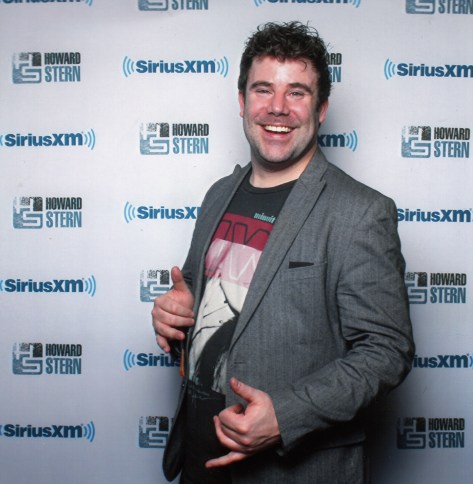
George Reinblatt at Howard Stern’s Birthday in New York
It takes a very rare individual to not only be able to write a successful script for a production, but produce it as well. When it comes to getting a project off the ground and actually bringing it to the stage or screen, the writer is the person who knows the ins and outs of the story they’ve created and feels the most passionately about it, at least initially; so, in an ideal world it makes sense that they’d be the best person to pitch the project to networks and ensure that the world they’ve created comes across accurately once production begins.
Unfortunately for the many writers who want to make it in the highly competitive entertainment industry, the differences between being the writer and the producer on a project call upon two very different personality types. Whereas the writer can retreat into their imagination creating their work without having to interact with other people—the producer has to be able to pitch the heck out of the story getting financiers and network executives on board, and if successful, then they have to communicate and guide everyone involved in the production towards the end goal.
While these individuals are understandably few and far between, Canada’s George Reinblatt is undoubtedly one of them. Over the last decade the unique and multifariously talented producer and writer has transitioned between the two roles with ease, consistently creating successful productions along the way.
To get an idea of the success Reinblatt has had as a producer, just look at the multi-award winning production “Evil Dead: The Musical,” which he wrote as well.
The production, which initially opened at a small theatre in Toronto in 2003, was an instant hit, and by 2006 the show was running as an off-Broadway production in New York where it received extensive international acclaim. After watching the show on opening night in NY, New York Times’ critic Anita Gates wrote that the show had the makings to become the next “Rocky Horror Show.”
“This was really special for me, as it was my show – I wrote the book and lyrics. So it was important for me to be on the producing side to make sure I could have a hand in all aspects of the production — from casting to merchandising to ticketing to even choosing the venue,” explains Reinblatt about producing the initial run of the show.
As the writer of the musical, Reinblatt created a masterpiece on paper, but it was his capacity as a producer that took that hilarious cult world from that which could only be experienced in the imagination and erected it into something audiences could collectively enjoy as he intended it. Prior to going into production with the hit show, Reinblatt reached out to the movie studios and secured the rights to the Evil Dead franchise in order to make the stage production the official stage adaptation of the film trilogy.
“Evil Dead: The Musical” won the Dora Audience Choice Award as Toronto’s Favorite Show, and after having several extended runs, by 2008 it became the longest running Canadian show in Toronto in over two decades.
Over the last year Reinblatt has been working hard producing a slew of comedies for international television networks including the Comedy Central special Jeff Ross Roasts Criminals: Live from Brazos County Jail.
“It was amazing how much time and effort had to go into this one comedy special,” admits Reinblatt. “I came up with the idea of doing a comedy show in a prison. Jeff Ross thought it was a great idea. Comedy Central thought it was a great idea. But finding a prison willing to let us come in there and roast them, that was the hard part.”
Reinblatt and everyone on board knew they had something special on their hands, and after a year of planning and researching prison life, Reinblatt helped bring the eye-opening special to the screen.
The special, which aired in June, offered audiences more than just a few good laughs as they watched renowned comic Jeff Ross, known to many as ‘The Roastmaster General,’ roast the inmates at Brazos County Jail though. Along with Ross’s satirical jokes, the show included shocking facts about the American prison system making it a valuable source of information as well. Reinblatt’s brilliant idea for the show coupled with his ability to make the project happen as a producer made the release a resounding success.
As a writer on the series The Burn with Jeff Ross, and the popular Comedy Central roast specials of Roseanne, James Franco, Charlie Sheen and Justin Bieber, Reinblatt has worked with Jeff Ross multiple times over the years. He is also known throughout the international entertainment industry for penning the scripts for an impressive list of productions including the series Just for Laughs, George Stroumboulopolos Tonight, The Arsenio Hall Show, the 2012 and 2013 MuchMusic Video Awards and more.
“Different is what I do. I’m always looking for my next project to be different from my last. And jumping from a musical to a prison comedy special to a sketch show is about as different as you can get,” admits Reinblatt.
From the standpoint of producer, George Reinblatt knows exactly what story ideas will sit best with audiences, and earlier this year he began producing yet another exciting comedy series. The new 20-episode series Almost Genius, which is slated to begin airing on Country Music Television Canada in 2016, combines popular YouTube videos with some of the best comics in the entertainment industry today. Using highly innovative production technology, the show actually inserts the comics into the YouTube clips using green screen.
Reinblatt says, “It’s going to make people look at their favorite YouTube clips in a whole new way.”
With inimitable creativity, Reinblatt has continually displayed his capacity for producing starkly different projects for both the stage and screen, all of which reveal him as someone who is not only capable of creating captivating stories, but ensuring the production process goes off without a hitch as well.
“I just want the overall experience for the audience to be a great one, so I love being involved in all aspects of a production to ensure that happens,” explains Reinblatt. “Sometimes as a writer, you write something, hand it in, and what happens from there in performance, or editing, or anything else, is completely out of your hands. As a producer you get a say in the overall direction. You may not always get exactly what you want. But your voice is always heard and you can help navigate the direction of the final product.”
Established production designer Hank Mann has seen, and created it all. From designing over 200 commercials, including his famous Go Daddy ad with Jean-Claude Van Damme, Mann has also created the setting and tone for Sarah McLachlan’s Ordinary Miracle and Nickleback’s How Your Remind Me music videos, constructed sets from scratch while collaborating with the art department, as well as managed film crews and budgets on feature films, all simply to create the director’s vision.
“Every job has its own unique structure that is revealed as soon as I read the treatment and script,” says Mann on his beginning stages of design.
His passion to work in film started at age 5, when Mann impressively created Super 8 stop-motion movies. The urge to work in film and design never left him, as he studied Film Theory and Sociology/ Communications at Queens University.
Mann worked various other crew jobs before landing his first major production design job on a global Ford Mondeo commercial starring David Duchovny (The X- Files, Californication), which carries a Twin Peaks / X-Files like surrounding and tone.
After designing commercials for McDonald’s, Burger King, Nike, Best Buy, Audi, Subaru, Toyota, Advil, TBS, Nickelodeon, Fisher Price, just to name a few, Mann decided to go back to working on films.
Mann prefers working in the realm of film and television because “in the process of production designing I really get into the characters – their history, their successes, their faults, their stories. Film and TV allow for a complete submersion into a character’s life.”
And by doing so, the audience can visually comprehend the depth, and perspective, of a particular character and their setting.
In 2008’s Kill Kill Faster Faster, Mann’s first feature film as a production designer, spectators can clearly establish the film’s gritty, suspenseful tone and enticing nature of each character and their drive in the narrative.
Produced and directed by Gareth Maxwell Roberts (The Mortician, Writer’s Retreat), Kill KillFaster Faster focuses on an incarcerated man named Joey One-Way, played by Gil Bellows (Alley McBeal, The Shawshank Redemption). Joey is paroled from prison after receiving an offer from a producer named Markie, played by Esai Morales (La Bamba, NYPD Blue), for a script Joey wrote behind bars. However, Markie is in over his head when Joey has an affair with Markie’s girlfriend.
For this particular film, Mann established a color scheme for the characters, not only to support the storyline of the script but to work within the budget of the film. “I chose to put a lot of initial resources into establishing a colour hue for each character so that regardless of how little money we had, at minimum there was a common tone the creatives could all work towards.”
The film garnered two wins in 2008 for Best International Feature at London Independent Film Festival (LIFF), as well as Best Editing at the HD Film Festival.
In 2010, Mann worked on the action-drama film Repeaters. The film starred Amanda Crew (Silicon Valley, Charlie St. Cloud), and Dustin Milligan (90210, Silicon Valley). Directed by Carl Bessai (Sisters and Brothers, Emile), Repeaters follows three friends who are trapped in a time maze, similar to the film Groundhog Day.
At the 2011 Leo Awards, Repeaters was nominated for 10 awards and won for Best Supporting Performance by a Female in a Feature.
Mann continued to work on films in 2011 on the set of Reinout Oerlemans’ Nova Zembla, a historical Dutch drama which centers on a team of explorers who travel from the North East Passage to the Indies, while encountering rough weather conditions.
The film was shot on location in Iceland, Belgium and Canada, where Mann created a slew of captivating sets.
“My initial approach was to research as much as possible, visiting real locations and reviewing online sources and then extracting the most interesting and iconic bits to then combine into our stage set builds,” says Mann.
Like his other two films, Nova Zembla received recognition and was nominated for two Rembrandt Awards and received a Golden and Platin Film Award.
This past year, Mann recently wrapped up commercials for Nissan and PetCo, as well as a six screen art installation he worked on and collaborated with Oscar winning director Denys Arcand (Barbarian Invasions), and installation artist Adad Hannah. The piece is entitled The Burghers of Vancouver, and was inspired by Rodin’s The Burgher’s of Calis.
The installation premiered in Paris earlier this year and ran from February to May at the Montreal Museum of Art.
Toronto born actor Richard Davis has not one, but two films being released later this year, the bravoFact poignant drama Shahzad and the quirky dark comedy Psychic Playground.
Shahzad, written and directed by Haya Waseem, follows an 11-year-old Pakistani boy who moves to another country with his father and has difficulty transitioning. Davis’ character, Richie, comforts Shahzad and becomes his best friend, which helps drive the film’s narrative of Shahzad discovering that his ‘home’ can be anywhere in the world, not just the place he was born.
“The role was a favorite of mine because of the storyline and people involved in the project,” says Davis.
The extremely gifted 11-year-old, a four-time Young Artist Award nominee has completed 18 films in the span of his extraordinary career over the last seven years, portraying a diverse range of characters from comedy to drama in TV and Film.
Davis is best known for his character in Marco Baldonado’s The Comeback Kid, as well as Ken Finkleman’s (The Newsroom) HBO Canada hit series Good Dog, which he landed at the age of 5. The series Good Dog focused on a TV producer who attempts to launch a reality show centered on his life with his model girlfriend and her son, played by Davis. He also starred in an episode of Murdoch Mysteries, Copper, and The Ron James Show.
The busy actor owes a large part of his career to his intellect as Davis has an amazingly high oral I.Q. in the 99.9 percentile, as well as being an adept speed-reader.
“Being a speed reader really comes in handy when you only have 24 to 48 hours to prepare for the audition,” says the astute actor.
At the age of 4, Davis started his career in commercials being featured in several high-profile national television advertisements for McDonalds, Make-A-Wish Foundation and many more. At around the same time he also began acting in the theatre, which Davis admits gave him “the opportunity to develop my confidence and acting skills through performing monologues on stage to an audience.”
This year Davis also had a role in director Sean Cisterna’s (Moon Point, 30 Ghosts) recent feature film Full Out. The film, which debuted on Canada’s Family Channel in September and helped boost the network to the No. 1 spot as the leading specialty kid’s network in the country, is based on the true story of gymnast Ariana Berlin, whose dream to compete in the Olympics was derailed after a car accident.
The inspirational movie, which starred Jennifer Beals (The “L” Word, Flashdance, Proof), Ana Golja and Sarah Fisher (both from Degrassi: The Next Generation), focuses on Berlin’s recovery and comeback to gymnastics. In the film Davis’ character, a young boy who Berlin meets at the recovery center, is also struggling to heal and work past his own traumatic accident, which ultimately helps Berlin come to terms with and conquer her own obstacles.
“There is something to be learned from every role I perform,” says Davis on his acting process. “It’s the best when you can just be free to express what is truly in your heart and mind…”
While Davis has a mature understanding for dramatic roles, his latest film displays him in a comedic light in writer and director Sarah Pugsley’s Psychic Playground. In this oddball film about an eccentric boy who has an unusual approach to show and tell in the classroom, Davis takes on the starring role of Dez.
With three films released just this year, it’s safe to say that the exceptional and wise beyond his years Canadian actor will be looking onward and upward as 2016 steadily approaches.
Hilarious Canadian Screenwriter Mark Satterthwaite
Believe it or not, writing a great comedy series is one of the most challenging genres to tackle, the key word being great, as we’ve all seen shows that attempt to be funny, but instead leave us unamused or wondering if we missed the joke. When a production finds a solid writer whose jokes flow seamlessly into the mix of the script, someone like Canadian screenwriter Mark Satterthwaite, they’ll do practically anything to keep them; and for good reason as the production’s ratings depend on them!
With his inclusion of bold jokes and subjects that push the envelope, Satterthwaite has had unparalleled success writing television comedies that have kept international audiences laughing for hours.
One of his first forays into the sketch comedy genre came nearly a decade ago when he was asked to create a comedy series for CBC’s ‘tween’ viewers. The result was The Morgan Waters Show starring quirky Canadian Morgan Waters from the shows Cock’d Gunns, Screwed Over and The Amazing Gayl Pile.
Satterthwaite recalls, “Our writing and development process was to push the humor and scenarios as far as we could, so we made sure we were challenging our audience, as opposed to holding their hands.”
Satterthwaite wrote and produced some of the show’s most absurdly hilarious episodes including “New Assistant,” “Camping,” “Puke on the Yo-Yo Man” and “Unrequited Love,” which helped the series earn a Gemini Award in 2006.
For Canadian audiences, The Morgan Waters Show was something like that of Mr. Show with Bob and David in the U.S., with viewers tuning in for the show’s spoof music videos, off the wall sales pitches, celebrity guests and pop culture parodies. In the “New Assistant” episode, Satterthwaite brilliantly crafted a song sung by Waters dressed up as Trent the Goth about how badminton should really be called goodminton. After the success of The Morgan Waters Show, Satterthwaite wrote and produced the comedy pilot House Sitters for Funny or Die featuring Morgan Waters and Mark Little.
While Satterthwaite has written several other hit sketch comedy shows over the years, his unique approach to comedy has also made him a highly sought after writer for a wide range of shows across various other formats and genres as well.
Some of his past credits include writing episodes for the variety show MTV Live, CBC’s 11-time Gemini Award winning talk show The Hour, as well as the network’s one-hour special Canada’s Smartest Person, the second season of The Comedy Network’s game show You Bet Your Ass, seasons one and two of The Food Network’s series The Main, and HGTV Canada’s lifestyle series My Parents House.
He has also written the scripts for awards programs including the 2007 Gemini Awards, which garnered the awards show a Leo Award in the Best Music, Comedy, or Variety Program or Series category, as well as the 2007 MuchMusic Video Awards, which garnered a Gemini Award in the Best Music, Variety Program or Series category.
His work as a screenwriter in the Canadian entertainment industry clearly spans the gamut, but out of all of the television formats he’s written for, there’s one area that really gets his creative juices flowing and allows him to cut loose.
“I love absurdist comedy. I think that’s why I ended up doing a lot of writing in animation, because it’s such an anything goes environment. Want to create a new character? Do it! Blow something up? Sure. Morph anything into anything else? WHY NOT?!?! It’s very liberating,” admits Satterthwaite.
Beyond simply loving to write animated programs, Satterthwaite has proven through the astonishing success of programs like Almost Naked Animals, Grojband and The Dating Guy that he is incredibly good at it.
In 2010 he wrote and produced the animated comedy series The Dating Guy, which aired on Teletoon, as well as the show’s accompanying live action web series Dr. Love, which was available on TheDatingGuy.com.
The unique creation of a cross platform approach between the web series and animated TV program not only gave fans of The Dating Guy additional content to check out, but it also earned a 2011 Gemini Award and a nomination for a Banff Rockie Award for Best Cross-Platform Project.
In 2011 Satterthwaite both wrote and produced the Gemini nominated children’s series Almost Naked Animals for Cartoon Network and YTV. The series followed a band of adventure-loving animals voiced by notable actors including Jamie Watson (Scaredy Squirrel, Producing Parker) as Hippo, Rob Tinkler (Harold & Kumar Go to White Caste, Arthur) as Howie, and Emilie-Claire Barlow (Total Drama, Fugget About It) as Bunny.
While Satterthwaite has also produced and directed several of the shows he’s written, it’s his work as a screenwriter that has given him the greatest challenges, as well as the greatest reward.
“I’m passionate about screenwriting because it’s a huge, huge life test. All of the time. It’s fun and it kills me,” he admits.
“Sometimes I’ll read comments on the Internet from people who have watched episodes of something I’ve written. ‘This is my favorite episode!’ or ‘This show is the funniest thing on TV’ or ‘WRITE MORE! MAKE MORE!,’ and that always makes me feel like a million bucks. Writing scripts is hard work; it’s so nice to know that people like it.”
Considering that he has already been writing successful television shows for 15 years, and he’s the kind of person who loves a challenge, it only makes sense that the natural progression in Mark Satterthwaite’s career would be to move onto writing feature films; and, that’s exactly what he’s doing.
In addition to having several television shows in development for Entertainment One and Teletoon including Winston Steinburger and Sir Dudley Ding Dong, which is slated to air in 2016, he recently wrote the screenplays for the feature films Cottage Life and The Blind Painter.
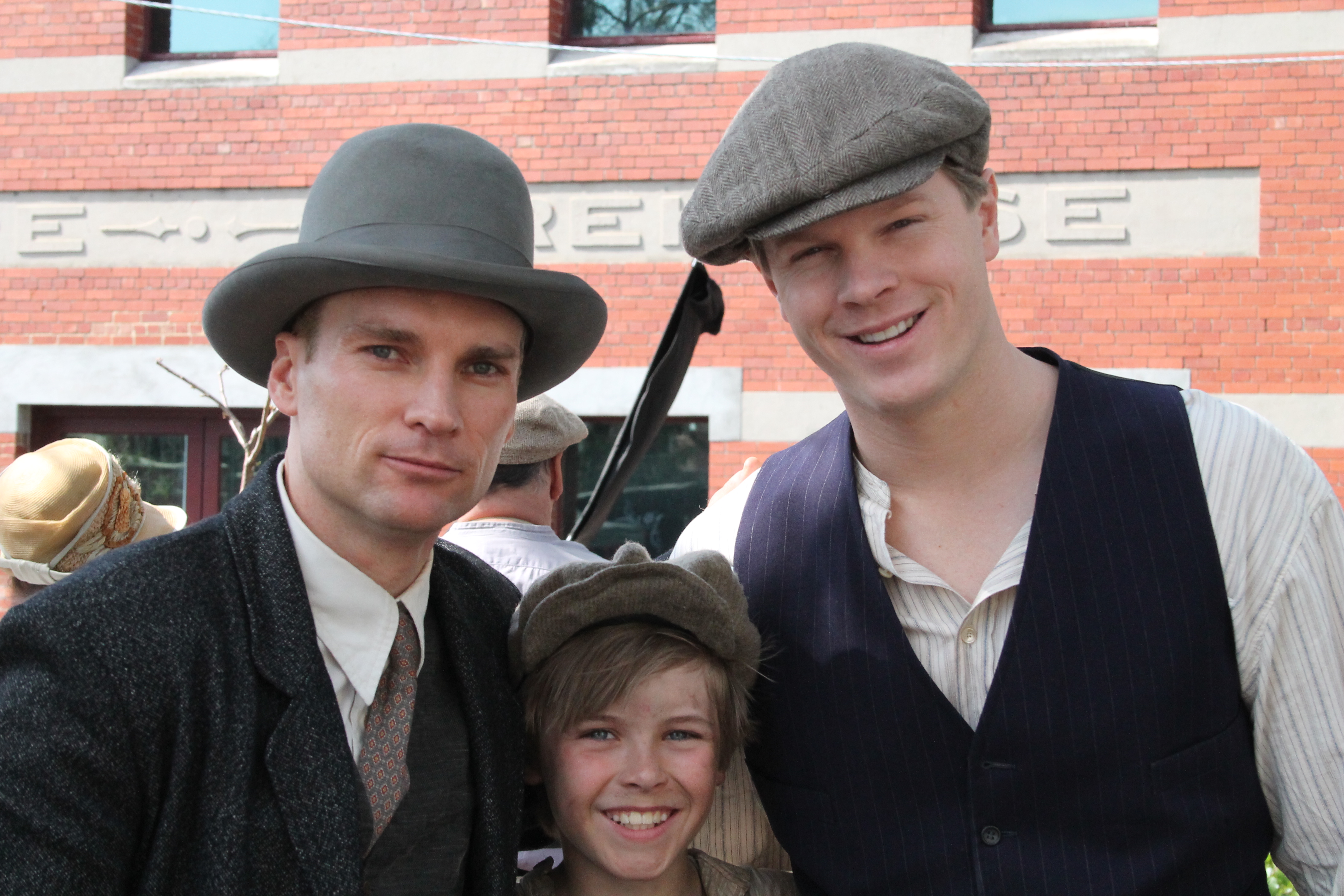
Actors Matt Boesenberg (left), Caleb McClure (center) and Luke Ford (Right) on set of “Underbelly” shot by Brett Cox
Australian born actor Caleb McClure just wrapped production on writer-director Matthew Holmes’ film The Legend of Ben Hall, which is set in the 1800’s and based on true Australian historical events focusing on Bushranger Ben Hall and his gang of outlaws.
The film co-stars Callan McAuliffe (The Great Gatsby, Homeland), Andy McPhee (Saving Mr. Banks), and displays McClure’s emotional depth as a child actor. He plays a policeman’s son who is traumatized and impacted by Ben Hall’s unlawful ring, as his father is shot down and dies in his very arms. McClure’s character drives the narrative and demonstrates that, even though he is still in his early teens, he is an actor who’s well beyond his years in terms of emotional maturity.
“My role was intense at times with a lot of action and emotion so I had to be quick on my feet, and it was definitely physically challenging,” says the actor who also worked in freezing conditions while shooting on location in Victoria and New South Wales in Australia.
The Legend of Ben Hall is currently in post-production and set to be released in 2016. McClure adds, “Transforming into another era and becoming this character was great.”
Caleb McClure is no stranger to showcasing his impressive dramatic range and depicting characters in period pieces. In 2008, he starred in the sixth season of Australia’s Award Winning Television series Underbelly, entitled Underbelly: Squizzy, which was set in the early 1900’s and revolves around notorious Melbourne gangster Squizzy Taylor.
In 2011, McClure took on the leading role in the film Where Is Mum? where he played a child who conceals his HIV from his fellow classmates at school.
“I try to find something I can relate to or is challenging, and something that I can accomplish in a great way,” says the actor about choosing roles.
Recently McClure tackled the AIDS ailment once more as he co-starred in Tim Conigrave’s bestselling memoir, turned film adaptation Holding the Man, where he played Tim’s younger brother, Nick Conigrave. Holding the Man focuses on the 15-year love affair of two gay men set during the AIDS epidemic in the 1980’s.
“I had to show a lot of emotion and be aggressive and upset,” says McClure.
In the film, which received rave reviews in Australia, McClure stars alongside Guy Pearce (Memento, LA Confidential, The Hurt Locker) as Tim and Nick’s father, Dick Conigrave, as well as film veteran and Oscar Winner Geoffrey Rush (Pirates of the Caribbean Trilogy, The King’s Speech, and Shine) who plays Tim’s acting teacher.
Like most actors who have reached pivotal success in their youth like, Leonardo Di Caprio or Tobey Maguire, McClure began building his resume when he was just a toddler. At the ripe age of four, the now dramatic actor started his career as a print model for Elle Magazine and within a few years landed his first acting gig at the age of eight.
From that point forward, McClure swiftly landed several roles from Where is Mum?A View from Below, I am Evangeline, and Underbelly. Now with over fifteen film roles under his belt there is no stopping this actor’s rocket career.
“I’m interested in whatever will carry me to the next level as an actor,” says McClure, and you can bet that audiences will continue to watch as this versatile young performer’s career flourishes.
You can find out more about Australian actor Caleb McClure through his IMDb Page: http://www.imdb.com/name/nm3899794/
Whether on the stage or screen, there is one crucial ability that all of the most gifted and successful actors have in common. There are comedic actors, dramatic actors and those with a flair for action, but it’s those who can move from one genre to another without missing a beat who make their mark and capture the adoration of audiences. With each character she steps into, Birgit Ludemann displays that rare gift again and again.
Growing up in South Africa, Ludemann was just 12 years old when she knew that acting was to become her life’s pursuit. In the years since her first school performance in a Roald Dahl play, she’s gone on to tap into every facet of the human condition. From tragedy to comedy, the lifelike to the surreal, exhilarating to introspective, she has proven that no matter what the story is she can jump right into any role and deliver a knockout performance.
In Stay, Ludemann plays the best friend of a pregnant woman who goes into labor during her baby shower. The story turns tragic, however, when during labor the woman receives a phone call informing her that her husband has been shot and is dying. The woman is terrified, heartbroken and about to give birth, but Ludemann’s character continues to support and console her throughout the ordeal. What was already a difficult role emotionally was made even more challenging by the absence of spoken lines and the slow-motion style in which the film was shot. Ludemann’s performance had to walk the fine line between using only her movements and expressions to convey the story while being constantly aware of how each motion she made would appear when slowed down.
“There was no dialogue during the entire film, everything was purely physical,” she said. “The director wanted the finished edit to be in slow motion so I had to be very conscious of movements being too fast-paced or slow-paced. Also, as it was a heavily emotive-driven drama, portraying emotions strongly enough for them to read on camera in slow motion was different.”
Ludemann’s role as Suzanna in Fives is a huge shift from her character in Stay. Centered around an office romance, the film stars Alonso Grandio (Furious 7) as Eric and Melanie Steinmann (Mac Daddy’s Vegas Adventure, OddBall) as Eric’s love interest Meghan.
Suzanna is the “new girl” where Eric and Meghan work. She’s an attractive young woman, called a “7-out-of-10,” who catches the eyes of all the men in the office. All except Eric, who quickly hatches a scheme to use Suzanna to make Meghan jealous.
“Eric, the male lead, flirts with Suzanna in order to make another co-worker, Meghan, jealous,” explained Ludemann, whose character is by no means oblivious to the misguided plan. “Suzanna is fully aware of the situation and just plays along because she knows Eric and Meghan make a better couple than herself and Eric.”
On the surface Fives is a romantic comedy, but Ludemann chose to go deeper in her portrayal of Suzanna. She expertly conveyed Suzanna’s awareness of and confidence in her own beauty without making the character arrogant or unlikeable.
“One of the main challenges I faced playing this role was making sure the character did not come off as being cocky, narcissistic or vain,” she said.
Compared to the approach many of her peers might have taken, Ludemann went above and beyond in her commitment to preparing for the role. Both on- and off-camera, she was constantly focused on getting into the mindset of the beautiful and confident Suzanne. In order to embody the character, she learned what she could about the experiences attractive women had had working in office environments and incorporated what she learned into Suzanne’s onscreen personality.
“One of the themes this role highlights is the power women get from being good-looking, especially around the office space,” Ludemann said. “So that was one of the things I had to do some research on.”
Never one to become pegged down by genre, Ludemann is again stepping outside the familiar and pushing the boundaries of her acting experience. This time, she’s playing the role of Claudia in Mac Daddy’s Vegas Adventure, the sequel to the award-winning raucous comedy hit Mac Daddy and the Lovers (2013 Nevada International Film Festival’s Gold Reel Award). Audiences can catch Ludemann’s latest performance when Mac Daddy’s Vegas Adventure is released in spring 2016.
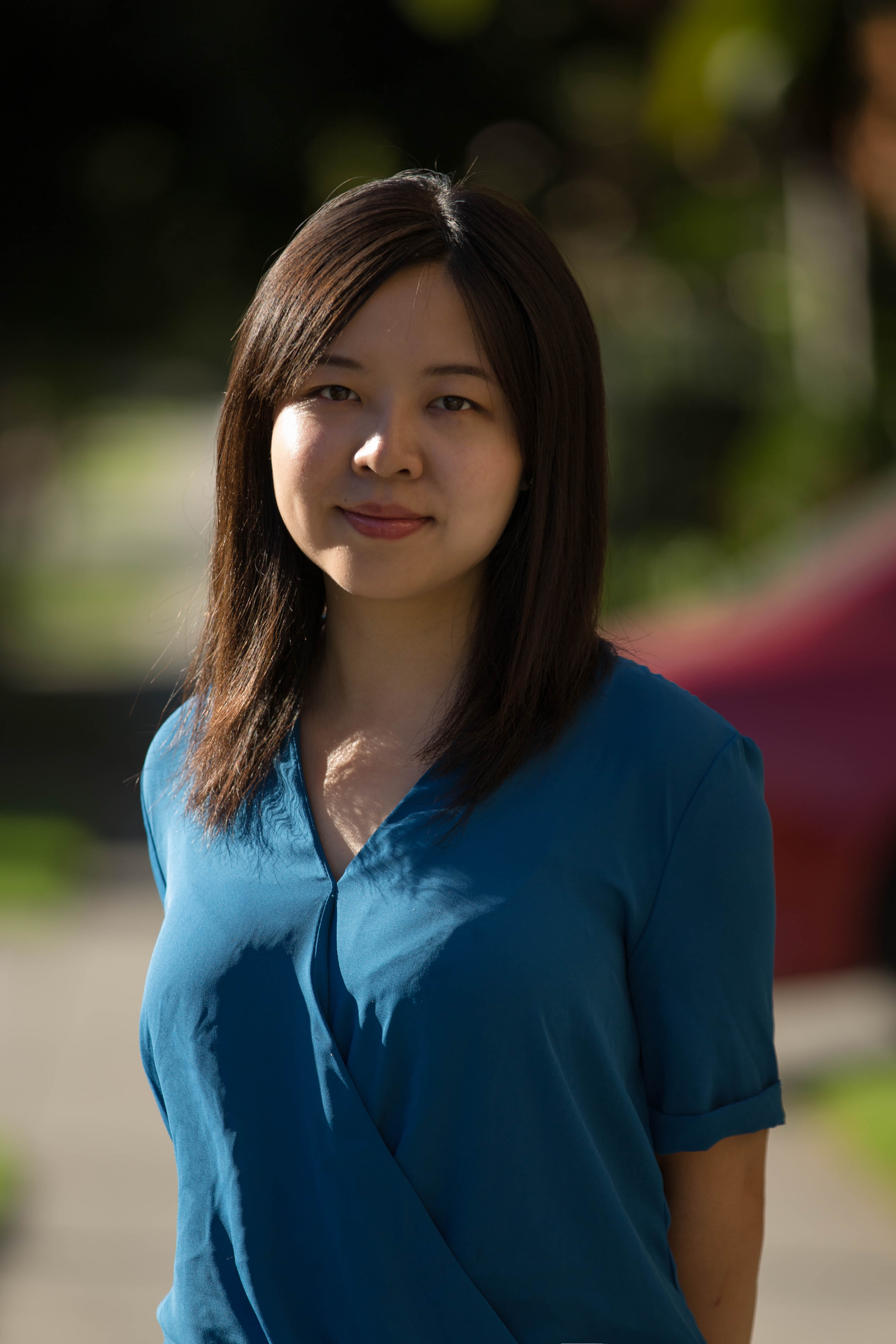
As the production designer on the films Mira, Mal de Ojo, Second Love, To See the Sunrise and the multi-award winning film Slut, Yihong Ding has proven that she has the malleable creative vision necessary to set the perfect stage for any story regardless of the genre.
As a successful production designer and the leader of the entire art department, Ding has to do far more than just design every set in a production so it perfectly fits the story. In order for members of her department to be able to effectively build what she has envisioned for each set, she has to be able to guide each person on her team on the best way to execute each build, something that can only come from experience.
Ding laid the foundation for her professional career early on by working in every aspect of the art department and it has definitely paid off. Ding’s work in the art department on the series Birthday Boy and Chasing Life, a set dresser on the feature film Caught and a scenic painter on the film Mandala, have been integral to the success of the productions, but more importantly, these achievements helped her get to where she is today.
Over the years, Ding has also art directed an impressive list of productions including Ryan Velásquez’s film Drowning, the documentary A Man Before His Time, as well as several commercials including a campaign for Microsoft Outlook’s app.
For the Microsoft commercial where she had to build a café on a sound stage, Ding recalls, “We had a really busy shooting schedule, so everyone was constantly moving. For art department we always have to be one step ahead, so when the team is shooting, we will go ahead and start dressing the next set, and when they move on, we will come back and wrap out the set that they were shooting.”
The combined knowledge that comes from Ding’s experience working as an art director and production designer allows her to function at a higher level than those who work as either an art director or production designer because she knows the tools that each person requires in order to do the best job.
“An art director focuses on how to achieve the look. They are the second hand to the production designer. Their main job is to keep the production designer focused on the design, rather than getting distracted by practical problems,” explained
Ding. “I enjoy being an art director because I think it is necessary… And it helps me to be a better leader when I am production designing. You don’t want to make your ideal design sound ridiculous so it helps to work as an art director because then you know what is achievable.”
When she’s art directing Ding knows exactly what questions to ask the production designer in order to nails their vision and make sure she nothing gets lost in translation. And when the roles are reversed, she knows exactly how to break down what she wants for each scene of a production in a way that is clear and manageable for her art director.
These may seem like minor aspects of the job to outsiders, but when your department has a $100,000 budget to furnish a house with Victorian furniture, but your art director returns with a truck full of Edwardian furniture, the whole production suffers. While the differences between these two styles might only be noticeable to the trained eye, you can bet the director, producers and production designer have done their research, so not only will the shooting schedule be delayed as the art department scrambles to replace the furniture, but the art director has successfully branded themselves as a no hire for future productions.
For the inexperienced art director or production designer the level of detail Ding devotes to her work might seem insane, but that is what it takes to work in the big leagues, and to her, it’s all in a days work.
In 2013 Ding’s creativity was put to the test when she was hired on as the production designer of the film Maria Bonita. A beautifully shot film from multi-award winning directors Jacob Lundgaard Andersen (Dustland, Rumspringa), Gareth Dunnet Alcoce (Contrapelo, Veladora, Wild Horses) and Camille Stochitch (Interstate, Les Grands Espaces),Maria Bonita follows a South American woman as she transforms from a sweet and innocent girl who lives and works on her family’s farm into a fierce guerilla fighter.
The story Maria Bonita brought to the screen had no dialogue, so the narration of the unfolding events and changing tones of the film were driven by a combination of Ding’s captivating set design, the soothing music of Pedro Bromfman and the emotional expressions of the actors.
Earlier this year Ding production designed Chloe Okuno’s dramatic film Slut starring Molly McIntyre (Halloween Hell, Ditch Party, The Want Dick Dickster) and Oscar nominated actress Sally Kirkland (JFK, Valley of the Dolls, Bruce Almighty, Days of Our Lives).
Set in Texas in the 70s, Slut follows Maddy played by McIntyre, a nerdy teen who reinvents herself in order to get the male attention she’s never had; but, when a mysterious stranger comes to town, Maddy’s new look gets her much more than she bargained for.
As the production designer of the film Ding created a physical environment for the film that fit the 70s era perfectly from the plaid couch in Maddy’s grandmother’s living room and a grandiose amount of wood furnishings down to the old school television set with adjustable nobs and the pink quilted bedspread in Maddy’s room.
Ding set the tone of Maddy’s dreary small town life in Texas by designing the girl’s room with soiled floral wallpaper that is missing large portions of the paper exposing the dirty wall underneath in some places and barely hanging in others.
While decorating the sets for the scenes in the film drew on Ding’s creative side, she was also tasked with designing a break away floor and ceiling for a scene where one of the characters, and we won’t spoil it by telling you who, falls through the second floor bedroom into the living room ultimately hanging themself to death. This aspect of the production required Ding to factor in multiple variables in order to get the best shot, as well as logistics concerning how to keep the production schedule on track and continue shooting after the floor breaks.
“There were many different ways to approach this, but I wanted to give the director and the cinematographer the best option to shoot this,” explained Ding. “We built the whole living room with a breakaway ceiling and a hallway with a staircase, and a bedroom with breakaway floor on a platform. We had to build a separate puzzle breakaway floor piece so that it could be replaced with the real wood piece when we were doing the stunt.”
Nominated for seven awards at film festivals around the country, Slut won the Best Cinematography Award at the HollyShorts Film Festival, the Jury Prize at the Las Vegas International Film Festival, the Audience Award at the Atlanta Film Festival, the Festival Trophy Award from Screamfest, the Bunny Award from the Boston Underground Film Festival, as well as an award from the Sun Valley Film Festival.
Ding, who recently wrapped production as the art director on the upcoming comedy series Chasing The Dream, has propelled herself to a place in the industry that takes most people decades to get reach, and she continues to impress us with every new project she takes on.
Everything you ever wanted to know about Hollywood's who's-who.




 Tinsel Town News Now