All posts by Lorraine Wilder

AWARD-WINNING CINEMATOGRAPHER DEPICTS A WAR TORN FAMILY IN “LAST CALL”

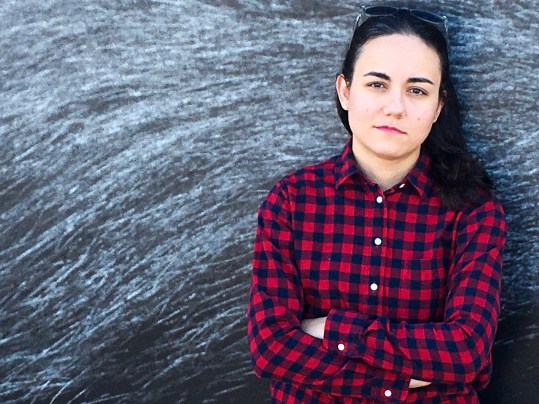
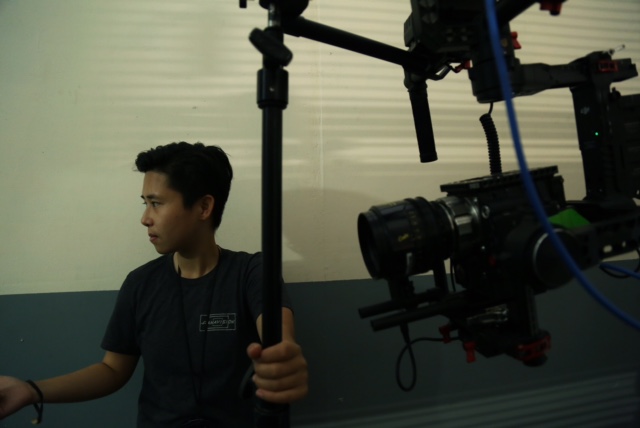
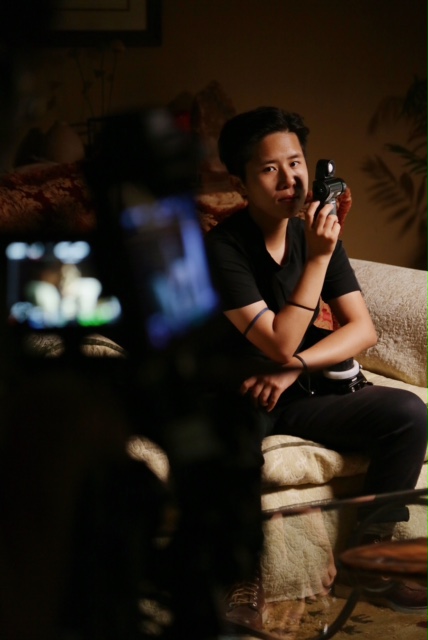
Cinematographer Ruixi Gao can’t help herself sometimes, she is overwhelmed with ideas. This is the blessing and the curse of possessing a creative personality. It’s incredibly difficult to make a film so when you do, you want someone talented and driven like Ruixi to be among those enabling you to manifest your vision. This was the mindset of Zhipeng Xing, director of “Last Call” when he approached Gao to be the DP for this film. After receiving the script from Xing, Ruixi recalls, “I sat down and read it immediately. I think it is instinctual for many cinematographers, it most certainly is for me. I could see the scenes inside my mind as I read. The whole picture played out for me. I understood the lighting & the perspective of the camera in relation to the action. It’s exciting when you read a script for the first time and the film is playing in your head; I wish the audience could see it so quickly. That’s part of what motivates me as a DP; I see this wonderful movie and the desire is to bring that to life for others to witness.” Besides her obvious passion, Ruixi brings years of experience and talent to every production she is on. An emotional film like “Last Call” requires every bit of her sensitivity and expertise.

The relationship between Director and DP is commonly accepted as one of the closest working relationships in film. Each director has their own process and the cinematographer must be flexible to this to help said director achieve their vision for the story being told. “Last Call” director Zhipeng Xing prefers to focus on the actors instead of fixating on the framing of the scene in the lens. Rather than a shirking of responsibility, this was a result of Xing’s trust in Gao’s abilities and talent. This allowed Ruixi to communicate extensively with her team. Working with her Gaffer and Key Grip to establish the lighting plan, and framing with the PD, the effort was highly collaborative. Her plan used soft filters for imaging effects and a low-key style with warm and cool tones to control different emotions between war and home.

This story depicts war and its effect on family. The father and son are separated from the mother (& wife) who is still in war torn Iraq. They communicate via letters and a weekly Facetime. After one of the weekly family Facetime talks, the father is speaking with the mother after their son has gone to bed. Disturbing noises are heard and the signal is lost. A week goes by with no word from the family’s beloved wife/mother and they fear the worst. Unable to sleep from worry, on the morning of the son’s birthday, the husband hears a knock at the door. It could be the mother or a government official to announce her unfortunate death. The filmmakers do not reveal the answer, leaving it up to the viewer to decide what they think happened. The purpose of telling this tale is not to resolve it either way but rather for the viewer to contemplate the effect of war on real people with families. In the last scene, prior to the knock, the father receives a letter from his wife in which she states that she won’t make it to see them for their son’s birthday.  When the father reads this letter it’s impossible to not feel the pain of being separated by these circumstances. War is cruel, it makes people ache; it’s also what makes this film work and have such impact.

Ruixi was awarded two best cinematography award for this film: Best Cinematography Platinum Award WINNER at the LA Shorts Awards & Best Cinematography Gold Award WINNER at the NYC Indie Film Awards (the film also received multiple other awards at these festivals). Gao’s passionate disdain for war and its malevolent effect on people in many parts of the world moved her to dig deep in her abilities for “Last Call.” Edwin Beckenbach worked with Ruixi on the film and professes, “Ruixi brings with her the experience of an international woman to a domestic industry that has traditionally been dominated by men and is not known for inclusivity or diversity. Film as art is a powerful generator and amplifier of cultural values and perspectives and as such the addition of underrepresented voices, especially those as promising as Ruixi’s, can entertain as well contribute to the benefit of society overall. In an industry where many people place their image before their abilities and ‘fake it until they make it’, Ruixi is authentic to a fault and is singularly focused on the artistic and technical challenges of the job at hand. Her dedication to her craft and clarity of vision is a unifying motivator for the camera and lighting crew to perform to the best of its ability.”

For many viewers of the film the most heart-wrenching aspect of the story is the young boy’s difficulty in being separated from his mother. With the understanding that this character would have be both a catalyst and proxy for the audience, Gao took extra preparations including reading psychology books on working with young professionals and preparing props with stickers and colored tape to make them more enjoyable. Far from being the task of a normal DP, this type of approach in working with a young actor is indicative of Ruixi’s overall pattern of professionalism. By creating a positive and friendly atmosphere in a variety of ways she is able to get the best performance from everyone and thereby get the best shots with the camera, to say nothing of coming in ahead of schedule. While some prefer to stay in their “own world” Ruixi Gao feels that the images she wants to create allow us to see through the eyes and emotions of others, which is what “Last Call” is all about.

LastCall03

Following a Dream: Indian Photographer Akshay Kandi

As adults many of us, at least on occasion, put our passions and dreams on the back burner when it comes to pursuing our professional careers and opt for jobs that appear the most beneficial for our bank account. Luckily though, just because we chose a career at one point in our life it doesn’t mean we have to stick it out forever if it doesn’t make us happy. For many people this change can be an intimidating decision, but many have done it and most will tell you that while it took a leap of faith, the reward was worth it. One courageous individual who chose to leave his former career behind and pursue a path fueled by his passion is Indian photographer Akshay Kandi.

“I have a bachelors in computer science,” explained Akshay. “But later when my brother brought me a camera I started clicking. It was a hobby, but it became serious in my life and I take it seriously as my profession.”

Once Akshay made the definitive choice six years ago to divert his path away from computer science and devote himself fully to his work as a photographer, doors began to open and international success quickly followed. In the early stages of his career Akshay apprenticed for well-known Indian photographers such as Badri Narayan and Bharat Bhirangi, which helped him hone his craft, and later served as the lead photographer for Kamal Kiran Photography.

As Akshay’s personal body of work as a photographer grew audiences and magazines quickly began taking note and in 2012 one of his stunning images was included in Better Photography Magazine, which is not only one of the leading photography magazines in all of South Asia, but it is the No. 1 photography magazine in India. A huge accomplishment for Akshay at the time, having one of his images featured in the industry’s leading magazine definitely helped showcase his talent to future clients and the public at large.

Akshay Kandi
Photo by Akshay Kandi featured in Better Photography Magazine

From shooting collections for renowned Indian fashion designer Archana Rao, who is frequently featured in Vogue and won the prestigious Vogue India Fashion Fund Award, to product shots for Cleanse High, one of India’s leading juice detox programs, Akshay has since been tapped by an impressive range of high profile clientele to capture the images that sell their products.

“It feels exciting and I’m so happy,” said Akshay. “I don’t want to say that I’m lucky but I will say one thing that this has shown me is hard work pays off.”

Considering that a quick glance at an image holds the power to generate interest in a brand to a potential customer, the competition between the photographers a brand chooses to shoot their product is high; and the fact that so many have selected Akshay to capture their products says a lot about his talent and the aesthetic appeal of the images he creates.

Photographer Akshay Kandi
Frau Frau Clothing by Archana Rao shot by Akshay Kandi

In 2015 Akshay shot a series of images for Archana Rao’s label Frou Frou, which were used to market the label to the public, meaning Akshay’s shots made it into several magazines, in addition to being featured on the brand’s social media outlets. Akshay’s shots brilliantly captured the modern, upscale personality of the brand while drawing attention to the feminine essence of the collection in a way that appealed to the taste of Frau Frau shoppers. His expertise in lighting was an integral asset for this shoot in particular, especially when it came to capturing the clean, white glow of the clothing, such as the blouse featured above.  

His unique way of setting the stage in order to make the products he shoots stand out to viewers has been a huge draw for many of the companies that have continued to hire him over the years– something that can easily be seen in the images he created for Cleanse High, which were featured in WOW! Hyderabad Magazine.

Photographer Akshay Kandi
Cleanse High juice shit by Akshay Kandi

Photographer Akshay Kandi
Some of the other major clients Akshay has shot for over the years include luxury leather shoe brand VAPH, Vellanki Foods, an Indian food company that has stores across the U.S. and India, and most recently A.K.A designs, which designs helmets for the U.S. Navy, and many more.

Aside from his exceptional creativity behind the lens and seasoned skill when it comes to setting up each shot in a way that accentuates the subject, one of Akshay’s unique strengths is his versatility. His ability to tune into the vibe of the client, whether it be a clothing brand or food manufacturer, and represent that in his images have made him a strong force in the industry. This was incredibly important for his shoot for the U.S. Navy helmets designed by A.K.A Designs, for which Akshay travelled out of the studio and into the elements in order to find the perfect location to showcase the product.

Photographer Akshay Kandi
Images for A.K.A Designs shot by Akshay Kandi

“I wanted to show a rugged look in the pictures, because these products will be used by Navy officers. We needed to have a realistic look in the pictures, so we went uphill where there were rocks and the ground was full of sand,” explained Akshay. “And after the hard work we got some amazing pictures.”

In addition to being sought after to photograph products for brands across the globe, Akshay has also tapped into the world of on-set photography, making a name for himself with his work shooting promotional and BTS photos on the set of films such as Manikandan Mathivanan dramatic film “Fated” and Alessandra Romano’s “HER- Levels of Love.”

As with any creative career, since he first began Akshay Kandi’s photography has evolved in a myriad of ways, especially in terms of inspiration and the subjects he chooses to focus on.

“Now a days I’m concentrating on portraits and fashion, I’m trying to come out of my comfort zone and take up new challenges,” said Akshay. “I keep traveling to different places and looking at different people and trying to feel the emotions on their face. It gets more interesting clicking their portraits and trying to create some kind of story. Sometimes I feel very shy to go and click their portraits but I push myself to get that one amazing portrait, because once you lose it it never comes back.”

Photographer Akshay Kandi
“Allegory” by Akshay Kandi


Multi-talented Actor Swell Soubra Knows How to Make a Film Shine

Swell Soubra
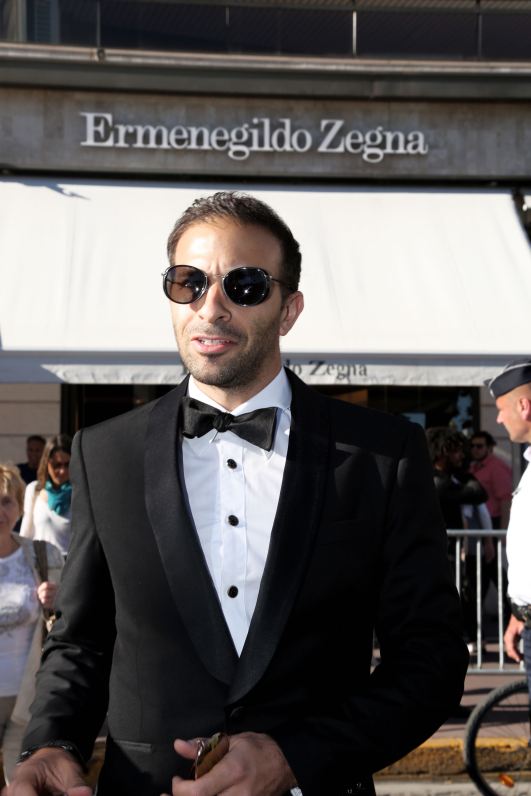
Actor Swell Soubra at the 2017 Cannes Film Festival with the film “Alone”

The creativity and vulnerability of the actors in a film are tantamount to bringing a story to life on screen and drawing us in as an audience. Transforming words and creating a life to a character by incarnating them truthfully isn’t given to just any talent. The artistry of Swell Soubra as an actor is one of those rare talents that any director would just wish to cast in his film.  

Originally from Geneva, Switzerland Swell Soubra has become known for his performances in a vast array of films such as Frank Lopez’s (“Last Train Out”) “Three Kings Down,” Sam Macaroni’s (“Knight Rider 2016”) “Hunting Games,” Tekin Girgin’s (“Wash Away My Sin”) “The Incision,” Matt Hewes’ (“Grace Everlasting”) “I Am Tommy Talbot” and more. Soubra also turned heads recently with his critical performance in the premiere of season 4 of TNT’s hit series “The Last Ship,” which also stars Image Award nominee Charles Parnell from the film “Transformers: Age of Extinction.”

Last year Swell left a memorable mark on audiences with his starring performance as Gabriel in the poignant dramatic film “Alone.” Directed by Angelo Perrino (“Dirty Spaghetti,” “The Effect,” Lost Samurai”) “Alone” follows Swell’s character Gabriel and his girlfriend Ella, who’s played by Daniela Junko from the 2016 thriller film “Rough Mix,” a young couple trying to deal with the debilitating effects of chronic depression. When Ella is no longer able to get out of bed and the whole world seems as if it’s falling apart, Gabriel goes to great lengths to try and understand her condition and give her the support she needs– even it means ignoring his own demons.

Swell Soubra
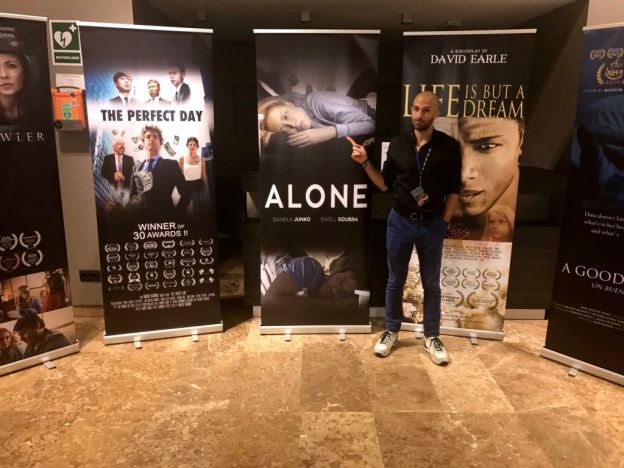
Actor Swell Soubra at the Madrid International Film Festival with the film “Alone”

“Emphasizing the truth about depression was very important to me, because many people tend to push away individuals who are depressed and marginalize them as being lazy or always tired,” Swell explains. “My aim was to unfold the truth of that condition and ease its acceptance in society.”

And that is exactly what he did as the lead actor in the film.

“Alone” director Angelo Perrino says, “‘Discipline,’ I think that’s what describes Swell best. He will get you where you planned and bad surprises will be out of your way. Moreover, him being a former banker, he has a lot of contacts to invest in projects he believes in. And that is such a valuable asset to have on your side especially in the film industry.”

“Alone” did astonishingly well on the film festival circuit, being chosen as an Official Selection of the Madrid International Film Festival, IFS Beverly Hills Film Festival and screening at the prestigious Cannes Film Festival. The film won an award at the Madrid International Film Festival.

While Swell gives an emotionally raw and heart felt performance in the recently released film “Alone,” his role as Pierre in the 2014 dramatic crime film “The Incision” is the polar opposite– but it is one that provides incredible insight into his diverse talent as an actor. Bringing to the screen the chilling story of Pierre, a high profile entrepreneur who will stop at nothing in order to expand his organ trafficking business to the international level, “The Incision” is the kind of film that will make you question whether you really know the motives of the people around you, and much of that realization comes from the way Swell portrays his character.

Starring alongside John Asadi from the Golden Globe nominated series “Scandal,” Swell gave a knockout performance that sheds light on the inner workings of some of society’s most atrocious individuals.

The brilliant representation of his talent on screen, attracted a lot of interest from industry buyers, such as Direct TV and Netflix.

“The Incision” director Tekin Girgin says, “At an early stage Swell got involved in our film as a an actor. He was eager to rehearse as much as possible before the first shooting day. He would provide us with his best performance on every single take. It was amazing to see his creativity and improvisation skills in action. He allowed us to shoot within our time frame and promote our film internationally. His vision of how his character should be portrayed was very refreshing and a huge success.”


From Beauty Queen to Leading Lady On Screen

Actress Jane Kapriss
Actress Jane Kapriss shot by Bjoern Kommerell


It’s no secret that the media, and the general public for that matter, have a thing for beauty. We are mesmerized by beautiful things, places and of course, beautiful people. Ukrainian beauty Jane Kapriss seemed destined for the spotlight since a young age, and while she definitely achieved impressive success as a beauty queen, it’s her talent as an actress coupled with her stunning aesthete that has kept her in the public eye.

Over the years Jane has won countless beauty pageant titles such as the Miss Fashion Award at the Miss Teen International competition, Miss Pearl of the Ukraine from the Ukraine National Beauty Pageant, as well as being chosen as a top ten finalist at the Miss Teen World competition where she also took home the Brand Ambassador Award. But anyone who’s seen Jane’s performances as an actress, on both the screen and the stage, knows that she is much more than a pretty face.

Jane let us in on a funny story from her childhood, and it’s one that makes quite a bit of sense now, considering the career path she’s chosen. She recalls, “My parents still argue about my first word. In Russian the words ‘building crane’ and ‘movie screen’ are very similar. The difference is just the first letter. For some reason my first word was not mom or dad. My dad heard it as ‘building crane’ and he said it was a sign that I was gonna be an engineer. But my mom heard it as ‘movie screen’ and said that it was a sign that I was gonna be an actress. Now our friends who know the story say: well, we all know now what word she meant.”

Prior to moving the U.S. where her success has continued at record pace, Jane made a huge mark for herself Back home in Kiev, Ukraine with her lead role as Anastasiya in the 2008 comedy crime feature “Hand for Luck” aka “Ruka na Schaste.”

Since then Jane has become known for her stand-out performances in a plethora of films such as “Love Changes,” which was chosen as an Official Selection of the Odessa International Film Festival, Manhattan Film Festival and the Toronto Independent Film Festival, WIND International Film Festival Award winner Antonio Chavez Trejo’s (“Bloody Luck”) comedy crime film “Killer Tango,” as well as the film “Mac Daddy and the Lovers,” and the sequel “Mac Daddy’s Vegas Adventure,” which was released earlier this year.

Directed by Mac Jay, who plays the lead character Mac Giani, “Mac Daddy and the Lovers” follows the notorious Mac Daddy, a suave ladies man who seduces rich women and then robs them with the help of his two accomplices. While Mac Daddy doesn’t believe in love, his best friend Franco (played by Mario Novell) does; but unfortunately for Franco, his girlfriend Tina, played by Jane, is a ruthless gold digger who’s only with him for his money.

Jane says, “It was interesting. I personally disagree with her logic on so many levels so it was challenging and interesting to dive into her life to understand her and to be able to play her.”

Right before Franco is about to propose Tina dumps him for a wealthier man. Giving a knockout performance, Jane flawlessly breathes life into her conniving character making Tina an easy character to hate, one who also represents the reason Mac Daddy turned away from love in the first place.

After the successful release of “Mac Daddy and the Lovers,” which earned the Golden Reel Award from the Nevada International Film Festival in 2015, Jane was tapped once again to star in the sequel “Mac Daddy’s Vegas Adventure” where she acts alongside Madeleine Wade (“The Wolf of Wall Street,” “Sons of Anarchy”), Jacqui Holland (“My Best Friend’s Girl”) and C. Young Artist Award winner Thomas Howell (“The Outsiders,” “Girlfriends’ Guide to Divorce,” “Animal Kingdom”). This time Jane was cast in the critical role of Megan, and like the true chameleonic actress she is, she brings Megan to life in a way that it is so different from her character in the previous film that few could tell these characters are played by the same actress.

After finding love in the first film Mac Daddy takes himself out of the game, but when his accomplices continue his former racket without him in “Mac Daddy’s Vegas Adventure” Mac Daddy is forced to come to their rescue. After targeting the wrong woman and pissing off Vegas’ feared Italian mafia boss Alfieri (C. Thomas Howell), Mac Daddy’s accomplices find themselves in hot water. Realizing that his woman was susceptible to the con artists seduction tactics, Alfieri works out a deal with Mac Daddy to teach him his womanizing expertise in order to get a woman to really fall in love with him in exchange for sparing the life of his friend.

Jane’s character Megan comes onto the scene as the unassuming woman who Alfieri seduces into falling in love with him. “She shows that even the mafia lord can truly fall in love and second, that karma will find you no matter what,” says Jane about her character in the film.

While Jane Kapriss has made a name for herself on the big screen on an international scale, she is no stranger to the theatre. Over the years she’s performed starring roles in a number of productions across continents including “Dark Side of the Moon” at The Next Stage theatre in Los Angeles, “Something Outrageous” at the Michael Chekhov Theatre Company in New York, as well as “A Servant of Two Masters” and “Jonathan Livingston Seagull” in Ukraine.

It’s clear from Jane Kapriss’ impressive body of work over the past decade that her first word was without a doubt ‘movie screen’ and that’s exactly where she belongs.


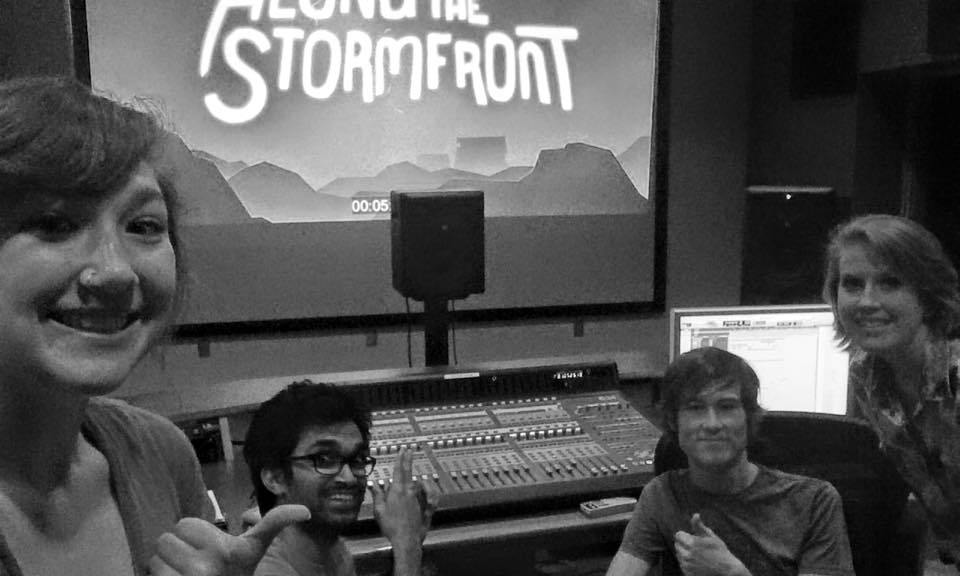
MADDURY CREATES AN EPIC SCORE ALONG THE STORMFRONT

One of the most important things that Steve Jobs proved in his illustrious career is that vision is equally as important, some might say even more so, than the ability to manifest. There’s a bit of a chicken/egg quandary there but, what Jobs made clear was that genius exists in the birth of an idea just as much as creating something. Of course, the symbiosis of these two factors are essential. Technology has created an ease that never existed before. It allows individuals to do what took legions previously. Consider entertainment. The ability to create full length animated productions that are vivid and amazingly realistic require a fraction of the man power previously needed. The same can be said for music. Modern purveyors are able to use technology to make single droning notes or the sonic onslaught of a major symphony orchestra…all at the fingertips of one person. Of course they may not sound exactly like an orchestra with the subtle perfect imperfections that are the human trait but, the end result is so moving and virtually undistinguishable that only the most discerning experts might even notice the minute difference. The animated film “Along the Stormfront” is epic in both its action and its music. Sai Sriram Maddury is the composer who was contacted by Griffin Giersch (Director & Screenwriter of the film) to match the tone of this larger than life story.

“Along the Stormfront” is an animated tale with epic fights and a huge visual landscape. A powerful score was needed to match the striking visuals. The idea was to balance the humor of the tiny characters while also rising to acknowledge the epic battle scenes. The music in the film was the ingredient which empowered the characters to become something akin to superheroes during the battle scenes. In a distant futuristic world, Finn (a fox) and Dallas (an armadillo) take a bus to get to town. They are later attacked by deadly Monster who jump onto the bus. The personalities of these characters are representative of the characteristics the animals are noted for; however, the events of the story call them to achieve inner strength and greatness in a classic story of self-discovery. It’s no coincidence that Maddury’s score recalls visions of superhero films and their grandeur. When Finn stands his ground for himself and his friend against a seemingly unconquerable oppressor, his bravery is announced by a huge brass section.

Griffin Giersch (Director, Screenwriter, & Animator of “Along the Stormfront”) declares,

“Sai was an incredibly important part of making Along the Stormfront what it was. His music brought the project to a higher level that it could not have reached otherwise. The goal with the story was to make an epic action/adventure with elements of suspense, tension, excitement, and some humor thrown into the mix as well. Sai brought all of this to the forefront with his music, letting all the moments of this story shine through. Working collaboratively on projects like this that have so many different aspects and pieces can often be a huge challenge, especially when it comes to communicating and sharing ideas to get everyone on the same page creating a cohesive work. Sai was always right there with us, listening and understanding our thoughts and ideas. He did more than just listen; he brought his own ideas to the table as well. Ultimately, his creative voice came through in a strong way that we hadn’t even expected. His contributions to the project made it even better than we’d hoped.”

Maddury concedes that modern technology has made composers capable of spending more time experimenting with their ideas and sonics with a much more budget friendly approach. Instead of having studio musicians wait “on the clock” while varying approaches are taken, a composer is allowed to hear each of their ideas on a schedule that is conducive to inspiration. This characteristic however does not preclude the use of real instruments and musicians. Sai communicates, “Technology plays a vital role in the process of film scoring. Due to the advancement of technology most of the job is done at the studio with Computers installed with DAW applications (Digital Audio Workstation) and connected to MIDI Keyboards and speakers. The major advantage in today’s music programming technology is to have amazing sample libraries for film scoring, allowing composers to create an orchestral score and make it sound exactly or very close to a live performance. This helps directors and producers to listen to them before going to the scoring stage. Basically now we can have the mock ups for the entire score sound close to the live recording. But for a film that demands an electronic score, it can pretty much be written and produced in your DAW at the studio.  That being said, I love the qualities that come from a more traditional approach in film scores. I’m a musician and have a soft spot for traditional or organic instrumentation. I think it’s the life of a modern composer to use the proper tool for each film they work on.”

05 Sai Sriram Maddury Pic

It’s a testament to this composer’s talent and creativity that he conceived of and created the score for “Along the Stormfront” based on storyboards and sketches rather than the final film. The common practice in the industry is for a composer to view either dailyies or the completed production and then compose based on this. Against normal convention, Sai discussed the characters and the story with Griffin, composing during the animation process in order to meet deadlines. Proof of the success of the film and its composers work lies in its being recognized as an official selection to the Full Bloom Film Festival 2015 and Carrborro Film Festival 2015 as well as receiving the Gold Remi Award at the 49TH WorldFest­Houston International Film and Video Festival. Discussing these accolades, Maddury remarks, “I personally consider awards as a token of encouragement requesting the recipient to contribute more to the respective field of art with which we are involved. Even though I did get more projects to work on as a result of my score for Along the Stormfront, having the experience of working on an award-winning film will always keep one motivated and inspired to work hard and contribute more to the art of film scoring/storytelling.”

A PHOTO IS ONLY A GLIMPSE INTO THE DEPTH OF RANDI KENNEDY

Randi Kennedy is attractive…and a fitness enthusiast…and an extremely positive person. How is this possible when she two of the main facets of her life and career are social media and being a fitness model? That’s because much like the aforementioned aspects, Randi Kennedy is much deeper and more complex than a superficial viewing can ascertain. You have to spend time with Kennedy to understand what makes her tick. In contrast, her enthusiasm is evident within the first few seconds of speaking with her. All of these characteristics have led international companies such as 1UP Nutrition and Live Fit apparel to seek her out as an ambassador of brands. In this modern day society where it seems everyone wants to be famous by presenting commonplace as extraordinary, Randi has done the opposite by making her followers and fans believe that her extraordinary accomplishments are achievable by all…something which she wholeheartedly believes.

When posed with the query of how one gets to the same point of success and personal fulfillment that Randi has attained she communicates, “My best advice is to aim big and don’t settle, chase after those dreams. If you aim low, you are going to fall short of the bigger picture and what you truly want to accomplish. I believe you can truly accomplish everything and anything with hard work. Create a game plan for yourself. What do you want to accomplish? What do you need to do to get there? What would the first and second steps be? Take action and keep a clear vision. You’re not going to build your dream career overnight but it will take a lot longer if you give up. Don’t be afraid of hard work and don’t be afraid to take risks. Owning your own business is not easy but it’s worth it.”

Judging Kennedy by her big smile and her athletic physique will misinform you as to the astuteness and determination to have a benevolent effect on those around her, which is the true center of this self-made very modern day success story. As a health and fitness enthusiast herself, she noticed early on that there weren’t a large number of what she considered to be healthy supplements marketed towards women when she first started her journey, this has since changed. While her endorsement and use of such products from companies such as 1UP Nutrition shine a light on the visceral physicality of a woman, her work as one of the faces of Live Fit Apparel embrace the femininity of it. There’s a holistic approach to Kennedy’s personal life and her professional/public one. As with any relationship, Randi feels that both herself and the companies she works with must have a belief in each other. When a common goal appears, both sides benefit. Since it is a working partnership so of course both sides need to feel they are being taken care of for the relationship to work. When it comes to sponsorships in the clothing and supplement industry it typically goes something like this: The sponsor receives a brand affiliate and becomes associated with the influencers brand. They receive marketing which generates more brand awareness and sales. The influencer receives support from the sponsor in the forms of compensation in a monthly salary, commission on sales and can even go as far as support for competitions and further education in addition to marketing by the sponsor.

It’s one of the great dichotomies of the industry that the visual aspect of the exterior is so often displayed as proof of internal health. Sometimes these traits are congruent and sometimes they are not. Kennedy adamantly relates, “I think that it’s very easy to forget about your mental health/mental state when you’re caught up in looking a certain way. Often people are working so hard to improve their physique that they don’t realize how extreme they are being with training and nutrition, which can lead to an unhealthy relationship with food and create body dysmorphia. This is something I preach about on my [social media] platforms. I always tell my clients: “Work to improve your mindset just as hard as you work to improve your physique.’ Many people seem to think that fitness is solely having shredded abs and being jacked all year round; little do we know that same person thinks that nothing is good enough, barely eats enough to fuel their body, their energy levels are low, they’re hair is falling out, hormones are out of whack and it’s all in order to look a certain way. Social media does not help with this but I’m happy to say that it is slowly changing, people are sharing a more realistic side of fitness and starting to accept that it is unmaintainable and unrealistic to look like that year round. Not all progress is physical! Fitness is more than a shredded physique.”

In the fitness world, one of the bench marks is having your photo taken by the celebrity photographer known as “King of Covers” Jason Ellis. The noted photographer has taken cover photos for more than five hundred magazines. With his work gracing the covers of magazines such as: Muscle and Fitness, Fitness RX, Oxygen, Iron Man, Men’s Health, Muscular Development, Train, and many others, Ellis is the gold standard of the industry. Jason worked with Randi two years in a row, shooting her at the IFBB Olympia in Las Vegas. He professes, “Randi is a young talent who both reflects the fitness aesthetics and lifestyle and is very astute in her comprehension of the modern industry. She is very marketable and understands how branding works in this new marketplace. Add to that, she is always a pleasure to work with. That positivity of hers is very authentic!”

Screen Shot 2017-09-30 at 9.03.19 PM

Part of the new model of branding and marketing is social media; it’s something which Kennedy has embraced deeply. There’s a duality to the modern approach. Meet & greets and magazine covers are still important to be noticed but social media means there is a necessity and a responsibility to stay connected to followers on a daily basis…no matter where they might be in the world. While she concedes that social media can have negative aspects, Randi also notes, “I enjoy social media in my professional life because it is an amazing way to market to your ideal demographic all over the globe. We literally have access to millions of people at our finger tips. Social media is a very powerful tool if you know how to use it. There is an account for almost every business these days. I enjoy social media in my personal life because I get to capture and share memories and moments that will last a life time. I get to share the experience I had a restaurant and say “hey, you should go here too!” I can share my travels and inspire others to get out there and explore the world. Through my photos they get to see something they might not have ever seen, and then I get to reflect back on it years down the road.” No matter where she might be and what the images she shares, Randi Kennedy will be encouraging and assisting those in her sphere to challenge and better themselves just as she had done.

www.randikennedy.com

Instagram: @randikennedy_

YouTube: Randi Kennedy

Facebook: Randi Kennedy

Aiming For a Dream, Producer Angel Cassani Strikes it Hot in Hollywood with the UFC

Producer Angel Cassani

“While working in financing I dreamt of myself one day working in films in the famous Hollywood, California,” says Angel Diego Cassani, a Latin American expert financier who is conquering Hollywood today.

Angel is a veteran financier with more than 15 years in the field of financing and filmmaking. He started Global Capital Markets Group in Chile, Colombia and Peru, a big multi-national client portfolio including BellSouth, Motorola, Avon, and more. He has now brought his expertise in financing to his true passion – film making.

The film business operates in the creative sphere, but first and foremost it is a business. So, in 2008 Angel Cassani, who understands both entertainment and financing, came up with a brilliant idea to capitalize on the tremendous popularity of the UFC at that time. The UFC was and is still today, the highest growing sport in the world, and was featured that year on the cover of Sports Illustrated. Prize fighters and show business have been drawn to each other through history. Jack Dempsey, a heavyweight champion during the movie explosion of the roaring 20’s did not defend his title for 3 years, instead he headed to Hollywood with his actress wife Estelle Taylor, and made a dozen films while the leading contenders kicked their heels. In 1952, Sugar Ray Robinson retired from boxing after unsuccessfully challenging for the light heavyweight title, the great fighter put his skills to good use and went on tour as a dancer, earning $15,000 a week at that time. Robinson had parts in movies alongside, Frank Sinatra, and Marlon Brando, and many others.

Angel had the brilliant idea of using the popularity of the UFC and began approaching heavy-hitters, and Hollywood players, as well as the studio Lionsgate, which immediately jumped at Angel’s out-of-the box creativity of and signed a six picture deal with him and his partner Hector Echavarria, a famous world martial arts champion, and film and television star from Argentina.

There are clear parallels between the life of an actor and the life of a prize fighter. The structure of the two industries is almost identical at the top of the tree.

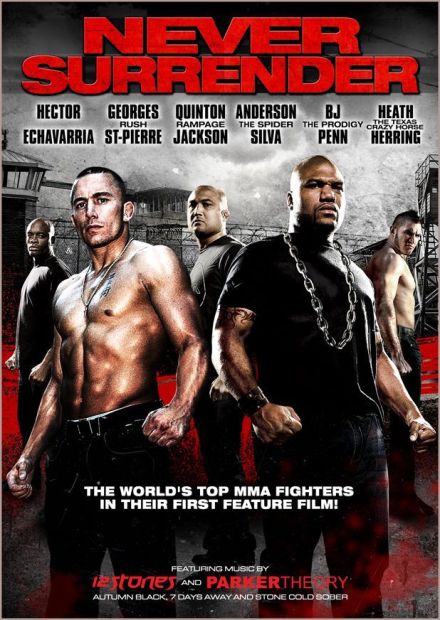
“An elite few are well rewarded,” says Angel. The titles that Angel was crucial in closing these deals with the famous Hollywood studio. This joint venture led to pictures like “Confessions of a Pit Fighter” with famous movie star Armand Assante, as well as “Death Warrior,” “Unrivaled,” “Never Surrender,” and “Chavez Cage of Glory.”

Film Poster for "Never Surrender"

These films not only started the cinematic career of UFC prize fighters Quinton Jackson and Georges St-Pierre, aka GSP, who would both later on be cast in giant Hollywood projects like the remake of “The A-Team,” and the “Captain America” series, but also generate millions in profits for Lionsgate who invested a small amount in the pictures that yielded a tenfold return on investment.

That is when Angel Cassani began to dream even bigger. Other Hollywood studios approached him to do the same deal with Lionsgate but Angel turned them down and decided to move on and produce big Hollywood pictures. Angel and his partner, Hector Echavarria, then teamed up with iconic Hollywood legend, Ronald Shusett, whose movies, which include titles such as “Alien,” “Total Recall,” and other hits grossed over 1.5 billion at the box office.

Over the years of acting as a financial manager, Angel managed a number of due diligence engagements, such as acquisitions, disposals and debt restructuring projects and was often involved in assisting foreign investors in identifying and understanding the differences between Argentine GAAP (Generally Accepted Accounting Principles), IAS (Internal Accounting Standards) and U.S. GAAP depending on the origination of a target business. Angel also manages acquisitions, merger, sales, debt rescheduling for companies like Super Canal, Grupo Uno and Multimedios in Latin America. All of these companies related to the entertainment industry.

“It was there that I realized that my dreams one day may be a reality,” says Angel.

Now Angel is working with other A-list Hollywood directors and actors and is ready to launch his own Hollywood studio. Angel is currently producing three Hollywood films including “Last Tango,” “Hit man’s Funeral” and “Hunter.” “Last Tango” will be directed by Steven Campanelli who was the cameraman for Clint Eastwood for more than 20 years on films like “Million Dollar Baby,” “Sully,” “Grand Torino,” etc. Campanelli also directed “Momentum” with Olga Kurylenko and Morgan Freeman. “Hit Man’s Funeral” was written by TJ Mancini who also wrote “Find me Guilty” for Vin Diesel and produced films like “Riddick” and the Sundance Film Festival nominated film, “Stray.”

“Hit Man’s Funeral” is an Irish gangster story– think “The Usual Suspects” meets “Reservoir Dogs,” offering a peek inside the gritty world of dangerous hitmen, where no one can be trusted and everyone’s a suspect.

“My goal in film is to work with the best people in the industry and create a piece of work I can truly be honored by, which is incredibly difficult but it’s the challenge and risk that makes it so exciting,” says Angel.

Producer Angel Cassani has secured himself as a top producer in the international entertainment industry; and the formation of his new Hollywood film studio has brought the attention of the Hollywood elite to him. Angel is one of the few people in the world that can say that he did everything he dreamt of doing in his life and being part of the Hollywood history is one of his biggest accomplishments.

Meet Jemima Penny, the Costume Designer Behind some of the World’s Most Striking Music Videos

Costume Designer Jemima Penny
Costume Designer Jemima Penny. Photo by Shireen Bahmanizad

Modern music videos are huge productions with many of them having budgets comparable to that of a feature film. From Gwen Stefani’s “Make Me Like You” video coming it at $4 million to Madonna’s $5 million video for “Express Yourself,” and who can forget Michael Jackson and Janet Jackson’s “Scream,” which cost a whopping $7 million back in 1995, millions of dollars go into creating the visual stories and elaborate worlds we see in popular music videos. From expensive lighting to ornately designed sets, a great deal of effort goes into making these stories as memorable and visually striking as possible, and one of the key elements in all of this is costume design.

UK costume designer Jemima Penny is the one they call in to design the wardrobes for many of the high-dollar music videos. Over the years, Jemima has done it all. From working on the music videos for Sir Paul McCartney’s “Dance Tonight” featuring Natalie Portman and Mackenzie Crook, and designing Lily Allen’s “LDN,” Roots Manuva’s “Buff Nuff,” Juliette Lewis and the Licks’ “Got Love to Kill,” and countless others, Jemima has designed for some of the most famous artists in the world.

Compared to film, costume designing for music videos brings with it a unique set of challenges in terms of turnaround time, which require Jemima to work quickly to source the costumes, sometimes even fitting the cast and making alterations on the same day as the shoot.

“Prep periods and the shoot are very quick when working on music promos and commercials, and my team and I need to source and fit costumes within days… As such we need to create an instant vision for the song,” explains Jemima. “There is less emphasis on the intricate details and character work and instead I concentrate on designing a look for the video that immediately captures the audience and tells the story.”

In the same way that no two videos are alike, the wardrobe Jemima designs for each video she works on is completely different from the next; and with well over a decade of experience in the industry, the costumes she’s designed span the gamut. She says, “In some instances, for example the Klaxon’s ‘Golden Skans’ video, these costumes need to be totally fantastical and abstract, and for others, including Calvin Harris’ ‘Sweet Nothing’ it is about creating a complete world in moments.”


As the costume designer on the music video for  Calvin Harris’ hit song “Sweet Nothing” featuring Florence Welch from Florence and the Machine, the wardrobe Jemima designed was essential to creating the video’s seedy underworld environment full of strippers, call girls, their pimps and depressing looking clientele.

Directed by Primetime Emmy nominee Vincent Haycock, the “Sweet Nothing” video was a massive success airing on popular music channels all over the world and garnering well over 200 million views on YouTube.

For the costumes in the video, Jemima drew her inspiration from eastern European gangsters, streetwear worn by gangs in London’s poorest and roughest neighborhoods and styles from the 80s skinhead movement, which set the dark and grimy tone for the video’s overarcing story of a woman (Florence Welsh) dealing with an abusive pimp boyfriend.

She explains, “We shot the video on location at an old, rough working man’s club, and the fight scenes over-night in an alleyway in the East End of London, in torrential rain. Often there is not time to fit all the characters in costumes prior to the shoot so I sourced multiple options for the costumes for each character and then my team and I put together looks and decided on what costume feels best for each character on the day.”

Coming up with the final costumes for the cast of the caliber of music videos Jemima designs for on the same day as the shoot is as high pressure as it sounds; however, her background as a fashion stylist for magazines such as Vogue, ID and Dazed has endowed her with the unique ability to come up with killer looks on the fly by mixing fashion styling techniques into her work as a costume designer.

Jamie Clark, the producer behind “Sweet Nothings,” says, “I love working with Jemima. She has a unique talent for producing super stylish costumes. The cast and crew always respond to her really well, and her costumes are spot-on.”

Another area where Jemima’s tried and true talent for blending her fashion styling skills into her work as a costume designer is in the world of commercials, where turnaround times can be just as fast paced. A sought after figure in the industry, Jemima has costume designed commercials for leading brands across the globe including Johnnie Walker, Kellogg’s, Absolut Vodka, Microsoft, Cadbury’s Chocolate, Mastercard, Virgin Media and countless others.

Jemima explains, “My experience pulling together costumes for music videos and commercials together with my fantastic team of makers and buyers, assembled through years of working on different theatre and opera productions, means that I’m able to not only produce creative designs for a brief very quickly and with confidence, but facilitate the entire process from original design, to sourcing of materials and costumes, and oversee full costume makes from scratch.”

One commercial where these carefully honed skills were paramount to the success of the production was the ITV promo for the hit BAFTA Award winning series “The X-Factor” featuring series judges Cheryl Tweedy, Simon Cowell, Rita Ora and Nick Grimshaw. Set in futuristic science laboratory, Jemima designed original costumes for the entire cast featured in the lab from the bespoke lab coats worn by the celebrity presenters, which featured a splash of gemstones shining from the lapel, to Cheryl Tweedy’s unforgettable ‘Fembot’ costume with the angular neckline.

“I wanted to create an outfit for Cheryl that showed off her great figure, and was futuristic and sculptural,” She explains, “The whole feel had to be poppy, youthful, fashion forward, stylized and work with the feel and ethos of the TV show itself.”

Cressida Ranfield, the producer of the promo, explains, “When I saw the brief for this job, and realized that it was hugely reliant on strong costume aesthetic, I knew that I wanted Jemima to design it. She is a consummate professional, and has that rare combination of being able to deliver excellent costumes and an innate sense of style that means she is able to work with celebrity clients with ease.”

Aside from being a sought after designer for music videos and commercials, Jemima has made a prominent mark in the film industry through her work as the costume designer on films such as “20,000 Days on Earth,” “Minimus” and “In the Dark Half.” She recently wrapped production on the upcoming films “Stella’s Last Weekend” directed by Polly Draper, “Slumber” directed by Johnny Hopkins, and the music documentary “The Quiet One,” which follows the life of Rolling Stone Bill Wyman.

If all that wasn’t enough to keep her busy, Jemima Penny is currently a guest Fashion Editor for the popular fashion-focused publication Luxure Magazine as well.

GIVING A 50’S LOOK TO SHAKESPEARE WITH RUOXUAN LI

When it comes to revered creative works, there are those who believe that a classic is not to be touched and those who believe that the spirit of creating art is in pushing those boundaries and buttons, to attempt to develop a new piece of art that both pays homage to the original and seeks to place it in a contemporary setting that it might be more accessible to the general public and thereby spur them to revisit said classics. Costume designer Ruoxuan Li has worked with those on both sides of this idea. She feels that her role is not to be the one who is polarized on the topic but to grow through embracing both perspectives. This what me be referred to as a “creatively open mind.” It’s something that would seem to be inherent in the artistic mindset but is not always so. Luckily for those she works with, Li has the pedigree and the experience to enable both factions. When ISC (Independent Shakespeare Company)was presenting a modernized production of Shakespeare’s “The Two Men of Verona”, Ruoxuan was an obvious choice as costume designer. Li cut her teeth in Shakespearean theater at the at Wimbledon College of Art, University of The Arts London. Since then she has worked on countless productions including Distant Vision with Francis Ford Coppola. Intensely familiar with both traditional and contemporary approaches to the look of stage, TV, and film, Ruoxuan worked with director David Melville to place the characters in a modern world for crowds of 20,000 in Los Angeles.

Melissa Chalsma is the artistic director of the ICS production of “The Two Gentlemen of Verona” who sought out Ruoxuan and enlisted her into the production team. Melissa describes, “I was first attracted to Ruoxuan’s work because of her outstanding portfolio and the breadth of her experience. She is an inter-continental artist who excels in a wide range of styles, has done excellent work in a variety of mediums, and has wonderful inter-personal skills. Without Ruoxuan “The Two Gentlemen of Verona” would not have looked as good as it did, nor would the actors have even as able to do their jobs. She created an entirely unique world with vastly different styles authentically placing the action in the 1950’s. Each costume piece supported the actors in their work. Speaking personally, the costumes Ruoxuan created were absolutely perfect!”

Early meeting with the play’s director set the tone that the play should be apolitical and be a place of respite for the public to escape the volatile events around them. Melville communicated to Ruoxuan that he was interested in a Rockabilly style that was full of bright and engaging colors. The two primary challenges in this is that Shakespeare is not known for its use of bright colors and, as a native of China, Li does not share the same frame of Americana reference that many might in regards to the 1950’s Rockabilly style and era. Research would begin for her at ground zero rather than twenty or seventy-five percent. To fit the classic Shakespearean sensibility into a new concept of 1950’s, she started by matching the social group status for characters such as the greasers for the outlaws, teddy boys/girls for the naughty ones etc. Li then tracked each character’s change of status and change of their mental/emotional evolution, trying to express the changes cohesively through costuming. She was given some allowance to be not period-dead-on but tried to catch key elements of the 1950’s rockabilly look such as white socks, rolled up hems, pointy shirt collars, circle skirts, etc. These helped to sell the period when it’s not a full-on authentic period show.

It’s the very nature of a mingling of the arts that they affect each other. This also applies to the costume design; add maneuverability to that as well. The Rockabilly application to this classic Shakespeare play was like an actor itself, taking on the visage of a “greaser” from the era. This meant that the music and style of the 1950’s was inseparable from the look Li created. Watching the rehearsal is a key part of her process in finalizing the costuming. Ruoxuan relates, “When I saw the rehearsal with the band and all of the dancing, I realized that the research I did was not fully matching the energy on the dance floor. There were actors rapping the Shakespeare lines, the duke being the drummer at the same time, one of the two gentlemen acted like a nerdy teenage facing his lover…all these sparkling moments gave me inspiration. I switched my color palette to a much more vibrant and youthful combination of bright pastels and saturated jewel tones. I shortened all the skirt for dancing, added ruffled collars for crab the dog, and asked the attendant rapper turning his bell boy hat front to the back. These might seem minor but they bring everything into focus.”

Broadway World stated, “Ruoxuan Li’s black leather jackets for the outlaws, and circle skirts and preppy plaids for the leading players all lend authenticity to the period and its unbridled optimism.” This statement communicates the concept that the costuming itself is part of delivering the emotion to an audience, an emotion that must be congruent to that of the intent of the director. With this understanding, Ruoxuan takes great care to plan and maintain an aesthetic consistent with her director’s goal. This process begins with a conversation that continues up until the actual showtime. A strong sense of design partnered with an ease of flexibility is what has resulted in so many directors seeking out Ruoxuan to create the look for their productions whether it be stage, TV, or film.

ACTRESS JAEDA LEBLANC IS A LITTLE GIRL ON A BIG SERIES

Actor’s know that when you exhibit your skills on a project this is not only the action of using your talent but also the way in which you advertise yourself to other potential employers. Being of benefit to any production allows directors, writers, and other professionals to envision you in their own creations. An actor can spend a lifetime amassing a collection of performances that will keep them employed doing the vocations that they enjoy so much. It can take decades, even lifetimes to do so. In the case of Canadian Jaeda LeBlanc, it may happen much more quickly…because it already has. While still in her single digits, this young actress was noticed by Gregory Smith, director of the highly successful TV series “Saving Hope.” Airing on Fox in the US, “Saving Hope” joined the lineage that has lasted for decades of popular dramas that take place in the medical field and portray the humanity behind the healers, the afflicted, and their loved ones. When Smith saw Jaeda on “Odd Squad” he understood that her talent and abilities transcended those of youth based stories. Casting her as Aisha Kai in “Saving Hope” not only proved that he was correct but also gave a boost to LeBlanc’s credibility and vetted her as an actress more than capable of working in prime time television.20728338_157108004866208_2853571896937534171_n

The key to being a great guest star on an already popular show, as well as being a great actor, is being memorable without trying too hard. Performance is a requirement; beyond that you can chalk it up to charisma. Robin Williams, Leonardo DiCaprio, countless actors have appeared on prime time TV shows in bit parts that morphed into careers on the small and the big screen. Canadian actress Jaeda LeBlanc has that same magnetism. Although still in her early teens she has appeared in a number television and film productions. She’s appeared in films with such household names as Susan Sarandon, Kathy Bates, and Natalie Portman. It’s easy to see why her roles have been much more prolific in the past two years when viewing the heartfelt portrayal, she gave in “Saving Hope.” As Aisha Kai, a bossy, sassy, and very intelligent young girl mature beyond her years, Jaeda gives a layered performance. Aisha’s mother died of cancer three years prior and she now lives with her father who is also terminally ill. She has learned everything she can about her father’s illness and takes the doctors to task about it. Dr. Reid (Erica Durance, star of Saving Hope) makes matter worse when she makes a promise to Aisha whose own birthday is derailed by her father’s sickle cell crisis. Aisha (powered by LeBlanc’s portrayal) gives the audience the dual sense that she is very young but has been forced to mature quickly due to her difficult circumstances. She’s a girl who is aware well beyond her years about life’s harshness…but still is a young girl, with all of her concerns and uncertainty. At times irreverent and at other times fearful, the role gave Jaeda the opportunity to convey many subtle shades of emotion rooted in body language as well as dialogue. Gregory Smith, director of “Saving Hope” tells, “On our show Jaeda played Aisha, an insecure stubborn child that is authentic without being annoying or exaggerated.  As a director I know that it is not easy for a young actor to fully immerse themselves into a role but this is not the case here. Jaeda translated her actions and emotions to a believable character that drew sympathy with her realistic yet endearing delivery. Jaeda is an accomplished young actress who commands powerful, nuanced performances, the quality of which exceeds that of many of her peers. She was able to take on and be this child with a sick dying parent, unsure, stress and sad of what could happen.  Jaeda has the ability to know if she is under or over acting and correct her own self, this is an impressive trait.”Photo 2016-05-11, 4 37 09 PM

You’d think that for a young actor the excitement would be finding themselves on set, under the lights with all eyes on them. For some it might be the luxury of having their own trailer with snacks and video games. For LeBlanc it was sitting down for the table read. The formal table read is a staple of all major productions; for Jadea, this was her first and a true indicator that she had made it to the big leagues. Many table readings would follow this one but you always remember your first…like a first love. Without a frame of reference, Jaeda paid attention to how far the other actors “turned up” their performances at the table read and matched them toe to toe. Reading the room and acclimating is a benefit of being an actor. While she received praise for the read, it was the test of being on set that confirmed her abilities when under pressure. LeBlanc remarks, “It was nice to be a ‘Guest Star’ and work with seasoned actors in one of the most popular TV show in Canada. From the first moment I was on set everyone was super nice to me, not only because I was a kid but as another actor. People may not always admit it but, kids can tell when someone is being nice to you because you’re young rather than being honest. It was a great feeling to be treated as a peer by so many great actors. Like my mom always says, I have an ‘old soul’ so for me to be around adults feels normal. It was nice to feel like a peer playing in the same field as all those seasoned actors of this start cast TV show.” When you play a role in a Canadian Screen Award-Winning Series (“Saving Hope” has received numerous awards including: Canadian Screen Awards, Directors Guild of Canada, Leo Awards, Joey Awards, and others) that is watched by most Canadians, you are bound to get noticed. Casting Directors definitely paid attention as proven by the numerous TV and film roles which followed this young actress’s appearance on the series. Jaeda LeBlanc is just embarking on her teen years yet she has already amassed a long list of credits that have set a strong foundation for an already impressive acting career.

With Director

(Jaeda with director Gregory Smith)