Category Archives: Film

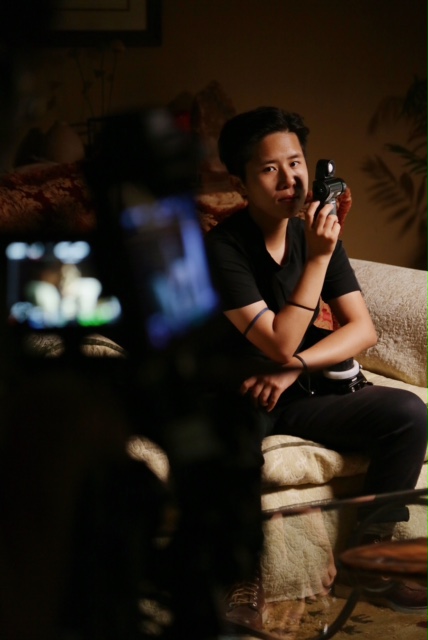
Zheng Jia highlights the importance of shaping cinematic experiences through sound

Picture sitting down on a Friday night to watch your favorite film. Your popcorn is hot and your pajamas are cozy. Just as the opening credits begin, you notice that the volume is not up. You jump up to grab the remote but to your dismay, the volume on your television appears to have stopped working. Would you continue to view the film? If so, what will you be missing? The soundtrack of the opening sequence? A character’s dialogue? Is there an interaction taking place? If so, what is going on? Is there a creature rustling in the woods? Is there a child crying? Is someone running through a crowded street? For most individuals, it would feel almost impossible to imagine grasping the full effect of a film without sound. Sound comprises the vast majority of a cinematic experience, and for a sound editor like Zheng Jia, the fate of a film often falls in her hands. She understands better than most just how integral music, dialogue, and other sounds can be to any cinematic experience. Oftentimes, it contains elements of a storyline that you cannot see but need to be aware of. It is essential to the telling of any story and it is the reason that sound editors are one of the most important members of a film production team.

When Jia began exploring the art of filmmaking, she found herself increasingly drawn to the world of sound. There was something about sound editing that gave her a sense of purpose and she never struggled to envision a future in the field.

“Gradually, as I acquired more and more experience, I realized that sound editing was not only something that I was good at, but it was also something I thoroughly enjoyed doing. I decided that I would pursue a career out of it and I never looked back. As I started to work on more and more projects, the more I understood how important sound editing is to cinematic storytelling. It’s amazing. Even though it is oftentimes a thankless job, it doesn’t make me love it any less. Despite the fact that audiences don’t always realize how creative and important my job is, it still enhances and defines their experience, so I devote myself to making it as enjoyable and engaging as possible. I love it so much,” told Jia.

Jia is a driven professional and she has acquired a breadth of experience in the years she has spent learning various sound editing techniques and styles. Her career has carried her through well-known works such as Law and Order Special Victims Unit and Farrah Goes Bang. In fact, Jia’s talents played a large role in Farrah Goes Bang’s film festival run. Screening at prestigious award ceremonies and festivals like the TriBeCa Film Festival and the Twin Cities Film Fest, Farrah Goes Bang generated a strong presence in the industry and went on to earn a number of award nominations and wins following its release. Its nomination for Best Picture at the Winter Film Awards in 2015 has much to do with Jia’s remarkable sound editing style and wouldn’t have earned the praise that it did without her contributions.

The Executive Producer of Farrah Goes Bang, Laura Goode, was impressed with the quality of work that Jia offered to her production. She couldn’t believe how committed Jia was to the film and after experiencing the value that Jia added to the film’s final footage, she realized just how talented the Chinese-native really is.


“Zheng shows exceptional drive and determination when she works, as well as a healthy store of natural talent. Her enthusiasm for film culture, as well as her prowess within filmmaking itself make her an invaluable asset to have on board any film production team,” stated Goode.

In 2014, Jia was asked to lend her talents to a Chinese blockbuster called Crazy New Year’s Eve. Crazy New Year’s Eve features several A-list stars and was comprised of several small storylines that were inevitably merged together to create one main premise. What Jia enjoyed most about the project was her ability to experience filming for a Chinese production, as she was most familiar with American-style productions in the past. She found that she was given more flexibility than she’d typically receive on an American production and enjoyed the creative authority she had to express her own interpretation of the film’s elements as she edited through each of the its components. Her role also required her to liaise between public relations specialists, sponsors, visual effects companies, editors, trailer companies, actors, and more. It was an entirely new experience for her; however, Jia is not one to step down from a challenge. She embraces any opportunity to discover new territory within her art form and she patiently tackled each new obstacle that she encountered.

“I worked with Zheng on Crazy New Year’s Eve. She’s an absolute pleasure to work with. She’s professional, punctual, creative and very easy to get along with. Zheng has got not just great knowledge of the technical skills that are required for the job, but also she’s got superb creative senses that make her have a way better understanding of how to tell the story through sound perspective, and create the sonic picture that brings the story up to the next level,” said Emma Tang, co-writer of the film.

One of the largest, most satisfying parts of being one of Crazy New Year’s Eve’s lead sound editors was embedded in the fact that each of the film’s sub-stories occurred in different parts of China. With that, she had to ensure that each different geographical location and environment was developed as authentically as possible throughout the film. She refined atmospheres surrounding cold, small, snowy towns, as well as touristy tropical islands, major cities, and more. Each of the film’s events presented a new territory to explore and the film’s success is a testament to her devotion to making each scene as realistic as humanly possible. Given the fact that only two of the five major human senses are involved in experiencing a film, she was handed a crucial amount of responsibility; however, she handled it with ease and remained professional throughout the duration of her time working on the film.

When Crazy New Year’s Eve was released in February of 2015, it screened at both the Shanghai International Film Festival where it won the Special Jury Award. It was a strong addition to Jia’s already esteemed career and gained her a number of new techniques she hadn’t mastered in the past. As for her future, Jia is optimistic. In the short term, Jia is excited about an upcoming Chinese feature film for which she will be the leading sound editor. In the long term, she hopes to acquire new projects that will allow her to develop her skill set even further and ensure that she is never limited by a specific style, genre, or type of sound editing. She is a force to be reckoned with in her field and you can expect only great things from the rest of her career.


Canada’s Victor Gilbert enchants audiences in new film ‘The Walking Man’

HEADSHOT(1)
Victor Gilbert

With his mom being a cinematographer and sister being an actress, Victor Gilbert’s impressions of movies are quite different than most children his age. He doesn’t just see something to entertain him, he understands the whole filmmaking process, and has for most of his life. At only ten years old, he can navigate a film set and understand the intricacies of what is required to make a film like many much older. That is perhaps why he already knows he wants to spend the rest of his life acting, and he is in demand not just in his home country of Canada, but internationally as well.

Gilbert’s career is already very formidable. Just this year he worked on a powerful commercial for Alberta’s public service union AUPE, and his film The Kiss has made its way to several prestigious film festivals. He has starred in five seasons of Netflix’s hit series Hell on Wheels, and even with this, he feels like he is just getting started.

“I would really like to be an actor full-time when I grow up and don’t have to be in school,” said Gilbert.

Despite not being a full-time actor, Gilbert is still quite the professional. Just last year he starred in the film The Walking Man. The film tells the story of a man who is compelled to leave his job and become a homeless wanderer. His friends and acquaintances share their opinions, and audiences are left to ponder his purpose. In the film, Gilbert plays Eric, one of the principal children who talked to the camera about “The Walking Man”. Eric was once a player for the soccer team that The Walking Man coached prior to quitting and abandoning his life. Having a child’s perspective about why the man began wandering was essential to the story’s development and how audiences felt about the entire concept.  Eric is a young boy who loves to play video games and doesn’t really take his attention away from his game when he talks. He is a ‘rough’ boy who is not very interested by what is going on with his old coach. He is asked to speak about what he saw, but doesn’t really want to since he’s so busy with his games. The disinterest in such a unique showcases a child’s innocense, and required a talented young actor to embody such a character. This is where Gilbert shined.

“My mom says many adults, like the main character of the movie, question themselves and their lives at some point, so the topic is very accurate and recurrent and impactful. It’s not always easy to deal with all the bills, and many people probably feel like they want to quit. It’s good because it teaches everybody that they are not alone and there are options and people out there to help. Maybe it’s important to take pauses in life to stop and relax and just walk, and it’s ok. Basically, don’t stress about things, and ask questions in life,” said Gilbert.

The Walking Man had its premiere screening at Orange Lofts Condos in March of last year, and now is making its way to film festivals. It was previously selected for the Winnipeg Real to Reel Festival, and the Central Alberta Film Festival. It is expected to have screenings at even more festivals soon. Such success may not have been possible without Gilbert’s portrayal of Eric. He had many lines throughout the film, and he had to stay very serious. He was only 8-years-old when the filming took place, and this is no easy task for someone of that age. However, Gilbert understood the importance of his character, and even learned the whole script by heart to comprehend the story’s importance. He then did his entire scene in just one take.

“The fact that he was able to pull through his character so well makes his presence on screen quite remarkable as you can tell he masters his lines even if he is so young. In this scene, he has to look straight at the camera and deliver his lines. He did not budge, he delivered the full script and added very brilliant luminosity to the film, as his bright eyes and his lovely and joyful character pierce the screen for those scenes,” said Derek Selinger, the Writer and Director of The Walking Man. “I worked with Victor many times before. I keep hiring Victor because of all the various faces he can pull, his lovely personality, the fact that he can remember lines so well and because he is so professional. When I called him up on filming day to come sit on the couch to deliver his lines, he came right away.”

Selinger, a well-known magician, knew Gilbert was the right person for the role in his film. Gilbert had to sit on the couch and play on a Nintendo GameBoy, and then talk to the camera. While saying his many lines, he always stayed in character and very serious. He describes The Walking Man and what his character saw, and does so in a confessional sort of way. Such a style requires extreme focus, as the camera sees every aspect of your face. It also requires a rawness, as the scene had to present in the style of a documentary interview. With the distraction of the video game console, this could have been difficult for many child actors, but Gilbert embodied it perfectly. Besides, for the young actor, this was a dream come true, as he still got to play video games, something he already enjoys. 

Derek is just really nice. He is not stressful, he helps his actors and makes the set very comfortable. He takes his time to explain the set, he is all prepared already when we show up on set, so things go super fast. Like, the fastest I have seen,” Gilbert described.

However, even though he got to play video games and work with people he liked, the best part of Gilbert’s experience shooting The Walking Man came from an unexpected source.

“Derek is a magician. A real magician! He does shows on big stages. So, he is a very interesting person. He does magic tricks sometimes on set,” said Gilbert.

Check out the tralier for The Walking Man here.

Michael Whalley talks playing make believe for a living

Headshot pic Sheridan Harbridge
Michael Whalley, photo by Sheridan Harbridge

When adults are asked what they miss most about childhood, their answers tend to have to do with the loss of their imagination. Children are known to imagine without limits and to dream without fear or understanding of failure. With that, children allow their minds to carry them into different worlds; worlds through which they create, discover, fantasize, and invent. Much like children, actors and actresses transform themselves into the characters that they portray and they do so without constraining their imaginations. They will stop at no lengths to mold their characters to fit into a plot line and they devote themselves to telling stories as convincingly and engagingly as possible. For actors like Michael Whalley, there has always been an undefinable intrigue to playing make-believe for a living and he has established a remarkable career out of exploring the industry that goes along with it.

Throughout his career, Whalley has acted in a number of award-winning films, such as Slow West and Jean. He has earned himself a reputation for his profound ability to bring his characters to life before his audience’s eyes and he accepts nothing less than the best from himself, regardless of the role or film. Just this past year, Whalley landed himself the role of Hugo in The Pretend One. The Pretend One depicts the emotional rollercoaster that unfolds when an adult woman’s imaginary childhood friend, Hugo, finds his existence threatened by a real, live love interest. Essentially, Hugo is the product of the main character, Charlie, who attempts to combat her loneliness after the death of her mother. As adults, Hugo and Charlie have to navigate their feelings for each other and their relationship when Charlie’s romantic interests steer in different directions. Hugo’s very existence is dependent upon Charlie’s attention and he is therefore determined to keep himself and their love alive.

“Hugo is pivotal to the storyline because he is the reason that the film was written in the first place. The unique thing about this story is that it deals with the existence of an adult imaginary friend, even though we typically associate imaginary friends with children. To think that an imaginary friend can have as many complex feelings as we do is something I hadn’t seen before. Witnessing Hugo grow aware of life and it’s worth was enlightening. His quest to become real is the burning centerpiece of the film,” told Whalley.

SONY DSC
Michael Whalley with Geraldine Hakewill, photo by Benedict Wall

Not only was The Pretend One an unusual storyline, it was also filmed in an extremely unique fashion. Whalley recalls it as being one of the rawest and fulfilling experiences of his career, having much to do with the fact that he and the other cast and crew members of the film disconnected themselves from reality to enhance their focus on their work and to produce the most organic, authentic performances that they could conjure up. They filmed on a cotton farm, far from cell phone and internet reception. In addition, cast and crew members all lived in mining huts on location while filming, requiring them to bathe in the farm’s lake, to eat the local cuisine, and to detach from modern day pleasantries.

When it came time to film their scenes, the actors and actresses were expected to deliver a wholesome, fully attuned performance. They rehearsed where possible, and improvised where necessary to sell each scene effectively. Whalley, who has a profound ability to gain the trust of his director, adopted what he calls a “two for you, one for me” rule while filming whereby he received permission to shoot two options: the first one as the way that the director wished, followed by one take where Whalley could feel out the scene and act as he saw fit. Fortunately for Whalley, the majority of scenes that he took creative authority over ended up making the film’s final cut.

Dinusha Ratnaweera, who produced The Pretend One, had nothing but positive things to say when asked about Whalley’s performance. He was astounded by the way the actor’s performance has been received by those who have seen the film so far and is eager to see what will be said once the film actually premieres. After seeing Whalley dedicate himself to the part of Hugo and doing everything in his power to meet the demands of the film, Ratnaweera earned a new appreciation for his talents.

“This was not the most traditional territory to film in, but based on test screenings that we’ve had so far, Michael’s performance has been very well received and praised. I believe he took a risk with this role, but he more than achieved a nuanced, sensitive, compelling portrayal of what is indeed a very complex role,” said Ratnaweera.

The Pretend One is set to premiere in 2018 and Shoreline Entertainment will be responsible for its worldwide sales and representation. In addition, cinemaaustralia.com.au recently gave the film an extremely rare, 5-star review. Whalley is very excited to see how the film will fare with the public and hopes that it will reflect the hard work and dedication that each member of the project put into it. As for the rest of his career, Whalley is taking things one part at a time. He is currently preparing for the world premiere of Muriel’s Wedding: The Musical. Upon closing Muriel’s Wedding: The Musical, he will embark upon his first pilot season and from there, he hopes to continue playing make believe for as long as he possibly can.


Top photo: Michael Whalley and Geraldine Hakewill in ‘The Pretend One’, photo by Rob Morton

Wait ‘till you see Anna Pniowsky in “Wait ‘Till Helen Comes”

file 2016-12-02, 2 07 11 pm
Photo by Kevin McIntyre

When most parents ask their child what they would like to be when they grow up, they often expect to hear answers like “actress” or “singer,” and simply hope that the novelty will wear off with age. For Anna Pniowsky’s parents, however, this is not the case. Not only does Pniowsky have a burning passion to be an actress, she is not ready to wait until she’s an adult. At the young age of 12, Pniowsky is proving to be a force to be reckoned with in the entertainment industry, and she is certain that this is what she wants to be doing for the rest of her life. For Pniowsky, acting provides her with a platform to unleash her creativity, and it is an outlet to transform herself into each new role that she takes on. She loves all aspects of her job, and she soaks up any opportunity to learn from other professionals every time she steps on set. From camera operators, to hair and makeup, she will stop at nothing and at no one to expand her knowledge and skills in the acting world. Knowing that she has an opportunity to evoke unfamiliar emotions from her audience is what motivates her to keep her head down and focus on her craft, something which she aims to continue doing as she builds her career.

When asked about what initially lead her to the idea of becoming an actress, Pniowsky cannot pinpoint an exact moment. For as long as she can remember, acting has been a world that she was drawn to and that passion has only ever grown with time. Despite her age, Pniowsky has already won herself lead roles in films working with well-known cast members and directors, such as her lead role in Light of My Life, for which Pniowsky was directed by and co-starred with Oscar-winner Casey Affleck. When she sets her sights on a role, there are few limits to what she can achieve and she immerses herself into roles in ways that some established actors and actresses could only admire. Pniowsky is wise beyond her years and she has pieced together a remarkable career path very early on in her life.

At the mere age of eight, Pniowsky landed herself her first ever role in the film Wait ‘Till Helen Comes. The film, which can also be known as A Little Girl’s Secret, is about a reconstructed family who moves to a converted church in the country. When a 14-year old Molly realizes she has a gift that she must use, she has to face her deepest fears and save her troubled step-sister from a dangerous relationship with the ghost of a lonely little girl. In this role, Pniowsky played the powerful role of a young girl that goes missing, walks into a river and drowns. Her character was instrumental to the horror film’s plot line and needed to be played by a highly attuned actress who would know how to keep with the atmosphere and the mood of the storyline. By walking into the river and drowning, Pniowsky’s character helps the audience to draw the chilling conclusion that the story’s antagonist, Helen, targets young girls and leads them into the river to drown. Pniowsky set the scene for the entire film, and without her talents, the film would not have earned the reputation that it did.

As a learning experience, Pniowsky could not have asked for more. Not only did she gain exposure to working with other actors on set, as well as taking direction from a vetted production crew, Pniowsky also gained experience shooting a physically and psychologically demanding scene. She was tasked with shooting the film’s opening scene in close to freezing water. The water was so cold, in fact, that she was immediately pulled from the water and placed in a hot tub when the scene wrapped in order to ensure that there was no damage done to her body from the cold. Pniowsky handled the tasking scene with a high degree of professionalism and ease. Even when there was a flaw with the camera, and she was asked to shoot the scene again, Pniowsky got back into the character and executed the scene flawlessly for a second consecutive time.

Victoria Sanchez-Mandryk, who produced Wait ‘Till Helen Comes, was shocked to experience the caliber of acting that she received from Pniowsky at such a young age. She learned very quickly that Pniowsky’s acting skills rival that of highly experienced actors and actresses who have dedicated a lifetime to their craft. According to Sanchez-Mandryk, “Anna is like an old soul, who quietly watches and listens with wisdom beyond her years, taking everything in. When action is called, she delivers in full force.” To receive such high praise from a professional like Sanchez-Mandryk is not a small feat. For Pniowsky, however, it simply motivates her to continue mastering her artistry and showing the world what she is capable of.

As Pniowsky patiently awaits the release of Light of My Life, she continues to search for new ways to challenge herself and push her acting abilities to the limit. She considers herself extremely fortunate to have earned the experience that she has earned thus far in her career, but aims to build on those successes for many years to come. Keep an eye out for Pniowsky as she continues to rise to the top.

Cinematographer Ismaël Lotz talks award-winning film ‘Who is Alice’

Ismaël Lotz sees life through the viewfinder of his camera. He knows the power that film can have, and the artistry that comes from making one. As a cinematographer, he ensures that every single shot is perfect. Everything is important; from lighting, to lenses, to the smallest movement of his camera. Such dedication takes more than just talent, it takes unparalleled drive. Very little people actually possess such a trait, and Lotz is one of those few. His work ethic and outstanding capabilities as a Director of Photography have led him to be one of The Netherland’s best, and he is now internationally in demand.

Throughout his esteemed career, Lotz has worked on many critically-acclaimed projects. His documentary I am Famous tells the story of Tom Wilson, famous for his role as the antagonist Biff in the Back to the Future films, and living with that notoriety. As a child, that series was one of Lotz’ inspirations for becoming a filmmaker, and now, those he idolized he now works alongside.

The highlight of Lotz’ career, however, is his recent film Who is Alice. This internationally-acclaimed comedic drama whisks the audience away on a humorous, non-conventional quest to avoid suffering and find happiness. Lotz, known for his work in cinematography, also took on the roles of co-director and editor for the film, knowing that understanding such positions would make him a better cinematographer. His involvement from pre-production to post-production helped make the film an enormous success.

“The reason we wanted him as Director and Director of Photography is because of his talent and passion. He is known as one of the best Directors of Photography in The Netherlands and the quality of his work is outstanding,” said Paul Smit, the Writer and Producer of Who is Alice. “It’s always a pleasure to be working with Ismaël. He is passionate, creative, intelligent and able to exceed people’s expectations. Actors that I’ve worked with told me that they had never seen a Director of Photography like Ismaël. Normally it takes two cameramen to do what he is doing all by himself. Besides his talent, he is very easy to work with and always aims for the highest level.”

Who is Alice premiered in the city of Helmond, where the film was shot, with several sold-out shows. It then went on to several prestigious film festivals, such as the Los Angeles Film Awards, Festigious International Film Competition, London Independent Film Awards, Miami Independent Film Festival, Hollywood International Moving Pictures Film Festival, TMC London Film Festival, Actors Awards, and the Move Me Productions Film Festival. winning over 25 awards throughout them.  Amongst these accolades, Lotz was recognized for his outstanding work as Director of Photography, and took home the prize of Best Cinematography at the New York Film Awards, not to mention the recognition he received for his work as Director and Editor all over the world.

“It’s very rewarding and feels great that the film has achieved what it has. I am so proud on what we’d accomplished with our work. It brings a big light on my future endeavours as an international filmmaker,” said Lotz. “It makes me very proud to have won the award for Best Cinematography. But besides the awards for several departments on the film, the biggest reward is that complete strangers approached me and told me what they think of the film. It leads to very pleasant conversations with all kinds of different people. It’s inspires me to keep working on more projects like this.”

On-set, Lotz worked closely with his co-director Robert van den Broek to ensure the all-star cast was working to their fullest potential, and that the two directors were always on the same page, which was essential to Lotz’ cinematography. Many times while shooting, problems can arise and situations can change, making what was planned in pre-production alter drastically. As a cinematographer, adapting quickly to these situations and coming up with equal or better alternatives is a must. At one point while shooting, Lotz and his team lost a lot of time because of a power outage. The solution was to do the scene in one take. In hindsight, it is now one of Lotz’ favorite scenes of the film, as one take scenes are immensely challenging for everyone involved, but create an authenticity for viewers, truly transporting them into the film.

Lotz is known for the energy he brings behind the camera. He is a team player and plays to his crew’s strengths. This brings a creative freedom for everyone to work toward his vision, creating a harmonious working environment, which is essential to the success of any film. It was working on such a great team that made the experience of making Who is Alice extraordinary for this cinematographer, and knowing the story they were telling was important and would impact audiences is why the filmmaker began this journey in the first place.

Who is Alice carries us on a funny, compelling and sometimes cringe-worthy journey into the highs and lows of what human beings will do to try to avoid pain and connect to happiness. It’s about being yourself in a world full of big egos. It shows how big the power plays are in the entertainment industry in a funny way. While it also shows the drama of Alice’s life, I think the movie carries a lot of spiritual elements with it. Who are you? And if you found out who you are, what are you doing with that knowledge?” Lotz concluded.

Who is Alice is now available on worldwide streaming services such as Amazon, iTunes, and Hulu. Those in China and Japan can also look forward to seeing the film soon, as a distribution deal has just been signed. No matter where you are, be sure to check out Lotz’ outstanding work on the film.

Producer Sherry Yang brings out the laughs in film ‘Cash Back’

Filmmaking, for Sherry Yang, was always where she knew her future would lie. The ability to transport audiences to different places and time was always her passion. However, she did not always know she wanted to be a producer. Early in her career, she experimented with directing, writing, and editing. In taking on many roles, she came to realize that what makes all of these jobs possible is what a producer does. Producing is fundamental to filmmaking, and allows other departments to work flawlessly and concentrate on their tasks. It was this realization that put Yang on the path to greatness. She knew at that moment that she wanted to be a producer, and work on making each and every project she took on the best it can be in every aspect. That is exactly what she does; this award-winning producer is quickly becoming a leader in her industry, and despite an established resume, she is just getting started.

Yang is known for making films that not only impress audiences, but critics as well. Her historical film The Letter won awards at eight international film festivals. A similar pattern occurred with her work on the comedy Jiaozi, the romantic drama Te Echo de Menos, and the thriller Under the Pieces. All those she works with are immensely satisfied with her work, and attribute much of their success to her capabilities as a producer.

“I worked with Sherry on two films; I believe this speaks volumes. I truly enjoyed working with her and the professionalism she brings to the table. Sherry is a producer who considers herself as part of the crew, and she is proud of that fact. She does not sit in the high chair and stay away from the set. She is always working hard along with everyone else and still making sure everyone is happy. She is always with us, working hard to make the best film possible, and when there are hiccups, she is there to fix it quickly before anyone even notices. When there is trouble, she is always there backing you up and is the glue that keeps everyone together and working on the same page. It is no mystery as to why so many are happy to work with her over and over again. When working with her, she brings out everyone’s passion, thus making the filmmaking process an enjoyable journey, and reminds us why we all chose this path,” said Director Evan Xiao.

Cash Back cast & crew
Cash Back cast and crew

Amongst the films that Yang collaborated with Xiao on is the film Cash Back. It is a dramatic, dark comedy about love and trust. After two years in the making, the film premiered at the Asians on Film Festival in March of 2016, and continued to be selected for several more festivals. Yang is proud of what the film accomplished, none of which could have happened without her. And yet, she remains modest.

“I am very happy for Evan that he was able to give homage to his professor, who the film was dedicated to, and that it went so well. When I first saw the cut of the film, I thought it was quite clever and funny. I am happy that many audiences agree with me and enjoyed the film for the clever storytelling and directing,” said Yang.

When Yang was approached by Xiao to help tell his story, she was immediately captivated. The film was a tribute to one of the director’s teachers, and she was happy to be a part of something that was so close to home for her colleague. At the time, Yang had never worked on a dark comedy, but she was eager for the chance to try something new.

“Although it’s a dark comedy, the story deals with the morality of the human being. That thin grey area. After working with him on this project, I came to realise that Evan truly likes to play with that grey area of morality, as well as the comedic aspect of the naïveté of someone who acts morally all the time. I felt that this story did it right playing with the right amount of comedic aspects and the right amount of darkness to point out the naïveté and bending of morality,” Yang described.

As the producer, Yang helped find the perfect cast and crew for the film. She set financial matters and coordinated communications between creative and production crew members. Another responsibility included location scouting. She wanted to find something vibrant, affordable within budget, and convenient for the working schedule. The story originally took place in a comic book store, but this proved to be very difficult. After spending countless hours looking at comic book stores, Yang knew they needed to come up with an alternative. When meeting with the director, they decided to alter the story slightly, and changed the setting to a candy store. This was actually a great change, says Yang, because it allowed for a few more jokes to be added to the script.

It was crucial for Yang to remain organized and communicative with all cast and crew, as well as the business owner of the candy shop when it came to scheduling. She had to carefully plan everything in order for everyone to be on the same page and have the film shoot go smoothly. Needless to say, she achieved her goal, and the film is witty and artistic.

Yang is undoubtedly a producer to keep an eye on. She is already one of the best to recently come out of China, and as the years pass, we will continue to see her name attached to some extraordinary films.


Top photo by Yuki Yoshimatsu


DANIELA JUNKO: INTERNATIONAL ACTRESS FOR A GLOBAL AUDIENCE

Daniela Junko
Actress Daniela Junko at the Madrid International Film Festival for her film “Alone”

With her exotic looks, fighting skills and ability to speak several languages, Daniela Junko is an embodiment of intertwining cultures. With her recent leading turn in the film “Alone,” which screened at the 2017 Cannes Film Festival, Daniela is not only a multicultural individual, but a global storyteller capable of connecting with audiences regardless of origin.

Daniela tells us more about playing the lead role of Ella in “Alone,” a story about Ella’s depression and a young couple who appears to have the perfect life. “The movie gives us the insight of their life. Although Ella is a beautiful model, with the perfect social media life…in reality she is deeply depressed.” Elaborating on the relationship component, Daniela explains that “Gabriel does his best to help her. She does not enjoy life anymore. Can’t leave her bed, does not want to be sociable, despite Gabriel’s attempt to help her, nothing works…[she] can’t leave her bed.”

Without giving too much away, Ella deals with a tragedy, a storyline that gave Daniela an important opportunity to show off her impressive emotional depth. It didn’t hurt that Daniela was working opposite Swell Soubra, who played Gabriel. Soubra, known for his work in the hugely successful TNT drama “The Last Ship,” gave Daniela a phenomenal chance to bring truth to an important story with a fellow foreign actor also at the top of his game.

“Alone” director Angelo Perrino, known for directing “How I Met Your Mother” actor Doug Heiar and Jose Rosete from “The Walking Dead: Red Machete” in “Dirty Spaghetti,” also gave expert guidance that clearly paid off and ensured the film would be received well by audiences. Daniela recounts, “I was amazed with the responses I got from my peers, and everyone we show it to. I can honestly say, either they like it or not, it brought everyone to tears, it had such an impact. I did not expect myself.”

The enthusiastic response to the film wasn’t the only cause for excitement, as being accepted to screen at the Cannes Film Festival and Beverly Hills Film Festival was yet another reason for the filmmakers to bask in the glory of a job well done. Rather humbly, but also in an indication of how she owns her tremendous success, Daniela recalls screening at the Madrid Film Festival where she was nominated for Best Actress, by saying, “It still sounds surreal to me.”

Of course, Daniela is no stranger to appearing in lead roles at exclusive and internationally renowned festivals. Daniela gave a powerful performance in the leading role of Charlotte in the film “Three Kings Down,” which was featured at the New York Audience Now festival and the MIA Film Festival (Mostra Internacional Da Amazonia), and reached millions of viewers worldwide via #TOFF (The Online Film Festival).

It’s no surprise though that the project was received so well by such prestigious organisations, as it presented an interesting take on the film noir genre by showcasing Daniela playing a female hero who manipulates card players in Vegas to help herself get ahead, and challenging a mafia boss in the process. Reinforcing her reputation as an actress who lifts the game of those around her, but also as one who only works with the best in the business, Daniela starred opposite Alen Matters (known for his recurring appearances on “Jimmy Kimmel Live”) in the homage to notorious femme fatale characters.

Daniela Junko clearly proves herself as an actress functioning as a leader in the industry – not only through her critically acclaimed performances in terrific projects, but because she is a performer who can represent various cultures from around the world, and access emotions that resonate with viewers in every corner of the globe


AWARD-WINNING CINEMATOGRAPHER DEPICTS A WAR TORN FAMILY IN “LAST CALL”

Cinematographer Ruixi Gao can’t help herself sometimes, she is overwhelmed with ideas. This is the blessing and the curse of possessing a creative personality. It’s incredibly difficult to make a film so when you do, you want someone talented and driven like Ruixi to be among those enabling you to manifest your vision. This was the mindset of Zhipeng Xing, director of “Last Call” when he approached Gao to be the DP for this film. After receiving the script from Xing, Ruixi recalls, “I sat down and read it immediately. I think it is instinctual for many cinematographers, it most certainly is for me. I could see the scenes inside my mind as I read. The whole picture played out for me. I understood the lighting & the perspective of the camera in relation to the action. It’s exciting when you read a script for the first time and the film is playing in your head; I wish the audience could see it so quickly. That’s part of what motivates me as a DP; I see this wonderful movie and the desire is to bring that to life for others to witness.” Besides her obvious passion, Ruixi brings years of experience and talent to every production she is on. An emotional film like “Last Call” requires every bit of her sensitivity and expertise.

The relationship between Director and DP is commonly accepted as one of the closest working relationships in film. Each director has their own process and the cinematographer must be flexible to this to help said director achieve their vision for the story being told. “Last Call” director Zhipeng Xing prefers to focus on the actors instead of fixating on the framing of the scene in the lens. Rather than a shirking of responsibility, this was a result of Xing’s trust in Gao’s abilities and talent. This allowed Ruixi to communicate extensively with her team. Working with her Gaffer and Key Grip to establish the lighting plan, and framing with the PD, the effort was highly collaborative. Her plan used soft filters for imaging effects and a low-key style with warm and cool tones to control different emotions between war and home.

This story depicts war and its effect on family. The father and son are separated from the mother (& wife) who is still in war torn Iraq. They communicate via letters and a weekly Facetime. After one of the weekly family Facetime talks, the father is speaking with the mother after their son has gone to bed. Disturbing noises are heard and the signal is lost. A week goes by with no word from the family’s beloved wife/mother and they fear the worst. Unable to sleep from worry, on the morning of the son’s birthday, the husband hears a knock at the door. It could be the mother or a government official to announce her unfortunate death. The filmmakers do not reveal the answer, leaving it up to the viewer to decide what they think happened. The purpose of telling this tale is not to resolve it either way but rather for the viewer to contemplate the effect of war on real people with families. In the last scene, prior to the knock, the father receives a letter from his wife in which she states that she won’t make it to see them for their son’s birthday.  When the father reads this letter it’s impossible to not feel the pain of being separated by these circumstances. War is cruel, it makes people ache; it’s also what makes this film work and have such impact.

Ruixi was awarded two best cinematography award for this film: Best Cinematography Platinum Award WINNER at the LA Shorts Awards & Best Cinematography Gold Award WINNER at the NYC Indie Film Awards (the film also received multiple other awards at these festivals). Gao’s passionate disdain for war and its malevolent effect on people in many parts of the world moved her to dig deep in her abilities for “Last Call.” Edwin Beckenbach worked with Ruixi on the film and professes, “Ruixi brings with her the experience of an international woman to a domestic industry that has traditionally been dominated by men and is not known for inclusivity or diversity. Film as art is a powerful generator and amplifier of cultural values and perspectives and as such the addition of underrepresented voices, especially those as promising as Ruixi’s, can entertain as well contribute to the benefit of society overall. In an industry where many people place their image before their abilities and ‘fake it until they make it’, Ruixi is authentic to a fault and is singularly focused on the artistic and technical challenges of the job at hand. Her dedication to her craft and clarity of vision is a unifying motivator for the camera and lighting crew to perform to the best of its ability.”

For many viewers of the film the most heart-wrenching aspect of the story is the young boy’s difficulty in being separated from his mother. With the understanding that this character would have be both a catalyst and proxy for the audience, Gao took extra preparations including reading psychology books on working with young professionals and preparing props with stickers and colored tape to make them more enjoyable. Far from being the task of a normal DP, this type of approach in working with a young actor is indicative of Ruixi’s overall pattern of professionalism. By creating a positive and friendly atmosphere in a variety of ways she is able to get the best performance from everyone and thereby get the best shots with the camera, to say nothing of coming in ahead of schedule. While some prefer to stay in their “own world” Ruixi Gao feels that the images she wants to create allow us to see through the eyes and emotions of others, which is what “Last Call” is all about.

LastCall03

Actress Francesa De Luca to star in upcoming film ‘Café Mnemosyne’

Originally from Hammersmith, London, Francesca De Luca knew she was meant to perform at the age of six. At the time she was dancing, but she realized the stage was her home. She knows what it is to connect with her audience, to make them feel something they didn’t know was there. She brings everything she has to every performance she does, and this is what makes her such an outstanding actress.

Throughout her career, De Luca has risen to one of England’s top actresses. She has worked alongside extraordinary talent like herself, including Producer, Writer, and Director Francis Ford Coppola, known for many award-winning films including The Godfather trilogy. He is also one of De Luca’s idols.

“He reminded me of my grandfather with his warmth and he told me I reminded him of his daughter Sophia. I spoke about my Italian heritage and it felt like I had known him for years,” she said.

With a busy upcoming couple of years, De Luca will once again appear on the big screen in several new films. One of these is Café Mnemosyne, set to be released in 2019. The film will be directed by a prominent director, who approached De Luca knowing he needed her to make his film a success, and that she would be perfect for the role. This was four years ago, and now, the film is finally coming to fruition. De Luca immediately was on board.

“I’ve seen this director’s previous work and love the script and think he will be a nice guy to work with. I like working with talented, nice people, and it’s important to feel relaxed on set,” she said.

Scripts are extremely important to De Luca. She wants to read a script and feel compelled by the story, and if she is, that is when she will take on a role. Café Mnemosyne is one of those films. It is set in a strange diner where a young girl shows up with an odd dilemma, throwing the regular café occupants into a panic. The suspense is evident while she finds out what the café really is and what will happen to her next. De Luca will be playing the role of Carrie, who is one of the main characters in the diner. The film is expected to make its way to many of the world’s most prestigious film festivals.

“The filming will be in New Jersey so it will be an opportunity to spend time in New York again and spend time with my cousins and friends. I love New York as a city and I love the directness of the people. Also, I love playing Italian America New York characters, so I enjoy people watching while I am there and picking up traits that I can later bring to my characters,” said De Luca.

There is no doubt that De Luca will help make the films a success. She is known for working on acclaimed projects, such as the docudrama Jeremiah Tower: The Last Magnificent. De Luca played the role of Margot Fonteyn in the film, a true Prima Ballerina. The film premiered at the Tribeca Film Festival last year, and was subsequently selected for the prestigious Hamptons Film Festival and the Key West Film Festival. Earlier this year, it was released in theatres across the United States and Canada, receiving rave reviews from the New York Times, with a score of 82 per cent “Fresh” on Rotten Tomatoes. It was released on iTunes in July of this year, and went straight to number one in the documentary chart and top ten in independent movies.

“I am proud to have been part of such a successful film,” said De Luca, speaking of Jeremiah Tower: The Last Magnificent.

De Luca saw similar success with the film Passports. The film follows Tanya who returns after six wild years of travelling. Once home, her mother and grandma make her join an online dating site and go on a date. The date is a visit to a psychic. During the visit, unexpected events occur and the guy hits on the psychic secretively sliding to her a piece of paper reading ‘Call Me.’ The psychic ignores him and tells Tanya her fortune and after Tanya shows the psychic a ‘new’ game of magic in which she makes her date’s car keys disappear. From then on things get heated between the three. This film is a dramedy with beautiful cinematography and interesting characters. De Luca plays the pivotal role of the psychic. Passports went on to win several awards at many prestigious international film festivals.

“During Francesca’s audition for Passports, we decided to cast her immediately because of her commanding stage presence and the many unique details she brought to her acting. What makes her special is her uncanny ability to perform at the drop of a hat, improvisation skills especially with dialogue, and her capacity to do numerous accents from all over the world. We are currently in the development stages of our first feature Midnight Daughter, filming to start early 2018, and are casting Francesca in one of the primary roles of the film. Her vast skill set allows Francesca to fit into different characters. Overall, Francesca’s dedication to the craft of acting and her easy-going attitude are two of the many reasons why we like working with her,” said Jeremy Pion Berlin, the Director of Passports.

Audiences have a lot to look forward to with De Luca gracing their screen presence so frequently in the coming years. She has recently been working with Mark Myers of CSP Management, who also plans to cast the actress is roles with his production company Citizen Skull over next few years. She is also looking forward to working on various roles in US television programs. She is definitely one to watch out for.

Scott Michael Wagstaff on creating his own destiny

ScottWagstaff' headshot 2 by Simon Kelski photography
Scott Michael Wagstaff, photo by Simon Kelski

On paper, Scott Michael Wagstaff can be described as an actor, portraying the lives of television and film characters in a variety of different genres. One a deeper level; however, Wagstaff is far more than your average actor. When he acts, the British-native is adamant about bringing as much honesty and realism to the characters he plays. He is driven by the unique opportunity he has to inspire his audiences to feel emotions that they might not otherwise allow themselves to feel. More often than not, acting is a taxing job and Wagstaff accepts this reality. Despite this, what differentiates him from his competition is that the onerous aspects of his job are the ones that motivate him to conquer every obstacle he encounters and continue to excel above his fierce competitors.

As an actor, Wagstaff is aware that his job is not always as fascinating as it may seem. Over time, it has involved challenging auditions, inconsistent hours, and a second job to keep on top of the bills. With a passion as strong as Wagstaff’s, however, there are ways of counter-acting the somewhat defeating uncertainty of not knowing when your next job will be. When he isn’t filming, the talented actor balances between developing ideas and concepts for his own future projects with expanding his skill set as an actor to ensure that he never loses his edge. He believes in the power of refreshing his skills to bring a bigger, better performance to his upcoming projects; a strategy which has paid off time and time again for his work in well-known films and television show like 6 Days and Color Me Grey. In addition, for his work on the film Pendulum, Wagstaff received a nomination for Best Supporting Actor at the prestigious FilmQuest Film Festival.

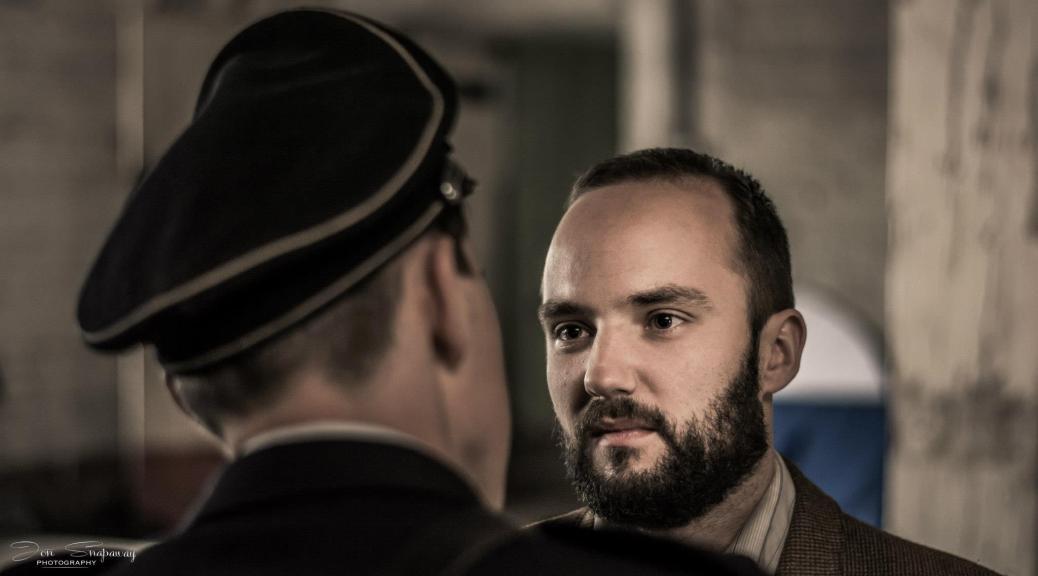
In 2014, a former co-star of Wagstaff’s recommended his name for an upcoming film called Final Reflection. When he was approached about working on the film, Wagstaff found himself drawn to the well-written script and the authentic relationships depicted in the storyline. Final Reflection portrays the emotional journey of a Jewish Policeman who forms a rapport with a young Nazi officer in 1942 when the Nazis deported approximately 300,000 Jews from the Warsaw Ghetto. It is a story of survival, hardship and hope for which Wagstaff played the lead role of Isaak. Without Wagstaff’s stellar performance, it is unlikely that the film would have been selected for prestigious film festivals like the Los Angeles Independent Film Festival, Student Arts Festival, TiltShift Film Festival, and several others after its premiere at the BFI Southbank in London.

Wagstaff is used to dedicating every fibre of his being to his roles; however, he felt an overwhelming responsibility to accurately portray the facts of this story and the types of emotions that the men and women would have been feeling at the time that these events took place. He heavily researched the Warsaw Ghetto in 1942, the struggles that Jewish police officers faced during this era and how they would’ve interacted with Nazi officers. He was intent on bringing every piece of history and raw emotion to Isaak’s character as he possibly could, something he strives to do for all of his characters. In return, he thrives on the way in which his characters reveal aspects of his own personality and his own life circumstances that he isn’t always aware of.

Playing the part of Isaak was unlike anything Wagstaff had ever done and his audience reaped the benefits. Beyond the props and the realistic sets, he enjoyed the deeper realities that Isaak’s character unveiled.

“It is certainly important to educate people of the horrific situations that occurred in the Warsaw Ghetto in 1942. To this day, many people don’t actually know what really went on. At the core of it for me, however, are the broader realities rooted in the lives of everyone who lived through the tragedy that was World War II. The underlying truth in the film is that we, as human beings, always have a choice – no matter how dreary the situation you are in. Even in the face of death, you can turn around and take a stand to bring about a change in the world. One small act can make a profound difference in the life of someone else. Isaak makes that small step and I find it so important to teach the world that one small bout of courage can carry a very long way,” said Wagstaff.

The film’s writer and director, Charles Copsey, had the distinct pleasure of witnessing Wagstaff become Isaak on-screen and inspire his audiences to find Isaak’s courage within themselves. He values the opportunity to work with profoundly talented actors like Wagstaff and the success that they bring to his scripts.

“Working with Scott was a great experience. His commitment to the film went above and beyond what was expected of him. He put time and effort into his role to ensure that he and his fellow actors were remaining true to the facts of these very sensitive, historical themes and topics. His passion and aptitude are key to the positive influence that he had throughout production. Scott was always challenging our progress and development and he is a delight to have on set,” told Copsey.

Ultimately, there are parallels that can be drawn between Wagstaff’s passion to inspire his audiences through his performances and Isaak’s inspiring discovery of his inner courage. Regardless of the hardships that an individual may be going through, Wagstaff understands the importance of persevering in the face of adversity. He hopes to motivate other aspiring actors to push forward when faced with a challenge and to rely on themselves to create their own success. If his career has taught him anything, it is that at the end of the day, he is more than just an actor. He is an artist and by allowing his creativity to carry him to great lengths, he has found satisfaction in his career.

“Make your own work. Don’t rely on Casting Directors and Agents to be your gatekeepers. Those relationships definitely help but you will find power in seeking out stories that you are passionate about and by surrounding yourself with like-minded, creative people who will help you move forward to be considered for future projects. Be fearless,” he concluded.