Category Archives: Filmmakers

DIORS SAMURAI IS ZHENG KANG’S ACTION/ROMANCE AT ITS NERDY BEST!

Doing your best and always giving one hundred percent are more important now than ever. Information is instantaneous these days and you can google anything in less time than it takes to yawn. Zheng Kang has always given his best and it is starting to supply dividends to his career. Belying his young age, Kang’s animation productions have already reached achievements like being used by faculty at USC School of Cinematic Arts for graduate animation classes (Lion Dance, in which he oversaw a group of professionals spread across five continents), working on the Comedy Central’s TripTank (contributing to every episode of the entire second season), and others. As such a recognized part of the animation community, his diverse creations are receiving great attention. one of his earliest productions, Diors Samurai, shows a different side of Zheng’s sentiment and may soon be made into a series production at a US network. Diors (Chinese for “loser”), gives a hint to the humor found in this action animated show. One cornerstone of Kang’s work is that it is always different, thematically and stylistically. A viewing of the Diors Samurai trailer (http://vimeo.com/189854381) reveals how different it is from his other work (https://vimeo.com/190416387 Baby and Granny for example). It is not hyperbolic to state that each new film Zheng starts receives the respect of him breaking his approach down and starting fresh each time. As both a director and an animator, Zheng Kang has learned to give each story the opportunity to become its own entity.

Production I.G.’s Dead Leaves (distributed in Japan, North America, Canada, Australia, New Zealand, and the UK) and Samurai Jack (the American animated series on Comedy Central) both inspired Kang’s approach for Diors Samurai. He wanted an Eastern influence, time travel, a love story, all augmented by his sense of humor and wit. The tale of Diors Samurai is that of a hero who falls in love with a beautiful princess and is heartbroken to learn that their love is forbidden. A chance encounter with a magical elder reveals that he may marry the princess if he travels through time to find her in the dystopian future. He jumps at the chance and finds her, only to learn that she is now a successful police officer with no memory of him! Yota (the samurai) must divide his time between saving the city from ruthless organized gangs, trying to understand this confusing modern world, and hopefully sweeping the princess off her feet! While the story is full of action and danger, it’s the characters who drive the story and interest viewers the most. Yota is a very strong samurai but very tiny. He grew up with his lord’s daughter and was in-charge of protecting her every day. Yota fell in love with her but never told her as society would not approve of this. When the princess is selected to marry another lord’s son, Yota cannot do anything about it and is beside himself. While he is adept at fighting and killing, he does not know how to express his feelings and show love. The “Diors” or “loser” facet of this character comes from his unrequited love as well as his inability to express himself (a modern view of loser for certain). The princess in Diors Samurai is perhaps one of the most positive and well-rounded female Asian leads accessible to viewers these days. In ancient time she is very elegant, like every traditional princess in our mind. In the future however, she is tough, strong, and highly proficient with firearms. The princess possesses qualities that appeal to every type of fan and contradict stereotypical female roles.

While Diors Samurai is definitely an action program, Zheng confirms that it shares a common thread with all of his creations, “It’s a love story. People search every day for love and to find their partner. That’s a basic human need. I know that people have an immediate thought in their minds that a samurai/warrior is very serious and not in touch with their feelings. Their mission is always to protect and serve their king. I wanted to create someone who is just like normal people, someone who feels loves and is eager to get love. Yota has some strength but also has drawbacks. He might be a winner as a Samurai but might be a loser in life. That’s a universal story no matter what part of the world you are from or what you might do in your life. We all struggle for love and we all want it.”

Perhaps the most striking and apparent aspect of Diors Samurai is the mixture of Eastern artistic style with a western based theme and emotion. The clash/combination of the two serves to heighten the impact of both in this production. Zheng states, “I grew up with comics and manga. I began to draw them when I was a little kid. So my drawing style is highly influenced by Japanese anime and manga, which looks very Asian. I also enjoy western storytelling like Pixar and Disney features because they always have a clear and simple storyline. They’re character-driven, there are three acts, and the motivations and conflicts for every character are easy to understand. I enjoy Asian storytelling very much but I have to say, sometimes it’s too cultural and you can get confused if you’re unfamiliar with that culture.” Caroline Hu (formerly the Character Artist at Warner Bros. Animation and Conceptual Artist at Walt Disney Feature Animation/now the Artist at Warner Bros Consumer Products) notes Zheng’s successful integration of these two cultural traits. She relates, “Zheng’s approach to storytelling is both collaborative and diverse, and is exactly what Hollywood needs right now. It’s very refreshing to see. His successful marrying of two cultures, Asian and Western, to create a number of globally successful projects, is no small feat. Zheng’s animation and direction skills are superior. As a member of the Animation Faculty at USC School of Cinematic Arts, I often refer to his projects when addressing undergrad and graduate film students in my masterclass, even using Zheng’s materials as a teaching aid to show the students how things should be done!”

His role as director/animator has become commonplace for Kang these days but his work with composer Torin Borrowdale on Diors Samurai was one of his first entries into overseeing multiple facets of an animation production. Zheng understood that the mixing of cultures in his story, combined with the dichotomy of a Samurai in love, meant that he needed a soundtrack that would mesh with these ideas. Add to that, the need for intensity in the actions scenes and the music suddenly became paramount. Kang recalls, “I was always looking for high energy, with Japanese traditional instruments and elements in the music. Because it’s an action-comedy, high energy music can work very well with every sequence. Because the characters are Samurai, Japanese traditional instruments and elements can help build an authentic atmosphere. I found some reference music for Torin so he could understand what I wanted, but he also provided great ideas which made the final music much better than the reference music, suitable and unique! After this first cooperation with a composer, I understood how important music is for storytelling. I respect composers very much and would like to work with them to achieve great and unique music. For me it’s always a mind- blowing experience and learning opportunity when I work with my composers.”

The interest in Diors Samurai does not rely solely on the achievements of Kang’s more recent productions. With Official Selection Screenings at the: Trailer Fest Film Festival, London Monthly Film Festival, Direct Short Online Film Festival, Creation International Film Festival, and the Play Film Festival, Diors Samurai was highly noticed when it first was made available as a Short. Now, the industry that has become so captivated by this director/animator’s lauded animation productions has also rediscovered the time-travelling Samurai that began it all. Sword in hand and princess in heart, Yota is disproving his own moniker to his creator Zheng Kang.work-on-animation

Actress Anele Morris is jack-of-all-trades in film ‘Bloggers’

Someone with a true vision is hard to come by. It’s easy to have an idea, but bringing it to fruition is much more difficult. Anele Morris knows this better than most.

Inspiration struck, and this versatile South African actress came up with a concept for a film about the ancient African humanist philosophy ‘Ubuntu’, which shapes the journey of six young multinational blogging entrepreneurs who come together in Los Angeles to launch a blogging business. Now, Bloggers has been submitted at multiple film festivals worldwide.

The film, which Morris considers to be the highlight of her career, raised 130 per cent of its budget on Indiegogo. Morris not only has a starring role as the character Anna, but she also was the executive producer and writer. Her character, Anna, blogs about everything from dating to paying the bills. Anna decides to start and head the bloggers’ website that the film centers around.

“Working on Bloggers was a dream come true. I have always wanted to write a story like this and it was awesome being able to make my debut as a writer, producer, and actress to film festivals in this fashion,” said Morris.

Morris created the concept and worked on pre-production for it with her two best friends. They decided to fundraise for the campaign on Indiegogo, which many young filmmakers are doing. With the financial investment from the campaign they were able to create the film.

“I liked that it was a story that I could relate to in many different aspects,” said Morris. “Also having creative control in many areas was an absolute joy.”

Despite starting out as a small project between friends, the film grew to much more. The editor of Bloggers is Paul Skorich, a professional editor, producer and composer. He has produced over fifty specials for the cable network TV ONE and two of his shows have been nominated for NAACP Image Awards.  He is currently supervising post production and editing the feature film Revival! along with Emma E. Hickox (Bad Moms, Pirate Radio, A Walk to Remember). Revival! is written by Harry Lennix (Batman vs Superman: Dawn of Justice, The Matrix: Reloaded; Revolutions) and directed by Danny Green (Star Trek, Coach Carter).

“Working with Paul introduced me to how story telling is hugely done in the editing room. Working with him was a delight,” said Morris.

In addition to Skorich, Morris also worked with the director of Bloggers J.R. Curry, the head of the film production company Benevolent Pictures. Curry previously directed M.A.G., which screened at the Martial Con Film Festival in August. He has also directed films such as Silent Voices and Butterfly which have been accepted into multiple film festivals.

“Anele’s knowledge, creativity and instinctive grasp of what makes a successful actor are all second to none. Her work has enabled her to carve a career as a talented actress in films such as Debris: The Ganymede Event and Arsenic,” said Curry.

Morris has also acted in films such as After, the upcoming film Snake Outta Compton. She also appeared in the series Adopted, where she worked with Jeff Larson. Adopted is a web series that has been running since 2013. Larson won the Vancouver Web Festival award for best overall series which he shared with three other producers of the series. One of the directors is Oscar Rene Lozoya II who has edited multiple episodes of NBC’s Chicago Fire. Despite Morris’ past achievements in acting, working on Bloggers still taught her to trust in her abilities.

“I learned to figure things out and to say what you mean and mean what you say,” she said.

The biggest challenge Morris’ experienced at the beginning of her acting career was self-confidence. Now, she is very confident in her acting abilities, but in the beginning it wasn’t so easy. She now uses what she knows to walk onto any set with the natural creativity she brings to each role, and her love of writing helps her visualize a story for each character, making her fully embody each role she portrays.

“I am a lover of life and really, that’s what acting requires,” she concluded. “It requires you to be alive, to be present and open to the possibilities of any experience.”


You can view Blogger’s trailer here.

Megan Waters to produce upcoming sequel of hit film Ditch Day Massacre

waters_0077
Megan Waters is a producer from Toronto, Ontario.

Megan Waters is many things. She is a Canadian, born and raised in Toronto. She is a pinball enthusiast who loves retro games. She is a world traveller and describes the world is her playground. She is a salsa dancer, believing it to be an amazing dance and community. And above all else, she is an extraordinary film producer, using her skill and creativity to entertain audiences.

Waters passion for producing is evident. She has been producing for over twelve years, and has received praise and recognition for her talent. In 2012, the “Soul of a Ninja” Kawasaki USA commercial she produced won the Bronze ADDY Award at the American Advertising Awards. The first feature film she produced, Ditch Day Massacre, won the 2014 Best Feature Length Horror Film at the Burbank International Film Festival. Waters is one of those people who knows she is doing what she was meant to do.

“Why be the puppet when you can be the puppet master?” said Waters. “I got into producing because I love the business just as much as the creative process. As producer, I get to wear both hats and interact with all aspects of production.”

Now, Waters is set to continue her success of Ditch Day Massacre by producing the sequel Ditch Day Massacre II. The film will follow the character of Jenny, who is placed into a mental institution after suffering from a mental breakdown as a result of a brutal attack. Little do Jenny and her mom know that what’s inside the walls of the mental institution is far more deadly than the world outside. There will also be a documentary about behind-the-scenes look into the making of the film, which Waters will be producing.

“Working on Ditch Day Massacre has been the highlight of my career. It taught and tested me so much. It was an incredible experience as the crew all had the same level of passion and commitment to making this project go,” she said.

Waters had help on Ditch Day Massacre, with producer Michael J. Zampino as a consultant for the film. Zampino has lots of experience working on horror films, including distributing the award-winning film The Slaughter. Despite this, he was still impressed with Waters’ commitment and knowledge of the genre.

“What sets Megan apart from many producers is that she has confidence but very little ego. That’s extraordinary in our business itself. Megan moved mountains and motivated everyone to bring their A-game to complete Ditch Day Massacre in 17 days,” said Zampino. “Megan is a tireless worker who strives to carve out not one film but a career worth of films. Ultimately, the film would never have been completed, and never would have received the attention and sales that is has, if it weren’t for Megan’s drive and leadership. Megan’s successes in the international film and television industry marks her as one of the most successful and skilled producers to come out of Canada in some time.”

Waters’ success is not just limited to film. She produced the Emmy-nominated series Chop Cut Rebuild and the Speed Channel series Street Tuner Challenge. It is not the accolades that motivate her. She says every project is a creative and logistical puzzle that needs to be completed.

“I create and execute. I get an idea, script, project, client need and make it happen. I usually start from where I wish to finish and then work backwards. I think mostly in visual stories and then align the team and resources to execute,” said Waters. “When I produce I like the challenge of figuring out the puzzle pieces and then putting them together. Plus, all the hurdles that make it a one of a kind experience on each project. I love that producing offers a different road every time. I fear a career that becomes repetitive. I love the randomness and goal of planning for the unpredictable. It’s organized chaos and when you build the team that communicates, respects and share the same passion for the project amazing things happen.”

Part of this passion also comes from using film as a tool to send a meaningful and powerful message. Waters has seen. a lot of success while making PSAs, especially producing the PSA “Over Watering Is Out” about water saving gardening. Part of what makes her PSAs captivating is that she refuses to create what she would consider “boring content.”

“When I am considering film or documentary projects I look at the story. It must hold my interest and I must feel passionate it about it. I say this because it takes everything in you to complete a long format project. If you don’t have a connection to it then you will be pulled away from it and it will never get done,” she said.

There is no doubt that with the innate skillset Waters possesses alongside her passion for the industry, her name will continue to roll past the eyes of audiences in the credits for years to come. She is determined to produce quality, and she never lets anything stand in her way.

“I expect and accept challenges. It’s part of producing. I actually joke with my teams that my title may be ‘producer’ but it should be changed to ‘head problem-solver.’ I am proactive and focused on the solution when challenges arise. It’s better to work toward the solution and communicate, communicate, communicate. Some of the best creative ideas have been derived and developed because of a challenge,” she concluded.

You can look out for Waters’ work on the upcoming Accio Cine feature film From Dust to Diamonds, and of course, the anticipated Ditch Day Massacre II.


Film Director Claudio DiFede’s Date with Cinema Fate

The movie business is fraught with ambition, cynicism and expedience—qualities diametrically opposed to producer-director Claudio DiFede’s gentle, artistic nature. The Canadian-born DiFede, who is equally at home working in television and motion pictures, betrays a gentle, individualistic aesthetic that is a refreshing divergence from hard driving commercially-fixated attitude which so frequently saps the creativity from mainstream Hollywood projects.

Claudio’s aesthetic, part vulnerable hesitancy, part determined auteur, part pop culture guerilla is showcased in his unusual, career defining documentary film “Calling Spielberg.” The story is one of fateful twists and human foibles that reflects the film maker’s distinct, creative philosophy.

The origins of “Calling Spielberg” goes back to the early 1990’s, when the 22 year old Claudio was barnstorming through Tinsel Town, tuxed up and cheeky enough to finagle his way into the People’ Choice Awards ceremony at Sony Studios. This was a star-studded, formal affair with tight security which the charming film maker easily bypassed. Backstage following the presentations, Claudio came to face to face with his greatest idol, the legendary director Steven Spielberg.

“It was a once in a lifetime thing—by chance if you will!” Claudio said. Like my whole life had lead up to that moment in time. It was crazy! Spielberg had just accepted the People’s Choice Special Tribute award and I found myself, backstage, just walking right beside him. It was one of those things I’d always thought of, ‘what would you say to Spielberg if you met him?’ Well, it happened, it took a lot of chutzpha but I introduced myself and I told the biggest Director in Hollywood: ‘Take it to the bank,’ I told him. ‘You and I are going to work together one day. For a split second I thought ‘WTF did I just say to him?’ He smiled, asked my name again and replied ‘Sure kid, why not?’”

Emboldened, Claudio repeated the feat weeks later, but at even higher profile affair: the post-Academy Awards Governor’s Ball at Shrine Auditorium, a big night for Spielberg whose “Schindler’s List” had just won seven Oscars, including Best Picture and Best Director.

“It happened again a few weeks later, after the Oscars,” Claudio said.  This time I found my chance, I hugged him and face to face I told him that I can only imagine what it must be like to create such an incredible, moving film as Schindler’s List. He replied ‘Thank you,’ and told me it had taken a lot out of him. I then asked, ‘So, when can I call you?'”

DiFede today would not elaborate much more on the conversation or on his reply “I don’t want to give out too much on the film,” he said. “But let’s just say; it was encouraging.”

“I drove home that evening, roof down and I remember I couldn’t contain my emotions any longer. So I let out the loudest scream!” Claudio said. ‘The fact he remembered my name from our first meeting—it was a feeling I cannot describe. We all have dreams and this was mine. It was nothing short of a crazy euphoria.”

Was it just a lark, a childhood fantasy that had unexpectedly played out? Time passed. Claudio moved along with his life, fell in love, married, and started a family.

“I never called the man,” he said. “I had the chance, and I never did. I was asking myself that question. Then It occurred to me, I must be the only human being that never called Steven Spielberg when he asked someone to. What if? What if I did call? I was thinking there must be a lot of people in my situation that have left behind many of opportunities maybe even regrets and dreams left behind. We all once had aspirations, dreams – did I miss my opportunity?  there was one way to find out.20 years later, and that was to make ‘Calling Spielberg.’”

“When I first started working with Claudio I didn’t really have any formal training in filmmaking,” Mike T. King, editor at Big Coat Productions, said. “I jumped at the opportunity. Claudio’s attitude was infectious, which got me excited to hop onboard. The amount of time and effort he has poured into ‘Calling Spielberg’ is incredible, inspiring even. It is his passion project.”

Still in post-production, Calling Spielberg promises to be a fascinating examination of the human condition. Unorthodox and compelling, equal parts documentary, philosophical seeking, self-examination and show business truth-telling, it’s a rich, multifaceted achievement.

“Things happen for a reason, and we simply cannot give up on our dreams,” Claudio said. “I have matured and what my goals were in my 20’s compared to what they are now are very different. My goal now is to truly be who I am, living out my life doing what makes me happy. Honestly, I consider being a dad, fatherhood, as my greatest achievement.“

But Claudio’s romance with film remains profound. “Professionally, I was involved in Canada’s first reality TV show, and that was a great experience,” he said. “And being part of the American Film Institute, just being immersed with such talents from all walks of life was wonderful. To collaborate with my AFI fellows was a cherished experience. I am passionate about storytelling, through television or the big screen, either way its storytelling.”

Claudio’s commitment and emotional involvement with storytelling is a compelling, legitimate creative force, one that is certain to soon reach a wide international audience.

“Claudio is a talented director and pays a great attention to detail,” composer Mark Dunnet said. “He never gives up until he gets that perfect shot or performance”.

Director of Photography Sergey Savchenko “not working for industry, but making it”

sergey-3
Sergey Savchenko was born in Siberia.

“I meet people, I listen to their stories and watch their lives. I see and try to understand the visual styles and colors of different countries and places. Every day I try to develop myself, to apply my experience in creating my own style, and hone my skills.”

Those are the words of Siberian born Sergey Savchenko, when describing what he does as a director of photography. Those are the words of someone who does what they do because they love it. Every project Savchenko works on is a learning opportunity. He constantly aims to be better, and he is already respected in the industry for what he does.

“Once, when I was experimenting with video, I noticed something. It was a feeling that I was not previously familiar with. It was seeing how my thoughts and ideas became a reality through film. I understood that I can capture a mood, an attitude, a feeling. It was the spark of creation. I can’t compare this feeling with anything else. I can not only consume, but create. From that moment, this feeling for me becomes one of the most strong and pleasant. I feel that I’m alive when filming and create a certain style or idea,” he said.

Savchenko’s work is recognized across the globe, and has been nominated for several awards. He worked with REN-TV on That’s My House, which was a finalist when it was nominated for “Best Leisure and Lifestyle program spot” at the Promax BDA Europe in 2015. This year, his work on the promo Americans won Bronze in the “Best Drama Promo” category of the Promax BDA UK awards. Savchenko considers these true victories, but they still came as a big surprise.

The feeling is hard to describe. In our work, we constantly ‘run’, focusing on the ‘road’, not looking around. When your job gets to the finals of the international competition, you start to ‘look around’, trying to figure out where you are and realize that you are ‘running’ in the company of giants like the BBC and Discovery. It’s an interesting feeling,” he said.

While at REN-TV, Savchenko worked closely with Roman Toloknov, the chief Director of the Promo Department and the two became close. Tolokonov says Savchenko has a loud voice, joking that he can’t decide if it is a good thing or not, as he Savchenko is never afraid to tell even his boss when something “sucks.”

“Sergey came to our department in late summer of 2013. I immediately saw in him a man who can give good advice and bring our ideas to life. We worked for three years and got a huge number of promotional projects. Sergey is like an engine. You start the engine and it works,” he said. “Sergey has this massive energy, he loves what he does – that’s what really got to me when he came for an interview. He is not working for the industry, he is making the industry.” 

Savchenko describes Toloknov as having an excellent sense of style and humor, producing more great ideas than he team can manage to film. For Savchenko, despite the awards and recognition, it’s the people he has worked with that have made his career into something he loves.

“You know, it is always a surprise to receive awards, it’s very nice, but this joy fades away. It’s always a pleasure to share this joy with someone, but a reward by itself does not bring happiness. The award is a measure of official recognition, it affects to your confidence, but the support of a family and friends, and their faith in you, is much stronger than any award,” he said.

Having this attitude keeps Savchenko humble. Despite his many accolades, he does what he loves for himself and the people he loves. He is motivated by the challenges of the profession, which one can only do when they are truly passionate about something. He knows that every take can have a different approach, and every other director of photography will do it differently, but he takes his time and finds the best approach.

“It’s similar to how you tune a musical instrument, feeling only the vibration from it in your body. You don’t hear the sound, you only see the faces of those who listen to your music. The best gift is to see smiles on faces, this means that your music is resonance in the hearts of the audience. Your instrument is tuned. Constant practice and selfless love helps along the way. Any task has 100 ways to solve and we are always looking for the best choice. The storytelling language, the style and the color is very similar to our speech, if we start talking randomly – we might upset or offend someone, nobody likes scrappy speech. Video products directly affect the consciousness and sub consciousness of an audience, therefore it is necessary to control the quality and check 10 times to make sure, that what you’re doing is right and carries a beautiful thought,” he advised.

Savchenko is not simply a director of a photography. He is an artist. He is a creator. He knows this, but uses his gift to positively affect not only the people directly around him, but those that see his work. There is no doubt that his name will continue to roll through the credits in film and television for years to come.

“I want to grow as a director of photography and work in the film industry. I truly love what I do the more than anything in the world,” he concluded.

SIMU FENG CREATES A DARK AND MYSTERIOUS CHINA IN “SHOP OF ETERNAL LIFE”

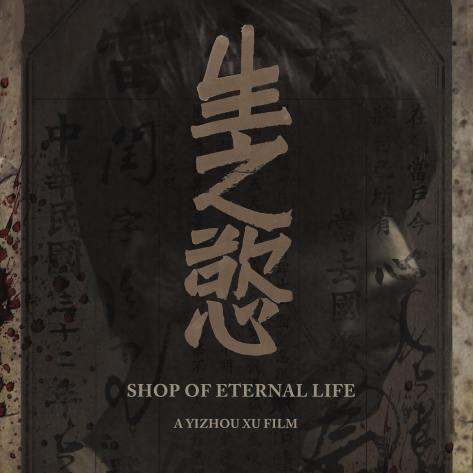
Shop of Eternal Life is the passion project of director/writer/producer Yizhou Xu. In the film, he uses an almost literal metaphor to show the dangers we humans can make in times of desperation. It’s an evergreen tale that applies to all peoples of this planet. It just so happens that Xu’s film takes place in two by gone eras of his homeland, 1920’s and 1950’s China. Not only is there an other-worldly occult thread in the film but the obstacle of transforming downtown Los Angeles into an almost hundred-year-old China. While giving great credit to his crew and cast, Xu admits that his secret weapon for this transformation appearing so convincingly on screen was Shop of Eternal Life’s cinematographer Simu Feng. The award-winning Yizhou Xu declares, ““Simu is the most professional cinematographer I have ever worked with. Simu is such a vital part of this project because he is the metronome of the production. The most time consuming part of any film production is the lighting and camera positioning. We had a lot of shots in the film and it was paramount to have a cinematographer with the confidence to finish those shots with the highest quality and to do so very quickly. Simu finished the task without wasting a single second; and his efficiency didn’t harm the result of the image at all. Simu knows how to take limitations and challenges and transfer them into creativity.” The filmmaker’s peers and public definitely agreed with the finished product as it was an official selection at: the 36th Hawaii International Film Festival, the 20th Los Angeles International Short Film Festival, the 10th Bali International Film Festival, and the 8th San Jose International Short Film Festival. The look which Feng bestowed upon Shop of Eternal Life belies the budgetary confines which Xu relates. A story which spans the struggles of its main character, his transformation, and the cautionary tale it communicates deserves a beautiful and elegant aesthetic; one which it richly possesses thanks to Simu Feng.

shop-of-eternal-life-screenshot-1

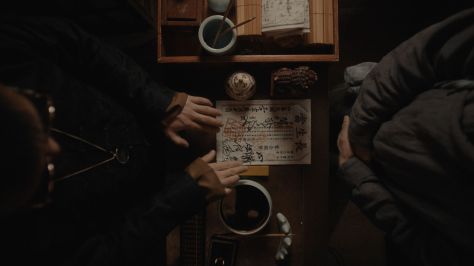
Shop of Eternal Life is a film full of fantasy and terror, relating the choices we sometimes make and the unexpected results they have on us as well as others. Even the best of intentions can result in malevolent outcomes for all involved parties. The film is the story of a poor man in 1920’s China who ventures to a pawnshop, hoping to sell his wedding ring to save his sick wife. The shop owner offers only a pittance…or a deal. Rather than money, the pawn shop owner suggests that the husband sell his heart for a great deal of money to him. The man feels he has no choice but to take the offer in hopes of saving his spouse’s life. Many years later, the husband returns to the shop to redeem his heart, but his time without a heart has transformed him into a monster. He discovers that his heart is no longer at the shop. Doomed to a heartless life (literally), he kills the pawnshop owner and assumes duties as its proprietor.

The storyline itself immediately conjures mental images of fright and fantasy infused characters and their surroundings. It was Simu’s task to make the images visible on screen to match the reality of China in the 20’ and 50’s as well as the mystic ideas presented by the subject matter. Feng relates, “The film’s visual dark tone is the key element for the story. We did this through lighting and camera work. I did thorough tech scouting with my long time gaffer Toshi Kizu and planned out the whole low key lighting scheme. I wanted the pawnshop owner character to be part of this darkness; I wanted him to feel inseparable from the shop itself. We hid several single tube kinoflos to give some small pools of light in the room and to add to the depth of the set. Camera movement was also very carefully planned out so the move was always motivated. We didn’t want the audience to feel the existence of the camera. Combined with the blocking of actors, we were able to create tension and a sense of the mystery at the same time. I’ve always felt that, by planning things out appropriately, you can help the audience forget about the technical aspects of a film and thereby lose themselves in the story…which is what we want as filmmakers and what the audience wants as well.” Yizhou Xu confirms, “Simu achieved a very strong visual style in Shop of Eternal Life; a mystery and a sense of darkness. I think this stylish look is the most important part of the film and it’s the first thing people talk about concerning this film. Because of the fascinating visual style, people have the patience to dig deeper on the subject and theme of the film. As a filmmaker, that helps me to tell the story.” Feng continues to explain the look of the film in commenting, “Because the film consists of two different time periods (the 1920’s and the 1950’s.), we wanted them to be really different, making sure the audience gets the idea that the poor man has changed into a monster. The production designer (Dara Zhao) did a great job building the set to be authentic to the time periods yet retaining our own dark and mysterious style. When we discussed the practical lights in the shop, we decided that for the 1920’s we would dress the shop with candle lanterns, and for the 1950s we went with tungsten bulbs. The practical lights are always important for me because all my lighting is motivated from these practical lights. The warm color given off by the lanterns, combined with the black pro-mist filter I put in front of the lenses, gave the 1920’s a softer and warmer tone. I shot the 1950’s with no filter and the tungsten bulbs flaring directly into the lens, making the look harsher and brighter. With more desaturation in color correction, the 1950’s looked pale and cold, fitting the change of the character.”

shop-of-eternal-life-3

Both the look of Shop of Eternal Life and the lesson of the film itself are entertaining and gripping. Yizhou Xu uses his film to communicate the idea that in our sacrificial attempts to help those we love; we risk the danger of turning into monsters. Making a deal with the devil may be very literal in this film but it has great relevance to many everyday choices. The film production itself conceals the challenges that the cast and crew overcame to create such a polished film. Simu Feng is thankful for the creative and unique approaches the production was forced to invent as he states, “Working on a small budget film is always difficult but it can be a truly fun experience if the filmmakers try to make a difference. Every filmmaker will face the situation in which they don’t have enough resources to achieve what they imagined and planned. I always believe certain limitations help yield better result by forcing creative people to come up with ‘poor man’ solutions. The luxury of a big budget does make a lot of things easier, but working on small-scale project helps me to keep the spirit of being flexible and the ability to adapt myself to changing circumstances.”


shop-of-eternal-life-4

shop-of-eternal-life-screenshot-poster

VON SCHWERIN: A MODERN INTERPRETATION OF ORWELL IN PEACEFORCE

Award-winning director David Gerson describes Beatrice von Schwerin professing, “Beatrice is the epitome of a doer. A producer who always gets the job done as effectively as possible, inventively, and with deep respect for the directors she works with. She grew up a member of the Swedish nobility, spending her youth hunting in the south of Sweden. I believe that hunting nature in her is what makes her such an excellent producer. She treats a film shoot like the hunt; a task to be cautiously, precisely, and effectively maneuvered.” Gerson has worked with von Schwerin on a number of productions such as: Automatic at Sea, All These Voices, Destiny’s Child, and others. Having worked closely with her he knows well that Beatrice can be seen leading the charge just as should would during a hunt. These days, von Schwerin is respected as a producer with many productions to her credit. It’s fitting that Gerson views her as a huntress as we revisit the first film she produced, Peaceforce, as the subject matter is a hunt…a hunt which is much more complex than it appears to be. Beatrice concedes that her forthrightness, determination, and loud speaking voice, are all products of her noble lineage and rearing; attributes that serve her well in leading a film production. More at ease facing challenges on set than relaxing in her family’s castle, this Swedish baroness prefers a life of creative pursuits in an industry that cares nothing about her heritage and yet appreciates every ounce of her talent and hard-work ethic. A dissection of her first production shows that the very template for her approach was a solid foundation which has served her and the films she enables to result in many achievements.

unknown

Beatrice worked in the Danish film industry for 9 years before producing Peaceforce. Denmark is one of the strongest countries when it comes to film production in Europe. Copenhagen has a solid film industry and is equipped to modern standards. In many ways it mirrors the productivity of Hollywood’s industry and community. Peaceforce was the first film on von Schwerin’s long list of producing credits. She confirms, “This is the first production where I realized that I really, REALLY wanted to be a producer. I knew that if I could get the cast and crew through all the challenges, then I could do anything. This film was the ‘AHA’ moment in my career, the one that made me love my job even more than I did previously.” Jonas Allen of Miso Films recognized her talents and placed her in the Producer role for the film. Peaceforce is loosely based on the George Orwell essay “Shooting an Elephant.” The film is set in the near future, in a world where capitalism has run its course. Daniel, a young Peaceforce officer, meets Jesper, a prominent local citizen. Jesper claims that an elephant is running amok in the city and killing people. Spurred on by his idealism and desire to do good, Daniel follows Jesper deep into the heart of a desolate city. Daniel believes he can make a difference by helping the wounded and dealing with the elephant. Not long into his mission, Daniel discovers that he’s in way over his head when he meets a little girl who is the sole survivor of the group that cared for the elephant. Daniel understands that he has been misled by Jesper. Jesper and his hungry entourage keeps breathing down Daniel’s neck. Fearing for his life, Daniel feels forced to make conflicting promises to Jesper and the girl. Soon Daniel finds himself confronted by the magnificent beast, a live elephant. Daniel desperately searches for a way out of this dilemma as he has no desire to kill the beautiful animal. The mob grows ever more impatient and hungry for blood. Daniel finally relents and shoots the beast, thereby betraying not only his own word, but also all that he believes in. It’s an epic and tragic tale. The components used to portray the action on-screen were grand as well. Peaceforce was a challenging shoot, with many different pieces that needed to match. Beyond the typical cast, crew, and locations logisitics, there were elephants, children, extras, & VFX to contend with on this production. Recognizing early on that she could lead with positivity to create momentum, Beatrice began with the animals. She recalls, “We spent two days shooting in a field outside of Copenhagen, close to a circus, where we rented an elephant for the shoot. One day was spent with the elephant and one day with the extras. We had three elephants on set with us and we used one of them. Elephants are flock animals and if you split them up, they are not happy. To contend with this, we had the two elephants not used in front of camera, close by so that they could be in contact with one another. Every now and then during the shoot, we’d have our star [elephant] head over to the others for some down time. It was a great and exciting day for both us and the elephants. I always try to have a positive attitude, no matter how challenging the day may be. I know that if I’m smiling and keeping positive, it trickles down to the cast and crew. It’s always important to show kindness and respect and I try to do that. I don’t separate my crew members from cast members. I really want everyone to feel equal, like one big happy family!” It’s a template that resulted in a happy and committed production family and a successful film as well. Peaceforce received a nomination at the Robert awards (Danish equivalent to Academy Awards) and garnered a Canal+ Award at the Clermont-Ferrand International Short Film Festival. Director Peter Gornstein couldn’t be happier as he notes, “Making Peaceforce with Beatrice was such a positive experience. I have known and worked with Beatrice for more than 8 years. We have won international awards together as well as developing several other projects. Beatrice is truly a one of a kind person and producer. Her positive energy and go getter mentality is something that spreads to everyone that she works with. Not only does she have a fantastic personality but her skills, and more importantly, her moral compass are beyond reproach. I’ve had to face some tough obstacles in the course of projects we’ve worked on together and no matter how hard or difficult the situation was; Beatrice would always guide me towards taking the high road. When I’ve wavered I have always been able to count on Beatrice to help me make not only the right choices for the projects, but also the moral choices.”

It isn’t always easy to keep that sunshine attitude. Persevering through the sometimes tedious portions of filmmaking are the obstacles that teach von Schwerin how to remain cool and collected. She describes, “Sometimes it’s not going over schedules or obtaining a piece of gear that is the challenge. Quite often it is just getting all the bricks in the puzzle to fall into place! We had so many moving parts on this film. It took what felt like (at the time) an army to get it made. The shoot was only two weeks, but the VFX was done in post and took almost 10 months to complete. When you are coordinating between VFX artist Ivo Horvat being in LA and the Director being in Copenhagen, you sometimes wonder where you are and what time it is.” These days, Beatrice von Schwerin knows exactly where she has been and she is considering heading to Hollywood as she fields offers to be a part of city that is the epicenter of film. One thing is for certain, Hollywood could use another producer who puts a smile on everyone’s face.

892a1911


BRIAN MANCINI PRODUCES A MEDITATION

There is no question that modern life is drastically different for some individuals. Modern technology now supports lifestyles in a way never before possible. There are inevitable events and occurrences though. This is the basis of the film A Meditation. This film is the story of  Michael, a middle-aged man recently unemployed from his job teaching film. Michael meets a young woman responding to his Craigslist ad selling a DVR. The two begin an intense and consuming affair that has Michael questioning the meaning of love, sex and happiness. Brian Mancini is a producer on this film starring Harold Perrineau (Romeo + Juliet, Lost, 28 Days Later) as Michael. The film presents the options for modern technology to be a benefit as well as a hindrance. Although we love our gadgets and the ways in which they connect us, we should not lose sight of the basic need for interacting with others as well as ourselves through introspection. We can connect physically but intimacy, as with true beauty, is much more than skin deep.

Brian’s reputation as an exemplary producer caused Joe Petricca (director/writer/producer and Executive Vice Dean of the American Film Institute Conservatory) and Maggie Biggar to seek out Mancini to work on A Meditation. Petricca states, “I was impressed by Brian’s dedication to the craft. Each thing that he brought to set made the film better. I’ve always found him to be an extremely innovative producer, with a great attitude towards the craft and the partners he works with.  Regardless of the budget, Brian’s work is always top quality. I admire the way that he can manage very large teams and simultaneously have the ability to multitask various high priorities. It’s an overwhelming situation to contend with and yet, a great producer like Brian seems to handle it with ease…which is exactly why I wanted him on A Meditation.”

The film stars Harold Perrineau and Samantha Colicchio in the leading roles and was shot entirely on one set. Mancini admits, “When shooting in one location, everything is dramatically easier. Just not having to completely unpack and pack up every day saves a great deal of time, which can be used to shoot. There are always challenges; for instance, the neighborhood might get cranky or someone might decide to blare rock music while we’re shooting an exterior. It’s easy enough to handle this by obtaining the permit and notifying the surrounding area ahead of time that the production is going to be at this location. That doesn’t negate all obstacles though.” Explaining the seemingly never ending role of a producer, Mancini comments, “The Producer’s job never ends. In post-production we are tirelessly carrying the project towards the finish line. From watching the edit and giving notes, scheduling turn over from the editing room to color correction or post-sound, accounting, credits, applying to festivals…the list goes on and on. There is a long calendar of deadlines that needs to be met and it’s very easy for projects to get stuck in post-production. Producers need to keep making sure everything is working to the schedule and if it isn’t, find a way to get it back on schedule.”

Brian’s spent his youth in Unionville (and later in Ontario, Canada) with many outdoor activities like: hiking, hunting, camping, etc. As with anyone, he understands that technology has become ubiquitous. He empathizes with the audience of the film, stating, “Technology is undoubtedly making a lot of things easier in everyday life but in another way, it’s taking a lot away. It’s become a safety for a lot of people, myself included. I feel lost and useless if I don’t know where my phone is. However, I think it’s important to find a balance and to get away from it at times. Every few months you can find me in the woods camping where I have no cell service and am just hiking up a mountain with a backpack of essentials. There is a stress technology puts on people to always be online and connected and it’s great to leave that in the city.” Though the internet (via Craigslist) the two main characters in A Meditation meet and connect in a very physical way but they are still forced to deal with their emotions in a traditional manner. A Meditation is an interesting study about where we draw the lines of interaction in modern life. Just as organisms evolve in their physicality, we are in an era in which social interaction is evolving. What makes Michael especially intriguing in this film is that his life is undergoing a transformation in terms of work and his romantic life. It’s one of the core messages of the film that enticed Mancini to come aboard. Brian confirms, “To think ‘Am I a good enough person?’, ‘Am I liked?’, ‘Can I be better?’, to realize one’s plan about what’s next in their life and to find what they want to achieve next…I think everyone has been there or is there. It’s rewarding to me to help present those ideas to the public. The thought that somewhere in a theater, there is someone who is encouraged by a film I helped to make…maybe something as seemingly small as keeping the day’s schedule on time insures that we stay on budget and therefore we can pay the salary of the best professionals out there…I love that feeling and want to keep doing it to the best of my potential.”

brian-mancini-photo-5

South African producer Elena Ioulianou works to better herself and her country

elena_9991
Elena Ioulianou is an internationally recognized producer

Elena Ioulianou is a South African producer who is proud of her heritage. After growing up in Johannesburg, Ioulianou has had success making films both in South Africa and internationally. However, her resume is full of projects that are designed to better her native country.

One of these projects includes the PSA Ruby’s Story. The film is shot as a point of view of a young girl’s perspective and experience of being taken through the trafficking ring. It was broadcast on numerous national television stations and used on talk shows such as GauTv to raise awareness about human trafficking in South Africa and the world as a whole. Ioulianou worked with the incredibly well-known Nigerian actor Fabian Lojede, who played the role of the Trafficker.

“It was always going to be difficult to encapsulate the horror of human trafficking that is happening in today’s world. Watching the performances made it feel uncomfortable and real. We hear many stories every day of horrifying events, yet sometimes we become desensitized,” said Ioulianou. “Our objective of Ruby’s Story was to make the audience feel uneasy and hopefully propel the viewer into helping or finding out more information on how they could potentially help.”

The film was created for Inhuman Trade and The National Freedom Network. Ioulianou had previously worked on a campaign for 1:Face Watch to tackle the issues of hunger and Aids in South Africa, and the transition seemed fitting.

“There is always going to be something special about using the resources you have to fight for a cause. Although we received tons of support I don’t think there will ever be enough support for a global cause like this,” she said. “Emotionally it took a toll in me after all the research I did my heart was in a million pieces. Our world can be a very dark place sometimes and I still really struggle with this.”

Some of the images are difficult to watch, but you can watch Ruby’s Story here.

Ioulianou was the head producer with Moviworld at the time. She used this position to also work on an iEC commercial. This campaign was for the Independent Electoral Commission with the purpose of encouraging the people of South Africa to vote in the upcoming municipal elections. The commercial was a series of vignettes showing off the beautiful landscape of the South African soil and, better yet, the people of South Africa.

“I have to say this was one of my favorite but most challenging commercials,” she said. “The production traveled all over the country visiting places we had never seen before and we met interesting individuals while learning about their lives in South Africa.”

Ioulianou worked alongside Neal Sundstrom, who directed the commercial. The two had worked together on previous commercials with Moviworld, including Ruby’s Story.

“Elena is quick to learn, extremely dynamic and very hard working,” said Sundstrom. “She is incredibly passionate about film and commercial work and is always very willing to take on new challenges and responsibilities. We at Moviworld are totally confident that Elena is valuable asset to the film and commercials industry not only in South Africa but abroad as well.  She is constantly thinking out the box. She is brilliant at not only the production side of business but in marketing, acquisitions and development of films.”

The IEC Cool Campaign was broadcast on national television for a period of six months, and Ioulianou’s work truly made a difference in the elections. Ioulianou has had a lot of success, and worked on award-winning pieces, including a film nominated for an Academy Award. But despite everything she has achieved, she doesn’t forget where she comes from.

“This commercial was entirely street-cast which made for an exceptional experience as we didn’t know if our cast would have a strong or any ‘on camera’ presence at all,” she said. “This spot made me more patriotic to be a South African than ever before.”

MASTER FILM EDITOR TAKASHI UCHIDA’S LIGHT TOUCH STRIKES COMEDY GOLD

Whether film editor Takashi Uchida is assigned a drama, fantasy or action film, the Japanese born craftsman always delivers a crisp, distinctive cut which enhances the impact of any story. Equally adept at complex narrative dramas—he worked with ten different directors on Actors Anonymous—or the walloping animated adventure of the Netflix Kong: King of the Apes series, Takashi’s technical facility and innate grasp of any subject’s subtly and nuance is uniformly excellent.

Takashi’s instinct for what a story requires and the impact even a single frame of film can have to achieve a specific dramatic goal is masterly, and these formidable skills were recently brought to bear on a new type of subject for the editor, the fizzy tween comedy Jessica Darling’s IT LIST, an Amazon online release starring Disney TV actress and YouTube phenomenon Chloe East.

Adapted from the sixth of Megan McCafferty’s best-selling teen novel series, the middle school-set prequel presented a unique new setting for Takashi. The titular ‘It List” passed down by a sibling to her little sister when  she enters junior high, touts “the 3 Ps: popular, pretty, perfect” as Jessica’s requisite goals for survival. Intrigued at the prospect of exploring new thematic territory, Takashi didn’t hesitate.

“I was introduced, by a mutual friend, to editor Daniel Hanna, who was a good friend of the director, Ali Scher, and I joined the team as co-editor,” Takashi said. “After I started the project, a couple of Japanese friends said they had read the novel as teens and told me how the books actually became an important part of their young lives. So, I was really proud to be working on a project that I hoped would stay in the audience’s heart like that, as a bright spot in their own youth.”

Takashi doesn’t just inhabit a story, he carefully manipulates the action in a way that elevates each sequence. “In order to express the youth and freshness of the story, we were using a very playful editing style, making creative transitions,” he said. “But at the same time, however comedic it is, there’s still dramatic arc in each character and the editor’s job is to reconcile these two elements.”

Takashi’s deft handling of the story’s content paid off. “Takashi is a great editor because he is dedicated and detail oriented.” Scher said. “He’s also a fantastic storyteller. He can see where the story in a scene is and flush it out in the cut in a way I might not have thought of. That’s what a great editor does—brings the director a new perspective on something they’ve looked at a gazillion times. It’s always very exciting to get to see your film in a new light, the great editors understand this and push the envelope with their first cuts. Then it’s all about collaboration and marrying the two visions. Takashi excels at this because he doesn’t bring his ego to the table. The edit should never be a fight, but rather a dance, where the two partners each bring a lot of passion and a lot of give. Takashi is a great dance partner.”

Together with Hanna, the emotional content was carefully addressed. “In this film, we are trying to capture Jessica’s nervousness and struggle in this new place,” Takashi said. “It is her journey to find out who she is and also what it means to stay true to yourself. As an editor, crafting a narrative to express her emotion was the most important thing and our goal was, always, to build character and express their emotion.”

“There were a lot of challenges,” Takashi said. “I learned so much from editing this film. I was really lucky to work with such a talented director, Ali, and Dan, a great co-editor. Also, a lot of times the editor really has to work on shaping up the acting in post-production, but I didn’t have to worry about it at all—these kids were so talented. I am really proud of it and I believe this film will remain in the audience’s heart along with many other classic teen movies.”

The mutual pleasure which radiated throughout the IT LIST team imbued the finished product with great warmth, charm and appeal, and connected them on both a personal and professional level. “Takashi was such a joy to work with,” Scher said. “He was innovative and hard working. It takes a lot of determination and perseverance to be a great editor and Takashi worked a scene until it truly sang. I personally could not be more pleased with the work that Takashi did and the way the film turned out. I would definitely work with him again, no question.”