Category Archives: International Creative Talents

VON SCHWERIN: A MODERN INTERPRETATION OF ORWELL IN PEACEFORCE

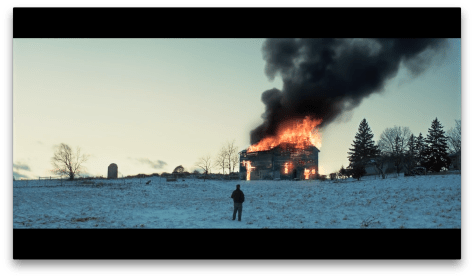
Award-winning director David Gerson describes Beatrice von Schwerin professing, “Beatrice is the epitome of a doer. A producer who always gets the job done as effectively as possible, inventively, and with deep respect for the directors she works with. She grew up a member of the Swedish nobility, spending her youth hunting in the south of Sweden. I believe that hunting nature in her is what makes her such an excellent producer. She treats a film shoot like the hunt; a task to be cautiously, precisely, and effectively maneuvered.” Gerson has worked with von Schwerin on a number of productions such as: Automatic at Sea, All These Voices, Destiny’s Child, and others. Having worked closely with her he knows well that Beatrice can be seen leading the charge just as should would during a hunt. These days, von Schwerin is respected as a producer with many productions to her credit. It’s fitting that Gerson views her as a huntress as we revisit the first film she produced, Peaceforce, as the subject matter is a hunt…a hunt which is much more complex than it appears to be. Beatrice concedes that her forthrightness, determination, and loud speaking voice, are all products of her noble lineage and rearing; attributes that serve her well in leading a film production. More at ease facing challenges on set than relaxing in her family’s castle, this Swedish baroness prefers a life of creative pursuits in an industry that cares nothing about her heritage and yet appreciates every ounce of her talent and hard-work ethic. A dissection of her first production shows that the very template for her approach was a solid foundation which has served her and the films she enables to result in many achievements.

unknown

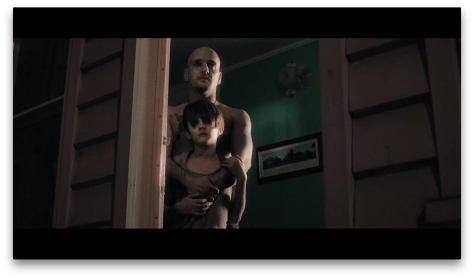
Beatrice worked in the Danish film industry for 9 years before producing Peaceforce. Denmark is one of the strongest countries when it comes to film production in Europe. Copenhagen has a solid film industry and is equipped to modern standards. In many ways it mirrors the productivity of Hollywood’s industry and community. Peaceforce was the first film on von Schwerin’s long list of producing credits. She confirms, “This is the first production where I realized that I really, REALLY wanted to be a producer. I knew that if I could get the cast and crew through all the challenges, then I could do anything. This film was the ‘AHA’ moment in my career, the one that made me love my job even more than I did previously.” Jonas Allen of Miso Films recognized her talents and placed her in the Producer role for the film. Peaceforce is loosely based on the George Orwell essay “Shooting an Elephant.” The film is set in the near future, in a world where capitalism has run its course. Daniel, a young Peaceforce officer, meets Jesper, a prominent local citizen. Jesper claims that an elephant is running amok in the city and killing people. Spurred on by his idealism and desire to do good, Daniel follows Jesper deep into the heart of a desolate city. Daniel believes he can make a difference by helping the wounded and dealing with the elephant. Not long into his mission, Daniel discovers that he’s in way over his head when he meets a little girl who is the sole survivor of the group that cared for the elephant. Daniel understands that he has been misled by Jesper. Jesper and his hungry entourage keeps breathing down Daniel’s neck. Fearing for his life, Daniel feels forced to make conflicting promises to Jesper and the girl. Soon Daniel finds himself confronted by the magnificent beast, a live elephant. Daniel desperately searches for a way out of this dilemma as he has no desire to kill the beautiful animal. The mob grows ever more impatient and hungry for blood. Daniel finally relents and shoots the beast, thereby betraying not only his own word, but also all that he believes in. It’s an epic and tragic tale. The components used to portray the action on-screen were grand as well. Peaceforce was a challenging shoot, with many different pieces that needed to match. Beyond the typical cast, crew, and locations logisitics, there were elephants, children, extras, & VFX to contend with on this production. Recognizing early on that she could lead with positivity to create momentum, Beatrice began with the animals. She recalls, “We spent two days shooting in a field outside of Copenhagen, close to a circus, where we rented an elephant for the shoot. One day was spent with the elephant and one day with the extras. We had three elephants on set with us and we used one of them. Elephants are flock animals and if you split them up, they are not happy. To contend with this, we had the two elephants not used in front of camera, close by so that they could be in contact with one another. Every now and then during the shoot, we’d have our star [elephant] head over to the others for some down time. It was a great and exciting day for both us and the elephants. I always try to have a positive attitude, no matter how challenging the day may be. I know that if I’m smiling and keeping positive, it trickles down to the cast and crew. It’s always important to show kindness and respect and I try to do that. I don’t separate my crew members from cast members. I really want everyone to feel equal, like one big happy family!” It’s a template that resulted in a happy and committed production family and a successful film as well. Peaceforce received a nomination at the Robert awards (Danish equivalent to Academy Awards) and garnered a Canal+ Award at the Clermont-Ferrand International Short Film Festival. Director Peter Gornstein couldn’t be happier as he notes, “Making Peaceforce with Beatrice was such a positive experience. I have known and worked with Beatrice for more than 8 years. We have won international awards together as well as developing several other projects. Beatrice is truly a one of a kind person and producer. Her positive energy and go getter mentality is something that spreads to everyone that she works with. Not only does she have a fantastic personality but her skills, and more importantly, her moral compass are beyond reproach. I’ve had to face some tough obstacles in the course of projects we’ve worked on together and no matter how hard or difficult the situation was; Beatrice would always guide me towards taking the high road. When I’ve wavered I have always been able to count on Beatrice to help me make not only the right choices for the projects, but also the moral choices.”

It isn’t always easy to keep that sunshine attitude. Persevering through the sometimes tedious portions of filmmaking are the obstacles that teach von Schwerin how to remain cool and collected. She describes, “Sometimes it’s not going over schedules or obtaining a piece of gear that is the challenge. Quite often it is just getting all the bricks in the puzzle to fall into place! We had so many moving parts on this film. It took what felt like (at the time) an army to get it made. The shoot was only two weeks, but the VFX was done in post and took almost 10 months to complete. When you are coordinating between VFX artist Ivo Horvat being in LA and the Director being in Copenhagen, you sometimes wonder where you are and what time it is.” These days, Beatrice von Schwerin knows exactly where she has been and she is considering heading to Hollywood as she fields offers to be a part of city that is the epicenter of film. One thing is for certain, Hollywood could use another producer who puts a smile on everyone’s face.
892a1911


A CANADIAN’S PERSPECTIVE ON “AMERIKA”

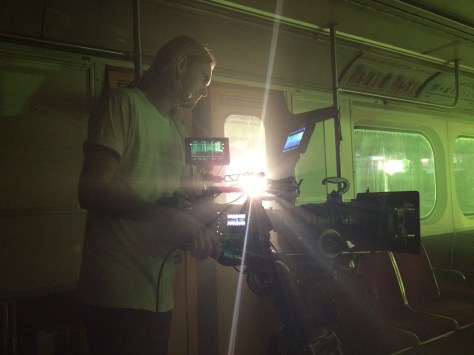
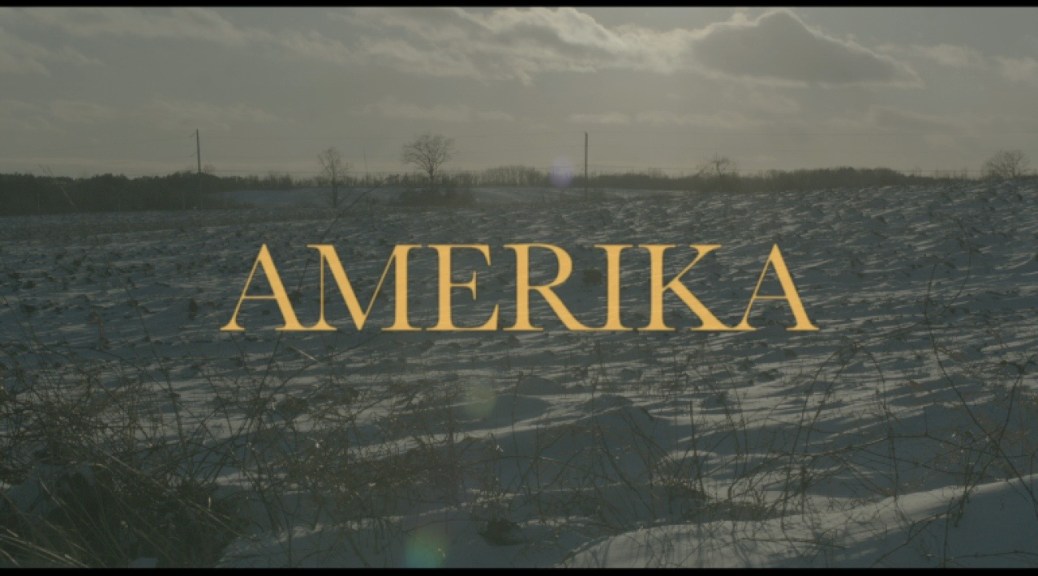
There’s no escaping the discussion of current events in America right now. That should come as a surprise to no one. With an election that has taken most of the past two years and a complete switch in the majority political party, it seems as if the entire planet is watching the US. You can’t turn on a news programs without getting the network’s opinion, so why should music be any different? Of course, musicians have long used their creativity to present their ideas, there’s nothing new to that. You can go back more than two hundred years to the protest song “Yankee Doodle” and see that even the founding fathers had musicians weighing in with their take on current events. The more overt and modern equivalent of this is the music video. “Amerika” is the song and video by Canadian band Wintersleep which presents their perspective of the modern US events and temperament. Just as with “Yankee Doodle”, “Amerika” is a protest song. The first person director Scott Cudmore thought of for the cinematographer position on “Amerika” was Peter Hadfield. This duo has worked on a number of high profile videos (including Vimeo Staff Pick “It’s Okay, I Promise” by Harrison x/Clairmont the Second and the sci-fi “Needs” video from Adonis Adonis) and both were eager to repeat the experience. Katy Maravala (producer for “Amerika”) was also keen to repeat her experience working with Peter as well. Maravala, whose client list includes; Drake, Rihanna, Arkells, and Halsey declares, “Peter has always been one of my first choices as director of photography. I feel confident in saying that Peter is one of the most genuine, humble, and talented humans I have ever met. As proof of his incredible talent, “Americka” was nominated for a UKMVA [United Kingdom Music Video Award]. The breathtaking images in this video were not easily earned. During the video we encountered some challenging locations; frozen waterfalls, old houses, a two-hour hike in the woods, and desolate buildings all in the middle of a Canadian winter. Peter remained positive, upbeat and an absolute joy to work with even during this tempestuous time.”

wa_screen-shot-2016-07-01-at-6-38-15-pm

While the relationship vignettes are compelling, the vistas in “Amerika” are grand and give the video a cinematic feeling. “Amerika” was shot in Hamilton, Ontario; a steel town on the coast of Lake Ontario that has come into hard times. The people of Ontario often refer to Hamilton as “The Hammer”. While the town possesses a great deal of beauty, it’s easy to see there many of its residents are surviving day to day. The opening shot was taken on the coldest day of the year with a temperature of -40 degrees F with wind chill. At times, Peter couldn’t operate the camera because the wind made his eyes water and the cold would freeze the tears. Hand warmers were taped to the camera batteries to keep them functioning. It was less than ideal circumstances. The crew shot for an uncommon five days in order to get shots at precisely the correct time of day for the desired effects. Their guerilla approach called for a lot of hiking through snow to reach some of the isolated locations. Again, less than ideal in subzero temperatures. It’s hard to find elite professionals whom are willing to endure these scenarios but Hadfield instills, “I am extremely passionate about creating socio political messages in film making. That’s what I’m here for. When I see it in other videos it makes me so happy and excited. When there’s anyone that’s willing to go out on a limb and say something truthful about the way our society is functioning, I couldn’t be more excited. Mainstream artists make art videos too. Kanye West has amazing music videos. There were parts of Beyoncé’s “Lemonade” that were beautiful and evocative. Radiohead just put out an incredible video shot by Paul Thomas Anderson and Robert Elswit that I definitely consider art. If I could make something as potent as that “Daydreaming” video, I’d be very pleased. The alternative artists like Wintersleep who put out videos that have less glamorization in them have the freedom to strive for more substance. They’re freer to say something political or polarizing because there isn’t as much money involved or pressure from the record companies and distributors. The music industry has fewer record companies directly involved, allowing artists to self-release. I think we’ll start seeing more videos with greater substance. We’ll start seeing more videos like Kanye West’s “Famous”. But there will always be artists on the fringe, making meaningful work and encouraging the next generation of people to develop their talent. The hope is that they use this to make a positive impact on the world. This is the agreement among all creative people; we are to use our talents to improve the lives of people and the world itself.”

wa_screen-shot-2016-07-01-at-6-39-10-pm

While this video may seem to be something of a mirror to hold up to the US, Hadfield professes his fondness for the artists and potential of the people found in the spirit of America. He recognizes that the film world finds its epicenter in the US. Peter comments, “There are great music videos and incredibly talented artists coming out of Canada, but most talented people here end up going to America and succeeding. There are amazing opportunities there, you can’t deny it. I think being on a set in Hollywood would be an amazing feeling. I think the greatest joy is being on set, with a camera on my shoulder. There’s nothing more satisfying than getting to the right location at the right time and capturing something special. It’s extremely satisfying and inspiring, and leaves me wanting more and more. Being a cinematographer takes a lot of self-discipline; staying focused and working towards an unattainable goal. That unattainable goal is being a great cinematographer. The challenge is getting than next great shot. I’ve got in insatiable appetite for capturing images, and as my taste and skill grow, I’ll always be reaching for the next shot that means something.” Striving for greatness, isn’t that what we all want for America?

img_6281


Director of photography Mariano De Luca captures heart of the people in Argentina’s World Cup video

When you love what you do, every day is easy. But when you not only love what you do, but also get to combine that with your other passions, every day is a dream. Mariano De Luca knows this well. Growing up in Argentina, he was always a fan of soccer, just like the entire nation. Now, he has a successful career as a director of photography working on films, television programs, and commercials. When he heard about a project that would allow him to explore Argentina’s love of soccer, he jumped at the opportunity.

De Luca was the director of photography on the extremely successful Gillette “People’s Video” for the FIFA World Cup in 2014. The campaign featured two videos. The first mainly focused on what the people and fans wanted to say to the players of Argentina’s National Soccer Team before they went to the World Cup. It has been viewed more than 750,000 times on YouTube.

“We know that the campaign was going to be big, but nobody know that it was going to be THAT big,” said De Luca. “It was a one-minute piece that was full of energy from the fans around the country and they wanted to cheer the players up.”

De Luca and the crew went all over Argentina to shoot the segment, in iconic places in each of the cities. They travelled to Buenos Aires, Mar del Plata, Cordoba and Mendoza city. Going to sites like “Puente del Inca” and “Potrerillos” and also soccer stadiums, like the “Estadio Jose Maria Minella” of Mar del Plata.

“Being a Soccer fan, and having the possibility to enter every soccer stadium that we did was incredible, and travelling around the country and shooting in places you only got to know if you are shooting was amazing,” said De Luca. “When you are shooting you get to go to places that normally people are not allow to go, and that is one of the greatest thing of being a Director of Photography.”

They used a video booth with a camera inside and a podium where people could walk in and leave a video message, but De Luca also came up with another approach to shooting to make fans truly feel connected to the players.

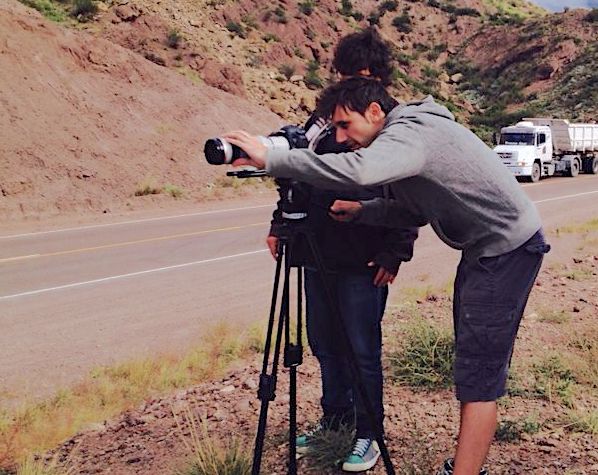
“I decided to use a small camera and lenses, with a lightweight shoulder rig, that allowed me to move freely and not have a big weight in my shoulder for long times,” described De Luca. “I told the people that we interviewed to grab the camera, as if it was a cell phone, in a selfie-kind of shooting. It was a nice resource to get away of the typical interview form.”

Capturing the fans feelings proved to be successful. The second segment of the campaign involved showing the players the videos and filming their reactions. The moving video received over 3 million views on YouTube.

“Sincerely, I would never have thought that the national team was going to be so touched when they saw the video,” said De Luca. “Seeing the campaign on TV just before the World Cup, and then seeing how the players watched it was an amazing feeling.”

The original approach De Luca took of filming went along well with the director Tomas Tchechenitsky. Tchechenitsky, who has previously worked on campaigns for VW, DirectTV, Bayer, and Multicanal, described this particular project, and working alongside De Luca, as incredible.

We went to places that everybody wants to be and the captured those moments of joy, tears and excitement,” said Tchechenitsky. “I met Mariano a long time ago. We got along pretty fast, we understood each other quickly. Mariano took the challenge of shooting for more than ten hours a day handheld, and did that flawlessly, walking and going around with the camera on his shoulder like no one else. His decisions on framing and shot designing, alongside his fast pace working, made him the right guy for this job. His approach to this campaign was perfect.”

Having worked together in the past, De Luca finds Tchechenitsky to be extremely talented, and describes the crew as being great people.

“It was a project where we got to be a pretty packed group. We went everywhere together, got breakfast together, lunch, dinner, etc. and besides that, worked together,” said De Luca. “When you are travelling to shoot you have that kind of bonding, and I love it.”

The campaign led to a national trending hashtag on Twitter, and brought the country together for their excitement for the World Cup. However, nothing was more infectious to De Luca than the passion felt from not only himself, but also the crew and the interviewees.

“The way people feel about soccer in Argentina is so special that everyone behind the camera were static after each interview with the fans, including me,” he concluded. “We live the soccer in Argentina like nowhere else!”

HEARING LOVE IN A “THUNDERSTORM” WITH XIAO’OU OLIVIA ZHANG

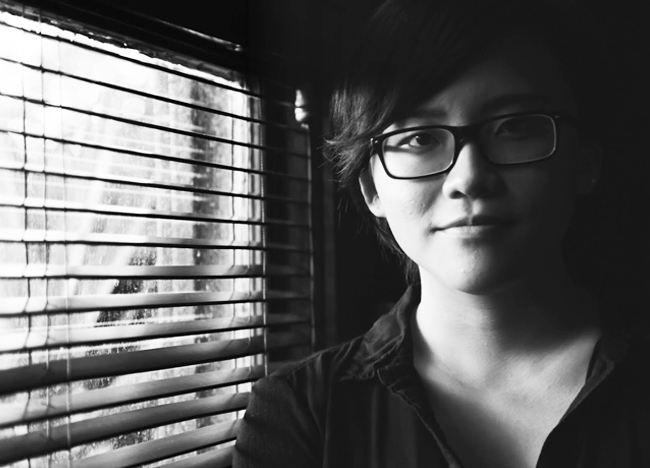
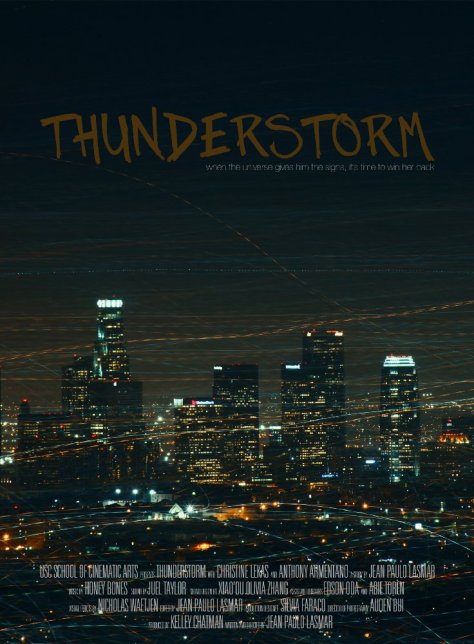
“There’s poetry in everything. Even in traffic.” It’s statements like this that led Jean Paulo Lasmar, writer/director of Thunderstorm to seek out Xiao’ou Olivia Zhang to supply the sound for this film. Zhang is a respected sound designer who has garnered acclaim in the film industry for her unique and creative approaches in the industry. Lasmar declares, “Olivia is a very clever, sensitive, and professional filmmaker and storyteller. She has worked on the film on set and in post. She knows how every aspect of filmmaking works and how they depend on each other. These skills give her a very mature and solid understand of story, emotion, and character, as well as production limitations. Due to this knowledge and proficiency, she was able to add different layers in Thunderstorm, through sound design and mixing, taking what we initially had and making it work by adding a personality to it, ultimately adding other layers to the story. Olivia was quickly persuaded to work on the film by Jean’s discussion of his interest in getting very creative with their approach to the cacophony that is downtown Los Angeles traffic and its personality in the film. For a sound designer like Zhang who finds her greatest excitement in the freedom that independent films afford, this easily became a production she wanted to be a part of creating. Olivia confirms, “He [Lasmar] came to me and said he wanted me to use sound to separate them [the two lead characters] and then to unite them together through these subjective moments. I couldn’t pass on the film because the story is so real and there’s so much I can do with sound to enhance the emotions.”

thunderstorm-poster

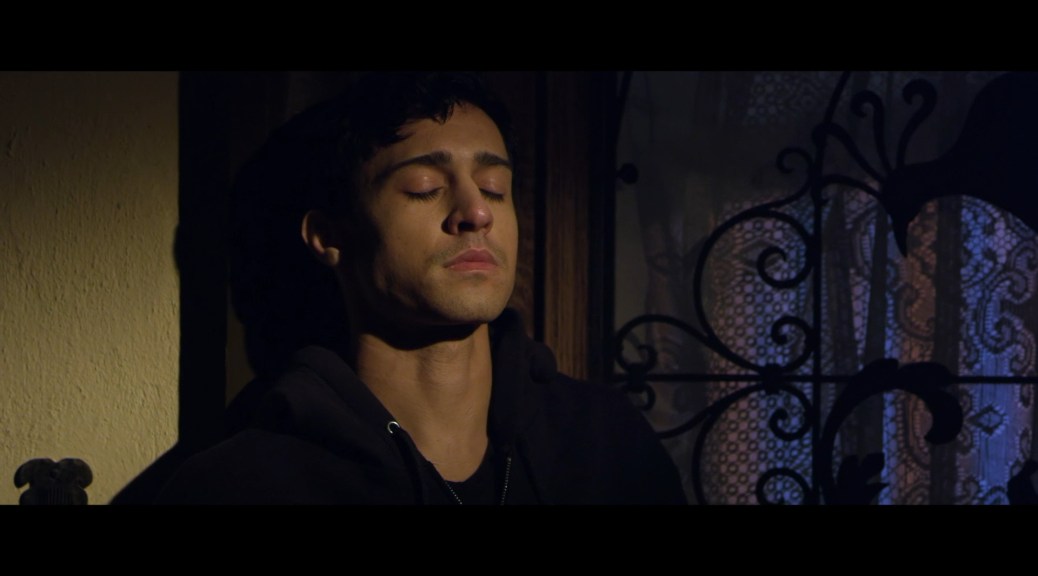
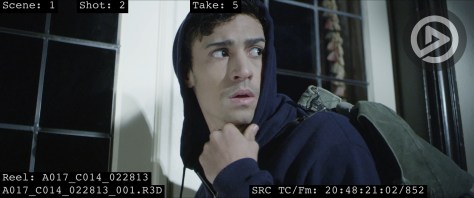
Thunderstorm is the story of Bella and Troy. Despite all the magic around their love story, they are no longer together. Broken hearted, Troy moved to LA to forget about Bella. Six months later, she arrives in town. One night when the universe gives him the signs, he tries to win her back.  On a rooftop in downtown LA, during the first snowfall of the year, amidst manic traffic, the two deal with their emotions and differing perspectives of each other. While there is resolution to the film’s plot, what impacts the viewer is the way in which these two different people can perceive the exact same circumstances. This was the crux of Zhang’s work in Thunderstorm; to give the audience the sense of viewing the character’s emotions in a subtle way. Olivia reveals, “Sound design in drama gives a lot of freedom to craft emotions. I pick moments that are subjective and try to mimic the way our brain neutralizes our environment. When you are close to someone or want to be close with someone, your mind focuses on the sound of their clothes rustling instead of the traffic because it is the sound that this person makes. When you really want someone to stop talking and leave you alone, you hear more of the background sound while the foreground sound that’s the voice of the person becomes the irrelevant background noise. So balancing the loudness of each sound and choosing the sounds the character would hear the most give energy and feeling to these subjective moments. At the beginning, when Troy and Bella are on the roof, she really wants to leave. Viewing things from her perspective, you hear lots of traffic and noise because her focus is not there. Troy, on the hand, wants to stay and remember this last moment with her, so he hears the night wind blowing on the roof while the traffic is more of a distant wash. At the end of the film, when they both reach closure, the way they hear the world becomes similar. The traffic become less irritating for her and more realistic for him. Of course, these are all done in a very subtle way, sound design in this film is mainly to build the mood.”

Zhang often thinks of her work as relating to other art forms. Analogies are a way for her to inspire the creative approaches she is known for in the industry. She used this in her approach to the sound of traffic as she explains, “A bus in traffic always stands out because it has a distinguished squeaking sound of a higher frequency than general engine sounds. In sound design, when we put a bus in the distance on top of a traffic wash, it brings more life and energy to it. I think of it as music. It’s like a piano. The bus and occasional horn honks are like the melody of the right hand, and the traffic wash would be the left hand chords that support and carry on the life of the song.”

To access inspiration, Zhang keeps a journal in which she makes note of her life experiences, allowing her to access “triggers” that she can refer to resuscitate the emotional states she needs to impart. It’s something that goes back to her earliest memories of film and sound. Olivia recalls, “When I was 12, during summer break, I was bored and I started to go through my parents’ video collections. On one cover I saw a short-haired lady, dressed in red and smiling at me against a green background. I put it in the VCD player and immediately heard this beautiful accordion music playing on the menu page. I have played accordion 2 hours a day since I was 5. The sound of that instrument is like a brother to me. And that was the first time I heard an accordion in film or any kind of media. I felt electricity in my body that was followed by a great sense of comfort and happiness. It was a French film called Amélie by Jean-Pierre Jeunet. The character Amélie does all these strange quirky things in a world full of color. I was so mesmerized and surprised that films can tell stories about people’s current life, and the current life is just as troubled and beautiful as it was in the past. Amélie carved the word “film” permanently in my heart. Nowadays when I think of film, I always see her and hear her faintly in the distance.” The poetry that Xiao’ou Olivia Zhang finds in common things like traffic sounds is obviously a product of the poetry that resides in her own heart.


HUGO SHIH BRINGS “A GIFT” OF COLOR

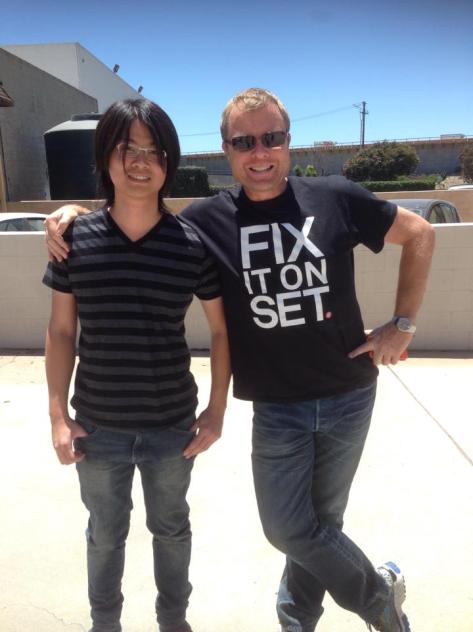
There is a myriad of roles involved in film production. Each of these play an important role in enabling the story to be told with the vision that the writer and director share. Hundreds of years ago, thespians performed the works of playwrights, before that…orators weaved tales over the communal fire; both of these relied on the imagination of the audience to conjure up mental images which were hopefully as grand as the teller intended. Modern films have grown to such a high level of production that they can manifest creatures never before imagined in such a way that they seem as real as the people and surroundings among us. One of the most difficult things to communicate to an audience is the emotional intent that motivates a specific character. While an actor’s performance, camera angles, music, and other factors bear the brunt of this transference, one of the least obvious factors is coloring. As the title states, a colorist allows the Director to shade the emotions of the characters by shading the action on screen. As film audiences have become more astute and aware of the use of a colorist’s work in film, these professionals have become increasingly clever and decreasingly obvious in their application. Colorist Hugo Shih is a highly respected and valued colorist in today’s film industry. A conversation with him reveals the fine points of what a modern colorist does to help shape a film’s emotional intent as well as how it is achieved through the use of color. What might seem to be superficial to the uninformed movie goer, has a profound impact on the subconscious and heartfelt emotive catharsis which an audience experiences.

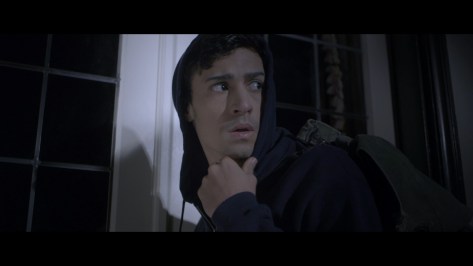
The 2016 film A Gift is a redemptive drama. It is the story of Jack, a young thief who breaks into the home of Margaret. Margaret is a blind elderly woman who mistakes Jack for her son. Although Margaret comes to realize that Jack is not her son, she still covers for him, protecting him from being discovered when police and neighbors come looking for Jack. The young thief comes to realize the error of his ways and is moved by Margaret’s gift of understanding, forgiveness, and non-judgement. A story such as this contains many intense emotions; fear, desperation, gratitude, and others. With such a small cast (consisting of Kaiso Hill as Jack and Sally Hogarty as Margaret) the actors are required to portray a diverse emotional palette. Hugo’s job as the colorist for A Gift meant that he needed to assist the character’s in hitting the “bullseye” which the film’s director intended. Yiqong Li is the director of A Gift (in addition to being one of the writers of this film). Li approached Hugo due to her familiarity with his work on many films. Li remarks, “Hugo has a reputation for being able to make just about anything happen for a director. Even if I didn’t plan on making use of all his abilities, it was nice to have in case I needed them…which it turns out I did. He did an amazing job on the color. Due to scheduling, there was one establishing shot that we just couldn’t get. Hugo worked his magic and literally created the shot we needed when it didn’t exist; I thought it was impossible to do it but he made it happen. We would never have been able to achieve this without the expertise of a master like Hugo.” Considering this all important shot, Shih explains, “We usually cut an establishing shot at the beginning to introduce the environment. A Gift started at night as the main character broke into the house. We knew that we should be looking for a night shot of the house. However, the production couldn’t get the shot at night, so they shot it during the day. It was the only establishing shot I could use. Normally, the editor would say ‘Let’s go buy some stock footage.’ In this case, I knew that ‘Day to Night’ was something I could create for the film. I said to director that I could make it work and there was no need to worry. To achieve this, I desaturated the shot and lowered the highlight, but brought up a little bit of gamma to make sure the details were all there. Following this, I did some secondary to pull out the sky and other details. In the end, I made a light at the front door because I knew that there was a light in the next shot. After I finished the color and cut into the timeline; when I showed it to the director, she was surprised and remarked that she had no idea this would even be possible. It’s a feeling of great achievement when you hear a director say this about your work.”

agift_before

agift_after

One of the unique parts about Shih’s work on A Gift is the fact that the film’s director asked him to serve as both a colorist and an editor on the film. Director Yiqiong Li had been working with major Chinese production companies and TV stations. Being involved in her film meant that Hugo would work with highly talented professionals as well as being a part of productions that would reach a massive viewing audience.  Hugo recalls, “She came to me and asked if I could do editing and color grading together. After I read the script and talked with her, I decided to take these two roles in post-production. There are some benefits of being editor and colorist at the same time. I always see the color as my creative tool for editing. It’s like assembling the puzzle pieces to the story while rebuilding the lighting. To illustrate how these roles worked in tandem to the benefit of A Gift, consider the following. In the film, there is a very long shot of Jack following Margaret to the kitchen. Usually it would be hard for an editor to keep this kind of shot because their job is to keep the story intense. However, Hugo was thinking ahead and was able to retain this shot by key framing the lighting when the main actor changed his location; using the key frame tool to adjust the lighting in the same way the aperture is adjusted on a camera. This can invisibly add the tension without the audience’s knowledge that it was made in post-production.

  A Gift has been highly recognized in 2016 with win’s for best film at: Hollywood Independent Moving Picture Film Festival and the 2016 StoneFair International Film Festival, as well as being an Official Selection at: the Berlin International Cinefest, the Roma Cinema Doc, the Los Angeles Independent Film Festival Awards, and the California Women’s Film Festival. As a member of the cast and crew of A Gift, Hugo Shih and his exemplary work are proof that a film about the change possible in each of us can move many people.

kuanyushih_wseniorcoloristwarreneagle

3D graphic artist Ohenewa Anno takes illustrations to next level

ohenewa-spooky
What’s That Spooky Sound? cover art.

Everyone has a memorable childhood book that stays with them well beyond their early years. These books held stories and characters that came to life through the words of the writer, the voices of the loved ones who would read them aloud, and, of course, the illustrations carefully crafted by the artists. Illustrators can lead to a story continuing to be engaging and memorable at any age. Ohenewa Anno is one such illustrator who created the captivating visuals for the recently published What’s That Spooky Sound, a rhyming Halloween story for children written by Jim Horsman.

What’s That Spooky Sound follows three children as they go trick-or-treating through their neighborhood. As a graduate from Ringling College of Art and Design with a Bachelor of Fine Arts in Computer Animation, Anno brings a unique look to the story through the use of 3D modelling. Jim Horsman, the author, chose to work with Anno after seeing her extensive portfolio of digital work.

“Ohenewa’s illustrations captivated me immediately,” Horsman said. “I found her 3D imagery to be a perfect fit for my project. Her creativity and talent was crucial in giving the book life and image.”

Anno was the illustrator for the entirety of the book. She designed the three main characters of the book based on the character descriptions and an understanding of the aesthetic Horsman was trying to acheive: a balance between a spooky Halloween story and a playful children’s book. This balancing act was artfully handled by Anno.

“It was very important to research different moods for both Halloween and children’s books to develop the overall aesthetic,” Anno said. “Most children’s books are very bright, but I wanted to experiment with keeping most elements besides the children themselves very dark.”

The design of the main characters, kept bright and relatable, stand out with their friendly faces and remain relatable to the target audience of children.

“The word most often used to describe Ohenewa’s illustrations is ‘adorable’,” Horsman commented, speaking of the design of the exceedingly adorable main characters of What’s That Spooky Sound.

The moody backgrounds and environments portrayed in What’s That Spooky Sound were fully developed by Anno’s talents with 3D modelling, texturing and lighting techniques. She also made the creative choice to include elements of 2D digital painting to soften the 3D aspects and integrate the story more effectively with the pages of a book.

Anno has mastered the use of multiple programs that she uses in her projects. For the illustrations in What’s That Spooky Sound, she used Autodesk Maya, Pixar’s Renderman, Adobe Photoshop and Adobe InDesign. These programs were used to set up controllers for the eye movement of the characters, creating a skeleton rig for each character and using intricate tools from each program to bring depth and life to the final image. This blending of her artistic and technological skills across these programs lead to high quality still images that moved the story forward.

Supporting the storyline is a crucial part of storybook illustration. Having strong illustrative storytelling alongside a well-crafted use of language by the author will lead to a successful story. What’s That Spooky Sound has received only positive reviews on Amazon, where it is currently available for purchase. Horsman has noted that the book’s success is due to a combination of the writing and the illustrations.

“We have received numerous positive responses to the book, with equal kudos for the story line and the illustrations,” Horsman said.

The book’s success has prompted Horsman to look for further ways to expand on the adventures of the three main characters. As he moves forward with these goals, he stated that he would definitely include his illustrative partner Anno.

“Through the book development process, Ohenewa was extremely professional and responsive.  So much so that I am pursuing growth for this project and others,” Horsman enthused. “Indeed, I am preparing to pitch this project to national retailers as well as production companies for potential movie and TV rights.  The potential for future development of the three characters is large. Ohenewa’s role in future development is crucial.”

For Anno’s part, her professional career as an illustrator is already taking off with projects spanning different applications for her impressive 3D artistry. She was the 3D designer, website designer, and graphic designer for a leather saddlery company based in Switzerland called Sattleria. She is also engaged in the creative design work as a 3D character modeler bringing even more characters to life for GenZed, an animated comedy.


BRAZIL’S VICTOR LUCENA GAINS CRITICAL ACCLAIM AND FANS IN “ARRUFOS”

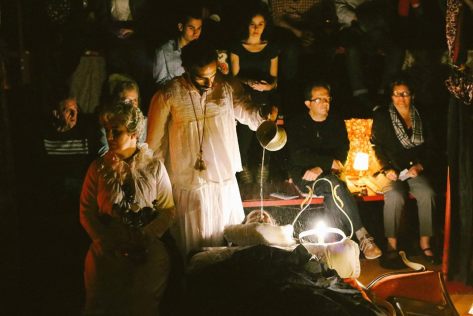
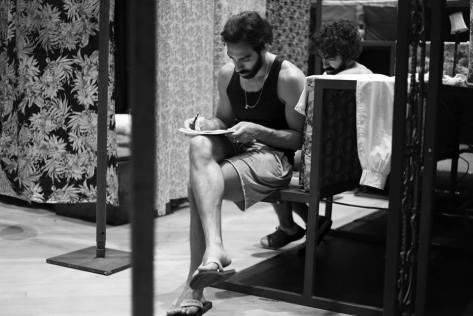
Stage actor Victor Lucena knows a great deal about love. Yes, he has leading man looks and charisma but that’s not the reason. As a lead actor in the play Arrufos (translated as “Tiffs” in English) by XIX Theater Group in Sao Paulo, Brazil, Lucena explored various representation of love. Every actor uses a part of themselves and takes something with them from a role. As a celebrated theater actor in Brazil, Victor is recognized for his willingness to take on complicated roles as he did in Arrufos. The play received awards from the Shell Theatre Awards, the Sao Paulo Art Critics Association Awards, the Sao Paulo Theatre Co-Op Association, and countless others. As the lead actor in this production, Lucena’s ability to emote and relate to the three different characters he performs as in Arrufos was the driving force which led to these achievements. We all know about love but to communicate its various representations in a way that we can all relate to takes an actor of great skill and sensitivity. This Brazilian thespian’s decision to focus on theater rather than film is because of the changing nature of each performance that he thrives upon. Rather than embracing the security of a perfect take, Victor basks in the uncertainty that performing in front of a live audience grants. This is an appropriate metaphor for the changing aspects of love in each of our lives, which again points directly to Lucena’s astute attitude and ability at performing his roles in Arrufos.

arrufos_picture_3

Victor’s work with the XIX Theater Group has driven them to become one of the most beloved and respected of their kind in Brazil; it’s an attribute that Luiz Fernando Marquez (director of XIX Theater Group) does not take lightly. Marques declares, “Victor has an endless collection of credits. There can be no question that our incredible critical acclaim and commercial success is entirely thanks to Mr. Lucena’s leading role. Arrufos consistently achieved massive commercial success through sold out shows with large audiences, resulting in numerous awards. Victor’s unprecedented skillset allowed him to convey three extraordinarily different and crucial characters in such a way that the audience was able to understand the overarching theme of the production. Victor’s versatility as an actor was an invaluable asset to the creation of this production.” Lucena is the type of actor who delights both his peers and his audience, a testament to his talent and his professionalism. He is also quick to throw accolades to his director and co-stars as reasons behind the acclaim that Arrufos received. The actor notes, “Luiz Fernando Marques is truly talented, particularly in the way that he is able to take on the audience’s perspective. He is able to approach it with a fresh set of eyes each time and understand how the audience will see things, rather than getting lost in a director’s mind. My co-stars: Rodolfo Amorim, Ronaldo Serruya, Juliana Sanches and Janaina Leite…they all have such passion and presence! I’m fortunate that their performances challenged me to work at such a high level. Working with the best forces you to become even better…which is why I do it.”

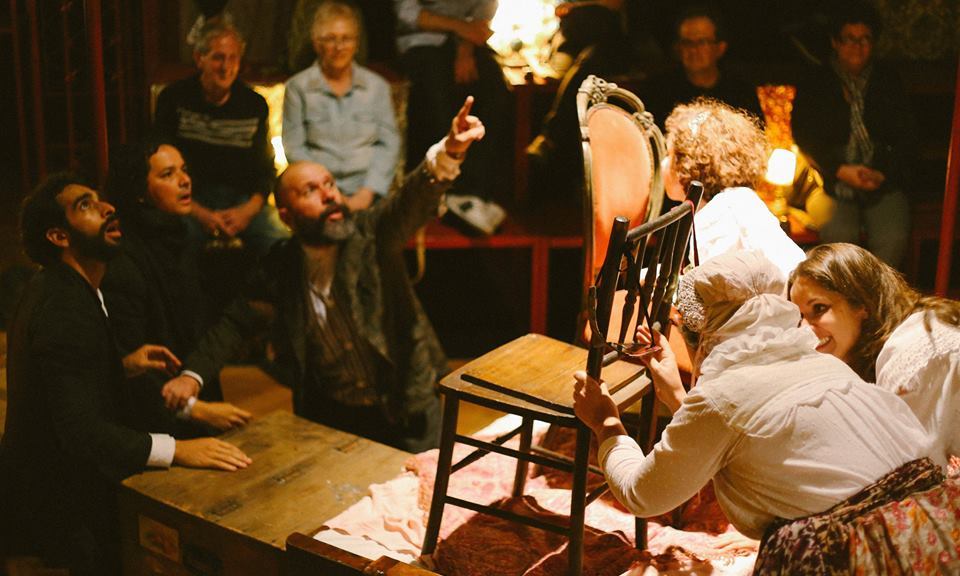
One of the reasons that Victor was so lauded for his work in Arrufos is in regards to his multiple performances in the play and their believability. The production is a research into the history of love in Brazil, and was written into numerous skits and sketches which show the differing ways love can be perceived, given, and received. Despite wildly different depictions of this highly complex emotion, the overall theme of the play is the strength and prevalence of love across time and space. As a leading actor for Arrufos, Mr. Lucena performed three leading characters: The Priest, The Doctor, and The Lonely. Each character is a different look into various aspects of love. The Priest acts as a conduit of the influence of the Catholic Church in the 1700’s on love and faith, the Doctor establishes opposition to the church and the science of love, and the Lonely represents the lack of hope in life when loneliness is prominent and how love conquers it. Victor explains the acts of the play, “It is a really fascinating emotional curve for the actors involved in this play. The first act is so deep, dark, and heavy. Regardless of all the speeches we all have in it; it seems too silent. In order to create that atmosphere, we all would breathe together for a few minutes and then, about 15 minutes before play starts, each actor and actress would get quiet and start concentrating for it. The second act is much lighter. We took the heaviness off of the atmosphere to break away from the First Act, which is kind of relief for the actors and the audience. The Third Act was a joy! It was especially fun because we break the fourth wall; that was something that I felt really confident and comfortable with. A play is a live organism and as so it is always varying. While a song can be performed in the same way night after night in an orchestra, that’s impossible for a play; it depends on so many different variables. I think consistency is the most important achievement for a good performance but you have to explore new places at the same time.”

arrufos_picture_2

When a performance is as recognized by both consumers and critics, it’s natural to be curious about the preparation of the actor. For his roles in Arrufos, Lucena immersed himself with inspiration for the mood by reading books and watching films about the different presentations of love. He even created a specific playlist which he would listen to for 30 minutes prior to each performance. This gives credence to the idea that art inspires art. While Victor admits to ignoring critics during the run of the play, he admits to one self-congratulatory moment. He reveals, “During the First Act, as the Priest, I’d have to hide under a tiny bed, change clothes and “sing” a prayer in the complete darkness. To do all this, I had only about two and a half minutes, which is the time the character of the father had to give his speech. I’m 5’11’’ and the bed is about 5’5”. I truly believed that there was no way I could do all of this in such a cramped space, but I did and every time. When  I finished I’d secretly celebrate.” Perhaps it is this attitude, that of a man who focuses on the little things rather than worrying about grand acceptance from critics, that communicates Lucena’s joy of the stage and all its possibilities to a welcoming group of admirers.

Actress Amor Sanchez to star in superhero series Scorpion Girl

img_5051
Amor Sanchez – Photo by Laura Escudero

Amor Sanchez wakes up every day knowing she is doing what she loves. While growing up in Madrid, she fell in love with art, and then acting. The bilingual actress takes roles that will offer her a challenge, and participates in projects that are important.

This is how she came to be in the upcoming television series Scorpion Girl. The show will introduce the first major Latina female superhero. The series follows a young girl named Suvanni, who is a sheltered, innocent young woman who abruptly departs from her small hometown in Mexico to track down her missing older sister, Alexandra. Her quest makes her a target of the most nefarious criminal, Hans Von Kruger; he is the man holding her sister captive as a slave in a sex trafficking ring. The scope of his demonic plans are limitless.

“I am very excited because the show will shatter two stereotypes. First, that women are weak and submissive, and second, that there isn’t a female Latin super hero,” said Sanchez. “I am very proud and I can’t wait to start. I think it will change the way the world sees the Hispanic people in general. “

Sanchez will play Endellion, who is Hans Von Krurger’s right hand. The casting was difficult and required martial arts experience.

“Endellion is on the bad side. She will act as a spy, following all of the protagonist’s moves. She is dangerous and you don’t see her coming, she acts from the shade,” described Sanchez.

Sanchez has lots of experience playing characters with depth. She has starred in over a dozen films, including the film Brando Unauthorized, which won the Best Director and Best Feature awards at New York International Independent Film and Video Festival. Damian Chapa, the director of the film, says he always wants to cast Sanchez in his films.

“I realized from the beginning that she is an extraordinary actress so I gave her one of the lead roles. Her performance embodied the character with such passion and such depth there was no point to keep the casting going. She stole the part and our hearts. Her work achieved outstanding results which made her an indispensable component of my films from then on,” said Chapa. “She always understands the roles right away, making them ‘alive’ and different from one another. Her eyes are so powerful that she is able to express deep feelings without even talking. My movies wouldn’t be the same without her.”

img_4982
Amor Sanchez – Photo by Laura Escudero

Chapa and Sanchez first started working together on the film Mexican Gangster. It was one of the first films Sanchez worked on, and led to the of a continuous artistic collaboration.

“Every time I decide to get involved in a new project, it is because I am very passionate about it. Every project is special,” said Sanchez. “Damian Chapa, David Carradine, Eric Roberts, Jeff Connaway, they all have something in common, hard workers. They are who they are and where they are because they are very professional and work hard. They are a role to follow. Watching them working definitely inspires you. They have a passion and they put it in all what they do.”

Amor Sanchez also has built a professional relationship with the Spanish producer Guillermo Escalona, one of the founders of the prestigious Spanish movie production company La Panda Productions and the sole proprietor of Quixote International Talent Management. They worked together on the film People You May Know, and are working on a adaptation of the film to a television series with the same name.

She is also set to star in two films by Rivera Films Studios The Curse of Manizales and The Curse of Manizales 2, the same production company for Scorpion Girl.

“I don’t like routine; some people do but is not for me. That is what I like about this job, not knowing what is going to happen tomorrow, the uncertainty. I am very thankful that I can do what I love as my profession,” she concluded.

Senior motion designer Ilya Tselyutin’s artistry leads to dynamic opening of FINA World Championships

The opening ceremonies for any sporting event always brings out the best in the home country, from culture to talent. The opening ceremony of the 16th FINA World Aquatics Championship in Russia last year did just that, and senior motion designer Ilya Tselyutin knows this better than most.

Tselyutin worked on the Opening Ceremony of the 16th FINA World Aquatics Championships, which took place in Kazan, in his home country of Russia, on July 24th, 2015. Pilgrim, as the spectacle staged as part of the ceremony was called, was created by the Sechenov.com team, which Tselyutin worked with. The team was responsible for the idea and original scenario, design and creation of the engineering structures and scenery, selection of the performers, production of the musical and dramatic performances and organization of the Parade of Nations and other formal aspects of the Opening Ceremony.

“The whole country was getting ready to host the World Aquatics Championship and I was very excited to be a part of this project despite working remotely. I was working with a team of excellent professionals, highly skilled animators, designers, producers that had an extensive experience of creating animation for the large-scale shows including the Olympics, presidential inaugurations and international boxing tournaments,” said Tselyutin.

The show received the Sides of Theatre of Masses Award, the national highest and the most prestigious professional award in Performing arts founded by the Union of Theatre Workers of the Russian Federation. Around 50,000 people watched the Opening Ceremony at the stadium and hundred thousands of people watch the live streaming on TV. The show was broadcasted by Eurosport in European Union, BBC 2 in the UK, Channel 7 in Australia, YLE TV2 in Finland, LRT televizija in Lithuania.

Tselyutin produced the 3-minute dynamic intro animation that was played on the 6th minute of the ceremony. The animation featured a story of a sportsman swimming throughout the whole world pass popular landmarks such as Eifel Tower, Big Ben the Statue of Liberty to greet the visitors. This work required advanced keying technique in After Effects and 3D modeling and shading in Cinema 4D. This required him to learn some new advanced keying techniques in After Effects.

“I acquired an invaluable experience managing a group of 3D designers prioritizing tasks and improving my time management skills, something that would prove to be extremely helpful later on in my career,” said Tselyutin.

During his time working on the opening ceremonies, Tselyutin worked very closely with Alexey Sechenov, the production director of the ceremonies. Sechenov is a Member of the Russian Academy of Television, an Honorary Member of the Russian Academy of the Arts, and an Honoured Art Worker of the Republic of Tatarstan. Sechenov founded one of the most successful show production agencies in Russia that lists national TV Channels, artists, performers, State Federal Agencies and Ministries such as Ministry of Sport as its clients.

“Ilya is a very talented designer and was a pleasure to work with. During his 4-month contract he exhibited his outstanding design skills, extensive professional experience and strategic thinking. At the concept development stage Ilya took an initiative to go beyond what was expected of him. Not only did he understand perfectly the aesthetic of provided style references, but also devised a creative solution of integrating the world’s famous landmarks into the production pipeline, an idea that subsequently became the project’s main feature. Ilya proved to be an excellent modeler by creating 3D architectural objects of Eifel Tower, Big Ben, Louvre and other landmarks. He has an impressive ability to work efficiently under tight deadline and handled the pressure extremely well even though he had to deal with numerous edits and changes. Despite the fact Ilya was working remotely, he maintained effective communication and was easy to reach anytime. Our company is recognized as the most successful show production agency in the country and we strive to maintain the highest standards of production. Ilya can be easily credited to raise that bar of excellence,” said Sechenov.

Tselyutin found working alongside Sechenov to be a very rewarding experience. Sechenov is a very experienced producer who adheres to high standards of quality. Tselyutin describes him as very demanding yet respectful and supportive, and that he had a clear vision of the project from the very beginning but was always open to other suggestions.

“What I admired most about him was his ability to supervise the whole two-hour show preparation and never lose focus no matter what he was doing, from staging acrobatics performance to giving feedback on the 3D animation,” Tselyutin described.

Despite being very limited on time, Tselyutin’s creations for the ceremony are mesmerizing. He also overcame the challenge of rendering high resolution graphics which consumed a lot of CPU power and slowed down the process.

“I liked the general concept and interesting references given by the client. Being a small but significant part of such a show that took 4 years to develop felt really great. The show was an amazing display of high quality graphics, animation, spectacular performances, art and creativity. I felt extremely proud to work on it,” he concluded.


BRAZIL’S RODRIGO BRANCO BECOMES A STAR BY SUPPORTING THE FAME OF OTHERS

For all of those who proclaim television to be a detriment to one’s life, please kindly consider Rodrigo Branco. This Executive Producer/Communications Director/Social Media expert has built a life out of his work in TV. His roots in TV can be traced back to his youth, a situation that his own children are experiencing. Branco has become one of the most successful executives in his field in all of Brazil. His status is earned with years of working his way up the ladder in TV production. Having become internationally recognized for his work on multiple domestic and international productions, he most recently has turned his attention to the TV community in the US and the opportunities it affords. It’s quite a story, a young boy in Brazil who follows his dream and effects millions around the world. It proves that hard work is rewarded and there is a chance for everyone to pursue their goals no matter how unbelievable they might seem.

As a young boy in Sao Paulo, Rodrigo used to live with his grandmother while his mother (a ballet dancer) was often out on tour, working to pursue her own artistic endeavors. This situation created two prominent factors in Rodrigo’s future. First, the understanding that following a creative dream is valid and secondly, TV was a fixture of life. Branco’s grandmother was a TV fanatic to say the least. When his mother took Rodrigo with her to a TV station for a taping, the two worlds collided. As a 10-year-old, he was amazed by the environment as well as the fact that they would tape three episodes in one day. The sudden realization that every production was not live, yet seemed to be so when viewed on TV, was like discovering the secret to a magic trick. Years later, Branco would begin his own TV career on the Marcia show. This show is one of the most popular talk shows ever on Brazilian TV. Rodrigo was with the show for more than a decade and explains, “The Márcia show was my high school, college and university! I started as a trainee and eventually became the executive producer. It was the hardest, and at the same time, the most positive show I have done in my career. According to VOGUE BRASIL, Márcia is the Brazilian Oprah. I’m proud that our ratings proved that we were number 1 every day. There is no secret to achieving this; I used to work 16 hours a day from my start as a trainee and all the way up to being EP.”

Many people sacrifice their personal life to be a part of TV production, especially those who are highly successful. Branco did the opposite and made his life and career intertwined. He met his wife when he was a trainee on Marcia and has become a father while working on the show. As the EP of the show, he worked most closely with the show’s star and namesake. He notes, “Working 16 hours a day, 6 days a week; Marcia became my second mother. We spent Christmas, New Year’s Eve…all the good times and bad times together. She has the most brilliant career in Brazil and she decided to share it with me. I think this interaction is what made our work so successful!” Rodrigo’s work in particular was recognized early in his career. In 2002, he was awarded the Premio Jovem Brasileiro [Young Brazilian Award] for his work with the Marcia show (he received this award again in 2011 for his work on the Miss Universe Pageant) …at the early age of twenty years old. Branco also received the Communication Merit Award, granted by Academia Brasileira de Ciencias, Artes, Historia e Literatura (Science, Art, History and Literature Brazilian Academy) which he refers to as the greatest honor of his professional career. Marcia is known for her show being about people, their families, and struggle. She wanted an individual steering that show who was doing it for more than the money; a person who was truly passionate about the work. Marcia recognized these traits in her early interactions with Branco. She declares, ““I met Rodrigo in his first day as a trainee in TV Bandeirantes. I immediately knew he was special. A few months later, I told him he would be the executive producer of my show and in only 3 years it became true. We had a great and fruitful partnership. He is incredibly talented!”

profile-pic-1

Besides giving Branco a literal family as well as a professional family, TV has also given him the ability to travel the world. Experiencing locations such as; Israel, Paris, Spain, Argentina, Mexico, and all the states of Brazil, have helped Rodrigo to understand how different and yet how incredibly similar the people of the world can be. In particular, his US visits have motivated him. Branco communicates, “The TV Industry in the United States is the most professional and competitive in the entire world. There is no space for amateurs there. I have hopes of working there because it would challenge me to be the best in the US. The resources and the technology in the US are the example to the world. If a professional wants to learn how to do their job better, they need to stay close to the best! Marcia was discovered by an American Director who taught her how to do TV. Nobody does TV and Entertainment better than Americans. I could see this with my own eyes at the Latin Grammys, Miss Universe, and from studying American Shows and formats. I’ve had an extraordinary career but I am only 33 years old and I want to be better and bigger.  The only way to do that is to learn from the best. My passion is t work with talent and communication not only in TV, but with social media and other formats as well.” When contemplating Rodrigo Branco’s life, it is impossible to septate his story from the inclusion of television. When discussing it, Rodrigo himself comments, “My life was built inside a TV. My childhood was spending time with my grandmother, bonding over shows and their topics. I saw my mother performing on TV and she took me ‘inside’ television for a perspective that not many people witness. I have made many of my closest friends through my work in TV, as well as meeting the woman who became my wife. Now my children understand TV because they see their father using it to provide for them as well as understanding, as my mother showed me, that you can be creative, challenged, and rewarded with that pursuit. They realize, as I do, that I am able to make the magic that we see on the screen.”