Category Archives: international musician

Singer/Songwriter Juvicsa Talks About Debut EP “Eyes to Land”

I recently had the chance to catch up with the uber talented singer songwriter Juvicsa Vela, who released her debut EP Eyes to Land produced by Federico Angel earlier this year. In our interview Juvicsa opens up about the new EP, her writing process and some of her musical influences.

Born in Peru, Juvicsa discovered her god-given talent for singing and passion for music at an early age, and when she moved to Sweden with her mother at the age of 12 her artistry really began to take root. Having lived all over the world, it’s not surprising that Juvicsa’s music exhibits traces of influences from many cultures.

Juvicsa Vela
Singer/Songwriter Juvicsa

Juvicsa first began working on the EP while living in Los Angeles where she attended the Musicians Institute, but in search of new inspiration and a change of scenery, she moved to Reykjavik, Iceland last year where she finished the album working remotely with her LA-based producer Federico Angel.

Eyes to Land can easily fit into the pop/rock category, but with R & B and Latin elements, not to mention Juvicsa’a powerful vocals and bittersweet lyrics, the EP eloquently defies genres.  

You can purchase Juvicsa’s debut EP Eyes to Land on Bandcamp, iTunes, Amazon and Spotify. There’s also a limited amount of signed physical copies for purchase on Bandcamp. You can also find out more about her and get updates on upcoming shows through her website, Facebook and YouTube channel.

Juvicsa also wrote the popular theme song for an Indonesian adventure TV show sponsored by Mitsubishi called “Jonsson & Robinson Journey,” which premiered to millions of viewers across the country.

To find out more about Juvicsa and her new EP make sure to check out our interview below.


How old are you?

28 years young

When and how did you first get into music?

I must’ve been around 4 or 5 when I started to sing. I had this boombox with a built in mic and a lot of cassettes. I used to spend hours and hours and hours on the floor with my boombox, recording myself singing and creating harmonies over my recordings, I think that’s when I first created something musical. This was so liberating to me, a kid who was a rebel, always getting in trouble at school but when I went back home and locked myself in my room I’d spend hours singing and doing all those things I loved to do and that was my outlet. Then I started writing songs at the age of 15 with an old piano my mother got for me and a little MIDI controller.

When you say you were a rebel– what kind of trouble were you getting into?

As a very hyperactive kid, I didn’t really like to follow the rules at school so I got sent to the principal’s office very often for roughhousing and sneaking out of class to play with the older kids.

What do you think might have happened if you hadn’t found music as an outlet?

I already have a hard time focusing on one thing at a time so I think I would’ve probably lost my mind a little. I don’t think I would have been able to deal with the darkness and the difficulties of growing up. I would’ve possibly kept getting in trouble.

How long were you working on “Eyes to Land” before its September release?

It took me about a year from scratch to finished product, a lot of it had to do with the fact that I was in Iceland and my producer was back in the states, so there was a lot of going back and forth, time differences and work on both our parts. Lots of coffee, little sleep.

Can you give us a little back story on the EP and where you got your inspiration from?

I moved to Iceland a week after my grandma passed away, my grandma was more like a second mother to me, so the whole process of composing the EP was a very emotional one. I definitely think that both Iceland’s landscapes and nature, and being in a very emotional state, brought the EP out, especially being in a brand new country.  

Did you write all of the songs on the EP?

I did, along with my producer.

What is the writing process like for you?

I think the writing process was different for each song, I could get inspiration by sitting by the ocean in Reykjavik, being in the shower for another song, conversations I had with friends that sparked something in me and made me drop everything and write. I do spend a lot of hours alone in the beginning, I think that’s what works best for me and I’m more comfortable that way. After writing a song I’d call my producer and we’d go to the next step, more composing, polishing, re-recording and so on, all through FaceTime.

Can you tell us about your inspiration for some of the songs?

Well for example “High Tonight” was born out of a glass of wine and a late night conversation with a friend of mine. She was going through a tough break up at the time and she said a couple of things that really struck me. I dropped everything, went over to the keyboard and started writing it, it was written in a couple of hours. She actually doesn’t know about it yet!

For “Unaware” I had to dig a little deeper, it’s definitely a very personal song to me. My inspiration came from being in a toxic environment and feeling exhausted but still seeing a light at the end of the tunnel, still not being able to let go of that thing that can break you but can save you. The sound for “Unaware” is definitely influenced by No Doubt and Spanish music.

“Now” is the song about hope. Like I said, there has to be a light at the end of the tunnel and this is it, this is your saving moment, it’s you giving in instead of giving up. “Now” is kind of my full circle song.

What is your favorite song off of the EP right now?

My personal favorite is “Unaware.” I’m very emotionally attached to that one.

Why did you choose to name the EP “Eyes to Land”?

It’s a poetic play on words. This EP symbolizes a person trying to deal with death and rebirth at the same time. The name comes from trying to deal with the death of someone so close that in a way symbolized the death of a part of me, but also the rebirth, which for me was moving to another country. That in both situations you need guidance, you need eyes. If not your own, then someone else’s.

How would you describe the album to those who haven’t had a chance to hear yet?

A shoegaze and pop/rock mix with emotional but energetic vocals. With all kinds of raw ENERGY ranging from sad to sensual.

Did you play any instruments on the album?

I played the keys on the final product but I program different instruments when I’m in the writing process as well so that everything is the way we want it.

Do you have a consistent band backing you?

Not as of now I don’t. It’s hard to keep one consistent band with you when you’re traveling a lot.

Who else was involved in the making of your new EP “Eyes to Land”?

Federico Angel as producer and instrumentalist, the amazing Ro Rowan on cello, Dean Dichoso as instrumentalist, Dean Dichoso Productions for mix and mastering and Steinunn Osk Axelsdottir as sound engineer on vocals.

How did you choose Federico Angel as your producer for the album?

From the first day we started working together I knew there was something that clicked. It’s actually very simple, we’re both very straight to the point and he knows exactly what I want and how I want things to sound, sometimes even without fully explaining what I mean, he gets it. I mean it’s gotta be a good match when the artist is explaining a sound as a color or a metaphor and the producer completely gets it down.

You’ve had a pretty multi-cultural upbringing, can you tell us about some of the places you’ve lived and how they have affected your journey as a musician?

I was born in Lima, Peru but I moved to Lund, Sweden when I was 12, as an adult I moved to Los Angeles and as of last year I live in Iceland. All of these moves and amazing experiences with different cultures make my music what it is. Ultimately all I want is to unapologetically mix everything I know and write something I think will sound great and people will relate to.

Were your parents involved in music as well?

No, my parents weren’t but I have singers and artists in my extended family.

Can you tell us a little bit about Iceland’s music culture? Do you feel that it has influenced your work as a musician?

Funny thing about being like a sponge when you’re a musician, I sent my producer a demo during our Eyes To Land writing process and he thought it sounded Björk-esque, which obviously was a huge compliment that I most likely didn’t deserve but it really made me think about inspiration always changing and how it can be so related to where you are, I think it’s amazing.

I’m a really big fan of Icelandic music, coming from Sweden, I initially thought it could be similar but it’s really an art of its own. To me, the peculiar sound that Icelandic music has, has to do a lot with the isolation of the island and even modern Icelandic music has a characteristic sound with traces of the old.

Are you involved in any collaborations at the moment or are you mostly focusing on your solo career?

I’m working with a couple of artists at the moment for minor projects or songs I’ll be featured in but I’m mostly focusing on my solo career at the moment.

What five albums are you listening to most right now?

Garbage’s new album “Strange Little Birds,” Sia’s “This is Acting”, Kendrick Lamar’s “To Pimp a Butterfly” and waiting impatiently for the New Lady Gaga album and the new Beth Hart album!

If you didn’t become a musician, what profession do you think you might have chosen?

I think I would’ve still been involved with the arts in some way, I would’ve been around music and art in any way I could. I always try not to let plan B distract me from plan A though.


JAPAN’S KENJI USUI IS PUSHING THE MUSIC SCENE FORWARD, ONE BAND AT A TIME

The music industry and the music scene in America are completely different from what it was even just ten years ago, and it is continually changing. Napster of course led to the upheaval of the music business. There is still conjecture about the result of this occurrence and whether it’s effects were beneficial or detrimental to the music world. One side insists that it was blatant piracy, a crime that deserves severe punishment. Others state that this “anarchy” leveled the playing field which led to a resurgence in the artists taking control from music industry executives and the birth of the DIY movement in the US. For quite some time now, the Japanese have been attracted to American bands and artists, taking careful note of it. One person who has done this is Japanese artist Kenji Usui. Usui is a prevalent part of the Japanese music scene who has also pioneered much of the ever growing Japanese independent music terrain. As an established Japanese artist, Kenji has made it his mission to increase visibility for the less established Japanese musicians as well as visiting foreign artists and bands.

With a long list of band credits and recordings that include; Blackjack, SPOON, Allies and Aces, Pororocks, and An Atomic Whirl, Usui has become weaved into the Japanese musical tapestry. He is highly recognized for his talent on multiple instruments (Vocals, Bass, Drums). As someone who climbed up from obscurity to become one of the most recognizable faces in the Japanese music world, Kenji understands how difficult a job it can be to simply gain a platform from which to express one’s own artistry. With that in mind, he set about to establish the opportunities for other artists to accomplish this.

an-atomic-whirl-promo-photo-2014

One of the most direct and successful means of Kenji helping to expose artists to the scene was as cofounder of Noise Union Japan Records. This label has been a way to connect bands from Japan and surrounding countries. Noise Union Japan Records is a way to promote bands and develop a network that will allow artists to grow and expand. Founded by Kenji Usui and Chikashi Gushiken, this label seeks to showcase the best artists from not only Japan, but also Taiwan, China, Hong Kong, Korea, and other countries in the region. Gushiken (Noise Union Japan Records co-founder) gives credit to Usui’s affable nature as well as his love of music for enabling the success of this record label, commenting, “Kenji has a knack for meeting people and finding a way to incorporate them into Noise Union Japan. Every time he goes to a show in Tokyo or travels to a different country, he comes back with multiple new contacts and new ideas for booking events or festivals. He is highly motivated and productive, driven by a genuine passion for growing the music scene.”

As a member of Anit-Clockwise Productions, Kenji helps to organize events around Tokyo. Whether it is a local band or an international artist touring Japan, Usui understands the necessity of having an experienced hand on deck. As a member of many different bands over the years (Anti-Clockwise Productions recently produced and shot the music video for “Sanlitun” by Kenji’s band An Atomic Whirl) Usui is particularly empowered to make the process much less cumbersome for bands from any location in the world. It has afforded him the chance to gain knowledge and insight, as he reveals, “The best thing about working with bands from other countries is the inspiration and new perspective it gives. For me, working and touring with bands from other countries has been the most rewarding part of playing music over the past several years and I look forward to doing more of this in the future. It seems that US musicians are very interested in Japanese music and culture. I am always impressed by the level of creativity and experimentation coming from US bands, and I think that there is very fertile ground for cooperation and collaboration between these cultures in the future.

The Tsuruginomai Festival in the mountains of Japan, showcases the deep underground of Tokyo’s music scene. Kenji has aided founder Kohei Noda with this festival every year since 2010, assisting with the production and booking, as well as performing with various acts each year. As an artist who has toured playing international festivals, Usui has been an essential part of helping to coordinate this festival and others to increasing success and attendance since its inception. Kenji confirms, “I regularly perform at the Tsuruginomai Festival with Pororocks, An Atomic Whirl, and Kissaco, as well as playing onstage with various friends’ bands. Being a performer gives me an immediate understanding of what the artists on the bill are experiencing. It’s important that I keep in touch with this to give both the bands and the audience a better concert experience. It is often difficult, but it’s also rewarding. Some of the best bands are the bands you never hear about; being a part of an event like this, you are exposed to these bands. There is always someone knew who is bringing a new idea or style to the music community. It’s exciting when you witness that.”


pororocks-in-2016

BRINGING THE GREAT CONCERT HALLS TO CLASSICAL MUSIC FANS

Cadu Byington has been on tour and is ready to sleep in his own bed again. He is not playing in an indie rock band or the DJ for a famous rapper; Byington is the sound engineer/music producer whom Jakob Handel tagged to work with him to capture performances by classical and contemporary artists at some of the most famous and historic venues in Germany and Switzerland. Handel Classic Audio wanted to enable classical music fans to hear these famous ensembles in their home venues to pay tribute to the composer, artists, and the acoustics of these iconic acoustical structures. Jakob Handel (Grammy nominee, Latin Grammy award-winner, and German Echo Klassik award-winner) has the credentials that attract the elite of the international recording industry. Handel’s work with Sony / BMG record labels, Universal, EMI and several independent labels has empowered him to gain access to many historic venues for recording purposes. For his latest passion project, he wanted to gain access to some of his favorite venues in Germany and Switzerland, and he wanted Cadu Byington as the expert he trusted on this project in a very hands on manner. Jakob Handel explains the decision for this choice declaring, “Cadu is a very talented producer; over the past few years he has come to dominate all aspects of a production. He is also a great musician, a feature that I think is the most important for a music producer. One must think musically more than technically, and know how to convert this musicality with the available technical resources; this is the secret weapon to becoming a successful producer.” The recordings would require them to quickly access the personality and intricacies of each venue and tailor the recording process uniquely and efficiently to each performance. With a full understanding of the challenges and demands of this opportunity, Byington welcomed the chance to test his abilities and deliver a product up to the standards of the Handel Classic Music name. Handel and Byington had been associated since 1999 but this was a major undertaking on which the two would work together. To fully appreciate these recordings, one must understand the approach that was taken to attain them. At a time when recording software has made everyone feel that they are a true recording engineer, a glimpse into the process that Byington and Handel undertook gives evidence to true mastery of the recording process at its best.

For this undertaking, the recording process was different from both a studio setting and conventional live scenarios. Handel Classic Music wanted to record at three different venues; Rosengarten in Germany, KKL in Lucerne, and Tonhalle in Zurich. The acoustic identity of these locations as well as the ensembles famous for residing there are so lauded and respected in the classical music industry that Handel Classic Audio wanted to bring the experience of hearing them to the world. Music fans have spent so many decades listening to music produced in studios that they may have forgotten (or even not be aware of) the fact that many of the historic concert halls were designed by architects to create the optimal acoustic environment to deliver a moving musical experience. Today’s modern effects are based on the acoustic benefits of these historic musical venues. Modern concert sound systems are so ubiquitous that many audiences have never attended a performance without them. Handel Classic Music wanted to deliver a more purist experience. Byington states, “The approach is totally different. In a concert hall, we want to have the sound in its purest forms, without the interferences of PA systems, and with everyone playing at the same time, like a real concert. The halls were designed to “mix” the sound “’n the hall’. In a studio, you don’t usually have all these acoustical qualities, and you have to add artificial effects to emulate the hall sound. Besides, there are few studios that have room to fit a large orchestra.”  While operating a large sound system requires one skill set, recording a performance while delivering the unique qualities of an individual location is a completely different talent.

Mannheimer Rosengarten in Mannheim, Germany has hosted concerts by contemporary artist like Sting, Simply Red, and many others but, it is mainly home for the classic orchestras and operas for which it was designed. Cadu and Handel traveled there to record the opera Der Prinz vom Homborg by German composer Hans Werner Henze. This Art Noveau structure was built between 1900 and 1903. As a traditional concert hall, Rosengarten has beautiful natural acoustic qualities. These characteristics can be overwhelming or beneficial depending on the abilities of the engineer in charge of assessing them. Byington explains, “When you enter a new hall, you have to sit and listen for all its qualities. Listen carefully to the rehearsal, and “learn” the hall. If you have a profound knowledge of your gear, you will know what to do in order to have the sound. The halls have dampeners and baffles, but in much bigger proportions. Based on the style of the repertoire, you’ll base your approach on more or less reverb, more or less microphones. This means that the venue characteristics as well as the piece of music and style need to be factored in when making the choice of microphones and placement.”

KKL concert hall in Lucerne, Switzerland is both aesthetically and acoustically stunning. This world famous venue is home for the Lucerne Summer Festival. Cadu travelled there to record the performance of Turkish pianist Fazil Say who played Ravel’s Piano Conceto in G. For this recording, Byington needed to take a delicate approach which took advantage of the tremendous natural attributes created in Jean Nouvel’s impressive design. Byington describes, “We did a light set up with 12 microphones, using a main mic technique known as the Decca Tree. The Decca Tree consists of three identical microphones positioned in a triangular shape above the stage. It takes this name because of the DECCA RECORDS engineers who made it popular as a nice way to get the overall sound of the orchestra while at the same time having a nice stereo image. In addition to the Decca Tree, we used other spot mics placed close to sections (like strings, woodwinds, brass) and a pair for the piano solo. The hall has such a wonderful sound that using too many mics can result in eliminating the characteristics for which it is known and loved.”

The final recording took place in The Tonhalle in Zurick, thought by many to possess the best acoustics in Switzerland. Cadu was recording a production which partnered American rapper Saul Williams and composer Thomas Kessler. A mix of rap lyrics with classical music. This truly unique and modern pairing required an engineer with both traditional and modern sensibilities. It was further proof that Byington was the perfect choice for Handel on this project. For a number of reasons, the mobile approach was well suited for this situation as Cadu relates, “It is very difficult for a traditional orchestra to go to a studio nowadays. It is very expensive to have an orchestra inside the studio just for a recording, that’s why we record live and on location. For the recording in the Tonhalle, we did three days of recording. We had singers, and a full orchestra with a lot of percussion, which required a setup of around thirty microphones. The approach was very similar to KKL Lucerne, but we captured the audio with much more detail, closer positioning, and more mics. The piece was an orchestral arrangement for some Saul Williams texts ‘said the shotgun to the head’.”

photo4

  The experience was quite demanding of Byington, Handel, and everyone involved. A myriad of microphones was required to cover any possible situation. The recording crew also needed to travel as lightly as they could, assess each venue quickly and accurately, and set up as efficiently as possible. While recording in a studio allows for multiple takes and splicing of takes, this recording project meant that each recording had to be perfect as there would be no multiple takes or overdubs. Although everyone spoke the universal language of music, the technical aspects of recording and the different locations often necessitated the musicians and engineers to communicate verbally in a language that was not their native tongue. It called for everyone involved to conduct themselves with the highest level of professionalism. Byington feels that he grew in his abilities as well as his appreciation for the musicians whose performances he recorded. He notes, “I learned a new standard in my profession, the standards of Europe for classical music is the reference for the rest of the world.” The recordings themselves pay tribute to the honorable history of the venues, the talented musicians who performed the pieces, and the mastery that Cadu Byington used to deliver them to the world.


STEFAN HILLESHEIM: CONTINUING THE LINEAGE OF THE BLUES TRIO

Jimi Hendrix. Eric Clapton. Stevie Ray Vaughn. These names are so iconic that even those who are not avid music fans know exactly who they are and why they are so famous. These three musicians have a great deal in common even though their lives and careers span different eras. All are iconic guitarists who have easily identifiable signature sounds. All of these men were heavily influenced by the blues. Equally significant, all of them had noted careers as sidemen before stepping up to front their own bands. It’s a scary move to leave a successful situation because you feel you want a vehicle to express your true artistic voice. Stefan Hillesheim agrees with this. Hillesheim had a thriving career in his native Germany, being recognized as one of “The” guitarists in Germany and Europe. As a member of BlueSide (the highly lauded German Blues band) and touring guitarist for Celtic Dreams, he was playing to sold out shows in Clubs and concert venues. The difference between an artist who uses music to achieve their goal of living a comfortable life and one who uses their abilities to vehemently pursue their art is vast; Stefan is the later. Although he founded the Stefan Hillesheim Band while still playing in other groups in Germany, the experience planted a seed that would ultimately lead him to pursue his own brand of Blues Rock (something he also shares with the previously mentioned iconic guitarists/artists) in the US, the place Stefan and others recognize as the birthplace of this genre.

A quick google or YouTube search of Stefan Hillesheim will allow you to access a multitude of videos in various group setting of this guitarist performing; one hears the deep,soulful, and melodic playing of this guitarist. There is always a nod to the greats of the Blues, whether it be Albert King or someone more rock influenced like Hendrix. Like the playing of the guitarists who came before him, Stefan is always conscious of adding his own subtle twist to the music. It’s important to Blues artists to say something we can all relate to and recognize, without repeating someone else’s statement verbatim. When Stefan decided to make the move from sideman to fronting his own band, it wasn’t out of conceit or any ego motivated factor…rather, it was out of humility. He explains, “Part of the decision to start my own band was curiosity. I just wanted to know what it’s like to be the lead singer and guitarist of a band playing my music. As a Band Member, you definitely have to make sure the singers sound good, your lead parts don’t interfere with the vocal melody, and your playing compliments the vocalist. Being the lead singer and guitarist gives you more creative freedom but at the same time you’re in charge of all the cues and have to maintain a very clean body language so that your rhythm section can pick up on it and understand what you’re trying to communicate.” Both seeking to further his musical voice and gaining empathy for the vocalists whom he has worked with are attributes that have made Stefan a desirable commodity in the music world. It might have been easier for Stefan if he stuck to playing with the groups he was already associated with but holding back his own artistic growth was more difficult to accept than winning over new fans. The Stefan Hillesheim Band had to win over fans on their own, which is not always an easy task. Stefan relates, “I think that our fans in Germany are very loyal and into hand-made music but they always want to hear the same songs and are sometimes hard to convince of new ideas and styles. I think that in the US there is a bigger and faster paced market for music.  Fans here are used to a bigger variety of live bands and they are more responsive to new material.”

Any great power trio requires a rhythm section that possesses an almost telepathic connection. Stefan chose drummer Alex Sauerlaender and bassist Mathias Wendels due to their exemplary playing and reputation in the European Blues/Rock scene but, equally as important…the fact that these two have played together for two decades. Hillesheim required a rhythm section that could essentially move as one entity, always able to serpentine with the twist and turns he would make as a vocalist/guitarist. Sauerlaender (who has been involved with a number of highly respected German rock and blues bands, including; Lucifire, BlueSide, Catastrophe Ballet,  Jet Set, and over a dozen others) remarks, “All the success that the Stefan Hillesheim Band experienced can be set upon Stefan’s shoulders. The band would never have existed if not for his drive and talents as a musician. He was truly the face of the band, and his skill as a frontman built the band into its highly esteemed reputation in the German music industry. The show that we performed at the famed Excalibur venue in the city of Koblenz, performing to a cheering, sold-out crowd, was indicative of the excitement and acceptance of the band’s fans. It was truly exciting to be part of a group which created such a feeling from fans.” One of the most memorable gigs for Hillesheim was the last one he played in Germany before relocating to the US. A true artist never rests and is always in pursuit of cultivating their sound and “voice.” Stefan had always known that he needed to move closer to the birthplace of the Blues in order to gain a deeper understanding of its essence. As he had done before, Hillesheim left a clamoring following and profitable career to start over again in America. He had a memorable send-off from musicians and fans alike. He recalls, “I would say one of our most memorable gigs was my last gig in Germany before I moved to California (2 years ago). It was sort of a going away party/concert and we played 2 long sets with a number of special guests and surprises. The audience was very responsive and totally into the music from our first song on. We played multiple encores. It’s hard to leave family and friends. I’ve started the trio all over again with players here in the US.  It is definitely challenging to move out here and see if people like your music. So far my experiences have been really positive and I can totally see myself playing more solo and trio gigs with my own band.”

Everyone can relate to the difficulty of venturing away from the familiar and into the unknown. Few can relate to moving to a completely new country that speaks a different language. Only a fraction of those can relate to doing so in pursuit of an artistic vision. Stefan Hillesheim is comfortable with sacrifice for his art, it’s a compulsion for him. Let those with ears hear.

stefan-hillesheim-band-01

USUI IS JAPANESE FOR FORCE MAJURE

Witnessing Kenji Usui perform is like nothing you have ever experienced. That is not the usual hype and dribble that music business executives use in their speech to get someone to “drink the Kool-Aid.” Kenji is unique and fearless. He could not be further from safe or controllable if that was his intention, which it is not. There are artists who set the parameters for what those who are later lauded as mold breakers, Usui is the former. Names like Morrison, Cobain, Hendrix, come to mind…more for the fact that they were individuals who found their unique voice and style than because they were musicians. Every generation has someone who breaks through the status quo and inspires artists to do things their own way; Kenji is performing and living like no others at this time. Though he is still underground internationally, he is something of an icon in the Japanese music community. In a culture known for their intense work ethic and devotion, Usui takes his love of music and creativity to an even more intense level. As a member of many bands and a multi-instrumentalist, this artist has singlehandedly pushed his countrymen in a new direction as well as contributed to the careers of US bands touring Japan.

For many individuals, playing music and being in a band is a rite of passage. Making music might be a way to investigate your artistic abilities in school or a way to rebel against the establishment, before you become part of it. For the true-believers, it becomes a lifestyle. Honestly, the true believers are in the vast minority. Even more rare are those who lead that minority. Kenji Usui is at the apex of the underground music scene in Japan. Embodying the Japanese work ethic, Usui works a 72 hour work week to enable him to spend every other minute pursuing his music career. That’s the kind of lifestyle that society calls crazy until you “make it” and then it is praised as “visionary.” When asked why he perseveres, Kenji professes his love of making music gives his life meaning and also confirms, “It’s difficult, but it’s also rewarding. The best bands are the bands you never hear about, and in the DIY scene you get to find these bands. But this means having a music “career” without making much money, which is very challenging sometimes.” Foregoing the goal of making money for the pursuit of realizing one’s own artistic voice is admirable, and taxing. Since 1999, Usui has been making music with many different bands and in a variety of roles.

Since 1999, Usui has been a mainstay of the diversified Japanese music scene. Content to let others pursue the pop music format, Kenji has been a leader in pushing the envelope of music, experimenting with effects, a combination of singing and spoken word/prayer-like vocals, and shifting his instrument of choice in different band configurations. As a member of groups like; Shoot, Blackjack, The Spoon, Allies and Aces, An Atomic Whirl, Pororocks, and Poronely, Usui constantly presented an evolving artistic style to his fans and other artists alike. Eri Zarigani (member of renowned Tokyo girl-punk band Zarigani) confirms, “There is a big festival in Taiwan called “Spring Scream”, and both my band and Kenji’s band had the chance to perform there. When we saw Kenji play, we were blown away. His level of performance had increased drastically since we had last seen him; we all felt that we were part of his performance. Fans and bands alike were in awe of his band’s performance. As a fellow Japanese citizen, this meant a lot to us, as he is helping take Japanese bands to another level. Kenji is a great inspiration. Many people look up to his creativity, his patience, and his ability to relate to people and make connections with other artists. People respect him due to not only his music but also his sincere personality.”

Kenji’s admirers and exposure is not limited to his homeland. He inspires audiences wherever he goes. His performances transcend language and cultural ideals. C Leung, Show Organizer, Founder of CCCC Productions & Organizer of NoiseNoiseNoise Festival in Hong Kong. He states, “I first saw Kenji in 2012, performing with the band Pororocks. He sat at the back of the stage with a spotlight on his face. He was mumbling, singing and playing drums, and I could immediately tell that there was something very special…almost otherworldly, about his stage presence. After the show, I invited Kenji’s band An Atomic Whirl to play in Hong Kong at a show presented by CCCC. In Hong Kong, I got to see him performing as a bassist and vocalist. I was again impressed by his musical capability and the possibilities and creativity he brought to the stage. I was so glad that I had brought his band to Hong Kong. In a single night, he earned numerous fans in Hong Kong. His fans were adamant that I bring him back again, so I brought Kenji to perform with both An Atomic Whirl and Pororocks. To date, I have had the chance to  see Kenji perform on many occasions in Hong Kong, Taiwan, Japan, and South Korea. He is a born performer who belongs on the stage. He can make every show different, even with the same set list.” Kenji Usui is an original voice, existing to channel the artistic message and ideals through the vehicle of experimental modern music.


Guitarist Teddy Fan Talks Music and Touring

Teddy Fan is a multitalented musician who’s been playing the guitar since he was twelve years old. Since graduating from the Musicians Institute, he’s toured with hit artists all around the U.S., assisted and taught both teachers and students at his Alma matter, as well as pulled from his creative mind to begin writing his own, original songs and music.

Presently, Fan is alternately touring throughout the country with two rising artists, YouTube persona Jason Chen and the hit country-pop musician Christine Huff.

IMG_9786_2.jpg
Guitarist Teddy Fan

Just this week, I had the opportunity to catch and sit down with Chen during a rare, free moment of his time to get the latest information regarding his career, all outlined in our exclusive interview below.

Where are you from originally and where are you currently located?
TF:
I’m from Hong Kong. I’m currently living in Los Angeles, California.

What prompted you to get involved with music early on in your life? What made you want to pursue a career in it?
TF: To me, music is my dream. When I was a kid, I always watched all kinds of rock performance videos. I wished that one day I could play on stage, too. I guess I made my decision when I was 13 years old. I knew it was the only thing I want to do.

Who inspired you early on? Are their any musicians that you look up to?
TF: After I came to US, I met a lot of great teacher who gave me so many opportunities. Two in particular, Katsuya and Adrian are both my mentors and teachers. They’ve helped me a lot.

After you graduated from the Musician Institute, the school hired you as a Teaching Assistant (TA). What did your job as a TA entail? What were you responsible for as far as assisting students and teachers went?
TF: As a TA, my job is to provide a professional session of guitar playing for the entire class. For example, when drum students are in a performance class, they will need a bass player and guitar player to play with, and that’s where I come in. All of the TAs are well trained for each style of music as well as reading sign charts, so any of us can fill in to any class at any time.

Is TA-ing, or just teaching in general, still something you do from time to time?
TF: Other then school stuff, I also do a lot of session work like recording, band events, and songwriting and arranging jobs. I have a few artists who always ask me to okay music for them, and I also do a lot of recording for Katsuya. I’m in an event band, which plays at weddings, company events and different kinds of festivals.

In addition to collaborating with professors and students, you’ve also collaborated with sever other independent artists as well as groups. Who are some of the well-known musicians that you’ve worked with?
TF: The most well known musician that I have worked with is Jason Chen. Jason is a famous YouTube singer with over 1,300,000 followers.

You’ve toured with both Jason Chen and Christine Huff separately as their guitarist. What’s life like on tour?
TF: It’s like my dream come true. I never thought I’d be doing it this early on in my career. I’m getting paid to play music and travel around the U.S., how amazing is that!? It’s a lot of fun to travel and meet with fans. Thought, it is also really tiring to travel by plane or car for sometimes 7-8 hours a day, everyday.

How has being able to tour and introduce new audiences to your music impacted your career as a guitarist?
TF: It’s had such a big impact on my life. It feels like my career is finally growing to a new level. I have more followers and fans, and more people are listening to my music. I feel like being a successful musician is no longer just a dream, I’m actively doing it and it’s been a long journey already!

Do you ever get nervous before performing in front of a large, live audience? If so, how do you combat that feeling?
TF: After all kinds of past performances and experience, I don’t get nervous on stage anymore. I feel more excitement and energy! Of course, the first time I go on a big stage, I feel so nervous and crazy. At that time, I always keep telling myself that I can do it and to just enjoy the stage.

With Jason, the two of you perform both cover songs as well as some of his originals, and with Christine, it’s mostly country-pop. Is there a specific genre of music, or even a few songs, that you enjoy playing the most?
TF: I was born with a love of rock music. I like to play rock songs with a guitar solo! For Christine, I like to play “Country Breakup Song” because it is a rock country song and it has a long guitar solo at the end. For Jason, we both really enjoy playing “Umbrella” by Rihanna. We love this song and it is a song that everyone can sing together, so we like to perform it for our audiences.

When it comes to music, you’re multitalented. Not only do you play guitar, but you also dabble with singing, songwriting and song arranging. How often do you write and play your own music?
TF: I try to write everyday. I have my schedule made up for each day of the week, and I try to keep doing everything at least once a day. That helps me keep myself on track and to prevent lazy days. Practicing my original songs is a part of my schedule. I always prepare before gigs happen. So I always practice my own music.

For those who don’t know, what goes into the process of arranging a song
TF: Arranging a song just like putting clothes on a person. First, you finish a melody with the basic chord. Then, you need to think about what else you need in order to make the song sound beautiful. Usually, the drums, guitar, bass and keyboard are the basic elements of a song. However, nowadays, we also put a lot of electric sounds in songs, too. It all depends on the song and your personal taste of music. To sum up, arranging just like trying to pick the right clothes for a person, and trying to make him or her look great in doing so.

In your opinion, what are some of the most important qualities a musician can possess?
TF: To me, it’s being hardworking and humble. Also, as a musician, you have to keep learning, as always something to be learned. Keeping open mind to all styles of music is additionally important. To me, it’s important to branch out and not just learn what I like.

How do you tie these characteristics into your own practice?
TF: I always try to find some new music to listen and practice, which refreshes my mind and keeps practicing fun. Of course, I also have some basic technique practices that continued to do everyday. Also, I don’t give up and I trust the process.

Outside of playing the guitar and writing music, what else takes up your time? What are some of your personal hobbies and interests?
TF: I like go to the gym and work on my body. I am also a gamer; I like playing Xbox when I have free time. One hobby that I need stop doing so much is basketball. Since I’m guitarist, I need avoid anything that may hurt my hands, so I give up a lot of basketball time, which makes me sad because I love basketball!

What are some of your future goals specifically pertaining to your career in music
TF: 
Becoming a Singer-Songwriter is my final goal. I hope to one day be able to make a living by performing my own music, and spend every day in a studio and writing new songs. Of course, I want my own studio and team too!

When and where can fans see you perform live in the future?
TF: Christine Huff and I have a show coming up on August 27, 2016 at Bar Lubitsch. For more information please keep an eye on my Facebook page.


For more information on Teddy Fan and his upcoming shows, please visit: https://www.facebook.com/tszhim.fan.79
https://soundcloud.com/teddyfan

From Malaysia to New York, guitarist Stewart Sellan is one to watch

Stewart Sellan is from a small town called Telok Panglima Garang located in a city called Kuala Langat within Malaysia. At 8 years old, he realized his passion for music in a church with his parents. At that time, making a career in music was a dream. Now, Sellan that dream is a reality. He lives in New York City. He is a founding member of the successful band. He is an award-winning musician. That passion for music that was realized at a young age changed his life.

Sellan is the lead guitarist of the band Beat The System. He has no formal training in any musical background, but his determination caused him to take lessons from friends in church, and use his spare time to watch videos. His perseverance paid off. His band recently won Song of The Year in Asian Voice Independent Music Awards for the single ‘Shine’.

“My interest in music grew even stronger during my college years when I found out that there are courses available for music. After being exposed to bands like Metallica, Nirvana, Megadeth, Iron Maiden I knew that I can make a career in music as well,” he said. “But due to limited opportunities in Malaysia I had to pursue my education in engineering while doing music as a hobby. During my job as an engineer I always looked out for opportunities to pursue my career in music as it was my passion to make a living as a full time musician.”

Sellan did not want to be stuck in the 9-5 job routine that he was in. He wanted to be on a stage, travel the world, and live his passion.

“My initial instrument that I chose was drums,” he described. “I played drums for 5 years in church. During that time there was an absence of bass guitarist in the church so I decided to learn how to play the bass guitar. I went to seek lessons from my music pastor and he gave me a piece of advice that I should learn to play the electric guitar first, because it will help me to learn both the electric guitar and the bass guitar simultaneously. I took his advice and learned the basics under him. As years went by I discovered the sound of distortion and overdrive, and I fell in love with it instantaneously. Since then, electric guitar has my main instrument that I wanted to focus on.”

Sellan took the lessons he learned and became involved in a Youth Alive band in hs church called JC Radix for 4 years. He was also involved in the Worship Team as a Music Director for 3 years, and eventually was performing on stage. He still remembers his first solo musical performance, which was at his uncle’s wedding in a rock club in Malaysia.

“It was a terrifying experience performing in a different crowd besides my home church. In that performance I did play some wrong notes a couple of times. I did experience stage fright, but now I have managed to overcome it,” he recalled.

Besides electric guitar, Sellan can play the acoustic guitar, bass guitar and drums on an amateur level. His innate talent is recognized by all that work with him.

“Stewart has the ability to create guitar riffs that supports the melody of the songs and this creates a very powerful composition,” said Ahmad Mokhtaza, head of A&R of Warner Music Malaysia.

“Other than the fact that he is a very gifted guitarist, there’s just something about Stewart’s choice of chords and notes in the music he creates that is magical. It’s a good blend of modern sound and catchy melody that do not take away the attention from the vocalist,” said Hermond Cheng, the General Manager of Sony Music Malaysia.

Sellan also says that Marc McClusky, who is known for his work with Weezer, Everclear and many more, helped guide him during guitar recording process on tone setting and recording techniques in order to get a good guitar tone. He was also given the opportunity to meet with Mark Tremonti of Creed and Alter Bridge and learn from him. Being given these opportunities are part of why he decided to make the move from Malaysia to New York City.

“In Malaysia most event organizers would prefer a solo artist rather than a band in order for them to save cost on backline equipment and minimize production crews. This has slowly showed decline in bands being able to make a living in music,” he described. “Music in the United States is solely judged on the quality of the songs, and an artist’s talent and opportunities are given for those deserving without prejudice which is opposite in Malaysia.”

The move has turned out well for Sellan. He is recognized as a talented guitar player on an international level, and has many plans for the future.

“I would love to have a signature series guitar under my name,” he said. “But I want to continue writing chart topping songs.”


DIVERSITY IS A GUITARIST’S BEST FRIEND


Indian born guitarist Nipun Nair is a music purist…when it comes to being a great musician but not about the genre he is playing. Consider his latest work on Anthony Cruz’s premier major release “Cosas Del Destino”. Cruz is riding the wave of Latin pop artists whose ever increasing fan base is steadily taking over major radio and popular concert tours (Nair’s guitar work can be heard on the first single “Me Vuelas La Cabeza” currently in major rotation in New York, Miami, Chicago, Los Angeles, and many other markets). The songs are catchy and the musicianship is top grade. All of Nipun’s influences combine in a way that lifts the songs and supports the vocals. It’s no wonder that Tushar Menon (music journalist for Prog Magazine, Rolling Stone, and other music publications) referred to Nair’s playing as, “that elusive combination of technical and enjoyable. There is much in his music to satisfy seasoned musicians as well as excite non-musicians.”  Top level music production and great recorded performances, combined with Cruz’s matinee good looks are a steady move towards a Hollywood ending; seemingly a world away from Nipun’s early success in India with his band Public Issue. Public Issue garners its identity from the world of rock and funk. Bordering on soulful and even progressive rock at times, the band started out as undergrad friends who wanted to play as a hobby. The group was as surprised as anyone when they immediately started winning competitions and fans, playing to crowds of 5,000 or more. Tours and television performances on music channels like VHI and Channel [v] followed. Press fast forward just a short amount of time and Nipun has travelled to the U.S. and, within days he was contacted to perform in a band, one of whose vocalists happens to be Anthony Cruz. Not only did Anthony take notice of Nair’s abilities, but the creative team behind him did so as well. This team includes Deborah Corday, Randy Phillips, and Rafael Esparza Ruiz (cumulatively they have worked with; Toni Braxton, Rod Stewart, Ricky Martin, Santana, Justin Timberlake, Prince, and many others). Their recognition of the guitarist’s talent and their desire to have him involved is quite an achievement in itself. The weight of the moment is not lost to Nipun who tells, “I was in disbelief at how I was able to come so far so soon. It felt like the moment I stepped into the country things started to happen. Now Anthony’s music is playing on all the Latin radio stations in the country; the songs for which I recorded guitars. The feeling is overwhelming and incredible.” Anthony Cruz 2

Some of the most successful artists in today’s music market are those who are the most diverse. Modern artists use their association with well known products and services (Apple, Kia, etc.) to jump start a new career or give new life to former glory years. Placement is as valid an avenue for artists as radio, possibly even more so due to the ubiquitous nature of music in our society. Many advertising agencies recognize this and employ contemporary artists as composers to create a sound canvas; artists like Nipun Nair. Nipun has enjoyed a successful career as a music composer with Rubecon Creative Solutions in India. Nair has created numerous scores for Rubecon’s campaigns which aired on major television networks (Zee TV, Star Plus, Channel V, etc) and in large cinemas like SPI Cinemas. Massive audiences were exposed to his work. Rubecon’s Alexander Zachariah confirms, “Not only did Nipun prove to be crucial to the success of the productions we did for our clients, but he also proved to be an integral part of the success of our agency.” Nipun has put these skills to use here in the U.S. working with Barbara Cohen to compose music for Dunkin Donuts and Hewlett Packard. Award-winning composer Luis Guerra is the founder of Terremoto Productions Inc., an audio production company that has compositions in feature films like Whiskey Tango Foxtrot (Tina Fey), Fallen Angel (CBS), and countless commercial campaigns for companies such as Honda, Samsung, and others. Guerra hopes to make use of Nair’s abilities creating music for projects with Mountain Dew, Disney Channel, and building the Terremoto Music Library.

Dreaming pic

For 2015’s Dreaming is a Private Thing, Nair was given a multitude of challenges. Filmmakers Alan Sardana and AJ Smith needed a score which would resemble and reinforce their film’s topic of corporal and electronic existence. They needed a modern sound with a sense of humanity. The film is based on the story by legendary science fiction writer Isaac Asimov and has a cast of three characters; Eli Lee (played by Leo Lee [Swordfish, The Replacement Killers, Contact]) the world’s last filmmaker and Sam’s creator, Sam (Dan Mousseau) the android/camera, and Samantha (Susie Park [Spider-Man 2, Miracle on 34th Street, The Chaos Factor]) the lead actress in Eli and Sam’s films. Due to the small size of the film’s cast, the score needed to become the fourth member of the ensemble, enabling the audience to further connect with the characters. Nipun’s score achieved this as well as complementing the characters. At times the music is dreamy and digital and yet, intermittently introduces overtly analog and “human” traits. Vacillating between man and machine was a goal the score achieved…all within three days! Nair reveals, “Short on time for submission to festivals, he [AJ Smith] would send me scene after scene and I was writing and recording as quick as possible. I’d watch the scene and compose something to capture the feel of it…but I didn’t have time to think about it. I was going on instinct and first impressions. It was exciting but a little crazy as well. I was happy that AJ and Alan were excited about the score. Dreaming…went on to be screened at the Toronto Short Film Festival as well as a win [for Best Production Design] at the Ryerson University Film Festival in Canada.” RED Bean Can

In addition to composing for film, Nair has been a part of creating music for live theater for years. As any actor can tell you, the two are similar but very different animals at the same time. For many years, Nipun worked with The Little Theater and its founder (award winning director and playwright) Aysha Rau. The theater, which focuses on fostering the creativity of underprivileged children, has received worldwide acclaim for productions like The R.E.D.Bean Can which has toured internationally. The R.E.D. Bean Can was selected out of sixty productions from all over the world to be performed at the 22nd International Children and Young Adults Theater Festival in IRAN. This production was Nair’s most recent compositional offering to The Little Theater. Founder Aysha Rau comments on his work, “I am floored by Nipun’s ingenuity as a composer. He brings a sense of freshness to his work that galvanizes the theater time and time again through his original compositions. It is because of his talent and dedication that our productions have been immensely successful and garnered significant press coverage.” Nair has composed the music for countless productions at The Little Theater; one of the most popular is the annual Christmas Pantomime which has attracted sponsors including; Coca Cola, Ford, and Citibank, to name just a few.

Nipun has also used his skill as a composer in live theater to benefit the Theater of Will in southern California. This non-profit arts and education company is supported by LADWP and performs musicals about water conservation. Award winning author/playwright/actor/director and president of Theater of Will, Willard Simms, confirms, “As his diverse array of achievements clearly indicates, Nipun Nair is among the most elite composers and performing musicians working in the field today.” The success did not come as an easy happenstance for the India born composer. Nair emphasizes, “The Water Wizard shows and the concert series posed specific challenges as a musician. You are trying to educate kids through music in a way that is fresh, stimulating and entertaining…but in a not too obviously educational way. The key is great lyrics and catchy melodies. Having a charismatic stage presence really helps when you are performing for an audience of hundreds.” It seems that Nipun will soon be performing for crowds of thousands (or more) again alongside Anthony Cruz; that charisma on stage will come in quite handy.Nipun solo 3

Nathaniel James — From The Weeknd to Full Time!

The music industry is an ever­changing force, with new artists popping up and powerful legends lost, all the while a tempo being kept by those masterminds behind the scenes. Nathaniel James is one of the prominent tempo­keepers of modern music, and his deep and soulful relationship to music is as dynamic as the industry itself.

At the ripe age of 3, James’ father put him at the piano keys, not much later seeing this young prodigy playing “On the Hill Far Away” at the local church. Like most brilliant minds, an obstacle got in the way — and for Nathaniel James the hurdles were the struggles of adolescence. James’ passion for music never left, and was powerfully reignited when he was 16 years old and a friend invited him to play at a church. It was back at the church that James’ passion was sparked, and stayed aflame.

Scan10005 (4)
Nathaniel James, who has toured and performed with renowned superstars such as The Weeknd, began playing music when he was just 3 years old. 

“It’s what I am,” says Nathaniel James, who has since worked with notable artists including touring as the keyboardist for The Weeknd, and playing alongside powerhouses like Kaya Stewart & YouTube sensation Leroy Sanchez. James acts as the co­arranger and musical director for many of the artists he works alongside, bringing a vast knowledge of both traditional and contemporary musical styles to the table, which allows him to share a rare versatility. James prides himself on fostering a warm and comfortable working environment where the collaborators are able to flow and organically create together.

The Weeknd’s acclaimed drummer, Ricky Lewis, raves about the young and hungry talent. “I initially met Nate on a gig we did together when we were much younger and then reconnected in our twenties through some mutual musician friends. The next time we would get the chance to play together was for The Weeknd’s European and American tour in 2012. He had just over a week to learn the set with our arrangements, different transitions and recreate all the patches before our headlining show for the Primavera Festival in Barcelona, and he killed it.”


IMG_2479
Of music, Nathaniel James says it best: “It’s what I am.”

As a pianist, composer, keyboardist, and bassist, Nathaniel James has managed to travel throughout his native country of Canada, and throughout the United States, France, Germany, Barcelona, England, and Amsterdam. As a freelancer, he is not tied down to any single artist, and is constantly excited about fostering new relationships. So much so that he’s recently launched his very own hosted show entitled “Living Room Session,” where he facilitates filmed sessions with artists performing cover songs. This YouTube series is proof of James’ proactive nature. The young and passionate musician saw a need for a platform allowing artists to put a face to their music, and for the audience to meet their favorite singer/band through a low­key performance and video segment.

“One of the greatest guys I know, even outside of being an amazing musician,” raves Ledaris Jones (The Weeknd’s keyboardist/bassist). “Something to for sure appreciate! You can count on him showing up knowing the material and carrying himself in a respectable manner. He’s also a good hang, which is super important when you’re spending months at a time with the same people on the road.”

James recently started his own production company, providing music for all facets of music, from in­studio recordings to live performances. And some upcoming gigs including playing alongside artist Snoh Aalegra, as well as performing in Maui, Big Bear, and New York, among many other locations abroad, alongside a some high profile production companies.

IMG_2991
Nathaniel James (right) performed at Lollalapooza with Grammy Award winning artist, The Weeknd (center), whose 2015 hit, “Can’t Feel my Face,” peaked at No. 1 on the US Billboard Hot 100 and Canadian Hot 100 charts.

Nathaniel James carries a heart filled with desire, and an extensive catalogue of compositions — including commercial music from jingles, to film cues, to radio theme arrangements. As for the future, James is beyond excited to grow his YouTube series and continue fostering relationships with top artists worldwide. He aspires to great heights — writing hit songs with superstars, and one day planning to open his own music institution whereby he can equip musicians with degrees and diplomas — the tools he feels are necessary for working musicians to attain. “Sometimes you have to sacrifice going on a tour to pursue education. I want to help students study music a s they play, and gear the institution towards working musicians, giving them education as a backup, as a supplement. This will ultimately allow musicians to continue working past just touring or working gig to gig.”

Arbonne-3 nate
Mastery on keys and piano are chief among the sensational talents of musician Nathaniel James.

“When you watch Nate play you can see how much he truly loves music. His discipline and respect for his craft not only make him easy to work with, they make him reliable as well,” Ricky Lewis adds warmly.

Nathaniel James is a young and multi­talented musician with a solid resume, but an even sturdier purpose. With his heart in the right place, it is only a matter of time before all of James’ dreams come true.

For more information and to check out the music of Nathaniel James, visit:

U.K.’s EMILY RICE ENRICHES HOLLYWOOD, BLENDING TRADITION AND CONTEMPORARY

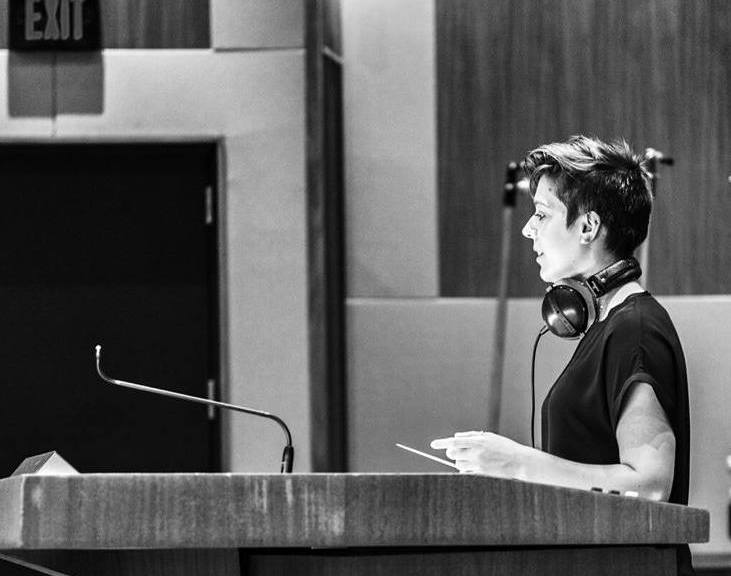
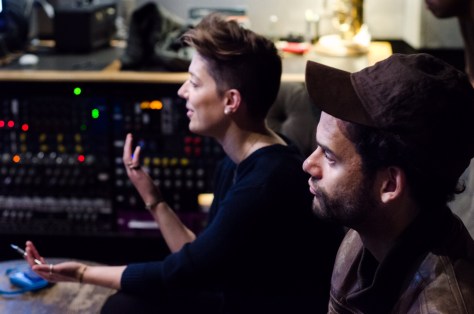
British born composer Emily Rice is a member of the club of young composers who began as serious instrumentalists but angled into the path of composition. While many gifted performers seek the adulation of a live audience, a subset chooses instead to influence and affect generations of audiences by writing music to interact with other art forms; in Emily’s case, film and television. The choice to have your work be supportive and shine the spotlight on another’s performance implies both talent as well as a complementary nature. No doubt, her early years as a cellist in London taught her the importance of each individual’s role in an ensemble, as well as the emotional impact the entire group could elicit on an audience. Following a successful series of compositional endeavors in the UK, Rice began fielding offers from Hollywood with highly successful results.MV5BMjIzMTUyNjIyMV5BMl5BanBnXkFtZTgwMTAzOTYzNzE@._V1_UY1200_CR165,0,630,1200_AL_ (336x640)

Najmia is a film about the last days of a pregnant twelve-year old Yemini child bride before undergoing labour. The uneasiness of the subject matter in terms of social conformity and the life endangering experience of Najmia coupled with the presentation of this piece led to a win in 2015 at the Forum on Law, Culture, & Society’s International Short Film Competition. Ethical discussions were bound to arise concerning the situation in the film but Rice states, “Our main focus was to communicate the topic of humanity, especially towards the central character Najmia. The film ends ambiguously with Najmia giving birth and the audience is left not knowing whether she survives the labour or not. The film’s aim wasn’t to make judgment on child marriage and the pregnancies that result from these marriages, but to raise awareness about the need for proper midwife training and better sanitary conditions in these situations.” The film required a score that would match the intensity of the story being displayed on screen.IMG_3063 The compositions Rice created more than achieved this goal, as proven by her nomination for Best Composer at the Underwire Film Festival in 2015 (Najmia has received four nominations in addition to those previously mentioned). Rice took some extra precautions to assist the filmmakers in avoiding any preconceptions by the audience. She comments, “We wanted the audience to come away thinking that Najmia could be any young woman, not just a young woman from the Middle East as depicted in the film, and this is why I avoided using ethnic instruments. Also, emotion is something that strings provide very effectively. As a string player (I started my musical life as a cellist), they were the obvious choice.” Emily used an early musical form known as a passacaglia as a base to create the cue in the climactic scene in which we realize that the main character is in trouble. The composer’s knowledge of the prejudices that we may carry with us helped the filmgoer experience the true message that was intended.
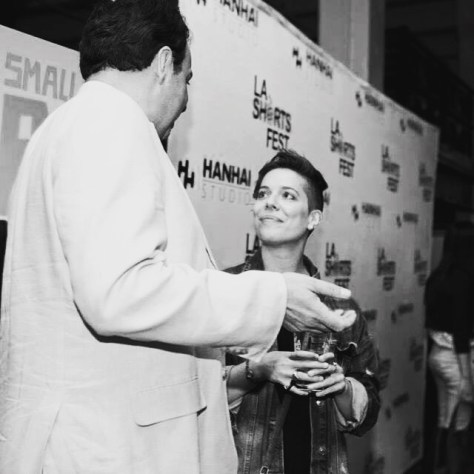
2015’s award winning Clone Counseling is a stark contrast in subject matter to Najmia. A comedy that concerns a man in couple’s therapy with his clone; the film needs to evoke a completely different color of the emotional spectrum when it comes to music. Emily worked hand in hand with Aaron Burch to compose a sonic backdrop to set the proper tone. The subject matter of technology and its contributions to society are not lost on Rice and her approach to composing as she utilizes a blend of organic instruments, loops, and electronics.  Highly recognized composer Bruce Broughton (Academy award-nominated, Emmy award-winning, and ASCAP award-winning) recognizes Rice’s abilities and achievements. He relates, “In all of the musical combinations, whether large or small, whether with live musicians or with electronics, regardless of the demands of musical or dramatic style, Emily does a fine job in demonstrating her skill in approaching and successfully negotiating a broad range of contrasting and dissimilar requirements.”IMG_3058

As an artist who is cognizant of the evolution of TV and Film and the need for the compositions that accompany it to grow, Emily constantly seeks out new challenges and ways to widen her palette. In addition to live action films, animation has been popular for many decades and continues to change with technology. As continued validation that Rice is clearly a respected and contemporary member of the film and music community, the Los Angeles Live Score Film Festival recognized and selected her to score the animated film Cowboys in a Saloon (awarded Best Picture at the Los Angeles Live Score Film Festival). The score was recorded by the LA based ultra modern ensemble the Helix Collective. Emily takes an active interest in the live music scene in Los Angeles but it is her deep love of film and television composing that drew her to the city and industry. Her achievements working on commercially successful films such as the Jerry Bruckheimer production “Deliver Us from Evil” (Grossing $65 MM) and the $100 MM Worldwide hit “The Last Witch Hunter”, starring Vin Diesel, have benefited from Rice’s focus as well as longer formats like the WGN’s TV series “Underground”.

Emily continues to immerse herself in new challenges and musical experiences here in Los Angeles. The composition and orchestration for 93 Days, about a Liberian-American racing against the clock in a foreign country against the Ebola influenced panic, demands an intensity and suspense similar to other big budget films. It’s a situation to which Rice has already proven herself to be more than appropriate to contribute.  Firefly (2016, currently in production) sees Emily being challenged with the dichotomy of wonderment and suspense. The child’s perspective of Maya (the film’s central character) has led the composer to seek a nontraditional approach in order to bring something fresh to the story. The score of Firefly is based on musical motifs, including a “monster hunting” theme. Rice reveals, “The ‘monster hunting’ theme is quite rhythmic as it accompanies Maya while she prepares traps for the imaginative monster. I’ve also used a lot of instruments that are typically ‘light’ to reflect the childlike qualities in the story…mostly harp, piano, celeste, and a small amount or strings and percussion.” Sometimes it takes a light touch and approach in a score to leave a strong impression.