Category Archives: Music

Anton Engel is living the dream with The Dreamboys

anton-3
Anton Engel photo by Daniel Jaems

When Anton Engel was a young boy, he would watch music videos, dreaming that one day he would somehow be a part of them. He was like most children, watching TV, wanting to be on the screen one day too. But it was this initial spark that led to his interest in dance, and now Engel is a celebrated dancer all over the world.

Initially starting as a competitive break dancer at just 13, Engel began studying and mastering all types of dance, wanting to be able to do whatever he felt was best for the performance. This led to performing with chart-topping pop group Fifth Harmony at Heaven in London earlier this year, as well as his appearance in the opening for the BBC Music Awards with almost five million people watching on television. He danced on the famous Alan Carr’s New Year Specstacular for two consecutive years, and once performed for none other than the royal family as part of the Royal Variety. Most recently, however, he lived his childhood dream quite literally, dancing with The Dreamboys in their tour of the United Kingdom.

“It was great to have the opportunity to dance and travel at the same time,” said Engel. “The Dreamboys have extremely good dancers who are a part of it and I wanted to prove to myself that I was at the same level.”

And prove himself he did. The Dreamboys are one of the world’s biggest glamor shows, and the most successful and celebrated in UK history. Engel not only excelled at his role, but stepped into the shoes of other’s when they were absent, which is called swinging people, ensuring the audience had the same experience at each tour location.

“This wasn’t easy since sometimes we only had an hour before the show would start. I would usually find a quiet room and go through every number to make sure there wasn’t anything I was missing. I always found a way to make it work,” said Engel.

This determination and professionalism was not missed by his counterparts. Not only did Engel work alongside a few celebrities from reality shows like Scotty T and Gaz Beadle from Geordie Shore, and Rogan O’Connor and Joss Mooney from Ex on the Beach, he worked closely with had well-known dancer and choreographer Jordan Darrell. Darrell describes working with Engel as an absolute delight.

“We have had so many ups and downs and Anton has always been ready to help. His professionalism and dedication to his work is outstanding,” said Darrell. “Anton dealt with rehearsals very well and the pressure of learning the choreography one-on-one with me in a studio, and there was a short time frame of which he had to learn a lot of choreography and spacing. Not once did he falter or waver his responsibilities, and he remained calm and professional throughout, soaking up the pressure with a smile.”

“Throughout the run of the show Anton has never backed down from a challenge such as a quick re-block or even a track change, which he then covered,” Darrell continued. “Anton has never deviated from the content or feel of a number, which I set as choreographer, and the audience response has always been one of the strongest towards him. He is talented, a hard worker and a pleasure to work with. In my experience this combination is one that can be added to any team, in any work environment, and will always be an asset.”

The audience attention that Engel received did not go to his head, but was actually a humbling experience for the young dancer. Touring for months on end three to four times a week, he saw the letters, messages, presents, t-shirts, and flowers he constantly received from the audience as support.

“It was so much fun to get the opportunity to dance for such big audiences. The feeling on stage is incredible. After the show, we gave out autographs, which was a really fun experience. It makes me happy knowing that when people watch me dance they leave with a smile on their face,” said Engel.

Despite the challenges that can come from touring, like never being able to have the comfort of your own bed, and having to adapt to a different stage with each show, the travelling was a highlight of the experience for Engel, and being on a tour bus is a unique way of doing it.

“It was amazing to see so many different parts of the UK. I had never been outside of London before I joined The Dreamboys, and now I have been in every major city and a lot of lovely small places that I never heard about,” said Engel. “I met so many different people and it’s such a pleasure to see that I have so many fans not only in London but all over the country.”

The Dreamboys experience is one that Engel will never forget, and helped him prepare for his upcoming show in Las Vegas, with Channing Tatum’s Magic Mike Live.

“Being on tour with The Dreamboys taught me a lot and helped me improve in every dance style. By switching dance styles from number to number it really let me use my full capacity, and I really enjoyed it,” concluded Engel.


Larissa Giampaoli connects fans to bands

The world we live in has evolved more than imaginable in the last 60 years. From moon landings to the iPhone 7, technology, politics, and entertainment has vastly changed. The music-world is no different. When The Beatles were at their prime, an appearance on Ed Sullivan was enough to have everyone talking about them. Now, you need to have an active YouTube channel, Facebook, Instagram, Twitter, and more. For many musicians, this is out of their realm. Enter creative producer Larissa Giampaoli, who uses her passion for music with her social media savvy to maintain a band’s image, and ensure they are the ones everyone is talking about.

This is exactly what Giampaoli helped achieve for the rock band Mastodon’s Once More Around the Sun album, where she took a leading role as a new media specialist and day-to-day manager for the bands.

“I first saw Mastodon live in NYC, and I was captivated by their strong stage presence,” she said. “I still remember how the crowd was going crazy for every song. They are very unique on the stage and as a band, and I think their social media reflects that. Even when thinking about the working for a post we need to take that into consideration.”

A highlight for Giampaoli was watching the band act in an episode of Game of Thrones, which was one of the best rated episodes in the shows history. They appeared in the eighth episode of the fifth season of the show titled Hardhome, where the Battle North of the Wall takes place. The bands original song “White Walker” is featured on the Game of Thrones mixtape Catch the Throne Vol. 2.

Processed with VSCO with c1 preset
Larissa Giampaoli has worked with bands Mastadon and Ghost.

“I am a huge Game of Thrones fan, and it was pretty amazing to watch them on the screen. They were killed by the white walkers in less than ten minutes, but still,” she joked. “Their fans seem to be also huge fans of the show, anytime we share an article related to it, they go crazy.”

Giampaoli worked closely with Nick John and Ernie Gonzalez, who manages the band. She describes them as great to work with, and are rock business veterans.

“It’s very fulfilling working with Larissa, she is a forward thinker, problem solver and a wonderful person to be a part of the RSE team who works very well with all of us and individually,” said John, who has over 20 years of experience. “Larissa is great as what she does by thoroughly reviewing and gathering information on each project fully. Larissa also is great at finding new platforms for our business and determining if they are something our company can benefit from using. She works very well with our team. Working with Larissa is great experience, she is reliable, diplomatic, and easy to get along with.”

“Larissa is a team player, she is always willing to help and is a great source of information as it relates to creative strategy and digital marketing. Larissa helps the team move forward in a positive direction,” he continued.

“Larissa has proved the incredible value of her talents by helming the release strategy for the Grammy Award nominated, Billboard Charting Once More ‘Round The Sun LP for heavy metal titans Mastodon, Gojira’s critically acclaimed sixth album Magma, and the Grammy Award winning and commercially successful Meliora album for Ghost,” said Gonzalez. “For Larissa to have worked with these legendary, genre-pushing acts undoubtedly illustrates the demand for her work, and her status as a highly accomplished creative producer of high commercial value.”

For Giampaoli, it was the band’s commitment to their art that made the experience truly worthwhile.

“Mastodon take their music and art very serious. Each T-shirt design has something special about them, and it was interesting to me to get to know all these obscure artists who designs their stuff,” she concluded. “It was one of my favorite things.”


THE STAR BEHIND THE ROCKSTAR

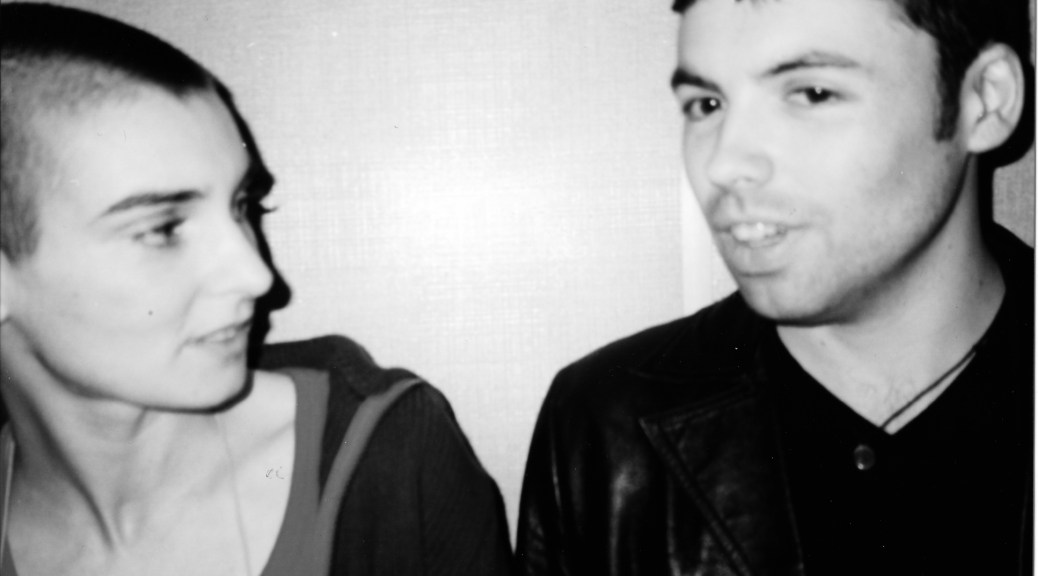
The throngs of adoring fans at concerts are almost always unaware of the professional workings of their favorite artist; the organizational and musical preparations necessary to create the inspiring events that they desire. Movies often show a romanticized and unrealistic scenario in which the artist calls some friends to play with them when, magically and immediately, everything falls into place. The musicians who live this amazing life will tell you it is magical for them but far from immediate. Any great performance takes talent, but it also requires preparation, professionalism, social skills, and a strong work ethic. The greats have earned this moniker through dedication as well as artistry. While many people have heard the title Musical Director, the specific duties required of an MD are vague at best in most individual’s understanding. Kieran Kiely is the respected musician who served as MD for Sinead O’ Connor from 2007 to 2012. As MD, he performed many roles to enable Sinead to focus on the expression of her music without being weighed down by the numerous other variables which might encumber an artist of her renown. At a certain level of fame, an artist’s career becomes similar to any other large and global pursuit. This means that artists such as Ms. O’ Connor and her peers require a musician whom they can trust to safeguard the integrity of the music and its presentation. A Musical Director is perhaps the most trusted advisor for any artist, meaning that the responsibility placed on them is reserved for the most valued and respected musicians.

In the mid 90’s, Kieran was playing in the Irish Celtic Punk group Shane MacGowan and The Popes. Kieran recalls, “One night while hanging at the Popes usual haunt, Filthy McNasty’s Pub in Angel, London, Shane asked me to go to a club with him, without knowing where we were going or whom we were meeting. When we got to the Club(The Atlantic Bar, SoHo) there was Sinead with Shane’s girlfriend, Victoria. I ended up chatting with Sinead. The next time I saw her was a year or two later when I was asked to play on a record. Somebody from the production recommended me for the session. It turned out to be a duet with Sinead and Terry Hall from The Specials, with Dave Stewart producing. This was the first time I met Dave. It took place at The Eurhythmics Church recording Studio in Crouch End, London. I played Low Whistles (Irish Flutes). Sinead loved the sound of those at that time. I continued to meet Sinead from time to time at gigs and festivals and she then asked me to play on her record Faith and Courage, and subsequently some of her following records.” Conflicting schedules prohibited a closer and more permanent working situation between O’ Connor and Kiely until 2007 when she asked him to assume the role of Musical Director for her. Largely known as a pop/rock artist, O’ Connor was intent on making use of Kieran’s mastery of Celtic instruments and their approach to her music. While he would add authenticity to the music that supported Sinead’s intrinsic Celtic vocal stying, Kiely would also be required to assume various roles as MD.

One of the most vital roles of an MD is to find the proper band members for an artist. It is not as simple as finding great players, although that is a requirement. Band members must be well versed in the style of music they will be performing but not void of other influences as they may be called upon to “stretch” or “flex” their approach. With touring artists, there is an understanding of the lifestyle which can mean long periods of time away from familiar people and surroundings. Touring musicians are the nomads of the music world. This requires someone whose personality meshes well with the sentiments of the artist they work with. It is similar in many ways to dating. There has to be a certain spark to the interaction. In his role as MD for O’ Connor, Kiely assembled a group of elite musicians respected throughout the world; an outstanding achievement for any MD. The band consisted of: British Session Drummer Ash Soan, Guitarist Dave Randall (recognized for his atmospheric sound), Yolanda Charles (renowned Bassist, praised as one of the best in the world), and legendary guitarist Robbie McIntosh. Sinead’s music is quite eclectic and emotional, requiring musicians who play at the highest level as well as those who listened intently to match the dynamic level and energy. Because these band members were so sought out, Kieran took an especially benevolent, yet professional approach. He states, “I like to try and create an environment where everyone feels very comfortable so they can be creative. In regards to parts, I was pretty specific. I knew Sinead’s material really well and created new arrangements of her songs that were sensitive to Sinead’s performance style. To achieve this, I had parts worked out for the players in advance. We also had a new album to promote and so had to be true to those songs. I wouldn’t say it was difficult though; when you have that caliber of musician to work with, it’s a pure joy.”

Rehearsals are always a good barometer for the mixing of skill and personalities but the real evidence surfaces when the artist and band tour. The incredible ecstasy of performing in front of thousands…even hundreds of thousands can be offset by the disconnect from familiar faces and places. Many musicians are defeated by the road. While Kieran is a veteran of the road and the studio, each new group introduces a number of variables. Early communication proved positive as he tells, “After I had taken on the role of MD and we did our first few shows, she sent me an exuberant text message, saying “who knew we were both so F**king amazing. She was very happy, which of course meant that I was happy.” Kiely continues stating, “You don’t just phone it in with Sinead, you have to be present, in the moment, and extremely sensitive to dynamics and tempo. She gives you everything you need in her voice; you just have to listen. On the intimate songs, I learnt to be comfortable with my playing being super exposed, where every expression and articulation could be heard. That sort of experience in front of 10’s of thousands of people over a period of time really hones your performance skills. Putting together a band that understood this in the same way that I did was a major achievement for me.”

While performing the role of MD was essential to Sinead’s live performances, Kieran was also a valued recording musician for O’ Connor. Selling in excess of millions of copies, Kieran recorded five albums with Sinead: Faith & Courage, Sean Nos Nua, Collaborations, She Who Dwells, and How About I Be Me. These recording are proof to Kieran’s masterful musical talent as well as O’ Connor desire for him to be a part of creating her sound. This desire was shared by others as Kiely relates, “She [Sinead] called me late one night to come play on a track. When I got there, she introduced me to Wyclef Jean, who was producing the song and said, ‘This is Kieran, he is the soul of my album. (Faith and Courage album).’
I later worked on Wyclef’s own record, Masquerade, at his NYC studio, and with his sister and brother.”

Kieran now resides in Los Angeles where he has taken to composing and orchestrating for film. His work creating the music for Danny Greene: The Rise and Fall of the Irishman proves that he is still using the sounds for which he is recognized to contribute to the success of artists. He still fondly recalls his time with Sinead O’ Connor and notes one obvious memory, “Nothing Compares to you was a highlight. It’s such a famous song. The audience are always waiting to hear it, so it’s a great moment for them. It wasn’t unusual to see people crying in the audience. ‘3 Babies also’. Sinead can conjure up such emotion when performing. What’s important to Sinead is that she connects with the song.” Kieran Kiely also connects to the song…and the art, in a very leading way.

screen-shot-2016-10-10-at-1-05-25-pm

THE UNIVERSAL LANGUAGE OF MASTERY TRANSLATES GERMAN INTO CELTIC

Almost every aspiring musician has this dream; a huge band playing a show at a gigantic venue suddenly needs someone to fill in for a show, then they like you so well that they ask you to stay on the gig. It never happens, right? Wrong. Yes, it’s the stuff that dreams are made of but it does happen from time to time. The part that isn’t so highly glamorized is the crammed preparation and the nerves that can make one “lose their lunch” hoping that you’ll make it through that first gig without everything crashing down on top of you (to say nothing of those dreams in which you arrive to school only discovering you are only wearing underwear). The true music professional can only hope that his years of preparation have honed their instincts to a point where all will be fine. A great example of this is the tale of German guitarist Stefan Hillesheim. As a celebrated Blues, Rock, and Jazz guitarist in his homeland Stefan was enjoying a fulfilling life as a musician when he was asked to fill in for the internationally popular Celtic Dreams. The incredibly popular touring musical show Celtic Dreams features a unique mix of modern rock with traditional Scottish, Irish, and Celtic folk music, with an eclectic mix of dancers and other visual performers. Celtic Dreams regularly perform to sold-out audiences all over the world, and have been the subject of many press articles in Europe and abroad.

Celtic Dreams tour manager was in a high pressure situation when the guitarist for the show was suddenly unable to perform. This extremely popular show relied on the professional execution of the complicated musical pieces to excite the audience and support the dancers and other performers. The guitarist was essential to every performance due to the fact that Celtic Dreams takes on a contemporary rock influence with their traditional music, making it more accessible to a wide age range of audience members. The fact that the music was quite complicated and required flawless execution of the many transitions from piece to piece further exasperated the situation. Celtic Dreams tour manager Oliver Stahl needed to find not just “a guitarist” but, “an amazing guitarist” who could read complex charts and play shows to huge audiences with basically no rehearsal. Luckily for Stahl, he was in Germany and was able to contact Stefan Hillesheim. Although not focused on traditional Irish music, Hillesheim was particularly enabled to take on the task of this music for Celtic Dreams as he reveals, “I started listening to Irish folk bands like the Dubliners, the Pogues and the Fureys when I was about eight years old. My Uncle is the lead Singer and Guitarist of the well-traveled Irish folk band Limerick. My Parents took me to his concerts from my early childhood on. When I started playing electric guitar in my early teens, I really got into Gary Moore and Rory Gallagher (both are Irish guitar legends). I love the way they combine traditional celtic music with Blues and Rock.” As an accomplished and lauded guitarist in Germany who also possessed an understanding of the inherent lilt of traditional Irish music, Stefan was an easy choice to fill in for Celtic Dreams. Oliver Stahl comments, “Stefan performed as a lead musician and guitarist on multiple occasions for Celtic Dreams. His knowledge of both modern rock styles and traditional Celtic folk music made him perfectly suited for us. I truly could not have asked for a more versatile musician. Stefan was with us for multiple performances, all of which were held in major venues in large cities. I must note how versatile a musician Stefan is and how this added to the success of each of these shows. His ability to jump between and blend styles on both acoustic and electric guitar (and occasionally bass) was astounding! It brought a fantastic energy to each of our performances. The shows that Stefan played in were performed to sold out audiences and I’m positive that his playing was a major factor in garnering these huge

audiences as well as the press and great reviews. Stefan played a lead role in ensuring the success of every show he performed and has been an essential player in boosting Celtic Dreams reputation and success as a whole. Stefan is known throughout Germany as an incredibly skilled and accomplished musician who has made a name for himself as both a session player and bandleader.”

celtic-dreams-02

While Stahl was nervous until he found Hillesheim, Stefan’s uneasiness began at this time. You could almost say that Stahl “gifted” his concerns to Hillesheim. That’s not to say the guitarist wasn’t excited to play with Celtic Dreams…quite the opposite. Stefan was contacted three days prior to his first performance with the band and had to learn three hours of music; including medleys and complicated transitions. Daunting task ahead of him, as a true professional, Hillesheim understood that the production was depending on him to fit perfectly into an ensemble that was already running smoothly. In respect to the music, Stefan wanted to play authentically stating, “Every genre of music has its appropriate vocabulary. When you play Irish or Scottish music you have to stick with certain clichés because this kind of music has a long tradition. Even though there is room for interpretation and improvisation, it wouldn’t be authentic if certain elements were missing. For example, the typical triplet based rhythmic in Irish step/tap dance music is the foundation of this musical language and is a requirement. For traditional Celtic Folk tunes like ‘Scarborough Fair’ or ‘Star of the County Down’, I would definitely play an acoustic guitar because that is what people expect and want to hear. Modern Irish music like the Corrs or the Cranberries often features electric guitar so that would be my weapon of choice in that case. Overall it depends on the ‘Vibe’ of a song. I play the instrument that fits the song best and compliments the singers as much as possible rather than playing what I personally prefer, even if that sometimes means committing to a less ‘flashy’ or interesting guitar part.”

Hillesheim is more often seen performing in a Blues club (with popular German band BlueSide), at a large outdoor musical festival, or even at major concert venues (as he did recently with Liquid Blue at the Staples Center in Los Angeles) but all of these ensembles are the contemporary Blues or Rock bands with which he is more commonly known to perform. Having spent decades in groups of this type, Stefan is extremely familiar with them and points out one major difference that he had to adjust for in playing guitar with Celtic Dreams…dancers. He remarks, “Celtic Music has a lot of colors to it. Many of the tunes are quite danceable and have sort of a jumping, galloping character to them; others are almost hauntingly emotional, melancholic, and full of heartache. I had the advantage of playing behind a number of great vocalists before so I was familiar with that role but the Dancing/Step Dance groups added another component to the show and I found myself playing behind a line of dancers.” Stefan more than exceeded the hopes of Celtic Dreams producers and performers as proven by the fact that he was immediately asked to finish out the tour as their guitarist. Not content with expressing this “accent” in his guitar playing, Hillesheim has currently relocated to the US to pursue his career and further his exploration of the American musical style of the Blues. If Stefan’s history tells us anything, we can be certain that this internationally acclaimed guitarist will be recognized amongst the latest generation of Blues guitarists.


Singer/Songwriter Juvicsa Talks About Debut EP “Eyes to Land”

I recently had the chance to catch up with the uber talented singer songwriter Juvicsa Vela, who released her debut EP Eyes to Land produced by Federico Angel earlier this year. In our interview Juvicsa opens up about the new EP, her writing process and some of her musical influences.

Born in Peru, Juvicsa discovered her god-given talent for singing and passion for music at an early age, and when she moved to Sweden with her mother at the age of 12 her artistry really began to take root. Having lived all over the world, it’s not surprising that Juvicsa’s music exhibits traces of influences from many cultures.

Juvicsa Vela
Singer/Songwriter Juvicsa

Juvicsa first began working on the EP while living in Los Angeles where she attended the Musicians Institute, but in search of new inspiration and a change of scenery, she moved to Reykjavik, Iceland last year where she finished the album working remotely with her LA-based producer Federico Angel.

Eyes to Land can easily fit into the pop/rock category, but with R & B and Latin elements, not to mention Juvicsa’a powerful vocals and bittersweet lyrics, the EP eloquently defies genres.  

You can purchase Juvicsa’s debut EP Eyes to Land on Bandcamp, iTunes, Amazon and Spotify. There’s also a limited amount of signed physical copies for purchase on Bandcamp. You can also find out more about her and get updates on upcoming shows through her website, Facebook and YouTube channel.

Juvicsa also wrote the popular theme song for an Indonesian adventure TV show sponsored by Mitsubishi called “Jonsson & Robinson Journey,” which premiered to millions of viewers across the country.

To find out more about Juvicsa and her new EP make sure to check out our interview below.


How old are you?

28 years young

When and how did you first get into music?

I must’ve been around 4 or 5 when I started to sing. I had this boombox with a built in mic and a lot of cassettes. I used to spend hours and hours and hours on the floor with my boombox, recording myself singing and creating harmonies over my recordings, I think that’s when I first created something musical. This was so liberating to me, a kid who was a rebel, always getting in trouble at school but when I went back home and locked myself in my room I’d spend hours singing and doing all those things I loved to do and that was my outlet. Then I started writing songs at the age of 15 with an old piano my mother got for me and a little MIDI controller.

When you say you were a rebel– what kind of trouble were you getting into?

As a very hyperactive kid, I didn’t really like to follow the rules at school so I got sent to the principal’s office very often for roughhousing and sneaking out of class to play with the older kids.

What do you think might have happened if you hadn’t found music as an outlet?

I already have a hard time focusing on one thing at a time so I think I would’ve probably lost my mind a little. I don’t think I would have been able to deal with the darkness and the difficulties of growing up. I would’ve possibly kept getting in trouble.

How long were you working on “Eyes to Land” before its September release?

It took me about a year from scratch to finished product, a lot of it had to do with the fact that I was in Iceland and my producer was back in the states, so there was a lot of going back and forth, time differences and work on both our parts. Lots of coffee, little sleep.

Can you give us a little back story on the EP and where you got your inspiration from?

I moved to Iceland a week after my grandma passed away, my grandma was more like a second mother to me, so the whole process of composing the EP was a very emotional one. I definitely think that both Iceland’s landscapes and nature, and being in a very emotional state, brought the EP out, especially being in a brand new country.  

Did you write all of the songs on the EP?

I did, along with my producer.

What is the writing process like for you?

I think the writing process was different for each song, I could get inspiration by sitting by the ocean in Reykjavik, being in the shower for another song, conversations I had with friends that sparked something in me and made me drop everything and write. I do spend a lot of hours alone in the beginning, I think that’s what works best for me and I’m more comfortable that way. After writing a song I’d call my producer and we’d go to the next step, more composing, polishing, re-recording and so on, all through FaceTime.

Can you tell us about your inspiration for some of the songs?

Well for example “High Tonight” was born out of a glass of wine and a late night conversation with a friend of mine. She was going through a tough break up at the time and she said a couple of things that really struck me. I dropped everything, went over to the keyboard and started writing it, it was written in a couple of hours. She actually doesn’t know about it yet!

For “Unaware” I had to dig a little deeper, it’s definitely a very personal song to me. My inspiration came from being in a toxic environment and feeling exhausted but still seeing a light at the end of the tunnel, still not being able to let go of that thing that can break you but can save you. The sound for “Unaware” is definitely influenced by No Doubt and Spanish music.

“Now” is the song about hope. Like I said, there has to be a light at the end of the tunnel and this is it, this is your saving moment, it’s you giving in instead of giving up. “Now” is kind of my full circle song.

What is your favorite song off of the EP right now?

My personal favorite is “Unaware.” I’m very emotionally attached to that one.

Why did you choose to name the EP “Eyes to Land”?

It’s a poetic play on words. This EP symbolizes a person trying to deal with death and rebirth at the same time. The name comes from trying to deal with the death of someone so close that in a way symbolized the death of a part of me, but also the rebirth, which for me was moving to another country. That in both situations you need guidance, you need eyes. If not your own, then someone else’s.

How would you describe the album to those who haven’t had a chance to hear yet?

A shoegaze and pop/rock mix with emotional but energetic vocals. With all kinds of raw ENERGY ranging from sad to sensual.

Did you play any instruments on the album?

I played the keys on the final product but I program different instruments when I’m in the writing process as well so that everything is the way we want it.

Do you have a consistent band backing you?

Not as of now I don’t. It’s hard to keep one consistent band with you when you’re traveling a lot.

Who else was involved in the making of your new EP “Eyes to Land”?

Federico Angel as producer and instrumentalist, the amazing Ro Rowan on cello, Dean Dichoso as instrumentalist, Dean Dichoso Productions for mix and mastering and Steinunn Osk Axelsdottir as sound engineer on vocals.

How did you choose Federico Angel as your producer for the album?

From the first day we started working together I knew there was something that clicked. It’s actually very simple, we’re both very straight to the point and he knows exactly what I want and how I want things to sound, sometimes even without fully explaining what I mean, he gets it. I mean it’s gotta be a good match when the artist is explaining a sound as a color or a metaphor and the producer completely gets it down.

You’ve had a pretty multi-cultural upbringing, can you tell us about some of the places you’ve lived and how they have affected your journey as a musician?

I was born in Lima, Peru but I moved to Lund, Sweden when I was 12, as an adult I moved to Los Angeles and as of last year I live in Iceland. All of these moves and amazing experiences with different cultures make my music what it is. Ultimately all I want is to unapologetically mix everything I know and write something I think will sound great and people will relate to.

Were your parents involved in music as well?

No, my parents weren’t but I have singers and artists in my extended family.

Can you tell us a little bit about Iceland’s music culture? Do you feel that it has influenced your work as a musician?

Funny thing about being like a sponge when you’re a musician, I sent my producer a demo during our Eyes To Land writing process and he thought it sounded Björk-esque, which obviously was a huge compliment that I most likely didn’t deserve but it really made me think about inspiration always changing and how it can be so related to where you are, I think it’s amazing.

I’m a really big fan of Icelandic music, coming from Sweden, I initially thought it could be similar but it’s really an art of its own. To me, the peculiar sound that Icelandic music has, has to do a lot with the isolation of the island and even modern Icelandic music has a characteristic sound with traces of the old.

Are you involved in any collaborations at the moment or are you mostly focusing on your solo career?

I’m working with a couple of artists at the moment for minor projects or songs I’ll be featured in but I’m mostly focusing on my solo career at the moment.

What five albums are you listening to most right now?

Garbage’s new album “Strange Little Birds,” Sia’s “This is Acting”, Kendrick Lamar’s “To Pimp a Butterfly” and waiting impatiently for the New Lady Gaga album and the new Beth Hart album!

If you didn’t become a musician, what profession do you think you might have chosen?

I think I would’ve still been involved with the arts in some way, I would’ve been around music and art in any way I could. I always try not to let plan B distract me from plan A though.

JAPAN’S KENJI USUI IS PUSHING THE MUSIC SCENE FORWARD, ONE BAND AT A TIME

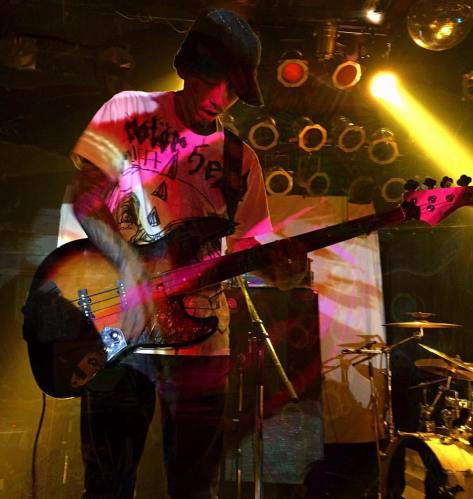
The music industry and the music scene in America are completely different from what it was even just ten years ago, and it is continually changing. Napster of course led to the upheaval of the music business. There is still conjecture about the result of this occurrence and whether it’s effects were beneficial or detrimental to the music world. One side insists that it was blatant piracy, a crime that deserves severe punishment. Others state that this “anarchy” leveled the playing field which led to a resurgence in the artists taking control from music industry executives and the birth of the DIY movement in the US. For quite some time now, the Japanese have been attracted to American bands and artists, taking careful note of it. One person who has done this is Japanese artist Kenji Usui. Usui is a prevalent part of the Japanese music scene who has also pioneered much of the ever growing Japanese independent music terrain. As an established Japanese artist, Kenji has made it his mission to increase visibility for the less established Japanese musicians as well as visiting foreign artists and bands.

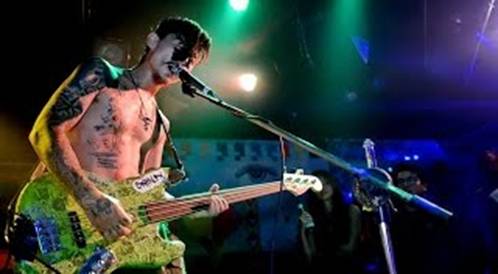
With a long list of band credits and recordings that include; Blackjack, SPOON, Allies and Aces, Pororocks, and An Atomic Whirl, Usui has become weaved into the Japanese musical tapestry. He is highly recognized for his talent on multiple instruments (Vocals, Bass, Drums). As someone who climbed up from obscurity to become one of the most recognizable faces in the Japanese music world, Kenji understands how difficult a job it can be to simply gain a platform from which to express one’s own artistry. With that in mind, he set about to establish the opportunities for other artists to accomplish this.

an-atomic-whirl-promo-photo-2014

One of the most direct and successful means of Kenji helping to expose artists to the scene was as cofounder of Noise Union Japan Records. This label has been a way to connect bands from Japan and surrounding countries. Noise Union Japan Records is a way to promote bands and develop a network that will allow artists to grow and expand. Founded by Kenji Usui and Chikashi Gushiken, this label seeks to showcase the best artists from not only Japan, but also Taiwan, China, Hong Kong, Korea, and other countries in the region. Gushiken (Noise Union Japan Records co-founder) gives credit to Usui’s affable nature as well as his love of music for enabling the success of this record label, commenting, “Kenji has a knack for meeting people and finding a way to incorporate them into Noise Union Japan. Every time he goes to a show in Tokyo or travels to a different country, he comes back with multiple new contacts and new ideas for booking events or festivals. He is highly motivated and productive, driven by a genuine passion for growing the music scene.”

As a member of Anit-Clockwise Productions, Kenji helps to organize events around Tokyo. Whether it is a local band or an international artist touring Japan, Usui understands the necessity of having an experienced hand on deck. As a member of many different bands over the years (Anti-Clockwise Productions recently produced and shot the music video for “Sanlitun” by Kenji’s band An Atomic Whirl) Usui is particularly empowered to make the process much less cumbersome for bands from any location in the world. It has afforded him the chance to gain knowledge and insight, as he reveals, “The best thing about working with bands from other countries is the inspiration and new perspective it gives. For me, working and touring with bands from other countries has been the most rewarding part of playing music over the past several years and I look forward to doing more of this in the future. It seems that US musicians are very interested in Japanese music and culture. I am always impressed by the level of creativity and experimentation coming from US bands, and I think that there is very fertile ground for cooperation and collaboration between these cultures in the future.

The Tsuruginomai Festival in the mountains of Japan, showcases the deep underground of Tokyo’s music scene. Kenji has aided founder Kohei Noda with this festival every year since 2010, assisting with the production and booking, as well as performing with various acts each year. As an artist who has toured playing international festivals, Usui has been an essential part of helping to coordinate this festival and others to increasing success and attendance since its inception. Kenji confirms, “I regularly perform at the Tsuruginomai Festival with Pororocks, An Atomic Whirl, and Kissaco, as well as playing onstage with various friends’ bands. Being a performer gives me an immediate understanding of what the artists on the bill are experiencing. It’s important that I keep in touch with this to give both the bands and the audience a better concert experience. It is often difficult, but it’s also rewarding. Some of the best bands are the bands you never hear about; being a part of an event like this, you are exposed to these bands. There is always someone knew who is bringing a new idea or style to the music community. It’s exciting when you witness that.”


pororocks-in-2016

BRINGING THE GREAT CONCERT HALLS TO CLASSICAL MUSIC FANS

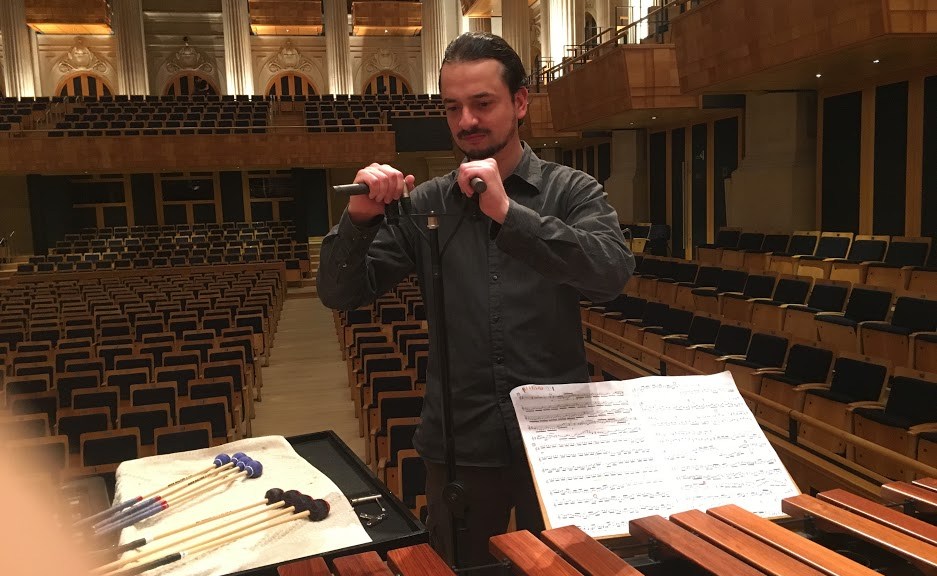
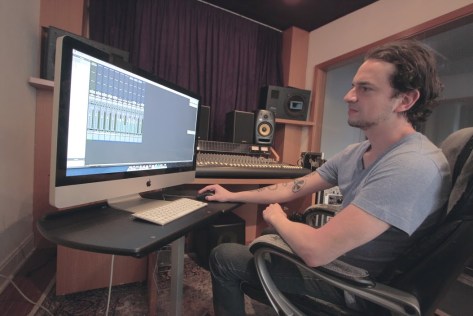
Cadu Byington has been on tour and is ready to sleep in his own bed again. He is not playing in an indie rock band or the DJ for a famous rapper; Byington is the sound engineer/music producer whom Jakob Handel tagged to work with him to capture performances by classical and contemporary artists at some of the most famous and historic venues in Germany and Switzerland. Handel Classic Audio wanted to enable classical music fans to hear these famous ensembles in their home venues to pay tribute to the composer, artists, and the acoustics of these iconic acoustical structures. Jakob Handel (Grammy nominee, Latin Grammy award-winner, and German Echo Klassik award-winner) has the credentials that attract the elite of the international recording industry. Handel’s work with Sony / BMG record labels, Universal, EMI and several independent labels has empowered him to gain access to many historic venues for recording purposes. For his latest passion project, he wanted to gain access to some of his favorite venues in Germany and Switzerland, and he wanted Cadu Byington as the expert he trusted on this project in a very hands on manner. Jakob Handel explains the decision for this choice declaring, “Cadu is a very talented producer; over the past few years he has come to dominate all aspects of a production. He is also a great musician, a feature that I think is the most important for a music producer. One must think musically more than technically, and know how to convert this musicality with the available technical resources; this is the secret weapon to becoming a successful producer.” The recordings would require them to quickly access the personality and intricacies of each venue and tailor the recording process uniquely and efficiently to each performance. With a full understanding of the challenges and demands of this opportunity, Byington welcomed the chance to test his abilities and deliver a product up to the standards of the Handel Classic Music name. Handel and Byington had been associated since 1999 but this was a major undertaking on which the two would work together. To fully appreciate these recordings, one must understand the approach that was taken to attain them. At a time when recording software has made everyone feel that they are a true recording engineer, a glimpse into the process that Byington and Handel undertook gives evidence to true mastery of the recording process at its best.

For this undertaking, the recording process was different from both a studio setting and conventional live scenarios. Handel Classic Music wanted to record at three different venues; Rosengarten in Germany, KKL in Lucerne, and Tonhalle in Zurich. The acoustic identity of these locations as well as the ensembles famous for residing there are so lauded and respected in the classical music industry that Handel Classic Audio wanted to bring the experience of hearing them to the world. Music fans have spent so many decades listening to music produced in studios that they may have forgotten (or even not be aware of) the fact that many of the historic concert halls were designed by architects to create the optimal acoustic environment to deliver a moving musical experience. Today’s modern effects are based on the acoustic benefits of these historic musical venues. Modern concert sound systems are so ubiquitous that many audiences have never attended a performance without them. Handel Classic Music wanted to deliver a more purist experience. Byington states, “The approach is totally different. In a concert hall, we want to have the sound in its purest forms, without the interferences of PA systems, and with everyone playing at the same time, like a real concert. The halls were designed to “mix” the sound “’n the hall’. In a studio, you don’t usually have all these acoustical qualities, and you have to add artificial effects to emulate the hall sound. Besides, there are few studios that have room to fit a large orchestra.”  While operating a large sound system requires one skill set, recording a performance while delivering the unique qualities of an individual location is a completely different talent.

Mannheimer Rosengarten in Mannheim, Germany has hosted concerts by contemporary artist like Sting, Simply Red, and many others but, it is mainly home for the classic orchestras and operas for which it was designed. Cadu and Handel traveled there to record the opera Der Prinz vom Homborg by German composer Hans Werner Henze. This Art Noveau structure was built between 1900 and 1903. As a traditional concert hall, Rosengarten has beautiful natural acoustic qualities. These characteristics can be overwhelming or beneficial depending on the abilities of the engineer in charge of assessing them. Byington explains, “When you enter a new hall, you have to sit and listen for all its qualities. Listen carefully to the rehearsal, and “learn” the hall. If you have a profound knowledge of your gear, you will know what to do in order to have the sound. The halls have dampeners and baffles, but in much bigger proportions. Based on the style of the repertoire, you’ll base your approach on more or less reverb, more or less microphones. This means that the venue characteristics as well as the piece of music and style need to be factored in when making the choice of microphones and placement.”

KKL concert hall in Lucerne, Switzerland is both aesthetically and acoustically stunning. This world famous venue is home for the Lucerne Summer Festival. Cadu travelled there to record the performance of Turkish pianist Fazil Say who played Ravel’s Piano Conceto in G. For this recording, Byington needed to take a delicate approach which took advantage of the tremendous natural attributes created in Jean Nouvel’s impressive design. Byington describes, “We did a light set up with 12 microphones, using a main mic technique known as the Decca Tree. The Decca Tree consists of three identical microphones positioned in a triangular shape above the stage. It takes this name because of the DECCA RECORDS engineers who made it popular as a nice way to get the overall sound of the orchestra while at the same time having a nice stereo image. In addition to the Decca Tree, we used other spot mics placed close to sections (like strings, woodwinds, brass) and a pair for the piano solo. The hall has such a wonderful sound that using too many mics can result in eliminating the characteristics for which it is known and loved.”

The final recording took place in The Tonhalle in Zurick, thought by many to possess the best acoustics in Switzerland. Cadu was recording a production which partnered American rapper Saul Williams and composer Thomas Kessler. A mix of rap lyrics with classical music. This truly unique and modern pairing required an engineer with both traditional and modern sensibilities. It was further proof that Byington was the perfect choice for Handel on this project. For a number of reasons, the mobile approach was well suited for this situation as Cadu relates, “It is very difficult for a traditional orchestra to go to a studio nowadays. It is very expensive to have an orchestra inside the studio just for a recording, that’s why we record live and on location. For the recording in the Tonhalle, we did three days of recording. We had singers, and a full orchestra with a lot of percussion, which required a setup of around thirty microphones. The approach was very similar to KKL Lucerne, but we captured the audio with much more detail, closer positioning, and more mics. The piece was an orchestral arrangement for some Saul Williams texts ‘said the shotgun to the head’.”

photo4

  The experience was quite demanding of Byington, Handel, and everyone involved. A myriad of microphones was required to cover any possible situation. The recording crew also needed to travel as lightly as they could, assess each venue quickly and accurately, and set up as efficiently as possible. While recording in a studio allows for multiple takes and splicing of takes, this recording project meant that each recording had to be perfect as there would be no multiple takes or overdubs. Although everyone spoke the universal language of music, the technical aspects of recording and the different locations often necessitated the musicians and engineers to communicate verbally in a language that was not their native tongue. It called for everyone involved to conduct themselves with the highest level of professionalism. Byington feels that he grew in his abilities as well as his appreciation for the musicians whose performances he recorded. He notes, “I learned a new standard in my profession, the standards of Europe for classical music is the reference for the rest of the world.” The recordings themselves pay tribute to the honorable history of the venues, the talented musicians who performed the pieces, and the mastery that Cadu Byington used to deliver them to the world.


STEFAN HILLESHEIM: CONTINUING THE LINEAGE OF THE BLUES TRIO

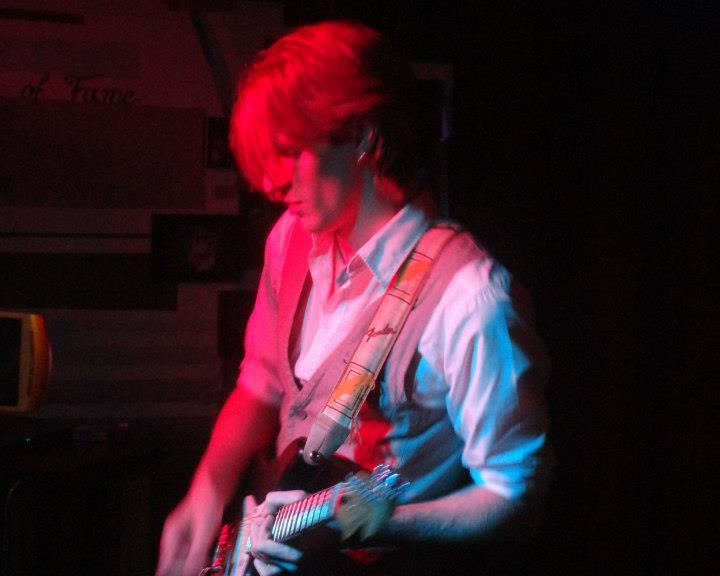
Jimi Hendrix. Eric Clapton. Stevie Ray Vaughn. These names are so iconic that even those who are not avid music fans know exactly who they are and why they are so famous. These three musicians have a great deal in common even though their lives and careers span different eras. All are iconic guitarists who have easily identifiable signature sounds. All of these men were heavily influenced by the blues. Equally significant, all of them had noted careers as sidemen before stepping up to front their own bands. It’s a scary move to leave a successful situation because you feel you want a vehicle to express your true artistic voice. Stefan Hillesheim agrees with this. Hillesheim had a thriving career in his native Germany, being recognized as one of “The” guitarists in Germany and Europe. As a member of BlueSide (the highly lauded German Blues band) and touring guitarist for Celtic Dreams, he was playing to sold out shows in Clubs and concert venues. The difference between an artist who uses music to achieve their goal of living a comfortable life and one who uses their abilities to vehemently pursue their art is vast; Stefan is the later. Although he founded the Stefan Hillesheim Band while still playing in other groups in Germany, the experience planted a seed that would ultimately lead him to pursue his own brand of Blues Rock (something he also shares with the previously mentioned iconic guitarists/artists) in the US, the place Stefan and others recognize as the birthplace of this genre.

A quick google or YouTube search of Stefan Hillesheim will allow you to access a multitude of videos in various group setting of this guitarist performing; one hears the deep,soulful, and melodic playing of this guitarist. There is always a nod to the greats of the Blues, whether it be Albert King or someone more rock influenced like Hendrix. Like the playing of the guitarists who came before him, Stefan is always conscious of adding his own subtle twist to the music. It’s important to Blues artists to say something we can all relate to and recognize, without repeating someone else’s statement verbatim. When Stefan decided to make the move from sideman to fronting his own band, it wasn’t out of conceit or any ego motivated factor…rather, it was out of humility. He explains, “Part of the decision to start my own band was curiosity. I just wanted to know what it’s like to be the lead singer and guitarist of a band playing my music. As a Band Member, you definitely have to make sure the singers sound good, your lead parts don’t interfere with the vocal melody, and your playing compliments the vocalist. Being the lead singer and guitarist gives you more creative freedom but at the same time you’re in charge of all the cues and have to maintain a very clean body language so that your rhythm section can pick up on it and understand what you’re trying to communicate.” Both seeking to further his musical voice and gaining empathy for the vocalists whom he has worked with are attributes that have made Stefan a desirable commodity in the music world. It might have been easier for Stefan if he stuck to playing with the groups he was already associated with but holding back his own artistic growth was more difficult to accept than winning over new fans. The Stefan Hillesheim Band had to win over fans on their own, which is not always an easy task. Stefan relates, “I think that our fans in Germany are very loyal and into hand-made music but they always want to hear the same songs and are sometimes hard to convince of new ideas and styles. I think that in the US there is a bigger and faster paced market for music.  Fans here are used to a bigger variety of live bands and they are more responsive to new material.”

Any great power trio requires a rhythm section that possesses an almost telepathic connection. Stefan chose drummer Alex Sauerlaender and bassist Mathias Wendels due to their exemplary playing and reputation in the European Blues/Rock scene but, equally as important…the fact that these two have played together for two decades. Hillesheim required a rhythm section that could essentially move as one entity, always able to serpentine with the twist and turns he would make as a vocalist/guitarist. Sauerlaender (who has been involved with a number of highly respected German rock and blues bands, including; Lucifire, BlueSide, Catastrophe Ballet,  Jet Set, and over a dozen others) remarks, “All the success that the Stefan Hillesheim Band experienced can be set upon Stefan’s shoulders. The band would never have existed if not for his drive and talents as a musician. He was truly the face of the band, and his skill as a frontman built the band into its highly esteemed reputation in the German music industry. The show that we performed at the famed Excalibur venue in the city of Koblenz, performing to a cheering, sold-out crowd, was indicative of the excitement and acceptance of the band’s fans. It was truly exciting to be part of a group which created such a feeling from fans.” One of the most memorable gigs for Hillesheim was the last one he played in Germany before relocating to the US. A true artist never rests and is always in pursuit of cultivating their sound and “voice.” Stefan had always known that he needed to move closer to the birthplace of the Blues in order to gain a deeper understanding of its essence. As he had done before, Hillesheim left a clamoring following and profitable career to start over again in America. He had a memorable send-off from musicians and fans alike. He recalls, “I would say one of our most memorable gigs was my last gig in Germany before I moved to California (2 years ago). It was sort of a going away party/concert and we played 2 long sets with a number of special guests and surprises. The audience was very responsive and totally into the music from our first song on. We played multiple encores. It’s hard to leave family and friends. I’ve started the trio all over again with players here in the US.  It is definitely challenging to move out here and see if people like your music. So far my experiences have been really positive and I can totally see myself playing more solo and trio gigs with my own band.”

Everyone can relate to the difficulty of venturing away from the familiar and into the unknown. Few can relate to moving to a completely new country that speaks a different language. Only a fraction of those can relate to doing so in pursuit of an artistic vision. Stefan Hillesheim is comfortable with sacrifice for his art, it’s a compulsion for him. Let those with ears hear.

stefan-hillesheim-band-01

MUSIC+FEAR+COMEDY=THE SENSIBILITIES OF ROGER BAINBRIDGE

rogerscreams

The most famous paintings of Beethoven depict him with a furrowed brow and wispy hair, a slightly mad genius furiously creating; pushing himself to produce works that never fully satisfy himself while seemingly inconceivable for the average man. Replace the piano with a comedic storyline and the symphony with a cast and film crew and you have an appropriate analogy for Roger Bainbridge. If such a phenomenon as Comedic Artistic Attention Deficit Disorder (CAADD) exists, Bainbridge is the spokesperson for it. Vacillating between formats such as; theater, film, live sketch comedy, music videos, and others, with his role as Executive Producer, writer, and actor, this Canadian comedic force has created a unique voice blending the dark and the humorous presentation of everyday life as well as fantasy. Regardless of the avenue with which he presents his ideas, Roger has created an identifiable voice in dramedy, most often presented through the vehicle of his comedy trio Tony Ho. The group, which includes Miguel Rivas and Adam Niebergall, has grown from sketch comedy into music video and film presentations. In the same way that Monty Python did some forty years ago, Tony Ho has become a brand of comedy with its own style and temperament. Modern accessibility to media and technology gave Roger the ability to experience all levels of production from conception to presentation. He used this knowledge to connect with and create the means by which Tony Ho and other artists would gain access to more ubiquitous means of presentation as their careers grew. Regardless of the production, his “fingerprint” is felt. This is surprising and satisfying in the music videos “Never Come Down” by Brave Shores and “Street Violence” by Digits. Both videos challenge us to look at dark situations and find the means by which to laugh at the ridiculousness of the situation by accepting our own lack of control of it. The “Tony Ho” brand that Bainbridge has worked so intensely to create is hard to place into words; in an effort to define it one might state that it is, “look at all the awful things that can happen in life, shouldn’t you take some respite in how ridiculous it all is and the fact that you can’t control or understand it all?”

884907_10151497940454802_102578703_o

The success of the “Violence” video and Roger’s acclaim for his roles both behind and in front of the camera resulted in other musical groups seeking him out to be the creative force behind their music videos. When Brave Shores needed a video for their single “Never Come Down”, they reached out to Bainbridge because of his work on “Violence” and the films of Tony Ho. Jay McCarrol of Brave Shoes comments, “When I approached Roger, he pitched an idea about a bald guy who wishes for hair and suddenly gets a full head of green hair, which would be green screened to become different colors.  He pitched it in one sentence and it was perfect.  It was great to see his talent has such range. He could just put his unique spin on anything. When you work with Roger it’s because he can be so unpredictable, that’s what we wanted.  I knew he was some sort of mad genius when I saw all of the Tony Ho stuff.  Roger possess a different kind of “it” factor, the very rare kind.  Something about him is so pleasantly haunting.” Roger admits that he has always been a fan of music videos which extend the ideas and mood of the song while also becoming a piece of art themselves. With “Never Come Down” he felt there were multiple layers, as he describes, “The song was kind of an expression of ‘ignorance is bliss’, ‘I’m just gonna have fun, and go with what feels good, f*#k all this worry.’ This can be a great sentiment, to a point. I wanted to explore the idea of someone getting everything they want. Is it responsible to just live a blissed out life? Are you living in a way that considers others and yourself? My idea was to kind of sneakily make a video about the virtues of responsibility while making it feel like a party the whole time. I don’t know if that makes me a Christian Youth Counsellor or something, but it’s probably just another example of me being a contrarian. You say party, I say be a responsible father.” brave-shores-1-945x500

brave-shores-never-come-down

The video shows Adam Niebergall (of Tony Ho) as the main character who is granted his wish of long luxurious (color changing, sometimes psychedelic) hair and proceeds to only care about whipping that hair and head banging. While amongst trick bikers, on the beach, or a number of settings, he casts off all responsibilities, including his now pregnant romantic interest. Karma seems to exact its penance from him at the end of the video as he has given himself a fatal neck injury…as a result of his new flowing locks. It’s a modern pop/electronic fable about not focusing on the self, delivered in the humorous and yet biting way for which Bainbridge is known. Whether creating thought provoking and laughter eliciting films or music videos that still manage to carry his voice in their message, Roger Bainbridge has become known in Canada as the person to go to when you need someone to take a project from inception to production and presentation. He is pleased to be the means by which others can further their art whether it be in the role of Executive Producer, writer, or actor. Bainbridge admits that he is still sometimes jolted back into reality, in particular in regards to his involvement with musicians and their videos. He confirms, “I love music videos. I feel like I’m part of the generation that really got the last gasp of them on television. I grew up watching them on MuchMusic, watching for hours waiting for cool ones to come on. I really loved the stuff coming out for the 90’s British bands like Blur or Radiohead or Pulp. They were so glossy and arty and different. It made the world feel a lot bigger than the small Ontario town I grew up in. But it never really occurred to me that I’d ever have the occasion to make one.”


USUI IS JAPANESE FOR FORCE MAJURE

Witnessing Kenji Usui perform is like nothing you have ever experienced. That is not the usual hype and dribble that music business executives use in their speech to get someone to “drink the Kool-Aid.” Kenji is unique and fearless. He could not be further from safe or controllable if that was his intention, which it is not. There are artists who set the parameters for what those who are later lauded as mold breakers, Usui is the former. Names like Morrison, Cobain, Hendrix, come to mind…more for the fact that they were individuals who found their unique voice and style than because they were musicians. Every generation has someone who breaks through the status quo and inspires artists to do things their own way; Kenji is performing and living like no others at this time. Though he is still underground internationally, he is something of an icon in the Japanese music community. In a culture known for their intense work ethic and devotion, Usui takes his love of music and creativity to an even more intense level. As a member of many bands and a multi-instrumentalist, this artist has singlehandedly pushed his countrymen in a new direction as well as contributed to the careers of US bands touring Japan.

For many individuals, playing music and being in a band is a rite of passage. Making music might be a way to investigate your artistic abilities in school or a way to rebel against the establishment, before you become part of it. For the true-believers, it becomes a lifestyle. Honestly, the true believers are in the vast minority. Even more rare are those who lead that minority. Kenji Usui is at the apex of the underground music scene in Japan. Embodying the Japanese work ethic, Usui works a 72 hour work week to enable him to spend every other minute pursuing his music career. That’s the kind of lifestyle that society calls crazy until you “make it” and then it is praised as “visionary.” When asked why he perseveres, Kenji professes his love of making music gives his life meaning and also confirms, “It’s difficult, but it’s also rewarding. The best bands are the bands you never hear about, and in the DIY scene you get to find these bands. But this means having a music “career” without making much money, which is very challenging sometimes.” Foregoing the goal of making money for the pursuit of realizing one’s own artistic voice is admirable, and taxing. Since 1999, Usui has been making music with many different bands and in a variety of roles.

Since 1999, Usui has been a mainstay of the diversified Japanese music scene. Content to let others pursue the pop music format, Kenji has been a leader in pushing the envelope of music, experimenting with effects, a combination of singing and spoken word/prayer-like vocals, and shifting his instrument of choice in different band configurations. As a member of groups like; Shoot, Blackjack, The Spoon, Allies and Aces, An Atomic Whirl, Pororocks, and Poronely, Usui constantly presented an evolving artistic style to his fans and other artists alike. Eri Zarigani (member of renowned Tokyo girl-punk band Zarigani) confirms, “There is a big festival in Taiwan called “Spring Scream”, and both my band and Kenji’s band had the chance to perform there. When we saw Kenji play, we were blown away. His level of performance had increased drastically since we had last seen him; we all felt that we were part of his performance. Fans and bands alike were in awe of his band’s performance. As a fellow Japanese citizen, this meant a lot to us, as he is helping take Japanese bands to another level. Kenji is a great inspiration. Many people look up to his creativity, his patience, and his ability to relate to people and make connections with other artists. People respect him due to not only his music but also his sincere personality.”

Kenji’s admirers and exposure is not limited to his homeland. He inspires audiences wherever he goes. His performances transcend language and cultural ideals. C Leung, Show Organizer, Founder of CCCC Productions & Organizer of NoiseNoiseNoise Festival in Hong Kong. He states, “I first saw Kenji in 2012, performing with the band Pororocks. He sat at the back of the stage with a spotlight on his face. He was mumbling, singing and playing drums, and I could immediately tell that there was something very special…almost otherworldly, about his stage presence. After the show, I invited Kenji’s band An Atomic Whirl to play in Hong Kong at a show presented by CCCC. In Hong Kong, I got to see him performing as a bassist and vocalist. I was again impressed by his musical capability and the possibilities and creativity he brought to the stage. I was so glad that I had brought his band to Hong Kong. In a single night, he earned numerous fans in Hong Kong. His fans were adamant that I bring him back again, so I brought Kenji to perform with both An Atomic Whirl and Pororocks. To date, I have had the chance to  see Kenji perform on many occasions in Hong Kong, Taiwan, Japan, and South Korea. He is a born performer who belongs on the stage. He can make every show different, even with the same set list.” Kenji Usui is an original voice, existing to channel the artistic message and ideals through the vehicle of experimental modern music.