Category Archives: Producer

PRODUCER GIGI HUANG HAS AN ECLECTIC WORK PALETTE

headshot 6

For Chinese producer Huang Zhe (known in the industry as Gigi) it has never been a decision of nurture vs nature but rather both. Raised and educated early on in China, she chose to pursue a career in production based on an acting experience the summer after graduating high school. While she didn’t fully embrace acting, the idea of telling stories has always been something to which she was drawn. Beijing China is known universally for Tiananmen Square, the Forbidden City and the Great Wall but, this Beijing native refers to “HuTong” as the personal defining spot in her home city. As she explains, “My favorite place in Beijing is still the Alley that we call ‘HuTong. The  ‘HuTong’ culture still retains its own character, which attracts everyone’s attention.” This fixation with authenticity, history, and character is a trait which Huang has brought to the many productions and type of productions with which she has been involved, making her an indispensable part of each. Whether aiding a director to achieve his/her vision, tweaking budgetary and scheduling constraints, or helping to produce stories which she feels emotionally attached to; Gigi has become a much sought after and respected producer in the modern film industry.

A great producer, much like a great actor or any other exemplary professional, feels that every project shares the same importance in the sense that it is an opportunity to create greatness. Gigi has produced a variety of commercial productions alongside notable directors such as Zhen Pan and Bianca Yeh. Working with animals, minors, brutal weather conditions, all variables are welcomed by Gigi as she thrives on problems solving. While adversity dissuades others, Gigi comments, “A producer must be a thorough and excellent problem-solver. We always stand in the position where the problem exists. There are so many details I have to think of in advance, requiring not just ‘a plan’ but a plan B or plan C for each situation.” Director Zhen Pan worked with Huang on commercials for Lepow [electronics] and declares, “It was a great experience working with Huang Zhe on the Lepow Branding Commercial. She’s such a leader, great listener, and talented individual. If you need help, she’s always there no matter what you need or which department you are in. She always thinks outside the box, managing to figure out a best way to help you solve the problem which, as a director is what I value more than any other trait.” While cats are notoriously independent/non-team players, the spots which Gigi produced with director Bianca Yeh for Katris appear seemingly effortless. It was such a positive experience that Yeh made sure Huang was signed on as producer for the spots she directed for JieLing Liquid Repellent spray, and Zephyr (high end stove/range), even though the production efforts had to be based on completely opposite sides of the country.

Most of Huang’s film productions are based around a more serious and contemplative tone. While she enjoys this approach in the film’s message, Gigi feels that it is in a large part her responsibility to set a positive an upbeat tone for the crew and cast who create the film. The 2016 film Promise Land dealt with the struggle of a man and woman of Jewish descent and their avoidance of the German military in the late 1930’s. Behind the scenes, the cast and crew were dealing with filming in very cold weather conditions. Gigi appealed to their sense of determination by appealing to their stomachs…and some very fine meals. Produced by Huang in the same year was I Heard the Flowers Blooming When I Was 80, a film which communicates that it is never too late to realize a childhood dream. This movie was originally crippled and seemed to be out of commission until its director persuaded Huang to come aboard and essentially “reboot” this project (which would go on to win for Best Screenplay at the 4th Golden Panda International Short Film Festival). One of the essential characters in the film is an old piano. As one can imagine, transporting this instrument across streets during filming was not an enviable task. Gigi’s planning of locations and “alterations” to the piano made for a very appreciative crew as well as a successful and award-winning completion. Max and Aimee, which Huang produced in 2015 was close to her as it deals with the topics of dementia and Alzheimer’s which has directly affected her own family. The film received worldwide critical acclaim and awards including a Special Mention Award: International Open Film Festival (IOFF)Lima Bean Film Fest (and countless others). Max and Aimee’s director/writer: Michael Alex Pearce was so impressed with how the film turned out that he approached Huang recently about creating a Virtual Reality version of it (which was completed in early 2017). Definitely a new type of production for Gigi but one which she threw herself into completely, as with all her projects. Kathleen Courtney (line producer of the 2013 feature film The Boy Next Door starring by Jennifer Lopez) enlisted Huang to work on this feature film and states, “I enjoy Gigi’s enthusiasm, as did everyone on set. I hope to work with her again in the future.”
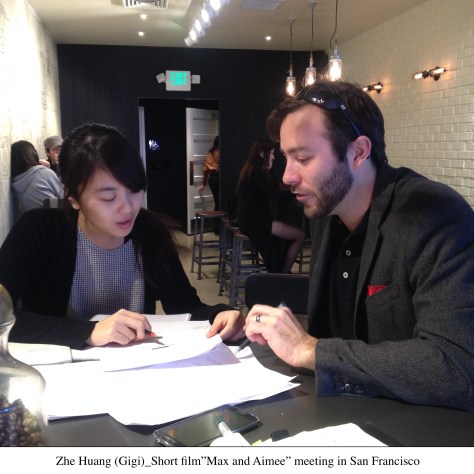
Short Film Max and Aimee 1

Even though she has steered so many successful productions, Gigi leans on her early experiences and states, “I really like working behind the stage rather than being on the stage or in front of the camera. When I think of that first experience I had, after graduating from high school; when a few of my best friends and I went on a trip and filmed a movie for my friend’s portfolio to get into USC…I learned so much during that trip. We didn’t have advanced equipment, the only thing that we had was only a video camera, but we used different ways to solve problems. I still remember using small sprinklers to make the raining scene and using a bicycle instead of a moving dolly; I was riding on a friend’s shoulder and finished the high angle shot. In many ways, this experience taught me that if you want to make a film, you find a way to make it happen. My resources may be more plentiful and available, the cameras and gear and more advanced, the cast and crew more talented but, once you have a problem or snag in the production, you fall back onto what you know. For me, I learned that what I know is that I have to plan as much as possible and improvise when all else fails.” Isn’t that exactly what every filmmaker wants to hear from the mouth of their producer?


PRODUCING A PAINFUL WAR FILM WITH “DAVID” YU HAO SU IN “RESURGENT”

Yu Hao Su is Harvey Keitel. Okay, maybe he isn’t the Oscar nominated actor but just like Keitel’s character Mr. White in Quentin Tarantino’s Reservoir Dogs, David (as Su in known) has a reputation for being a “fixer” in the film industry. When the 2016 Action/Thriller Resurgent needed to do a reshoot for scenes which take place in Afghanistan, David was contacted to contribute his exemplary producing skills. A reshoot is so crucial to a film because it has to match the existing footage in so many ways as to seem and feel that it was part of the original filming. Any deviation from the tone and mood of the existing principal footage could derail the already massive amount of work a production has executed, to say nothing of completely distracting the audience. As the editor of this film, no one is more qualified than James Stiegelbauer to comment on the work of David on the reshoot. Stiegelbauer proclaims, “Yu-Hao was calm under pressure. When our director made last minute script changes, everyone was concerned it couldn’t be pulled off but Yu-Hao didn’t even flinch. He made a few calls and quickly got everything that was needed. Yu-Hao is detail oriented, resourceful, and is never afraid to get his hands dirty. I would ask him to work on every job if I could. We could not have finished Resurgent without his hard work. He coordinated with the actors, locations, and crew quickly making all the necessary arrangements to meet our needs. As an Editor, I’m not on set, but I do need to be in constant communication with the director and cinematographer. Yu-Hao was crucial in this communication. This ability to be able to keep the work flowing even as unforeseen factors arise and must be dealt with…that’s what the truly great producers possess.”

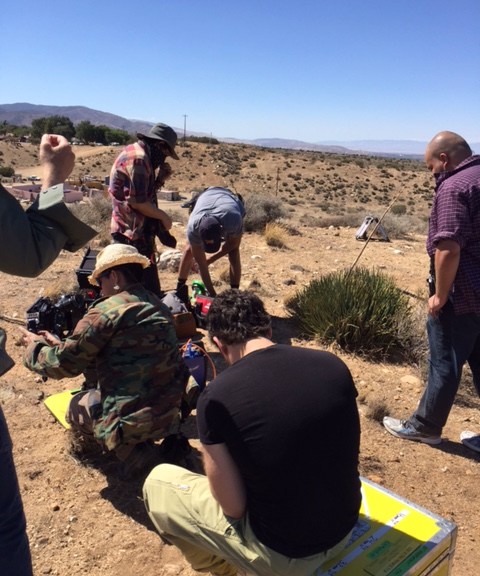
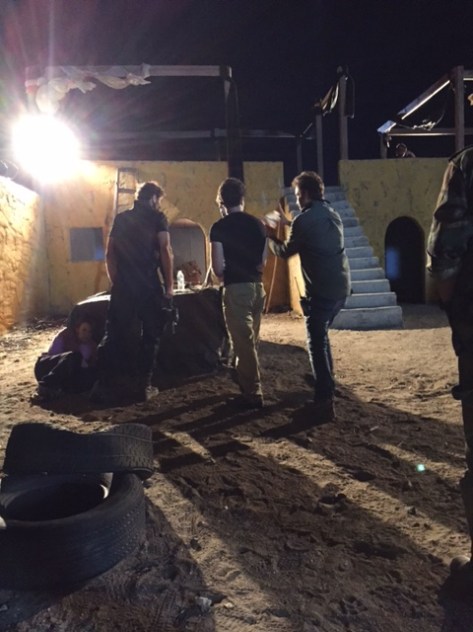
Resurgent is a film which depicts the story of a mercenary who must come to terms with a botched mission in order to return to the battlefield. Max, the main character (played by Manny Cartier) is suffering from the pain of his partner who has died in a military missionary with him in Afghanistan. The action and military theme of this film necessitates stunts, something which David is familiar in dealing with. Setting the table in a safe manner for these stunts is highly important to him. He notes, “We have a lot of stunt in the film. I need to make sure the stunts are done right in order to make sure the actors are completely safe. We not only have the stunt coordinator on set but also a set medic. This may seem obvious but every little situation must be planned for regardless of if it ever needs to be used. We also have a weapon wrangler on set to make sure people are aware on set, even though the weapons are just props. My job is not only to make sure the stunt scenes are well-planned but also to make sure the set is safe. I take stunts very seriously. Because it’s an action film with a lot of stunts (and we filmed in a dessert to cheat it as Afghanistan) I needed to make sure our production was a self-contained unit with everything we could possibly need at a moment’s notice. It’s not easy to shoot stunt scenes with weapon props in the desert. I need to make sure everyone is safe not only because of the stunt actions but also the difficult shooting environment.”

For those of us who don’t work in the film industry, it might be hard to understand exactly what a producer does on set. For those who do work in film, it’s difficult to overemphasize the impact a producer has on any film. A producer’s role can be described as parent, police officer, president, healer, and best friend…all in one person. A producer is the person who supplies what you need even before you understand and comprehend that you need it. It’s a conflicting situation for most producers. They love what they do but they rarely are afforded the opportunity to lose themselves in the fun of watching the movie magic they help to create. David states, “Being in charge of the reshoot for Resurgent was fun, there’s no mistaking that. I just had to always be thinking a few steps ahead. There is really no time for losing yourself in the moment. It’s interesting to shoot an action film. The stunt sequences with the stunt coordinator are fun and look amazing in the film. Watching that when the film is finished is fun. There are always challenges that are unique to each film. The desert location we filmed didn’t have a phone signal or Internet. It’s very hard to run a set without this technical stuff. We ended up planning it well and got the work done in spite of this. There is nothing to complain about for me. I’m so excited to be a part of this industry. To focus on the story and tell the story from an essential human’s point of view. I believe truth and humanity is the key to delivering a story everyone can understand and connect to.”

img_7923


ALL HEED THE MESSAGE OF AWAKEN

The arts have been the creative analogous tool of creative types for centuries. This format to communicate the real life situations with which society is confronted must often be done in a covert manner. In order to avoid strife and previously held opinions, avenues like music, literature, theater, and film, are utilized to help us see things from other perspectives. This methodology often finds us sympathizing in a first person sense, placing ourselves in the shoes of others and their circumstances. Historically, great art has struck a chord in the collective society and spurred on movements that create change. This is the story told in the film Awaken by Bruce Sze Han Chen. It is a lofty idea that he proposes in the film. In order to successfully bring about his vision, Bruce obtained the successful production talents of “David” Yu Hao Su. The many accolades and recognitions that the film has received prove that this decision was well founded for all involved parties. Some of the achievements include: Accolade Competition 2015 (Winner-Award of Merit), Alaska International Film Festival (Winner-Northern Lights Emerging Talent Award), California Film Awards (Winner-Diamond Award), Los Angeles Independent Film Festival Awards (Best Production Design), Mexico International Film Festival (Winner-Golden Palm Award), World Film Awards, Jakarta (Award of Merit), and on and on. Regardless of geographic location, audiences were captivated by Awaken’s message, a message which was delivered exactly as its creator had envisioned thanks to the support and talent of his producer David (as well as co-producer Pin Chun Liu). As with any great artist, having the professionals around you to allow you the freedom to create your art is paramount.

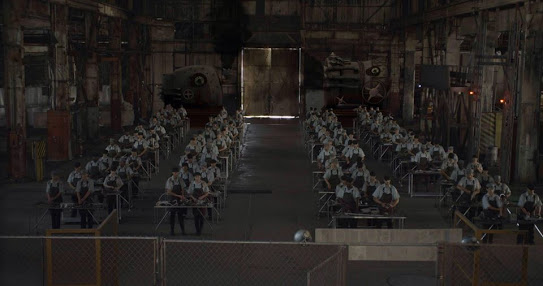
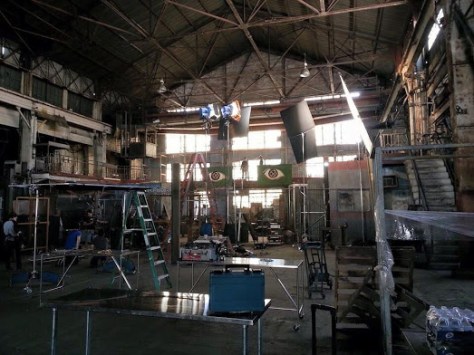
Awaken is a story which is applicable to any society, political system, or theology on the planet. The heroine of the film is Sophie. She has spent her life working in an enormous factory. In this facility, the workers’ minds are controlled by the music which is ubiquitous. One day, Sophie is suddenly impervious to the effects of the music and she decides to destroy the music system in order to free everyone from its effects and the factory’s dictator who is in control. The message is thinly veiled but easily understood; be in control of your own life rather than to unconsciously follow a path which is handed down to you by others, others who may be less concerned about your well-being than their own. As a producer on Awaken, it was David’s role to assist Bruce (the director) to find a production designer, costume designer, and other principle team members. Location and casting was a particularly vital part of this film. The lead actress playing Sophie is a minor which meant that scheduling needed to be coordinated around strict guidelines. The futuristic location of a massive factory was coordinated among three different venues. To further complicate things, an enormous amount of extras were cast and then supplemented with VFX to complete the proper feel of the factory and its workers. David reveals, “We needed to create a lot of workers to show how big the factory is and how many people are controlled by the dictator. We decide to use VFX to duplicate the workers. We found an excellent VFX team to helps us prepare the work and coordinate it with the Camera and Art departments. Even though we decided to use VFX to duplicate the workers in the factory, we still needed a huge amount of extras to create the materials for the VFX team. Also the location we had for the factory was huge, so it required us to have an enormous amount of extras on set. My production team and I posted casting information online and called all the actors we knew in order to have so many extras come to our set. The VFX works is the most challenging part for me because we had a very limited budget and time to plan the VFX. It ended up that the VFX scene worked very well and it’s all because of the teamwork each department devoted.” To fully understand the role David played in Awaken, consider that the actual principal filming took five days. His preproduction involvement began two months prior to filming and his post-production work took place for three months following its conclusion. That’s a ratio of 1/20 or more. The beauty and strength of the message in Awaken solidify the fact that when creative artists of all vocations work together, they can create and communicate in a manner that reaches the public and critics. The beauty of this film lies not only in its aesthetic but also in its content, both of which are fueled by the amazing team that brought it into existence.


awaken-set-photo

Producer Michelle Solomon talks award-winning film Emma and telling important stories

simon-paluck
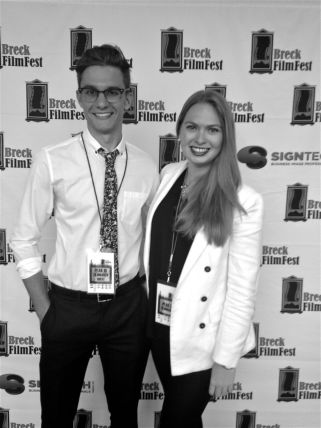
Actor Simon Paluck and Michelle Solomon at the Breckenridge Film Festival premiere of Emma.

“I will never forget the universal and palpable emotional state the audience was in while the film played. It was the first time the audience was not made up of family or friends. It was a humbling reminder of how communicative film can be and that it’s important to use the medium to tell meaningful stories.”

Those are the words of Toronto-born producer and graphic designer Michelle Solomon when talking about the highlight of her career. She was talking about her first feature film Emma premiering internationally at the Breckenridge Festival of Film in Breckenridge, Colorado.

Solomon has had ample amounts of success in her career. She transformed the brand Ace Building Materials by making them current and relevant with her graphic design skills. She produced the award-winning film Chalk Dust and the upcoming film Sunny Side Up. She is set to work on a television show with former NBA star Kareem Rush, and co-founded the production company Picosphere Inc. She founded the company Adoorn, an app which will revolutionize social shopping right in the palm of your hand, which is set to release early next year. Despite all of these successes and achievements, and being known internationally for both her producing and design abilities, the premiere of Emma still stays with her, and working on the film shaped who she is today.

Emma is a realistic look at the world of childhood cancer and how the disease goes beyond just the person diagnosed. It’s important to not commodify and exploit a very real experience that, unfortunately, many kids and their families go through,” said Solomon.

Emma tells the story of seventeen-year-old Jayson. Jayson thinks too much. He is introverted, friendless, and wakes up wanting the day to end. That is until he meets Emma, the captain of his school’s dance team. After his psychiatrist tells him to be more involved, Jayson joins the school newspaper and is sent to write an exposé on Emma’s rumored pregnancy. Instead, Jayson uncovers that Emma has cancer. Suddenly, Jayson is pulled into a vibrant world where real love and true sacrifice flourishes. Through Emma, Jayson learns about life, love, and the importance of letting go.

Emma was a story that needed to be told. It was based on the personal experiences of the writer, Simon Paluck. What initially drew me to the film was the way that childhood cancer wasn’t glamorized or made effusive. Many films showcasing kids with terminal illnesses, often portray an idealized version of the truth. The illness becomes a tool that convinces characters to fall in love or travel the world. Experiences surrounding childhood cancer goes deeper than that. It is specific and nasty. With Emma, I like to think we showed one of many truths,” said Solomon.

The film has gone on to win a list of awards. These include: the “Royal Reel Award”, Canada International Film Festival, in 2015, the “Best Feature: Venture Category” at the Paris Online Film Festival 2016, “Freaky Feature” (Best Feature) at the Broken Knuckle Film Festival, 2016, and “Best Indie Film” at the Los Angeles Film Awards, 2016. At this year’s Festigious International Film Festival it won “Best of Fest”, Best Narrative Feature”, and “Audience Choice Award: Narrative Feature”.

“It’s entirely humbling to know many are responding to the film’s message.  With film production, there is always a moment of doubt where you think others will not understand what you’re trying to do and critique it unmercifully. Thankfully, this has not been the case for Emma,” said Solomon.

But what is perhaps Emma’s greatest achievement is not the official selections at film festivals or it’s long list of awards, but the work it has done for the Make-A-Wish Foundation.

To raise funds for the film, Solomon came up with the innovative idea to partner with Make-A-Wish foundation and hold a silent auction. She wanted to give back to the community through the film, so the silent auction was to raise funds for both the film and the Make-A-Wish Foundation.

“This type of innovative fundraising is just one of the ways Michelle has proven she is a natural, talented producer,” said Veronica Porfilio, the film’s executive producer.

As a non-writing producer, Solomon says she is always trying to find creative ways to expand a film’s reach.

“My personal mantra is that instead of thinking outside of the box, recognize that there is no box,” said Solomon. “Personally, I felt compelled to use the film to make a greater difference. I was able to gather over $17,000 worth of donations and raised enough money to not only finish funding the film but also donate a major portion to the Make-A-Wish Foundation. Our contacts at the organization really took to the idea of spreading awareness through the ‘show-don’t-tell’ approach of film.”

Solomon’s approach to producing earned the entire cast and crew’s respect immediately, despite being her first feature. The film had a small budget for such a massive project. They employed union actors and shot at over ten locations. Solomon would not let these challenges negatively impact the story.

“Michelle was able to secure a highly sought after location that was instrumental to our film without going over-budget. Without that location the film would not have been as successful as it was. When she first spoke with the location manager it seemed we would not be able to use the space to film Emma, but that did not deter Michelle from bargaining because she knew the location was key to the film’s success. After weeks of negotiation Michelle secured the location.

Michelle’s talent as a producer shone through every task while working on Emma, and it shaped the producer she is today,” said Porfilio.

Including Solomon, there were ten young, dedicated professionals lead our executive team working on Emma. Solomon says each person was there because they were committed to telling the story.

“That type of energy is powerful and we kept each other motivated, especially through the challenging parts of independent filmmaking,” she concluded.

Megan Waters to produce upcoming sequel of hit film Ditch Day Massacre

waters_0077
Megan Waters is a producer from Toronto, Ontario.

Megan Waters is many things. She is a Canadian, born and raised in Toronto. She is a pinball enthusiast who loves retro games. She is a world traveller and describes the world is her playground. She is a salsa dancer, believing it to be an amazing dance and community. And above all else, she is an extraordinary film producer, using her skill and creativity to entertain audiences.

Waters passion for producing is evident. She has been producing for over twelve years, and has received praise and recognition for her talent. In 2012, the “Soul of a Ninja” Kawasaki USA commercial she produced won the Bronze ADDY Award at the American Advertising Awards. The first feature film she produced, Ditch Day Massacre, won the 2014 Best Feature Length Horror Film at the Burbank International Film Festival. Waters is one of those people who knows she is doing what she was meant to do.

“Why be the puppet when you can be the puppet master?” said Waters. “I got into producing because I love the business just as much as the creative process. As producer, I get to wear both hats and interact with all aspects of production.”

Now, Waters is set to continue her success of Ditch Day Massacre by producing the sequel Ditch Day Massacre II. The film will follow the character of Jenny, who is placed into a mental institution after suffering from a mental breakdown as a result of a brutal attack. Little do Jenny and her mom know that what’s inside the walls of the mental institution is far more deadly than the world outside. There will also be a documentary about behind-the-scenes look into the making of the film, which Waters will be producing.

“Working on Ditch Day Massacre has been the highlight of my career. It taught and tested me so much. It was an incredible experience as the crew all had the same level of passion and commitment to making this project go,” she said.

Waters had help on Ditch Day Massacre, with producer Michael J. Zampino as a consultant for the film. Zampino has lots of experience working on horror films, including distributing the award-winning film The Slaughter. Despite this, he was still impressed with Waters’ commitment and knowledge of the genre.

“What sets Megan apart from many producers is that she has confidence but very little ego. That’s extraordinary in our business itself. Megan moved mountains and motivated everyone to bring their A-game to complete Ditch Day Massacre in 17 days,” said Zampino. “Megan is a tireless worker who strives to carve out not one film but a career worth of films. Ultimately, the film would never have been completed, and never would have received the attention and sales that is has, if it weren’t for Megan’s drive and leadership. Megan’s successes in the international film and television industry marks her as one of the most successful and skilled producers to come out of Canada in some time.”

Waters’ success is not just limited to film. She produced the Emmy-nominated series Chop Cut Rebuild and the Speed Channel series Street Tuner Challenge. It is not the accolades that motivate her. She says every project is a creative and logistical puzzle that needs to be completed.

“I create and execute. I get an idea, script, project, client need and make it happen. I usually start from where I wish to finish and then work backwards. I think mostly in visual stories and then align the team and resources to execute,” said Waters. “When I produce I like the challenge of figuring out the puzzle pieces and then putting them together. Plus, all the hurdles that make it a one of a kind experience on each project. I love that producing offers a different road every time. I fear a career that becomes repetitive. I love the randomness and goal of planning for the unpredictable. It’s organized chaos and when you build the team that communicates, respects and share the same passion for the project amazing things happen.”

Part of this passion also comes from using film as a tool to send a meaningful and powerful message. Waters has seen. a lot of success while making PSAs, especially producing the PSA “Over Watering Is Out” about water saving gardening. Part of what makes her PSAs captivating is that she refuses to create what she would consider “boring content.”

“When I am considering film or documentary projects I look at the story. It must hold my interest and I must feel passionate it about it. I say this because it takes everything in you to complete a long format project. If you don’t have a connection to it then you will be pulled away from it and it will never get done,” she said.

There is no doubt that with the innate skillset Waters possesses alongside her passion for the industry, her name will continue to roll past the eyes of audiences in the credits for years to come. She is determined to produce quality, and she never lets anything stand in her way.

“I expect and accept challenges. It’s part of producing. I actually joke with my teams that my title may be ‘producer’ but it should be changed to ‘head problem-solver.’ I am proactive and focused on the solution when challenges arise. It’s better to work toward the solution and communicate, communicate, communicate. Some of the best creative ideas have been derived and developed because of a challenge,” she concluded.

You can look out for Waters’ work on the upcoming Accio Cine feature film From Dust to Diamonds, and of course, the anticipated Ditch Day Massacre II.


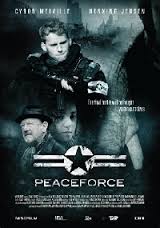
VON SCHWERIN: A MODERN INTERPRETATION OF ORWELL IN PEACEFORCE

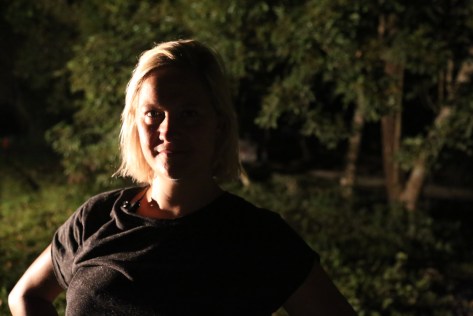
Award-winning director David Gerson describes Beatrice von Schwerin professing, “Beatrice is the epitome of a doer. A producer who always gets the job done as effectively as possible, inventively, and with deep respect for the directors she works with. She grew up a member of the Swedish nobility, spending her youth hunting in the south of Sweden. I believe that hunting nature in her is what makes her such an excellent producer. She treats a film shoot like the hunt; a task to be cautiously, precisely, and effectively maneuvered.” Gerson has worked with von Schwerin on a number of productions such as: Automatic at Sea, All These Voices, Destiny’s Child, and others. Having worked closely with her he knows well that Beatrice can be seen leading the charge just as should would during a hunt. These days, von Schwerin is respected as a producer with many productions to her credit. It’s fitting that Gerson views her as a huntress as we revisit the first film she produced, Peaceforce, as the subject matter is a hunt…a hunt which is much more complex than it appears to be. Beatrice concedes that her forthrightness, determination, and loud speaking voice, are all products of her noble lineage and rearing; attributes that serve her well in leading a film production. More at ease facing challenges on set than relaxing in her family’s castle, this Swedish baroness prefers a life of creative pursuits in an industry that cares nothing about her heritage and yet appreciates every ounce of her talent and hard-work ethic. A dissection of her first production shows that the very template for her approach was a solid foundation which has served her and the films she enables to result in many achievements.

unknown

Beatrice worked in the Danish film industry for 9 years before producing Peaceforce. Denmark is one of the strongest countries when it comes to film production in Europe. Copenhagen has a solid film industry and is equipped to modern standards. In many ways it mirrors the productivity of Hollywood’s industry and community. Peaceforce was the first film on von Schwerin’s long list of producing credits. She confirms, “This is the first production where I realized that I really, REALLY wanted to be a producer. I knew that if I could get the cast and crew through all the challenges, then I could do anything. This film was the ‘AHA’ moment in my career, the one that made me love my job even more than I did previously.” Jonas Allen of Miso Films recognized her talents and placed her in the Producer role for the film. Peaceforce is loosely based on the George Orwell essay “Shooting an Elephant.” The film is set in the near future, in a world where capitalism has run its course. Daniel, a young Peaceforce officer, meets Jesper, a prominent local citizen. Jesper claims that an elephant is running amok in the city and killing people. Spurred on by his idealism and desire to do good, Daniel follows Jesper deep into the heart of a desolate city. Daniel believes he can make a difference by helping the wounded and dealing with the elephant. Not long into his mission, Daniel discovers that he’s in way over his head when he meets a little girl who is the sole survivor of the group that cared for the elephant. Daniel understands that he has been misled by Jesper. Jesper and his hungry entourage keeps breathing down Daniel’s neck. Fearing for his life, Daniel feels forced to make conflicting promises to Jesper and the girl. Soon Daniel finds himself confronted by the magnificent beast, a live elephant. Daniel desperately searches for a way out of this dilemma as he has no desire to kill the beautiful animal. The mob grows ever more impatient and hungry for blood. Daniel finally relents and shoots the beast, thereby betraying not only his own word, but also all that he believes in. It’s an epic and tragic tale. The components used to portray the action on-screen were grand as well. Peaceforce was a challenging shoot, with many different pieces that needed to match. Beyond the typical cast, crew, and locations logisitics, there were elephants, children, extras, & VFX to contend with on this production. Recognizing early on that she could lead with positivity to create momentum, Beatrice began with the animals. She recalls, “We spent two days shooting in a field outside of Copenhagen, close to a circus, where we rented an elephant for the shoot. One day was spent with the elephant and one day with the extras. We had three elephants on set with us and we used one of them. Elephants are flock animals and if you split them up, they are not happy. To contend with this, we had the two elephants not used in front of camera, close by so that they could be in contact with one another. Every now and then during the shoot, we’d have our star [elephant] head over to the others for some down time. It was a great and exciting day for both us and the elephants. I always try to have a positive attitude, no matter how challenging the day may be. I know that if I’m smiling and keeping positive, it trickles down to the cast and crew. It’s always important to show kindness and respect and I try to do that. I don’t separate my crew members from cast members. I really want everyone to feel equal, like one big happy family!” It’s a template that resulted in a happy and committed production family and a successful film as well. Peaceforce received a nomination at the Robert awards (Danish equivalent to Academy Awards) and garnered a Canal+ Award at the Clermont-Ferrand International Short Film Festival. Director Peter Gornstein couldn’t be happier as he notes, “Making Peaceforce with Beatrice was such a positive experience. I have known and worked with Beatrice for more than 8 years. We have won international awards together as well as developing several other projects. Beatrice is truly a one of a kind person and producer. Her positive energy and go getter mentality is something that spreads to everyone that she works with. Not only does she have a fantastic personality but her skills, and more importantly, her moral compass are beyond reproach. I’ve had to face some tough obstacles in the course of projects we’ve worked on together and no matter how hard or difficult the situation was; Beatrice would always guide me towards taking the high road. When I’ve wavered I have always been able to count on Beatrice to help me make not only the right choices for the projects, but also the moral choices.”

It isn’t always easy to keep that sunshine attitude. Persevering through the sometimes tedious portions of filmmaking are the obstacles that teach von Schwerin how to remain cool and collected. She describes, “Sometimes it’s not going over schedules or obtaining a piece of gear that is the challenge. Quite often it is just getting all the bricks in the puzzle to fall into place! We had so many moving parts on this film. It took what felt like (at the time) an army to get it made. The shoot was only two weeks, but the VFX was done in post and took almost 10 months to complete. When you are coordinating between VFX artist Ivo Horvat being in LA and the Director being in Copenhagen, you sometimes wonder where you are and what time it is.” These days, Beatrice von Schwerin knows exactly where she has been and she is considering heading to Hollywood as she fields offers to be a part of city that is the epicenter of film. One thing is for certain, Hollywood could use another producer who puts a smile on everyone’s face.

892a1911


BRAZIL’S RODRIGO BRANCO BECOMES A STAR BY SUPPORTING THE FAME OF OTHERS

For all of those who proclaim television to be a detriment to one’s life, please kindly consider Rodrigo Branco. This Executive Producer/Communications Director/Social Media expert has built a life out of his work in TV. His roots in TV can be traced back to his youth, a situation that his own children are experiencing. Branco has become one of the most successful executives in his field in all of Brazil. His status is earned with years of working his way up the ladder in TV production. Having become internationally recognized for his work on multiple domestic and international productions, he most recently has turned his attention to the TV community in the US and the opportunities it affords. It’s quite a story, a young boy in Brazil who follows his dream and effects millions around the world. It proves that hard work is rewarded and there is a chance for everyone to pursue their goals no matter how unbelievable they might seem.

As a young boy in Sao Paulo, Rodrigo used to live with his grandmother while his mother (a ballet dancer) was often out on tour, working to pursue her own artistic endeavors. This situation created two prominent factors in Rodrigo’s future. First, the understanding that following a creative dream is valid and secondly, TV was a fixture of life. Branco’s grandmother was a TV fanatic to say the least. When his mother took Rodrigo with her to a TV station for a taping, the two worlds collided. As a 10-year-old, he was amazed by the environment as well as the fact that they would tape three episodes in one day. The sudden realization that every production was not live, yet seemed to be so when viewed on TV, was like discovering the secret to a magic trick. Years later, Branco would begin his own TV career on the Marcia show. This show is one of the most popular talk shows ever on Brazilian TV. Rodrigo was with the show for more than a decade and explains, “The Márcia show was my high school, college and university! I started as a trainee and eventually became the executive producer. It was the hardest, and at the same time, the most positive show I have done in my career. According to VOGUE BRASIL, Márcia is the Brazilian Oprah. I’m proud that our ratings proved that we were number 1 every day. There is no secret to achieving this; I used to work 16 hours a day from my start as a trainee and all the way up to being EP.”

Many people sacrifice their personal life to be a part of TV production, especially those who are highly successful. Branco did the opposite and made his life and career intertwined. He met his wife when he was a trainee on Marcia and has become a father while working on the show. As the EP of the show, he worked most closely with the show’s star and namesake. He notes, “Working 16 hours a day, 6 days a week; Marcia became my second mother. We spent Christmas, New Year’s Eve…all the good times and bad times together. She has the most brilliant career in Brazil and she decided to share it with me. I think this interaction is what made our work so successful!” Rodrigo’s work in particular was recognized early in his career. In 2002, he was awarded the Premio Jovem Brasileiro [Young Brazilian Award] for his work with the Marcia show (he received this award again in 2011 for his work on the Miss Universe Pageant) …at the early age of twenty years old. Branco also received the Communication Merit Award, granted by Academia Brasileira de Ciencias, Artes, Historia e Literatura (Science, Art, History and Literature Brazilian Academy) which he refers to as the greatest honor of his professional career. Marcia is known for her show being about people, their families, and struggle. She wanted an individual steering that show who was doing it for more than the money; a person who was truly passionate about the work. Marcia recognized these traits in her early interactions with Branco. She declares, ““I met Rodrigo in his first day as a trainee in TV Bandeirantes. I immediately knew he was special. A few months later, I told him he would be the executive producer of my show and in only 3 years it became true. We had a great and fruitful partnership. He is incredibly talented!”

profile-pic-1

Besides giving Branco a literal family as well as a professional family, TV has also given him the ability to travel the world. Experiencing locations such as; Israel, Paris, Spain, Argentina, Mexico, and all the states of Brazil, have helped Rodrigo to understand how different and yet how incredibly similar the people of the world can be. In particular, his US visits have motivated him. Branco communicates, “The TV Industry in the United States is the most professional and competitive in the entire world. There is no space for amateurs there. I have hopes of working there because it would challenge me to be the best in the US. The resources and the technology in the US are the example to the world. If a professional wants to learn how to do their job better, they need to stay close to the best! Marcia was discovered by an American Director who taught her how to do TV. Nobody does TV and Entertainment better than Americans. I could see this with my own eyes at the Latin Grammys, Miss Universe, and from studying American Shows and formats. I’ve had an extraordinary career but I am only 33 years old and I want to be better and bigger.  The only way to do that is to learn from the best. My passion is t work with talent and communication not only in TV, but with social media and other formats as well.” When contemplating Rodrigo Branco’s life, it is impossible to septate his story from the inclusion of television. When discussing it, Rodrigo himself comments, “My life was built inside a TV. My childhood was spending time with my grandmother, bonding over shows and their topics. I saw my mother performing on TV and she took me ‘inside’ television for a perspective that not many people witness. I have made many of my closest friends through my work in TV, as well as meeting the woman who became my wife. Now my children understand TV because they see their father using it to provide for them as well as understanding, as my mother showed me, that you can be creative, challenged, and rewarded with that pursuit. They realize, as I do, that I am able to make the magic that we see on the screen.”

Producer Jinming Zhao connects to audiences with emotional films

Being able to emotionally connect to your work is what makes a good artist. The capability to take emotions and know how to express them to engage an audience takes true talent. That is what producer Jinming Zhao understands, and that is what makes her successful.

Zhao produced the film Nothing But Her, a touching story about about Jim, who while observing his father’s Alzheimer’s condition worsen, struggles to continue taking care of his father on his own or sending him to a nursing house. However, after his father puts his pregnant wife in danger, he is forced to make a difficult decision.

“When I saw it on big screen, I teared up because it’s such a beautiful film. It moved me and moved the festivals. I was happy,” said Zhao.

Nothing But Her was an official selection in the world renowned Cannes Short Film Corner, as well as The Monthly Film Festival. It won the Award of Recognition at The Hollywood International Moving Pictures Film Festival and Best Drama at the Los Angeles Independent Film Festival. The film’s director, Binbin Ma, believes none of this would have been possible without Zhao.

“During our time together, I came to realize why Jinming was in such high demand as a producer. Every film must have a producer to ensure that various requirements are fulfilled, and I am certain that Jinming is among the most talented I have worked with,” said Ma. “Of our various awards and Official Selections, I cannot think of one that we could have achieved without her. She is an inspiring creative, and a driving producer, and we were wholly fortunate to have featured her as our leading producer. She is responsible for a great deal of our acclaim.”

Zhao was immediately motivated to work on the project because of the story it told, and the closeness that Ma felt to the project.

“It was a nice experience,” said Zhao. “Binbin told me that it’s kind of her own experience, because her grandpa died from Alzheimer’s and she wanted to make this film to get more people to pay attention to seniors. I decided to help her make this happen right away because I was touched by her statement, and I believed that the audience would be touched as well.”

Because of the skills required to play a character with Alzheimer’s in a truthful and captivating way, casting was a challenge for the film. They required a senior acting who was willing to work long days in the heat that would find the film rewarding.

“The performance came out perfectly,” said Zhao.

Zhao previously faced a similar challenge working on the film Nothing But Her. While Nothing But Her gave her experience with older actors, From Now On involved working with child actors.

From Now On is about a little girl who is suffering from her parents’ divorce, and meets a middle-aged man, who is suffering from his beloved wife’s death. Despite being annoyed by each other in the beginning, they end up comforting each other and help each other to overcome the pain and move on to happy life.

“Finding the right actress was the key of this film. I knew it would be hard to find a 6-year-old girl with good performance skills, so I interviewed more than twenty girls. Some of them had the look but they would be too young to read and understand the script,” said Zhao.

Finally, Zhao found Noelle Sheldon, who played Ross and Rachel’s baby girl Emma in Friends.

“She was super young, but she knew what was I talking about and understood the character arc and stuff. I was surprised and excited to have her in the film,” said Zhao.

From Now On went on to be officially selected for the Miami Independent Film Festival and the Roma Cinema DOC.

“There are very specific requirements when filming with young children, and Jinming managed it gracefully,” said Mohamad AlYamani, the cinematographer of the film. “Undoubtedly, the film would have been sorely lacking without Jinming to go above and beyond her normal duties. She was an indispensable member of the film, and a joy to work with.”

What really was important to Zhao while making the film is what makes her a good producer and storyteller

“It’s like I was telling my own story to other people,” she concluded.

BRIAN MANCINI PRODUCES A MEDITATION

There is no question that modern life is drastically different for some individuals. Modern technology now supports lifestyles in a way never before possible. There are inevitable events and occurrences though. This is the basis of the film A Meditation. This film is the story of  Michael, a middle-aged man recently unemployed from his job teaching film. Michael meets a young woman responding to his Craigslist ad selling a DVR. The two begin an intense and consuming affair that has Michael questioning the meaning of love, sex and happiness. Brian Mancini is a producer on this film starring Harold Perrineau (Romeo + Juliet, Lost, 28 Days Later) as Michael. The film presents the options for modern technology to be a benefit as well as a hindrance. Although we love our gadgets and the ways in which they connect us, we should not lose sight of the basic need for interacting with others as well as ourselves through introspection. We can connect physically but intimacy, as with true beauty, is much more than skin deep.

Brian’s reputation as an exemplary producer caused Joe Petricca (director/writer/producer and Executive Vice Dean of the American Film Institute Conservatory) and Maggie Biggar to seek out Mancini to work on A Meditation. Petricca states, “I was impressed by Brian’s dedication to the craft. Each thing that he brought to set made the film better. I’ve always found him to be an extremely innovative producer, with a great attitude towards the craft and the partners he works with.  Regardless of the budget, Brian’s work is always top quality. I admire the way that he can manage very large teams and simultaneously have the ability to multitask various high priorities. It’s an overwhelming situation to contend with and yet, a great producer like Brian seems to handle it with ease…which is exactly why I wanted him on A Meditation.”

The film stars Harold Perrineau and Samantha Colicchio in the leading roles and was shot entirely on one set. Mancini admits, “When shooting in one location, everything is dramatically easier. Just not having to completely unpack and pack up every day saves a great deal of time, which can be used to shoot. There are always challenges; for instance, the neighborhood might get cranky or someone might decide to blare rock music while we’re shooting an exterior. It’s easy enough to handle this by obtaining the permit and notifying the surrounding area ahead of time that the production is going to be at this location. That doesn’t negate all obstacles though.” Explaining the seemingly never ending role of a producer, Mancini comments, “The Producer’s job never ends. In post-production we are tirelessly carrying the project towards the finish line. From watching the edit and giving notes, scheduling turn over from the editing room to color correction or post-sound, accounting, credits, applying to festivals…the list goes on and on. There is a long calendar of deadlines that needs to be met and it’s very easy for projects to get stuck in post-production. Producers need to keep making sure everything is working to the schedule and if it isn’t, find a way to get it back on schedule.”

Brian’s spent his youth in Unionville (and later in Ontario, Canada) with many outdoor activities like: hiking, hunting, camping, etc. As with anyone, he understands that technology has become ubiquitous. He empathizes with the audience of the film, stating, “Technology is undoubtedly making a lot of things easier in everyday life but in another way, it’s taking a lot away. It’s become a safety for a lot of people, myself included. I feel lost and useless if I don’t know where my phone is. However, I think it’s important to find a balance and to get away from it at times. Every few months you can find me in the woods camping where I have no cell service and am just hiking up a mountain with a backpack of essentials. There is a stress technology puts on people to always be online and connected and it’s great to leave that in the city.” Though the internet (via Craigslist) the two main characters in A Meditation meet and connect in a very physical way but they are still forced to deal with their emotions in a traditional manner. A Meditation is an interesting study about where we draw the lines of interaction in modern life. Just as organisms evolve in their physicality, we are in an era in which social interaction is evolving. What makes Michael especially intriguing in this film is that his life is undergoing a transformation in terms of work and his romantic life. It’s one of the core messages of the film that enticed Mancini to come aboard. Brian confirms, “To think ‘Am I a good enough person?’, ‘Am I liked?’, ‘Can I be better?’, to realize one’s plan about what’s next in their life and to find what they want to achieve next…I think everyone has been there or is there. It’s rewarding to me to help present those ideas to the public. The thought that somewhere in a theater, there is someone who is encouraged by a film I helped to make…maybe something as seemingly small as keeping the day’s schedule on time insures that we stay on budget and therefore we can pay the salary of the best professionals out there…I love that feeling and want to keep doing it to the best of my potential.”

brian-mancini-photo-5

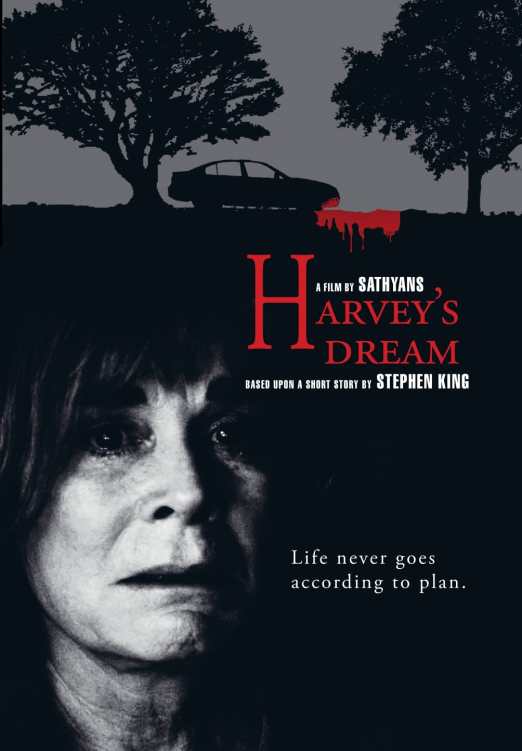
Film Review: Jainardhan Sathyan’s “Harvey’s Dream”

poster-1


Director Jainardhan Sathyan’s film “Harvey’s Dream,” based on Stephen King’s short story of the same name, brings to the screen a multi-layered tale of a couple struggling through what seems to be the normal aging process; but as the story progresses we soon realize there are many other factors at play.

From the very start of the film Sathyan does a brilliant job of setting a mysterious and eerie tone that pulls us in and leads us to question what is going to happen next. A panning shot across the family’s mantle and living room walls in the opening scene reveal photos of an apparently happy family, but the slow and pensive sounds of a piano playing notes in minor keys in the background inform us that something is not right.

What seems to start off as a normal Saturday morning for Harvey, played by Golden Globe nominee Philip Casnoff, and his wife Janet, played by Roxanne Hart, who won two Best Actress Awards for her performance, becomes progressively more devastating and complex as the story unfolds.

Janet leans over the sink washing fruit for breakfast. She’s bitter. She feels like she was jipped out of the life her husband promised her, and she’s vocal about it. She calls him dumb and makes subtle jabs that he may have Alzheimer’s, something that serves as a major insight into the true nature of what’s going on in the story.

As Harvey sits at the breakfast table recounting his dream of a tragic phone call he received from one of his daughter’s telling him that their drunken neighbor killed one of her sisters with his car the night before, Janet stares out the window in horror.

Her reaction to the “dream” is perplexing, after all, if it was just a dream then why panic? Her face scrunches up as she tells herself that the dark stains on the mangled corner of their neighbor’s car that she sees out the window is not blood, it was just a dream– and if you say your dreams out loud, they don’t come true.

Harvey continues with his story, stopping momentarily as he struggles to recall the name of one of his daughters, and it is at this point that we begin to realize that there is more going on behind the scenes, something the couple is not yet aware of, or isn’t ready to face.

Allowing the frustration and animosity that’s clearly been brewing for decades to take center stage, Sathyan captures the essence of what it is like to be an unhappily married couple. What keeps us engaged in anticipation of what’s next though is the way the director uses subtle cinematic devices to let us know that there’s a dramatic twist coming, one we will never expect.

In the end we discover that what seemed to be a precognitive dream was a tell-tale sign of early-onset Alzheimer’s disease– the phone call Harvey received from his daughter that morning did happen, he just forgot about it.

The interplay between the couple is spot-on. Ironically enough, Casnoff and Hart are a couple in real life, which was a main factor in Sathyan’s casting process when it came to selecting the film’s lead actors. Casnoff, who is known for his performances in the series “Sinatra,” “Oz” and “Strong Medicine,” endows Harvey with subtle signs of inner confusion and the perfect amount of vulnerability, traits which only begin to make sense after we discover the story’s final twist at the very end.

The shot sequences and sound design of the film are tantamount to the impact of the story as they heighten our emotions and piques our interest to know the truth of what’s going on the whole way through.

Thanks to Sathyan’s genius storytelling and the actor’s captivating performances, it’s not surprising that the film has already achieved astonishing international success since its release earlier this year. So far “Harvey’s Dream” has screened at over a hundred festivals and earned an impress list of awards including the Best Lead Actress, Best Overall Short and Judge’s Choice Awards at the Women’s Only Entertainment Film Festival, the awards for Best Actor and Best Film from TMFF (The Monthly Film Festival) and the Best Short Film Award from the Direct Monthly Online Film Festival, Chandler International Film Festival and the 6th Dada Saheb Phalke Film Festival. The film was also nominated for Best Acting Duo and Best Screenplay at the Sanford International Film Festival, Best Film and Best Actress from the Bucharest ShortCut Cinefest, Best Original Score from the Milan Online Film Festival, as well as several others.

Sathyan, who also produced the film, takes a unique approach to filmmaking. Without disclosing too much, he leaves space for the audience to make their own judgements and lets the story run its course in a way that keeps the viewers constantly engaged.