Mariana Wahrhaftig used her years of being a Zelda fan to her advantage for the concert series.
Most adults in today’s modern world grew up playing video games. For many children, opening up a gaming was the greatest gift they could possibly receive. A favorite video game often has more of an impact on a child than a favorite book, and people become nostalgic when talking about them.
Producer and director Mariana Wahrhaftig is one of those people. For her, like so many others, Nintendo was the system of choice, and Zelda was the game. But, for Wahrhaftig, she doesn’t have to talk about “the good old days” playing the game, because Zelda is her present.
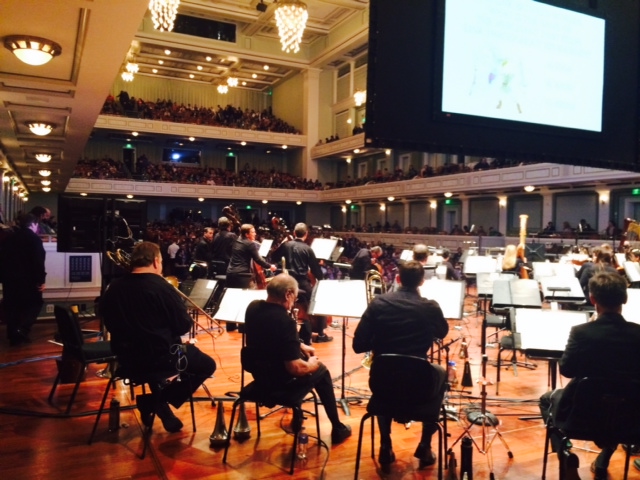
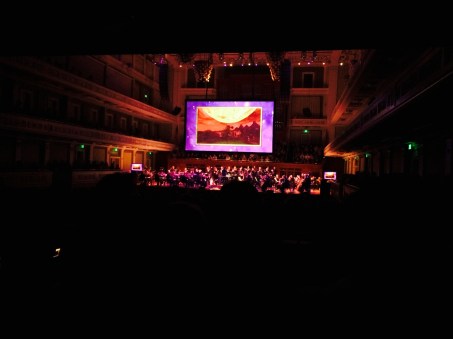
Wahrhaftig was a producer for the third season of Zelda: Symphony of the Goddesses – Master Quest. The Legend of Zelda: Symphony of the Goddesses is a concert that features music and video from the acclaimed video game The Legend of Zelda series where new and exclusive musical arrangements are played by a full live orchestra and choir in sync with vides played on a giant screen. Master Quest is the third season of this concert.
“The Legend of Zelda was my childhood. I fell in love with the games after playing them, and have loved them ever since. The games’ soundtracks were basically the soundtracks to my childhood,” said Wahrhaftig.
As producer, she was responsible for all the new creative content of the show. She supervised the pieces, as well as produced it. She was in charge of the new piece for the Majora’s Mask game, which was a request from Nintendo, since they were releasing a remake of the 2000 game. She also was responsible for writing, and providing direction for the videos they recorded with the game creators. She directed creative content and produced the new videos, and some updates requested by Nintendo. She also worked a bit of tour logistics.
“I loved the fact that I got to work with my favorite video game, and bring life to pieces that would touch the hearts of fans and take them back down memory lane and re-live the moments from their childhoods,” she said.
Wahrhaftig worked alongside Bill Panks, a composer who orchestrated the Majora’s Mask piece under her direction, and Daniel Johnson, the editor of the videos that accompanied the music. Johnson described working with her as a “total blast.”
“We had so much fun on this project, and her insight and fandom for the Zelda games really helped guide me along in the edit, since at the time I had never played any of the games myself,” said Johnson. “Her knowledge and passion for all the little details of the Zelda universe really helped flesh out the final videos to be as rich and specific as possible for all the fans who came to the show.”
The concert features videos that are perfectly timed with the music.
Wahrhaftig agrees that the experience was a great one, especially because of those she worked with.
“The videos are a huge part of the show, and they have to be perfectly in sync with the music, and Dan and I spent hours on end in front of his computer getting things just right,” she said. “He’s a star, he truly made the videos amazing. He knows his craft, and he does it really well.
I got to work with some great people who are very talented, and I am very thankful for that.”
The pressure was on for Wahrhaftig to deliver, as Zelda fans have a love for the game that is unlike most other video games.
“You want to make things that are true to the original games, and that are at Nintendo’s standards. You aren’t dealing with your own content, and so, everything you do, you have to make sure you do it right,” she said.
And it looks like she did, as The Legend of Zelda: Symphony of the Goddesses – Master Quest received extremely positive reviews, and is described as something every fan must see. And who better to do this, than a true fan.
Simone Lombardo is internationally recognized for his abilities and achievements in the visual effects industry.
It can be during difficult times where one discovers what they are truly passionate about. When people are pushed to their limits they find happiness, no matter how old they are.
This is what happened for Simone Lombardo, who is now an internationally recognized 3D artist in visual effects in both film and video games.
As a young boy growing up in Liege, Belgium, Lombardo was frequently very ill, and was limited on what he could or could not do, and where he could and could not go.
“I couldn’t go outside and play until I was about 8 years old, but even then I was a bit weak, so I would stay inside,” he described. “One of my teacher’s setup a computer for me during lunch time at school so I didn’t feel bored or lonely. That is when I fell in love with computers.”
It did not take long for Lombardo to start discovering different software that the school computers had to offer, such as Logo and Turtle Graphics and later Klick & Play which would let him do mini-game, and finally 3D Studio 4, which he says made him discover 3D.
“I was always interested by Japanese animation because of my grandfather’s love of it, as well as Walt Disney, but when A Bug’s Life was released I knew this was the future of animation, and I knew this is what I wanted to do, this and video games.”
Lombardo has achieved his childhood goal. He has worked on the blockbuster films The Maze Runner and its sequel The Maze Runner: Scorch Trials, the Academy Award winning film Hugo, as well as the largely successful video games Resident Evil and Soul Caliber V.
“I love the fact that if I have an idea late at night, I could just jump on the computer and quickly prototype something. I went to art school, but I always have had problems learning how to draw. many of my friends tried to teach me, but somehow it never works. But, when it comes to visual effects, everything is possible. It’s like magic,” said Lombardo.
Lombardo is an award-winning member of his field. He was an honorable mention at the CG Society International Challenge Spectacular, and first runner up at the Journey Begins. He won the Vocation Foundation Price in Belgium, in the CG Animation category in 2007, and is in the official 3dsmax Bible Book of 2008 and 2009
“Simone is an elite visual effects artist and animator of extraordinary ability,” said Saku Partiamies, the VFX supervisor at Pixomondo Shanghai, who worked with Lombardo on Hugo. “Simone possess excellent interpersonal skills and is a natural leader on set, instructing a large team of people how to achieve the most effective results to make the best film possible.”
Despite his overwhelming success and accolades, Lombardo says there are still challenges he faces each day.
“VFX is a young industry, and it keeps changing almost every day. It can be difficult to jump in the middle, as it is difficult to keep up to date with it. It has so many branches and variations,” he described.
But Lombardo has done a good job at keeping up-to-date with his chosen field. While studying advertising at a young age, he mastered programs like Adobe Photoshop and Illustrator, and branched into 3D Studio 4, despite there not being any access to it in his hometown.
“I just learned by reading the documentation and finding really rarely some book at the library. I ended up knocking on the door of the only company in my country at the time that was doing 3D Animation at the time, Neurone Animation, and asked them how I could learn more,” he said.
This sheer determination led Lombardo to a night school where he could refine his skills.
“They had computers, and software like Alias, and 3dsmax. I was freaking out,” he said. “For 3 years I made the trip from my hometown to the school every day. It was one hour on the bus, two and a half hours on the train, and then a thirty minute walk each way.”
A four hour commute to school has paid off for Lombardo, who worked on Take Back Your Power, which was done under Reuben Langdon at Just Cause.
“It was a really great project to work on, because the time was short, and I could test some game engine render with it. While 80 per cent of it was done with traditional CGI, the other 20 per cent was done using a really early version of my Game Engine Hybrid pipeline, it was a really good warm up. And the director was really nice,” he described.
Langdon, the founder of Just Cause Productions, knew from the time he met Lombardo that he wanted him to work at Just Cause.
“I can honestly say that working with a visual effects artist of Simone’s caliber has been one of the high points of my career,” said Langdon. “Simone’s work changed the way the industry looks at game engine.”
Working with Just Cause, Lombardo also worked on Resident Evil and Soul Caliber V, which many gamers recognize for their outstanding visual effects.
“Working on an amazing game like Resident Evil taught me a lot about motion capture and game tech. It re-connected my visual effect knowledge with my game engine root from Amsterdam. Working on Soul Caliber V, I could learn from the amazing team at Just Cause, and their amazing knowledge of Facial Motion capture and voice-over,” described Lombardo.
Lombardo has ambitious goals, from wanting to become a director for a movie or game, as well as release his own IP he wrote called HOPE, which will consist of three movies, two games, one comic book series, and a television show.
“Once that is done, I think it will be ok to take a break,” he concluded.
Who likes the idea of a Zombie Apocalypse? Nobody, right? Well, except for Alex MacPherson. Maybe it’s because he is such a fan of the genre. Maybe it’s because he feels as if he has already lived through it with his role in Dead Rush. The film was released earlier this year and was an Official Selection of the Canada Film Fest. Unless you have been hibernating or living off the grid for the past several years, you know that zombies are ubiquitous in film and television. Walking Dead and movies like 28 Days Later ignited a zombie fire that has seen TV and movies about them set records. One thing is for sure, people love seeing zombies and MacPherson is no exception. Whereas most zombie scenarios show a group paradigm, Dead Rush takes an extremely personal perspective by following one man as he loses everything. It’s this individual’s struggle in a world that is crumbling around him that implies the modern concern for our planet and how society is causing it to fall into a state of disrepair; one from which it can never fully recover…or maybe it is just good old’ fashion Hollywood scare tactics.
Dead Rush is simply the zombie version of the “riches to rags” story for one man. Early in the film the main character’s wife dies as they attempt to escape the chaos that follows the apocalypse, soon all those around him are dying and becoming zombies. We follow the journey of the main character and his attempt to find refuge with survivors. MacPherson is literally the first person we see in the film. Sadly for him, he is killed trying to escape and is impaled by a pole; his death resulting in his rebirth as a zombie. Even the long periods required to be in the makeup chair couldn’t dull Alex’s enthusiasm as he recalls, “It sounds a little crazy to say that you love a car crash scene but I didn’t have any of the negativity of an actual crash or the repercussions that follow so it was a lot of fun. The Art Department had beaten the hell out of this old van. They shoved a pole through the windshield, hooked up smoke machines, it was pure Hollywood magic! The Makeup artists were incredible so when I saw the zombie it really was terrifying. He looked so real!”
Zac Ramelan directed (along with writing and producing credits for) the film. Ramelan (known for his work on feature films like Late Night Double Feature, Zombieworld, and others) often works with cinematographer Karl Janisse. Witnessing the professional relationship between the two, Alex comments, “Working with director Zac Ramelan, and Director of Photography Karl Janisse, was the best part of this project for me. The two were like peanut butter and jam, working so well together. I remember sitting back and watching with admiration as they broke down a scene. Zac, who also wrote the film, had such a clear vision of everything, and of course, that always help as an actor, when you have strong direction.” It would be quite difficult for anyone to understand what motivates a zombie (other than eating brains, of course) but MacPherson confirms that working with Ramelan made it easy, noting, “When you have a director with a vision as strong as Zac’s, not much research is required. As for putting my mind fully into the film’s character, it really wasn’t hard with how detailed the set was, which was just done so well. It truly felt like I was in a post-apocalyptic world.” The film’s cinematographer Karl Janisse praises MacPherson’s abilities and contributions that helped achieve such a positive public response declaring, “It was an immense pleasure to work with Alex on Dead Rush. He is so creative. Working in this genre you need the story to be fresh but you also need the actors to bring something new to a role, something that entices the viewer; Alex does that. He is a wonderful actor. I’m scheduled to work with him soon on a project for Mimic Entertainment and I am really looking forward to it.”
It would seem that the misfortune which befalls the cast on screen is not without a real life counterpart, although in a much more benevolent sense. When the cast walked the red carpet at the film’s premier (at the Canada Film Festival) they were caught in a torrential downpour…in Canada…in winter! This occurrence (soundtrack provided by fellow Canadian Alanis Morissette’s tempting of fate) still did not dampen the cast’s spirits. According to MacPherson it has more to do with Canadian’s love of film that anything. He states, “Studios like to pick up horror films because they sell! Much of the feel of a horror film can be created with lighting, color correction and music. I don’t think Canada in particular has any specific things that make the horror genre so prevalent but there is just so much filming here! Toronto and Vancouver are film capitols, and the amount of filming there is actually increasing!”
Never content to settle, Alex has several projects in the works. He recently wrote and starred in Palmer’s Pumpkins. He wrote the film specifically as an ode to the 80’s horror films that he grew up loving, although it is more fun and fantasy based than horror. When Earth Sleeps is a trilogy set in a post apocalyptic world (a theme Alex is familiar with) in which the main character Aydin searches for solace. While maintaining a heavy workload of filming in his homeland of Canada, MacPherson hears the sirens beckoning from Hollywood. He reveals, “As much as I love Canada, and Toronto specifically, Los Angeles has been calling to me for a while. There’s something about the Hollywood dream that calls to all actors. I visited LA a few times over the last few years, originally thinking that I wouldn’t love the city, but would have to learn to at least accept it; the funny thing is, after my first visit I absolutely fell in love with it. That and every fiber of my being was screaming out that I had to get there. To this day I have a strong intuitive notion that my next chapter in film will occur in LA. Whether Toronto has a ton of projects shooting or not, there is still something about LA that Canada doesn’t have, when it comes to the entertainment world. As an actor and screenwriter, Los Angeles’s appeal is paramount. I’m also really lucky to have become close with a number of LA-based directors and producers. I am super excited to have a bunch of projects lined up already. It is one thing to want to get to LA as an actor, but it’s another thing altogether to have LA film people want to work with you. It’s like something out of a dream. What a life!”
Delivering a punch line is hard work. Saying things in the right way to provoke laughter is not easy. Comedic actors definitely have their work cut out for them. That being said, writing something that makes people laugh can be even harder. Ottawa born and Toronto based comedic actor and writer Adam Niebergall knows this better than most.
After discovering a passion for acting in high school drama classes and the improv team, Niebergall continued his dramatic studies at Queen’s University. After graduating and moving to Toronto, he took writing classes at the world-renown Second City.
“I got into writing because I was really inspired by what people around Toronto were doing with comedy and I wanted to find out what my point of view would produce compared to theirs. People like David Dineen Porter, who lives in LA now, working as a writer on The Late Late Show, or Tom Henry and Chris Locke, who are both stand ups in Toronto, were inspirations,” said Niebergall.
Niebergall also formed a close friendship with Roger Bainbridge and the two formed the sketch comedy group Tony Ho.
“I especially loved Roger’s writing, obviously I’m such a weird fan boy of my friend Roger, but he really made unique stuff and had great ideas and I wanted my writing to be my own version of that,” he said.
Niebergall is now an award-winning writer and actor after winning a Canadian Comedy Award in 2015 as a member of sketch troupe Get Some. Get Some also won Toronto Sketchfest Best of the Fest that year, as well as Best of Fest at Montreal Sketchfest in 2016.
“For me, my writing surprises me. Whenever I feel like I’m really getting somewhere with my writing I feel this sort of meditative quality of peace, and I’m pleasantly baffled at having no idea where it came from. You live your everyday life as yourself and you know who you are, but at least for me, when I write I feel like ‘…who the hell am I? I didn’t know that stuff was in there’. I like that feeling a lot,” he described. “What I like about writing comedy is making really complicated emotions. I love the idea of making someone laugh but also feel something else. It’s such a neat idea to me that someone can laugh and feel sad at the same time, or that you can laugh and feel confused at the same time. I want to write comedy that you might think about later. Either there was a visual or a joke or a concept that stayed with you and you can’t shake it and hopefully it makes you feel weird.”
Despite his success, Niebergall still acknowledges the challenges that writing can bring. He believes there are two challenges that all writers need to overcome.
“You have to maintain your confidence when you’re stuck with something and you have to try and figure out how to fix it or you feel unmotivated and you can’t think of what to write,” he said. “You also have to let go of things you love when you’re writing something. Often the kernel of an idea that got you so excited to write something is ultimately expendable when you’re nearing the final product or it doesn’t work anymore and you have to get rid of it. It’s really hard to do for me. I feel like it happens almost every time for me so I’m getting used to it.”
Niebergall definitely overcomes these challenges. Rodrigo Fernandez-Stoll, a producer and writer who has worked with Niebergall, describes working with him as working in a “joke factory.”
“Adam’s a complete dream to have on the production team, and brings a creative drive to the process, that not only makes everyone around him work hard, it gives us all a trust in one another. Adam not only works well professionally and with full attention to detail, he also makes sure we work efficiently,” said Fernandez-Stoll. “I’m thankful to know such a good writer, actor and all around great guy.”
Daniel Beirne, an actor, writer, and producer known for the award-winning television show Fargo, has known Niebergall since high school, and describes him as a pleasure to work with.
“Adam is a joy to have on set, both with his humor and his ease of performance. Adam comes prepared, and is always ready even after long hours of work and waiting. Adam makes other actors feel at ease thanks to his ability to make them laugh and feel comfortable, and by extension increases the overall workplace atmosphere to one of joy. Adam brings thoughts and ideas to his characters and process that strengthen the project as a whole, often in unexpected ways,” said Beirne. “His surprising approach, although often quite funny, comes from a very honest place, and it makes for extremely compelling viewing. Adam is naturally unique, and he uses his craft to enhance that uniqueness, to bring about a singular performer, who will go far.”
Niebergall’s writing credits now extend to two comedic short films Japan and Wanda that were both nominated Canadian Comedy Awards. Japan was also selected for LA Comedy Shorts Fi Festival and won the Laugh Sabbath film festival at NXNE in 2014.
“Making Japan and Wanda were both very hard work really taxing because we wanted to make spotless, professional impressive looking movies with almost no budget at all,” he described. “Luckily we had great help. Henry Sansom was a miracle for us because he had unbelievable camera equipment and he was willing to work with a really small crew to shoot them both. Same goes for Rodrigo Fernandez-Stoll. He helped us produce both movies and we couldn’t have done it without him. Also Morgan Waters and Tim Moore who have cut our movies beautifully for us.”
Despite all of his success, Niebergall still finds the criteria for great writing to be mysterious.
“I wish I could make a formula or something. My process changes all the time. I know that I really get going when I feel like I’m making the weirdest possible idea I can write that still feels honest somehow or relatable. I’m inspired to be so damn weird but still really engage your interest,” he concluded.
Teddy Fan is a multitalented musician who’s been playing the guitar since he was twelve years old. Since graduating from the Musicians Institute, he’s toured with hit artists all around the U.S., assisted and taught both teachers and students at his Alma matter, as well as pulled from his creative mind to begin writing his own, original songs and music.
Presently, Fan is alternately touring throughout the country with two rising artists, YouTube persona Jason Chen and the hit country-pop musician Christine Huff.
Guitarist Teddy Fan
Just this week, I had the opportunity to catch and sit down with Chen during a rare, free moment of his time to get the latest information regarding his career, all outlined in our exclusive interview below.
Where are you from originally and where are you currently located?
TF: I’m from Hong Kong. I’m currently living in Los Angeles, California.
What prompted you to get involved with music early on in your life? What made you want to pursue a career in it? TF: To me, music is my dream. When I was a kid, I always watched all kinds of rock performance videos. I wished that one day I could play on stage, too. I guess I made my decision when I was 13 years old. I knew it was the only thing I want to do.
Who inspired you early on? Are their any musicians that you look up to? TF: After I came to US, I met a lot of great teacher who gave me so many opportunities. Two in particular, Katsuya and Adrian are both my mentors and teachers. They’ve helped me a lot.
After you graduated from the Musician Institute, the school hired you as a Teaching Assistant (TA). What did your job as a TA entail? What were you responsible for as far as assisting students and teachers went? TF: As a TA, my job is to provide a professional session of guitar playing for the entire class. For example, when drum students are in a performance class, they will need a bass player and guitar player to play with, and that’s where I come in. All of the TAs are well trained for each style of music as well as reading sign charts, so any of us can fill in to any class at any time.
Is TA-ing, or just teaching in general, still something you do from time to time? TF: Other then school stuff, I also do a lot of session work like recording, band events, and songwriting and arranging jobs. I have a few artists who always ask me to okay music for them, and I also do a lot of recording for Katsuya. I’m in an event band, which plays at weddings, company events and different kinds of festivals.
In addition to collaborating with professors and students, you’ve also collaborated with sever other independent artists as well as groups. Who are some of the well-known musicians that you’ve worked with? TF: The most well known musician that I have worked with is Jason Chen. Jason is a famous YouTube singer with over 1,300,000 followers.
You’ve toured with both Jason Chen and Christine Huff separately as their guitarist. What’s life like on tour? TF: It’s like my dream come true. I never thought I’d be doing it this early on in my career. I’m getting paid to play music and travel around the U.S., how amazing is that!? It’s a lot of fun to travel and meet with fans. Thought, it is also really tiring to travel by plane or car for sometimes 7-8 hours a day, everyday.
How has being able to tour and introduce new audiences to your music impacted your career as a guitarist? TF: It’s had such a big impact on my life. It feels like my career is finally growing to a new level. I have more followers and fans, and more people are listening to my music. I feel like being a successful musician is no longer just a dream, I’m actively doing it and it’s been a long journey already!
Do you ever get nervous before performing in front of a large, live audience? If so, how do you combat that feeling? TF: After all kinds of past performances and experience, I don’t get nervous on stage anymore. I feel more excitement and energy! Of course, the first time I go on a big stage, I feel so nervous and crazy. At that time, I always keep telling myself that I can do it and to just enjoy the stage.
With Jason, the two of you perform both cover songs as well as some of his originals, and with Christine, it’s mostly country-pop. Is there a specific genre of music, or even a few songs, that you enjoy playing the most? TF: I was born with a love of rock music. I like to play rock songs with a guitar solo! For Christine, I like to play “Country Breakup Song” because it is a rock country song and it has a long guitar solo at the end. For Jason, we both really enjoy playing “Umbrella” by Rihanna. We love this song and it is a song that everyone can sing together, so we like to perform it for our audiences.
When it comes to music, you’re multitalented. Not only do you play guitar, but you also dabble with singing, songwriting and song arranging. How often do you write and play your own music? TF: I try to write everyday. I have my schedule made up for each day of the week, and I try to keep doing everything at least once a day. That helps me keep myself on track and to prevent lazy days. Practicing my original songs is a part of my schedule. I always prepare before gigs happen. So I always practice my own music.
For those who don’t know, what goes into the process of arranging a song TF: Arranging a song just like putting clothes on a person. First, you finish a melody with the basic chord. Then, you need to think about what else you need in order to make the song sound beautiful. Usually, the drums, guitar, bass and keyboard are the basic elements of a song. However, nowadays, we also put a lot of electric sounds in songs, too. It all depends on the song and your personal taste of music. To sum up, arranging just like trying to pick the right clothes for a person, and trying to make him or her look great in doing so.
In your opinion, what are some of the most important qualities a musician can possess? TF: To me, it’s being hardworking and humble. Also, as a musician, you have to keep learning, as always something to be learned. Keeping open mind to all styles of music is additionally important. To me, it’s important to branch out and not just learn what I like.
How do you tie these characteristics into your own practice? TF: I always try to find some new music to listen and practice, which refreshes my mind and keeps practicing fun. Of course, I also have some basic technique practices that continued to do everyday. Also, I don’t give up and I trust the process.
Outside of playing the guitar and writing music, what else takes up your time? What are some of your personal hobbies and interests? TF: I like go to the gym and work on my body. I am also a gamer; I like playing Xbox when I have free time. One hobby that I need stop doing so much is basketball. Since I’m guitarist, I need avoid anything that may hurt my hands, so I give up a lot of basketball time, which makes me sad because I love basketball!
What are some of your future goals specifically pertaining to your career in music
TF: Becoming a Singer-Songwriter is my final goal. I hope to one day be able to make a living by performing my own music, and spend every day in a studio and writing new songs. Of course, I want my own studio and team too!
When and where can fans see you perform live in the future? TF: Christine Huff and I have a show coming up on August 27, 2016 at Bar Lubitsch. For more information please keep an eye on my Facebook page.
Stewart Sellan is from a small town called Telok Panglima Garang located in a city called Kuala Langat within Malaysia. At 8 years old, he realized his passion for music in a church with his parents. At that time, making a career in music was a dream. Now, Sellan that dream is a reality. He lives in New York City. He is a founding member of the successful band. He is an award-winning musician. That passion for music that was realized at a young age changed his life.
Sellan is the lead guitarist of the band Beat The System. He has no formal training in any musical background, but his determination caused him to take lessons from friends in church, and use his spare time to watch videos. His perseverance paid off. His band recently won Song of The Year in Asian Voice Independent Music Awards for the single ‘Shine’.
“My interest in music grew even stronger during my college years when I found out that there are courses available for music. After being exposed to bands like Metallica, Nirvana, Megadeth, Iron Maiden I knew that I can make a career in music as well,” he said. “But due to limited opportunities in Malaysia I had to pursue my education in engineering while doing music as a hobby. During my job as an engineer I always looked out for opportunities to pursue my career in music as it was my passion to make a living as a full time musician.”
Sellan did not want to be stuck in the 9-5 job routine that he was in. He wanted to be on a stage, travel the world, and live his passion.
“My initial instrument that I chose was drums,” he described. “I played drums for 5 years in church. During that time there was an absence of bass guitarist in the church so I decided to learn how to play the bass guitar. I went to seek lessons from my music pastor and he gave me a piece of advice that I should learn to play the electric guitar first, because it will help me to learn both the electric guitar and the bass guitar simultaneously. I took his advice and learned the basics under him. As years went by I discovered the sound of distortion and overdrive, and I fell in love with it instantaneously. Since then, electric guitar has my main instrument that I wanted to focus on.”
Sellan took the lessons he learned and became involved in a Youth Alive band in hs church called JC Radix for 4 years. He was also involved in the Worship Team as a Music Director for 3 years, and eventually was performing on stage. He still remembers his first solo musical performance, which was at his uncle’s wedding in a rock club in Malaysia.
“It was a terrifying experience performing in a different crowd besides my home church. In that performance I did play some wrong notes a couple of times. I did experience stage fright, but now I have managed to overcome it,” he recalled.
Besides electric guitar, Sellan can play the acoustic guitar, bass guitar and drums on an amateur level. His innate talent is recognized by all that work with him.
“Stewart has the ability to create guitar riffs that supports the melody of the songs and this creates a very powerful composition,” said Ahmad Mokhtaza, head of A&R of Warner Music Malaysia.
“Other than the fact that he is a very gifted guitarist, there’s just something about Stewart’s choice of chords and notes in the music he creates that is magical. It’s a good blend of modern sound and catchy melody that do not take away the attention from the vocalist,” said Hermond Cheng, the General Manager of Sony Music Malaysia.
Sellan also says that Marc McClusky, who is known for his work with Weezer, Everclear and many more, helped guide him during guitar recording process on tone setting and recording techniques in order to get a good guitar tone. He was also given the opportunity to meet with Mark Tremonti of Creed and Alter Bridge and learn from him. Being given these opportunities are part of why he decided to make the move from Malaysia to New York City.
“In Malaysia most event organizers would prefer a solo artist rather than a band in order for them to save cost on backline equipment and minimize production crews. This has slowly showed decline in bands being able to make a living in music,” he described. “Music in the United States is solely judged on the quality of the songs, and an artist’s talent and opportunities are given for those deserving without prejudice which is opposite in Malaysia.”
The move has turned out well for Sellan. He is recognized as a talented guitar player on an international level, and has many plans for the future.
“I would love to have a signature series guitar under my name,” he said. “But I want to continue writing chart topping songs.”
The award winning child actor, Samuel Faraci, has three hit movies making their first debut to audiences around the world over the next few months. In “Country Crush,” “Blood Hunters” and “The Headhunter’s Calling,” Faraci shares scenes with some of Hollywood’s most riveting stars. While all three films differ in genre, they all share one surefire similarity: they all succeed at showcasing Faraci’s sought-after talents.
“Country Crush” is an upcoming musical drama from writer and director Andrew Cymek (“Night Cries,” “Agency of Vengeance: Dark Rising” and “Dark Rising: Warrior of Worlds”) that follows a city girl named Nancy Taylor, played by newcomer Madeline Merlo, who meets good-hearted Charlie Bishop, portrayed by Munro Chambers (“Degrassi,” and “Turbo Kid”). After sparks fly and a promising romance begins, Nancy and Charlie return to New York City where Nancy’s music career is beginning to flourish, until she’s faced with a choice: Will she continue along her career path as an opportunistic music producer, or follow her heart instead? One Tree Hill’s Jana Kramer (“One Tree Hill,” “90210” and “Entourage”) also stars in the film.
“I portray Cody Bishop Jr. in “Country Crush,” who is a sweet, good-natured boy who idolizes his dad. Cody’s father is Charlie’s older brother,” said Faraci. “and a soldier who serves his country overseas.” The film was shot in the Canadian countryside of Northern Ontario during the Summer, “A beautiful landscape that was close to forests and lakes,” Faraci fondly described. After a one of a kind experience working alongside the widely known country singer and actress, he commented, “Watching her work, I realized how hard it is to sing and perform at the same time. Jana is very sweet and a wonderful actress.”
The theatrical release of “Country Crush” will be introduced this fall, the home video launch set to take place on the Q1 of next year.
Additionally, in just about a month’s time now, Faraci’s second film titled “Blood Hunters,” directed by the acclaimed Tricia Lee (“Silent Retreat” and “Clean Break”), will be presenting its world premiere at the Horror Channel FrightFest Film Festival in London, England on August 29, 2016. Faraci plays a boy named “Hunter” in the film, the lead character’s son. “I auditioned for the role of Hunter and got a quick and positive response. I was so happy because I knew how good Tricia’s work was,” Faraci said.
The indie horror flick stars Leo Award nominee Lara Gilchrist (“Bates Motel,” “Rookie Blue” and “Supernatural”) as Ellie Barnes, a single mother who overdoses and wakes up in a medical facility to find that everyone around her is dead – and that she’s nine months pregnant.
Faraci is no stranger to the style of this elevated genre creature feature, as his prior film credits consist of the full-length film “Antisocial 2” and the horror TV series “Hannibal.” Elaborating on his character in “Blood Hunters,” Faraci explained, “Hunter is a precocious boy whose mom has not been the most attentive and whose dad has never been around. He has learned to not only take care of himself, but of his mom who leaves the stove on, food too long in the fridge or forgets to go to appointments. He understands more than his mom thinks he does, but loves her very much and will defend her to the end of the earth.” Furthermore, Faraci describes his scenes in “Blood Hunters” as, “Pretty emotional.”
“The Headhunter’s Calling” is the rising star’s third upcoming project, a Mark Williams (“The Accountant,” “Flawless” and “Shuttle”) family drama, follows a ruthless corporate headhunter played by Gerard Butler (“The Ugly Truth,” “P.S. I Love You” and “300”) who arranges jobs for engineers and is more focused on his job than his family. When his child is diagnosed with cancer, Butler’s character puts his overtly successful career on hold, leading to a clash of his personal and professional priorities.
“I play Kyle who is one of Ryan’s classmates. Ryan is the son of Gerard Butler’s character,” Faraci explained. “Kyle has an exchange with Elise, Ryan’s mom, when she stops by to get Ryan’s homework at school.” The character Elise is played by Boardwalk Empire’s very own Gretchen Mol (“Boardwalk Empire,” “Life on Mars” and “Mozart in the Jungle”).
Originally, Faraci had auditioned for the main role of “Ryan,” but didn’t book it due to physical traits the character needed to match. Just days after this unfortunate news, the casting director invited Faraci to perform the role of Kyle without the need of a new audition. “While I didn’t work directly with Mr. Butler,” Faraci also mentioned, “It’s exciting to have your name involved in a big production with A-List talent such as Alison Brie (“Community,” “BoJack Horseman” and “Mad Men”), Gretchen Mol, Willem Dafoe (“Spider-Man,” “The Grand Budapest Hotel” and “Finding Nemo”), and Alfred Molina (“Spider-Man 2,” “The Da Vinci Code” and “Angie Tribeca”).”
“The Headhunter’s Calling” will premiere at the Toronto International Film Festival, also known as TIFF, this September.
“You don’t realize how exciting something is until it’s actually happening,” says Canadian dancer Justin Lopes.
For a dancer, it doesn’t get much more electrifying than landing a role in legendary director-choreographer, Kenny Ortega’s next directorial project. That’s especially true when that project happens to be a highly anticipated, made-for-television reimagining of The Rocky Horror Picture Show, which makes its primetime premiere on FOX in October 2016.
Ortega, who was mentored by Gene Kelly early in his career, is best known for directing Michael Jackson’s This Is It concerts, the High School Musical trilogy, and for choreographing the film Dirty Dancing and Madonna’s Material Girl music video. Lopes, of course, felt honored to work with the industry giant.
“To even be auditioning for Rocky Horror was an incredible feeling,” says Lopes. “Booking the job and working one-on-one with Mr. Ortega was the cherry on top.”
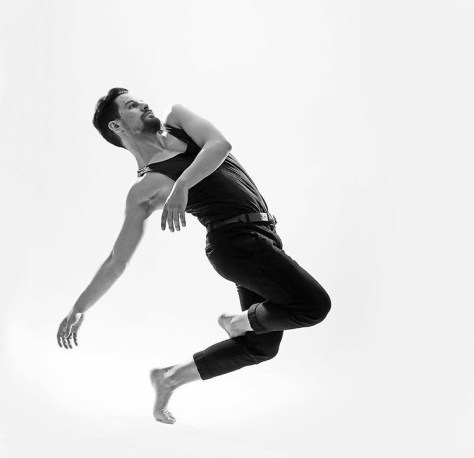
Dancer Justin Lopes | Photo by Alvin Collantes
Lopes, it’s clear, has the ability and versatility to make it in Hollywood– and Transylvania. Dancing in a large-scale production like The Rocky Horror Picture Show requires the ability to learn at an intensely fast pace and adapt to changes quickly. According to Jeff Mortensen, the production’s assistant choreographer, whether these changes have to do with spacing or choreography, Lopes would take anything given to him and run with it.
“Justin couldn’t have been a better fit for our team,” he says. “I could always count on him to ask the right questions and help propel our Transylvanian ship in the direction it needed to go.”
Lopes stays sharp both mentally and physically for roles like this one by continuing to broaden his movement vocabulary and study different styles of dance. He considers versatility second only to expression of individuality when it comes to a dancer’s performance abilities. He is trained in contemporary, hip hop, jazz, ballet, modern, tap and acrobatic dance styles and is into athletic activities like soccer, dirt-biking, and skateboarding.
“To me, dance is movement,” he says. “All of these different styles allow me to have different languages to bring across to an audience and to project my feelings and emotions in different ways.”
It is his ability to immerse himself in a character that made Lopes an unquestionable fit for The Rocky Horror Picture Show.
“When we were looking for our Transylvanians we wanted to find people who could transform and take on these alien characters,” says Mortensen. “Justin’s talent not only lies in his dancing but also this transformation ability.”
Lopes is thrilled to be a part of the continuing history of this cult classic, and feels he’s grown from the experience and the leadership on set. Still, the work is not always glamorous. Lopes says the project took 2 full months and did take a toll on his body. He’s got no regrets, however, and considers Rocky Horror the most positive, fulfilling, and rewarding thing he’s yet done in his still young but flourishing dance career.
“When you’re surrounded by that much inspiration everyday, it definitely makes every bruise, scrape, and all the hours put in, worth it.”
No matter how many times he crosses the boards on stage or hits his mark in front of a camera, nerves and adrenaline are expected and even welcomed in the life of a performer. Still, as dancer Nick Phillips knows first-hand, some extraordinary career experiences go beyond normal nerves and excitement, especially at the start. Performing on stage with Oscar-winning actress Hayley Mills has been one such highlight for Phillips.
“To be honest I was incredibly nervous the first time we rehearsed,” recalls Phillips, “but [Mills] was so lovely and supportive the nerves subsided very quickly and by performance time I felt very comfortable and relaxed.”
Legends, which toured Australia in 2015 is a comedy starring Mills and her sister Juliet Mills as two rival film stars. Phillips, an in-demand dancer from Melbourne, stepped into the role of Boom Boom Johnson, a high-energy part that called upon Phillips’ remarkable versatility. He had to dance, perform acrobatics, beatbox, rap, and deliver dialog with comedic timing that held its own opposite two veteran actresses.
“To work with [the Mills sisters] was truly a privilege. I learned a lot from them about performance stamina– they were able to hold the audience’s attention for two hours while on stage practically the whole time.”
To wow a seasoned actress like Hayley Mills, is surely a noteworthy accomplishment. However, that’s exactly what Phillips achieved when he took on this character with the cheerful enthusiasm of one who lives for the challenge of live performance.
“When he had to step in and fill the breach left by a fellow actor,” remembers Mills, “he did so with alacrity and total professionalism, was word perfect, and danced brilliantly– we were all thrilled by his performance and very impressed.”
High praise aside, touring a show can be grueling. According to Phillips, traveling between cities is frequently lonely and it is common to experience some homesickness. Not to mention, the challenge of keeping the show fresh.
“When you’re doing eight shows a week, it can be hard to give the same high energy performance every night, especially with a character like Boom Boom,” says Phillips. “It can also take quite the toll on your body. I had to make sure I was always warmed up properly.”
Fortunately, a well-trained professional is accustomed to hard work. Phillips, who has gone from a young breakdancer with a relatively late start in any formal dance training to a sought-after performer for stage, television and commercial events, has shown great mastery of both the physical and mental challenges of the work. This natural ability may have much to do with his attitude.
“[Phillips] is a great company member, being positive and enthusiastic,” says Mills, “qualities that enhance the experience for everyone.”
Though playing a very specific role as opposed to performing in an ensemble was different for Phillips he looks forward to tackling more roles that stretch him as a dancer and performer. And, though he loves the accessibility and experience of film and television, he enjoys the unpredictable response and instant validation of live performances like the one he gave in Legends.
“My favorite part was most definitely the surprise element. From the moment Boom Boom first storms onstage to the firing of his confetti-filled gun before he busts into a strip dance, the audience reactions are absolutely priceless.”
“As a kid, I was always creating things and using my imagination to make up characters,” said New Zealand writer Nick Fulton. “I had a paper route and I used to script a fake radio show and act it out as I rode around the neighborhood on my bike.”
Fulton has come a long way from the boy with the paper route and big dreams. He is now an accomplished writer, with a long list of achievements in his career.
“I’ve always enjoyed sitting down and tackling a really tough task, so I think that is where my love of writing comes from,” he said.
The real success started while Fulton was studying at Victoria University in Wellington in the early 2000s when a friend suggested starting a blog. He was then spurred on by others.
“His encouragement was what got me started, but I had another good friend who was a talented writer. Being able to share and talk about ideas with her gave me the confidence to pursue writing,” he described.
This motivation is what started Einstein Music Journal (EMJ), New Zealand’s foremost music blog, from 2007 to 2012. EMJ went on to be a finalist in the Music category of Concrete Playground’s Blogger Awards in 2011, and was awarded Blog of the Week by Breakthru Radio in New York City in 2009.
“I like being part of a community of creative people. I’m lucky enough to have friends in Melbourne who also write creative fiction and longer editorial pieces, so I have a community of real-life and virtual friends. I’ve made great connections through writing, and when I traveled to the US in 2012 I was able to visit and stay with many of them. Those connections will last a lifetime.” he said. “Continuing to be a part of a supportive creative community is the most important thing for me.”
Fulton focuses on writing culture pieces, and telling stories that may not be told unless he writes them.
“The biggest challenge is often convincing an editor that there’s a decent story to be told. A lot of my writing is about unusual theories or themes that I think others will be interested in too. Some editors are happy to take a risk and trust my judgement, but it doesn’t always work out that way,” he described. “Right now, I’m lucky enough to be working with an excellent editor named Tim Scott, over at Noisey. He’s very good at assessing my ideas and finding a way to reposition them to appeal more broadly.”
Fulton has written multiple successful feature pieces for Noisey Australia/New Zealand, over the last year, and Scott describes him as being skilled, reliable and thorough music writer.
“His writing pitches and story ideas are fresh, engaging and presented with a keen understanding of the Noisey audience,” said Scott. “Work that I have commissioned to him has been submitted on time and with a level of quality and professionalism. I look forward to reading and publishing more of Nick’s work.”
Fulton’s versatility and talent lead him to stories no one has thought to write before. He describes one of his favorite pieces written for Cuepoint in 2015. He had heard a song on SoundCloud that sampled Eric Garner and his now infamous final words “I can’t breathe”, when inspiration struck.
“I was troubled by it, and I knew others would be too. I decided to speak with the musician who made the song and find out what motivated him to create it. He was very sincere and had the best intentions,” described Fulton.
Fulton’s writing is often recognized by other publications. Last year, he wrote an article for Pitchfork, which started a bigger conversation around people shooting pictures with their phones at gigs. The article received an excellent response on social media and a direct response to the article was published in The Village Voice.
“Jonathan Shecter, one of the co-founders of legendary hip hop magazine The Source once emailed me and told me he loved my writing. That was a pretty big moment. He emailed me in relation to a piece I’d self-published on Medium and asked to republish it on Cuepoint, a publication he currently runs that’s housed on the Medium platform,” said Fulton. “I ended up writing regularly for Cuepoint and wrote several features and a weekly review column.”
Fulton’s skillful writing was also recognized by Genevieve Callaghan, a writer for Smith Journal, a brother publication to Frankie. She reached out to him in the early stages of her career for guidance.
“Nick as a mentor helped me to refine my approach to becoming a published writer, clarifying and strengthening strategies that could bring me into closer contact with relevant publications, editors, and other writers. Having since written copy for inspiring institutions like The School of Life, Melbourne, and Parisian refugee organization, SINGA, I am now working as one of the main writers of online content for Smith Journal, and contributing regularly to the Smith Journal magazine. I attribute much of this professional success to Nick’s encouragement and counsel,” said Callaghan.
Fulton’s success in Australia and New Zealand has inspired him to move to the United States, and fully experience the culture here.
“Every kid that grew up in New Zealand in the 80s and 90s was surrounded by American culture. Many of the things I write about have an American element, or speak about someone based in the US, he said. “Some of my best writing has been for American publications like Pitchfork and CMJ, but the opportunity to write deeper, more thoughtful pieces only really comes with the lived experience. Living in Australia, it’s hard to get a true perspective on American culture.”
“My goal is to keep writing informative pieces that start conversations and get people thinking about those around them,” he concluded. “Adding something to the community and helping people share their own ideas is important too.”
Everything you ever wanted to know about Hollywood's who's-who.







 Tinsel Town News Now