Featured Actor: Canada’s Nathan Mitchell!

nm
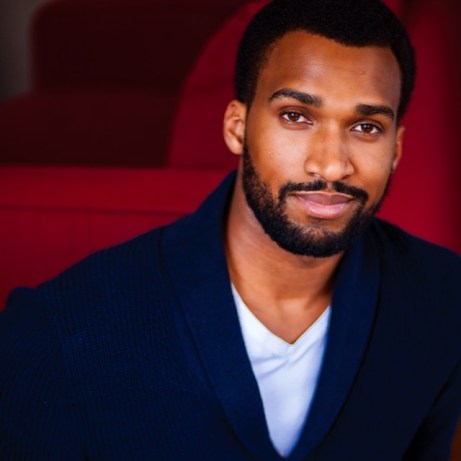
Canadian Actor Nathan Mitchell shot by Rebecca Eady


For Canadian born actor Nathan Mitchell, who is known for his roles in an impressive list of hit films such as “Twist of Fate,” “Newlywed and Dead” and Lifetime’s “The Real MVP: The Wanda Durant Story,” as well as the multi-award winning series “Arrow” and “Motive,” the acting bug bit at a young age, and he hasn’t turned back since.

Mitchell says, “What’s appealing about acting for me is that it’s an art form that requires genuine connection with other people. You really have to listen; you really have to let yourself be affected by the other person to create something dynamic. When you’re that tuned into someone else you have this fun, meaningful experience.”

Starting out in the industry nearly a decade ago, Mitchell skyrocketed to the top of the Canadian TV scene almost immediately when he took on the recurring lead role of Jeffrey on The CW’s comedy “Aliens in America.” Mitchell’s character Jeffrey is the on-and-off boyfriend of lead character Claire Tolchuck, played by Lindsay Shaw from the multi-award winning series “Pretty Little Liars.”

A coming of age comedy about a Pakistani exchange student who moves to America to live with the Tolchuck family and attend high school in a foreign country, “Aliens in America” was an immediate fan favorite thanks to the way it wove together relatable storylines about the dramatic experiences of being a teenager in a way that left viewers feeling good.

One of Mitchell’s funniest and most unforgettable moments in the series was in the second episode when Claire tries to break up with him. Instead of fading out, he stands on her front lawn with a boombox on his shoulder blasting ‘In Your Eyes,’ an icon and effective move on his part.

While “Aliens in America” was the perfect venue for Mitchell to show off his comedy side, but what audiences have come to know the actor best for is his unparalleled skill in drama.

Over the years he’s given numerous memorable performances on hit TV series such as the Golden Globe nominated crime series “Covert Affairs,” the two-time Primetime Emmy nominated sci-fi series “Falling Skies,” the Gemini and Canadian Screen Award winning series “How to Be Indie,” the Joey Award winning series “The Tomorrow People” and more.

motive-2
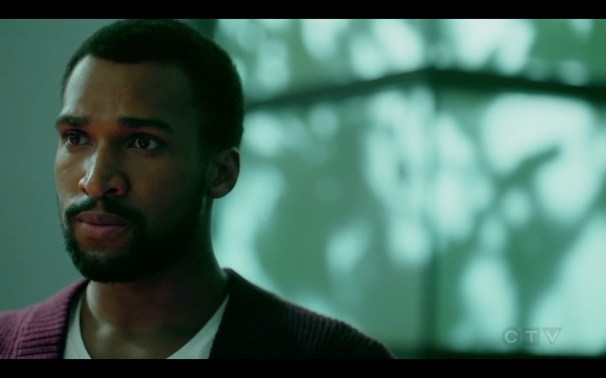
Nathan Mitchell in a dramatic moment as Russell Bowman in “Motive”

In season 4 of the dramatic crime series “Motive” Mitchell took on a starring role as famed BC Furies quarterback Russell Bowman, a distraught husband mourning the loss of his murdered wife.

“There was a weight to this character because he is dealing with the most monumental loss of his life. We get to see some of the happy times they had as a couple. But then you’re dealing with the heaviness of going through such a deep loss,” recalls Mitchell about playing Russell Bowman on the series.

“He has to deal with losing the most important person in his life. Seeing how he handles that is just as interesting as solving the murder itself. Those two parts of the narrative keep you on your toes.”

Nathan Mitchell
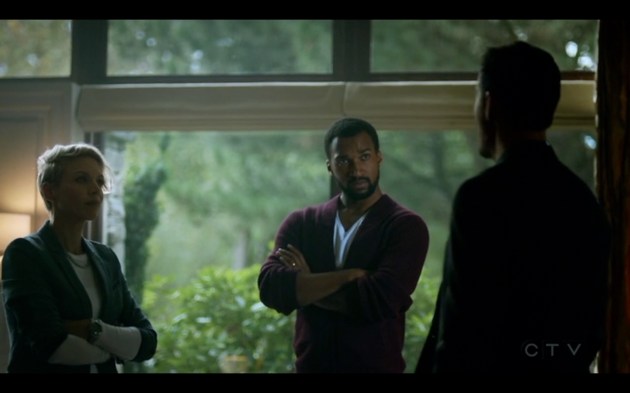
Kristin Lehman (left), Nathan Mitchell (center) & Brendan Penny (right) in “Motive”

Mitchell’s riveting performance as Bowman is emotional, honest and impossible to peel our eyes away from, the actor definitely has a gift for bringing challenging and multi-layered characters to life on screen.

With the craze of comic book inspired blockbuster films and hit television series that have swept the entertainment industry over the last few years, it’s not at all surprising that Mitchell is a part of that world too, the DC Universe to be specific.

In season 3 of The CW’s “Arrow,” Mitchell guest starred as Isaac Stanzler, a key character in the developing plot between Oliver aka Arrow, played by Stephen Amell (“The Flash,” “Legends of Tomorrow”), and Roy aka Arsenal, played by Colton Hayes (“San Andreas,” “Teen Wolf”).

The abandoned protege of Wildcat (J.R. Ramirez), Isaac appears on the scene embittered from the betrayal and ready to make Wildcat pay by framing him for a string of mysterious murders.

Mitchell explains, “I came out of the shadows to frame Wild Cat for giving up on me and leaving me in the hands of criminals. It was exhilarating getting to be a part of the DC Comics Universe and bring comic book lore to life.”

A critical subplot in “Arrow’s” overall story arc, the relationship between Isaac and Wildcat reveal what could happen to Arrow if he were to be abandoned by Arsenal in the future; but only time will tell how that plays out.

Nailing the mark with his performance in “Arrow,” Mitchell brings his character to life seamlessly by tapping into the hurt and resentment Isaac has towards Wildcat. In the heart pumping fight scene where Isaac takes on Arsenal, Mitchell makes it’s clear that what’s driving his character is the need for vengeance, which makes him a relatable villain that we hate and feel sorry for at the same time.

As an actor, Nathan Mitchell brings a rare level of diversity to the table thanks to his ability to find the root of what drives each of his characters, an asset that has allowed him to play a wide range roles across practically every genre.

He explains, “The more I truly explore my roles the more I become aware of different facets of myself. There’s a huge psychological component to it. You’re taking the script and deducing how one would act based on the circumstances. You’re always learning about human nature. It’s very fulfilling.”

Nathan Mitchell
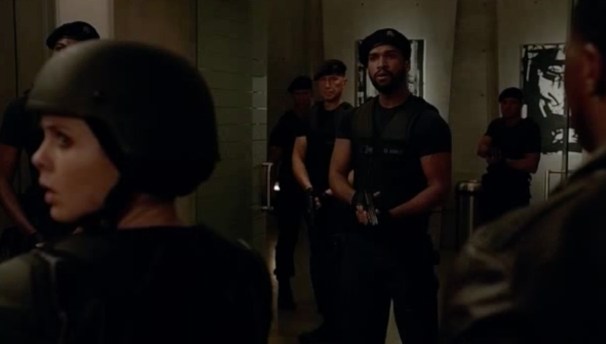
Rose McIver (left), Nathan Mitchell (center) & Malcolm Goodwin (right) in the season 2 finale of “iZombie”

Up next for Nathan Mitchell is season 3 of the TV series “iZombie,” which airs in 2017, as well as the upcoming sci-fi film “Scorched Earth,” where he takes on the critical role of Zee. Audiences will also be able to catch him in the upcoming film “The Marine 5: Battleground,” where he takes on the key role of Cole.


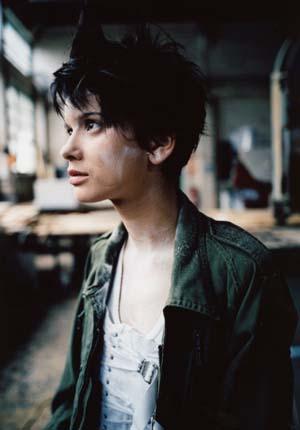
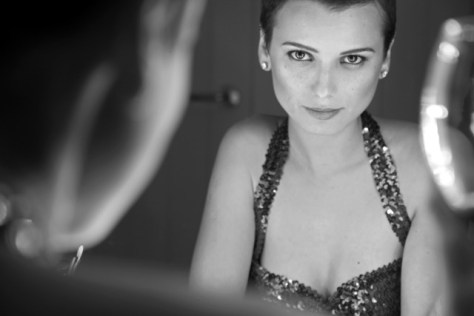
NEW ZEALAND’S NATALIA GORELOVA ISN’T ALLERGIC TO FAME…OR THE HARD WORK NEEDED TO GET THERE.

What do the people on this list have in common: Angelina Jolie, Sofia Vergara, Cameron Diaz, Uma Thurman, Jennifer Connelly, and Amanda Seyfried? They all started their careers in modeling. In this day of YouTube stars, this and that Idol, and “Top (insert profession here )”, it’s easy to forget that there was a time when professionals in entertainment took the path of working slowly to gain the experience to make a career last for life. That’s not to say that there aren’t many highly talented individuals in the aforementioned productions, just that there is something to be gained through gradually experiencing the many opportunities and scenarios that a developing career bestows. Sometimes the factor which allows creative types to develop as an artist is the ability to learn from the challenges and inevitable mistakes that come their way in less obvious ways. Natalia Gorelova has been travelling this path and successfully making the move from magazine covers and the catwalk to the TV screen. The wide variety of situations she has been called upon to perform in have resulted with her becoming a model who understands all of the subtleties of using verbal and nonverbal communication to portray whatever her role requires. While you might previously have seen her on the cover of Idealog or Headwave magazine, you’d more likely see her these days on TV doing a spot for Jaguar or Green Giant. Taking risks, doing the hard work, and believing in herself is the MOD for Gorelova. She grew up in Russia, then moved to New Zealand and was discovered. Going to unfamiliar places and jumping in the deep end has always been an attribute well exercised by Natalia. It has served her well giving her new opportunities and granting her access to other professionals who empowered her vocational pursuits.

Most models have to learn to make peace with the idea of auditioning. It’s an essential part of the business that most people accept as necessary in order to gain access to the opportunities they desire. In strong contrast to shying away from this, Gorelova describes a recent international TV spot for Zyrtec stating, “I decided that I had to play it very confident and warm. In one scene I was a member of a couple so I just went for it. Spontaneous intimacy with a stranger in a room in front of a camera can be an awkward experience. The key is to make it look like this is real and commonplace; you are in love with this guy you’ve never met before but you’re happy cuddling. It has to happen instantly. I made the point of talking to my casting partner before we got inside the room to break the ice a little. It worked and the audition went well. We felt at ease with each other which made the casting director happy, of course. I got a callback right away.”

_mg_7762

An important reason for Gorelova’s casting was the director on the project, Gregor Nicholas. Nicholas in an Emmy Award finalist with international awards (at Cannes Lions for example) with films in the Permanent Film Collection at the Museum of Modern Art in New York (Pacific 3-2-1-Zero) and was called “One of New Zealand’s hottest directors” by the Hollywood Reporter. He communicates, “Natalia demonstrates an extraordinary range, both comedic and dramatic. Her versatility as a performer allows her to handle any theme or attitude, whether in a movie, television, or a commercial. Rarely have I collaborated with an artist who has worked so consistently with so many leading commercial and fashion brands. It is clear that Natalia is a truly gifted model with exceptional abilities.” Gregor was in the room during the casting session and recognized her talent immediately. His praise was particularly poignant for Gorelova as she had been aware of his work since first moving to New Zealand. She reveals, “I remember the time when I just moved to New Zealand from Russia and I was watching a lot of TV to help me learn English more quickly and I saw a Telecom commercial about a guy who travels a lot while his wife is back home pregnant and missing him. The man scans his hand and emails the image to his wife. Upon receiving the email, his wife touches the screen with her palm against the image of her husband’s. It was so emotional and cinematic. From casting, to music, to lighting, to the idea; all of it was wonderfully detailed and elegantly filmed. I never got sick of watching that commercial. Later, when I started working in the commercial world, I hoped that I would get to make something that beautiful and cinematic. When I realized that Gregor was directing this Zyrtec project, I became very nervous because I wanted the part so bad!”

The commercial aired frequently to great response, making Zyrtec quite happy. Gorelova admits that although she should focus on this, it is hard for her to get past enjoying the work so much because she works alongside professionals whom she respects. Having made a successful career in and being well-received by brands and customers alike is an achievement she is quite happy about. Of course, the fact that the Zyrtec campaign and her performance was successful is a happy outcome. Natalia confirms, “Working with the entire cast and crew, and learning from Gregor was incredible; but also, working for a huge American brand was really exciting. To me, it meant that I am marketable in the U.S. and that started giving me hope that I could one day end up doing what I love in the country that I also love.”


img_9933

VON SCHWERIN: A MODERN INTERPRETATION OF ORWELL IN PEACEFORCE

Award-winning director David Gerson describes Beatrice von Schwerin professing, “Beatrice is the epitome of a doer. A producer who always gets the job done as effectively as possible, inventively, and with deep respect for the directors she works with. She grew up a member of the Swedish nobility, spending her youth hunting in the south of Sweden. I believe that hunting nature in her is what makes her such an excellent producer. She treats a film shoot like the hunt; a task to be cautiously, precisely, and effectively maneuvered.” Gerson has worked with von Schwerin on a number of productions such as: Automatic at Sea, All These Voices, Destiny’s Child, and others. Having worked closely with her he knows well that Beatrice can be seen leading the charge just as should would during a hunt. These days, von Schwerin is respected as a producer with many productions to her credit. It’s fitting that Gerson views her as a huntress as we revisit the first film she produced, Peaceforce, as the subject matter is a hunt…a hunt which is much more complex than it appears to be. Beatrice concedes that her forthrightness, determination, and loud speaking voice, are all products of her noble lineage and rearing; attributes that serve her well in leading a film production. More at ease facing challenges on set than relaxing in her family’s castle, this Swedish baroness prefers a life of creative pursuits in an industry that cares nothing about her heritage and yet appreciates every ounce of her talent and hard-work ethic. A dissection of her first production shows that the very template for her approach was a solid foundation which has served her and the films she enables to result in many achievements.

unknown

Beatrice worked in the Danish film industry for 9 years before producing Peaceforce. Denmark is one of the strongest countries when it comes to film production in Europe. Copenhagen has a solid film industry and is equipped to modern standards. In many ways it mirrors the productivity of Hollywood’s industry and community. Peaceforce was the first film on von Schwerin’s long list of producing credits. She confirms, “This is the first production where I realized that I really, REALLY wanted to be a producer. I knew that if I could get the cast and crew through all the challenges, then I could do anything. This film was the ‘AHA’ moment in my career, the one that made me love my job even more than I did previously.” Jonas Allen of Miso Films recognized her talents and placed her in the Producer role for the film. Peaceforce is loosely based on the George Orwell essay “Shooting an Elephant.” The film is set in the near future, in a world where capitalism has run its course. Daniel, a young Peaceforce officer, meets Jesper, a prominent local citizen. Jesper claims that an elephant is running amok in the city and killing people. Spurred on by his idealism and desire to do good, Daniel follows Jesper deep into the heart of a desolate city. Daniel believes he can make a difference by helping the wounded and dealing with the elephant. Not long into his mission, Daniel discovers that he’s in way over his head when he meets a little girl who is the sole survivor of the group that cared for the elephant. Daniel understands that he has been misled by Jesper. Jesper and his hungry entourage keeps breathing down Daniel’s neck. Fearing for his life, Daniel feels forced to make conflicting promises to Jesper and the girl. Soon Daniel finds himself confronted by the magnificent beast, a live elephant. Daniel desperately searches for a way out of this dilemma as he has no desire to kill the beautiful animal. The mob grows ever more impatient and hungry for blood. Daniel finally relents and shoots the beast, thereby betraying not only his own word, but also all that he believes in. It’s an epic and tragic tale. The components used to portray the action on-screen were grand as well. Peaceforce was a challenging shoot, with many different pieces that needed to match. Beyond the typical cast, crew, and locations logisitics, there were elephants, children, extras, & VFX to contend with on this production. Recognizing early on that she could lead with positivity to create momentum, Beatrice began with the animals. She recalls, “We spent two days shooting in a field outside of Copenhagen, close to a circus, where we rented an elephant for the shoot. One day was spent with the elephant and one day with the extras. We had three elephants on set with us and we used one of them. Elephants are flock animals and if you split them up, they are not happy. To contend with this, we had the two elephants not used in front of camera, close by so that they could be in contact with one another. Every now and then during the shoot, we’d have our star [elephant] head over to the others for some down time. It was a great and exciting day for both us and the elephants. I always try to have a positive attitude, no matter how challenging the day may be. I know that if I’m smiling and keeping positive, it trickles down to the cast and crew. It’s always important to show kindness and respect and I try to do that. I don’t separate my crew members from cast members. I really want everyone to feel equal, like one big happy family!” It’s a template that resulted in a happy and committed production family and a successful film as well. Peaceforce received a nomination at the Robert awards (Danish equivalent to Academy Awards) and garnered a Canal+ Award at the Clermont-Ferrand International Short Film Festival. Director Peter Gornstein couldn’t be happier as he notes, “Making Peaceforce with Beatrice was such a positive experience. I have known and worked with Beatrice for more than 8 years. We have won international awards together as well as developing several other projects. Beatrice is truly a one of a kind person and producer. Her positive energy and go getter mentality is something that spreads to everyone that she works with. Not only does she have a fantastic personality but her skills, and more importantly, her moral compass are beyond reproach. I’ve had to face some tough obstacles in the course of projects we’ve worked on together and no matter how hard or difficult the situation was; Beatrice would always guide me towards taking the high road. When I’ve wavered I have always been able to count on Beatrice to help me make not only the right choices for the projects, but also the moral choices.”

It isn’t always easy to keep that sunshine attitude. Persevering through the sometimes tedious portions of filmmaking are the obstacles that teach von Schwerin how to remain cool and collected. She describes, “Sometimes it’s not going over schedules or obtaining a piece of gear that is the challenge. Quite often it is just getting all the bricks in the puzzle to fall into place! We had so many moving parts on this film. It took what felt like (at the time) an army to get it made. The shoot was only two weeks, but the VFX was done in post and took almost 10 months to complete. When you are coordinating between VFX artist Ivo Horvat being in LA and the Director being in Copenhagen, you sometimes wonder where you are and what time it is.” These days, Beatrice von Schwerin knows exactly where she has been and she is considering heading to Hollywood as she fields offers to be a part of city that is the epicenter of film. One thing is for certain, Hollywood could use another producer who puts a smile on everyone’s face.

892a1911


A CANADIAN’S PERSPECTIVE ON “AMERIKA”

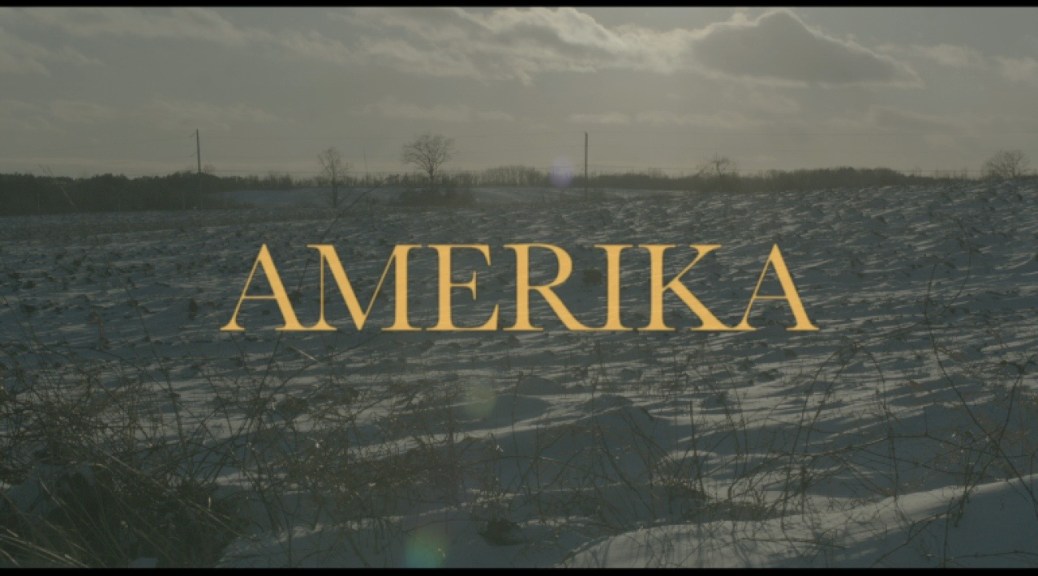
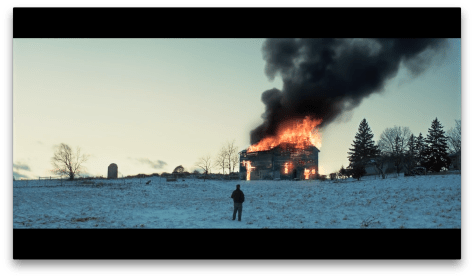
There’s no escaping the discussion of current events in America right now. That should come as a surprise to no one. With an election that has taken most of the past two years and a complete switch in the majority political party, it seems as if the entire planet is watching the US. You can’t turn on a news programs without getting the network’s opinion, so why should music be any different? Of course, musicians have long used their creativity to present their ideas, there’s nothing new to that. You can go back more than two hundred years to the protest song “Yankee Doodle” and see that even the founding fathers had musicians weighing in with their take on current events. The more overt and modern equivalent of this is the music video. “Amerika” is the song and video by Canadian band Wintersleep which presents their perspective of the modern US events and temperament. Just as with “Yankee Doodle”, “Amerika” is a protest song. The first person director Scott Cudmore thought of for the cinematographer position on “Amerika” was Peter Hadfield. This duo has worked on a number of high profile videos (including Vimeo Staff Pick “It’s Okay, I Promise” by Harrison x/Clairmont the Second and the sci-fi “Needs” video from Adonis Adonis) and both were eager to repeat the experience. Katy Maravala (producer for “Amerika”) was also keen to repeat her experience working with Peter as well. Maravala, whose client list includes; Drake, Rihanna, Arkells, and Halsey declares, “Peter has always been one of my first choices as director of photography. I feel confident in saying that Peter is one of the most genuine, humble, and talented humans I have ever met. As proof of his incredible talent, “Americka” was nominated for a UKMVA [United Kingdom Music Video Award]. The breathtaking images in this video were not easily earned. During the video we encountered some challenging locations; frozen waterfalls, old houses, a two-hour hike in the woods, and desolate buildings all in the middle of a Canadian winter. Peter remained positive, upbeat and an absolute joy to work with even during this tempestuous time.”

wa_screen-shot-2016-07-01-at-6-38-15-pm

While the relationship vignettes are compelling, the vistas in “Amerika” are grand and give the video a cinematic feeling. “Amerika” was shot in Hamilton, Ontario; a steel town on the coast of Lake Ontario that has come into hard times. The people of Ontario often refer to Hamilton as “The Hammer”. While the town possesses a great deal of beauty, it’s easy to see there many of its residents are surviving day to day. The opening shot was taken on the coldest day of the year with a temperature of -40 degrees F with wind chill. At times, Peter couldn’t operate the camera because the wind made his eyes water and the cold would freeze the tears. Hand warmers were taped to the camera batteries to keep them functioning. It was less than ideal circumstances. The crew shot for an uncommon five days in order to get shots at precisely the correct time of day for the desired effects. Their guerilla approach called for a lot of hiking through snow to reach some of the isolated locations. Again, less than ideal in subzero temperatures. It’s hard to find elite professionals whom are willing to endure these scenarios but Hadfield instills, “I am extremely passionate about creating socio political messages in film making. That’s what I’m here for. When I see it in other videos it makes me so happy and excited. When there’s anyone that’s willing to go out on a limb and say something truthful about the way our society is functioning, I couldn’t be more excited. Mainstream artists make art videos too. Kanye West has amazing music videos. There were parts of Beyoncé’s “Lemonade” that were beautiful and evocative. Radiohead just put out an incredible video shot by Paul Thomas Anderson and Robert Elswit that I definitely consider art. If I could make something as potent as that “Daydreaming” video, I’d be very pleased. The alternative artists like Wintersleep who put out videos that have less glamorization in them have the freedom to strive for more substance. They’re freer to say something political or polarizing because there isn’t as much money involved or pressure from the record companies and distributors. The music industry has fewer record companies directly involved, allowing artists to self-release. I think we’ll start seeing more videos with greater substance. We’ll start seeing more videos like Kanye West’s “Famous”. But there will always be artists on the fringe, making meaningful work and encouraging the next generation of people to develop their talent. The hope is that they use this to make a positive impact on the world. This is the agreement among all creative people; we are to use our talents to improve the lives of people and the world itself.”

wa_screen-shot-2016-07-01-at-6-39-10-pm

While this video may seem to be something of a mirror to hold up to the US, Hadfield professes his fondness for the artists and potential of the people found in the spirit of America. He recognizes that the film world finds its epicenter in the US. Peter comments, “There are great music videos and incredibly talented artists coming out of Canada, but most talented people here end up going to America and succeeding. There are amazing opportunities there, you can’t deny it. I think being on a set in Hollywood would be an amazing feeling. I think the greatest joy is being on set, with a camera on my shoulder. There’s nothing more satisfying than getting to the right location at the right time and capturing something special. It’s extremely satisfying and inspiring, and leaves me wanting more and more. Being a cinematographer takes a lot of self-discipline; staying focused and working towards an unattainable goal. That unattainable goal is being a great cinematographer. The challenge is getting than next great shot. I’ve got in insatiable appetite for capturing images, and as my taste and skill grow, I’ll always be reaching for the next shot that means something.” Striving for greatness, isn’t that what we all want for America?

img_6281


Director of photography Mariano De Luca captures heart of the people in Argentina’s World Cup video

When you love what you do, every day is easy. But when you not only love what you do, but also get to combine that with your other passions, every day is a dream. Mariano De Luca knows this well. Growing up in Argentina, he was always a fan of soccer, just like the entire nation. Now, he has a successful career as a director of photography working on films, television programs, and commercials. When he heard about a project that would allow him to explore Argentina’s love of soccer, he jumped at the opportunity.

De Luca was the director of photography on the extremely successful Gillette “People’s Video” for the FIFA World Cup in 2014. The campaign featured two videos. The first mainly focused on what the people and fans wanted to say to the players of Argentina’s National Soccer Team before they went to the World Cup. It has been viewed more than 750,000 times on YouTube.

“We know that the campaign was going to be big, but nobody know that it was going to be THAT big,” said De Luca. “It was a one-minute piece that was full of energy from the fans around the country and they wanted to cheer the players up.”

De Luca and the crew went all over Argentina to shoot the segment, in iconic places in each of the cities. They travelled to Buenos Aires, Mar del Plata, Cordoba and Mendoza city. Going to sites like “Puente del Inca” and “Potrerillos” and also soccer stadiums, like the “Estadio Jose Maria Minella” of Mar del Plata.

“Being a Soccer fan, and having the possibility to enter every soccer stadium that we did was incredible, and travelling around the country and shooting in places you only got to know if you are shooting was amazing,” said De Luca. “When you are shooting you get to go to places that normally people are not allow to go, and that is one of the greatest thing of being a Director of Photography.”

They used a video booth with a camera inside and a podium where people could walk in and leave a video message, but De Luca also came up with another approach to shooting to make fans truly feel connected to the players.

“I decided to use a small camera and lenses, with a lightweight shoulder rig, that allowed me to move freely and not have a big weight in my shoulder for long times,” described De Luca. “I told the people that we interviewed to grab the camera, as if it was a cell phone, in a selfie-kind of shooting. It was a nice resource to get away of the typical interview form.”

Capturing the fans feelings proved to be successful. The second segment of the campaign involved showing the players the videos and filming their reactions. The moving video received over 3 million views on YouTube.

“Sincerely, I would never have thought that the national team was going to be so touched when they saw the video,” said De Luca. “Seeing the campaign on TV just before the World Cup, and then seeing how the players watched it was an amazing feeling.”

The original approach De Luca took of filming went along well with the director Tomas Tchechenitsky. Tchechenitsky, who has previously worked on campaigns for VW, DirectTV, Bayer, and Multicanal, described this particular project, and working alongside De Luca, as incredible.

We went to places that everybody wants to be and the captured those moments of joy, tears and excitement,” said Tchechenitsky. “I met Mariano a long time ago. We got along pretty fast, we understood each other quickly. Mariano took the challenge of shooting for more than ten hours a day handheld, and did that flawlessly, walking and going around with the camera on his shoulder like no one else. His decisions on framing and shot designing, alongside his fast pace working, made him the right guy for this job. His approach to this campaign was perfect.”

Having worked together in the past, De Luca finds Tchechenitsky to be extremely talented, and describes the crew as being great people.

“It was a project where we got to be a pretty packed group. We went everywhere together, got breakfast together, lunch, dinner, etc. and besides that, worked together,” said De Luca. “When you are travelling to shoot you have that kind of bonding, and I love it.”

The campaign led to a national trending hashtag on Twitter, and brought the country together for their excitement for the World Cup. However, nothing was more infectious to De Luca than the passion felt from not only himself, but also the crew and the interviewees.

“The way people feel about soccer in Argentina is so special that everyone behind the camera were static after each interview with the fans, including me,” he concluded. “We live the soccer in Argentina like nowhere else!”
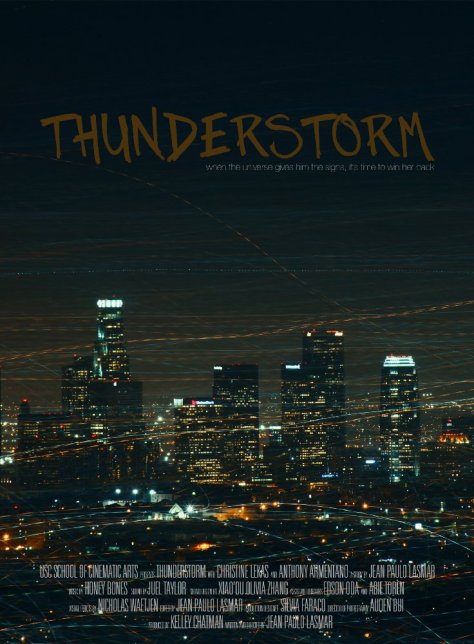
HEARING LOVE IN A “THUNDERSTORM” WITH XIAO’OU OLIVIA ZHANG

“There’s poetry in everything. Even in traffic.” It’s statements like this that led Jean Paulo Lasmar, writer/director of Thunderstorm to seek out Xiao’ou Olivia Zhang to supply the sound for this film. Zhang is a respected sound designer who has garnered acclaim in the film industry for her unique and creative approaches in the industry. Lasmar declares, “Olivia is a very clever, sensitive, and professional filmmaker and storyteller. She has worked on the film on set and in post. She knows how every aspect of filmmaking works and how they depend on each other. These skills give her a very mature and solid understand of story, emotion, and character, as well as production limitations. Due to this knowledge and proficiency, she was able to add different layers in Thunderstorm, through sound design and mixing, taking what we initially had and making it work by adding a personality to it, ultimately adding other layers to the story. Olivia was quickly persuaded to work on the film by Jean’s discussion of his interest in getting very creative with their approach to the cacophony that is downtown Los Angeles traffic and its personality in the film. For a sound designer like Zhang who finds her greatest excitement in the freedom that independent films afford, this easily became a production she wanted to be a part of creating. Olivia confirms, “He [Lasmar] came to me and said he wanted me to use sound to separate them [the two lead characters] and then to unite them together through these subjective moments. I couldn’t pass on the film because the story is so real and there’s so much I can do with sound to enhance the emotions.”

thunderstorm-poster

Thunderstorm is the story of Bella and Troy. Despite all the magic around their love story, they are no longer together. Broken hearted, Troy moved to LA to forget about Bella. Six months later, she arrives in town. One night when the universe gives him the signs, he tries to win her back.  On a rooftop in downtown LA, during the first snowfall of the year, amidst manic traffic, the two deal with their emotions and differing perspectives of each other. While there is resolution to the film’s plot, what impacts the viewer is the way in which these two different people can perceive the exact same circumstances. This was the crux of Zhang’s work in Thunderstorm; to give the audience the sense of viewing the character’s emotions in a subtle way. Olivia reveals, “Sound design in drama gives a lot of freedom to craft emotions. I pick moments that are subjective and try to mimic the way our brain neutralizes our environment. When you are close to someone or want to be close with someone, your mind focuses on the sound of their clothes rustling instead of the traffic because it is the sound that this person makes. When you really want someone to stop talking and leave you alone, you hear more of the background sound while the foreground sound that’s the voice of the person becomes the irrelevant background noise. So balancing the loudness of each sound and choosing the sounds the character would hear the most give energy and feeling to these subjective moments. At the beginning, when Troy and Bella are on the roof, she really wants to leave. Viewing things from her perspective, you hear lots of traffic and noise because her focus is not there. Troy, on the hand, wants to stay and remember this last moment with her, so he hears the night wind blowing on the roof while the traffic is more of a distant wash. At the end of the film, when they both reach closure, the way they hear the world becomes similar. The traffic become less irritating for her and more realistic for him. Of course, these are all done in a very subtle way, sound design in this film is mainly to build the mood.”

Zhang often thinks of her work as relating to other art forms. Analogies are a way for her to inspire the creative approaches she is known for in the industry. She used this in her approach to the sound of traffic as she explains, “A bus in traffic always stands out because it has a distinguished squeaking sound of a higher frequency than general engine sounds. In sound design, when we put a bus in the distance on top of a traffic wash, it brings more life and energy to it. I think of it as music. It’s like a piano. The bus and occasional horn honks are like the melody of the right hand, and the traffic wash would be the left hand chords that support and carry on the life of the song.”

To access inspiration, Zhang keeps a journal in which she makes note of her life experiences, allowing her to access “triggers” that she can refer to resuscitate the emotional states she needs to impart. It’s something that goes back to her earliest memories of film and sound. Olivia recalls, “When I was 12, during summer break, I was bored and I started to go through my parents’ video collections. On one cover I saw a short-haired lady, dressed in red and smiling at me against a green background. I put it in the VCD player and immediately heard this beautiful accordion music playing on the menu page. I have played accordion 2 hours a day since I was 5. The sound of that instrument is like a brother to me. And that was the first time I heard an accordion in film or any kind of media. I felt electricity in my body that was followed by a great sense of comfort and happiness. It was a French film called Amélie by Jean-Pierre Jeunet. The character Amélie does all these strange quirky things in a world full of color. I was so mesmerized and surprised that films can tell stories about people’s current life, and the current life is just as troubled and beautiful as it was in the past. Amélie carved the word “film” permanently in my heart. Nowadays when I think of film, I always see her and hear her faintly in the distance.” The poetry that Xiao’ou Olivia Zhang finds in common things like traffic sounds is obviously a product of the poetry that resides in her own heart.


Actress Savannah Burton makes film My Wounded Head a success

When starring in My Wounded Head, Savannah Burton was there to tell the story. Like any good actress, committing to the role and giving a believable and memorable performance was the top priority. However, unlike most actresses starring in a film, Burton was the only performer. The success of the film and sharing the story was up to her. And she didn’t take the responsibility lightly.

My Wounded Head tells the tale of a transgender woman as she delicately puts on makeup while staring at her reflection in the mirror. Burton, a transgender actress herself, plays this woman. Her makeup is a metaphor for her transformation to uphold society’s perception of beauty, while addressing the transition that transgender people may go through. Digging even deeper, the makeup also acts as a form of armor, protecting her from the scrutiny that comes from the outside world.

“I chose to use extreme close-ups throughout the film, in an effort to magnify the expectations of society for a transgender woman, versus what she expects of herself,” said Stephen Chen, the director and writer of the film. “I needed an actor of the utmost quality that could convey the film’s deep messages without speaking one word; Savannah Burton was the one and only actor that could do just that. The success of the entire film rests on her shoulders, as she is the only performer in My Wounded Head.”

“Savannah does a remarkable job of bringing an authenticity to the role, taking the audience on a journey of discovery by creating a combination of comfort and uneasiness that makes the film both fascinating and enthralling,” continued Chen.

Burton’s talent is evident in the film, and brought the film great acclaim as an Official Selection at the esteemed Imperfectu (Tijuana) International Film Festival, Gender Reel Festival, and Sydney Transgender International Film Festival. Chen believes the many Official Selections My Wounded Head received wouldn’t have been possible without Burton in the starring role.

“It is always a thrill to have a film selected to be in a film festival. It’s recognition of the project a group of people worked on and gives you a positive feeling that people appreciate your work. This also gives the film a larger audience and a chance to have more feedback,” said Burton.

Burton worked closely with Chen to make the film exactly what they envisioned. She says the partnership was easy, and Chen was very prepared and knew exactly what he wanted, which makes her job as an actor much easier.

“When watching the film for the first time I was very proud of the work I did and felt Stephen did an amazing job telling the story he wanted to make,” said Burton.

Being without makeup for parts of the film was originally uncomfortable for the actress, but she quickly began to see the artistry of the project.

“I start the film without any makeup on and the camera follows me as I get ready to go out for the evening. Not wearing makeup made me feel very vulnerable but I feel stronger after for focusing and completing the work. I felt a little anxious about seeing it, but I was very happy with the end result, she said”

Burton has worked on many successful projects, including Syfy’s hit show Killjoys and the CW success Beauty and The Beast. She also is in the new LGBT period piece The Kiss.

This project, however, was an important piece of her career. Beyond anything, she took away a valuable realization while working on My Wounded Head. It was her first film after her transition.

“It felt amazing to finally be working as myself,” she concluded. “I learned that I can have a career as a trans actress”

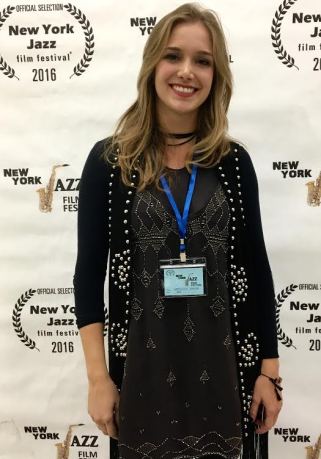
Gabriella Spacciari stars in Red appearing at New York Jazz Festival

gabriella-ff
Gabriella Spacciari at the New York Jazz Film Festival

Gabriella Spacciari was always fascinated with acting. Growing up in a small town in the south of Brazil, she used to imitate her idols and favorite characters she saw on the screen. Now, she is the one on the screen.

Spacciari has a starring role in the film Red (also known as Vermelho). The film, which originally premiered at the Madalena Festival de Cinema at São Paulo in June, is being shown at the New York Jazz Film Festival this month.

“It was an amazing surprise to go to the New York Jazz Film Festival, especially after one year of living in the United States. It’s like starting your career again. It is a gift to have a project that I did back home selected to a film festival in Manhattan. I’m going to New York for the first time to check it out. It’s going to be an unforgettable experience,” said Spacciari.

The film Red is about Ana, played by Spacciari. While under narcotic substances, Ana tries to commit suicide.

“The film is very poetic and I needed to go deep into the scenes to convey in just a few seconds all the pain that is to be cheated and the depression and self-destruction that lead us to make decisions that can bring us serious consequences,” she said.

The film was written and directed by Guilherme (Guily) Machovec Rahner. He had Spacciari in mind for the role while writing, and knew she would be able to portray Ana the way he envisioned. He describes her as very important to the success of the film.

“Gabriella is a very deep actress. Besides the fact that the camera loves her, the emotional range required to go into the circumstances of the scene made it easy to work with her.  The scenes had a high emotional stake and her concentration kept uptake by take,” he said. “I loved working with her, she is a very committed and talented actress. It was a very demanding role, but it seemed effortless for her. I look forward to working with her again as soon as the opportunity arrives.”

Spacciari agrees that they make a good team. Machovec Rahner, who teaches and produces at Operahauss in São Paulo, met each Spacciari through another producer, and knew she was the right person for his film.

“Guily said he thought about me while writing the film,” said Spacciari. “It was a very special gift to play this role.”

Spacciari has a life full of experience. Also a model, she decided to get into acting at a young age when she enrolled in the theater group in her home town. She relocated to São Paulo when she was just sixteen to pursue my career further.

“The theater group was very small. The director used to write and produce. He emphasized the importance of the classics and had us read them,” described Spacciari. “It was very important to me to understand the work of the artist – not from the glamour, but from the stage work.”

Since that time, Spacciari has had a variety of roles that explore her versatility as an actress. She was in the film Julia that premiered at 8o. CineFantasy, and Aluga-se o Ponto, which was nominated for the Prize FICC for Audiovisual at Campinas
.

“I think the most difficult thing about acting is to deal always hearing the word “no”. But you have to just keep practicing your technique, cultivating good friendships, communicating with other artists, and making art,” she said.

Spacciari also has a successful modelling career, and has appeared in a variety of successful commercial campaigns, including Cultura Inglesa and Quem Disse Berenice. She was also in a multi-national Pepsi commercial.

“Acting is the art that deals with the intricate and wonderful condition that is human nature,” she concluded. “I think nowadays we are so full of information that acting is a powerful way to combat this, through sensibility.”

You can view the trailer for Red here.

SEBASTIAN SACCO PORTRAY’S THE CREATIVE STRUGGLE IN “THE PATH”

Art imitates life and life imitates art. Whether it is in the artistic presentation of the real life experience, people are fascinated by passion. Love, hate, greed, altruism, faith, family, all of these involve this provocative emotion. Some enjoy a calm lifestyle while others are driven to the flame by their desires. Either can be a soothing or precarious scenario. For actors like Sebastian Sacco, he cannot deny his pursuit of a creative lifestyle. It’s not all red-carpet premiers and adoring fans. Quite often it means freezing in the rain while being shot with (paintball) bullets on a war film (as he did in Tommy), or being held underwater for long periods of time (in the Flawes music video “Don’t Wait For Me”). Even when he is given a less physically demanding role to play, it is often emotionally taxing, as in the film The Path. This film delves into the mindset and emotional obstacles of someone who pursues a life as an actor and the everyday securities with which they must forego; it’s a role which Sacco is ideally suited to play. He stars as Seb in the film by writer Harry Chadwick and directed by Tobias Brebner. This 2015 film investigates the sacrifices and uncertainties made in the pursuit of a dream, and the measures it takes to stay on that path.

If you transferred the same fixation and enthusiasm that one might have for say…futbol (or football, depending on your place of origin) you would have an indication of what dancers, writers, musicians, actors, and other creative types feel for their vocation. The true immersion of your joys and pains, fixated on one specific thing…it can be overpowering. Many entertainers profess their love of their creative pursuits while also recognizing the fact that it often requires them to forego a “normal” life and relationships. These careers are never 9 to 5 jobs. Witnessing Sacco’s performance as Seb feels like watching a new form of audience-viewable intense therapy. His character deals with the same doubt, drive, insecurities, and relationship struggles that undoubtedly almost every creative centered individual experiences. Specifically, this film focuses on a relationship. The Path is the story of an actor pursuing his dream. In this pursuit, he meets and falls in love with someone. Seb is constantly divided in his motivation between love and the demands of pursuing his career. He desperately wants the relationship to work but he can’t help but become diverted from it by the focus needed to pursue his dream. Seb realizes that he can only pursue one end and must choose between her or his passion. He takes the plunge and heads back on his path towards his dream.

the-path6

Sebastian has played many leading roles. It’s any easy conclusion to make that the reason so many critics and viewers found his portrayal of Seb in The Path so authentic is because it is so close to his own life experience. He confirms, “I’m very close to who this character is and what he has lived. Seb really has to deal with one big question. Life is filled with so many little decisions that dictate the path we follow but this film wanted to focus on just the big stuff for Seb; the huge pull for a loved one or for your dream and passion. It’s a sad fact that sometimes the two cannot work together. Towing the line in-between just makes both unhappy. I denied this fact in my own life for a long time. I had wanted to be an actor ever since I was a kid. I didn’t allow myself to consider it as a real possibility for such a long time. As I grew up and felt pressures from other factors, I just slowly pretended I wanted other things. I tried to forget about acting or tell myself I’d do it later. I attempted to use other things to occupy my attention rather than allowing myself to pursue my true desire. Eventually, when I made the decision… nothing else mattered. I wasn’t going back. I wasn’t going to deny myself again. That’s the exact struggle my character endures. I’m certain that most people who pursue creative lives relate to this, I was just fortunate that I found a film which allowed me to tell the story that many of us relate to.”

the-path5

Many of the scenes in The Path are emotionally taxing but one scene in particular depicts a physical representation of Seb’s turmoil. It’s somewhat humorous that Sacco has had a number of roles in his career that require submersion in water for long periods of time. It’s not a scenario or achievement which one regularly associates with a particular actor. Director Tobias Brebner (who has worked with such acclaimed actors as Kevin Spacey) notes, “We had to shoot Sebastian in the freezing wind and rain in Scotland as he traversed through the wilderness. On top of all that, he had to perform a sequence in which he had to jump into a freezing cold lake in the lake district during each take. Despite the obvious physical discomfort he was in, Sebastian performed each take with the utmost professionalism, never complaining about the conditions and always able to stay in character. His performance is a testament to the theme of the film – always enduring and working toward a goal regardless of the external circumstances. The success we achieved would not have been possible without his amazing talent and commitment to the film. In fact, I would go so far as to say he is the film.”

Sebastian agrees that he is quite close to his character in The Path. While he may not have made immense personal discoveries working on this production, it reinforced a pillar of his beliefs as he comments, “Seb reminded me to always follow your dream. The path might change or you might go in a different direction than you thought but, always keep following your dream.”

the-path11

Navid Charkhi Dances Into His Second “Descendants” Movie

Working 15-hour days is nothing when you love what you do and you’re having a good time doing it. For Iranian-Canadian dancer, Navid Charkhi, it is working with esteemed director, Kenny Ortega, the cast and the choreographers on Disney’s Descendants 2 film that makes long, grueling days fun in front of and behind the camera.

Navid Charkhi and Kenny Ortega
Navid Charkhi with Kenny Ortega on the Descendants 2 set.

“The way Kenny talks to the actors and dancers, and presents his acting or movement ideas to the cast– I feel he sees everything happening already and when he gives direction to the cast it is usually brilliant. There’s always a wow factor when you see his demonstrations,” says Charkhi.  “I watch closely and follow his steps behind the scenes.”

Who wouldn’t when working with a three-time Emmy award-winner who has directed projects like High School Musical, choreographed timeless films such as Dirty Dancing, and collaborated with heavy-hitters Michael Jackson, Bette Midler and Gene Kelly?

Charkhi and Ortega actually have similar reasons for getting into show business. Both were inspired as boys by dancers they idolized. For Ortega it was Hollywood screen legend, Kelly that moved him toward a career in the entertainment industry. Charkhi grew up watching Michael Jackson on television and was mesmerized, copying and learning from the popular recording artist and dancer’s moves. Charkhi admits to being a bit starstruck by the Descendants director’s history with the King of Pop.

“Kenny has worked with Micheal Jackson himself. Hearing stories of them working just brings tears to my eyes.”

Ortega is pretty impressed with Charkhi, too. The director recalls that Charkhi proved himself a standout right from the very beginning.

“I could not believe how much talent and skill he demonstrated at the initial auditions for the production,” remembers Ortega. “Usually dancers take a few takes and auditions before beginning to impress the director and the production crew. However, this was not the case for Navid.”

Dancer Navid Charkhi

Indeed Charkhi’s natural instincts when performing complex dance moves became an asset during the three-day Descendants 2 audition.

“On the first day over 400 people showed up and more than 200 of them got cut,” he says.

Co-choreographer, Tony Testa, explains that those who could not keep up while learning a new piece of choreography each day were cut from the production. Charkhi, on the other hand, has quickly made himself an “irreplaceable asset to the film,” according to Ortega. Not long after the initial auditions Charkhi was assigned to working alongside Testa, as he was the only dancer able to keep up with the changing challenges throughout the production.

“[Navid] is able to instantly adapt to any type of dance depending on the style of the production, which is an extremely important characteristic for a Descendants 2 dancer to have,” explains Testa.

In addition to versatility, characterization is also extremely important for a dancer working in the film industry. Ron Oliver directed Charkhi in the film Mostly Ghostly 3, for which Charkhi was promoted as assistant to choreographer, Richard O’Sullivan and helped to create choreography and prepare the cast for filming the sequences in just three days. Oliver is quick to express how well Charkhi works under pressure but, as a director, also gives insight into Charkhi’s acting abilities.

“Navid’s dance aesthetic is extremely distinct from the rest of his peers as he is able to portray character emotions through his dance moves,” states Oliver.

In the first Descendants movie, Charkhi got to play a baddie that wreaks havoc on a village. For Descendants 2, which is set to premiere in summer 2017, he still gets to explore his dark side, this time as a pirate. According to Paul Becker, who co-choreographed the original Descendants film, it’s a far cry from Charkhi’s real-life personality, however.

Navid Charkhi

“Navid is a generous spirit and great to work with,” insists Becker. “His giving nature comes across in his dancing. I have had the pleasure of hiring Navid as a dancer on [multiple] projects and always welcome the opportunity to work with people like him.”

Charkhi’s combination of generosity, work ethic, talent, and ability to adapt to any style or genre makes this Descendants dance principal one to watch as he ascends to great heights in Hollywood.

Everything you ever wanted to know about Hollywood's who's-who.