Category Archives: Cinematographer

Staying True to Their Roots: NYLON Magazine’s “To The Authentic” by Jessica Pantoja

Upon shutting down their print magazine at the tail end of 2017, NYLON Magazine wanted to remind readers that despite moving into solely digital-based content, their founding roots wouldn’t waver. With their focus moving more towards engaging with their audience through striking video and digital content, it made total sense to release a commercial that spoke to their continued dedication to the diversity of their audience despite the change — so they joined forces with cinematographer Jessica Pantoja to create “To The Authentic.”

“As NYLON is currently evolving from a print to a digital publication it was important to state that regardless of the change they would continue to be true to who they are and who they have been,” explains cinematographer Jessica Pantoja.

“‘To The Authentic’ had the intention to express NYLON’s commitment to the audience and the bond between the publication and the readers… NYLON is part of the audience as the audience is a part of NYLON, they both influence each other.”

In creating “To The Authentic,” Pantoja captured 25 models, influencers, dancers and actors, essentially asking them to come as they are, with the ultimate goal of revealing their authentic selves on camera. Using such a culturally and aesthetically diverse cast that collectively blurs the lines of traditional gender ‘norms,’ which are so yesterday it’s not even funny, not to mention the broad range of personalities brought together in the commercial, Pantoja nails the mark with her creative vision for “To The Authentic.”

From the minimalistic yet bold bubble gum pink opening frame featuring the words “BE YOURSELF” followed by the hashtag ‘#Benylon,’ to the progression of models who hit the screen, the commercial flows seamlessly and expresses what the brand stands for. DIVERSITY.

This is ultimately one of the key reasons tens of millions of readers look to them as a source of information on everything music, fashion and pop culture each month — they’ve never covered what every other glossy on the newsstand does, and they’re not going to start now. Their mission is furthered by the audio narration that accompanies the visual content, which adamantly reassures: Through media changes, political changes, cultural changes — you keep true to yourself. We see you. We are here for you. Always have been. Always will be. NYLON.

Pantoja says, “The meaning behind [To The Authentic] lay on the changing social climate… we were just trying to express the belief that diversity is beauty.”

Capturing each model (moving around to their own tune) in front of various backgrounds that visually fit their individual aesthetic, style and personality, Pantoja’s selection of backgrounds, which include recognizable murals, architectural structures and other interesting locations across Los Angeles, also speak to the magazine’s ceaseless attention to design and local culture, something they’ve covered in extensive detail since their alternative beginnings back in 1999.

She explains “We asked all the models to play a song they liked so they would feel comfortable showing us who they are. They could dance or just stare at us. It ended up being super fun because they would feel really comfortable and share their personalities and style with us. Each person brought something completely different.”

From the way she fluidly pans her camera across each model as they grace the screen and creates an engaging flow from frame to frame, it’s easy to see the seasoned nature of Pantoja’s skill on a more technical level in terms of her work as the cinematographer behind the project. Key in eliciting the authentic personalities we see from each of the talent featured in the commercial, Pantoja manages to capture model after model through her camera lens in a way that never gets boring.

“It’s never easy to photograph 25 models and build and light more than 20 different sets, to pull off 25 different outfits and looks in a 12 hour day. The team was amazing and thankfully we had very talented and professional people with us. At the end I think that it’s all about having the right people as your team,” explains Pantoja. “In film you are only as good as the people who stand by you and they are only as good as you help them be. It’s a very collaborative industry and if you fly solo you will never be able to make it.”

Some of the models Pantoja shot for the commercial include influencer and beauty blogger Katie Joy, model Matt Jones, actress and poet Portia Bartley from the six-time Los Angeles Film Award winning rom-com “You Have A Nice Flight,” actor Ido Samuel from the Carlo di Palma Award winning film “Fill the Void,” dancer Stacy Gaspard and other notable pop-culture figures and influencers.

It’s not at all surprising that NYLON chose to lean towards featuring social media influencers rather than supermodels, A-listers and red carpet frequenting celebrities in the commercial. The content is all about being authentic, and featuring unique in-the-know creatives is what they’ve always been about. The plethora of music, beauty and fashion collaborations they’ve executed over the past two decades have influenced millions, in the same way that their relationship with their incredibly diverse audience has influenced the content they release.

At the end of the day, “To The Authentic” really does scream to viewers at the top of its lungs: Be yourself, THAT is what’s beautiful.

“Being you is ok. No matter what that means, you should always be true to who you are in order to achieve the better version of you,” adds Pantoja about the overall message of the video, and her personal feeling about the kind of self love and acceptance each and everyone should focus on cultivating.

With the concept of beauty being one that has remained in flux over the ages, what more and more people around the world today are coming to regard as ‘beautiful’ is reserved for those who remain true to themselves, those who unapologetically expose their strengths and flaws with fearless authenticity. And this is something that directly connects with the attitude and voice of NYLON and their readers.
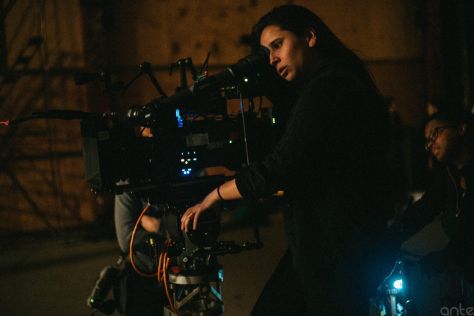
Cinematographer Jessica Pantoja

Aside from being the cinematographer for “To The Authentic,” Pantoja, who’s originally from Queretaro, Mexico, has made a strong name for herself as a cinematographer in the film industry, something she’s dedicated herself to for the past decade. She’s earned extensive international acclaim for her work as the cinematographer behind countless films including “Mute,” “Cold Night,” “Harvest Moon,” “Evanescent,” “The Wind Outside” and many more.

“Jessica and I have collaborated on many short films and commercials in the past… Nylon was a very special project where I saw and experienced great energy and drive from Jessica, as a DP and as a leader,” explains “To The Authentic” production designer Clarisa Garcia Fresco, who production designed the 2017 WorldFest Houston Platinum Award winning film “Clarity,” as well as “Evanescent” and “Harvest Moon” where Pantoja served as DP.

“I enjoyed our teamwork efforts as we were striving to create an image and identity for the project. Her enthusiasm and drive for film and storytelling are truly an inspiration to me and everyone around her.”

In 2017 Jessica Pantoja also earned a nomination for the Best Cinematography Award at the 2017 Camerimage Etudes Competition, arguably one of the world’s most prestigious competitions in the field of cinematography, as well as nominations for the Best Cinematography Awards at 2017 VIZIO + DOLBY filmmakers Challenge and the 2017 Cine Gear Film Competition for her film she as well as the film “Manners of Dying.”

In a way, “To The Authentic” marks her foray into creating branded content, and it’s a powerful one at that.

“‘To The Authentic’ was the first project I created for [NYLON] and it opened the door to build an ongoing collaboration with the magazine,” explains Pantoja, who has since created the videos “True Beauty. By NYLON” and “Fashion as Art. By NYLON” featured below.

With NYLON magazine being revered for their bold colors, in-your-face graphics and the kind of cutting-edge style and groundbreaking pop culture that appeals to Millennial and Gen-Z audiences, the video really does embody the brand’s unique attitude and their commitment to readers. It’s definitely the perfect commercial to be featured on their About Nylon page; and we can’t wait to see the next collab from cinematographer Jessica Pantoja and NYLON Magazine.
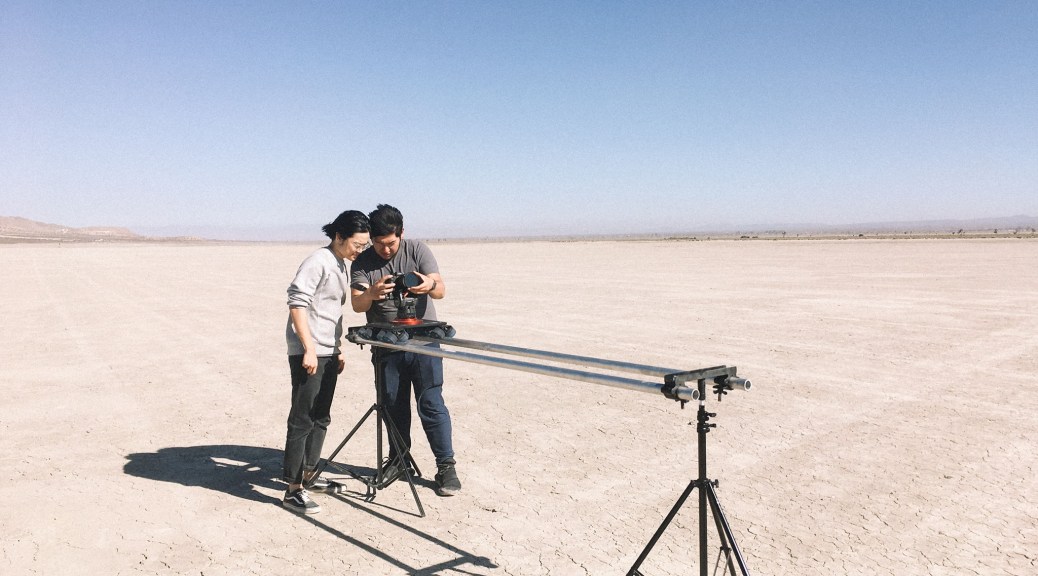
Calvin Khurniawan perfectly captures loneliness in heartbreak in Andrew Belle’s “Down”

Calvin Khurniawan believes a cinematographer’s job is much like that of a comic book artist. Both roles involve how a story is seen; they don’t write the story, but they take on the visual stimulation for audiences and readers. They add to what is originally written, and decide exactly the best way to show the story they are given. Such a unique way of looking at his job is how Khurniawan sets himself apart from other cinematographers; he can look through the lens of a camera and find the perfect and most distinctive way to capture a scene. It is what makes him so sought-after, and why he is currently one of the best Indonesian cinematographers.

 “A lot like acting, cinematographers react to actors’ inner unconsciousness by utilizing camera elements such as composition and lighting. Similar to editing, we choreograph how a scene unfolds by dictating where the audience’s eyes should look,” he said.

Earlier this year, Khurniawan worked on the viral music video “Down” by Andrew Belle. The video premiered on “Paper Magazine” in June. From there, it went on to be a “Nowness Staff Pick” and a “Vimeo Staff Pick”, amassing over one hundred thousand views on YouTube alone. The cinematography was key to such success, as it connected to aspects of the video in an artistic and meaningful way.

“It’s been delightful to hear how much people like the video. I think the biggest compliment came from the people who responded emotionally to the choreography because the cinematography is built around it,” said Khurniawan.

The choreography is what tells the story and emotions in the video, and therefore required talented dancers that Khurniawan could work with to do just that. Eventually, they found Dassy Lee from So You Think You Can Dance 2017. Together, the cinematographer and the dancers perfectly portray the loneliness in heartbreak.

The cinematographer’s input was valued for every step of the production process. Before the concept was finalized, he would create storyboards for his shots and present them to the Director, Joshua Kang, giving an expert’s opinion as to how each shot could be framed. He would then sit down with the director and the dancers to converse about what he thought would work for the video, as he knows good ideas mean nothing if they can’t be executed properly. He knew there was more to the video than dancers against a pretty background. He wanted to do more with the camera and reacted to the choreography, asking the dancers how they were feeling emotionally and designing the frames based on that. Such a unique and dedicated take was vastly appreciated by Kang.

Andrew Belle Down. Joshua Kang and Calvin Khurniawan. Photo by Kiu Kayee
Joshua Kang and Calvin Khurniawan filming “Down”, photo by Kiu Kayee

“I love working with Calvin because he is always prepared for every project. When I show him a treatment for a project in pre-production, he brings in various different ideas on how the look for the project could be, and what he thinks would be the best within the given circumstances. Having visual discussions with Calvin before the shoot always makes the job of the day easier for everyone on set. He is someone I want on set. Not only is he kind and respectful to everyone on set, he has great set skills. Working with Calvin, I trust him and his camera crew to have everything prepared and ready to shoot on time. He’s helpful in post-production. Calvin keeps in mind how the visuals will look like in post when he shoots. When we’re sitting in a color session, he gives inputs on how the color can be corrected in the best possible way. Having a director of photography like Calvin that cares about the project until it is completely finished makes him professional and reliable,” said Kang.

Initially, Kang approached Khurniawan to work on the video. The director had seen his work and was immensely impressed. Khurniawan was interested in the project before knowing that it was for Andrew Belle, and upon hearing the artist he was immediately on board, as he was already a fan.

“Imagine getting a call to work on a music video with one of your favorites artist. It was the quickest decision I’ve ever made for a job,” Khurniawan said.

While working on the video, the ideas changed frequently, as everyone wanted to ensure it was the best it could possibly be. From a cinematography standpoint, this can create challenges, but Khurniawan never let that faze him. He was happy to work diligently to make everything effortless for those that worked alongside him. The dancers, Dassy and Jordan, were immensely appreciative of Khurniawan’s dedication to the project. He perfectly showcased their vast talent while still creating a telling and poetic video.

“This is by far my favorite collaboration for a project. Joshua, the director, liked keeping a small crew and resulted a more intimate crew. We communicated easily between one another compared to having a big crew. Dassy and Jordan presented their choreography early to us then we design everything based off the choreography. Our approach is based on the choreography really, because we wanted it to be the center of the attention. My job as the cinematographer is to fully reflect on how they’re telling the story and emotion through the movements. I thought it was an interesting approach to music video,” Khurniawan concluded.

You can watch the “Down” music video here and see just how talented of a cinematographer Khurniawan is.


Top photo – Joshua Kang and Calvin Khurniawan, photo by Kiu Kayee

Cinematographer Ismaël Lotz talks award-winning film ‘Who is Alice’

Ismaël Lotz sees life through the viewfinder of his camera. He knows the power that film can have, and the artistry that comes from making one. As a cinematographer, he ensures that every single shot is perfect. Everything is important; from lighting, to lenses, to the smallest movement of his camera. Such dedication takes more than just talent, it takes unparalleled drive. Very little people actually possess such a trait, and Lotz is one of those few. His work ethic and outstanding capabilities as a Director of Photography have led him to be one of The Netherland’s best, and he is now internationally in demand.

Throughout his esteemed career, Lotz has worked on many critically-acclaimed projects. His documentary I am Famous tells the story of Tom Wilson, famous for his role as the antagonist Biff in the Back to the Future films, and living with that notoriety. As a child, that series was one of Lotz’ inspirations for becoming a filmmaker, and now, those he idolized he now works alongside.

The highlight of Lotz’ career, however, is his recent film Who is Alice. This internationally-acclaimed comedic drama whisks the audience away on a humorous, non-conventional quest to avoid suffering and find happiness. Lotz, known for his work in cinematography, also took on the roles of co-director and editor for the film, knowing that understanding such positions would make him a better cinematographer. His involvement from pre-production to post-production helped make the film an enormous success.

“The reason we wanted him as Director and Director of Photography is because of his talent and passion. He is known as one of the best Directors of Photography in The Netherlands and the quality of his work is outstanding,” said Paul Smit, the Writer and Producer of Who is Alice. “It’s always a pleasure to be working with Ismaël. He is passionate, creative, intelligent and able to exceed people’s expectations. Actors that I’ve worked with told me that they had never seen a Director of Photography like Ismaël. Normally it takes two cameramen to do what he is doing all by himself. Besides his talent, he is very easy to work with and always aims for the highest level.”

Who is Alice premiered in the city of Helmond, where the film was shot, with several sold-out shows. It then went on to several prestigious film festivals, such as the Los Angeles Film Awards, Festigious International Film Competition, London Independent Film Awards, Miami Independent Film Festival, Hollywood International Moving Pictures Film Festival, TMC London Film Festival, Actors Awards, and the Move Me Productions Film Festival. winning over 25 awards throughout them.  Amongst these accolades, Lotz was recognized for his outstanding work as Director of Photography, and took home the prize of Best Cinematography at the New York Film Awards, not to mention the recognition he received for his work as Director and Editor all over the world.

“It’s very rewarding and feels great that the film has achieved what it has. I am so proud on what we’d accomplished with our work. It brings a big light on my future endeavours as an international filmmaker,” said Lotz. “It makes me very proud to have won the award for Best Cinematography. But besides the awards for several departments on the film, the biggest reward is that complete strangers approached me and told me what they think of the film. It leads to very pleasant conversations with all kinds of different people. It’s inspires me to keep working on more projects like this.”

On-set, Lotz worked closely with his co-director Robert van den Broek to ensure the all-star cast was working to their fullest potential, and that the two directors were always on the same page, which was essential to Lotz’ cinematography. Many times while shooting, problems can arise and situations can change, making what was planned in pre-production alter drastically. As a cinematographer, adapting quickly to these situations and coming up with equal or better alternatives is a must. At one point while shooting, Lotz and his team lost a lot of time because of a power outage. The solution was to do the scene in one take. In hindsight, it is now one of Lotz’ favorite scenes of the film, as one take scenes are immensely challenging for everyone involved, but create an authenticity for viewers, truly transporting them into the film.

Lotz is known for the energy he brings behind the camera. He is a team player and plays to his crew’s strengths. This brings a creative freedom for everyone to work toward his vision, creating a harmonious working environment, which is essential to the success of any film. It was working on such a great team that made the experience of making Who is Alice extraordinary for this cinematographer, and knowing the story they were telling was important and would impact audiences is why the filmmaker began this journey in the first place.

“Who is Alice carries us on a funny, compelling and sometimes cringe-worthy journey into the highs and lows of what human beings will do to try to avoid pain and connect to happiness. It’s about being yourself in a world full of big egos. It shows how big the power plays are in the entertainment industry in a funny way. While it also shows the drama of Alice’s life, I think the movie carries a lot of spiritual elements with it. Who are you? And if you found out who you are, what are you doing with that knowledge?” Lotz concluded.

Who is Alice is now available on worldwide streaming services such as Amazon, iTunes, and Hulu. Those in China and Japan can also look forward to seeing the film soon, as a distribution deal has just been signed. No matter where you are, be sure to check out Lotz’ outstanding work on the film.

AWARD-WINNING CINEMATOGRAPHER DEPICTS A WAR TORN FAMILY IN “LAST CALL”

Cinematographer Ruixi Gao can’t help herself sometimes, she is overwhelmed with ideas. This is the blessing and the curse of possessing a creative personality. It’s incredibly difficult to make a film so when you do, you want someone talented and driven like Ruixi to be among those enabling you to manifest your vision. This was the mindset of Zhipeng Xing, director of “Last Call” when he approached Gao to be the DP for this film. After receiving the script from Xing, Ruixi recalls, “I sat down and read it immediately. I think it is instinctual for many cinematographers, it most certainly is for me. I could see the scenes inside my mind as I read. The whole picture played out for me. I understood the lighting & the perspective of the camera in relation to the action. It’s exciting when you read a script for the first time and the film is playing in your head; I wish the audience could see it so quickly. That’s part of what motivates me as a DP; I see this wonderful movie and the desire is to bring that to life for others to witness.” Besides her obvious passion, Ruixi brings years of experience and talent to every production she is on. An emotional film like “Last Call” requires every bit of her sensitivity and expertise.

The relationship between Director and DP is commonly accepted as one of the closest working relationships in film. Each director has their own process and the cinematographer must be flexible to this to help said director achieve their vision for the story being told. “Last Call” director Zhipeng Xing prefers to focus on the actors instead of fixating on the framing of the scene in the lens. Rather than a shirking of responsibility, this was a result of Xing’s trust in Gao’s abilities and talent. This allowed Ruixi to communicate extensively with her team. Working with her Gaffer and Key Grip to establish the lighting plan, and framing with the PD, the effort was highly collaborative. Her plan used soft filters for imaging effects and a low-key style with warm and cool tones to control different emotions between war and home.

This story depicts war and its effect on family. The father and son are separated from the mother (& wife) who is still in war torn Iraq. They communicate via letters and a weekly Facetime. After one of the weekly family Facetime talks, the father is speaking with the mother after their son has gone to bed. Disturbing noises are heard and the signal is lost. A week goes by with no word from the family’s beloved wife/mother and they fear the worst. Unable to sleep from worry, on the morning of the son’s birthday, the husband hears a knock at the door. It could be the mother or a government official to announce her unfortunate death. The filmmakers do not reveal the answer, leaving it up to the viewer to decide what they think happened. The purpose of telling this tale is not to resolve it either way but rather for the viewer to contemplate the effect of war on real people with families. In the last scene, prior to the knock, the father receives a letter from his wife in which she states that she won’t make it to see them for their son’s birthday.  When the father reads this letter it’s impossible to not feel the pain of being separated by these circumstances. War is cruel, it makes people ache; it’s also what makes this film work and have such impact.

Ruixi was awarded two best cinematography award for this film: Best Cinematography Platinum Award WINNER at the LA Shorts Awards & Best Cinematography Gold Award WINNER at the NYC Indie Film Awards (the film also received multiple other awards at these festivals). Gao’s passionate disdain for war and its malevolent effect on people in many parts of the world moved her to dig deep in her abilities for “Last Call.” Edwin Beckenbach worked with Ruixi on the film and professes, “Ruixi brings with her the experience of an international woman to a domestic industry that has traditionally been dominated by men and is not known for inclusivity or diversity. Film as art is a powerful generator and amplifier of cultural values and perspectives and as such the addition of underrepresented voices, especially those as promising as Ruixi’s, can entertain as well contribute to the benefit of society overall. In an industry where many people place their image before their abilities and ‘fake it until they make it’, Ruixi is authentic to a fault and is singularly focused on the artistic and technical challenges of the job at hand. Her dedication to her craft and clarity of vision is a unifying motivator for the camera and lighting crew to perform to the best of its ability.”

For many viewers of the film the most heart-wrenching aspect of the story is the young boy’s difficulty in being separated from his mother. With the understanding that this character would have be both a catalyst and proxy for the audience, Gao took extra preparations including reading psychology books on working with young professionals and preparing props with stickers and colored tape to make them more enjoyable. Far from being the task of a normal DP, this type of approach in working with a young actor is indicative of Ruixi’s overall pattern of professionalism. By creating a positive and friendly atmosphere in a variety of ways she is able to get the best performance from everyone and thereby get the best shots with the camera, to say nothing of coming in ahead of schedule. While some prefer to stay in their “own world” Ruixi Gao feels that the images she wants to create allow us to see through the eyes and emotions of others, which is what “Last Call” is all about.

LastCall03

Cinematographer Andre Chesini talks viral music video ‘Oração’

Andre Chesini behind the scenes of Oracao 2
Andre Chesini behind the scenes of the “Oração” music video.

Anyone can move around with a camera to their eye, in fact, many people try. However, Andre Chesini understands what it is to be extraordinary at what he does. Chesini’s unwavering passion for filmmaking extends back as early as his childhood and his perspective derives from years of immersing himself in the arts. He understands that the artistry of cinematography comes from controlling what the audience sees and doesn’t see. As a cinematographer, he doesn’t just strive to make a frame beautiful, he tries to create images that evoke emotions and enhance the storytelling. That is what makes him such a rare talent.

Chesini has adopted a style of cinematography that many of the world’s most recognized strive and fail to achieve. For him, lights are motivated by nature, not only by the actors. He searches for a naturalistic cinematic sense of reality. He worked on several documentaries in the beginning of his career, and is an experienced Steadicam operator. This experience translates into his cinematography.

“Documentaries are based on working with the environment and searching for the natural and available light. That shaped me a strong bond for an alive camera and strong naturalistic sense of reality. Thus, I’m looking for a life-like images. A design that is closer to reality, yet enhancing the cinematic look making the ordinary into extraordinary. Every cinematographer is unique; it is about the inner voice that each of us have. How it echoes with the director and all the people involved in a film,” said Chesini. “Steadicam operation is an amazing skill that makes my senses for motion and blocking of the actors very sensitive. I can feel the energy that the scene requires, capture the emotion of the actors and translate it through the movement of the camera.”

Having worked on several award-winning films, such as Chocolate, Tereza, and A Fabrica, as well as the television show Life on a Leash, Chesini put his work on the world stage, showing audiences everywhere what he is capable of. However, this versatile cinematographer has had limitless success, and his work on three music videos for Banda Mais Bonita da Cidade displays that perfectly.

“Music allows you to have more freedom in style as a cinematographer. It is a great territory to experiment and push your visual limits as a creator. “Oração” was actually the first music video that I shot. I mostly work in narrative. I believe that this narrative background weighs on the decisions and how I could contribute for the impact of the music video,” said Chesini.

Three days after its release, “Oração” already had over three million views on YouTube. It now has over 27 million. Chesini went on to be interviewed by Fantastico, a popular Brazilian Sunday evening program, to comment on the video. Later that year, “Oração” won the Best Web Video for the MTV Video Music Brazil Awards.

“It was an insane reaction, from no recognition to international recognition, being published in Rolling Stone and Washington Post, among others. The Banda Mais Bonita da Cidade became recognized artists and in that year, and have recently released their third album,” said Chesini.

Vinicius Nisi, the creator of the band and the keyboard player, called Chesini to be part of the video. The proposal was to record three music videos in one weekend, the main video being “Oração,” a one-shot video while recording the live audio at the same time. Such a task was enormous, and Chesini was the only one for the job. Chesini’s Steadicam experience once again was vital for the music video, as his knowledge of where to place the camera and follow the talent to have the six-minute film be one shot was fundamental. The two other videos shot were “Boa Pessoa” and “Canção para não voltar.”

“Given the success of “Oração”, our band became full time job, becoming our main source of income. We owe this to the talent and love that Andre has,” said Nisi. “Andre is an easy-going person and very easy to work with. He is always with good-humored and is very communicative. He likes to know all details in order to do a good job. His technical and artistic capabilities are undeniable.”

“What I most like working with him, is that he is secure, calm and aware. He is also really humble, and would listen all my directions and when was necessary he was pro-active in resolving issues that would appear. Andre focuses on making his work pristine. He studies the video, techniques, equipment and always makes his best. Andre knows his immense responsibility as the first viewer of the everybody work. At the same time, he does that gently and with kindness,” Nisi continued.

It took 8 shots for Chesini to get the one-shot film that was needed. This technique was a fundamental factor for the success of the video. It required skills and a sensibility as cinematographer and camera operator that Chesini always displays.

“I’m really proud of that video and its success also gave me strength to continue to pursue my dream of film,” said Chesini. “The challenge of a one-shot film is quite exciting, and being a steadicam operator, I felt compelled to immerse myself in this challenge. The long shot also requires working together with all the musicians, extras and everybody involved and seeing the involvement of everybody was really rewarding to see.”

You can watch Chesini’s work in the “Oração” music video here.

WHY NICKY MARTIN LOOKS SO FUNNY

Comedy feels a certain way and it looks a certain way. There are not specific parameters which define this but it easily recognized. When you feel something is funny or see something that is funny, you know it. It’s a characteristic older than cinema itself. Before there was sound in films, comedy was more accurately conveyed than any other sentiment. Xing-Mai Deng displays this concept exceedingly well in Andrew Elliott’s “Nicky Martin: Country Superstar.” As a cinematographer with a highly diverse list of award-winning film credits (including this one which received an LAIFF award for Best Comedy/Dramedy and a Jury Award at the Melbourne Indie Film Festival), “Nicky Martin: Country Superstar” is yet another example of Deng’s ability to visually achieve the intent of the writers and directors he works with in an exception manner. With the ubiquity of the pursuit of fame, often via social media these days, the film’s story reveals the all too common hopes of someone who wants to be famous almost solely because they desire fame.

In an ironic turn, this written story necessitated studying reality TV productions in order to accurately be presented with authenticity. The look of the film needed to bring out the absurdity of the story while spoofing the standard reality TV show. The film’s director and Xing-Mai researched several American reality TV shows to study their lighting, framing, and documentary-like camera movement. The blocking and camera angles were all decided before the filming to achieve a deliberate chaotic appearance for the shots.

Much of the look of “Nicky Martin: Country Superstar” required Xing-Mai to use his extensive knowledge and talent to appear as if he did not possess these attributes. It’s an aspect that took him some time with which to relax. Constant second guessing and reassessment of going too far was required. He explains, “I purposely moved the camera in an amateur way in order to make the film look absurd. High-key lighting and amateurish camera movements brought the feel of a valid reality show to our film. There wasn’t any dramatic lighting. The camera movements followed the actors in a passive way rather than anticipating the characters’ actions as compared to a scripted production. We wanted to have the reality TV feeling but we also wanted some cinematic moments in the film. Some of the reality productions I researched were not lit at all. I added contrast for most of the scenes to give a cinematic touch to it but used it sparingly. Most of the reality TV shows I studied were not comedic so the usual reality TV look would not serve ‘Nicky Martin’ as it still desired to look funny. We did not want it to look like normal mockumentary as that look has become fairly common and we wanted something that stood out.”

12239655_939016469511700_6579762550975927828_n

The improv nature of the film and the actor’s performances kept Deng on his toes and required a fair amount of improvisation on his own part. As different cast members spontaneously changed and evolved their parts during the actual filming, Xing-Mai was required to essentially collaborate with them in terms of lighting and framing the scene, accepting what he could get away with in terms of these parameters. With knowledge of this potentiality in advance, he created general lighting schemes based on the blocking and devised a plan that would give the widest coverage possible while achieving the largest part of his goal. Because the film is a comedy, Deng used a wide warm color palate.

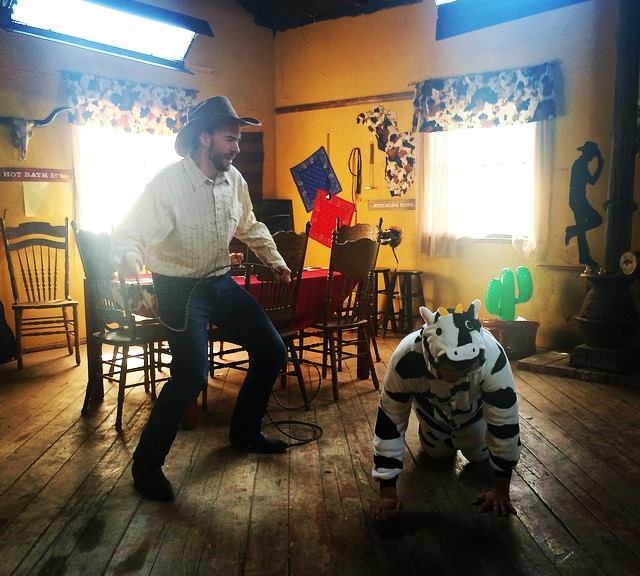
“Nicky Martin: Country Superstar” is a spoof comedy about a man who wants to be a country music star but doesn’t know how to sing or play guitar. He wants to be a cowboy but he’s afraid of all four-legged animals…so he rides on stools. Upon hearing about a singing contest at the County Fair, Nicky gathers his cohorts and prepares for what he believes is the chance of a lifetime. Numerous efforts towards achieving his goal of becoming a legitimate cowboy fall short. In a scene which drives this failure home and yet endears the audience to his tenacious drive, Nicky and his close friend Mickey reconcile by riding their stools together into the sunset as they have learned that being a cowboy is not about being famous but rather about possessing the cowboy spirit.

Andrew Elliott, the mastermind behind “Nicky Martin: Country Superstar” communicates, “I honestly had always planned to convince Xing-Mai to be the DOP for this film, since it’s very inception. Xing-Mai’s insight was invaluable to the success of the shoot. He was able to quickly and efficiently form a great crew and was always present with ideas and suggestions on how to make thing flow more smoothly. His work ethic was unquestionable on the shoot. Nicky Martin went on to success in the festival scene the following year, winning awards at several of these. Xing-Mai’s understanding of the story and unique ability to shoot the film played an integral part in winning these awards and in the success of the film as a whole.”

12196205_939014422845238_7081999955296816799_n

Immersing one’s self in an industry that contains some of the most skilled and creative minds and then attempting to shed the abilities you have come to rely upon as second nature in order to move you forward in said industry is disconcerting at best. Shakespeare often depicted the person who appears as the fool to often be the cleverest of all; communicating the idea that the misdirection of the depth of one’s knowledge and abilities is often the most difficult task of all. In “Nicky Martin: Country Superstar”, Xing-Mai Deng proves that he’s no fool but he knows how to convincingly present the appearance of one to the laughter and enjoyment of his audience…and does so as a master.

Cinematographer Yan Rymsha’s Creative Vision Flows Strong

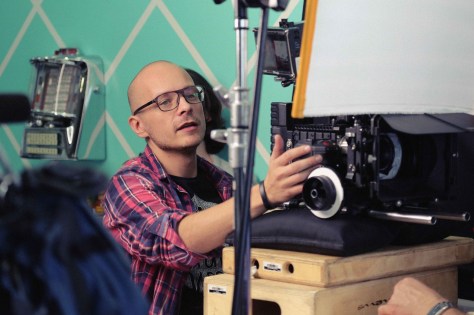
Yan Rymsha
Yan Rymsha on set of “Zaar” shot by Ibrahim Nada

Yan Rymsha was born into a family of artists in St. Petersburg, the cultural capital of Russia and the historic home and muse to Vladimir Nabokov and Fyodor Dostoevsky, among others. A love of the arts is ingrained in the very fabric of his city and flows through his family’s veins, so it’s little wonder that Rymsha’s creative drive comes so naturally. Since childhood he has been drawn almost magnetically to the camera, a trait which was encouraged and fostered by his father.

“I [have dreamed of becoming] a director since I was 10. Of course, I had very little knowledge about directing craft,” Rymsha said, recalling how his love affair with cinematography began. “I remember my father brought me a video camera and taught me how to make very simple stop-motion films using old school techniques. He had experience with 8mm film cameras when he was my age, so he showed me dozens of awesome tricks with film.”

Rymsha swiftly mastered those first tricks, and in the years since he has mastered the craft and even invented a few tricks of his own. That mastery is evidenced in one of his most minimalistic, yet absolutely striking works, “Emerald Dream” directed by Leonid Andronov, who won the Festival Award at the International Filmmaker Festival of World Cinema in London for the film “The Admired.” The film’s dystopian story is told by an unseen narrator entirely through photographs, which required Rymsha to boil down the visual impact of an entire film and concentrate that into a series of still frames. Rymsha carefully calculated his style of photography for the film to convey as eerie and foreboding a tone as one could imagine.

Set in a dark, distant future, “Emerald Dream” tells the tale of Gary Jibbons, a man whose unusual job it is to extract dreams from donors in much the same way people donate blood. As the narrator’s story goes on, the photographs become more and more mysterious; it soon becomes clear that Jibbons has fallen hopelessly in love with a young woman with the most vivid dreams he’s ever encountered.

It speaks volumes about Rymsha’s skill as a cinematographer that using so little, he was able to create an entire world inhabited by characters whose highs and lows are so familiar they could easily be real. But it takes more than skill alone to create works of the magnitude he has; it demands a level of passion and devotion that Rymsha has in spades.

“You always want to make your current film better than anything you’ve done before. Otherwise you’ll never grow,” Rymsha beamed. “I put part of my soul into my work. It’s more than just time and energy.”

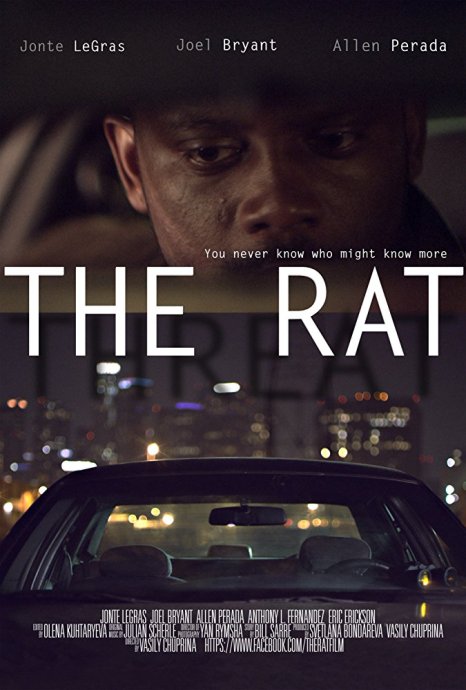
"The Rat"
Film poster for “The Rat”

That philosophy is a defining quality of Rymsha’s work, an excellent example being the 2015 film “The Rat.” Once again he was tasked with making a film that would test the extent of his talents. Rather than a series of photographs however, “The Rat” required Rymsha to shoot the entire film from inside a single car. As events spiral out of control, audiences share the tense, caged-up sensation with the characters onscreen.

“The challenging part of it was that the whole story took place in the car, so the main goal was to make the audience attracted to the visuals. I spent a huge amount of time picking locations,” Rymsha said. “A location must be interesting with some action going around. My favorite was the airport, with planes taking off and landing.”

It was up to Rymsha to leap into action and scout all possible filming locations. A whirlwind tour of the city later, and he had his list.

“When I got a script I was quite surprised because the whole story was happening in the car. It was challenging to figure out how to make the move visually attractive, and the same time follow rhythm and beat of the storyline,” he explained of the process. “The story was gradually intensifying, so the visuals also had to follow.”

The crime thriller starred Jonte LeGras (“Scandal,” “Grey’s Anatomy”), was nominated at the Burbank International Film Festival, and its director Vasily Chuprina has been recognized for his Outstanding Achievement in Filmmaking by the Newport Beach Film Festival for “The Boy By The Sea,” among a dozen other awards.

“When I got the synopsis of the movie, the first associations that popped into my head were of postmodernism with a huge element of restrained film noir style,” Rymsha said. “I thought that this combination will perfectly fit to the story of such genre.”

Rymsha also served as director of photography for director Ibrahim Nada’s 2016 “Zaar,” the dramatic story of a would-be suicide bomber who has second thoughts. A philosophical head turner fraught with suspense, the film has the distinction of being one of Rymsha’s favorite projects. The film itself has won prizes at more than half a dozen festivals, including a Best Cinematography win for Rymsha from the renowned Santa Monica Film Festival.

Constantly driven to take on the most challenging projects he can, Yan Rymsha has proven time and again what he can do with a camera and a little imagination. He has dedicated his entire life to the pursuit of cinematic greatness, and it would seem now that there is nothing left standing between him and that dream.

Cinematographer Ernesto Pletsch is True Storyteller for Award-Winning Film “Akirah”

AKIRAH, 2015. Dhruv Lapsia (1stAC), Derrick Cruz (director), me and Andrés Hernandez (gaffer)
Ernesto Pletsch with Dhruv Lapsia, Derrick Cruz, and Andres Hernandez

Despite always having a deep passion for art, photography, and film, Ernesto Pletsch was hesitant to follow his dream. Growing up in Porto Alegre, Brazil, there is no film industry, and not many people believe filmmaking is a sustainable career choice. However, Pletsch was determined, and refused to give up on what would make him truly happy. Audiences are thankful for this perseverance, as now he is an internationally successful cinematographer.

Pletsch sees cinematography for what it is, a true and important form of art. He is a visual storyteller, giving a voice to people that may not have had one without him. While working on the film Akirah, the voice was more metaphoric, as there was no dialogue or speaking parts. The storytelling was completely dependent on the lens of Pletsch’s camera, and he was completely up for the task.

“I liked shooting this project because I put all I had into it. Derrick, the director, trusted me and gave me freedom to try something unusual. As the film is purely visual, we had a lot to experiment with. There was lots of camera movements and dramatic lighting. I think Akirah is a cinematography guided film, so that’s why I was intrigued to work on it,” said Pletsch.

Pletsch was extremely vital to the success of the film as the director of photography, and after premiering at Warner Brothers Studios in Burbank in September of 2015, it went on to have success at international film festivals. It was an Official Selection for the Hollywood International Moving Pictures Film Festival in February 2016, where it won Best Student Short Drama, as well as the Gold Award Student Film at the International Independent Film Festival.

“It feels gratifying to have the film be so successful and recognized at these festivals. When directors, producers, actors or any other people who watched Akirah come up to me to congratulate, you feel gratified because you played an important piece in the success of it. And it’s only when each piece gets together that we can make something great,” said Pletsch.

Akirah shows the struggle of young gangs in a disturbed environment. It is a film about violence, an exploration of the psychological motivations of violence and the consequences that come with growing up in a culture of it. The film deals with our society structure and the people without a chance.

“Whoever is grown in this scenario is faded to the consequences of this culture. The culture of violence. My work was to take in consideration of this environment and try to translate this idea to spread this subject to a broader public,” said Pletsch.

To try to tell this story, Pletsch chose a specific style of cinematography, similar to that of David Fincher and Fight Club for look, colors and framing, and Akira Kurosawa in terms of the blocking of the actors and movement of camera. This approach was appreciated by director Derrick Cruz.

“Working with Ernesto has been one of the most seamless and easygoing partnerships of my career. His outstanding work lighting and composing shots speaks for itself. And I contribute his excellent craftsmanship and skill as the key factor in creating the quality and professional aesthetics of my films and TV show. But above all, what has kept me going back to Ernesto with my projects and films is his excellent on set demeanor, fearlessness and professionalism,” said Cruz. “Ernesto is great at what he does because of his passion and commitment to it. Watching him grow throughout our time together at school and now in our professional careers has been terrific. He is great at what he does because it is clear to me that every day he strives to get better and be better. And because of his dedication and love for photography and film he has continued to do so. I look forward to our continued partnership.”

It was Cruz who initially invited Pletsch to work on his film. He saw a bit of Pletsch’s work and knew he had the talent and skill to take the project to the level it needed to be. After discussing the project in detail, Pletsch was won over, and was eager to start working. Arriving to set, he knew no one, and now, two years later, the crew have made many films together with no plans of stopping.

“At first, filming Akirah was challenging. Being a film without any words, it was a big step to me in the pursuit of being a cinematographer. I was anxious. At the end of the shoot I was very pleased with the results. My crew was great, composed by talented people. Overall, it was a good stress. I was a little nervous by the responsibility put upon me, but it’s a natural process. We all have to pass through that at some point, and I did it,” Pletsch concluded.

Cinematographer Jon Keng captures beautiful moments in award-winning film “The Stairs”

Growing up in Singapore, Jon Keng was always interested in photography. This love for still images eventually grew into something more. This lifelong passion of looking through a lens transformed from still images to filmmaking, and now he is an internationally successful cinematographer.

Working all over the world, Keng has shown his extraordinary capability as a cinematographer on a variety of films. His work on the award-winning film Fata Morgana was screened at some of some of the world’s most prestigious film festivals, and this trend continued when he worked on Cocoon, Home, and Tadpoles. Last year, his film The Stairs premiered at Ashland International Film Festival 2016, where it won the grand prize of Best Short Film. It also was screened at the Festival 2016, the USA Palm Beach International Film Festival 2016, and the USA River’s Edge International Film Festival where it went on to win the Special Jury Prize for Best Film.

“It feels great to be validated by the success the film has been receiving,” said Keng.

The Stairs was initially conceptualized as a television series, based around a gay, high end male escort and the lonely men he meets each week. The film follows an older man who hires a male escort for company on Christmas Eve, finding an unexpected kinship with the young man in this late-night exploration of solitude, intimacy and the basic human need for connection.

“I was attracted to the script of The Stairs initially. On the surface, it seemed very ‘undramatic’, with the entire story centered around a long conversation scene, but digging deeper, I began to uncover many subtly hidden emotional beats and arcs that each character goes through. I thought this was very tasteful and I made it my challenge to make the piece visually arresting to keep the audience engaged through the long dialogues,” said Keng.

Keng describes the style he filmed in as very calculated, as he tried to focus on emphasizing each specific beat during the long dialogues in the scenes, in order to make sure that the audience fully understood what was occurring, which largely contributed to the success of the film.

“I also played around with themes of escalating visual connection between the two actors in the film, building up to a final point of disconnection,” he said.

Keng worked alongside an all-star cast and crew on The Stairs. The film stars Tony award nominated actor Anthony Heald (Silence of the Lambs, Boston Public, Red Dragon). It also starred Kelly Blatz (NCIS, Fear the Walking Dead, Aaron Stone) who co-directed the film with the writer Zach Bandler (Switched at Birth).

“As a director who has worked and will continue to work with Jon at every opportunity, I can say without hesitation that he has the rarest of talent in cinema: instinct. Cinematography isn’t just a technical job where someone points a camera for you at the actors or figures out where the lights should be. A great cinematographer is as much a storyteller as the director or screenwriter. Watching Jon work, he is truly “one” with the camera. It’s an organic part of them. He makes it move like a human being in a way that draws the audience into film. He has a sense for the lighting that evokes the perfect emotional response for that moment in the story on screen. He possesses nuance, sensitivity, he is a leader in their own right, without whom a director would be lost. That type of talent cannot be learned or taught, because it’s God-given. Jon has it. He is an artist in the most profound sense of the word,” said Bandler.

All who worked with Keng on the film were impressed with his cinematographic instincts. Meg Steedle, an actress known for her work in Boardwalk Empire, Grey’s Anatomy, and American Horror Story, was a producer on the film. She describes Zeng’s work as masterful.

“Jon’s was a dream to have on set. He ran the camera, grip and electrical department with an efficiency and effectiveness that kept the film running on time while still capturing beautiful moments on screen. For a producer, someone like Jon is the ideal,” said Steedle. “He’s got a ridiculously bright future ahead of him in this industry and I intend to hire him every chance I get.”

The opportunity for Keng to work with such a distinguished cast and crew was a vital aspect to his experience working on The Stairs. Blatz and Bandler knew what he was capable of, and were very open to collaboration. This gave Keng the freedom he needed me to push himself visually and experiment, and watching the actors provided inspiration.

“It was a privilege to be able to work with Anthony Heald, a veteran actor with such a strong theatrical pedigree. I was really just transfixed watching him go through his long monologues, conveying a deep sense of emotion,” said Keng. “Kelly was amazing to watch on set, as he was both acting and directing the film. He would be acting in one moment, then switch to director’s mode and talk about shots. This takes a great amount of multitasking. Despite doing multiple overnight shoots in a row, he was still filled with energy and concentration, which he was able to bring across to the entire crew.”

Keng was also a multi-tasker on set, working all the way from pre-production to post-production, ensuring everything was executed to perfection. With commitment like that, there is no doubt as to why he is considered such an exemplary cinematographer.

COELHO CREATES MAGIC BEHIND THE LENS

The film You Cast a Spell On Me is about relationships and magic. Movie magic gives us the escapism and captivating storytelling that we all desire. This magic doesn’t happen without the relationships and communication amongst the creative professionals who produce them for our enjoyment. Director of Photography Johanna Coelho’s job title may imply that she is solely focused on imagery but one of the keys to her success is the emphasis she places on communication in filmmaking. No matter what vocation you are involved in, communication may be the most important factor to success. Johanna’s shrewd understanding of this fact and the benevolent manner in which she utilizes it has made her a much sought after DP in the film industry. As a fluent English speaker who was raised on the outskirts of Paris, Coelho has a heightened awareness of the subtleties of communication and how different individuals receive and interpret information. Of course, being from France makes her very aware of romance; which made her the ideal DP for this production. Talent, communication, and a connection with the story being told were the components of the magic that she created for You Cast a Spell On Me.

It’s an obvious statement but, anyone who speaks more than one language has spent a greater amount of time dissecting and contemplating communication. It creates a deeper understanding of your own intentions as well as those of others. Life can be easier or more difficult based on the level of communication. The success of many films are based on the abilities of its creators to establish a rapport with the audience as well as to accurately depict the vision of the film. Fantasy films like You Cast a Spell On Me require someone like Johanna and Tosca Musk (director/producer) who can manifest visuals that don’t exist in our actual world. Speaking about Coelho’s work on the film, Musk declares, “Johanna’s cinematography work on this film was extremely impressive. She lead a full crew in an enjoyable environment and created visuals that were really uplifting to the story. There were also a lot of magic tricks happening in the story, and in collaboration with the art department, she brought these magic effects to life. Almost everything was done practically and it looks amazing; like real magic! She is a pleasure to work with. She was fully committed to the project and the vision I had as a Director. Johanna also was very mindful of the work of other departments, giving them their space when needed but also collaborating with everyone to have a smooth and organized shoot.”

You Cast a Spell On Me is a romance/fantasy film about a young and handsome warlock named Matt. His power is that he can charm women into finding him irresistible, literally. As one can expect, a young man with this power is apprehensive to settle down with one woman. This journey Matt takes towards finding his soulmate and depicts him losing his powers, others gaining powers, and the conflict and happy endings that one finds in romance films. Due to the nature of Matt’s character, many production departments were required to understand and work together to help create the visual “trickery” to produce the action in this film. The responsibilities of the Director of Photography can vary depending on the personality of a director. Some directors like to have a full control of the creative visuals. They have a very specific idea in mind and have a precise shot list with lighting references they want reproduced for the film. Other directors do not really want to (or know how to) deal with the visual part. They just want to focus on the actors. When similar minds meet…Coelho explains, “Sometimes you have a director in the middle of the two previous options, one that will want to share the creative approach with you. It’s a really fun process when this happens because the two of you have imaginative brains talking together about shots and exchanging visual references to find what would be the best for the story. Tosca Musk is that Director, and it was amazing to prep this film with her because we would really support each other in the process. One idea would lead to another idea and so on, giving life to ideas that might have never existed with only one person brainstorming. We were also both very open minded about each other’s input and this really helped the process.”

This template trickled down through Johanna’s ten-person camera crew. This DP makes sure to involve them in the pre-production process (especially the Gaffer and Key Grip) to keep everyone aware of the plan and prepare for lighting, etc. Johanna understands that a happy and respected crew of professionals are more motivated to work and share in a vison than those who are merely “punching the clock”, a mindset we can all relate to and understand. Perhaps one of the most overlooked parts of communicating on set is with one’s self. Coelho reveals, “It is hard to stop for a second, and really look at the frame and lighting and be sure it’s the right setup. Focusing on one thing at a time is very important. If you do everything in order, your job will go much faster. You can switch back and forth between things quickly but each thing needs to be given its own respectful moment. It is also really important to know the blocking of the scene, because you don’t want to start lighting and discover in the middle of a take that your light is in the wrong place for your actor. So following the steps is key. It’s true that with everything going on at the same time, you can get lost in your own thoughts. It happened on one of my early student movies in 2011 at AFI and I was really angry at myself for having lost my point of view on the film. A teacher who watched it pointed this out to me and told me that when he would get confused on set, he would step out into the bathroom, turn the lights off so his eyes wouldn’t get distracted, take a deep breath, and remember what the movie should be for two minutes. Then he would come back on set fresh and clear minded. This is probably one of the best pieces of advice I have ever received. I don’t go hide in the restrooms, but I do step outside into an empty corner where no one is talking to me and take a deep breath and think for two minutes. When I come back on set everything is fine and back in place in my mind.”

While those of us in the audience are blissfully unaware of all the moving parts behind the scenes of the shows and films which entertain us, the talented professionals creating them are always thinking of us and our subconscious desire to not be taken out of the film. None of that would be possible with the oversight of someone like Johanna Coelho. You Cast a Spell On Me was filmed in a staggering fourteen days; an incredible achievement for such a high quality production. This is only possible with someone such as Coelho who is planning out and paying attention to every possible time saving opportunity. Whether communicating with the AD to prep things while waiting for the actors, or planning the lighting so that the post production process runs more smoothly (Johanna states, “Colorist are key and they should have much more recognition as they’re always saving your back and make your work look better. I was happy I could assist in ways that helped the colorist. We would discuss it together for each shot.”).

It’s an obvious statement that every DP needs talent and the eye to find the images which the director needs. There are so many professionals in the world, it is those like Johanna Coelho whose ability to create a positive and efficient environment for filmmakers the set her above the rest.

ok8a1108-copy