Polisan Home Cosmetics and Kollektif’s “Muted Woman” campaign raised awareness on domestic violence against women.
Her voice wasn’t heard.
But the message couldn’t have been louder.
It was an impactful ad campaign called “Muted Woman” and was a project carried out by Kollektif, a prominent advertising agency headquartered in Istanbul, and Polisan Home Cosmetics, a 31-year old home décor retailer in Turkey.
The campaign is moving, gripping and emotion-stirring. It takes head on this frightening and disheartening reality: “Every second woman in Turkey is subject to either physical or verbal abuse.”
Leading the campaign was Kollektif VP and Creative Director Ozan Yurtsever, Kollektif senior copywriter Gorkem Ciftci and M. Cagri Kara, who consulted the art direction on the project.
“The subject matter, ending violence against women, was truly uneasy and dark content,” said Ciftci.
With an emotionally raw and unprecedented strategy, the campaign’s message was expressed in a simple, but brilliant way.
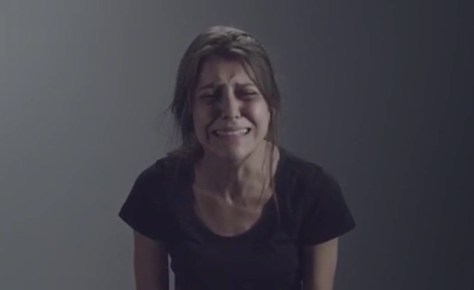
Using a video posted to Polisan Home Cosmetics’ Facebook page July 31, 2015, the campaign unveiled a woman sobbing and crying out for help with her eyes closed for 33 unforgettable seconds. Her plea is muted, entirely unheard and representative of that of many suffering women in Turkey.
At the end, the narrative on violence against women says it best with the Turkish subtitle: “It’s time to raise your voice.”
Said Kara, “We wanted to shine a light on a problem that’s paralyzing many embattled women in Turkey. More than that though, we hoped to reach women anywhere in the world who are unfortunate victims of domestic violence. It’s a shameful social problem and our objective as creatives was to pool together an influential directive and use social media as an effective launch pad to get this out to the world.”
The mission was undoubtedly accomplished.
“Muted Woman” was viewed more than two million times in just three weeks and a massive conversation was sparked on social media addressing domestic violence toward women.
It has nearly 12,000 likes and more than 2,500 shares. It won many prestigious awards in the advertising industry including three 2015 Crystal Apple awards and the 2015 Mixx Awards Gold.
As to the art direction, the woman in the video wears a black t-shirt and sobs in front of a gray backdrop. Her hair is disheveled and she raises her left hand toward her face revealing a wedding ring on her finger. She cries out words, but they are not discernible or audible.
“The colors were designed and selected to convey the needed tone,” Kara said. “It’s a kind of minimalist theme that’s intended to stay secondary to the performance, but it supplements the message. Dark color palettes are of course associated with grieving and distress. We hoped the design would only enhance the message.”
Yurtsever has collaborated with Kara on many ad campaigns including for brands such as Audi, Finansbank, Frito-Lay and CNN.
Of “Muted Woman,” Yurtsever said, “From the conception of the design, Cagri demonstrated his prowess as an intuitive art director with expert command of his craft. He led an entire team to produce the images that we needed for our campaign, determining the overall style and tone that corresponded best to our theme and the production’s statement as a whole.”
Kara, an Istanbul native and award-winning art director for brands such as Coca-Cola, Lamborghini and Fox Television, also wrote and composed music for the “Muted Woman” case video that demonstrates the campaign’s mission and execution.
“Mr. Kara’s presence on the production of “Muted Woman,” added enormous depth and meaning to the project,” said Ciftci. “Cagri completely understood the concept and what we needed to keep the material dignified.”
We are all born with unique gifts that make us different from the rest of the masses. Some know from an early age exactly what those gifts are, while others, arguably the majority, have to go through the sometimes grueling process of trial and error before their true ‘purpose’ shines through clearly.
Today, Toronto-based photographer Peter Tamlin is sought out by major companies like cosmetic leaders including MAC, CoverGirl, Revlon and Clairol to jewelry designers such as Dean Davidson and award-winning stylists like Caffrey Van Horne to use his creative eye to capture their products and designs for all the world to see. But, if you asked Tamlin back in high school how his life would look in 10 years, chances are he wouldn’t have predicted himself having a career as an internationally celebrated photographer, but that’s exactly what has happened. After discovering his love for photography at the age of 19, he dove in full force and hasn’t looked back since.
Aside from the impressive list of clients Tamlin has shot for to date, he has also had his personal photography work featured in gallery shows including the “Vision-Perceptions of Light” exhibition at the Warren G. Flowers Gallery in Montreal, Canada.
In 2011 he earned the award for Best Fashion & Beauty Photography from the prestigious Applied Arts Photography & Illustration Awards for the intriguing black and white photo he took of Tea that is featured below. The way he endows the shot with a feeling of movement and the whimsy of a fairy tale make it a difficult photo to take our eyes away from.
Enter a caption
Tamlin has shot editorials for a diverse collection of some of the most read magazines around the world including Fashion Magazine, Plastik Magazine, Lush Luxury Magazine, Fantastics Magazine and countless others. While he is continually pushing the boundaries of the mainstream with his personal photography style, what has made him such a success in his field is the fact that he is able to strike a balance between what his clients want and what he finds creatively inspiring.
Regardless of whether they are fashion models donning new designs or products for the various companies that hire him to shoot their ad campaigns, Tamlin is a miracle worker when it comes to creating the perfect lighting to capture his subjects. His unique ability to light a model’s skin in a way that glows effortlessly while still looking natural was a huge draw factor for Shoppers Drug Mart, which hired him to shoot their Glowing Skin campaign in 2013.
To find out more about photographer Peter Tamlin, what inspires him and how he got to where he is today, make sure to check out our interview below. You can also check out more of his work through his website: http://www.petertamlin.com/
Where are you from and how did you first begin learning photography?
PT: I was born in Scarborough, but raised in a small town named Stouffville, both in Ontario, Canada. I’m now based in Toronto.
When I was 18, one of the first friends I met in Toronto was a photographer and was an assistant to famed photographer David Lachappelle. My friend would always show me David’s photography books and expose me to the many types of pop-culture photography coming out of New York. When I was 19, I bought my first 35mm film camera and began shooting and experimenting.
Are you self-taught or did you go to school to study photography?
PT: When I was 23, I moved to Montreal and enrolled in the Dawson Institute of Photography. It was a two year program and I graduated at the top of my class.
What is it about photography that first inspired you to pursue it as a profession?
PT: Basically, I love the idea of being creative and creating artwork that is captivating and original. Professionally, I detested the idea of working a 9-5 job and doing the same thing everyday. I wanted a career where I could always be setting new goals and where there is no limit to the success I could have.
I also wanted flexibility with my schedule and to be able to work when and where I want. I love the idea of being able to travel as well.
Can you tell our readers about some of the projects you’ve shot?
PT: In Jan 2015, I was hired as photographer for a campaign and hair competition shoot for Aveda Canada and specifically for Civello, which is an Aveda Salon in Toronto. Over the course of two days we shot 7 different models, each with different hairstyles. The photos were used in a campaign and also entered in the NAHA’s (North American Hair Styling Awards) and also the Constessa’s, which is a Canadian hairstyling competition. The entry was named a finalist in the CONTESSA Awards for Canadian Salon Team.
I was hired for this shoot by Aveda Canada’s Creative Director, Kristjan Hayden. I worked directly with Kristjan to develop the direction for the shoot. The concept was based on movement and motion of the hair, so with the specific lighting I developed with Kristjan, I was able to use a special effect to illustrate the movement.
I believe the reason I was asked to be involved in this project was because of my unique creative vision and my ability to bring original and captivating ideas to this project. Hair photography is not only about showing the detail in the hairstyles, but also about presenting the hairstyles in creative and interesting ways. I think the specific lighting, set, special effects and retouching treatment I produced for this shoot are extremely unique, interesting and effective.
In 2013 I was hired to produce the Glowing Skin advertising campaign for Canada’s largest drugstore chain, Shoppers Drug Mart.For the Glowing Skin Campaign, we shot 4 different models in one day. The purpose of the shoot was to showcase clean, healthy, glowing skin. The photos were used in a national advertising campaign, appearing on billboards, in stores, newspapers, magazines, online and many other advertising outlets.
I was hired again as photographer for Shopper’s Drug Mart in 201 for their 30 Days of Beauty campaign. We shot 30 different models ranging in age from 16-60, over seven days. The purpose of the campaign was to showcase diversity in beauty. Again, the photos were used in a national advertising campaign appearing on billboards, in stores, newspapers, magazines, online and many other advertising outlets, as well. Each model was featured for each day in September 2014.
It was extremely important for these projects that the lighting capture the detail on the skin and the texture and colour of the products used. The lighting I used for both shoots was designed specifically to the needs of each campaign. For the Glowing skin campaign, it was very important that the skin looks healthy and glowing. The lighting that I designed incorporated many different light sources from multiple directions giving the skin enhanced luminosity.
For the 30 Days of Beauty campaign, it was very important that we showcased diversity in beauty, but in many different ethnicities and ages. The lighting that I used was softer and more flattering than standard beauty lighting. This meant that the light helped highlight and enhance each model’s own beauty.
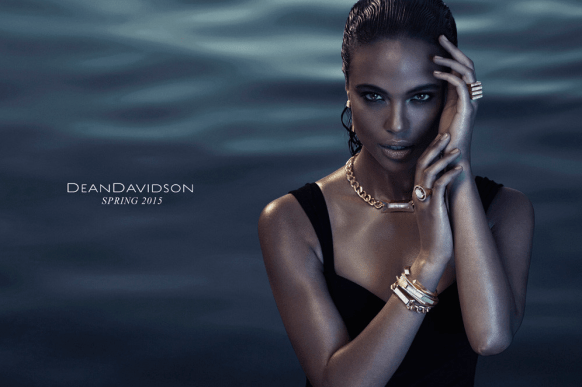
Early in 2015 I was hired by Dean Davidson, a top Toronto based Canadian jewelry designer, to shoot his spring/summer campaign. Being the first time I had a chance to shoot for Dean, I wanted to do something completely original for him, so I suggested that we have the model pose in a pool of water. The model’s name was Hannah Donker from Elite Models in Toronto.
Then in October Dean approached me to shoot his fall/winter campaign. Again, I wanted to do something original, so I suggested shooting in a set of mirrors. The model’s name was Emily Van Raay and she’s represented by Anita Norris Models in London, ON. I worked with a very talented team with Greg Wencel doing the hair and makeup, and George Antonopoulos as the stylist. Both shoots were a great success and very well received.
In June I was hired to shoot an editorial for the September issue of FASHION Magazine, which is Canada’s leading fashion magazine. The editorial was titled “Team Spirit” and the theme for it was androgyny. It was a 10 page editorial and we shot in the ballroom of the historic King Edward Hotel in Toronto. The editorial featured two models, Alice Ma, represented by NEXT Models and David Chiang, represented by Ciotti Models, both in Toronto. Hair and makeup was by Susana Hong and the Fashion Director was George Antonopoulos. The editorial featured many top fashion brands including DSquared, Burberry, Vivienne Westwood, Gucci and Dries Van Noten.
Most of my work is photography, but I am also inspired by music videos and films, so over the past few years I have branched out in that direction. In 2013, I was hired to produce and direct and show package video for one of the top male modeling agencies in Toronto, Elite Model’s.
In one day, we shot nine different male models in the studio in front of a black background. The video was black and white and high contrast. I really enjoyed the editing process of the project and I was able to experiment and create with many different filters and effects. Even though the video is very different from my photography work, it was very popular and gained over ten thousand views online.
What has been your most memorable shoot?
PT: I would have to say that most memorable shoot would be the Elite Models video. It was a project where I had no restrictions or limits to what I could do. I was able to experiment with editing and effects and create something very bold and original. Also, it was great working with all of the models. Shooting photos can sometimes be tedious, but shooting this project was very exciting and enjoyable. It is probably the one project that has gotten me the most exposure.
What is inspiring you as a photographer now?
PT: It’s hard to say what inspires me now. My inspiration changes daily. At the moment I am really inspired to do shoots that are very dark and macabre. When the industry is moving into a more bright and fresh mood for Spring, my gut is telling me to go in the other direction.
Aside from the jobs that you are hired on to shoot, how would you describe your personal photography style?
PT: Captivating, dramatique, intense and unique. My main priority as a photographer and visual artist is to always be creating work that is original and reject the “norm.”
I always try to go against the grain and turn convention on its head. My most successful projects have been ones where I did something unexpected. I also enjoy experimenting with contrasting colours.
How much freedom do you have when it comes to creating the direction of a shoot for brands like Mac and Covergirl?
PT: Unfortunately, with those two clients specifically, I don’t have much freedom. For Covergirl, the direction was very conservative and commercial. Basically, it was a standard beauty shoot. We shot a pretty model with 4 or 5 makeup looks. The lighting was very basic in order to show off the product.
Clients like Dean Davidson, Greta Constantine and Aveda are the ones that give me more creative control. I generally have no limits to how creative I can go with the direction for those shoots.
Do you have a specific area of interest or subjects that you prefer to focus on with your photography?
PT: Commercial. I like to focus on conceptual beauty and hair projects. I find that I can be more creative in that area than the standard fashion shoots.
For my creative work, I like focus on models or subjects that are unusual, bizarre and outside of the norm. I like photographing unique characters that don’t fit in the fashion industry’s molds.
How do you keep productive and retain your creative edge?
PT: I try to keep productive by always exposing myself to different and new experiences and people. I’m constantly researching new concepts and lightings. The best way I’ve been able to retain my creative edge is by always pushing myself to do what no one else is doing, being original and pushing boundaries.
What has been some of the best advice given to you by another photographer?
PT: The best advice I’ve received wasn’t actually from a photographer, but one of my best friends. When discussing what career path I should take, he said I should “do what I love.” It was really the catalyst for me to pursue photography professionally.
What special advice would you like to share with other photographers?
PT: Don’t follow trends.
Be original.
Do what makes you happy.
Who are some of your favorite photographers?
PT: David LaChappelle, Steven Klein, Mert & Marcus, Txema Yeste and Solve Sundsbo.
What equipment would we find in your camera bag or studio for a typical shoot?
PT: Generally, I shoot with a Canon 5d Mark II, my MacBook Pro, and a Profoto ComPact-R kit and lots of colour gels.
What lighting equipment do you favor and why?
PT: Profoto is the brand I learnt with and probably the most popular and versatile.
The bass stylings of musician Martin Fredriksson have taken him around the world and has led him to play sold out shows with a range of bands and artists that span practically every genre, with each new project only further proving Fredriksson’s unparalleled versatility as a leading bassist in the industry. While he is still in his early 20s, Fredriksson has attained more success over the last 10 years than many musicians manage to accomplish over the course of a lifetime.
He currently serves as the bassist in Malloy band with band leader Michael Sims, Anduze band, singer/songwriter SuVi Suresh’s band and the band of Kendall Lake. He is also the bassist for the band Dream Alive alongside drummer David Meyer, who also happens to be the drummer in Frank Ocean’s band and previously played with John Mayer.
Fredriksson also played bass in the band Radiorelics, which has received incredible international attention, most notably for their song ‘Jack Daniels,’ which remained on the Billboard Hot Singles Sales Chart for the majority of 2014 making it to No. 9. In addition to being played on more that a 115 radio stations, ‘Jack Daniels’ also made it No. 23 on the National Airplay Top 50 Rock Chart. The band continues and has since changed their name to Mary’s Mischief.
As a bassist Fredriksson is known for his shocking versatility and magnetic stage presence, which have been a huge factor in him becoming the sought after musician that he is today. From the more psychedelic, melodic rock style of the band Dream Alive to SuVi’s sultry R & B sound, Fredriksson’s talent on bass is never ending.
In 2012 he also played bass on stage for Laura Warshauer, who was chosen by BMI and the Songwriter’s Hall of Fame to be the recipient of the first ever (Buddy) Holly Prize, at the Lollapalooza festival in Chicago.
Fredriksson has earned an impressive list of accolades for his skills on bass; in fact, he was given the Musicianship Scholarship for the Bass program at Musician’s Institute in Los Angeles in 2011.
You can check out Martin Fredriksson rocking out on bass with the band Dream Alive in the video below:
To find out more about this incredibly talented international musician make sure to check out our interview below!
Where are you from?
MF: From Nyköping In Sweden, 1 hour trip Stockholm. A great town to grow up in as a future musician because it’s a city filled with a lot of bands and young musicians.
How and when did you get into music?
MF: My parents bought a bass and a guitar as Christmas gifts for my sister and I when I was about 10 years old. I took the bass and have never let it go since.
In Sweden we have public music schools that offers all children the opportunity to learn to play instruments or sing at a very low cost. I started as early as possible, at 10.
My bass teacher probably saw my interest in music and some of my skills as he let me sit in and accompany his guitar students during their lessons. About two days a week I went directly from school to the music school for these extra sessions. The students I accompanied were often much older than myself, which gave me a lot of challenges as a new musician. During these sessions I learned a lot about how to be alert and really play for and with other people. Sometimes I’d complain that the time I spent at the music school was so short; and my teacher would then joke that there were no other students that spent as much time as I did there.
My first band, The Junk, was initiated by my bass teacher. He waited until I was 12 years old and then he asked me and some of the most talented students in the music school to meet and form a rock band.
From then on it’s been moving on in a good pace with a lot of different music and artists.
How many instruments do you play and how long have you been playing each?
MF: I play a little bit of upright bass and I have started to play some piano at home just for joy. I also took weekly solo singing classes at the local school of music for 2.5 years. I have just been practicing as background singer in bands on stage.
What did music do for you?
MF: Music has been a big part of my life from the start, both by listening and practicing the bass and learning to play songs by ear. I get very calm and concentrated when playing which really only happens during those times. When I had to do school work at home I often took breaks just to play for a short time so that I’d be able to continue with the school work again.
When I was 16 I was chosen as a young “successful” musician to be presented in a poster together with about 100 other people with different backgrounds and ages from my home municipality. There was a quote from the interview on the poster at the exhibition that said: “Life flows when you play, everything will be alright!”
That is still my experience. I am always very comfortable when I am rehearsing and performing on stage, pretty much anytime I get to hold my bass.
Why are you passionate about playing music?
MF: I love to feel the vibes while performing with other professional musicians. It’s just a very passionate flow and it is also very satisfying to see the response of the crowd, audience and band members.
Also arranging music together with a band and feeling that we have created something great together is very satisfying.
Who are some of your music influences, and how have they influenced you?
MF: My first big influence was a blues musician, Memphis Gold; and my first concert was a big blues festival in Sweden where he was playing. We were walking around and he caught sight of me because I was so young I guess. He gave me this record, so what could I do? I just had to play the bass along to all the songs on the record; and since then I have always loved playing blues.
Then there was a time of admiring Iron Maiden and other bands that played melodic hard rock. It was also a big challenge to learn to play their songs. Another big influence I’ve had for many years has been Eric Clapton. From there on I’ve found a bunch of other musicians that have influenced me in a lot of different ways.
How would you describe your personal music style?
MF: I love to play many different genres, but I guess my heart right now belongs to soul, funk and blues. A very important part when I am involved in arranging is that the songs is very melodic and also has variations in melody and strength. I like to play very melodic and love to improvise, in the settled frames of course. I really like to have a strong connection with the drummer I’m playing with because that creates a strong backbone for the rest of the band. I’m very fond of playing very rhythmical bass lines that are kind of at a crossroad between the drums and melody.
Which bands and or projects have you played in?
MF: I play in a lot of bands and for many artists. I’m a part of the bands of Suvi Suresh, Malloy, Anduze and Kendall Lake as well as the groups Dream Alive and Mary’s Mischief (formerly Radiorelics).
Some other bands/artists/musicians I have played with are guitarist Johann Frank who was supported by Phil Collins and is currently touring the world with Engelbert Humperdinck, Major Myjah, who is signed to Warner Brothers, Jasmine Villegas, and in 2012 I performed with Laura Warshauer at Lollapalooza. Some other artists are Caitlin McGrath, Tore Bojsten, Mimi Rom, Cody Sky, Jennie Tran and Q’orianka Kilcher. I have recently recorded eight songs for a Japanese hip hop artist called Daichi.
Have you released any music videos with any of the groups you’ve played with?
MF: I’ve done several music videos with the band Dream Alive for the songs ‘Don’t Say No,’ ‘Waiting So Long,’ and ‘Drifting Away’ all of which were made by veteran film producer Irving Ong who’s produced several Hollywood film including Heartbreakers starring Jennifer Love Hewitt and Sigourney Weaver. We also released a video for the song ‘See You Tonight,’ which was created by Fred Teng. We’ve also been working on some live performace videos shot live in studio with the singer/songwriter SuVi. What are the challenges of being a professional musician?
MF: The constant stress and pressure to always be well prepared and ready for anything. Last minute changings happens all the time. And there are no certainties or guarantees in the music business; it’s all up to you.
What do you think separates you from other musicians?
MF: Coming from Sweden it is not easy to express this, but I am often told that I contribute to a very tight, steady and powerful rhythm section and that I have a significant powerful tone when I play. That in combination with a melodic and sensitive way of playing is perhaps what I contribute with in a band.
People also tells me that it really looks as if I enjoy acting on stage, which I really do. I always want to be prepared before the shows so that I can concentrate on the collaboration with the singer and the other musicians and feel comfortable improvising my bass playing.
How do you feel when you’re playing on stage? Was it something you had to get used to, or were you immediately comfortable in front of the crowd?
MF: I think people can see that I love what I do, sometimes I just lean back, close my eyes and enjoy the moment, and thereafter, enjoy the moment by being very active on stage. I have had this longing to play on stage from the start.
I have been performing frequently since the age of 13, and feel very comfortable in my bass playing. Therefore I can be very relaxed on stage and just enjoy the flow and the feedback from people in the crowd.
Aside from playing music in the bands you play with, do you write any of the music or lyrics?
MF: I write songs as a co-writer in several of my bands. It is very inspiring getting in a very creative feeling and then hear the complete song. I started to write songs together with my first band at the age of 12.
Can you tell us about some of your upcoming releases?
MF: The band Dream Alive will release a new video soon. It supports the title song of our latest CD, “Drifting Away.” The CD has got great reviews, which is very promising for the future. We are now discussion the dates for a tour in India to Chennai. It will be in the beginning of next year, but the dates have not been decided yet.
What are your plans for the future?
MF: My plans for the near future is to continue to play in professional bands and collect as much experience as possible by doing this. I have had great luck being asked to join bands with very professional and well-known musicians, who I had only read about before. It has been very inspiring and motivating to have been accepted by my fellow musicians.
All parts of being a musician is great; writing songs, rehearsing, recording in studios, playing in venues and touring.
What do you hope to achieve in your career as a musician?
MF: As nearly all musicians, I hope I will be able to work as a musician and earn my living by doing that. Then of course I hope that I will have the possibility to develop my skills as a bass player and keep the love of music going. And of course it would be great if I could get another hit-song with a band. We had a Billboard hit with the band Radiorelics in 2014 called ‘Jack Daniels.’
Have you won any awards for your work? Can you tell me about them?
MF: I got the bass scholarship for bassist when I enrolled at Musicians Institute. When I was 12 years old I, together with some friends from school, started a band and we worked really hard composing and rehearsing. We won the Culture Prize from a magazine called Frotté when I was 13. Our first real gig was at the castle of Nyköping in front of a big audience, when we got the prize.
Two of our songs were voted in on a regional radio station’s top list (Top 5) when I was 14 or 15 years old. It was very exciting the first time we were on the chart as the whole class was listening together in the class room.
Why is music your passion and chosen profession?
MF: It has been a dream since the early teenage years. I immediately felt that music and playing bass was something I immediately could relate to. It just feels meant to be so I’ll keep doing what I love most.
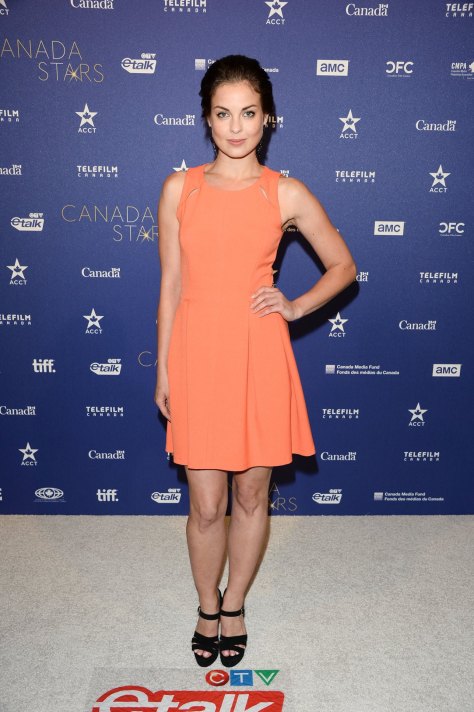
Vlada Verevko at Telefilm Canada Oscar Week Gala (Photo by George Pimintel )
For years, Russia has produced some of the fashion industry’s most stunning models. The cold winters of the motherland may seem more suited to layered clothing and parkas than sexy high-end fashion, but Russian women consistently rank among the most beautiful and best-known models and actresses in the world. Vlada Verevko is the perfect example. Verevko is a gorgeous model with incredible diversity on camera, as well as a talented actress and a driven, self-made woman. Her list of credits is as extensive as it is prestigious, and is further compounded by the unique story of her rise to success.
Born in Siberia, Verevko’s career practically took off overnight when she won the Miss European Beauty Pageant at just 18 years old. Her win at the high profile competition caught the eye of a talent scout from Moscow-based agency, Ultima Models. She began modeling immediately and never looked back.
“At the time I was a full-time student,” Verevko said, “But after graduation I decided to give the fashion world a quick try and that turned into a long-term commitment.”
Verevko has spent extensive time in front of every kind of camera and she is as comfortable being filmed as she is being photographed. Landing on-screen roles as the host of the shows Money Rain and Golden Bet, produced by the Netherlands-based Rosegarden Studios, helped Verevko develop a level of confidence on camera that has been crucial in her modeling career.
“I was lucky to work as a TV host for a few years,” she said, describing the crossroads between her acting and modeling careers. “That took away my camera shyness and allowed me to be confident in front of the camera. It is easy to tell a story through a video, but it takes quite a skill to bring it life in a still photo.”
In 2009, Verevko moved to Toronto and gained representation with Elite Models and began modeling full time. Her inimitable talent shines in the work she’s done modeling for a huge range of both fashion and commercial companies.
“I am mostly known for my beauty work. I was, and in some cases still am, a face of many international brands like Elizabeth Arden, Cargo, Sephora, Dermaglow, Sally Hansen, StriVectin and many more,” Verevko said. “For the past few years I’ve specialized mostly in commercial modeling, doing TV commercials. I’ve done it all and even more on Canada and US National scales.”
She has also been featured as a model in an impressive list of national and international campaigns for brands including MAC Cosmetics, McDonald’s, WalMart, Kraft, Quakers, Mr. Clean, L’Oreal and many more.
Since those early days, she has also had a plethora of roles in shows like USA Network’s Suits and the iconic Degrassi: The Next Generation, which has won over 50 awards in its many years on air. She’s also played supporting and lead roles in the 2015 films Hacker and A Beautiful Side.
Between her careers in modeling and acting, Verevko has proven herself to be a master of all trades. When modeling, her striking beauty is eye-catching and magnetic. As an actress, she blends into her roles like she was born on camera, becoming one with her characters. Vlada Verevko is by far the most diversely talented model-actress in the industry today.
Established production designer Hank Mann has seen, and created it all. From designing over 200 commercials, including his famous Go Daddy ad with Jean-Claude Van Damme, Mann has also created the setting and tone for Sarah McLachlan’s Ordinary Miracle and Nickleback’s How Your Remind Me music videos, constructed sets from scratch while collaborating with the art department, as well as managed film crews and budgets on feature films, all simply to create the director’s vision.
“Every job has its own unique structure that is revealed as soon as I read the treatment and script,” says Mann on his beginning stages of design.
His passion to work in film started at age 5, when Mann impressively created Super 8 stop-motion movies. The urge to work in film and design never left him, as he studied Film Theory and Sociology/ Communications at Queens University.
Mann worked various other crew jobs before landing his first major production design job on a global Ford Mondeo commercial starring David Duchovny (The X- Files, Californication), which carries a Twin Peaks / X-Files like surrounding and tone.
After designing commercials for McDonald’s, Burger King, Nike, Best Buy, Audi, Subaru, Toyota, Advil, TBS, Nickelodeon, Fisher Price, just to name a few, Mann decided to go back to working on films.
Mann prefers working in the realm of film and television because “in the process of production designing I really get into the characters – their history, their successes, their faults, their stories. Film and TV allow for a complete submersion into a character’s life.”
And by doing so, the audience can visually comprehend the depth, and perspective, of a particular character and their setting.
In 2008’s Kill Kill Faster Faster, Mann’s first feature film as a production designer, spectators can clearly establish the film’s gritty, suspenseful tone and enticing nature of each character and their drive in the narrative.
Produced and directed by Gareth Maxwell Roberts (The Mortician, Writer’s Retreat), Kill KillFaster Faster focuses on an incarcerated man named Joey One-Way, played by Gil Bellows (Alley McBeal, The Shawshank Redemption). Joey is paroled from prison after receiving an offer from a producer named Markie, played by Esai Morales (La Bamba, NYPD Blue), for a script Joey wrote behind bars. However, Markie is in over his head when Joey has an affair with Markie’s girlfriend.
For this particular film, Mann established a color scheme for the characters, not only to support the storyline of the script but to work within the budget of the film. “I chose to put a lot of initial resources into establishing a colour hue for each character so that regardless of how little money we had, at minimum there was a common tone the creatives could all work towards.”
The film garnered two wins in 2008 for Best International Feature at London Independent Film Festival (LIFF), as well as Best Editing at the HD Film Festival.
In 2010, Mann worked on the action-drama film Repeaters. The film starred Amanda Crew (Silicon Valley, Charlie St. Cloud), and Dustin Milligan (90210, Silicon Valley). Directed by Carl Bessai (Sisters and Brothers, Emile), Repeaters follows three friends who are trapped in a time maze, similar to the film Groundhog Day.
At the 2011 Leo Awards, Repeaters was nominated for 10 awards and won for Best Supporting Performance by a Female in a Feature.
Mann continued to work on films in 2011 on the set of Reinout Oerlemans’ Nova Zembla, a historical Dutch drama which centers on a team of explorers who travel from the North East Passage to the Indies, while encountering rough weather conditions.
The film was shot on location in Iceland, Belgium and Canada, where Mann created a slew of captivating sets.
“My initial approach was to research as much as possible, visiting real locations and reviewing online sources and then extracting the most interesting and iconic bits to then combine into our stage set builds,” says Mann.
Like his other two films, Nova Zembla received recognition and was nominated for two Rembrandt Awards and received a Golden and Platin Film Award.
This past year, Mann recently wrapped up commercials for Nissan and PetCo, as well as a six screen art installation he worked on and collaborated with Oscar winning director Denys Arcand (Barbarian Invasions), and installation artist Adad Hannah. The piece is entitled The Burghers of Vancouver, and was inspired by Rodin’s The Burgher’s of Calis.
The installation premiered in Paris earlier this year and ran from February to May at the Montreal Museum of Art.
After producing the documentary feature film Being AP, which focuses on the life and work of one of the most renowned jockeys in history, AP McCoy, producer Richard Moore continues his work on the upcoming documentary film The Baby Killers.
Directed by Alex Grazioli, the director of the film Odyssey in Rome starring Oscar Award winning actress Juliette Binoche, The Baby Killers will bring to light the dramatic true story of La Stidda, a Sicilian-based mafia group.
According to Moore, the film “documents the meteoritic rise of a clan of twenty teenagers in Gela the south of Sicily during the 80s, who after having been denied entry into the Cosa Nostra decided to start there own mafia faction known as La Stidda, which was more dangerous, more ruthless and more evil than anything before them.”
In the early 1990s, La Stidda waged a brutal war on the Sicilian Mafia, Cosa Nostra, a war, which according to Cosa Nostra News led to over 300 deaths. In Gela, Siciliy La Stidda recruited children who would come to be known as “The Baby Killers,” due to their young age and ruthless murder sprees.
“I took trip out to Sicily in April last year and was introduced through a Sicilian author to Orazio Vella who at the time was the youngest baby killer and murdered his first string of people at the age of 14,” recalls Moore. “After being arrested at 18 from years of murders, racketeering, drugs and prostitution, Orazio managed to escape a prison sentence after turning states evidence.”
Through the upcoming film, which Moore is producing with Unit9, audiences will witness first hand accounts of the violence inflicted on the people of the city and other mafia members from the perspective of former La Stidda members, and key features that made the organization far more dangerous than practically any other that came before.
Moore is a master of the game when it comes to producing projects that are both engaging and informative, hence his history of success producing documentary films. However, he has also brought to life shorter form projects that are just as informative and entertaining as his the feature-length productions.
“My goal in everything I work on is to produce a piece of work I can truly be proud of, which is incredibly difficult but it’s the challenge and risk that makes it so exciting. I like many other young producers fell in love with films because of directors like Bernardo Bertolucci, Paul Thomas Anderson and Martin Scorsese,” says Moore. “When I first started in the industry and began to understand who it was that put these epic films together and the tasks and difficulties they went through to make these scripts a reality, it truly inspired me.”
Earlier in his career, Moore served as the senior producer of the Google funded online docuseries Line 9, an extreme sports series that brings audiences some of the most compelling stories from inside the world of BMX, surfing, snowboarding and skateboarding led by Fergal Smith, Harry Main, Madars Apse and Stale Sandbech.
The series, which Moore produced with Bigballs Films, did exceptionally well thanks to Moore’s ability to not only manage the projects logistical and financial aspects, but more importantly, create, inspire and lead a great team.
His talent for understanding what a client is looking for in the end-product, build relationships with the right media outlets and infuse each work with a creative edge that is fascinating to its target audience has made him a sought after producer for a range of production companies and global clients. The mélange of Moore’s unparalleled capabilities as a producer can only be understood in full through an examination of the stark differences between all of the companies that he has worked with over the years.
“In the past I’ve predominantly worked with three very different production companies,” explains Moore. “Partizan, which has been running since the early 90s and is led by incredible directing talent and great ideas fundamentally. Bigballs Films, which works solely within sports media and programming… and Unit9, a tech-savvy contemporary hybrid production company that doesn’t have any barriers, they build software, apps, websites, 360 VR projects and films that live on any platform that exists today.”
While he was still a teenager Moore founded his own production company with Oliver Barron known as Mrs Grey. The company reached astonishing success in a relatively short time, and through the company Moore produced the music video for James Morrison’s “One Life,” which you can check out below, as well as several commercials and the television documentary Find the Torch.
Producer Richard Moore has undoubtedly secured himself as a top producer in the international entertainment industry; and, as the feature documentary prepares for its world premiere, which will take place next month at the 2015 Toronto International Film Festival, and production continues on The Baby Killers, audiences around the world can continue to expect great things from this rare talent.
Italian producer Filippo Nesci has established a career in the international entertainment industry that is as varied as it is impressive. With several multi-award winning films, documentaries, high-profile commercials and hit music videos already under his belt, Nesci has proven that his unparalleled talent as a producer make him a highly sought after leader in the industry.
In recent years, Nesci has produced the films The Carnival is on Fire, Lineman, Snippets of Wally Watkins, and Wrecks and Violins, as well as the music videos for Meg Myers’ “Monster” and KOAN Sound’s “80s Fitness.” He also produced the Clio Award winning commercial series for Lagavulin last year.
Directed by H.R. McDonald (Happy Birthday, Thomas), The Carnival is on Fire follows a young woman through the woods as she is stalked by a lustful but timid boy who disguises himself behind the trees that line their path whenever she turns around to face him. With beautiful imagery and a melancholic score, viewers witness the girl’s transition from childhood to adolescence through flashbacks as she reflects on the innocence she’s lost over the years.
The lighting included in the flashbacks of the film is magnificent; and, although a producer rarely has anything to do with lighting, in the case of The Carnival is on Fire, Filippo Nesci was an integral contributor to the unique lighting used in the film.
“I was aware that most of the art of the director had to do with his unique use of light. So, I thought that a professional I knew, who personally invents and builds equipment for cameras might invent a new equipment with lights that could be used specifically in this film,” recalls Nesci.
“Thanks to my very good and friendly relationship with this builder, I convinced him to do it having in mind two tasks, at the same time: a) make a tool that was able to generate a vortex of lights, b) make it nice, so that it could be filmed rather than go unnoticed, as usually happens to all camera equipment.”
Nesci’s ability to not only understand the needs and vision of his director, but also seek out the perfect people to make those ideas happen made The Carnival is on Fire a huge success, and the film went on to be chosen as an Official Selection of the Little Rock Film Festival in 2012.
Something that separates Nesci from the majority of other producers in the industry is that fact that he is passionate about changing the world through stories that touch audiences on an emotional level.
“All the projects for which I have been working as producer are very different indeed… However, they always have two factors in common: a) something intriguing from a psychodynamic point of view, b) something affective that really touches me at an emotional level,” explains Nesci.
“Be it a movie, a documentary, a music video, or even a commercial, I take the job only if there is a “narrative” quality in the project since I love stories: to tell stories, as well as to “view” and “listen” to stories.”
For him, a project’s emotional elements and its ability to tap into the viewers subconscious and cause them to contemplate ideas that extend beyond what is unfolding visually is a deciding factor in whether he will produce a project or not. What is even more astonishing however, is the fact that these characteristics are evident in the commercials he’s produced as well. Compared to the way the majority of commercials on television can be seen as shameless advertising, Nesci commercial projects to date shine brilliantly through the mediocre as nothing less than art.
As the producer behind the “Running Motivation” for Orange Mud, a California-based company that makes innovative athletic equipment, Nesci helped create a beautiful commercial for the company’s HydraQuiver hydration pack. The commercial follows a few different runners as they individually traverse some of the most captivating landscapes on the planet; and, no matter how far they travel, their no bounce hydration pack is always there to keep them hydrated.
You can check out the commercial Nesci did for Orange Mud below!
Advertising Producer Susie Liu shot by Robin Gaultier
Advertising ace Susie Liu knows everything there is to know about marketing. That’s because she has immense experience working hand-in-hand with clients – including titans of industry and Fortune 500 companies – to formulate strategies and campaigns specifically tailored to their needs. However, Liu has the added edge of having spent years as an artist, personally creating, drafting and implementing creative concepts to meet the needs of those clients.
“At a young age, I always gravitated towards anything visual or creative,” she said. “As I grew up, I enjoyed spending time in my own company, drawing on paper and eventually on the computer. I looked at ways to improve magazine articles and advertisements, and changed the style to my own liking by recreating visuals on the computer.”
Starting out with ZONE, a cutting-edge advertising production firm based in London, as a digital artist, her incredible talent helped her quickly move up through team leadership positions, and ultimately to the role of content advertising producer.
Prior to her work with ZONE, Liu worked with Wordsearch, a design and advertising company specializing in real estate advertising. In her time at Wordsearch, Liu applied her managerial and artistic skills to massive undertakings such as The Shard in London, One World Trade Center in Manhattan and the ambitious Masdar City in Abu Dhabi, United Arab Emirates.
The iconic One World Trade Center, completed in 2013, was built as a testament to American resilience after the destruction of the previous towers on September 11, 2001. However, beyond its symbolism and status as the tallest building in the western hemisphere, it is a financial and economic hub in the busiest city in the U.S., and as such it was critical that such a costly and labor-intensive project attract the maximum possible amount of renters, businesses and investors. That’s where Wordsearch and Liu came in.
“I was involved with the creative art-working as well as the management of the print production. It was imperative to be organized and have a structure from the start,” Liu said. “It was my role to organise and ascertain from the briefs how long each element would take to execute and deliver in a timely manner.”
The Shard skyscraper in London, the tallest building in the European Union at a fifth of a mile high, is another of Liu’s most monumental projects. Completed in 2012, The Shard relied on the creative mind of Liu and her team at Wordsearch to attract tenants such as Al Jazeera, Gallup, and the five star Shangri-La Hotel, who have all made the magnificent work of art-in-architecture their home.
“The objective was to entice companies, investors and the sale of residential apartments into this new living, working and social space by demonstrating what was on offer and how it would look once complete,” Liu said. “This campaign was worked on by a team of designers, art directors, Project Managers and myself as a Production Manager, which involved the creative art-working and design of the technical brochures, as well as managing the production on all the other work.”
Liu also helped draw tenants and investors with her campaign for Masdar City, the eco-friendly metropolis currently in development and construction in Abu Dhabi. Built in the desert of the Arabian peninsula, the arcology – or “architecture/ecology” – city is founded on the principles of responsible environmental practices. Featuring a fleet of clean energy and electric vehicles in lieu of personal commuter vehicles, operating on solar and wind energy, and carefully designed with walls, streets and building meant to maximize the cooling power of the desert wind in the hostile region, Masdar City is what many climate scientists and environmentalists envision as the responsible future for humanity.
“Wordsearch was approached by the Masdar client to adapt its existing brand and produce a series of printed and digital marketing literature to entice people into this new, not yet built city. Over a period of 2 years, the requirements were to design and produce magazines, brochures, advertising, leaflets, internal forms, point of sale, exhibition stands/space (WFES), marketing suites, banners, computer generated images and a website,” she said of the intensive process. “The idea was to entice people and investors into this eco-city by demonstrating what was on offer and how it would look when the city would be finished.”
While working for Hogarth Worldwide, a multinational company that specializes in marketing implementation and centralized advertising production for clients worldwide, Liu helped ensure the success of the HTC One ad campaign.
“This was a global campaign that was rolled out to a very tight deadline and within strict security restrictions,” Liu said. “Our job included the translation and localization of all literature in up to 40 languages, and the creation of a variety of advertisements, both point of sale and signage.”
With such an impressive array of clients and projects under her belt, it’s no small surprise that Liu has become one of the most sought after players in the global advertising and marketing fields. With her immense creative and artistic talents surpassed only by her managerial skills and her ability to oversee teams working on large-scale campaigns, she is truly a master of the trade.
Film composer and guitarist Daniel Raijman shot by Fernando Stein
Guitarist and composer Daniel Raijman spent his youth growing up in Buenos Aires, the cultural hub of Argentina, has been playing music for most of his life. At age 8 he began playing piano, at 11 he picked up guitar, and at 17 he started attending the Buenos Aires School of Music where he would go on to receive a Bachelor of Music in Performance, Specializing in Guitar.
Heavily and eclectically influenced by Argentine tango, Pat Metheny and John Williams, Raijman has a hugely varied background of experience and style that he applies to his work as both a guitarist and film composer.
After touring Argentina and Uruguay for four years up until 2009, Raijman began working with Rosario Barreto, producing Barreto’s debut album Imagem Imortal. It was the first of many such projects he would work on in the following years.
Raijman, who studied film and television orchestration at the prestigious Berklee College of Music and graduated from the UCLA Extension Film Scoring Program, got his first job in Los Angeles working on An Opening to Closure. Raijman composed the soundtrack for the film, on which he also played guitar. A romantic drama, the film follows two ex-lovers who find themselves revisiting their painful past after a dinner party with mutual friends.
“There is a love scene in which there is passion but at the same time, sadness and regret. I decided to match the groove of their breathing to an electric guitar rock solo, along with programmed synths,” he said. “I increased the distortion and the effects of the guitar, and the music grows in intensity until there is clearly a feeling of sadness and loneliness. Then, by keeping the groove and letting the guitar fade out, the motif is introduced with a piano solo.”
One of his most moving projects to date, 8 Seconds: Humane Decision Making in the IDF, required Raijman to compose three different styles of backing music to match the changing mood and subject of the film. An eye-opening documentary, the film tells the story, from multiple perspectives, of the ethical training of Israeli Defense Force soldiers fighting Hamas and other threats to national survival, and the life-or-death decisions they must make on a regular basis.
“Composing three completely different cues to match the different part of the film was challenging… One of the cues had to represent the military part of the story, so it had to be very intense and fast,” said Raijman, explaining in depth the intense planning and research involved in setting the mood for the film.
“The next cue had to correlate with Israel and the authentic sounds that come from the music of the country… [so] I used a lot of Middle Eastern percussion and woodwinds like Duduk, and composed the melody around the Phrygian major 3rd mode, which is always related to Jewish music. For the last cue, I had to compose music that matched the soldiers’ feelings. I accomplished this using a lot of strings accompanied by Middle Eastern percussion played at a slow rhythm. I truly loved working on this documentary.”
In addition to scoring, Raijman also played guitar for the film, which was an official selection at the 2015 USC School of Social Work Film Festival.
The musical genius also arranged the composition for director Zack Wu’s Violet, about a young man in a new town, love at first sight, and the idea that things can often be far from what they appear, especially to someone blinded by love.
“Composing wall-to-wall music for this film with only a few days to deliver was a bit of a challenge but a great experience for me,” Raijman said. “When you see the film, you can tell from the beginning that the music is telling the story and that something isn’t right between the couple.”
When a composer does his or her job well, the audience should be able to feel the movie through the score, so much so that even with their eyes closed, they can still hear the plot, the relationships between the characters, and the anxiety in the action. Raijman has shown himself to be a natural and a consummate professional with a talent for organically conveying the filmmakers’ emotional intent through his music. He is currently working on several upcoming projects, including a solo album featuring some of his stirring instrumental music.
Mixing both European and Hollywood styles, Russia’s Egor Povolotskiy is a cutting edge cinematographer soon to be on every director’s must have list. Although beginning his education in artificial intelligence and computer sciences, Povolotskiy soon determined through his love of photography that his real passion was to be behind the lens.
Choosing projects on the potential for a unique story telling experience, Egor’s desire as a cinematographer is to make the audience feel something, and to leave them thinking. Povolotskiy truly believes that “the cinematographer is the bridge between the direct and the people in the movie theatre.”
When asked to describe the role of the cinematographer, Povolotskiy stated: “Turn off the sound, if you understand the story, if you feel it, that means the cinematographer did their job right. The main responsibility is to translate the story in people’s minds without them noticing it.”
With such films as Red, Blue, and Purple, Egor’s camera work is demonstrative of his ability to convey emotion with color, light, shapes, and textures. Telling the tale of a journey inside the mind of a prisoner who’s mentally drifting between, two worlds, the individual, and the collective. In Red, Blue, and Purple, Povolotskiy’s cinematic eye shines brightly.
Egor went on to win much acclaim for his cinematography work on the film Sabre Dance, winner of numerous awards from both the Rochester International Film Festival as well as the USA Film Festival. Telling the true story of famed Russian composer Aram Knachaturian preparing to meet famous surrealist artist Salvador Dali for the first time. Povolotskiy’s excellent use of period lighting and color palettes gave the film an emotional and realistic depth bringing the actors performances right off the screen.
As the main characters were so vastly different, Egor has stated his greatest challenge on this project was capturing the emotional point of view of opposite personalities.
“The cinematographer is in charge of the mood of the film, he or she has to understand not only how the lighting works, but how to be a bit of a director also,” says Povolotskiy.
We Are Enemies, a compelling tale of bonding under unconventional and extreme circumstances, is a prime example of Egor’s ability to do just that. Using gritty color tones and lighting techniques, Povolotskiy’s cinematographic skills are truly evident. This film also garnished several awards from the esteemed Rochester International Film Festival.
Known for making magic with whatever equipment and location he has available, Egor Povolotskiy feels that “by his eye, the audience will see the film.” With his work on the acclaimed film Death of a Government Clerk, based on the famed short story of the same name by Anton Chekhov, this truth is clearly demonstrated. With creative and moody camera work and lighting, this story of the personal trials of a 1900’s Russian clerk who finds himself on a life altering path of self destruction is a compelling and visual experience.
“There is no project for me so far, which I have shot the same way” states Povolotskiy. And with several exciting upcoming projects such as the horror film Goetia, Egor clearly demonstrates he will hold true to this statement, always evolving with each incredibly entertaining and engaging project.
Everything you ever wanted to know about Hollywood's who's-who.



 Tinsel Town News Now