Tag Archives: Cinematography

Staying True to Their Roots: NYLON Magazine’s “To The Authentic” by Jessica Pantoja

Upon shutting down their print magazine at the tail end of 2017, NYLON Magazine wanted to remind readers that despite moving into solely digital-based content, their founding roots wouldn’t waver. With their focus moving more towards engaging with their audience through striking video and digital content, it made total sense to release a commercial that spoke to their continued dedication to the diversity of their audience despite the change — so they joined forces with cinematographer Jessica Pantoja to create “To The Authentic.”

“As NYLON is currently evolving from a print to a digital publication it was important to state that regardless of the change they would continue to be true to who they are and who they have been,” explains cinematographer Jessica Pantoja.

“‘To The Authentic’ had the intention to express NYLON’s commitment to the audience and the bond between the publication and the readers… NYLON is part of the audience as the audience is a part of NYLON, they both influence each other.”

In creating “To The Authentic,” Pantoja captured 25 models, influencers, dancers and actors, essentially asking them to come as they are, with the ultimate goal of revealing their authentic selves on camera. Using such a culturally and aesthetically diverse cast that collectively blurs the lines of traditional gender ‘norms,’ which are so yesterday it’s not even funny, not to mention the broad range of personalities brought together in the commercial, Pantoja nails the mark with her creative vision for “To The Authentic.”

From the minimalistic yet bold bubble gum pink opening frame featuring the words “BE YOURSELF” followed by the hashtag ‘#Benylon,’ to the progression of models who hit the screen, the commercial flows seamlessly and expresses what the brand stands for. DIVERSITY.

This is ultimately one of the key reasons tens of millions of readers look to them as a source of information on everything music, fashion and pop culture each month — they’ve never covered what every other glossy on the newsstand does, and they’re not going to start now. Their mission is furthered by the audio narration that accompanies the visual content, which adamantly reassures: Through media changes, political changes, cultural changes — you keep true to yourself. We see you. We are here for you. Always have been. Always will be. NYLON.

Pantoja says, “The meaning behind [To The Authentic] lay on the changing social climate… we were just trying to express the belief that diversity is beauty.”

Capturing each model (moving around to their own tune) in front of various backgrounds that visually fit their individual aesthetic, style and personality, Pantoja’s selection of backgrounds, which include recognizable murals, architectural structures and other interesting locations across Los Angeles, also speak to the magazine’s ceaseless attention to design and local culture, something they’ve covered in extensive detail since their alternative beginnings back in 1999.

She explains “We asked all the models to play a song they liked so they would feel comfortable showing us who they are. They could dance or just stare at us. It ended up being super fun because they would feel really comfortable and share their personalities and style with us. Each person brought something completely different.”

From the way she fluidly pans her camera across each model as they grace the screen and creates an engaging flow from frame to frame, it’s easy to see the seasoned nature of Pantoja’s skill on a more technical level in terms of her work as the cinematographer behind the project. Key in eliciting the authentic personalities we see from each of the talent featured in the commercial, Pantoja manages to capture model after model through her camera lens in a way that never gets boring.

“It’s never easy to photograph 25 models and build and light more than 20 different sets, to pull off 25 different outfits and looks in a 12 hour day. The team was amazing and thankfully we had very talented and professional people with us. At the end I think that it’s all about having the right people as your team,” explains Pantoja. “In film you are only as good as the people who stand by you and they are only as good as you help them be. It’s a very collaborative industry and if you fly solo you will never be able to make it.”

Some of the models Pantoja shot for the commercial include influencer and beauty blogger Katie Joy, model Matt Jones, actress and poet Portia Bartley from the six-time Los Angeles Film Award winning rom-com “You Have A Nice Flight,” actor Ido Samuel from the Carlo di Palma Award winning film “Fill the Void,” dancer Stacy Gaspard and other notable pop-culture figures and influencers.

It’s not at all surprising that NYLON chose to lean towards featuring social media influencers rather than supermodels, A-listers and red carpet frequenting celebrities in the commercial. The content is all about being authentic, and featuring unique in-the-know creatives is what they’ve always been about. The plethora of music, beauty and fashion collaborations they’ve executed over the past two decades have influenced millions, in the same way that their relationship with their incredibly diverse audience has influenced the content they release.

At the end of the day, “To The Authentic” really does scream to viewers at the top of its lungs: Be yourself, THAT is what’s beautiful.

“Being you is ok. No matter what that means, you should always be true to who you are in order to achieve the better version of you,” adds Pantoja about the overall message of the video, and her personal feeling about the kind of self love and acceptance each and everyone should focus on cultivating.

With the concept of beauty being one that has remained in flux over the ages, what more and more people around the world today are coming to regard as ‘beautiful’ is reserved for those who remain true to themselves, those who unapologetically expose their strengths and flaws with fearless authenticity. And this is something that directly connects with the attitude and voice of NYLON and their readers.
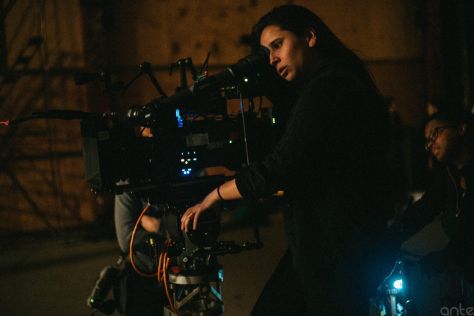
Cinematographer Jessica Pantoja

Aside from being the cinematographer for “To The Authentic,” Pantoja, who’s originally from Queretaro, Mexico, has made a strong name for herself as a cinematographer in the film industry, something she’s dedicated herself to for the past decade. She’s earned extensive international acclaim for her work as the cinematographer behind countless films including “Mute,” “Cold Night,” “Harvest Moon,” “Evanescent,” “The Wind Outside” and many more.

“Jessica and I have collaborated on many short films and commercials in the past… Nylon was a very special project where I saw and experienced great energy and drive from Jessica, as a DP and as a leader,” explains “To The Authentic” production designer Clarisa Garcia Fresco, who production designed the 2017 WorldFest Houston Platinum Award winning film “Clarity,” as well as “Evanescent” and “Harvest Moon” where Pantoja served as DP.

“I enjoyed our teamwork efforts as we were striving to create an image and identity for the project. Her enthusiasm and drive for film and storytelling are truly an inspiration to me and everyone around her.”

In 2017 Jessica Pantoja also earned a nomination for the Best Cinematography Award at the 2017 Camerimage Etudes Competition, arguably one of the world’s most prestigious competitions in the field of cinematography, as well as nominations for the Best Cinematography Awards at 2017 VIZIO + DOLBY filmmakers Challenge and the 2017 Cine Gear Film Competition for her film she as well as the film “Manners of Dying.”

In a way, “To The Authentic” marks her foray into creating branded content, and it’s a powerful one at that.

“‘To The Authentic’ was the first project I created for [NYLON] and it opened the door to build an ongoing collaboration with the magazine,” explains Pantoja, who has since created the videos “True Beauty. By NYLON” and “Fashion as Art. By NYLON” featured below.

With NYLON magazine being revered for their bold colors, in-your-face graphics and the kind of cutting-edge style and groundbreaking pop culture that appeals to Millennial and Gen-Z audiences, the video really does embody the brand’s unique attitude and their commitment to readers. It’s definitely the perfect commercial to be featured on their About Nylon page; and we can’t wait to see the next collab from cinematographer Jessica Pantoja and NYLON Magazine.
Calvin Khurniawan perfectly captures loneliness in heartbreak in Andrew Belle’s “Down”

Calvin Khurniawan believes a cinematographer’s job is much like that of a comic book artist. Both roles involve how a story is seen; they don’t write the story, but they take on the visual stimulation for audiences and readers. They add to what is originally written, and decide exactly the best way to show the story they are given. Such a unique way of looking at his job is how Khurniawan sets himself apart from other cinematographers; he can look through the lens of a camera and find the perfect and most distinctive way to capture a scene. It is what makes him so sought-after, and why he is currently one of the best Indonesian cinematographers.

 “A lot like acting, cinematographers react to actors’ inner unconsciousness by utilizing camera elements such as composition and lighting. Similar to editing, we choreograph how a scene unfolds by dictating where the audience’s eyes should look,” he said.

Earlier this year, Khurniawan worked on the viral music video “Down” by Andrew Belle. The video premiered on “Paper Magazine” in June. From there, it went on to be a “Nowness Staff Pick” and a “Vimeo Staff Pick”, amassing over one hundred thousand views on YouTube alone. The cinematography was key to such success, as it connected to aspects of the video in an artistic and meaningful way.

“It’s been delightful to hear how much people like the video. I think the biggest compliment came from the people who responded emotionally to the choreography because the cinematography is built around it,” said Khurniawan.

The choreography is what tells the story and emotions in the video, and therefore required talented dancers that Khurniawan could work with to do just that. Eventually, they found Dassy Lee from So You Think You Can Dance 2017. Together, the cinematographer and the dancers perfectly portray the loneliness in heartbreak.

The cinematographer’s input was valued for every step of the production process. Before the concept was finalized, he would create storyboards for his shots and present them to the Director, Joshua Kang, giving an expert’s opinion as to how each shot could be framed. He would then sit down with the director and the dancers to converse about what he thought would work for the video, as he knows good ideas mean nothing if they can’t be executed properly. He knew there was more to the video than dancers against a pretty background. He wanted to do more with the camera and reacted to the choreography, asking the dancers how they were feeling emotionally and designing the frames based on that. Such a unique and dedicated take was vastly appreciated by Kang.

Andrew Belle Down. Joshua Kang and Calvin Khurniawan. Photo by Kiu Kayee
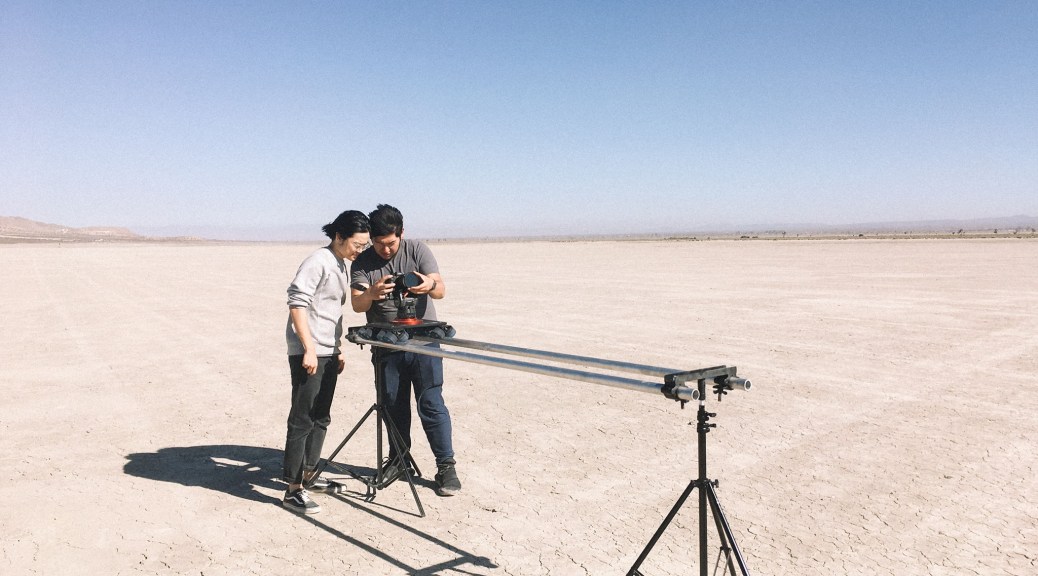
Joshua Kang and Calvin Khurniawan filming “Down”, photo by Kiu Kayee

“I love working with Calvin because he is always prepared for every project. When I show him a treatment for a project in pre-production, he brings in various different ideas on how the look for the project could be, and what he thinks would be the best within the given circumstances. Having visual discussions with Calvin before the shoot always makes the job of the day easier for everyone on set. He is someone I want on set. Not only is he kind and respectful to everyone on set, he has great set skills. Working with Calvin, I trust him and his camera crew to have everything prepared and ready to shoot on time. He’s helpful in post-production. Calvin keeps in mind how the visuals will look like in post when he shoots. When we’re sitting in a color session, he gives inputs on how the color can be corrected in the best possible way. Having a director of photography like Calvin that cares about the project until it is completely finished makes him professional and reliable,” said Kang.

Initially, Kang approached Khurniawan to work on the video. The director had seen his work and was immensely impressed. Khurniawan was interested in the project before knowing that it was for Andrew Belle, and upon hearing the artist he was immediately on board, as he was already a fan.

“Imagine getting a call to work on a music video with one of your favorites artist. It was the quickest decision I’ve ever made for a job,” Khurniawan said.

While working on the video, the ideas changed frequently, as everyone wanted to ensure it was the best it could possibly be. From a cinematography standpoint, this can create challenges, but Khurniawan never let that faze him. He was happy to work diligently to make everything effortless for those that worked alongside him. The dancers, Dassy and Jordan, were immensely appreciative of Khurniawan’s dedication to the project. He perfectly showcased their vast talent while still creating a telling and poetic video.

“This is by far my favorite collaboration for a project. Joshua, the director, liked keeping a small crew and resulted a more intimate crew. We communicated easily between one another compared to having a big crew. Dassy and Jordan presented their choreography early to us then we design everything based off the choreography. Our approach is based on the choreography really, because we wanted it to be the center of the attention. My job as the cinematographer is to fully reflect on how they’re telling the story and emotion through the movements. I thought it was an interesting approach to music video,” Khurniawan concluded.

You can watch the “Down” music video here and see just how talented of a cinematographer Khurniawan is.


Top photo – Joshua Kang and Calvin Khurniawan, photo by Kiu Kayee

Cinematographer Ismaël Lotz talks award-winning film ‘Who is Alice’

Ismaël Lotz sees life through the viewfinder of his camera. He knows the power that film can have, and the artistry that comes from making one. As a cinematographer, he ensures that every single shot is perfect. Everything is important; from lighting, to lenses, to the smallest movement of his camera. Such dedication takes more than just talent, it takes unparalleled drive. Very little people actually possess such a trait, and Lotz is one of those few. His work ethic and outstanding capabilities as a Director of Photography have led him to be one of The Netherland’s best, and he is now internationally in demand.

Throughout his esteemed career, Lotz has worked on many critically-acclaimed projects. His documentary I am Famous tells the story of Tom Wilson, famous for his role as the antagonist Biff in the Back to the Future films, and living with that notoriety. As a child, that series was one of Lotz’ inspirations for becoming a filmmaker, and now, those he idolized he now works alongside.

The highlight of Lotz’ career, however, is his recent film Who is Alice. This internationally-acclaimed comedic drama whisks the audience away on a humorous, non-conventional quest to avoid suffering and find happiness. Lotz, known for his work in cinematography, also took on the roles of co-director and editor for the film, knowing that understanding such positions would make him a better cinematographer. His involvement from pre-production to post-production helped make the film an enormous success.

“The reason we wanted him as Director and Director of Photography is because of his talent and passion. He is known as one of the best Directors of Photography in The Netherlands and the quality of his work is outstanding,” said Paul Smit, the Writer and Producer of Who is Alice. “It’s always a pleasure to be working with Ismaël. He is passionate, creative, intelligent and able to exceed people’s expectations. Actors that I’ve worked with told me that they had never seen a Director of Photography like Ismaël. Normally it takes two cameramen to do what he is doing all by himself. Besides his talent, he is very easy to work with and always aims for the highest level.”

Who is Alice premiered in the city of Helmond, where the film was shot, with several sold-out shows. It then went on to several prestigious film festivals, such as the Los Angeles Film Awards, Festigious International Film Competition, London Independent Film Awards, Miami Independent Film Festival, Hollywood International Moving Pictures Film Festival, TMC London Film Festival, Actors Awards, and the Move Me Productions Film Festival. winning over 25 awards throughout them.  Amongst these accolades, Lotz was recognized for his outstanding work as Director of Photography, and took home the prize of Best Cinematography at the New York Film Awards, not to mention the recognition he received for his work as Director and Editor all over the world.

“It’s very rewarding and feels great that the film has achieved what it has. I am so proud on what we’d accomplished with our work. It brings a big light on my future endeavours as an international filmmaker,” said Lotz. “It makes me very proud to have won the award for Best Cinematography. But besides the awards for several departments on the film, the biggest reward is that complete strangers approached me and told me what they think of the film. It leads to very pleasant conversations with all kinds of different people. It’s inspires me to keep working on more projects like this.”

On-set, Lotz worked closely with his co-director Robert van den Broek to ensure the all-star cast was working to their fullest potential, and that the two directors were always on the same page, which was essential to Lotz’ cinematography. Many times while shooting, problems can arise and situations can change, making what was planned in pre-production alter drastically. As a cinematographer, adapting quickly to these situations and coming up with equal or better alternatives is a must. At one point while shooting, Lotz and his team lost a lot of time because of a power outage. The solution was to do the scene in one take. In hindsight, it is now one of Lotz’ favorite scenes of the film, as one take scenes are immensely challenging for everyone involved, but create an authenticity for viewers, truly transporting them into the film.

Lotz is known for the energy he brings behind the camera. He is a team player and plays to his crew’s strengths. This brings a creative freedom for everyone to work toward his vision, creating a harmonious working environment, which is essential to the success of any film. It was working on such a great team that made the experience of making Who is Alice extraordinary for this cinematographer, and knowing the story they were telling was important and would impact audiences is why the filmmaker began this journey in the first place.

“Who is Alice carries us on a funny, compelling and sometimes cringe-worthy journey into the highs and lows of what human beings will do to try to avoid pain and connect to happiness. It’s about being yourself in a world full of big egos. It shows how big the power plays are in the entertainment industry in a funny way. While it also shows the drama of Alice’s life, I think the movie carries a lot of spiritual elements with it. Who are you? And if you found out who you are, what are you doing with that knowledge?” Lotz concluded.

Who is Alice is now available on worldwide streaming services such as Amazon, iTunes, and Hulu. Those in China and Japan can also look forward to seeing the film soon, as a distribution deal has just been signed. No matter where you are, be sure to check out Lotz’ outstanding work on the film.

Cinematographer Andre Chesini talks viral music video ‘Oração’

Andre Chesini behind the scenes of Oracao 2
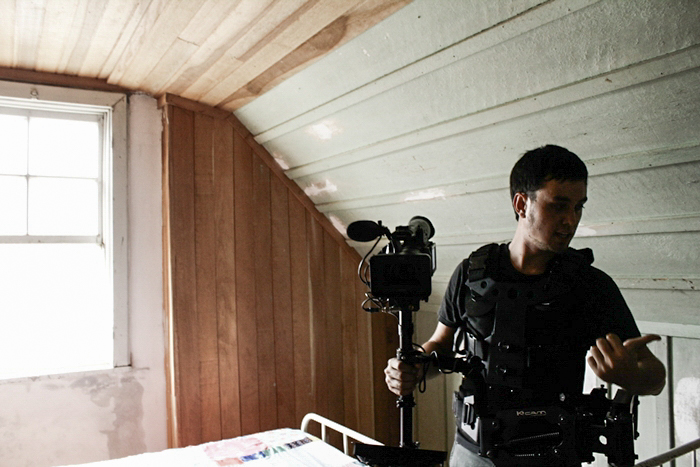
Andre Chesini behind the scenes of the “Oração” music video.

Anyone can move around with a camera to their eye, in fact, many people try. However, Andre Chesini understands what it is to be extraordinary at what he does. Chesini’s unwavering passion for filmmaking extends back as early as his childhood and his perspective derives from years of immersing himself in the arts. He understands that the artistry of cinematography comes from controlling what the audience sees and doesn’t see. As a cinematographer, he doesn’t just strive to make a frame beautiful, he tries to create images that evoke emotions and enhance the storytelling. That is what makes him such a rare talent.

Chesini has adopted a style of cinematography that many of the world’s most recognized strive and fail to achieve. For him, lights are motivated by nature, not only by the actors. He searches for a naturalistic cinematic sense of reality. He worked on several documentaries in the beginning of his career, and is an experienced Steadicam operator. This experience translates into his cinematography.

“Documentaries are based on working with the environment and searching for the natural and available light. That shaped me a strong bond for an alive camera and strong naturalistic sense of reality. Thus, I’m looking for a life-like images. A design that is closer to reality, yet enhancing the cinematic look making the ordinary into extraordinary. Every cinematographer is unique; it is about the inner voice that each of us have. How it echoes with the director and all the people involved in a film,” said Chesini. “Steadicam operation is an amazing skill that makes my senses for motion and blocking of the actors very sensitive. I can feel the energy that the scene requires, capture the emotion of the actors and translate it through the movement of the camera.”

Having worked on several award-winning films, such as Chocolate, Tereza, and A Fabrica, as well as the television show Life on a Leash, Chesini put his work on the world stage, showing audiences everywhere what he is capable of. However, this versatile cinematographer has had limitless success, and his work on three music videos for Banda Mais Bonita da Cidade displays that perfectly.

“Music allows you to have more freedom in style as a cinematographer. It is a great territory to experiment and push your visual limits as a creator. “Oração” was actually the first music video that I shot. I mostly work in narrative. I believe that this narrative background weighs on the decisions and how I could contribute for the impact of the music video,” said Chesini.

Three days after its release, “Oração” already had over three million views on YouTube. It now has over 27 million. Chesini went on to be interviewed by Fantastico, a popular Brazilian Sunday evening program, to comment on the video. Later that year, “Oração” won the Best Web Video for the MTV Video Music Brazil Awards.

“It was an insane reaction, from no recognition to international recognition, being published in Rolling Stone and Washington Post, among others. The Banda Mais Bonita da Cidade became recognized artists and in that year, and have recently released their third album,” said Chesini.

Vinicius Nisi, the creator of the band and the keyboard player, called Chesini to be part of the video. The proposal was to record three music videos in one weekend, the main video being “Oração,” a one-shot video while recording the live audio at the same time. Such a task was enormous, and Chesini was the only one for the job. Chesini’s Steadicam experience once again was vital for the music video, as his knowledge of where to place the camera and follow the talent to have the six-minute film be one shot was fundamental. The two other videos shot were “Boa Pessoa” and “Canção para não voltar.”

“Given the success of “Oração”, our band became full time job, becoming our main source of income. We owe this to the talent and love that Andre has,” said Nisi. “Andre is an easy-going person and very easy to work with. He is always with good-humored and is very communicative. He likes to know all details in order to do a good job. His technical and artistic capabilities are undeniable.”

“What I most like working with him, is that he is secure, calm and aware. He is also really humble, and would listen all my directions and when was necessary he was pro-active in resolving issues that would appear. Andre focuses on making his work pristine. He studies the video, techniques, equipment and always makes his best. Andre knows his immense responsibility as the first viewer of the everybody work. At the same time, he does that gently and with kindness,” Nisi continued.

It took 8 shots for Chesini to get the one-shot film that was needed. This technique was a fundamental factor for the success of the video. It required skills and a sensibility as cinematographer and camera operator that Chesini always displays.

“I’m really proud of that video and its success also gave me strength to continue to pursue my dream of film,” said Chesini. “The challenge of a one-shot film is quite exciting, and being a steadicam operator, I felt compelled to immerse myself in this challenge. The long shot also requires working together with all the musicians, extras and everybody involved and seeing the involvement of everybody was really rewarding to see.”

You can watch Chesini’s work in the “Oração” music video here.