All posts by Lorraine Wilder

HEARING LOVE IN A “THUNDERSTORM” WITH XIAO’OU OLIVIA ZHANG

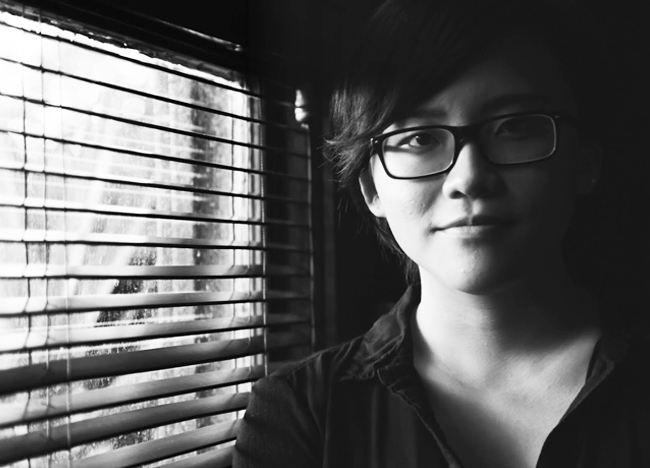
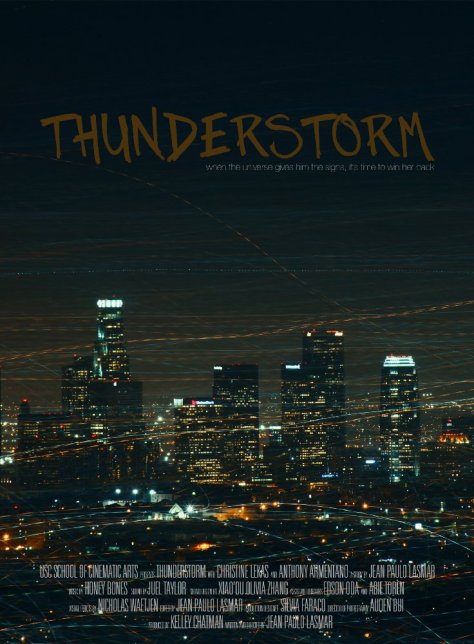
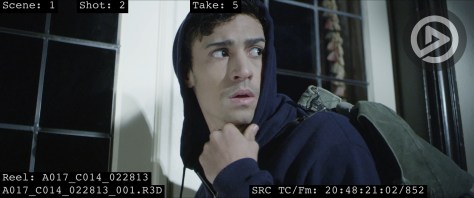
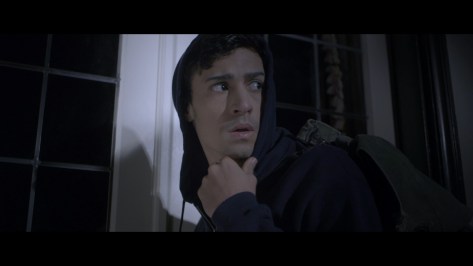
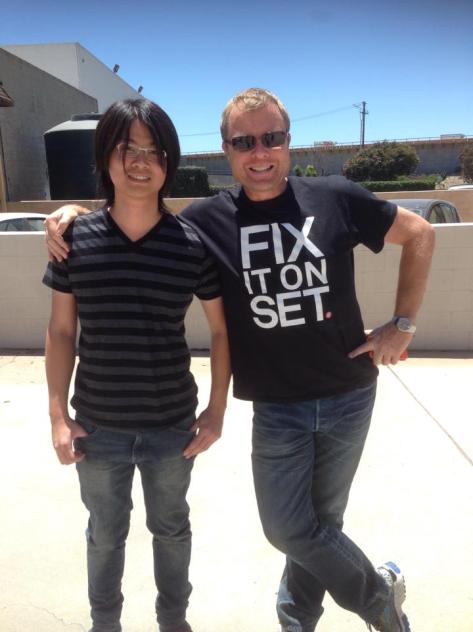
“There’s poetry in everything. Even in traffic.” It’s statements like this that led Jean Paulo Lasmar, writer/director of Thunderstorm to seek out Xiao’ou Olivia Zhang to supply the sound for this film. Zhang is a respected sound designer who has garnered acclaim in the film industry for her unique and creative approaches in the industry. Lasmar declares, “Olivia is a very clever, sensitive, and professional filmmaker and storyteller. She has worked on the film on set and in post. She knows how every aspect of filmmaking works and how they depend on each other. These skills give her a very mature and solid understand of story, emotion, and character, as well as production limitations. Due to this knowledge and proficiency, she was able to add different layers in Thunderstorm, through sound design and mixing, taking what we initially had and making it work by adding a personality to it, ultimately adding other layers to the story. Olivia was quickly persuaded to work on the film by Jean’s discussion of his interest in getting very creative with their approach to the cacophony that is downtown Los Angeles traffic and its personality in the film. For a sound designer like Zhang who finds her greatest excitement in the freedom that independent films afford, this easily became a production she wanted to be a part of creating. Olivia confirms, “He [Lasmar] came to me and said he wanted me to use sound to separate them [the two lead characters] and then to unite them together through these subjective moments. I couldn’t pass on the film because the story is so real and there’s so much I can do with sound to enhance the emotions.”

thunderstorm-poster

Thunderstorm is the story of Bella and Troy. Despite all the magic around their love story, they are no longer together. Broken hearted, Troy moved to LA to forget about Bella. Six months later, she arrives in town. One night when the universe gives him the signs, he tries to win her back.  On a rooftop in downtown LA, during the first snowfall of the year, amidst manic traffic, the two deal with their emotions and differing perspectives of each other. While there is resolution to the film’s plot, what impacts the viewer is the way in which these two different people can perceive the exact same circumstances. This was the crux of Zhang’s work in Thunderstorm; to give the audience the sense of viewing the character’s emotions in a subtle way. Olivia reveals, “Sound design in drama gives a lot of freedom to craft emotions. I pick moments that are subjective and try to mimic the way our brain neutralizes our environment. When you are close to someone or want to be close with someone, your mind focuses on the sound of their clothes rustling instead of the traffic because it is the sound that this person makes. When you really want someone to stop talking and leave you alone, you hear more of the background sound while the foreground sound that’s the voice of the person becomes the irrelevant background noise. So balancing the loudness of each sound and choosing the sounds the character would hear the most give energy and feeling to these subjective moments. At the beginning, when Troy and Bella are on the roof, she really wants to leave. Viewing things from her perspective, you hear lots of traffic and noise because her focus is not there. Troy, on the hand, wants to stay and remember this last moment with her, so he hears the night wind blowing on the roof while the traffic is more of a distant wash. At the end of the film, when they both reach closure, the way they hear the world becomes similar. The traffic become less irritating for her and more realistic for him. Of course, these are all done in a very subtle way, sound design in this film is mainly to build the mood.”

Zhang often thinks of her work as relating to other art forms. Analogies are a way for her to inspire the creative approaches she is known for in the industry. She used this in her approach to the sound of traffic as she explains, “A bus in traffic always stands out because it has a distinguished squeaking sound of a higher frequency than general engine sounds. In sound design, when we put a bus in the distance on top of a traffic wash, it brings more life and energy to it. I think of it as music. It’s like a piano. The bus and occasional horn honks are like the melody of the right hand, and the traffic wash would be the left hand chords that support and carry on the life of the song.”

To access inspiration, Zhang keeps a journal in which she makes note of her life experiences, allowing her to access “triggers” that she can refer to resuscitate the emotional states she needs to impart. It’s something that goes back to her earliest memories of film and sound. Olivia recalls, “When I was 12, during summer break, I was bored and I started to go through my parents’ video collections. On one cover I saw a short-haired lady, dressed in red and smiling at me against a green background. I put it in the VCD player and immediately heard this beautiful accordion music playing on the menu page. I have played accordion 2 hours a day since I was 5. The sound of that instrument is like a brother to me. And that was the first time I heard an accordion in film or any kind of media. I felt electricity in my body that was followed by a great sense of comfort and happiness. It was a French film called Amélie by Jean-Pierre Jeunet. The character Amélie does all these strange quirky things in a world full of color. I was so mesmerized and surprised that films can tell stories about people’s current life, and the current life is just as troubled and beautiful as it was in the past. Amélie carved the word “film” permanently in my heart. Nowadays when I think of film, I always see her and hear her faintly in the distance.” The poetry that Xiao’ou Olivia Zhang finds in common things like traffic sounds is obviously a product of the poetry that resides in her own heart.


Actress Savannah Burton makes film My Wounded Head a success

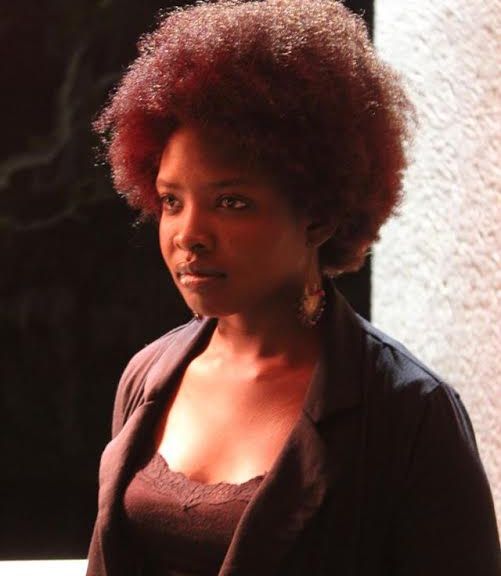
When starring in My Wounded Head, Savannah Burton was there to tell the story. Like any good actress, committing to the role and giving a believable and memorable performance was the top priority. However, unlike most actresses starring in a film, Burton was the only performer. The success of the film and sharing the story was up to her. And she didn’t take the responsibility lightly.

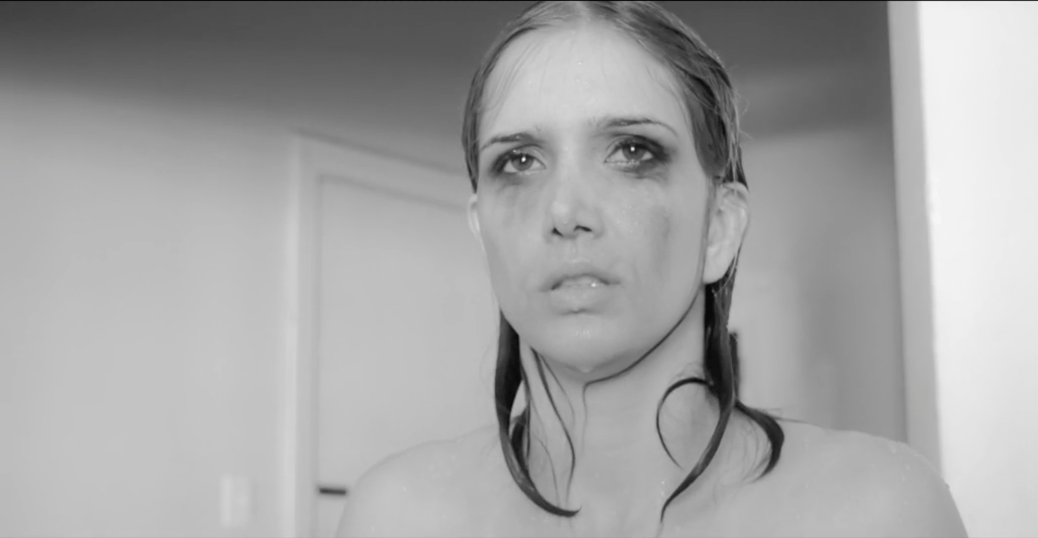
My Wounded Head tells the tale of a transgender woman as she delicately puts on makeup while staring at her reflection in the mirror. Burton, a transgender actress herself, plays this woman. Her makeup is a metaphor for her transformation to uphold society’s perception of beauty, while addressing the transition that transgender people may go through. Digging even deeper, the makeup also acts as a form of armor, protecting her from the scrutiny that comes from the outside world.

“I chose to use extreme close-ups throughout the film, in an effort to magnify the expectations of society for a transgender woman, versus what she expects of herself,” said Stephen Chen, the director and writer of the film. “I needed an actor of the utmost quality that could convey the film’s deep messages without speaking one word; Savannah Burton was the one and only actor that could do just that. The success of the entire film rests on her shoulders, as she is the only performer in My Wounded Head.”

“Savannah does a remarkable job of bringing an authenticity to the role, taking the audience on a journey of discovery by creating a combination of comfort and uneasiness that makes the film both fascinating and enthralling,” continued Chen.

Burton’s talent is evident in the film, and brought the film great acclaim as an Official Selection at the esteemed Imperfectu (Tijuana) International Film Festival, Gender Reel Festival, and Sydney Transgender International Film Festival. Chen believes the many Official Selections My Wounded Head received wouldn’t have been possible without Burton in the starring role.

“It is always a thrill to have a film selected to be in a film festival. It’s recognition of the project a group of people worked on and gives you a positive feeling that people appreciate your work. This also gives the film a larger audience and a chance to have more feedback,” said Burton.

Burton worked closely with Chen to make the film exactly what they envisioned. She says the partnership was easy, and Chen was very prepared and knew exactly what he wanted, which makes her job as an actor much easier.

“When watching the film for the first time I was very proud of the work I did and felt Stephen did an amazing job telling the story he wanted to make,” said Burton.

Being without makeup for parts of the film was originally uncomfortable for the actress, but she quickly began to see the artistry of the project.

“I start the film without any makeup on and the camera follows me as I get ready to go out for the evening. Not wearing makeup made me feel very vulnerable but I feel stronger after for focusing and completing the work. I felt a little anxious about seeing it, but I was very happy with the end result, she said”

Burton has worked on many successful projects, including Syfy’s hit show Killjoys and the CW success Beauty and The Beast. She also is in the new LGBT period piece The Kiss.

This project, however, was an important piece of her career. Beyond anything, she took away a valuable realization while working on My Wounded Head. It was her first film after her transition.

“It felt amazing to finally be working as myself,” she concluded. “I learned that I can have a career as a trans actress”

Gabriella Spacciari stars in Red appearing at New York Jazz Festival

gabriella-ff
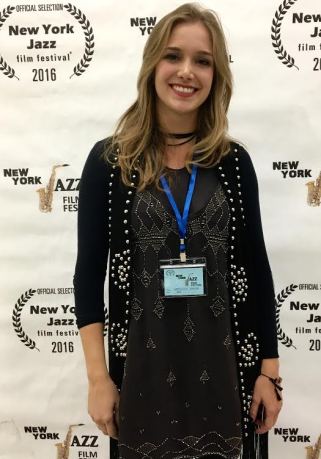
Gabriella Spacciari at the New York Jazz Film Festival

Gabriella Spacciari was always fascinated with acting. Growing up in a small town in the south of Brazil, she used to imitate her idols and favorite characters she saw on the screen. Now, she is the one on the screen.

Spacciari has a starring role in the film Red (also known as Vermelho). The film, which originally premiered at the Madalena Festival de Cinema at São Paulo in June, is being shown at the New York Jazz Film Festival this month.

“It was an amazing surprise to go to the New York Jazz Film Festival, especially after one year of living in the United States. It’s like starting your career again. It is a gift to have a project that I did back home selected to a film festival in Manhattan. I’m going to New York for the first time to check it out. It’s going to be an unforgettable experience,” said Spacciari.

The film Red is about Ana, played by Spacciari. While under narcotic substances, Ana tries to commit suicide.

“The film is very poetic and I needed to go deep into the scenes to convey in just a few seconds all the pain that is to be cheated and the depression and self-destruction that lead us to make decisions that can bring us serious consequences,” she said.

The film was written and directed by Guilherme (Guily) Machovec Rahner. He had Spacciari in mind for the role while writing, and knew she would be able to portray Ana the way he envisioned. He describes her as very important to the success of the film.

“Gabriella is a very deep actress. Besides the fact that the camera loves her, the emotional range required to go into the circumstances of the scene made it easy to work with her.  The scenes had a high emotional stake and her concentration kept uptake by take,” he said. “I loved working with her, she is a very committed and talented actress. It was a very demanding role, but it seemed effortless for her. I look forward to working with her again as soon as the opportunity arrives.”

Spacciari agrees that they make a good team. Machovec Rahner, who teaches and produces at Operahauss in São Paulo, met each Spacciari through another producer, and knew she was the right person for his film.

“Guily said he thought about me while writing the film,” said Spacciari. “It was a very special gift to play this role.”

Spacciari has a life full of experience. Also a model, she decided to get into acting at a young age when she enrolled in the theater group in her home town. She relocated to São Paulo when she was just sixteen to pursue my career further.

“The theater group was very small. The director used to write and produce. He emphasized the importance of the classics and had us read them,” described Spacciari. “It was very important to me to understand the work of the artist – not from the glamour, but from the stage work.”

Since that time, Spacciari has had a variety of roles that explore her versatility as an actress. She was in the film Julia that premiered at 8o. CineFantasy, and Aluga-se o Ponto, which was nominated for the Prize FICC for Audiovisual at Campinas
.

“I think the most difficult thing about acting is to deal always hearing the word “no”. But you have to just keep practicing your technique, cultivating good friendships, communicating with other artists, and making art,” she said.

Spacciari also has a successful modelling career, and has appeared in a variety of successful commercial campaigns, including Cultura Inglesa and Quem Disse Berenice. She was also in a multi-national Pepsi commercial.

“Acting is the art that deals with the intricate and wonderful condition that is human nature,” she concluded. “I think nowadays we are so full of information that acting is a powerful way to combat this, through sensibility.”

You can view the trailer for Red here.

SEBASTIAN SACCO PORTRAY’S THE CREATIVE STRUGGLE IN “THE PATH”

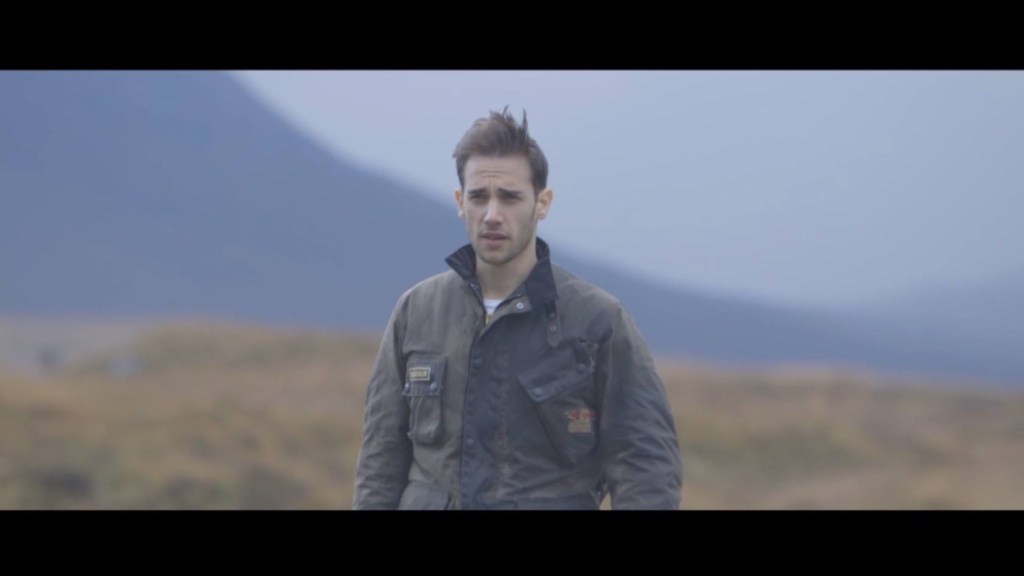
Art imitates life and life imitates art. Whether it is in the artistic presentation of the real life experience, people are fascinated by passion. Love, hate, greed, altruism, faith, family, all of these involve this provocative emotion. Some enjoy a calm lifestyle while others are driven to the flame by their desires. Either can be a soothing or precarious scenario. For actors like Sebastian Sacco, he cannot deny his pursuit of a creative lifestyle. It’s not all red-carpet premiers and adoring fans. Quite often it means freezing in the rain while being shot with (paintball) bullets on a war film (as he did in Tommy), or being held underwater for long periods of time (in the Flawes music video “Don’t Wait For Me”). Even when he is given a less physically demanding role to play, it is often emotionally taxing, as in the film The Path. This film delves into the mindset and emotional obstacles of someone who pursues a life as an actor and the everyday securities with which they must forego; it’s a role which Sacco is ideally suited to play. He stars as Seb in the film by writer Harry Chadwick and directed by Tobias Brebner. This 2015 film investigates the sacrifices and uncertainties made in the pursuit of a dream, and the measures it takes to stay on that path.

If you transferred the same fixation and enthusiasm that one might have for say…futbol (or football, depending on your place of origin) you would have an indication of what dancers, writers, musicians, actors, and other creative types feel for their vocation. The true immersion of your joys and pains, fixated on one specific thing…it can be overpowering. Many entertainers profess their love of their creative pursuits while also recognizing the fact that it often requires them to forego a “normal” life and relationships. These careers are never 9 to 5 jobs. Witnessing Sacco’s performance as Seb feels like watching a new form of audience-viewable intense therapy. His character deals with the same doubt, drive, insecurities, and relationship struggles that undoubtedly almost every creative centered individual experiences. Specifically, this film focuses on a relationship. The Path is the story of an actor pursuing his dream. In this pursuit, he meets and falls in love with someone. Seb is constantly divided in his motivation between love and the demands of pursuing his career. He desperately wants the relationship to work but he can’t help but become diverted from it by the focus needed to pursue his dream. Seb realizes that he can only pursue one end and must choose between her or his passion. He takes the plunge and heads back on his path towards his dream.

the-path6

Sebastian has played many leading roles. It’s any easy conclusion to make that the reason so many critics and viewers found his portrayal of Seb in The Path so authentic is because it is so close to his own life experience. He confirms, “I’m very close to who this character is and what he has lived. Seb really has to deal with one big question. Life is filled with so many little decisions that dictate the path we follow but this film wanted to focus on just the big stuff for Seb; the huge pull for a loved one or for your dream and passion. It’s a sad fact that sometimes the two cannot work together. Towing the line in-between just makes both unhappy. I denied this fact in my own life for a long time. I had wanted to be an actor ever since I was a kid. I didn’t allow myself to consider it as a real possibility for such a long time. As I grew up and felt pressures from other factors, I just slowly pretended I wanted other things. I tried to forget about acting or tell myself I’d do it later. I attempted to use other things to occupy my attention rather than allowing myself to pursue my true desire. Eventually, when I made the decision… nothing else mattered. I wasn’t going back. I wasn’t going to deny myself again. That’s the exact struggle my character endures. I’m certain that most people who pursue creative lives relate to this, I was just fortunate that I found a film which allowed me to tell the story that many of us relate to.”

the-path5

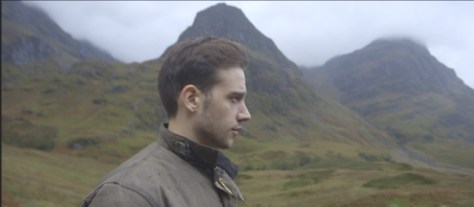
Many of the scenes in The Path are emotionally taxing but one scene in particular depicts a physical representation of Seb’s turmoil. It’s somewhat humorous that Sacco has had a number of roles in his career that require submersion in water for long periods of time. It’s not a scenario or achievement which one regularly associates with a particular actor. Director Tobias Brebner (who has worked with such acclaimed actors as Kevin Spacey) notes, “We had to shoot Sebastian in the freezing wind and rain in Scotland as he traversed through the wilderness. On top of all that, he had to perform a sequence in which he had to jump into a freezing cold lake in the lake district during each take. Despite the obvious physical discomfort he was in, Sebastian performed each take with the utmost professionalism, never complaining about the conditions and always able to stay in character. His performance is a testament to the theme of the film – always enduring and working toward a goal regardless of the external circumstances. The success we achieved would not have been possible without his amazing talent and commitment to the film. In fact, I would go so far as to say he is the film.”

Sebastian agrees that he is quite close to his character in The Path. While he may not have made immense personal discoveries working on this production, it reinforced a pillar of his beliefs as he comments, “Seb reminded me to always follow your dream. The path might change or you might go in a different direction than you thought but, always keep following your dream.”

the-path11

Navid Charkhi Dances Into His Second “Descendants” Movie

Working 15-hour days is nothing when you love what you do and you’re having a good time doing it. For Iranian-Canadian dancer, Navid Charkhi, it is working with esteemed director, Kenny Ortega, the cast and the choreographers on Disney’s Descendants 2 film that makes long, grueling days fun in front of and behind the camera.

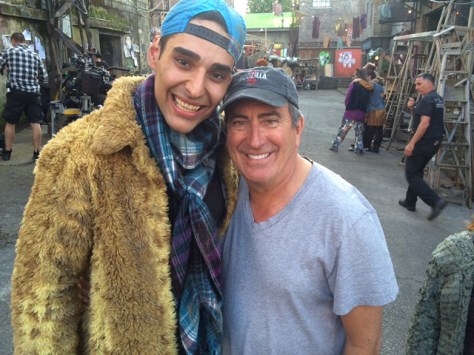
Navid Charkhi and Kenny Ortega
Navid Charkhi with Kenny Ortega on the Descendants 2 set.

“The way Kenny talks to the actors and dancers, and presents his acting or movement ideas to the cast– I feel he sees everything happening already and when he gives direction to the cast it is usually brilliant. There’s always a wow factor when you see his demonstrations,” says Charkhi.  “I watch closely and follow his steps behind the scenes.”

Who wouldn’t when working with a three-time Emmy award-winner who has directed projects like High School Musical, choreographed timeless films such as Dirty Dancing, and collaborated with heavy-hitters Michael Jackson, Bette Midler and Gene Kelly?

Charkhi and Ortega actually have similar reasons for getting into show business. Both were inspired as boys by dancers they idolized. For Ortega it was Hollywood screen legend, Kelly that moved him toward a career in the entertainment industry. Charkhi grew up watching Michael Jackson on television and was mesmerized, copying and learning from the popular recording artist and dancer’s moves. Charkhi admits to being a bit starstruck by the Descendants director’s history with the King of Pop.

“Kenny has worked with Micheal Jackson himself. Hearing stories of them working just brings tears to my eyes.”

Ortega is pretty impressed with Charkhi, too. The director recalls that Charkhi proved himself a standout right from the very beginning.

“I could not believe how much talent and skill he demonstrated at the initial auditions for the production,” remembers Ortega. “Usually dancers take a few takes and auditions before beginning to impress the director and the production crew. However, this was not the case for Navid.”

Dancer Navid Charkhi

Indeed Charkhi’s natural instincts when performing complex dance moves became an asset during the three-day Descendants 2 audition.

“On the first day over 400 people showed up and more than 200 of them got cut,” he says.

Co-choreographer, Tony Testa, explains that those who could not keep up while learning a new piece of choreography each day were cut from the production. Charkhi, on the other hand, has quickly made himself an “irreplaceable asset to the film,” according to Ortega. Not long after the initial auditions Charkhi was assigned to working alongside Testa, as he was the only dancer able to keep up with the changing challenges throughout the production.

“[Navid] is able to instantly adapt to any type of dance depending on the style of the production, which is an extremely important characteristic for a Descendants 2 dancer to have,” explains Testa.

In addition to versatility, characterization is also extremely important for a dancer working in the film industry. Ron Oliver directed Charkhi in the film Mostly Ghostly 3, for which Charkhi was promoted as assistant to choreographer, Richard O’Sullivan and helped to create choreography and prepare the cast for filming the sequences in just three days. Oliver is quick to express how well Charkhi works under pressure but, as a director, also gives insight into Charkhi’s acting abilities.

“Navid’s dance aesthetic is extremely distinct from the rest of his peers as he is able to portray character emotions through his dance moves,” states Oliver.

In the first Descendants movie, Charkhi got to play a baddie that wreaks havoc on a village. For Descendants 2, which is set to premiere in summer 2017, he still gets to explore his dark side, this time as a pirate. According to Paul Becker, who co-choreographed the original Descendants film, it’s a far cry from Charkhi’s real-life personality, however.

Navid Charkhi

“Navid is a generous spirit and great to work with,” insists Becker. “His giving nature comes across in his dancing. I have had the pleasure of hiring Navid as a dancer on [multiple] projects and always welcome the opportunity to work with people like him.”

Charkhi’s combination of generosity, work ethic, talent, and ability to adapt to any style or genre makes this Descendants dance principal one to watch as he ascends to great heights in Hollywood.

HUGO SHIH BRINGS “A GIFT” OF COLOR

There is a myriad of roles involved in film production. Each of these play an important role in enabling the story to be told with the vision that the writer and director share. Hundreds of years ago, thespians performed the works of playwrights, before that…orators weaved tales over the communal fire; both of these relied on the imagination of the audience to conjure up mental images which were hopefully as grand as the teller intended. Modern films have grown to such a high level of production that they can manifest creatures never before imagined in such a way that they seem as real as the people and surroundings among us. One of the most difficult things to communicate to an audience is the emotional intent that motivates a specific character. While an actor’s performance, camera angles, music, and other factors bear the brunt of this transference, one of the least obvious factors is coloring. As the title states, a colorist allows the Director to shade the emotions of the characters by shading the action on screen. As film audiences have become more astute and aware of the use of a colorist’s work in film, these professionals have become increasingly clever and decreasingly obvious in their application. Colorist Hugo Shih is a highly respected and valued colorist in today’s film industry. A conversation with him reveals the fine points of what a modern colorist does to help shape a film’s emotional intent as well as how it is achieved through the use of color. What might seem to be superficial to the uninformed movie goer, has a profound impact on the subconscious and heartfelt emotive catharsis which an audience experiences.

The 2016 film A Gift is a redemptive drama. It is the story of Jack, a young thief who breaks into the home of Margaret. Margaret is a blind elderly woman who mistakes Jack for her son. Although Margaret comes to realize that Jack is not her son, she still covers for him, protecting him from being discovered when police and neighbors come looking for Jack. The young thief comes to realize the error of his ways and is moved by Margaret’s gift of understanding, forgiveness, and non-judgement. A story such as this contains many intense emotions; fear, desperation, gratitude, and others. With such a small cast (consisting of Kaiso Hill as Jack and Sally Hogarty as Margaret) the actors are required to portray a diverse emotional palette. Hugo’s job as the colorist for A Gift meant that he needed to assist the character’s in hitting the “bullseye” which the film’s director intended. Yiqong Li is the director of A Gift (in addition to being one of the writers of this film). Li approached Hugo due to her familiarity with his work on many films. Li remarks, “Hugo has a reputation for being able to make just about anything happen for a director. Even if I didn’t plan on making use of all his abilities, it was nice to have in case I needed them…which it turns out I did. He did an amazing job on the color. Due to scheduling, there was one establishing shot that we just couldn’t get. Hugo worked his magic and literally created the shot we needed when it didn’t exist; I thought it was impossible to do it but he made it happen. We would never have been able to achieve this without the expertise of a master like Hugo.” Considering this all important shot, Shih explains, “We usually cut an establishing shot at the beginning to introduce the environment. A Gift started at night as the main character broke into the house. We knew that we should be looking for a night shot of the house. However, the production couldn’t get the shot at night, so they shot it during the day. It was the only establishing shot I could use. Normally, the editor would say ‘Let’s go buy some stock footage.’ In this case, I knew that ‘Day to Night’ was something I could create for the film. I said to director that I could make it work and there was no need to worry. To achieve this, I desaturated the shot and lowered the highlight, but brought up a little bit of gamma to make sure the details were all there. Following this, I did some secondary to pull out the sky and other details. In the end, I made a light at the front door because I knew that there was a light in the next shot. After I finished the color and cut into the timeline; when I showed it to the director, she was surprised and remarked that she had no idea this would even be possible. It’s a feeling of great achievement when you hear a director say this about your work.”

agift_before

agift_after

One of the unique parts about Shih’s work on A Gift is the fact that the film’s director asked him to serve as both a colorist and an editor on the film. Director Yiqiong Li had been working with major Chinese production companies and TV stations. Being involved in her film meant that Hugo would work with highly talented professionals as well as being a part of productions that would reach a massive viewing audience.  Hugo recalls, “She came to me and asked if I could do editing and color grading together. After I read the script and talked with her, I decided to take these two roles in post-production. There are some benefits of being editor and colorist at the same time. I always see the color as my creative tool for editing. It’s like assembling the puzzle pieces to the story while rebuilding the lighting. To illustrate how these roles worked in tandem to the benefit of A Gift, consider the following. In the film, there is a very long shot of Jack following Margaret to the kitchen. Usually it would be hard for an editor to keep this kind of shot because their job is to keep the story intense. However, Hugo was thinking ahead and was able to retain this shot by key framing the lighting when the main actor changed his location; using the key frame tool to adjust the lighting in the same way the aperture is adjusted on a camera. This can invisibly add the tension without the audience’s knowledge that it was made in post-production.

  A Gift has been highly recognized in 2016 with win’s for best film at: Hollywood Independent Moving Picture Film Festival and the 2016 StoneFair International Film Festival, as well as being an Official Selection at: the Berlin International Cinefest, the Roma Cinema Doc, the Los Angeles Independent Film Festival Awards, and the California Women’s Film Festival. As a member of the cast and crew of A Gift, Hugo Shih and his exemplary work are proof that a film about the change possible in each of us can move many people.

kuanyushih_wseniorcoloristwarreneagle

3D graphic artist Ohenewa Anno takes illustrations to next level

ohenewa-spooky
What’s That Spooky Sound? cover art.

Everyone has a memorable childhood book that stays with them well beyond their early years. These books held stories and characters that came to life through the words of the writer, the voices of the loved ones who would read them aloud, and, of course, the illustrations carefully crafted by the artists. Illustrators can lead to a story continuing to be engaging and memorable at any age. Ohenewa Anno is one such illustrator who created the captivating visuals for the recently published What’s That Spooky Sound, a rhyming Halloween story for children written by Jim Horsman.

What’s That Spooky Sound follows three children as they go trick-or-treating through their neighborhood. As a graduate from Ringling College of Art and Design with a Bachelor of Fine Arts in Computer Animation, Anno brings a unique look to the story through the use of 3D modelling. Jim Horsman, the author, chose to work with Anno after seeing her extensive portfolio of digital work.

“Ohenewa’s illustrations captivated me immediately,” Horsman said. “I found her 3D imagery to be a perfect fit for my project. Her creativity and talent was crucial in giving the book life and image.”

Anno was the illustrator for the entirety of the book. She designed the three main characters of the book based on the character descriptions and an understanding of the aesthetic Horsman was trying to acheive: a balance between a spooky Halloween story and a playful children’s book. This balancing act was artfully handled by Anno.

“It was very important to research different moods for both Halloween and children’s books to develop the overall aesthetic,” Anno said. “Most children’s books are very bright, but I wanted to experiment with keeping most elements besides the children themselves very dark.”

The design of the main characters, kept bright and relatable, stand out with their friendly faces and remain relatable to the target audience of children.

“The word most often used to describe Ohenewa’s illustrations is ‘adorable’,” Horsman commented, speaking of the design of the exceedingly adorable main characters of What’s That Spooky Sound.

The moody backgrounds and environments portrayed in What’s That Spooky Sound were fully developed by Anno’s talents with 3D modelling, texturing and lighting techniques. She also made the creative choice to include elements of 2D digital painting to soften the 3D aspects and integrate the story more effectively with the pages of a book.

Anno has mastered the use of multiple programs that she uses in her projects. For the illustrations in What’s That Spooky Sound, she used Autodesk Maya, Pixar’s Renderman, Adobe Photoshop and Adobe InDesign. These programs were used to set up controllers for the eye movement of the characters, creating a skeleton rig for each character and using intricate tools from each program to bring depth and life to the final image. This blending of her artistic and technological skills across these programs lead to high quality still images that moved the story forward.

Supporting the storyline is a crucial part of storybook illustration. Having strong illustrative storytelling alongside a well-crafted use of language by the author will lead to a successful story. What’s That Spooky Sound has received only positive reviews on Amazon, where it is currently available for purchase. Horsman has noted that the book’s success is due to a combination of the writing and the illustrations.

“We have received numerous positive responses to the book, with equal kudos for the story line and the illustrations,” Horsman said.

The book’s success has prompted Horsman to look for further ways to expand on the adventures of the three main characters. As he moves forward with these goals, he stated that he would definitely include his illustrative partner Anno.

“Through the book development process, Ohenewa was extremely professional and responsive.  So much so that I am pursuing growth for this project and others,” Horsman enthused. “Indeed, I am preparing to pitch this project to national retailers as well as production companies for potential movie and TV rights.  The potential for future development of the three characters is large. Ohenewa’s role in future development is crucial.”

For Anno’s part, her professional career as an illustrator is already taking off with projects spanning different applications for her impressive 3D artistry. She was the 3D designer, website designer, and graphic designer for a leather saddlery company based in Switzerland called Sattleria. She is also engaged in the creative design work as a 3D character modeler bringing even more characters to life for GenZed, an animated comedy.


BRAZIL’S VICTOR LUCENA GAINS CRITICAL ACCLAIM AND FANS IN “ARRUFOS”

Stage actor Victor Lucena knows a great deal about love. Yes, he has leading man looks and charisma but that’s not the reason. As a lead actor in the play Arrufos (translated as “Tiffs” in English) by XIX Theater Group in Sao Paulo, Brazil, Lucena explored various representation of love. Every actor uses a part of themselves and takes something with them from a role. As a celebrated theater actor in Brazil, Victor is recognized for his willingness to take on complicated roles as he did in Arrufos. The play received awards from the Shell Theatre Awards, the Sao Paulo Art Critics Association Awards, the Sao Paulo Theatre Co-Op Association, and countless others. As the lead actor in this production, Lucena’s ability to emote and relate to the three different characters he performs as in Arrufos was the driving force which led to these achievements. We all know about love but to communicate its various representations in a way that we can all relate to takes an actor of great skill and sensitivity. This Brazilian thespian’s decision to focus on theater rather than film is because of the changing nature of each performance that he thrives upon. Rather than embracing the security of a perfect take, Victor basks in the uncertainty that performing in front of a live audience grants. This is an appropriate metaphor for the changing aspects of love in each of our lives, which again points directly to Lucena’s astute attitude and ability at performing his roles in Arrufos.

arrufos_picture_3

Victor’s work with the XIX Theater Group has driven them to become one of the most beloved and respected of their kind in Brazil; it’s an attribute that Luiz Fernando Marquez (director of XIX Theater Group) does not take lightly. Marques declares, “Victor has an endless collection of credits. There can be no question that our incredible critical acclaim and commercial success is entirely thanks to Mr. Lucena’s leading role. Arrufos consistently achieved massive commercial success through sold out shows with large audiences, resulting in numerous awards. Victor’s unprecedented skillset allowed him to convey three extraordinarily different and crucial characters in such a way that the audience was able to understand the overarching theme of the production. Victor’s versatility as an actor was an invaluable asset to the creation of this production.” Lucena is the type of actor who delights both his peers and his audience, a testament to his talent and his professionalism. He is also quick to throw accolades to his director and co-stars as reasons behind the acclaim that Arrufos received. The actor notes, “Luiz Fernando Marques is truly talented, particularly in the way that he is able to take on the audience’s perspective. He is able to approach it with a fresh set of eyes each time and understand how the audience will see things, rather than getting lost in a director’s mind. My co-stars: Rodolfo Amorim, Ronaldo Serruya, Juliana Sanches and Janaina Leite…they all have such passion and presence! I’m fortunate that their performances challenged me to work at such a high level. Working with the best forces you to become even better…which is why I do it.”

One of the reasons that Victor was so lauded for his work in Arrufos is in regards to his multiple performances in the play and their believability. The production is a research into the history of love in Brazil, and was written into numerous skits and sketches which show the differing ways love can be perceived, given, and received. Despite wildly different depictions of this highly complex emotion, the overall theme of the play is the strength and prevalence of love across time and space. As a leading actor for Arrufos, Mr. Lucena performed three leading characters: The Priest, The Doctor, and The Lonely. Each character is a different look into various aspects of love. The Priest acts as a conduit of the influence of the Catholic Church in the 1700’s on love and faith, the Doctor establishes opposition to the church and the science of love, and the Lonely represents the lack of hope in life when loneliness is prominent and how love conquers it. Victor explains the acts of the play, “It is a really fascinating emotional curve for the actors involved in this play. The first act is so deep, dark, and heavy. Regardless of all the speeches we all have in it; it seems too silent. In order to create that atmosphere, we all would breathe together for a few minutes and then, about 15 minutes before play starts, each actor and actress would get quiet and start concentrating for it. The second act is much lighter. We took the heaviness off of the atmosphere to break away from the First Act, which is kind of relief for the actors and the audience. The Third Act was a joy! It was especially fun because we break the fourth wall; that was something that I felt really confident and comfortable with. A play is a live organism and as so it is always varying. While a song can be performed in the same way night after night in an orchestra, that’s impossible for a play; it depends on so many different variables. I think consistency is the most important achievement for a good performance but you have to explore new places at the same time.”

arrufos_picture_2

When a performance is as recognized by both consumers and critics, it’s natural to be curious about the preparation of the actor. For his roles in Arrufos, Lucena immersed himself with inspiration for the mood by reading books and watching films about the different presentations of love. He even created a specific playlist which he would listen to for 30 minutes prior to each performance. This gives credence to the idea that art inspires art. While Victor admits to ignoring critics during the run of the play, he admits to one self-congratulatory moment. He reveals, “During the First Act, as the Priest, I’d have to hide under a tiny bed, change clothes and “sing” a prayer in the complete darkness. To do all this, I had only about two and a half minutes, which is the time the character of the father had to give his speech. I’m 5’11’’ and the bed is about 5’5”. I truly believed that there was no way I could do all of this in such a cramped space, but I did and every time. When  I finished I’d secretly celebrate.” Perhaps it is this attitude, that of a man who focuses on the little things rather than worrying about grand acceptance from critics, that communicates Lucena’s joy of the stage and all its possibilities to a welcoming group of admirers.

Australian actor Luke O’Sullivan will star in upcoming Netflix series Dear White People

luke-2
Luke O’Sullivan plays Conner in Dear White People

Growing up in Melbourne, Australia, Luke O’Sullivan always loved psychology and understanding what makes people tick. Eventually he began applying that natural curiosity to acting, and has never looked back. Now, he will be appearing in the new Netflix original series Dear White People.

Dear White People is a comedy series based on writer/director/producer Justin Simien’s critically-acclaimed, Sundance award-winning satirical indie film. Simien was the recipient of the 2014 Sundance Special Jury Award for Breakthrough Talent, and will be continuing his success on the film with the show. The series is produced by Lionsgate, whose sister company Roadside Attractions released the original film in 2014.

Set among a diverse group of students of color as they navigate a predominantly white Ivy League college where racial tensions are often swept under the rug, Dear White People is a send up of “post-racial” America that also tells a universal story about forging one’s own unique path. O’Sullivan plays Conner, one of the students at the college who is integral to the storyline of one of the series’ main characters.

It means so much to be on such a great, meaningful show,” said O’Sullivan. “It felt like all the difficulties I had gone through to get here had been worth it just to have the amazing experience I had on Dear White People. It was also a lot of fun and I’m really excited for it to come out next year.”

O’Sullivan is first introduced to audiences in the second episode, where his character becomes friends with one of the central characters. Conner is a very outgoing, confident character who encourages others to be themselves.

“I love the character but he’s very different to me,” he said. “I’m a lot more shy and introverted than Conner, but that makes him a really fun character to play.”  

The 25-year old actor has seen success before. He had a role as a British pop star on Disney’s hit show Austin & Ally and has been seen in several national commercials, including a national anti-tobacco commercial for the FDA which has over 2.3 million views on YouTube. He showed what a versatile actor he is when he starred in the stage play Holding the Man, where he played a total of 11 characters in a production directed by legendary acting coach Larry Moss.

“I love being able to experience things through other people’s perspective and embodying that perspective as fully as possible. And I love being able to do that for a whole range of different characters, of different backgrounds and personalities,” said O’Sullivan.

Nate Jones, co-founder of the Australian Theatre Company and executive producer of Holding The Man, discovered Luke at the perfect time.

As soon as I met Luke I knew he was perfect for Holding the Man. We had been looking for someone to play his challenging and demanding role for some time and knew as soon as we met Luke that he was it,” said Jones. “Very few actors are versatile enough to play 11 completely different characters, but Luke did it with skill and talent that is rare for any actor, let alone one so young. We knew he’d be great, but Luke’s blew everyone away with his performance.”

The play’s director, Larry Moss, is an internationally renowned acting coach to Academy Award winners such as Leonardo DiCaprio, Hillary Swank and Helen Hunt.

“I went to a Masterclass with Larry Moss when he was visiting Melbourne, and that was when I fell in love with acting. So working with him so closely was a dream come true. It was so exciting to work with someone I’d looked up to for so long and he certainly did not let me down. He was a brilliant director and a great man to work with. I learned so much from working with him.”

O’Sullivan has had the opportunity to work with some of the industry’s best. Susan Batson, another acting coach who has coached A-list stars to win Academy Awards, worked with O’Sullivan in Melbourne and was the reason he moved to New York. After seeing his work she invited him to study with her further at her studio in New York City.

“Besides being young and handsome, Luke can really act,” said Batson. “He’s deeper than the Euphrates River, but funny and very, very smart.”

With talent like O’Sullivan’s, audiences can expect to see a lot more of him on both the big and small screens. The 10-episode, 30-minute series Dear White People will premiere on Netflix around the world in 2017.

“You have to accept that there is no certainty and that nothing is ever secure or guaranteed. There are so many things out of our control… It’s really hard to put your heart and soul into something when you don’t know if it’s going to pay off. But you have to remember how much you love it,” he concluded.

Actress Amor Sanchez to star in superhero series Scorpion Girl

img_5051
Amor Sanchez – Photo by Laura Escudero

Amor Sanchez wakes up every day knowing she is doing what she loves. While growing up in Madrid, she fell in love with art, and then acting. The bilingual actress takes roles that will offer her a challenge, and participates in projects that are important.

This is how she came to be in the upcoming television series Scorpion Girl. The show will introduce the first major Latina female superhero. The series follows a young girl named Suvanni, who is a sheltered, innocent young woman who abruptly departs from her small hometown in Mexico to track down her missing older sister, Alexandra. Her quest makes her a target of the most nefarious criminal, Hans Von Kruger; he is the man holding her sister captive as a slave in a sex trafficking ring. The scope of his demonic plans are limitless.

“I am very excited because the show will shatter two stereotypes. First, that women are weak and submissive, and second, that there isn’t a female Latin super hero,” said Sanchez. “I am very proud and I can’t wait to start. I think it will change the way the world sees the Hispanic people in general. “

Sanchez will play Endellion, who is Hans Von Krurger’s right hand. The casting was difficult and required martial arts experience.

“Endellion is on the bad side. She will act as a spy, following all of the protagonist’s moves. She is dangerous and you don’t see her coming, she acts from the shade,” described Sanchez.

Sanchez has lots of experience playing characters with depth. She has starred in over a dozen films, including the film Brando Unauthorized, which won the Best Director and Best Feature awards at New York International Independent Film and Video Festival. Damian Chapa, the director of the film, says he always wants to cast Sanchez in his films.

“I realized from the beginning that she is an extraordinary actress so I gave her one of the lead roles. Her performance embodied the character with such passion and such depth there was no point to keep the casting going. She stole the part and our hearts. Her work achieved outstanding results which made her an indispensable component of my films from then on,” said Chapa. “She always understands the roles right away, making them ‘alive’ and different from one another. Her eyes are so powerful that she is able to express deep feelings without even talking. My movies wouldn’t be the same without her.”

img_4982
Amor Sanchez – Photo by Laura Escudero

Chapa and Sanchez first started working together on the film Mexican Gangster. It was one of the first films Sanchez worked on, and led to the of a continuous artistic collaboration.

“Every time I decide to get involved in a new project, it is because I am very passionate about it. Every project is special,” said Sanchez. “Damian Chapa, David Carradine, Eric Roberts, Jeff Connaway, they all have something in common, hard workers. They are who they are and where they are because they are very professional and work hard. They are a role to follow. Watching them working definitely inspires you. They have a passion and they put it in all what they do.”

Amor Sanchez also has built a professional relationship with the Spanish producer Guillermo Escalona, one of the founders of the prestigious Spanish movie production company La Panda Productions and the sole proprietor of Quixote International Talent Management. They worked together on the film People You May Know, and are working on a adaptation of the film to a television series with the same name.

She is also set to star in two films by Rivera Films Studios The Curse of Manizales and The Curse of Manizales 2, the same production company for Scorpion Girl.

“I don’t like routine; some people do but is not for me. That is what I like about this job, not knowing what is going to happen tomorrow, the uncertainty. I am very thankful that I can do what I love as my profession,” she concluded.