Category Archives: Behind the Scenes

SIMU FENG CREATES A DARK AND MYSTERIOUS CHINA IN “SHOP OF ETERNAL LIFE”

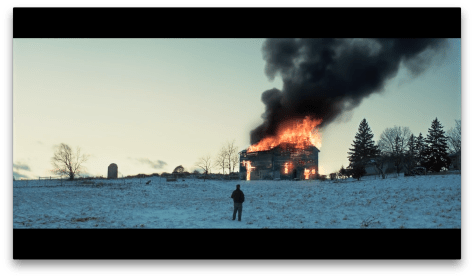
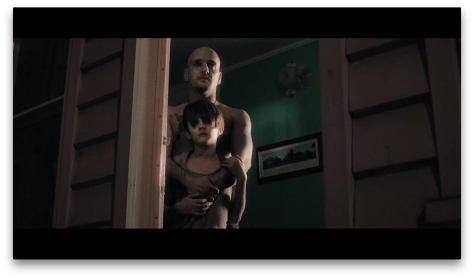
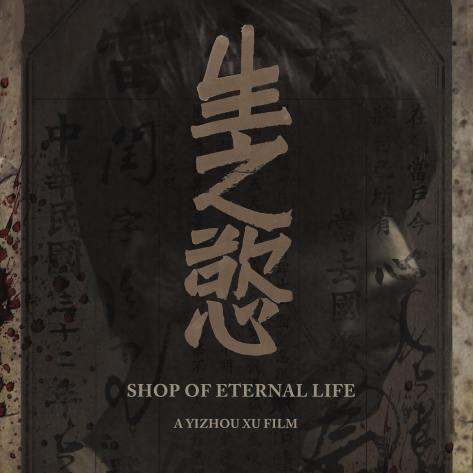
Shop of Eternal Life is the passion project of director/writer/producer Yizhou Xu. In the film, he uses an almost literal metaphor to show the dangers we humans can make in times of desperation. It’s an evergreen tale that applies to all peoples of this planet. It just so happens that Xu’s film takes place in two by gone eras of his homeland, 1920’s and 1950’s China. Not only is there an other-worldly occult thread in the film but the obstacle of transforming downtown Los Angeles into an almost hundred-year-old China. While giving great credit to his crew and cast, Xu admits that his secret weapon for this transformation appearing so convincingly on screen was Shop of Eternal Life’s cinematographer Simu Feng. The award-winning Yizhou Xu declares, ““Simu is the most professional cinematographer I have ever worked with. Simu is such a vital part of this project because he is the metronome of the production. The most time consuming part of any film production is the lighting and camera positioning. We had a lot of shots in the film and it was paramount to have a cinematographer with the confidence to finish those shots with the highest quality and to do so very quickly. Simu finished the task without wasting a single second; and his efficiency didn’t harm the result of the image at all. Simu knows how to take limitations and challenges and transfer them into creativity.” The filmmaker’s peers and public definitely agreed with the finished product as it was an official selection at: the 36th Hawaii International Film Festival, the 20th Los Angeles International Short Film Festival, the 10th Bali International Film Festival, and the 8th San Jose International Short Film Festival. The look which Feng bestowed upon Shop of Eternal Life belies the budgetary confines which Xu relates. A story which spans the struggles of its main character, his transformation, and the cautionary tale it communicates deserves a beautiful and elegant aesthetic; one which it richly possesses thanks to Simu Feng.
shop-of-eternal-life-screenshot-1

Shop of Eternal Life is a film full of fantasy and terror, relating the choices we sometimes make and the unexpected results they have on us as well as others. Even the best of intentions can result in malevolent outcomes for all involved parties. The film is the story of a poor man in 1920’s China who ventures to a pawnshop, hoping to sell his wedding ring to save his sick wife. The shop owner offers only a pittance…or a deal. Rather than money, the pawn shop owner suggests that the husband sell his heart for a great deal of money to him. The man feels he has no choice but to take the offer in hopes of saving his spouse’s life. Many years later, the husband returns to the shop to redeem his heart, but his time without a heart has transformed him into a monster. He discovers that his heart is no longer at the shop. Doomed to a heartless life (literally), he kills the pawnshop owner and assumes duties as its proprietor.

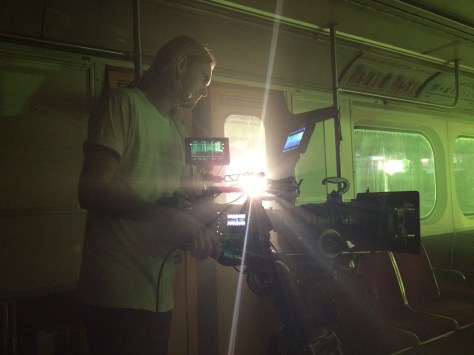
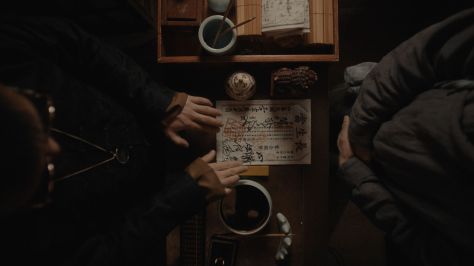
The storyline itself immediately conjures mental images of fright and fantasy infused characters and their surroundings. It was Simu’s task to make the images visible on screen to match the reality of China in the 20’ and 50’s as well as the mystic ideas presented by the subject matter. Feng relates, “The film’s visual dark tone is the key element for the story. We did this through lighting and camera work. I did thorough tech scouting with my long time gaffer Toshi Kizu and planned out the whole low key lighting scheme. I wanted the pawnshop owner character to be part of this darkness; I wanted him to feel inseparable from the shop itself. We hid several single tube kinoflos to give some small pools of light in the room and to add to the depth of the set. Camera movement was also very carefully planned out so the move was always motivated. We didn’t want the audience to feel the existence of the camera. Combined with the blocking of actors, we were able to create tension and a sense of the mystery at the same time. I’ve always felt that, by planning things out appropriately, you can help the audience forget about the technical aspects of a film and thereby lose themselves in the story…which is what we want as filmmakers and what the audience wants as well.” Yizhou Xu confirms, “Simu achieved a very strong visual style in Shop of Eternal Life; a mystery and a sense of darkness. I think this stylish look is the most important part of the film and it’s the first thing people talk about concerning this film. Because of the fascinating visual style, people have the patience to dig deeper on the subject and theme of the film. As a filmmaker, that helps me to tell the story.” Feng continues to explain the look of the film in commenting, “Because the film consists of two different time periods (the 1920’s and the 1950’s.), we wanted them to be really different, making sure the audience gets the idea that the poor man has changed into a monster. The production designer (Dara Zhao) did a great job building the set to be authentic to the time periods yet retaining our own dark and mysterious style. When we discussed the practical lights in the shop, we decided that for the 1920’s we would dress the shop with candle lanterns, and for the 1950s we went with tungsten bulbs. The practical lights are always important for me because all my lighting is motivated from these practical lights. The warm color given off by the lanterns, combined with the black pro-mist filter I put in front of the lenses, gave the 1920’s a softer and warmer tone. I shot the 1950’s with no filter and the tungsten bulbs flaring directly into the lens, making the look harsher and brighter. With more desaturation in color correction, the 1950’s looked pale and cold, fitting the change of the character.”

shop-of-eternal-life-3

Both the look of Shop of Eternal Life and the lesson of the film itself are entertaining and gripping. Yizhou Xu uses his film to communicate the idea that in our sacrificial attempts to help those we love; we risk the danger of turning into monsters. Making a deal with the devil may be very literal in this film but it has great relevance to many everyday choices. The film production itself conceals the challenges that the cast and crew overcame to create such a polished film. Simu Feng is thankful for the creative and unique approaches the production was forced to invent as he states, “Working on a small budget film is always difficult but it can be a truly fun experience if the filmmakers try to make a difference. Every filmmaker will face the situation in which they don’t have enough resources to achieve what they imagined and planned. I always believe certain limitations help yield better result by forcing creative people to come up with ‘poor man’ solutions. The luxury of a big budget does make a lot of things easier, but working on small-scale project helps me to keep the spirit of being flexible and the ability to adapt myself to changing circumstances.”

 

shop-of-eternal-life-4

shop-of-eternal-life-screenshot-poster

VON SCHWERIN: A MODERN INTERPRETATION OF ORWELL IN PEACEFORCE

Award-winning director David Gerson describes Beatrice von Schwerin professing, “Beatrice is the epitome of a doer. A producer who always gets the job done as effectively as possible, inventively, and with deep respect for the directors she works with. She grew up a member of the Swedish nobility, spending her youth hunting in the south of Sweden. I believe that hunting nature in her is what makes her such an excellent producer. She treats a film shoot like the hunt; a task to be cautiously, precisely, and effectively maneuvered.” Gerson has worked with von Schwerin on a number of productions such as: Automatic at Sea, All These Voices, Destiny’s Child, and others. Having worked closely with her he knows well that Beatrice can be seen leading the charge just as should would during a hunt. These days, von Schwerin is respected as a producer with many productions to her credit. It’s fitting that Gerson views her as a huntress as we revisit the first film she produced, Peaceforce, as the subject matter is a hunt…a hunt which is much more complex than it appears to be. Beatrice concedes that her forthrightness, determination, and loud speaking voice, are all products of her noble lineage and rearing; attributes that serve her well in leading a film production. More at ease facing challenges on set than relaxing in her family’s castle, this Swedish baroness prefers a life of creative pursuits in an industry that cares nothing about her heritage and yet appreciates every ounce of her talent and hard-work ethic. A dissection of her first production shows that the very template for her approach was a solid foundation which has served her and the films she enables to result in many achievements.

unknown

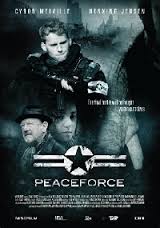
Beatrice worked in the Danish film industry for 9 years before producing Peaceforce. Denmark is one of the strongest countries when it comes to film production in Europe. Copenhagen has a solid film industry and is equipped to modern standards. In many ways it mirrors the productivity of Hollywood’s industry and community. Peaceforce was the first film on von Schwerin’s long list of producing credits. She confirms, “This is the first production where I realized that I really, REALLY wanted to be a producer. I knew that if I could get the cast and crew through all the challenges, then I could do anything. This film was the ‘AHA’ moment in my career, the one that made me love my job even more than I did previously.” Jonas Allen of Miso Films recognized her talents and placed her in the Producer role for the film. Peaceforce is loosely based on the George Orwell essay “Shooting an Elephant.” The film is set in the near future, in a world where capitalism has run its course. Daniel, a young Peaceforce officer, meets Jesper, a prominent local citizen. Jesper claims that an elephant is running amok in the city and killing people. Spurred on by his idealism and desire to do good, Daniel follows Jesper deep into the heart of a desolate city. Daniel believes he can make a difference by helping the wounded and dealing with the elephant. Not long into his mission, Daniel discovers that he’s in way over his head when he meets a little girl who is the sole survivor of the group that cared for the elephant. Daniel understands that he has been misled by Jesper. Jesper and his hungry entourage keeps breathing down Daniel’s neck. Fearing for his life, Daniel feels forced to make conflicting promises to Jesper and the girl. Soon Daniel finds himself confronted by the magnificent beast, a live elephant. Daniel desperately searches for a way out of this dilemma as he has no desire to kill the beautiful animal. The mob grows ever more impatient and hungry for blood. Daniel finally relents and shoots the beast, thereby betraying not only his own word, but also all that he believes in. It’s an epic and tragic tale. The components used to portray the action on-screen were grand as well. Peaceforce was a challenging shoot, with many different pieces that needed to match. Beyond the typical cast, crew, and locations logisitics, there were elephants, children, extras, & VFX to contend with on this production. Recognizing early on that she could lead with positivity to create momentum, Beatrice began with the animals. She recalls, “We spent two days shooting in a field outside of Copenhagen, close to a circus, where we rented an elephant for the shoot. One day was spent with the elephant and one day with the extras. We had three elephants on set with us and we used one of them. Elephants are flock animals and if you split them up, they are not happy. To contend with this, we had the two elephants not used in front of camera, close by so that they could be in contact with one another. Every now and then during the shoot, we’d have our star [elephant] head over to the others for some down time. It was a great and exciting day for both us and the elephants. I always try to have a positive attitude, no matter how challenging the day may be. I know that if I’m smiling and keeping positive, it trickles down to the cast and crew. It’s always important to show kindness and respect and I try to do that. I don’t separate my crew members from cast members. I really want everyone to feel equal, like one big happy family!” It’s a template that resulted in a happy and committed production family and a successful film as well. Peaceforce received a nomination at the Robert awards (Danish equivalent to Academy Awards) and garnered a Canal+ Award at the Clermont-Ferrand International Short Film Festival. Director Peter Gornstein couldn’t be happier as he notes, “Making Peaceforce with Beatrice was such a positive experience. I have known and worked with Beatrice for more than 8 years. We have won international awards together as well as developing several other projects. Beatrice is truly a one of a kind person and producer. Her positive energy and go getter mentality is something that spreads to everyone that she works with. Not only does she have a fantastic personality but her skills, and more importantly, her moral compass are beyond reproach. I’ve had to face some tough obstacles in the course of projects we’ve worked on together and no matter how hard or difficult the situation was; Beatrice would always guide me towards taking the high road. When I’ve wavered I have always been able to count on Beatrice to help me make not only the right choices for the projects, but also the moral choices.”

It isn’t always easy to keep that sunshine attitude. Persevering through the sometimes tedious portions of filmmaking are the obstacles that teach von Schwerin how to remain cool and collected. She describes, “Sometimes it’s not going over schedules or obtaining a piece of gear that is the challenge. Quite often it is just getting all the bricks in the puzzle to fall into place! We had so many moving parts on this film. It took what felt like (at the time) an army to get it made. The shoot was only two weeks, but the VFX was done in post and took almost 10 months to complete. When you are coordinating between VFX artist Ivo Horvat being in LA and the Director being in Copenhagen, you sometimes wonder where you are and what time it is.” These days, Beatrice von Schwerin knows exactly where she has been and she is considering heading to Hollywood as she fields offers to be a part of city that is the epicenter of film. One thing is for certain, Hollywood could use another producer who puts a smile on everyone’s face.

892a1911


A CANADIAN’S PERSPECTIVE ON “AMERIKA”

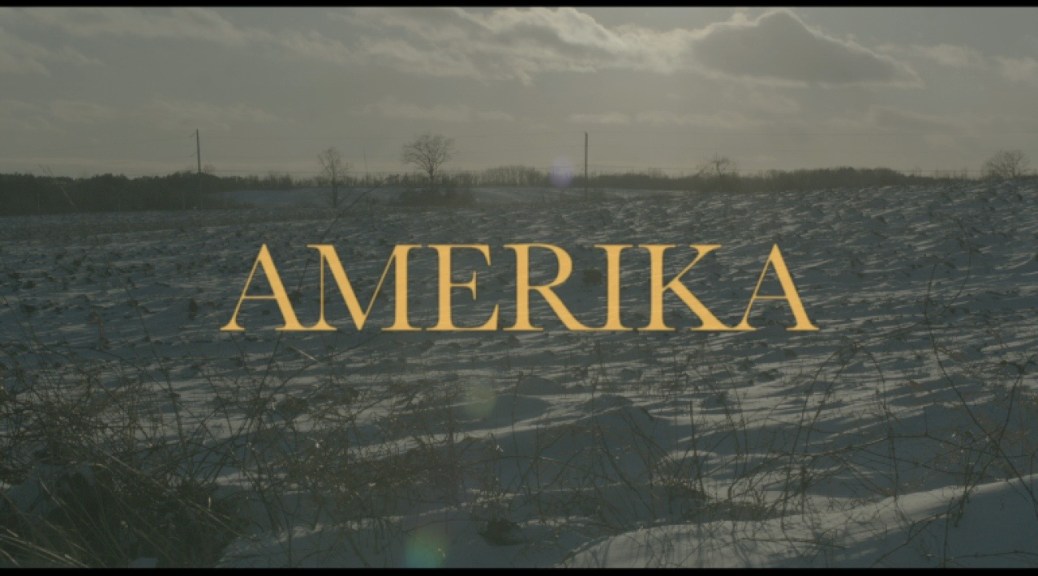
There’s no escaping the discussion of current events in America right now. That should come as a surprise to no one. With an election that has taken most of the past two years and a complete switch in the majority political party, it seems as if the entire planet is watching the US. You can’t turn on a news programs without getting the network’s opinion, so why should music be any different? Of course, musicians have long used their creativity to present their ideas, there’s nothing new to that. You can go back more than two hundred years to the protest song “Yankee Doodle” and see that even the founding fathers had musicians weighing in with their take on current events. The more overt and modern equivalent of this is the music video. “Amerika” is the song and video by Canadian band Wintersleep which presents their perspective of the modern US events and temperament. Just as with “Yankee Doodle”, “Amerika” is a protest song. The first person director Scott Cudmore thought of for the cinematographer position on “Amerika” was Peter Hadfield. This duo has worked on a number of high profile videos (including Vimeo Staff Pick “It’s Okay, I Promise” by Harrison x/Clairmont the Second and the sci-fi “Needs” video from Adonis Adonis) and both were eager to repeat the experience. Katy Maravala (producer for “Amerika”) was also keen to repeat her experience working with Peter as well. Maravala, whose client list includes; Drake, Rihanna, Arkells, and Halsey declares, “Peter has always been one of my first choices as director of photography. I feel confident in saying that Peter is one of the most genuine, humble, and talented humans I have ever met. As proof of his incredible talent, “Americka” was nominated for a UKMVA [United Kingdom Music Video Award]. The breathtaking images in this video were not easily earned. During the video we encountered some challenging locations; frozen waterfalls, old houses, a two-hour hike in the woods, and desolate buildings all in the middle of a Canadian winter. Peter remained positive, upbeat and an absolute joy to work with even during this tempestuous time.”

wa_screen-shot-2016-07-01-at-6-38-15-pm

While the relationship vignettes are compelling, the vistas in “Amerika” are grand and give the video a cinematic feeling. “Amerika” was shot in Hamilton, Ontario; a steel town on the coast of Lake Ontario that has come into hard times. The people of Ontario often refer to Hamilton as “The Hammer”. While the town possesses a great deal of beauty, it’s easy to see there many of its residents are surviving day to day. The opening shot was taken on the coldest day of the year with a temperature of -40 degrees F with wind chill. At times, Peter couldn’t operate the camera because the wind made his eyes water and the cold would freeze the tears. Hand warmers were taped to the camera batteries to keep them functioning. It was less than ideal circumstances. The crew shot for an uncommon five days in order to get shots at precisely the correct time of day for the desired effects. Their guerilla approach called for a lot of hiking through snow to reach some of the isolated locations. Again, less than ideal in subzero temperatures. It’s hard to find elite professionals whom are willing to endure these scenarios but Hadfield instills, “I am extremely passionate about creating socio political messages in film making. That’s what I’m here for. When I see it in other videos it makes me so happy and excited. When there’s anyone that’s willing to go out on a limb and say something truthful about the way our society is functioning, I couldn’t be more excited. Mainstream artists make art videos too. Kanye West has amazing music videos. There were parts of Beyoncé’s “Lemonade” that were beautiful and evocative. Radiohead just put out an incredible video shot by Paul Thomas Anderson and Robert Elswit that I definitely consider art. If I could make something as potent as that “Daydreaming” video, I’d be very pleased. The alternative artists like Wintersleep who put out videos that have less glamorization in them have the freedom to strive for more substance. They’re freer to say something political or polarizing because there isn’t as much money involved or pressure from the record companies and distributors. The music industry has fewer record companies directly involved, allowing artists to self-release. I think we’ll start seeing more videos with greater substance. We’ll start seeing more videos like Kanye West’s “Famous”. But there will always be artists on the fringe, making meaningful work and encouraging the next generation of people to develop their talent. The hope is that they use this to make a positive impact on the world. This is the agreement among all creative people; we are to use our talents to improve the lives of people and the world itself.”

wa_screen-shot-2016-07-01-at-6-39-10-pm

While this video may seem to be something of a mirror to hold up to the US, Hadfield professes his fondness for the artists and potential of the people found in the spirit of America. He recognizes that the film world finds its epicenter in the US. Peter comments, “There are great music videos and incredibly talented artists coming out of Canada, but most talented people here end up going to America and succeeding. There are amazing opportunities there, you can’t deny it. I think being on a set in Hollywood would be an amazing feeling. I think the greatest joy is being on set, with a camera on my shoulder. There’s nothing more satisfying than getting to the right location at the right time and capturing something special. It’s extremely satisfying and inspiring, and leaves me wanting more and more. Being a cinematographer takes a lot of self-discipline; staying focused and working towards an unattainable goal. That unattainable goal is being a great cinematographer. The challenge is getting than next great shot. I’ve got in insatiable appetite for capturing images, and as my taste and skill grow, I’ll always be reaching for the next shot that means something.” Striving for greatness, isn’t that what we all want for America?

img_6281


HUGO SHIH BRINGS “A GIFT” OF COLOR

There is a myriad of roles involved in film production. Each of these play an important role in enabling the story to be told with the vision that the writer and director share. Hundreds of years ago, thespians performed the works of playwrights, before that…orators weaved tales over the communal fire; both of these relied on the imagination of the audience to conjure up mental images which were hopefully as grand as the teller intended. Modern films have grown to such a high level of production that they can manifest creatures never before imagined in such a way that they seem as real as the people and surroundings among us. One of the most difficult things to communicate to an audience is the emotional intent that motivates a specific character. While an actor’s performance, camera angles, music, and other factors bear the brunt of this transference, one of the least obvious factors is coloring. As the title states, a colorist allows the Director to shade the emotions of the characters by shading the action on screen. As film audiences have become more astute and aware of the use of a colorist’s work in film, these professionals have become increasingly clever and decreasingly obvious in their application. Colorist Hugo Shih is a highly respected and valued colorist in today’s film industry. A conversation with him reveals the fine points of what a modern colorist does to help shape a film’s emotional intent as well as how it is achieved through the use of color. What might seem to be superficial to the uninformed movie goer, has a profound impact on the subconscious and heartfelt emotive catharsis which an audience experiences.

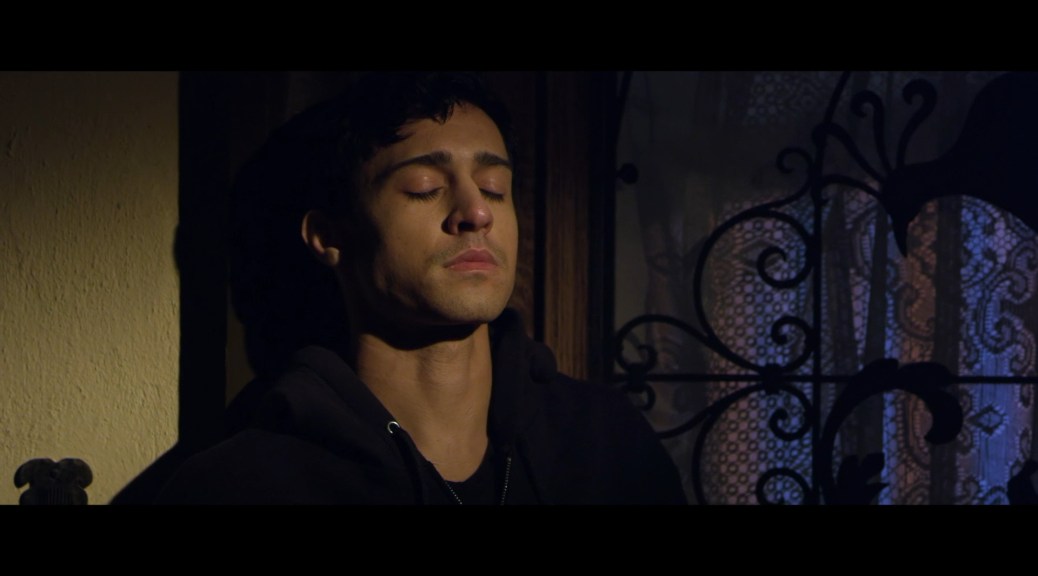
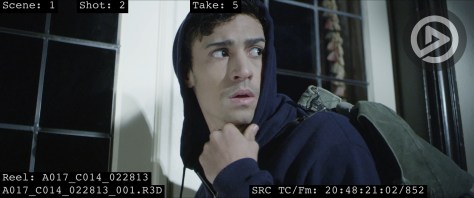
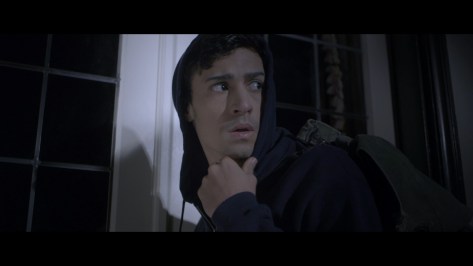
The 2016 film A Gift is a redemptive drama. It is the story of Jack, a young thief who breaks into the home of Margaret. Margaret is a blind elderly woman who mistakes Jack for her son. Although Margaret comes to realize that Jack is not her son, she still covers for him, protecting him from being discovered when police and neighbors come looking for Jack. The young thief comes to realize the error of his ways and is moved by Margaret’s gift of understanding, forgiveness, and non-judgement. A story such as this contains many intense emotions; fear, desperation, gratitude, and others. With such a small cast (consisting of Kaiso Hill as Jack and Sally Hogarty as Margaret) the actors are required to portray a diverse emotional palette. Hugo’s job as the colorist for A Gift meant that he needed to assist the character’s in hitting the “bullseye” which the film’s director intended. Yiqong Li is the director of A Gift (in addition to being one of the writers of this film). Li approached Hugo due to her familiarity with his work on many films. Li remarks, “Hugo has a reputation for being able to make just about anything happen for a director. Even if I didn’t plan on making use of all his abilities, it was nice to have in case I needed them…which it turns out I did. He did an amazing job on the color. Due to scheduling, there was one establishing shot that we just couldn’t get. Hugo worked his magic and literally created the shot we needed when it didn’t exist; I thought it was impossible to do it but he made it happen. We would never have been able to achieve this without the expertise of a master like Hugo.” Considering this all important shot, Shih explains, “We usually cut an establishing shot at the beginning to introduce the environment. A Gift started at night as the main character broke into the house. We knew that we should be looking for a night shot of the house. However, the production couldn’t get the shot at night, so they shot it during the day. It was the only establishing shot I could use. Normally, the editor would say ‘Let’s go buy some stock footage.’ In this case, I knew that ‘Day to Night’ was something I could create for the film. I said to director that I could make it work and there was no need to worry. To achieve this, I desaturated the shot and lowered the highlight, but brought up a little bit of gamma to make sure the details were all there. Following this, I did some secondary to pull out the sky and other details. In the end, I made a light at the front door because I knew that there was a light in the next shot. After I finished the color and cut into the timeline; when I showed it to the director, she was surprised and remarked that she had no idea this would even be possible. It’s a feeling of great achievement when you hear a director say this about your work.”

agift_before

agift_after

One of the unique parts about Shih’s work on A Gift is the fact that the film’s director asked him to serve as both a colorist and an editor on the film. Director Yiqiong Li had been working with major Chinese production companies and TV stations. Being involved in her film meant that Hugo would work with highly talented professionals as well as being a part of productions that would reach a massive viewing audience.  Hugo recalls, “She came to me and asked if I could do editing and color grading together. After I read the script and talked with her, I decided to take these two roles in post-production. There are some benefits of being editor and colorist at the same time. I always see the color as my creative tool for editing. It’s like assembling the puzzle pieces to the story while rebuilding the lighting. To illustrate how these roles worked in tandem to the benefit of A Gift, consider the following. In the film, there is a very long shot of Jack following Margaret to the kitchen. Usually it would be hard for an editor to keep this kind of shot because their job is to keep the story intense. However, Hugo was thinking ahead and was able to retain this shot by key framing the lighting when the main actor changed his location; using the key frame tool to adjust the lighting in the same way the aperture is adjusted on a camera. This can invisibly add the tension without the audience’s knowledge that it was made in post-production.

  A Gift has been highly recognized in 2016 with win’s for best film at: Hollywood Independent Moving Picture Film Festival and the 2016 StoneFair International Film Festival, as well as being an Official Selection at: the Berlin International Cinefest, the Roma Cinema Doc, the Los Angeles Independent Film Festival Awards, and the California Women’s Film Festival. As a member of the cast and crew of A Gift, Hugo Shih and his exemplary work are proof that a film about the change possible in each of us can move many people.

kuanyushih_wseniorcoloristwarreneagle

BRAZIL’S RODRIGO BRANCO BECOMES A STAR BY SUPPORTING THE FAME OF OTHERS

For all of those who proclaim television to be a detriment to one’s life, please kindly consider Rodrigo Branco. This Executive Producer/Communications Director/Social Media expert has built a life out of his work in TV. His roots in TV can be traced back to his youth, a situation that his own children are experiencing. Branco has become one of the most successful executives in his field in all of Brazil. His status is earned with years of working his way up the ladder in TV production. Having become internationally recognized for his work on multiple domestic and international productions, he most recently has turned his attention to the TV community in the US and the opportunities it affords. It’s quite a story, a young boy in Brazil who follows his dream and effects millions around the world. It proves that hard work is rewarded and there is a chance for everyone to pursue their goals no matter how unbelievable they might seem.

As a young boy in Sao Paulo, Rodrigo used to live with his grandmother while his mother (a ballet dancer) was often out on tour, working to pursue her own artistic endeavors. This situation created two prominent factors in Rodrigo’s future. First, the understanding that following a creative dream is valid and secondly, TV was a fixture of life. Branco’s grandmother was a TV fanatic to say the least. When his mother took Rodrigo with her to a TV station for a taping, the two worlds collided. As a 10-year-old, he was amazed by the environment as well as the fact that they would tape three episodes in one day. The sudden realization that every production was not live, yet seemed to be so when viewed on TV, was like discovering the secret to a magic trick. Years later, Branco would begin his own TV career on the Marcia show. This show is one of the most popular talk shows ever on Brazilian TV. Rodrigo was with the show for more than a decade and explains, “The Márcia show was my high school, college and university! I started as a trainee and eventually became the executive producer. It was the hardest, and at the same time, the most positive show I have done in my career. According to VOGUE BRASIL, Márcia is the Brazilian Oprah. I’m proud that our ratings proved that we were number 1 every day. There is no secret to achieving this; I used to work 16 hours a day from my start as a trainee and all the way up to being EP.”

Many people sacrifice their personal life to be a part of TV production, especially those who are highly successful. Branco did the opposite and made his life and career intertwined. He met his wife when he was a trainee on Marcia and has become a father while working on the show. As the EP of the show, he worked most closely with the show’s star and namesake. He notes, “Working 16 hours a day, 6 days a week; Marcia became my second mother. We spent Christmas, New Year’s Eve…all the good times and bad times together. She has the most brilliant career in Brazil and she decided to share it with me. I think this interaction is what made our work so successful!” Rodrigo’s work in particular was recognized early in his career. In 2002, he was awarded the Premio Jovem Brasileiro [Young Brazilian Award] for his work with the Marcia show (he received this award again in 2011 for his work on the Miss Universe Pageant) …at the early age of twenty years old. Branco also received the Communication Merit Award, granted by Academia Brasileira de Ciencias, Artes, Historia e Literatura (Science, Art, History and Literature Brazilian Academy) which he refers to as the greatest honor of his professional career. Marcia is known for her show being about people, their families, and struggle. She wanted an individual steering that show who was doing it for more than the money; a person who was truly passionate about the work. Marcia recognized these traits in her early interactions with Branco. She declares, ““I met Rodrigo in his first day as a trainee in TV Bandeirantes. I immediately knew he was special. A few months later, I told him he would be the executive producer of my show and in only 3 years it became true. We had a great and fruitful partnership. He is incredibly talented!”

profile-pic-1

Besides giving Branco a literal family as well as a professional family, TV has also given him the ability to travel the world. Experiencing locations such as; Israel, Paris, Spain, Argentina, Mexico, and all the states of Brazil, have helped Rodrigo to understand how different and yet how incredibly similar the people of the world can be. In particular, his US visits have motivated him. Branco communicates, “The TV Industry in the United States is the most professional and competitive in the entire world. There is no space for amateurs there. I have hopes of working there because it would challenge me to be the best in the US. The resources and the technology in the US are the example to the world. If a professional wants to learn how to do their job better, they need to stay close to the best! Marcia was discovered by an American Director who taught her how to do TV. Nobody does TV and Entertainment better than Americans. I could see this with my own eyes at the Latin Grammys, Miss Universe, and from studying American Shows and formats. I’ve had an extraordinary career but I am only 33 years old and I want to be better and bigger.  The only way to do that is to learn from the best. My passion is t work with talent and communication not only in TV, but with social media and other formats as well.” When contemplating Rodrigo Branco’s life, it is impossible to septate his story from the inclusion of television. When discussing it, Rodrigo himself comments, “My life was built inside a TV. My childhood was spending time with my grandmother, bonding over shows and their topics. I saw my mother performing on TV and she took me ‘inside’ television for a perspective that not many people witness. I have made many of my closest friends through my work in TV, as well as meeting the woman who became my wife. Now my children understand TV because they see their father using it to provide for them as well as understanding, as my mother showed me, that you can be creative, challenged, and rewarded with that pursuit. They realize, as I do, that I am able to make the magic that we see on the screen.”

BRIAN MANCINI PRODUCES A MEDITATION

There is no question that modern life is drastically different for some individuals. Modern technology now supports lifestyles in a way never before possible. There are inevitable events and occurrences though. This is the basis of the film A Meditation. This film is the story of  Michael, a middle-aged man recently unemployed from his job teaching film. Michael meets a young woman responding to his Craigslist ad selling a DVR. The two begin an intense and consuming affair that has Michael questioning the meaning of love, sex and happiness. Brian Mancini is a producer on this film starring Harold Perrineau (Romeo + Juliet, Lost, 28 Days Later) as Michael. The film presents the options for modern technology to be a benefit as well as a hindrance. Although we love our gadgets and the ways in which they connect us, we should not lose sight of the basic need for interacting with others as well as ourselves through introspection. We can connect physically but intimacy, as with true beauty, is much more than skin deep.

Brian’s reputation as an exemplary producer caused Joe Petricca (director/writer/producer and Executive Vice Dean of the American Film Institute Conservatory) and Maggie Biggar to seek out Mancini to work on A Meditation. Petricca states, “I was impressed by Brian’s dedication to the craft. Each thing that he brought to set made the film better. I’ve always found him to be an extremely innovative producer, with a great attitude towards the craft and the partners he works with.  Regardless of the budget, Brian’s work is always top quality. I admire the way that he can manage very large teams and simultaneously have the ability to multitask various high priorities. It’s an overwhelming situation to contend with and yet, a great producer like Brian seems to handle it with ease…which is exactly why I wanted him on A Meditation.”

The film stars Harold Perrineau and Samantha Colicchio in the leading roles and was shot entirely on one set. Mancini admits, “When shooting in one location, everything is dramatically easier. Just not having to completely unpack and pack up every day saves a great deal of time, which can be used to shoot. There are always challenges; for instance, the neighborhood might get cranky or someone might decide to blare rock music while we’re shooting an exterior. It’s easy enough to handle this by obtaining the permit and notifying the surrounding area ahead of time that the production is going to be at this location. That doesn’t negate all obstacles though.” Explaining the seemingly never ending role of a producer, Mancini comments, “The Producer’s job never ends. In post-production we are tirelessly carrying the project towards the finish line. From watching the edit and giving notes, scheduling turn over from the editing room to color correction or post-sound, accounting, credits, applying to festivals…the list goes on and on. There is a long calendar of deadlines that needs to be met and it’s very easy for projects to get stuck in post-production. Producers need to keep making sure everything is working to the schedule and if it isn’t, find a way to get it back on schedule.”

Brian’s spent his youth in Unionville (and later in Ontario, Canada) with many outdoor activities like: hiking, hunting, camping, etc. As with anyone, he understands that technology has become ubiquitous. He empathizes with the audience of the film, stating, “Technology is undoubtedly making a lot of things easier in everyday life but in another way, it’s taking a lot away. It’s become a safety for a lot of people, myself included. I feel lost and useless if I don’t know where my phone is. However, I think it’s important to find a balance and to get away from it at times. Every few months you can find me in the woods camping where I have no cell service and am just hiking up a mountain with a backpack of essentials. There is a stress technology puts on people to always be online and connected and it’s great to leave that in the city.” Though the internet (via Craigslist) the two main characters in A Meditation meet and connect in a very physical way but they are still forced to deal with their emotions in a traditional manner. A Meditation is an interesting study about where we draw the lines of interaction in modern life. Just as organisms evolve in their physicality, we are in an era in which social interaction is evolving. What makes Michael especially intriguing in this film is that his life is undergoing a transformation in terms of work and his romantic life. It’s one of the core messages of the film that enticed Mancini to come aboard. Brian confirms, “To think ‘Am I a good enough person?’, ‘Am I liked?’, ‘Can I be better?’, to realize one’s plan about what’s next in their life and to find what they want to achieve next…I think everyone has been there or is there. It’s rewarding to me to help present those ideas to the public. The thought that somewhere in a theater, there is someone who is encouraged by a film I helped to make…maybe something as seemingly small as keeping the day’s schedule on time insures that we stay on budget and therefore we can pay the salary of the best professionals out there…I love that feeling and want to keep doing it to the best of my potential.”

brian-mancini-photo-5

A WRITER FOR ALL (FUNNY) PEOPLE

10712879_490291901073338_1966027930962338968_n

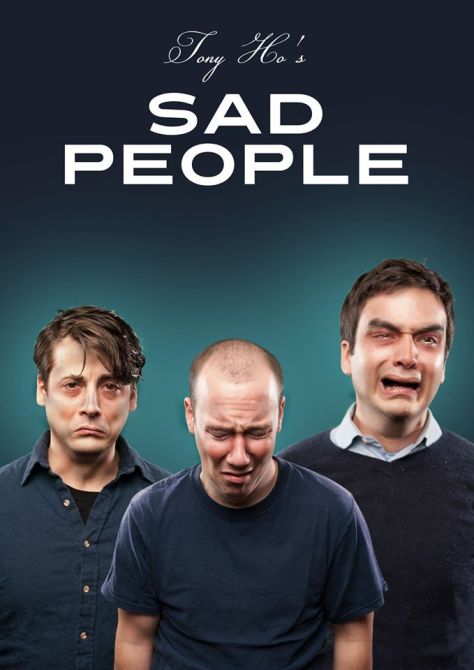
When Miguel Rivas states, “I think we live in an era when people are becoming increasingly accepting of different types of stories, ones which they previously might not have paid much attention to. It probably has something to do with the social media age where you can hear back from other people about their lives and experiences in a way you couldn’t before. You would have your opinions and your views and you wouldn’t get them reflected back on you. That’s changed. If you want to understand someone else’s life and experiences, it’s much easier to do now. We should hope we’re all becoming more empathetic.” …this is possibly the most benevolent and optimistic view of social media’s effect on society that you have ever heard. Part of the reason is that the idea in itself supports a reaffirmation of faith in humanity; the other part is due to the fact that Rivas knows how to turn a phrase. As a professional writer, he understands the subtle emotional impact of phrasing. Rather than using this ability to support a political candidate, compose a novel, or impress bar patrons (well, that might happen from time to time), Miguel has focused his intent on bringing laughter and assisting other creative types in achieving their visions. Rivas will be the first to admit that his intent is not completely altruistic at its core; he loves nurturing the sometimes ridiculous ideas that enter his transom. Rivas is probably best known as a member of Canada’s comedy troupe Tony Ho, with whom he has written and performed on stage and on screen. However, he has many projects contained in his writing resume that testify to his individual voice and style.

At the center of any artist is a desire to take the joys and difficulty which life has handed them and exorcize them in a positive manner. It’s as much a catharsis for them (sometimes a painful one) as it is entertainment for those of us in the audience. There must be fertile and resourceful ground for these artist to communicate the feelings and ideas they are transferring. Miguel is sometimes the artist acting these situations out and even more often, the artist fueling them with his own words and ideas. Tony Ho has given Rivas many opportunities to explore different styles and scenarios in his writing. One of the most popular Tony Ho productions is Japan. This film is about office politics and the social dynamics that prosper in them. Rivas plays Pat Dunkling, the boss who has recently travelled to Japan and is overly eager to represent himself as an aficionado of Japanese culture. The apex of the drama comes when Dunkling decides that the business cannot support two interns so, Marty and Nolan (played by Adam Niebergall and Roger Bainbridge) will perform a Karaoke-off with the winner being rewarded a well paying full time position. Rivas wrote his character specifically to make fun of the type of person who travels to an interesting location and then tries too hard to convince others how impactful the experience was for him/herself. Rather than making fun of a specific culture, the idea was to communicate how certain individuals find it easier to “play” a role rather than simply discovering and relying upon their own identity. Miguel enjoyed writing this character (complete with a Dragonball Z haircut) as well as the roles for Adam (a ne’ er-do-well) and Roger (a slightly overly eager romantic with a fear of missed relationship opportunities). In writing and presenting the theme to Japan, Miguel was always mindful of the audience’s reception of his work. He notes, “You have to be very careful when it comes to what you want to say with comedy. Nothing is off limits completely but you always have to be punching in the right direction, as they say. We knew that the joke in our minds was this corporate culture where people absorb and consume whatever they can in order to make a stamp. My character’s buffoonish understanding of Japanese culture was the target, which was encapsulated in the line ‘Hmmm, very not what I think is Japanese.’ I wanted people to understand this character but perhaps not to like him.” Japan won the Grand Prize for best film at the Laugh Sabbath Film Fest at NXNE, as well as a nomination at the Canadian Comedy Awards.

177499_330464593700130_1234495893_o

Wanda, another of Miguel’s compositions, was also nominated at the Canadian Comedy Awards and was shortlisted at the Laugh Sabbath Film Fest at NXNE. The storyline of this film was very different from Japan, involving a stalker, a polyamorous love triangle, and an attempted murder. It would not seem like the normal fodder for comedy and yet Rivas was highly adept and finding the amusing side of the dark humor. The idea started with a highly unusual point of inspiration. Miguel reveals, “Part of the inspiration was this visual gag where we wanted someone to die with their eyes open. Sometimes you reverse engineer an idea off of something pretty silly. Hey, comedy.” He continues, “I try and create all kinds of characters, but the film style we’ve leaned on and developed as Tony Ho succeeds best when there’s an element of reality for each character. In writing the characters, I can take them to some pretty unfamiliar places; then through performance, I try and add a level of emotional honesty. This is really important to me.” Bainbridge confirms that Miguel’s writing style is a key component to the success that has been achieved as he declares, “Tony Ho is now one of the most prominent comedy troupes in all of Canada, winning multiple awards and travelling around North America performing for thousands of fans, as well as publishing widely-watched online content. Miguel’s writing has been the spark countless times to enable us to achieve this great success.”

Sometimes the writing of Miguel Rivas is the spark for Tony Ho and, with an increasing occurrence, he has brought this spark to the bonfire of other talent. Space Riders: Division Earth is a TV series that might be best described as a parody (or even an homage) to the Power Rangers series much in the same way that Spinal Tap pays tribute to the great rock bands of the 70’s. The serious approach of not taking one’s self too seriously pays off with an abundance of laughs on this Canadian production. The show’s writers, Dan Beirne and Mark Little, brought Miguel aboard to assist as he explains, “Dan and Mark are frequent collaborators of mine. They asked me to do script consulting on this project. After they had written the initial drafts, they brought me on for punch-up and editing. After that process, I helped with the table reads and subsequent rewrites. The show is quirky and I thought it was so funny and creative, I was happy to work on it when they approached me.” Bierne relates, “Miguel is so accomplished and recognized in Canada for his work with Tony ho, we knew that he was truly funny. Our show has such a different sensibility and tone to it. Miguel fell right into place. He understood our show and how to add his talent to it but, even more so, he is a true team player. He was always searching out ways to add something. His contributions played an important part in our achievements.”

When Disney XD wanted to capitalize on the popularity of sketch comedy shows and market it to teens, Miguel was asked to add his writing to the project. Rivas will mock himself, noting that his age made him unusable in front of the camera for Disney XD’s Try It! so they made use of his abilities behind the camera as a writer. Surprisingly, it was an easy transition to write comedy for a younger mindset and performers. Rivas states, “A major benefit is, it helps you empathize with their experience. I felt some trepidation initially, but once you get into the groove, it becomes rather easy to slip into that mindset. It was really fun to remember how I thought about things as a younger version of myself. For a lot of my writing, I focus on mining comedy out of sadness and anxiety. It was actually pretty easy to convert that into a teen’s worldview. Who knew? Teens have anxiety! You obviously write it less dark but reflecting…that truth in funny sketches actually proved to be fairly easy.”

More recently, Miguel has ventured into writing music videos for artist like Brave Shores and Digits. These videos sometimes play on Miguel’s signature dark comedy style but “More Like You” by Brave Shores is disorienting and unnerving at points. It is a great indicator of the constant challenges Rivas takes on to carve new paths and explore his writing talents.

10625084_10154790698640438_1617001190535569740_n


STORYBOARD ARTIST BINBIN MA HAS A GIFT FOR BRINGING OUT THE CHILD IN US ALL

img_3389

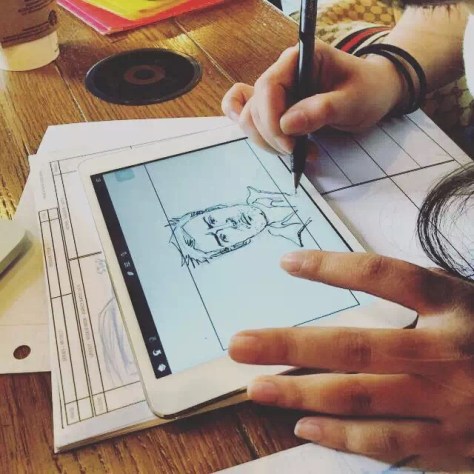
During film and TV award shows like the Oscars and Emmys, inevitably one of the winners will say something about their work being just a small part of the community which worked to make the production they are being lauded for. It sounds like humility unless you get an accurate glimpse into the many vocations and tasks involved in the TV and film industry. For every face you see on screen there are literally dozens or more who did their job properly which enabled the images we witness to take place in the action of the story. One of the very first people to put their hands and talent into movement in every production is the storyboard artist. Many of them never see even a hint of the glamour and excitement that surrounds the set, celebrities, and premier events involved in a production. It is their ability to take the verbal communication of producers and directors and translate them into images that will enable the cinematographer, director, and cast to use this template in framing their work. Binbin Ma is a successful storyboard artist and graphic designer with a wide and diverse lists of credits to her resume. Her recognized artistic talent is a great deal of the reason that she has been sought ought by so many filmmakers but, it also her ability to communicate and comprehend the way these same filmmakers want to frame their ideas and shots. When watching any of the number of films she has worked on, you can see the flavor of the director but there are “signature” elements of composition that those familiar with Binbin will recognize. She is able to mold her abilities to the professionals she works with while still retaining the vehicle with which they are delivered.

Skate at 16 would seem at first to be a film about a young boy’s crush and bullying. In truth, the film is about any individual coming to the point in life in which they decide to be a victim or stand up against an aggressor and suffer the consequences. It is about discovering who you are in the face of adversity, and letting others bear witness to the courage it requires. Julian is a young teenage boy who interacts with a homeless girl who is living in a skate park. He reaches out to her partly due to his kind heart as well as the fact that he finds the girl cute (further proof of the fact that he doesn’t see her as a type of person but rather, simply a person). Almost halfway into the film, he is bullied by a 21-year-old and his skate shoe is humiliatingly stolen by the bully. Julian doesn’t fight back for himself but when the bully leads a gang who is stealing Tecla’s (the girl) belongings, Julian finds the courage to stop this bully. Skate at 16 is almost Shakespearean encompassing young love, family tragedy, the overly aggressive antagonist, the revelation of inner-strength, and a potentially fatal injury which results from the confrontation. All of these emotions which Julian experiences are captured by the camera with different angles and compositions; one’s which are easily imagined as pieces of art. If the colors on screen were more primary and somewhat exaggerated, it would be easy to see them as a graphic novel. Skate at 16 is so adept at using the angle and perspective of the camera to bring audiences to the same emotional state as Julian, it’s easy to see how Binbin’s work was the early staging for this approach. The line of communication and understanding between director, storyboard artist, and cinematographer is seamless; it definitely appeared so to the Los Angeles Cinefest when they nominated this fine film. Director Mario Aranguren gives credit to Ma for the look that was achieved in Skate at 16 by stating, “Binbin’s amazing work really helped me to clarify the blocking and shot angles in my mind. Before doing this, I was a mess in the head. The process of defining the shots with someone as talented as her and then having her return to me with an even clearer representation of the ideas…it’s such an important and vital part of the filmmaking process.” Binbin describes the process for those unfamiliar with her profession, “I worked with Mario, the director of the film, discussing the shot list for each scene. After that, we started drawing the shot basic on the shot list, through the angles, character blocking, and camera movements. Because Skate at 16 is a film about sports, the character movements were sometimes difficult to draw, and also the blocking between many characters could be confusing. Because of the film’s schedule, I had to prepare everything very quickly; it took about ten days for me to finish. The great part about my job is that, once everyone sees the completed storyboards, they become very energized and excited about the film and want to get to work right away. It’s a very rewarding feeling to see something I create have such an immediate effect on other talented professionals.”

img_3146

Guillermo Cameo was so enamored with the look of Skate at 16 that he hired Binbin to be the storyboard artist for his film Robots & Cowboys. There are some similar themes between the two films (feelings of loneliness, isolation, finding one’s sense of self) but there is more of a lighthearted and whimsical look to Robots & Cowboys. There is also a sense of fighting one’s self as well as others, a feeling that childhood can often bring. The main character, Joe, brings drama to his heroic actions, even as we smile at the way he shifts genre’s in his identity and imagination. We often see wide shots when the actions is overwhelming and threatening, while close ups give a sense of comfortability and control in the same way that the backyard tent (which is a make believe tepee) is a safe and controlled environment for Madeline (the young female character). The film is set in rural Philadelphia and has moments that transport the viewer to a Spaghetti Western. Although Cameo knew that he wanted this approach, he needed Ma to relay this visual approach to the crew in a very clear manner. Achieving his vision would empower the film with sweetness as well as intensity, but being just a shade off of his intent could make it come across as shtick. Gulliermo states, “Binbin Ma is one of the most exceptionally talented and qualified graphic artists and storyboard artists of her field. Robots and Cowboys has been one of my most successful endeavors as a filmmaker, and I am certain this is due largely to the fact that I included Binbin as a leading member of the film. The film was enormously popular among festivals and awards centered around children, and garnered wins and nominations from The Kids Festival as well as the Young Entertainer Awards. Furthermore, the film won several awards from the internationally recognized International Euro Film Festival, establishing our production as one of the most inarguably successful children’s films of our field. These enormous achievements among some of the most highly regarded critics and film festivals across the world are indicative of our film’s high standing, which is no doubt thanks to Ms. Ma’s leading role.”

img_3142

Both the opening scene, depicting Joe playing with Sir Steely (a robot toy based on Ma’s little brother’s robot ideas) as well as the final scene, complete with sunset and Copeland-esque soundtrack, were shots right off of Binbin’s storyboard. Whether close ups or wide vistas, Ma has a talent for structuring things that transfers easily to the cinematography. Explaining how to communicate images in a way specific to Robots & Cowboys, Ma states, “I used a lot low angle to make it easy to see things from the kids’ point of view. When I draw with children, I always keep that in my mind, try to bring the real character to frame.” Both Skate at 16 and Robots & Cowboys have a youthful vantage but discuss the trials all of us can relate to in one form or another. Only a professional like Binbin Ma has the eye and training to enable us, as the viewer, to revert back to our earlier selves and feel what the characters are feeling, without being aware that it is the location and framing of the action (brought into reality by Binbin images) that makes it all so real.

12931150_1754536981449465_5997220998646035274_n


MUSIC+FEAR+COMEDY=THE SENSIBILITIES OF ROGER BAINBRIDGE

rogerscreams

The most famous paintings of Beethoven depict him with a furrowed brow and wispy hair, a slightly mad genius furiously creating; pushing himself to produce works that never fully satisfy himself while seemingly inconceivable for the average man. Replace the piano with a comedic storyline and the symphony with a cast and film crew and you have an appropriate analogy for Roger Bainbridge. If such a phenomenon as Comedic Artistic Attention Deficit Disorder (CAADD) exists, Bainbridge is the spokesperson for it. Vacillating between formats such as; theater, film, live sketch comedy, music videos, and others, with his role as Executive Producer, writer, and actor, this Canadian comedic force has created a unique voice blending the dark and the humorous presentation of everyday life as well as fantasy. Regardless of the avenue with which he presents his ideas, Roger has created an identifiable voice in dramedy, most often presented through the vehicle of his comedy trio Tony Ho. The group, which includes Miguel Rivas and Adam Niebergall, has grown from sketch comedy into music video and film presentations. In the same way that Monty Python did some forty years ago, Tony Ho has become a brand of comedy with its own style and temperament. Modern accessibility to media and technology gave Roger the ability to experience all levels of production from conception to presentation. He used this knowledge to connect with and create the means by which Tony Ho and other artists would gain access to more ubiquitous means of presentation as their careers grew. Regardless of the production, his “fingerprint” is felt. This is surprising and satisfying in the music videos “Never Come Down” by Brave Shores and “Street Violence” by Digits. Both videos challenge us to look at dark situations and find the means by which to laugh at the ridiculousness of the situation by accepting our own lack of control of it. The “Tony Ho” brand that Bainbridge has worked so intensely to create is hard to place into words; in an effort to define it one might state that it is, “look at all the awful things that can happen in life, shouldn’t you take some respite in how ridiculous it all is and the fact that you can’t control or understand it all?”

884907_10151497940454802_102578703_o

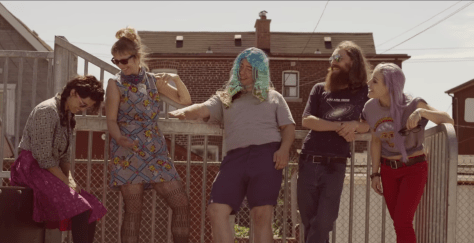
The success of the “Violence” video and Roger’s acclaim for his roles both behind and in front of the camera resulted in other musical groups seeking him out to be the creative force behind their music videos. When Brave Shores needed a video for their single “Never Come Down”, they reached out to Bainbridge because of his work on “Violence” and the films of Tony Ho. Jay McCarrol of Brave Shoes comments, “When I approached Roger, he pitched an idea about a bald guy who wishes for hair and suddenly gets a full head of green hair, which would be green screened to become different colors.  He pitched it in one sentence and it was perfect.  It was great to see his talent has such range. He could just put his unique spin on anything. When you work with Roger it’s because he can be so unpredictable, that’s what we wanted.  I knew he was some sort of mad genius when I saw all of the Tony Ho stuff.  Roger possess a different kind of “it” factor, the very rare kind.  Something about him is so pleasantly haunting.” Roger admits that he has always been a fan of music videos which extend the ideas and mood of the song while also becoming a piece of art themselves. With “Never Come Down” he felt there were multiple layers, as he describes, “The song was kind of an expression of ‘ignorance is bliss’, ‘I’m just gonna have fun, and go with what feels good, f*#k all this worry.’ This can be a great sentiment, to a point. I wanted to explore the idea of someone getting everything they want. Is it responsible to just live a blissed out life? Are you living in a way that considers others and yourself? My idea was to kind of sneakily make a video about the virtues of responsibility while making it feel like a party the whole time. I don’t know if that makes me a Christian Youth Counsellor or something, but it’s probably just another example of me being a contrarian. You say party, I say be a responsible father.” brave-shores-1-945x500

brave-shores-never-come-down

The video shows Adam Niebergall (of Tony Ho) as the main character who is granted his wish of long luxurious (color changing, sometimes psychedelic) hair and proceeds to only care about whipping that hair and head banging. While amongst trick bikers, on the beach, or a number of settings, he casts off all responsibilities, including his now pregnant romantic interest. Karma seems to exact its penance from him at the end of the video as he has given himself a fatal neck injury…as a result of his new flowing locks. It’s a modern pop/electronic fable about not focusing on the self, delivered in the humorous and yet biting way for which Bainbridge is known. Whether creating thought provoking and laughter eliciting films or music videos that still manage to carry his voice in their message, Roger Bainbridge has become known in Canada as the person to go to when you need someone to take a project from inception to production and presentation. He is pleased to be the means by which others can further their art whether it be in the role of Executive Producer, writer, or actor. Bainbridge admits that he is still sometimes jolted back into reality, in particular in regards to his involvement with musicians and their videos. He confirms, “I love music videos. I feel like I’m part of the generation that really got the last gasp of them on television. I grew up watching them on MuchMusic, watching for hours waiting for cool ones to come on. I really loved the stuff coming out for the 90’s British bands like Blur or Radiohead or Pulp. They were so glossy and arty and different. It made the world feel a lot bigger than the small Ontario town I grew up in. But it never really occurred to me that I’d ever have the occasion to make one.”


BEING NAKED CAN TEACH YOU MORE ABOUT YOUR SELF VALUE THAN JUST YOUR PHYSICAL ATTRACTIVENESS

One of the most popular and highly rated dating shows on TV in the UK right now is Naked Attraction. Just as the name states, contestants are viewed and selected in a state of complete undress. Most of us worry about being judged with our clothes off in a dimly lit room in front of our significant other, the thought of doing so in front of other people we don’t know AND on camera is unthinkable. This show would not even be thinkable without the involvement of one of UK reality TV’s most successful Associate Producers known as the master of casting, Grivas Kopti. The UK is extremely diverse and it is precisely this reason that the production chose Kopti. Grivas has been recognized for his work in the areas of LGBT representation, gender equality, multiculturalism, and celebrity culture. As a millennial who grew up with social media and the internet, Grivas and many of his generation are not encumbered by the prejudices and social constraints of previous generations. Say what you will about those of Kopti’s age but, global social interaction has made them aware of the joy and struggles that all people share, resulting in a graceful acceptance of the differences that challenge us all, hopefully creating a sense of unity. The outgoing nature Grivas possesses, as well as his stringent work ethic has made him a sought after commodity in Reality TV. The list of successful shows that have made use of Kopti’s talents are too numerous to name them all but include; Celebs Go Dating, Unbelievable, Words of Churchill, Mandela: The Prison Years, and Stripped and Stranded.

Naked Attraction is one of the most popular programs on TV of 2016 thus far with its recent ratings spiking upwards of 2 million viewers per episode. Reality TV relies on the viewer’s investment in the cast with shows of this type. Naked Attraction relies on Grivas to find the compelling people and their stories to provide the interest that keeps viewers coming back. The title alone will cause a certain portion of the population to tune in but it won’t keep them there or bring them back. Kopti’s role is part detective and part therapist. Kopti is adamant that Naked Attraction is only interested in casting individuals who are themselves motivated to be on the show. There are times when participants change their minds or their family and friends convince them that it isn’t such a good idea for them to be involved; Grivas supports this idea, often encouraging them to go away and consider whether it is truly the right choice for them. This Associate Producer doesn’t envision the show as salacious but rather as a way to achieve greater self-discovery and catharsis. Kopti describes, “I saw the contributors go on a journey, which was inspiring. They learned so much about themselves. Many learned to truly appreciate their body and what made it unique. Being complimented on your shapely thighs that you always thought were fat is so lovely and precious. As you can imagine, a lot of people’s vulnerabilities and insecurities were revealed, which I think is a beautiful thing.  You can’t really let down your guard and be capable of truly loving yourself and others if you don’t make yourself vulnerable. No stone was left unturned. We discussed it all – preferences, past sexual escapades and fetishes. People were extremely honest.”

As the leading associate casting producer, Grivas was in charge of managing the contributors. This can be a tall order when you are tasked with making someone feel comfortable being both naked and on camera. Grivas has always been able to communicate well with individuals unknown to him. Being able to discern who would handle the experience well without becoming overwhelmed or intimidated was key to Kopti’s role in Naked Attraction. He describes the characteristics he was looking for, stating, “Likeability is they first thing I look for. You want the audience to warm to them and subsequently root for them. Two attributes that serve contributors well during filming as well as after are confidence and charisma. Someone who can be strong enough to appear on television with their clothes off and handle anything they might read about themselves on social media afterwards. People aren’t always so kind online. Just as important is intelligence. The whole show works well and is engaging because our contributors can maintain a conversation with our presenter, articulating their thoughts and reasoning behind their selection process as they are selecting who they’re choosing to go on a date with. Ultimately, each main contributor will lead half of the show which is a broadcast 30 minutes. They need to have a strong character and conviction.” With a viewership of 1.4 million on its premiere episode (up 82% on the slot average) and consecutive increases, the show has been an instant success for Studio Lambert. The show’s Executive Producer Mike Cotton (Emmy nominee for Undercover Boss) confirms, “I am positive that our enormous success is due to our collaboration with Mr. Kopti, as it is his leading role that brought us much of the success that we have. His unique talent to be able to cast contributors and contestants for the program showcased his truly unparalleled ability as an associate casting producer.”

While some viewers or even critics may point to a voyeuristic factor that brings a viewing audience to Naked Attraction, Kopti has much more high minded goals for contributors and the TV public. Grivas declares, “We are bombarded with messages daily by mainstream media on how we should look and what and who we should find beautiful. In a subtle way, we wanted to call BS on that and tell the truth, inspiring our considerably big influential audience of the 16-35 age bracket. Not one size or color fits all and beauty can be many things. Couples in interracial relationships still report facing prejudice, which is shocking and something we wanted to address. Why is this still happening? Is some of this generation expressing intolerance taught by their elders? A lot of questions were raised but ultimately, the magic in this show is that we can talk about it honestly and respectfully. I’m very proud that we were able to represent those labeled as disabled. I think we communicated quite effectively that being classed disabled doesn’t render you any less sexy or capable of a fulfilling, loving relationship. We had a good few disabled contributors, visibility is key. Above all, they were fantastic characters with a lot to offer – regardless of their circumstances. One of the underappreciated strengths of my generation is that it is very hard to shock us. Naked Attraction isn’t just about the naked part. Every individual has a story to tell; things they have overcome and personal triumphs they want to celebrate, that’s the real message of our show.”

550759_543326942362105_1043423090_n