Category Archives: Film

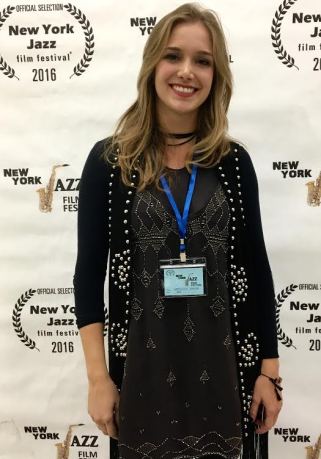
Gabriella Spacciari stars in Red appearing at New York Jazz Festival

gabriella-ff
Gabriella Spacciari at the New York Jazz Film Festival

Gabriella Spacciari was always fascinated with acting. Growing up in a small town in the south of Brazil, she used to imitate her idols and favorite characters she saw on the screen. Now, she is the one on the screen.

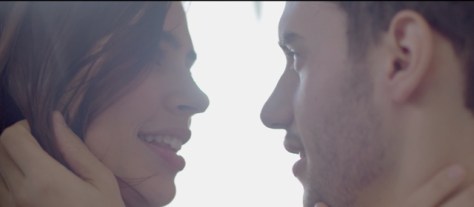
Spacciari has a starring role in the film Red (also known as Vermelho). The film, which originally premiered at the Madalena Festival de Cinema at São Paulo in June, is being shown at the New York Jazz Film Festival this month.

“It was an amazing surprise to go to the New York Jazz Film Festival, especially after one year of living in the United States. It’s like starting your career again. It is a gift to have a project that I did back home selected to a film festival in Manhattan. I’m going to New York for the first time to check it out. It’s going to be an unforgettable experience,” said Spacciari.

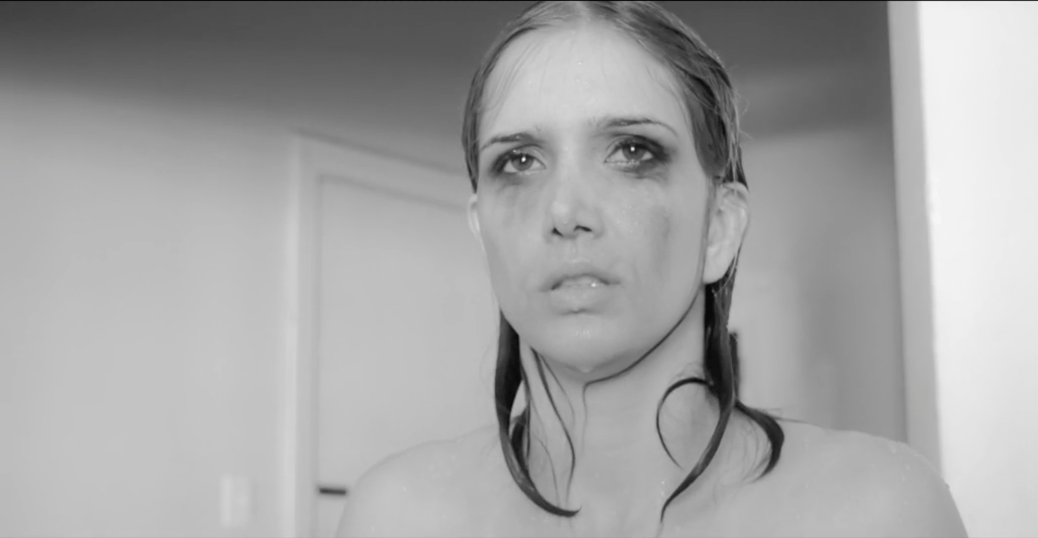
The film Red is about Ana, played by Spacciari. While under narcotic substances, Ana tries to commit suicide.

“The film is very poetic and I needed to go deep into the scenes to convey in just a few seconds all the pain that is to be cheated and the depression and self-destruction that lead us to make decisions that can bring us serious consequences,” she said.

The film was written and directed by Guilherme (Guily) Machovec Rahner. He had Spacciari in mind for the role while writing, and knew she would be able to portray Ana the way he envisioned. He describes her as very important to the success of the film.

“Gabriella is a very deep actress. Besides the fact that the camera loves her, the emotional range required to go into the circumstances of the scene made it easy to work with her.  The scenes had a high emotional stake and her concentration kept uptake by take,” he said. “I loved working with her, she is a very committed and talented actress. It was a very demanding role, but it seemed effortless for her. I look forward to working with her again as soon as the opportunity arrives.”

Spacciari agrees that they make a good team. Machovec Rahner, who teaches and produces at Operahauss in São Paulo, met each Spacciari through another producer, and knew she was the right person for his film.

“Guily said he thought about me while writing the film,” said Spacciari. “It was a very special gift to play this role.”

Spacciari has a life full of experience. Also a model, she decided to get into acting at a young age when she enrolled in the theater group in her home town. She relocated to São Paulo when she was just sixteen to pursue my career further.

“The theater group was very small. The director used to write and produce. He emphasized the importance of the classics and had us read them,” described Spacciari. “It was very important to me to understand the work of the artist – not from the glamour, but from the stage work.”

Since that time, Spacciari has had a variety of roles that explore her versatility as an actress. She was in the film Julia that premiered at 8o. CineFantasy, and Aluga-se o Ponto, which was nominated for the Prize FICC for Audiovisual at Campinas
.

“I think the most difficult thing about acting is to deal always hearing the word “no”. But you have to just keep practicing your technique, cultivating good friendships, communicating with other artists, and making art,” she said.

Spacciari also has a successful modelling career, and has appeared in a variety of successful commercial campaigns, including Cultura Inglesa and Quem Disse Berenice. She was also in a multi-national Pepsi commercial.

“Acting is the art that deals with the intricate and wonderful condition that is human nature,” she concluded. “I think nowadays we are so full of information that acting is a powerful way to combat this, through sensibility.”

You can view the trailer for Red here.
SEBASTIAN SACCO PORTRAY’S THE CREATIVE STRUGGLE IN “THE PATH”

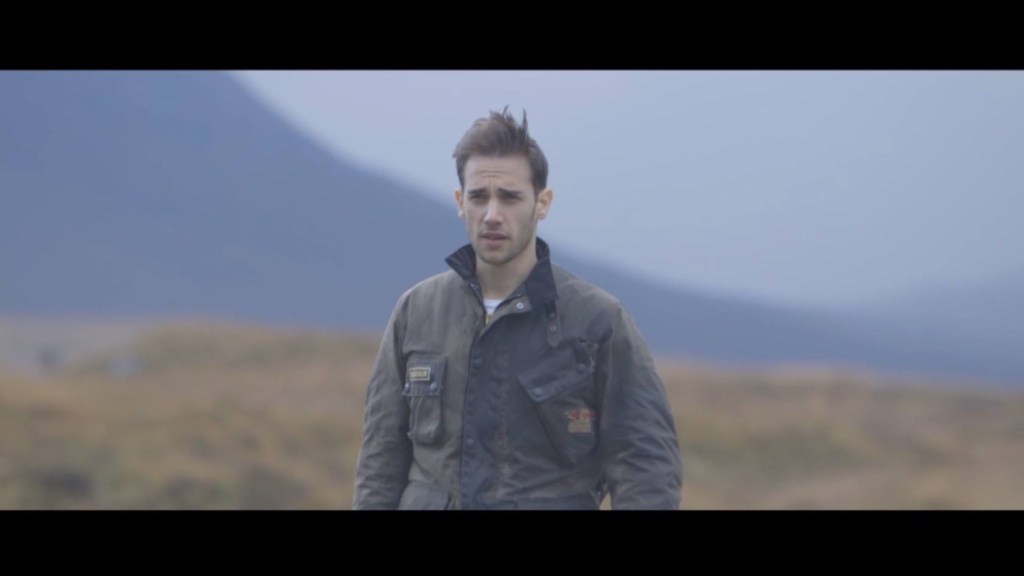
Art imitates life and life imitates art. Whether it is in the artistic presentation of the real life experience, people are fascinated by passion. Love, hate, greed, altruism, faith, family, all of these involve this provocative emotion. Some enjoy a calm lifestyle while others are driven to the flame by their desires. Either can be a soothing or precarious scenario. For actors like Sebastian Sacco, he cannot deny his pursuit of a creative lifestyle. It’s not all red-carpet premiers and adoring fans. Quite often it means freezing in the rain while being shot with (paintball) bullets on a war film (as he did in Tommy), or being held underwater for long periods of time (in the Flawes music video “Don’t Wait For Me”). Even when he is given a less physically demanding role to play, it is often emotionally taxing, as in the film The Path. This film delves into the mindset and emotional obstacles of someone who pursues a life as an actor and the everyday securities with which they must forego; it’s a role which Sacco is ideally suited to play. He stars as Seb in the film by writer Harry Chadwick and directed by Tobias Brebner. This 2015 film investigates the sacrifices and uncertainties made in the pursuit of a dream, and the measures it takes to stay on that path.

If you transferred the same fixation and enthusiasm that one might have for say…futbol (or football, depending on your place of origin) you would have an indication of what dancers, writers, musicians, actors, and other creative types feel for their vocation. The true immersion of your joys and pains, fixated on one specific thing…it can be overpowering. Many entertainers profess their love of their creative pursuits while also recognizing the fact that it often requires them to forego a “normal” life and relationships. These careers are never 9 to 5 jobs. Witnessing Sacco’s performance as Seb feels like watching a new form of audience-viewable intense therapy. His character deals with the same doubt, drive, insecurities, and relationship struggles that undoubtedly almost every creative centered individual experiences. Specifically, this film focuses on a relationship. The Path is the story of an actor pursuing his dream. In this pursuit, he meets and falls in love with someone. Seb is constantly divided in his motivation between love and the demands of pursuing his career. He desperately wants the relationship to work but he can’t help but become diverted from it by the focus needed to pursue his dream. Seb realizes that he can only pursue one end and must choose between her or his passion. He takes the plunge and heads back on his path towards his dream.

the-path6

Sebastian has played many leading roles. It’s any easy conclusion to make that the reason so many critics and viewers found his portrayal of Seb in The Path so authentic is because it is so close to his own life experience. He confirms, “I’m very close to who this character is and what he has lived. Seb really has to deal with one big question. Life is filled with so many little decisions that dictate the path we follow but this film wanted to focus on just the big stuff for Seb; the huge pull for a loved one or for your dream and passion. It’s a sad fact that sometimes the two cannot work together. Towing the line in-between just makes both unhappy. I denied this fact in my own life for a long time. I had wanted to be an actor ever since I was a kid. I didn’t allow myself to consider it as a real possibility for such a long time. As I grew up and felt pressures from other factors, I just slowly pretended I wanted other things. I tried to forget about acting or tell myself I’d do it later. I attempted to use other things to occupy my attention rather than allowing myself to pursue my true desire. Eventually, when I made the decision… nothing else mattered. I wasn’t going back. I wasn’t going to deny myself again. That’s the exact struggle my character endures. I’m certain that most people who pursue creative lives relate to this, I was just fortunate that I found a film which allowed me to tell the story that many of us relate to.”

the-path5

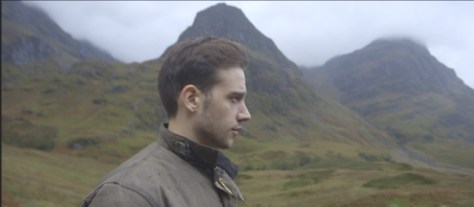
Many of the scenes in The Path are emotionally taxing but one scene in particular depicts a physical representation of Seb’s turmoil. It’s somewhat humorous that Sacco has had a number of roles in his career that require submersion in water for long periods of time. It’s not a scenario or achievement which one regularly associates with a particular actor. Director Tobias Brebner (who has worked with such acclaimed actors as Kevin Spacey) notes, “We had to shoot Sebastian in the freezing wind and rain in Scotland as he traversed through the wilderness. On top of all that, he had to perform a sequence in which he had to jump into a freezing cold lake in the lake district during each take. Despite the obvious physical discomfort he was in, Sebastian performed each take with the utmost professionalism, never complaining about the conditions and always able to stay in character. His performance is a testament to the theme of the film – always enduring and working toward a goal regardless of the external circumstances. The success we achieved would not have been possible without his amazing talent and commitment to the film. In fact, I would go so far as to say he is the film.”

Sebastian agrees that he is quite close to his character in The Path. While he may not have made immense personal discoveries working on this production, it reinforced a pillar of his beliefs as he comments, “Seb reminded me to always follow your dream. The path might change or you might go in a different direction than you thought but, always keep following your dream.”

the-path11

HUGO SHIH BRINGS “A GIFT” OF COLOR

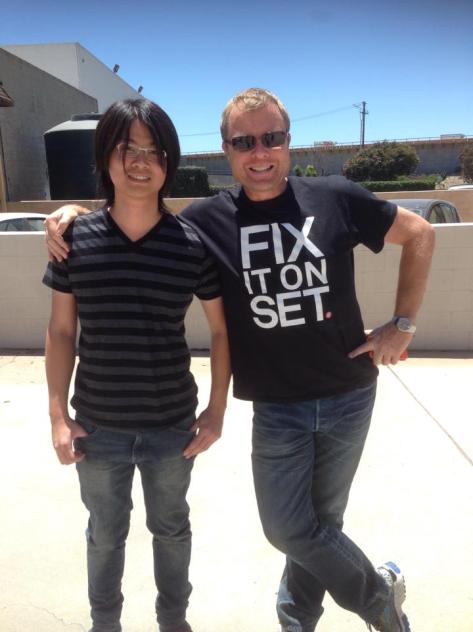
There is a myriad of roles involved in film production. Each of these play an important role in enabling the story to be told with the vision that the writer and director share. Hundreds of years ago, thespians performed the works of playwrights, before that…orators weaved tales over the communal fire; both of these relied on the imagination of the audience to conjure up mental images which were hopefully as grand as the teller intended. Modern films have grown to such a high level of production that they can manifest creatures never before imagined in such a way that they seem as real as the people and surroundings among us. One of the most difficult things to communicate to an audience is the emotional intent that motivates a specific character. While an actor’s performance, camera angles, music, and other factors bear the brunt of this transference, one of the least obvious factors is coloring. As the title states, a colorist allows the Director to shade the emotions of the characters by shading the action on screen. As film audiences have become more astute and aware of the use of a colorist’s work in film, these professionals have become increasingly clever and decreasingly obvious in their application. Colorist Hugo Shih is a highly respected and valued colorist in today’s film industry. A conversation with him reveals the fine points of what a modern colorist does to help shape a film’s emotional intent as well as how it is achieved through the use of color. What might seem to be superficial to the uninformed movie goer, has a profound impact on the subconscious and heartfelt emotive catharsis which an audience experiences.

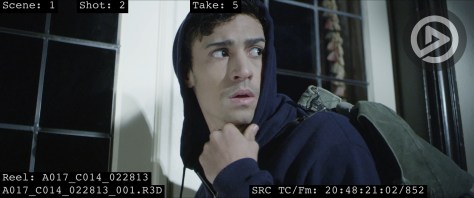
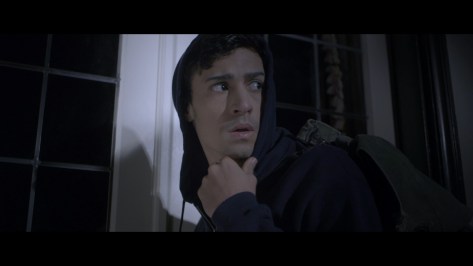
The 2016 film A Gift is a redemptive drama. It is the story of Jack, a young thief who breaks into the home of Margaret. Margaret is a blind elderly woman who mistakes Jack for her son. Although Margaret comes to realize that Jack is not her son, she still covers for him, protecting him from being discovered when police and neighbors come looking for Jack. The young thief comes to realize the error of his ways and is moved by Margaret’s gift of understanding, forgiveness, and non-judgement. A story such as this contains many intense emotions; fear, desperation, gratitude, and others. With such a small cast (consisting of Kaiso Hill as Jack and Sally Hogarty as Margaret) the actors are required to portray a diverse emotional palette. Hugo’s job as the colorist for A Gift meant that he needed to assist the character’s in hitting the “bullseye” which the film’s director intended. Yiqong Li is the director of A Gift (in addition to being one of the writers of this film). Li approached Hugo due to her familiarity with his work on many films. Li remarks, “Hugo has a reputation for being able to make just about anything happen for a director. Even if I didn’t plan on making use of all his abilities, it was nice to have in case I needed them…which it turns out I did. He did an amazing job on the color. Due to scheduling, there was one establishing shot that we just couldn’t get. Hugo worked his magic and literally created the shot we needed when it didn’t exist; I thought it was impossible to do it but he made it happen. We would never have been able to achieve this without the expertise of a master like Hugo.” Considering this all important shot, Shih explains, “We usually cut an establishing shot at the beginning to introduce the environment. A Gift started at night as the main character broke into the house. We knew that we should be looking for a night shot of the house. However, the production couldn’t get the shot at night, so they shot it during the day. It was the only establishing shot I could use. Normally, the editor would say ‘Let’s go buy some stock footage.’ In this case, I knew that ‘Day to Night’ was something I could create for the film. I said to director that I could make it work and there was no need to worry. To achieve this, I desaturated the shot and lowered the highlight, but brought up a little bit of gamma to make sure the details were all there. Following this, I did some secondary to pull out the sky and other details. In the end, I made a light at the front door because I knew that there was a light in the next shot. After I finished the color and cut into the timeline; when I showed it to the director, she was surprised and remarked that she had no idea this would even be possible. It’s a feeling of great achievement when you hear a director say this about your work.”

agift_before

agift_after

One of the unique parts about Shih’s work on A Gift is the fact that the film’s director asked him to serve as both a colorist and an editor on the film. Director Yiqiong Li had been working with major Chinese production companies and TV stations. Being involved in her film meant that Hugo would work with highly talented professionals as well as being a part of productions that would reach a massive viewing audience.  Hugo recalls, “She came to me and asked if I could do editing and color grading together. After I read the script and talked with her, I decided to take these two roles in post-production. There are some benefits of being editor and colorist at the same time. I always see the color as my creative tool for editing. It’s like assembling the puzzle pieces to the story while rebuilding the lighting. To illustrate how these roles worked in tandem to the benefit of A Gift, consider the following. In the film, there is a very long shot of Jack following Margaret to the kitchen. Usually it would be hard for an editor to keep this kind of shot because their job is to keep the story intense. However, Hugo was thinking ahead and was able to retain this shot by key framing the lighting when the main actor changed his location; using the key frame tool to adjust the lighting in the same way the aperture is adjusted on a camera. This can invisibly add the tension without the audience’s knowledge that it was made in post-production.

  A Gift has been highly recognized in 2016 with win’s for best film at: Hollywood Independent Moving Picture Film Festival and the 2016 StoneFair International Film Festival, as well as being an Official Selection at: the Berlin International Cinefest, the Roma Cinema Doc, the Los Angeles Independent Film Festival Awards, and the California Women’s Film Festival. As a member of the cast and crew of A Gift, Hugo Shih and his exemplary work are proof that a film about the change possible in each of us can move many people.

kuanyushih_wseniorcoloristwarreneagle

Gioya Tuma-Waku talks importance of diversity in film Bloggers

img_2937
Gioya Tuma-Waku says being African is important to her.

Gioya Tuma-Waku was born in the Congo and raised in Johannesburg, South Africa, something that she is proud of. During her career as an actress, not many roles have allowed her to explore this side of her. However, that changed when she was cast in the film Bloggers.

Bloggers tells the story of six young multinational blogging entrepreneurs who come together in Los Angeles to launch a blogging business. The main cast are all from different countries, including from Sweden, Canada, Brazil, Mexico, Peru, America, South Africa and the Congo.

“It was such a diverse and multi-cultured group. And that was one of the best parts of Bloggers, was the ability to show how diversity is possible we can all work together and create art,” said Tuma-Waku. “Which was cemented with the use of different languages spoken in the film. Especially with the issues of diversity that Hollywood is facing right now, I knew that this was a project that could break down those barriers and provide a template for where this industry could go in terms of casting and opportunities provided.”

Tuma-Waku plays the role of Destiny, a strong woman but sweet woman who dislikes confrontation and who always tried to see the good in people. She is a lover of life but is going through something major that has dimmed her light. She blogs about health and that often helps as a distraction from her personal life.

“I liked playing her because of her layers and vulnerability. And although she is facing something that frightens her, she also a strong person being able to carry this burden but at the same time, no matter is going on in her life, she is still there to comfort and be there for her friends. At the end of the day she is a reliable person because she does what needs to be done with a smile on her face despite what she is going through,” described Tuma-Waku.

The role of Destiny was written specifically for Tuma-Waku by the writer and producer Anele Morris. Morris has seen Tuma-Waku’s work and knew instantly that she wanted her to be involved in the project.

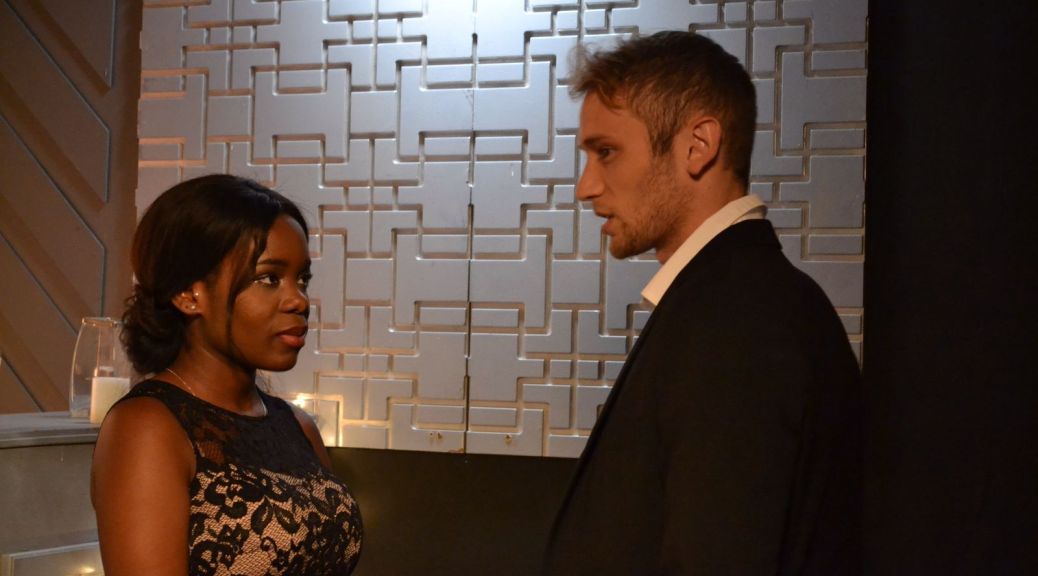
“Gioya is one of the most talented actresses I have ever met. She knows when to be centered and focused on the story being told, which is what I find sometimes lacks in young actors. Gioya is an exception, she is not easily distracted and delivers when she has to. She really knows how to execute her job as an actress because she asks questions, important questions and she takes the time to get to know the character. Her performances are always from the heart of who she believes the character is, but she is always open to direction and respects the individual roles of the production crew,” said Morris.

Morris also acts in the production, as many of the stories revolve around the female characters, something that Tuma-Waku thinks is a vital part of the production.

“This is a piece of filmmaking written by a woman telling a story about women, but without diminishing the importance of the male sex. And it’s always great to be part of a project that allows women and minorities to tell a story. Especially when it’s a story that’s not clichéd. It’s just a simple story about daily struggles that people go through while highlighting the strength in women,” said Tuma-Waku.

The film still features male leads, including Tony Beguez, who plays Destiny’s boyfriend Fred. Beguez and Tuma-Waku worked alongside each other throughout the film. Destiny’s storyline involves heartbreak and vulnerability, and Fred is a big part of that.

“I believe that in order to get better in any profession you need to surround yourself with people better than yourself, and I was given that opportunity in working with Gioya,” said Beguez. Her work ethic is incomparable.”

Bloggers is currently set to be screened at a variety of film festivals. However, for Tuma-Waku, that is not what is important, it is sharing the story that she thinks needs to be told.

“I want to tell stories that don’t always get told or manage to get told in a different way and have it mean something to someone, even if it’s in the smallest way possible. If even one person finds meaning, inspiration or gets affected by any story I’m in, then I know I’m on the right path,” she concluded. “And I feel like this could be one of those stories.”

BRIAN MANCINI PRODUCES A MEDITATION

There is no question that modern life is drastically different for some individuals. Modern technology now supports lifestyles in a way never before possible. There are inevitable events and occurrences though. This is the basis of the film A Meditation. This film is the story of  Michael, a middle-aged man recently unemployed from his job teaching film. Michael meets a young woman responding to his Craigslist ad selling a DVR. The two begin an intense and consuming affair that has Michael questioning the meaning of love, sex and happiness. Brian Mancini is a producer on this film starring Harold Perrineau (Romeo + Juliet, Lost, 28 Days Later) as Michael. The film presents the options for modern technology to be a benefit as well as a hindrance. Although we love our gadgets and the ways in which they connect us, we should not lose sight of the basic need for interacting with others as well as ourselves through introspection. We can connect physically but intimacy, as with true beauty, is much more than skin deep.

Brian’s reputation as an exemplary producer caused Joe Petricca (director/writer/producer and Executive Vice Dean of the American Film Institute Conservatory) and Maggie Biggar to seek out Mancini to work on A Meditation. Petricca states, “I was impressed by Brian’s dedication to the craft. Each thing that he brought to set made the film better. I’ve always found him to be an extremely innovative producer, with a great attitude towards the craft and the partners he works with.  Regardless of the budget, Brian’s work is always top quality. I admire the way that he can manage very large teams and simultaneously have the ability to multitask various high priorities. It’s an overwhelming situation to contend with and yet, a great producer like Brian seems to handle it with ease…which is exactly why I wanted him on A Meditation.”

The film stars Harold Perrineau and Samantha Colicchio in the leading roles and was shot entirely on one set. Mancini admits, “When shooting in one location, everything is dramatically easier. Just not having to completely unpack and pack up every day saves a great deal of time, which can be used to shoot. There are always challenges; for instance, the neighborhood might get cranky or someone might decide to blare rock music while we’re shooting an exterior. It’s easy enough to handle this by obtaining the permit and notifying the surrounding area ahead of time that the production is going to be at this location. That doesn’t negate all obstacles though.” Explaining the seemingly never ending role of a producer, Mancini comments, “The Producer’s job never ends. In post-production we are tirelessly carrying the project towards the finish line. From watching the edit and giving notes, scheduling turn over from the editing room to color correction or post-sound, accounting, credits, applying to festivals…the list goes on and on. There is a long calendar of deadlines that needs to be met and it’s very easy for projects to get stuck in post-production. Producers need to keep making sure everything is working to the schedule and if it isn’t, find a way to get it back on schedule.”

Brian’s spent his youth in Unionville (and later in Ontario, Canada) with many outdoor activities like: hiking, hunting, camping, etc. As with anyone, he understands that technology has become ubiquitous. He empathizes with the audience of the film, stating, “Technology is undoubtedly making a lot of things easier in everyday life but in another way, it’s taking a lot away. It’s become a safety for a lot of people, myself included. I feel lost and useless if I don’t know where my phone is. However, I think it’s important to find a balance and to get away from it at times. Every few months you can find me in the woods camping where I have no cell service and am just hiking up a mountain with a backpack of essentials. There is a stress technology puts on people to always be online and connected and it’s great to leave that in the city.” Though the internet (via Craigslist) the two main characters in A Meditation meet and connect in a very physical way but they are still forced to deal with their emotions in a traditional manner. A Meditation is an interesting study about where we draw the lines of interaction in modern life. Just as organisms evolve in their physicality, we are in an era in which social interaction is evolving. What makes Michael especially intriguing in this film is that his life is undergoing a transformation in terms of work and his romantic life. It’s one of the core messages of the film that enticed Mancini to come aboard. Brian confirms, “To think ‘Am I a good enough person?’, ‘Am I liked?’, ‘Can I be better?’, to realize one’s plan about what’s next in their life and to find what they want to achieve next…I think everyone has been there or is there. It’s rewarding to me to help present those ideas to the public. The thought that somewhere in a theater, there is someone who is encouraged by a film I helped to make…maybe something as seemingly small as keeping the day’s schedule on time insures that we stay on budget and therefore we can pay the salary of the best professionals out there…I love that feeling and want to keep doing it to the best of my potential.”

brian-mancini-photo-5

STORYBOARD ARTIST BINBIN MA HAS A GIFT FOR BRINGING OUT THE CHILD IN US ALL

img_3389

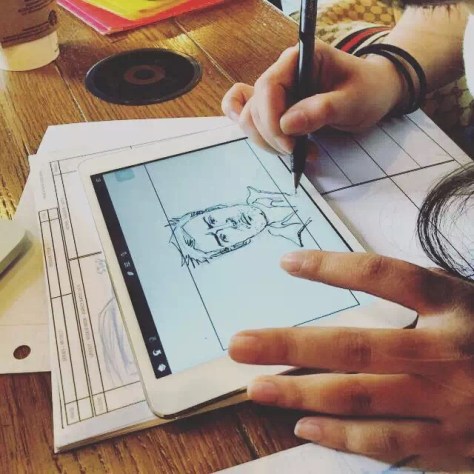
During film and TV award shows like the Oscars and Emmys, inevitably one of the winners will say something about their work being just a small part of the community which worked to make the production they are being lauded for. It sounds like humility unless you get an accurate glimpse into the many vocations and tasks involved in the TV and film industry. For every face you see on screen there are literally dozens or more who did their job properly which enabled the images we witness to take place in the action of the story. One of the very first people to put their hands and talent into movement in every production is the storyboard artist. Many of them never see even a hint of the glamour and excitement that surrounds the set, celebrities, and premier events involved in a production. It is their ability to take the verbal communication of producers and directors and translate them into images that will enable the cinematographer, director, and cast to use this template in framing their work. Binbin Ma is a successful storyboard artist and graphic designer with a wide and diverse lists of credits to her resume. Her recognized artistic talent is a great deal of the reason that she has been sought ought by so many filmmakers but, it also her ability to communicate and comprehend the way these same filmmakers want to frame their ideas and shots. When watching any of the number of films she has worked on, you can see the flavor of the director but there are “signature” elements of composition that those familiar with Binbin will recognize. She is able to mold her abilities to the professionals she works with while still retaining the vehicle with which they are delivered.

Skate at 16 would seem at first to be a film about a young boy’s crush and bullying. In truth, the film is about any individual coming to the point in life in which they decide to be a victim or stand up against an aggressor and suffer the consequences. It is about discovering who you are in the face of adversity, and letting others bear witness to the courage it requires. Julian is a young teenage boy who interacts with a homeless girl who is living in a skate park. He reaches out to her partly due to his kind heart as well as the fact that he finds the girl cute (further proof of the fact that he doesn’t see her as a type of person but rather, simply a person). Almost halfway into the film, he is bullied by a 21-year-old and his skate shoe is humiliatingly stolen by the bully. Julian doesn’t fight back for himself but when the bully leads a gang who is stealing Tecla’s (the girl) belongings, Julian finds the courage to stop this bully. Skate at 16 is almost Shakespearean encompassing young love, family tragedy, the overly aggressive antagonist, the revelation of inner-strength, and a potentially fatal injury which results from the confrontation. All of these emotions which Julian experiences are captured by the camera with different angles and compositions; one’s which are easily imagined as pieces of art. If the colors on screen were more primary and somewhat exaggerated, it would be easy to see them as a graphic novel. Skate at 16 is so adept at using the angle and perspective of the camera to bring audiences to the same emotional state as Julian, it’s easy to see how Binbin’s work was the early staging for this approach. The line of communication and understanding between director, storyboard artist, and cinematographer is seamless; it definitely appeared so to the Los Angeles Cinefest when they nominated this fine film. Director Mario Aranguren gives credit to Ma for the look that was achieved in Skate at 16 by stating, “Binbin’s amazing work really helped me to clarify the blocking and shot angles in my mind. Before doing this, I was a mess in the head. The process of defining the shots with someone as talented as her and then having her return to me with an even clearer representation of the ideas…it’s such an important and vital part of the filmmaking process.” Binbin describes the process for those unfamiliar with her profession, “I worked with Mario, the director of the film, discussing the shot list for each scene. After that, we started drawing the shot basic on the shot list, through the angles, character blocking, and camera movements. Because Skate at 16 is a film about sports, the character movements were sometimes difficult to draw, and also the blocking between many characters could be confusing. Because of the film’s schedule, I had to prepare everything very quickly; it took about ten days for me to finish. The great part about my job is that, once everyone sees the completed storyboards, they become very energized and excited about the film and want to get to work right away. It’s a very rewarding feeling to see something I create have such an immediate effect on other talented professionals.”

img_3146

Guillermo Cameo was so enamored with the look of Skate at 16 that he hired Binbin to be the storyboard artist for his film Robots & Cowboys. There are some similar themes between the two films (feelings of loneliness, isolation, finding one’s sense of self) but there is more of a lighthearted and whimsical look to Robots & Cowboys. There is also a sense of fighting one’s self as well as others, a feeling that childhood can often bring. The main character, Joe, brings drama to his heroic actions, even as we smile at the way he shifts genre’s in his identity and imagination. We often see wide shots when the actions is overwhelming and threatening, while close ups give a sense of comfortability and control in the same way that the backyard tent (which is a make believe tepee) is a safe and controlled environment for Madeline (the young female character). The film is set in rural Philadelphia and has moments that transport the viewer to a Spaghetti Western. Although Cameo knew that he wanted this approach, he needed Ma to relay this visual approach to the crew in a very clear manner. Achieving his vision would empower the film with sweetness as well as intensity, but being just a shade off of his intent could make it come across as shtick. Gulliermo states, “Binbin Ma is one of the most exceptionally talented and qualified graphic artists and storyboard artists of her field. Robots and Cowboys has been one of my most successful endeavors as a filmmaker, and I am certain this is due largely to the fact that I included Binbin as a leading member of the film. The film was enormously popular among festivals and awards centered around children, and garnered wins and nominations from The Kids Festival as well as the Young Entertainer Awards. Furthermore, the film won several awards from the internationally recognized International Euro Film Festival, establishing our production as one of the most inarguably successful children’s films of our field. These enormous achievements among some of the most highly regarded critics and film festivals across the world are indicative of our film’s high standing, which is no doubt thanks to Ms. Ma’s leading role.”

img_3142

Both the opening scene, depicting Joe playing with Sir Steely (a robot toy based on Ma’s little brother’s robot ideas) as well as the final scene, complete with sunset and Copeland-esque soundtrack, were shots right off of Binbin’s storyboard. Whether close ups or wide vistas, Ma has a talent for structuring things that transfers easily to the cinematography. Explaining how to communicate images in a way specific to Robots & Cowboys, Ma states, “I used a lot low angle to make it easy to see things from the kids’ point of view. When I draw with children, I always keep that in my mind, try to bring the real character to frame.” Both Skate at 16 and Robots & Cowboys have a youthful vantage but discuss the trials all of us can relate to in one form or another. Only a professional like Binbin Ma has the eye and training to enable us, as the viewer, to revert back to our earlier selves and feel what the characters are feeling, without being aware that it is the location and framing of the action (brought into reality by Binbin images) that makes it all so real.

12931150_1754536981449465_5997220998646035274_n


Film Review: Jainardhan Sathyan’s “Harvey’s Dream”

poster-1


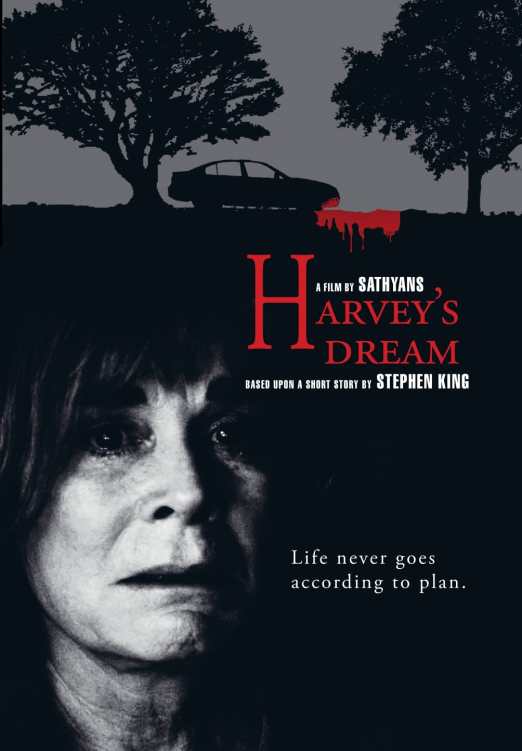
Director Jainardhan Sathyan’s film “Harvey’s Dream,” based on Stephen King’s short story of the same name, brings to the screen a multi-layered tale of a couple struggling through what seems to be the normal aging process; but as the story progresses we soon realize there are many other factors at play.

From the very start of the film Sathyan does a brilliant job of setting a mysterious and eerie tone that pulls us in and leads us to question what is going to happen next. A panning shot across the family’s mantle and living room walls in the opening scene reveal photos of an apparently happy family, but the slow and pensive sounds of a piano playing notes in minor keys in the background inform us that something is not right.

What seems to start off as a normal Saturday morning for Harvey, played by Golden Globe nominee Philip Casnoff, and his wife Janet, played by Roxanne Hart, who won two Best Actress Awards for her performance, becomes progressively more devastating and complex as the story unfolds.

Janet leans over the sink washing fruit for breakfast. She’s bitter. She feels like she was jipped out of the life her husband promised her, and she’s vocal about it. She calls him dumb and makes subtle jabs that he may have Alzheimer’s, something that serves as a major insight into the true nature of what’s going on in the story.

As Harvey sits at the breakfast table recounting his dream of a tragic phone call he received from one of his daughter’s telling him that their drunken neighbor killed one of her sisters with his car the night before, Janet stares out the window in horror.

Her reaction to the “dream” is perplexing, after all, if it was just a dream then why panic? Her face scrunches up as she tells herself that the dark stains on the mangled corner of their neighbor’s car that she sees out the window is not blood, it was just a dream– and if you say your dreams out loud, they don’t come true.

Harvey continues with his story, stopping momentarily as he struggles to recall the name of one of his daughters, and it is at this point that we begin to realize that there is more going on behind the scenes, something the couple is not yet aware of, or isn’t ready to face.

Allowing the frustration and animosity that’s clearly been brewing for decades to take center stage, Sathyan captures the essence of what it is like to be an unhappily married couple. What keeps us engaged in anticipation of what’s next though is the way the director uses subtle cinematic devices to let us know that there’s a dramatic twist coming, one we will never expect.

In the end we discover that what seemed to be a precognitive dream was a tell-tale sign of early-onset Alzheimer’s disease– the phone call Harvey received from his daughter that morning did happen, he just forgot about it.

The interplay between the couple is spot-on. Ironically enough, Casnoff and Hart are a couple in real life, which was a main factor in Sathyan’s casting process when it came to selecting the film’s lead actors. Casnoff, who is known for his performances in the series “Sinatra,” “Oz” and “Strong Medicine,” endows Harvey with subtle signs of inner confusion and the perfect amount of vulnerability, traits which only begin to make sense after we discover the story’s final twist at the very end.

The shot sequences and sound design of the film are tantamount to the impact of the story as they heighten our emotions and piques our interest to know the truth of what’s going on the whole way through.

Thanks to Sathyan’s genius storytelling and the actor’s captivating performances, it’s not surprising that the film has already achieved astonishing international success since its release earlier this year. So far “Harvey’s Dream” has screened at over a hundred festivals and earned an impress list of awards including the Best Lead Actress, Best Overall Short and Judge’s Choice Awards at the Women’s Only Entertainment Film Festival, the awards for Best Actor and Best Film from TMFF (The Monthly Film Festival) and the Best Short Film Award from the Direct Monthly Online Film Festival, Chandler International Film Festival and the 6th Dada Saheb Phalke Film Festival. The film was also nominated for Best Acting Duo and Best Screenplay at the Sanford International Film Festival, Best Film and Best Actress from the Bucharest ShortCut Cinefest, Best Original Score from the Milan Online Film Festival, as well as several others.

Sathyan, who also produced the film, takes a unique approach to filmmaking. Without disclosing too much, he leaves space for the audience to make their own judgements and lets the story run its course in a way that keeps the viewers constantly engaged.


BRIDGING THE GAP: CALEB CHERNYSH

gap-1

Childhood, for most of us, is a wonderful time when we are provided for and loved unconditionally; we have the feeling that anything is possible. This is the spring from which the ideas that make up fairytales flows. The world seems to be such a welcoming and magical place that almost anything is possible…even the magically impossible. Adulthood is quite a different place. The real-world practicality and day to day of surviving and providing is the experience of most adults. Still, children often give the adults the motivation and joy to accept a sense of selflessness. There is a space between these two worlds and this is the inspiration for Mark Pedlow’s film The Gap. This film is comprised of three different tales about the curveballs life can sometimes throw us which begins to pull our life experience from this comforting fairytale world into the realities (and dangers) of the real world. The Gap has a lofty goal in its attempt to link the world we aspire to with the one we are forced to accept. The unique approach of The Gap is what first interested actor Caleb Chernysh to the film. Chernysh has played a heroin addict (in Mule), a serial killer (Fractured), even a  father of twin sons…one whom “sees” his dead brother everywhere (James in Sea Change), but never before has he been a young father.

As a student of the Actor’s Centre (the same Australian school which has produced actors such as Hugh Jackman), Caleb continually searches out varied and challenging roles by which to challenge himself and increase his palette of experience. Chernysh recalls how he came to the film, “Mark Pedlow, creator and director of The Gap, was holding auditions for John, the father in one of the three stories contained in The Gap. I was attracted by the script, as I’ve never played a young father and it would involve fight training. When I got the script, I fell in love with it and begged Mark to let me audition. I wasn’t aware of this fact but Mark already knew that he wanted me for the part. I’m thankful that he was aware of my work and abilities but he didn’t want me to know that. He wanted me to audition, not to see if I would be good enough, but to confirm that I seriously wanted to do whatever it took to get the role of John. After the audition, I was thrilled when he said I would be John in The Gap.” Pedlow states, “I had a lot of applicants, but Caleb’s resume stood out the most. I decided to meet him and asked him what he thought of John. When Caleb described his version of John, it felt like he brought more layers to the character then I even thought of.gap-5

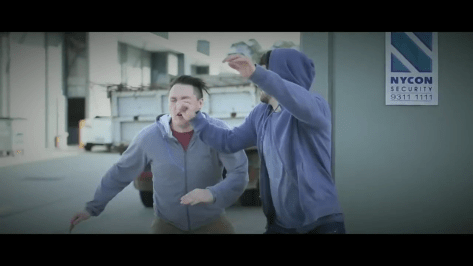
Getting the part may have been the easiest facet of his involvement as Caleb had to venture into a completely unknown area for him, fight training. Chernysh was excited to train but admits that it had its uncomfortable moments. He notes, “The Gap was the first movie which I was in that had fight choreography. I was so excited! There were nights where we had to train leading up to production and I would come home bruised and sore…but with a smile on my face. When it came to the shoot, we added some more fight sequences. I still remember getting an uppercut from one of the thugs and I literally picked myself up and threw my body backwards onto a box. It must have been impressive, because I remember people gasping when I crashed into the box. When I got up, people were saying ‘Geez, you’ll do anything for your performance!’ It looked like the uppercut was real and had a powerful force behind it.”

gap-4

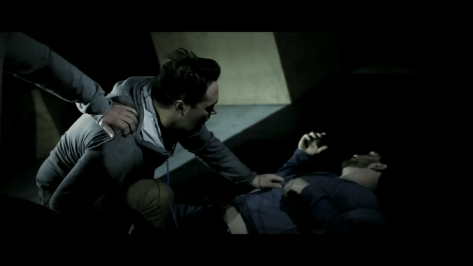
That uppercut comes courtesy of one of the attempted kidnappers of John’s daughter. In one of the tensest parts of the film, Caleb’s character John (one of the lead character’s in this film) has gone to a café with his young daughter and, while she wanders downstairs, two men attempt to kidnap her. This particular scene which so clearly states the film’s theme of the difference between the fantasy life’s abrupt collision with reality, was highly motivating to Caleb. Though not a father himself, Chernysh believes that in each man resides the protective fatherly instinct towards his children. It was that character trait that he unearthed for John commenting, “I’ve never played a young father before. So I really needed to put myself into the role and imagine that I have created this beautiful life and have raised it for 8 years. This beautiful life is the most treasured being in my world and I would not let anyone or anything harm it. That was my mindset in the performance, which also helped the fight scene.”

Caleb Chernysh is currently working on a webseries in which he plays Boris Djerkich, a man who want to be the next Eurovision star. One character is Bosnian born Boris Djerkich who has moved to Australia and wants to be the next Eurovision star. Caleb also plays Cameron Tomes, a flamboyant ex-dancer who goes to a job interview and it bombs! Caleb is working on extending his series with more characters.You can subscribe and view on YouTube.

THIS ACTRESS IS OUT FOR BLOOD

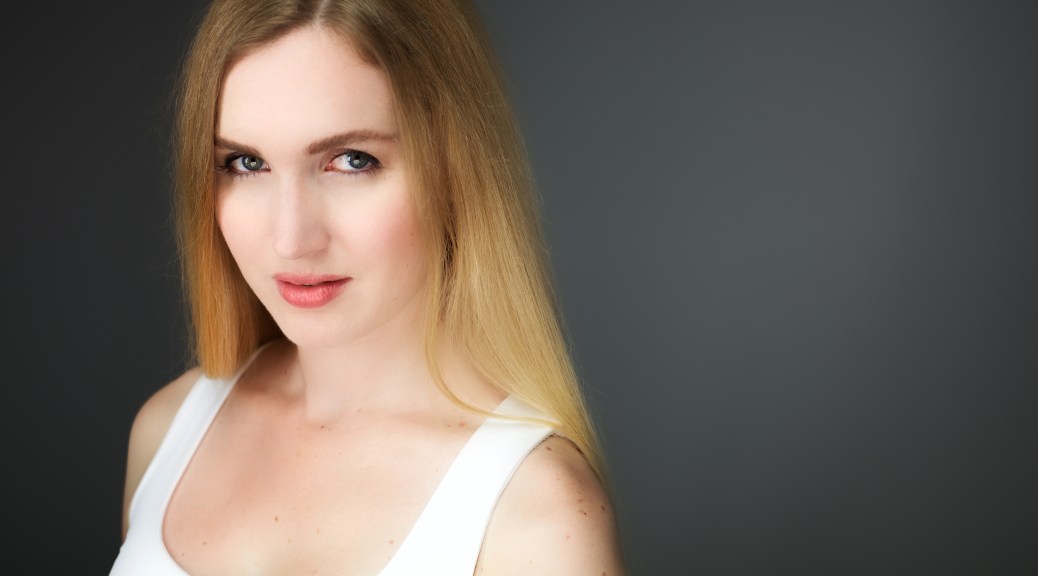
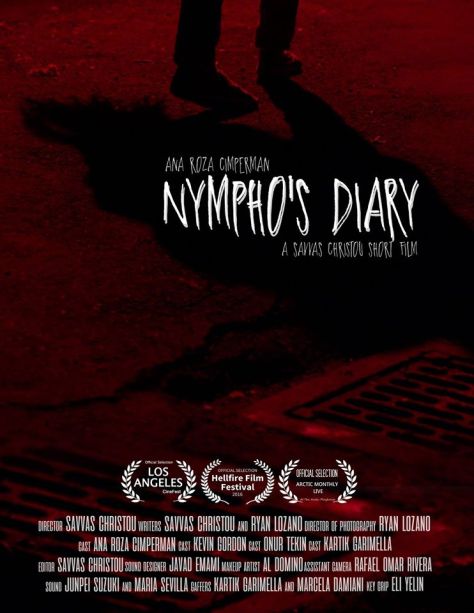
Here’s a statement you won’t often read; this woman is really happy about becoming a vampire. Well…okay, actress Ana Roza Cimperman is quite happy about her role in Nympho’s Diary and all of the attention and praise the film is receiving. The title may be slightly misleading about this bad girl turned into a completely different type of bad girl, but the film has many unexpected turns; such as leading the audience into rooting for a cold blooded killer. Filmmakers and fans alike are always searching for a new twist or angle in the tried and true vampire formula; Savvas Christou has successfully achieved it in Nympho’s Diary. This film is a modern day yarn which introduces us to Amy and the pitfalls of romance, promiscuity, and the Nosferatu lineage. Many of the recent tales of vampires and their social interaction with humanity border on the ridiculous; often using excessive gore to make an impact. Nympho’s Diary takes a personal view of a vampire’s victim, addressing the mental and physical partition between mankind and the walking undead. The result is a film much more about how the transformation from human into vampire affects someone at the core of their being, in multiple ways. Cimperman’s performance in the lead role of Amy requires a level of physical movements and contortions that escalate throughout the course of the film, partnered with the emotionally agonizing process her psyche undergoes.

13995428_10157292208795416_7420048776891475710_o

Nympho’s Diary has already accomplished a major achievement. Within less than three months of being released, the film has been accepted into 6 festivals including; the Roma Cinema DOC, Hellfire Film Festival, Arctic Monthly LIVE, Cyprus Comic Con Film Fest, Los Angeles CineFest, and the Fright Night Film fest. The good reactions of industry insiders who have viewed the film has led to a great deal of excitement surrounding Nympho’s Diary. Ana Roza Cimperman is particularly pleased as Nympho’s Diary is only her third US film and her very first filming experience in Los Angeles. It seems like a quick ascension for this Slovenian actress who only recently made up her mind to roll the dice and take the gamble on a career in Hollywood. Ana states, “I have been thinking about it for years but could never make that final decision because there were just so many things involved, including leaving behind people I care deeply about. Just before my birthday, I realized it was now or never and within two months I managed to sort out everything including finding a place in Hollywood, renting out my apartment in Ljubljana and getting the paperwork to transport my dog whom I just couldn’t leave behind.” Her entry into Nympho’s Diary was anything but normal for Hollywood films as she recalls, “I was invited to audition for the role. It was an audition with no dialogue but with very specific instructions so I was immediately intrigued. I had to prepare a one-minute performance of the character of Amy waking up and realizing she has a bite on her neck and then slowly starting to turn into a vampire-like monster.” Nympho Diary’s writer and director Savvas Christou was immediately taken with Cimperman’s interpretation and quick implementation of his specific directions. He confirms, “Not only is Ana a talented, inspiring, and passionate actress but she is one of the easiest to work with…even when situations are less than ideal. We had an overnight shoot in the cold and it was raining. Rather than complaining, she delivered the same high level performance with the attitude an approach of a consummate professional, which is exactly what she is. Any director would hope for such an actress in the lead role.”

Nympho’s Diary is the story of Amy wakes up in the middle of a parking lot with a strange mark on her back. She can’t remember what happened the previous night. She soon starts feeling sick. Her body starts changing and within minutes she is transformed into a vampire. Amy is not in control of her body and some unknown force compels her to go to her boyfriend’s house where she attacks and kills him. For the remainder of the night she walks around aimlessly. While eating her next victim, the memory comes back of the tall stranger that she brought home the night before and she suddenly remembers that it is he who made her into the creature she has become. Ana found Amy to be very intriguing and multidimensional rather than simplistic. The arc of this character allowed Ana to investigate and emote a discovery into an individual’s motivations and social interaction through Amy’s journey. Cimperman concludes, “Amy is a nymphomaniac who picks up men in bars and takes them home even though she is in a committed relationship. She is selfish and reckless. She keeps a diary of her conquests which later turns into a diary of her victims. She’s a very sexual person who enjoys being admired and wanted. Her transformation strips her of this and we see her as the lost, scared girl she really is. I wanted to show different layers of her personality and what is underneath it all – the basic human need to survive. I liked how free she was in pursuing her desires and her independence but she sometimes treats people like objects, simply there to satisfy her needs. Portraying Amy as vapid would be too simplistic; she is much more interesting if the audience finds a way to care about her. This film reminded me how we shouldn’t judge people but instead, try to think what it would take for us to end up in their place. That is what I took away from Amy and I feel it is also what the viewer can take away from it. In the beginning Amy is the antagonist but by the end of the movie we are all rooting for her.”

13173029_913812275405361_7239476031238026884_o

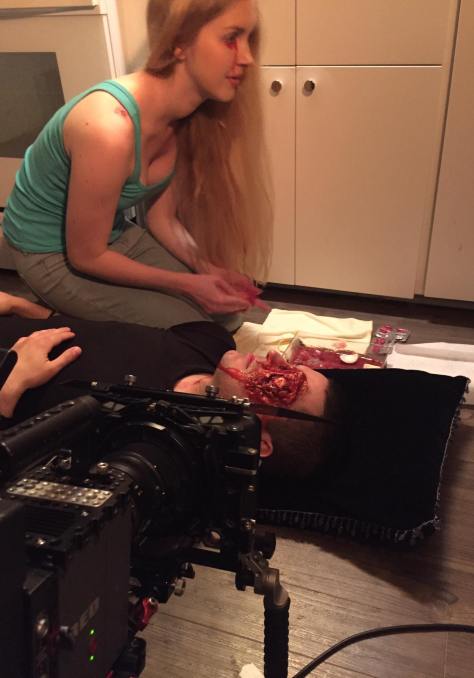
Even though Nympho’s Diary is a horror movie which focuses on character development, this genre always involves experiences during filming which actors don’t get anywhere else. Ana Roza lauds praise upon the crew and cast members she worked closely with (Kartik Garimella, Kevin Gordon – Dave the vampire who turns Amy), but tells of a uniquely horror movie experience with Onur Tekin who played Josh/Amy’s boyfriend. Cimperman reveals, “Onur is the Turkish actor who plays my boyfriend, whom I unintentionally end up killing and eating. He was very professional and patient as the scene where I am eating his face (in the form of jello and hard boiled eggs) took more than an hour to shoot because we could not get the perspective right as it had to look like I was leaning over him and tearing out his brains…not a common set experience for either of us.” Ana Roza Cimperman’s portrayal in Nympho’s Diary is far from common place as well. This Slovenian actress can also be seen in Eight and a Half Circles, Jefferson, Perception of Art, as well as numerous TV productions.


IT’S THE END OF THE WORLD & ALEX MACPHERSON FEELS FINE

IMG_3375

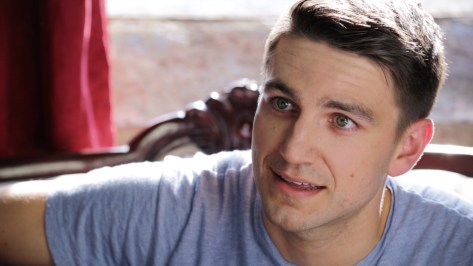
Who likes the idea of a Zombie Apocalypse? Nobody, right? Well, except for Alex MacPherson. Maybe it’s because he is such a fan of the genre. Maybe it’s because he feels as if he has already lived through it with his role in Dead Rush. The film was released earlier this year and was an Official Selection of the Canada Film Fest. Unless you have been hibernating or living off the grid for the past several years, you know that zombies are ubiquitous in film and television. Walking Dead and movies like 28 Days Later ignited a zombie fire that has seen TV and movies about them set records. One thing is for sure, people love seeing zombies and MacPherson is no exception. Whereas most zombie scenarios show a group paradigm, Dead Rush takes an extremely personal perspective by following one man as he loses everything. It’s this individual’s struggle in a world that is crumbling around him that implies the modern concern for our planet and how society is causing it to fall into a state of disrepair; one from which it can never fully recover…or maybe it is just good old’ fashion Hollywood scare tactics.

Dead Rush is simply the zombie version of the “riches to rags” story for one man. Early in the film the main character’s wife dies as they attempt to escape the chaos that follows the apocalypse, soon all those around him are dying and becoming zombies. We follow the journey of the main character and his attempt to find refuge with survivors. MacPherson is literally the first person we see in the film. Sadly for him, he is killed trying to escape and is impaled by a pole; his death resulting in his rebirth as a zombie. Even the long periods required to be in the makeup chair couldn’t dull Alex’s enthusiasm as he recalls, “It sounds a little crazy to say that you love a car crash scene but I didn’t have any of the negativity of an actual crash or the repercussions that follow so it was a lot of fun. The Art Department had beaten the hell out of this old van. They shoved a pole through the windshield, hooked up smoke machines, it was pure Hollywood magic! The Makeup artists were incredible so when I saw the zombie it really was terrifying. He looked so real!”

Zac Ramelan directed (along with writing and producing credits for) the film. Ramelan (known for his work on feature films like Late Night Double Feature, Zombieworld, and others) often works with cinematographer Karl Janisse. Witnessing the professional relationship between the two, Alex comments, “Working with director Zac Ramelan, and Director of Photography Karl Janisse, was the best part of this project for me. The two were like peanut butter and jam, working so well together. I remember sitting back and watching with admiration as they broke down a scene. Zac, who also wrote the film, had such a clear vision of everything, and of course, that always help as an actor, when you have strong direction.” It would be quite difficult for anyone to understand what motivates a zombie (other than eating brains, of course) but MacPherson confirms that working with Ramelan made it easy, noting, “When you have a director with a vision as strong as Zac’s, not much research is required. As for putting my mind fully into the film’s character, it really wasn’t hard with how detailed the set was, which was just done so well. It truly felt like I was in a post-apocalyptic world.” The film’s cinematographer Karl Janisse praises MacPherson’s abilities and contributions that helped achieve such a positive public response declaring, “It was an immense pleasure to work with Alex on Dead Rush. He is so creative. Working in this genre you need the story to be fresh but you also need the actors to bring something new to a role, something that entices the viewer; Alex does that. He is a wonderful actor. I’m scheduled to work with him soon on a project for Mimic Entertainment and I am really looking forward to it.”

It would seem that the misfortune which befalls the cast on screen is not without a real life counterpart, although in a much more benevolent sense. When the cast walked the red carpet at the film’s premier (at the Canada Film Festival) they were caught in a torrential downpour…in Canada…in winter! This occurrence (soundtrack provided by fellow Canadian Alanis Morissette’s tempting of fate) still did not dampen the cast’s spirits. According to MacPherson it has more to do with Canadian’s love of film that anything. He states, “Studios like to pick up horror films because they sell! Much of the feel of a horror film can be created with lighting, color correction and music. I don’t think Canada in particular has any specific things that make the horror genre so prevalent but there is just so much filming here! Toronto and Vancouver are film capitols, and the amount of filming there is actually increasing!”

IMG_3371

Never content to settle, Alex has several projects in the works. He recently wrote and starred in Palmer’s Pumpkins. He wrote the film specifically as an ode to the 80’s horror films that he grew up loving, although it is more fun and fantasy based than horror. When Earth Sleeps is a trilogy set in a post apocalyptic world (a theme Alex is familiar with) in which the main character Aydin searches for solace. While maintaining a heavy workload of filming in his homeland of Canada, MacPherson hears the sirens beckoning from Hollywood. He reveals, “As much as I love Canada, and Toronto specifically, Los Angeles has been calling to me for a while. There’s something about the Hollywood dream that calls to all actors. I visited LA a few times over the last few years, originally thinking that I wouldn’t love the city, but would have to learn to at least accept it; the funny thing is, after my first visit I absolutely fell in love with it. That and every fiber of my being was screaming out that I had to get there. To this day I have a strong intuitive notion that my next chapter in film will occur in LA. Whether Toronto has a ton of projects shooting or not, there is still something about LA that Canada doesn’t have, when it comes to the entertainment world. As an actor and screenwriter, Los Angeles’s appeal is paramount. I’m also really lucky to have become close with a number of LA-based directors and producers. I am super excited to have a bunch of projects lined up already. It is one thing to want to get to LA as an actor, but it’s another thing altogether to have LA film people want to work with you. It’s like something out of a dream. What a life!”