WRITING BOTH SIDES OF A STORY WITH SHREEKRISHNA PADHYE

4

Life imitates art, art imitates life…it’s all the same thing to writer Shreekrishna Padhye. His vocation as a writer has allowed him to investigate and mix the influences of each into the other. Yes, it’s a bit like playing God when you write, but it gives back as much as it takes from humanity. What is communicated is just as much based in fact as it is in the interpretation of those receiving the information. As Padhye explains, “I have always been fascinated by the transformation a script can go through in the hands of actors. No matter how specific you try to be with tone and character motivations, an actor can fundamentally change the scene with just their performance and highlight a different side of the story. I wanted to explore that with a small film, so I wrote one with obvious conflicts and had actors play the action in two different manners. In every fight/argument both sides feel like they are right and more sympathetic.” In the film “My Way, Your Way” the writer was simultaneously studying and displaying social interaction, characters, and the actors who were themselves presenting the lines and actions. Shreekrishna Padhye might just be the most modern & entertaining version of B.F. Skinner that you’ve ever seen.

Padhye openly admits that he mines the events and interactions which he sees in real life for his writing. This is not an uncommon event for a writer. What is unusual about this writer is that he likes to entertain and diffuse the negative actions and thoughts of the characters and the viewers of his films by showing just how petty and selfish they can be, served with a very humorous tone. “My Way, Your Way” is a comedy. In the story we see the events through the eyes and emotional tint of two coworkers. What is presented is almost a form of therapy for the audience and the writer. Seeing the awfulness of people presented in the absence of condescension and finger pointing allows the recognition of our own lesser desired attributes. Humor is the conduit by which Shreekrishna delivers this. “My Way, Your Way” presents the same office workplace occurrence seen through the point of view of two separate people. In the first version, John tells his friend at work (Sean) that he has just been promoted. To John’s surprise, Sean doesn’t take the news very well. Instead of being happy for his friend’s good fortune, Sean storms out of the office. In the second version, John rubs it in Sean’s face that he is being promoted. John proceeds to humiliate Sean and takes over his office, forcing him out. Both the versions have the same dialogue, but the actors put a completely different spin on it each time.

Padhye’s character driven style has made him a favorite among actors. He specifically wrote this film with the actors in mind. Watching actors interpret his words and infuse them with different tones made him more aware of the power of these professionals to shade the message. While a writer creates the setting in both books and films, the reader’s imagination colors the world while a viewer’s is heavily dependent on the actor’s portrayal. The dual presentations of the film emphasize this aspect. The first interpretation of the story depicts John as hard-working and deserving of the promotion while his friend Sean is resentful. In the following presentation (seen through Sean’s eyes) John is a suck up who is less deserving than himself. What’s amazing about the film is that these drastically opposed perspectives are done using the same dialogue.

A self-described actor’s writer, it’s his respect for the contributions of actors that led Padhye to creating this project. A writer’s words mean nothing if actors don’t bring them to life. Shreekrishna is adamant that the spark in the process is creating great dialogue. Filtering real life experiences into an interesting story starts here as he explains, “The key to making dialogue seem realistic is to develop an ear for it. Even though we hear people talking every day, we don’t focus on their choice of words, speed, or emphasis. We usually extract relevant information and move on. My job as a writer is to study people and their behavior. The manner in which people talk is fascinating to me and I have trained a part of my brain to pay attention to words and after conversation, I usually play the interaction back in my head and reexamine it. If I hear a unique phrase or pronunciation, I make a note of it. I may not ever end up using the exact words in my script but questioning the thought process behind it helps inform my characters. Even so, a conversation in a film is very different to one in real life. Real life conversations are long and slow. If portrayed verbatim on film in this way, they would seem incredibly boring. The key to keeping dialogue interesting is to keep it short and specific to conflict at hand. Every character needs to have a distinct voice. Even if the character names were scrubbed from the script, you should be able to differentiate the lines of each character.”

The presentation of entertainment productions has transformed immensely in the last few years. Productions are created for online presentation and are used by more traditional studios and networks to find exciting new productions and artists to add to their brand. “My Way, Your Way” garnered immense attention from both the industry and the public with 100,000 views on YouTube. There was a time not so long ago that these studios and networks had a vision of entertainment that would appeal to everyone but the popularity of online formats have proven that the most unusual and creative ideas can unify a very committed fan base. In all artistic endeavors, a strong voice will find an audience. Shreekrishna embraces these opportunities and the experience commenting, “I’m lucky to have started my career right in the middle of this seismic shift the internet has brought to the entertainment industry. Streaming services have become so ubiquitous that it no longer matters what method of distribution a piece of content was originally produced for (Broadcast, Cinema, Cable or Streaming). Because of all the new outlets, content production is at an all-time high. This is great for all artists as it provides many more opportunities. The greatest strength is also the greatest obstacle as it is possible for a piece of art to get lost in a sea of great content. Even so, the viewer is always the winner.” Each film Padhye writes seems to receive more and more praise. If his goal is to create stories that stories that allow people to see themselves and their potential selves, it seems to be an idea that the world is open to contemplating.


5

Actress Ingrid Haubert’s Magnetism On Screen Captivates Audiences

MpireStudios
Actress Ingrid Haubert shot by Mpire Studios

Some actresses have a certain magnetism when they hit the screen that captivates audiences and makes us want to watch them. Australian actress Ingrid Haubert, who’s known for her starring roles in the films “2Survive,” “Ambrosia,” “Painkiller” and more, is one of those dynamically talented performers who draws us in with every role she takes on.

While Haubert, who resides in LA, has only been in the states for a few years, she began her acting career early on whilst living in Australia. “I always wanted to be an actor, I think I came out of the womb wanting to act,” she says with a laugh. “I began acting professionally when I was 15 and attended the Australian Academy of Dramatic Art.”

With her white blonde bob, piercing blue eyes and pale skin, Haubert is not only uniquely beautiful, but the way she brings her characters to life on screen makes it impossible to peel our eyes away. Through the wide range of performances she’s given to date, such as portraying the snobbish stylist in season 5 of MTV’s multi-award winning series “Awkward.,” to Dawn, the cunning girlfriend of the lead character in “Painkiller” who orchestrates an elaborate plan to help her love escape from prison, it’s easy to see that Ingrid Haubert has a powerful range on screen. Clearly acting was what she was born to do.

Ingrid Haubert
Ingrid Haubert shot by Abigail R. Collins

Haubert explains, “There are so many things about acting that fill my soul… I think I’d have to say the biggest thing for me always comes back to the story. I love stories. When my mum would read to me at bed time when I was a child I just wanted to be in the story, I wanted to have adventures, and feel, and experience. When I read a script with great story I get so excited to create what is happening on the paper and bring it to life.”

In 2015 Haubert took on the lead role of Amber in the dramatic adventure film “2Survive” directed by Tom Seidman (“Horizontal Accidents,” “The Christmas Bunny”), which is available to stream on AmazonPrime, Google Play and vudu.

A ‘found footage’ film, “2Survive” follows a cast of reality show contestants into the desert where they compete against one another in hopes of winning the $100,000 grand prize; however, after only one night in the desert the contestants wake up to find the cameraman, the only one of them who’s in contact with those running the show, is dead.

Starring alongside Golden Globe Award nominee Erik Estrada (“CHiPs,” “Finding Faith”), Jonathan Camp (“S.W.A.T.,” “Agents of S.H.I.E.L.D.”) and Michael Laurie (“Nuclear,” “CollegeHumor Originals”) Ingrid Haubert gave an impeccable performance as Amber, a cute but naive waitress from Studio City, who’s a pivotal contestant on the show.

“She starts out as this seemingly stupid, helpless girl, but over the course of the film realises her strength and ability and comes into her power as a woman,” explains Haubert about her character.

Stranded in the desert with no way of contacting anyone from the show and only a day’s worth of food and water, the remaining contestants decide that their only option is to continue on with the missions in hopes that it will lead them out of the desert. Their individual weaknesses and strengths come out as they try to piece together the clues that will lead to the next destination; however when Peter, one of the contestants, finds a clue and keeps it to himself as the competition is still on, the situation becomes increasingly dire for the rest.

Out of all of the characters, Amber (played by Haubert) is by far the most dynamic and intriguing, and as more and more layers of her personality are revealed she serves as the driving force that keeps viewers watching to see what will happen next. Initially appearing as no more than the blonde bombshell assumedly chosen to compete due to her good looks, we soon learn that Amber has a unique capacity to solve intricate problems, which prove invaluable to the team.

“I really enjoyed playing Amber, she was a lot of fun. I was determined though, not to let her just be an airhead. I wanted her to have substance and vulnerability, something to make the audience care about her and root for her,” explains Haubert. “In the story she forms a close bond with Bruce, as they are both lonely people. I made my objective for her to bring Bruce back. I felt that this was something that audiences could connect to as the character of Bruce is so lovable.”

While the other characters get wrapped up in their desperation to survive and begin to turn against one another, Amber maintains her benevolent nature and devotes herself to helping Bruce, an overweight gay buddhist, keep up as they try to make it out alive.

Ingrid Haubert
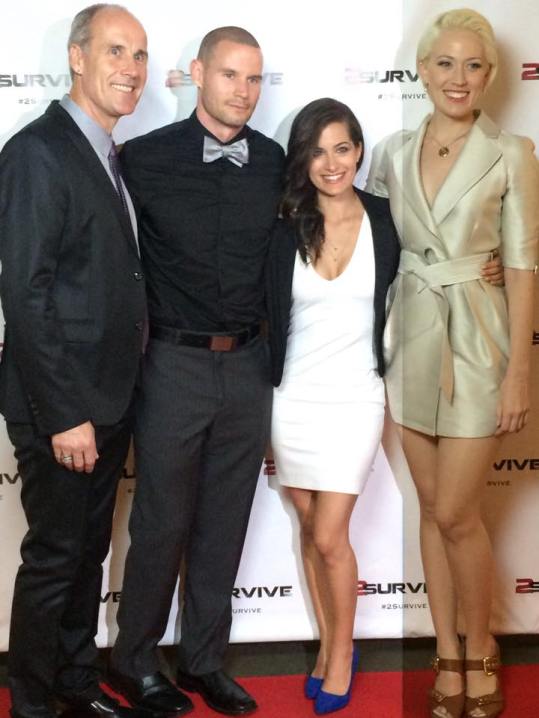
Actors Michael Laurie, Jonathan Camp, Stephanie Greco and Ingrid Haubert at the Los Angeles premiere of “2Survive”

Haubert’s costar Stephanie Greco (“Phoenix Falling,” “Rest for the Wicked”), who played Violet in the film, says, “Ingrid was a dream castmate… She is incredibly talented. I remember there were times when I was done shooting for the day but I stayed around to watch her scenes. She has an energy about her that draws people in and she lights up any room she enters. She’s magnetic and I’ve worked in this business for over a decade now and can say that is a quality most people desire, but rarely have. For her, it is just a part of who she is.”

Besides the appeal of both the story and her character, another aspect of “2Survive” that made Haubert decide the project was one she wanted to be a part of us was the unique way that the film was shot. As viewers watch the film they soon notice that all of the contestants’ helmets are equipped with cameras which, in the film’s story, are intended to capture footage from their personal perspective as they compete on the show. This was key as key element in both the fictional story and the shooting of the actual film, as Haubert explains, “We did actually film with the cameras that were strapped to our helmets, a lot of people don’t believe this, but it is true. We would often be filming a scene but having to stand in weird poses in order to ‘get the shot,’ but then also having to be natural.” She adds, “The whole making of the film was a memorable experience. It’s not everyday that you are an actor and camera operator at the same time.”

Ingrid Haubert is one actress who’s continued to captivate audiences across continents with her performances in both the theatre and on screen, and she continues to push her craft to new heights. In recent years she’s expanded the scope of her work to include performing stand-up comedy on stages across Los Angeles.

“I had a number of friends who also do stand up who had been bugging me for years to try it due to my comedic abilities. And one day, I decided to. It’s really invigorating that I can make my own material, direct myself, and basically have control over all aspects of the performance,” explains Haubert. “I’ve done shows at EXTRA Comedy Show, which is held at Junior High, Drunk on Stage at Akbar, The Comedy Stew at Bar Lubitsch, and Late Nights at the Loft Ensemble to name a few.”

Up next for Australian actress Ingrid Haubert is the sci-fi film “Birth,” which is slated to begin filming later this month and will be directed by award-winner Brett G. Walker (“The Groundskeeper,” “Box 3125”). Haubert will take on the lead role of Tehra, an alien lost in a new world.


Dewshane Williams on exploring his love of science fiction in The Expanse

image10
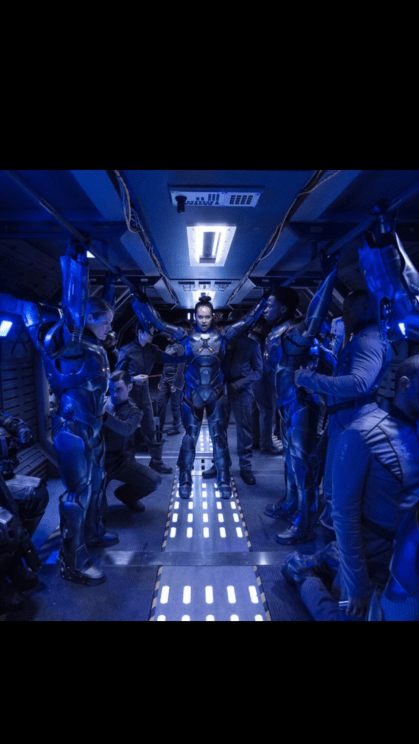
Bobbie Draper (Frankie Adams) and Sa’id (Dewshane Williams) prepare for a Martian battle in The Expanse

What audiences tend to love most about science fiction is the fact that the realm of possibilities is endless. Science fiction is known for carrying fans into unfamiliar worlds, unexplored dimensions, and uncharted territory. Both characters and storylines defy the norms of the world we know and live in; however, social dilemmas, emotions, and personality traits often stay the same. As an actor, science fiction remains one of the most unique, interesting genres to explore. For Dewshane Williams, this is because it is a genre that allows us to determine what human beings are capable of, be that within the constraints of modern life as we know it, or beyond.

Besides science fiction, Williams has familiarized himself with a number of different genres and storylines throughout his career. For instance, Williams mastered the art of drama through his stellar performance of Frank in the film Dog Pound, which portrays the life of three juvenile delinquents who are sentenced to a correctional facility where they encounter gang violence, death, and harassment from staff and other inmates. Contrastingly, Williams immersed himself into the wonderful world of comedy in 2012 for the film The Story of Luke about a young man with autism who is thrust into a world that doesn’t expect much from him. Beyond that, Williams has tried his hand at action films, thrillers, mysteries, horror stories, and much more. There are few limits to what he can achieve when he puts his mind and his skill set to work.

In 2015, Williams earned himself a role in Universal SYFY Networks’s hit series, The Expanse as Corporal Sa’id. The show follows the lives of a police detective a spaceship crew who discover a conspiracy, the first officer of an interplanetary ice freighter, and an earth-bound United Nations executive director, who slowly discover a conspiracy threatening the Earth’s rebellious colony on the asteroid belt. Between Williams’ fascination with space travel and Sa’id’s passion for serving others, Williams became enthralled with the project. In the series, Sa’id serves as part of an elite Marine Firing Squad; however, what Williams respected most about his character was embedded within Sa’id’s devotion to his planet. His willingness to save his planet inspired Williams and motivated him to adopt every trait and mannerism that accompanied that level of selflessness. Fortunately, one of Williams’ greatest attributes is his ability to transform himself into the character at hand. For some actors, identifying with a specific style of acting comes naturally; however, for professionals like Williams, it is impossible to categorize himself. He does not act according to a specific set of styles or rules. On the contrary, his versatility allows him to adapt himself to a variety of different emotions and character traits.

“The story of this show is so important because we live in an age of Space X and interplanetary travel. I think it is important to embrace the possibilities that our future holds. The concept of space travel and exploration is very real. We’re doing it now, which is incredible. This show, in a way, sheds light on what we may go through as an evolving species. It shows what we may be capable of doing; both positive and negative. Not to mention, most of the concepts in the show are scientifically possible. For all of the future space explorers out there, this might be the inspiration they need to take us where no one has gone before,” gushed Williams.

image8
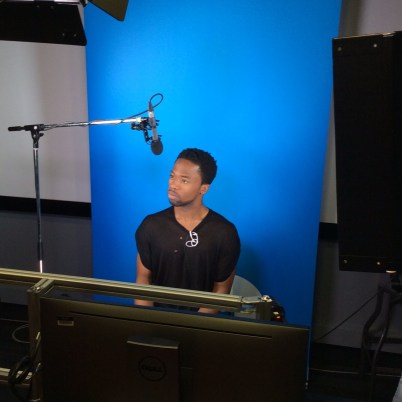
Dewshane Williams recording voiceover work for The Expanse virtual reality Game Battle For Mars.

As an avid science fiction fan, Williams loved getting into character and immersing himself in the costumes and props on set. When he was being fitted for his costume, Williams noticed something familiar about the design and upon inquiring about their origin, he learned that they were made by the same company who produce Iron Man’s iconic suit. His enthusiasm about the project grew with each day on set and the more he explored the script, the more he realized the potential that the storyline held. In fact, the show’s VFX Supervisor, Bob Munroe, took notice of Williams’ devotion to the project and solicited his help to act as the lead for a virtual reality video game based on the show’s premise. Williams was extremely humbled about the possibility of expanding The Expanse’s presence in the world of science fiction and eagerly accepted the offer to work on the video game, The Battle on Mars. It comes as little surprise, therefore, that Munroe was equally as thrilled to have Williams on board.

“The moment I met Dewshane, I knew he was a rare talent. I had such a great experience working with him that I later enlisted him to star in our virtual reality game. Considering how much VFX was required while shooting our opening scene on mars, Dewshane had to exercise a lot of patience. Not to mention, he had to wear a 40-pound suit on a hot day. It would’ve been very easy to complain but he never did. Instead, his generosity and attitude made him a standout. When I had the opportunity to create a video game for the TV show, he was the first person I called. His enthusiasm is so contagious,” said Munroe.

Now finished its second season, The Expanse has established a strong following, as well as a large amount of recognition in the industry. It has garnered a number of award nominations, as well as a win for Best Dramatic Presentation at the Hugo Awards in 2017. If you are curious to see Williams in action, as well as to see what the show’s hype is all about, start watching The Expanse now and stay tuned for the premiere of Season 3 in 2018.


Top photo: Dewshane Williams in the Virtual Reality Game “The Expanse: Battle on Mars”.

Calvin Khurniawan perfectly captures loneliness in heartbreak in Andrew Belle’s “Down”

Calvin Khurniawan believes a cinematographer’s job is much like that of a comic book artist. Both roles involve how a story is seen; they don’t write the story, but they take on the visual stimulation for audiences and readers. They add to what is originally written, and decide exactly the best way to show the story they are given. Such a unique way of looking at his job is how Khurniawan sets himself apart from other cinematographers; he can look through the lens of a camera and find the perfect and most distinctive way to capture a scene. It is what makes him so sought-after, and why he is currently one of the best Indonesian cinematographers.

 “A lot like acting, cinematographers react to actors’ inner unconsciousness by utilizing camera elements such as composition and lighting. Similar to editing, we choreograph how a scene unfolds by dictating where the audience’s eyes should look,” he said.

Earlier this year, Khurniawan worked on the viral music video “Down” by Andrew Belle. The video premiered on “Paper Magazine” in June. From there, it went on to be a “Nowness Staff Pick” and a “Vimeo Staff Pick”, amassing over one hundred thousand views on YouTube alone. The cinematography was key to such success, as it connected to aspects of the video in an artistic and meaningful way.

“It’s been delightful to hear how much people like the video. I think the biggest compliment came from the people who responded emotionally to the choreography because the cinematography is built around it,” said Khurniawan.

The choreography is what tells the story and emotions in the video, and therefore required talented dancers that Khurniawan could work with to do just that. Eventually, they found Dassy Lee from So You Think You Can Dance 2017. Together, the cinematographer and the dancers perfectly portray the loneliness in heartbreak.

The cinematographer’s input was valued for every step of the production process. Before the concept was finalized, he would create storyboards for his shots and present them to the Director, Joshua Kang, giving an expert’s opinion as to how each shot could be framed. He would then sit down with the director and the dancers to converse about what he thought would work for the video, as he knows good ideas mean nothing if they can’t be executed properly. He knew there was more to the video than dancers against a pretty background. He wanted to do more with the camera and reacted to the choreography, asking the dancers how they were feeling emotionally and designing the frames based on that. Such a unique and dedicated take was vastly appreciated by Kang.

Andrew Belle Down. Joshua Kang and Calvin Khurniawan. Photo by Kiu Kayee
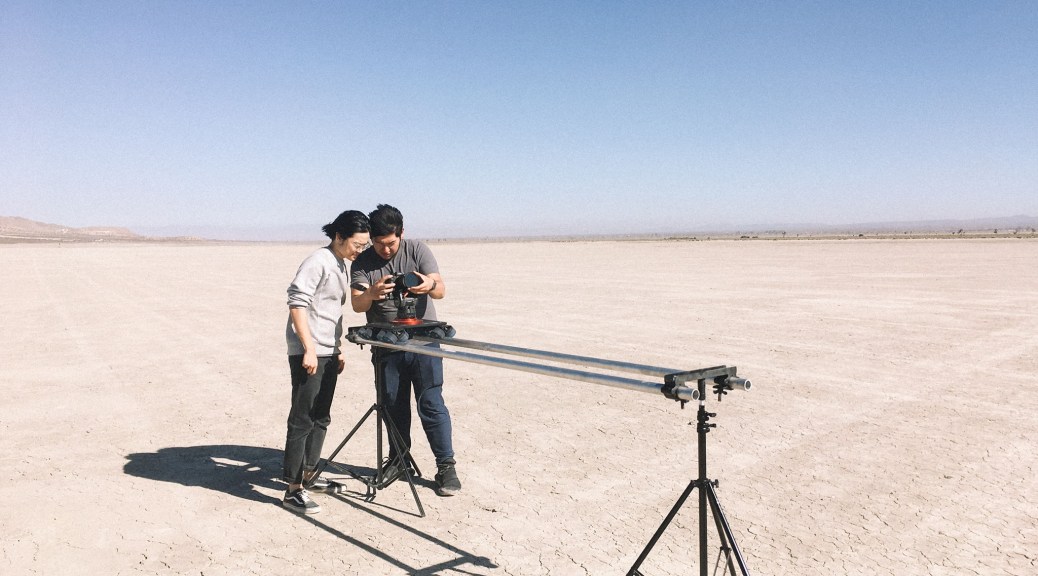
Joshua Kang and Calvin Khurniawan filming “Down”, photo by Kiu Kayee

“I love working with Calvin because he is always prepared for every project. When I show him a treatment for a project in pre-production, he brings in various different ideas on how the look for the project could be, and what he thinks would be the best within the given circumstances. Having visual discussions with Calvin before the shoot always makes the job of the day easier for everyone on set. He is someone I want on set. Not only is he kind and respectful to everyone on set, he has great set skills. Working with Calvin, I trust him and his camera crew to have everything prepared and ready to shoot on time. He’s helpful in post-production. Calvin keeps in mind how the visuals will look like in post when he shoots. When we’re sitting in a color session, he gives inputs on how the color can be corrected in the best possible way. Having a director of photography like Calvin that cares about the project until it is completely finished makes him professional and reliable,” said Kang.

Initially, Kang approached Khurniawan to work on the video. The director had seen his work and was immensely impressed. Khurniawan was interested in the project before knowing that it was for Andrew Belle, and upon hearing the artist he was immediately on board, as he was already a fan.

“Imagine getting a call to work on a music video with one of your favorites artist. It was the quickest decision I’ve ever made for a job,” Khurniawan said.

While working on the video, the ideas changed frequently, as everyone wanted to ensure it was the best it could possibly be. From a cinematography standpoint, this can create challenges, but Khurniawan never let that faze him. He was happy to work diligently to make everything effortless for those that worked alongside him. The dancers, Dassy and Jordan, were immensely appreciative of Khurniawan’s dedication to the project. He perfectly showcased their vast talent while still creating a telling and poetic video.

“This is by far my favorite collaboration for a project. Joshua, the director, liked keeping a small crew and resulted a more intimate crew. We communicated easily between one another compared to having a big crew. Dassy and Jordan presented their choreography early to us then we design everything based off the choreography. Our approach is based on the choreography really, because we wanted it to be the center of the attention. My job as the cinematographer is to fully reflect on how they’re telling the story and emotion through the movements. I thought it was an interesting approach to music video,” Khurniawan concluded.

You can watch the “Down” music video here and see just how talented of a cinematographer Khurniawan is.


Top photo – Joshua Kang and Calvin Khurniawan, photo by Kiu Kayee

Bulgarian Producer Assya Dimova: Defying Cultural Standards to Follow a Dream

The fact that certain cultures see some professions as king and count others as unworthy ‘hobbies’ should come as no surprise, but for many kids growing up in cultures where their personal dreams are seen as unacceptable, this can have a debilitating affect on their ability to confidently pursue the path they desire. We see it everyday through stereotypes, such as those of Asian and Indian descent being pushed into careers in tech and computer engineering, or others that push their youth to become doctors or lawyers. While satisfying one’s parents and conforming to cultural expectations can be heavily weighted, sometimes the inner pull of what one feels is their destiny is strong enough to defy the expectations– even if it takes a while to develop the courage to defy the standard.

IMG_8248
Bulgarian producer Assya Dimova shot by Megan Cooper

Esteemed Bulgarian film producer Assya Dimova is a prime example of one woman who was expected to pursue a path other than the one she felt she was personally meant for; but after making the definitive choice to devote herself to working as a film producer, everything seemed to fall into place naturally. Dimova, who recently produced the films “Stygian” and “Our Blood is Wine,” has secured a strong place for herself in the film industry on an international level; but it didn’t happen overnight.

During her youth growing up in Sofia, Bulgaria Dimova had an unwavering love for visual storytelling and a special knack for bringing creative talents together to realize a single vision. She recalls, “At the time, back home, the arts were not a traditional career path, especially for a girl. So I did the next best thing, I moved to Italy and enlisted in business school while actively building a taste for emerging talent,” adding however, that “the fascination with the magic of visual storytelling was just not going away, and I desperately wanted to one day be a part of bringing all those talents together.”

While in Italy, Dimova attained her Bachelor of Science in Business Administration and her Master of Science in Economics and Management of Innovation and Technology, and even though she hadn’t made the leap into the film world just yet, in a way she was already working as a producer. She began utilizing her natural ability for recognize creative talents and bringing them together

She explains, “I’ve always had the tendency to bring a group of friends together and lovingly push them to show off their talents in plays and short films. The first bigger endeavor was probably while I was living in Italy and with a small group of friends decided to create a series of concerts, cultural nights of sorts, where we presented Bulgaria to a diverse audience. We handled every aspect, from all the logistics, to involving talent, getting sponsorships, working with local media.”

By the time she was 25 Assya Dimova came to the firm realization that there was no other satisfying path for her, so instead of sticking it out in a career that didn’t utilize her natural gifts, she whole-heartedly dedicated herself to her passion– producing. Dimova relocated to the states soon after where she completed her Master of Arts in Creative Producing for Film and Television at Columbia College.

“As a producer my goal has always been to find and cultivate relationships with inspirational filmmakers who have an individual voice,” explains Dimova. And the work she’s done in the industry prove that she knows how to discover strong and innovative filmmakers with powerful stories to tell, and she’s the right producer to bring their tales to the screen.

Stygian Assya Dimova
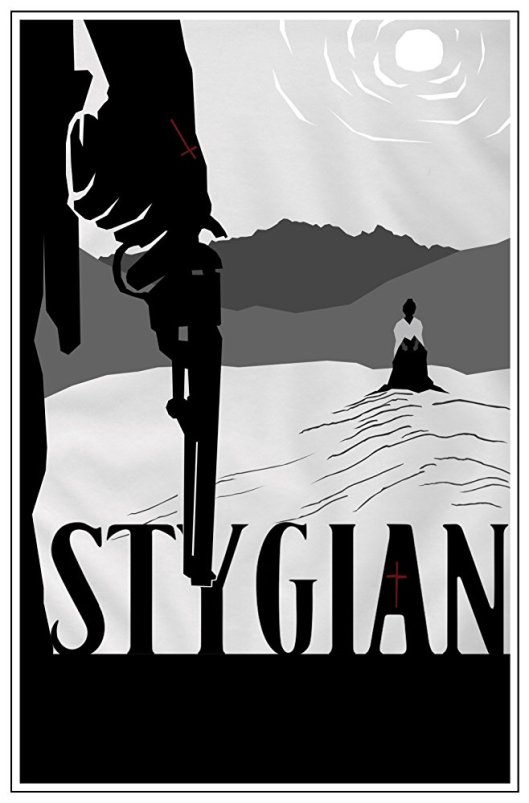
Poster for “Stygian” directed by Josh Garvin

In 2015 Assya Dimova began production on Josh Garvin’s (“Daisy,” “Uncle Evan”) dramatic western “Stygian,” a silent film that follows an old gunslinger on a perilous trek across a barren desert. The climax of the film commences when the gunslinger falls from his horse and incurs a fatal injury that leaves him suffering from dehydration and a vicious infection on the desert floor where he is left to ponder his past mistakes.

As both the producer and the line producer on the film, Dimova did everything from raising funds and managing the film’s budget, to solidifying the shooting locations in New Mexico, pulling together the right people to head each department and also managing the day to day progress of the production.

About what led her to produce “Stygian,” Dimova explains, “On one hand, there was the creative aspect. The central themes of sin, guilt and atonement make for a powerful and thought-provoking story. Josh Garvin’s vision was nuanced and passionate and it was a no brainer decision.”

Being chosen as an Official Selection of the Wild Bunch Film Festival, Globe International Silent Film Festival, New Filmmakers Los Angeles, Santa Fe Independent Film Festival and the Grand OFF World Independent Film Awards, the overwhelming acceptance “Stygian” received from film festivals around the world make it clear that Dimova chose the right story to the bring to the screen.

Besides her ability to ensure the productions she chooses are completed in time and on budget whilst remaining to true to the director’s creative vision, one of the unique strengths that Dimova brings to the table as a producer is the ease with which she is able to navigate cross-cultural film productions. A polyglot, Dimova is fluent in German, English, Bulgarian and Italian, and as someone who’s lived and worked in multiple countries over the course of her life she understands how the filmmaking process differs vastly between countries. This skill proved to be incredibly valuable in her work as the line producer on Emily Railsback’s (“The 6th Stage of Sugar,” “WarBaby”) documentary feature “Our Blood Is Wine,” which was shot in the country of Georgia earlier this year and is slated for release in 2018.

With several films and television series under her belt as a producer, and a seasoned eye for creative talent, Dimova’s experience in the industry has also led her to be tapped as a curator for film festivals around the world. Some of the festivals she’s curated over the years include the Netherland’s 2016 Leiden International Film Festival, as well as the 2016 and 2017 Beloit International Film Festival in Wisconsin, and the 2016 and 2017 Hollywood Film Festival. As a film festival curator Dimova plays a key role in the screening and voting process that determines what feature and short form narrative and documentary films will be included in each festival, in addition to be involved in discussing the festivals proposed programming.

“As a producer, one must have a wide range of taste and ability to spot up-and-coming talent. With my international experience and background, I am able to critique submissions for both their production and creative value,” explains Dimova. “As in my personal producing career, I always go for story first and how captivating, original and authentic it is. I always look for something fresh that surprises me.”

In the end, producer Assya Dimova’s success in the film industry is proof that societal and cultural expectations sometimes have to be defied in order for one’s dreams to become fully realized.

Zheng Jia highlights the importance of shaping cinematic experiences through sound

Picture sitting down on a Friday night to watch your favorite film. Your popcorn is hot and your pajamas are cozy. Just as the opening credits begin, you notice that the volume is not up. You jump up to grab the remote but to your dismay, the volume on your television appears to have stopped working. Would you continue to view the film? If so, what will you be missing? The soundtrack of the opening sequence? A character’s dialogue? Is there an interaction taking place? If so, what is going on? Is there a creature rustling in the woods? Is there a child crying? Is someone running through a crowded street? For most individuals, it would feel almost impossible to imagine grasping the full effect of a film without sound. Sound comprises the vast majority of a cinematic experience, and for a sound editor like Zheng Jia, the fate of a film often falls in her hands. She understands better than most just how integral music, dialogue, and other sounds can be to any cinematic experience. Oftentimes, it contains elements of a storyline that you cannot see but need to be aware of. It is essential to the telling of any story and it is the reason that sound editors are one of the most important members of a film production team.

When Jia began exploring the art of filmmaking, she found herself increasingly drawn to the world of sound. There was something about sound editing that gave her a sense of purpose and she never struggled to envision a future in the field.

“Gradually, as I acquired more and more experience, I realized that sound editing was not only something that I was good at, but it was also something I thoroughly enjoyed doing. I decided that I would pursue a career out of it and I never looked back. As I started to work on more and more projects, the more I understood how important sound editing is to cinematic storytelling. It’s amazing. Even though it is oftentimes a thankless job, it doesn’t make me love it any less. Despite the fact that audiences don’t always realize how creative and important my job is, it still enhances and defines their experience, so I devote myself to making it as enjoyable and engaging as possible. I love it so much,” told Jia.

Jia is a driven professional and she has acquired a breadth of experience in the years she has spent learning various sound editing techniques and styles. Her career has carried her through well-known works such as Law and Order Special Victims Unit and Farrah Goes Bang. In fact, Jia’s talents played a large role in Farrah Goes Bang’s film festival run. Screening at prestigious award ceremonies and festivals like the TriBeCa Film Festival and the Twin Cities Film Fest, Farrah Goes Bang generated a strong presence in the industry and went on to earn a number of award nominations and wins following its release. Its nomination for Best Picture at the Winter Film Awards in 2015 has much to do with Jia’s remarkable sound editing style and wouldn’t have earned the praise that it did without her contributions.

The Executive Producer of Farrah Goes Bang, Laura Goode, was impressed with the quality of work that Jia offered to her production. She couldn’t believe how committed Jia was to the film and after experiencing the value that Jia added to the film’s final footage, she realized just how talented the Chinese-native really is.


“Zheng shows exceptional drive and determination when she works, as well as a healthy store of natural talent. Her enthusiasm for film culture, as well as her prowess within filmmaking itself make her an invaluable asset to have on board any film production team,” stated Goode.

In 2014, Jia was asked to lend her talents to a Chinese blockbuster called Crazy New Year’s Eve. Crazy New Year’s Eve features several A-list stars and was comprised of several small storylines that were inevitably merged together to create one main premise. What Jia enjoyed most about the project was her ability to experience filming for a Chinese production, as she was most familiar with American-style productions in the past. She found that she was given more flexibility than she’d typically receive on an American production and enjoyed the creative authority she had to express her own interpretation of the film’s elements as she edited through each of the its components. Her role also required her to liaise between public relations specialists, sponsors, visual effects companies, editors, trailer companies, actors, and more. It was an entirely new experience for her; however, Jia is not one to step down from a challenge. She embraces any opportunity to discover new territory within her art form and she patiently tackled each new obstacle that she encountered.

“I worked with Zheng on Crazy New Year’s Eve. She’s an absolute pleasure to work with. She’s professional, punctual, creative and very easy to get along with. Zheng has got not just great knowledge of the technical skills that are required for the job, but also she’s got superb creative senses that make her have a way better understanding of how to tell the story through sound perspective, and create the sonic picture that brings the story up to the next level,” said Emma Tang, co-writer of the film.

One of the largest, most satisfying parts of being one of Crazy New Year’s Eve’s lead sound editors was embedded in the fact that each of the film’s sub-stories occurred in different parts of China. With that, she had to ensure that each different geographical location and environment was developed as authentically as possible throughout the film. She refined atmospheres surrounding cold, small, snowy towns, as well as touristy tropical islands, major cities, and more. Each of the film’s events presented a new territory to explore and the film’s success is a testament to her devotion to making each scene as realistic as humanly possible. Given the fact that only two of the five major human senses are involved in experiencing a film, she was handed a crucial amount of responsibility; however, she handled it with ease and remained professional throughout the duration of her time working on the film.

When Crazy New Year’s Eve was released in February of 2015, it screened at both the Shanghai International Film Festival where it won the Special Jury Award. It was a strong addition to Jia’s already esteemed career and gained her a number of new techniques she hadn’t mastered in the past. As for her future, Jia is optimistic. In the short term, Jia is excited about an upcoming Chinese feature film for which she will be the leading sound editor. In the long term, she hopes to acquire new projects that will allow her to develop her skill set even further and ensure that she is never limited by a specific style, genre, or type of sound editing. She is a force to be reckoned with in her field and you can expect only great things from the rest of her career.

Canada’s Victor Gilbert enchants audiences in new film ‘The Walking Man’

HEADSHOT(1)
Victor Gilbert

With his mom being a cinematographer and sister being an actress, Victor Gilbert’s impressions of movies are quite different than most children his age. He doesn’t just see something to entertain him, he understands the whole filmmaking process, and has for most of his life. At only ten years old, he can navigate a film set and understand the intricacies of what is required to make a film like many much older. That is perhaps why he already knows he wants to spend the rest of his life acting, and he is in demand not just in his home country of Canada, but internationally as well.

Gilbert’s career is already very formidable. Just this year he worked on a powerful commercial for Alberta’s public service union AUPE, and his film The Kiss has made its way to several prestigious film festivals. He has starred in five seasons of Netflix’s hit series Hell on Wheels, and even with this, he feels like he is just getting started.

“I would really like to be an actor full-time when I grow up and don’t have to be in school,” said Gilbert.

Despite not being a full-time actor, Gilbert is still quite the professional. Just last year he starred in the film The Walking Man. The film tells the story of a man who is compelled to leave his job and become a homeless wanderer. His friends and acquaintances share their opinions, and audiences are left to ponder his purpose. In the film, Gilbert plays Eric, one of the principal children who talked to the camera about “The Walking Man”. Eric was once a player for the soccer team that The Walking Man coached prior to quitting and abandoning his life. Having a child’s perspective about why the man began wandering was essential to the story’s development and how audiences felt about the entire concept.  Eric is a young boy who loves to play video games and doesn’t really take his attention away from his game when he talks. He is a ‘rough’ boy who is not very interested by what is going on with his old coach. He is asked to speak about what he saw, but doesn’t really want to since he’s so busy with his games. The disinterest in such a unique showcases a child’s innocense, and required a talented young actor to embody such a character. This is where Gilbert shined.

“My mom says many adults, like the main character of the movie, question themselves and their lives at some point, so the topic is very accurate and recurrent and impactful. It’s not always easy to deal with all the bills, and many people probably feel like they want to quit. It’s good because it teaches everybody that they are not alone and there are options and people out there to help. Maybe it’s important to take pauses in life to stop and relax and just walk, and it’s ok. Basically, don’t stress about things, and ask questions in life,” said Gilbert.

The Walking Man had its premiere screening at Orange Lofts Condos in March of last year, and now is making its way to film festivals. It was previously selected for the Winnipeg Real to Reel Festival, and the Central Alberta Film Festival. It is expected to have screenings at even more festivals soon. Such success may not have been possible without Gilbert’s portrayal of Eric. He had many lines throughout the film, and he had to stay very serious. He was only 8-years-old when the filming took place, and this is no easy task for someone of that age. However, Gilbert understood the importance of his character, and even learned the whole script by heart to comprehend the story’s importance. He then did his entire scene in just one take.

“The fact that he was able to pull through his character so well makes his presence on screen quite remarkable as you can tell he masters his lines even if he is so young. In this scene, he has to look straight at the camera and deliver his lines. He did not budge, he delivered the full script and added very brilliant luminosity to the film, as his bright eyes and his lovely and joyful character pierce the screen for those scenes,” said Derek Selinger, the Writer and Director of The Walking Man. “I worked with Victor many times before. I keep hiring Victor because of all the various faces he can pull, his lovely personality, the fact that he can remember lines so well and because he is so professional. When I called him up on filming day to come sit on the couch to deliver his lines, he came right away.”

Selinger, a well-known magician, knew Gilbert was the right person for the role in his film. Gilbert had to sit on the couch and play on a Nintendo GameBoy, and then talk to the camera. While saying his many lines, he always stayed in character and very serious. He describes The Walking Man and what his character saw, and does so in a confessional sort of way. Such a style requires extreme focus, as the camera sees every aspect of your face. It also requires a rawness, as the scene had to present in the style of a documentary interview. With the distraction of the video game console, this could have been difficult for many child actors, but Gilbert embodied it perfectly. Besides, for the young actor, this was a dream come true, as he still got to play video games, something he already enjoys. 

Derek is just really nice. He is not stressful, he helps his actors and makes the set very comfortable. He takes his time to explain the set, he is all prepared already when we show up on set, so things go super fast. Like, the fastest I have seen,” Gilbert described.

However, even though he got to play video games and work with people he liked, the best part of Gilbert’s experience shooting The Walking Man came from an unexpected source.

“Derek is a magician. A real magician! He does shows on big stages. So, he is a very interesting person. He does magic tricks sometimes on set,” said Gilbert.

Check out the tralier for The Walking Man here.

Michael Whalley talks playing make believe for a living

Headshot pic Sheridan Harbridge
Michael Whalley, photo by Sheridan Harbridge

When adults are asked what they miss most about childhood, their answers tend to have to do with the loss of their imagination. Children are known to imagine without limits and to dream without fear or understanding of failure. With that, children allow their minds to carry them into different worlds; worlds through which they create, discover, fantasize, and invent. Much like children, actors and actresses transform themselves into the characters that they portray and they do so without constraining their imaginations. They will stop at no lengths to mold their characters to fit into a plot line and they devote themselves to telling stories as convincingly and engagingly as possible. For actors like Michael Whalley, there has always been an undefinable intrigue to playing make-believe for a living and he has established a remarkable career out of exploring the industry that goes along with it.

Throughout his career, Whalley has acted in a number of award-winning films, such as Slow West and Jean. He has earned himself a reputation for his profound ability to bring his characters to life before his audience’s eyes and he accepts nothing less than the best from himself, regardless of the role or film. Just this past year, Whalley landed himself the role of Hugo in The Pretend One. The Pretend One depicts the emotional rollercoaster that unfolds when an adult woman’s imaginary childhood friend, Hugo, finds his existence threatened by a real, live love interest. Essentially, Hugo is the product of the main character, Charlie, who attempts to combat her loneliness after the death of her mother. As adults, Hugo and Charlie have to navigate their feelings for each other and their relationship when Charlie’s romantic interests steer in different directions. Hugo’s very existence is dependent upon Charlie’s attention and he is therefore determined to keep himself and their love alive.

“Hugo is pivotal to the storyline because he is the reason that the film was written in the first place. The unique thing about this story is that it deals with the existence of an adult imaginary friend, even though we typically associate imaginary friends with children. To think that an imaginary friend can have as many complex feelings as we do is something I hadn’t seen before. Witnessing Hugo grow aware of life and it’s worth was enlightening. His quest to become real is the burning centerpiece of the film,” told Whalley.

SONY DSC
Michael Whalley with Geraldine Hakewill, photo by Benedict Wall

Not only was The Pretend One an unusual storyline, it was also filmed in an extremely unique fashion. Whalley recalls it as being one of the rawest and fulfilling experiences of his career, having much to do with the fact that he and the other cast and crew members of the film disconnected themselves from reality to enhance their focus on their work and to produce the most organic, authentic performances that they could conjure up. They filmed on a cotton farm, far from cell phone and internet reception. In addition, cast and crew members all lived in mining huts on location while filming, requiring them to bathe in the farm’s lake, to eat the local cuisine, and to detach from modern day pleasantries.

When it came time to film their scenes, the actors and actresses were expected to deliver a wholesome, fully attuned performance. They rehearsed where possible, and improvised where necessary to sell each scene effectively. Whalley, who has a profound ability to gain the trust of his director, adopted what he calls a “two for you, one for me” rule while filming whereby he received permission to shoot two options: the first one as the way that the director wished, followed by one take where Whalley could feel out the scene and act as he saw fit. Fortunately for Whalley, the majority of scenes that he took creative authority over ended up making the film’s final cut.

Dinusha Ratnaweera, who produced The Pretend One, had nothing but positive things to say when asked about Whalley’s performance. He was astounded by the way the actor’s performance has been received by those who have seen the film so far and is eager to see what will be said once the film actually premieres. After seeing Whalley dedicate himself to the part of Hugo and doing everything in his power to meet the demands of the film, Ratnaweera earned a new appreciation for his talents.

“This was not the most traditional territory to film in, but based on test screenings that we’ve had so far, Michael’s performance has been very well received and praised. I believe he took a risk with this role, but he more than achieved a nuanced, sensitive, compelling portrayal of what is indeed a very complex role,” said Ratnaweera.

The Pretend One is set to premiere in 2018 and Shoreline Entertainment will be responsible for its worldwide sales and representation. In addition, cinemaaustralia.com.au recently gave the film an extremely rare, 5-star review. Whalley is very excited to see how the film will fare with the public and hopes that it will reflect the hard work and dedication that each member of the project put into it. As for the rest of his career, Whalley is taking things one part at a time. He is currently preparing for the world premiere of Muriel’s Wedding: The Musical. Upon closing Muriel’s Wedding: The Musical, he will embark upon his first pilot season and from there, he hopes to continue playing make believe for as long as he possibly can.


Top photo: Michael Whalley and Geraldine Hakewill in ‘The Pretend One’, photo by Rob Morton

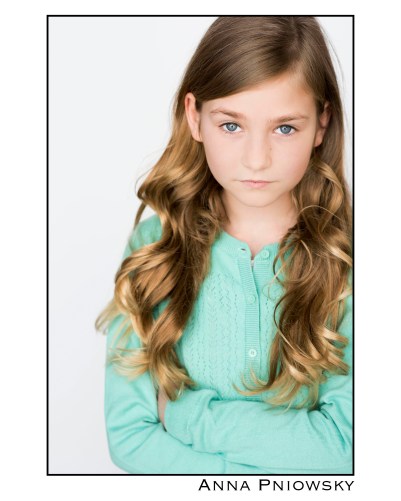
Wait ‘till you see Anna Pniowsky in “Wait ‘Till Helen Comes”

file 2016-12-02, 2 07 11 pm
Photo by Kevin McIntyre

When most parents ask their child what they would like to be when they grow up, they often expect to hear answers like “actress” or “singer,” and simply hope that the novelty will wear off with age. For Anna Pniowsky’s parents, however, this is not the case. Not only does Pniowsky have a burning passion to be an actress, she is not ready to wait until she’s an adult. At the young age of 12, Pniowsky is proving to be a force to be reckoned with in the entertainment industry, and she is certain that this is what she wants to be doing for the rest of her life. For Pniowsky, acting provides her with a platform to unleash her creativity, and it is an outlet to transform herself into each new role that she takes on. She loves all aspects of her job, and she soaks up any opportunity to learn from other professionals every time she steps on set. From camera operators, to hair and makeup, she will stop at nothing and at no one to expand her knowledge and skills in the acting world. Knowing that she has an opportunity to evoke unfamiliar emotions from her audience is what motivates her to keep her head down and focus on her craft, something which she aims to continue doing as she builds her career.

When asked about what initially lead her to the idea of becoming an actress, Pniowsky cannot pinpoint an exact moment. For as long as she can remember, acting has been a world that she was drawn to and that passion has only ever grown with time. Despite her age, Pniowsky has already won herself lead roles in films working with well-known cast members and directors, such as her lead role in Light of My Life, for which Pniowsky was directed by and co-starred with Oscar-winner Casey Affleck. When she sets her sights on a role, there are few limits to what she can achieve and she immerses herself into roles in ways that some established actors and actresses could only admire. Pniowsky is wise beyond her years and she has pieced together a remarkable career path very early on in her life.

At the mere age of eight, Pniowsky landed herself her first ever role in the film Wait ‘Till Helen Comes. The film, which can also be known as A Little Girl’s Secret, is about a reconstructed family who moves to a converted church in the country. When a 14-year old Molly realizes she has a gift that she must use, she has to face her deepest fears and save her troubled step-sister from a dangerous relationship with the ghost of a lonely little girl. In this role, Pniowsky played the powerful role of a young girl that goes missing, walks into a river and drowns. Her character was instrumental to the horror film’s plot line and needed to be played by a highly attuned actress who would know how to keep with the atmosphere and the mood of the storyline. By walking into the river and drowning, Pniowsky’s character helps the audience to draw the chilling conclusion that the story’s antagonist, Helen, targets young girls and leads them into the river to drown. Pniowsky set the scene for the entire film, and without her talents, the film would not have earned the reputation that it did.

As a learning experience, Pniowsky could not have asked for more. Not only did she gain exposure to working with other actors on set, as well as taking direction from a vetted production crew, Pniowsky also gained experience shooting a physically and psychologically demanding scene. She was tasked with shooting the film’s opening scene in close to freezing water. The water was so cold, in fact, that she was immediately pulled from the water and placed in a hot tub when the scene wrapped in order to ensure that there was no damage done to her body from the cold. Pniowsky handled the tasking scene with a high degree of professionalism and ease. Even when there was a flaw with the camera, and she was asked to shoot the scene again, Pniowsky got back into the character and executed the scene flawlessly for a second consecutive time.

Victoria Sanchez-Mandryk, who produced Wait ‘Till Helen Comes, was shocked to experience the caliber of acting that she received from Pniowsky at such a young age. She learned very quickly that Pniowsky’s acting skills rival that of highly experienced actors and actresses who have dedicated a lifetime to their craft. According to Sanchez-Mandryk, “Anna is like an old soul, who quietly watches and listens with wisdom beyond her years, taking everything in. When action is called, she delivers in full force.” To receive such high praise from a professional like Sanchez-Mandryk is not a small feat. For Pniowsky, however, it simply motivates her to continue mastering her artistry and showing the world what she is capable of.

As Pniowsky patiently awaits the release of Light of My Life, she continues to search for new ways to challenge herself and push her acting abilities to the limit. She considers herself extremely fortunate to have earned the experience that she has earned thus far in her career, but aims to build on those successes for many years to come. Keep an eye out for Pniowsky as she continues to rise to the top.

Cinematographer Ismaël Lotz talks award-winning film ‘Who is Alice’

Ismaël Lotz sees life through the viewfinder of his camera. He knows the power that film can have, and the artistry that comes from making one. As a cinematographer, he ensures that every single shot is perfect. Everything is important; from lighting, to lenses, to the smallest movement of his camera. Such dedication takes more than just talent, it takes unparalleled drive. Very little people actually possess such a trait, and Lotz is one of those few. His work ethic and outstanding capabilities as a Director of Photography have led him to be one of The Netherland’s best, and he is now internationally in demand.

Throughout his esteemed career, Lotz has worked on many critically-acclaimed projects. His documentary I am Famous tells the story of Tom Wilson, famous for his role as the antagonist Biff in the Back to the Future films, and living with that notoriety. As a child, that series was one of Lotz’ inspirations for becoming a filmmaker, and now, those he idolized he now works alongside.

The highlight of Lotz’ career, however, is his recent film Who is Alice. This internationally-acclaimed comedic drama whisks the audience away on a humorous, non-conventional quest to avoid suffering and find happiness. Lotz, known for his work in cinematography, also took on the roles of co-director and editor for the film, knowing that understanding such positions would make him a better cinematographer. His involvement from pre-production to post-production helped make the film an enormous success.

“The reason we wanted him as Director and Director of Photography is because of his talent and passion. He is known as one of the best Directors of Photography in The Netherlands and the quality of his work is outstanding,” said Paul Smit, the Writer and Producer of Who is Alice. “It’s always a pleasure to be working with Ismaël. He is passionate, creative, intelligent and able to exceed people’s expectations. Actors that I’ve worked with told me that they had never seen a Director of Photography like Ismaël. Normally it takes two cameramen to do what he is doing all by himself. Besides his talent, he is very easy to work with and always aims for the highest level.”

Who is Alice premiered in the city of Helmond, where the film was shot, with several sold-out shows. It then went on to several prestigious film festivals, such as the Los Angeles Film Awards, Festigious International Film Competition, London Independent Film Awards, Miami Independent Film Festival, Hollywood International Moving Pictures Film Festival, TMC London Film Festival, Actors Awards, and the Move Me Productions Film Festival. winning over 25 awards throughout them.  Amongst these accolades, Lotz was recognized for his outstanding work as Director of Photography, and took home the prize of Best Cinematography at the New York Film Awards, not to mention the recognition he received for his work as Director and Editor all over the world.

“It’s very rewarding and feels great that the film has achieved what it has. I am so proud on what we’d accomplished with our work. It brings a big light on my future endeavours as an international filmmaker,” said Lotz. “It makes me very proud to have won the award for Best Cinematography. But besides the awards for several departments on the film, the biggest reward is that complete strangers approached me and told me what they think of the film. It leads to very pleasant conversations with all kinds of different people. It’s inspires me to keep working on more projects like this.”

On-set, Lotz worked closely with his co-director Robert van den Broek to ensure the all-star cast was working to their fullest potential, and that the two directors were always on the same page, which was essential to Lotz’ cinematography. Many times while shooting, problems can arise and situations can change, making what was planned in pre-production alter drastically. As a cinematographer, adapting quickly to these situations and coming up with equal or better alternatives is a must. At one point while shooting, Lotz and his team lost a lot of time because of a power outage. The solution was to do the scene in one take. In hindsight, it is now one of Lotz’ favorite scenes of the film, as one take scenes are immensely challenging for everyone involved, but create an authenticity for viewers, truly transporting them into the film.

Lotz is known for the energy he brings behind the camera. He is a team player and plays to his crew’s strengths. This brings a creative freedom for everyone to work toward his vision, creating a harmonious working environment, which is essential to the success of any film. It was working on such a great team that made the experience of making Who is Alice extraordinary for this cinematographer, and knowing the story they were telling was important and would impact audiences is why the filmmaker began this journey in the first place.

Who is Alice carries us on a funny, compelling and sometimes cringe-worthy journey into the highs and lows of what human beings will do to try to avoid pain and connect to happiness. It’s about being yourself in a world full of big egos. It shows how big the power plays are in the entertainment industry in a funny way. While it also shows the drama of Alice’s life, I think the movie carries a lot of spiritual elements with it. Who are you? And if you found out who you are, what are you doing with that knowledge?” Lotz concluded.

Who is Alice is now available on worldwide streaming services such as Amazon, iTunes, and Hulu. Those in China and Japan can also look forward to seeing the film soon, as a distribution deal has just been signed. No matter where you are, be sure to check out Lotz’ outstanding work on the film.

Everything you ever wanted to know about Hollywood's who's-who.