JAPAN’S KENJI USUI IS PUSHING THE MUSIC SCENE FORWARD, ONE BAND AT A TIME

The music industry and the music scene in America are completely different from what it was even just ten years ago, and it is continually changing. Napster of course led to the upheaval of the music business. There is still conjecture about the result of this occurrence and whether it’s effects were beneficial or detrimental to the music world. One side insists that it was blatant piracy, a crime that deserves severe punishment. Others state that this “anarchy” leveled the playing field which led to a resurgence in the artists taking control from music industry executives and the birth of the DIY movement in the US. For quite some time now, the Japanese have been attracted to American bands and artists, taking careful note of it. One person who has done this is Japanese artist Kenji Usui. Usui is a prevalent part of the Japanese music scene who has also pioneered much of the ever growing Japanese independent music terrain. As an established Japanese artist, Kenji has made it his mission to increase visibility for the less established Japanese musicians as well as visiting foreign artists and bands.

With a long list of band credits and recordings that include; Blackjack, SPOON, Allies and Aces, Pororocks, and An Atomic Whirl, Usui has become weaved into the Japanese musical tapestry. He is highly recognized for his talent on multiple instruments (Vocals, Bass, Drums). As someone who climbed up from obscurity to become one of the most recognizable faces in the Japanese music world, Kenji understands how difficult a job it can be to simply gain a platform from which to express one’s own artistry. With that in mind, he set about to establish the opportunities for other artists to accomplish this.

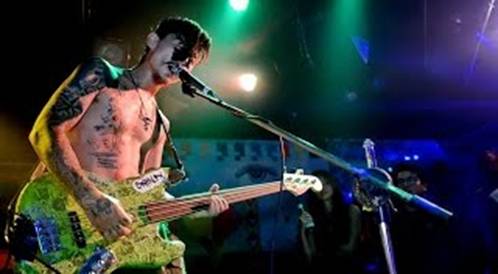
an-atomic-whirl-promo-photo-2014

One of the most direct and successful means of Kenji helping to expose artists to the scene was as cofounder of Noise Union Japan Records. This label has been a way to connect bands from Japan and surrounding countries. Noise Union Japan Records is a way to promote bands and develop a network that will allow artists to grow and expand. Founded by Kenji Usui and Chikashi Gushiken, this label seeks to showcase the best artists from not only Japan, but also Taiwan, China, Hong Kong, Korea, and other countries in the region. Gushiken (Noise Union Japan Records co-founder) gives credit to Usui’s affable nature as well as his love of music for enabling the success of this record label, commenting, “Kenji has a knack for meeting people and finding a way to incorporate them into Noise Union Japan. Every time he goes to a show in Tokyo or travels to a different country, he comes back with multiple new contacts and new ideas for booking events or festivals. He is highly motivated and productive, driven by a genuine passion for growing the music scene.”

As a member of Anit-Clockwise Productions, Kenji helps to organize events around Tokyo. Whether it is a local band or an international artist touring Japan, Usui understands the necessity of having an experienced hand on deck. As a member of many different bands over the years (Anti-Clockwise Productions recently produced and shot the music video for “Sanlitun” by Kenji’s band An Atomic Whirl) Usui is particularly empowered to make the process much less cumbersome for bands from any location in the world. It has afforded him the chance to gain knowledge and insight, as he reveals, “The best thing about working with bands from other countries is the inspiration and new perspective it gives. For me, working and touring with bands from other countries has been the most rewarding part of playing music over the past several years and I look forward to doing more of this in the future. It seems that US musicians are very interested in Japanese music and culture. I am always impressed by the level of creativity and experimentation coming from US bands, and I think that there is very fertile ground for cooperation and collaboration between these cultures in the future.

The Tsuruginomai Festival in the mountains of Japan, showcases the deep underground of Tokyo’s music scene. Kenji has aided founder Kohei Noda with this festival every year since 2010, assisting with the production and booking, as well as performing with various acts each year. As an artist who has toured playing international festivals, Usui has been an essential part of helping to coordinate this festival and others to increasing success and attendance since its inception. Kenji confirms, “I regularly perform at the Tsuruginomai Festival with Pororocks, An Atomic Whirl, and Kissaco, as well as playing onstage with various friends’ bands. Being a performer gives me an immediate understanding of what the artists on the bill are experiencing. It’s important that I keep in touch with this to give both the bands and the audience a better concert experience. It is often difficult, but it’s also rewarding. Some of the best bands are the bands you never hear about; being a part of an event like this, you are exposed to these bands. There is always someone knew who is bringing a new idea or style to the music community. It’s exciting when you witness that.”


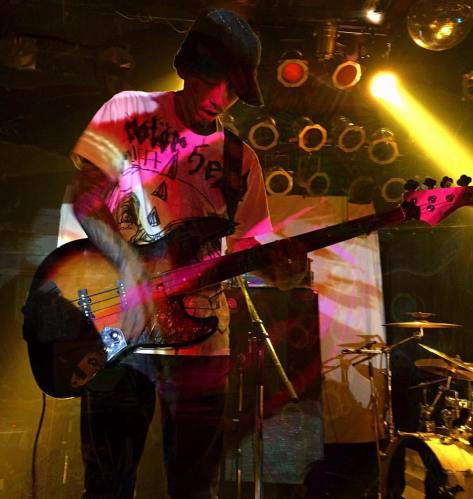
pororocks-in-2016

BRINGING THE GREAT CONCERT HALLS TO CLASSICAL MUSIC FANS

Cadu Byington has been on tour and is ready to sleep in his own bed again. He is not playing in an indie rock band or the DJ for a famous rapper; Byington is the sound engineer/music producer whom Jakob Handel tagged to work with him to capture performances by classical and contemporary artists at some of the most famous and historic venues in Germany and Switzerland. Handel Classic Audio wanted to enable classical music fans to hear these famous ensembles in their home venues to pay tribute to the composer, artists, and the acoustics of these iconic acoustical structures. Jakob Handel (Grammy nominee, Latin Grammy award-winner, and German Echo Klassik award-winner) has the credentials that attract the elite of the international recording industry. Handel’s work with Sony / BMG record labels, Universal, EMI and several independent labels has empowered him to gain access to many historic venues for recording purposes. For his latest passion project, he wanted to gain access to some of his favorite venues in Germany and Switzerland, and he wanted Cadu Byington as the expert he trusted on this project in a very hands on manner. Jakob Handel explains the decision for this choice declaring, “Cadu is a very talented producer; over the past few years he has come to dominate all aspects of a production. He is also a great musician, a feature that I think is the most important for a music producer. One must think musically more than technically, and know how to convert this musicality with the available technical resources; this is the secret weapon to becoming a successful producer.” The recordings would require them to quickly access the personality and intricacies of each venue and tailor the recording process uniquely and efficiently to each performance. With a full understanding of the challenges and demands of this opportunity, Byington welcomed the chance to test his abilities and deliver a product up to the standards of the Handel Classic Music name. Handel and Byington had been associated since 1999 but this was a major undertaking on which the two would work together. To fully appreciate these recordings, one must understand the approach that was taken to attain them. At a time when recording software has made everyone feel that they are a true recording engineer, a glimpse into the process that Byington and Handel undertook gives evidence to true mastery of the recording process at its best.

For this undertaking, the recording process was different from both a studio setting and conventional live scenarios. Handel Classic Music wanted to record at three different venues; Rosengarten in Germany, KKL in Lucerne, and Tonhalle in Zurich. The acoustic identity of these locations as well as the ensembles famous for residing there are so lauded and respected in the classical music industry that Handel Classic Audio wanted to bring the experience of hearing them to the world. Music fans have spent so many decades listening to music produced in studios that they may have forgotten (or even not be aware of) the fact that many of the historic concert halls were designed by architects to create the optimal acoustic environment to deliver a moving musical experience. Today’s modern effects are based on the acoustic benefits of these historic musical venues. Modern concert sound systems are so ubiquitous that many audiences have never attended a performance without them. Handel Classic Music wanted to deliver a more purist experience. Byington states, “The approach is totally different. In a concert hall, we want to have the sound in its purest forms, without the interferences of PA systems, and with everyone playing at the same time, like a real concert. The halls were designed to “mix” the sound “’n the hall’. In a studio, you don’t usually have all these acoustical qualities, and you have to add artificial effects to emulate the hall sound. Besides, there are few studios that have room to fit a large orchestra.”  While operating a large sound system requires one skill set, recording a performance while delivering the unique qualities of an individual location is a completely different talent.

Mannheimer Rosengarten in Mannheim, Germany has hosted concerts by contemporary artist like Sting, Simply Red, and many others but, it is mainly home for the classic orchestras and operas for which it was designed. Cadu and Handel traveled there to record the opera Der Prinz vom Homborg by German composer Hans Werner Henze. This Art Noveau structure was built between 1900 and 1903. As a traditional concert hall, Rosengarten has beautiful natural acoustic qualities. These characteristics can be overwhelming or beneficial depending on the abilities of the engineer in charge of assessing them. Byington explains, “When you enter a new hall, you have to sit and listen for all its qualities. Listen carefully to the rehearsal, and “learn” the hall. If you have a profound knowledge of your gear, you will know what to do in order to have the sound. The halls have dampeners and baffles, but in much bigger proportions. Based on the style of the repertoire, you’ll base your approach on more or less reverb, more or less microphones. This means that the venue characteristics as well as the piece of music and style need to be factored in when making the choice of microphones and placement.”

KKL concert hall in Lucerne, Switzerland is both aesthetically and acoustically stunning. This world famous venue is home for the Lucerne Summer Festival. Cadu travelled there to record the performance of Turkish pianist Fazil Say who played Ravel’s Piano Conceto in G. For this recording, Byington needed to take a delicate approach which took advantage of the tremendous natural attributes created in Jean Nouvel’s impressive design. Byington describes, “We did a light set up with 12 microphones, using a main mic technique known as the Decca Tree. The Decca Tree consists of three identical microphones positioned in a triangular shape above the stage. It takes this name because of the DECCA RECORDS engineers who made it popular as a nice way to get the overall sound of the orchestra while at the same time having a nice stereo image. In addition to the Decca Tree, we used other spot mics placed close to sections (like strings, woodwinds, brass) and a pair for the piano solo. The hall has such a wonderful sound that using too many mics can result in eliminating the characteristics for which it is known and loved.”

The final recording took place in The Tonhalle in Zurick, thought by many to possess the best acoustics in Switzerland. Cadu was recording a production which partnered American rapper Saul Williams and composer Thomas Kessler. A mix of rap lyrics with classical music. This truly unique and modern pairing required an engineer with both traditional and modern sensibilities. It was further proof that Byington was the perfect choice for Handel on this project. For a number of reasons, the mobile approach was well suited for this situation as Cadu relates, “It is very difficult for a traditional orchestra to go to a studio nowadays. It is very expensive to have an orchestra inside the studio just for a recording, that’s why we record live and on location. For the recording in the Tonhalle, we did three days of recording. We had singers, and a full orchestra with a lot of percussion, which required a setup of around thirty microphones. The approach was very similar to KKL Lucerne, but we captured the audio with much more detail, closer positioning, and more mics. The piece was an orchestral arrangement for some Saul Williams texts ‘said the shotgun to the head’.”

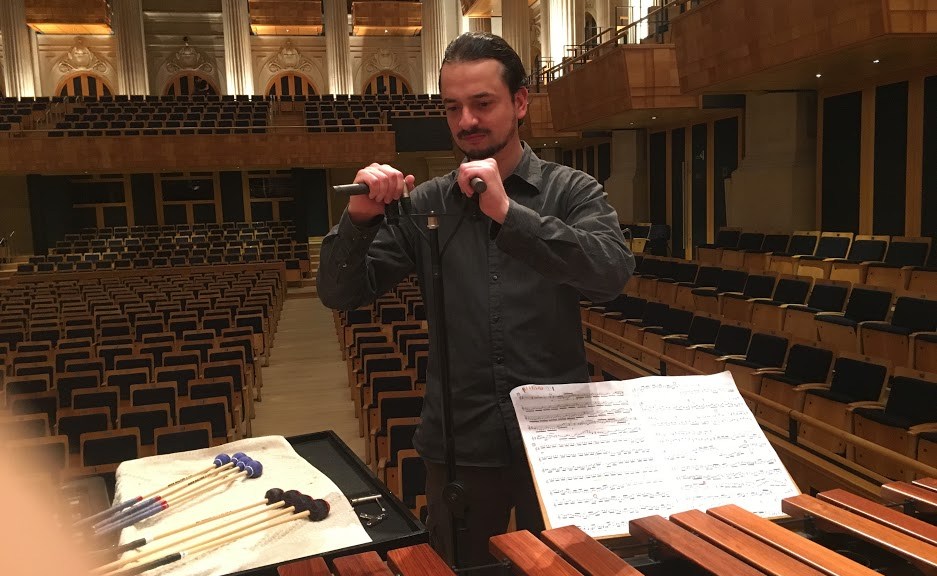
photo4

  The experience was quite demanding of Byington, Handel, and everyone involved. A myriad of microphones was required to cover any possible situation. The recording crew also needed to travel as lightly as they could, assess each venue quickly and accurately, and set up as efficiently as possible. While recording in a studio allows for multiple takes and splicing of takes, this recording project meant that each recording had to be perfect as there would be no multiple takes or overdubs. Although everyone spoke the universal language of music, the technical aspects of recording and the different locations often necessitated the musicians and engineers to communicate verbally in a language that was not their native tongue. It called for everyone involved to conduct themselves with the highest level of professionalism. Byington feels that he grew in his abilities as well as his appreciation for the musicians whose performances he recorded. He notes, “I learned a new standard in my profession, the standards of Europe for classical music is the reference for the rest of the world.” The recordings themselves pay tribute to the honorable history of the venues, the talented musicians who performed the pieces, and the mastery that Cadu Byington used to deliver them to the world.


STEFAN HILLESHEIM: CONTINUING THE LINEAGE OF THE BLUES TRIO

Jimi Hendrix. Eric Clapton. Stevie Ray Vaughn. These names are so iconic that even those who are not avid music fans know exactly who they are and why they are so famous. These three musicians have a great deal in common even though their lives and careers span different eras. All are iconic guitarists who have easily identifiable signature sounds. All of these men were heavily influenced by the blues. Equally significant, all of them had noted careers as sidemen before stepping up to front their own bands. It’s a scary move to leave a successful situation because you feel you want a vehicle to express your true artistic voice. Stefan Hillesheim agrees with this. Hillesheim had a thriving career in his native Germany, being recognized as one of “The” guitarists in Germany and Europe. As a member of BlueSide (the highly lauded German Blues band) and touring guitarist for Celtic Dreams, he was playing to sold out shows in Clubs and concert venues. The difference between an artist who uses music to achieve their goal of living a comfortable life and one who uses their abilities to vehemently pursue their art is vast; Stefan is the later. Although he founded the Stefan Hillesheim Band while still playing in other groups in Germany, the experience planted a seed that would ultimately lead him to pursue his own brand of Blues Rock (something he also shares with the previously mentioned iconic guitarists/artists) in the US, the place Stefan and others recognize as the birthplace of this genre.

A quick google or YouTube search of Stefan Hillesheim will allow you to access a multitude of videos in various group setting of this guitarist performing; one hears the deep,soulful, and melodic playing of this guitarist. There is always a nod to the greats of the Blues, whether it be Albert King or someone more rock influenced like Hendrix. Like the playing of the guitarists who came before him, Stefan is always conscious of adding his own subtle twist to the music. It’s important to Blues artists to say something we can all relate to and recognize, without repeating someone else’s statement verbatim. When Stefan decided to make the move from sideman to fronting his own band, it wasn’t out of conceit or any ego motivated factor…rather, it was out of humility. He explains, “Part of the decision to start my own band was curiosity. I just wanted to know what it’s like to be the lead singer and guitarist of a band playing my music. As a Band Member, you definitely have to make sure the singers sound good, your lead parts don’t interfere with the vocal melody, and your playing compliments the vocalist. Being the lead singer and guitarist gives you more creative freedom but at the same time you’re in charge of all the cues and have to maintain a very clean body language so that your rhythm section can pick up on it and understand what you’re trying to communicate.” Both seeking to further his musical voice and gaining empathy for the vocalists whom he has worked with are attributes that have made Stefan a desirable commodity in the music world. It might have been easier for Stefan if he stuck to playing with the groups he was already associated with but holding back his own artistic growth was more difficult to accept than winning over new fans. The Stefan Hillesheim Band had to win over fans on their own, which is not always an easy task. Stefan relates, “I think that our fans in Germany are very loyal and into hand-made music but they always want to hear the same songs and are sometimes hard to convince of new ideas and styles. I think that in the US there is a bigger and faster paced market for music.  Fans here are used to a bigger variety of live bands and they are more responsive to new material.”

Any great power trio requires a rhythm section that possesses an almost telepathic connection. Stefan chose drummer Alex Sauerlaender and bassist Mathias Wendels due to their exemplary playing and reputation in the European Blues/Rock scene but, equally as important…the fact that these two have played together for two decades. Hillesheim required a rhythm section that could essentially move as one entity, always able to serpentine with the twist and turns he would make as a vocalist/guitarist. Sauerlaender (who has been involved with a number of highly respected German rock and blues bands, including; Lucifire, BlueSide, Catastrophe Ballet,  Jet Set, and over a dozen others) remarks, “All the success that the Stefan Hillesheim Band experienced can be set upon Stefan’s shoulders. The band would never have existed if not for his drive and talents as a musician. He was truly the face of the band, and his skill as a frontman built the band into its highly esteemed reputation in the German music industry. The show that we performed at the famed Excalibur venue in the city of Koblenz, performing to a cheering, sold-out crowd, was indicative of the excitement and acceptance of the band’s fans. It was truly exciting to be part of a group which created such a feeling from fans.” One of the most memorable gigs for Hillesheim was the last one he played in Germany before relocating to the US. A true artist never rests and is always in pursuit of cultivating their sound and “voice.” Stefan had always known that he needed to move closer to the birthplace of the Blues in order to gain a deeper understanding of its essence. As he had done before, Hillesheim left a clamoring following and profitable career to start over again in America. He had a memorable send-off from musicians and fans alike. He recalls, “I would say one of our most memorable gigs was my last gig in Germany before I moved to California (2 years ago). It was sort of a going away party/concert and we played 2 long sets with a number of special guests and surprises. The audience was very responsive and totally into the music from our first song on. We played multiple encores. It’s hard to leave family and friends. I’ve started the trio all over again with players here in the US.  It is definitely challenging to move out here and see if people like your music. So far my experiences have been really positive and I can totally see myself playing more solo and trio gigs with my own band.”

Everyone can relate to the difficulty of venturing away from the familiar and into the unknown. Few can relate to moving to a completely new country that speaks a different language. Only a fraction of those can relate to doing so in pursuit of an artistic vision. Stefan Hillesheim is comfortable with sacrifice for his art, it’s a compulsion for him. Let those with ears hear.

stefan-hillesheim-band-01

Director Ben Bhatia builds a strong stomach and strong story for Channel 5’s Benidorm ER

Some may hear about Ben Bhatia’s most recent experience in Spain and assume he was a doctor. He wasn’t out soaking up the sun. He spent most of his time in the hospital, seeing the injured and ill. But he wasn’t there as a medical professional. He was there to tell their stories.

Bhatia was the director/producer on Channel 5’s hospital documentary series Benidorm ER. The show is based at the busy hospital Clinica Benidorm in Spain and shows real-life British vacationers that have been admitted to the emergency room due to an illness or an accident. Each episode follows patients from the hospital admission right through to being released. To add some additional color, Bhatia also filmed some follow-up stories that would show what the vacationers would do next to enjoy their last days in the sun.

Benidorm ER was an interesting show to work on. Being based in the Spanish holiday resort of Benidorm in one of its busiest emergency rooms, I got to see the other side of a holiday that most holidaymakers would prefer not to see,” said Bhatia. “It was a real honor.”

Bhatia was recommended to work on the show after working with another producer/director Georgina Kiedrowski, who worked with him on the BBC Three documentary series, Sun, Sex and Suspicious Parents. She thought that he would be an asset to the team after working on other similar projects.

“We needed a director with experience of working with sensitive and emotional contributors as well as somebody who could hit the ground running due to the tight turnaround of the show,” said Kiedrowski, the senior producer/director for Blakeway North Productions. “Ben really exceeded Blakeway North’s expectations and it was soon apparent that he was a real asset to the production. As a director, Ben is very hard working and is extremely creative. His storytelling and directing skills are impressive and his ability to think on his feet are skills that are hard to find in this industry. The fact that he is multi-skilled in being able to shoot, produce, direct and still stay companionate is a real talent.”

Apart from working with the hospital staff and patients, Bhatia mostly worked with a small crew of six people. This worked very well to cause minimum disruption and allowed normal practice to continue at the hospital. This made it easier to maintain access to the hospital. It is a big thing for a hospital to allow access to film crews, so keeping everybody happy, including staff and patients is paramount.

“This show was challenging as it was literally a case of seeking permission from the patient as soon as they walked through the door. A story which isn’t followed from the moment it starts isn’t as interesting. To watch a patient’s character develop over the period of their hospital stay is intriguing,” explained Bhatia.

Benidorm is a very popular holiday destination for the British, despite the cultural clash between the Spaniards and the Brits. Bhatia says he loved seeing how British people adapt to the Spanish culture.

“The warm personalities of the staff in this real working hospital was a delight to watch as they reassured the distressed, and sometimes in agony, holidaymakers,” described Bhatia. “To follow a story of someone first entering the hospital, watching their recovery to seeing them leaving with a smile on their face was a real pleasure.”

There was one thing Bhatia learned from the project, however, that he wasn’t expecting.

“How to have a strong stomach,” he said. “I had to film some major operations in the emergency operating room. This was something entirely new for me and after doing it, I realised I am not as squeamish as I thought!”

MUSIC+FEAR+COMEDY=THE SENSIBILITIES OF ROGER BAINBRIDGE

rogerscreams

The most famous paintings of Beethoven depict him with a furrowed brow and wispy hair, a slightly mad genius furiously creating; pushing himself to produce works that never fully satisfy himself while seemingly inconceivable for the average man. Replace the piano with a comedic storyline and the symphony with a cast and film crew and you have an appropriate analogy for Roger Bainbridge. If such a phenomenon as Comedic Artistic Attention Deficit Disorder (CAADD) exists, Bainbridge is the spokesperson for it. Vacillating between formats such as; theater, film, live sketch comedy, music videos, and others, with his role as Executive Producer, writer, and actor, this Canadian comedic force has created a unique voice blending the dark and the humorous presentation of everyday life as well as fantasy. Regardless of the avenue with which he presents his ideas, Roger has created an identifiable voice in dramedy, most often presented through the vehicle of his comedy trio Tony Ho. The group, which includes Miguel Rivas and Adam Niebergall, has grown from sketch comedy into music video and film presentations. In the same way that Monty Python did some forty years ago, Tony Ho has become a brand of comedy with its own style and temperament. Modern accessibility to media and technology gave Roger the ability to experience all levels of production from conception to presentation. He used this knowledge to connect with and create the means by which Tony Ho and other artists would gain access to more ubiquitous means of presentation as their careers grew. Regardless of the production, his “fingerprint” is felt. This is surprising and satisfying in the music videos “Never Come Down” by Brave Shores and “Street Violence” by Digits. Both videos challenge us to look at dark situations and find the means by which to laugh at the ridiculousness of the situation by accepting our own lack of control of it. The “Tony Ho” brand that Bainbridge has worked so intensely to create is hard to place into words; in an effort to define it one might state that it is, “look at all the awful things that can happen in life, shouldn’t you take some respite in how ridiculous it all is and the fact that you can’t control or understand it all?”

884907_10151497940454802_102578703_o

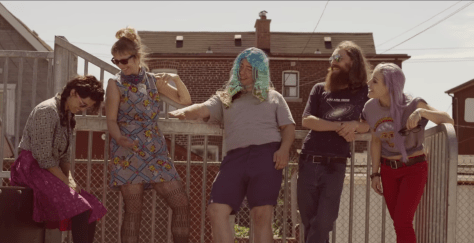
The success of the “Violence” video and Roger’s acclaim for his roles both behind and in front of the camera resulted in other musical groups seeking him out to be the creative force behind their music videos. When Brave Shores needed a video for their single “Never Come Down”, they reached out to Bainbridge because of his work on “Violence” and the films of Tony Ho. Jay McCarrol of Brave Shoes comments, “When I approached Roger, he pitched an idea about a bald guy who wishes for hair and suddenly gets a full head of green hair, which would be green screened to become different colors.  He pitched it in one sentence and it was perfect.  It was great to see his talent has such range. He could just put his unique spin on anything. When you work with Roger it’s because he can be so unpredictable, that’s what we wanted.  I knew he was some sort of mad genius when I saw all of the Tony Ho stuff.  Roger possess a different kind of “it” factor, the very rare kind.  Something about him is so pleasantly haunting.” Roger admits that he has always been a fan of music videos which extend the ideas and mood of the song while also becoming a piece of art themselves. With “Never Come Down” he felt there were multiple layers, as he describes, “The song was kind of an expression of ‘ignorance is bliss’, ‘I’m just gonna have fun, and go with what feels good, f*#k all this worry.’ This can be a great sentiment, to a point. I wanted to explore the idea of someone getting everything they want. Is it responsible to just live a blissed out life? Are you living in a way that considers others and yourself? My idea was to kind of sneakily make a video about the virtues of responsibility while making it feel like a party the whole time. I don’t know if that makes me a Christian Youth Counsellor or something, but it’s probably just another example of me being a contrarian. You say party, I say be a responsible father.” brave-shores-1-945x500

brave-shores-never-come-down

The video shows Adam Niebergall (of Tony Ho) as the main character who is granted his wish of long luxurious (color changing, sometimes psychedelic) hair and proceeds to only care about whipping that hair and head banging. While amongst trick bikers, on the beach, or a number of settings, he casts off all responsibilities, including his now pregnant romantic interest. Karma seems to exact its penance from him at the end of the video as he has given himself a fatal neck injury…as a result of his new flowing locks. It’s a modern pop/electronic fable about not focusing on the self, delivered in the humorous and yet biting way for which Bainbridge is known. Whether creating thought provoking and laughter eliciting films or music videos that still manage to carry his voice in their message, Roger Bainbridge has become known in Canada as the person to go to when you need someone to take a project from inception to production and presentation. He is pleased to be the means by which others can further their art whether it be in the role of Executive Producer, writer, or actor. Bainbridge admits that he is still sometimes jolted back into reality, in particular in regards to his involvement with musicians and their videos. He confirms, “I love music videos. I feel like I’m part of the generation that really got the last gasp of them on television. I grew up watching them on MuchMusic, watching for hours waiting for cool ones to come on. I really loved the stuff coming out for the 90’s British bands like Blur or Radiohead or Pulp. They were so glossy and arty and different. It made the world feel a lot bigger than the small Ontario town I grew up in. But it never really occurred to me that I’d ever have the occasion to make one.”


South African producer Elena Ioulianou works to better herself and her country

elena_9991
Elena Ioulianou is an internationally recognized producer

Elena Ioulianou is a South African producer who is proud of her heritage. After growing up in Johannesburg, Ioulianou has had success making films both in South Africa and internationally. However, her resume is full of projects that are designed to better her native country.

One of these projects includes the PSA Ruby’s Story. The film is shot as a point of view of a young girl’s perspective and experience of being taken through the trafficking ring. It was broadcast on numerous national television stations and used on talk shows such as GauTv to raise awareness about human trafficking in South Africa and the world as a whole. Ioulianou worked with the incredibly well-known Nigerian actor Fabian Lojede, who played the role of the Trafficker.

“It was always going to be difficult to encapsulate the horror of human trafficking that is happening in today’s world. Watching the performances made it feel uncomfortable and real. We hear many stories every day of horrifying events, yet sometimes we become desensitized,” said Ioulianou. “Our objective of Ruby’s Story was to make the audience feel uneasy and hopefully propel the viewer into helping or finding out more information on how they could potentially help.”

The film was created for Inhuman Trade and The National Freedom Network. Ioulianou had previously worked on a campaign for 1:Face Watch to tackle the issues of hunger and Aids in South Africa, and the transition seemed fitting.

There is always going to be something special about using the resources you have to fight for a cause. Although we received tons of support I don’t think there will ever be enough support for a global cause like this,” she said. “Emotionally it took a toll in me after all the research I did my heart was in a million pieces. Our world can be a very dark place sometimes and I still really struggle with this.”

Some of the images are difficult to watch, but you can watch Ruby’s Story here.

Ioulianou was the head producer with Moviworld at the time. She used this position to also work on an iEC commercial. This campaign was for the Independent Electoral Commission with the purpose of encouraging the people of South Africa to vote in the upcoming municipal elections. The commercial was a series of vignettes showing off the beautiful landscape of the South African soil and, better yet, the people of South Africa.

“I have to say this was one of my favorite but most challenging commercials,” she said. “The production traveled all over the country visiting places we had never seen before and we met interesting individuals while learning about their lives in South Africa.”

Ioulianou worked alongside Neal Sundstrom, who directed the commercial. The two had worked together on previous commercials with Moviworld, including Ruby’s Story.

“Elena is quick to learn, extremely dynamic and very hard working,” said Sundstrom. “She is incredibly passionate about film and commercial work and is always very willing to take on new challenges and responsibilities. We at Moviworld are totally confident that Elena is valuable asset to the film and commercials industry not only in South Africa but abroad as well.  She is constantly thinking out the box. She is brilliant at not only the production side of business but in marketing, acquisitions and development of films.”

The IEC Cool Campaign was broadcast on national television for a period of six months, and Ioulianou’s work truly made a difference in the elections. Ioulianou has had a lot of success, and worked on award-winning pieces, including a film nominated for an Academy Award. But despite everything she has achieved, she doesn’t forget where she comes from.

“This commercial was entirely street-cast which made for an exceptional experience as we didn’t know if our cast would have a strong or any ‘on camera’ presence at all,” she said. “This spot made me more patriotic to be a South African than ever before.”

BEING NAKED CAN TEACH YOU MORE ABOUT YOUR SELF VALUE THAN JUST YOUR PHYSICAL ATTRACTIVENESS

One of the most popular and highly rated dating shows on TV in the UK right now is Naked Attraction. Just as the name states, contestants are viewed and selected in a state of complete undress. Most of us worry about being judged with our clothes off in a dimly lit room in front of our significant other, the thought of doing so in front of other people we don’t know AND on camera is unthinkable. This show would not even be thinkable without the involvement of one of UK reality TV’s most successful Associate Producers known as the master of casting, Grivas Kopti. The UK is extremely diverse and it is precisely this reason that the production chose Kopti. Grivas has been recognized for his work in the areas of LGBT representation, gender equality, multiculturalism, and celebrity culture. As a millennial who grew up with social media and the internet, Grivas and many of his generation are not encumbered by the prejudices and social constraints of previous generations. Say what you will about those of Kopti’s age but, global social interaction has made them aware of the joy and struggles that all people share, resulting in a graceful acceptance of the differences that challenge us all, hopefully creating a sense of unity. The outgoing nature Grivas possesses, as well as his stringent work ethic has made him a sought after commodity in Reality TV. The list of successful shows that have made use of Kopti’s talents are too numerous to name them all but include; Celebs Go Dating, Unbelievable, Words of Churchill, Mandela: The Prison Years, and Stripped and Stranded.

Naked Attraction is one of the most popular programs on TV of 2016 thus far with its recent ratings spiking upwards of 2 million viewers per episode. Reality TV relies on the viewer’s investment in the cast with shows of this type. Naked Attraction relies on Grivas to find the compelling people and their stories to provide the interest that keeps viewers coming back. The title alone will cause a certain portion of the population to tune in but it won’t keep them there or bring them back. Kopti’s role is part detective and part therapist. Kopti is adamant that Naked Attraction is only interested in casting individuals who are themselves motivated to be on the show. There are times when participants change their minds or their family and friends convince them that it isn’t such a good idea for them to be involved; Grivas supports this idea, often encouraging them to go away and consider whether it is truly the right choice for them. This Associate Producer doesn’t envision the show as salacious but rather as a way to achieve greater self-discovery and catharsis. Kopti describes, “I saw the contributors go on a journey, which was inspiring. They learned so much about themselves. Many learned to truly appreciate their body and what made it unique. Being complimented on your shapely thighs that you always thought were fat is so lovely and precious. As you can imagine, a lot of people’s vulnerabilities and insecurities were revealed, which I think is a beautiful thing.  You can’t really let down your guard and be capable of truly loving yourself and others if you don’t make yourself vulnerable. No stone was left unturned. We discussed it all – preferences, past sexual escapades and fetishes. People were extremely honest.”

As the leading associate casting producer, Grivas was in charge of managing the contributors. This can be a tall order when you are tasked with making someone feel comfortable being both naked and on camera. Grivas has always been able to communicate well with individuals unknown to him. Being able to discern who would handle the experience well without becoming overwhelmed or intimidated was key to Kopti’s role in Naked Attraction. He describes the characteristics he was looking for, stating, “Likeability is they first thing I look for. You want the audience to warm to them and subsequently root for them. Two attributes that serve contributors well during filming as well as after are confidence and charisma. Someone who can be strong enough to appear on television with their clothes off and handle anything they might read about themselves on social media afterwards. People aren’t always so kind online. Just as important is intelligence. The whole show works well and is engaging because our contributors can maintain a conversation with our presenter, articulating their thoughts and reasoning behind their selection process as they are selecting who they’re choosing to go on a date with. Ultimately, each main contributor will lead half of the show which is a broadcast 30 minutes. They need to have a strong character and conviction.” With a viewership of 1.4 million on its premiere episode (up 82% on the slot average) and consecutive increases, the show has been an instant success for Studio Lambert. The show’s Executive Producer Mike Cotton (Emmy nominee for Undercover Boss) confirms, “I am positive that our enormous success is due to our collaboration with Mr. Kopti, as it is his leading role that brought us much of the success that we have. His unique talent to be able to cast contributors and contestants for the program showcased his truly unparalleled ability as an associate casting producer.”

While some viewers or even critics may point to a voyeuristic factor that brings a viewing audience to Naked Attraction, Kopti has much more high minded goals for contributors and the TV public. Grivas declares, “We are bombarded with messages daily by mainstream media on how we should look and what and who we should find beautiful. In a subtle way, we wanted to call BS on that and tell the truth, inspiring our considerably big influential audience of the 16-35 age bracket. Not one size or color fits all and beauty can be many things. Couples in interracial relationships still report facing prejudice, which is shocking and something we wanted to address. Why is this still happening? Is some of this generation expressing intolerance taught by their elders? A lot of questions were raised but ultimately, the magic in this show is that we can talk about it honestly and respectfully. I’m very proud that we were able to represent those labeled as disabled. I think we communicated quite effectively that being classed disabled doesn’t render you any less sexy or capable of a fulfilling, loving relationship. We had a good few disabled contributors, visibility is key. Above all, they were fantastic characters with a lot to offer – regardless of their circumstances. One of the underappreciated strengths of my generation is that it is very hard to shock us. Naked Attraction isn’t just about the naked part. Every individual has a story to tell; things they have overcome and personal triumphs they want to celebrate, that’s the real message of our show.”

550759_543326942362105_1043423090_n

Voice actor Mike Goral narrates Polar Bear Town for Smithsonian network

mike-goral
Mike Goral started as a radio DJ before transitioning to voice acting

Millions of people hear Mike Goral’s voice every day, and don’t even know it. He is not as instantly recognizable as Brad Pitt or Meryl Streep, but you likely know his work.

Goral is a voice actor who has worked with A&E, HBO, Showtime, Cartoon Network, Food Network, The Weather Channel, Discovery, HGTV, DIY, and many more. Now, he will be adding the Smithsonian Network to this extensive list with their new series Polar Bear Town, which he will be narrating.

Polar Bear Town is a documentary series about a community of people in Northern Manitoba, Canada that reside in a part of the continent where polar bears dwell at certain times of the year. People from all over the world travel to this remote community to get a close-up, in-person look at the mighty polar bear.

“I have been fascinated by Churchill, Manitoba for many years, so when I was approached to narrate this series, it was such a joy,” said Goral. “It’s a great production team too, which makes the job so much fun when you have great people around you.”

Goral is working under the supervision of Andy Blicq. Blicq is the post-production story editor on the documentary series made by Merit Motion Pictures for the Smithsonian Channel in the U.S.A.  The two agree they make a dynamic team.

“Andy is a fantastic director and I feel we have a really great chemistry. I really enjoy working with him. He brings a lot to the table because he’s a true professional,” said Goral.

“Mike is a top tier narrator. He’s a professional who gets the work done quickly.  He knows exactly what to do. He takes direction well and adapts quickly to suggestions when we are recording narration.  It was a pleasure to work with him,” said Blicq. “Narration work is challenging.  Each documentary series is different and a good voice actor brings his or her own creative talent to the production. Mike knows exactly what to do, adjusting his accent and performance to match the content and the emotion on the screen and the script. He executed this very well during the recording of the six one-hour episodes. We are going to work with him again, now, on a new season of this series.”

Goral is from Canada himself. He is originally from Oakville, Ontario, a town outside of Toronto. The project brought him back to his native country after living in Los Angeles and then Scottsdale where he currently resides. He has been voice acting for around twenty years.

“I service clients in all areas of the media industry with my voiceover services – everything from national TV shows, to product commercials, to corporate educational training courses for everything from banks to bakeries. I record most of my daily work from my own home studio facilities. But, some clients require I record at their studios instead of my own,” he described.

Goral does his work alone in a room, using only his voice to display the emotions that actors use their bodies, voices, scenery, props, and fellow actors for. It is no easy feat. The advantage, however, is that it is not quite as tiring.

“I don’t plan on retiring. The beauty of this kind of work is that it’s not physically taxing. Guys can do this type of work into their nineties,” said Goral. “And if they enjoy it like I do, they probably don’t really have plans to retire.”

Goral has a long time before he has to start thinking like that, and with more new episodes of Polar Bear Town ahead of him, he has a lot to look forward to.

“I’d love to do more long form documentary series. They are a lot of fun, and always a joy when those opportunities come around,” he said.

You can watch full episodes of Polar Bear Town here.

Mexican cinematographer Guillermo Garza is in charge of “visual experience for the film”

As a child, choosing your path in life often comes from a film or television program. It is the greatest exposure to different jobs we have in the modern world. However, many are inspired by the characters in the film, not what is going on behind the scenes. This was not the case for Guillermo Garza.

As a child growing up in Monterrey Mexico, Garza had an obsession with his mother’s video camera. He loved holding it, looking through it, and eventually filming scenes with his brother and sister. Many children’s interests change as they grow, but not for Garza. Now, he is a successful cinematographer, living his childhood dream.

Garza’s inspiration came from many classic films. As a child, he would stay up late recreating scenes from Monty Python and the Holy Grail with his GI-Joe figurines. In his teens, he watched a behind-the-scenes look at the making of the Star Wars original films.

“That’s where I figured out that making movies was an actual job you could have,” he said. “Ever since I was a teenager all I could think of ever being was a cinematographer. That is what I have always said when people asked what I wanted to do.”

His instincts have proven to be right, and Garza has achieved a lot in his career. Flores Para el Soldado, his first film out of film school, went on to win the Mexican Academy Award for Best Documentary Feature.

“An important moment in my career was straight of school. I was invited to shoot the documentary Flores Para el Soldado,” said Garza. “It was a very personal and difficult project with a very low budget. We were quite inexperienced, but we gave it our best and focused on the story.”

Later on, he was the cinematographer for the commercial campaign Native/Time Out Magazine Mexico, which won the Cannes Bronze Lion award.

“The job of the cinematographer is a very complex one, because no two jobs are alike,” described Garza. “I have to take what is on the director’s mind and the screenplay’s pages, and then use the camera, lights, time and space to create the visual experience of the film,”

Success continued for Garza with the films Camino a Marte and Paraiso Perdido. Andres Almeida is an actor, composer, and production designer who worked with Garza on both projects. Almeida describes both experiences as amazing.

“Guillermo’s unique sensibility and understanding of light, as well as his construction of the scene through image, make him one of the best cinematographers working in Mexican cinema right now. The easiness with which he moves through the set with the camera and with actors themselves make him a great partner and enjoyable person to work with. He is both dedicated and passionate in his work and a true professional in all senses,” said Almeida.

Garza’s Mexican heritage is important to him, and he is an admirer of his fellow Mexican cinematographers that, as he says, continue to raise the standards of what is expected of a cinematographer and the cinematic experience.

By chance, Garza had the opportunity to connect with Oscar-winning director Guillermo del Toro. He was buying some books at a bookstore in Madrid where Garza was buying textbooks for film school. Garza says the experience changed his life.

“I approached him and told him how much I admired his work as a director, and that I was in film school hoping to one day be a cinematographer. I told him how one day I wanted to be able to work and create films as good as his,” said Garza. “He was really nice and said that we could have a coffee after he paid for his books. We sat down for thirty minutes and he gave me some great advice and a point of reference of what to expect from a career in film. He gave me his email and told me that I was welcome to come by his set for the film he was going to shoot in Madrid. Six months later he started shooting and I went to the set. He introduced me to his cinematographer Guillermo Navarro, who let me stick around the set for a few weeks. That was the first time in my life that I was on a real film set.”

The film was Pan´s Labyrinth, and Guillermo Navarro went on to win an Oscar for his achievement in cinematography for his work on the film. For Garza, having this opportunity is a highlight in both his career and his life. He took the most of a chance meeting, and it allowed him to learn from one of the pros. Now, he is considered a pro himself.

“The way I approach challenges in my job is to be adaptable and flexible and to really be able to trust in my experience, my taste, and my crew,” he said.

Garza will be shooting the film Bayoneta in the new year. It is a project he is very excited for. It´s about a Mexican boxer during a dark time in his life, he is coaching a new Finnish boxer while running away from his past.

“I love that every job has its unique set of challenges and puzzles to solve. I love that even though we try very hard to plan and control outcomes in this job there is also room for unpredictability, and that those unpredictable or unplanned moments sometimes are the best, the most real, and beautiful,” he concluded.

Hot on the Radar: Q & A with Actress Tatiana Romao

Tatiana Romao
Actress Tatiana Romao

We recently caught up with actress Tatiana Romao for an interview about what drives her to perform and how she got started in the industry. Romao, who is known internationally for her performances in the films Lips, Disruption, Corinne, The Red House, Abberation and many more, recently wrapped production on the upcoming film The Process. Set to hit the festival circuit in 2017, The Process is a powerful drama written and directed by Chinese director Apple Ng, whose film 1 Corinthians 13 screened at the Nevada Women’s Film Fest earlier this year. Taking on the starring role of Lindsey in the film, Romao acts alongside Kathy Wu from Chris Nahon’s (Kiss of the Dragon) 2016 film Lady Bloodfight and the secen-time Hong Kong Film Award winning film Port of Call, Yisrael Dubov from the films The Petulant, Scapegoat and the series Z Fever, and Jasmine Hill from the film Highland and the series Princess in Di-Stress.

Romao also recently wrapped production on the upcoming horror film Valentine DayZ from director Mark Allen Michaels, the director of the horror film The Fiance with Carrie Keagan from the films Dead 7, Sharknado 4D: The Fourth Awakens and Father Vs. Son, and Douglas Tait from the films Star Trek, Land of the Lost and the hit Primetime Emmy nominated series Grimm. Romao takes on the lead role of Diana in Valentine DayZ, which also stars Carrie Keagan, FANtastic Award nominee Robert Allen Mukes from the film House of 1000 Corpses and the series Westworld and Weeds, and Dallaz Valdez from The Fiance. An apocalyptic zombie horror film Valentine DayZ, which is due for release in 2017, follows a group of unsavory characters who get a rude awakening when a zombie outbreak plagues earth. In the film Romao’s character Diana, and Max played by Valdez, join forces to battle the undead.

To find out more about actress Tatiana Romao, make sure to check out our interview below!

Where are you from? 

I’m from Sao Paulo, Brazil

When and how did you get into acting?

I started acting when I was 12 years old. I come from a family of all doctors. That includes both my parents, my siblings, my cousins, uncles, aunts and even one of my grandfathers used to be one. Acting has been my passion and a need in my life since I’ve come to know myself as a person. It all started as an after school, extracurricular activity and as time went by it became my goal in life. I went through all my years of school taking acting classes, first amateur and eventually a full professional acting program at one of the most respected schools in Brazil, Escola Celia-Helena. After finishing school I went to college for marketing. In Brazil it is almost something you HAVE to do if you want to get somewhere and coming from a family of doctors there wasn’t much discussion on that. During college I kept on working in small plays and small projects, worked with Fatima Toledo, one of the most respected acting coaches in Brazil (she worked on City of God, Elite Squad I and II, Alice and so many other very big movies and tv series in Brazil), went through her film program, organized myself and my life and moved to LA 2 years after graduation, in 2009.

What is it about acting that drives you to perform?

Acting is a need in my life, it’s not an option of whether or not I will do it, it is what I have to do, it is what I do and a great part of who am. Acting has shaped my life. The feeling, the emotion, hearing from the audience how you moved them, how you touched them, it is indescribable.

Can you tell us about the upcoming film “Valentine DayZ”?

“Valentine DayZ” was likely one of the most fun sets I’ve ever been to. I played Diana, a girl that, with Max (Dallas Valdez), has to defend the world and everything they hold dear from a zombie apocalypse that recently burst. We also had Carrie Keagan as part of our cast playing Sara. It was my second time on a horror/ thriller film (the first was ‘The Red House’) and besides what people may believe the energy on set is just so light and everyone just becomes this one big family. When I was at the beginning of my acting career I used to believe that even the filming of a horror film had to be somewhat scary, I remember reading stories of things that some people said happened on their sets and so I had in my mind that I was never going to be in one, well…that has changed a lot. Of course we have our very tense moments depending on the scene that we are filming but we had so much fun, we were always trying to scare each other and would burst into laughter right after. It was so much fun, I miss it a lot honestly. The film is still yet to be released and we are all very anxious and excited to watch the final version.

How about the film “The Process”?

“The Process” is a comedy about the day to day life in an office space and how frustrated people get in the normal 9-5 jobs. It’s centered on Lindsey (myself), Carter (Jasmine Hill) and Dwayne (Matt Pena). They are best friends and Carter’s life is falling apart. She just got divorced, after catching her husband cheating on her with an older woman, she can’t stand her boss anymore and she wants to sell all her things and move to Hawaii. Lindsey has a kid and almost lost her job twice for being so tired of it she just doesn’t deliver almost anything anymore, she is always stalling and was caught sleeping at a meeting. Dwayne is the nerd one, always afraid to lose his job as he lives from paycheck to paycheck and even though he is miserable and is always being relocated from different areas in the office as his boss doesn’t want him there anymore but don’t want to have to fire him and pay all the fees. The three decide to then find reasons to blackmail their boss Colton Ellis (Yisrael Dubov).

“The Process” was a fun light movie to be a part of. It barely felt like we were working. It was a thrill to play Lindsey. It’s so good to feel like we can let loose of everything that holds us back in life and just do exactly what we want, and that’s what Lindsey does in the end. I related a lot to Julia Roberts role in “Eat Pray Love.” When you hit that point in your life that you have to rediscover yourself, when you see yourself living a routine that was never what you planned or even though it was, you discover that money and stability don’t necessarily fulfill you in the way that you need. It was a most delightful role to play.

You get approached all the time to work on projects with people, what makes you pick one role over another?

It varies but sometimes it’s a director I’ve always wanted to work with like Mark Michaels and Giulio Poidomani, or the role is a challenge for me, it can be something so different than what I normally play that I am always dying to try, but one way or another the story has to move me in some way. I have to either relate to the role or the story and if it has a deeper message to the world or is a subject that we all have to start talking about, I’m all in straight away.

Do you feel that you get cast to play a certain type of character more than others?

I do. I feel like I am emotionally open for deep and dramatic characters and I tend to always be a part of those projects and I always end up getting the more serious, responsible roles. I’ve always wanted to play a comic book villain or some sort of superhero, I feel like it would be perfect for me.

Out of all your productions both in the theatre and on screen, what has been your favorite project, or projects, so far and why?

Oh wow, that’s a hard one. I have to say I have an undeniable passion for theatre. I loved all the plays I was in. The thrill of not being able to mess up your lines or a mark, cut and do it again, having the audience right there, being able to play with the audience and the amazing connection you always end up having with those people that you are rehearsing with 24/7 for God know’s how long is such an amazing feeling that even though I love doing films and I know I can achieve a wider audience with those, plays are always going to be my number one passion. On that note, that are 2 plays I did back in Brazil that were certainly some of the best moments. One is called “The Exception and The Rule” by the german playwright Bertolt Brecht and the other one is “Rosita Letters and Poems”  by Federico Garcia Lorca. They were both extremely acclaimed at the time… Our group just worked so so hard on both of them, we became a big close family. We would rehearse all day long at times, we had so many struggles during the process that we didn’t think that we were going to be able to present them in the end. Both stories are absolutely beautiful. “Rosita Letters and Poems” is such a delicate story about a teenage girl and “The Exception and The Rule” is one of my favorites because the role I played was so different from me. I played a tour guide in the desert, had to eat with my hands, was dirty all the time. During this last one we were also a very small group, it was only 4 of us so if was definitely a great great time.

What has been your most challenging role?

My most challenging role I think I’ll have to say was when I played Sarah in “Disruption.” I had never played a mom and that was one of my first bigger roles in the US. That was actually an amazing experience because Giulio, the director, wrote the script and the role for me, so it was an honor to be a part of the project. It was the first time I was dealing with a kid and had to work with him, I’ve learnt that I’m not that good at it hahah. Also I had a lot of experience with roles that are emotionally deep and Sarah was more of a stay at home mom dealing with an unbalanced husband. I never knew that holding back was actually going to be a bit of a struggle for me but Giulio guided me and helped me out in understanding how to approach it. It’s funny, we understand that “being pushed” is only for something somewhat extreme, but that role for me was completely out of my comfort zone. I learned a lot from it.  

What is your favorite genre to work in as an actor?

It’s a lot “ lighter” to do comedy, even though it’s super hard, but I have to say that my favorite is drama. I just connect with the stories straight away and I feel like I can give the weight necessary. I am very emotional and I feel like my emotions are very deep so I am able to give the depth needed for more dramatic roles.

Everything you ever wanted to know about Hollywood's who's-who.