Category Archives: Uncategorized

A PHOTO IS ONLY A GLIMPSE INTO THE DEPTH OF RANDI KENNEDY

Randi Kennedy is attractive…and a fitness enthusiast…and an extremely positive person. How is this possible when she two of the main facets of her life and career are social media and being a fitness model? That’s because much like the aforementioned aspects, Randi Kennedy is much deeper and more complex than a superficial viewing can ascertain. You have to spend time with Kennedy to understand what makes her tick. In contrast, her enthusiasm is evident within the first few seconds of speaking with her. All of these characteristics have led international companies such as 1UP Nutrition and Live Fit apparel to seek her out as an ambassador of brands. In this modern day society where it seems everyone wants to be famous by presenting commonplace as extraordinary, Randi has done the opposite by making her followers and fans believe that her extraordinary accomplishments are achievable by all…something which she wholeheartedly believes.

When posed with the query of how one gets to the same point of success and personal fulfillment that Randi has attained she communicates, “My best advice is to aim big and don’t settle, chase after those dreams. If you aim low, you are going to fall short of the bigger picture and what you truly want to accomplish. I believe you can truly accomplish everything and anything with hard work. Create a game plan for yourself. What do you want to accomplish? What do you need to do to get there? What would the first and second steps be? Take action and keep a clear vision. You’re not going to build your dream career overnight but it will take a lot longer if you give up. Don’t be afraid of hard work and don’t be afraid to take risks. Owning your own business is not easy but it’s worth it.”

Judging Kennedy by her big smile and her athletic physique will misinform you as to the astuteness and determination to have a benevolent effect on those around her, which is the true center of this self-made very modern day success story. As a health and fitness enthusiast herself, she noticed early on that there weren’t a large number of what she considered to be healthy supplements marketed towards women when she first started her journey, this has since changed. While her endorsement and use of such products from companies such as 1UP Nutrition shine a light on the visceral physicality of a woman, her work as one of the faces of Live Fit Apparel embrace the femininity of it. There’s a holistic approach to Kennedy’s personal life and her professional/public one. As with any relationship, Randi feels that both herself and the companies she works with must have a belief in each other. When a common goal appears, both sides benefit. Since it is a working partnership so of course both sides need to feel they are being taken care of for the relationship to work. When it comes to sponsorships in the clothing and supplement industry it typically goes something like this: The sponsor receives a brand affiliate and becomes associated with the influencers brand. They receive marketing which generates more brand awareness and sales. The influencer receives support from the sponsor in the forms of compensation in a monthly salary, commission on sales and can even go as far as support for competitions and further education in addition to marketing by the sponsor.

It’s one of the great dichotomies of the industry that the visual aspect of the exterior is so often displayed as proof of internal health. Sometimes these traits are congruent and sometimes they are not. Kennedy adamantly relates, “I think that it’s very easy to forget about your mental health/mental state when you’re caught up in looking a certain way. Often people are working so hard to improve their physique that they don’t realize how extreme they are being with training and nutrition, which can lead to an unhealthy relationship with food and create body dysmorphia. This is something I preach about on my [social media] platforms. I always tell my clients: “Work to improve your mindset just as hard as you work to improve your physique.’ Many people seem to think that fitness is solely having shredded abs and being jacked all year round; little do we know that same person thinks that nothing is good enough, barely eats enough to fuel their body, their energy levels are low, they’re hair is falling out, hormones are out of whack and it’s all in order to look a certain way. Social media does not help with this but I’m happy to say that it is slowly changing, people are sharing a more realistic side of fitness and starting to accept that it is unmaintainable and unrealistic to look like that year round. Not all progress is physical! Fitness is more than a shredded physique.”

In the fitness world, one of the bench marks is having your photo taken by the celebrity photographer known as “King of Covers” Jason Ellis. The noted photographer has taken cover photos for more than five hundred magazines. With his work gracing the covers of magazines such as: Muscle and Fitness, Fitness RX, Oxygen, Iron Man, Men’s Health, Muscular Development, Train, and many others, Ellis is the gold standard of the industry. Jason worked with Randi two years in a row, shooting her at the IFBB Olympia in Las Vegas. He professes, “Randi is a young talent who both reflects the fitness aesthetics and lifestyle and is very astute in her comprehension of the modern industry. She is very marketable and understands how branding works in this new marketplace. Add to that, she is always a pleasure to work with. That positivity of hers is very authentic!”

Screen Shot 2017-09-30 at 9.03.19 PM

Part of the new model of branding and marketing is social media; it’s something which Kennedy has embraced deeply. There’s a duality to the modern approach. Meet & greets and magazine covers are still important to be noticed but social media means there is a necessity and a responsibility to stay connected to followers on a daily basis…no matter where they might be in the world. While she concedes that social media can have negative aspects, Randi also notes, “I enjoy social media in my professional life because it is an amazing way to market to your ideal demographic all over the globe. We literally have access to millions of people at our finger tips. Social media is a very powerful tool if you know how to use it. There is an account for almost every business these days. I enjoy social media in my personal life because I get to capture and share memories and moments that will last a life time. I get to share the experience I had a restaurant and say “hey, you should go here too!” I can share my travels and inspire others to get out there and explore the world. Through my photos they get to see something they might not have ever seen, and then I get to reflect back on it years down the road.” No matter where she might be and what the images she shares, Randi Kennedy will be encouraging and assisting those in her sphere to challenge and better themselves just as she had done.

www.randikennedy.com

Instagram: @randikennedy_

YouTube: Randi Kennedy

Facebook: Randi Kennedy

Aiming For a Dream, Producer Angel Cassani Strikes it Hot in Hollywood with the UFC

Producer Angel Cassani

“While working in financing I dreamt of myself one day working in films in the famous Hollywood, California,” says Angel Diego Cassani, a Latin American expert financier who is conquering Hollywood today.

Angel is a veteran financier with more than 15 years in the field of financing and filmmaking. He started Global Capital Markets Group in Chile, Colombia and Peru, a big multi-national client portfolio including BellSouth, Motorola, Avon, and more. He has now brought his expertise in financing to his true passion – film making.

The film business operates in the creative sphere, but first and foremost it is a business. So, in 2008 Angel Cassani, who understands both entertainment and financing, came up with a brilliant idea to capitalize on the tremendous popularity of the UFC at that time. The UFC was and is still today, the highest growing sport in the world, and was featured that year on the cover of Sports Illustrated. Prize fighters and show business have been drawn to each other through history. Jack Dempsey, a heavyweight champion during the movie explosion of the roaring 20’s did not defend his title for 3 years, instead he headed to Hollywood with his actress wife Estelle Taylor, and made a dozen films while the leading contenders kicked their heels. In 1952, Sugar Ray Robinson retired from boxing after unsuccessfully challenging for the light heavyweight title, the great fighter put his skills to good use and went on tour as a dancer, earning $15,000 a week at that time. Robinson had parts in movies alongside, Frank Sinatra, and Marlon Brando, and many others.

Angel had the brilliant idea of using the popularity of the UFC and began approaching heavy-hitters, and Hollywood players, as well as the studio Lionsgate, which immediately jumped at Angel’s out-of-the box creativity of and signed a six picture deal with him and his partner Hector Echavarria, a famous world martial arts champion, and film and television star from Argentina.

There are clear parallels between the life of an actor and the life of a prize fighter. The structure of the two industries is almost identical at the top of the tree.

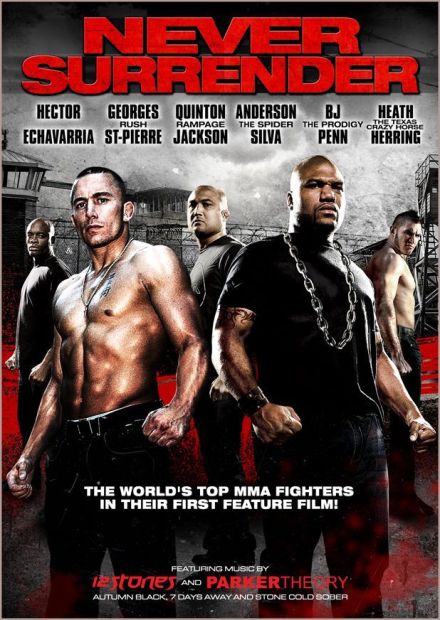
“An elite few are well rewarded,” says Angel. The titles that Angel was crucial in closing these deals with the famous Hollywood studio. This joint venture led to pictures like “Confessions of a Pit Fighter” with famous movie star Armand Assante, as well as “Death Warrior,” “Unrivaled,” “Never Surrender,” and “Chavez Cage of Glory.”

Film Poster for "Never Surrender"

These films not only started the cinematic career of UFC prize fighters Quinton Jackson and Georges St-Pierre, aka GSP, who would both later on be cast in giant Hollywood projects like the remake of “The A-Team,” and the “Captain America” series, but also generate millions in profits for Lionsgate who invested a small amount in the pictures that yielded a tenfold return on investment.

That is when Angel Cassani began to dream even bigger. Other Hollywood studios approached him to do the same deal with Lionsgate but Angel turned them down and decided to move on and produce big Hollywood pictures. Angel and his partner, Hector Echavarria, then teamed up with iconic Hollywood legend, Ronald Shusett, whose movies, which include titles such as “Alien,” “Total Recall,” and other hits grossed over 1.5 billion at the box office.

Over the years of acting as a financial manager, Angel managed a number of due diligence engagements, such as acquisitions, disposals and debt restructuring projects and was often involved in assisting foreign investors in identifying and understanding the differences between Argentine GAAP (Generally Accepted Accounting Principles), IAS (Internal Accounting Standards) and U.S. GAAP depending on the origination of a target business. Angel also manages acquisitions, merger, sales, debt rescheduling for companies like Super Canal, Grupo Uno and Multimedios in Latin America. All of these companies related to the entertainment industry.

“It was there that I realized that my dreams one day may be a reality,” says Angel.

Now Angel is working with other A-list Hollywood directors and actors and is ready to launch his own Hollywood studio. Angel is currently producing three Hollywood films including “Last Tango,” “Hit man’s Funeral” and “Hunter.” “Last Tango” will be directed by Steven Campanelli who was the cameraman for Clint Eastwood for more than 20 years on films like “Million Dollar Baby,” “Sully,” “Grand Torino,” etc. Campanelli also directed “Momentum” with Olga Kurylenko and Morgan Freeman. “Hit Man’s Funeral” was written by TJ Mancini who also wrote “Find me Guilty” for Vin Diesel and produced films like “Riddick” and the Sundance Film Festival nominated film, “Stray.”

“Hit Man’s Funeral” is an Irish gangster story– think “The Usual Suspects” meets “Reservoir Dogs,” offering a peek inside the gritty world of dangerous hitmen, where no one can be trusted and everyone’s a suspect.

“My goal in film is to work with the best people in the industry and create a piece of work I can truly be honored by, which is incredibly difficult but it’s the challenge and risk that makes it so exciting,” says Angel.

Producer Angel Cassani has secured himself as a top producer in the international entertainment industry; and the formation of his new Hollywood film studio has brought the attention of the Hollywood elite to him. Angel is one of the few people in the world that can say that he did everything he dreamt of doing in his life and being part of the Hollywood history is one of his biggest accomplishments.

GIVING A 50’S LOOK TO SHAKESPEARE WITH RUOXUAN LI

When it comes to revered creative works, there are those who believe that a classic is not to be touched and those who believe that the spirit of creating art is in pushing those boundaries and buttons, to attempt to develop a new piece of art that both pays homage to the original and seeks to place it in a contemporary setting that it might be more accessible to the general public and thereby spur them to revisit said classics. Costume designer Ruoxuan Li has worked with those on both sides of this idea. She feels that her role is not to be the one who is polarized on the topic but to grow through embracing both perspectives. This what me be referred to as a “creatively open mind.” It’s something that would seem to be inherent in the artistic mindset but is not always so. Luckily for those she works with, Li has the pedigree and the experience to enable both factions. When ISC (Independent Shakespeare Company)was presenting a modernized production of Shakespeare’s “The Two Men of Verona”, Ruoxuan was an obvious choice as costume designer. Li cut her teeth in Shakespearean theater at the at Wimbledon College of Art, University of The Arts London. Since then she has worked on countless productions including Distant Vision with Francis Ford Coppola. Intensely familiar with both traditional and contemporary approaches to the look of stage, TV, and film, Ruoxuan worked with director David Melville to place the characters in a modern world for crowds of 20,000 in Los Angeles.

Melissa Chalsma is the artistic director of the ICS production of “The Two Gentlemen of Verona” who sought out Ruoxuan and enlisted her into the production team. Melissa describes, “I was first attracted to Ruoxuan’s work because of her outstanding portfolio and the breadth of her experience. She is an inter-continental artist who excels in a wide range of styles, has done excellent work in a variety of mediums, and has wonderful inter-personal skills. Without Ruoxuan “The Two Gentlemen of Verona” would not have looked as good as it did, nor would the actors have even as able to do their jobs. She created an entirely unique world with vastly different styles authentically placing the action in the 1950’s. Each costume piece supported the actors in their work. Speaking personally, the costumes Ruoxuan created were absolutely perfect!”

Early meeting with the play’s director set the tone that the play should be apolitical and be a place of respite for the public to escape the volatile events around them. Melville communicated to Ruoxuan that he was interested in a Rockabilly style that was full of bright and engaging colors. The two primary challenges in this is that Shakespeare is not known for its use of bright colors and, as a native of China, Li does not share the same frame of Americana reference that many might in regards to the 1950’s Rockabilly style and era. Research would begin for her at ground zero rather than twenty or seventy-five percent. To fit the classic Shakespearean sensibility into a new concept of 1950’s, she started by matching the social group status for characters such as the greasers for the outlaws, teddy boys/girls for the naughty ones etc. Li then tracked each character’s change of status and change of their mental/emotional evolution, trying to express the changes cohesively through costuming. She was given some allowance to be not period-dead-on but tried to catch key elements of the 1950’s rockabilly look such as white socks, rolled up hems, pointy shirt collars, circle skirts, etc. These helped to sell the period when it’s not a full-on authentic period show.

It’s the very nature of a mingling of the arts that they affect each other. This also applies to the costume design; add maneuverability to that as well. The Rockabilly application to this classic Shakespeare play was like an actor itself, taking on the visage of a “greaser” from the era. This meant that the music and style of the 1950’s was inseparable from the look Li created. Watching the rehearsal is a key part of her process in finalizing the costuming. Ruoxuan relates, “When I saw the rehearsal with the band and all of the dancing, I realized that the research I did was not fully matching the energy on the dance floor. There were actors rapping the Shakespeare lines, the duke being the drummer at the same time, one of the two gentlemen acted like a nerdy teenage facing his lover…all these sparkling moments gave me inspiration. I switched my color palette to a much more vibrant and youthful combination of bright pastels and saturated jewel tones. I shortened all the skirt for dancing, added ruffled collars for crab the dog, and asked the attendant rapper turning his bell boy hat front to the back. These might seem minor but they bring everything into focus.”

Broadway World stated, “Ruoxuan Li’s black leather jackets for the outlaws, and circle skirts and preppy plaids for the leading players all lend authenticity to the period and its unbridled optimism.” This statement communicates the concept that the costuming itself is part of delivering the emotion to an audience, an emotion that must be congruent to that of the intent of the director. With this understanding, Ruoxuan takes great care to plan and maintain an aesthetic consistent with her director’s goal. This process begins with a conversation that continues up until the actual showtime. A strong sense of design partnered with an ease of flexibility is what has resulted in so many directors seeking out Ruoxuan to create the look for their productions whether it be stage, TV, or film.

ACTRESS JAEDA LEBLANC IS A LITTLE GIRL ON A BIG SERIES

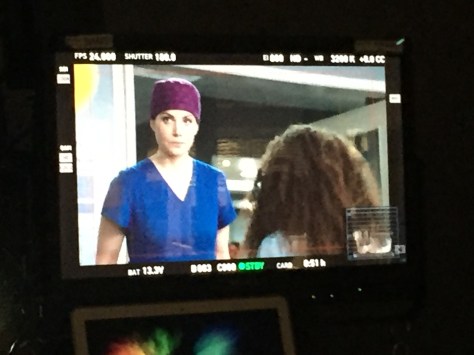
Actor’s know that when you exhibit your skills on a project this is not only the action of using your talent but also the way in which you advertise yourself to other potential employers. Being of benefit to any production allows directors, writers, and other professionals to envision you in their own creations. An actor can spend a lifetime amassing a collection of performances that will keep them employed doing the vocations that they enjoy so much. It can take decades, even lifetimes to do so. In the case of Canadian Jaeda LeBlanc, it may happen much more quickly…because it already has. While still in her single digits, this young actress was noticed by Gregory Smith, director of the highly successful TV series “Saving Hope.” Airing on Fox in the US, “Saving Hope” joined the lineage that has lasted for decades of popular dramas that take place in the medical field and portray the humanity behind the healers, the afflicted, and their loved ones. When Smith saw Jaeda on “Odd Squad” he understood that her talent and abilities transcended those of youth based stories. Casting her as Aisha Kai in “Saving Hope” not only proved that he was correct but also gave a boost to LeBlanc’s credibility and vetted her as an actress more than capable of working in prime time television.20728338_157108004866208_2853571896937534171_n

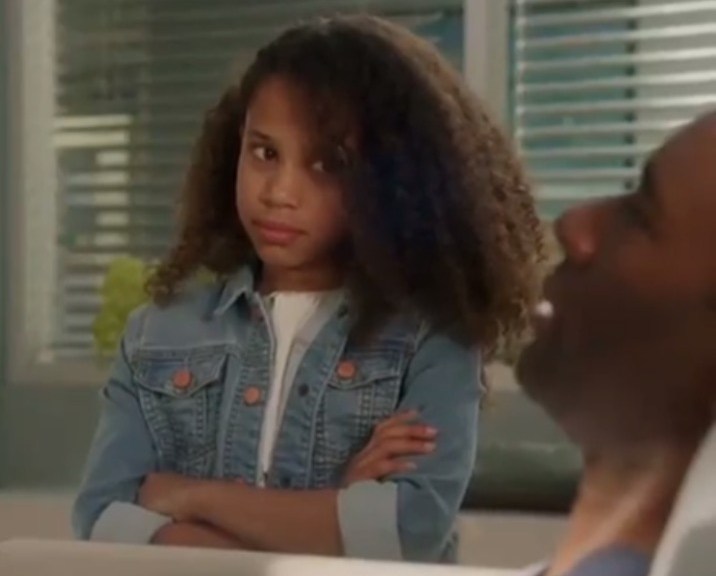
The key to being a great guest star on an already popular show, as well as being a great actor, is being memorable without trying too hard. Performance is a requirement; beyond that you can chalk it up to charisma. Robin Williams, Leonardo DiCaprio, countless actors have appeared on prime time TV shows in bit parts that morphed into careers on the small and the big screen. Canadian actress Jaeda LeBlanc has that same magnetism. Although still in her early teens she has appeared in a number television and film productions. She’s appeared in films with such household names as Susan Sarandon, Kathy Bates, and Natalie Portman. It’s easy to see why her roles have been much more prolific in the past two years when viewing the heartfelt portrayal, she gave in “Saving Hope.” As Aisha Kai, a bossy, sassy, and very intelligent young girl mature beyond her years, Jaeda gives a layered performance. Aisha’s mother died of cancer three years prior and she now lives with her father who is also terminally ill. She has learned everything she can about her father’s illness and takes the doctors to task about it. Dr. Reid (Erica Durance, star of Saving Hope) makes matter worse when she makes a promise to Aisha whose own birthday is derailed by her father’s sickle cell crisis. Aisha (powered by LeBlanc’s portrayal) gives the audience the dual sense that she is very young but has been forced to mature quickly due to her difficult circumstances. She’s a girl who is aware well beyond her years about life’s harshness…but still is a young girl, with all of her concerns and uncertainty. At times irreverent and at other times fearful, the role gave Jaeda the opportunity to convey many subtle shades of emotion rooted in body language as well as dialogue. Gregory Smith, director of “Saving Hope” tells, “On our show Jaeda played Aisha, an insecure stubborn child that is authentic without being annoying or exaggerated.  As a director I know that it is not easy for a young actor to fully immerse themselves into a role but this is not the case here. Jaeda translated her actions and emotions to a believable character that drew sympathy with her realistic yet endearing delivery. Jaeda is an accomplished young actress who commands powerful, nuanced performances, the quality of which exceeds that of many of her peers. She was able to take on and be this child with a sick dying parent, unsure, stress and sad of what could happen.  Jaeda has the ability to know if she is under or over acting and correct her own self, this is an impressive trait.”Photo 2016-05-11, 4 37 09 PM

You’d think that for a young actor the excitement would be finding themselves on set, under the lights with all eyes on them. For some it might be the luxury of having their own trailer with snacks and video games. For LeBlanc it was sitting down for the table read. The formal table read is a staple of all major productions; for Jadea, this was her first and a true indicator that she had made it to the big leagues. Many table readings would follow this one but you always remember your first…like a first love. Without a frame of reference, Jaeda paid attention to how far the other actors “turned up” their performances at the table read and matched them toe to toe. Reading the room and acclimating is a benefit of being an actor. While she received praise for the read, it was the test of being on set that confirmed her abilities when under pressure. LeBlanc remarks, “It was nice to be a ‘Guest Star’ and work with seasoned actors in one of the most popular TV show in Canada. From the first moment I was on set everyone was super nice to me, not only because I was a kid but as another actor. People may not always admit it but, kids can tell when someone is being nice to you because you’re young rather than being honest. It was a great feeling to be treated as a peer by so many great actors. Like my mom always says, I have an ‘old soul’ so for me to be around adults feels normal. It was nice to feel like a peer playing in the same field as all those seasoned actors of this start cast TV show.” When you play a role in a Canadian Screen Award-Winning Series (“Saving Hope” has received numerous awards including: Canadian Screen Awards, Directors Guild of Canada, Leo Awards, Joey Awards, and others) that is watched by most Canadians, you are bound to get noticed. Casting Directors definitely paid attention as proven by the numerous TV and film roles which followed this young actress’s appearance on the series. Jaeda LeBlanc is just embarking on her teen years yet she has already amassed a long list of credits that have set a strong foundation for an already impressive acting career.

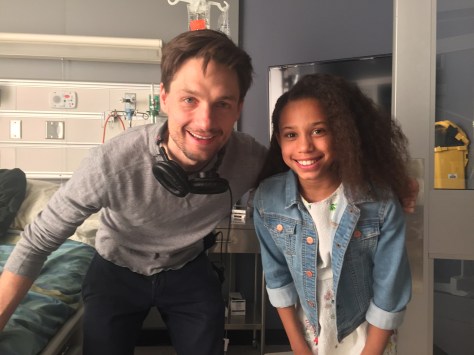
With Director

(Jaeda with director Gregory Smith)

DAN WAINER IS LIVING EVERY MAN’S DREAM

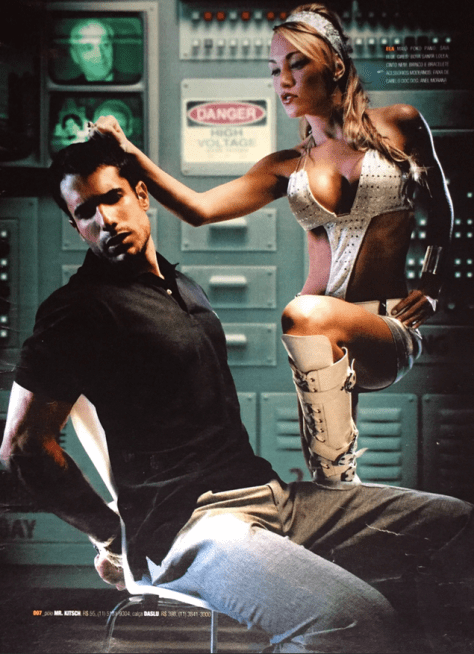
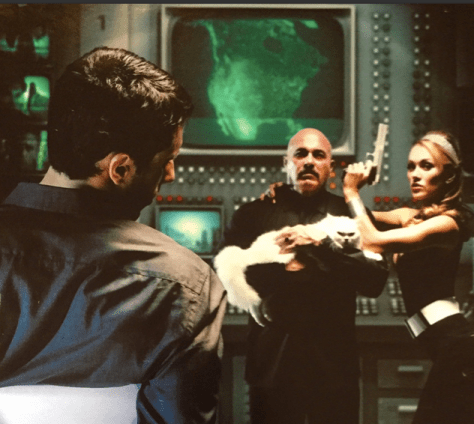
For decades, men have wanted to be one of two characters; Superman or James Bond. These icons represent the epitome of masculinity. While the caped son of Krypton generally appeals to mostly prepubescent males, once a boy’s hormones begin stirring there is no one more representative of a real life scenario of having it all than 007. This charismatic, suave, self-assured archetype embodies all the qualities to which most men aspire. He almost always wins and even when he doesn’t, he handles the situation with class and composure…and he somehow always manages to capture the attention of the women he sets his sights upon. The actors who have portrayed Bond are legendary. They number in the single digits but a very select few have joined them in different mediums. Noted Brazilian model Dan Wainer has appeared representing a number of clients and graced the covers of such internationally recognized publications as Men’s Health and others but it was his work appearing in Playboy magazine for a pictorial that celebrated 007 which he counts among his career high points. No doubt Wainer was able to live out the dream, however brief, of millions of males across the globe to become James Bond for the most celebrated men’s magazine of all time. Nothing short of a Nobel Prize, winning the World Cup, or the Superbowl could have elevated his “cool” level among his gender.

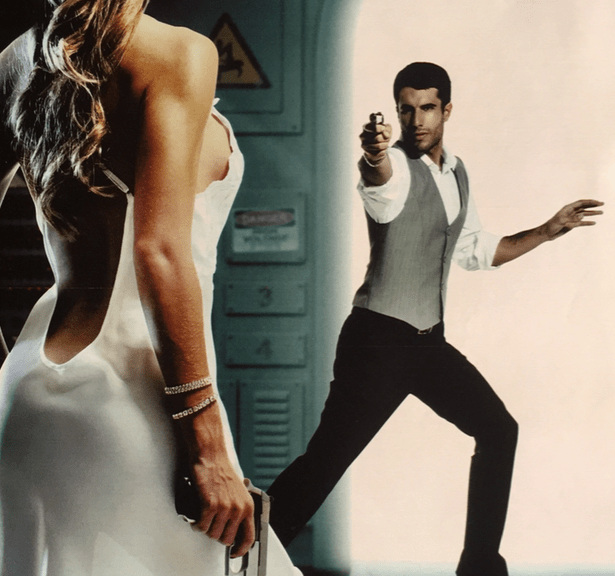
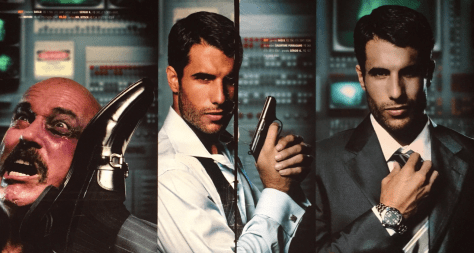
When Dan’s modeling agency pitched him to Playboy for the Bond shoot, it was because he shares so many qualities with the book & film character. There’s no waifish quality to the steely stare that Wainer possesses, an it’s one that’s full of gravitas. That’s not to say that this model took the job lightly; he put plenty of time in studying the body movement and attitude of his all-time favorite 007, Sean Connery. The unexaggerated charm, strength, and humor of Connery is clearly seen in this Playboy editorial. The potentially fatal circumstances which Bond frequently finds himself in never causes his emotional barometer too skyrocket, nor does it do so in the many trysts he also experiences. What we love about Bond is that he is always a measured man regardless of the positivity or negativity of his situation, yet he’s far from cold. Viewing the photos of Wainer, this is as natural for him as any of the actors who played the spy.

Screen Shot 2017-09-10 at 9.44.59 PM

There is an emotional component to modeling but it is conveyed primarily through physicality. To create this for Playboy’s Bond editorial, Dan reveals, “This job was actually very different from most in my career because it did involve acting. I’ve done my share of studying cinema, television, and theater…as any good model does. It helps you to become a better professional. I love my job and I want to be the best I can possibly be. I didn’t have a specific Bond film that I was trying to ‘copy’ or recreate. What I wanted to do was to contain and communicate the feelings and qualities of Bond: confidence in critical moments and risk, a charm and kind way of talking to women, he always knows what to do, etc. This is a time when I feel that modeling is like acting because I need to feel these things in myself for the camera to capture them. The biggest difference between the two in this instance is that in a film the action helps you to feel the emotion but in a photograph the emotion must happen at a specific second and be frozen in the photo.”

Screen Shot 2017-09-10 at 9.40.59 PM

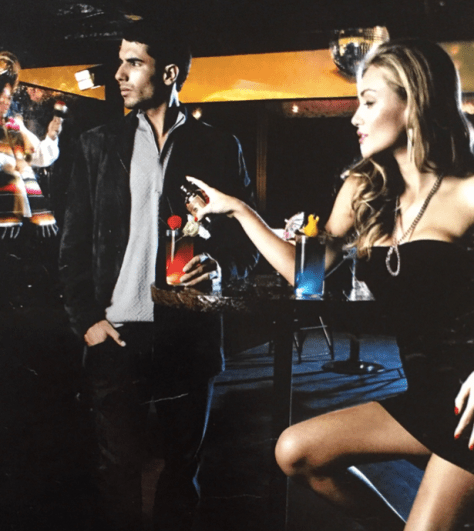
Even though this 007 editorial is shown in a series of still pictures, there is still a story communicated. The series of less than a dozen photos transports each of us to our favorite Bond film, proof that the template is something that so many of us hold dear and admire. Photographer Sasha Hochstetter’s images are truly cinematic and rival any of the cold war era films, with Dan perfectly placed as the centerpiece. Through the series we see Wainer and the 007 accoutrements of guns, beautiful women, and bad guys played by Aline Samie and Michel Serdan a well-known wrestling fighter in Brazil. The ubiquity of Bond includes Brazil and the trio were all well-versed in the character’s lineage. Each member of this combative trio gleefully threw themselves into the archetype characters they were embodying. Dan relates that there were some intense physical moments that were painful but all a part of being Bond. In typical 007 fashion, the final photo saw Wainer getting his in the last chapter of the story. He explains, “The last photo in the editorial was also the last photo that we shot. It shows myself in an inflatable raft in the ocean, alongside four very beautiful women while there is an explosion in the background…obviously my nemesis meeting their just ends. I have a sly smile on my face and have lost my jacket and tie but am still composed and relaxed. While everyone looks relaxed and at ease, it was far from the reality of the situation. It was the most difficult photo of the day. We had been working for more than 8 hours in several different locations in the city. Everyone was very tired but we still had to make the last epic photo. There was a small boat inside the studio, but the hull of the boat did not allow stability, even more with 4 people moving inside it. The photographer was far up on a ladder, taking the photos from top to bottom. Everyone had to be well positioned. As the boat moved, it was difficult for everyone to be balanced and still have a happy face because they had been victorious. It was certainly the most time consuming and tiring picture of the whole day. But in the end everything went well and it was a beautiful job, very rewarding.”

Screen Shot 2017-09-10 at 9.44.32 PM

The James Bond editorial caused quite a stir and resulted in greater acclaim for Wainer. This specific editorial was cited as one of the reasons he was chosen by Nova Cosmopolitan as the “Gato de Nova.” Simply being chosen by an iconic men’s publication like Playboy to portray their view of all things a man should be in James Bond, it’s an award in itself. Dan definitely thinks of it as such. He concedes that he often was stopped for months following the publication of this issue of the magazine, by men and women alike, with congratulations and recognition. While he finds it flattering, the real compensation is being able to know that if just for a little while, he became the one and only James Bond. Dan Wainer is a proud member of a very select group.

Screen Shot 2017-09-10 at 9.43.09 PM

BEBO’S CIRCUS IS ANIMATOR SOYEON YOO’S MESSAGE OF HOPE

Animator Soyeon Yoo wants to achieve something with her creations. She’s not focused on becoming rich or get millions of “shares” on social media. She wants to create stories that touch those who view them. It’s important to Soyeon that she create empathy between the stars of her animated films and everyday people. By witnessing the struggles and accomplishments of the characters she presents, it’s her hope that she’ll create some tenderness that the public can retain from the experience. Yoo’s film “Bebo’s Circus” is a delight to the eyes and brings tears to them at the same time. While the story is exceptional, it’s far from what she originally had in mind. She explains, “I wanted to make heart-warming and dramatic animated film. Originally, I had the idea of a bunny that has big teeth saving other bunnies when they were in danger but I wanted to make a film more relatable to people.” This is when the idea of an older clown who has fallen on hard times and forgotten about his passion. Soyeon wanted everyone to understand that even the most joyful of us experience trying and depressing moments in our lives. Recalling the struggles of her time in art school and how she had lost the enjoyment and curiosity of creating art, Yoo formulated the idea of a clown who struggled and then reignites his own joy…with help from a friend.

Bebo is an older clown who still performs to audiences. He reminisces about the old days when things were easier for him as an entertainer. The crowds were larger and more accepting. When he makes mistakes on stage these days, some individuals react very rudely and this disheartens Bebo. The sad clown flashes back to one particularly enthusiastic girl who loved Bebo’s act. Inspired, he returns to the stage with new vigor. Upon completion, Bebo hears a lone fan applauding. He strains to see who it is and finds the same little girl, now grown up and still holding a juggling ball from his clown act all those years ago. The woman throws the ball back to Bebo as if metaphorically returning his love of performing and being a clown to him.

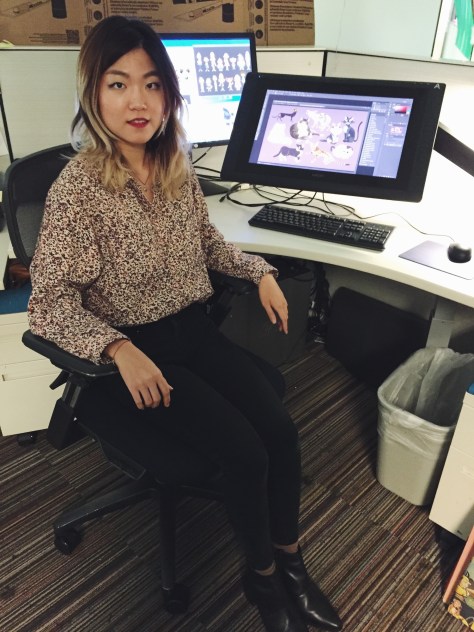
The story is touching and endearing but Soyeon needed a look that would enhance the message and tone of her story. The style of the animation she used for this film is 2D traditional animation, which is all done via computer using the tablet called ‘Cintiq’.  Using computer 2D animation software called ‘TV paint’ for the animation required drawing every frame to create each sequence for the film. Soyeon would first draw a test animation to see how many frames would be needed for each sequence and then move on to drawing the entire main key poses. Following this, in-between drawing for the characters were created and then a final clean-up of all the animation. A few sentences are all it takes to describe but many weeks to manifest.

Her malleable skills were also required in regards to art direction because this was Soyeon’s self-produced animation film. One of the main uses of this was in making the “Color Script” for the film. Color script is the early stage of mapping out the color, lighting, and emotion for the story of the film. Choosing different colors according to story arc are essential to delivering the emotional impact, especially in animation. For example, Yoo decided to apply de-saturated green/grayish tones for the first arc when the main character was having a hard time and then later placed warm brown/yellowish tones gradually toward to the end of the story to convey a happy ending.

One of the most pronounced characteristics of her style is Soyeon’s use of music with animation. The two seem intertwined in a dually productive correlation in virtually all of the productions in which she has created and is involved in. It’s obvious that she feels that music and the visual aspect of animation are twins. She describes, “The role of music is one of the most important elements for this film. The music was definitely a huge part of the film that helped to enrich the story. It helps to imprint and translate the mood for the film. Instead of dialogue, the music represents old clown’s emotions. The cornet part sounds like old clown singing. I wanted the music to lead the story like a narrator.” Yoo worked with composer Steven Van Betten to create the sonic landscape that complemented her visuals. Betten declares, “I am honored and proud to have composed the score for Soyeon’s film Bebo’s Circus.  The film takes a simple and universal theme of overcoming challenges and presents it in a compelling, genuine, and heartfelt manner. I was Inspired by her creativity and ability to take artistic challenges and turn them into fuel for pushing through her creative boundaries. The finished product of the film is both strong technically and artistically inspired. I sincerely hope that I have the opportunity to collaborate with Soyeon again in the future.”

“Bebo’s Circus” received great recognition including inclusion as an official selection at the Golden Bridge International Film Festival, the Mindfield Festival (Los Angeles), in addition to receiving the Best Jury Choice Award at the Direct Monthly Online Film Festival and the Best Animation: Diamond Award at the LA Shorts Awards. While these are all appreciated by Yoo, the most important to her is that of the person who first gave her the idea of the clown…her own brother. Soyeon explains, “I’m so happy that many people in the industry enjoyed the film. While that means a great deal to me, I really created it for regular viewers to find inspiration. My brother suggested the idea of a clown. His enjoyment was so important to me because I hope it will prove to him that you can have an idea and literally create something from that idea that other people will be positively affected by and will be inspired by. That’s the real reward and my original intention.”

Processed with VSCO with f2 preset

From Trailers to Long-Form Projects, Editor Ge Zhai Draws Viewers in with her Work

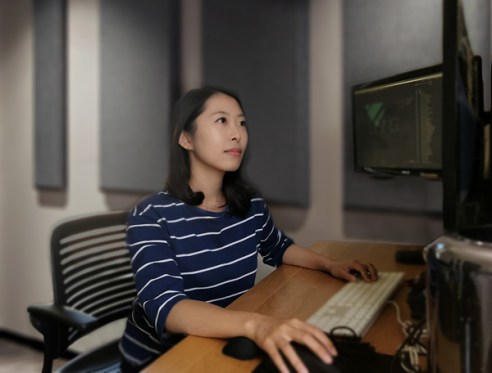
Editor Ge Zhai
Editor Ge Zhai

After all the production meetings, castings and lengthy shoot days are finished is when the story we see in a film or series really begins to come together. Naturally the writers and director have a strong idea of how they want their project to play out, but nothing is ever fully set in stone until the project makes its way onto the editor’s desk. It’s there that the best footage is identified and methodically pieced together into the unfolding story we enjoy as viewers.

Editor Ge Zhai, who is originally from Beijing, China is one of those genius editors who manages to turn hours of footage into a seamless story that grabs the attention of viewers around the world and keeps them watching.

Since moving stateside six years ago, Zhai has made a huge impact in the industry with her work as an editor. She got her start working as an editor for KO Creative, an LA-based creative advertising and strategic marketing group that creates audio/visual and print campaigns for domestic & international theatrical motion pictures, television and more. As an editor at KO Creative Zhai served as the lead editor on over 30 film trailers.

As the editor of the theatrical trailers for films such as multi-award winning director Chris Mason Johnson’s (The New Twenty) dramatic film Test and Coury Deeb’s ( The New Sudan) documentary BBOY for LIFE, Zhai managed to streamline each story into a concise and intriguing snapshot that made audiences want to go out to watch the films; and her success in cutting each trailer needs little further proof than the international attention received by both films upon release.

She was also the lead editor for the online trailers for several films including those for the Dutch film Boys, a coming of age tale about a homosexual teen and his budding relationship with a fellow teammate on the track team, which won the Golden Calf and Dutch Critics Awards from the Nederlands Film Festival and was nominated for an International Emmy Award; and, the Image Award nominated film drama Life of  King starring Oscar Award winner Cuba Gooding Jr. (Men of Honor, Selma).

Editor Ge Zhai
Editor Ge Zhai

In addition to sifting through hours of footage, selecting the most revealing and powerful moments, and creating a streamline story that would enthrall viewers, Zhai’s work cutting trailers at KO Creative meant she had to understand the divergent audiences each trailer catered to– something the value could be seen as no more integral than when it came to cutting sales trailers, as those are the visuals that actually sell the film to distributors and ensure the project actually reaches audiences. Without a strong and appealing sales trailer, a film may languish alone and unnoticed in a filmmaker’s library and never see the light of day. Thankfully for films such as Oscar Award nominee James Franco’s 2014 film The Sound and the Fury and Adam Levins’ horror film Estranged, Ge Zhai cut strong trailers that attracted the attention of distributors and helped each film make their way onto the big screen.

“I think in today’s world, there are so many choices as to video content, you got Netflix, Hulu, Youtube, with hundreds of thousands of films/tv/videos. So for an audience, why do they spend 2 hours on this specific film? The trailer is the first step to involve your audience visually following the poster. Trailers have to grasp their attention in 20 seconds and leave them wanting to see more,” explains Zhai.

“My strength is noticing details in a shot and maximizing them to convey the intimate emotion without relying on explanatory dialogue. I’m very good at telling the story of a film in a different way that is condensed, rhythmic, gripping, while remain true to the film. Plus, I have a good sense of music, which is super important to trailers.”

Though Zhai got her start as an editor in the industry cutting trailers for massively successful film projects, which is impressive enough in itself, she quickly moved on to cutting longer form projects, such as season 4 of the series Being featuring celebrities like three-time Grammy Award winner Erica Atkins Campbell and singer & movie star Tyrese, the comedy series According to Him + Her with Monica Collier (The Watermelon Heist), the poignant documentary Just Extensions and many more.

“Ge has the magic power to make ordinary materials look stunning. It was a blessing to have Ge on our team when we expanded from a trailer house into a full service post-production facility,” explains KO Creative CEO Kristi Kilday. “She was not constrained by her past experience when facing the challenge of editing long-form content like ‘Just Extensions’ and ‘Being.’ All the storylines and characters charged with emotion reflected her talent in editing.”

Zhai’s ability to breathe life into the characters we see on screen coupled with her ability to move each story forward with her natural (and virtually unnoticeable) cuts is one of the unique assets she brings to the table, and one of the driving forces behind her success that separates her from others in the industry. She doesn’t approach her work from a mechanical, step by step process devoid of emotion– instead she allows her creativity and emotional connection to the work and to the characters to guide the process. This is one of the reasons why the end products of those she’s lent her editor’s wand to have been so successful.

When it came time for the creation of season 4 of the series Being, Centric, the show’s network, which is a cable channel owned by BET,  wanted to appeal to a more specific audience and embody a different vibe than that of previous seasons– that is where editor Ge Zhai came in.

Zhai explains, “‘Being’ previously had three seasons, but in totally different tone. For the new season they wanted to shift styles to better fit the rebranded network, which was catered towards educated African American women. I had worked with the same producers on the series ‘According to Him+Her,’ so they were aware of my skills, and at the end of the day that led to hire me to edit their number one show.”

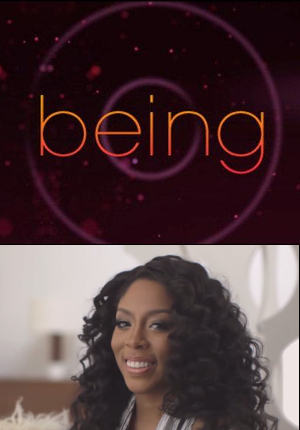
Being series
Poster for the series “Being”

Zhai’s storytelling skills as the editor of Being season 4 served as a massive asset in creating the season’s unfolding story in a way that touched audiences. Her ability to identify the tiny, but impactful moments that a lesser editor might miss, such as the expression of K.Michelle’s (Love & Hip Hop: Atlanta) eyes while sitting in church in season 4 episode 1 or six-time Grammy Award nominee Tyrese Gibson’s (Furious 7, Fast & Furious 6, Ride Along) joyful look as he revisited his childhood school in season 4 episode 4, were all tantamount to creating an emotionally touching story that drew audiences in and kept them engaged as the season played out.

Zhai’s work as an editor is proof enough itself, so much so that she’s climbed the ranks much quicker than the majority of her peers in Hollywood. Most recently she’s been working on the viral marketing video content for the sequel of the Chinese smash-hit Monster Hunt where her work has embraced millions of viewers.

 From beginning her career editing trailers that have been integral to drawing audiences and selling films to buyers, to serving as the editor on highly-watched long form projects that have aired on major networks, Ge Zhai’s seasoned skill as an editor combined with her unique power as a storyteller have been integral to the success of a great many projects. This is one editor we know we’ll be seeing a whole lot more from as time progresses, so keep your eyes out for her name as the credits roll.


A FAMILY OF FRIENDS HAS MANY FORMS IN “PARKED”

There’s something romantic and endearing about a group of people coming together to support each other’s attempt to bring out the best in themselves and their dreams. It might be possible to make it on your own but when you do it with a trusted group of confidants it’s so much more enjoyable. “Parked” is a Canadian production which tells the story of five men who attempt to navigate the highs and lows of life. It’s a theme that is synonymous with the writers who created this show. In a small writers’ room, Gorrman Lee, Executive Producers Adam O. Thomas, Tracey Mack, Siobhan McCarthy, and Actor/Co-Producer David Lewis spent many long nights together writing what ultimately became a season of six full webisodes and twenty-five interstitial videos. The struggle that artists take on to test themselves, to aspire to create something which binds viewers together, it’s just as touching as the obstacles and experiences of the characters in “Parked.” Great things are achieved in life when people work together to support each other’s dreams, whether in real life or the stories which resemble it.

Here’s something that any true artist will tell you, greatness is found in the idea and the manifestation of it not necessarily in the execution of it. There’s a reason that songwriters receive a larger portion of the income generated by a song than those who perform it. Creative individuals understand that the idea itself is the keystone. The modern presentation of this is the fact that many of the productions that are presented on the web rival, and sometimes exceed, the stories presented on more traditional platforms. When writer Gorrman Lee saw the pilot for “Parked” shared on Facebook he thought “They’re doing this on the web? It’s so good!” The show’s pilot is so well produced and funny that it stands as a testament to the excellence of work being created outside the traditional system in today’s marketplace. When Lee had the chance to meet Siobhan McCarthy at a pitch event, he made it his mission to convince her that he could be of benefit to the show as one of their writers. He recalls, “I was very professional about it. I told her how much I enjoyed the pilot and asked if they were looking for people to join up; if so, I’d love to have a coffee with her to discuss. Asking people to coffee in this industry is a great, low-pressure way to get an in.” To Gorrman’s delight and the shows benefit, it worked.

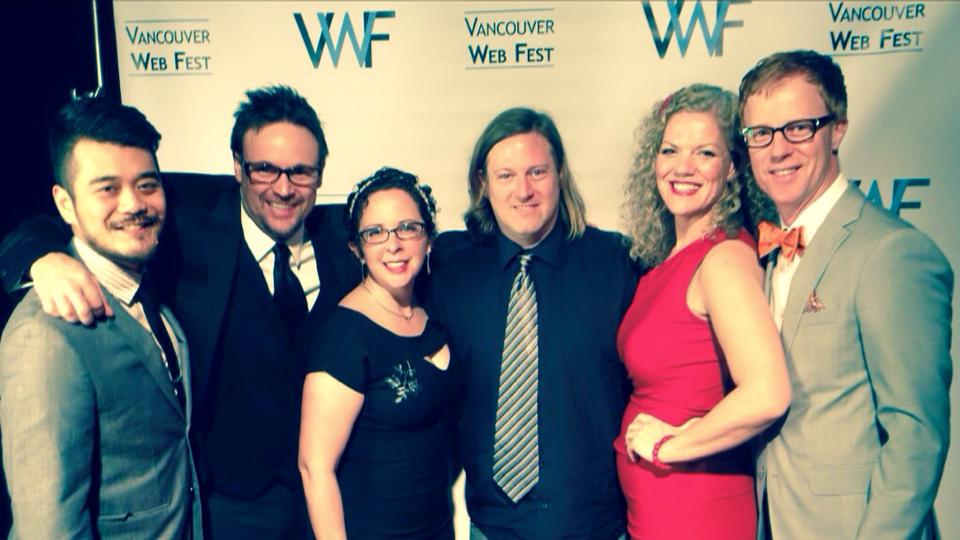
Parked with EP Siobhan McCarthy

“Parked” is about a group of 30-something dads, plus their one non-father pal, struggling with their late coming of age. While at first glance the characters might seem homogenous, each one has their own story to differentiate them in the group. The same can be said for the writers. As the youngest in the writing room and the only non-parent himself, Gorrman related most to the character Josh (the burnout, non-father of the group). While Lee and Josh vary greatly in personality, being of a certain age and place in your life naturally presents a shared perspective. Josh is found to be somewhat abrasive by the audience of “Parked” but Gorrman enjoyed the exercise of finding the sympathy/concealed soft side of Josh. The dichotomy of Josh was as entertaining for Lee as a writer as it was for the viewer. In episode #5, “Waiting for Kiddo”, Josh appears insufferable as he enters the scene complaining about how lame kids’ birthday parties are and how he’d much rather spend the day getting stoned. Lee’s writing shined a light on Josh’s humanity by showing just how hard he’s willing to work to get a child to attend this party with him. It looks creepy from the outside but Josh’s unawareness of this ultimately comes off as sweet because he just wants to hang out with his friends.

In a similar way to Josh’s willingness to step out of his comfort zone to keep the group together, Gorrman took on a writing assignment for “Parked” that was well outside his wheel house. Adam O. Thomas (Executive Producer of “Parked”) notes, “Gorrman was a key member of our writing room. He helped find the humor and really had a strong handle on how to shape a scene. If we were going off on a tangent, he was always the one to help bring us back around. He also made sure we never took the easy way out. I loved him for that. We broke down episodes and then assigned each writer some. Gorrman had a couple of the toughest. One was a musical episode and the other had to dance around the theme of child abduction to find the comedy in a dislikable character…. not an easy task. When he turned in his episode, I laughed out loud. It was perfect!” The musical episode referred to was entitled “Master Baker” and required Gorrman to create a Rap video. While most people think of writers as professionals who create based on something which they already know and actors as professionals who educate themselves/research about things they don’t know, Lee’s situation with this episode seems to indicate that writers are much more like actors in their approach. He was given an outline and lyrics for the song but the rest of creating the scene was up to Gorrman. He states, “I’m not really a Rap fan, my wife is though. I’m a writer of color. I’m Chinese-Canadian. It was important to me to research enough that I wasn’t being offensive or inappropriate in satirizing rap with three white, and one Indian actor. I think we pulled it off because of how silly our characters looked. The joke was on them, and not at the expense of rap.” The writer admits to feeling a great sense of accomplishment standing on set and watching the rap video sequence being filmed with Davinder/Sean Amsing is in his hot tub alongside Jimmy Z /Colin Foo. The entire cast and crew seemed to revel in the ridiculousness of the scene which Gorrman had concocted. It was obvious to all that the cast was living out the same fantasy that their characters connected with. “Parked” actor/writer David Lewis confirms, “Gorrman’s voice was definitely a distinct one. His episodes were some of our strongest. His understanding of character and story structure was invaluable. I’ve been working in this industry for over 25 years and have seen both good and bad writing. Gorrman’s writing is very good!”

Parked at Leo awards

Part of success is accepting both achievement and disappointment with grace. “Parked” received multiple nominations at the Leo Awards (Canadian based awards) in 2016 and a win for best actor (David Lewis). It was an instance of public affirmation in the industry for this production. With equal measure Lee describes, “It was a wonderful moment for all of us. While I remember that easily, I also remember the many long days and nights churning out ideas and breaking stories. I wish we could’ve come up with a way to shoot our original idea for the season finale. It was about Josh realizing that he had drunkenly donated sperm to a local sperm bank and convincing the other dads to help him break into the bank and steal it back. It was our take on a ‘bank heist’. Thinking back to this pitch still makes me chuckle. There’s always something to work towards.”

MANOJ SAKARAPANI IS A CORPORATE VILLAIN IN THE PILL

Sometimes you have to listen to your gut and sometimes you have to listen to those around you for sage advice. In the extremely rare case, you can do both. When Manoj Sakarapani was cast as the CEO of a pharmaceutical company in “The Pill” it was a great occurrence of playing against type. Sakarapani is a soft spoken, intensely polite, and thoughtful person. The money grubbing CEO which he portrays in this film which explores the morality and ethics of the industry is an ego fueled opportunist. Taking on this role allowed the actor a chance to “swim in a pool” that he always avoids. It’s a benefit of being an actor and this is something that Manoj is exceptional at; in fact, a little to exceptional. His fellow cast mates felt such disdain for Manoj’s character during the filming (and surprise by his complete reversal of personality) that they continually made him promise to never pursue any work in the pharmaceutical industry because he would be a highly successful villain in it. Sakarapani concedes that he was highly convincing in “The Pill” while also finding the reactions of his costars amusing. It’s an age old conundrum for an actor, you want to be completely believable in your role, even if that means being believable as someone who is hated.

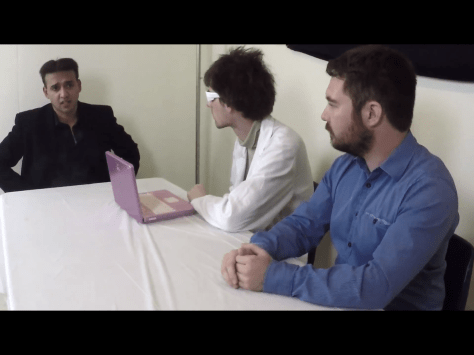
In “The Pill” a virus is spreading and a pharmaceutical company has found a cure for it, deliverable in the form of a pill. Once the pill is distributed and released to public, reports surface about its cures against the virus but also revealing deaths due to side effects of the pill. The CEO of the company sees an opportunity to take the company global and ignore the facts that the pill offers some cure but avoids the possibly fatal side effects. He puts intense pressure on the scientists and the quality control specialists and his team to produce large quantities and release the pill worldwide. While fending off direct conflicts the Scientist who discovered the pill and his team, the CEO also is confronted by the news media. A reporter interviews the CEO and the team regarding the discovery but secretly wants to uncover the truth of the drug and expose the CEO and his company to the public as money driven and disregarding of the serious damage to life. In a final heated discussion with the CEO, the scientist and the rest of the team refuse to release the pill. The big reveal and catharsis happens when the scientist forces the CEO to take one of these pills and tries to shove it down his throat. All of this is exposed to the public through media by the TV reporter who secretly tapes the whole thing with the aid of her camera operator.

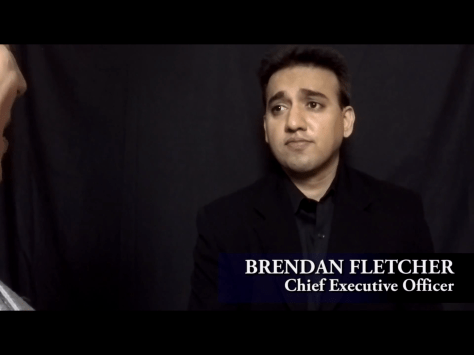
As Brenden Fletcher in the movie, Manoj portrays a man who is money minded and who will do anything to take his company global. Fletcher is blindsided by the potential income and shows complete disregard for the potentially malevolent effects of this drug on members of society. He is willing to sacrifice his moral and ethical values because as it was so eloquently stated in the film Wall Street “Greed is good.” Sakarapani did not see the character as one sided and felt that the role was quite challenging. He explains, “As an actor you have to be versatile here because you are playing a really good guy with the media who states that he wants to save lives and cure humanity as your number one priority. At the same time, you have to play the greedy guy who wants this done right away before there are more complications and more negative news comes out about this drug.  I enjoyed the versatility needed to play these contrasts with my acting range to convey the subject and the message to the audience that my character needed to deliver. My role tends to be more of a Chameleon because that is what I am doing with the reporter when I’m talking to her in person and with my team during conversations and heated discussions.”

Photo Aug 17, 1 37 20 PM

The presentation of the film is non-linear, which helps to intensify the emotional impact of the story as well as provide some interesting twists and turns for the audience. The story was built in a way which wouldn’t have made sense in a linear approach. The story starts with a reporter trying to investigate why this Pharmaceutical company is still thriving but being tight lipped when asked about the deaths being reported. The reporter states that she wants to focus on the success of the company, which causes the CEO to perceive this as an opportunity for positive press. gets nice media for the company. Fletcher relaxes and begins to profess his aspirations to help humanity. At this point, flashback being to present the back story involved, revealing the CEO and team discussing the drug’s merits and shortcomings. The film vacillates between members of the team being interviewed by the reporter until she finally sneaks in to a live meeting that the CEO and his team are having which ends up dramatically against the CEO, publicly exposing him. This constant paradigm shift slowly revealed the layers of deception and intent on the part of Manoj’s character.  The final shot of the film which slowly roles in on Sakarapani communicates the solace and defeat of a man who has gambled and lost it all, and he knows it.

Vanessa Gibuea, one of Manoj’s costars in “The Pill” states, “The only way to describe Manoj in this film is chilling. He plays it close to his chest. He’s not maniacal or overtly abusive in his portrayal; it’s not cartoonish. This is what makes it so frightening. What Manoj did was to present his character as a very real person. A real person makes a series of mistakes that eventually lead into one very big and bad decision. Brenden Fletcher is a person who lost sight of himself and his fellow man. That happens more often that we’d all like to admit. What was so striking about the way Manoj presented him is that he found all of those little decisions in his performance and you felt them rather than someone showing you them or telling about them all. It was amazing.”

Photo Aug 17, 1 40 25 PM

If Companies Could be Movie Stars: SIC and Entertainment Success

While movie lovers and fans generally know the names of the actors who grace TV and film screens, the names of production companies sometimes don’t roll off the tongue as easily. That doesn’t mean, however, that a company like See in Color (otherwise known as ‘SIC’) doesn’t exert power and influence in the notoriously challenging and tricky waters of entertainment. SIC, with a hugely successful collection of video content in their library and on their upcoming production slate, was formed with a singular mission that brings credence to an industry otherwise known for superficiality and money-making values that come at the expense of artistic integrity. Indeed, they stand by a mission to challenge the odds, defy stereotypes and encourage the world to “see in color,’ a set of values of which their team is rightfully proud.

Even more worthy of a celebratory mention, in addition to their grounded mission statement, are two of their upcoming projects. “Viral”, an episodic drama thriller about a group of scientists attempting to save humanity from an alien virus, represents the company’s ambitious foothold over the hugely lucrative sci-fi TV show genre. Then there’s “Singled Out”, a feature film about drugs, crime and corruption in the Atlanta Police Department, speaks to SIC’s capacity to bring raw heart to a real-life setting in the spirit of the Oscar-winning “Moonlight” and Kathryn Bigelow’s recent “Detroit”. So how is the company able to create such a varied selection of projects that speak to audiences around the world, and not only that, but also rake in substantial receipts at the box office?

Well, first, there’s SIC’s well-known ability to create visually stunning, emotionally compelling, intellectually engaging and share-worthy video content that will capture the hearts and minds of audiences everywhere. That isn’t just a sales pitch, but is an ethos that’s proven with the success of past projects like “Cyberversity,” a short film about the lack of diversity in the cybersecurity field. It premiered at IBM headquarters in NYC and Symantec headquarters in Silicon Valley. On the feature side, “Pseudo Blood Of Our Own,” was a 2011 co-production with the world-renowned Canadian Bollywood Films.

The second, and perhaps more glamorous reason for SIC’s incredible triumphs, is the renowned talent involved with SIC productions. Indeed, “Reuben,” a short film directed by SIC Vice President, Kaisania Calubaquib, won the Grand Jury Prize for Best Short at the 2017 Universe Multicultural Film Festival). The International Consortium of Minority Cybersecurity Professionals (ICMCP) also hired SIC to produce a Mission Video Series in 2014-2016

It’s therefore appropriate that both “Viral” and “Singled Out” have attracted top-levels of talent. In the leading role of Emma Greene is New Zealand A-lister Sophie Renée, known for critical roles in Frankie Contino’s “Living Together” and“50 Ways To Kill Your Lover” by Hanna Berrigan, where she starred opposite Nigel Barber  (known for “Mission Impossible” and the James Bond movie, “Spectre”). Sophie’s reputation seems to align with SIC’s. She adds: “I constantly get told after shoots that I bring an indescribable positive energy on set and that I make everyone else a: up their game and b: that I lift the mood…I love that that is my professional reputation!”

Sophie Renée
Renée will star in the new TV series “Viral.”

In “Singled Out,” SIC have lured accomplished UK actor Neil Reidman to play the leading role of James Montgomery. Neil then acted alongside Mackenzie Crook on the BAFTA award winning comedy series, “The Detectorists” as Dr Tendai  and played the lead role of Errol in a stage production of ‘Routes’ at the Welsh Millennium Centre which was also filmed for Made in Cardiff TV. He also headed up the feature film “Hard Time Bus,” which won Best Film at the Hollywood Black Film Festival. Yet another feather in the cap both for SIC and for Neil to be working hand in hand – the meeting of two great players in the entertainment field.

Hard Time Bus Poster
Reidman played the lead role in the successful feature film, “Hard Time Bus.” He will be playing James Montgomery in “Singled Out.”

If production companies could be famous, then SIC would be followed by paparazzi and social-media hungry fans all the time. It’s more fitting then that, as a lucrative business, they can focus on their roster of projects, and continue entertaining audiences all over the world instead. Also coming up for the company is “Picture This,” a romantic comedy feature currently shooting, about an aspiring photographer embarking on a hilarious journey after she finds an enchanted camera, and “Today is the Day,” a short film revealing the disturbing nature of a man suffering from emotional trauma and mental illness (expected release, March 2018). A diverse range of projects for a company which prides itself on celebrating diversity for global audiences.