Category Archives: Uncategorized

Australian Actor Alastair Osment The Face That Customers Trust, and a Performer that the Entertainment Industry Loves

With numerous critical roles in an impressive list of television productions behind him, Australian star Alastair Osment has well and truly confirmed his place in the international entertainment industry.

Most obviously, his leading role in national commercial campaigns for companies like EnergyAustralia is a direct reflection of his record of commercial success. The company, which supplies electricity and natural gas to more than 2.6 million residential and business customers throughout the country, is well-known for its innovative advertising campaigns since it was founded more than twenty years ago. Since fronting the campaign, Alastair joined the likes of “The Mentalist” star Simon Baker (the face of ANZ) and “Wedding Crashers” favorite Isla Fisher (spokesperson for IMG), as Australian actors who lure customers with their imitable charm and unique screen presence.
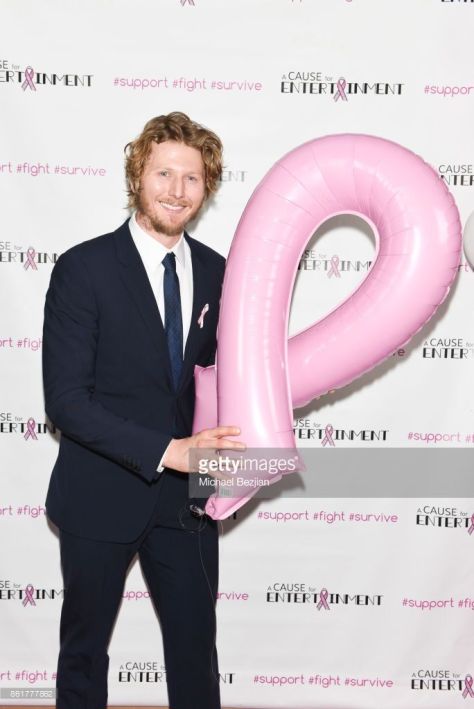
Alastair Osment attends Hollywood Unites to Fight Breast Cancer at a Cause for Entertainment on October 15, 2017 in Los Angeles, California 2 - Photo by Michael Bezjian Getty Images for
Alastair Osment attends Hollywood Unites to Fight Breast Cancer at A Cause for Entertainment on October 15, 2017 in Los Angeles, California. Photo from Getty Images. 

Alastair, who is well-known for scene-stealing turns in “Deadline Gallipoli” produced by “Avatar”-star Sam Worthington and the award-winning series “Home and Away”, lead the campaign by portraying a ‘hero’ employee who visits Australian customers in a hilarious and effective series of TV spots that aired right across the country. Despite Alastair’s face and acting credits well-known amongst Australian audiences, it was his firm hold on his acting craft that lead to his hiring. The director, Matt Devine, explained that he was “amazed at the precision and dexterity [Alastair] shows on screen [and] he has an innate ability to draw you in as a viewer.”

energyaus
EnergyAustralia is Australia’s leading energy company. 

Clearly, Alastair helped draw in viewers. The company continues to generate millions in revenue, and in the year after the campaign aired, the company was Awarded ‘Most Satisfied Customers’ by Canstar Blue and Roy Morgan, Australia’s leading market research company. It’s unsurprising that Alastair played an important part in this win, as he delivered the main message. That Alastair worked with Matt, whose film work has been selected for prestigious festivals all over the world, including SXSW, the Los Angeles Music Video Festival, and the Berlin Music Video Awards, also reinforces how Alastair only works with the best in the industry.

Matt also points to the actor’s X-factor, a rarity amongst people but the defining element amongst A-list actors, which Alastair clearly holds in spades. “[Alastair] is incredibly warm and likable,” Matt explains, “qualities that are essential in a leading man.”

Aside from his significant body of work and the international recognition he has personally received for his achievements as an actor, Alastair explains to our editors that he relished “the opportunity to engage more with the Australian public” through EnergyAustralia’s marketing. “It allowed me to show off my personality, something which my grittier roles in film and TV don’t necessarily allow.”
MV5BMTMwN2IwNDItMDllZC00ZjFiLWIwYmEtMzA5OTRhZDZkZDYxXkEyXkFqcGdeQXVyNTI4NTI4NzI@._V1_SX1777_CR0,0,1777,755_AL_
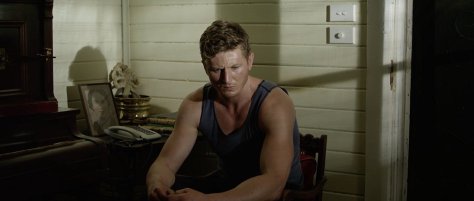
Alastair in one of his grittier roles from the film “Animal”, showcasing the traditional leading man and ‘rougher’ character types that he generally plays.  

Matt Devine further explains that the advertisement’s success was informed “heavily [by] Alastair’s comedic skills…to pull of the gag…which was that this family had converted their whole house into a sauna.” A hilarious premise, no doubt, but also one that gave this trained thespian opportunity to show off his “naivety and vulnerability”, that according to Matt are “talents which are unique to Alastair” that “worked to perfect effect.”

Alastair’s comedic talents, and ability to attract customers with his remarkable combination of relatability and authority, have also seen him representing global brands like KFC, and Australia’s St. George Bank, in significant advertising campaigns. “Once I was solidly a part of the industry, it seems that directors and producers wanted to keep hiring me because they know they can trust me to deliver the goods.”

The incredibly hard-working and distinctive performer’s illustrious career in Australia has put him in a strong position to continue working in leading roles. Just recently, Alastair has been cast in a new film franchise titled “Stringer” produced by Industry Entertainment Partners, the same company behind the award-winning feature “We Own The Night” starring Joaquin Phoenix and Mark Wahlberg. “I’m very excited to start filming.” As any actor would be, given the whirlwind shooting schedule that will take Alastair across the US for the next three years, playing the leading character ‘Wayne’. Regardless of the high salary he is expected to earn for the films, it’s clear this actor places more value on his craft. “My purpose is to connect humanity through story. That’s why I act. I believe that as artists we can evoke social change, through narrative we can pose questions to the greater community and ask society to question where its heading.”

A MODERN CLASSIC WITH KARLEE SQUIRES IN “SUGAR”

IMG_0205

In case you aren’t aware of it, vinyl outsold downloads last year and are posed to repeat the occurrence this year. That might seem counterintuitive to most readers. It’s easier to access a download and you get to pick out the specific parts that you desire rather than purchasing the entire product. What this trend tells us is that the public is beginning to realize what they forgot, that there is a difference. This same template can be applied to live theater. There is something about the experience, the sound, the energy, and obviously the momentary performances that are created by the entertainers who take part in this classic medium. While Broadway has never gone away, the plethora of touring companies that used to blanket the country and beyond have dwindled. As with vinyl, the “real” thing is starting to make a resurgence, much to the delight of an excited public. Entertainers who can do it all, such as Canadian Karlee Squires are more in demand than in decades. It takes great talent, commitment, and a love of the uncertainty of each performance that drives Squires and this new generation of talented live performers who act, dance, and sing. Even Hollywood and television is taking part in this trend as more and more productions of this kind are seen on both the big and small screens. For Karlee, this is simply more proof that the path she has chosen was well worth the effort it has taken.

“Sugar” is based on the classic comedy “Some Like It Hot” starring Marilyn Monroe, Tony Curtis, and Jack Lemmon in 1959. The music for “Sugar” is by Jule Styne, lyrics by Bob Merrill, and the book is by Peter Stone. Set in 1920’s Chicago, the story follows two unemployed musicians, Joe and Jerry, who witness the St. Valentine’s Day Massacre by Spats Palazzo and his gang. The boys go undercover to get out of Chicago, dressing as women and joining an all-girl band, Sweet Sue and Her Society Syncopators, who are travelling to Florida. Joe takes the name Josephine and falls in love with the band’s singer, Sugar. Meanwhile, Jerry (now Daphne) catches the attention of a wealthy, elderly man named Osgood Fielding, Jr. Karlee appears as Mary Lou early in the plays as Mary Lou leaves the band, figuratively opening the door for Sugar. As proof of her talent and malleability, Squires then appears as Olga and stays in this character for the remainder of the play. In a particularly hilarious scene, while on the train to Miami for the band’s gig, Olga asks Jerry/Daphne to help her fix the bra strap that fell down her shirt. Jerry/Daphne has to reach down her shirt, fumble around until he finds it and tie it back together. It’s a featured comedy skit in Sugar and goes on for quite a few minutes. The character Olga is unaware of what’s happening, as Jerry/Daphne is having too much fun, and the audience roars with laughter. The show heats up when Spats Palazzo and his gang show up in Miami and figure out that the girls are actually boys.

IMG_0100

Squires performance in “Sugar” belies the curt amount of time she had to prepare. She had twenty-five hours to learn script, blocking, and choreography. The nature of theater is that it can often change at a moment’s notice which makes being a quick learner a substantial attribute. The intensity of learning so much so quickly was offset by the pleasure of being surrounded by an incredible cast and crew. Two time Tony-award-winner Robert Morse shared his stories of performing with the cast and gave direction and encouragement to Karlee during the play’s run. Producer/Production Coordinator Eileen Barnett notes, “It was hard not to notice Karlee; there she was on alongside actors from some of the biggest stages in the world, from Broadway, to the West End to national tours; some even being Tony and Drama Desk nominated, and she was enchanting. She is mature beyond her years. Karlee does all of the preparation and rehearsal that any consummate professional does but she is also always looking for a new way to add something. She has talent and drive which is an outstanding combination; one which was very evident to all of us in Sugar.”

IMG_0175

The method for any art form, including musical theater, to move forward is by using one’s talent to push yourself forward by learning from those before you. Karlee Squires is surrounded by her peers and those of legendary status of previous decades. Enabled with a skill set that encompasses the heart of the great musical theater tradition, she is on the forefront of the new generation that carries the torch into the modern era and its productions. As the attendees of “Sugar” can confirm, it’s going to be exciting to watch.

THE “JUST DEAL” WITH NBC THAT STARTED JOHAL’S MAJOR CAREER

(BY KELLY JAMES)

Screen Shot 2018-02-25 at 3.11.43 PM

  Countless American actors grow up dreaming of landing a contract with a major television studio. Actors from outside the US are no different. The opportunities and the exposure that this kind of platform offer to actors is the entertainment manifestation of a jet pack to one’s career. While he has a long list of credentials to his career, back in the early 2000’s PJ Johal achieved a goal in his career when he signed a contract with NBC to appear as Vijal on the Saturday morning series “Just Deal.” Filmed in a single camera format and without a laugh track, “Just Deal” was an early proving ground for Johal and his costars, to say nothing of how exciting it was for these young actors to find themselves suddenly thrust into the national and international awareness of the public. The storylines gave young people a diverse set of characters to connect with and afforded PJ the opportunity to display the skills that would land him roles in a number of productions to follow.

As a young actor who had just signed with a major talent agency, PJ openly admits that he was excited to be asked to audition for NBC’s “Just Deal” about teenagers living in the Seattle suburbs. It was a story about ordinary kids and common issues of teen life but did so with an ethnically diverse cast. The goal of the show was to show the commonality amidst other differences that the youth of the time was dealing with. The show involved the creators and writer behind the television series “90210” and the excitement around it was palpable. Johal has always been brave when it came to taking liberties with a character during auditions and, as with many times since, it paid off well when he was quickly offered the role of Vijal, the “fish out of water.” Vijal was looking to make friends like any young person. Unfortunately, the friendship he struck with Hunter (the school bad boy) would steer Johal’s character towards trouble. Vijal’s trajectory in the show allowed PJ to exhibit a wide range of situations and emotions. Every actor connects their character to their own experiences and reality and Johal describes, “Vijal was new to everything, thrust into a world he had little in common with. He had to work his way through understanding and navigating it all. I moved around a lot as a child and it was tough having to uproot and start over every time. New schools, new teachers, new kids, a new environment which required constant introduction and assimilation…that’s very hard when you are a young person trying to discover who you truly are. Self-discovery is challenging for anyone and kids have almost no control in their lives.When almost everything else around them is stripped away and then replaced with something different, it’s incredibly disconcerting. My childhood friendships were kept at arm’s length although I was always the best friend I could be because I love having friends. I brought a lot of these experiences to Vijal, right or wrong.”

There’s a natural comradery that takes place for such young actors who find themselves thrust into the spotlight of a major network series. Virtually all of the cast members of “Just Deal” were fairly new to the business with each possessing a handful of credits. While admitting that he wasn’t particularly active in all of the extracurricular social activities, PJ notes that experiencing this type of momentum in his career alongside others in the same situation made it less precarious for him. While working on the show he was approached to join the cast of a major Hollywood feature film. It was an exciting time for the young actor as being included in this major film production but not without trepidation as it necessitated him leaving his first television role. Requesting that he be written out of the show was an understandably difficult situation for any actor and yet one that is born of others recognizing his talent.

In the fifteen years since his work on “Just Deal” Johal has amassed an impressive list of productions in popular TV and film. One thing that has remained constant is the audition process. Whether a teen actor or as a present day adult, PJ concedes that the multitude of auditions is a teacher in itself. He comments, “I can’t imagine many actors would find it unearned to have roles offered to them especially after they’ve paid their dues and rightfully deserve offers. I know at this point in my career I welcome them. If in order to work you must audition, then so be it. It’s important to feel that you’re earning it and proving you are an exceptional actor. It’s a way to keep your sanity and the last thing an actor needs is self-criticism or lack of worth when it comes to having to audition. You must find every possible positive aspect of your journey on this career path and persist; if that means auditioning and doing it well every time then so be it.” The most important lesson which Johal has found…bring yourself to your roles but serve the interests and purposes of the character and the story not yours. These ideas of PJ Johal would serve when applied to almost anyone’s life.

Meet VFX Artist Zhaoyu Zhou!

VFX artist Zhaoyu Zhou

Beginning in the 1990s, a promising new technology kicked off a period of revolutionary change in the film industry. The advent of computer generated imagery made it possible to create worlds and characters that could never have been dreamed of before. From epic superhero blockbusters to beloved animation franchises, filmmakers across every genre rely more and more on visual effects artists like Zhouyu Zhou to bring to the screen what cameras alone can’t.

Years of experience, a background in photography and design, and a mastery of the complex technical aspects of the post-production process are what make Zhou such a powerful force in the field. Seamlessly weaving art and science in equal measures, he sculpts and breathes life into each production using cutting edge technology and the eye of a visionary.

“[Visual effects] consists of CG production such as modeling, rigging, look-development, pre-visualization, post-visualization, animation, lighting, rendering, and compositing in the typical pipeline,” Zhou explained. “All these aspects and elements are crucial to making the tremendous and surprising imagery.”

His skill set has proven to be an invaluable asset, particularly on projects like the ambitious 2016 film “Dancing Blue.” A creative tour de force that lies somewhere between an art exhibition and an extended length music video, “Dancing Blue” is a mesmerizing and at times abstract story told in three parts.

“‘Dancing Blue’… consists of everything from celluloid animation, computer animated graphics, and hand-drawn artwork,” Zhou said, describing the laborious process. “First we got the music, then started brainstorming and visualizing the motion and design based on the sound and music.”

Much of “Dancing Blue” is whimsical and surreal. The film starts in the vacuum of space, shifts focus to the inhabitants of a living painting, and ends with an absolutely hypnotic sequence of abstract animations. Zhou’s painstaking attention to detail is apparent in every frame, an incredible feat given the staggering amount of work he was faced with.

“One challenge was to create a 2D look by using 3D techniques… I used dynamic simulation and animated the smoke trail’s travels through space. However, in order to create the fluid experience I decided to animate the camera along with the strokes,” he said. “It was hard to pair both, so I went into the timeline to match them perfectly.”

Zhou was also the driving force behind “Reunion,” a heartwarming animated film about a young boy looking for his father after the two become separated. The film uses visual cues and a haunting score in place of spoken dialogue, making its stark, expressionist style that much more profound. The most striking thing about the film, however, is the method Zhou chose to use for the animation.

“Unlike most of the films that I’ve worked on, ‘Reunion’ is primarily a sand animation, shot frame-by-frame using a live-action camera. I shot footage on the camera and then ended up compositing CGI into it to create an organic and unique aesthetic to the animation, as well as to the entire film,” Zhou said. “This film has a supremely unique and original feeling.”

In addition to handling the visual effects, Zhou also wrote, directed and animated “Reunion,” giving him complete creative control over the production. The result is a truly one-of-a-kind animated experience and a pure, unadulterated representation of Zhou’s artistic vision. Of course, having control doesn’t mean the undertaking would be easy by any means.

“Shooting frame-by-frame was a big challenge, especially because I had to deal with loose, soft sand,” Zhou said. “In post-production, all the pain from shooting live-action was relieved because I could composite all those frames and added frame-blending and re-timing some shots. Even though it was sand animation, VFX in post definitely enhanced the final look of the film.”

His expertise as an animator and mastery of CGI have made Zhouyu Zhou among the most highly sought-after visual effects artists in the industry today. But it’s his artistic and creative instincts that give him an added edge. As visual effects continue to become more and more prevalent in film, it will be up to artists like Zhou to lead the industry forward.


MASTER OF CELEBRITY JUICE – ED THOMAS

(By Kelly James)

IMG_4278

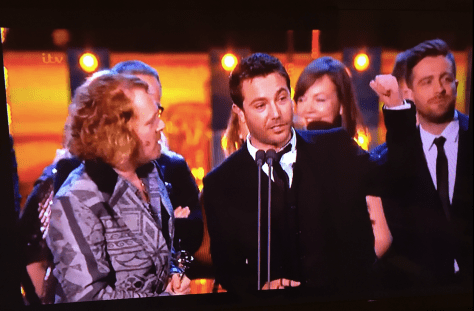
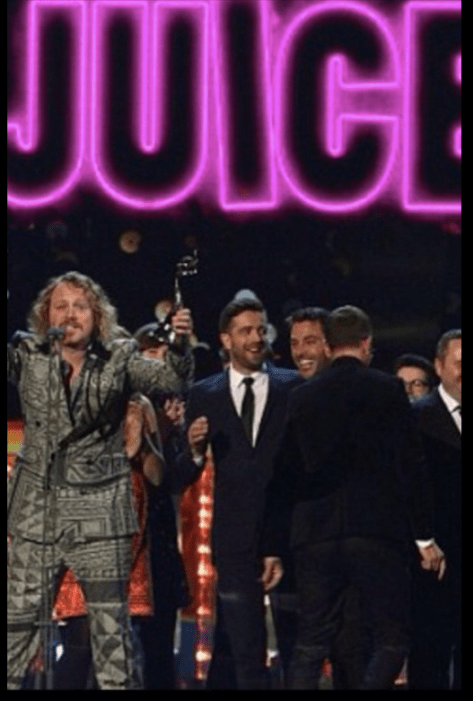
British producer Ed Thomas has been involved in some very creative television programs. James Corden’s Drop the Mic, American Idol, Sam and Mark’s Big Friday Wind Up (a two time BAFTA winner), are just some of the shows you’ll see on his list of credits. He remarks, “Celebrity Juice is one of the most creative roles I’ve ever occupied. It contains so many ideas in each and every show. I led a team in generating these ideas throughout four consecutive seasons. The show contains some of the most innovative and entertaining content I’ve ever been involved in. It truly pushed boundaries.” Thomas worked closely with a team of writers to script the show on a weekly basis while also managing a team of producers and overseeing all aspects of production. During his tenure as show runner for “Celebrity Juice” the program received the National Television Award, perhaps the pinnacle of recognition in British television.

Screen Shot 2018-03-05 at 7.56.59 PM

Great Britain has a somewhat different relationship and view of celebrity than the US. Both public and celebrities are not given the opportunity to take themselves so seriously and Celebrity Juice shines a light on this. Celebrity Juice is, broadly speaking, a comedy panel show meets quiz show meets game-show meets comedy sketch show. It features celebrity guests who appear on the show to play games and generally have an outrageously good time. The theme at the heart of the show is celebrity news. Everything is held together by the host and star of the show Keith Lemon (played by the incredibly talented Leigh Francis). Lemon is outrageous by nature. He swears, says vulgar things, and goes where others dare not go but with a charming manner that repels the very idea of taking offense at his comments. In reality, celebrities embrace the show and its host, often returning multiple times. Clips of the show continually go viral and result in immense promotion for those appearing on Celebrity Juice. Ed expounds, “We used to pride ourselves on coming up with outrageous content that would send Twitter into a meltdown. Most of my friends watched the show, not because I worked on it but because they were genuine fans. I used to love it when they said ‘I can’t believe you did that on the show last night!’ We would never settle for an idea that had been seen before; there always had to be a twist that pushed it to the next level. Whether it be games of a sexual nature (“Celebrity Dogging”) or naked extras invading celebrities’ personal space, we made sure each show always contained a moment that would make guest and viewers alike say ‘Did that really just happen?’  We’d have American guests on the show who were in utter disbelief of the things we could get away with. Jason Derulo couldn’t get over the fact that he could swear on national television and Nicole Scherzinger ended up getting her toes sucked by host Keith Lemon…which was all standard fare for an episode of Celebrity Juice. One of my proudest achievements was convincing international superstar DJ David Guetta that it was a good idea for him to get into a cement mixer (which had been made completely safe) and let us spin him round, all for the sake of entertaining television. He approached me after the taping had finished, looking quite menacing. ‘That thing you made me do with the cement mixer.’ he said in his extremely French accent, followed by a pause that seemed like forever, “…absolutely genius!’ I breathed a sigh of relief.”

Screen Shot 2018-03-05 at 7.55.13 PM

Celebrity Juice began as a low budget experiment which eventually grew to its current status as ITV2’s biggest show, winning multiple awards including a BAFTA, a British Comedy Award, and 2 National Television Awards. Thomas recognizes that his time with this production was life consuming but also presented him with several lessons which have served him well, most notably that pushing the boundaries creates exciting and entertaining content. When constructed and presented in an unoppressive and light hearted manner, what can be off-putting becomes an opportunity for entertainers and audience to avoid cumbersome gravitas.

WRITING BOTH SIDES OF A STORY WITH SHREEKRISHNA PADHYE

4

Life imitates art, art imitates life…it’s all the same thing to writer Shreekrishna Padhye. His vocation as a writer has allowed him to investigate and mix the influences of each into the other. Yes, it’s a bit like playing God when you write, but it gives back as much as it takes from humanity. What is communicated is just as much based in fact as it is in the interpretation of those receiving the information. As Padhye explains, “I have always been fascinated by the transformation a script can go through in the hands of actors. No matter how specific you try to be with tone and character motivations, an actor can fundamentally change the scene with just their performance and highlight a different side of the story. I wanted to explore that with a small film, so I wrote one with obvious conflicts and had actors play the action in two different manners. In every fight/argument both sides feel like they are right and more sympathetic.” In the film “My Way, Your Way” the writer was simultaneously studying and displaying social interaction, characters, and the actors who were themselves presenting the lines and actions. Shreekrishna Padhye might just be the most modern & entertaining version of B.F. Skinner that you’ve ever seen.

Padhye openly admits that he mines the events and interactions which he sees in real life for his writing. This is not an uncommon event for a writer. What is unusual about this writer is that he likes to entertain and diffuse the negative actions and thoughts of the characters and the viewers of his films by showing just how petty and selfish they can be, served with a very humorous tone. “My Way, Your Way” is a comedy. In the story we see the events through the eyes and emotional tint of two coworkers. What is presented is almost a form of therapy for the audience and the writer. Seeing the awfulness of people presented in the absence of condescension and finger pointing allows the recognition of our own lesser desired attributes. Humor is the conduit by which Shreekrishna delivers this. “My Way, Your Way” presents the same office workplace occurrence seen through the point of view of two separate people. In the first version, John tells his friend at work (Sean) that he has just been promoted. To John’s surprise, Sean doesn’t take the news very well. Instead of being happy for his friend’s good fortune, Sean storms out of the office. In the second version, John rubs it in Sean’s face that he is being promoted. John proceeds to humiliate Sean and takes over his office, forcing him out. Both the versions have the same dialogue, but the actors put a completely different spin on it each time.

Padhye’s character driven style has made him a favorite among actors. He specifically wrote this film with the actors in mind. Watching actors interpret his words and infuse them with different tones made him more aware of the power of these professionals to shade the message. While a writer creates the setting in both books and films, the reader’s imagination colors the world while a viewer’s is heavily dependent on the actor’s portrayal. The dual presentations of the film emphasize this aspect. The first interpretation of the story depicts John as hard-working and deserving of the promotion while his friend Sean is resentful. In the following presentation (seen through Sean’s eyes) John is a suck up who is less deserving than himself. What’s amazing about the film is that these drastically opposed perspectives are done using the same dialogue.

A self-described actor’s writer, it’s his respect for the contributions of actors that led Padhye to creating this project. A writer’s words mean nothing if actors don’t bring them to life. Shreekrishna is adamant that the spark in the process is creating great dialogue. Filtering real life experiences into an interesting story starts here as he explains, “The key to making dialogue seem realistic is to develop an ear for it. Even though we hear people talking every day, we don’t focus on their choice of words, speed, or emphasis. We usually extract relevant information and move on. My job as a writer is to study people and their behavior. The manner in which people talk is fascinating to me and I have trained a part of my brain to pay attention to words and after conversation, I usually play the interaction back in my head and reexamine it. If I hear a unique phrase or pronunciation, I make a note of it. I may not ever end up using the exact words in my script but questioning the thought process behind it helps inform my characters. Even so, a conversation in a film is very different to one in real life. Real life conversations are long and slow. If portrayed verbatim on film in this way, they would seem incredibly boring. The key to keeping dialogue interesting is to keep it short and specific to conflict at hand. Every character needs to have a distinct voice. Even if the character names were scrubbed from the script, you should be able to differentiate the lines of each character.”

The presentation of entertainment productions has transformed immensely in the last few years. Productions are created for online presentation and are used by more traditional studios and networks to find exciting new productions and artists to add to their brand. “My Way, Your Way” garnered immense attention from both the industry and the public with 100,000 views on YouTube. There was a time not so long ago that these studios and networks had a vision of entertainment that would appeal to everyone but the popularity of online formats have proven that the most unusual and creative ideas can unify a very committed fan base. In all artistic endeavors, a strong voice will find an audience. Shreekrishna embraces these opportunities and the experience commenting, “I’m lucky to have started my career right in the middle of this seismic shift the internet has brought to the entertainment industry. Streaming services have become so ubiquitous that it no longer matters what method of distribution a piece of content was originally produced for (Broadcast, Cinema, Cable or Streaming). Because of all the new outlets, content production is at an all-time high. This is great for all artists as it provides many more opportunities. The greatest strength is also the greatest obstacle as it is possible for a piece of art to get lost in a sea of great content. Even so, the viewer is always the winner.” Each film Padhye writes seems to receive more and more praise. If his goal is to create stories that stories that allow people to see themselves and their potential selves, it seems to be an idea that the world is open to contemplating.

5

Bulgarian Producer Assya Dimova: Defying Cultural Standards to Follow a Dream

The fact that certain cultures see some professions as king and count others as unworthy ‘hobbies’ should come as no surprise, but for many kids growing up in cultures where their personal dreams are seen as unacceptable, this can have a debilitating affect on their ability to confidently pursue the path they desire. We see it everyday through stereotypes, such as those of Asian and Indian descent being pushed into careers in tech and computer engineering, or others that push their youth to become doctors or lawyers. While satisfying one’s parents and conforming to cultural expectations can be heavily weighted, sometimes the inner pull of what one feels is their destiny is strong enough to defy the expectations– even if it takes a while to develop the courage to defy the standard.

IMG_8248
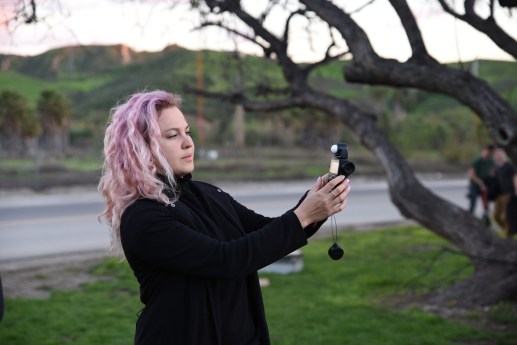
Bulgarian producer Assya Dimova shot by Megan Cooper

Esteemed Bulgarian film producer Assya Dimova is a prime example of one woman who was expected to pursue a path other than the one she felt she was personally meant for; but after making the definitive choice to devote herself to working as a film producer, everything seemed to fall into place naturally. Dimova, who recently produced the films “Stygian” and “Our Blood is Wine,” has secured a strong place for herself in the film industry on an international level; but it didn’t happen overnight.

During her youth growing up in Sofia, Bulgaria Dimova had an unwavering love for visual storytelling and a special knack for bringing creative talents together to realize a single vision. She recalls, “At the time, back home, the arts were not a traditional career path, especially for a girl. So I did the next best thing, I moved to Italy and enlisted in business school while actively building a taste for emerging talent,” adding however, that “the fascination with the magic of visual storytelling was just not going away, and I desperately wanted to one day be a part of bringing all those talents together.”

While in Italy, Dimova attained her Bachelor of Science in Business Administration and her Master of Science in Economics and Management of Innovation and Technology, and even though she hadn’t made the leap into the film world just yet, in a way she was already working as a producer. She began utilizing her natural ability for recognize creative talents and bringing them together

She explains, “I’ve always had the tendency to bring a group of friends together and lovingly push them to show off their talents in plays and short films. The first bigger endeavor was probably while I was living in Italy and with a small group of friends decided to create a series of concerts, cultural nights of sorts, where we presented Bulgaria to a diverse audience. We handled every aspect, from all the logistics, to involving talent, getting sponsorships, working with local media.”

By the time she was 25 Assya Dimova came to the firm realization that there was no other satisfying path for her, so instead of sticking it out in a career that didn’t utilize her natural gifts, she whole-heartedly dedicated herself to her passion– producing. Dimova relocated to the states soon after where she completed her Master of Arts in Creative Producing for Film and Television at Columbia College.

“As a producer my goal has always been to find and cultivate relationships with inspirational filmmakers who have an individual voice,” explains Dimova. And the work she’s done in the industry prove that she knows how to discover strong and innovative filmmakers with powerful stories to tell, and she’s the right producer to bring their tales to the screen.

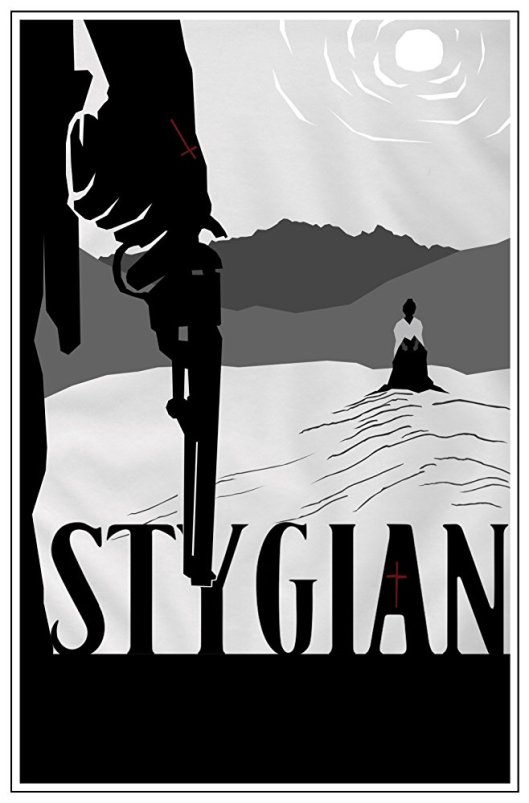
Stygian Assya Dimova
Poster for “Stygian” directed by Josh Garvin

In 2015 Assya Dimova began production on Josh Garvin’s (“Daisy,” “Uncle Evan”) dramatic western “Stygian,” a silent film that follows an old gunslinger on a perilous trek across a barren desert. The climax of the film commences when the gunslinger falls from his horse and incurs a fatal injury that leaves him suffering from dehydration and a vicious infection on the desert floor where he is left to ponder his past mistakes.

As both the producer and the line producer on the film, Dimova did everything from raising funds and managing the film’s budget, to solidifying the shooting locations in New Mexico, pulling together the right people to head each department and also managing the day to day progress of the production.

About what led her to produce “Stygian,” Dimova explains, “On one hand, there was the creative aspect. The central themes of sin, guilt and atonement make for a powerful and thought-provoking story. Josh Garvin’s vision was nuanced and passionate and it was a no brainer decision.”

Being chosen as an Official Selection of the Wild Bunch Film Festival, Globe International Silent Film Festival, New Filmmakers Los Angeles, Santa Fe Independent Film Festival and the Grand OFF World Independent Film Awards, the overwhelming acceptance “Stygian” received from film festivals around the world make it clear that Dimova chose the right story to the bring to the screen.

Besides her ability to ensure the productions she chooses are completed in time and on budget whilst remaining to true to the director’s creative vision, one of the unique strengths that Dimova brings to the table as a producer is the ease with which she is able to navigate cross-cultural film productions. A polyglot, Dimova is fluent in German, English, Bulgarian and Italian, and as someone who’s lived and worked in multiple countries over the course of her life she understands how the filmmaking process differs vastly between countries. This skill proved to be incredibly valuable in her work as the line producer on Emily Railsback’s (“The 6th Stage of Sugar,” “WarBaby”) documentary feature “Our Blood Is Wine,” which was shot in the country of Georgia earlier this year and is slated for release in 2018.

With several films and television series under her belt as a producer, and a seasoned eye for creative talent, Dimova’s experience in the industry has also led her to be tapped as a curator for film festivals around the world. Some of the festivals she’s curated over the years include the Netherland’s 2016 Leiden International Film Festival, as well as the 2016 and 2017 Beloit International Film Festival in Wisconsin, and the 2016 and 2017 Hollywood Film Festival. As a film festival curator Dimova plays a key role in the screening and voting process that determines what feature and short form narrative and documentary films will be included in each festival, in addition to be involved in discussing the festivals proposed programming.

“As a producer, one must have a wide range of taste and ability to spot up-and-coming talent. With my international experience and background, I am able to critique submissions for both their production and creative value,” explains Dimova. “As in my personal producing career, I always go for story first and how captivating, original and authentic it is. I always look for something fresh that surprises me.”

In the end, producer Assya Dimova’s success in the film industry is proof that societal and cultural expectations sometimes have to be defied in order for one’s dreams to become fully realized.

Cinematographer Olesia Saveleva Strikes a Balance Between Art and Science

Olesia Saveleva
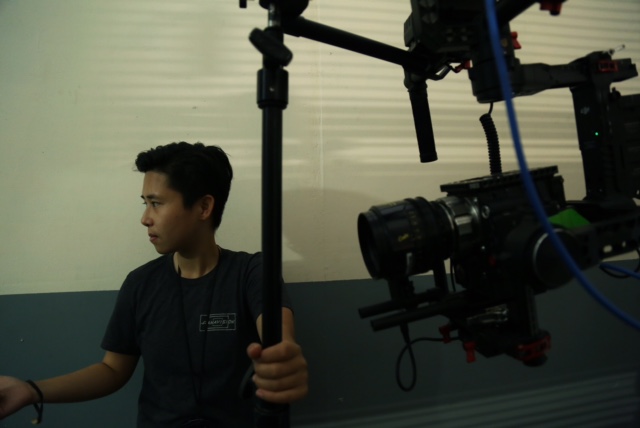
Cinematographer Olesia Saveleva tests the light on set of “Steady Eddie”

From the strategically selected cameras, lenses and lights to the composition, angles and the pacing of each shot, cinematography is both a science and an art. A great cinematographer knows how to weave the emotional elements of a story into a film’s visual language in a way that makes the audience feel something without even needing to hear the actors’ dialogue. One powerful woman who has made a name for herself as an extraordinarily talented cinematographer is Olesia Saveleva.

“I love the balance between art and science in being a cinematographer. I love working with cameras, I know I can be precise with settings. I just love the engineering part of it,” explains Saveleva. “The artistic part of it makes cinematography addictive. I love collaborating with a director to find different ways to convey emotions to the audience…. And when the audience reacts emotionally to what you’ve done, that is a pure satisfaction.”

With her increasingly impressive body of work Saveleva, who’s originally from Yekaterinburg, Russia, has carved out an impressive reputation for herself as a diversely skilled cinematographer in the U.S. and abroad. Some of the films she’s become known for recently include IFS Award nominee Jorge S. Pallas’ drama “In Girum Imus Nocte,” which won the Award of Recognition from the 2016 IndieFEST Film Awards, as well as the Diamond and Silver Awards from the LA Shorts Awards, the 2015 crime film “Brothers” with James McVan from the series “Britannia,” the dramatic film “Steady Eddie” starring Robert Daniel Sloan from the horror film “Sinister 2,” and more.

Prior to moving into filmmaking Saveleva, who attended the prestigious American Film Institute Conservatory where she received her M.F.A in cinematography, received her bachelor’s in economics and went into real estate, but the draw of the cinema was too strong to ignore.

Saveleva says, “When I started to make movies my life changed. I had an infinite interest in filmmaking. And cinematography was the main part of it… To be able to share people’s personal stories… to capture the right emotion with the right light through the right framing is fascinating.”

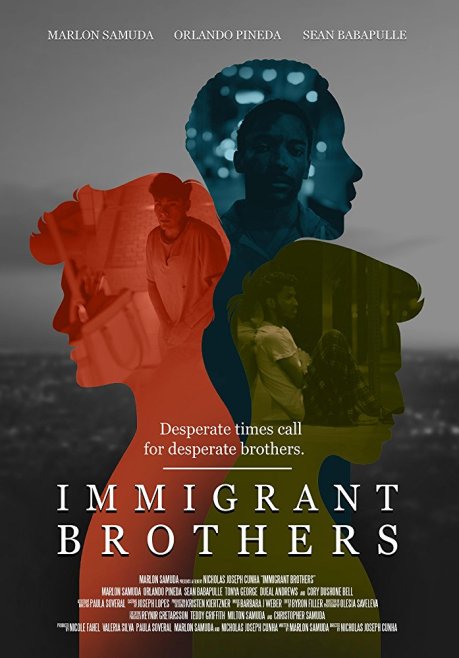
Immigrant Brothers
Poster for “Immigrant Brothers”

Earlier this year Saveleva was the cinematographer on the multi-award winning film “Immigrant Brothers,” which had its world premiere at the Atlantic City Cinefest earlier this month where Marlon Samuda, one of the film’s lead actors, earned a Best Actor Award. Directed by Nicholas Joseph Cunha, who won the LABRFF Award for the film “Red Souls,” “Immigrant Brothers” is heart-wrenching drama starring Samuda (“RomCom,” Above Suspicion”), Sean Babapulle from the comedy series “The Millionaires” and Orlando Pineda from the award-winning film “Summer with Alicia.”

The film follows three immigrants, all from different countries, who form a brotherly bond as they struggle to survive on the streets of Los Angeles. As each one chooses a different method to make money– with one of them begging for change on the corner and another stealing from people, the intensity of the film’s story is heightened by third boy’s decision to try prostitution. However, on the eve of his first night turning tricks his ‘brothers’ intervene and beat up his first customer, which enrages the pimp and ultimately leads one of them to be killed.

As the film’s cinematographer Saveleva created a powerful visual language with her use of the camera. Choosing to shoot the film in a 2.40:1 aspect ratio (widescreen), which drives the feeling of emptiness when one of the brothers is alone in the frame compared to when all three brothers are in the frame, which makes the shot feel complete, Saveleva’s strategic decisions in terms of the film’s composition were key to driving the emotional aspects of the story.

The other important thing to us was the angles we used. The characters situation worsens with the progression of the film and the camera angles become more dramatic,” Saveleva explains. “From eye level we go to extreme low angle and to extreme high angle. We either look down on them or we sit low with them and look up trying to make the audience feel in their shoes.”

Saveleva’s seasoned skill in the field definitely shines through in the touching story that “Immigrant Brothers” brings to the screen, something that is proven by the fact that the film took home the award for Best Drama Film from the European Cinematography Awards, in addition to being chosen as a Finalist at the Eurasia International Monthly Film Festival and an Official Selection of the  Sanctuary Cove International Film Festival.

For those in the UK, the film “The Perfect Dinner,” another one of Saveleva’s recent works as a cinematographer, is slated to premiere at St James’s Sussex Gardens on December 16 at 7:30 p.m. accompanied by the Notting Hill Film Orchestra. “The Perfect Dinner,” starring Casara Clark from the series “Thirtysomething” and “Trauma,” and Robert Rice from the series “Moms Anonymous,” is yet another one of Saveleva’s collaborations with director Jorge S. Pallas.

I am a director, but I worked as a cinematographer myself. So I have a strong visual style… Collaborating with Olesia we find new ways to tell my story better, she is like my second pair of eyes, she sees things differently and helps me see them too,” explains Pallas. “She is very creative. She knows without saying if I don’t like something and she comes up with a new solution right away.”


Actress Madalein Jackson May Look Like an Angel, but She Plays a Convincing Villain

Madalein Jackson
Australian actress Madalein Jackson

Actress Madalein Jackson began her career back home on the stages of Australia where she quickly became known for her ability to breathe life into diverse characters. Through her roles in high-profile theatre productions such as “Charlie and the Chocolate Factory,” “Oliver!,” Willy Russell’s “Our Day Out” and the Footlice Theatre Company’s popular “Grubble” series, where she took on multiple roles, Jackson carved out a reputation for herself as one leading actress who effortlessly commands the attention of her audience.

“I am quite versatile, and as a result I’m lucky to have not been typecast,” says Jackson. “I also think I have a pretty keen insight into human behaviour, which helps in effectively conveying emotions and reactions.”

Playing everything from the shy underdog Gertrude McFuzz in the hit production of “Seussical” to the psychotic Clytemnestra in Andrew Coates’ staging of “The Golden Masque of Agamemnon,” Jackson’s versatility has been a driving force in her career, and it’s one that has kept her working non-stop.

While she looks innocent, once she gets into character Madalein Jackson transforms completely, and that’s exactly what she did when she took on the cunning role of Caroline Bingley in YPT’s period drama “Pride & Prejudice.”

Jackson says, “Caroline Bingley is such a great, complex character. Playing the villain is always more interesting than playing the hero, and Caroline is no exception to that. Her motivation is her snobbery and greed, however I always imagined that she must have been damaged in some way in order for her to have such a deep reservoir of pain and hatred.”

In this classic Jane Austen novel adapted for the stage, the Bennet family works to marry off their two daughters Jane (played by Kelsie Allan) and Elizabeth (played by Katy Price) in order to ensure their continued wealth and societal status. While the wealthy Mr. Bingley (played by John Shearman) swoons over Jane, she does not reciprocate his feelings, but that doesn’t stop his sister Caroline (played by Jackson) from inviting Jane over in hopes of creating a bond and furthering her brother’s chances. However, when Caroline realizes the potential match between Elizabeth and Mr. Darcy, who she wants for herself, her attitude swiftly switches gears. Keeping her exterior composed, Caroline turns into a cunning villainous woman, planting seeds about Elizabeth’s shortcomings in order to boost her chances with Darcy, and Jackson played the part perfectly.

“Caroline mostly keeps her thoughts to herself in polite society, making everyone aware of her opinions purely through knowing looks, however when she is in private with her family she lets fly with contempt and vitriol! Playing someone so manipulative and antagonistic is hard work, but always wonderfully rewarding,” says Jackson.

Madalein has undoubtedly made name for herself in the theatre, but she’s no stranger to the big screen. In 2013 she took on a critical role in the family dramedy film “Wiener Dog Nationals,” which won the Audience Award and the Honors Award at the Newport Beach Film Festival in addition to being nominated for four Young Artist Awards.

Wiener Dog Nationals
Poster for Wiener Dog Nationals

Directed by Kevan Peterson (“Wiener Dog Internationals,” “The Super Holidays”), “Wiener Dog Nationals” follows a family who adopts a dachshund from a shelter and enters her into the nation’s most prestigious wiener dog race, Wienerschnitzel’s “Wiener Dog Nationals.” New to the world of wiener dog races, the family is met with a series of challenges caused by the leading wiener dog champion’s owner Ms. Merryweather and her assistant (played by Jackson), who take unscrupulous measures in order to ensure their dachshund remains the champion. Embodying her character’s cold nature and looking ever-fierce on screen, Madalein Jackson nails the mark as Ms. Merryweather’s assistant in the film.

Jackson says, “I loved the challenge of playing a villainous character in a family film; there had to be a balance between meanness and humour. The character was torn between supporting Ms. Merryweather and helping with her evil schemes, and struggling with working for such a cruel, mean employer. She knows what they are doing is wrong but feels she has to support her boss or face the consequences.”

Acting alongside award-winning actors Jason London (“Trafficked,” “All Roads Lead Home,” “The Rage: Carrie 2”), Alicia Witt (“Urban Legend,” “Dune,” “Cybill”) and Morgan Fairchild (“Days of Our Lives,” “Freaked,” “Flamingo Road”) Jackson definitely holds her own in the film.

Up next for this diversely talented actress is the film “All Our Yesterdays” from writer and director Emily Price. In the film Madalein Jackson will take on the starring role of Dianna, a successful young woman whose death is ruled a suicide, but she knows she was murdered and she’s out to prove it, even if she has to do it from the other side.   


AWARD-WINNING CINEMATOGRAPHER DEPICTS A WAR TORN FAMILY IN “LAST CALL”

Cinematographer Ruixi Gao can’t help herself sometimes, she is overwhelmed with ideas. This is the blessing and the curse of possessing a creative personality. It’s incredibly difficult to make a film so when you do, you want someone talented and driven like Ruixi to be among those enabling you to manifest your vision. This was the mindset of Zhipeng Xing, director of “Last Call” when he approached Gao to be the DP for this film. After receiving the script from Xing, Ruixi recalls, “I sat down and read it immediately. I think it is instinctual for many cinematographers, it most certainly is for me. I could see the scenes inside my mind as I read. The whole picture played out for me. I understood the lighting & the perspective of the camera in relation to the action. It’s exciting when you read a script for the first time and the film is playing in your head; I wish the audience could see it so quickly. That’s part of what motivates me as a DP; I see this wonderful movie and the desire is to bring that to life for others to witness.” Besides her obvious passion, Ruixi brings years of experience and talent to every production she is on. An emotional film like “Last Call” requires every bit of her sensitivity and expertise.

The relationship between Director and DP is commonly accepted as one of the closest working relationships in film. Each director has their own process and the cinematographer must be flexible to this to help said director achieve their vision for the story being told. “Last Call” director Zhipeng Xing prefers to focus on the actors instead of fixating on the framing of the scene in the lens. Rather than a shirking of responsibility, this was a result of Xing’s trust in Gao’s abilities and talent. This allowed Ruixi to communicate extensively with her team. Working with her Gaffer and Key Grip to establish the lighting plan, and framing with the PD, the effort was highly collaborative. Her plan used soft filters for imaging effects and a low-key style with warm and cool tones to control different emotions between war and home.

This story depicts war and its effect on family. The father and son are separated from the mother (& wife) who is still in war torn Iraq. They communicate via letters and a weekly Facetime. After one of the weekly family Facetime talks, the father is speaking with the mother after their son has gone to bed. Disturbing noises are heard and the signal is lost. A week goes by with no word from the family’s beloved wife/mother and they fear the worst. Unable to sleep from worry, on the morning of the son’s birthday, the husband hears a knock at the door. It could be the mother or a government official to announce her unfortunate death. The filmmakers do not reveal the answer, leaving it up to the viewer to decide what they think happened. The purpose of telling this tale is not to resolve it either way but rather for the viewer to contemplate the effect of war on real people with families. In the last scene, prior to the knock, the father receives a letter from his wife in which she states that she won’t make it to see them for their son’s birthday.  When the father reads this letter it’s impossible to not feel the pain of being separated by these circumstances. War is cruel, it makes people ache; it’s also what makes this film work and have such impact.

Ruixi was awarded two best cinematography award for this film: Best Cinematography Platinum Award WINNER at the LA Shorts Awards & Best Cinematography Gold Award WINNER at the NYC Indie Film Awards (the film also received multiple other awards at these festivals). Gao’s passionate disdain for war and its malevolent effect on people in many parts of the world moved her to dig deep in her abilities for “Last Call.” Edwin Beckenbach worked with Ruixi on the film and professes, “Ruixi brings with her the experience of an international woman to a domestic industry that has traditionally been dominated by men and is not known for inclusivity or diversity. Film as art is a powerful generator and amplifier of cultural values and perspectives and as such the addition of underrepresented voices, especially those as promising as Ruixi’s, can entertain as well contribute to the benefit of society overall. In an industry where many people place their image before their abilities and ‘fake it until they make it’, Ruixi is authentic to a fault and is singularly focused on the artistic and technical challenges of the job at hand. Her dedication to her craft and clarity of vision is a unifying motivator for the camera and lighting crew to perform to the best of its ability.”

For many viewers of the film the most heart-wrenching aspect of the story is the young boy’s difficulty in being separated from his mother. With the understanding that this character would have be both a catalyst and proxy for the audience, Gao took extra preparations including reading psychology books on working with young professionals and preparing props with stickers and colored tape to make them more enjoyable. Far from being the task of a normal DP, this type of approach in working with a young actor is indicative of Ruixi’s overall pattern of professionalism. By creating a positive and friendly atmosphere in a variety of ways she is able to get the best performance from everyone and thereby get the best shots with the camera, to say nothing of coming in ahead of schedule. While some prefer to stay in their “own world” Ruixi Gao feels that the images she wants to create allow us to see through the eyes and emotions of others, which is what “Last Call” is all about.

LastCall03