Category Archives: Uncategorized

Brazilian triple threat Rita Shukla is an indomitable force on stage

Rita Sjukla
Brazilian Performer Rita Shukla

You may have seen performer Rita Shukla on stages across Los Angeles as a lead singer with the classic rock band Lloyd Moss & The Rock Collective, singing jazz-style Brazilian bossa nova with the Electrobossa band, or heavy rock n’ roll with Redemptrix. Her strength and dynamic range as a vocalist coupled with her lively and magnetic stage presence has made her a go-to performer for a number of bands in need of a strong lead singer.

As part of Lloyd Moss & The Rock Collective, Rita is a vocalist alongside Andrey Tsvetkov Nazarbekian, who made it to the semifinals on the incredibly popular TV series “The Voice Russia” season 2, and was also a contestant on the 8-time Primetime Emmy Award winning “American Idol” season 15.

“Working with Rita is a constant exchange. Her vast knowledge in music and her stage experience are the factors that give all of our band members a new perspective on the way things should be done, how harmonies should be written and songs should be sung,” explains Nazarbekian. “What really makes her good at what she does is her natural gift for music supported by the education and training she acquired in Brazil ”

Rita began cultivating her talent as a performer at the age of 4 whilst growing up in Campinas, Brazil where music and performance are a vibrant part of the country’s colorful culture. First immersing herself in music classes, Rita immediately fell in love with the way music made her feel.

It’s just like being in nature for me… I feel joy when I sing. it brings me so much peace and happiness, as if I don’t think of anything else. I’m just there present in the moment,” admits Rita. “For you to be able to sing well, you first need to breathe well… the whole process of singing is just therapeutic and healing.

Knowing the competitive nature of being a lead singer, Rita didn’t rely solely on her natural vocal strengths as a high soprano. Instead she devoted herself to perfecting her skills by training with some of the best in the industry internationally, including vocal coaches such as Molly Rocklind (who’s shared the stage with the likes of Stevie Wonder, popular classic rock band America and Chaka Khan), Dawn Bishop (who’s performed with household names like Brian McKnight and the Black-Eyed Peas,) Brazilian soprano Lucila Tragtenberg and maestro Thiago Gimenes, among others.

It didn’t take long for Rita to be tapped to begin performing on stages across Brazil. By the age of 16 she was playing starring roles in popular theatre productions such as “A Receita” by Jorge Andrade, followed by “Um Cadillac Para as Estrelas” and “Quero a Lua” at the Tao Theatre.

With many of her major theatrical projects back home in Brazil utilizing her talent as an actress and singer, she quickly stood out as a rarely gifted performer capable of flawlessly executing both with equal pizazz. But there’s another area of Rita’s ‘gift’ as a performer that has made her so unique amongst others in the industry– and that is her skill as a dancer.

In the same way that her impressive vocal range and natural rhythm has led her to lead bands with musical styles ranging from jazz and bossa nova to classic and hard rock, her skill as a dancer has given way to a multitude of dance performances ranging from flamenco and belly dancing to jazz and tap for musical theatre.

Beginning flamenco dance training at 11 and belly dance at 13,  Rita explains, “First, I fell in love with flamenco, for its strength, rhythm, passion, and history, but dancing in general makes me feel good as I feel the energy of the music and the beat flowing through my body.”

The way she translates music into her movements as a dancer, embodying the rhythm in human form on stage, has not only been a highlight for the audiences who watch her, but a draw factor for those who cast her in their shows. Whilst in Brazil, she was cast as a lead dancer in numerous shows such as “Noche Caliente,” “Bombardeio de Dança” and “Noite Flamenca” with leading Brazilian flamenco dancer and choreographer Karina Maganha. She also made a name for herself as a lead dancer with the Jimena Lourenço Dance Company, starring in shows like  “A Arte Milenar Da Dança Do Ventre,” “1° Festival de Dança Do Ventre,” “2° Festival de Dança Do Ventre,” “Clip” and many more.

By college Rita had not only perfected her individual skills making herself known among the country’s best young performers in each area, but she had blended all of these talents, making her an undeniable triple threat– an asset that boosted her reputation within the world of musical theatre.

About her beginnings, Rita explains, “Growing up studying and doing theatre [in Brazil], and feeling on my skin the importance of embodying the character as a dance, the music as a text and the acting as music, made me a very open, strong and vulnerable actress and singer.”

After completing her bachelor’s in drama at the Pontifical Catholic University of São Paulo, scholarship offers began rolling in from schools in the U.S. for her to continue her education in the performing arts. And in 2013 she packed her bags and relocated to California on a scholarship to study Musical Theatre at the American Musical and Dramatic Academy.

As a singer she’s quickly became a lead member in several bands in the states, while also writing her own songs and embarking on many other fruitful collaborations. After being recognized by music producer and songwriter Ted Perlman, who’s known for his work with renowned stars such as Whitney Houston, Harry Belafonte, Bob Dylan and Diana Ross, the two collaborated in writing a praise and worship rock tune.

Perlman recalls, “As soon as she sang one note, I knew she was special… Rita is one of the most soulful white girls anywhere! She has everything- talent, beauty, brains, and joy. She’s as close to perfect as it gets.”

In the states her seasoned skill as a performer coupled with the fiery nature of Brazilian culture pulsing through her veins, led her to be viewed as a unique talent in the industry.

Last year Rita was personally invited to perform as a singer and dancer alongside some of the most recognizable Broadway stars in the world in the production of “Broadway to the Rescue.” A concert gala for charity, Rita shared the stage with the likes of Tony Award Winner LiLlias White and Tony Award nominees John Tartaglia and Sharon McNight where she gave a memorable performance in numbers from the hit Broadway shows “Hair,” “Memphis,” “Hairspray” and more.

“Training and performance skill once you reach a higher level is not hard to find in Los Angeles. But one thing that I look for in performers, and Rita is one of a few that has it, is personality and unique instinct,” explains Rodrigo Varandas, one of the choreographers behind “Broadway to the Rescue.”

“I feel that her Brazilian culture makes her unique already. But she is able to incorporate American culture in her performance as well and that is just impossible to find. She mesmerized me every time she sang and danced.”

Rita Shukla is one performer who’s managed to excel as singer, actress and dancer, and while she spent years training in order to get where she is today, the natural and vibrant energy she brings to the stage is something that just can’t be taught– and it’s definitely something that has set her apart from the pack.
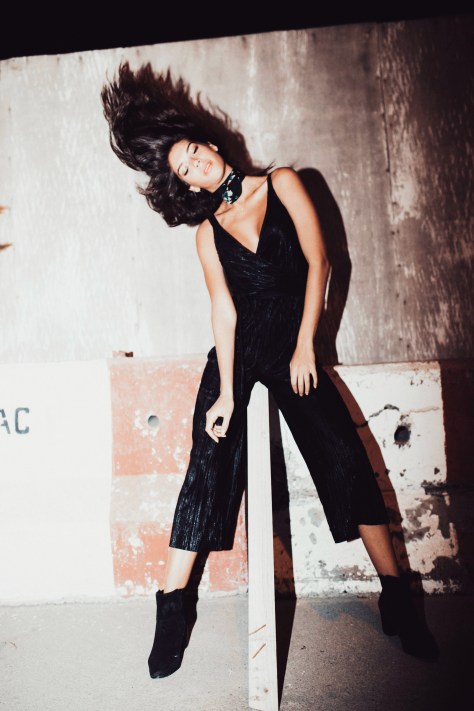
 

Staying True to Their Roots: NYLON Magazine’s “To The Authentic” by Jessica Pantoja

Upon shutting down their print magazine at the tail end of 2017, NYLON Magazine wanted to remind readers that despite moving into solely digital-based content, their founding roots wouldn’t waver. With their focus moving more towards engaging with their audience through striking video and digital content, it made total sense to release a commercial that spoke to their continued dedication to the diversity of their audience despite the change — so they joined forces with cinematographer Jessica Pantoja to create “To The Authentic.”

“As NYLON is currently evolving from a print to a digital publication it was important to state that regardless of the change they would continue to be true to who they are and who they have been,” explains cinematographer Jessica Pantoja.

“‘To The Authentic’ had the intention to express NYLON’s commitment to the audience and the bond between the publication and the readers… NYLON is part of the audience as the audience is a part of NYLON, they both influence each other.”

In creating “To The Authentic,” Pantoja captured 25 models, influencers, dancers and actors, essentially asking them to come as they are, with the ultimate goal of revealing their authentic selves on camera. Using such a culturally and aesthetically diverse cast that collectively blurs the lines of traditional gender ‘norms,’ which are so yesterday it’s not even funny, not to mention the broad range of personalities brought together in the commercial, Pantoja nails the mark with her creative vision for “To The Authentic.”

From the minimalistic yet bold bubble gum pink opening frame featuring the words “BE YOURSELF” followed by the hashtag ‘#Benylon,’ to the progression of models who hit the screen, the commercial flows seamlessly and expresses what the brand stands for. DIVERSITY.

This is ultimately one of the key reasons tens of millions of readers look to them as a source of information on everything music, fashion and pop culture each month — they’ve never covered what every other glossy on the newsstand does, and they’re not going to start now. Their mission is furthered by the audio narration that accompanies the visual content, which adamantly reassures: Through media changes, political changes, cultural changes — you keep true to yourself. We see you. We are here for you. Always have been. Always will be. NYLON.

Pantoja says, “The meaning behind [To The Authentic] lay on the changing social climate… we were just trying to express the belief that diversity is beauty.”

Capturing each model (moving around to their own tune) in front of various backgrounds that visually fit their individual aesthetic, style and personality, Pantoja’s selection of backgrounds, which include recognizable murals, architectural structures and other interesting locations across Los Angeles, also speak to the magazine’s ceaseless attention to design and local culture, something they’ve covered in extensive detail since their alternative beginnings back in 1999.

She explains “We asked all the models to play a song they liked so they would feel comfortable showing us who they are. They could dance or just stare at us. It ended up being super fun because they would feel really comfortable and share their personalities and style with us. Each person brought something completely different.”

From the way she fluidly pans her camera across each model as they grace the screen and creates an engaging flow from frame to frame, it’s easy to see the seasoned nature of Pantoja’s skill on a more technical level in terms of her work as the cinematographer behind the project. Key in eliciting the authentic personalities we see from each of the talent featured in the commercial, Pantoja manages to capture model after model through her camera lens in a way that never gets boring.

“It’s never easy to photograph 25 models and build and light more than 20 different sets, to pull off 25 different outfits and looks in a 12 hour day. The team was amazing and thankfully we had very talented and professional people with us. At the end I think that it’s all about having the right people as your team,” explains Pantoja. “In film you are only as good as the people who stand by you and they are only as good as you help them be. It’s a very collaborative industry and if you fly solo you will never be able to make it.”

Some of the models Pantoja shot for the commercial include influencer and beauty blogger Katie Joy, model Matt Jones, actress and poet Portia Bartley from the six-time Los Angeles Film Award winning rom-com “You Have A Nice Flight,” actor Ido Samuel from the Carlo di Palma Award winning film “Fill the Void,” dancer Stacy Gaspard and other notable pop-culture figures and influencers.

It’s not at all surprising that NYLON chose to lean towards featuring social media influencers rather than supermodels, A-listers and red carpet frequenting celebrities in the commercial. The content is all about being authentic, and featuring unique in-the-know creatives is what they’ve always been about. The plethora of music, beauty and fashion collaborations they’ve executed over the past two decades have influenced millions, in the same way that their relationship with their incredibly diverse audience has influenced the content they release.

At the end of the day, “To The Authentic” really does scream to viewers at the top of its lungs: Be yourself, THAT is what’s beautiful.

“Being you is ok. No matter what that means, you should always be true to who you are in order to achieve the better version of you,” adds Pantoja about the overall message of the video, and her personal feeling about the kind of self love and acceptance each and everyone should focus on cultivating.

With the concept of beauty being one that has remained in flux over the ages, what more and more people around the world today are coming to regard as ‘beautiful’ is reserved for those who remain true to themselves, those who unapologetically expose their strengths and flaws with fearless authenticity. And this is something that directly connects with the attitude and voice of NYLON and their readers.

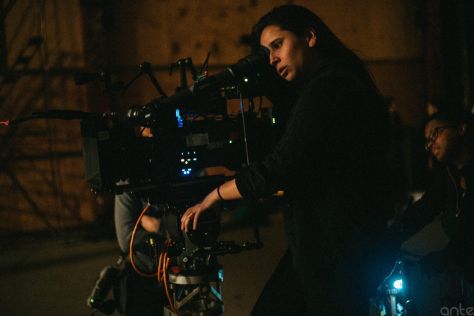
Cinematographer Jessica Pantoja

Aside from being the cinematographer for “To The Authentic,” Pantoja, who’s originally from Queretaro, Mexico, has made a strong name for herself as a cinematographer in the film industry, something she’s dedicated herself to for the past decade. She’s earned extensive international acclaim for her work as the cinematographer behind countless films including “Mute,” “Cold Night,” “Harvest Moon,” “Evanescent,” “The Wind Outside” and many more.

“Jessica and I have collaborated on many short films and commercials in the past… Nylon was a very special project where I saw and experienced great energy and drive from Jessica, as a DP and as a leader,” explains “To The Authentic” production designer Clarisa Garcia Fresco, who production designed the 2017 WorldFest Houston Platinum Award winning film “Clarity,” as well as “Evanescent” and “Harvest Moon” where Pantoja served as DP.

“I enjoyed our teamwork efforts as we were striving to create an image and identity for the project. Her enthusiasm and drive for film and storytelling are truly an inspiration to me and everyone around her.”

In 2017 Jessica Pantoja also earned a nomination for the Best Cinematography Award at the 2017 Camerimage Etudes Competition, arguably one of the world’s most prestigious competitions in the field of cinematography, as well as nominations for the Best Cinematography Awards at 2017 VIZIO + DOLBY filmmakers Challenge and the 2017 Cine Gear Film Competition for her film she as well as the film “Manners of Dying.”

In a way, “To The Authentic” marks her foray into creating branded content, and it’s a powerful one at that.

“‘To The Authentic’ was the first project I created for [NYLON] and it opened the door to build an ongoing collaboration with the magazine,” explains Pantoja, who has since created the videos “True Beauty. By NYLON” and “Fashion as Art. By NYLON” featured below.

With NYLON magazine being revered for their bold colors, in-your-face graphics and the kind of cutting-edge style and groundbreaking pop culture that appeals to Millennial and Gen-Z audiences, the video really does embody the brand’s unique attitude and their commitment to readers. It’s definitely the perfect commercial to be featured on their About Nylon page; and we can’t wait to see the next collab from cinematographer Jessica Pantoja and NYLON Magazine.

IN BRAZIL & GREECE, MODEL-ROCKSTAR IS PRONOUNCED “TAPIGLIANI”

Image-21

During music award show season, it’s likely that you have seen constant advertisement declaring pairings of artist as “the performance of the century that you cannot miss!” While most of these never match the hype, one collaboration which has been an overwhelming success is fashion-meets-music. Most Americans are very familiar with the Victoria’s Secret special which features their fashion models and popular music artist; in Greece, a similar production is the famous Madwalk. Madwalk is the most popular show of its kind in Greece, combining famous singers and the work of well-known fashion designers. The show airs on television once per year and has done so since 2009. It’s a presentation of what is wonderful and beautiful in Greece, the centerpiece being the lovely models which adorn the creations during each performance. For model Alana Tapigliani it’s an opportunity to do what she is known for and celebrate Greece at the same time. Tapigliani appeared in 2012 presenting the Deux Hommes brand. Madwalk is more than an awards program for Greek citizens; it’s a national event and they take great pride in the artistry of their country. Even though Alana is known for her international modeling career, she admits that appearing on Madwalk had the result of her being stopped by the public to a much greater extent than ever before.

There’s a duality to the attention one receives from being involved in such a prestigious show as Madwalk. Alana’s excitement about appearing on the program was heightened by the exuberance of her friends and family. This is certainly meaningful on a personal scale but professionally, the fruit of this appearance made Tapigliani a very sought after model in Greece. While often admired, models don’t always receive the praise of other entertainment professionals; the praise Alana received from her appearance was a welcome exception to the common rule.

The Ace agency from Athens chose Tapigliani to work with designer Kostantinos Mélis for Madwalk. Mélis found his eponymous haute couture house in 1997 in Greece after a stint in London. Known for designing wedding gowns of exceptional aesthetics and quality, he then turned to a collection of haute couture gowns. His designs have been equally embraced by critics and the public, often donned by celebs on the red carpet.

Appearing as the only model representing the work of Melis was beneficial for any professional, a fact recognized by Alana. However, this was only half of the fun for her involvement in Madwalk. Each model is paired with a famous singer and Tapigliani made her appearance with Giorgios Mazonakis. The iconic Greek singer sang “Parole.” Being sung to by a music artist everyone knows while you are wearing dresses of incomparable beauty; it was no less than a magical moment for this model, but not one without concern. She reveals, “Of course I was very happy and excited to be there. In your mind you think that everything will be perfect and that’s what you want to portray for the audience. It’s their moment, not really your own. In truth, there were a million things going through my mind at the time. As a native of Brazil, the negative-four Celsius winter in Greece while wearing a dress was less than comforting. Towering high heels may look great, but the experience is equally uncomfortable. I wouldn’t trade it for anything but my pleasant expression during the appearance was not completely honest. At some point I was able to be lost in the moment.” For Alana, that moment was when the music took over. There’s an undeniable power to music which allows all people, models included, to don a powerful stance. Tapigliani exhibited this during Madwalk, capturing all eyes as she strutted around the catwalk. The music, the lights, the DJs, and of course the designs which Alana and her fellow performers wore created a spectacle which transfixed the audience.

Image-14

 Madwalk may be a Greek event but it is viewed widely across the world. Tapigliani received attention from even more designers and took part in events like this in other countries. She credits Madwalk with giving her both the exposure and confidence to relax and enjoy them. Because it was the first experience of the kind, she confirms, “Madwalk was my first time doing this kind of a show with singers, the stylists, and the like. You never forget the first time, especially doing a live show like this one for all of Greece. At the risk of sounding trite, the biggest reward was doing Madwalk itself. Big productions such as this one have not been around that long and they give an opportunity for a model to do something completely different. A live event is always more challenging; an internationally televised one is even more so. I love doing work like this where the designs and the music excite me. Madwalk was the beginning of a new era for me and it will always hold a special place in my heart because of the start it gave me.”

SUN SHINES BRIGHTLY WHILE NOT SEEN

IMG_4047

If you’ve ever known an artist, ever read a book about one, seen a film about one, or perhaps been one yourself…then you know that the goal is not to achieve fame (although that’s nice) or riches (also not horrible) but rather true artists simply want to create. The work for them is “work” only in the sense that it requires immense effort but not in a sense of begrudgingly performing a day to day task. Editor Wanqiu Sun eagerly communicates that she loves what she does and that every production she works on allows her to hone her skills. Ranging from TV productions to feature films to web productions and practically everything in between, Sun feels that her job is eternally one which allows her to shape a story, regardless of the medium or its presentation. While she has edited many an award-winning-film, she has also found herself utilizing her talent for commercials like those for Chang’an Automobiles. This series of 3-three minute commercials presented the company’s commitment to consumers and did so with the emotion that Sun’s touch is known for.

Chang’an’s relationship with their customers is analogous to that of editor and director. Passion, beauty, structure, and trust are requirements for a mutually beneficial partnership and pleasing results. People help display the story. In a film they are actors but in these commercials they were real employees of Chang’an. Each commercial presented an employee and how their work led to the benefit of the company’s customers. In one spot, we meet safety engineer Xin Li and the crash test dummy he works with exploring and ensuring the safety of the vehicles. Another presents the Designer Zheng Chen exploring his idea of design, how nature inspired him, and his concept of “power inside.” The final third commercial delves into the future of autonomous vehicles with Zhe Wang. This MIT graduate explains the culture which drew him to Chang’an and what lies ahead for the advancements in automobiles.

The structure of the advertisements were similar to TV and films in the sense that they were based around stories but there were still differences substantial enough to warrant a different approach from the editor. Sun focused on the initial visual impact. The ability of a commercial to attract the viewer’s attention supersedes that of a continual storyline. Wanqiu notes that the story during these productions was more prominent than most, a happy occurrence, but imagery was still the most crucial element for her to present. She explains the process stating, “For commercials, we sometimes won’t break down to what exact shots we will shoot before production. It’s more flexible in comparison to film. For these commercials, they had manuscripts before shooting. They were planning to go with a documentary style, to combine interviews with other footage. The locations were all real locations inside the factory, which meant that it looked different every day. If the majority of shots were planned before, it might have caused more problems during production. As the editor, I had to figure out where these shots could be placed according to the content we had in the manuscript. Cutting according to the original manuscript was around five minutes. I had to combine and rewrite the manuscript to bring the entire thing down to three minutes. Any information we’d lost from the manuscript had to be presented visually.”

Wanqiu’s work on these Chang’an commercials is proof that when there’s a great editor on the production team, especially one involved in pre-production, it makes the production much more efficient. Editors like Sun have the big picture and help the production team to predict problems and also fix those remaining in post. Transforming good material into great material and manifesting the unforeseen, editors are like ninjas who conceal themselves to make the cuts seamless. This analogy resonates with Wanqiu who remarks on her favorite editing, “There’s a fight scene in rain in The Grandmaster (Directed by Karwai Wong, Edited by William Chang), which is one of my favorite scenes in all of Chinese Film. Unlike other action movies, this one doesn’t focus on showing every movement of Kung Fu but more of the atmosphere and the spirit when people are fighting. It is very emotional. Everything seems so vague in the rain but you can feel their exact mood. Some people fight for power and fame and some fight for dignity. It is possible to analyze why we are feeling this way from editing.” The majority of her work has been in English speaking productions; the fact that her family in China gets to see her work every day on these Chang’an commercials gives her the chance to show that she is very much “in the ring.”

THE PRODUCER WITH THE GOLDEN TOUCH: BOHAN GONG

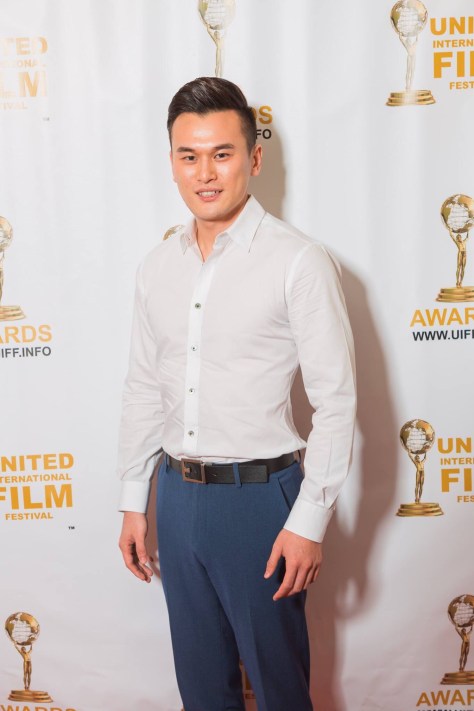
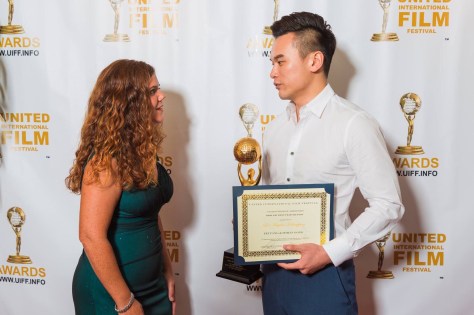
United International Film Festival Red carpet

Chinese producer Bohan Gong takes great pride in the fact that he has been a force behind many successful films in his homeland, Europe, and the US. Establishing yourself as a respected producer in one country is difficult enough, cultivating that reputation and prestige on a global scale is a situation that has only presented itself in recent times. Hollywood used to be the only major player in the game but China, Bollywood, and other locations have made their presence felt. Gong is talented and multilingual by design. His credits are instantly recognizable and he makes a point to work on both huge studio productions and independent films with themes near and dear to his heart. Bohan often remarks that the story of a film is its soul and he always seeks out his connection with this story in order to give it the respect it requires. This is not the typical comment you’ll hear from producers who are more likely to refer to their part in the filmmaking process in terms of schedules and “being in the black” but this producer is not your typical producer. Many of his peers refer to his exceptional talent in screenwriting, editing, and other facets of film. Bohan is a filmmaker who produces rather than a producer who has found his way into filmmaking. The two are inseparable in his work and the success of his many productions vets him as a leader in the modern day film community.

2017’s American Made earned $139 million and is the most recent in the long successful career of Tom Cruise. While it was an immense hit in the US, this may have been eclipsed by the film’s massive attention and earnings in China. Bohan was in charge of designing and coordinating the Chinese distribution plan for American Made. Many of today’s big budget films depend on their international box office to be a key part of a film’s financial earnings. China’s love of film and huge fan base is perhaps the most important contributor of a US production’s non-domestic box office. Gong’s insight into the workings of China’s rules such as Communicating Law procedure, applying Chinese import, and Applying related licenses (such as Chinese region “Permit for Public Projection of Films) were indispensable to the achievements of American Made in the country. James H. Pang (co-executive producer of American Made) professes, “Bohan’s knowledge of the many different international business and production practices makes his a uniquely talented producer in the industry. At the same time, he has a strong understanding of the Hollywood and China film market “game” that actually gets movies made and well-distributed. Those that invest with him do it time and again because he represents the business interests so well.”

For the Hollywood blockbuster and Oscar-award winning Hacksaw Ridge, Bohan also was key in the film’s distribution in China. Communicating and coordinating between Hollywood’s Cross Creek Pictures and China for the director (Mel Gibson) and leading actors to attend publicity activities in China, Gong helped to bring exposure to the film and open the Chinese market to western celebrities. One lasting effect of the producer’s work on Hacksaw ridge was that its reputation as a Hollywood blockbuster helped Gong to build a distribution structure for American films in China’s top tier cities like, Beijing and Shanghai all the way down to small towns.

Los Angeles Kidnapping is a Chinese major studio production that was filmed in Los Angeles. As lead producer who was part of the film since its inception, Bohan’s understanding of the working of Hollywood’s film community and the tastes of China’s audiences led to his insistence that Los Angeles Kidnapping be filmed in the US. Many of the films that were US/China collaborations frustrated Gong because it was obvious to him that they were produced by an American crew with only a few shots actually taking place in China. He explains, “I wanted to do something new. I understand how the film industries of both China and Hollywood create and work. For Los Angeles Kidnapping I still used an American crew. I knew that the stylistic approach of Hollywood storytelling and the American locations would infuse this style and quality into the film, but I wanted to tell a Chinese story. There is a different sentiment to Chinese culture in film and I wanted this to be authentic. I also didn’t hire Hollywood top tier movies stars but chose actors from China whom the audience would relate to.”

In addition to his role as lead producer, Bohan found the script, wrote and revised the script, procured financing, hired the stars, key crews, and developed the Pre-Production, Production, Post-production, marketing and distribution for Los Angeles Kidnapping. His design theory for the film proved well-founded when Los Angeles Kidnapping garnered more than fourteen wins and five nominations including: Los Angeles Film Awards: Best Action (2017), London Independent Film Awards: Best Foreign Feature (2017), and others. It was released on the Iqiyi Platform and sold to China Central TV Movie Channel. To date, Los Angeles Kidnapping has earned five times the production budget.

Every true artist is passionate about some pet underdog cause and for Gong this is the environment. The air pollution in his hometown of Beijing has been alarming for quite some time and sparked the producer’s desire to influence the problem by using his personal talents to illustrate these problems. In the documentary “A Tip of Bottlebegr”, Bohan displayed the worldwide epidemic of plastic bottles and their effect on the planet. While there are many factors that negatively affect the environment, Gong felt that focusing on this singular topic would help the viewer to clearly understand the malevolent repercussions and perhaps by the catalyst to be more aware of similar trends. “A Tip of Bottlebegr” received the Grand Award for Best Picture at the Cherry Blossom Film Festival, Best Experiment Film at the Lake View International Film Festival, Los Angeles Film Awards: Honorable Mention Documentary, Festigious International Film Festival: Honorable Mention Documentary, Focus on Image Festival: The Best Picture Nomination, and a nomination for Best Film at the Atlantis Film Awards.

Bohan Gong has staked a fair portion of his career on the collaboration of artists and filmmakers of different countries. He sees it as the future and it is a future which creates more sincere and entertaining art because it brings even more perspectives and a diversity of talent to the art of filmmaking. Contemplating the work between his homeland and Hollywood he relates, “This artistic collaboration between China and the US will affect parts of each society. For example, nowadays, Artistic collaboration between China and the US have been promoting the communication and cooperation between China and America in factors of culture, economics, tourism, technology, education, etc. China loves storytelling and the Chinese film industry has established itself and matured quickly. In the end of 2016, China surpassed the United States with a total of forty-one thousand film screens. This has attracted American filmmakers to the opportunities China can offer them and this is good for both countries and their people. I could not have picked a better time in the history of film to be a producer from China with this relationship blossoming.”

United International Film Festival Red carpet and interview

HOLLYWOOD THROUGH THE EYES OF SHIMAN HU

hollywoodclub


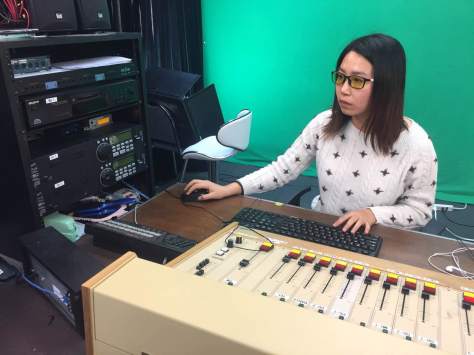
Shiman Hu has loved movies for as long as she can remember. The feeling of being whisked to another reality and feeling that you are placed in the lives, the emotions, the reality of others and allowed to experience any motion that the creators of the film desires for you to experience…it’s been said many times but, it’s magic. This led her to investigate the secret behind this “magic” and to a career in film (and television) as an editor. Her skill and her love of cinema also led Yangyang Mu (the production manager of Hollywood Chinese TV) to offer Hu the position as editor for “Hollywood Club.” Yangyang states, “Our program shows the best part of great films within a limited duration. Beyond the other content we present, the demands of presenting these films and matching the original rhythm and message are quite substantial. It required a truly incredible editor and Shiman did an amazing job.” The program aspires to interest viewers in a wide array of movies, not just American films, in hopes of cultivating wide interest in all that the industry has to offer. The same diversity of films that first enchanted Shiman are what she worked to expose in a modern avenue, as a seed to present day and future film aficionados.

The program presents film as varied as: Avatar, No Country for Old Men, Confessions (famous Japanese film), Jurassic Park, and many others displays a range from Science Fiction to Dark Humor to love stories and much more. Hu divides each film into three different sections: the background (the work, the life and the problems encountered in the film), the climax of the film (how the character solves the problems he/she has encountered), and finally, the end of the film (what are they going to do at the end? Is the end good or bad?). As an editor of acclaimed films like The Sound of the Sea, Plus Slash Minus +/-, and others, Hu feels the weight of responsibility in maintaining a congruent tone to the original filmmakers desired message.

Not all films are equal in the challenge to present them in a condensed time frame. “Confessions” starring Takako Matsu was a formidable challenge to edit. A black comedy with a very tight rhythm to it, the film’s pace and excellence caused Shiman to make several attempts at editing it before she felt that she was respectful to both the film and filmmaker’s original intention. Matching the original film’s rhythm and ensuring the integrity of the narrative, she concedes that she learned an increased respect for the original editor’s work on this film…as with many others she has reviewed since. In particular, the early Hong Kong film “As Tears Go By” with its many complex stories, character cues, relationships between characters, and emotional interlacing created a Rubik’s Cube or editing for an editor. Of course, it’s Hu’s love of discovery that first led her to a career in film and challenges like this only stoked the fire.

“Hollywood Club” is not only for cinephiles. This also allowed the editor to exercise her TV editing chops honed during her time working at many different Sino TV programs. Everything from gossip surrounding celebrities like Justin Bieber and others to the top songs on the charts is covered on this program. The program not only plays the songs to the audience, but more importantly, introduces viewers to the background of the songs, producers and singers of the songs and explains the meaning of them. Hu combines the recordings of the songs and dialogue of the hosts, adjusting the appropriate volume and controlling the length of songs according to the time requirement of the program.

All of this means that the breadth of editing work encompasses serious/award-winning films to playful pop culture. Shiman concedes, “The skill required for this program is quite substantial. I might be reediting an existing movie trailer to meet the length of our program. The trailer’s sense of rhythm is very strong. I’m editing a film and distilling it down while keeping the voice of the filmmakers and the story intact. Hosts are presented on green screen and special effects software is used to give a modern look and accessibility that multimedia presentations demand and viewers expect. There are many layers in the editing software of the program. When we are making up the entire show, we pay careful attention to whether there are missing parts. The appearance must be very high-quality in spite of the limited time that we have to produce this. It takes a lot of work to make it look effortless and that is always my goal.”

Shiman Hu’s work on “Hollywood Club” is an example of how the most talented professionals in the production industry can vacillate between mediums, using their skills to better any scenario which they encounter. Whether at work on feature films, television talk shows, or any combination of these, Shiman Hu has carved out a welcome place for herself in the international production community.


Charlotte Chimes At the Top of Her Game in “One Eight Zero”

Well-known Australian actress Charlotte Chimes has recently wrapped a lead role in the production  “One Eight Zero”, opposite “Pirates of the Caribbean: Dead Men Tell No Tales” actor, Rupert Raineri.

One would think that working with such high-profile talent in a highly-anticipated project would cause any actor nerves, but it was a process that Charlotte took in her stride. “The shoot was challenging, but well worth it. I got to learn how to ride a horse, and we shot some beautiful scenes in (Australia’s capital city), Canberra.”

In explaining why Charlotte was cast, the director and production team could not be more enthusiastic in highlighting that Charlotte was the only actress in Australia who could have played the lead role of Lucy. Director Denai Gracie was particularly favourable. Gracie is well-known in Australia for her film work and producing the award-winning film “Battle Ground” with “X-Men” star Tim Pocock. “Reviewing [Charlotte’s] previous work gave me such confidence in her ability to excel in the role, that I didn’t feel the need to audition her. She did not disappoint!!…Charlotte instinctively resonated with the character of Lucy, bringing the perfect blend of sincerity and authenticity to the role, and delivered a powerhouse performance.”

Charlotte’s role was not only the lead, but also represented an artistic challenge that gave her the opportunity to do detailed character work. The film, a coming-of-age story, completely revolves around Lucy’s character journey and therefore the film simply would not function were it not for Charlotte’s commanding, central performance. “After surviving a life altering accident Lucy must rebuild her life and establish what truly is valuable to her,” Charlotte explains with the eloquence expected of a leading actress. “It was important to me that she was portrayed as a multifaceted human being going through immense upheaval with grace, resilience and integrity.”

“One Eight Zero” represents one of many recent esteemed productions in which Charlotte plays a lead or critical role. For one, she recently stole the small-screen in her performance as Holly for horror anthology series, “Scary Endings,” produced by Strangler Films and John Fitzpatrick. Fitzpatrick is well known for his work on the long-running CW favorite, “Supernatural.”

“I feel incredibly blessed to have worked with such preeminent international producers – the experience on “Scary Endings” was a fun one. It’s not as scary shooting horror projects as it is watching them!”

IMG_3685 (1)
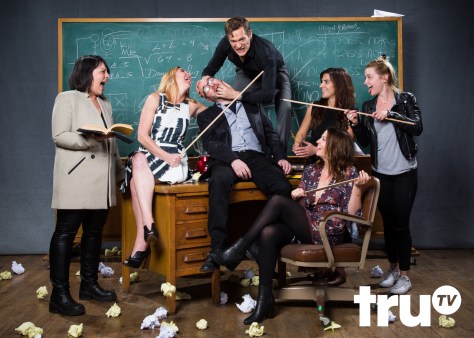
Charlotte having fun with producers and cast from the comedy cable network, trueTV. Charlotte is well-known in the industry for her fun-loving nature.

On the other end of the character and genre spectrum is Charlotte’s impressive acting work in “BedHead,” from the “Fresh Blood: Pilot Season” series produced by one of Australia’s most highly-regarded network, ABC (Australia’s Broadcasting Corporation). In the key role of Corvana, Charlotte represented a comic foil to lead actor Paul Ayre, who would later win Best Actor at the LA WebFest. Earning raves from the hundreds of thousands of viewers exposed to “BedHead” and the critics who reviewed it, Charlotte notably earned the highest praise from the director himself, Ben Mathews.

“Charlotte is a brilliant actress, both at drama and comedy. Her performance in “BedHead” was absolutely hysterical and no matter how many times I have seen the show (and I’ve seen it a lot) her performance still makes me laugh.” Mathews, who won a Jury Award and Best Film Award from the prestigious Newport Beach Film Festival for directing “Emily”, a film starring “Once Upon a Time” star Meegan Warner, clearly knows what he’s talking about when it comes to established acting talent in Australia. His praise of Charlotte’s unique acting talents and accomplishments is one of many that are heard whenever the young star’s name is mentioned.  

IMG_6265 (1) (1)
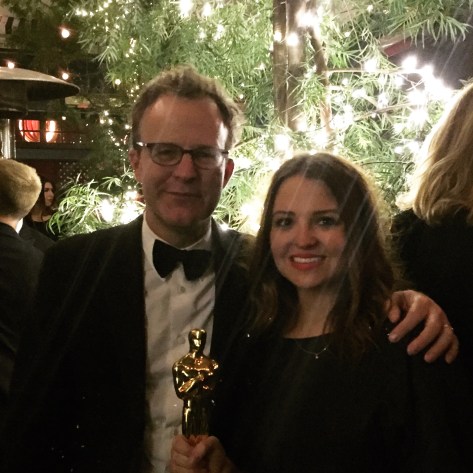
Charlotte at last year’s Oscar’s ceremony, with Academy-Award winning director Tom McCarthy (“Spotlight”, starring Mark Ruffalo and Rachel McAdams, and winner of Best Picture and Best Screenplay)

“I’ve been very fortunate to develop my reputation in the Australian entertainment industry, but I’ve also worked very hard.” Indeed, Charlotte also credits her experiences on projects like “Friend Request” (with “Syd2030” star Daniel Frawley) and “Suzie: Uncut” (opposite “Doctor Doctor” actor Craig Walker), as characters which helped her round out her career. Amidst laughter, she explains “[p]eople frequently remark that I’ve developed a complex body of work that reflects my distinctive talent – I’ll take that as a compliment!”


PEELERS IS A FRIGHTENING JOY FOR PEREZ

Peelers1

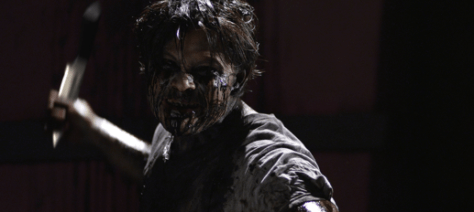
Edwin Perez is an actor who is able to perform very convincingly in a wide variety of roles. There are actors who seem born to play one type and are beloved for it, and then there are those like Perez who seem to adjust in a highly believable manner to just about any genre and type of character. When you seem him perform you’ll likely think “Right, that’s what he is supposed to be.” and the next performance of his will have you saying the same thing. Whether he is Romeo in the romantic comedy “Heart Felt”, the overly optimistic bard in “Standard Action”, the Tio in “Nina’s World” (animated children’s program), he is always likable and endearing. It’s probable that this is what prompted him to accept a role in the Grindhouse film “Peelers.” In the film he can be seen dealing death and very much playing against type. There’s a grin on his face when he talks about it and the reaction that the public had to his complete 180. It’s the very purpose of Perez to keep challenging himself and the audience’s perception of who he is and what he can do.

Prior to his being cast in “Peelers”, Perez had never been in a Horror film. He’s not quick to admit it but he has leading man looks, which doesn’t often transfer to being cast as a villain (unless it’s an 80’s coming of age high school story). Edwin was particularly attracted to the way he could present his character before and after his transformation with contrasting approaches to his nefarious nature. The comical fact that he gets to do so with the name Jesus in the film is not lost on the actor. The film and his character were a constant source of challenging exploration for him as he states, “I imagined Jesus as a guy who came to the country obsessed with escaping poverty but lacking the work ethic do so with honestly. He’s a ‘get rich quick with minimal effort’ kinda guy who wants the luxury with none of the responsibility. When the group thinks they have discovered oil, he’s the one who pushes for everyone to keep their mouths shut about it. I can imagine that, in a very dark moment, he’d betray the guys to get what he wants. He goes along with the Pablo’s [the boss] plan because he is technically their boss and because it doesn’t really benefit him to push back to hard. When he transforms, I imagined that all those dark base feeling were brought to the surface and he is driven by greed that as a bestial creature has turned to a violent hunger. When it comes to these situations it’s really easy to just say, well he’s evil now so he kills people. But that’s very one dimensional and it doesn’t give me as an actor very much depth to work with. It’s really important to base his motivations on something real and true to the character. In the case of Jesus, it’s his selfish nature dialed to an extreme dark place which drives him.”

Peelers3

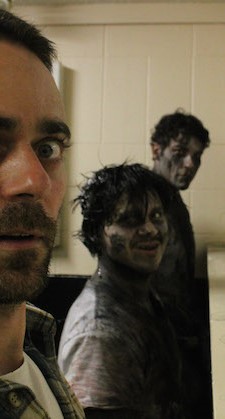
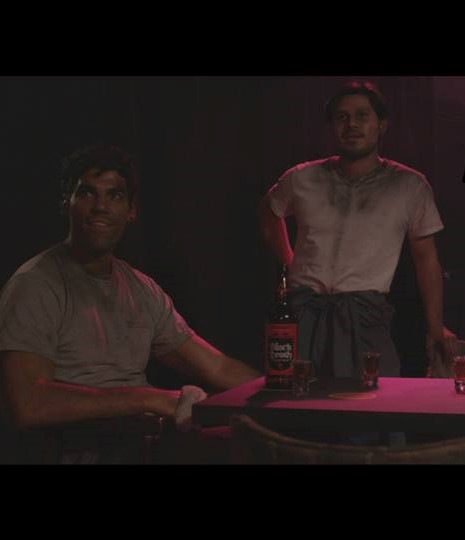
Peelers is the story of a group of workers who find what they believe to be oil but turns out to be a toxic substance which transforms them into primal and seemingly supernatural creatures. They stalk and kill the humans whom they encounter. The creatures are feral with contorting movements and emitting primal snarls and growls. Between the prosthetics and the black substance that oozes from their pores, Perez spent a great deal of time in the makeup chair. The film utilizes practical effects rather than CGI. Edwin fully embraced the opportunity to approach the physicality of the creature he transformed into. He explains, “I wanted to show that the transformation was so extreme that normal human kinetics no longer applied to the creature. In one particular scene I get shot in the head and appear to be dead, but I get up and keep attacking. I decided to twitch and contort into as much of a grotesque posture as I could push my body into while rising back up. These things would normally be done with special effects, but we were doing it with practical effects so it really was up to myself and the other actors to bring these supernatural abilities to life. I think everyone is familiar with the trope of actors in an acting class pretending to be trees or an animal, or some object. Sometimes the creature would stalk his prey like a wolf, or play with it like a cat, and attack like a hyena. A very visceral and primal nature became the foundation for my creature work. It was cardio work for certain to make sure that energy levels were up and you are pacing yourself. Stretching was the biggest part of daily preparation. Contorting yourself into a feral beast can lead to some serious cramping.” It’s an accepted trope by the public of actors in an acting class pretending to be trees or an animal but this very real exercise proved to be highly useful in this situations for Perez.

His role in Peelers allowed Edwin to perform as two very different characters; one dark and brooding with an undertone of controlled greed and the other as a wild beast moving chaotically. This fed both sides of the actor’s creative imagination and did not go unrecognized by the audience or the cast & crew. Director Sevé Schelenz declares, “An indie horror film is demanding in a number of ways. Actors in particular don’t get the posh treatment that they typically receive in a big studio production but the demands on them are just as great, maybe even greater. Edwin brought it in terms of talent and commitment and was equally exceptional in his understanding that we were there to work hard and within a limited amount of time. I know that he was physically spent while also being covered with ooze, sometimes barely able to see or move…yet he never gave less than an amazing performance and never muttered negatively about the circumstances. He’s a true professional and earned everyone’s respect.”

Peelers2

For Edwin Perez the experience of making Peelers holds no negative aspects. While it may seem redundant to say, an actor’s job is to explore different characters and stories. Being physically exhausted, covered in special effects makeup, vocalizing inhuman sounds…it’s all a part of the experience that he signed on for and relishes. A romantic lead, a professional musician, or a devious man turned to beast; these are all a part of what success looks like for Edwin. Referencing the illustrious career of Christopher Lee who was known for his work in the horror genre Perez confirms, “I was able to check off playing a villain and a monster from my actor’s bucket list. It’s really great to be able to look back at how much I have accomplished professionally. I never thought I would get the kinds of opportunities I have had and I am very grateful that so many professionals whom I respect have come along and taken a chance on me. It’s also really rewarding to know that I was able to deliver high quality work in a role that I had never done before. It really makes me hungry for more opportunities like that.”

DESTING OR DELUSION IN A TECH FORMATTED ROMANCE: MATCHED

Screen Shot 2018-03-29 at 8.46.58 AM

Technology is supposed to make our lives easier. This is the allure and attraction we have to it. Blinking lights and high res displays are not the entirety of the advancements that we embrace. Some of them are unseen and often taken “on faith.” There are certain areas in which the jury is still out and one of these is relationships/dating. Human emotions are so complex and dating rituals are so culturally biased that it’s almost impossible to apply science to matters of the heart. It has been attempted for decades with success and failure. The upcoming release Matched tackles this issue. The soon to be released Brian Enciso film of modern romance via technological assistance is equal parts comedy and sobering drama in its discussion of what society is willing to give up in terms of romance in the search for one’s soulmate. Two tech-crossed would-be lovers Jacob Hill (Ithamar Francois) and Allie Benson (Ariane Ryan) seem both destined and doomed in their love connection in this depiction of the uncertainty of a certain connection.

heart-1244507_1280

While the film is futuristic, it’s a stretch to refer to it as Science Fiction. It’s more accurate to describe Matched as a story about where we are soon headed if we continue along the relationship trend that the world has been careening towards. The story is in no way a condemnation of the integration of tech and one’s relationship status but rather an offering about what the next iteration may be.

When a heartbroken young man named Jacob receives a strange package in the mail, he finds a device inside informing him that a company named E-rose has found his perfect match based on science, data, and profiling. Her name is Allie Benson and while she does seem to be a good match, the discomfort of having her complete profile in the palm of his hand is too much for Jacob to bare. Out of curiosity, he goes to the restaurant where she works as a waitress and confirms that the E-rose profile was accurate. He avoids contacting Allie on this first occurrence but she later seeks him out. The two are forced to deal with the fact that they may be perfect for each other in spite of the sterile/unromantic means which has brought them together. As a proxy for modern couples everywhere, the duo contemplates what love truly is; a mathematical formula, a choice, or something altogether different.

Photo13

More than simple entertainment, the film is a springboard for discussion about love in current times…at least for those seeking love. The discussions and life-planning presented by the characters of the film could appear weighty and cumbersome but this is offset by the score of Matched. The obvious choice of cold digital synths was rejected for this film which instead utilizes Folk music instruments such as acoustic guitar, piano, banjo, mandolin, cello, and assorted folk percussion. There’s an intuitive lighthearted and comedic sensibility to the instrumentation and score that composer Chris Wotherspoon has fashioned for Matched. A primary example of this is when Jacob makes the decision to burn the profile he has received in the mail about Allie. As it is burning, Jacob receives a call from Allie telling him she wants her personal information package back. As he literally and figuratively puts out fires, a series of folk percussion elements and a chaotic pizzicato string arrangement (still organic and folky) creates a feeling of disjointedness and comedy.

Photo14

People seem to be in constant search of a means to improve every aspect of their life. Cars, telephones, dating services…these are all merely modern accoutrements of the courting process. Services similar to the one at the center of Matched are very near existence already, it’s likely that they will soon be here. Matched gives us something to think about as we feel the oncoming changes and we must decide if what we have right now is good enough or do we risk it for what could be better…or worse?

HOW YOU WILL SEE, HEAR, & FEEL “CHRISTMAS IN MISSISSIPPI”

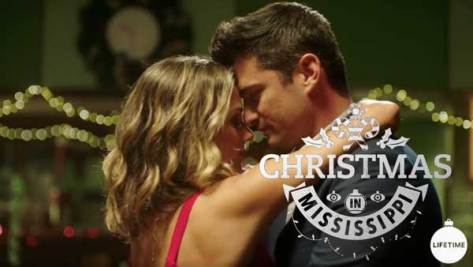
Christmas in Mississippi

In the entertainment world there are those who seek the spotlight and then there are those like YuXin Boon. This sound editor prefers the work off screen creating and supporting the performers and story onscreen. It’s not a vocation for those who love attention but for the professional who finds their fulfillment in creativity and empowering the story, it’s the perfect environment. Boon’s work is always about creating the perfect environment. It often focuses on the background sound elements which, if they weren’t in the periphery, might take one out of the story because of their omission. For the Lifetime Television film “Christmas in Mississippi” she was tasked with using her abilities to draw viewers into the relaxing holiday atmosphere that supported the storyline. As the background editor, YuXin created a cheerful ambience that many of us associate with one of the happiest seasons in our year.

“Christmas in Mississippi” perfectly communicates the sentiment behind the season in modern times. Photographer Holly Logan (Jana Kramer) returns to her hometown of Gulfport, Mississippi for Christmas as the town is recovering from a terrible hurricane that devastated it years earlier. Holly finds herself working alongside her high school sweetheart, Mike (Wes Brown) who she discovers gave up his music dream to take care of his brother’s son while his brother served in the country’s military. The two are swept up in the rekindling of their feelings and the joy of the season. The production’s post-sound supervisor Eric M. Klein loved Boon’s work on ‘Enchanted Christmas’ and thought the skills and professionalism she showed on that project could help take the sound of the new project [“Christmas in Mississippi”] to a new level.

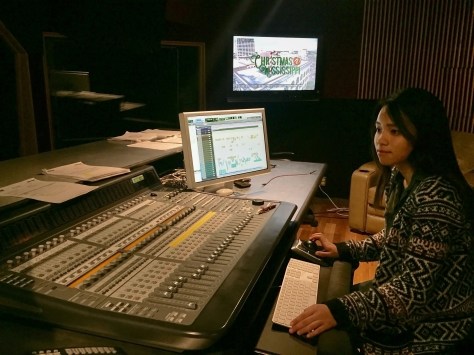
YuXin’s approach to her work as Ambience and Foley editor is something she enjoys because it is both methodical & calculated as well as highly creative. During early spotting session that displayed characters walking inside a warehouse with numerous background actors preparing props for light show, Boon divided the movements into sub groups like: present wrapping group, decoration group, and tools carrying group. She inserted the sounds of paper rustling sound for the wrapping, cable tangle sound for decoration, and metal clicking for tools, all contributions via the Foley artist on the film.  Adding ambience for another room in the warehouse in order to make them sound as if coming from the other side of the wall increased the depth and multidimensional feeling of a natural space. The essence of great sound/Foley editing is to present several perspectives of the sounds we experience in real life. YuXin’s highly detailed and though out plan for her work has made her such a sought out professional in a variety of productions. She gives a deeper insight into her mindset when creating as she explains, “I found out the recreation of warehouse ambience was the most difficult part of my work in this movie. The warehouse had a myriad of sounds happening at the same time. (Construction, decoration, paper wrapping, people talking, goods loading, fan spinning, etc.) and I wanted to cover those background movements as much as possible while keeping them balanced. Most of the construction ambiences I found in the [sound] libraries were too heavy for this movie and just didn’t match the scene. Instead of using one construction background with multiple sounds like drilling and sawing, I chose the ambience with one particular movement and combined different layers. For the scene with light construction, I added hammer, ladder, and pallet jack sound to make the scene sound busy. In this way, I provided more options to the director and supervising sound editors. It was easier for me to take out the ambience they didn’t like and keep others.”

There’s perhaps no better way to gain appreciation for those whom you work with as well as improve and excel in your own work than to experience firsthand the challenges of others. Boon was particularly excited that “Christmas in Mississippi” gave her the opportunity to work alongside Martin Quinones (ADR & Foley Recordist of ‘Christmas in Mississippi’) …literally! Because Boon was so microscopically aware of the actions of the actors/characters in the film, Quinones invited her on one of the session to do some of the actual Foley work, creating the recorded sounds that make audible movie magic, like squeezing a moist cloth to mimic the sound of straw stirring the cream in milkshake or the simple sounds of fabric rustling. While it could be easily overlooked and considered mundane, Boon felt that the simple recordings of leather and denim rubbed on a boom microphone would add to the believability of Mike (Holly’s high school sweetheart) during one particular scene, giving emphasis to his movement…which of course it did. Martin professes, “This was the second movie that ‘Wendy’ YuXin Boon and I worked on together and I was able to realize how thorough and detail oriented she is. Her laser-focus approach to sound editing, as well as her willingness to learn new methods and techniques clearly confirms that she makes the process of filmmaking better and more efficient.”

EditingFoley_ChristmasinMississippi

While she works at it, YuXin readily admits that being hyper focused and detailed is simply a part of her nature. Noticing every small detail might be an irritating trait for a person to have but finding a way to use it in a beneficial manner, such as this editor has done, results in appreciation and a successful career. Using the correct tool for the job is the way that YuXin Boon approaches her work on every production she takes part in and it’s doubtless that this is the way that those who hire her view her contributions to their productions. “Christmas in Mississippi” feels like the holidays and thanks to YuXin it most definitely SOUNDS like it as well.