Tag Archives: Film

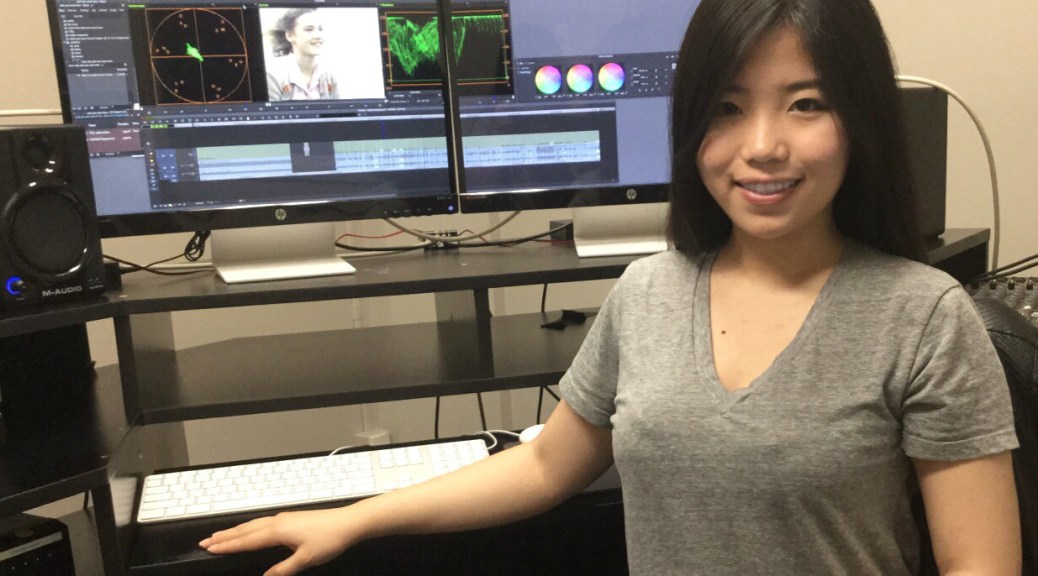
Yun Huang talks editing powerful new film ‘Stardust’

Editing is about emotion, and Yun Huang knows this well. In order to be successful in her field, she knows that understanding every detail in a script is a necessity. She does not simply put footage together, she tells a story, and she has to know the best way to captivate an audience.

“Being an editor provides me with a chance to tell the story to the audience in my way. I can alter a script if necessary and trust my emotional instincts. I connect with people. This job provides me with a great sense of accomplishment,” she said.

No matter what project she takes on, Huang is sure to keep the story at the forefront of her mind while editing. This is evident in all she does, from the powerful commercial “Choice” encouraging girls to follow their hearts, to the informative and telling docuseries Unveil China Outside China, educating its viewers all over the world on the country’s social and political happenings.

The challenge of any new project is that I have to figure out how I can attract the audience best; for example, how to make an audience laugh at the point that we set up. I always go to the cinema or some film festivals to watch with audiences to see their reactions based on the editing. I should know their thoughts and therefore know how to make my work resonate with the audience,” said Huang.

Huang’s most recent film exemplified just how she connects with viewers. Stardust tells the story ofa male Chinese agent who, loyal to the country, finds out that his most trusted partner, a female Chinese agent, betrays their country. However, as the story progresses, he begins to question his beliefs and the truth.

“I like the story. I’m touched by the soldier’s loyalty to the country and their missions. I believe that showing this kind of emotion is what film is all about,” said Huang.

After premiering earlier this year, Stardust has gone on to several prestigious international film festivals. It was an Official Selection at both the Austin Spotlight Film Festival and Direct Monthly Online Film Festival, an Award Winner at Accolade Global Film Competition, and the winner of Best Action Short Film at Five Continents International Film Festival. With all this, Huang herself was awarded Best Editing at Festigious International Film Festival.

“I was so excited that it got so many awards, and I got an editing award. It just goes to show that hard work and determination will pay off,” she said.

Huang was both the video editor and colorist of this short film, and it was her first time working on a film in the action genre. Initially, she was unsure if she wanted to work on the project, normally leaning towards relevant dramas and documentaries. Before deciding to take part in the film, she talked with the director, Shihang Qu, several times. He told her that he really loved Wing Chun and other kinds of Kung Fu since he was a child, and he always dreamed of directing an action film. She was moved by his efforts, so she decided to take on the project and help the director achieve his dream.

“Shihang is very nice, and he listened to me and considered my suggestions. He accepted all my recommended changes. I really like being respected,” said Huang.

It took over six months to generate a final cut of Stardust. With every day they were shooting, Huang would then look at the footage. This is not a common process, and normally the editor receives all the footage at once in post-production. However, by adopting this style, Huang not only got a better understanding of the story, but also an idea of what the director envisioned. This also allowed her to make suggestions that were instantly implemented. For example, there is a shot of the main character in a scene when they were fighting with bad guys. The director had initially planned for it to be put in the middle of the film as it showed in the script, but Huang thought it would be better if it was moved forward in the story, as the opening scene. It instantly captivated audiences and allowed for the story to be told as a memory, slowing the pace of the beginning and speeding up at the end.

In the end, Huang changed the structure of the story which made the short film more attractive and meaningful. Her instincts as both an editor and storyteller are always fruitful, and she will no doubt continue to have an impressive career. Keep an eye out for her future work.

Living her dream, Sherry Du is both producer and explorer

As a producer, Xiangrong (Sherry) Du considers herself almost an explorer; she searches for a script and voyages deep into the story; she locates the heart and soul and finds exactly the right way to portray it. That is why she loves what she does, and that is just what makes her so extraordinary at it.

“Producers take words on a page and make it real on a screen. It’s really cool to me,” said Du.

Throughout her career, Du has used her sought-after talents to create captivating stories. Her films such as AugustFront Door,and Eyes on You have been great successes at various film festivals, taking home awards and impressing audiences. Her work on the commercial for KYJ sausage went viral, amassing millions of views after just a short time online.

With such success, it may seem hard to identify one outstanding project that stands out in her mind, but when asked about the highlight of her career, Du knows that without a doubt it has been working on the film Autumn Ghost.

Autumn Ghost is about a banker, Shawn, who can see ghosts like his mother Maggie. Because of his mother’s medical expenses, Shawn uses his bank clients’ money to buy stock. He loses a big amount of money and can’t put it back. Knox is a ghost who was killed by Shawn’s boss, Raven. He notices that Shawn can see ghosts and wants to ask Shawn for help. However, Knox makes a deal with Shawn: Knox helps Shawn get money, whereas Shawn helps Knox get revenge on Raven.

“As I studied the horror genre, I realized that the most terrifying thing is not simply dying, but being a ghost stuck in the veil of humanity. Ghosts cannot do anything, like they are lost in another world,” said Du.

Du actually came up with the idea for the story after watching horror films in her teens. She decided to research the genre and create a feature film. Once hiring a co-writer, they finished the script of a man who can see a ghost that helps him solve his future problems. Du had always liked stories about gods and spirits and found that the supernatural element of the script added a uniqueness to it.

After completing the screenplay, Du decided to shoot a trailer. The first step was finding a team who was passionate about her story, which Du found in Director Jing Ning and Cinematographer Will Job. The next step was finding a location. They needed an entire office that would be big enough for a film crew. Du managed to entice a company by suggesting that with production design, their office would be spruced up and modernized.

When shooting the trailer, Du felt something truly special. It was her first time ever writing a script, and she was amazed to see the character’s in her brain become real people when portrayed by the actors. When the visual effects were added, it brought everything together. She truly felt like her story was coming alive.

The idea of shooting a trailer first is to gain investors for the film, something Du is responsible for as the producer. The trailer itself has been making its way to several film festivals, impressing audiences and critics. It was an Official Selection at the CARE Awards Around International Film Awards in Berlin, Orlando Film Festival 2017 and the Creation International Film Festival 2018 Winter. It won Best Trailer at 15 Minutes of Fame Film Festival 2017 and Glendale International Film Festival 2017 and Best Horror/Thriller/Sci-fi Short at the London Independent Film Awards. Most recently it took home the Diamond Award for Trailer at EIFA Winners Spring 2018. Needless to say, such a response gained much recognition for the film, and Du is very excited to begin production.

“Even though it’s hard to produce a feature film from scratch, trust me, it’s worth it. I want to thank my director, my team and my actors. I can’t wait to get the film started,” she said.

Be sure to keep an eye out for Autumn Ghost.

Aida King brings on the laughs in hilarious comedy ‘Desert Drive’

Photo 2018-05-28, 1 11 53 AM
Aida King

To succeed in acting, Aida King knows there is nothing more important than self-confidence. Never be conceited but know who you are as a person and how much you are capable of. This is her mantra that drives her and is why she is such a renowned Canadian actress. She has never lost belief in herself, and when audiences watch her on both the big and small screen, she radiates.

King is known for her work in celebrated films like The Convicted, Hemorrhage, and War of Mind. She has worked with award-winning filmmakers and well-known actors, including Alexander Michael Helisek, a veteran actor and producer in Hollywood. Known for his work on the Golden Globe Award-winning television series This Is Us, the Golden Globe Award-winning hit feature film Interstellar, which starred Matthew McConaughey and the two-time Golden Globe Award-nominated popular television series Silicon Valley, Helisek was greatly impressed with King when they worked together on Desert Drive.

“I was lucky enough to have the opportunity to work alongside Aida, as an actor, in her leading role of Missy Lee on the comedy film titled Desert Drive.Aida was absolutely essential to the critical acclaim and commercial success of the film. Her character needed to be depicted by an actress who could convey the necessary warmth, romance, comedy and sincerity that makes her a relatable character to the audience. Aida was able to accomplish all of this and more in a performance that was at once full of force and subtlety,” said Helisek.

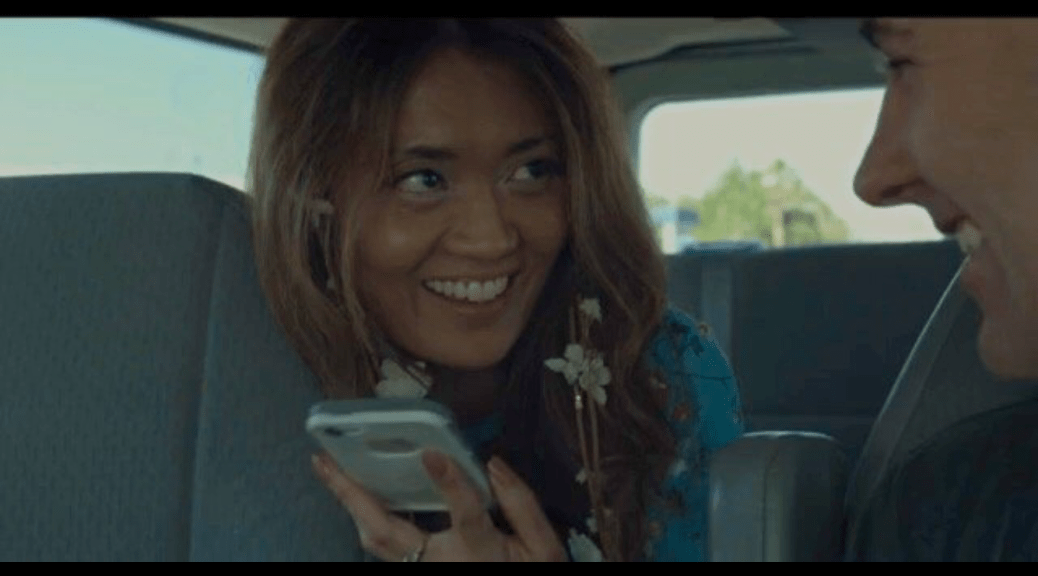
Desert Drive follows the life of four Los Angeles based musicians who travel from Hollywood to Palm Springs for the Coachella Music Festival. Instead of harping on aimless debauchery and excessive drunkenness, the story documents the eventful two-hour ride and all the intimate conversations and crazy obstacles that transpire on the action-packed pilgrimage.

“It’s a fun slice of life story that I think people that travel together would appreciate. When travelling in close uncomfortable quarters for a long period of time, sometimes patience can run thin and emotions run high. It’s a fun comedy with interesting characters of substance,” said King.

This movie was filmed in May 2015 and premiered at a Hollywood movie theatre later that year. Not only is the trailer featured on the distinguished website “Funny or Die”, Desert Drive was also an Official Selection at the Ozark Short Film Festival in the Summer 2016. King was proud to be part of a team and found that the chemistry between the characters is why the film went on to do so well.

“I cannot deny that I love hearing people laugh when they watch this film, as that’s the biggest thrill of all for me,” she said.

King’s character, Missy Lee, is a musician who is determined to spice up intimate conversations with the other traveling musicians as they travel for many hours to their destination.

Missy Lee was a happy-go-lucky girl that was content with being in the company of friends, no matter what the situation was. She was definitely a people pleaser and tried to make the best of any situation. While she knew that she was naïve, she was comfortable with that role among her small group of oddball friends.

While she was a bit of a third wheel friend, this character brings balance to the oddball group. While every person was completely different from one another, she played the comic relief to offset tension in the storyline and also the confident when moments were more intimate. The controversial and hilarious lines are the most pivotal plot points in the entire narrative. With such an important role, King knew she had to deliver a captivating performance to bring the film to success, and that is exactly what she did.

As The Convicted was a drama, flipping over to a comedy was a great chance to present a completely different character. This was a huge opportunity to show her versatility and show her comedic creativity. As a Canadian, the comedy culture is highly regarded, so it was natural for King to want to be a part of this film.

“I appreciated working on a character that was light hearted and fun. This was my first time doing comedy, and I loved it,” said King.

King was brought on board after the successful completion of The Convicted, the Director and Producer of the film, Josh Mitchell, decided to bring the actress onto his new projects after being greatly impressed by her talent and work ethic, both of which King is well known for.

While filming, King’s greatest challenge came from filming in the desert. Far from the climate in her home in Canada, spending hours in a small van in hot temperatures was a new experience. However, she would never let this get her down, and found that it only helped her feel as if she was truly on her way to a music festival with a group of her close friends. Eventually, that is what the cast became.

Be sure to watch Desert Drive on Vimeo on Demand to catch out King’s comedic performance.

Experience Chen Xu’s 5-channel surround sound method in hit Chinese film ‘The Wasted Times’

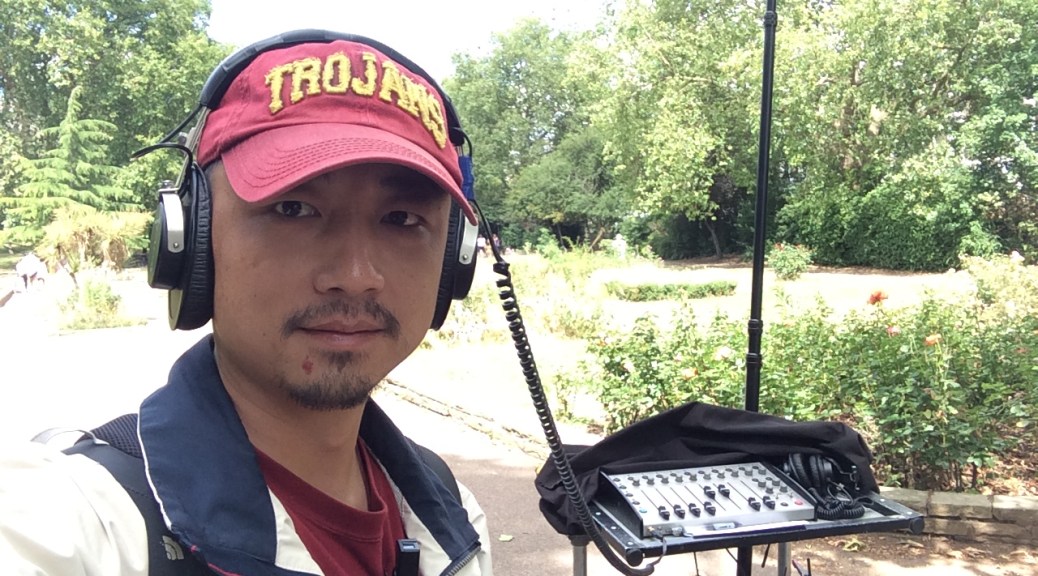
When Chen Xu thinks back to his childhood, he fondly recalls the way in which his admiration for sound shaped his youth and ultimately, his career in sound mixing and sound design. For the highly sought-after sound designer, it is difficult to recall a time where sound design wasn’t his main passion. At the age of 17, Xu watched Forrest Gump and notes the experience as being the first time he ever truly fell in love with a film. It inspired him to focus on a career in sound design and gave him the confidence boost he needed to take the film industry by storm. The now 36-year old, award-winning creative is just as enthused about his art form today as he was back then. His life is enriched by the opportunity to do what he loves day in and day out and he has no desire to stop any time soon.

A typical day as a sound mixer and sound designer requires the skill and expertise to be able to record sound and mix it creatively. Although this may sound relatively straightforward, it is no small feat to achieve on a daily basis. For instance, when Xu works on set, he is required to carefully position microphones in such a way that will capture sound as clearly and concisely as possible. In addition, he must learn a film’s storyline inside and out in order to thoroughly understand the types of sounds that will complement the characters’ conquests. In addition, during the post-production process, Xu must awaken his creative tendencies and use them to apply sounds in the most unique, yet appropriate manner possible. Where Xu truly shines, however, is when he is tasked with location sound mixing for a film’s script. Knowing how to effectively capture sound in a complex location is what Xu does best. He is a master of extracting compelling sounds from a loud, busy location and ensuring that there is nothing compromising the sound in order to enhance an audience’s viewing pleasure.

“When I’m sound mixing, my work is more focused on creativity. I need to design some unique sound effects according to the images and the storyline before me. Then, I need to edit and record some foley and sound effects before I can arrange each sound element to fit perfectly into each moment within the film. All of these steps allow me to help develop and compliment the storyline” noted Xu.

IMG_4117

In 2015, Xu was given a script for a film titled The Wasted Times, by well-known Chinese director, Er Cheng, who was confident that Xu possessed the skills necessary to take his script to the next level. Having already secured a $23.6 million budget and two of Asia’s most accomplished and award-winning stars, Ge You and Zhang Ziyi, Cheng was determined to make this film his most successful yet. In addition, he was intent on making the sound design in The Wasted Times unlike anything his audiences had ever heard before. With that, beyond dialogue alone, he wanted to use as many location sounds as possible and to make best use of live recorded sound effects and foley. Given the film’s budget, cast, and unique content, he needed someone with both the experience and creative edge required to rise to the challenge. Fortunately for Cheng, Xu was compelled by the script and eager to take part.

The Wasted Times depicts the life of a legendary mafia boss in modern Chinese history. Through the use of a biographical narrative, the film follows a violent and betrayal-ridden deal between the Japanese army and criminals in Shanghai. For Xu, working on The Wasted Time presented a number of challenges he hadn’t previously encountered in his career. For instance, due to the fact that several of the film’s scenes were shot inside state- and city-level protected historic buildings, he had to master the ability to capture vocal exchanges in historical settings, as opposed to the more modern buildings he was used to working in. In order to do so, Xu led his team in adopting a pioneering approach whereby he recorded a 5-channel surround sound effect during production sound mixing. In addition, he made use of two additional stereo microphones in order to account for any and all reverberation, echoes, and delay of sounds in real time. This led to Xu having recorded and mixed approximately 80% of the film’s final dialogues and about 50 per cent of the sound effects using his location sound. It therefore goes without saying that Xu proved himself to be instrumental throughout the entire process, being able to provide carefully thought-out solutions to each potential problem the crew encountered. He is undoubtedly a strong contributor to The Wasted Times’widespread success and feels honored knowing that the film went on to receive four award wins and ten nominations from some of the industry’s most acclaimed organizations and festivals, including the Asian Film Awards, China Film Director’s Guild Awards, and the prestigious Macau International Movie Festival.

IMG_4383

For Xu, however, the true highlight of working on The Wasted Times was embedded within the reality that for him, this film was far more than just a sound production process. Being able to film at authentic locations such as the residence of Pu Yi, China’s last empire, as well as in a 1920s car loaned from an antique car museum helped Xu acquaint himself with the type of lifestyle of the individuals depicted in the film. He credits the experience of working on this film as helping build his understanding of people’s lives in that era and helping make it feel familiar to him. It was both a cultural and career-building opportunity and Xu couldn’t be more pleased with the outcome.

Actor Kevin Dary brings himself into his character with award-winning performance in ‘The Swamp’

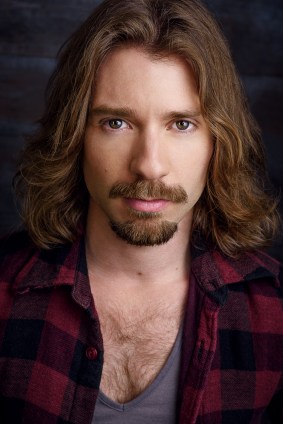
Kevin Dary - Headshot (RW)
Kevin Dary, photo by Brad Buckman

With every role Kevin Dary takes on, he brings a small piece of himself and merges it with his character. To transform into another person, he puts himself in their shoes, seeing what parts of his own life connect with theirs. He forgets who he is until he hears the director call “cut” and that is what makes him such a captivating actor.

“I see actors as toys for a director. It’s as if the director is this kid using his imagination and playing around, telling a story, and the actors are his action figures,” he described.

Having worked on many esteemed films, such as Pregoand Pandora’s Box, Dary has shown audiences around the world what he is capable of as an actor. His versatility is evident with every project he takes on, spanning across a variety of genres and mediums. This is exemplified yet again with his work on the 2017 drama The Swamp.

The Swamp was the first project where Dary had the opportunity to work with director Wenhao Gao, originally from China. He was immediately attracted to the script because one of the main themes for Gao was the perception of someone and the judgement from others that this perception brings. Dary played the main character, Vincent, who is accused of killing the dog of his neighbor. It is a dramatic and emotional film that encourages audiences to think outside of the box, not just about the story but their actions in general. Have you ever been in Vincent’s situation? Or have you been one of the accusers? This story, while extreme, does make you think, and not just through its shock value of a little girl’s pet that gets killed.

“I worked together with Wenhao, who also wrote the project, to bring a fully fleshed out character and I offered some of my personal experience in dealing with the way people look at you, for this is a subject that I know all too well, and I still face today,” said Dary.

The film premiered to a limited audience in The Burbank Studios, Burbank, in November 2017. The film was awarded an Award of Recognition, category Lead Actor, for Dary’s performance as Vincent, from the Best Shorts Competitions in March 2018, and the Gold Award for Best Short Film from the LA Shorts Awards in that same month. It will be continuing its festival run in June. Such success could never have been possible without Dary’s outstanding performance.

01
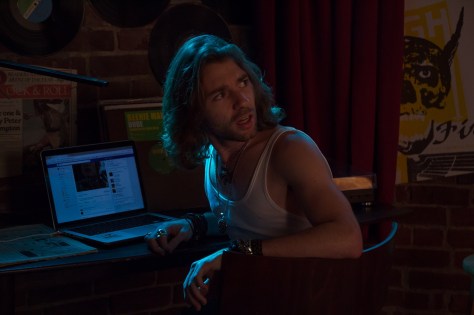
Kevin Dary as Vincent in The Swamp, photo by Mairi Sõelsepp

“Working with Kevin is very pleasant and a good experience. I was really happy to have him in my project as the leading actor. Kevin not only has good acting skills, but also his nice personality made our cooperation go well. Kevin has very good understanding of a script and his character. When we did rehearsals and polished the details, I felt that he really put himself into the story, not just to finish a job. As a director, it’s really important to be able to get some new inspirations and ways to make the characters vivid through communicating with actors. From his performance and feedback, Kevin showed me more possibilities of who and what his character can be, and how to serve the story better,” said Wenhao Gao, Director of The Swamp.

Vincent is the lead character of this film and the story is told through his point of view. Because of this, Dary knew the importance of his work and made sure to keep the audience guessing. Many scenes cater to this, with the lead character showing a lot of anger and confusion. Dary wanted to push this even further, choosing to yell in certain scenes to show he may be capable of anything, but also exude the emotion behind each action, showing that each reaction was very human.

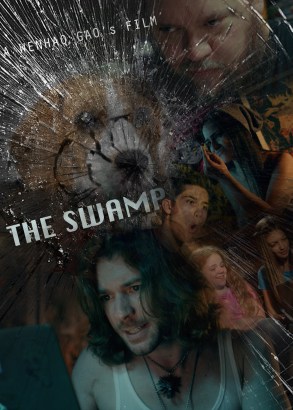
THE SWAMP_POSTER
The Swamp film poster

“I remember that when I first read about the breakdown of Vincent, I was intrigued by the idea of this guy described as ‘not a slacker, not a bad guy, just has had a really long night’. When I got to take a look at the whole script and found out his motivations and what he was going through. The film is a great story about prejudices and stereotypes, with an ending that goes against the traditional Hollywood happy ending,” said Dary.

What was unique about this story, and Vincent’s character, is that by the end of the movie it is not revealed if he is guilty of what he was accused of. The writer and director however, told Dary he could make that choice on his own and then act with that choice in mind. What do you think he decided? You’ll have to watch The Swampto find out.

“I love tackling the idea of prejudices and preconceived ideas about people. As someone who has a different style than ‘the norm’, I have been prone to judgment from others. You get to witness how far people are willing to take their assumptions, just based on what they heard, saw, or even think they saw. Sure, it made me stronger in the end, but just like Vincent, I still suffer from that today and it can be hard to stay true to yourself when you feel overwhelmed. Getting to do a piece about that issue that is still dear to me felt good. It shows that while there still sadly is a need for such stories, the battle is definitely not lost as long as we stay strong,” he concluded.

Liam Casey Sullivan on honor of continuing the conversation about addiction

Most successful actors will tell you that they do not act for the fame or for the fortune, they act for the thrill. They act because their job lets them connect with dozens of strangers, allowing them to contemplate the various aspects of the human condition together. They act because it is their creative outlet and their chance to take an audience along journeys they may never otherwise experience. They act because it keeps them alive. It doesn’t matter if an actor is young or old, new to the screen or a household name, actors act because unlike other professions, theirs allows them to escape reality and explore their souls before the eyes of the world. For these reasons and many more, Liam Casey Sullivan acts and with his rare combination of passion, talent, and perseverance, he is likely to live before a camera for decades to come.

“As an actor, I am required to delve into the bank of my personal experiences and surface the same feelings or emotions that my character is experiencing at any given time. Through respective research and seeking sympathy for the person I’m playing — however challenging that may be — I aim to grasp a complete understanding of their point of view so that I may be able to adopt it. Once I do this, I then embark on understanding their relationship with others by sourcing parallels from people I know in my life and from other stories. Although I may not have shared the same experiences and relationships as my character, I can revert to alternate moments I’ve lived in order to render even the slightest bit of those same reactions and capitalize upon them so I may appear as though I have lived them,” tells Sullivan.

Sullivan’s remarkable ability to ease in and out of character is arguably his greatest asset, and something he has done successfully for a number of different on and off screen productions, such as for the hit teen drama Degrassi: Next Class and The Girlfriend Experience. What tends to differentiate Sullivan from his competition, however, is his ability to adopt and portray traits that are entirely different from his own personality. Not only does he do so exceptionally, he thoroughly enjoys playing characters entirely unlike him. In fact, he considers playing Dougie in the Canadian film, Mary Goes Round, to be the highlight of his film career solely because he had the opportunity to play a conceited, selfish character.

Mary Goes Round follows the life of Mary, a substance abuse counsellor with a drinking problem. After being arrested for drunk driving and losing her job, Mary returns to her hometown where she learns that her estranged father is dying of cancer and wants to form a bond with Mary and her teenage half-sister that she has never met. In the film, Sullivan’s character Dougie conceals his own insecurities through a mask of obnoxiousness and arrogance. His lack of true friendships and general loneliness cause him to fiend attention and subsequently irritate those around him.

Ultimately, Sullivan’s character proved instrumental to Mary Goes Round’s great success and his performance on screen, in conjunction with his input behind the camera, highlights just how valuable he can be on any given project. After premiering at the Toronto International Film Festival in 2017, Mary Goes Round was featured in several other festivals across North America. In addition, it won three prestigious awards, including Best Narrative Feature at the Annapolis Film Festival in 2018 and The Panavision Spirit Award for Independent Cinema at the Santa Barbara Film Festival in 2018.

What Sullivan enjoyed most about playing Dougie was the fact that he was able to explore and portray a personality type that he hadn’t ever depicted before. In addition, the film’s director, Molly McGlynn, was open to experimenting with the script and offering her cast an opportunity to rework and modify their scenes as they saw fit. Under these circumstances, Sullivan was able to allow his creative nature and unique style to flourish and he quickly proved himself invaluable to the production. Ultimately, however, Sullivan was honored to have taken part in shining a light on an extremely prevalent and relatable topic. Knowing that he was able to take part in a broader conversation about addiction left Sullivan feeling fulfilled and hopeful that audiences would be able to look at this social crisis from the unfamiliar, but interesting angle he helped create.

“In all, I liked that this story rings true to how much of an ongoing struggle battling addiction can be. A drinking problem has the power to haunt you for your entire life and this story is unforgiving when it comes to highlighting the truth and the daunting reality of addiction. This story not only spreads an awareness to the public but also gives a healthy sense of hope to those who may be facing similar problems as Mary and it felt great to have played a part in that,” Sullivan concludes.


Top photo by Helen Tansey

Yuito Kimura uses unique cinematography style to create masterful pieces of art

As a child, Yuito Kimura always enjoyed watching mystery and crime movies. At the time, he would just watch them as a source of entertainment. Now, he appreciates them from an artistic standpoint, noting how each shot is framed and how the filmmakers chose to tell the story. As a celebrated cinematographer, Kimura’s style was inspired by such films, being dark, contrasted, and stylized, using practical lighting. He carefully pays attention to framing, camera angles and movement depending on the scene and what the character is doing. If there is a scene about a girl crying by herself, he won’t just frame the character without having meaning behind why he chose to do so. His job is to tell her emotions by choice of lens, framing and camera movement. Such attention to detail makes Kimura a standout in his industry and shows just how much talent he possesses.

No matter what project he takes on, Kimura makes sure it is the best he can visually be with his work. The Japanese native has shot everything from music videos, such as “We are Stars” by Snowy Angels, to commercials, like the one for Townforst, to acclaimed films including Star Wars: Amulet of Urlon and Back to the Future?. He consistently impresses all those he works alongside with his commitment to his work.

“Yuito was wonderful to work with – he always showed up on time and when he came to work, he brought his creative suggestions on how to make a scene better. His extensive knowledge about camera lenses and how to angle the camera had a positive impact on many of our scenes in the film. Yuito also put together a hard-working crew who never complained and always had a positive attitude while on set. He has a unique way of looking at a scene and telling a story. He is very thorough and made sure that my vision was being brought to light during filming. The fact that he is willing to take risks when capturing a shot for a scene makes him vastly different than a lot of other DPs who tend to stick to what’s safe and traditional,” said Christina Kim, Director who worked with Kimura on the film Dropping the S Bomb.

Dropping the S Bomb tells the story of the not so book smart Cassie, who, after discovering that the guy of her dreams plans on attending Stanford, does whatever it takes to be accepted, even if it means doing things that may get her kicked out of school if she gets caught.

“I really like the idea of the story. The girl is trying to get into Stanford because the boy she likes goes there. She does do whatever it takes to get into school and I really like those funny and silly decisions and actions that she would do for him. Throughout the story, I’ve learned that nothing is impossible. It reminds me of my school era. It gives me sympathy,” said Kimura.

While shooting this film, Kimura made sure to always stay focused despite a fast shooting rotation. This is what he enjoyed most about working on the film. With such a fast-pace, he had to come up with ideas quickly, and he was given a lot of freedom to do so. He needed to think about more than he usually did and deeply understand the story compared to other projects.

The film was then screened at Action on Film International Film Festival 2016, Nice International Film Festival 2016, Action on Film International Film Festival 2016, Hollywood Dreamz International Film Festival 2017, and Phoenix Comicon Film Festival 2017. Kimura is proud of what they could achieve through hard work and a great story.

Most recently, Kimura shot a commercial for Townforst Slip Resistant Shoes for both television and online. It follows an Asian businessman who encounters an unexpected event after he goes back to his office at night. It is a sexual comedy, and although it is a commercial, Kimura knew the importance of telling a good story.

In this project, Kimura used two kinds of contrast styles to achieve a mysterious mood and add to the comedy. He used one style for the visual, and another style for the story. From the beginning shot to climax, all shots are contrast. When it hits the climax, he then used a more flattering lighting style to show what was truly going on. The moment he read the script, he came up with this idea to help enhance the story, knowing that as a cinematographer, he is vital to telling it.

“Yuito is an extraordinary cinematographer. He works really hard and focuses on his profession, treating every detail so seriously. He is also a very creative cinematographer who always has new ideas and concepts to make the films better. He has a unique eye and is an asset to every production he works on. He really loves what he does. His passion is totally on this field,” said Phenix Jiangfu Miao, Director and Production Designer.

Watch the Townforst Slip Resistant Shoes spot here, the winner of Best Commercial at the Los Angeles Film Festival 2018.

Production Designer Elisia Mirabelli creates make believe to explore fundamental aspects of reality

When Elisia Mirabelli was a young child, she found learning to read to be a challenge. Because of this, she found herself stepping inside the experiences of other people through film, rather than books. This began a lifelong passion for the medium, teaching her empathy and the certainty that every single person has a story to tell.

Mirabelli’s first filmmaking experience came when she was just a teenager when she was the production designer of a short film that made its way to the esteemed Toronto International Film Festival Kids. It was then when she realized she could turn her passion for filmmaking and design into a fruitful career. She has since dedicated her life to creating the “make believe” and yet using her talent to teach audiences the most intimate aspects of reality.

“Sometimes I can’t decipher the difference between a personal memory and something that happened in a film. For me, they are one in the same. Working in film feels like I’m part of a community of magic makers fueling one giant empathy machine,” said the Toronto native.

With her contributions on the film Let Me Down Easy and the acclaimed web series Night Owl,Mirabelli shows audiences around the world just what she is capable of as a production designer. In her home country of Canada, she continues to impress with her work with Bell Media and DHX Media.

Another highlight on Mirabelli’s resume came back in 2013 with her film Pretty Thing, telling the story of an elderly man reflecting on the lost moments and broken truths surrounding the butterflies that escaped from the mouth of the girl who got away. Pretty Thingrelied heavily on production design as the film is influenced by a blend of magic realism and classic fairy tales. Although the film is rooted in a contemporary setting, the film’s protagonist looks back on moments shared between him and a lost love with a romanticized, dreamlike luminosity. These flashes of time spent together were filmed in tailored sets and locations designed to reflect the magical, surreal quality of falling in love. These sets included a stage equipped with a hand painted pastel arch and mock vintage floor lights situated in a field with wildflowers and plunging hills, a bathroom with a clawed footed tub surrounded by a sea of antique champagne bottles and a bedroom lined with teal baroque wallpaper chock-full of wilted floral bouquets and arrangements.

Pretty Thing follows the memories of an old man who is fixated on the narrative of ‘the one that got away’. As the film continues we learn that his estrangement is less of a romanticized, fairy-tale like parting and is in fact an outcome of his possessive and controlling behavior. For him, she is merely a pretty thing, an entity he wants to pin down and have for himself. There is an exploration of the way women are objectified in film. The method in which they have been traditionally objectified through the male gaze, their form sliced up in close-ups, their appearances gussied up and painted, filmed with a soft light like some angelic plaything there to be gawked at, won, saved or, if they’re in control of their autonomy, shamed, tainted, slandered, destroyed, ‘not the keeping kind’. It is an important story, even now, five years later,” said Mirabelli.

After premiering online with The National Screen Institute, Pretty Thing carried a successful festival tour, which included The Seattle International Film Festival, and took home several awards across North American festivals. However, the highlight for Mirabelli came when the filmed was screened at Cannes and was then handpicked to represent Canadian talent at the festival by Telefilm. Seeing the film at such a prestigious setting and knowing it had been selected to represent her country was one of the most surreal and fulfilling experiences of Mirabelli’s career.

Pretty Thing is a project rooted in the storytelling aptitude of production design. Each frame of the film is like a painting, not purely its splendour, but also in the sense that each piece of film the is open to interpretation, where meaning is altered by the perception of those that look upon it. Being able to disentangle a film purely through an aesthetic lens was a production designer’s dream, and an opportunity Mirabelli took full advantage of.

The most extraordinary aspect of the production design was the film’s opening and closing scenes which had a live butterfly flying out of the mouth of one of our characters. To achieve this, the butterflies had to be kept at 4° C which left them in a sleeplike state. The temperature of the actors; mouths would then awaken the butterflies, creating an incredible result far superior to any visual effects done in post-production.

Mirabelli’s work helped convey the films reference to the way many refurbish an agonizing memory to suit the narrative they tell themselves about what kind of person they are. Shaping the films design meant creating two dissimilar, nonetheless linked, worlds. Sets were first captured in their most striking, glittering almost fairy-tale like forms followed by the practice of withering them down, skinning their facades, peeling away all the layers that make them shine. Without the films production design, there really would be no Pretty Thing, and without Mirabelli, it may never have been the visual masterpiece that it is.

“The unconstrained ability to construct art that supported the story so heavily was amazing. To create a gleaming, intricate and elaborate succession of worlds only to place as much importance and thought on knocking them all down. Obliterating your work and seizing the bones of that ruin on film felt like a gift that few production designers are given,” she concluded.

Be sure to check out Pretty Thing to see not only the outstanding production design from Mirabelli, but also an impactful and relevant story.

Actress Romy Weltman recalls first horror film ‘The Returned’

For Romy Weltman, being an actor means getting the opportunity to not just portray another person, but to become one. She embodies each of her characters with a sense of realism, a passion for the art, and a determination that is unrivaled. It is this dedication that makes her so successful and why she has won over the hearts of audiences all over Canada.

Working in both film and television, Weltman is an extremely in demand actress in her home country. She has starred in successful films such as The Red Maple Leaf and Strike! as well as popular television shows like Shadowhunters: The Mortal Instruments and the Disney Channel hit Backstage.

“When I worked with Romy on Backstage, her talent and natural ability to display true emotion was evident. We had two scenes in particular that were quite emotional and Romy was nothing but an absolute professional. She raised the stakes for everybody and set a very high bar. I felt like my acting and my overall work ethic was improved tenfold when working with Romy simply because of how professional and prepared she was. Romy continues to show how great of an actress she is in all of her other projects that she has done. She is without a doubt one of the strongest actresses that I know,” said Kolton Stewart, Actor (Some Assembly Required, The Swap).

Weltman’s first taste of international success came with her film The Returned. The horror flick takes place in a world where a deadly zombie virus has infected mankind, and a single cure has been found. The cure, a treatment called the “Return Protein” which stays the effects of the virus in its host. With injections every 36 hours, the “Returned” are able to live as though they were never bit, despite the virus still coursing through their veins. When it is discovered that the protein stock is running low, chaos hits the streets. Returned who run out of the protein turn to zombies and wreak havoc, protesters turn to murderers as they try to rid the streets of the returned, and right in the middle of it all are Alex and Kate. Kate, a leading doctor in the field of zombie virus’ and Alex, a musician with a dark secret, he is a Returned. As death and fear run rampant, Alex’s secret becomes known and his dosage runs low, he and Kate must fight for a chance to live before he becomes a zombie.

“The story of The Returned is very cool, as it gives people a completely thrilling look on life. The story was different to many others. For thriller and horror movie fans, I think this story is super up their alley and I can promise there will be scares,” said Weltman.

The film premiered in 2013 and made its way to several international film festivals. At the 2014 Nevermore Film Festival, it even won the Audience Award. Weltman’s work was pivotal for The Returned’s success, as she played the younger version of the main character Kate. Young Kate was a strong character who faces a very difficult challenge in her life when she witnesses her mother being attacked by zombies. Playing the younger version of a character is extremely essential to a story. It is important for the audience to see what the character had been through in their lifetime and why they are who they are. Kate, being the lead, had lots of layers to her story. Playing young Kate gave Weltman the opportunity to bring those layers to the table and show the audience who Kate really was as a child. Weltman was only twelve years of age at the time, but still captivated audiences while providing pivotal backstory required to understand the film.

“This project was so awesome. I had never worked on a horror film or movie set at all yet. At this point of my career, this role was a dream come true. I couldn’t wait to see all the action and how horror movies were really filmed,” said Weltman.

Of course, as Weltman did not have her own life experience to pull from when it came to seeing her character’s mother getting eaten by zombies, her creative juices were flowing to determine how best to portray the child’s horror in such an important scene. She managed to perfectly encapsulate such a difficult emotion, and throughout the filming process, Weltman made sure to take in and connect the thriller ideas to her own life. By doing so, it allowed her to truly get into the mind of her character.

“Even though I was just a kid when I worked on this, it really inspired me to keep working and it made me hungry to be on more sets. I can credit that experience to the success I’ve had since,” said Weltman.

Be sure to check out Weltman in Backstage on the Family Channel in Canada on Fridays at 6:30 p.m. EST.

Go behind-the-scenes of ‘Pumpkin and Fried Noodle’ with Editor Meibei Liu

From the time Meibei Liu was a child, growing up in Shanghai, China, she loved watching movies. They would make her laugh, they would make her cry, and spending two hours enjoying a film became her favorite pastime. But being so young she would only take in the entire production, not appreciating the many roles scrolling past in the credits that it took to achieve the movie that just entertained her. However, this all changed when she was a teenager and decided to try making a movie of her own for fun. Despite enjoying films all her life, she knew nothing when it came to actually making one. It was a much harder process than she could have ever imagined, but she found herself constantly playing, pausing, rewinding, and cutting down parts of the film that she had made. She was a natural editor, and it was then when she fell in love with the art of editing. Now, years later, she has never looked back.

“Although the story was as naïve as it could be, the fun of making and editing the film just aroused my huge interest in filmmaking and also changed my life,” she said.

This past year, Liu has seen a lot of success worldwide. Her work on The Ballerina, The Shoemaker, and His Apprentice,Headshot, Dear Mamá, and Faith Need Not Change Her Gown have been celebrated at many international film festivals. Her first taste of such success, however, came back in 2013 when she worked on the documentary Pumpkin and Fried Noodle.

Pumpkin and Fried Noodleis a short documentary shot in Taiwan. It tells the stories of how two different families make their living as an outsider in a small village. Though tough, they still find their ways for inner peace and happiness. The film was selected for the Golden Sugarcane Film Festival, Taiwan’s first film festival where the filmmakers have to shoot and edit on site.

“I really liked that the documentary showed the culture of the village, and documented that beautiful, peaceful and friendly place, which was very different to the culture I was in growing up. It tells stories of outsiders in the villages and shows how they fight to live a better life and struggle to be part of the society over there. It’s also a story about women empowerment, telling how they managed to support the whole family without any help. Making a documentary about them was important because their way of living life and being in a difficult situation needed to be seen by others,” said Liu.

Because of the circumstances of the Golden Sugarcane Film Festival, only a pitch was submitted in hopes of qualifying as one of the ten slots. Once Liu and the rest of her team were selected, they were invited to Taiwan to make the film. During the week, Liu was with other filmmakers finding the subject to shoot and finding structure and stories. This allowed for faster editing, as she was able to spot what would work while filming. Then she finished each day with the editing. On top of this, she conducted interviews each day.

“Going there to make the documentary without knowing whether it will work or not; finding the story during shooting was like an adventure that needed a great sense of filmmaking, which I liked and wanted to be part of,” Liu recalled.

The film exemplifies how important editing is. Liu and the other nine filmmakers on the crew conducted several interviews with over ten different people, but in the editing room, Liu cut that down drastically, only showing two of the subjects that were interviewed. The film focused on their lives in detail, showing their philosophy of living rather than small aspects of many lives. Liu also made the decision of blending the two stories rather than showing one after the other, which helped lead to the warm and touching climax at the end.

“Meibei is very hard working. She edited our entire film within three days. She was very easy to work with, always there in the pre-production, making sure everything was right and very insightful about the story and production. In the post-production, she sacrificed her own personal time, which made the impossible schedule work in the end. Meibei is an editor who is very insightful and creative about creating story structure. She is amazing in terms of editing skills and at the same time, also very sensitive of capturing emotions of characters,” said Song Huang, Director.

Because of the competition, time was limited when making Pumpkin and Fried Noodle, requiring a fast, hardworking and passionate editor like Liu. On top of this, she was able to connect with the two women’s stories in a way that audiences can instantly see when watching the film, making it a true masterpiece.