Category Archives: Behind the Scenes

BRIDGING THE GAP: CALEB CHERNYSH

gap-1

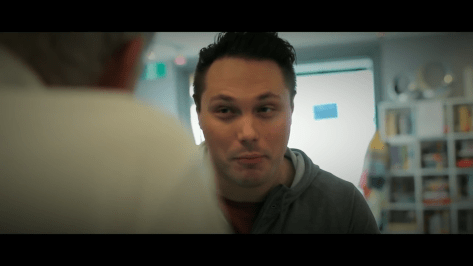
Childhood, for most of us, is a wonderful time when we are provided for and loved unconditionally; we have the feeling that anything is possible. This is the spring from which the ideas that make up fairytales flows. The world seems to be such a welcoming and magical place that almost anything is possible…even the magically impossible. Adulthood is quite a different place. The real-world practicality and day to day of surviving and providing is the experience of most adults. Still, children often give the adults the motivation and joy to accept a sense of selflessness. There is a space between these two worlds and this is the inspiration for Mark Pedlow’s film The Gap. This film is comprised of three different tales about the curveballs life can sometimes throw us which begins to pull our life experience from this comforting fairytale world into the realities (and dangers) of the real world. The Gap has a lofty goal in its attempt to link the world we aspire to with the one we are forced to accept. The unique approach of The Gap is what first interested actor Caleb Chernysh to the film. Chernysh has played a heroin addict (in Mule), a serial killer (Fractured), even a  father of twin sons…one whom “sees” his dead brother everywhere (James in Sea Change), but never before has he been a young father.

As a student of the Actor’s Centre (the same Australian school which has produced actors such as Hugh Jackman), Caleb continually searches out varied and challenging roles by which to challenge himself and increase his palette of experience. Chernysh recalls how he came to the film, “Mark Pedlow, creator and director of The Gap, was holding auditions for John, the father in one of the three stories contained in The Gap. I was attracted by the script, as I’ve never played a young father and it would involve fight training. When I got the script, I fell in love with it and begged Mark to let me audition. I wasn’t aware of this fact but Mark already knew that he wanted me for the part. I’m thankful that he was aware of my work and abilities but he didn’t want me to know that. He wanted me to audition, not to see if I would be good enough, but to confirm that I seriously wanted to do whatever it took to get the role of John. After the audition, I was thrilled when he said I would be John in The Gap.” Pedlow states, “I had a lot of applicants, but Caleb’s resume stood out the most. I decided to meet him and asked him what he thought of John. When Caleb described his version of John, it felt like he brought more layers to the character then I even thought of.gap-5
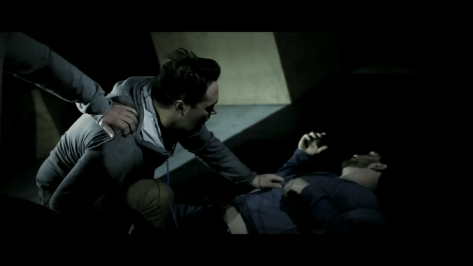
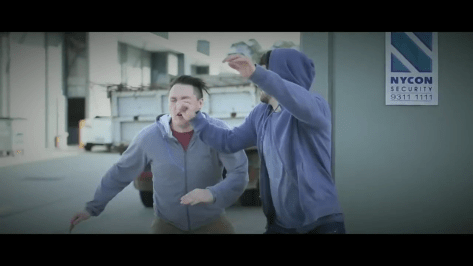
Getting the part may have been the easiest facet of his involvement as Caleb had to venture into a completely unknown area for him, fight training. Chernysh was excited to train but admits that it had its uncomfortable moments. He notes, “The Gap was the first movie which I was in that had fight choreography. I was so excited! There were nights where we had to train leading up to production and I would come home bruised and sore…but with a smile on my face. When it came to the shoot, we added some more fight sequences. I still remember getting an uppercut from one of the thugs and I literally picked myself up and threw my body backwards onto a box. It must have been impressive, because I remember people gasping when I crashed into the box. When I got up, people were saying ‘Geez, you’ll do anything for your performance!’ It looked like the uppercut was real and had a powerful force behind it.”
gap-4

That uppercut comes courtesy of one of the attempted kidnappers of John’s daughter. In one of the tensest parts of the film, Caleb’s character John (one of the lead character’s in this film) has gone to a café with his young daughter and, while she wanders downstairs, two men attempt to kidnap her. This particular scene which so clearly states the film’s theme of the difference between the fantasy life’s abrupt collision with reality, was highly motivating to Caleb. Though not a father himself, Chernysh believes that in each man resides the protective fatherly instinct towards his children. It was that character trait that he unearthed for John commenting, “I’ve never played a young father before. So I really needed to put myself into the role and imagine that I have created this beautiful life and have raised it for 8 years. This beautiful life is the most treasured being in my world and I would not let anyone or anything harm it. That was my mindset in the performance, which also helped the fight scene.”

Caleb Chernysh is currently working on a webseries in which he plays Boris Djerkich, a man who want to be the next Eurovision star. One character is Bosnian born Boris Djerkich who has moved to Australia and wants to be the next Eurovision star. Caleb also plays Cameron Tomes, a flamboyant ex-dancer who goes to a job interview and it bombs! Caleb is working on extending his series with more characters.You can subscribe and view on YouTube.

MASTER FILM EDITOR TAKASHI UCHIDA’S LIGHT TOUCH STRIKES COMEDY GOLD

Whether film editor Takashi Uchida is assigned a drama, fantasy or action film, the Japanese born craftsman always delivers a crisp, distinctive cut which enhances the impact of any story. Equally adept at complex narrative dramas—he worked with ten different directors on Actors Anonymous—or the walloping animated adventure of the Netflix Kong: King of the Apes series, Takashi’s technical facility and innate grasp of any subject’s subtly and nuance is uniformly excellent.

Takashi’s instinct for what a story requires and the impact even a single frame of film can have to achieve a specific dramatic goal is masterly, and these formidable skills were recently brought to bear on a new type of subject for the editor, the fizzy tween comedy Jessica Darling’s IT LIST, an Amazon online release starring Disney TV actress and YouTube phenomenon Chloe East.

Adapted from the sixth of Megan McCafferty’s best-selling teen novel series, the middle school-set prequel presented a unique new setting for Takashi. The titular ‘It List” passed down by a sibling to her little sister when  she enters junior high, touts “the 3 Ps: popular, pretty, perfect” as Jessica’s requisite goals for survival. Intrigued at the prospect of exploring new thematic territory, Takashi didn’t hesitate.

“I was introduced, by a mutual friend, to editor Daniel Hanna, who was a good friend of the director, Ali Scher, and I joined the team as co-editor,” Takashi said. “After I started the project, a couple of Japanese friends said they had read the novel as teens and told me how the books actually became an important part of their young lives. So, I was really proud to be working on a project that I hoped would stay in the audience’s heart like that, as a bright spot in their own youth.”

Takashi doesn’t just inhabit a story, he carefully manipulates the action in a way that elevates each sequence. “In order to express the youth and freshness of the story, we were using a very playful editing style, making creative transitions,” he said. “But at the same time, however comedic it is, there’s still dramatic arc in each character and the editor’s job is to reconcile these two elements.”

Takashi’s deft handling of the story’s content paid off. “Takashi is a great editor because he is dedicated and detail oriented.” Scher said. “He’s also a fantastic storyteller. He can see where the story in a scene is and flush it out in the cut in a way I might not have thought of. That’s what a great editor does—brings the director a new perspective on something they’ve looked at a gazillion times. It’s always very exciting to get to see your film in a new light, the great editors understand this and push the envelope with their first cuts. Then it’s all about collaboration and marrying the two visions. Takashi excels at this because he doesn’t bring his ego to the table. The edit should never be a fight, but rather a dance, where the two partners each bring a lot of passion and a lot of give. Takashi is a great dance partner.”

Together with Hanna, the emotional content was carefully addressed. “In this film, we are trying to capture Jessica’s nervousness and struggle in this new place,” Takashi said. “It is her journey to find out who she is and also what it means to stay true to yourself. As an editor, crafting a narrative to express her emotion was the most important thing and our goal was, always, to build character and express their emotion.”

“There were a lot of challenges,” Takashi said. “I learned so much from editing this film. I was really lucky to work with such a talented director, Ali, and Dan, a great co-editor. Also, a lot of times the editor really has to work on shaping up the acting in post-production, but I didn’t have to worry about it at all—these kids were so talented. I am really proud of it and I believe this film will remain in the audience’s heart along with many other classic teen movies.”

The mutual pleasure which radiated throughout the IT LIST team imbued the finished product with great warmth, charm and appeal, and connected them on both a personal and professional level. “Takashi was such a joy to work with,” Scher said. “He was innovative and hard working. It takes a lot of determination and perseverance to be a great editor and Takashi worked a scene until it truly sang. I personally could not be more pleased with the work that Takashi did and the way the film turned out. I would definitely work with him again, no question.”


DIVERSITY IS A GUITARIST’S BEST FRIEND


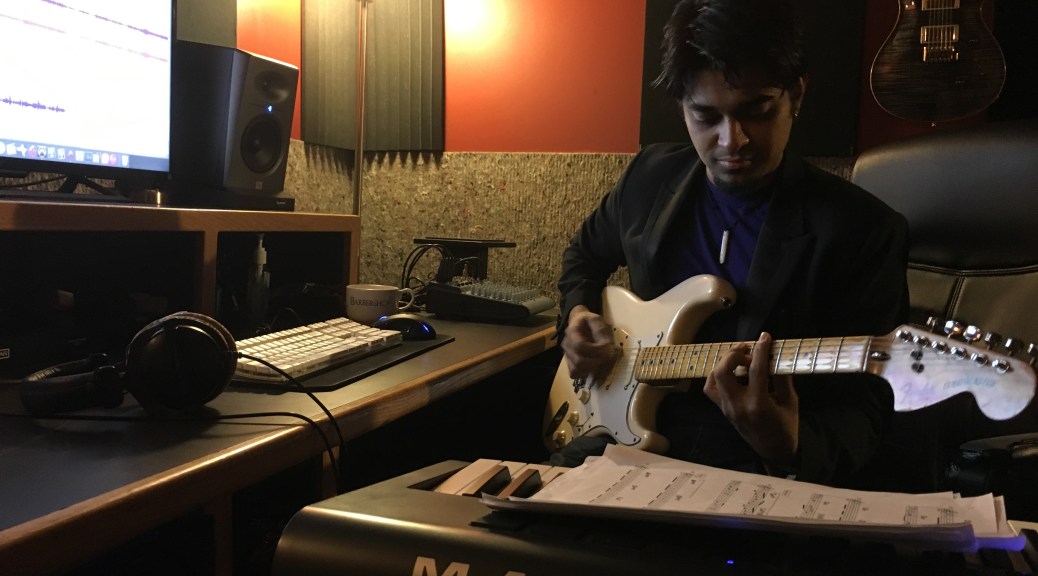
Indian born guitarist Nipun Nair is a music purist…when it comes to being a great musician but not about the genre he is playing. Consider his latest work on Anthony Cruz’s premier major release “Cosas Del Destino”. Cruz is riding the wave of Latin pop artists whose ever increasing fan base is steadily taking over major radio and popular concert tours (Nair’s guitar work can be heard on the first single “Me Vuelas La Cabeza” currently in major rotation in New York, Miami, Chicago, Los Angeles, and many other markets). The songs are catchy and the musicianship is top grade. All of Nipun’s influences combine in a way that lifts the songs and supports the vocals. It’s no wonder that Tushar Menon (music journalist for Prog Magazine, Rolling Stone, and other music publications) referred to Nair’s playing as, “that elusive combination of technical and enjoyable. There is much in his music to satisfy seasoned musicians as well as excite non-musicians.”  Top level music production and great recorded performances, combined with Cruz’s matinee good looks are a steady move towards a Hollywood ending; seemingly a world away from Nipun’s early success in India with his band Public Issue. Public Issue garners its identity from the world of rock and funk. Bordering on soulful and even progressive rock at times, the band started out as undergrad friends who wanted to play as a hobby. The group was as surprised as anyone when they immediately started winning competitions and fans, playing to crowds of 5,000 or more. Tours and television performances on music channels like VHI and Channel [v] followed. Press fast forward just a short amount of time and Nipun has travelled to the U.S. and, within days he was contacted to perform in a band, one of whose vocalists happens to be Anthony Cruz. Not only did Anthony take notice of Nair’s abilities, but the creative team behind him did so as well. This team includes Deborah Corday, Randy Phillips, and Rafael Esparza Ruiz (cumulatively they have worked with; Toni Braxton, Rod Stewart, Ricky Martin, Santana, Justin Timberlake, Prince, and many others). Their recognition of the guitarist’s talent and their desire to have him involved is quite an achievement in itself. The weight of the moment is not lost to Nipun who tells, “I was in disbelief at how I was able to come so far so soon. It felt like the moment I stepped into the country things started to happen. Now Anthony’s music is playing on all the Latin radio stations in the country; the songs for which I recorded guitars. The feeling is overwhelming and incredible.” Anthony Cruz 2

Some of the most successful artists in today’s music market are those who are the most diverse. Modern artists use their association with well known products and services (Apple, Kia, etc.) to jump start a new career or give new life to former glory years. Placement is as valid an avenue for artists as radio, possibly even more so due to the ubiquitous nature of music in our society. Many advertising agencies recognize this and employ contemporary artists as composers to create a sound canvas; artists like Nipun Nair. Nipun has enjoyed a successful career as a music composer with Rubecon Creative Solutions in India. Nair has created numerous scores for Rubecon’s campaigns which aired on major television networks (Zee TV, Star Plus, Channel V, etc) and in large cinemas like SPI Cinemas. Massive audiences were exposed to his work. Rubecon’s Alexander Zachariah confirms, “Not only did Nipun prove to be crucial to the success of the productions we did for our clients, but he also proved to be an integral part of the success of our agency.” Nipun has put these skills to use here in the U.S. working with Barbara Cohen to compose music for Dunkin Donuts and Hewlett Packard. Award-winning composer Luis Guerra is the founder of Terremoto Productions Inc., an audio production company that has compositions in feature films like Whiskey Tango Foxtrot (Tina Fey), Fallen Angel (CBS), and countless commercial campaigns for companies such as Honda, Samsung, and others. Guerra hopes to make use of Nair’s abilities creating music for projects with Mountain Dew, Disney Channel, and building the Terremoto Music Library.

Dreaming pic

For 2015’s Dreaming is a Private Thing, Nair was given a multitude of challenges. Filmmakers Alan Sardana and AJ Smith needed a score which would resemble and reinforce their film’s topic of corporal and electronic existence. They needed a modern sound with a sense of humanity. The film is based on the story by legendary science fiction writer Isaac Asimov and has a cast of three characters; Eli Lee (played by Leo Lee [Swordfish, The Replacement Killers, Contact]) the world’s last filmmaker and Sam’s creator, Sam (Dan Mousseau) the android/camera, and Samantha (Susie Park [Spider-Man 2, Miracle on 34th Street, The Chaos Factor]) the lead actress in Eli and Sam’s films. Due to the small size of the film’s cast, the score needed to become the fourth member of the ensemble, enabling the audience to further connect with the characters. Nipun’s score achieved this as well as complementing the characters. At times the music is dreamy and digital and yet, intermittently introduces overtly analog and “human” traits. Vacillating between man and machine was a goal the score achieved…all within three days! Nair reveals, “Short on time for submission to festivals, he [AJ Smith] would send me scene after scene and I was writing and recording as quick as possible. I’d watch the scene and compose something to capture the feel of it…but I didn’t have time to think about it. I was going on instinct and first impressions. It was exciting but a little crazy as well. I was happy that AJ and Alan were excited about the score. Dreaming…went on to be screened at the Toronto Short Film Festival as well as a win [for Best Production Design] at the Ryerson University Film Festival in Canada.” RED Bean Can

In addition to composing for film, Nair has been a part of creating music for live theater for years. As any actor can tell you, the two are similar but very different animals at the same time. For many years, Nipun worked with The Little Theater and its founder (award winning director and playwright) Aysha Rau. The theater, which focuses on fostering the creativity of underprivileged children, has received worldwide acclaim for productions like The R.E.D.Bean Can which has toured internationally. The R.E.D. Bean Can was selected out of sixty productions from all over the world to be performed at the 22nd International Children and Young Adults Theater Festival in IRAN. This production was Nair’s most recent compositional offering to The Little Theater. Founder Aysha Rau comments on his work, “I am floored by Nipun’s ingenuity as a composer. He brings a sense of freshness to his work that galvanizes the theater time and time again through his original compositions. It is because of his talent and dedication that our productions have been immensely successful and garnered significant press coverage.” Nair has composed the music for countless productions at The Little Theater; one of the most popular is the annual Christmas Pantomime which has attracted sponsors including; Coca Cola, Ford, and Citibank, to name just a few.

Nipun has also used his skill as a composer in live theater to benefit the Theater of Will in southern California. This non-profit arts and education company is supported by LADWP and performs musicals about water conservation. Award winning author/playwright/actor/director and president of Theater of Will, Willard Simms, confirms, “As his diverse array of achievements clearly indicates, Nipun Nair is among the most elite composers and performing musicians working in the field today.” The success did not come as an easy happenstance for the India born composer. Nair emphasizes, “The Water Wizard shows and the concert series posed specific challenges as a musician. You are trying to educate kids through music in a way that is fresh, stimulating and entertaining…but in a not too obviously educational way. The key is great lyrics and catchy melodies. Having a charismatic stage presence really helps when you are performing for an audience of hundreds.” It seems that Nipun will soon be performing for crowds of thousands (or more) again alongside Anthony Cruz; that charisma on stage will come in quite handy.Nipun solo 3

Shayar Bhansali’s Editing on “Against Night” Earns International Recognition

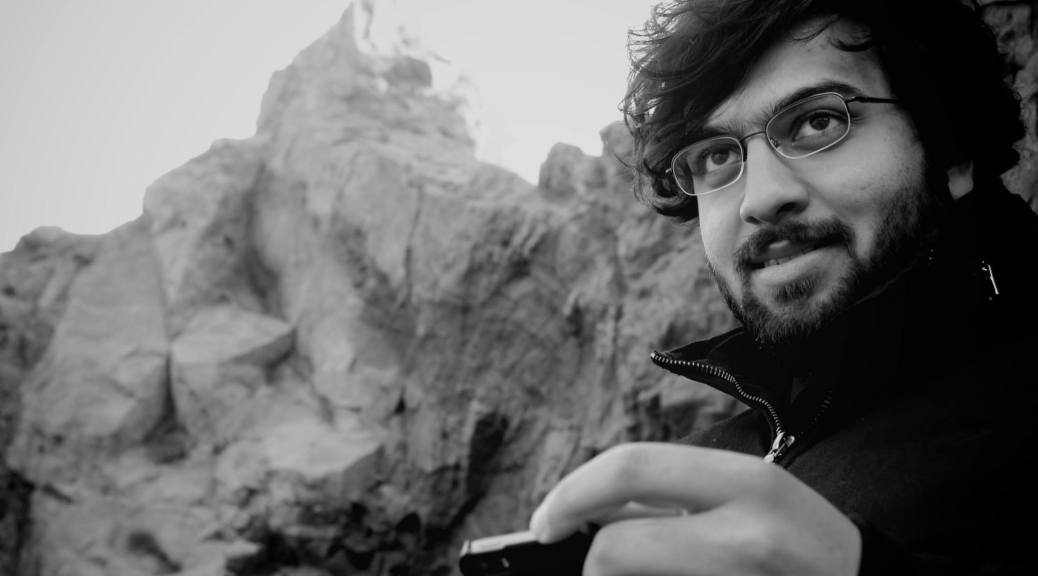
Shayar Bhansali
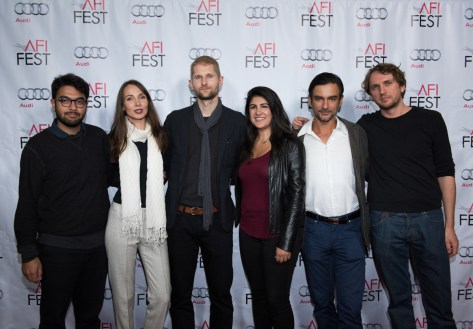
“Against Night” team from left to right: editor Shayar Bhansali, Elena Caruso (actor), Stefan Kubicki (writer/director), Saba Zerehi (producer), Konstantin Lavysh (actor) and Lucas Lechowski (composer) at AFI Fest in Los Angeles


Getting his start as an editor in the world of narrative film with none other than the iconic India based production company, Yash Raj Films International, Shayar Bhansali seemed destined for greatness even at the very the beginning of his career. And, the international success he’s received over the last few years through his work on multi-award winning films including “Wild & Precious” and “Kicks” make it undeniably clear that he’s already made it to the top.

One of Bhansali’s recent projects as lead editor, and one that proves why he is such a sought after talent in the film industry, is “Against Night” from writer/director Stefan Kubicki.

Set in the 1960s, “Against Night” starring Konstantin Lavysh (“Five Days of War,” “Karaganda,” “Juke Box Hero”) as Vitali, multi-award winning actress Elena Caruso (“Paper,” “Cloverfield”) as Marina, and Eve Korchkov  (“Joseph,” “A Night at Christmas”) as Lenka, follows Vitali, a cosmonaut who crash lands in a seemingly desolate stretch of snow-covered land in Mongolia.

Climbing out of the small capsule, Vitali stumbles his way through the ostensibly endless miles of snow and nothingness in the midst of a blizzard until he finds himself at the door of a lamp lit yurt in the middle of nowhere. The home of a reticent and shaman-like man, once Vitali steps into the yurt, the real emotional drama and the film’s underlying story begins to reveal itself. As he drifts into a deep and feverish dream-state, Vitali’s present world intermixes, through a series of flashbacks that serve as a major source of plot development, with painful memories of the daughter and wife he lost in a tragic accident years prior.

“[The film] explores the relationship we have with time and memory,” explains Bhansali. “Part of the challenge with the project was to find a good handle on tone, and to be able to maintain the style and rhythm achieved by production through the edit.”

The numerous awards Bhansali earned from festivals across continents prove that he nailed the task with his work taking home the Festival Prize for Best Editing at India’s 2015 Kolkata International Film Festival and the LAIFF June Award for Best Editing from the 2015 Los Angeles Independent Film Festival Awards.

Immediately drawing viewers in with a heart-pumping scene of Vitali and his co-pilot struggling to remain calm as their capsule malfunctions and begins to crash, Bhansali’s precise edits created a beautiful and dynamic rhythm for the unfolding story throughout the entirety of the film. Through his edits Bhansali provides the necessary pauses to allow viewers to really understand and feel the pain of Vitali’s loss when the emotional aspects of the dram are at their height.

While “Against Night” was shot with Russian dialogue, Bhansali admits that there were many similarities in his approach to editing regardless of the language. “I’ve worked with other languages before and the interesting thing for me is how similar the process is – I still spend a lot of time watching dailies and making decisions about performance, thinking about structure and the emotional rhythm of the piece and putting together a first cut within the time frame that’s expected for a project like this. The thing that’s a little different is how the director and I end up spending our time – initially a lot more of it was spent looking at dialogue delivery and sculpting performance.”

A film that has had an incredible impact on audiences, “Against Night” actors Konstantin Lavysh and Eve Korchkov earned the Best Actor and Best Actress Awards at the Long Island International Film Expo for their performances in the film. Aside from the awards Bhansali and the two lead actors earned for their work on the film, “Against Night” also won the Cinematic Achievement Award from THESS International Short Film Festival, the National Jury Award from the USA Film Festival, the Maverick Award and the Jury Prize from the Woodstock Film Festival, the Best Narrative Award from the Ojai Film Festival and several others.

You check out the trailer for the multi-award winning film “Against Night” edited by Shayar Bhansali below:

Some of Shayar Bhansali’s other work includes Mattson Tomlin’s drama “Persuasion,” Sahirr Sethhi’s “Zoya,” Shuming He’s comedy “La Bella” and the drama “Loveland.”

About the powerful force Bhansali brings to the table as an editor, “Persuasion” director Mattson Tomlin (whose film “Rene” Bhansali is currently editing) explains, “The work of the director, cinematographer, and the actors very often falls on the editor’s shoulders. A great editor is able to champion the best of the best performances and manipulate even those at their worst into something emotional and resonating. In the case of Mr. Bhansali, I have seen him time and time again act as both a problem solver and a treasure hunter, often finding the key moments to make a scene work in the most unintended places.”

Over the years Bhansali has proven his ability to tackle some of the most challenging stories and translate them into seamless visual productions through his precision as an editor. While he earned his master’s in film editing from AFI, he initially began his collegiate career many years ago studying psychology, something that has proven to be incredibly useful in his work as an editor because it allows him to understand the mindsets and emotions of the characters in the stories he creates with his edits.

“As filmmakers, I believe we are constantly working with the medium to guide the way our viewers feel – and to do this successfully one has to have to be sensitive to the way we think. I’m not sure I realized this at the time but my interest in psychology and the way our minds work definitely helped me shape emotions and characters,” explains Bhansali.

“Whether it’s a fictionalized post apocalyptic world with a robot as it’s protagonist or a based-on-reality story about a soldier fighting in WWII – the thing that makes these movies resonate with me is the humanity within the story and characters.”

HUNTER PHOENIX USES ACTING AS THE ULTIMATE RPG

The next time you are feeling like the ultimate multitasker, consider actress Hunter Phoenix who uses her vocation as therapy. Okay, that’s an oversimplification. When the director of the London based production of Streetcar Named Desire cast her in the role of Blanche “Because it’s going to be fascinating to watch you fall apart (emotionally)”; that would likely seem intimidating to most of us. It was to Hunter, until she realized this was a chance to lead out a very different life without repercussions. The actress decided to embrace the unknown, resulting in two decades of a highly successful career in Canada and Europe. Seeking new experiences for growth has now led her to Hollywood and the ever changing possibilities of acting. The long list of Canadian actors contributing to American Television and Film such as; Raymond Burr, Dan Aykroyd, Pamela Anderson, Rachel McAdams, Mike Myers, Ryan Reynolds, Ellen Page…and honestly, too many to mention here, continues to grow. Hunter Phoenix is following the path of her fellow countrymen by investing in Hollywood’s possibilities. She is no stranger to the international film industry (taking part in films recognized at the Oldenburg Film Festival, Toronto Black Film Festival, Sundance Film Festival, and the Cannes Film Festival, plus many others) and Los Angeles is astute in recognizing her luminous qualities. Following years of establishing herself in the Canadian and European markets as a talented and charismatic actress, Ms. Phoenix has increasingly appeared in many different formats here in the United States. Modern actors cross many varied platforms including; film, television, theater, even web-based, Hunter has immersed herself into all of these. In 2016 you can find Hollywood’s A-list at your local theater, on a cable series, or in original content for websites such as Funny or Die.

Art & Love 1

Producer (and actress) Maria Rohm has worked with everyone from Orson Welles to Christoph Waltz. She knows how to recognize talent as well as marketability. Maria has worked with Ms. Phoenix on multiple films and notes, “Hunter is very unique as an actress. She has the ability to convey vulnerability and handle the most dramatic scenes but also has great comedic timing. You rarely see that in a woman of such poise, beauty and grace. She raises the bar of any project she becomes involved in.”

High Adventure 1

For the film High Adventure (distributed in Canada by Universal Studios Home Video), Hunter played the role of Ingrid, Chris Quartermain’s ex-girlfriend.  Phoenix’s performance added greatly to the depth of the film according to its director Mark Roper who relates, “What these two characters create on-screen and accomplish in this movie is transcendent, and greatly responsible for the movie’s overwhelming commercial success. This was largely due to Hunter’s commitment to her performance in this role.” It is readily apparent in the film that Phoenix enjoys the subtle nuances and mannerisms of her performance. No doubt her costars appreciate the fact that she helps the audience to see the main character through her eyes, allowing them to become more real, flawed, and interesting. Hunter considers this to be one of her finest achievements as an actress, to aid the audience in seeing deeper into the characters.

One Tough Cop 1

  Pact with the Devil is a modern adaptation of Oscar Wilde’s The Picture of Dorian Gray and would seem an appropriate analogy for the lifestyle and challenges of the entertainment industry. The film’s cast includes Malcolm McDowell (A Clockwork Orange, The Artist), Christoph Waltz (Django Unchained, Inglorious Bastards, Spectre) and, as Isabella…Hunter Phoenix. Producer David Goldstein describes Hunter in the film as “commanding the screen” and “fascinating to watch!” Phoenix’s physical beauty is natural as a character that has an affair with the handsome Dorian Gray; what comes as a complete surprise is her comedic timing. Her performance gives unexpected moments of humor and levity to a dark story being played out by actors with potent gravitas. “I have written roles for Hunter on several movies and she makes the characters tangible and temporarily suspends all disbelief. When watching Hunter, you forget that she is an actress playing the part; she just IS that person.” remarks writer Peter Jobin.

In a more family themed role, Hunter will appear as Sabrina Baroque in The Bandit Hound II (she is also credited in The Bandit Hound I). This family tale centers on an unwitting dog’s involvement in an armed robbery and his road to redemption through the love of his adoptive family. In addition to Phoenix, the cast includes household names like; Catherine Bell (JAG), Paul Sorvino (Goodfellas), Lou Ferrigno (The Incredible Hulk), and Judd Nelson (The Breakfast Club). The Bandit Hound and The Bandit Hound II’s director Michelle Danner praises Hunter remarking, “I was inspired by this new actress and immediately made the decision to cast Hunter in the sequel ‘Bandit Hound II.’ The chemistry between Hunter and two of our leads was magnetic, a crucial element to achieving the heartwarming finale we’re hoping for.” In the sequel, the bank robbers are locked up but Sabrina is their “man on the outside.” Sabrina is the typical pretty face who aligns herself with the bad boys but she has a secret…one that will require viewing of the movie to reveal…no spoilers here. With the movie set to begin filming in 2016, fans of the film will have to wait a while to discover the plot twists. In the meantime, to get their portion of Hunter, they’ll have to do no more than turn on their computers. Just as cable grew into the creative and ratings juggernaut it is, the web is a new avenue for many a creative series.

Beyond Approval 1

For someone like Hunter Phoenix who has tested herself in live theater, television, and films, seeing what online entertainment can do is a natural exploration. She is cast as Vanessa in Uncensored Hollywood, a series about aspiring actors in Hollywood and the culture of sex, drugs, alcohol, and lies. The subject matter could lend itself to drama but the tone is definitely one of comedy.  With episodic titles like; “Arnold Schwarzenegger and Godot”, “The King’s Speech – Made in Hollywood”, “Game of Thrones – The amateurs”, and “SNL Tennessee Williams” it is easy to see that the series pokes fun at the self important side of Hollywood as well as pop-culture.  Phoenix describes her character Vanessa as a former child actor/now talent agent, full of grit and toughness, while still being humorous and fragile (due to her ex-husband). The role is a perfect place for the actress to show an intense yet comedic facet of her inner self. That seems understandable for someone whose achievements range from Tennessee Williams to Second City improv. Hunter embraces Uncensored Hollywood and her character stating, “What makes the show both poignant and funny is that it contains that kernel of truth. It’s not me but I draw on my own experiences to breathe emotional vibrance into Vanessa’s world.”  This acting therapy that Hunter uses allows her to be people that she isn’t, while doing things she’d probably never be comfortable doing, and somehow results in her being a more actualized self. Maria Rohm of (Tower of London Films) describes Phoenix stating, “Hunter is also one of the kindest and most caring people I have ever met. She worked with street youth, mentoring them for a number of years during her time in Toronto through Covenant House, and she gives generously to animal welfare charities.” Hunter’s personal form of acting therapy results in great work that is appreciated by the industry, as well as therapeutic side effects for herself and those around her.

Setting the Visual Tone with Electrician and Camera Operator Ekaterina Doldjeva!

DSC03033
Camera operator and electrician Ekaterina Doldjeva


At the core of any good film or series is a good story, and just as with any story, the tone and mood are key. In a book, an author can simply tell the reader that the night is dark and stormy. In film, setting that tone takes a lot more nuance. Rather than relying on written words, filmmakers must use dialogue, ambient sound, curated scores and above all, meticulously orchestrated lighting. That’s where Ekaterina Doldjeva’s expertise becomes invaluable. As both a camera operator and an electrician, Doldjeva knows better than anyone just how important a role lighting plays in the storytelling process.

Born and raised in Bulgaria, Doldjeva found a passion early in her life for the film industry. Fascinated by the craft of cinematography, her seemingly limitless skillset covers the spectrum from the creative to the technical. As a lighting technician and electrician she is responsible for overseeing the proper and safe setup of lighting, and for ensuring that when the cameras roll and the cue is given, those lights work flawlessly. As a camera operator, she works closely with the cinematographer to ensure each scene captures the full essence of the director’s vision for the production.

“For me, every time I am lighting a set, it feels like I am painting with light,” she said, describing how her work lies at the confluence of science and artistry. “However, being a camera operator is a true passion of mine. In order to be a cinematographer you have to be able to translate words from the script into visuals.”

Doldjeva’s first big step into the field came when she began work on the critically acclaimed NBC series “Chicago Fire.” Centered around a tight knit band of firefighters in Chicago, the series honors the brave men and women who risk their lives everyday to protect their city and its people. Starring Jesse Spencer (“House”) and Taylor Kinney (“Zero Dark Thirty,” “Shameless”), the brilliantly written series features themes of fraternity, courage, sacrifice — and a whole lot of fire.

“It is breathtaking to see how a certain scene is done, especially on a show like ‘Chicago Fire,’” Doldjeva said. “Most scenes include lighting buildings on fire and heavy stunt work, but helping and contributing to create those scenes, and afterwards seeing it on TV when the episode comes out, it repays for all the hard work I have done. I feel grateful that I am able to be apart of the crew at such a high level.”

In the few short years since her work on “Chicago Fire,” Doldjeva has gone on to work on an array of star-studded productions, such as the upcoming film “Office Christmas Party.” Doldjeva worked as the electrician on the film, which is directed by Josh Gordon (“Blades of Glory,” “The Switch”) and scheduled for release just in time for the holiday season this December. Starring Jennifer Aniston (“Friends,” “Cake”), Jason Bateman (“Arrested Development,” “Horrible Bosses”) and Olivia Munn (“The Newsroom,” “X-Men: Apocalypse”), the riotously hilarious film is guaranteed to be a box office smash.

Filming on “Office Christmas Party” provided a laundry list of challenges and obstacles, which Doldjeva was uniquely qualified to overcome. While shooting on the streets of Chicago she found herself in a battle against the elements. Despite a nonstop barrage of complications, Doldjeva kept her cool and saved the day from what could very well have been a disaster.

“Throughout the day, we experienced short blizzards, rain and clear skies — all within 30 minutes. A rapid weather change like this is never good for a lighting setup. At times I had to separate from the crew and follow the weather every 10 minutes, so I could tell the gaffer if there would be a lighting change,” Doldjeva said, recalling just how many fires she had to put out. “We had lights on every intersection… we were shooting at, and inside buildings and along trees. I had to stay close by to… decrease or increase the lights every time the sun changed, and to let everyone know so they could tell production. This was crucial for the lighting continuity within every shot and scene.”

Doldjeva has earned a reputation as one of the most sought after professionals in her field, a fact proven time and again by the illustrious list of projects she is credited on. In 2015 she served as the electrician for the hit Fox series “Empire,” starring Academy Award nominee Terrence Howard (“Hustle & Flow”) as a hip-hop artist and recording mogul whose legacy is placed in jeopardy after being diagnosed with ALS.

A much different project than any other she had previously worked on, the logistics of shooting a series as thoroughly original and unprecedented as “Empire” proved to be an exciting challenge for Doldjeva. In particular, the show’s frequent use of musical performances kept Doldjeva on her toes.

“I often had to navigate a spotlight and follow the singer across the stage,” she said, explaining the high expectations and higher stakes involved. “Sometimes there would be a long shot where the performance might get interrupted when the singer would go off stage or dance. A small mistake on a giant production like this could be inexcusable.”

Doldjeva’s myriad projects have also seen her working alongside Academy Award nominee William H. Macy (“Fargo”) on the Showtime series “Shameless,” directors Lana and Lilly Wachowski (“The Matrix Trilogy,” “V For Vendetta”) on the Netflix Original Series “Sense8,” and Academy Award Winner Charlize Theron (“Monster,” “Mad Max: Fury Road”) on the upcoming film “American Express,” scheduled for release next year.

It isn’t luck or coincidence that has made Doldjeva such an omnipresent figure in some of the biggest productions over the last few years. Countless productions have relied not only on her expertise behind the camera, but on her unrivaled ability to turn lighting into an artform in its own right. With her years of experience, vast understanding of her craft, and a knack for quick action and quicker thinking, it’s no surprise that experts throughout the film industry have come to think of Ekaterina Doldjeva as the beacon that guides them when the waters get choppy.

VERONICA LI USES CREATIVE SOUND DESIGN TO CONNECT TWO DIFFERENT PARTS OF THE WORLD AND TWO DIFFERENT WORLDS IN MANDALA

One of the key components of any renowned artist is the ability to achieve popular success while simultaneously keeping their artistic vision intact. This is no small accomplishment and can be quite a balancing act. The yin and yang of this  (whether it is music, painting,  film, etc.) is required to both satisfy the masses as well as lift the art form to new places. When executed at its highest level, art can challenge us to consider our thoughts on love, life, and the world. Technology has created a world in which we are more in touch with other cultures and lifestyles; it seems intuitive that it would bring the elite of the artistic world into a closer community. Sound Designer Veronica Li is an example of this very ideal. She has made a name for herself as a talented and in demand sound designer in Hollywood. Working on box office hits like Michael Bay’s 13 Hours: The Secret Soldiers of Benghazi (grossing 53MM) as well as artistically praised films such as STAND (for which Li won the Outstanding Achievement in Sound Award at the First Film Festival) has displayed Veronica’s ability to match the tone and scale of her work to any film and assist the filmmaker’s desired emotional impact.

Ask any director what they require to make a great film and they will tell you that it takes a highly skilled and talented team in order to achieve their vision. Ask Guan Xi, the director and writer of Mandala, about Veronica Li and she will reinforce that statement. Mandala received multiple nominations at the 2015 Los Angeles Independent Film Festival Awards including a win for LAIFF’s Best Foreign Language Film in July, as well as being recognized by the film community in Italy and India.  Guan Xi states, “Veronica’s work was critical to the success of the production, as evidenced by the numerous official selections to the industry-renowned film festivals in the U.S. and around the world.” Veronica’s achievements on award winning films like Looking at the Stars captured the attention of Xi while they were working on this film and solidified the director’s resolve to enlist Li to work on Mandala. Remarking on the experience, Guan Xi comments, “Veronica’s work as a Sound Designer and Sound Editor on the production was absolutely crucial, as the sound in a film is one of the most important facets of filmmaking. Mandala was critically lauded by some of the industry’s most prominent directors and producers. The Academy Award-winning documentary filmmaker, journalist, and novelist Mark Harris called the film ‘Beautifully shot and impressively produced…’ while Amanda Pope, the Emmy Award-winning director called the film ‘A visually exquisite story of an artist torn between her modern life and her Tibetan Buddhist culture.’ Many more luminaries in the field have voiced their praises for the film.”Li 5

Mandala is a timeless and universal story of the loss of a loved one and the attempts of a female artist to overcome her pain while at the same time reconnecting with her roots. The story grounds itself in the physical world and its day to day realities, while the emotional upheaval creates a bridge to a metaphysical world. Only by dealing with the less familiar “higher plane of consciousness” does the heroine stand a chance at living a life once again free from sorrow and unattached to the tragedies life can bring. The sounds required to make viewers accept both visions of life as reality are equal to the demands of the visuals…if not even greater. Li is highly aware of the subtle yet highly important nature of her role professing, “I think sound design helps to bring a film to life. It definitely makes the environment more believable. Most of the sound designs in Mandala are so subtle that the audience won’t notice them but they will help to set the proper mood. They can really sell the shot.” The dichotomy of the setting of New York City’s Gotham and Tibet’s peaceful mysticism is stark and the sonic environment must reflect this in a “not too obvious” manner. Li’s expertise was called upon to meet this lofty goal. Guan Xi praises Veronica’s ability to exceed expectations recalling, “I needed the sound of the film to be at an exceptionally high-quality level. Veronica perfectly combined and contrasted Tibetan and NYC sound elements together, and as the Sound Designer and Sound Editor, she spent countless hours collaborating with the Composer, working seamlessly on the sound design and score of the film. Not only was I able to entrust Veronica with the sound design and sound editing of Mandala, but what most impressed me was the fact that she really understood the story and my needs as the director.” Veronica used her talent as well as some creative ideas to help link the main character’s two geographic anchors of NYC and Tibet. Li reveals, “In addition to contrasting the two places, we also wanted to connect them. Helena is someone who belongs to Tibet but is currently trapped in the city. We decided to use a very subtle Tibetan musical cue whenever we saw Helena’s Tibetan painting. The horns of the cars passing by would gradually change to Tibetan musical bells, as if Tibet was calling from inside Helena whenever she and Lobsang Lama walked by each other on the city street.

Authenticity was paramount in the approach to producing Mandala. With the exception of the lead roles of Helena (Sarah Yan Li, also know for Fast & Furious 6) and Paul (Omar Avila, also know for The Punisher), all the other lead actors were Tibetan. To ensure that the original Tibetan Buddhist culture was presented correctly, the production team consulted eight living Buddha about every detail in the movie. Tibet contains the highest plateau in the world making it quite difficult for non-Tibetans to do strenuous activities. Even though the filming could have taken place at a less “difficult” location, the audience needs to feel, see, and hear the real Tibet. In the rare cases that a modification needed to be done, they were delicately handled with the highest level of professionalism.  Since shooting is forbidden in a real Tibetan temple, a temple was recreated in Los Angeles for filming interiors. Editor Cheng Fang describes his experience working on the film with Veronica commenting, “In Mandala there is a scene in which the female character is taking a test in a Tibetan Buddhist Temple to see if she is the reincarnation of the Rinpoche that passed away several years ago. During the scene, the character has several ‘visions’ and eventually has a mental breakdown. We finished the picture editing of the scene but everyone knew there was something missing. The picture itself was just not powerful enough. The mental breakdown of the character seemed to end abruptly. Veronica went to work on it. After she finished, we viewed the scene again…it was now so powerful! Veronica successfully combined the sound of Tibetan music instruments with mysterious murmuring; transforming the mental journey of the character into a crescendo as the music got louder, resulting in an intense ending.”Li 6 When a poem that was already recorded was unable to fit due to time constraints, Guan Xi once again called on Veronica Li and her expertise. The director explains, “Veronica helped me choose the certain words from the poem, and reorganize them so they could fit the style of the movie but still deliver the message I wanted to tell. To be able to change such an important sequence in the film, yet stay true to a Director’s vision is one of the most difficult tasks in filmmaking, but Veronica was able to flawlessly execute it.”
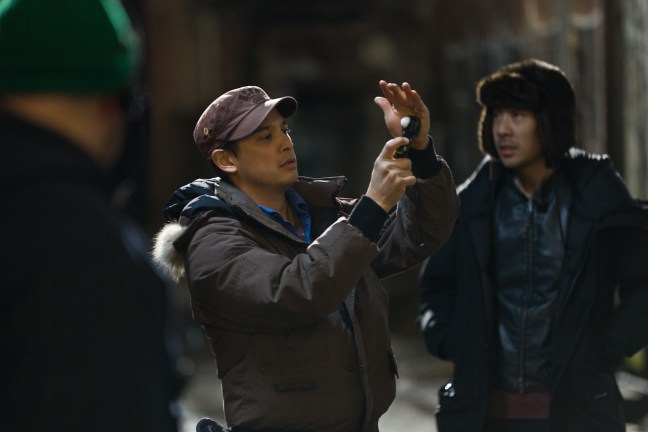
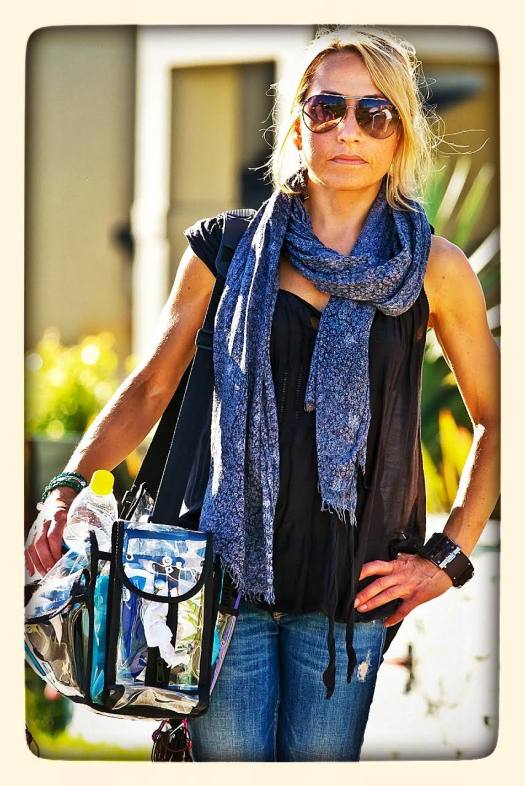
Veronica Li and the message of Mandala share a few striking similarities; each is the story of a woman from one culture, living in another culture, striving for excellence in the arts, all the while using the best of each part of the world to tell the universal stories we all share.

Moving With the Times: Canadian DP Colin Akoon

colin-akoon-02
Cinematographer Colin Akoon (center) tests the lighting on set


Following the progression of cinematography from 16mm to digital over dozens of years, the devoted award-winning cinematographer Colin Akoon not only keeps up with the art, he evolves with it. Originally from the suburbs of Toronto, Canada, Akoon’s love for movie making began at an early age, and the footage he has captured throughout his career has graced our screens with unforgettable, moving, and compelling images alike.

With a resume that is as diverse as it is extensive, Akoon has lent his talents to feature films, commercials, music videos and documentaries. His body of work includes the more poetic and eerie film “Incident(s) at Paradise Bay,” the hilarious Power Rangers’ spin-off “Space Riders: Division Earth,” the ever powerful and gripping “Together Alone.” He is even the eye behind international rap star Booba’s music video “Validee” featuring Benash, which takes viewers through Barrio Pablo Escobar, home of Colombia’s most violent and notorious drug lord, and much, much more.

Thinking back to the beginning of his career, Akoon recalls, “When I started in the camera department, there was no digital… Film cameras are simple; they’re just motors. They are highly precise motors, but they are motors nonetheless. There was only one factor that dictated the look of your image – what film stock you chose.”

In a world gone digital, Akoon realizes that the image is not dictated simply by lens and film selection, but frankly “a million electronic factors.” But this does not stop him; rather, it inspires him to use groundbreaking, top-of-the-line cameras to the absolute best of their abilities.

“I use the RED Epic [camera] often,” Akoon explains. “Not primarily for its inherent image quality, but more for its form factor and work flow design. It’s small and contained-no tethering to another recording device is necessary-  yet I can build it to suit on-the-shoulder hand held work. It easily rigs to any movement device…and it shoots RAW, digital cinematography’s answer to a ‘film negative’ like work flow.”

Akoon also brings up a fascinating point about on-set viewing of the images he captures: “When shooting film, no one on set has any idea what the image will look like but the cinematographer. The cinematographer had a lot of control in making sure the lab and daily colorist followed their instruction to achieve the desired look. But with digital, everyone from the producer to hair and makeup can see what the image actually looks like on set, so it’s important that the quality of the image they see is what you intended.”

Akoon understands the weighted value of live viewing image quality, and uses the technology built into the RED Epic to show the director and others on set what, in the past, would have just been up to him to process later on with negatives. Where he used to instruct very specific manipulations of negatives like underexposure with the intention to print up, pushing to create contrast and pulling to lower it, he now can use his artistically trained eye at point of impact and create a look similar to what he envisions in post production, while not affecting the RAW file itself. This often overlooked touch, while small, is critical to the success of the film, and because of Akoon’s understanding of cinema from the film days, he possesses a deeply rare and invaluable talent.

It is because of his on-set grace and this ability to translate images instantly that directors work with Akoon time after time again. In fact, after working with director Mateo Guez on on a music video entitled “Smokin’ Lounge” for acclaimed jazz performer Molly Johnson (which you can check out below), Guez approached Akoon again to work on another project- this time, a feature film called “Together Alone.”


This film, inspired by Shakespeare’s sonnets, did not strictly adhere to any one script or blueprint, but rather it evolved through improvisation and experimentation, and, as a result, the filmmaking process was an intimately creative experience. With a limited crew and no camera assistant, Akoon valiantly undertook the project.

He recalls, “The process of making this film was very organic. Almost nothing was preconceived. Not a frame of this film was storyboarded. Every creative decision was made on set, in the moment.” A cinematographer without Akoon’s highly refined skill set would never have been able to capture the essence of this film.

Aside from being able to think quickly and creatively on his feet,  it is also where he places the camera itself that separates Akoon from the pack. He even admits, “As much as I enjoy lighting, and sculpting the image in shadow, camera placement is the most important aspect of my cinematography. Where you place the camera is literally where you put the audience for that moment in the story.”

He demonstrates his uniquely stylistic camera placement beautifully in the thriller “The Body Tree”, which has also been among his most challenging projects. The film follows a group of American youths to an isolated estate in Siberia, where they plan to honor their recently murdered friend, until they discover that the murderer may, in fact, be one of them.  While the story is not overly original, Akoon tells the story cinematically in such a way where viewers have truly witnessed the revolution of the cabin in the woods horror cliche into a tactfully maneuvered character piece.

Good work, of course, doesn’t come without its own set of challenges, but Akoon excels in problem solving, and often his solution to problems that arise with a shot leave audiences with images more stunning than if everything had gone as planned.

Thinking back upon the challenged faced while filming “The Body Tree,” Akoon recalls, “We lost quite a few key locations, both during pre-production and throughout production. The schedule was very tight and more than half of our script was night exteriors. On top of that, we had a cast of almost a dozen actors, that’s a lot of coverage to accomplish in a short number of days.”

Akoon met this challenge with great victory, leaning into the character development aspect of the film, giving the director a final project sure to impress and captivate audiences for years.

To this end, the relationship that Akoon builds with each director is individualized and tailored in a way not all cinematographers in the industry can offer. Truly staying in the mindset that nurturing the relationship with the director is where a cinematographer should spend most of their time has paid off for Akoon, as he typically works multiple times for directors who are impressed with his modesty.  

FDirector Chris Macari, for example, has worked with Akoon on three music videos for international rap star Booba; “Validee,” the first video shot of the three, has over 11 million hits on YouTube.  While on location in Columbia, Akoon noticed many locals hanging around the location and watching the shoot.  A good cinematographer will find a way to use use what the location gives naturally to boost and enhance the credibility of the project, and that is just what Colin Akoon did. “Chris ended up using a lot of that footage in the cut,” he recalls, “and it gives the sequence this authenticity, realism and danger that sets the stage for the rest of the video.” Any other cinematographer may have simply overlooked the value of these potential shots, and the outcome of the final product would have been left craving something more.

Akoon believes that a cinematographer must learn how they fit into a director’s process and adaptation and that over time, the synergy makes him a better cinematographer. “As a result,” he admits, “the cinematographer is only as good as the directors they are working with.” Likening the director’s job to weaving a complex and detailed quilt, Akoon explains that “ I believe that nurturing the relationship with the director is where a cinematographer should spend most of their time. It’s important as a cinematographer to be aware of where you best fit into that fabric.”

Perhaps these views have helped to opened creative doors for Akoon, as he has been able to work with friends professionally on many projects. One particular project, “The Incident(s) at Paradise Bay,” grips audiences with linguistic and visual storytelling alike. Captivating from the very first moment, the film, which is loosely based on the controversy surrounding disciplinary academies like Tranquility Bay in Jamaica, explores the ethics of their practices and intrinsically begs the moral question: were the procedures adopted by these type of institutions successful, or were they simply just abusive?

While the story itself is an interesting one, it truly is the remarkable camerawork that makes this piece so memorable. Raw and yet elegantly framed, Akoon puts viewers barefoot in a cage on a shore with the captives; with beautifully balanced handheld shots, he makes us forget we are watching a film, and with sparingly used zoom techniques, he bookends the film in an unpredictably foreshadowing twist of cinematic genius.

All in all, Akoon’s collaborative mindset and his seemingly limitless technical and creative skill combined with his understanding of the industry has made him the highly sought after cinematographer he is today.

“I love the energy you receive working with other people,” says Akoon. “You feed off of the other’s creative energies. I love that our creativity is about building upon other’s creations. A film is a living animal, listen to it. It will tell you what it really wants when you least expect it.”

Behind the scenes: Cat Sherwin reveals a day in the life of a Make-up Artist and Hair Stylist on Australia’s leading breakfast TV news lineup

cat
Cat Sherwin


It’s 2 a.m. and her day has already begun.

A short meditation, double expresso and daily horoscope are the kick starters. Then it’s off to the shower, out the door and on to Seven Network Studios in the Martin Place district of Sydney, New South Wales, Australia.

The essential morning routine is the tried and true method for Cat Sherwin, make-up artist and hair stylist for Seven Network’s breakfast TV lineup: “Seven Early News,” “Sunrise” and “The Morning Show.”

“It’s my little bit of Zen time for day,” Sherwin said. “I find it really centers me with an aura of peace and calm for what’s often a hectic day ahead.”

Beginning with “Seven Early News,” followed by “Sunrise” and ending with “The Morning Show,” the three programs broadcast from 5 a.m. to 11:30 a.m. weekdays, with “Sunrise” continuing to air from 7 a.m. to 10 a.m. on weekends.

Programming informs Australian audiences on news, sports, weather, current affairs and entertainment. It’s an ongoing barrage of talk-show TV production that only pauses once a year, on Christmas Day.

Audiences have responded and made “Sunrise” the highest-rated breakfast news program across Australia. It originated in 1991 and is carried out in the tradition of “Good Morning America.”

“Sunrise” has covered a litany of major news including the Iraq War, the inauguration of Barack Obama, the 2010 Copiapo mining accident, the 2010-2011 Queenslands floods, the 2011 Christchurch earthquake, Hurricane Sandy, the 2014 Sydney hostage crisis, the Pope’s morning Masses and many other impactful stories. Musical guests on “Sunrise” have included Usher, Justin Bieber, Lady Gaga, Katy Perry, One Direction, and dozens more.

For Sherwin, her schedule varies and includes make-up and hair styling up to five out of seven days a week at the studio where she participates critically for the production of all three morning shows. She’s been making up and styling show hosts and guests for Seven Network’s morning lineup since 2008, an impressive tenure that’s featured her outstanding work in hundreds of episodes.

“The wide variety of show types offer a huge opportunity for different creativity and experiences,” said Sherwin, who estimates she styles around 5-15 different people per episode. “News has to be often quite structured and serious. Entertainment and weather presenters can be a little more fun and fashion forward. Current affairs programs are often tailored to the nature of the interview.”

“Seven Early News” is presented by Jodie Speers. “Sunrise” is hosted by David Koch and Samantha Armytage. Also hosting “Sunrise” are Natalie Barr (news), Mark Beretta (sports), Edwina Bartholomew (Entertainment) and Sam Mac (weather). “The Morning Show” is presented by Kylie Gilles and Larry Emdur.

“All main hosts are styled first before we move on to guests. We look at the wardrobe of the presenter for the day and any accessories they may have, and also take into account any particular requests the host may have, or a particular look they may want to go for that day,” said Sherwin. “Each makeup artist is given a main host to style, hair, make-up, hair extensions, lashes, then often a male host as well.”

As to guests and interviewees, Sherwin has made up a wide array of people from all walks of life, from abuse and disaster victims, to brides wanting to get married on TV, to rock stars, writers, actors, directors and many more. She’s styled Duran Duran, author Deepak Chopra and actress/model Teresa Palmer, to name a few.

Sherwin has styled for the show’s coverage of the Melbourne Cup and an Opera House concert with Katy Perry. She’s made up the needed looks for on location shoots in any elements, whether rain, cold, heat or any other challenging conditions.

Just before a guest appears on a show segment, Sherwin’s styling duties actually add a psychological component.

“You’re often one of the last interfaces before a person goes on air and if it is a guest who has never been on television before, they can be nervous,” she explained. “I believe it’s my job to help keep people calm and make everyone feel special, whilst also making them feel and look great – often in a short amount of time.”

The reality of Sherwin’s job requires a world of talent, creativity and poise under pressure. She strikes an imperative balance of keeping calm and centered, while also being upbeat and energetic. The nuances are necessities when considering the importance of her behind-the-camera role.

“Your work is extremely visible on the show for the world to see,” she said. “There’s nowhere to hide. You have to get it right whilst also not taking yourself too seriously or getting stressed. It’s also a lot of shift work, so it’s important to look after yourself physically and mentally.”

Sonya Downie is Seven Network’s Chief Departmental Head for Hair and Make-Up and has worked in supervisory production roles for more than 20 years.

“Cat’s work is superb. I have now worked with her for eight or nine years and her work consistently shines,” said Downie. “Cat is a wonderful, dedicated and extraordinary artist, recognized not only for her amazing creative skills, but her professionalism and integrity in the workplace. She is a joy to work with and inspiration to all those who work with her, making her a key choice for our top talent.”

After each morning show has commenced at Seven Network Studios, Sherwin wraps up by washing brushes, restocking product, organizing her kit, returning calls, e-mailing, invoicing and researching different looks for the next morning’s productions.

Upon returning home, she lays out her clothes for the next day and prepares breakfast to take on the go. Another 2 a.m. rise beckons. It’s Zen time once again. And Sherwin wouldn’t have it any other way.

“It’s definitely a buzz and fabulous to be part of such a big show renowned across Australia,” she said. “It sometimes blows me away how many people watch and have seen me on behind the scenes shots. Often audience members will call and ask what lipstick or blush we have used. It’s amazing that we can influence viewers’ make-up choices and how many people take an interest in what the hosts’ style is for the day. Television is a visual medium after all.”

Through the Eye of His Lens Egor Povolotskiy Captivates International Audiences

Egor Povolotskiy
                                                Russian cinematographer Egor Povolotskiy

Mixing both European and Hollywood styles, Russia’s Egor Povolotskiy is a cutting edge cinematographer soon to be on every director’s must have list. Although beginning his education in artificial intelligence and computer sciences, Povolotskiy soon determined through his love of photography that his real passion was to be behind the lens.

Choosing projects on the potential for a unique story telling experience, Egor’s desire as a cinematographer is to make the audience feel something, and to leave them thinking. Povolotskiy truly believes that “the cinematographer is the bridge between the direct and the people in the movie theatre.”

When asked to describe the role of the cinematographer, Povolotskiy stated: “Turn off the sound, if you understand the story, if you feel it, that means the cinematographer did their job right. The main responsibility is to translate the story in people’s minds without them noticing it.”

With such films as Red, Blue, and Purple, Egor’s camera work is demonstrative of his ability to convey emotion with color, light, shapes, and textures. Telling the tale of a journey inside the mind of a prisoner who’s mentally drifting between, two worlds, the individual, and the collective. In Red, Blue, and Purple, Povolotskiy’s cinematic eye shines brightly.

Egor went on to win much acclaim for his cinematography work on the film Sabre Dance, winner of numerous awards from both the Rochester International Film Festival as well as the USA Film Festival. Telling the true story of famed Russian composer Aram Knachaturian preparing to meet famous surrealist artist Salvador Dali for the first time. Povolotskiy’s excellent use of period lighting and color palettes gave the film an emotional and realistic depth bringing the actors performances right off the screen.

As the main characters were so vastly different, Egor has stated his greatest challenge on this project was capturing the emotional point of view of opposite personalities.

“The cinematographer is in charge of the mood of the film, he or she has to understand not only how the lighting works, but how to be a bit of a director also,” says Povolotskiy.

We Are Enemies, a compelling tale of bonding under unconventional and extreme circumstances, is a prime example of Egor’s ability to do just that. Using gritty color tones and lighting techniques, Povolotskiy’s cinematographic skills are truly evident. This film also garnished several awards from the esteemed Rochester International Film Festival.

Known for making magic with whatever equipment and location he has available, Egor Povolotskiy feels that “by his eye, the audience will see the film.” With his work on the acclaimed film Death of a Government Clerk, based on the famed short story of the same name by Anton Chekhov, this truth is clearly demonstrated. With creative and moody camera work and lighting, this story of the personal trials of a 1900’s Russian clerk who finds himself on a life altering path of self destruction is a compelling and visual experience.

“There is no project for me so far, which I have shot the same way” states Povolotskiy. And with several exciting upcoming projects such as the horror film Goetia, Egor clearly demonstrates he will hold true to this statement, always evolving with each incredibly entertaining and engaging project.