Category Archives: Uncategorized

GREENWOOD ISN’T AFRAID OF THE ANTI-SEQUEL

sequence.Still001

There is a quote that is attributed to many fine actors that states, “Dying is easy. Comedy is difficult.” It has been repeated by Academy Award winners like Gregory Peck and Jack Lemmon (most consider Edmund Kean to be the originator) and speaks to the fact that making something seem spontaneous and light hearted takes a fair bit more convincing than a dire situation. There’s also a fairly common belief that the film industry takes itself too seriously and rejects mockery. This is a notion to which Canadian writer/producer/actor Troy Greenwood does not subscribe. As a part of the FAFC (Film Actors Fight Club), Greenwood helped create the award winning film Diamond Planet. With a very self-deprecating approach, Diamond Planet poked fun at filmmakers, the film industry, and even film students. In this production, fools abounded while intelligence was scarce. The film was so popular that Troy decided to write/produce and act in the sequel…a sequel which is in fact about a film that is not yet a film. As proof that filmmakers revel in self ridicule, Diamond Planet 2: Emerald Horizon was embraced with greater enthusiasm than the original (winning at the Calgary Film Challenge and going on to screen at the Sun and Sand Film Festival in Mississippi). Diamond Planet 2: Emerald Horizon is a testament to the fact that as long as creative individuals take themselves too seriously, there will be peers among them who remind us all how absurd they seem.

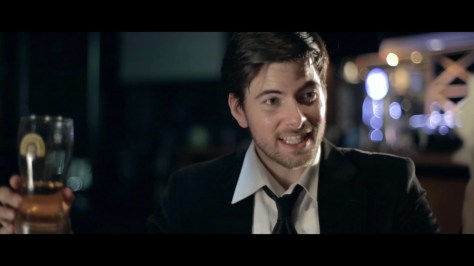
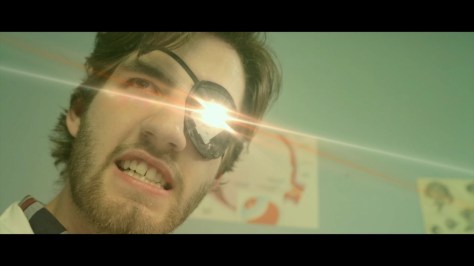
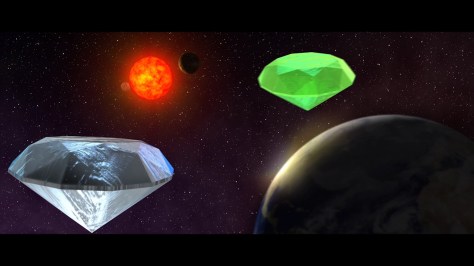
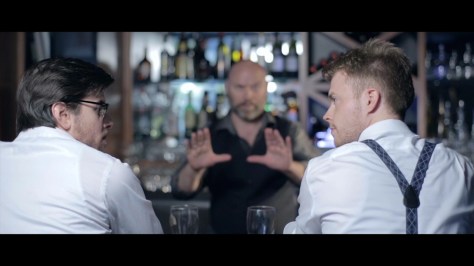
It has increasingly become commonplace for filmmakers to feed upon themselves, recycling films and themes from the past, sometimes even repeating the same current day premise but with different casts. While Diamond Planet shone a light on laughable concepts in modern film, Diamond Planet 2: Emerald Horizon turns its gaze to the film industry’s lack of originality and ingenuity. It seems that the current M.O. is to go for a wide audience that assures box office rather than fosters new ideas and artists; at least for the most part. Greenwood had a clear idea for a sequel which immediately follows the action of the first film. In Diamond Planet 2: Emerald Horizon, Ollie Swagger (the filmmaker from the original Diamond Planet) steals the idea for the “Diamond Planet” that was pitched in the first film. He’s going to try and sell the idea to a studio at the annual pitchtime event. Unfortunately for Ollie, when he was bragging about it the night before the meeting, his nemesis overheard him. The next day when they are seated together, Swagger starts into a pitch about “Diamond Planet”. In the film’s premise, the Diamond Planet will cross between the sun and the earth, magnifying the sun’s rays and burning the earth to a crisp. The government wants to send optometrists into space to change the curvature of the Diamond Planet rendering the rays harmless. However, Swagger’s nemesis jumps in, pitching his movie “Emerald Horizon” about a giant emerald planet and ophthalmologists in space. We, as the actual audience, see cuts back and forth between trailers for these films as they are pitched. Each trailer becomes more and more ridiculous until they’re basically turned into one complete parody of a movie; to which the studio’s representative responds “I like it, but how about a hamster!” The unseen wink with which Greenwood delivers the humor is obvious to all. One need not look too far into recent movie productions to see evidence of this scenario. Cutting to the core of the movie’s lesson, Troy notes, “Anything that tries too hard to purport itself is funny.”

DIAMOND PLANET 2 Final Cut.mp4.Still001

Due to the nature of “Diamond Planet” (the spoof movie) being a science fiction suspense thriller, the production value and the cast for this sequel necessitated a sizable increase from the original Diamond Planet. Because the original was so successful, it helped to propel much of the original cast and crew into busier careers and thus some key players proved unavailable for this sequel. Luckily the popularity of Diamond Planet attracted the interest and involvement of a large number of respected Canadian actors (both films are Canadian productions). This included noted theater and film actor Stuart Bentley. Greenwood’s prowess at a multitude of production roles, in addition to the script is what enticed Bentley to join the cast of Diamond Planet 2: Emerald Horizon. He comments, “Over the years, I’ve had the distinct pleasure of working with Troy Greenwood on stage and in film. In a production of Inherit the Wind Troy gave a masterfully understated and relatable performance of the accused schoolteacher, Bertram Cates. Troy effortlessly navigated this difficult character, drawing in audiences and critical approval. I had the opportunity to act in Diamond Planet 2: Emerald Horizon which Troy wrote, directed, and starred in. Troy had written a wonderfully funny script, and easily navigated the tricky job of acting and directing in his own production. He took great care of his cast and crew, and kept the production flowing on time, while being careful to ensure that every needed master and coverage shot was captured to realize his artistic vision. Diamond Planet 2: Emerald Horizon was a great success with judges and audiences and continues to be one of my favorite film projects of the past several years.” In addition to Bentley, the considerably larger cast included notables such as Jesse Collin (Fargo), Helen Young, and many others. Troy remarks, “Stuart, Louie, and Helen were all a breeze to work with. Stuart’s presence as the president had a great gravitas to it.  He really milked the moments of humour in the script, nailing the timing of lines to keep the pacing moving as the film progressed. Helen was also wonderful to work with. I had an interesting shot envisioned where the camera rotates around her before landing on the president; she was a trooper repeating the sequence a number of times while we worked out the technical kinks with the camera movement.”

DIAMOND PLANET 2 Final Cut.mp4.Still017

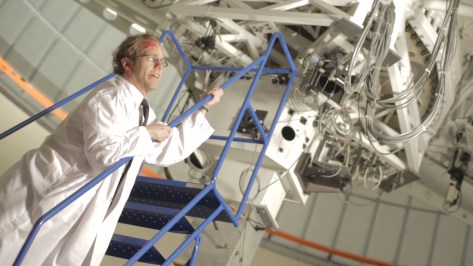
Another positive aspect of any sequel is that the success of the initial production allows for a higher production value in the second installment. The aforementioned larger cast and a greater array of interesting locations (including the Rothney Astrophysical Observatory, and the Springbank Airport Flying Club), were augmented by state of the art VFX. Greenwood relates, “I invested money to buy specific models we needed through a 3D modelling page.  Specifically, I got two distinct space ships for the two different versions of the trailer within the film, and planet models for the solar system, and then a diamond model so that my VFX artist could place them into the editor and articulate them to create the sequences you see in the film.” In fact, Troy concedes that he had to make sure the graphics were not too professional, in order to add to the humor of the trailers and the actual film itself.

DIAMOND PLANET 2 Final Cut.mp4.Still012

Diamond Planet 2: Emerald Horizon represents a blind spot in the film industry. While a considerable number of studios and filmmakers steer towards repeating proven ideas rather than creating new ones, Troy Greenwood has found a way to turn that concept around and use it against the very premise it represents…and still be wildly entertaining. Greenwood refers to comedy as a unique beast, remarking that you can plan all you want but often what is required is to just sit back and watch. Be careful filmmakers, you are being watched.

DIAMOND PLANET 2 Final Cut.mp4.Still013

Actor Wadih Dona Thrives on Challenge

Australian actor Wadih Dona is a force to be reckoned with. With an impressive depth of classical theater training, a rich catalog of stage, television and film credits, the handsome, versatile player has achieved a great deal and is poised to ascend to the top of his field. For Dona, it’s been a near-lifelong pursuit.

“I don’t think you choose acting—it chooses you,” Dona said. “From a very early age I was always drawn to it. My father worked all over the Middle East and Europe, and as child I was exposed to many places and different cultures. I was always interested in people, watching them, looking at their behavior, making up stories about them. You see a couple in a restaurant and within seconds you can figure out their relationship based on their behavior. Is this a first date or a break up? I loved that.”

Acting is a particularly demanding endeavor. In order to succeed, a practitioner must demonstrate the ability to create a wholly convincing fictional experience. It’s a complex, sophisticated, painstaking discipline, and Dona does it with a sensitivity and skein of truth that reaches his audience’s empathic core to evoke a genuine response. As Nicholas Buffalo, who directed Dona on medical drama series All Saints, said, “Wadih’s incredible skills as an actor, his talent and versatility not only ensured the series’ commercial success and high viewership but also contributed to the way the show was received by critics and award bodies alike.”

This rare ability was honed and perfected by training alongside some of the world’s most prestigious educators. With studies at the renowned Western Australian Academy of Performing Arts, New England University, New York University and London’s world famous Royal Shakespeare Company, Dona, since finishing his studies in the mid-90’s, has undertaken a steady stream of work and built a career of significant momentum in theatre, film and television.

Currently appearing in the Sydney Theatre Company’s critically-acclaimed revival of Michael Gow’s Away at the Sydney Opera House, Dona’s trove of international include a wide range of theatrical work, recurring roles on some of Australia’s most watched television programs and made his US feature film debut in 2016’s Septembers of Shiraz. But, at home, he is perhaps best known for his role as Dr. Nick Paltos on the top-rated series Underbelly.

“I had watched the first season of Underbelly and loved it,” Dona said. ”Then I heard they were casting the second season leads, and Nick Paltos, the character I played was of Greek Australian heritage and I had a reasonable resemblance to him. Really, it was synchronicity, because the producers were interested in me, so I screen tested for it and the rest is history, as they say.”

“Unconventional stories are always the most interesting to me,” Dona said. “The character was based on a real person, a doctor who was notorious in the 70’s for smuggling the largest import of hashish into Australia—seven tons! Here was a conservative doctor, a GP, the pillar of his community, a church goer and beneath all of it he ran a huge drug racket. That, to me, was fascinating.”

Underbelly had smashed ratings records right out of the gate. As the Australian News reported, the show was “the most watched Australian Television series, with the double episode premiere attracting an average of 2,501,500 viewers nationally. The show has consistently rated highly, being the most watched show on Australian television for all episodes broadcast so far.” Dona’s striking portrayal of this infamous character kept the excitement high, and he relished every moment of it.

Underbelly was a fantastic experience,” Dona said. “But it was shot very quickly and was a true thrill. They cast strong actors because they knew the shooting time was short, so you really had to go with your instinct, as rehearsal time was also very short. Since I was playing a doctor on my first day of shooting the first scene was of me performing a colonoscopy, so it was very interesting getting the medical advisor to show me how to do that at 7 am on set!”

Since that six episode stint on Underbelly, his ongoing professional odyssey, with almost 30 television credits and eight big screen appearances, has been equally rewarding and successful. “Acting is a lifelong pursuit,” Dona said. “It’s organically happening for me now, and the opportunities coming are fantastic. There is no failure, only feedback. You have to plan to some extent but also leave some things to fate. I never want to be someone who regrets not doing something—if something challenges me, I embrace it.”


BIRDMAN BRINGS SCIENCE FICTION TO REALITY

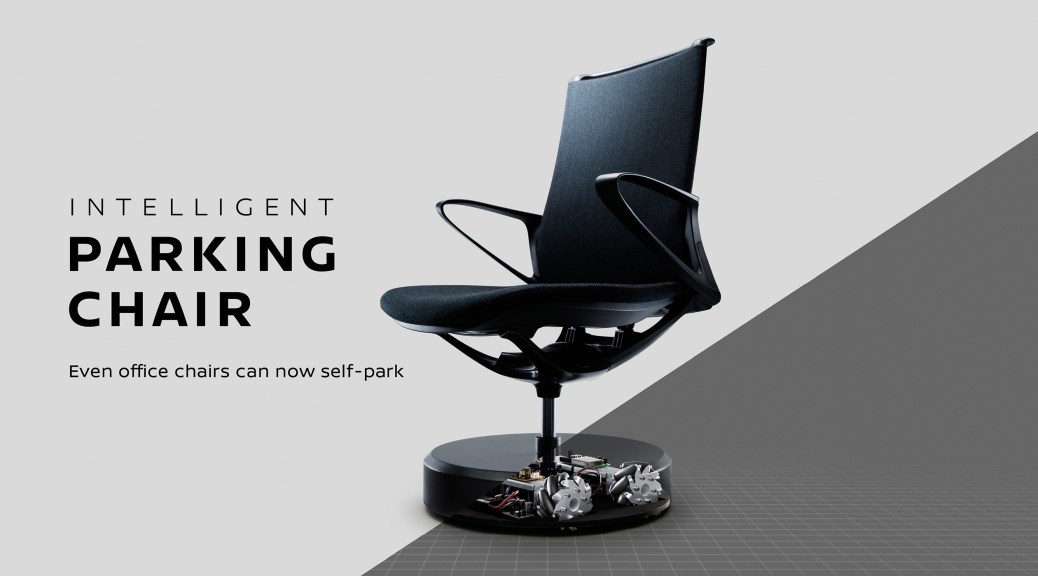
Akane Inada Millar loves electronic gadgets. Honestly, who doesn’t? While there might be a few who don’t embrace the constantly evolving change which electronics bring to everyday life, most of us are waiting with baited breath for the newest and most innovative of these products. Luckily for Millar, she is ahead of the curve. As a member of the interactive design agency Birdman (based in Japan), Akane is part of a creative team that is at the forefront of promotional campaigns presenting a variety of products to the public. The core of Birdman’s approach is the use of technology to interact with the public in ways never before seen. Virtual car races, running against your own life-size avatar in an LED stadium, and many other innovative campaigns have resulted in Birdman’s notoriety as one of the most successful and forward thinking companies in the world. Akane and her Birdman team members have received more than 200 international awards for their work including: the Grand Prix at Spikes Asia, Silver at Cannes Lions, Gold at Adfest, Grand Prix at Code Awards, and countless others. Birdman approaches each project as no other. While many are fixated only on metrics, Birdman appears to sometimes create presentations simply to prove that they are possible. One distinct example of this is the Nissan Intelligent Parking Chair production. This campaign literally appears to be inspired by the Jetsons cartoon and makes viewers feel as if we have reached the space-age future. It was recognized at the Cannes Lions 2016 “PROMO&ACTIVATION” with the Bronze Award as well as the Code Award 2016 “Jury’s Special Award.” Upon viewing the seemingly aware and self-mobile chairs in this presentation, one feels that the title of Visual Producer is a very accurate interpretation of Millar’s skills.

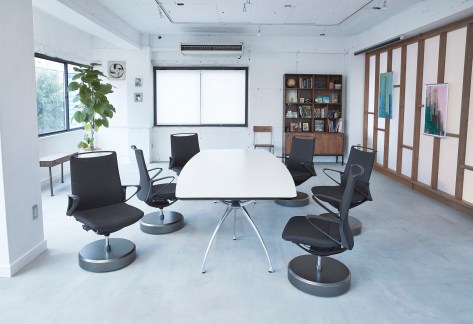
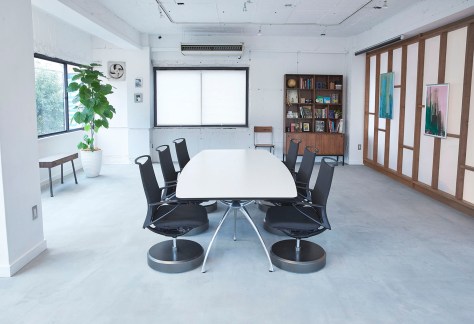
Millar views modern electronic gadgetry as another form of fashion; that’s a unique perspective to say the least. This perspective serves to further reinforce Akane’s positive contributions at Birdman. She embraces both the “techy” excitement and discerning aesthetic approach to the companies many presentations. For the “Nissan Intelligent Parking Chair” production, visuals were of the utmost importance to communicate the impact of this technology. Nissan wanted to exhibit the auto-park technology in a unique and outstanding way. The team at Birdman used the “Intelligent Parking Assist” function as a way of tidying workspace from its unused rolling chairs. With a simple clap of one’s hands, unused chairs would leave an untidy environment and go back to their “parking space.” This demonstrated the ability of using the technology in a very familiar scene, making it both approachable and practical. The system organized the parking movement of the chairs by using the automatic steering device included in each wheel; allowing them to roll by themselves and make a full rotation of 360°. Motion capture cameras monitored the spacial information from the room’s four angles, transmitting a “top view” of the room and wirelessly creating a system that moved the chairs to the previously decided “parking space.” Birdman joined the project from the planning stage and was in charge of the chair development and realization as well as the demonstration display. Upon viewing the presentation Takahiro Hosoda (Creative Director for Nissan Intelligent Parking Chair) commented, “Arthur C. Clarke once said, ‘Any sufficiently advanced technology is indistinguishable from magic.’ To me, Birdman is a team of sorcerers.

They take my out-of-this-world imaginations seriously and bring them to real life. The intelligent Parking Chairs could not have been built with such durability without the Birdman team. Because of them, we can challenge ideas with higher hurdles. I am excited to see what magic they will come up with next.”

160713195042_4

160713195042_5

Birdman’s “thinking outside the box” approach applies to hiring the professionals who make up their team as well as their promotions. While Millar is known for her successful career in fashion before joining Birdman, her talent and perspective have added many components that have strengthened this Japanese company. Roy Tsukiji of Birdman confirms, “As founder, CEO, and creative director of Birdman, it is essential for me to find professionals who are not only creative and forward thinking but those who also add something unique to our team. Birdman strives to always be at the forefront of promotion and brand awareness for our clients. To enlist team members who are any less than the most elite in the industry would weaken us and is therefore unthinkable. Akane Inada meets this criterion in every way. Akane came to us after an already successful career in the fashion industry. That might seem like an odd fit for a company such as Birdman which focuses on such an intensive use of technology; but this is exactly what makes Akane so valuable to us. She understands the changing avenues of promotion and brings her own unique perspective that has served to strengthen our company. As a leading creative force behind promotions such as the Nike Unlimited Stadium, Nissan Intelligent Chair, and Shiseido Red, Akane’s ideas and implementation of these ideas were essential to their creation and success. I can directly attribute the overwhelming success of these brand awareness campaigns to Ms. Inada’s talent and vision. Her achievements at Birdman speak for themselves. Birdman has become so successful that we are now opening an office in New York City and Akane’s mastery of the English language is just another example of how she continually adds to the strength of our company. The possibility of having Ms. Inada be a leading force in our New York location would be of great benefit to both Birdman and the clients in the US that we would serve.”

Akane’s connection to New York is just another example of the positive attributes which she brings to Birdman. Birdman’s entrée into the international market is almost unthinkable without Millar’s involvement. Akane was originally born in Osaka, and moved to Scarsdale, NY with her family when she was only three. She recalls, “Back when I was living in NY there were quite a few Japanese expats living in our neighbor. I went to the local public school and all the Japanese kids tend to gather up but I wanted to play with different group of kids. I spoke Japanese at home but when I was at school I spoke English and hung out with kids with different backgrounds.” Her exemplary talent and ease with both languages and cultures makes Millar the keystone for Birdman’s success as a member of the New York City promotional industry. Contemplating her position as a Visual Producer for Birdman’s NYC office Akane comments, “I think it is necessary to have the experience of actually moving your hands to create something. I admire Visual Producers who not only know about the design but also have knowledge in the technical part. I feel people have more respect for producers and directors who have been in their shoes. When I first came to Birdman it was because I wanted to widen my view of promotion. I had no idea that it would affect me so profoundly. I am so thankful that they want me to have to opportunity to use my expertise to help them with this new growth potential for Birdman. Every time I am stopped in another country by someone who knows Birdman and their innovative promotions, it’s a reminder that I made the right decision.”


COELHO CREATES MAGIC BEHIND THE LENS

The film You Cast a Spell On Me is about relationships and magic. Movie magic gives us the escapism and captivating storytelling that we all desire. This magic doesn’t happen without the relationships and communication amongst the creative professionals who produce them for our enjoyment. Director of Photography Johanna Coelho’s job title may imply that she is solely focused on imagery but one of the keys to her success is the emphasis she places on communication in filmmaking. No matter what vocation you are involved in, communication may be the most important factor to success. Johanna’s shrewd understanding of this fact and the benevolent manner in which she utilizes it has made her a much sought after DP in the film industry. As a fluent English speaker who was raised on the outskirts of Paris, Coelho has a heightened awareness of the subtleties of communication and how different individuals receive and interpret information. Of course, being from France makes her very aware of romance; which made her the ideal DP for this production. Talent, communication, and a connection with the story being told were the components of the magic that she created for You Cast a Spell On Me.

It’s an obvious statement but, anyone who speaks more than one language has spent a greater amount of time dissecting and contemplating communication. It creates a deeper understanding of your own intentions as well as those of others. Life can be easier or more difficult based on the level of communication. The success of many films are based on the abilities of its creators to establish a rapport with the audience as well as to accurately depict the vision of the film. Fantasy films like You Cast a Spell On Me require someone like Johanna and Tosca Musk (director/producer) who can manifest visuals that don’t exist in our actual world. Speaking about Coelho’s work on the film, Musk declares, “Johanna’s cinematography work on this film was extremely impressive. She lead a full crew in an enjoyable environment and created visuals that were really uplifting to the story. There were also a lot of magic tricks happening in the story, and in collaboration with the art department, she brought these magic effects to life. Almost everything was done practically and it looks amazing; like real magic! She is a pleasure to work with. She was fully committed to the project and the vision I had as a Director. Johanna also was very mindful of the work of other departments, giving them their space when needed but also collaborating with everyone to have a smooth and organized shoot.”

You Cast a Spell On Me is a romance/fantasy film about a young and handsome warlock named Matt. His power is that he can charm women into finding him irresistible, literally. As one can expect, a young man with this power is apprehensive to settle down with one woman. This journey Matt takes towards finding his soulmate and depicts him losing his powers, others gaining powers, and the conflict and happy endings that one finds in romance films. Due to the nature of Matt’s character, many production departments were required to understand and work together to help create the visual “trickery” to produce the action in this film. The responsibilities of the Director of Photography can vary depending on the personality of a director. Some directors like to have a full control of the creative visuals. They have a very specific idea in mind and have a precise shot list with lighting references they want reproduced for the film. Other directors do not really want to (or know how to) deal with the visual part. They just want to focus on the actors. When similar minds meet…Coelho explains, “Sometimes you have a director in the middle of the two previous options, one that will want to share the creative approach with you. It’s a really fun process when this happens because the two of you have imaginative brains talking together about shots and exchanging visual references to find what would be the best for the story. Tosca Musk is that Director, and it was amazing to prep this film with her because we would really support each other in the process. One idea would lead to another idea and so on, giving life to ideas that might have never existed with only one person brainstorming. We were also both very open minded about each other’s input and this really helped the process.”

This template trickled down through Johanna’s ten-person camera crew. This DP makes sure to involve them in the pre-production process (especially the Gaffer and Key Grip) to keep everyone aware of the plan and prepare for lighting, etc. Johanna understands that a happy and respected crew of professionals are more motivated to work and share in a vison than those who are merely “punching the clock”, a mindset we can all relate to and understand. Perhaps one of the most overlooked parts of communicating on set is with one’s self. Coelho reveals, “It is hard to stop for a second, and really look at the frame and lighting and be sure it’s the right setup. Focusing on one thing at a time is very important. If you do everything in order, your job will go much faster. You can switch back and forth between things quickly but each thing needs to be given its own respectful moment. It is also really important to know the blocking of the scene, because you don’t want to start lighting and discover in the middle of a take that your light is in the wrong place for your actor. So following the steps is key. It’s true that with everything going on at the same time, you can get lost in your own thoughts. It happened on one of my early student movies in 2011 at AFI and I was really angry at myself for having lost my point of view on the film. A teacher who watched it pointed this out to me and told me that when he would get confused on set, he would step out into the bathroom, turn the lights off so his eyes wouldn’t get distracted, take a deep breath, and remember what the movie should be for two minutes. Then he would come back on set fresh and clear minded. This is probably one of the best pieces of advice I have ever received. I don’t go hide in the restrooms, but I do step outside into an empty corner where no one is talking to me and take a deep breath and think for two minutes. When I come back on set everything is fine and back in place in my mind.”

While those of us in the audience are blissfully unaware of all the moving parts behind the scenes of the shows and films which entertain us, the talented professionals creating them are always thinking of us and our subconscious desire to not be taken out of the film. None of that would be possible with the oversight of someone like Johanna Coelho. You Cast a Spell On Me was filmed in a staggering fourteen days; an incredible achievement for such a high quality production. This is only possible with someone such as Coelho who is planning out and paying attention to every possible time saving opportunity. Whether communicating with the AD to prep things while waiting for the actors, or planning the lighting so that the post production process runs more smoothly (Johanna states, “Colorist are key and they should have much more recognition as they’re always saving your back and make your work look better. I was happy I could assist in ways that helped the colorist. We would discuss it together for each shot.”).

It’s an obvious statement that every DP needs talent and the eye to find the images which the director needs. There are so many professionals in the world, it is those like Johanna Coelho whose ability to create a positive and efficient environment for filmmakers the set her above the rest.

ok8a1108-copy

ASHLEY-GIANNA HALLETT: CREATIVELY USING TECHNOLOGY IN THE FASHION WORLD

The way in which we conduct business, just as with our social lives’, has changed dramatically in the past decade. In fact, less than a decade. Cyber Monday is a term that everyone understands. While there are many examples of how technology can be cumbersome, the consumer experience is one which has become much less difficult. Online marketing and shopping was in its early stages in 2009 when Ashley-Gianna Hallett was working at Burberry in London during their entrée into the online world. As a lead force in Burberry’s approach to their website and virtual shopping, Hallett was an important part of enabling fans of this iconic British luxury fashion house with access to ready to wear items while still retaining the signature style for which it has become known. Much of the world approached online shopping with trepidation in these early days but Ashley dove in headfirst with a confidence that resonated with the company and the variety of professionals she worked with, resulting in the successful online shopping presence Burberry has to this day. As during her time with Elite Model Management London (as Talent Manager and Women’s Model Booker), Hallett has always proven that her forward thinking and love of fashion are a union which serves to make each half better.

It’s always a good idea to treat others well because you never know what the future will bring. Ashley has become a force in the London fashion world these days but just a decade ago she was still studying at university. She was just a girl from a big family in South East London who loved the Arts and Fashion. At twenty-one, while finishing up her studies, she began working as a temp Assistant in the showroom of Burberry HQ. She was quickly recognized and would soon join Burberry as a member of the Digital Commerce team. This was a fairly new venture at the time, one which differs greatly from means of the past. Comparing print media and ecommerce, Ashley relates, “E-commerce and print media are different. Print tends to be advertising/advertorial whereas e-commerce is the selling of individual products with detail shots to follow- the customer can directly purchase a product. E-commerce can fit into website advertising via a landing page. A landing page on a website is also like a small scale campaign that focuses on a feel, a look, a story, a collaboration of models wearing several looks from that particular collection. It all depends on the context of the image that is used and where it sits on the website. On most occasions, imagery used for print media will also be used for the site but would can also have a ‘clickable’ feature to purchase individual pieces. These shots would have the same feel although there would be a focal point on each product which is important for the customer. One of the problematic but exciting factors of this avenue is that the aim would be to shoot the collection reflecting the styling of the initial shoot (i.e. Runway show/Advertising campaign). The challenges we faced were reflecting the initial styling whilst also being able to show the customer the product for exactly what it is. An issue that is apparent with all commerce styling from my knowledge and experience of working with several other online brands.”

In creating an online Look book for Burberry, Ashley needed to understand the needs and perspectives of all involved parties from the company through to the production teams and eventually the consumers. This required laying out all aspects and logistics on a granular basis.

The needs and desires of all these groups required a massive amount of preparation, communication, and anticipation. Hallett would meet with the Marketing and Production Design teams to identify the entire collection, breaking down the product lists into Ready-To-Wear and accessories. The collections being shot would be coordinated with the desired models and their schedules. Ashley worked on successful projects/collections such as Prorsum Look Book (2012), ‘Burberry Nude (2011), ‘April Showers(2011), ‘Winter Storm (2010) during her time at Burberry. Coordinating and planning shoots with the studio teams (photographers, stylists, retouchers) while ensuring that the availability of the product, model, and creative teams were all in sync, necessitated that Hallett and her 6-member team were always on top of things and held the Burberry image as paramount. The online shopping presence which Ashley was so instrumental in facilitating during her time at Burberry is the standard of the industry in fashion these days, even though it came into being less than a decade ago. Hallett recalls, “So much has changed in such a short amount of time. When I began at Burberry within the Digital team, some of our processes for shooting were manual. It was a way of being meticulous with the many products housed in the showroom. It was an exciting time as we could develop our own ways of working influenced by the structure and needs of the business. I had a template which was working fine although, as time moved forward and the Digital aspect of the business was rapidly growing, it was only natural for us to refresh our ways of working. I think it was surprising to everyone in the industry how fast things moved. Working closely with styling teams to determine how to shoot from a creative vs e-commerce perspective, model choices for collections, styling guidelines, ensuring we had a faster turnaround of delivering the finished imagery to the website teams…all variables for the normal presentation of products had to evolve quickly. We were growing with the needs of the department and business. Speaking to all teams to ensure we were all aligned with how to produce a slick and seamless structure of shooting key products meant that communication was key and going with a gut decision was most often a necessity.” One of the results that Ashley was proudest of was her oversight of quality control during the re-shoot process. This is often one of the areas which can lead the process to a standstill. Over a two-year period, Ashley was able to minimize the re-shoots by forty percent. Currently considering the further evolution of her career in the Fashion industry, Ashley reveals, “To have a key role in the strategy and brainstorming of creative concepts, to develop an idea and turn a thought and vision into something real and substantial alongside a client, to have creative input into all aspects of a project from the strategy, idea, location, talent, stylist, photographer, budget, retouchers, contractors, set designs…that is a deeper involvement and a lofty goal but I’ve always believed in myself and believed that I could work with other talented and hard working professionals who are committed to greatness as well. Pursuing a career that is creative and in which I am surrounded by creatives, that’s the way I want to look back and see my life.”

ashleygiannahallett5

German TV Writer-Producer Kirsten Ittershagen Runs Her Shows with Passion, Precision

Driven, versatile and passionate, German television writer-producer Kirsten Ittershagen, who works as a Showrunner for German and international TV series, has ascended to the top of her field thanks to a powerful combination of raw talent and creative vision. In a decade’s time she went from an entry level aspirant to become the creator, writer and producer on one of the nation’s top series, Alibi Agency, a program that deftly combines comedy and drama into a singular, intriguing format.

The road which led her from a career in advertising to television and Alibi Agency was one marked by fate and determination, an odyssey that began when Ittershagen was a child and came to fruition, years later, after a dramatic leap of faith. “I’ve been a TV fan since childhood,” Ittershagen said. “It all started with Love Boat, Magnum, P.I. and Beverly Hills 90210. My mom was always concerned that I didn’t read as much as my sister did—I came home from school and enjoyed the afternoon by watching German and American TV shows.”

“It became my passion,” she said. “Even during my studies of Sociology, Cultural Studies and Psychology at the University of Hamburg, I still watched TV in the afternoon or evenings. After I graduated, I began working in advertising but still dreamed of a career in the TV Industry. I had to follow my passion in order to be happy and very spontaneously, I quit my job, moved to Berlin and decided to be a writer. It was a big risk, but luckily it worked out.”

Against some steep odds, Ittershagen’s determination and skill began to pay off. Starting as an intern at GrundyUFA (an independent TV subsidiary of the fabled UFA film studio), Ittershagen soon graduated to working out plots as “storyliner” moved on to story editing and before long found herself the head writer on popular, long-running dramas Unter Uns (Among Us), Gute Zeiten, Schlechte Zeiten (Good Times, Bad Times”) and the writer-producer of Verbotene Liebe (Forbidden Love)

“My biggest dream came true,” Ittershagen said. “I got job writing for the company which produced my favorite TV series that I’d watched for years.”

A story teller second to none, her ability to imprint a unique twist on a familiar scenario has served her well, and Ittershagen managed it in a particularly demanding sector of the industry—the high pressure world of TV series. This is an arena of inescapable deadlines, where a writer must not only meet an almost impossibly tight schedule but also maintain consistent quality and narrative poise.

And she did it with impressive skill. “Kirsten combines exceptional creative talent with the management strength necessary to run a room of writers, each of whom has their own character,” said Jan Diepers, Gute Zeiten, Schlechte Zeiten executive producer. ”I remember several occasions where it seemed impossible to continue with a storyline; whether due to budgeting reasons or an unforeseeable incident, but Kirsten never lost focus or her positive, creative attitude. She would usually return from the writer’s room with an even better idea and solution.”


Ittershagen’s extraordinary talent isn’t just known in Germany. As a passionate traveler Ittershagen loves to work internationally and for different cultures. For the international company FremantleMedia, Ittershagen worked in Croatia on the show Ruza Vjetrova (Rose of the Wind) for Croation broadcaster RTL, heading up their international writers room. Typically for Ittershagen, the show become one of the most successful in that country. She also developed a TV series called The Mall for the same company, set in Dubai and marketed to air in the Middle East.


Following this international success she also became the first German writer-producer invited to join the faculty at Serial Eyes Program, the groundbreaking European postgraduate high-level TV series writing and producing program in Berlin, where she mentors up and coming European scriptwriters and producers.

Her creation and subsequent success of Alibi Agency was almost inevitable. “Ten years ago I had the idea about a guy who helps people to cheat on their spouses” Ittershagen said. “I started research and found an actual alibi agency which offered all the professional lies, fake worlds and realities you need, hiding an affair, two families or even a disease like cancer or HIV from bosses or a job in porn or escort from families.”. I’m a very honest person and I was fascinated and disgusted in the same time. But I realized, in creating these stories, how important is to discuss the value of truth and, also, the easy way out with lies. It resonates with audiences and they reflect on their own lives—‘Would I do the same? Who I can trust?’  And now, on top of that, ten years later, we live in a world full of lies, in the news, the internet, all around us. Whistleblowers coming out with some truths we never wanted to hear, or did we? That’s why Alibi Agency mirrors the contemporary feeling of society.”


Her precision, vigor and ability to consistently turn out world class scripts earned her a formidable reputation among her peers—her daily drama shows average 4 million viewers each, and earned her the prestigious German Soap Award in 2012 for “responsible social and humanitarian storytelling” for her teenage HIV-themed story of  the show Unter Uns (Among Us).

Her background in sociology and psychology lend canny depth to her scripts and Ittershagen’s crisp, articulate dialog, sense of pacing and sheer reach of storyline benefit every project to which she contributes. For Ittershagen, with an already significant level or professional achievements, the sky is the limit; as Jan Diepers points out, “Kirsten has an extraordinary ability to spin ideas further than most writers I know.”

And the multi-faceted Ittershagen—writer, producer, series creator, showrunner—wouldn’t have it any other way. “It is an astonishing feeling when you see your ideas, characters and stories come alive on the screen,” she said. “Television is a mass medium that has major impact on society and I want to use it for greater good. I see my purpose as a writer in sending important, uplifting messages to my audience. There is enough fear, pain, violence, hate and terror out there—I think the world needs hope, love, light and laughter. And as a TV writer I have the chance to make the world a better place, at least a little.”

MAYER BRINGS A BEAUTIFUL SIDE TO “SHUN”

So much of life is about perspective. The way which we view the situation we find ourselves in, the circumstances that surround us, even the interpretation of this by others…all of these things factor into how happy or fulfilled we are at any point in our lives. The 2015 film Shun depicts these factors in the story of two chefs who happen to be father and son. As cinematographer for Shun, Avner Mayer is in charge of so many points of perspective that it’s practically dizzying. Mayer helps the audience (that’s perspective #1) to see things the way that the son (perspective #2) and father (that’s #3) do, by using his (#4) exemplary skills to communicate director/writer Shiyun (Lavi) Hu’s (#5) story. While many might see the cinematographer’s role as sitting at the camera and making sure the action is in focus, they fail to understand the depth of planning and all-seeing overlook of professionals like Mayer. Great cinematographers not only capture the action during filming but they become the eyes of both the production and the audience, coloring the emotional content to heighten what every other aspect of film creation has done, breathing life into the corporal vessel that is film. If that sounds hyperbolic to you, you don’t have experience in the film industry. A smart director understands that a cinematographer will lift a film to new heights or send it all crashing down in spite of its other redeeming qualities. Shun’s director has worked with Avner successfully on two films (the films Beyond and On The River) and it was due to his ability to cultivate depth in a film that she contacted him to be the DP for this production.

Shun is a very emotional movie for a number of reasons. It deals with a conflict between family, work, and self. Kazuki is a fifty-year-old Sushi sous chef and the right hand of his father (Yoshi) in the high-end grip sushi restaurant “Hasimoto”. Kazuki has worked under his father for the past 30 years but they have very different ideologies regarding food and life. Yoshi runs his restaurant with a strict, traditional, and almost sterile approach. He treats his food like a piece of art and believes others should do the same. For Kazuki food is a way to a man’s heart and soul, a tool to connect to people’s emotions. When Yoshi falls ill, he decides to pass the control of the restaurant to his son. Kazuki finds himself trapped between the need to continue his father’s heritage and in his own wishes. The deceptively simple storyline introduces many difficult emotional ideas. Dealing with the ailments and aging of one’s parents, the desire to find your own path in life and career while also desiring the approval of your parents; these are difficulties that many of us can relate to regardless of our country of origin or vocation. The universality of the theme allows everyone to access the filmmaker’s frame of reference but it was Mayer’s role to make it interesting for the audience. It’s obvious that this goal was well attained with Shun as it was an official film selection for such festivals as: Salento international Film festival (2016, Italy), Montreal World Film Festival (2016, Canada), the Toronto Reel Asian international film festival (2016, Canada), and as a finalist in the “Vizio” and “Dolby Vision” Filmmakers Challenge – Cinematography awards – 2016.

The differences between father and son in Shun establish the conflict that Kazuki (and we suspect Yoshi as well) must deal with throughout the film. Kazuki and Yoshi have drastically different approaches and opinions towards food and the process of creating it. Yoshi has an almost surgical, scientific approach to food making. He runs his kitchen like a Swiss clock factory. The work must be done in a precise predetermined order. Improvisation is not allowed. Yoshi’s connection to food is different. Preparing food is instinctual to him, full of flavor and improvisation. For Yoshi, food is a process of connecting with other human beings rather than a planned and organized ritual. To highlight this, Avner explains, “In order to show the differences between the father and son, we used our lights to create different energy. The lighting is clear, blue and bright when Yoshi runs the kitchen. It has an almost ambient/office feeling.  When Kazuki is in charge, the lighting changes to a dimmed yellow-red environment. This creates a much more comfortable and inviting atmosphere; like being at home.”

shun-head-shot-with-camera

Mayer also customized the lighting for the lighting for the restaurant location in Shun. The choice to create the restaurant on set rather than a preexisting location gave the production the availability to take the time and movement needed for their shots. Avner chose to use ambient studio lighting from above to again capitalize on the freedom of movement during filming. He notes, “The general approach to the lighting was high key and natural. We didn’t want the movie to feel lit but we still wanted to establish a high key ambience. In order to create this effect, we rigged big top light sources to create a soft, natural light. We aimed for a natural Japanese look and I feel we were very successful in achieving the proper look and feel. Camera wise, we wanted to be patient and static. We decided to tell the story mostly using the blocking and editing (different camera positions) and to keep it as simple as possible. This is the way the characters in Shun see the world so we adopted this approach in telling their story.”

While you can see a great deal of Mayer’s talent and skill as a cinematographer when viewing Shun, you won’t see the largest part of it. Director Shiyun (Lavi) Hu declares, “Avner is very precise in his planning. This was a great benefit to Shun since we shot almost everything in a studio, which limited our shots selection.  Avner’s preparation work with our Production Designer allowed us to maximize the space to our need’s, using lighting built into the design and creating moveable set walls for extra flexibility. I had the pleasure to collaborate with Avner as my cinematographer on previous projects. At this point we have a blind understanding of each other, which makes the filmmaking process fast and efficient.” Shun’s producer, Cedric Gamelin, states, “Usually when you shoot a movie, you have surprises in every step. In this project the process was the smoothest I have ever encountered, I must say that Avner and the team’s preparation work made it seem easy. Avner did all of that without jeopardizing the images, which were magnificent! I’m very proud to be a part of the team who created Shun.” Avner Mayer is happy to be a cinematographer that is appreciated and respected among his peers in the film industry, whether it be for his work on set or the planning of it. He relates, “Since I discovered in my early twenties that I wanted to be a part of filmmaking, to arouse that same excitement that I felt sitting in a theater…I’ve always been excited about all the parts of the process. I feel that the key for a successful project usually lays in the preparation work. It requires a lot of communication between all the key groups involved in order to be synched on one vision. When everybody is synched like that, the set can be a big celebration…and who doesn’t want to be a part of a big celebration!”

shun-with-director-lavi-hu


From the Stage to the Screen Australian Actress Natalie Page is a Knock Out!

Actress Natalie Page
Australian Actress Natalie Page shot by Andrew Rouse


Hailing from Sydney, Australia actress Natalie Page has created a dazzling reputation for herself as a uniquely talented performer whose dynamic character portrayals continually leave audiences wanting more. Over the past three decades Page has amassed an impressive repertoire of work that spans both the stage and screen, with each character she takes on shedding light on the multi-faceted nature of her craft.

In the world of network television fans will immediately recognize Page from her critical roles in the Awgie, Logie and AFI Award winning crime drama “Water Rats,” the long-running series “Deadly Women,” “Australia’s Most Wanted,” “White Collar Blue” and more.  

Page discovered her passion for performing early on in life. Driven to take her craft to the next level she began studying at Sydney’s renowned Genesian Theatre Company in her youth, where she immersed herself in Chekhov’s vast repertoire of work.

“I can bring all of myself to acting as it involves mind, body, energy, voice and a precision that requires my focus and dedication. A craft that I can bring all of myself to is both stimulating and enormously satisfying,” admits Page.

Early on in her career Page put her flare for the art of seduction on display in the critical role of a sultry mistress in the hit romantic drama “Home and Away,” which has earned a whopping 26 Logie Awards and six Awgie Awards to date.

In the series “Water Rats” Page struck a chord with audiences with her performance as a hostage fearing for her life. Sharing the screen with Astra and Logie Award winning actress Catherine McClements (“Tangle,” “Rush”) and Film Critics Circle of Australia Award winner Colin Friels (“Tom White,” “Ground Zero,” “Malcolm”), Page held her own acting alongside Australia’s best without ever missing a beat.

Her ability to tap in and embody the fear one feels when trapped in a situation where the question of whether she will live or die lays in the hands of a desperate criminal landed her another critical role as a hostage in “Australia’s Most Wanted,” which aired on Australia’s Nine Network, one of the two highest rated networks in the country.

Page’s incredible range has allowed her to portray the victim as believably as the villain, something she proved when she took on the starring role of Marie Noe in the popular series “Deadly Women” episode “Murder of Innocence” narrated by Lynnanne Zager (“Hotel Transylvania 2,” “Transcendence,” “Kung Fu Panda 3”).

A Philadelphia housewife who gave birth to 10 children, with two of them dying at birth and the other eight dying under suspicious circumstances, which turn out to be caused by her own hands, as she admits to strangling them nearly 30 years after the fact.

The way Page taps into this sinister, real life character, mastering Marie Noe’s Philadelphia accent and embodying the character’s mannerisms on screen not only makes the story that much more believable, but one that undoubtedly sends a shiver up the spine of all who watch the episode.

The actress admits, “I like a project that will present a challenge and one in which I can bring something unique to the role.”

While Natalie Page has left an indelible mark in the minds of audiences through her on-screen roles, she’s made just as powerful of an impact through her performances on stage. In 2014 she took on the starring role of Millicent in Brett Garland’s revival of “Estranged” staged at Sydney’s Tap Gallery theatre, which debuted in Australia during the Mardi Gras Festival.

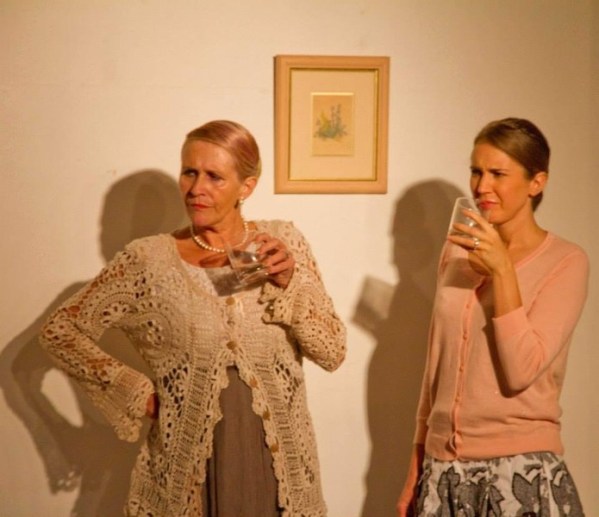
Written by renowned playwright Jason Charles, “Estranged” brings to life the story of a dysfunctional family who comes together for the wedding of one of the sons while exploring themes of sexuality, societal acceptance and the way judgement can divide us from those we love. The mother of the son to be wed, Page’s character Millicent is the divisive force who causes the original rift in the family decades prior when she passes harsh judgements on her sister and subsequently banishes her and her son from their lives. As the drama and tension plays out over the course of the nuptials, we see Millicent and her sister engage in malicious attacks against one another, with Millicent going as far as to slap her sister in the face in front of everyone, a challenging move that Page pulls of with precision.


Natalie Page
Natalie Page (left) & Lena Sandberg (right) in “Estranged” shot by Brett Garland


Page explains, The reason I liked this role is because my struggle to accept such a mean spirited person was vast– I had to overcome this and be prepared to allow people to see me in a very ugly light, even slapping my sister across the face… When I completely surrendered to the role my work flourished.”

It comes as no surprise that the production received rave reviews across Australia as Page gave a phenomenal performance as the mean spirited Millicent in a portrayal that made her character one who is easily loathed by audiences.

While Page’s acting skill and commanding presence on the stage and screen have made her an easy fan favorite, these qualities have also been a huge draw factor for high-profile companies across the globe who have cast her as their lead actress. In 2014 she starred in a commercial for the popular Australian noodle company Maggi, and most recently she landed the lead role in a commercial for Australian Seniors Funeral Insurance, which is currently airing nationally across Australia.

UK Actor Anthony Warren Nails it Again with the Film “Hard Time Bus

Anthony Warren
Anthony Warren shot by Will Tudor

With lead roles in several highly rated BAFTA Award winning series and now the award winning feature film “Hard Time Bus” produced by 2HotFilms, Anthony Warren has enjoyed a tremendously successful acting career. The fact that he has now appeared in so many celebrated projects, and the addition of his most recent performance in “Hard Time Bus,” have made it clear that Warren’s success is a testament to his sensational skill, hard work and magnetism on screen.

If there’s one trend in Warren’s long list of characters, it’s his inimitable ability to convincingly slip into the world of crime. Warren’s feature films include the crime drama “The Contract” where he acts opposite Golden Globe nominee John Cusack (“Serendipity,” “Maps to the Stars”), as well as the Golden Reel Award nominated crime thriller “Control” starring Ray Liotta (“Goodfellas”) and two-time Oscar nominee Willem Dafoe (“Spider-Man”).

In the world of television Warren’s taken on recurring key roles on several hit crime dramas such as the two-time BAFTA Award winning series “The Bill” where he acts alongside Simon Rouse (“The Practice”), “Eastenders” starring Patsy Palmer (“Do or Die”) and “Murphy’s Law” where he shares the screen with Golden Globe nominee James Nesbitt (“The Hobbit: An Unexpected Journey”).

With such an impressive resume, Warren has certainly forged a distinguished and unique reputation for himself in the entertainment industry on an international level.

Warren, of course, did not wake up a success overnight. “I got into acting over twenty years ago,” Warren remarks. “Initially starting as a hobby, however, [it grew] into a passion and eventually a career choice.”

It’s clear that Warren has taken his craft seriously. After graduating from one of the UK’s leading drama schools and performing with the Ovalhouse Theatre Company, Warren has gone on to act in numerous film projects in the UK and Europe. He has worked alongside twice Academy-Award nominated director Bruce Beresford, Morgan Freeman, Michelle Rodriguez and many more household names.


hard-time-bus
Poster for “Hard Time Bus”


Now, with “Hard Time Bus” having screened internationally and recently winning the Jury Prize at the Hollywood Black Film Festival, Warren has yet another impressive credit to his resume. Directed by Dean Charles, also known for “Birthday Treat” starring “Casualty” star Neil Reidman, “Hard Time Bus” is a multi-faceted drama that examines the complexities of modern relationships and deceptive friendships. Warren brilliantly explores the latter in the lead role of Langas, a Jamaican-Patois speaking character who has no problem with bullying or cheating money from others.


"Hard Time Bus"
Still of Anthony Warren as Longas in “Hard Time Bus”


In a reflection of how he skillfully portrays people far different from himself, Anthony speaks of Langas like he would an old college friend. “He is so horrible to people around him but lovable to the audience in the way he is horrible – if he was one of your friends you’d keep a distance or want to punch him in the mouth.”

The film’s iconic pool hall scene, where the characters fight after Langas trash talks the girlfriend of one of the pool players, was a particular highlight for Anthony. “The scene had actors that I had worked with before and [am] still good friends with.” 


Michael Ellis Anthony Warren
Still of Michael Ellis (left) and Anthony Warren (right) in “Hard Time Bus”


It’s no surprise that Anthony’s maintained friendships with his fellow actors – those in the entertainment world are fully aware of his commitment and significant contributions to the industry. Besides his work of course, he has mentored numerous young actors and actresses and developed a reputation for being a friendly collaborator with everyone on set.

He admits, “It is a really different dynamic when you work with your friends. I feel a lot more at ease due to the experience and history we have together.”

With a cast that includes Aren Devlin (from Brad Pitt’s “World War Z”), Roger Griffiths (“Holby City,” “Doctors,” “Doctor Who”) and Naomi Ryan (“Guardians of the Galaxy,” “Mr Selfridge”), “Hard Time Bus” puts Warren in a position to call some illustrious company his friends.

The added benefit of being everyone’s favorite guy on set? People want to work with you even more, so it will come as no surprise that Anthony is slated to be involved in future productions produced with the production company 2HotFilms.

ARCIONI’S ECLECTIC TALENTS PAVE A NEW PATH FOR TODAY’S EDITORS

There is no questioning the fact that the way the world disseminates and receives information and entertainment is forever changed. “Appointment TV”, a staple of the home viewing industry only ten short years ago, is almost nonexistent thanks to the DVR. You can watch a film that was released in the theater within almost three month’s time on a plane. Digital Downloads now result in more viewers watching on their computer or smartphone than any of the traditional means previously commanded. News and entertainment go everywhere on the planet and they get there quicker than ever before. While this has caused previous models to take a financial hit, it has also produced an industry that has more creative professionals involved in production that at any point in history. The belief is that that not everyone succeeds but, as the saying goes “the cream rises to the top.” Ana Arcioni is among this new breed of professionals. A highly in demand editor with a widely diverse resume, Arcioni has the ability to work with productions around the globe who seek out her consummate abilities. Empowered with a wider sphere of influence than that afforded to previous professionals means that editors like Ana are offered a host of diverse opportunities, something which is a part of Arcioni’s list of desirable qualities. Productions like the animated film Reality Takes Place, EATV (Educational Access Television), and Premiere Pictures International Inc. are just a short list of the employers who have enlisted this talented editor to make their creations even greater than before.

When Ron Merk, owner/president of San Francisco based Premiere Pictures International Inc. approached Ana about working on the company’s new S.E.Q.U.E.N.C.E. project (as a film/video Editor and Artistic Supervisor for Trailers, Promos, Teasers, and interviews), it seemed to her like an opportunity to be really creative and on the ground floor of something new to the industry. It also gave credence to the company’s belief that Arcioni could display their technology and approach to the best and brightest of the industry. The owner and president of Premiere Pictures International Inc. declares, “Ana’s work with S.E.Q.U.E.N.C.E. proves to the world that It does exactly what I had in mind; it gets the viewer intrigued and want to ask ‘what is this and when can we see it?’ Editing has its own rhythm and pace, and the project itself is going to tell you when to stop. I love that Ana can read my director’s mind and put together a video like if she was? reading my mindWe’re in the business of giving great editors great tools, look no further than Ana Arcioni as proof of this.” In addition, Ana participated in the projects Outrageous, Repeace, and Harvest during her time at Premiere Pictures International Inc..

Ana’s work with EATV is yet another example of the difference in content that she edits. Ana utilized a variety of skills at EATV; doing promos, intros and station ID’s. Some of her editing work with EATV has been viewed at the Festival of Moving Image 2016 (Roxie Theater in San Francisco) and the animation film festival at the Niles Essany Film Museum. Working with producer Jody Yvette Wirt, directed by Maya Prickett, and starring Maya K Chenille, Shoebox Circus was one of the most popular productions at EATV. Shoebox Circus’s content is meant to appeal to a mainly young audience, something that Ana sees as inconsequential to her role as editor. She states, “The fact that the programs are dedicated to children or adults is only a subtle difference, as in the case of a program of urbanism or any other nature. Politics, art, geography, travel, cooking, science, new discoveries, astronomy, there’s an infinity of things. I love them all as long as there is variety. What I love most is the absence of routine. One of the most appealing factors in my line of work is diversity. For Shoebox Circus, Jody raises the idea and gives the tone of the idea. I work with that idea with After Effects editing to have a product which matches that idea. I’m happy to be working with Jody because she has a unique voice and that makes it interesting for me.”

Proving that her work bridges the gap between child and adult is the animated production Reality Takes Place. This inspirational drama discusses friendship, positive perspective and thinking, as well as death vs. life. The topics can be light and then switch quickly to having substantial gravitas. Reality Takes Place was selected and screened at: City Shorts Film Festival at Diego Rivera, Artist Television Access, Festival of the Moving Image, and the Bernal Heights Outdoor Cinema. Ana felt that her work on this production revealed things to her about editing as well as the role of all filmmakers. She explains, “Reality Takes Place is drawn and animated by myself using the Adobe Flash program. The voices are recorded in a small studio through Pro Tools, as well as the Foley effects. The first-line editing was made with AVID. The tweaks, and retouches (including sound design) were made with Final Cut Pro. On and off it was a total one-year project. In my opinion (and I know that not everyone will agree) every independent filmmaking process starts from the editor’s point of view. The more you get to edit and the more you gain experience at it, the more expert you become in shooting and in directing because you know what you want, you know the type of shots that you need. If an editor has a say in the production, or has a good relationship with a director who listens to him/her then the film benefits. I think the editor is the one who understands the most because they have the film in their head and know what shots are needed in order to make the finished piece look good. The editor can advise the director with insight like “don’t do that because it will be impossible to fix in post” or the opposite, “don’t worry about that because I can fix it in post. Being a part of any production is about teamwork. Of course I see the importance of my role as an editor. I also understand that my greatest asset is my ability to make everyone else’s work look even better, that’s why I enjoy editing so much.”

pic-for-ewg-headshot1