Category Archives: Uncategorized

From High Stakes Stunts to Emotional Character Portrayals, Rick Tonna is a Knock Out On Screen!

Rick Tonna
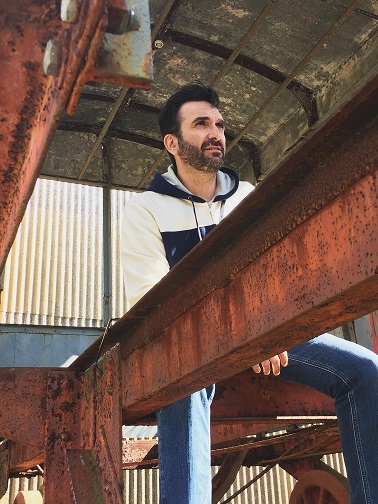
Actor and stuntman Rick Tonna shot by Andrew Campbell

Over the past two decades leading actor and stuntman Rick Tonna, who’s originally from Melbourne, Australia, has made an indelible mark on the Hollywood film industry and abroad through a number of memorable performances in high profile films such as Russell Crowe’s “The Water Diviner,” Jon Hewitt’s “Elimination Game” and “I, Frankenstein,” as well the Awgie and ADG Award winning crime series “Rush,” the AACTA Award winning series “Underbelly” and more.

Shining a bright light on the diverse talent Australia has to offer, Tonna is the perfect example of how drive, dedication and skill can turn a Hollywood newcomer into a leading figure in tinsel town’s competitive film industry in a relatively short amount of time. While breaking into Hollywood is rarely easy, Tonna’s established reputation for delivering first-rate work back home in Australia provided a helpful segway for him to begin landing roles in major Hollywood productions once he moved stateside several years ago.

In 2014 Tonna took to the screen in Oscar Award winner Russell Crowe’s (“A Beautiful Mind,” “Gladiator”) directorial debut “The Water Diviner,” in which Crowe stars as Connor, an Australian father who travels to Turkey after the Battle of Gallipoli in search of his three sons, who go missing while serving with the Australian and New Zealand Army Corps.

A major hit among Australian film critics, “The Water Diviner” earned the AACTA Awards for Best Film, Best Supporting Actor and Best Costume Design, an Awgie Award from the Australian Writers Guild, as well as four awards from the Australian Screen Sound Guild and four more from Film Critics Circle of Australia Awards.

In the film, which also stars Olga Kurylenko (“Oblivion,” “Quantum of Solace”) and Jai Courtney (“Insurgent,” “A Good Day to Die Hard”), Tonna shares screen time with Crowe and gives a riveting performances as a Turkish soldier defending his country.

Rick Tonna
Still of Rick Tonna (left) and Russell Crowe (right) in “The Water Diviner”

“My character was a hard working Turkish man who was conscripted to fight in the war against the Greeks and later fought the Australians in what is known today as Gallipoli. He was simply defending his homeland… His land and people came first his own life second,” explains Tonna.

“‘The Water Diviner’ was both a physically challenging and immensely rewarding role for me. Firstly, it was a role I was requested to play directly from the director Russell Crowe and the Oscar winning stunt coordinator, Doug Coleman, themselves. That it itself brings pressure.”

But as we’ve seen through his high stakes performances in a long list of other international hits over the years, such as the Logie nominated film “Jack Irish: Black Tide,” the Golden Globe nominated series “The Pacific,” Syfy’s Saturn Award nominated series “Childhood’s End” and the Logie and AACTA Award winning series “The Secret River,” Rick Tonna is not one to crack under pressure.

In 2015 Tonna took on the critical role of Devine in the multi-award winning series “The Secret River,” where he acts alongside Oliver Jackson-Cohen (“Emerald City,” Despite the Falling Snow”), AFCA and AACTA Award winner Sarah Snook (“Steve Jobs,” “Predestination”) and Logie Award winner Lachy Hulme (“The Matrix Revolutions,” “Killer Elite”).

Adapted from Kate Grenville’s novel of the same name, “The Secret River” is set in the early 1800s and follows William Thornhill, played by Oliver Jackson-Cohen, a young man who is sentenced to life in New South Wales where he finds himself in the middle of a bloody conflict between the British settlers and the land’s indigenous people.

Being from Australia originally, the story “The Secret River” brings to life hits painfully close to home for Tonna, which is only multiplied by the fact that his character Devine is one of the most ruthless and hateful British convicts on the show.

Tonna says, “‘The Secret River’ was a truly emotional journey for me. This part of Australian history has been sugarcoated to hide the cold and brutal truth of the heartbreaking slaughter of the Aboriginal people.”

 "The Secret River"
Still of Rick Tonna as Devine in “The Secret River”

Devine is seen throughout the series murdering aboriginal people without remorse, and the way Tonna embodies his character’s brutal and villainous nature on screen makes Devine an easy character to hate. From the audience’s perspective Tonna seamlessly inhabits the character, the truth beyond the screen though is that the role posed overwhelming challenges for Tonna; but that’s what it means to be a great actor after all, to be able to remove one’s self and truly become the character at hand, and Tonna does that without missing a beat.

“From an emotionally moral point of view, this was one of the toughest roles for me. Devine was part of a group whose hatred for the Aboriginal people was gut wrenching, I had a very defined ‘on- off’ switch where right up until I was on set I kept the switch off. I had to as the savage brutality of Devine pushed me to edge every time,” admits Tonna. “There were days I held back tears until I was alone.”

One of the toughest days for Tonna was shooting a scene for “The Secret River” episode two where Devine and his group slaughter an entire tribe.

Tonna recalls, “As we watched the bodies burn I hear a newborn child cry. I have to load my gun and shoot the child. Needless to say that this scene absolutely wrecked me emotionally.”

While stunts are what started Tonna’s onscreen career, with his expertise in martial arts and motorcycle precision driving landing him innumerable roles in action-packed productions, his gift for powerful character portrayals, even the ones that are painful to watch like his performance as Devine, are what have made him such a sought after actor around the world.

“For me it is about connecting with the audience through the scene. Becoming the character and bringing life to the words on the script. To be able to tell a story that hopefully will move the audience,” explains Tonna about what drives him to perform.

Regardless of whether he’s grabbing our attention with his action heavy roles as a stuntman, or captivating us with his authentic and emotionally honest performances as an actor, Tonna is one talented Aussie we can’t help but fixate on everytime he hits the screen.

Up next for Tonna is the highly anticipated new series “Emergency: LA,” a dramatic crime series where he will take on the lead role of Motorcycle Officer Joey Truscott. He is also slated to play a critical role on an upcoming series that is currently being developed for Netflix, so make sure to stay tuned for upcoming announcements about that.

PRODUCING A PAINFUL WAR FILM WITH “DAVID” YU HAO SU IN “RESURGENT”

Yu Hao Su is Harvey Keitel. Okay, maybe he isn’t the Oscar nominated actor but just like Keitel’s character Mr. White in Quentin Tarantino’s Reservoir Dogs, David (as Su in known) has a reputation for being a “fixer” in the film industry. When the 2016 Action/Thriller Resurgent needed to do a reshoot for scenes which take place in Afghanistan, David was contacted to contribute his exemplary producing skills. A reshoot is so crucial to a film because it has to match the existing footage in so many ways as to seem and feel that it was part of the original filming. Any deviation from the tone and mood of the existing principal footage could derail the already massive amount of work a production has executed, to say nothing of completely distracting the audience. As the editor of this film, no one is more qualified than James Stiegelbauer to comment on the work of David on the reshoot. Stiegelbauer proclaims, “Yu-Hao was calm under pressure. When our director made last minute script changes, everyone was concerned it couldn’t be pulled off but Yu-Hao didn’t even flinch. He made a few calls and quickly got everything that was needed. Yu-Hao is detail oriented, resourceful, and is never afraid to get his hands dirty. I would ask him to work on every job if I could. We could not have finished Resurgent without his hard work. He coordinated with the actors, locations, and crew quickly making all the necessary arrangements to meet our needs. As an Editor, I’m not on set, but I do need to be in constant communication with the director and cinematographer. Yu-Hao was crucial in this communication. This ability to be able to keep the work flowing even as unforeseen factors arise and must be dealt with…that’s what the truly great producers possess.”

Resurgent is a film which depicts the story of a mercenary who must come to terms with a botched mission in order to return to the battlefield. Max, the main character (played by Manny Cartier) is suffering from the pain of his partner who has died in a military missionary with him in Afghanistan. The action and military theme of this film necessitates stunts, something which David is familiar in dealing with. Setting the table in a safe manner for these stunts is highly important to him. He notes, “We have a lot of stunt in the film. I need to make sure the stunts are done right in order to make sure the actors are completely safe. We not only have the stunt coordinator on set but also a set medic. This may seem obvious but every little situation must be planned for regardless of if it ever needs to be used. We also have a weapon wrangler on set to make sure people are aware on set, even though the weapons are just props. My job is not only to make sure the stunt scenes are well-planned but also to make sure the set is safe. I take stunts very seriously. Because it’s an action film with a lot of stunts (and we filmed in a dessert to cheat it as Afghanistan) I needed to make sure our production was a self-contained unit with everything we could possibly need at a moment’s notice. It’s not easy to shoot stunt scenes with weapon props in the desert. I need to make sure everyone is safe not only because of the stunt actions but also the difficult shooting environment.”

For those of us who don’t work in the film industry, it might be hard to understand exactly what a producer does on set. For those who do work in film, it’s difficult to overemphasize the impact a producer has on any film. A producer’s role can be described as parent, police officer, president, healer, and best friend…all in one person. A producer is the person who supplies what you need even before you understand and comprehend that you need it. It’s a conflicting situation for most producers. They love what they do but they rarely are afforded the opportunity to lose themselves in the fun of watching the movie magic they help to create. David states, “Being in charge of the reshoot for Resurgent was fun, there’s no mistaking that. I just had to always be thinking a few steps ahead. There is really no time for losing yourself in the moment. It’s interesting to shoot an action film. The stunt sequences with the stunt coordinator are fun and look amazing in the film. Watching that when the film is finished is fun. There are always challenges that are unique to each film. The desert location we filmed didn’t have a phone signal or Internet. It’s very hard to run a set without this technical stuff. We ended up planning it well and got the work done in spite of this. There is nothing to complain about for me. I’m so excited to be a part of this industry. To focus on the story and tell the story from an essential human’s point of view. I believe truth and humanity is the key to delivering a story everyone can understand and connect to.”

img_7923


ALL HEED THE MESSAGE OF AWAKEN

The arts have been the creative analogous tool of creative types for centuries. This format to communicate the real life situations with which society is confronted must often be done in a covert manner. In order to avoid strife and previously held opinions, avenues like music, literature, theater, and film, are utilized to help us see things from other perspectives. This methodology often finds us sympathizing in a first person sense, placing ourselves in the shoes of others and their circumstances. Historically, great art has struck a chord in the collective society and spurred on movements that create change. This is the story told in the film Awaken by Bruce Sze Han Chen. It is a lofty idea that he proposes in the film. In order to successfully bring about his vision, Bruce obtained the successful production talents of “David” Yu Hao Su. The many accolades and recognitions that the film has received prove that this decision was well founded for all involved parties. Some of the achievements include: Accolade Competition 2015 (Winner-Award of Merit), Alaska International Film Festival (Winner-Northern Lights Emerging Talent Award), California Film Awards (Winner-Diamond Award), Los Angeles Independent Film Festival Awards (Best Production Design), Mexico International Film Festival (Winner-Golden Palm Award), World Film Awards, Jakarta (Award of Merit), and on and on. Regardless of geographic location, audiences were captivated by Awaken’s message, a message which was delivered exactly as its creator had envisioned thanks to the support and talent of his producer David (as well as co-producer Pin Chun Liu). As with any great artist, having the professionals around you to allow you the freedom to create your art is paramount.

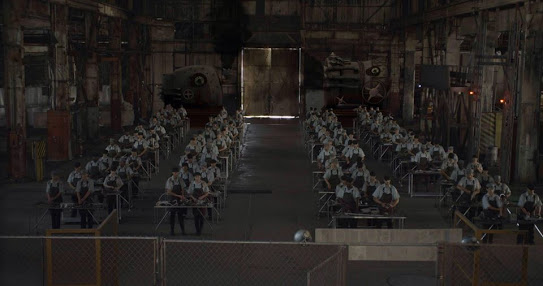
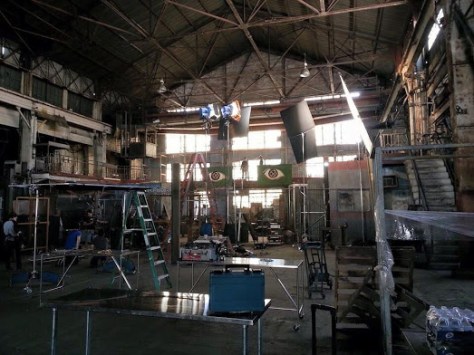
Awaken is a story which is applicable to any society, political system, or theology on the planet. The heroine of the film is Sophie. She has spent her life working in an enormous factory. In this facility, the workers’ minds are controlled by the music which is ubiquitous. One day, Sophie is suddenly impervious to the effects of the music and she decides to destroy the music system in order to free everyone from its effects and the factory’s dictator who is in control. The message is thinly veiled but easily understood; be in control of your own life rather than to unconsciously follow a path which is handed down to you by others, others who may be less concerned about your well-being than their own. As a producer on Awaken, it was David’s role to assist Bruce (the director) to find a production designer, costume designer, and other principle team members. Location and casting was a particularly vital part of this film. The lead actress playing Sophie is a minor which meant that scheduling needed to be coordinated around strict guidelines. The futuristic location of a massive factory was coordinated among three different venues. To further complicate things, an enormous amount of extras were cast and then supplemented with VFX to complete the proper feel of the factory and its workers. David reveals, “We needed to create a lot of workers to show how big the factory is and how many people are controlled by the dictator. We decide to use VFX to duplicate the workers. We found an excellent VFX team to helps us prepare the work and coordinate it with the Camera and Art departments. Even though we decided to use VFX to duplicate the workers in the factory, we still needed a huge amount of extras to create the materials for the VFX team. Also the location we had for the factory was huge, so it required us to have an enormous amount of extras on set. My production team and I posted casting information online and called all the actors we knew in order to have so many extras come to our set. The VFX works is the most challenging part for me because we had a very limited budget and time to plan the VFX. It ended up that the VFX scene worked very well and it’s all because of the teamwork each department devoted.” To fully understand the role David played in Awaken, consider that the actual principal filming took five days. His preproduction involvement began two months prior to filming and his post-production work took place for three months following its conclusion. That’s a ratio of 1/20 or more. The beauty and strength of the message in Awaken solidify the fact that when creative artists of all vocations work together, they can create and communicate in a manner that reaches the public and critics. The beauty of this film lies not only in its aesthetic but also in its content, both of which are fueled by the amazing team that brought it into existence.


awaken-set-photo

DIORS SAMURAI IS ZHENG KANG’S ACTION/ROMANCE AT ITS NERDY BEST!

Doing your best and always giving one hundred percent are more important now than ever. Information is instantaneous these days and you can google anything in less time than it takes to yawn. Zheng Kang has always given his best and it is starting to supply dividends to his career. Belying his young age, Kang’s animation productions have already reached achievements like being used by faculty at USC School of Cinematic Arts for graduate animation classes (Lion Dance, in which he oversaw a group of professionals spread across five continents), working on the Comedy Central’s TripTank (contributing to every episode of the entire second season), and others. As such a recognized part of the animation community, his diverse creations are receiving great attention. one of his earliest productions, Diors Samurai, shows a different side of Zheng’s sentiment and may soon be made into a series production at a US network. Diors (Chinese for “loser”), gives a hint to the humor found in this action animated show. One cornerstone of Kang’s work is that it is always different, thematically and stylistically. A viewing of the Diors Samurai trailer (http://vimeo.com/189854381) reveals how different it is from his other work (https://vimeo.com/190416387 Baby and Granny for example). It is not hyperbolic to state that each new film Zheng starts receives the respect of him breaking his approach down and starting fresh each time. As both a director and an animator, Zheng Kang has learned to give each story the opportunity to become its own entity.

Production I.G.’s Dead Leaves (distributed in Japan, North America, Canada, Australia, New Zealand, and the UK) and Samurai Jack (the American animated series on Comedy Central) both inspired Kang’s approach for Diors Samurai. He wanted an Eastern influence, time travel, a love story, all augmented by his sense of humor and wit. The tale of Diors Samurai is that of a hero who falls in love with a beautiful princess and is heartbroken to learn that their love is forbidden. A chance encounter with a magical elder reveals that he may marry the princess if he travels through time to find her in the dystopian future. He jumps at the chance and finds her, only to learn that she is now a successful police officer with no memory of him! Yota (the samurai) must divide his time between saving the city from ruthless organized gangs, trying to understand this confusing modern world, and hopefully sweeping the princess off her feet! While the story is full of action and danger, it’s the characters who drive the story and interest viewers the most. Yota is a very strong samurai but very tiny. He grew up with his lord’s daughter and was in-charge of protecting her every day. Yota fell in love with her but never told her as society would not approve of this. When the princess is selected to marry another lord’s son, Yota cannot do anything about it and is beside himself. While he is adept at fighting and killing, he does not know how to express his feelings and show love. The “Diors” or “loser” facet of this character comes from his unrequited love as well as his inability to express himself (a modern view of loser for certain). The princess in Diors Samurai is perhaps one of the most positive and well-rounded female Asian leads accessible to viewers these days. In ancient time she is very elegant, like every traditional princess in our mind. In the future however, she is tough, strong, and highly proficient with firearms. The princess possesses qualities that appeal to every type of fan and contradict stereotypical female roles.

While Diors Samurai is definitely an action program, Zheng confirms that it shares a common thread with all of his creations, “It’s a love story. People search every day for love and to find their partner. That’s a basic human need. I know that people have an immediate thought in their minds that a samurai/warrior is very serious and not in touch with their feelings. Their mission is always to protect and serve their king. I wanted to create someone who is just like normal people, someone who feels loves and is eager to get love. Yota has some strength but also has drawbacks. He might be a winner as a Samurai but might be a loser in life. That’s a universal story no matter what part of the world you are from or what you might do in your life. We all struggle for love and we all want it.”

Perhaps the most striking and apparent aspect of Diors Samurai is the mixture of Eastern artistic style with a western based theme and emotion. The clash/combination of the two serves to heighten the impact of both in this production. Zheng states, “I grew up with comics and manga. I began to draw them when I was a little kid. So my drawing style is highly influenced by Japanese anime and manga, which looks very Asian. I also enjoy western storytelling like Pixar and Disney features because they always have a clear and simple storyline. They’re character-driven, there are three acts, and the motivations and conflicts for every character are easy to understand. I enjoy Asian storytelling very much but I have to say, sometimes it’s too cultural and you can get confused if you’re unfamiliar with that culture.” Caroline Hu (formerly the Character Artist at Warner Bros. Animation and Conceptual Artist at Walt Disney Feature Animation/now the Artist at Warner Bros Consumer Products) notes Zheng’s successful integration of these two cultural traits. She relates, “Zheng’s approach to storytelling is both collaborative and diverse, and is exactly what Hollywood needs right now. It’s very refreshing to see. His successful marrying of two cultures, Asian and Western, to create a number of globally successful projects, is no small feat. Zheng’s animation and direction skills are superior. As a member of the Animation Faculty at USC School of Cinematic Arts, I often refer to his projects when addressing undergrad and graduate film students in my masterclass, even using Zheng’s materials as a teaching aid to show the students how things should be done!”

His role as director/animator has become commonplace for Kang these days but his work with composer Torin Borrowdale on Diors Samurai was one of his first entries into overseeing multiple facets of an animation production. Zheng understood that the mixing of cultures in his story, combined with the dichotomy of a Samurai in love, meant that he needed a soundtrack that would mesh with these ideas. Add to that, the need for intensity in the actions scenes and the music suddenly became paramount. Kang recalls, “I was always looking for high energy, with Japanese traditional instruments and elements in the music. Because it’s an action-comedy, high energy music can work very well with every sequence. Because the characters are Samurai, Japanese traditional instruments and elements can help build an authentic atmosphere. I found some reference music for Torin so he could understand what I wanted, but he also provided great ideas which made the final music much better than the reference music, suitable and unique! After this first cooperation with a composer, I understood how important music is for storytelling. I respect composers very much and would like to work with them to achieve great and unique music. For me it’s always a mind- blowing experience and learning opportunity when I work with my composers.”

The interest in Diors Samurai does not rely solely on the achievements of Kang’s more recent productions. With Official Selection Screenings at the: Trailer Fest Film Festival, London Monthly Film Festival, Direct Short Online Film Festival, Creation International Film Festival, and the Play Film Festival, Diors Samurai was highly noticed when it first was made available as a Short. Now, the industry that has become so captivated by this director/animator’s lauded animation productions has also rediscovered the time-travelling Samurai that began it all. Sword in hand and princess in heart, Yota is disproving his own moniker to his creator Zheng Kang.work-on-animation

EDDIE TANG: FINDING THE ART IN EVERY ROLE

Every consummate and lauded professional is required to make his bones. In the movie Bird, Forrest Whitaker portrays iconic jazz musician Charlie Parker. When Parker confesses to one of his peers that he could use the work (and the pay) from playing at a Bar Mitzvah, the musicians create such a moving performance at the event that the crowd is overwhelmed by their good fortune at witnessing the artist in this setting. This perfectly portrays the truth that artists need to practice their talents in a variety of ways and earn a living through different opportunities. The prevalence of social media in today’s society serves as further proof that this idea that talent should only be packaged in certain ways is an outdated concept. When compared to commercial advertisements of just a decade ago, there are many more A-list celebrities who use their craft to empower advertisers. The stigma of yesteryear is gone. In fact, commercials that air during sporting events such as the Superbowl and the World Cup generate some of the largest profits in entertainment. In a free market system, this has driven the artistic content and production levels higher and higher. Eddie Tang, like many of his peers can be visible in film, TV, and commercial productions. Not only does this increase their recognizability but it also affords them a host of different roles to widen their artistic palette. Whether in films like the Hollywood Film Award nominated Three Sixty (in which he plays Zac, a personable kidnapper), the AACTA award-winning TV series East West 101 (as Caesar Mendez, a menacing gangster), or any number of fan favorite commercial campaigns, Eddie Tang has proven himself to be both attention grabbing and able to morph into drastically different characters. Enabling the audience to have an affinity for the friendly guy is a skill but helping them to embrace a truly awful character requires mastery…something which Tang has worked hard at achieving.

360-3

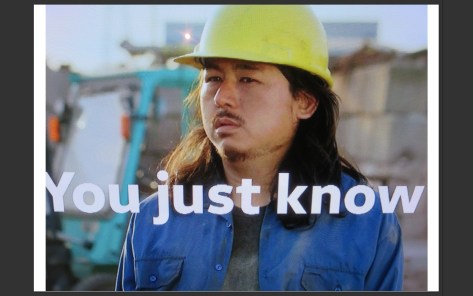
Eddie is known for his roles in film and TV productions in which he plays darker and menacing individuals. It’s ironic that he has been so successful in his commercial work portraying benevolent characters. As the ping-pong playing, night vision goggle wearing, KFC loving, buddy in KFC’s ‘Night Vision’ commercial or as the overly exuberant but loveable fan in Panasonic’s Viera TV spot (for the 2008 Beijing Olympics); Tang effortlessly becomes the friendly guy next door. He is so believable that one almost feels there is an evil twin portraying all of his ‘bad guy’ roles in his film and TV productions. One of Eddie’s calling cards and most requested techniques is the ‘dead pan’ that endears so many viewers of his commercial roles. Matt Kamen directed Eddie in Volkswagen’s “You Just Know” campaign. Kamen professes, “Eddie Tang is one of the most talented and prodigiously successful actors I have collaborated with. Eddie’s leading role required him to perform as the face of the campaign. In the commercial, Eddie’s character is a construction worker, shown trying to fit more equipment into his truck than it can handle. Simultaneously, a Volkswagen truck pulls up and Eddie’s character looks enviously at the enormous space that the vehicle provides. Eddie perfectly showcased the client’s desired tone of the Volkswagen being an enviable vehicle, surpassing the needs of not only civilian motorists, but also the needs of various other business types. It takes a skilled actor to understand the importance not over playing or under playing a role such as this. Eddie is truly a creative force to be reckoned with and was in invaluable asset to the production of the ‘You Just Know’ commercial campaign.

car-1

ANZ Bank made wise use of Tang’s talent in their “Travel Rewards Card” commercial. Eddie’s character of Lawrence the Boat Dad portrayed a jubilant father on vacation with his family. With his hands in the air, Lawrence enjoys a fun ride on a wave runner, carefree as he advertises his ‘pointless travel insurance’ through ANZ’s Travel Rewards Card. The role was a masterful performance due to the fact that, unknown to viewers, Eddie was incredibly sick. He reveals, “I have severe motion sickness and sea sickness. It wasn’t an ideal attribute for the lead role in this commercial but, some days are a breeze and some days are a monsoon. I was actually throwing up between each take. You can’t tell it in the commercial but I was incredibly sick the entire day. Besides the fact that I don’t enjoy boating, I’m a bit of a free spirit and hippy. I’m a complete contradiction to my character Lawrence but I like to think that we’re both very good people, just in different ways.” Director of this ANZ commercial, Paul Middlecitch, states, “The ‘Travel Rewards Card’ commercial was an enormous success, which I do not doubt is largely due to Eddie’s achievements on our production. The video was widely popular on YouTube, garnering nearly 100,000 views! This alone is a massive accomplishment that should not go unrecognized. Eddie was an invaluable member of our production and I consider the success of the commercial to be due to Eddie’s leading role. Eddie’s all-encompassing prowess as one of Australia’s elite actors has allowed him to establish himself as one of the country’s most successful talents.”

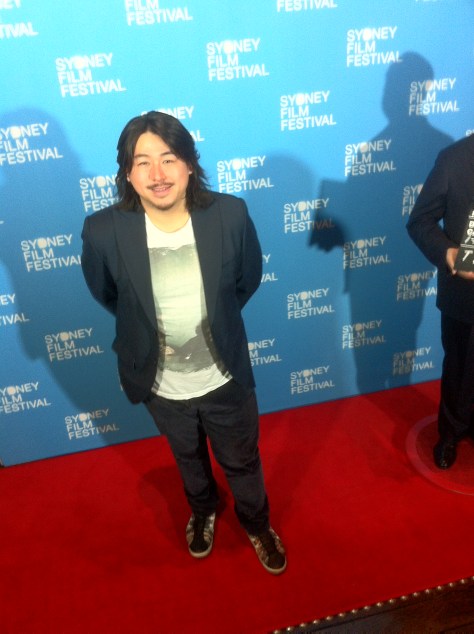
sydney-film-festival-11-06-13-124-2

As one of Australia’s in-demand and prominent actors, Eddie Tang continues to prove his abilities and immense talent on a variety of platforms. You might see him on the big screen, on your TV, even on the web but, you will certainly take notice of him when you see his commanding yet endearing presence.


Film Director Claudio DiFede’s Date with Cinema Fate

The movie business is fraught with ambition, cynicism and expedience—qualities diametrically opposed to producer-director Claudio DiFede’s gentle, artistic nature. The Canadian-born DiFede, who is equally at home working in television and motion pictures, betrays a gentle, individualistic aesthetic that is a refreshing divergence from hard driving commercially-fixated attitude which so frequently saps the creativity from mainstream Hollywood projects.

Claudio’s aesthetic, part vulnerable hesitancy, part determined auteur, part pop culture guerilla is showcased in his unusual, career defining documentary film “Calling Spielberg.” The story is one of fateful twists and human foibles that reflects the film maker’s distinct, creative philosophy.

The origins of “Calling Spielberg” goes back to the early 1990’s, when the 22 year old Claudio was barnstorming through Tinsel Town, tuxed up and cheeky enough to finagle his way into the People’ Choice Awards ceremony at Sony Studios. This was a star-studded, formal affair with tight security which the charming film maker easily bypassed. Backstage following the presentations, Claudio came to face to face with his greatest idol, the legendary director Steven Spielberg.

“It was a once in a lifetime thing—by chance if you will!” Claudio said. Like my whole life had lead up to that moment in time. It was crazy! Spielberg had just accepted the People’s Choice Special Tribute award and I found myself, backstage, just walking right beside him. It was one of those things I’d always thought of, ‘what would you say to Spielberg if you met him?’ Well, it happened, it took a lot of chutzpha but I introduced myself and I told the biggest Director in Hollywood: ‘Take it to the bank,’ I told him. ‘You and I are going to work together one day. For a split second I thought ‘WTF did I just say to him?’ He smiled, asked my name again and replied ‘Sure kid, why not?’”

Emboldened, Claudio repeated the feat weeks later, but at even higher profile affair: the post-Academy Awards Governor’s Ball at Shrine Auditorium, a big night for Spielberg whose “Schindler’s List” had just won seven Oscars, including Best Picture and Best Director.

“It happened again a few weeks later, after the Oscars,” Claudio said.  This time I found my chance, I hugged him and face to face I told him that I can only imagine what it must be like to create such an incredible, moving film as Schindler’s List. He replied ‘Thank you,’ and told me it had taken a lot out of him. I then asked, ‘So, when can I call you?'”

DiFede today would not elaborate much more on the conversation or on his reply “I don’t want to give out too much on the film,” he said. “But let’s just say; it was encouraging.”

“I drove home that evening, roof down and I remember I couldn’t contain my emotions any longer. So I let out the loudest scream!” Claudio said. ‘The fact he remembered my name from our first meeting—it was a feeling I cannot describe. We all have dreams and this was mine. It was nothing short of a crazy euphoria.”

Was it just a lark, a childhood fantasy that had unexpectedly played out? Time passed. Claudio moved along with his life, fell in love, married, and started a family.

“I never called the man,” he said. “I had the chance, and I never did. I was asking myself that question. Then It occurred to me, I must be the only human being that never called Steven Spielberg when he asked someone to. What if? What if I did call? I was thinking there must be a lot of people in my situation that have left behind many of opportunities maybe even regrets and dreams left behind. We all once had aspirations, dreams – did I miss my opportunity?  there was one way to find out.20 years later, and that was to make ‘Calling Spielberg.’”

“When I first started working with Claudio I didn’t really have any formal training in filmmaking,” Mike T. King, editor at Big Coat Productions, said. “I jumped at the opportunity. Claudio’s attitude was infectious, which got me excited to hop onboard. The amount of time and effort he has poured into ‘Calling Spielberg’ is incredible, inspiring even. It is his passion project.”

Still in post-production, Calling Spielberg promises to be a fascinating examination of the human condition. Unorthodox and compelling, equal parts documentary, philosophical seeking, self-examination and show business truth-telling, it’s a rich, multifaceted achievement.

“Things happen for a reason, and we simply cannot give up on our dreams,” Claudio said. “I have matured and what my goals were in my 20’s compared to what they are now are very different. My goal now is to truly be who I am, living out my life doing what makes me happy. Honestly, I consider being a dad, fatherhood, as my greatest achievement.“

But Claudio’s romance with film remains profound. “Professionally, I was involved in Canada’s first reality TV show, and that was a great experience,” he said. “And being part of the American Film Institute, just being immersed with such talents from all walks of life was wonderful. To collaborate with my AFI fellows was a cherished experience. I am passionate about storytelling, through television or the big screen, either way its storytelling.”

Claudio’s commitment and emotional involvement with storytelling is a compelling, legitimate creative force, one that is certain to soon reach a wide international audience.

“Claudio is a talented director and pays a great attention to detail,” composer Mark Dunnet said. “He never gives up until he gets that perfect shot or performance”.

From the Stage to the Screen Tatiana Romao Nails the Mark

Tatiana Romao
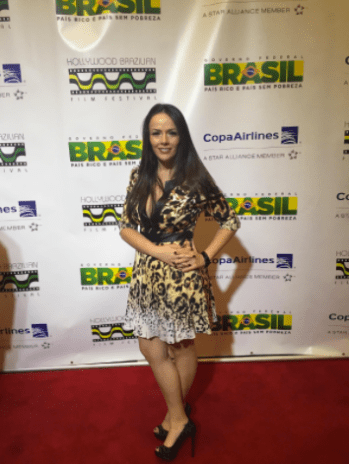
Actress Tatiana Romao at the Hollywood Brazilian Film Festival

At barely 12-years-old, an age where few of us really knew the exact direction our future careers would take, Brazilian actress Tatiana Romao was already busy putting in work and developing her craft as an actress. While she comes from a family of doctors, the world revealed itself to her as a stage beckoning to be performed upon, and she quickly took to the spotlight without ever looking back.

Romao says, “Acting has been my passion and a need in my life since I came to really know myself as a person. It all started as an after school, extracurricular activity and as time went by it became my goal in life.”

Hailing from Sao Paulo, Romao began her professional acting career on the stages of Brazil where she starred in a lengthy list of high profile theatrical productions such as “The Secret of Fatima” directed by Grand Othelo and Coca-Cola Award winner Ronaldo Ciambroni, “The Exception and the Rule” directed by Gabriel Carmona, “Life of Drugs” directed by São Paulo Association of Art Critics and Prêmio Contigo Award winner Walcyr Carrasco (Seven Sins, Watercolor of Love), “Waltz No. 6” directed by Marcelo Lazzaratto, “The Long Goodbye” directed by Shell Award and Gabriela Paulista Cooperative Theater Award winner Nelson Baskerville (Seize the Day, Maysa: When the Heart Sings) and many more.

“Theatre is so different from film, I have to say that my heart does beat a lot faster for theatre. The passion, the thrill, the family feeling, learning and always discovering new things in a scene, a script, having beautiful words to say and find their meanings… the list is endless,” admits Romao. “It was one of the main reasons why I fell in love with acting… It gave me all these different feelings and sensations that I wasn’t finding anywhere else considering I was born in a fast paced somewhat cold city.”

While Romao is undeniably magnetic on stage, her skills have easily carried over to the silver screen where she has garnered substantial recognition on an international level as a diversely talented actress capable of embodying virtually any character.

Romao’s first foray into the film world took place nearly a decade ago when she landed the lead role of Paula in Brazilian director Bruno Costa’s film Encantacao aka Enchantment. Set in a puritanical town, Encantacao revolves around a peculiar family of three whose lives are turned upside down after Romao’s character Paula, who is embittered by her husband leaving her, begins spreading rumors that the wife and her teenage daughter are witches. Paula’s powerful conviction permeates not only the minds of the town’s people, but also the two women accused, who begin to believe that they really are connected in someway to the dark side. A powerful and seething first role on the screen, Romao nailed the mark making Encantacao a success, and giving audiences a chance to see just how powerful an actress she would become as her career progressed. During the filming of Encantacao Romao worked closely with famed Brazilian acting coach Fatima Toledo, who is known for her work on the four-time Oscar Award nominated film City of God, and the multi-award winning films Elite Squad and Elite Squad: The Enemy Within.

“It was a delight to play a villain for the first time and to immerse in this experience… I discovered so many other nuances of myself as an actress, of myself as a villain, you learn and find real and cohesive reasons for that role, that person to be doing and saying what she is saying. I embraced Paula, I understood and processed her point of view of things. She was a lonely bitter woman,” explains Romao.

“For me it wasn’t much of a challenge as it was a learning process. How to access that side of you, how to understand that role, how to understand yourself, how to bring that feeling…The growth I had working with Fatima and Bruno was gigantic. I will never forget that experience.”

Since that telling first role, actress Tatiana Romao has worked non-stop giving a slew of unforgettable lead performances in a wide range of projects across multiple continents.

In 2015 she took on the starring role of Sarah in Lips, written and directed by ConCorto Award nominee and Nyon Visions du Réel Award winning director Andrea La Mendola (Echoes, Lost in Gray, Just One Shot). Starring alongside award-winning actor Ruben Navarro (Barbal Zoralo, She Wants Me, Till Death Do Us Part), Romao gives a magnetic and sometimes painful performance as Sarah, a young woman caught in an abusive relationship who struggles to find the strength to leave her boyfriend.

“That role was very intriguing and a challenge for me because I tend to always play the stronger roles and this time I had to be more fragile, defenceless and submissive. It was a bit of a struggle to go on set and ‘not fight back’ and just take it. Even though it’s a great challenge for me it is interesting how it feels almost ‘wrong’ to play that for me. I guess I can say that it made the role even more interesting,” admits Romao.

In addition to Lips, Romao has become known for her work in Marco Ferrari’s Castell Award winning drama Simple Being where she stars alongside Tony Award winner Paul Sand (The Main Event), Elephant Clan starring Burt Culver (To Survive, Ghostline), multi-award winning director Giulio Poidomani’s film Disruption starring Ron Gilbert (Inertia, Desire), Abberation starring Andrew Bongiorno (NCIS, Live By Night), as well as the series What You Want? with Elle Han (Til We Meet Again) and Evgeniya Radilova (Limitless) and many more.

She says, “Acting is a need in my life, it’s not an option of whether or not I will do it, it is what I have to do, it’s what I do and a great part of who am. Acting has shaped all my life. The feeling, the emotion, hearing from the audience how you moved them, how you touched them, it is indescribable.”

With a dazzling repertoire of work already under her belt it’s clear that actress Tatiana Romao is one Brazilian talent who is destined to stay on the radar for years to come. Audiences will soon be able to catch her in the horror film Valentine DayZ, which is due out later this year and also stars Carrie Keagan (Reno 911). She also recently wrapped production on Apple Ng’s (1 Corinthians 13) upcoming film The Process where she takes on the starring role of Lindsay.

Graphic Designer Jiping Liu: An Unstoppable Force In Modern Film

1
Graphic Designer Jiping Liu

From designing props and key costumes to the film titles and posters that grab our attention and make us want to run out and watch them on the big screen, graphic designer Jiping Liu has found a unique niche for herself in the film industry, both in the U.S. and China.

By the time Liu made the decision to break into the film industry, her talent as a graphic designer at home in Beijing, China was already well-known throughout the design industry thanks to her work as a lead designer for Tencent and Inforgence. While the endless creative opportunities and potential collaborations Liu could immerse herself in through film ignited her inner passion, the choice to step away from a good job as a designer in the corporate world required her to set the safety net aside and take a leap of faith.

After graduating with her bachelor’s degree in digital media from Beijing Jiaotong University, Liu says, “I got the chance to go for my master’s degree with a full scholarship in China and I was also offered a good graphic design job, but I felt I was too young to settle, so I gave up the opportunities and applied to school in America to study filmmaking.”

This was barely three years ago, but the number of high-profile film productions she has contributed her skills to since confirm that the life changing choice she made leaving everything she knew behind in order to pursue her true passion was definitely the right one, as is often the case, but rarely do the results come as quickly as they have for Liu.

For Liu 2016 has been insanely busy with her doing the graphic design for the films “Red Cherries,” “She Gives Me Sight,” which earned awards at the Hollywood Boulevard Film Festival, LA underground Film Festival and the Hollywood International Moving Pictures Film Festival, “Escape,” “Don’t Touch Me,” “Successor of the Southern Star” and several others.

Her adept skill as a graphic designer combined with her knowledge of the filmmaking process has provided Liu with a strong creative foundation that has allowed her to apply her talents to various other areas of a production such as costume design as well. Earlier this year Liu costume designed the dramatic crime film “Locked” directed by Ye Kuang (“Harmonica,” “Love Behind”), whose film “Harmonica” took home the Grand Prize at the Carnegie Mellon International Film Festival.

As the costume designer of the production Liu used her graphic design background to draw out all of the costumes we see in the film before constructing them.  “Locked,” which stars Leanne Agmon from “Blue Bloods” and “Unforgettable,” and Johanna Finn from the multi-award winning film “14 Days” and the series “My Haunted House,” has proven to be a resounding success with the film taking home the LAIUFF Awards for Best Actor and Best Narrative, as well as the Audience Award for Best Film and Best Actor at the 2016 Los Angeles International Underground Film Festival,

Liu used her design skills once again as the costume designer of the recently released “Lordwolf” commercial for Beard Guyz directed by Mauro Borrelli (“The Ghostmaker,” “Haunted Forest”) who earned the Audience Award at the Los Angeles Italian Film Awards for “Goodbye, Casanova” and the Venice Film Festival’s AIACE Award for “La Donna del Moro.”

As a graphic designer Liu has an expert eye when it comes to color, a necessary strength and crucial component in designing the costume for the commercial’s leading wolf man played Daniel Sobieray from “Days of Our Lives” and “The Young and The Restless.”   You can check out the new commercial here.

Since moving stateside Liu has landed a job as the lead graphic designer for Alpha Pictures, a Chinese based production company that recently opened their LA branch.

Alpha Pictures
Poster for the film “The Death God’s Plot” by Jiping Liu

“We are trying to turn the most popular comics in China to feature films in next two years in America,” Liu says about her work with the successful production company. “I love both filmmaking and design, so I feel very lucky to be a graphic designer at a film production company, because I’m passionate about my work.”

Liu has put her creativity to paper designing a plethora of posters and presentations that Alpha is currently using to gain funding and get the word out about several upcoming films such as “Female Robot,” “Spore,” “The Death God’s Plot,” “Rain Village,” “Meet William,” “Moon Vortex,” “Requiem Street” and many more.

Alpha Pictures
Poster for the film “Spore” designed by Jiping Liu

Whether she’s designing film posters to grab the audience’s attention or spark the interest of potential investors, or using her graphic design talent to create graphic props and costumes for productions, Jiping Liu is one creative artists who’s found her rightful place in the international film industry.


Cooking for the stars: chef Vincenzo Pezzella talks working at Naples’ top restaurant

In the city of Naples, Italy, on the pebble beach of Seiano in Vico Equense underneath the Torre del Saraceno, sits the world renown Torre del Saracino restaurant. Guests from around the globe head there for exquisite Italian and Mediterranean cuisine prepared by the famous chef Gennaro Esposito. It has not just one, but a two Michelin star rating, and seats politicians, athletes, and celebrities regularly. It also happens to be where chef Vincenzo Pezzella started his career.

Pezzella now is known internationally for his skills as a chef, moving to Paris after working under Esposito at Torre del Saracino and becoming the head chef at the popular Mamma Prima Ristorante in Paris. He moved quickly up the kitchen ranks, and the success of the restaurant can be attributed to his creativity in the kitchen. He remains humble, however, and attributes his success to what he learned working as a line cook at Torre del Saracino.

“It was really hard, but also amazing working at Torre del Saracino. Any time you work for a two star Michelin restaurant, perfection is the only thing you learn how to do. I wanted to run away as much as I was proud to be a part of it. The experience was unlike anything I will ever encounter in my career,” said Pezzella. “The kitchen was masterful. It was definitely well worth the time spent there.”

Few are fortunate enough to learn from legends, but Pezzella is one of them. Working under Esposito, he quickly picked up what was important in terms of running a kitchen, and learning what it meant to make authentic Italian cuisine while staying true to what you know. Being from Naples himself, working in such a high profile restaurant right in his backyard was everything while he was learning.

“It was incredible working under chef Gennaro Esposito. I learned everything that is my base through that man. I learned not only what it is to be in a kitchen but how to respect it and everyone around it. I learned that you could be from Naples and still manage a kitchen in that style and that demeanor,” said Pezzella. “I still call him from time to time to see how he is doing and hopefully to catch a lesson from him.”

The relationship is one that Esposito also admires, and remembers the days that Pezzella worked for him fondly.

“He was a listener. Vincenzo understood what he was being taught and followed through. He will have a great career,” said Esposito.

Working in a Michelan star restaurant, Pezzella also learned what perfection in cooking truly was. Sometimes, dishes needed to be made and remade again and again until they were exactly what Esposito envisioned. The environment can be stressful for a newcomer, but the ideal place to grow as a chef.

“Being perfect is never easy. We overcame it by taking our time and making sure everything fit the necessary criteria, and then we moved on,” said Pezzella. “Despite what some may think, I learned perfection working here that perfection in a kitchen does exist. It’s not an easy thing to obtain, but it is possible none the less.”

This attitude is what led Pezzella and the rest of the kitchen crew to such grand success. Constantly receiving positive feedback, locals and vacationers alike would go to the restaurant just to say they did.

“The restaurant pushed limits on Neapolitan cuisine because it could and the result is priceless,” said Pezzella.

Now that he has relocated to France and runs his own kitchen, Pezzella looks back at his time at Torre del Saracino as an invaluable learning experience. He liked everything about it, even the stressful and intimidating parts of the job. But what truly made the experience was cooking in the city he loves, the city he grew up in.

“To work where I grew up is the way it should always be. To get up and be around your people, knowing that your product is top notch is definitely a gift. Being able to do something as easy as walk to work and trace the steps you have done since your birth is an awesome way to live and build your career,” he concluded.

From the Screen to Magazines Andreas Holm-Hansen is Red Hot

Hailing from Copenhagen, Denmark international actor and model Andreas Holm-Hansen was born with perfect bone structure, fiery red hair and a freckled and fit physique that effortlessly turns heads.

Over the last few years redheaded models with a healthy dose of freckles have gotten a major boost in the eyes of the public thanks to the work of leading photographers like Michelle Marshall, Maja Topcagic and her 2015 photo series “Freckled,” and Keith Barraclough’s “The Redhead Project,” but the list would not be complete without mentioning the innovative work of Thomas Knights.

In 2014 Knights released the Red Hot 100 book, a photo series that has been called ‘the ultimate bible for hot ginger men,’ and with his good looks and natural red hair it’s not at all surprising that Andreas Holm-Hansen made the cut, which makes him one of ‘the 100 sexiest Red Hot Guys in the World.’

Knights and Holm-Hansen clearly had a successful collaboration as the photographer called him back to shoot his newest exhibition and book “Red Hot II” earlier this year. Not only is Holm-Hansen featured throughout the book, but he also nabbed the cover shot for the “Red Hot II,” which was released in October. You can also check out Holm-Hansen in the highly seductive video that was made to promote the book, which reveals him in all is red headed freckled glory. Anyone who watches the video would find it difficult to say that Holm-Hansen is anything but on fire.

Andreas Holm-Hansen
Andreas Holm-Hansen on the cover of Red Hot II by Thomas Knights


In 2012 Holm-Hansen also landed a featured role in the music video for three-time Grammy Award winning artist P!nk’s “Blow Me (One Last Kiss),” which has been astonishingly well-received by fans earning more than 72 million views on YouTube.

As a model Holm-Hansen’s international appeal has been a driving force in his success. Earlier this year he landed a massive campaign for Väla Centrum in Helsingborg, Sweden; if the local Swedes didn’t know him before, they definitely know him now, considering his face is plastered to the outer walls of the popular shopping center, and he is featured on the cover of the center’s Winter issue of Väla Magazine.

Andreas Holm-Hansen
Andreas Holm-Hansen on a billboard at Väla Centrum

From massive billboards to a lengthy list of high-profile commercials, Holm-Hansen’s captivating aesthetic appeal has made him a go-to talent among advertisers across the world. Audiences across Europe will immediately recognize him for his featured roles in popular commercials for brands and organizations such as Miracle Whip, Telmore Play, Eovendo, Synoptik, Danske Bank, Norwegian Airlines, Komplett, The Zulu Comedy Festival and others.

In addition to being featured in a number of magazines such as Tantalum Magazine, Visionarios Magazine, Elléments Magazine and PAF Magazine, he’s also been the face of a number of massive print campaigns including B&O’s H6 Limited Edition, Phoamy, Arbejdernes Landsbank, DSB and Sundhedsstyrelsen’s Stop for 5.

This slideshow requires JavaScript.

While his unique look has definitely put him in the spotlight, Andreas Holm-Hansen has a whole lot more than a just good-looking face going for him. Through a series of lead acting roles in productions such as Benjamin Murray’s crime mystery “The Hit” and “Don’t Bring Guns to a Knife Fight,” Jose Rico’s “Blood Legacy,” Jesper Holm Pedersen’s “Shit Happens” and David B. Sørensen’s “Bellum,” Holm-Hansen has proven himself to be a diversely talented actor who can bring virtually any character to life. His knock-out performances to date have revealed him as the rare kind of actor who is capable of captivating his audience regardless of the genre.

One performance that really stands out though was when Holm-Hansen took to the screen in the recurring lead role of ‘Mad’ Mads Steen in the satirical series “Dreaming in Mono.” Presented mockumentary style, “Dreaming in Mono” follows the rivalry of two Nordic ski champions, one of which desperately wants to break a record on a monoski and starts his own team of underdog skiers who actually think it’s possible, they are Team Monoski!

We first encounter Holm-Hansen’s character ‘Mad’ Mads Steen trying to fix his broken down car in the middle of blizzard wearing nothing but his underwear, furry hat and boots, making it easy to see how he earned the nickname ‘Mad.’ Unfortunately for Mad his skiing skills have something to be desired, which makes total sense considering his prior ski experience consisted of using his ski poles to thrust himself across the flat grass-covered lands of Denmark. It’s not a stretch to say that Holm-Hansen is one of the leading comedy highlights in the series, as we continually watch his character lose his balance and flail uncontrollably down the slope every time he clicks into his skis and sets down on actual snow.

Mad could easily be considered Team Monoski’s awkward rebel, but his constant boundary pushing ways eventually put him on thin ice with his teammates. In fact, “Dreaming in Mono” dedicates an entire episode to an intervention with Holm-Hansen’s character where the team tries to get the brash Dane to curb his unsportsmanlike ways, which leads Mad to huff and puff and storm his way all the way back to his hotel room; but thankfully for the team he comes around in the end.


Dreaming in Mono
Poster from “Dreaming in Mono”


Produced by the Swedish production company Happy Fiction and created by the international creative agency Perfect Fools “Dreaming in Mono” was written and directed by multi-award winner Jens Jonsson, who earned the Grand Jury Prize from the prestigious Sundance Film Festival for the film “Ping-pongkingen” in addition to being nominated for two Guldbagge Awards, which are the Sweden’s equivalent of an Academy Award.

The seven episode series was broadcast by four major TV networks in the Nordic countries, with Andreas Holm-Hansen dazzling audiences the whole way through. The series, which was ironically created to promote McDonald’s in the Nordic countries, but rarely,  if ever, mentions  the fast food chain verbally, also stars Bernard Cauchard (“Superhjältejul,” “It’s My Turn Now”) and Alexandra Alegren (“Gåsmamman,” “Madness of Many,” “Olivia Twist”).

With a rather astonishing list of leading roles in film and television projects, and even more high-profile modeling campaigns already under his belt, Andreas Holm-Hansen is one of the few actor/models we can confidently say will be doting his wide-spread talents upon both industries for years to come, so make sure to keep your eyes peeled for this talented Dane.