Category Archives: Uncategorized

BRAZIL’S RODRIGO BRANCO BECOMES A STAR BY SUPPORTING THE FAME OF OTHERS

For all of those who proclaim television to be a detriment to one’s life, please kindly consider Rodrigo Branco. This Executive Producer/Communications Director/Social Media expert has built a life out of his work in TV. His roots in TV can be traced back to his youth, a situation that his own children are experiencing. Branco has become one of the most successful executives in his field in all of Brazil. His status is earned with years of working his way up the ladder in TV production. Having become internationally recognized for his work on multiple domestic and international productions, he most recently has turned his attention to the TV community in the US and the opportunities it affords. It’s quite a story, a young boy in Brazil who follows his dream and effects millions around the world. It proves that hard work is rewarded and there is a chance for everyone to pursue their goals no matter how unbelievable they might seem.

As a young boy in Sao Paulo, Rodrigo used to live with his grandmother while his mother (a ballet dancer) was often out on tour, working to pursue her own artistic endeavors. This situation created two prominent factors in Rodrigo’s future. First, the understanding that following a creative dream is valid and secondly, TV was a fixture of life. Branco’s grandmother was a TV fanatic to say the least. When his mother took Rodrigo with her to a TV station for a taping, the two worlds collided. As a 10-year-old, he was amazed by the environment as well as the fact that they would tape three episodes in one day. The sudden realization that every production was not live, yet seemed to be so when viewed on TV, was like discovering the secret to a magic trick. Years later, Branco would begin his own TV career on the Marcia show. This show is one of the most popular talk shows ever on Brazilian TV. Rodrigo was with the show for more than a decade and explains, “The Márcia show was my high school, college and university! I started as a trainee and eventually became the executive producer. It was the hardest, and at the same time, the most positive show I have done in my career. According to VOGUE BRASIL, Márcia is the Brazilian Oprah. I’m proud that our ratings proved that we were number 1 every day. There is no secret to achieving this; I used to work 16 hours a day from my start as a trainee and all the way up to being EP.”

Many people sacrifice their personal life to be a part of TV production, especially those who are highly successful. Branco did the opposite and made his life and career intertwined. He met his wife when he was a trainee on Marcia and has become a father while working on the show. As the EP of the show, he worked most closely with the show’s star and namesake. He notes, “Working 16 hours a day, 6 days a week; Marcia became my second mother. We spent Christmas, New Year’s Eve…all the good times and bad times together. She has the most brilliant career in Brazil and she decided to share it with me. I think this interaction is what made our work so successful!” Rodrigo’s work in particular was recognized early in his career. In 2002, he was awarded the Premio Jovem Brasileiro [Young Brazilian Award] for his work with the Marcia show (he received this award again in 2011 for his work on the Miss Universe Pageant) …at the early age of twenty years old. Branco also received the Communication Merit Award, granted by Academia Brasileira de Ciencias, Artes, Historia e Literatura (Science, Art, History and Literature Brazilian Academy) which he refers to as the greatest honor of his professional career. Marcia is known for her show being about people, their families, and struggle. She wanted an individual steering that show who was doing it for more than the money; a person who was truly passionate about the work. Marcia recognized these traits in her early interactions with Branco. She declares, ““I met Rodrigo in his first day as a trainee in TV Bandeirantes. I immediately knew he was special. A few months later, I told him he would be the executive producer of my show and in only 3 years it became true. We had a great and fruitful partnership. He is incredibly talented!”

profile-pic-1

Besides giving Branco a literal family as well as a professional family, TV has also given him the ability to travel the world. Experiencing locations such as; Israel, Paris, Spain, Argentina, Mexico, and all the states of Brazil, have helped Rodrigo to understand how different and yet how incredibly similar the people of the world can be. In particular, his US visits have motivated him. Branco communicates, “The TV Industry in the United States is the most professional and competitive in the entire world. There is no space for amateurs there. I have hopes of working there because it would challenge me to be the best in the US. The resources and the technology in the US are the example to the world. If a professional wants to learn how to do their job better, they need to stay close to the best! Marcia was discovered by an American Director who taught her how to do TV. Nobody does TV and Entertainment better than Americans. I could see this with my own eyes at the Latin Grammys, Miss Universe, and from studying American Shows and formats. I’ve had an extraordinary career but I am only 33 years old and I want to be better and bigger.  The only way to do that is to learn from the best. My passion is t work with talent and communication not only in TV, but with social media and other formats as well.” When contemplating Rodrigo Branco’s life, it is impossible to septate his story from the inclusion of television. When discussing it, Rodrigo himself comments, “My life was built inside a TV. My childhood was spending time with my grandmother, bonding over shows and their topics. I saw my mother performing on TV and she took me ‘inside’ television for a perspective that not many people witness. I have made many of my closest friends through my work in TV, as well as meeting the woman who became my wife. Now my children understand TV because they see their father using it to provide for them as well as understanding, as my mother showed me, that you can be creative, challenged, and rewarded with that pursuit. They realize, as I do, that I am able to make the magic that we see on the screen.”

THE STAR BEHIND THE ROCKSTAR

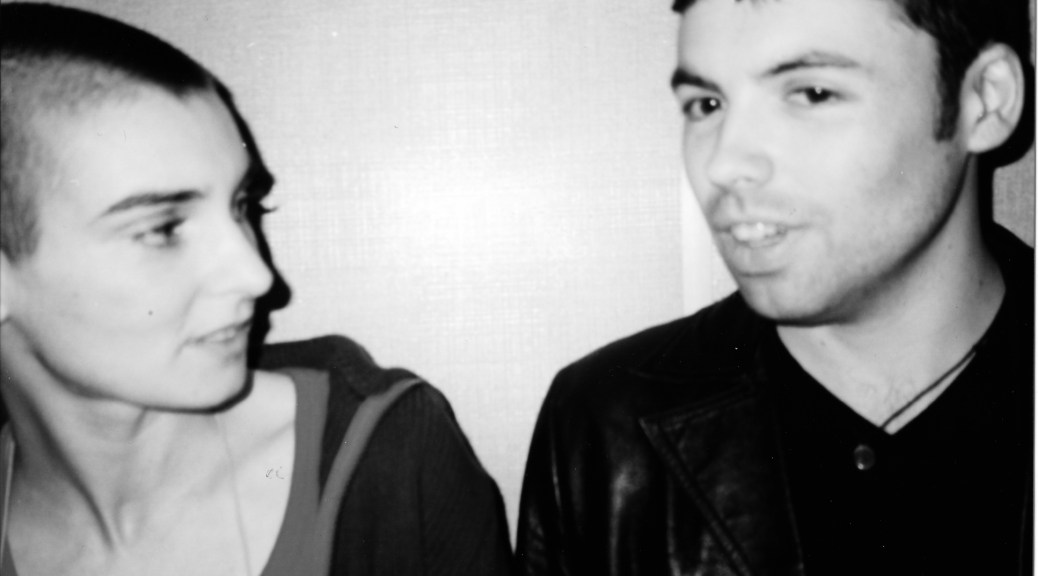
The throngs of adoring fans at concerts are almost always unaware of the professional workings of their favorite artist; the organizational and musical preparations necessary to create the inspiring events that they desire. Movies often show a romanticized and unrealistic scenario in which the artist calls some friends to play with them when, magically and immediately, everything falls into place. The musicians who live this amazing life will tell you it is magical for them but far from immediate. Any great performance takes talent, but it also requires preparation, professionalism, social skills, and a strong work ethic. The greats have earned this moniker through dedication as well as artistry. While many people have heard the title Musical Director, the specific duties required of an MD are vague at best in most individual’s understanding. Kieran Kiely is the respected musician who served as MD for Sinead O’ Connor from 2007 to 2012. As MD, he performed many roles to enable Sinead to focus on the expression of her music without being weighed down by the numerous other variables which might encumber an artist of her renown. At a certain level of fame, an artist’s career becomes similar to any other large and global pursuit. This means that artists such as Ms. O’ Connor and her peers require a musician whom they can trust to safeguard the integrity of the music and its presentation. A Musical Director is perhaps the most trusted advisor for any artist, meaning that the responsibility placed on them is reserved for the most valued and respected musicians.

In the mid 90’s, Kieran was playing in the Irish Celtic Punk group Shane MacGowan and The Popes. Kieran recalls, “One night while hanging at the Popes usual haunt, Filthy McNasty’s Pub in Angel, London, Shane asked me to go to a club with him, without knowing where we were going or whom we were meeting. When we got to the Club(The Atlantic Bar, SoHo) there was Sinead with Shane’s girlfriend, Victoria. I ended up chatting with Sinead. The next time I saw her was a year or two later when I was asked to play on a record. Somebody from the production recommended me for the session. It turned out to be a duet with Sinead and Terry Hall from The Specials, with Dave Stewart producing. This was the first time I met Dave. It took place at The Eurhythmics Church recording Studio in Crouch End, London. I played Low Whistles (Irish Flutes). Sinead loved the sound of those at that time. I continued to meet Sinead from time to time at gigs and festivals and she then asked me to play on her record Faith and Courage, and subsequently some of her following records.” Conflicting schedules prohibited a closer and more permanent working situation between O’ Connor and Kiely until 2007 when she asked him to assume the role of Musical Director for her. Largely known as a pop/rock artist, O’ Connor was intent on making use of Kieran’s mastery of Celtic instruments and their approach to her music. While he would add authenticity to the music that supported Sinead’s intrinsic Celtic vocal stying, Kiely would also be required to assume various roles as MD.

One of the most vital roles of an MD is to find the proper band members for an artist. It is not as simple as finding great players, although that is a requirement. Band members must be well versed in the style of music they will be performing but not void of other influences as they may be called upon to “stretch” or “flex” their approach. With touring artists, there is an understanding of the lifestyle which can mean long periods of time away from familiar people and surroundings. Touring musicians are the nomads of the music world. This requires someone whose personality meshes well with the sentiments of the artist they work with. It is similar in many ways to dating. There has to be a certain spark to the interaction. In his role as MD for O’ Connor, Kiely assembled a group of elite musicians respected throughout the world; an outstanding achievement for any MD. The band consisted of: British Session Drummer Ash Soan, Guitarist Dave Randall (recognized for his atmospheric sound), Yolanda Charles (renowned Bassist, praised as one of the best in the world), and legendary guitarist Robbie McIntosh. Sinead’s music is quite eclectic and emotional, requiring musicians who play at the highest level as well as those who listened intently to match the dynamic level and energy. Because these band members were so sought out, Kieran took an especially benevolent, yet professional approach. He states, “I like to try and create an environment where everyone feels very comfortable so they can be creative. In regards to parts, I was pretty specific. I knew Sinead’s material really well and created new arrangements of her songs that were sensitive to Sinead’s performance style. To achieve this, I had parts worked out for the players in advance. We also had a new album to promote and so had to be true to those songs. I wouldn’t say it was difficult though; when you have that caliber of musician to work with, it’s a pure joy.”

Rehearsals are always a good barometer for the mixing of skill and personalities but the real evidence surfaces when the artist and band tour. The incredible ecstasy of performing in front of thousands…even hundreds of thousands can be offset by the disconnect from familiar faces and places. Many musicians are defeated by the road. While Kieran is a veteran of the road and the studio, each new group introduces a number of variables. Early communication proved positive as he tells, “After I had taken on the role of MD and we did our first few shows, she sent me an exuberant text message, saying “who knew we were both so F**king amazing. She was very happy, which of course meant that I was happy.” Kiely continues stating, “You don’t just phone it in with Sinead, you have to be present, in the moment, and extremely sensitive to dynamics and tempo. She gives you everything you need in her voice; you just have to listen. On the intimate songs, I learnt to be comfortable with my playing being super exposed, where every expression and articulation could be heard. That sort of experience in front of 10’s of thousands of people over a period of time really hones your performance skills. Putting together a band that understood this in the same way that I did was a major achievement for me.”

While performing the role of MD was essential to Sinead’s live performances, Kieran was also a valued recording musician for O’ Connor. Selling in excess of millions of copies, Kieran recorded five albums with Sinead: Faith & Courage, Sean Nos Nua, Collaborations, She Who Dwells, and How About I Be Me. These recording are proof to Kieran’s masterful musical talent as well as O’ Connor desire for him to be a part of creating her sound. This desire was shared by others as Kiely relates, “She [Sinead] called me late one night to come play on a track. When I got there, she introduced me to Wyclef Jean, who was producing the song and said, ‘This is Kieran, he is the soul of my album. (Faith and Courage album).’
I later worked on Wyclef’s own record, Masquerade, at his NYC studio, and with his sister and brother.”

Kieran now resides in Los Angeles where he has taken to composing and orchestrating for film. His work creating the music for Danny Greene: The Rise and Fall of the Irishman proves that he is still using the sounds for which he is recognized to contribute to the success of artists. He still fondly recalls his time with Sinead O’ Connor and notes one obvious memory, “Nothing Compares to you was a highlight. It’s such a famous song. The audience are always waiting to hear it, so it’s a great moment for them. It wasn’t unusual to see people crying in the audience. ‘3 Babies also’. Sinead can conjure up such emotion when performing. What’s important to Sinead is that she connects with the song.” Kieran Kiely also connects to the song…and the art, in a very leading way.

screen-shot-2016-10-10-at-1-05-25-pm

BRIAN MANCINI PRODUCES A MEDITATION

There is no question that modern life is drastically different for some individuals. Modern technology now supports lifestyles in a way never before possible. There are inevitable events and occurrences though. This is the basis of the film A Meditation. This film is the story of  Michael, a middle-aged man recently unemployed from his job teaching film. Michael meets a young woman responding to his Craigslist ad selling a DVR. The two begin an intense and consuming affair that has Michael questioning the meaning of love, sex and happiness. Brian Mancini is a producer on this film starring Harold Perrineau (Romeo + Juliet, Lost, 28 Days Later) as Michael. The film presents the options for modern technology to be a benefit as well as a hindrance. Although we love our gadgets and the ways in which they connect us, we should not lose sight of the basic need for interacting with others as well as ourselves through introspection. We can connect physically but intimacy, as with true beauty, is much more than skin deep.

Brian’s reputation as an exemplary producer caused Joe Petricca (director/writer/producer and Executive Vice Dean of the American Film Institute Conservatory) and Maggie Biggar to seek out Mancini to work on A Meditation. Petricca states, “I was impressed by Brian’s dedication to the craft. Each thing that he brought to set made the film better. I’ve always found him to be an extremely innovative producer, with a great attitude towards the craft and the partners he works with.  Regardless of the budget, Brian’s work is always top quality. I admire the way that he can manage very large teams and simultaneously have the ability to multitask various high priorities. It’s an overwhelming situation to contend with and yet, a great producer like Brian seems to handle it with ease…which is exactly why I wanted him on A Meditation.”

The film stars Harold Perrineau and Samantha Colicchio in the leading roles and was shot entirely on one set. Mancini admits, “When shooting in one location, everything is dramatically easier. Just not having to completely unpack and pack up every day saves a great deal of time, which can be used to shoot. There are always challenges; for instance, the neighborhood might get cranky or someone might decide to blare rock music while we’re shooting an exterior. It’s easy enough to handle this by obtaining the permit and notifying the surrounding area ahead of time that the production is going to be at this location. That doesn’t negate all obstacles though.” Explaining the seemingly never ending role of a producer, Mancini comments, “The Producer’s job never ends. In post-production we are tirelessly carrying the project towards the finish line. From watching the edit and giving notes, scheduling turn over from the editing room to color correction or post-sound, accounting, credits, applying to festivals…the list goes on and on. There is a long calendar of deadlines that needs to be met and it’s very easy for projects to get stuck in post-production. Producers need to keep making sure everything is working to the schedule and if it isn’t, find a way to get it back on schedule.”

Brian’s spent his youth in Unionville (and later in Ontario, Canada) with many outdoor activities like: hiking, hunting, camping, etc. As with anyone, he understands that technology has become ubiquitous. He empathizes with the audience of the film, stating, “Technology is undoubtedly making a lot of things easier in everyday life but in another way, it’s taking a lot away. It’s become a safety for a lot of people, myself included. I feel lost and useless if I don’t know where my phone is. However, I think it’s important to find a balance and to get away from it at times. Every few months you can find me in the woods camping where I have no cell service and am just hiking up a mountain with a backpack of essentials. There is a stress technology puts on people to always be online and connected and it’s great to leave that in the city.” Though the internet (via Craigslist) the two main characters in A Meditation meet and connect in a very physical way but they are still forced to deal with their emotions in a traditional manner. A Meditation is an interesting study about where we draw the lines of interaction in modern life. Just as organisms evolve in their physicality, we are in an era in which social interaction is evolving. What makes Michael especially intriguing in this film is that his life is undergoing a transformation in terms of work and his romantic life. It’s one of the core messages of the film that enticed Mancini to come aboard. Brian confirms, “To think ‘Am I a good enough person?’, ‘Am I liked?’, ‘Can I be better?’, to realize one’s plan about what’s next in their life and to find what they want to achieve next…I think everyone has been there or is there. It’s rewarding to me to help present those ideas to the public. The thought that somewhere in a theater, there is someone who is encouraged by a film I helped to make…maybe something as seemingly small as keeping the day’s schedule on time insures that we stay on budget and therefore we can pay the salary of the best professionals out there…I love that feeling and want to keep doing it to the best of my potential.”

brian-mancini-photo-5

A WRITER FOR ALL (FUNNY) PEOPLE

10712879_490291901073338_1966027930962338968_n

When Miguel Rivas states, “I think we live in an era when people are becoming increasingly accepting of different types of stories, ones which they previously might not have paid much attention to. It probably has something to do with the social media age where you can hear back from other people about their lives and experiences in a way you couldn’t before. You would have your opinions and your views and you wouldn’t get them reflected back on you. That’s changed. If you want to understand someone else’s life and experiences, it’s much easier to do now. We should hope we’re all becoming more empathetic.” …this is possibly the most benevolent and optimistic view of social media’s effect on society that you have ever heard. Part of the reason is that the idea in itself supports a reaffirmation of faith in humanity; the other part is due to the fact that Rivas knows how to turn a phrase. As a professional writer, he understands the subtle emotional impact of phrasing. Rather than using this ability to support a political candidate, compose a novel, or impress bar patrons (well, that might happen from time to time), Miguel has focused his intent on bringing laughter and assisting other creative types in achieving their visions. Rivas will be the first to admit that his intent is not completely altruistic at its core; he loves nurturing the sometimes ridiculous ideas that enter his transom. Rivas is probably best known as a member of Canada’s comedy troupe Tony Ho, with whom he has written and performed on stage and on screen. However, he has many projects contained in his writing resume that testify to his individual voice and style.

At the center of any artist is a desire to take the joys and difficulty which life has handed them and exorcize them in a positive manner. It’s as much a catharsis for them (sometimes a painful one) as it is entertainment for those of us in the audience. There must be fertile and resourceful ground for these artist to communicate the feelings and ideas they are transferring. Miguel is sometimes the artist acting these situations out and even more often, the artist fueling them with his own words and ideas. Tony Ho has given Rivas many opportunities to explore different styles and scenarios in his writing. One of the most popular Tony Ho productions is Japan. This film is about office politics and the social dynamics that prosper in them. Rivas plays Pat Dunkling, the boss who has recently travelled to Japan and is overly eager to represent himself as an aficionado of Japanese culture. The apex of the drama comes when Dunkling decides that the business cannot support two interns so, Marty and Nolan (played by Adam Niebergall and Roger Bainbridge) will perform a Karaoke-off with the winner being rewarded a well paying full time position. Rivas wrote his character specifically to make fun of the type of person who travels to an interesting location and then tries too hard to convince others how impactful the experience was for him/herself. Rather than making fun of a specific culture, the idea was to communicate how certain individuals find it easier to “play” a role rather than simply discovering and relying upon their own identity. Miguel enjoyed writing this character (complete with a Dragonball Z haircut) as well as the roles for Adam (a ne’ er-do-well) and Roger (a slightly overly eager romantic with a fear of missed relationship opportunities). In writing and presenting the theme to Japan, Miguel was always mindful of the audience’s reception of his work. He notes, “You have to be very careful when it comes to what you want to say with comedy. Nothing is off limits completely but you always have to be punching in the right direction, as they say. We knew that the joke in our minds was this corporate culture where people absorb and consume whatever they can in order to make a stamp. My character’s buffoonish understanding of Japanese culture was the target, which was encapsulated in the line ‘Hmmm, very not what I think is Japanese.’ I wanted people to understand this character but perhaps not to like him.” Japan won the Grand Prize for best film at the Laugh Sabbath Film Fest at NXNE, as well as a nomination at the Canadian Comedy Awards.

177499_330464593700130_1234495893_o

Wanda, another of Miguel’s compositions, was also nominated at the Canadian Comedy Awards and was shortlisted at the Laugh Sabbath Film Fest at NXNE. The storyline of this film was very different from Japan, involving a stalker, a polyamorous love triangle, and an attempted murder. It would not seem like the normal fodder for comedy and yet Rivas was highly adept and finding the amusing side of the dark humor. The idea started with a highly unusual point of inspiration. Miguel reveals, “Part of the inspiration was this visual gag where we wanted someone to die with their eyes open. Sometimes you reverse engineer an idea off of something pretty silly. Hey, comedy.” He continues, “I try and create all kinds of characters, but the film style we’ve leaned on and developed as Tony Ho succeeds best when there’s an element of reality for each character. In writing the characters, I can take them to some pretty unfamiliar places; then through performance, I try and add a level of emotional honesty. This is really important to me.” Bainbridge confirms that Miguel’s writing style is a key component to the success that has been achieved as he declares, “Tony Ho is now one of the most prominent comedy troupes in all of Canada, winning multiple awards and travelling around North America performing for thousands of fans, as well as publishing widely-watched online content. Miguel’s writing has been the spark countless times to enable us to achieve this great success.”

Sometimes the writing of Miguel Rivas is the spark for Tony Ho and, with an increasing occurrence, he has brought this spark to the bonfire of other talent. Space Riders: Division Earth is a TV series that might be best described as a parody (or even an homage) to the Power Rangers series much in the same way that Spinal Tap pays tribute to the great rock bands of the 70’s. The serious approach of not taking one’s self too seriously pays off with an abundance of laughs on this Canadian production. The show’s writers, Dan Beirne and Mark Little, brought Miguel aboard to assist as he explains, “Dan and Mark are frequent collaborators of mine. They asked me to do script consulting on this project. After they had written the initial drafts, they brought me on for punch-up and editing. After that process, I helped with the table reads and subsequent rewrites. The show is quirky and I thought it was so funny and creative, I was happy to work on it when they approached me.” Bierne relates, “Miguel is so accomplished and recognized in Canada for his work with Tony ho, we knew that he was truly funny. Our show has such a different sensibility and tone to it. Miguel fell right into place. He understood our show and how to add his talent to it but, even more so, he is a true team player. He was always searching out ways to add something. His contributions played an important part in our achievements.”

When Disney XD wanted to capitalize on the popularity of sketch comedy shows and market it to teens, Miguel was asked to add his writing to the project. Rivas will mock himself, noting that his age made him unusable in front of the camera for Disney XD’s Try It! so they made use of his abilities behind the camera as a writer. Surprisingly, it was an easy transition to write comedy for a younger mindset and performers. Rivas states, “A major benefit is, it helps you empathize with their experience. I felt some trepidation initially, but once you get into the groove, it becomes rather easy to slip into that mindset. It was really fun to remember how I thought about things as a younger version of myself. For a lot of my writing, I focus on mining comedy out of sadness and anxiety. It was actually pretty easy to convert that into a teen’s worldview. Who knew? Teens have anxiety! You obviously write it less dark but reflecting…that truth in funny sketches actually proved to be fairly easy.”

More recently, Miguel has ventured into writing music videos for artist like Brave Shores and Digits. These videos sometimes play on Miguel’s signature dark comedy style but “More Like You” by Brave Shores is disorienting and unnerving at points. It is a great indicator of the constant challenges Rivas takes on to carve new paths and explore his writing talents.

10625084_10154790698640438_1617001190535569740_n


STORYBOARD ARTIST BINBIN MA HAS A GIFT FOR BRINGING OUT THE CHILD IN US ALL

img_3389

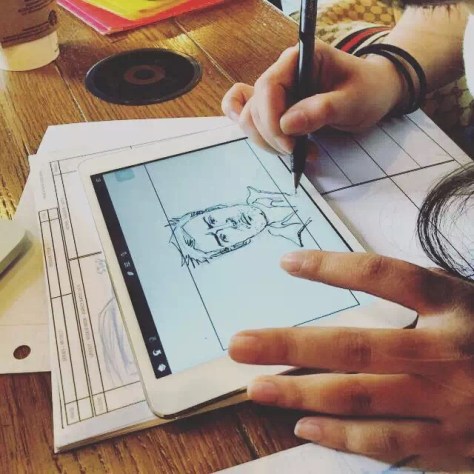
During film and TV award shows like the Oscars and Emmys, inevitably one of the winners will say something about their work being just a small part of the community which worked to make the production they are being lauded for. It sounds like humility unless you get an accurate glimpse into the many vocations and tasks involved in the TV and film industry. For every face you see on screen there are literally dozens or more who did their job properly which enabled the images we witness to take place in the action of the story. One of the very first people to put their hands and talent into movement in every production is the storyboard artist. Many of them never see even a hint of the glamour and excitement that surrounds the set, celebrities, and premier events involved in a production. It is their ability to take the verbal communication of producers and directors and translate them into images that will enable the cinematographer, director, and cast to use this template in framing their work. Binbin Ma is a successful storyboard artist and graphic designer with a wide and diverse lists of credits to her resume. Her recognized artistic talent is a great deal of the reason that she has been sought ought by so many filmmakers but, it also her ability to communicate and comprehend the way these same filmmakers want to frame their ideas and shots. When watching any of the number of films she has worked on, you can see the flavor of the director but there are “signature” elements of composition that those familiar with Binbin will recognize. She is able to mold her abilities to the professionals she works with while still retaining the vehicle with which they are delivered.

Skate at 16 would seem at first to be a film about a young boy’s crush and bullying. In truth, the film is about any individual coming to the point in life in which they decide to be a victim or stand up against an aggressor and suffer the consequences. It is about discovering who you are in the face of adversity, and letting others bear witness to the courage it requires. Julian is a young teenage boy who interacts with a homeless girl who is living in a skate park. He reaches out to her partly due to his kind heart as well as the fact that he finds the girl cute (further proof of the fact that he doesn’t see her as a type of person but rather, simply a person). Almost halfway into the film, he is bullied by a 21-year-old and his skate shoe is humiliatingly stolen by the bully. Julian doesn’t fight back for himself but when the bully leads a gang who is stealing Tecla’s (the girl) belongings, Julian finds the courage to stop this bully. Skate at 16 is almost Shakespearean encompassing young love, family tragedy, the overly aggressive antagonist, the revelation of inner-strength, and a potentially fatal injury which results from the confrontation. All of these emotions which Julian experiences are captured by the camera with different angles and compositions; one’s which are easily imagined as pieces of art. If the colors on screen were more primary and somewhat exaggerated, it would be easy to see them as a graphic novel. Skate at 16 is so adept at using the angle and perspective of the camera to bring audiences to the same emotional state as Julian, it’s easy to see how Binbin’s work was the early staging for this approach. The line of communication and understanding between director, storyboard artist, and cinematographer is seamless; it definitely appeared so to the Los Angeles Cinefest when they nominated this fine film. Director Mario Aranguren gives credit to Ma for the look that was achieved in Skate at 16 by stating, “Binbin’s amazing work really helped me to clarify the blocking and shot angles in my mind. Before doing this, I was a mess in the head. The process of defining the shots with someone as talented as her and then having her return to me with an even clearer representation of the ideas…it’s such an important and vital part of the filmmaking process.” Binbin describes the process for those unfamiliar with her profession, “I worked with Mario, the director of the film, discussing the shot list for each scene. After that, we started drawing the shot basic on the shot list, through the angles, character blocking, and camera movements. Because Skate at 16 is a film about sports, the character movements were sometimes difficult to draw, and also the blocking between many characters could be confusing. Because of the film’s schedule, I had to prepare everything very quickly; it took about ten days for me to finish. The great part about my job is that, once everyone sees the completed storyboards, they become very energized and excited about the film and want to get to work right away. It’s a very rewarding feeling to see something I create have such an immediate effect on other talented professionals.”

img_3146

Guillermo Cameo was so enamored with the look of Skate at 16 that he hired Binbin to be the storyboard artist for his film Robots & Cowboys. There are some similar themes between the two films (feelings of loneliness, isolation, finding one’s sense of self) but there is more of a lighthearted and whimsical look to Robots & Cowboys. There is also a sense of fighting one’s self as well as others, a feeling that childhood can often bring. The main character, Joe, brings drama to his heroic actions, even as we smile at the way he shifts genre’s in his identity and imagination. We often see wide shots when the actions is overwhelming and threatening, while close ups give a sense of comfortability and control in the same way that the backyard tent (which is a make believe tepee) is a safe and controlled environment for Madeline (the young female character). The film is set in rural Philadelphia and has moments that transport the viewer to a Spaghetti Western. Although Cameo knew that he wanted this approach, he needed Ma to relay this visual approach to the crew in a very clear manner. Achieving his vision would empower the film with sweetness as well as intensity, but being just a shade off of his intent could make it come across as shtick. Gulliermo states, “Binbin Ma is one of the most exceptionally talented and qualified graphic artists and storyboard artists of her field. Robots and Cowboys has been one of my most successful endeavors as a filmmaker, and I am certain this is due largely to the fact that I included Binbin as a leading member of the film. The film was enormously popular among festivals and awards centered around children, and garnered wins and nominations from The Kids Festival as well as the Young Entertainer Awards. Furthermore, the film won several awards from the internationally recognized International Euro Film Festival, establishing our production as one of the most inarguably successful children’s films of our field. These enormous achievements among some of the most highly regarded critics and film festivals across the world are indicative of our film’s high standing, which is no doubt thanks to Ms. Ma’s leading role.”

img_3142

Both the opening scene, depicting Joe playing with Sir Steely (a robot toy based on Ma’s little brother’s robot ideas) as well as the final scene, complete with sunset and Copeland-esque soundtrack, were shots right off of Binbin’s storyboard. Whether close ups or wide vistas, Ma has a talent for structuring things that transfers easily to the cinematography. Explaining how to communicate images in a way specific to Robots & Cowboys, Ma states, “I used a lot low angle to make it easy to see things from the kids’ point of view. When I draw with children, I always keep that in my mind, try to bring the real character to frame.” Both Skate at 16 and Robots & Cowboys have a youthful vantage but discuss the trials all of us can relate to in one form or another. Only a professional like Binbin Ma has the eye and training to enable us, as the viewer, to revert back to our earlier selves and feel what the characters are feeling, without being aware that it is the location and framing of the action (brought into reality by Binbin images) that makes it all so real.

12931150_1754536981449465_5997220998646035274_n


Australia’s Amanda Mitchell Displays Unparalleled Diversity

nikwilliamson2
Actress Amanda Mitchell shot by Nik Williamson

Multi-talented Australian actress Amanda Mitchell has proven herself to be a performer with unlimited range. After more than a decade of landing lead roles in award-winning films and highly watched television shows, it’s clear that the caliber of her gift for performing will keep her on our radar for years to come.

Originally from Sandringham, Victoria, Mitchell spent several years honing her skills on the stages of Australia where she starred in a long list of high-profile productions in roles that include Clara Eynsford Hill in the Peridot Theatre Company’s presentation of “Pygmalion,” Adelaide Adams in the Hampton Theatre Company’s presentation of “Calamity Jane,” Nora in “The Mouse that Roared” and others.

While her stage presence captivated audiences across the country, Mitchell was destined for the screen and in 2010 she landed the starring role of Twila Busby on the Investigation Discovery crime series “Facing Evil.”

facing-evil
Amanda Mitchell as Twila Busby in “Facing Evil”

She went on to star in several more television series taking on roles such as Pia & Rena in the 10-episode fantasy series “Atomic Kingdom” directed by James Peniata (“Silent Eyes,” “Dead Moon Circus”), Catherine in “Nameless: Blood and Chains” alongside Gary Boulter from “Silent Majority” and “Bedlam,” and the villainous Tracey Grissman in “Deadly Women.”

Mitchell admits, “I am passionate about working as an actor because it is constantly changing and always challenging. I am allowed to breathe life into different roles, develop new characters and work with different people. No one day is ever the same.”

With such a diverse range of characters already under her belt, Mitchell’s passion for challenging her craft with roles that are completely different from those she’s taken on in the past is easy to see.

Through her dramatic roles in films such as Sage Benishay’s “About A Husband,” which earned recognition at the Colortape International Film Festival, and “Torn Devotion” where she acts alongside Sontaan Hopson (“The Newtown Girls,” “Dark Temptations”) and Richard Cotter (“Dog’s Breakfast,” “All Saints”), Amanda Mitchell has left an indelible mark in the minds of viewers as an actress who masterfully takes on deeply layered characters.

When asked about her favorite genre to work in, Mitchell admits, “If you would’ve asked me this question five years ago, I probably would’ve said drama, because I relish giving justice to a person’s story so that people learn something about themselves or humanity when watching it, whether it be a TV series or feature film.”

In recent years though, Mitchell has been landing more and more lead roles in comedy series and films, a genre where she has carved out a place for herself as the kind of actress who seems to effortlessly make us laugh out loud. Some of her recent comedies include the film “The Tail Job,” which was nominated for Best Narrative Feature at the 2016 Slamdance Film Festival and chosen as an Official Selection of the CATE Film Festival in Los Angeles, and the series “It’s A Dole Life” where she played the critical role of Megan, a quirky manager who runs the government benefits office.

Amanda also appeared in comedic roles in the series “Skit Box” alongside the creators of the viral “ActiveWear” video which amassed 17 million views and was featured on Perez Hilton’s website. Other comedy roles include the lead character Evelyn in the series “Greg,” Hazel in “Aging Gracefully,” Julie in “Love That Car” and Mariah in “The Final Year.”

When it comes to working on a comedy project, she says, “I’ve always been asked to employ my own unique personality into the role, and that’s what audiences and critics respond to, being me! It’s funny how easy it might sound but it’s very difficult being yourself, being loyal to the script and making it all work together so that people laugh.”

Her work as a commercial actress is another area where ‘just being herself’ has contributed to Mitchell’s success. Over the years she’s amassed an astonishing list of credits as a featured actress in commercials for Coles, Commonwealth Bank, Eurobed, Shark Sonic Duo, Pack & Send, Smart Cleanse, Dollars Direct, Ruby Radar and more. She is also featured in the music video for D-Block & S-te-Fan & Isaac’s hit song “Alive” feat. Chris Madin, which has garnered more than three million views on YouTube. The music video paints the story of a dying teenage girl in the hospital with Mitchell taking on the role of her heartbroken mother. Even without speaking, Mitchell’s emotional expressions in the video are palpable. Check it out below.

THE UNIVERSAL LANGUAGE OF MASTERY TRANSLATES GERMAN INTO CELTIC

Almost every aspiring musician has this dream; a huge band playing a show at a gigantic venue suddenly needs someone to fill in for a show, then they like you so well that they ask you to stay on the gig. It never happens, right? Wrong. Yes, it’s the stuff that dreams are made of but it does happen from time to time. The part that isn’t so highly glamorized is the crammed preparation and the nerves that can make one “lose their lunch” hoping that you’ll make it through that first gig without everything crashing down on top of you (to say nothing of those dreams in which you arrive to school only discovering you are only wearing underwear). The true music professional can only hope that his years of preparation have honed their instincts to a point where all will be fine. A great example of this is the tale of German guitarist Stefan Hillesheim. As a celebrated Blues, Rock, and Jazz guitarist in his homeland Stefan was enjoying a fulfilling life as a musician when he was asked to fill in for the internationally popular Celtic Dreams. The incredibly popular touring musical show Celtic Dreams features a unique mix of modern rock with traditional Scottish, Irish, and Celtic folk music, with an eclectic mix of dancers and other visual performers. Celtic Dreams regularly perform to sold-out audiences all over the world, and have been the subject of many press articles in Europe and abroad.

Celtic Dreams tour manager was in a high pressure situation when the guitarist for the show was suddenly unable to perform. This extremely popular show relied on the professional execution of the complicated musical pieces to excite the audience and support the dancers and other performers. The guitarist was essential to every performance due to the fact that Celtic Dreams takes on a contemporary rock influence with their traditional music, making it more accessible to a wide age range of audience members. The fact that the music was quite complicated and required flawless execution of the many transitions from piece to piece further exasperated the situation. Celtic Dreams tour manager Oliver Stahl needed to find not just “a guitarist” but, “an amazing guitarist” who could read complex charts and play shows to huge audiences with basically no rehearsal. Luckily for Stahl, he was in Germany and was able to contact Stefan Hillesheim. Although not focused on traditional Irish music, Hillesheim was particularly enabled to take on the task of this music for Celtic Dreams as he reveals, “I started listening to Irish folk bands like the Dubliners, the Pogues and the Fureys when I was about eight years old. My Uncle is the lead Singer and Guitarist of the well-traveled Irish folk band Limerick. My Parents took me to his concerts from my early childhood on. When I started playing electric guitar in my early teens, I really got into Gary Moore and Rory Gallagher (both are Irish guitar legends). I love the way they combine traditional celtic music with Blues and Rock.” As an accomplished and lauded guitarist in Germany who also possessed an understanding of the inherent lilt of traditional Irish music, Stefan was an easy choice to fill in for Celtic Dreams. Oliver Stahl comments, “Stefan performed as a lead musician and guitarist on multiple occasions for Celtic Dreams. His knowledge of both modern rock styles and traditional Celtic folk music made him perfectly suited for us. I truly could not have asked for a more versatile musician. Stefan was with us for multiple performances, all of which were held in major venues in large cities. I must note how versatile a musician Stefan is and how this added to the success of each of these shows. His ability to jump between and blend styles on both acoustic and electric guitar (and occasionally bass) was astounding! It brought a fantastic energy to each of our performances. The shows that Stefan played in were performed to sold out audiences and I’m positive that his playing was a major factor in garnering these huge

audiences as well as the press and great reviews. Stefan played a lead role in ensuring the success of every show he performed and has been an essential player in boosting Celtic Dreams reputation and success as a whole. Stefan is known throughout Germany as an incredibly skilled and accomplished musician who has made a name for himself as both a session player and bandleader.”

celtic-dreams-02

While Stahl was nervous until he found Hillesheim, Stefan’s uneasiness began at this time. You could almost say that Stahl “gifted” his concerns to Hillesheim. That’s not to say the guitarist wasn’t excited to play with Celtic Dreams…quite the opposite. Stefan was contacted three days prior to his first performance with the band and had to learn three hours of music; including medleys and complicated transitions. Daunting task ahead of him, as a true professional, Hillesheim understood that the production was depending on him to fit perfectly into an ensemble that was already running smoothly. In respect to the music, Stefan wanted to play authentically stating, “Every genre of music has its appropriate vocabulary. When you play Irish or Scottish music you have to stick with certain clichés because this kind of music has a long tradition. Even though there is room for interpretation and improvisation, it wouldn’t be authentic if certain elements were missing. For example, the typical triplet based rhythmic in Irish step/tap dance music is the foundation of this musical language and is a requirement. For traditional Celtic Folk tunes like ‘Scarborough Fair’ or ‘Star of the County Down’, I would definitely play an acoustic guitar because that is what people expect and want to hear. Modern Irish music like the Corrs or the Cranberries often features electric guitar so that would be my weapon of choice in that case. Overall it depends on the ‘Vibe’ of a song. I play the instrument that fits the song best and compliments the singers as much as possible rather than playing what I personally prefer, even if that sometimes means committing to a less ‘flashy’ or interesting guitar part.”

Hillesheim is more often seen performing in a Blues club (with popular German band BlueSide), at a large outdoor musical festival, or even at major concert venues (as he did recently with Liquid Blue at the Staples Center in Los Angeles) but all of these ensembles are the contemporary Blues or Rock bands with which he is more commonly known to perform. Having spent decades in groups of this type, Stefan is extremely familiar with them and points out one major difference that he had to adjust for in playing guitar with Celtic Dreams…dancers. He remarks, “Celtic Music has a lot of colors to it. Many of the tunes are quite danceable and have sort of a jumping, galloping character to them; others are almost hauntingly emotional, melancholic, and full of heartache. I had the advantage of playing behind a number of great vocalists before so I was familiar with that role but the Dancing/Step Dance groups added another component to the show and I found myself playing behind a line of dancers.” Stefan more than exceeded the hopes of Celtic Dreams producers and performers as proven by the fact that he was immediately asked to finish out the tour as their guitarist. Not content with expressing this “accent” in his guitar playing, Hillesheim has currently relocated to the US to pursue his career and further his exploration of the American musical style of the Blues. If Stefan’s history tells us anything, we can be certain that this internationally acclaimed guitarist will be recognized amongst the latest generation of Blues guitarists.


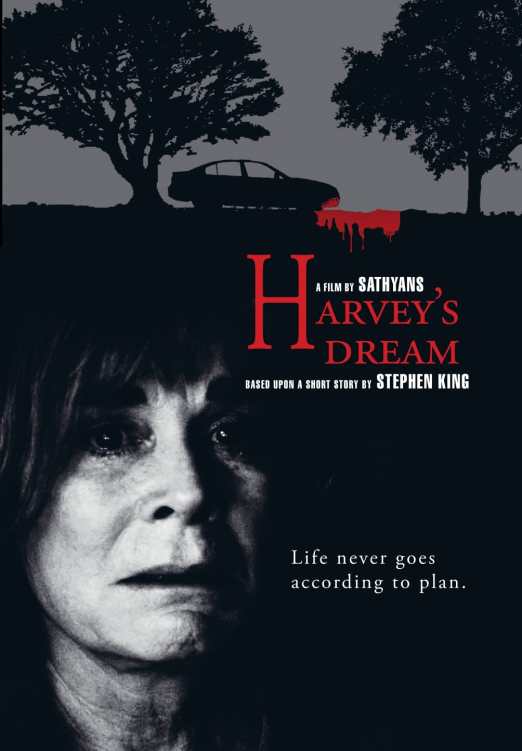
Film Review: Jainardhan Sathyan’s “Harvey’s Dream”

poster-1


Director Jainardhan Sathyan’s film “Harvey’s Dream,” based on Stephen King’s short story of the same name, brings to the screen a multi-layered tale of a couple struggling through what seems to be the normal aging process; but as the story progresses we soon realize there are many other factors at play.

From the very start of the film Sathyan does a brilliant job of setting a mysterious and eerie tone that pulls us in and leads us to question what is going to happen next. A panning shot across the family’s mantle and living room walls in the opening scene reveal photos of an apparently happy family, but the slow and pensive sounds of a piano playing notes in minor keys in the background inform us that something is not right.

What seems to start off as a normal Saturday morning for Harvey, played by Golden Globe nominee Philip Casnoff, and his wife Janet, played by Roxanne Hart, who won two Best Actress Awards for her performance, becomes progressively more devastating and complex as the story unfolds.

Janet leans over the sink washing fruit for breakfast. She’s bitter. She feels like she was jipped out of the life her husband promised her, and she’s vocal about it. She calls him dumb and makes subtle jabs that he may have Alzheimer’s, something that serves as a major insight into the true nature of what’s going on in the story.

As Harvey sits at the breakfast table recounting his dream of a tragic phone call he received from one of his daughter’s telling him that their drunken neighbor killed one of her sisters with his car the night before, Janet stares out the window in horror.

Her reaction to the “dream” is perplexing, after all, if it was just a dream then why panic? Her face scrunches up as she tells herself that the dark stains on the mangled corner of their neighbor’s car that she sees out the window is not blood, it was just a dream– and if you say your dreams out loud, they don’t come true.

Harvey continues with his story, stopping momentarily as he struggles to recall the name of one of his daughters, and it is at this point that we begin to realize that there is more going on behind the scenes, something the couple is not yet aware of, or isn’t ready to face.

Allowing the frustration and animosity that’s clearly been brewing for decades to take center stage, Sathyan captures the essence of what it is like to be an unhappily married couple. What keeps us engaged in anticipation of what’s next though is the way the director uses subtle cinematic devices to let us know that there’s a dramatic twist coming, one we will never expect.

In the end we discover that what seemed to be a precognitive dream was a tell-tale sign of early-onset Alzheimer’s disease– the phone call Harvey received from his daughter that morning did happen, he just forgot about it.

The interplay between the couple is spot-on. Ironically enough, Casnoff and Hart are a couple in real life, which was a main factor in Sathyan’s casting process when it came to selecting the film’s lead actors. Casnoff, who is known for his performances in the series “Sinatra,” “Oz” and “Strong Medicine,” endows Harvey with subtle signs of inner confusion and the perfect amount of vulnerability, traits which only begin to make sense after we discover the story’s final twist at the very end.

The shot sequences and sound design of the film are tantamount to the impact of the story as they heighten our emotions and piques our interest to know the truth of what’s going on the whole way through.

Thanks to Sathyan’s genius storytelling and the actor’s captivating performances, it’s not surprising that the film has already achieved astonishing international success since its release earlier this year. So far “Harvey’s Dream” has screened at over a hundred festivals and earned an impress list of awards including the Best Lead Actress, Best Overall Short and Judge’s Choice Awards at the Women’s Only Entertainment Film Festival, the awards for Best Actor and Best Film from TMFF (The Monthly Film Festival) and the Best Short Film Award from the Direct Monthly Online Film Festival, Chandler International Film Festival and the 6th Dada Saheb Phalke Film Festival. The film was also nominated for Best Acting Duo and Best Screenplay at the Sanford International Film Festival, Best Film and Best Actress from the Bucharest ShortCut Cinefest, Best Original Score from the Milan Online Film Festival, as well as several others.

Sathyan, who also produced the film, takes a unique approach to filmmaking. Without disclosing too much, he leaves space for the audience to make their own judgements and lets the story run its course in a way that keeps the viewers constantly engaged.


Singer/Songwriter Juvicsa Talks About Debut EP “Eyes to Land”

I recently had the chance to catch up with the uber talented singer songwriter Juvicsa Vela, who released her debut EP Eyes to Land produced by Federico Angel earlier this year. In our interview Juvicsa opens up about the new EP, her writing process and some of her musical influences.

Born in Peru, Juvicsa discovered her god-given talent for singing and passion for music at an early age, and when she moved to Sweden with her mother at the age of 12 her artistry really began to take root. Having lived all over the world, it’s not surprising that Juvicsa’s music exhibits traces of influences from many cultures.

Juvicsa Vela
Singer/Songwriter Juvicsa

Juvicsa first began working on the EP while living in Los Angeles where she attended the Musicians Institute, but in search of new inspiration and a change of scenery, she moved to Reykjavik, Iceland last year where she finished the album working remotely with her LA-based producer Federico Angel.

Eyes to Land can easily fit into the pop/rock category, but with R & B and Latin elements, not to mention Juvicsa’a powerful vocals and bittersweet lyrics, the EP eloquently defies genres.  

You can purchase Juvicsa’s debut EP Eyes to Land on Bandcamp, iTunes, Amazon and Spotify. There’s also a limited amount of signed physical copies for purchase on Bandcamp. You can also find out more about her and get updates on upcoming shows through her website, Facebook and YouTube channel.

Juvicsa also wrote the popular theme song for an Indonesian adventure TV show sponsored by Mitsubishi called “Jonsson & Robinson Journey,” which premiered to millions of viewers across the country.

To find out more about Juvicsa and her new EP make sure to check out our interview below.


How old are you?

28 years young

When and how did you first get into music?

I must’ve been around 4 or 5 when I started to sing. I had this boombox with a built in mic and a lot of cassettes. I used to spend hours and hours and hours on the floor with my boombox, recording myself singing and creating harmonies over my recordings, I think that’s when I first created something musical. This was so liberating to me, a kid who was a rebel, always getting in trouble at school but when I went back home and locked myself in my room I’d spend hours singing and doing all those things I loved to do and that was my outlet. Then I started writing songs at the age of 15 with an old piano my mother got for me and a little MIDI controller.

When you say you were a rebel– what kind of trouble were you getting into?

As a very hyperactive kid, I didn’t really like to follow the rules at school so I got sent to the principal’s office very often for roughhousing and sneaking out of class to play with the older kids.

What do you think might have happened if you hadn’t found music as an outlet?

I already have a hard time focusing on one thing at a time so I think I would’ve probably lost my mind a little. I don’t think I would have been able to deal with the darkness and the difficulties of growing up. I would’ve possibly kept getting in trouble.

How long were you working on “Eyes to Land” before its September release?

It took me about a year from scratch to finished product, a lot of it had to do with the fact that I was in Iceland and my producer was back in the states, so there was a lot of going back and forth, time differences and work on both our parts. Lots of coffee, little sleep.

Can you give us a little back story on the EP and where you got your inspiration from?

I moved to Iceland a week after my grandma passed away, my grandma was more like a second mother to me, so the whole process of composing the EP was a very emotional one. I definitely think that both Iceland’s landscapes and nature, and being in a very emotional state, brought the EP out, especially being in a brand new country.  

Did you write all of the songs on the EP?

I did, along with my producer.

What is the writing process like for you?

I think the writing process was different for each song, I could get inspiration by sitting by the ocean in Reykjavik, being in the shower for another song, conversations I had with friends that sparked something in me and made me drop everything and write. I do spend a lot of hours alone in the beginning, I think that’s what works best for me and I’m more comfortable that way. After writing a song I’d call my producer and we’d go to the next step, more composing, polishing, re-recording and so on, all through FaceTime.

Can you tell us about your inspiration for some of the songs?

Well for example “High Tonight” was born out of a glass of wine and a late night conversation with a friend of mine. She was going through a tough break up at the time and she said a couple of things that really struck me. I dropped everything, went over to the keyboard and started writing it, it was written in a couple of hours. She actually doesn’t know about it yet!

For “Unaware” I had to dig a little deeper, it’s definitely a very personal song to me. My inspiration came from being in a toxic environment and feeling exhausted but still seeing a light at the end of the tunnel, still not being able to let go of that thing that can break you but can save you. The sound for “Unaware” is definitely influenced by No Doubt and Spanish music.

“Now” is the song about hope. Like I said, there has to be a light at the end of the tunnel and this is it, this is your saving moment, it’s you giving in instead of giving up. “Now” is kind of my full circle song.

What is your favorite song off of the EP right now?

My personal favorite is “Unaware.” I’m very emotionally attached to that one.

Why did you choose to name the EP “Eyes to Land”?

It’s a poetic play on words. This EP symbolizes a person trying to deal with death and rebirth at the same time. The name comes from trying to deal with the death of someone so close that in a way symbolized the death of a part of me, but also the rebirth, which for me was moving to another country. That in both situations you need guidance, you need eyes. If not your own, then someone else’s.

How would you describe the album to those who haven’t had a chance to hear yet?

A shoegaze and pop/rock mix with emotional but energetic vocals. With all kinds of raw ENERGY ranging from sad to sensual.

Did you play any instruments on the album?

I played the keys on the final product but I program different instruments when I’m in the writing process as well so that everything is the way we want it.

Do you have a consistent band backing you?

Not as of now I don’t. It’s hard to keep one consistent band with you when you’re traveling a lot.

Who else was involved in the making of your new EP “Eyes to Land”?

Federico Angel as producer and instrumentalist, the amazing Ro Rowan on cello, Dean Dichoso as instrumentalist, Dean Dichoso Productions for mix and mastering and Steinunn Osk Axelsdottir as sound engineer on vocals.

How did you choose Federico Angel as your producer for the album?

From the first day we started working together I knew there was something that clicked. It’s actually very simple, we’re both very straight to the point and he knows exactly what I want and how I want things to sound, sometimes even without fully explaining what I mean, he gets it. I mean it’s gotta be a good match when the artist is explaining a sound as a color or a metaphor and the producer completely gets it down.

You’ve had a pretty multi-cultural upbringing, can you tell us about some of the places you’ve lived and how they have affected your journey as a musician?

I was born in Lima, Peru but I moved to Lund, Sweden when I was 12, as an adult I moved to Los Angeles and as of last year I live in Iceland. All of these moves and amazing experiences with different cultures make my music what it is. Ultimately all I want is to unapologetically mix everything I know and write something I think will sound great and people will relate to.

Were your parents involved in music as well?

No, my parents weren’t but I have singers and artists in my extended family.

Can you tell us a little bit about Iceland’s music culture? Do you feel that it has influenced your work as a musician?

Funny thing about being like a sponge when you’re a musician, I sent my producer a demo during our Eyes To Land writing process and he thought it sounded Björk-esque, which obviously was a huge compliment that I most likely didn’t deserve but it really made me think about inspiration always changing and how it can be so related to where you are, I think it’s amazing.

I’m a really big fan of Icelandic music, coming from Sweden, I initially thought it could be similar but it’s really an art of its own. To me, the peculiar sound that Icelandic music has, has to do a lot with the isolation of the island and even modern Icelandic music has a characteristic sound with traces of the old.

Are you involved in any collaborations at the moment or are you mostly focusing on your solo career?

I’m working with a couple of artists at the moment for minor projects or songs I’ll be featured in but I’m mostly focusing on my solo career at the moment.

What five albums are you listening to most right now?

Garbage’s new album “Strange Little Birds,” Sia’s “This is Acting”, Kendrick Lamar’s “To Pimp a Butterfly” and waiting impatiently for the New Lady Gaga album and the new Beth Hart album!

If you didn’t become a musician, what profession do you think you might have chosen?

I think I would’ve still been involved with the arts in some way, I would’ve been around music and art in any way I could. I always try not to let plan B distract me from plan A though.

MUSIC+FEAR+COMEDY=THE SENSIBILITIES OF ROGER BAINBRIDGE

rogerscreams

The most famous paintings of Beethoven depict him with a furrowed brow and wispy hair, a slightly mad genius furiously creating; pushing himself to produce works that never fully satisfy himself while seemingly inconceivable for the average man. Replace the piano with a comedic storyline and the symphony with a cast and film crew and you have an appropriate analogy for Roger Bainbridge. If such a phenomenon as Comedic Artistic Attention Deficit Disorder (CAADD) exists, Bainbridge is the spokesperson for it. Vacillating between formats such as; theater, film, live sketch comedy, music videos, and others, with his role as Executive Producer, writer, and actor, this Canadian comedic force has created a unique voice blending the dark and the humorous presentation of everyday life as well as fantasy. Regardless of the avenue with which he presents his ideas, Roger has created an identifiable voice in dramedy, most often presented through the vehicle of his comedy trio Tony Ho. The group, which includes Miguel Rivas and Adam Niebergall, has grown from sketch comedy into music video and film presentations. In the same way that Monty Python did some forty years ago, Tony Ho has become a brand of comedy with its own style and temperament. Modern accessibility to media and technology gave Roger the ability to experience all levels of production from conception to presentation. He used this knowledge to connect with and create the means by which Tony Ho and other artists would gain access to more ubiquitous means of presentation as their careers grew. Regardless of the production, his “fingerprint” is felt. This is surprising and satisfying in the music videos “Never Come Down” by Brave Shores and “Street Violence” by Digits. Both videos challenge us to look at dark situations and find the means by which to laugh at the ridiculousness of the situation by accepting our own lack of control of it. The “Tony Ho” brand that Bainbridge has worked so intensely to create is hard to place into words; in an effort to define it one might state that it is, “look at all the awful things that can happen in life, shouldn’t you take some respite in how ridiculous it all is and the fact that you can’t control or understand it all?”

884907_10151497940454802_102578703_o

The success of the “Violence” video and Roger’s acclaim for his roles both behind and in front of the camera resulted in other musical groups seeking him out to be the creative force behind their music videos. When Brave Shores needed a video for their single “Never Come Down”, they reached out to Bainbridge because of his work on “Violence” and the films of Tony Ho. Jay McCarrol of Brave Shoes comments, “When I approached Roger, he pitched an idea about a bald guy who wishes for hair and suddenly gets a full head of green hair, which would be green screened to become different colors.  He pitched it in one sentence and it was perfect.  It was great to see his talent has such range. He could just put his unique spin on anything. When you work with Roger it’s because he can be so unpredictable, that’s what we wanted.  I knew he was some sort of mad genius when I saw all of the Tony Ho stuff.  Roger possess a different kind of “it” factor, the very rare kind.  Something about him is so pleasantly haunting.” Roger admits that he has always been a fan of music videos which extend the ideas and mood of the song while also becoming a piece of art themselves. With “Never Come Down” he felt there were multiple layers, as he describes, “The song was kind of an expression of ‘ignorance is bliss’, ‘I’m just gonna have fun, and go with what feels good, f*#k all this worry.’ This can be a great sentiment, to a point. I wanted to explore the idea of someone getting everything they want. Is it responsible to just live a blissed out life? Are you living in a way that considers others and yourself? My idea was to kind of sneakily make a video about the virtues of responsibility while making it feel like a party the whole time. I don’t know if that makes me a Christian Youth Counsellor or something, but it’s probably just another example of me being a contrarian. You say party, I say be a responsible father.” brave-shores-1-945x500

brave-shores-never-come-down

The video shows Adam Niebergall (of Tony Ho) as the main character who is granted his wish of long luxurious (color changing, sometimes psychedelic) hair and proceeds to only care about whipping that hair and head banging. While amongst trick bikers, on the beach, or a number of settings, he casts off all responsibilities, including his now pregnant romantic interest. Karma seems to exact its penance from him at the end of the video as he has given himself a fatal neck injury…as a result of his new flowing locks. It’s a modern pop/electronic fable about not focusing on the self, delivered in the humorous and yet biting way for which Bainbridge is known. Whether creating thought provoking and laughter eliciting films or music videos that still manage to carry his voice in their message, Roger Bainbridge has become known in Canada as the person to go to when you need someone to take a project from inception to production and presentation. He is pleased to be the means by which others can further their art whether it be in the role of Executive Producer, writer, or actor. Bainbridge admits that he is still sometimes jolted back into reality, in particular in regards to his involvement with musicians and their videos. He confirms, “I love music videos. I feel like I’m part of the generation that really got the last gasp of them on television. I grew up watching them on MuchMusic, watching for hours waiting for cool ones to come on. I really loved the stuff coming out for the 90’s British bands like Blur or Radiohead or Pulp. They were so glossy and arty and different. It made the world feel a lot bigger than the small Ontario town I grew up in. But it never really occurred to me that I’d ever have the occasion to make one.”