All posts by Lorraine Wilder

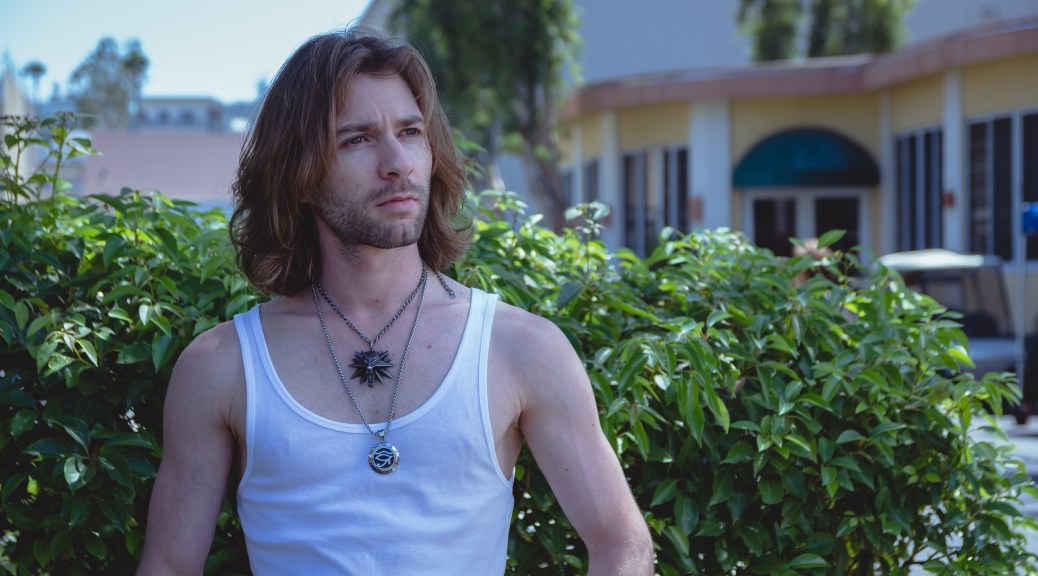
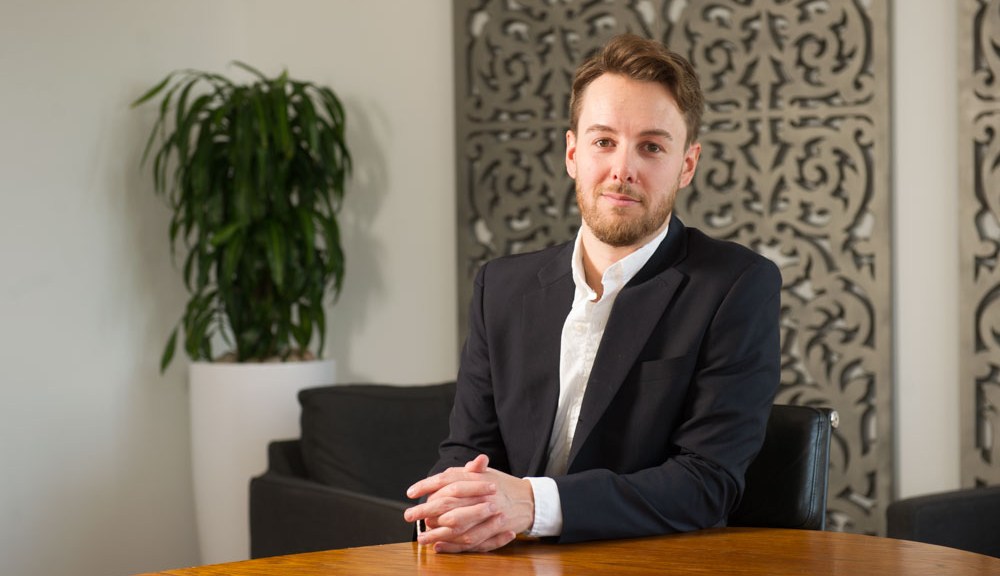
Liam Casey Sullivan on honor of continuing the conversation about addiction

Most successful actors will tell you that they do not act for the fame or for the fortune, they act for the thrill. They act because their job lets them connect with dozens of strangers, allowing them to contemplate the various aspects of the human condition together. They act because it is their creative outlet and their chance to take an audience along journeys they may never otherwise experience. They act because it keeps them alive. It doesn’t matter if an actor is young or old, new to the screen or a household name, actors act because unlike other professions, theirs allows them to escape reality and explore their souls before the eyes of the world. For these reasons and many more, Liam Casey Sullivan acts and with his rare combination of passion, talent, and perseverance, he is likely to live before a camera for decades to come.

“As an actor, I am required to delve into the bank of my personal experiences and surface the same feelings or emotions that my character is experiencing at any given time. Through respective research and seeking sympathy for the person I’m playing — however challenging that may be — I aim to grasp a complete understanding of their point of view so that I may be able to adopt it. Once I do this, I then embark on understanding their relationship with others by sourcing parallels from people I know in my life and from other stories. Although I may not have shared the same experiences and relationships as my character, I can revert to alternate moments I’ve lived in order to render even the slightest bit of those same reactions and capitalize upon them so I may appear as though I have lived them,” tells Sullivan.

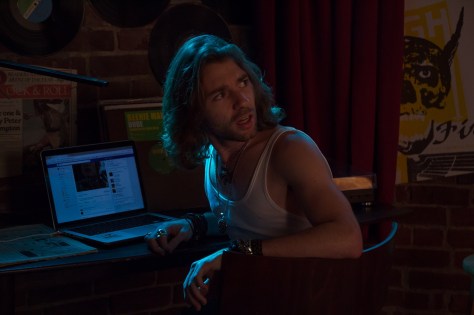
Sullivan’s remarkable ability to ease in and out of character is arguably his greatest asset, and something he has done successfully for a number of different on and off screen productions, such as for the hit teen drama Degrassi: Next Class and The Girlfriend Experience. What tends to differentiate Sullivan from his competition, however, is his ability to adopt and portray traits that are entirely different from his own personality. Not only does he do so exceptionally, he thoroughly enjoys playing characters entirely unlike him. In fact, he considers playing Dougie in the Canadian film, Mary Goes Round, to be the highlight of his film career solely because he had the opportunity to play a conceited, selfish character.

Mary Goes Round follows the life of Mary, a substance abuse counsellor with a drinking problem. After being arrested for drunk driving and losing her job, Mary returns to her hometown where she learns that her estranged father is dying of cancer and wants to form a bond with Mary and her teenage half-sister that she has never met. In the film, Sullivan’s character Dougie conceals his own insecurities through a mask of obnoxiousness and arrogance. His lack of true friendships and general loneliness cause him to fiend attention and subsequently irritate those around him.

Ultimately, Sullivan’s character proved instrumental to Mary Goes Round’s great success and his performance on screen, in conjunction with his input behind the camera, highlights just how valuable he can be on any given project. After premiering at the Toronto International Film Festival in 2017, Mary Goes Round was featured in several other festivals across North America. In addition, it won three prestigious awards, including Best Narrative Feature at the Annapolis Film Festival in 2018 and The Panavision Spirit Award for Independent Cinema at the Santa Barbara Film Festival in 2018.

What Sullivan enjoyed most about playing Dougie was the fact that he was able to explore and portray a personality type that he hadn’t ever depicted before. In addition, the film’s director, Molly McGlynn, was open to experimenting with the script and offering her cast an opportunity to rework and modify their scenes as they saw fit. Under these circumstances, Sullivan was able to allow his creative nature and unique style to flourish and he quickly proved himself invaluable to the production. Ultimately, however, Sullivan was honored to have taken part in shining a light on an extremely prevalent and relatable topic. Knowing that he was able to take part in a broader conversation about addiction left Sullivan feeling fulfilled and hopeful that audiences would be able to look at this social crisis from the unfamiliar, but interesting angle he helped create.

“In all, I liked that this story rings true to how much of an ongoing struggle battling addiction can be. A drinking problem has the power to haunt you for your entire life and this story is unforgiving when it comes to highlighting the truth and the daunting reality of addiction. This story not only spreads an awareness to the public but also gives a healthy sense of hope to those who may be facing similar problems as Mary and it felt great to have played a part in that,” Sullivan concludes.


Top photo by Helen Tansey

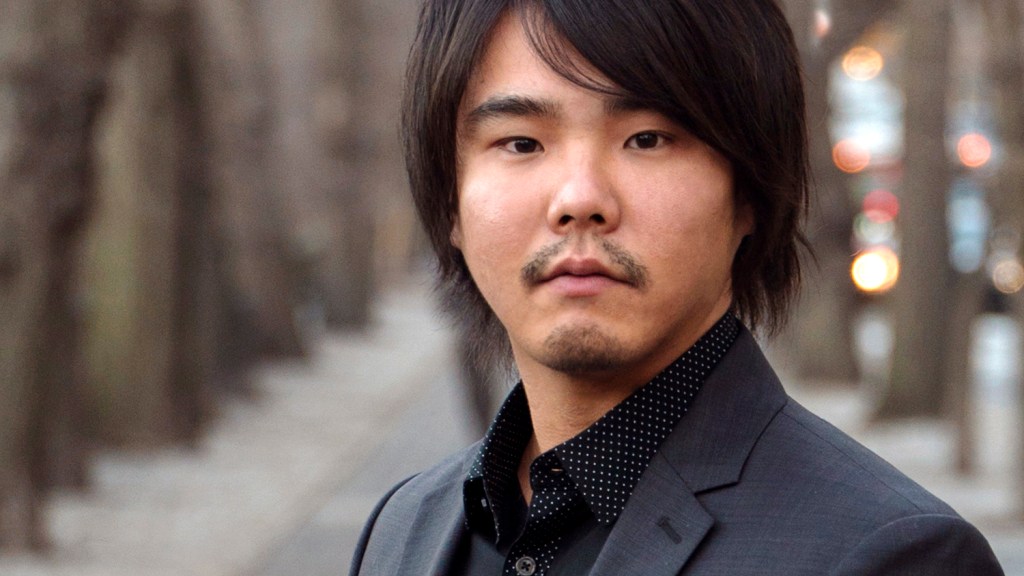
Yuito Kimura uses unique cinematography style to create masterful pieces of art

As a child, Yuito Kimura always enjoyed watching mystery and crime movies. At the time, he would just watch them as a source of entertainment. Now, he appreciates them from an artistic standpoint, noting how each shot is framed and how the filmmakers chose to tell the story. As a celebrated cinematographer, Kimura’s style was inspired by such films, being dark, contrasted, and stylized, using practical lighting. He carefully pays attention to framing, camera angles and movement depending on the scene and what the character is doing. If there is a scene about a girl crying by herself, he won’t just frame the character without having meaning behind why he chose to do so. His job is to tell her emotions by choice of lens, framing and camera movement. Such attention to detail makes Kimura a standout in his industry and shows just how much talent he possesses.

No matter what project he takes on, Kimura makes sure it is the best he can visually be with his work. The Japanese native has shot everything from music videos, such as “We are Stars” by Snowy Angels, to commercials, like the one for Townforst, to acclaimed films including Star Wars: Amulet of Urlon and Back to the Future?. He consistently impresses all those he works alongside with his commitment to his work.

“Yuito was wonderful to work with – he always showed up on time and when he came to work, he brought his creative suggestions on how to make a scene better. His extensive knowledge about camera lenses and how to angle the camera had a positive impact on many of our scenes in the film. Yuito also put together a hard-working crew who never complained and always had a positive attitude while on set. He has a unique way of looking at a scene and telling a story. He is very thorough and made sure that my vision was being brought to light during filming. The fact that he is willing to take risks when capturing a shot for a scene makes him vastly different than a lot of other DPs who tend to stick to what’s safe and traditional,” said Christina Kim, Director who worked with Kimura on the film Dropping the S Bomb.

Dropping the S Bomb tells the story of the not so book smart Cassie, who, after discovering that the guy of her dreams plans on attending Stanford, does whatever it takes to be accepted, even if it means doing things that may get her kicked out of school if she gets caught.

“I really like the idea of the story. The girl is trying to get into Stanford because the boy she likes goes there. She does do whatever it takes to get into school and I really like those funny and silly decisions and actions that she would do for him. Throughout the story, I’ve learned that nothing is impossible. It reminds me of my school era. It gives me sympathy,” said Kimura.

While shooting this film, Kimura made sure to always stay focused despite a fast shooting rotation. This is what he enjoyed most about working on the film. With such a fast-pace, he had to come up with ideas quickly, and he was given a lot of freedom to do so. He needed to think about more than he usually did and deeply understand the story compared to other projects.

The film was then screened at Action on Film International Film Festival 2016, Nice International Film Festival 2016, Action on Film International Film Festival 2016, Hollywood Dreamz International Film Festival 2017, and Phoenix Comicon Film Festival 2017. Kimura is proud of what they could achieve through hard work and a great story.

Most recently, Kimura shot a commercial for Townforst Slip Resistant Shoes for both television and online. It follows an Asian businessman who encounters an unexpected event after he goes back to his office at night. It is a sexual comedy, and although it is a commercial, Kimura knew the importance of telling a good story.

In this project, Kimura used two kinds of contrast styles to achieve a mysterious mood and add to the comedy. He used one style for the visual, and another style for the story. From the beginning shot to climax, all shots are contrast. When it hits the climax, he then used a more flattering lighting style to show what was truly going on. The moment he read the script, he came up with this idea to help enhance the story, knowing that as a cinematographer, he is vital to telling it.

“Yuito is an extraordinary cinematographer. He works really hard and focuses on his profession, treating every detail so seriously. He is also a very creative cinematographer who always has new ideas and concepts to make the films better. He has a unique eye and is an asset to every production he works on. He really loves what he does. His passion is totally on this field,” said Phenix Jiangfu Miao, Director and Production Designer.

Watch the Townforst Slip Resistant Shoes spot here, the winner of Best Commercial at the Los Angeles Film Festival 2018.

Production Designer Elisia Mirabelli creates make believe to explore fundamental aspects of reality

When Elisia Mirabelli was a young child, she found learning to read to be a challenge. Because of this, she found herself stepping inside the experiences of other people through film, rather than books. This began a lifelong passion for the medium, teaching her empathy and the certainty that every single person has a story to tell.

Mirabelli’s first filmmaking experience came when she was just a teenager when she was the production designer of a short film that made its way to the esteemed Toronto International Film Festival Kids. It was then when she realized she could turn her passion for filmmaking and design into a fruitful career. She has since dedicated her life to creating the “make believe” and yet using her talent to teach audiences the most intimate aspects of reality.

“Sometimes I can’t decipher the difference between a personal memory and something that happened in a film. For me, they are one in the same. Working in film feels like I’m part of a community of magic makers fueling one giant empathy machine,” said the Toronto native.

With her contributions on the film Let Me Down Easy and the acclaimed web series Night Owl,Mirabelli shows audiences around the world just what she is capable of as a production designer. In her home country of Canada, she continues to impress with her work with Bell Media and DHX Media.

Another highlight on Mirabelli’s resume came back in 2013 with her film Pretty Thing, telling the story of an elderly man reflecting on the lost moments and broken truths surrounding the butterflies that escaped from the mouth of the girl who got away. Pretty Thingrelied heavily on production design as the film is influenced by a blend of magic realism and classic fairy tales. Although the film is rooted in a contemporary setting, the film’s protagonist looks back on moments shared between him and a lost love with a romanticized, dreamlike luminosity. These flashes of time spent together were filmed in tailored sets and locations designed to reflect the magical, surreal quality of falling in love. These sets included a stage equipped with a hand painted pastel arch and mock vintage floor lights situated in a field with wildflowers and plunging hills, a bathroom with a clawed footed tub surrounded by a sea of antique champagne bottles and a bedroom lined with teal baroque wallpaper chock-full of wilted floral bouquets and arrangements.

Pretty Thing follows the memories of an old man who is fixated on the narrative of ‘the one that got away’. As the film continues we learn that his estrangement is less of a romanticized, fairy-tale like parting and is in fact an outcome of his possessive and controlling behavior. For him, she is merely a pretty thing, an entity he wants to pin down and have for himself. There is an exploration of the way women are objectified in film. The method in which they have been traditionally objectified through the male gaze, their form sliced up in close-ups, their appearances gussied up and painted, filmed with a soft light like some angelic plaything there to be gawked at, won, saved or, if they’re in control of their autonomy, shamed, tainted, slandered, destroyed, ‘not the keeping kind’. It is an important story, even now, five years later,” said Mirabelli.

After premiering online with The National Screen Institute, Pretty Thing carried a successful festival tour, which included The Seattle International Film Festival, and took home several awards across North American festivals. However, the highlight for Mirabelli came when the filmed was screened at Cannes and was then handpicked to represent Canadian talent at the festival by Telefilm. Seeing the film at such a prestigious setting and knowing it had been selected to represent her country was one of the most surreal and fulfilling experiences of Mirabelli’s career.

Pretty Thing is a project rooted in the storytelling aptitude of production design. Each frame of the film is like a painting, not purely its splendour, but also in the sense that each piece of film the is open to interpretation, where meaning is altered by the perception of those that look upon it. Being able to disentangle a film purely through an aesthetic lens was a production designer’s dream, and an opportunity Mirabelli took full advantage of.

The most extraordinary aspect of the production design was the film’s opening and closing scenes which had a live butterfly flying out of the mouth of one of our characters. To achieve this, the butterflies had to be kept at 4° C which left them in a sleeplike state. The temperature of the actors; mouths would then awaken the butterflies, creating an incredible result far superior to any visual effects done in post-production.

Mirabelli’s work helped convey the films reference to the way many refurbish an agonizing memory to suit the narrative they tell themselves about what kind of person they are. Shaping the films design meant creating two dissimilar, nonetheless linked, worlds. Sets were first captured in their most striking, glittering almost fairy-tale like forms followed by the practice of withering them down, skinning their facades, peeling away all the layers that make them shine. Without the films production design, there really would be no Pretty Thing, and without Mirabelli, it may never have been the visual masterpiece that it is.

“The unconstrained ability to construct art that supported the story so heavily was amazing. To create a gleaming, intricate and elaborate succession of worlds only to place as much importance and thought on knocking them all down. Obliterating your work and seizing the bones of that ruin on film felt like a gift that few production designers are given,” she concluded.

Be sure to check out Pretty Thing to see not only the outstanding production design from Mirabelli, but also an impactful and relevant story.

Actor Ryan Davies Comes into His Own

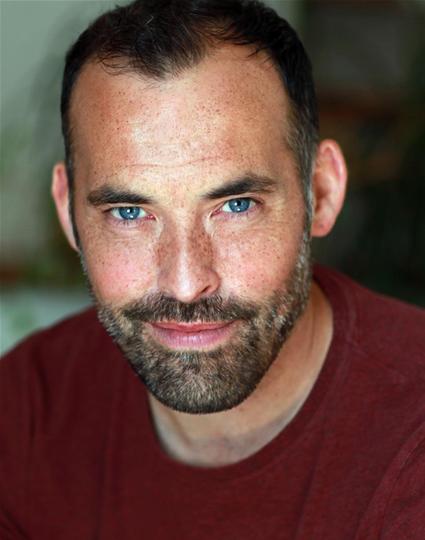
Actor Ryan Davies’ fast moving career has encompassed just about the entire dramatic range in a short decade’s time. The charismatic British-born Davies’ roster of experience includes everything from playing Hamlet and Chekov’s Uncle Vanya at prestigious London proving ground the Workhouse Theater to commercials, music videos, television and feature films, a trove of professional achievements which have placed Davies very close to the apex of the acting world.

Surprisingly, the intense, blue eyed Davies had little interest in the field, until fate intervened. “I grew up in Wells in the West of England, a rural city with few artistic opportunities,” Davies said. “I spent most of my youth working on a building site but knew it wasn’t something I wanted to do for the rest of my life.”

“I was staying with a friend in London for a week and he was taking a 4-day audition course at [drama academy] The Poor School,” Davies said. “And since I was at a loose end, I thought I’d go along and try it too, just something to alleviate being on my own in a strange city. I didn’t intend to pursue a career in acting, but at the end of the 4 days I was offered a place on the course.”

From that unlikely start, Davies entire life was redefined. “I immediately quit my job on the building site, moved to London and the rest, as they say, is history. I trained at The Poor School in London between 2008 and 2010 and I continue to train at The Actor’s Centre, London.

Subsequent high-profile assignments include a memorable turn as the corrupt villain of producer Adi Shankar’s “X-Men” prequel “Grey Café,” a recurring role in the STARZ/BBC Worldwide original series “DaVinci’s Demons” and an upcoming role in another historical period piece, the forthcoming “Fall of the Templars.”

One of the key moments in Davies’ sure, steady rise to prominence was his performance in director-writer Maria Balduzzi’s acclaimed 2016 short “Wolves,” a nuanced drama in which he excelled as the troubled teenaged protagonist’s father.

“’Wolves’ is a lovely film, about a boy who has a very strained relationship with his single parent father,” Davies said. “The boy uses the woods next to their home as a daily escape from the realities of his life. One day he comes across another boy running away from his own problems, their burgeoning friendship allows him to eventually reconnect with his estranged father.”

“It was an interesting and very challenging role,” Davies said. “It required me to convey the whole spectrum of emotions, and as the relationship between father and son was the emotional heartbeat of the film, it was integral that the audience connected with and cared about both of them.”

Davies’ signature combination of subtle restraint and deep involvement served him well, and elevated the film to an impressive level of dramatic craftsmanship.

“’Wolves’ revolves around the complicated relationship between a father and his son and Ryan was able to give the role the emotional gravitas it required,” Balduzzi said. “It’s very much a film about love. I wanted the film to represent the way we experience life and memory in our most intimate moments and much of the film’s success is due to Ryan’s performance.”

The film was well received in the UK, where it was nominated for Best Short Film at the Iris Prize Awards 2017, and was also selected for screening at the prestigious London Short Film Festival. Balduzzi herself went on to pick up the ‘Horizon Award’ for Most Promising Filmmaker at the 24fps Festival in Texas, where the festival organizers characterized it as “an exceptional piece of work.”

“Wolves” was an important step in the Davies career, one that initiated a new professional momentum. “I came into the industry relatively late, so I’m keen to make up for lost time,” he said. “There’s been a real buzz about ‘Wolves’ that opened up some doors and led to many other opportunities for me and I’ve gone on to be cast in a wealth of other projects, so I’m very fortunate in that respect.”

For Davies, timing has been critical, but his steady reliability and dedication to creative expression practically guaranteed the series of successes which he has enjoyed. With a palpable momentum building, the actor is poised for even greater accomplishments, but he always maintains his own coolly authoritative, resolutely professional methodology.

“I approach each role, no matter how big or small, in exactly the same manner,” Davies said. “I look for characters I can get under the skin of, and I try to bring my individual stamp to each role—and I make sure to have fun along the way.”

Graphic Artist Vinita Bakhale contributes to important scene in Academy Award-nominated Feature Film

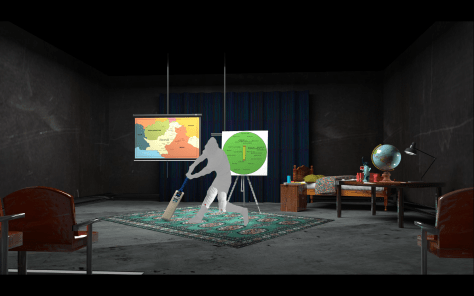
The Big Sick (2017) Children's Playground Theatre Graphic Art by Vinita Rachel Bakhale Property Of Lionsgate
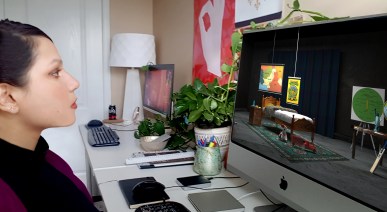
Vinita Bakhale working on artwork for “The Big Sick”

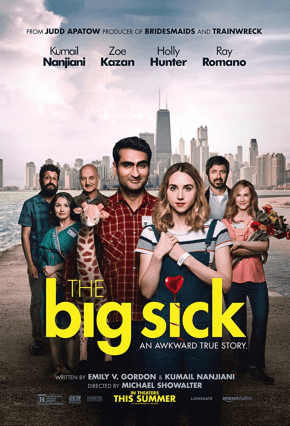
Although Vinita Bakhale grew up in the small town called Oakville, Ontario, located just out of Toronto, she was often inspired by her great-uncle, Diwakar. Diwakar Karkare was a famous Film Poster Artist in the Indian Film Industry. For nearly 30 years, he hand-painted official film posters and key film art for theaters, massive billboards, and building signage. As a child, Vinita really looked up to him, and he inspired her to pursue an interest in the film and television industry. Now she is a working Graphic Artist for Film and Television, where she is often hired early pre-production and is responsible for helping visualize sets and provide her skills in graphics based on the Production Designer’s vision.The Big Sick Poster

Vinita has many celebrated projects on her resume. She worked on the television series shows, Happy, as well as Damien and the Netflix hit Riverdale. She still finds herself surprised at the good fortune for getting to work on such interesting productions.

A year and a half ago, she was hired to create the visual imagery for an important scene on a small indie film with a low-budget of five million dollars. Since then, that indie film, whose name happens to be, The Big Sick went on to gross 55 million dollars in revenue, as well as gain international fame when it was nominated for an Oscar for Best Original Screenplay this past February 2018.

Co-Produced by Judd Apatow, The Big Sick tells the story of Kumail (Kumail Nanjiani), who is in the middle of becoming a budding stand-up comedian when he meets Emily (Zoe Kazan). Meanwhile, a sudden illness sets in forcing Emily to be put into a medically-induced coma. Kumail must navigate being a comedian, dealing with his girlfriend’s tragic illness, and placating his family’s desire to let them fix him up with a spouse, while contemplating and figuring out who he really is and what he truly believes.

“I love how Kumail and Emily as screenwriters took the story of an immigrant’s journey and made it humorous without overwhelming the audience with any slapstick comedy or bombarding them with euphemisms. They made the movie relatable and personal with an amazing and humorous script,” said Vinita. “I am a fan of Judd Apatow, who has produced so many hilarious and memorable films and television shows. When I read somewhere that he was going to be one of the co-producers, I was so excited.”

TheBigSick (2017) Playground Theatre Graphic Art by Vinita Bakhale Property of Lionsgate
Playground Theatre Graphic Art by Vinita Bakhale Property of Lionsgate

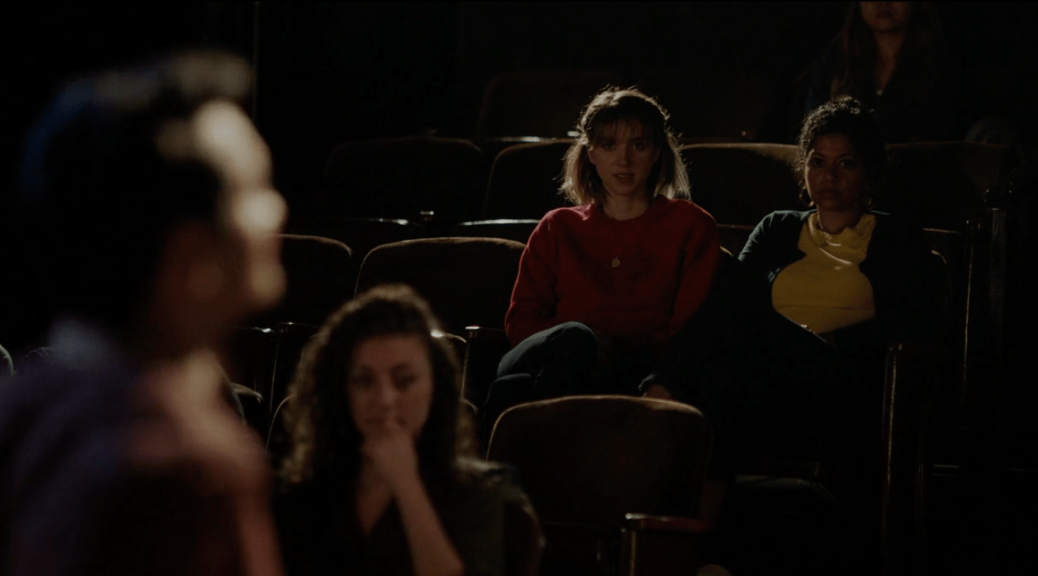
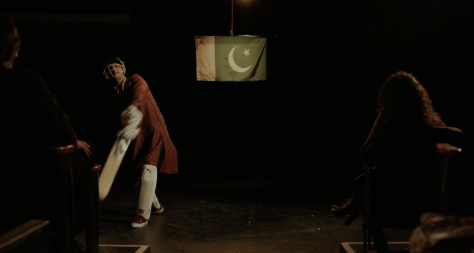
The Production Designer hired Vinita to provide her technical skills as a Graphic Artist and visualize an important scene in the film, when the lead character Kumail performs his one-man-show in front of his future wife, Emily and her friend for the first time. The Graphic Artist did a good job matching the location photographs and created relevant graphic imagery of the Playground Theatre set so that the Production Designer could utilize the imagery to show Producers how the scene would play out.

As a general rule, while working on productions as a Graphic Artist for Film and Television, Vinita’s first point of reference is the script.

She goes through the script and makes notes of all the relevant visual and imagery graphics that would be required of her to produce. After this, she goes about researching specifics. Vinita consults with the Production Designer and coordinates with the key visual departments including, the Props Department, Set Decoration Department, and Costume Department to see what other support they may require of her as the Graphic Artist. Once she consults with everyone, she begins the creative process. This is where her instinct as an Artist comes into play. She creates imagery relevant to the script, and most importantly, by designing an aesthetic that flows with the Creator/Producer’s vision.

“Although it’s always a new experience working with a new script, new design aesthetic, new design references etc., the design process itself is rather pragmatic and structural” according to Vinita. 

“Working on The Big Sick was a short and sweet experience. Knowing that I was going to be creating visual imagery for a scene that would be seen by so many talented members of the production who I actually grew up being a fan of and still to this day admire was pretty cool,” she said.

The Big Sick (2017) The Playground Theatre Graphic Art by Vinita Bakhale Property of Lionsgate
The Big Sick (2017)  “The Playground Theatre”  Property of Lionsgate

This July, Vinita’s latest work, Freaky Friday The Musical, will be premiering on the Disney Channel. Once again, the Graphic Artist puts her style and artistic touch on an endearing story by creating visual imagery for the protagonist, Ellie’s Bedroom.

“I’m drawn to vivid colors and on the contrast, muted tones and textures. As a Designer though, I’d have to say I am now quite versatile. It’s important to be flexible because no one production is the same. On a recent production I was responsible for researching children’s toys and blankets from a specific time period. On another production I was required to research turn-of-the-century telegrams and textural paper. It’s very important to be authentic with whatever you are creating. Film and Television productions are multi-million dollar ventures. With a lot invested, production companies expect to get the best and most authentic version of whatever they’re producing.  Although we aren’t supposed to be a moving picture museum of imagery and graphics that are all historically accurate, because that would be impossible, we strive to be at the very least in the ballpark of the impossible,” she concluded.

Thailand’s Sasinun Kladpetch showcases nature in charitable Hang Art exhibition

Celebrated astrophysicist Hubert Reeves once said, “Man is the most insane species. He worships an invisible God and destroys a visible Nature. Unaware that this Nature he’s destroying is this God he’s worshiping.” This is Thai native Sasinun Kladpetch’s mantra, and where she gathers her inspiration for her art that has captivated people all over the world. She believes that nature is everything, which translates directly into her work. In her world, nature is her life, her soul and her god.

All of Kladpetch’s artwork explores the beauty of nature and explores the idea that it has been hidden among man made structure. She brought this point home at the 2016 50/50 Exhibit at the Sanchez Art Center, where she created fifty pieces all reflecting natural elements meeting modern development. To celebrate nature, Kladpetch uses organic materials and combines them with industrial elements. With this style, she saw great success at DZINE gallery and Dab Art in San Francisco.

“I love to transfer my idea into a physical artwork that people can experience. I like working with an objective; the ideas are unlimited, and I have to think in every single process. From collecting an idea, analyzing it, sketching, to making the installation, there are an infinite number of things to learn. This just encourages me to keep thinking and working to come up with something greater than what I’ve done in past. That’s what motivates me,” she said.

This artist’s point of view is that there are many natural resources, which have been wasted and neglected throughout civilization. Through her work, Kladpetch creates a voice and a platform for people to see the true beauty of nature and that humans and nature can co-exist beautifully in harmony.

“I always aim to engage my audience and encourage them to think about natural and environmental issues through my work,” she said.

Once again being inspired by the environment and humans and nature coexisting together, Kladpetch has created several installations for Hang Art Gallery. Kladpetch has taken part in several exhibitions for the gallery, including Front Lines 5.0, and Same, Same,butDifferent 5.0. The latter was an annual exhibition that all the artists representative at Hang Art Gallery participated in. Because her work on this project was so successful, Kladpetch was then offered the opportunity to participate in the San Francisco Hospitality House Auction as a gallery representative.

“Sasinun is thoughtful and generous, and thankfully these qualities come through in her creations and business practices. She has a clear vision, but soft touch. Her works combine industrialization and environment with a delicacy that coaxes the viewer to consider these paradoxes thoughtfully, without screaming politics,” said Piero Sparado, who represented Kladpetch’s work at the gallery.

For each of these exhibitions at Hang Art, Kledpetch created small sculptures and installed them in to one large installation; clients then had the opportunity to buy multiple pieces or just an individual one. The uniqueness of this project is all the small pieces could be rearranged to the buyer’s preference. She wanted the audience to essentially be a part of the installation by arranging the artworks themselves. There were no rules or guidelines when it came to installing them, but the most important thing for Kladpetch was that each piece had to work both on its own, as a whole, or with a select few pieces, which is no easy feat. However, Kladpetch made it enchanting.

“I love how art can resonate with so many people. This exhibition challenged me to come up with something unique. I feel more than honored that I was a part of a Hospitality House auction. I’ve donated one of my sculptures through the gallery and the benefits went to the Hospitality House San Francisco,” she said.

Kladpetch’s irreplaceable style caught the audience’s eye, and Kladpetch’s work was sold at the exhibition, the profits of which were donated to Hospitality House and helped the charity raise over $75,000 for their essential neighborhood programs including the community arts program.

Hospitality House’s Annual Art Auction has brought together the local community, gallery professionals, art enthusiasts and collectors, non-profit organizations and local businesses to support our neighborhood artists whose artwork hang side-by-side with nationally renowned artists. I’m proud to be a part of that,” she concluded.

Canada’s Dan Cazzola living his dream with Endemol Shine Group

When Dan Cazzola first stepped onto a studio, he felt a rush like no other. It was at that moment when he fell in love with television production, seeing what a vast world it truly is. He finds it energetic and exciting, his passion for what he does translates directly to his work. As the Vice President of International Development for Endemol Shine North America, he is living the dream he’s had since he was only a child and has had a career that many aspire towards.

Originally from the small suburb of Ancaster, Ontario, Cazzola has travelled the world doing what he loves. Working with Endemol Shine, one of the world’s largest production companies, for the past six years, he has had a vast array of experiences working on internationally successful television shows, such as MasterChef, Big Brother,Minute To Win It and Deal Or No Deal.

“Working with Dan is always a pleasure. Not only does he ensure a healthy working relationship with all of his employees and colleagues, but he is extremely creative. Such a combination creates extremely high morale on every team he is a part of, despite the stresses that come along with such a fast-paced industry. Dan is everything you would want as a leader, and the tremendous results of his work are direct reflections of this,” said Rebecca De Young, Creative Director, Endemol Shine China.

One of the many highlights of Cazzola’s esteemed career came when he first started working with Endemol Shine, back at Shine Group in London. Shine Group was an immense company, with operations in over 10 countries and a large footprint in the United Kingdom. In every territory, each production company had started from scratch and they were doing everything they could to get to number one above all competitors. To do this, each region needed to be on the same path, working at the same speed, achieving the same goals. As the Global Development Executive of Shine Group at the time, Cazzola was the link between all these companies. He made sure to keep all priorities in line and made every connection happen with incredible speed. He brought new ideas and strategies into Shine and helped to map out the integration of the creative business into the newly formed Endemol Shine Group when Endemol and Shine Group merged.

“At Shine Group, I was working with the best creatives in the business. Shine had grown from nothing to one of the UK’s largest production companies in just over five years. It was a huge company but felt small and nimble and everyone in the company felt like they were responsible for its growth and success. The company had an amazing culture and to this day I haven’t found a more talented group of people in one place,” Cazzola described. “I was learning new things and new territories and new markets every day. At any moment we could sell a show to Thailand, or Brazil or Norway and we’d have to make sure that the show fit that market. I learned about all the broadcasters, the key talent in each territory and what makes everyone tick.”

Cazzola first started with Shine Group when he produced MasterChef. Having worked on the show, he knew a fair amount of the executives that worked on the corporate and international side at Shine Group. When the opportunity arose to transition from content producing to a corporate look, he felt he had what it took to make the transition, and he was right.

Cazzola became the creative face of the company during his years at Shine Group. He consistently found the best way to make all of the production companies work together harmoniously. He worked to instill trust, both in him and the company as a whole. From there, he would find the strongest areas to focus the company’s efforts. He made decisions based on both fact and instincts, which with his innate talent and years of experience proved to almost always be fruitful. He always trusted his gut when it came to picking out the next big thing, talking about ten shows in a day but instantly deciding what would become the next global hit. It was this rush that drove Cazzola, and why he looks back at his time at Shine Group so fondly.

“The Shine Group years were the glory years.  I am very proud to have been a part of Shine Group and what was achieved.  The company did in five years what other TV companies couldn’t do in 10 or 20. I can see the results of my work on screen in countries all over the world. And when I see that one of our shows has sold to another territory or won an award I always feel proud,” he concluded.

Actress Romy Weltman recalls first horror film ‘The Returned’

For Romy Weltman, being an actor means getting the opportunity to not just portray another person, but to become one. She embodies each of her characters with a sense of realism, a passion for the art, and a determination that is unrivaled. It is this dedication that makes her so successful and why she has won over the hearts of audiences all over Canada.

Working in both film and television, Weltman is an extremely in demand actress in her home country. She has starred in successful films such as The Red Maple Leaf and Strike! as well as popular television shows like Shadowhunters: The Mortal Instruments and the Disney Channel hit Backstage.

“When I worked with Romy on Backstage, her talent and natural ability to display true emotion was evident. We had two scenes in particular that were quite emotional and Romy was nothing but an absolute professional. She raised the stakes for everybody and set a very high bar. I felt like my acting and my overall work ethic was improved tenfold when working with Romy simply because of how professional and prepared she was. Romy continues to show how great of an actress she is in all of her other projects that she has done. She is without a doubt one of the strongest actresses that I know,” said Kolton Stewart, Actor (Some Assembly Required, The Swap).

Weltman’s first taste of international success came with her film The Returned. The horror flick takes place in a world where a deadly zombie virus has infected mankind, and a single cure has been found. The cure, a treatment called the “Return Protein” which stays the effects of the virus in its host. With injections every 36 hours, the “Returned” are able to live as though they were never bit, despite the virus still coursing through their veins. When it is discovered that the protein stock is running low, chaos hits the streets. Returned who run out of the protein turn to zombies and wreak havoc, protesters turn to murderers as they try to rid the streets of the returned, and right in the middle of it all are Alex and Kate. Kate, a leading doctor in the field of zombie virus’ and Alex, a musician with a dark secret, he is a Returned. As death and fear run rampant, Alex’s secret becomes known and his dosage runs low, he and Kate must fight for a chance to live before he becomes a zombie.

“The story of The Returned is very cool, as it gives people a completely thrilling look on life. The story was different to many others. For thriller and horror movie fans, I think this story is super up their alley and I can promise there will be scares,” said Weltman.

The film premiered in 2013 and made its way to several international film festivals. At the 2014 Nevermore Film Festival, it even won the Audience Award. Weltman’s work was pivotal for The Returned’s success, as she played the younger version of the main character Kate. Young Kate was a strong character who faces a very difficult challenge in her life when she witnesses her mother being attacked by zombies. Playing the younger version of a character is extremely essential to a story. It is important for the audience to see what the character had been through in their lifetime and why they are who they are. Kate, being the lead, had lots of layers to her story. Playing young Kate gave Weltman the opportunity to bring those layers to the table and show the audience who Kate really was as a child. Weltman was only twelve years of age at the time, but still captivated audiences while providing pivotal backstory required to understand the film.

“This project was so awesome. I had never worked on a horror film or movie set at all yet. At this point of my career, this role was a dream come true. I couldn’t wait to see all the action and how horror movies were really filmed,” said Weltman.

Of course, as Weltman did not have her own life experience to pull from when it came to seeing her character’s mother getting eaten by zombies, her creative juices were flowing to determine how best to portray the child’s horror in such an important scene. She managed to perfectly encapsulate such a difficult emotion, and throughout the filming process, Weltman made sure to take in and connect the thriller ideas to her own life. By doing so, it allowed her to truly get into the mind of her character.

“Even though I was just a kid when I worked on this, it really inspired me to keep working and it made me hungry to be on more sets. I can credit that experience to the success I’ve had since,” said Weltman.

Be sure to check out Weltman in Backstage on the Family Channel in Canada on Fridays at 6:30 p.m. EST.

Go behind-the-scenes of ‘Pumpkin and Fried Noodle’ with Editor Meibei Liu

From the time Meibei Liu was a child, growing up in Shanghai, China, she loved watching movies. They would make her laugh, they would make her cry, and spending two hours enjoying a film became her favorite pastime. But being so young she would only take in the entire production, not appreciating the many roles scrolling past in the credits that it took to achieve the movie that just entertained her. However, this all changed when she was a teenager and decided to try making a movie of her own for fun. Despite enjoying films all her life, she knew nothing when it came to actually making one. It was a much harder process than she could have ever imagined, but she found herself constantly playing, pausing, rewinding, and cutting down parts of the film that she had made. She was a natural editor, and it was then when she fell in love with the art of editing. Now, years later, she has never looked back.

“Although the story was as naïve as it could be, the fun of making and editing the film just aroused my huge interest in filmmaking and also changed my life,” she said.

This past year, Liu has seen a lot of success worldwide. Her work on The Ballerina, The Shoemaker, and His Apprentice,Headshot, Dear Mamá, and Faith Need Not Change Her Gown have been celebrated at many international film festivals. Her first taste of such success, however, came back in 2013 when she worked on the documentary Pumpkin and Fried Noodle.

Pumpkin and Fried Noodleis a short documentary shot in Taiwan. It tells the stories of how two different families make their living as an outsider in a small village. Though tough, they still find their ways for inner peace and happiness. The film was selected for the Golden Sugarcane Film Festival, Taiwan’s first film festival where the filmmakers have to shoot and edit on site.

“I really liked that the documentary showed the culture of the village, and documented that beautiful, peaceful and friendly place, which was very different to the culture I was in growing up. It tells stories of outsiders in the villages and shows how they fight to live a better life and struggle to be part of the society over there. It’s also a story about women empowerment, telling how they managed to support the whole family without any help. Making a documentary about them was important because their way of living life and being in a difficult situation needed to be seen by others,” said Liu.

Because of the circumstances of the Golden Sugarcane Film Festival, only a pitch was submitted in hopes of qualifying as one of the ten slots. Once Liu and the rest of her team were selected, they were invited to Taiwan to make the film. During the week, Liu was with other filmmakers finding the subject to shoot and finding structure and stories. This allowed for faster editing, as she was able to spot what would work while filming. Then she finished each day with the editing. On top of this, she conducted interviews each day.

“Going there to make the documentary without knowing whether it will work or not; finding the story during shooting was like an adventure that needed a great sense of filmmaking, which I liked and wanted to be part of,” Liu recalled.

The film exemplifies how important editing is. Liu and the other nine filmmakers on the crew conducted several interviews with over ten different people, but in the editing room, Liu cut that down drastically, only showing two of the subjects that were interviewed. The film focused on their lives in detail, showing their philosophy of living rather than small aspects of many lives. Liu also made the decision of blending the two stories rather than showing one after the other, which helped lead to the warm and touching climax at the end.

“Meibei is very hard working. She edited our entire film within three days. She was very easy to work with, always there in the pre-production, making sure everything was right and very insightful about the story and production. In the post-production, she sacrificed her own personal time, which made the impossible schedule work in the end. Meibei is an editor who is very insightful and creative about creating story structure. She is amazing in terms of editing skills and at the same time, also very sensitive of capturing emotions of characters,” said Song Huang, Director.

Because of the competition, time was limited when making Pumpkin and Fried Noodle, requiring a fast, hardworking and passionate editor like Liu. On top of this, she was able to connect with the two women’s stories in a way that audiences can instantly see when watching the film, making it a true masterpiece.


Aussie Actor Joel Hogan: A Good Judge of Character

Joel Hogan represents part of the new wave of successful young actors reaching their mark via a variety of platforms and mediums. In the past year alone, the trained thespian has served as an official juror for the Annual Los Angeles Diversity Film Festival (LADFF), and appeared in a lead role in the hit mockumentary series Unverified for Funny Or Die, produced by Will Ferrell, as well as a critical role in long-running Channel Seven hit show, Home and Away.

MV5BMTU4MGRiN2UtNTMwNi00NDQ2LTlkMjMtNTk3OWQ1NDhhZTY0XkEyXkFqcGdeQXVyMjE0MTI4MDM@._V1_
Joel with fellow “Home and Away” stars James Stewart and Tania Dolan.

These accomplishments, all on top of his other leading acting roles around the world, mark what Joel calls “the result of many years of hard work and determination.”

But before we get to that, Joel sits down with us to talk about how his career has reached such awesome heights. “I’ve been extremely blessed.”

After moving to Los Angeles to feature as the lead of innovative filmmaker Marcus Mizelle’s film “Actor for Hire, opposite CSI actor JT Alexander, Joel was invited to attend numerous award ceremonies in celebration of “Actor for Hire’s” success. Additionally, he received an award for his acting work from the Orlando Film Festival for his role in the film. The festivals, which also included the Laugh or Die Comedy Fest, and HollyShorts Film Festival (which qualified the project for Oscar-contention), brought Joel in direct contact with key decision makers in Hollywood.

Screen Shot 2018-04-04 at 10.03.11 am
“Actor for Hire” was profiled right around the world.

“Many people I met along the way were already familiar with my work, so meeting these power players face-to-face I think just gave a more relatable face to my name.” Some of that work with which those power players were familiar include Joel’s leading role in “Dirty Dancing: The Time of your Life,” which brought him worldwide fame to millions of viewers, and the title role in feature “Travis Jenkins.”

Prior to this, Joel enjoyed starring roles in other Australian films like “Bush Boys.” Since its release “Bush Boys” has been continually screened to audiences worldwide and is well known for selling over 50,000 copies in its first 2 months of release – a significant figure in the Australian entertainment industry. The film’s fan base stems from Mr Hogan’s continued success and high profile in other film productions like Actor for Hire and Home and Away, which screen around the world including the United Kingdom where Home and Away is the highest rated show. 1500 Steps has enjoyed similar levels of extraordinary success, reaching millions of viewers around the world through distribution on Amazon Prime.

MV5BMjE0Mjk5OTIzMV5BMl5BanBnXkFtZTgwODYyMDkxMDE@._V1_
Joel Hogan front and centre, with his co-stars, on the poster for Australia’s “Hangover”, Bush Boys.”
998978_10152886433327841_91645335598331849_n
Joel with legendary “Anchorman” actor, Fred Willard, and fellow Australian actor, Myles Forster (“So, You Want to be a Gangster?”) at an event in Hollywood.

Those roles in part attracted the people behind the LADFF, a world-renowned film festival helmed by industry leaders Hollis McLachlan and Sonja Mereu (producer at Flathead Films), to invite Joel to be a judge for their slate of films. Sonja explained that Joel’s vote “specializ[ed] in acting performance and storytelling.”

Joel elaborates on his experience judging at the LADFF. “It was really fun and inspiring – it felt like such an honour to have my opinion about these films valued. One of the films I awarded, For Better, For Worse has gone on to win the Casablanca Award for Best Drama at the Humphrey Bogart Film Festival in Florida, as well as the Audience Choice Award at the DC Shorts film festival.”

Festival founders explained to our editors that judges are appointed based on their accomplishments, and strong standing with respect to a social cause. Joel, they explained, was appointed because of his wealth of acting experience, his position as an extraordinarily successful foreign actor, and his diverse talents across acting, singing and dancing. So well received was Joel’s service, he has since been invited to also judge at the Los Angeles Film Awards, the Actor Awards Los Angeles and Top Shorts, the world’s leading online film festival.

11162034_10153683733802841_2327030812929546261_o copy
Joel Hogan and well-known actor, Paul Michael Draper (“Lucid”, “Lemon Drop”)

But judging films is not entirely what has kept Joel occupied recently. In fact, he’s been busy with a slew of acting and industry projects that have reinforced his position as a trailblazer in entertainment. Impressively, he’s been featured on Access Hollywood as part of his role for the Lionsgate hit, “Open Water 3.” Coming up? He notably stars in a leading role in the US films Newave and Caged, as well as the lead role of Simon in the feature film “C.A.M” opposite “Pirates of the Caribbean” actor, Rupert Raineri. “Rupert was fantastic to work with,” Joel explains. “It’s always nice to share screen-time with people who are working hard, and aren’t distracted by the big-budget nature of the project.”

Joel adds, “We’re just there to tell a good story.”

Showing off his talent for exploring a wide range of genres, Joel moved onto playing the lead role of Derek (also spelled Derequé in a hilarious plot point) in the hit mockumentary series, “Unverified.” Distributed by the comedy powerhouse Funny Or Die, from founders Will Ferrell and Adam McKay (“The Big Short”), “Unverified” found awards success at the Accolade Global Film Festival, was given glowing reviews by TubeFilter and Film Ink among others, and co-starred Alex Cubis (“Mako Mermaids”), Courtney Dlugos (“South Beach”) and Landon Merrell (the upcoming “Dumplin’ with Jennifer Aniston).

Up next for the busy Australian?

“I’ve got a number of big film projects lined up, one of which is a collaboration with the award winning director David Tracy. David, alongside his mentor, David S. Goyer, the writer of “Batman Begins”, “Blade”, “Man Of Steel”, have been developing a film for me to star in for the last two years. I must admit, to say I am excited to work with these two influential Hollywood players would be a great understatement.”

18880004_10155633569052841_6610212903033522505_o
Joel in character from one of his many upcoming film projects.