All posts by Lorraine Wilder

Top tips for becoming a judge at film festivals

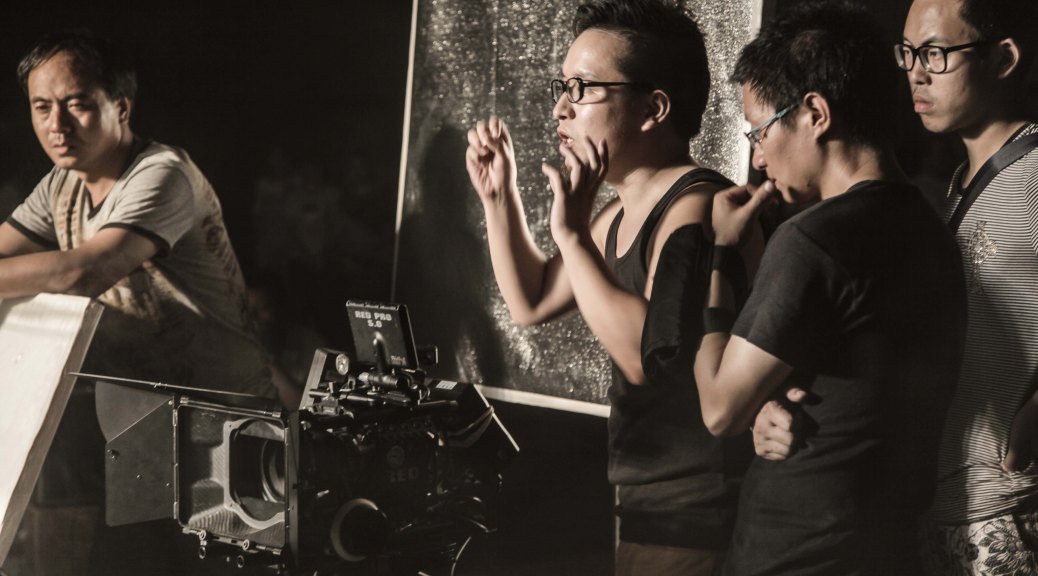
Photo by Adam Sheridan-Taylor
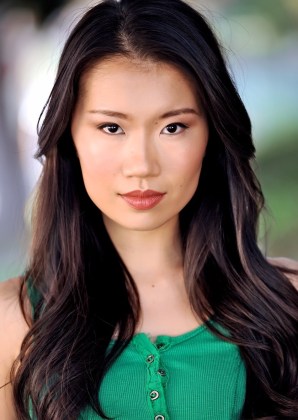
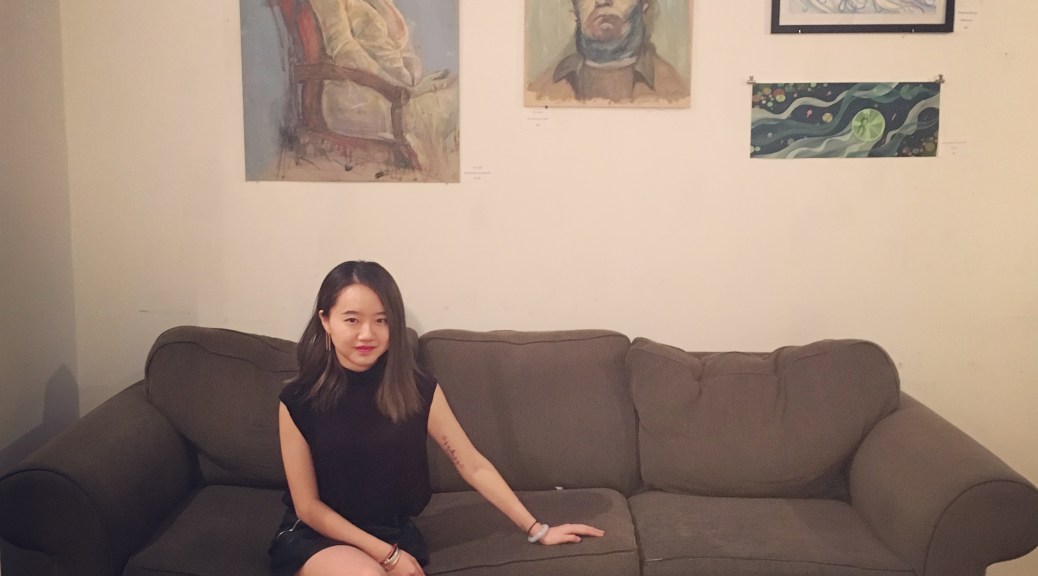
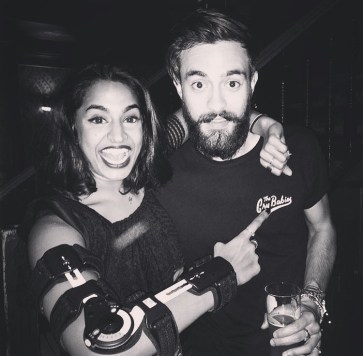
Xiao Sun, photo by Adam Sheridan-Taylor

Film Festivals are outstanding opportunities for filmmakers around the world to share their work and network. Getting your film into a festival is an honour and winning an award and being recognized for your work is the height of prestige for anyone in the industry.


However, what many overlook when it comes to festivals is actually judging them. Being a panelist on a festival is an ideal opportunity to meet other professionals in the industry and learn what they are doing, and maybe you will be inspired by what you see.

That being said, how does one become a panelist at a film festival? I sat down with Xiao Sun, an industry Chinese Canadian actress hailing from Montreal, who has starred in films alongside Charlize Theron, Jennifer Lawrence, and Seth Rogan, to name a few. Xiao was recently a jury member at the Toronto Korean Film Festival, which ran from July 11-15 in Toronto. Here are her tips at not only becoming a panelist, but also on what to do while judging the films.

Tips on getting into festivals

  1. Stay in the know

Get to know as many film festivals as possible and stay updated on entertainment news. Toronto, for example has this great website to always be up-to-date on festivals in the area

  1. Attend festivals

Once you find out when and where the festivals are, attend them yourself and submit your work to them. Get to know their programmers when they have mixers. For my local Toronto people, TIFF is an amazing place to be. Start to prepare early, get an early bird priced badge, go to as many network events as you can find, and get your account on Cinando – you’ll see which company and which person is coming to a festival and their contact information. Get access on IMDB pro, educate yourself with top production companies, agencies and filmmakers in the industry and keep updated on their recent work.

  1. Network

Get info about the festivals from your friends whose work has entered/won awards at the festivals before, get involved with your local Industry community, get connected on festivals’ Facebook group. Also, remember to consult your local ACTRA representative for on-camera and behind-the-scenes workshops.

Tips on Judging at festivals

  1. Don’t research

Watch every film thoroughly as if you know nothing about it. I prefer not to read the synopsis, or the director/actors work before watching, so I don’t prejudge the work.

  1. Take Breaks

Take a breather and get some fresh air between watching each film, even if they’re short films, as you would cleanse your palette before tasting a new dish.

  1. Follow your heart

Let the film touch you, don’t use it to judge or to pick on their imperfections, and see which story/performance tugs at your heartstrings.

Romaine Waite takes audiences back in time in ‘Frankie Drake Mysteries’

Exploration and research. Those are the two words that come to mind when Canada’s Romaine Waite is asked to describe what he does as an actor. He is required to research humanity and explore every character he plays. As an actor, he wears many different hats depending on the subject of a project. At the surface it is entertainment, but in a way, for Waite, it is therapy.

“I believe as an actor I’m an interpreter of words and ideas manifested through physicality and emotion. We’re also guides into unknown worlds and situations. At the highest level, we are responsible for bringing people together to experience a common idea or emotion,” he said.

Audiences around the world would recognize Waite immediately from his recurring role in the iconic television series Star Trek: Discovery. He has also starred in many successful projects, such as The Mist, and Antisocial. Earlier this year, Canadian viewers also got to see him on the small screen in the hit show Frankie Drake Mysteries.

Frankie Drake Mysteries is a hit television series on the Canadian network CBC. It premiered last November and is currently filming its second season. The show follows Toronto’s only female private detective in the 1920s as she takes on the cases the police don’t want or can’t handle. Along with her partner Trudy, Frankie and the Drake Detective Agency take on cases of all shapes and sizes. From airplanes and booze running to American G-men, Communists and union busters, Frankie’s fearless sense of adventure gets her into all kinds of trouble, but she always manages to find her way out.

“I like that the story is centered around women of the ‘20s. I don’t think many people are aware of the accomplishments and contributions women have made in that time period. It’s amazing to showcase the impact that women have had, but also showing women in a strong positive light, not just for inclusion in the history books but to hopefully inspire young women that watch the show. I think representation is of the utmost importance in media,” said Waite.

In the show, Waite plays Bill Peters. Bill is a genuine man, and his intentions are as pure as they come. He has a simple job, goes to church and tries his best to help with investigations when asked by Trudy Clarke.

From the first season, the groundwork was laid for a potential romance to blossom between Trudy and Bill in addition to providing crucial information for investigations in the show. Waite played the part perfectly, establishing the relationship between the two characters. Through this relationship, audiences get to see a well-rounded character in Trudy.

“The production company for this series, has an amazing reputation of putting together great shows, but more importantly it was the premise of the show. Centred around two amazing women, I wanted to be a part of the narrative that showcases women in a positive manner. I think this show can be empowering for young women,” said Waite.

After working with the director on a previous show, Murdoch Mysteries, Waite was selected for the role of Bill without an audition as they knew he was ideal for the part. The character has now become pivotal for the series and will be featured once again in the shows second season.

Working on the show has been a wonderful experience for Waite. The actor has had a lot of freedom to explore the character and how he interacts in the world. Although viewers don’t know too much about Bill Peters yet, they can see a bit of who he is by the way he treats Trudy. He’s compassionate, devoted, honest, and even at times naive. Playing such a role was natural for Waite, as he found himself to be very similar to Bill in many aspects.

Once Waite researched about the time period, he found it easy to embody the character. This was made easier by the outstanding production design, with the set looking very much like 1920’s Toronto. The costumes fit right in with the time period, as did the props, and Waite describes the experience as being like a “mini history lesson.” Walking around the sets, seeing the detailed work, he found it easy to be inspired.

I’m always proud of great Canadian content. There is sometimes this notion that good shows only come from the other side of the border, but it’s certainly not the case with this one. From the creators to the leading cast, I think the show is successful on so many levels. But the most relevant to conversations society is having now, is portrayal of independent, forward-thinking women. I think this show contributes to that narrative in a fresh way. I am happy that I can be included in telling this story. My hope is that a young girl watching this show will feel inspired to be who she wants to be in any capacity,” Waite concluded.

Be sure to check out Waite’s next endeavours, Netflix’s new holiday feature The Christmas Calendar and the upcoming indie film Salvage.

Sabrina Yu combines artistry and storytelling for ‘The Good Memory’

As a storyboard artist, Sabrina Yu is one of the first people responsible for taking the words of a script and turning them into a motion picture; she is the connection between the writer and the director, helping to visualize the story. She can always find the most suitable shooting angle, accurately grasping the emotional changes of the characters’, and designs the scenes to most effectively tell the story. Such a role requires her to understand every aspect of film production, every role and process from beginning to end, and as an avid film lover, that is just why she loves what she does.

Hailing from China, Yu has taken the film industry in both her native country and abroad by storm. She has worked on several award-winning films, such as Cello and Inside Linda Vista Hospital, and has no plans on slowing down. She is an extremely in demand storyboard artist, and her distinctive style enhances every project she takes on.

“I like to use the changes in black and white to show the development of the story, and then grab a little main draw, with a strong contrast. Focus on one point, like a main background or an actor’s emotional facial expressions, and blur the rest,” she said.

One of Yu’s most decorated projects to date is the 2016 film The Good Memory. Not only was the flick nominated for Best Short Film at The Chinese American Film Festival, Glendale International Film Festival, and the International New York Film Festival, but it also took home the top prize at several other prestigious international film festivals, such as the California International Shorts Festival, Hollywood Boulevard Film Festival, Hollywood International Moving Pictures Film Festival, and more.

“I like that in this film I did new things.The style of the film has a set of times,” said Yu.

The heartbreaking drama follows Eric, a husband and father who is celebrating his birthday. He meets his wife and daughter in a café for a brunch, but it is revealed to be a memory of that same day the previous year, ultimately leading to tragic consequences.

“This is a story about reminiscence, and at the end of the film, you will find everything showed in the film are just memories, which makes me feel that the story is very special and memorable,” said Yu.

The moment Yu first read the script, she was touched by the story and knew just how to illustrate it. She could picture every scene in her mind vividly and began drawing. Her storyboards created the background of the film and helped set up the story. They helped the production team see how the time change could be achieved through film, as some scenes are flashbacks.

After discussing the script with the scriptwriter, Yu first drew out the main scenes, showing them to the Director to adjust and decide the main atmosphere of the film. She suggested that the director join the light and shadow changes to reflect the warm feeling, drawing this in the storyboards to show how effective this technique could be. Her suggestion proved very fruitful.

Undoubtedly, Yu’s talents as a storyteller and filmmaker translate directly into her storyboarding. She encourages illustrators to go into the trade, as it is often overlooked but an extremely vital part of filmmaking.

“Read more, watch more movies and draw more. The creative inspiration accumulated from it has paved the way for work. Communication is very important, work with your team closely, patiently listen to other people’s opinions, but also insist on your own ideas and dare to say it,” she advised.

So, what’s next for this talented storyboard artist? She is currently expanding her talents to a children’s storybook. Keep an eye out for it as well as her future films, you definitely won’t want to miss them.

Rupa Rathod takes audiences to dystopian future with tremendous graphics for Bastille’s global tour

10857247_10152825877204426_8592689807047272827_o_BW
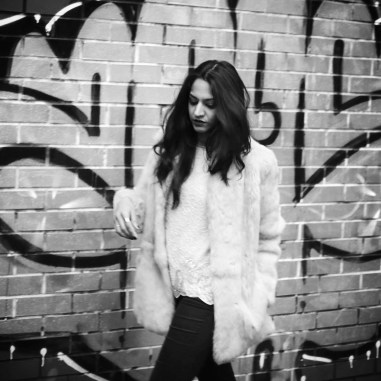
Rupa Rathod

Nothing is more exciting for a music fan than getting tickets to see your favorite artist live in concert. The feeling of your body vibrating to the bass of a beloved song in a giant arena is simply euphoric. However, when enjoying the experience, it is easy to forget how many people it took to make the concert so incredible. Not only is there the talent, dancers, and band that one can see, there are also many that have worked tirelessly behind-the-scenes. Rupa Rathod is one of those people. As an industry leading motion graphics designer, the intricate visuals displayed on the giant screens of the show are her masterpieces.

Having worked with several iconic musicians, such as Shania Twain and Kylie Minogue, Rathod’s work has been seen and appreciated on a global scale. She loves what she does, not only working alongside some of the world’s biggest stars, but also being able to merge her passions for music and design.

“Everything catches my eye; shapes, colors, photography, art and perspective, they’re all influences. I’m constantly working out how to turn anything I see into something graphical, abstract and moving. I’m very practical and hands on so my interest in design and art have always been very much a part of who I am,” said Rathod.

Two years ago, Rathod saw great success with her work on the “Wild, Wild World Tour” for the popular band Bastille. The global tour allowed the motion graphics artist to work closely with award-winning Creative Director, Rob Sinclair, band management, and the band themselves to create and produce the screen content with LA based production company and studio, Blink.

“I developed a good working relationship with the band. It’s the notion that you understand their world and so you have their trust on something so important to them. It’s what grounds me the most during these projects and what I aspire to always have with artists and bands,” Rathod described.

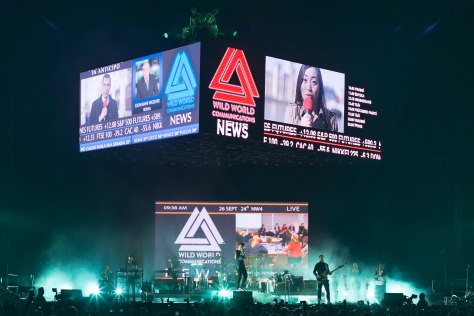
Loosely set in a slightly playful dystopian world, the vision for the tour visuals was very specific but also required a lot of collaborative development. The brief for this tour was the notion that big brother was watching and controlling you, set in a future where the whole world was ruled by a fictional corporation, World Wide Communications. Rathod’s understanding of Sinclair and the band’s vision was trusted by the entire design team instantly.

“It’s unusual for a tour, especially with an indie band to have such a strong narrative, so I was sold from the moment I read the concept. In my mind, there was no end to the amount of scenarios that could be created in this dystopian world. I was completely submerged in this environment and pitching my designs, having them approved and then being able to develop all the ideas into real working visuals was hugely rewarding,” said Rathod.

Copy of L1002960
Shot from Bastille “Wild, Wild World Tour” stage

On a tour such as Bastille’s, the set design is always the beginning of the process. Rathod and her team began producing strong concepts and inspirational references. Once the setlist was completed, Rathod got to work.

As Producer, her role was to develop the initial brief, and oversee and direct the team of animators and visual artists. This involved digging a bit deeper into the references and going back with an initial design. Once her approach was approved, she collaborated Blink’s team of motion graphics artists to bring the visuals to life.

As she is so hands on when it comes to the visual aspect of the production, Rathod is ideally placed to see the project through the final stages of rehearsals. For her, it all comes together when she gets into a production rehearsal with the full band, lighting and all departments working together. As a creator of visual content, her job isn’t just to make great visuals, it’s to create content that’s cohesive with a huge live concert spectacle. Some of the best video moments in the show were not conceived until this rehearsal block, so a big part of Rathod’s job was turning ideas around sometimes overnight to test them on screen the next day. This also allowed her to form a good relationship with the band.

Rupa_Kyle_AppleMusic_Bastille
Rupa Rathod and Kyle J Simmons, keyboard player of Bastille

“I worked with Rupa on the “Wild World” world tour across 2016 and 2017, where she was in charge of creating all the video content for our live show. Her creative abilities are second to none and to be able to interact with her on an artistic level was a hugely fulfilling experience. We hope to use her again and again during the next touring cycles. She is without doubt one of the best in the industry at what she does, quite apart from being one of the nicest,” said Dan Smith, the lead singer of Bastille.

Rathod stayed on this tour for the first few shows, which allowed two weeks to tweak and change content prior to the band’s first big night at the O2 in London. Seeing the fans’ responses from her work made the entire experience even more worth it.

“The reaction from fans as well as reviews acknowledged the visuals I produced and was a welcome recognition of how important the visuals are to the overall concert experience. It’s a completely multi-sensory experience and seeing it through from start to finish is always the most rewarding part. It’s always such a priceless moment when you see it go live, a feeling that I don’t think will ever leave me,” she concluded.

To stay up-to-date with Rathod’s work at Blink Inc., check out their website.


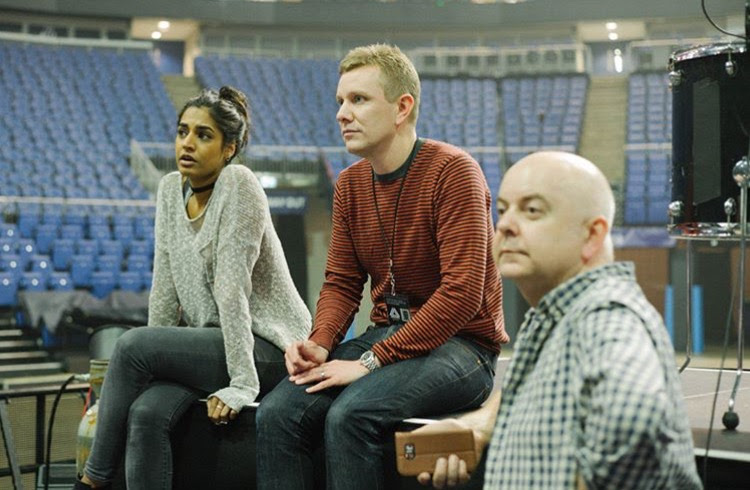
Top Photo: Rupa Rathod, Tom Colbourne and Steve Price working on Bastille Tour

Cinematographer Yang Shao talks ‘The Great Guys’ and philosophical filmmaking

Yang Shao always knew he wanted to be a filmmaker. He loved the idea of sharing his views with the world, and filmmaking is the ultimate way to do so. Born and raised in the Eastern part of China, he wants to share his passion and viewpoints with the world and bring heartfelt stories to the cinema.

“Modern cinema being predominantly shaped by the western culture is in my opinion missing some jigs of the puzzle which I think eastern culture can offer. Films can be entertaining without having one guy kill everybody around him. Life is so much more than just guns and murders. Beauty and soul of the world – that’s what I want to share with the world through my cinematography,” he said.

It is such a philosophy that has made Shao an internationally sought-after cinematographer. His contributions to films such as A Better World, Under, and Once More have asked audiences some of life’s biggest questions while captivating them with their stories, and the comedy horror television series Life is Horrible has brought joy and tears of laughter to viewers all over the world.

In Shao’s most recent film, The Great Guys, he explores a magical world through the lens of his camera. The film follows a fairy who comes to earth to look for the greatest kid to keep in her home, which is in a fairytale world. She meets eight kids and hears eight different stories. At the end of the story, she decides to bring all those eight kids back to her home together. The story reminded Shao of his childhood.

“To be honest with you, as a kid I always believed in magic. I was a naïve kid when I was growing up and I think that helped me become and achieve those results in the film industry. I try to always stay curious and allow things to surprise me. I think that’s what drew me to this story. I wanted to share this magical world with the young generation, including my own kids who are growing up in a completely different world today,” said Shao.

The Great Guys premiered at the San Francisco International Film Festival where it received the Best Director Award. The movie then was distributed in theaters across China. After a successful run, The Great Guys was sold to one of the biggest streaming platforms in China iQiyi. The Director, Jin Zhang, thanks Shao for the success the film received.

“An artist friend of mine recommended Yang as a highly professional and aesthetically exceptional cinematographer. Talented artists have their own vision of things, of ideas and scripts. We managed to find the midpoint where our visions met. To create an outstanding product, you need an extraordinary talent. I’m lucky to have had Yang on my movie,” said Jin Zhang.

Shao did indeed find ways to make each scene visually shine. He aims to light up every scene in a way that drives the story forward. There are different ways to do that, but specifically for this project, he decided to experiment with using only soft filling light of warm colors. He wanted to put more emphasis on the characters. The light therefore is what draws audiences’ attention to various parts of the scene, highlighting what to focus on. In this story, it also shows the difference between the protagonist and the antagonist.

Shao also used a hand-held camera to film, having long takes between cuts. With a magical story, he wanted that feeling to be conveyed at all times. Lots of colored filling light helped to achieve bright and colorful picture that played well with the story and highlighted the emphatic world saturated with magic.

“One thing that I particularly like is the dedication of the crew and the entire team to the craft. I really enjoy working with people who are not only professionals but who also are passionate about what they do. Passion is really what shapes the work and how you see yourself dealing with those people. Nine out of ten times when I’ve seen people had some issues on the set is when they were not driven by their passion. Passionate-driven people on set come from a very different place and in my opinion the final outcome is different in this case. More intimate and personal,” said Shao.

Shao’s favorite part of making the film, however, is the interest he received from his daughter. At the time he was reviewing the screenplay, she was only five years old. He was unsure if he had the time to take on the project, so he read the script many times trying to make a decision. When his daughter asked what he was doing, he began to explain the technical aspects of filmmaking. He realized, that rather that talk to a young child about these things, he’d explain the fairy tale script instead. Immediately, his daughter was enthralled.

“At that moment I thought that with this movie maybe I can get her closer to the magic and not let her think that our life depends only on technological progress. And I did. With that movie my daughter and I started talking about more fun and kid stuff,” he said.

So, what’s next for this industry leading cinematographer? Keep an eye out for Shao’s three upcoming features, NeedIn the Middle of the Night, and Excel on the Highway.

Ukraine’s Alina Smolyar enchants audiences in award-winning performance

Actress Alina Smolyar knows the challenges of her chosen career path. Memorizing large amounts of text, researching characters, drastic physical appearance changes, lack of sleep, transforming into another person, working in extreme weather conditions, the list goes on. However, without such challenges, acting wouldn’t be what she fell in love with when she was only a child. For this internationally sought-after actress, these obstacles are what drives her.

Every project any actor takes on has its own set of challenges, and Smolyar not only accepts this fact, but enjoys it. When working on her film Molehill, which is perhaps the actress’ most decorated film to date, she was faced with what seemed like an endless list of obstacles to overcome, and although it was daunting, this is where she shined.

“Honestly, Molehill was one of the most challenging projects I’ve ever worked on. I thought it would be a disaster! No jokes. But this journey made it all the more rewarding when everything came together,” said Smolyar.

Molehill is an artistic film that follows a group of friends at a party. Audiences are kept guessing until the very end, never knowing what is going to happen next. The ending is completely unpredictable, encouraging audiences to think long after the film concludes, giving the impression that it is a beginning rather than an end.

“I like when it’s unexpected in movies, we as an audience always remember this type of film,” said Smolyar.

Smolyar’s character in Molehill is Leigh, an adult in her early 20s who became older earlier than she’s supposed to. She has a full-time job, her mother is going through health issues, and she has a lot to deal with at home. She finds the need to protect her younger brother Sid, who upon turning 21 becomes very wild. For him, he is having fun, but for Leigh, it is another problem to take care of. She doesn’t have time for herself, to enjoy life or to go out and find a guy. She is incredibly stressed. Her character works in a contrast with everybody and everything around her. From the very beginning we can hear and see a party, people are having fun and this black spot named Leigh who’s so serious and stressed and everything goes wrong for her.

“You know when we are over stressed and it’s so hard to focus on something positive, because it’s like a tornado? You just keep dealing with all this craziness around you. That is the exact struggle Leigh is facing,” said Smolyar.

Smolyar faced a similar struggle when she began working on the film. As a writer of Molehill, she had a different idea of where to take the story, but it wouldn’t work for the film. At the time, she had no idea what else she wanted to share or how to share it. Upon meeting with her director and producers, inspiration struck and she was able to come up with a story she liked.

“You know that feeling when you have to do everything very fast, but you have a white sheet or a monkey with plates in your head? That was me. I had no idea what else I wanted to tell, and we were running out of time,” she recalled.

When making the film, Smolyar was also one of the producers, a role she had never taken on before as she typically focuses on acting. She found her experience as an actress helped with her producing role.

When it came to acting, she put herself fully into Leigh, understanding her struggles and motivation behind every move she made. The arc of the character was important to Smolyar. It was part of her initial idea and was vital for the film.

“It was complicated for me. I guess at one point it worked very well for my acting perspective, because you can definitely see that contrast which I needed for Leigh. I was as stressed in my real life as Leigh was in hers. However, all my preparation for the project as both producer and actress helped to create my Leigh,” said Smolyar.

Being the writer, producer, and star of the film was an enormous amount of responsibility for Smolyar, but she enjoyed that. Molehill truly felt like her film, more so than any other project she had done before. She found wearing so many hats allowed her to become a better actress, and when the film became so successful, she knew she had done her job right.

Molehill premiered last May and then made its way to several festivals both in the United States and around the world. It was an Official Selection at Cine Fest, Festigious International Film Festival, and Mindfield. Smolyar herself was also awarded with Best Actress at the Actors Awards, New York Film Awards, Los Angeles Film Awards, and Oniros where she won Best Acting Duo. The result astounded Smolyar, who although had tremendous success with past projects, did not expect it for her own film.

“It still feels pleasurable, especially when you didn’t expect this kind of success. It feels great when you’re getting recognition for what you’ve been working on and especially when you do what you love,” she concluded.

Be sure to check out Smolyar’s upcoming films 1stBorn, and Skeleton in the Closet.

Yun Huang talks editing powerful new film ‘Stardust’

Editing is about emotion, and Yun Huang knows this well. In order to be successful in her field, she knows that understanding every detail in a script is a necessity. She does not simply put footage together, she tells a story, and she has to know the best way to captivate an audience.

“Being an editor provides me with a chance to tell the story to the audience in my way. I can alter a script if necessary and trust my emotional instincts. I connect with people. This job provides me with a great sense of accomplishment,” she said.

No matter what project she takes on, Huang is sure to keep the story at the forefront of her mind while editing. This is evident in all she does, from the powerful commercial “Choice” encouraging girls to follow their hearts, to the informative and telling docuseries Unveil China Outside China, educating its viewers all over the world on the country’s social and political happenings.

The challenge of any new project is that I have to figure out how I can attract the audience best; for example, how to make an audience laugh at the point that we set up. I always go to the cinema or some film festivals to watch with audiences to see their reactions based on the editing. I should know their thoughts and therefore know how to make my work resonate with the audience,” said Huang.

Huang’s most recent film exemplified just how she connects with viewers. Stardust tells the story ofa male Chinese agent who, loyal to the country, finds out that his most trusted partner, a female Chinese agent, betrays their country. However, as the story progresses, he begins to question his beliefs and the truth.

“I like the story. I’m touched by the soldier’s loyalty to the country and their missions. I believe that showing this kind of emotion is what film is all about,” said Huang.

After premiering earlier this year, Stardust has gone on to several prestigious international film festivals. It was an Official Selection at both the Austin Spotlight Film Festival and Direct Monthly Online Film Festival, an Award Winner at Accolade Global Film Competition, and the winner of Best Action Short Film at Five Continents International Film Festival. With all this, Huang herself was awarded Best Editing at Festigious International Film Festival.

“I was so excited that it got so many awards, and I got an editing award. It just goes to show that hard work and determination will pay off,” she said.

Huang was both the video editor and colorist of this short film, and it was her first time working on a film in the action genre. Initially, she was unsure if she wanted to work on the project, normally leaning towards relevant dramas and documentaries. Before deciding to take part in the film, she talked with the director, Shihang Qu, several times. He told her that he really loved Wing Chun and other kinds of Kung Fu since he was a child, and he always dreamed of directing an action film. She was moved by his efforts, so she decided to take on the project and help the director achieve his dream.

“Shihang is very nice, and he listened to me and considered my suggestions. He accepted all my recommended changes. I really like being respected,” said Huang.

It took over six months to generate a final cut of Stardust. With every day they were shooting, Huang would then look at the footage. This is not a common process, and normally the editor receives all the footage at once in post-production. However, by adopting this style, Huang not only got a better understanding of the story, but also an idea of what the director envisioned. This also allowed her to make suggestions that were instantly implemented. For example, there is a shot of the main character in a scene when they were fighting with bad guys. The director had initially planned for it to be put in the middle of the film as it showed in the script, but Huang thought it would be better if it was moved forward in the story, as the opening scene. It instantly captivated audiences and allowed for the story to be told as a memory, slowing the pace of the beginning and speeding up at the end.

In the end, Huang changed the structure of the story which made the short film more attractive and meaningful. Her instincts as both an editor and storyteller are always fruitful, and she will no doubt continue to have an impressive career. Keep an eye out for her future work.

Living her dream, Sherry Du is both producer and explorer

As a producer, Xiangrong (Sherry) Du considers herself almost an explorer; she searches for a script and voyages deep into the story; she locates the heart and soul and finds exactly the right way to portray it. That is why she loves what she does, and that is just what makes her so extraordinary at it.

“Producers take words on a page and make it real on a screen. It’s really cool to me,” said Du.

Throughout her career, Du has used her sought-after talents to create captivating stories. Her films such as AugustFront Door,and Eyes on You have been great successes at various film festivals, taking home awards and impressing audiences. Her work on the commercial for KYJ sausage went viral, amassing millions of views after just a short time online.

With such success, it may seem hard to identify one outstanding project that stands out in her mind, but when asked about the highlight of her career, Du knows that without a doubt it has been working on the film Autumn Ghost.

Autumn Ghost is about a banker, Shawn, who can see ghosts like his mother Maggie. Because of his mother’s medical expenses, Shawn uses his bank clients’ money to buy stock. He loses a big amount of money and can’t put it back. Knox is a ghost who was killed by Shawn’s boss, Raven. He notices that Shawn can see ghosts and wants to ask Shawn for help. However, Knox makes a deal with Shawn: Knox helps Shawn get money, whereas Shawn helps Knox get revenge on Raven.

“As I studied the horror genre, I realized that the most terrifying thing is not simply dying, but being a ghost stuck in the veil of humanity. Ghosts cannot do anything, like they are lost in another world,” said Du.

Du actually came up with the idea for the story after watching horror films in her teens. She decided to research the genre and create a feature film. Once hiring a co-writer, they finished the script of a man who can see a ghost that helps him solve his future problems. Du had always liked stories about gods and spirits and found that the supernatural element of the script added a uniqueness to it.

After completing the screenplay, Du decided to shoot a trailer. The first step was finding a team who was passionate about her story, which Du found in Director Jing Ning and Cinematographer Will Job. The next step was finding a location. They needed an entire office that would be big enough for a film crew. Du managed to entice a company by suggesting that with production design, their office would be spruced up and modernized.

When shooting the trailer, Du felt something truly special. It was her first time ever writing a script, and she was amazed to see the character’s in her brain become real people when portrayed by the actors. When the visual effects were added, it brought everything together. She truly felt like her story was coming alive.

The idea of shooting a trailer first is to gain investors for the film, something Du is responsible for as the producer. The trailer itself has been making its way to several film festivals, impressing audiences and critics. It was an Official Selection at the CARE Awards Around International Film Awards in Berlin, Orlando Film Festival 2017 and the Creation International Film Festival 2018 Winter. It won Best Trailer at 15 Minutes of Fame Film Festival 2017 and Glendale International Film Festival 2017 and Best Horror/Thriller/Sci-fi Short at the London Independent Film Awards. Most recently it took home the Diamond Award for Trailer at EIFA Winners Spring 2018. Needless to say, such a response gained much recognition for the film, and Du is very excited to begin production.

“Even though it’s hard to produce a feature film from scratch, trust me, it’s worth it. I want to thank my director, my team and my actors. I can’t wait to get the film started,” she said.

Be sure to keep an eye out for Autumn Ghost.

Olivia Jun rises in the face of stress for stellar HUAWEI Mate 10 commercial

Olivia Jun headshot
Olivia Jun

When Olivia Jun was just a child, she remembers watching her first movie and existing in a state of shock for the remainder of the day. She felt as though a door to another world had been opened. She saw people unlike her, in a life entirely different than her own. She realized that there must be more, there must be a world out there that was much larger than she thought. As she grew up, she allowed her love for film to inspire her and to guide her thoughts and interests to a better place. She immersed herself into the culture, history, and sciences of film. She absorbed as much knowledge as she possibly could about the industry and how to excel amongst the highly talented individuals who keep it alive. She never silenced the desire within her to become a filmmaker and today, she is well known for being a highly versatile, well-respected film producer.

So, what does an average day in the life of someone like Olivia Jun entail? Without fail, Jun tends to be one of the first people to arrive on set for the day and nevertheless, one of the last to leave. She spends every second in between undertaking tasks like ensuring cast and crew members are fed, monitoring the set up for the actors’ dressing rooms, liaising with department heads to ensure that roles and responsibilities for the day are clearly outlined, and much more. If an issue has arisen, she diligently opens lines of communication with everyone involved to make sure that they are able to come up with a seamless solution. Toward the end of the day, she proactively meets with each team to discuss preparation for the following day, and then finally, she determines how much of the budget was used that day and how best to manage remaining resources for the remainder of the project. To her coworkers, it feels almost as if she is capable of being in two places at once as she is always on her feet and she is there when someone needs a hand. Without Jun’s contributions, it is unlikely that many of the films and commercials she has produced would have ever been the successes they were. She was an invaluable asset in the creation of films like Esther, and Donna, as well as commercials for companies like eHi Car Service and HUAWEI Mate 10 Cellphone Commercial.

Earlier on in 2018, HUAWEI Cellphone Company put out a request to their contacts in the industry to recommend a highly skilled producer who would have the talent and expertise necessary to create a cutting-edge commercial for their company. As a direct result of Jun’s pristine reputation, she was asked to come on board for the project and to produce their commercial, HUAWEI Mate 10 Cellphone. Jun was particularly thrilled to join as the commercial was to be shot in the United States; however, the rest of the project would take place in her home country, China. She enjoys any opportunity that allows her to showcase her skills as a bilingual, culturally aware producer and she feels as though this ability gives her a leg up ahead of her competition.

The advertisement depicts a young man assuming a number of different roles in order to show off the multiple functions of the phone. The aim was to highlight the phone’s versatility and the knowledge that no two individuals will use it the same way; however, the phone is capable of accommodating each different variation of use. They wanted consumers to understand just how highly intelligent and convenient the phone is to have and Jun, along with the rest of the crew members involved in the commercial, did an exceptional job of making consumers feel as though the HUAWEI phone is the phone missing from their lives.

Jun joined in this project at a time after its former producer had to leave as a result of certain cultural and language barriers. Because of this, tensions were high amongst cast and crew members and her clients were very stressed. Astonishingly, even amidst difficult time constraints, Jun remained calm, patient and determined to bring her clients back to a place where they felt confident and excited about the project. Without wasting any time, she immediately began selecting and preparing set locations, organizing shooting schedules, and rebalancing the budget in such a way that actually afforded them an extra day of shooting without going over budget. Her clients were blown away and were relieved to know that they had hired a producer who could not only get the job done, but get it done well.

“The plan I came up with was very organized and it saved us a lot of time, lowered our risks, and allowed us to complete the shoot much better than we had originally anticipated. During the shoots themselves, everything was well organized, safe, and smooth. The director got more than he wanted in the first place and the entire cast and crew were left feeling content and excited about the work we had done. It was a great feeling,” told Jun.

In addition to her prowess as a producer, Jun was such a prominent member of the entire project because of her ability to speak Mandarin and address the communication barriers with her Chinese clients that hindered the project with their previous producer. Her experience working with both Chinese clients and American clients increased the value she brought to the table and it also helped her to choose cast and crew members that would compliment their shared interests. On top of that, she entered a very stressful situation when she first joined the project; however, she has an affinity for looking stress directly in the eyes and refusing to back down. She keeps her sights set on delivering her very best and knows that if she comes up short, she will have no regrets regardless. Somehow, however, she never seems to come up short in the end. She loved embracing each challenge she was handed and was proud of the final outcome. Once again, the HUAWEI Mate 10 Cellphone Commercial exceeded all of her clients’ expectations and added yet another high calibre commercial to her repertoire.

Ultimately, the commercial premiered at the cellphone’s launch event in Munich, Germany, as well as on a worldwide lifestream. It was also released on Youtube, youku.com, tencent.com, and more. To date, it has just shy of 500,000 views and counting. Jun is extremely proud of how far they came when she first joined in on the project and she can’t wait to see what additional success this advertisement will bring to the phone’s selling story. Making her beam with even more pride, however, is the fact that in June of this year, HUWAEI made another commercial for their new cell phone called NOVA 3 and hired Jun as their bilingual producer after witnessing her expertise for the HUWEAI Mate 10 Cellphone Commercial. Stay tuned for its release next month.

Jamie Maunder designs without limits

Stash 1
Jamieson Maunder

There are two types of people in this world: those who believe that there are limits to what an individual can achieve, and those who understand that limits only exist to be challenged. The latter group are few and far between yet tend to exist within a small percentage of society’s highest performing achievers. In the case of designer Jamie Maunder, for instance, dreaming without confines is a natural part of who he is. With each goal he sets for himself, he expects to not only complete it, but to outdo his former self. All it takes is a mere glance at Maunder’s career as Head of Design to know that he wasn’t built for an average life. He was designed for greatness and with greatness, he designs.

Throughout the course of his career, Maunder has tested his hand at multiple disciplines within the design industry, including working in design studios and clothing factories, as well as print and production agencies. The skills he has acquired throughout these diverse experiences make him an invaluable part of any project he collaborates on, as was the case when he worked for entities like Loughborough Sport and the International Olympic Committee. This reality was exemplified in 2006 when Maunder began his three-year journey working with the elite sportswear brand, Stash. Having grown up being inspired by Stash’s unique, British premium sportswear, Maunder felt that this opportunity was something he absolutely had to be a part of. His ability to secure employment with Stash is a testament to Maunder’s networking skills and eye for design. At that point in his budding career, he had made a name for himself and Stash were not slow to notice.

When Maunder first began working at Stash, he was taken back by their unique setup and by their willingness to foster his development as a designer. Within their headquarters, Stash came equipped with a design studio, as well as a full production house with approximately 75 per cent of production in house. This presented Maunder with a learning experience unlike any other he had known in the past. The setup epitomized the concept of being able to see a job through from start to finish.

“Having the production under the same roof as the design facilities allowed me to witness and learn the processes involved in carrying a product through from inception, or the design phase, to being packed up and ready to be shipped. I couldn’t resist learning how to use all of the machines and this took my understanding of the development phase to a whole new level,” recalls Maunder.

Stash 2
Jamieson Maunder, Kerry Williams

As he tends to do with every company he joins or project he contributes to, Maunder left a lasting impact on the employees and design protocols at Stash. He can be credited with not only introducing the first three-dimensional rugby jersey illustration during his time at Stash, but also for training his colleagues to use this method. This resulted in a significant reduction in the duration of the illustration phase of a design. It allowed Stash’s design team to provide their clients with a prompt idea of what their design would look like in reality prior to actually creating it. In addition, this allowed his co-workers to expedite these processes which, in turn, allotted him more time to develop new, exciting products and ways to increase Stash’s brand awareness.

Ultimately, during his time with Stash, Maunder was responsible for developing compression garments for some of the world’s top professional athletes. In 2009, for example, he worked with the British Bobsleigh Association to design and create cutting-edge race suits that not only looked appealing but were designed with purpose and functioned in such a way that helped these athletes remain at the top of their game. The skill set he developed here is one that he carries with him in every job he encounters today, and he considers the opportunity to invent with no barriers as having been one of the most liberating, important parts of his entire career. It felt as though he was working with the elite in order to serve the elite and the outcomes kept in theme.

It isn’t difficult to understand why Stash were honored to have Maunder on their team for such a growth-oriented period of time. In fact, Sailosi Tagikakibau, who captained for the Stash Allstars team and who’d had Rugby performance apparel created for him by Maunder, found him to be an inspiring, valuable person to have collaborated with. When asked what made Maunder such a pleasure to work with, Tagikakibau was eager to describe him as someone genuine and skilled.

“Jamie is someone that puts his heart into everything that he does. From scratch, he managed to put together a team of professional international and national players to test the products he had created and to ultimately win tournaments. He always wants to know how he can improve something, which in turn, made me very comfortable as a professional athlete. Knowing he had my personal interests in mind at all time made a world of a difference,” told Tagikakibau.

For Maunder, on the other hand, working with Stash was so much more than a resume builder. It helped him to identify a passion he hadn’t quite taken notice of in the past and one that far extended beyond simply designing and producing sportswear. Rather, he finds himself driven by the fact that his profession affords him countless opportunities to dive deep into his problem-solving skills and address issues in an unexpected, yet meaningful way.

“My time at Stash changed my whole outlook on a career in design. I became obsessed with the human form and with the way in which it moves. For this reason, my ability to design apparel that enhances an athlete’s performance was strengthened by my time at Stash and I couldn’t be better off for it,” Maunder concluded.