As the art director of the films “Is That A Gun in Your Pocket?,” “Contrapelo” and “Day One,” ABC’s hit television series “The Muppets,” the Asian television series “My Sunshine,” and commercials for major global clients including Kia, Chinese native Haisu Wang has carved out an indelible place for himself in the international entertainment industry as someone who’s skill effectively transports audiences into the world of the stories on screen, no matter how far fetched they may be.
While it is no secret that the film industry is full of oversized egos often competing for the glitz and glory, what makes Wang so special, besides his adept technical skill and unparalleled creativity, is the fact that he always lets the director’s vision for a project guide his work.
Never failing to design an atmosphere that creates the perfect environment for a story, the versatile nature of his creative vision compounded by his intuitive approach has allowed him to nail the mark every time.
“My passion is always creating environments to help storytelling,” admits Wang.
It is no coincidence that practically every project that Wang has art directed to date has received coveted accolades. As the art director of the film “Day One,” which earned a nomination for an Oscar Award at the 2016 Academy Awards, in addition to winning two Emmy Awards at the Academy of Television Arts and Sciences College Television Awards in 2015, one of which earned director Henry Hughes the award for Best Director, Wang’s work garnered worldwide attention.
About Wang’s invaluable work on the film Hughes explains, “Haisu’s vision and rare skill using digital software to create some of the most challenging sets for ‘Day One’ was invaluable to our production, especially considering the geographic challenges of the location. Without his contributions it would have been nearly impossible to construct these sets in the amount of time and within the allotted budget. He is definitely a huge asset to the film industry.”
Whether he is working on a film, television series or commercial, Wang’s attention to detail combined with his logical and budget conscious approach to outfitting each set with the right props has been imperative in setting the tone and creating believable environments for each and every production he’s contributed to.
As the art director of Kia’s “Extraordinary Day” commercial, also known as “When an Ordinary Day Turns Extraordinary,” which currently has over 900,000 views on YouTube and was produced by BuzzFeed, Wang turned the sets of a simple car commercial into a project that plays visually on screen like a narrative story. From the minor knick knacks of a local garage sale, to colorful balloons falling from the ceiling after one of the character’s wins a raffle in a convenient store—Wang’s work manages to keep viewers engaged as we watch a love connection sparked between two Kia Soul drivers all started from the fact that they share the same kind of car.
For Wang, who also spent time as a visual effects artist for three-time Emmy Award winning VFX and animation company, Base FX, based in Beijing, China, art has been a major part of his life since childhood.
“I practiced Chinese calligraphy with my grandpa since I was a kid and also learned how to make shadow play puppetry with him, and I think that set the foundation of my path in art,” admits Wang.
Wang recently wrapped production as the art director of multi-award winning director Ryan Velásquez’s (“Ojalá,” “Record Breaker”) film “Drowning,” which is slated for release later this year. The film follows Gabe, played by Jovan Armand (“The Middle,” “Shameless,” “Parenthood”), an overweight teen who finally starts feeling good about himself after he musters up the courage to talk to Sarah, the girl of his dreams, and an unexpected friendship forms. However, when the high school bully and bane of Gabe’s existence makes Sarah his newest target, Gabe is forced to decide between remaining a coward in his comfort zone or standing up to the bully and fighting against injustice.
As the lead art director on “Drowning,” Wang had the difficult task of arranging a set to depict Gabe falling onto the ground combined with a montage in water. He was able to build a vertical wall on a track and dress it to appear as the floor so that the actor was able to pretend to hit the ground without hurting himself. On “Drowning,” as he has done on many of his past productions, Wang utilized his excellent CGI skills to create a revisualization animation to rehearse the timing of the scene; this assisted the director greatly in explaining how the scene could work for the actor.
Through his work on screen it is easy to see that Wang is passionate about the worlds he creates for the characters in a story; and, as all of the worlds from film to film are completely different, the versatility he’s shown across projects is just another testament to his seasoned skill in creating the perfect environment for each project on an individual level.
With “Drowning” on the verge of release, and Wang set to begin production as the digital asset art director on the highly anticipated sequel “Guardians of the Galaxy 2” later this year, audiences can look forward to seeing more of art director Haisu Wang’s ingenious work on screen very soon.
Canadian actor Tom Stevens has risen to the pinnacle of film and TV for his many critical roles in titles such as the WWE’s feature action movie, “12 Rounds 2: Reloaded,” Hallmark’s drama series, “Cedar Cove” and Fox’s family comedy, “Diary of a Wimpy Kid: Dog Days.”
His achievements in TV are marked by occupying role after role in many leading, acclaimed shows including “Smallville,” “Psych,” “Supernatural,” “Arrow,” “Falling Skies,” “Motive” and more.
Continuing in the same coveted direction, Stevens debuted toward the end of Season 1 in Fox’s breakout hit series, “Wayward Pines.” His acting in the role of Jason Higgins punctuated again his place among today’s top working actors and evidenced the reason why his name is rolling off the lips of many industry-leading decision makers and audiences everywhere.
The psychological thriller series, based on the “Wayward Pines” novels by Blake Crouch, was developed for TV by Chad Hodge. It follows the story of a Secret Service agent Ethan Burked (Matt Dillon) who goes to Wayward Pines, Idaho, in search of two agents who have gone missing.
In no time, Ethan learns it’s himself too who may not survive the seemingly idyllic rural town. Its inhabitants are trapped in Wayward Pines and governed by authoritarian Sheriff Arnold Pope (Terrence Howard). Those who try to escape are sentenced to a public execution called a reckoning.
Stevens unleashed Jason on “Wayward Pines” in Season 1 Episode 9, “A Reckoning.” The episode centers on Ethan’s interrogation of Harold Bollinger (Reed Diamond) and on three young men from the “Class One of the Academy.” Leading the Class One trio is Jason, and they storm a jail in an effort to reckon Harold and his wife, Kate Hewson (Carla Gugino), Franklin Dobbs (Ian Tracey) and two others.
“It’s the kind of character I always want to play,” Stevens said. “On the outside, he looks clean and proper, but on the inside, he’s an animal.”
The “Class One of the Academy” operated under the leadership of David Pilcher (Toby Jones), a scientist who founded Wayward Pines. “In this episode,” Stevens said, “Jason represented all the teachings that Pilcher has implemented on these kids. It’s a totalitarian regime implemented on small town American perfection.”
Of Jason’s characterization, Stevens explained, “I don’t want this guy to have taken a breath until he pulls the trigger for the first time. Being suffocated by society, until you get to kill, that was the sociopath I wanted to play.”
In the episode, Jason executes all of his targets except Kate, as she survives thanks to Ethan. “He saves the day at the last second,” Stevens said. “Ethan ends up coming in and shooting me.”
The role called for Stevens to act alongside Gugino for the first time, and to execute the peaking climax where he shoots her husband. Gugino starred last year in “San Andreas” and has acted in many other blockbusters such as the “Spy Kids” trilogy, “Night at the Museum,” “Watchmen” and “Sin City.”
Stevens said of Gugino, “She was a consummate professional. She was there to make the best thing possible. In every single take, she was fantastic. I had to step my game up and I felt so blessed to be around those guys.”
Filmed in Vancouver and broadcast July 16, 2015, “A Reckoning” was directed by the award-winning Nimród Antal, who directed such films as “Kontroll,” “Vacancy” and “Predators.”
“He was a rock star,” Stevens said. “It felt like being on stage at a rock show. He would come in and have so much fire in him. He would get everyone involved and everyone gets infused with passion.”
Stevens reprised Jason as he wound up surviving and appeared again in Episode 10 – “Cycle.”
“Wayward Pines” premiered last May, finished its smash debut season by July and was ordered by Fox for a second season that’s to premiere this summer.
The series has also starred Oscar winner Melissa Leo (“The Fighter”) and Oscar nominee Juliette Lewis (“Cape Fear”).
The “Wayward Pines” pilot was directed by M. Knight Shyamalan, a two-time Oscar nominee known best for “The Sixth Sense.” Shyamalan also executive produces the series. The show’s first 10 episodes have reached nearly 63 million viewers in more than 126 countries.
Spanish model Bautista Zorio Munoz and Mexican photographer Diego Fierce teamed up to create a heavy-hitting one-two punch for fashion editorial features. The collaboration brought together two extraordinary talents – who are both atop their crafts and industries – and who deliver awe-inspiring photographic brilliance.
“I always take a strong personal interest in the models I work with, and I have been very gratified to see Bautista’s career take off over the past several years,” said Fierce.
Munoz says, “Diego is certainly a go-to photographer in the business and I’ve always come away impressed and elated in working with him. He’s a photographer who knows how to get the best out of his shooting subjects and we’ve completed some incredible work together.”
A native of Valencia, Spain, Munoz has firmly supplanted himself as a debonair male model of international commendation. He has graced the covers of Minus10 Magazine and Fantastics, modeled for campaigns for Tommy Hilfiger and Abercrombie & Fitch, and been featured as a leading model for editorials published in fashion magazines such as GQ Mexico, Caleo (Germany), Rocket, Coast, Agenda, Adon and more.
The widely achieved and celebrated Fierce has shot cover images and editorials for premium lifestyle magazines such as Ene (Mexico), HUF (U.K.) Minus10 (U.S.) and others.
Munoz and Fierce worked together on an editorial feature for Rocket magazine, a prominent men’s fashion publication headquartered in Barcelona. The feature concentrated on an athletic theme that immersed Muñoz in a modeling portrayal of a schoolboy soccer player.
“In the editorial, Bautista provided a knockout performance that was sensual, confident and very memorable,” Fierce said. “He was a natural at delivering strong poses and expressions that suggested everything from a cocky playboy attitude to that of a moody, passionate lover. He also did a brilliant job of modeling the nautical-style shirts and shorts selected for the feature, making them all look quite stylish.”
Munoz said, “The shoot was exciting and fun. The soccer theme was something that came together really well and I think we did a nice job in bringing this feature to life in a very intriguing way for the magazine.”
Munoz’ breathtaking appearance was pronounced by his muscular torso and raw, handsome physical features. But the remarkable work came together too because of Munoz’ refined ability to create exhilarating drama within the imagery.
“Bautista absolutely embodies these qualities, and infused every photo with a strong sense of emotion that set him and his work far above many of his peers,” said Fierce.
The dynamic duo again collaborated on a cover editorial feature called “Perfect Confidence” for Minus10 magazine.
“He excelled at transitioning through the many distinct outfits and looks we had prepared for him, which ranged from underwear to sports jerseys to stylish suit jackets and leather boots,” said Fierce. “Bautista always knew how to model each item of clothing in order to draw out its most attractive qualities, and played the part of a classy urban gentleman just as easily as that of a sporty athlete.”
Of Munoz’ visual presence, Fierce said, “Bautista’s rich black hair and dark smoldering features were especially vital to the look we wanted for the projected, as they contrasted beautifully with the array of light and dark pieces we chose for him.”
Davina Cole, who recently earned a nomination for a Best Actress Award at London’s 7th annual SOLO Festival of One Man Shows for her performance in “All the Colours,” is one fiercely talented London-based actress that deserves to be on everyone’s radar.
Her performance as Salimatu in “All the Colours,” a captivating one-woman show that she both wrote and starred in, garnered attention across continents with Tony Award winning actress Starletta Dupois saying, “Davina’s performance of ‘All the Colours’ at the 22nd Los Angeles Womens Theatre Festival was very moving filled with twists and turns says The selection of characters she plays takes you on an emotional journey and gives you a clear insight into what it’s like to become a refugee and have to leave your home. The performance was truly moving and brought me to tears.”
As a child Cole would spend her Saturdays watching old films where actresses like Grace Kelly, Julie Andrews, Sofia Loren, Elizabeth Taylor and Audrey Hepburn mesmerized and inspired her. Not one to simply dream without taking action, she began taking acting classes, which helped her perfect her craft early on in her youth.
Earlier in her career Cole took on the pivotal role of Mama Sanami in the Kabaslot Theatre’s original production of “Wilberforce Bell,” a dramatic comedy that follows what happens when a prized bell given to the village of Wilberforce in Sierra Leone by the Governor General is stolen.
The production, which was directed by Dwight Short and debuted at The Broadway Theatre in Catford, London marked a major turning point in Cole’s career. While “Wilberforce Bell” resonated strongly with the actress due to the fact that her familial roots are based in Sierra Leone, the production offered her the challenges she needed to grow as a performer and she rose to the occasion with flawless precision.
She recalls, “This play really took me out of my comfort zone, as I had to learn different elements of my home language Krio.”
Prior to “Wilberforce Bell,” Cole took on the starring role of Delilah in “1867” written by Theresa Roche, a powerful sold-out production that received rave reviews.
Since making her name known in the international theatre world, Cole has gone on to prove her prowess as a film actress with an astonishing level of depth that continues to land her leading roles.
Today Cole is known for her roles in films including Rodney V. Williams’ “Therapy Sessions,” award-winning director Francoise Ellong’s “When Soukhina Disappeared,” and Simon Gedney “Cyborg Ninja vs. Vampires,” and the Discovery Channel TV series “Sinister Mysteries.”
Davina Cole has an undeniable knack for taking on strong women characters, something she has proven through the plethora of theatre productions she has done to date; but in Caleb Davis’ film “Two Easels” where the actress played the starring role of Kate, Cole revealed her ability to create the perfect balance between her character’s tough exterior and the subtle vulnerability of her inner yearning for love.
A ‘When Harry Met Sally’-esqu light-hearted comedy, “Two Easels” follows two street artists, Kate and Jack. When Jack tries to move in on Kate’s local wall, Kate gets increasingly frustrated until a competition is set to decide which artist has the strongest skill. In the midst of the heated competition a strong attraction forms between the two artist and Kate and Jack go on to not only fall in love, but form a fruitful artistic collaboration as well.
In Williams’ film “Therapy Sessions,” Cole heightened the story’s drama and showed the sharpness of her proverbial teeth when she took on the starring role of Sandra. A highly regarded and sought after relationship therapist, Sandra appears to have it together, at least when she’s leading a therapy session; but in her everyday life, Sandra struggles with her emotions as much as her patients.
A film that examines what happens when the lines between a therapist’s personal life and her relationship with her patients begin to blur, “Therapy Sessions” follows Michael and Lidia, a struggling couple who hire Sandra to help them work out their issues. When Sandra receives a call towards the end of their session, Lidia’s suspicion over Michael’s infidelity is brought to a head when Sandra violently calls out Michael for having an affair with her sister.
Looking towards the future, Cole says, “I hope to get meatier roles, which will push me further as an artist. I really admire the body of work and talent of Angela Bassett and Viola Davis and I would love to work them.”
In addition to shooting the upcoming soap opera “My Church and Family” where she takes on the leading role of Vivian, Cole is currently taking her one-woman show “All the Colours” on tour in the UK.
For an actor, much of the work that goes into physically becoming a certain character comes down to identifying and creating their mannerisms, idiosyncrasies and the way they carry themselves. Movement in itself is a form of communication, something Canadian actress Sidney Leeder knows all about.
Audiences across continents will recognize Leeder from her roles in the films Debug, The Hazing Secret, Salem Falls, and Goon, as well as the hit television shows Beauty and the Beast, Reign, Lost Girl, Debra, Alphas and more; but prior to becoming the sought after actress she is today, Leeder was a professional dancer.
The grace and flawless movement that she brings her characters to life with on screen makes it easy to see that her extensive training as a dancer has made her a more intuitive and dynamic performer than most of her contemporaries.
In the 2011 Lifetime film Salem Falls, an adaption of Jodi Picoult’s 2001 novel of the same name, audiences had the opportunity to see Leeder in the pivotal role of Catherine, a young teen who falls in love with her teacher and subsequently turns his life upside down when she claims rape. Directed by Bradley Walsh (The Listener, Turn the Beat Around), the film follows Jack McBradden played by James Van Der Beek (Dawson’s Creek), a high school teacher who tries to make a new life for himself in Salem Falls after Leeder’s character tarnishes his reputation.
Unfortunately for Jack, his past comes out and turns the whole town of Salem Falls against him except for the one woman, Addie Peabody played by Sarah Carter (Falling Skies, Rogue), who goes to great lengths to track down Catherine and prove Jack’s innocence.
Although Salem Falls was one of the earlier films in Leeder’s career her performance comes across as that of a seasoned veteran.
“In one of the most pivotal scenes of the film I confess to lying about my alleged affair with professor… The scene takes place while walking down a long passageway. It was lengthy and revealing dialogue that required serious mental concentration. This character was also a challenge to play, as she needed to have just the right balance of maturity and naivety,” recalled Leeder.
“Prior to shooting I talked a lot with director Bradley Walsh about the characters motivation and significance. Having the opportunity to delve into such a complex character so early on in my career was an amazing challenge.”
Leeder’s career continued to skyrocket after the release of Salem Falls with the actress going on to land multiple guest star roles on television shows such as Life with Boys, The L.A. Complex, Degrassi: The Next Generation and Satisfaction. In 2014 she was cast to star in another Lifetime movie, The Hazing Secret, where she took on the riveting role of Melissa.
The storyline of the film revolves around the death of Leeder’s character Melissa, a naïve college freshman who makes out with the boyfriend of one of the sister’s of the sorority she’s pledging. Nancy, the sorority leader, revives the old practice of hazing in order to punish Melissa for her mistake, but when she locks Melissa in a coffin the young pledge suffocates and ultimately pays the price with her life.
Over the course of the film, Megan, one of the sorority sisters who is played by Gemini Award winner Shenae Grimes-Beech (90210, Scream 4), makes it her mission to expose the crime and the truth about Melissa’s tragic death. The film, which was directed by Jonathan Wright (Nostrum, A Very Merry Mix-Up), was nominated for an award from the Directors Guild of Canada earlier this year.
If there was ever any question over Leeder’s emotional capacity as an actress her knockout performance in The Hazing Secret proves that she can bring the waterworks with natural believability and make an audience feel for her character like the best actors in the industry.
Poster for the film “Debug”
Last year Leeder also starred as Lara alongside Adrian Holmes (The Cabin in the Woods,Elsium), Kjartan Hewitt (Capote), Jeananne Goossen (The Vow, The Night Shift) and Jason Moma (Game of Thrones) in David Hewlett’s (A Dog’s Breakfast, Rage of the Yeti) sci-fi horror film Debug.
Convicted of eco-terrorism, Leeder’s character Lara, along with five others, are placed into a work program aboard a dilapidated spaceship where they are assigned the task of debugging the ship’s artificial intelligence, but their job aboard the ship proves to be far more dangerous than simple computer hacking.
“Lara is very intuitive right from the get go. She warns the others that something about this mission feels wrong and explains that she is sensitive to the energy of her surroundings but is ignored,” explained Leeder.
When Iam, the ship’s AI played by Moma, feels the threat of annihilation, he begins fighting back in surprising ways killing most of the hackers aboard the ship including Leeder’s character Lara. Lara’s death is one of the most shocking of all as she is virtually raped to death.
Thinking that she is going to try out a kinky method of virtual fraternization with Mel, her beau on the ship played by Hewitt, Lara follows the ships orders and enters its sensory system not realizing that Iam is luring her into a trap.
“She is asked to remove her clothing and enter a pool of crystal clear liquid. As she does this she is transported virtually to a blood stained prison cell where Iam awaits her. It is there that he, and every other man who has set foot on the ship rape and beat her to death,” said Leeder.
“While mentally she is in this virtual reality, Lara’s physical body is actually drowning in the sensory system pool she entered. By the time Mel finds her it is too late and she is already dead.”
From playing the catty teen girls everyone loves to hate to the sweet and innocent girl next door and everything in between, including a psycho serial killer in the film The Killer, Sidney Leeder has revealed herself as an artist with exponential talent. She also recently finished filming multi-award winning director Rachel Meyer’s film Lunch, which premiered at the Beverly Hills Playhouse Film Festival last month.
“Being on a film set is one of my favorite places. It’s like stepping directly into a storybook. Acting gives me a natural high and allows me to explore myself, connect with others and imagine endless possibilities. I act because not acting simply isn’t an option. The need to perform and create has lived inherently in me for as long as I can remember,” admits Leeder.
Canadian Star Tate McRae shot by Rob Daly Photography
From contemporary dance to jazz and ballet, 12-year-old Tate McRae is a force to be reckoned with whose performances on stage and in film are impossible to take your eyes away from. The young star, whose become quite a celebrity in the Canadian entertainment industry over the last few years for her far reaching talent as an actress, dancer and singer, has achieved unparalleled diversity in her career.
Tate began dancing at the age of 6, and by the time she was 8 years old her beloved hobby had turned into a full-fledged career. Her ability to move her physical being and embody the music she dances to with the utmost skill and grace is astonishing. As a dance competitor, she is a tough opponent for any dancer to go up against, but she doesn’t dance for the awards as much as she dances for the underlying reason that performing is a part of her soul. It is something that she was born to do.
She admits, “Even in my spare time I chose to do something that has to do with the arts. I am always singing or dancing around or listening to music! I have been like that since I was a little girl. Even before I took lessons I was always putting on shows!”
Some of Tate’s dance accomplishments to date include winning the Junior Best Dancer Award at The Dance Awards in 2015, the Silver Medal Solo Award and Bronze Medal Pas De Deux Award at the 2015 YAGP (Youth America Grand Prix) finals in NYC, 2014 NYCDA (New York City Dance Alliance) National 1st Runner Up Mini Outstanding Dancer, and Mini National Best Dancer Award at The Dance Awards in 2013.
She was also selected as one of the few dancers to be a part of DancerPalooza’s Beat Squad, a group of America’s top competitive dance soloists selected to perform on the Hall of Fame Performance stage during DancerPalooza in California in 2014 and 2015.
Earlier this year she also performed at the Rule The World NUVO Closing Show in Calgary, Canada, which you can check out below.
Tate’s undeniable skill backed by her reputation as an extraordinary dancer has also benefitted her in her career as an actress. After signing with her current agency, Stars Academy Talent, several years ago, she began landing leading roles in television shows, films and commercials.
She explains, “I got into acting through my dancing and singing. I love musical theater and had to learn to develop characters for my songs… The same day I got an agent I booked a job doing voice overs for the show Lalaloopsy!”
As an actress Tate is known for her work as the voice of Spot Splatter Splash on the highly successful animated series Lalaloopsy, which aired on Nickelodeon and Nick Jr. in the U.S. and on Treehouse TV in Canada before moving to Family Jr. in 2014.
Aside from starring in 17 episodes of the popular children’s series, she also starred in the Lalaloopsy: Band Together video, which was released in August, the 2014 Lalaloopsy Ponies: The Big Show film and the 2013 Lala-Oopsies: A Sew Magical Tale video.
Last year she was a featured actress in Toyota’s commercial “Can’t Win Everything – Prairie Pageant.” Earlier this year she gave a dazzling contemporary dance performance in a music video for the CASBY and four-time Canadian Radio Music Award winning band Walk Off The Earth’s hit single “Rule the World.” In addition to being featured in promotional dance videos for Triple Flip, and modeling for dance companies including Capezio and Twear, Capezio also sponsors for her work as a dancer.
Tate admits, “Dancing has helped me with my career as an actor because I have made so many more connections through dance. The 2 worlds really do cross over. Dance has given me lots of confidence and has made me really comfortable performing. I do not get nervous when I am asked to recite lines or play a character.”
If her skill as an actress and a dancer wasn’t impressive enough (and of course, it is), Tate also happens to be an exuberantly talented singer. In fact her singing voice can be heard on a radio commercial for Resorts Of The Canadian Rockies, as well as in the show Lalaloopsy when she takes on the role of Holly Sleighbells.
You can get a glimpse of just how extraordinary of a singer she is in the video below where she performs a dance at The Dance Awards in NYC in 2014 to her cover over the song ‘Human’ .
The bass stylings of musician Martin Fredriksson have taken him around the world and has led him to play sold out shows with a range of bands and artists that span practically every genre, with each new project only further proving Fredriksson’s unparalleled versatility as a leading bassist in the industry. While he is still in his early 20s, Fredriksson has attained more success over the last 10 years than many musicians manage to accomplish over the course of a lifetime.
He currently serves as the bassist in Malloy band with band leader Michael Sims, Anduze band, singer/songwriter SuVi Suresh’s band and the band of Kendall Lake. He is also the bassist for the band Dream Alive alongside drummer David Meyer, who also happens to be the drummer in Frank Ocean’s band and previously played with John Mayer.
Fredriksson also played bass in the band Radiorelics, which has received incredible international attention, most notably for their song ‘Jack Daniels,’ which remained on the Billboard Hot Singles Sales Chart for the majority of 2014 making it to No. 9. In addition to being played on more that a 115 radio stations, ‘Jack Daniels’ also made it No. 23 on the National Airplay Top 50 Rock Chart. The band continues and has since changed their name to Mary’s Mischief.
As a bassist Fredriksson is known for his shocking versatility and magnetic stage presence, which have been a huge factor in him becoming the sought after musician that he is today. From the more psychedelic, melodic rock style of the band Dream Alive to SuVi’s sultry R & B sound, Fredriksson’s talent on bass is never ending.
In 2012 he also played bass on stage for Laura Warshauer, who was chosen by BMI and the Songwriter’s Hall of Fame to be the recipient of the first ever (Buddy) Holly Prize, at the Lollapalooza festival in Chicago.
Fredriksson has earned an impressive list of accolades for his skills on bass; in fact, he was given the Musicianship Scholarship for the Bass program at Musician’s Institute in Los Angeles in 2011.
You can check out Martin Fredriksson rocking out on bass with the band Dream Alive in the video below:
To find out more about this incredibly talented international musician make sure to check out our interview below!
Where are you from?
MF: From Nyköping In Sweden, 1 hour trip Stockholm. A great town to grow up in as a future musician because it’s a city filled with a lot of bands and young musicians.
How and when did you get into music?
MF: My parents bought a bass and a guitar as Christmas gifts for my sister and I when I was about 10 years old. I took the bass and have never let it go since.
In Sweden we have public music schools that offers all children the opportunity to learn to play instruments or sing at a very low cost. I started as early as possible, at 10.
My bass teacher probably saw my interest in music and some of my skills as he let me sit in and accompany his guitar students during their lessons. About two days a week I went directly from school to the music school for these extra sessions. The students I accompanied were often much older than myself, which gave me a lot of challenges as a new musician. During these sessions I learned a lot about how to be alert and really play for and with other people. Sometimes I’d complain that the time I spent at the music school was so short; and my teacher would then joke that there were no other students that spent as much time as I did there.
My first band, The Junk, was initiated by my bass teacher. He waited until I was 12 years old and then he asked me and some of the most talented students in the music school to meet and form a rock band.
From then on it’s been moving on in a good pace with a lot of different music and artists.
How many instruments do you play and how long have you been playing each?
MF: I play a little bit of upright bass and I have started to play some piano at home just for joy. I also took weekly solo singing classes at the local school of music for 2.5 years. I have just been practicing as background singer in bands on stage.
What did music do for you?
MF: Music has been a big part of my life from the start, both by listening and practicing the bass and learning to play songs by ear. I get very calm and concentrated when playing which really only happens during those times. When I had to do school work at home I often took breaks just to play for a short time so that I’d be able to continue with the school work again.
When I was 16 I was chosen as a young “successful” musician to be presented in a poster together with about 100 other people with different backgrounds and ages from my home municipality. There was a quote from the interview on the poster at the exhibition that said: “Life flows when you play, everything will be alright!”
That is still my experience. I am always very comfortable when I am rehearsing and performing on stage, pretty much anytime I get to hold my bass.
Why are you passionate about playing music?
MF: I love to feel the vibes while performing with other professional musicians. It’s just a very passionate flow and it is also very satisfying to see the response of the crowd, audience and band members.
Also arranging music together with a band and feeling that we have created something great together is very satisfying.
Who are some of your music influences, and how have they influenced you?
MF: My first big influence was a blues musician, Memphis Gold; and my first concert was a big blues festival in Sweden where he was playing. We were walking around and he caught sight of me because I was so young I guess. He gave me this record, so what could I do? I just had to play the bass along to all the songs on the record; and since then I have always loved playing blues.
Then there was a time of admiring Iron Maiden and other bands that played melodic hard rock. It was also a big challenge to learn to play their songs. Another big influence I’ve had for many years has been Eric Clapton. From there on I’ve found a bunch of other musicians that have influenced me in a lot of different ways.
How would you describe your personal music style?
MF: I love to play many different genres, but I guess my heart right now belongs to soul, funk and blues. A very important part when I am involved in arranging is that the songs is very melodic and also has variations in melody and strength. I like to play very melodic and love to improvise, in the settled frames of course. I really like to have a strong connection with the drummer I’m playing with because that creates a strong backbone for the rest of the band. I’m very fond of playing very rhythmical bass lines that are kind of at a crossroad between the drums and melody.
Which bands and or projects have you played in?
MF: I play in a lot of bands and for many artists. I’m a part of the bands of Suvi Suresh, Malloy, Anduze and Kendall Lake as well as the groups Dream Alive and Mary’s Mischief (formerly Radiorelics).
Some other bands/artists/musicians I have played with are guitarist Johann Frank who was supported by Phil Collins and is currently touring the world with Engelbert Humperdinck, Major Myjah, who is signed to Warner Brothers, Jasmine Villegas, and in 2012 I performed with Laura Warshauer at Lollapalooza. Some other artists are Caitlin McGrath, Tore Bojsten, Mimi Rom, Cody Sky, Jennie Tran and Q’orianka Kilcher. I have recently recorded eight songs for a Japanese hip hop artist called Daichi.
Have you released any music videos with any of the groups you’ve played with?
MF: I’ve done several music videos with the band Dream Alive for the songs ‘Don’t Say No,’ ‘Waiting So Long,’ and ‘Drifting Away’ all of which were made by veteran film producer Irving Ong who’s produced several Hollywood film including Heartbreakers starring Jennifer Love Hewitt and Sigourney Weaver. We also released a video for the song ‘See You Tonight,’ which was created by Fred Teng. We’ve also been working on some live performace videos shot live in studio with the singer/songwriter SuVi. What are the challenges of being a professional musician?
MF: The constant stress and pressure to always be well prepared and ready for anything. Last minute changings happens all the time. And there are no certainties or guarantees in the music business; it’s all up to you.
What do you think separates you from other musicians?
MF: Coming from Sweden it is not easy to express this, but I am often told that I contribute to a very tight, steady and powerful rhythm section and that I have a significant powerful tone when I play. That in combination with a melodic and sensitive way of playing is perhaps what I contribute with in a band.
People also tells me that it really looks as if I enjoy acting on stage, which I really do. I always want to be prepared before the shows so that I can concentrate on the collaboration with the singer and the other musicians and feel comfortable improvising my bass playing.
How do you feel when you’re playing on stage? Was it something you had to get used to, or were you immediately comfortable in front of the crowd?
MF: I think people can see that I love what I do, sometimes I just lean back, close my eyes and enjoy the moment, and thereafter, enjoy the moment by being very active on stage. I have had this longing to play on stage from the start.
I have been performing frequently since the age of 13, and feel very comfortable in my bass playing. Therefore I can be very relaxed on stage and just enjoy the flow and the feedback from people in the crowd.
Aside from playing music in the bands you play with, do you write any of the music or lyrics?
MF: I write songs as a co-writer in several of my bands. It is very inspiring getting in a very creative feeling and then hear the complete song. I started to write songs together with my first band at the age of 12.
Can you tell us about some of your upcoming releases?
MF: The band Dream Alive will release a new video soon. It supports the title song of our latest CD, “Drifting Away.” The CD has got great reviews, which is very promising for the future. We are now discussion the dates for a tour in India to Chennai. It will be in the beginning of next year, but the dates have not been decided yet.
What are your plans for the future?
MF: My plans for the near future is to continue to play in professional bands and collect as much experience as possible by doing this. I have had great luck being asked to join bands with very professional and well-known musicians, who I had only read about before. It has been very inspiring and motivating to have been accepted by my fellow musicians.
All parts of being a musician is great; writing songs, rehearsing, recording in studios, playing in venues and touring.
What do you hope to achieve in your career as a musician?
MF: As nearly all musicians, I hope I will be able to work as a musician and earn my living by doing that. Then of course I hope that I will have the possibility to develop my skills as a bass player and keep the love of music going. And of course it would be great if I could get another hit-song with a band. We had a Billboard hit with the band Radiorelics in 2014 called ‘Jack Daniels.’
Have you won any awards for your work? Can you tell me about them?
MF: I got the bass scholarship for bassist when I enrolled at Musicians Institute. When I was 12 years old I, together with some friends from school, started a band and we worked really hard composing and rehearsing. We won the Culture Prize from a magazine called Frotté when I was 13. Our first real gig was at the castle of Nyköping in front of a big audience, when we got the prize.
Two of our songs were voted in on a regional radio station’s top list (Top 5) when I was 14 or 15 years old. It was very exciting the first time we were on the chart as the whole class was listening together in the class room.
Why is music your passion and chosen profession?
MF: It has been a dream since the early teenage years. I immediately felt that music and playing bass was something I immediately could relate to. It just feels meant to be so I’ll keep doing what I love most.
Producer Siegfried Meier at Beach Road Studios shot by Rob Boyce
Siegfried Meier is an internationally acclaimed music producer, audio engineer, mixer and musician who’s been doting his unparalleled talents upon the music industry for nearly three decades. While he first became enthralled with the magic of audio recording at a time when most of his peers were still learning to walk and memorize their ABC’s, it wasn’t until he hit high school that he actually started recording projects professionally. But, the instant love he developed for mixing and recording when he first discovered that he could create his own versions of the songs he heard on the radio using a tape recorder at the age of 2 was the initial step that led him towards the successful career he has today.
Something that separates Meier from most other producers and engineers is the fact that he is, above all, a musician. In the early 90s, when he was still in his teens, he cofounded the melodic rock/punk band Curtis. Meier has gone on to release six albums with Curtis since the band’s inception over 20 years ago, all of which he mixed, mastered, engineered and produced in addition to playing guitar, piano and serving as the band’s lead vocalist.
In 2006 Meier started Beach Road Studios, but the vision for the now incredibly well known recording studio was one that he had brewing a decade prior to when it first opened its doors to the public. Over the years he has recorded a plethora of bands and artists across practically every genre including Kittie, Thine Eyes Bleed, Woods of Ypres, Baptized in Blood, Dayna Manning, Painted Faces, Slouch, Gag Order and many more.
Meier’s vast experience as a multi-instrumentalist, songwriter and vocalist has been a major factor in the success of many of the bands that he has recorded and produced over the years, as he is able to easily jump in and play additional instruments when needed during the recording process.
When it comes to the metal and punk genres, Meier has left an indelible mark on the industry with his skill; and, in 2013 the album “Woods 5: Grey Skies & Electric Light,” which he produced and engineered for the band Woods of Ypres took home the Juno Award, the equivalent of a Grammy in the US, for Best Metal/Hard Music Album of the Year.
To find out more about how Siegfried Meier got to where he is today, some of his early influences and his plans for the future, make sure to check out our interview below. You can also find out more about him and the long list of projects he’s recorded and produced over the years through his website: http://www.siegfriedmeier.com/
Where are you from?
SM: I was born in Oberviechtach, Bavaria, Germany and moved to Canada when I was 5. I grew up in Goderich, Ontario, Canada on the same 220-acre family farm where Beach Road Studios now resides. Growing up, I was the one that was always interested in music – creating it, recording it, pretending I had new bands that I was in and creating album artwork for said “fake” bands. My mom was a huge fan of the Beatles when she was younger, having bought all the German versions of their singles back home, but didn’t really expose me to any of it because by the time I came around the focus was on the farm and raising 4 kids while my father was working construction in Berlin during the week as well as the farm on weekends – sadly leisure time came few and far between in those days. Being the youngest, and 5 years behind my next brother, having a babysitter to take care of me while my mother did the daily chores wasn’t always an option. To prevent me from getting killed on the farm while she was working, my mother would keep me in a locked, but safe, room in the house with toys to keep me occupied– yes, it sounds awful by today’s standards but times were different back then! My father had given me a tape recorder to play with by the age of 2, and even though it probably wasn’t the safest thing to be tinkering with (220v in Europe of course haha), pressing the buttons and recording my voice along with music off the radio became my favorite way to pass the time. My life would be forever be changed.
How and when did you get into music?
SM: Having moved to Canada in 1983, the first 3 music videos I was exposed to were Van Halen’s ‘Jump,’ Cyndi Lauper’s ‘Girls Just Wanna Have Fun’ and Michael Jackson’s ‘Thriller’…it instantly changed my life since all I’d ever really heard were Bavarian polka songs on German radio. Growing up I tinkered with playing synth and keyboards and always created fake bands that “made it” and toured around the world. It wasn’t until my early teens that I started to focus solely on guitar and recording/producing as a profession. I started to play in local bands at age 13 and focused on my first serious band Curtis by my mid teens – we released a few records, and I began my production career by recording all of our albums. It didn’t take long before I realized that by making records with bands that we shared the stage with that I could afford to buy more equipment to build up the studio. While our band is still together and making music to this day, for me the focus shifted quickly to producing for a living early on. I attended The Ontario Institute of Audio Recording Technology for Production and Engineering by age 21, and the rest is history!
What did music do for you when you discovered you were able to communicate through it?
SM: Music literally saved my life early on. Times were tough during the financial brutalness that was the 1980s and living on a farm when interest rates were high, and drought was ravaging the only income our family had. I would sing and create songs and melodies to keep myself occupied, and it often made me forget how bad things seemed at the time. As a teen, and going through the things teenagers do, music became the thing that got you through the day – the reward for putting up with what appeared to be general social unfairness. I listened to music when I went to bed every night at a very young age, and it would always put me in a relaxing, conscious state while I dreamt of what the next day would bring. It really was what got me from one moment of my life to the next, and continues to do so.
How many instruments do you play and how long have you been playing each?
SM: Guitar would be my longest running instrument – 25 years. I’ve played piano and keys for well over 30 years, but would hardly say I’m an accomplished player – I hear the melodies in my head and with the aid of Pro Tools and MIDI am able to create what I need (strings, piano, synths etc.). I’ve been drumming for over 25 years, and have been programming drums for well over 25 years. I’ve played bass for as long as I’ve played guitar, and often provide bass playing services on many projects I produce. I sing backup vocals on nearly every album I produce these days, and I am a vocalist as well in my own music and projects.
Which was your first? And which one do you currently get the most enjoyment out of it?
SM: Keyboards/piano would be my first, but I never became a prolific player beyond hearing what needs to be there and where a song needs to go. Guitar is certainly my main instrument, and the one I get the most enjoyment out of. I’m by no means a shredder– I’ve always focused on songwriting and chord voicings. An infinite amount of feelings and emotions can be created with a voice and a few guitar chords, it’s pretty incredible.
What was one of the first projects that you engineered for another artist?
SM: When I first started acquiring gear, having a space to record in wasn’t always available to me. While it was fine to record our own music in our bedrooms, it wasn’t always an answer when it came time to start working with other clients. In those days, I’d often take a small Mackie mixer, a 1/4” 8 track reel to reel and a case of mics and stands to the bands spaces to get the job done. One of my first was a band that was considering using my services, but wanted me to show them what I was capable of before they committed. So I dragged all my gear to their country home and we tracked the band live off the floor in their barn! I ran a long snake out to a desk I had sitting outside, and it was a nice and sunny day so there were no worries of the elements damaging any equipment. They loved the outcome of our demo so much that I got the record, which I ended up producing in a friend’s home where I later had the studio temporarily setup.
How has your approach to engineering changed since you first began?
SM: Incidentally, much of my approach really hasn’t. Being a musician first and doing so much work with my own band, I understand that the artist always comes first. You shouldn’t have to make it too complicated to capture a good source – it comes from the hands, heart and mind first, and when you have a great sounding room and a good instrument, it’s easy!! However, having this amazing facility these days has made things a little more complicated. I prefer to keep a lot of instruments and gear permanently set up and wired in at all times, so it’s very quick to lay down parts and keeps the artist in a creative mind. But I’d say the options available to us these days in the studio don’t necessarily make for better sounding music, but they do allow me to have certain effects and sounds ready to go for the artist, and being quick on the draw is what’s important when you’re dealing with outside clients.
When did you start producing music?
SM: I started producing our own bands music early on in my mid teens (Curtis). Our first studio experience with an engineer really changed my outlook on music, and it made me realize that the other side of the glass was more exciting. The technical side of things has always fascinated me, and my father used to manufacture and customize all sorts of machinery on the farm – it’s what gave me my interest in mechanical and electronic devices. Having always been a computer fanatic from an early age, once I realized that the music, the electronic and computer worlds could all work together, it became my trifecta of nerd awesomeness!
How does producing tie all of your talents together?
SM: Being a musician first, I’m able to get into the mind of the artist better than someone with just a technical background. So many bands have chosen to make records with me because of that. They know that I treat them the same way that I’d expect to be treated if I were the artist. A good producer is someone that is well rounded, and doesn’t necessarily cater to the band member that plays their instrument of choice – you can often hear the producers that are drummers or guitar players only, as those elements are in the forefront while others take a backseat. But I understand that the song is king, and whatever element is telling the story needs to be treated with the utmost importance.
When did you open Beach Road Studios?
SM: We broke ground on Beach Road in May of 2006, although the idea of it went back at least a decade prior. The studio was built with the help of family and friends, and I enlisted the help of the singer of a band I had produced an EP for, Robbie McCowan of Chasing Mercury. We worked out a wonderful barter deal where I would produce the bands forthcoming album, put them up here and take care of all costs, and he would build the studio for me, a nearly 3000 sq ft structure from scratch and from the ground up until completion – a process that took several years to finish. Robbie was an incredible guitar player and songwriter, and while I had never seen any of his work before in person, I wholeheartedly based his carpentry skills on his musical ability alone!! And, my gut feeling was the right one — Robbie proved to be one of the most talented guys I’ve ever met in my life, both in the studio and in working on one!
How has your career changed since you opened your own recording studio?
SM: Having our own dedicated facility has certainly opened up what I can offer to other clients. Before Beach Road, I was still working out of a small apartment, and tracking the loud instruments like drums in commercial studios. But, I lost out on a lot of records because my schedule and space weren’t ideal to the creation and vision of the artist. These days, all I do are produce and engineer music, and my clients know that I’m ready to go 24/7. By providing a secluded place in the country where the artist can live and stay during the creation of their masterpiece, I’ve not only set myself apart from nearly everyone making records these days, I’ve also created a vibe and atmosphere that aren’t easily attained. Most artists feel instantly at home when they walk in and see 40 guitars on the wall, a stack of amps ready to go and all these other instruments patched in prepared to create music. The studio has also given us press and notoriety that wasn’t available previously. For a while, the studio was getting so famous that people had heard of Beach Road without knowing who I even was!
Can you tell us about some of the projects you’ve produced and engineered and how approached the project?
SM: The band Kittie was looking to detract from their previous record and wanted something more stripped down, aggressive and back to their roots; and they approached me to produce “In The Black” in 2008. They loved the idea of doing the record in a secluded space like Beach Road. It was the first album I produced on my own for the band, and I definitely had to prove myself to them, regardless of the fact that we had a previous working relationship.
Thine Eyes Bleed was hot off one of the biggest world tours of the year, and signed to New York metal label The End Records. I’d known the singer and guitarist for some time, and they approached me about producing their next record here at Beach Road. I knew they were snowballing as a band, and that it would be an incredible opportunity for me. The bass player was the brother of the singer of Slayer, and his massive resume and experience certainly intimidated me at first. Once he understood that I was on his team, and only wanted to make an amazing album with them, things certainly started to move along well. The band wanted a pretty stripped down thrash record, that was heavy and full of life. I produced the record the way we used to on tape – capturing real, natural performances instead of the standard cookie cutter Pro Tool’ed method that was becoming so common in 2007.
Blue Skies At War approached me to produce a collection of songs live off the floor for them in late 2002. They were quite a popular emo/punk rock band in the early 2000s, and I was stoked to be working with them. At the time, I was still working as an assistant at a commercial recording studio, so while I was happy to be getting any of my own production work, there wasn’t always time. These guys were definitely on my radar, so after some discussion with the band I was finally able to get them to come in for a few days…and we tracked FAST. Because of budget constraints, the band only had 3 days to record and mix 9 songs. One specific song caught the attention of label owner Brian Hetherman of Curve Music, and he expressed interest in working further with the band. The song was the only super catchy, radio friendly song the band had, and while it was still in development when we started working on it, I created and sang a number of background vocal hooks that became the focus of the song. Curve put some more money into the project, and it allowed me the time to edit and remix the entire record for commercial release. The album did well, with said song ‘Last Call’ getting radio play on every major station across Canada. The band did a number of tours before calling it quits. The singer started a new side project called Machete Avenue, and I produced their first record and 2nd EP.
I’d worked with singer Nick Harris on a solo acoustic side project before he joined 4 other tech/punk rock/space rock dudes in the band Seconds To Go. I produced an EP for the band that quickly gained the attention of Face To Face singer Trever Keith at Vagrant Records. The label expressed interest in the band, and I produced a few more EP’s for them before they took off to do the record for Vagrant unfortunately. A few years later, the band came back to me to do a few new singles that they were releasing independetly. These turned into a few more songs and eventually a full-length album that was released in 2006 on Trever’s label Antagonist Records and Pop Culture Records. The band toured long and hard for many years, and was on the big Face To Face/My Chemical Romance tour in 2004.
I had lived in the same town in my teens as The Salads’ singer Darren Dumas, and the band expressed interest in working at the commercial studio I was at in the early 2000s. I was the assistant engineer and Pro Tools engineer on their “Fold A To B” record that did quite well in Canada, winning the band a CASBY Award and landing a deal with Labatt’s Brewery for their song ‘Get Loose.’ The song became the runaway hit of the summer of 2003, and people still recognize the song from commercials to this day. The track was also featured on the soundtrack for Eurotrip as the closing credits song. In 2009, after I’d built Beach Road, the band approached me to help produce their forthcoming album “Music Every Day.” Budget was a concern as always, since the band was now independent, so I provided as much as I could to the record with the band filling in the gaps in their own home studio, tracking some guitars and vocals. Their bass player currently plays in famous Canadian rock band I Mother Earth.
What makes you want to work with an artist?
SM: First and foremost, their music. Talent certainly plays a huge role in there as well, but it’s important to me that a first meeting proves how we gel and generally get along together. If I’m to put up an artist or band for several weeks at a time in my private space, and spend days upon days with them creating something very dear to their heart, we need to establish that we have a connection together. I’m not really at a point where a manager dictates what artist would be “good for my career,” and I hope to always have the freedom to choose who I work with.
How much musical input do you have when producing a project for an artist?
SM: It generally varies from project to project. Some, I’m simply capturing the performance and delivering the desired product. Others, I’m being asked to play drums, bass, guitars and sing backup vocals!! We usually establish very early on in the meeting stages exactly what my role will be, and it feels great to be able to provide all these services to a very personal project for others.
Who have been a few of your favorite artists or groups to produce over the years and why?
SM: I started working with the girls in the band Kittie at a young age. I was the assistant engineer on their 2nd record “Oracle” that was produced by Gggarth Richardson (Rage Against The Machine, Red Hot Chili Peppers, Rise Against). It was a pivotal moment in my life as it was my first time working with such a legendary producer. Years later, after I built Beach Road, the lead singer/writer of Kittie, Morgan Lander, came to sing backups on a record I was producing for the metal band Thine Eyes Bleed. She loved the studio and we instantly rekindled our old friendship. The girls have gone on to have me produce 2 full lengths for them and several singles (one for a David Bowie tribute record out on Cleopatra Records and one for a Runaways tribute record), and we’ve all become the best of friends. Our sessions are an absolute riot and it hardly ever feels like we’re actually doing work.
Robbie McCowan, the singer and main writer of the band Chasing Mercury is the guy that built Beach Road for me. The year after the studio was built, we got to work on their first full-length album. The band is a great mix of tech/prog/punk, similar to Propagandhi, and wrote some incredibly catchy songs. A year after the release of the album, Robbie landed a deal with a video company and the songs were licensed to a snowboarding DVD that has been in regular rotation on TV. Robbie and the band were clearly very close to my heart, and he’s become one of my closest friends.
Thine Eyes Bleed was a band that was on my radar for a while. They were a Canadian thrash metal band that had just finished the Unholy Alliance Tour in 2006 with Slayer, Lamb of God and Mastodon. I knew the singer of the band, Justin Wolfe, from previous bands around the area, as well as their guitar player Jeff Phillips, who toured and teched with Kittie for a short while. The bass player John Araya is the brother of Slayer singer Tom Araya, and the band was definitely doing some amazing things. After running into Justin in a club, they expressed interest in checking out the new studio we’d just finished building. The idea of recording in a secluded area really interested the entire band, and after coming to see the place, they were sold on having me produce the record. I produced the followup to this album as well, and Tom Araya was a guest vocalist on it – a pretty cool moment in my life to have to opportunity to work with him!
I got the record for the band Woods of Ypres through Morgan Lander of Kittie, who recommended me for their upcoming record. I knew the history of the band, and that they’d put out quite a few records. From the first few chords that we tracked for the album, I knew it was going to be something quite unique and special. I only spent a short 2 weeks working with the band, but the experience will never be forgotten. The album went on to win a Juno Award a year after David Gold passed away. I continue to work with the other half of WOY, Joel Violette, in his other side project Thrawsunblat, and I’ve co-produced, edited and mixed the last 2 records for them.
Breaching Vista was a local band that contacted me early on in their career to produce an EP, and I went on to produce their full length “Vera City.” We spent the better part of a year making the record and the guys and I became very close. The record sold a decent amount for an indie band in Canada, but they landed gigs with Mariana’s Trench, Theory of a Deadman, Econoline Crush, Hedley, Jack’s Mannequin, Our Lady Peace, The Arkells and many others. Definitely one of the hardest working bands I know.
I started working the band The Dunes when I was working briefly with a Canadian Producer Manager. I’d heard about them for a while, and their music was really picking up momentum. My manager had them do a couple demos here with me in the fall of 2007, and the band was hooked. We ended up doing a full length together in 2008 that went on to do quite well in Canada. The first single was featured in the soundtrack for the movie Limitless starring Bradley Cooper and Robert De Niro.
You’ve produced A LOT of great work for punk and metal bands over the years, can you tell us why these are some of the most challenging styles to produce?
SM: The records can certainly be technically challenging, especially with such aggressive music and often tricks and special techniques have to be employed to capture the desired result. But, with such aggressive music often times comes a certain attitude as well, and it’s as difficult clicking and jiving with the artists as it is capturing their hard work. With a full band, there are so many personalities and opinions that need to be dealt with and addressed, and it can definitely be trying at the best of times. However, approaching it all with a cool head and a willingness to work hard helps in a big way. When the artist knows that you’re on their side, and not simply there to tear it apart and make it your own, they truly do trust you. When I make decisions, I make them a part of it – it’s their record, and they ultimately sign off on any decisions made. But, I make them understand that they have to pick and choose their battles.
How do you manage to achieve such clarity and definition in the work you produce for metal and punk bands without losing the heaviness of their sound?
SM: I feel it’s important to stay true to the artist. I’m very much a performance based producer since I’m a musician myself, so I make sure to get full takes of the artist. I feel this has a much more realistic vibe and really captures the essence of what the artist is going for, without losing the heaviness that they’re accustomed to hearing in a live situation. That being said, I employ lots of various vintage analog and digital equipment that is really geared towards sounding a certain way – let’s call some of them one trick ponies – that are set up and ready to patch in when I need them. Also, not bloating a production certainly helps maintain the clarity and making certain elements sound smaller in the mix are sometimes necessary – not every guitar part needs to be huge, thick and heavy! You have to pick and choose which parts need to be excessively thick based on the song and structure of the track.
Who are some of your music influences, and how have they influenced you?
SM: Because of what I was exposed to growing up, my influences are so wide…everything from Fleetwood Mac to Ric Ocasek (The Cars) and The Carpenters to Nirvana and Face To Face…listening to the top 40 pop records of the 80s and being a taping kid (cassette tapes recording music off the radio), I grew up loving the over-the-top productions of that decade – and often the production was better than the songs!! Madonna and Blondie to Jimmy Eat World and Refused…in the end, the song is king. The melodies and the beat. I learned early on that drums and vocals are such a huge part of any successful production that it’s key to get those in the face of the listener. They are what speak to the average person that knows nothing about music production. Everyone has a voice, and everyone dances to a beat – if they can feel and relate to those things, then you essentially have the makings of a hit.
As a musician, do you have a personal music style that you prefer to play?
SM: I grew up listening to top 40 pop hits of the 80s, but having older siblings exposed me to the heavier and harder acts. In the 90s, Nirvana and punk rock completely changed the landscape, and it was a very influential time for many – myself included. While my musical tastes have certainly developed over the years, I’m still most definitely attracted to any catchy, hooky tunes that generally have an aggressive edge to them. I love all types of distortion, and I find such a harmonic bliss in adding it to any source. I suppose having such a wide variety of influences has helped my career as a producer, and I’m comfortable jumping from doing a metal record to a country album the next day.
What awards have been the most exciting so far?
SM: We were nominated for Best Metal/Hard Rock Album of The Year for the Woods of Ypres album “Woods 5: Grey Skies & Electric Light” at the 2013 Juno Awards, which we went on to win. It’s my first win, and definitely the most unexpected. The band was a Canadian underground Doom Metal band that had been slaving away for over 10 years before I did their last record. The singer/main writer and frontman David Gold sadly passed away just before the album was released, and it’s made it a pretty difficult record to even listen to anymore.
What do you think separates you from other music producers?
SM: My ability to see the end result even at the earliest phone recording demo stages certainly sets me apart from most. Patience, organization and an undying dedication to the projects are a given for any successful producer, but certainly being a musician and understanding the wants and needs of fellow musicians makes me stand out.
Can you tell me everything about any upcoming projects/ tours/ releases/ collaborations?
SM: Kittie will be releasing a new documentary/book next summer. While I’m not directly involved in the creation of it, they did film a good chunk here at Beach Road with me. The girls are also planning on recording their next album with me here next summer, presumably to coincide with the release of this. It could be their last album as a band, as they’ve hinted to in the past…but that’s to be decided as of yet!
I just finished producing a record for this hardworking Christian rock band, Anthem For Today, which won a Covenant award (Christian version of the Juno’s) and have been nominated for several others. The record will be released in spring 2016.
I’ve been working on a record for Zealot’s Desire for nearly 2 years, the band is a mix of prog rock and metal. The album plays like a classic, timeless work of art and feels as fresh being released today as it would have been in the 70’s.
Tallan MD is an incredibly unique punk/glam/pop album from the grunge rock band Slouch, which is fronted by singer/songwriter Tallan Byram. I’ve actually produced a few records for the remaining members. They all grew up together and by colliding their styles (Tallan was a huge fan of Madonna and anything 80s pop), we’ve made a crazy record that sounds like it was stretched across 4 decades. Everything from The Beach Boys and Madonna, to Nirvana and Mudhoney.
Static Prevails is a pop punk band from Ontario that is releasing their new record in the spring of 2016. Two members of the band are currently touring with Walk Off The Earth as monitor, guitar and drum techs. The record is a pretty hard-hitting melodic powerhouse of an album, and with their connections in the industry we hope to land a deal soon.
What do you hope to achieve in your career as a music producer?
SM: I love finding and developing new talent. I thoroughly enjoy working with someone that still has that spark and excitement in their heart, and music really does move one’s soul. At the end of the day, knowing that anything I’ve worked on has changed someone’s life in a positive way is enough of a goal for me.
Why is music your passion and chosen profession?
SM: Being self-employed is one of the best things in life. Choosing your own schedules, and deciding which projects I want to work on and contribute to have been incredibly fulfilling. Music is the reason I’ve been able to do that, and it really is an amazing healing tool. Being around so many young musicians has certainly continued to make me feel young as well!
George Reinblatt at Howard Stern’s Birthday in New York
It takes a very rare individual to not only be able to write a successful script for a production, but produce it as well. When it comes to getting a project off the ground and actually bringing it to the stage or screen, the writer is the person who knows the ins and outs of the story they’ve created and feels the most passionately about it, at least initially; so, in an ideal world it makes sense that they’d be the best person to pitch the project to networks and ensure that the world they’ve created comes across accurately once production begins.
Unfortunately for the many writers who want to make it in the highly competitive entertainment industry, the differences between being the writer and the producer on a project call upon two very different personality types. Whereas the writer can retreat into their imagination creating their work without having to interact with other people—the producer has to be able to pitch the heck out of the story getting financiers and network executives on board, and if successful, then they have to communicate and guide everyone involved in the production towards the end goal.
While these individuals are understandably few and far between, Canada’s George Reinblatt is undoubtedly one of them. Over the last decade the unique and multifariously talented producer and writer has transitioned between the two roles with ease, consistently creating successful productions along the way.
To get an idea of the success Reinblatt has had as a producer, just look at the multi-award winning production “Evil Dead: The Musical,” which he wrote as well.
The production, which initially opened at a small theatre in Toronto in 2003, was an instant hit, and by 2006 the show was running as an off-Broadway production in New York where it received extensive international acclaim. After watching the show on opening night in NY, New York Times’ critic Anita Gates wrote that the show had the makings to become the next “Rocky Horror Show.”
“This was really special for me, as it was my show – I wrote the book and lyrics. So it was important for me to be on the producing side to make sure I could have a hand in all aspects of the production — from casting to merchandising to ticketing to even choosing the venue,” explains Reinblatt about producing the initial run of the show.
As the writer of the musical, Reinblatt created a masterpiece on paper, but it was his capacity as a producer that took that hilarious cult world from that which could only be experienced in the imagination and erected it into something audiences could collectively enjoy as he intended it. Prior to going into production with the hit show, Reinblatt reached out to the movie studios and secured the rights to the Evil Dead franchise in order to make the stage production the official stage adaptation of the film trilogy.
“Evil Dead: The Musical” won the Dora Audience Choice Award as Toronto’s Favorite Show, and after having several extended runs, by 2008 it became the longest running Canadian show in Toronto in over two decades.
Over the last year Reinblatt has been working hard producing a slew of comedies for international television networks including the Comedy Central special Jeff Ross Roasts Criminals: Live from Brazos County Jail.
“It was amazing how much time and effort had to go into this one comedy special,” admits Reinblatt. “I came up with the idea of doing a comedy show in a prison. Jeff Ross thought it was a great idea. Comedy Central thought it was a great idea. But finding a prison willing to let us come in there and roast them, that was the hard part.”
Reinblatt and everyone on board knew they had something special on their hands, and after a year of planning and researching prison life, Reinblatt helped bring the eye-opening special to the screen.
The special, which aired in June, offered audiences more than just a few good laughs as they watched renowned comic Jeff Ross, known to many as ‘The Roastmaster General,’ roast the inmates at Brazos County Jail though. Along with Ross’s satirical jokes, the show included shocking facts about the American prison system making it a valuable source of information as well. Reinblatt’s brilliant idea for the show coupled with his ability to make the project happen as a producer made the release a resounding success.
As a writer on the series The Burn with Jeff Ross, and the popular Comedy Central roast specials of Roseanne, James Franco, Charlie Sheen and Justin Bieber, Reinblatt has worked with Jeff Ross multiple times over the years. He is also known throughout the international entertainment industry for penning the scripts for an impressive list of productions including the series Just for Laughs, George Stroumboulopolos Tonight, The Arsenio Hall Show, the 2012 and 2013 MuchMusic Video Awards and more.
“Different is what I do. I’m always looking for my next project to be different from my last. And jumping from a musical to a prison comedy special to a sketch show is about as different as you can get,” admits Reinblatt.
From the standpoint of producer, George Reinblatt knows exactly what story ideas will sit best with audiences, and earlier this year he began producing yet another exciting comedy series. The new 20-episode series Almost Genius, which is slated to begin airing on Country Music Television Canada in 2016, combines popular YouTube videos with some of the best comics in the entertainment industry today. Using highly innovative production technology, the show actually inserts the comics into the YouTube clips using green screen.
Reinblatt says, “It’s going to make people look at their favorite YouTube clips in a whole new way.”
With inimitable creativity, Reinblatt has continually displayed his capacity for producing starkly different projects for both the stage and screen, all of which reveal him as someone who is not only capable of creating captivating stories, but ensuring the production process goes off without a hitch as well.
“I just want the overall experience for the audience to be a great one, so I love being involved in all aspects of a production to ensure that happens,” explains Reinblatt. “Sometimes as a writer, you write something, hand it in, and what happens from there in performance, or editing, or anything else, is completely out of your hands. As a producer you get a say in the overall direction. You may not always get exactly what you want. But your voice is always heard and you can help navigate the direction of the final product.”
Hilarious Canadian Screenwriter Mark Satterthwaite
Believe it or not, writing a great comedy series is one of the most challenging genres to tackle, the key word being great, as we’ve all seen shows that attempt to be funny, but instead leave us unamused or wondering if we missed the joke. When a production finds a solid writer whose jokes flow seamlessly into the mix of the script, someone like Canadian screenwriter Mark Satterthwaite, they’ll do practically anything to keep them; and for good reason as the production’s ratings depend on them!
With his inclusion of bold jokes and subjects that push the envelope, Satterthwaite has had unparalleled success writing television comedies that have kept international audiences laughing for hours.
One of his first forays into the sketch comedy genre came nearly a decade ago when he was asked to create a comedy series for CBC’s ‘tween’ viewers. The result was The Morgan Waters Show starring quirky Canadian Morgan Waters from the shows Cock’d Gunns, Screwed Over and The Amazing Gayl Pile.
Satterthwaite recalls, “Our writing and development process was to push the humor and scenarios as far as we could, so we made sure we were challenging our audience, as opposed to holding their hands.”
Satterthwaite wrote and produced some of the show’s most absurdly hilarious episodes including “New Assistant,” “Camping,” “Puke on the Yo-Yo Man” and “Unrequited Love,” which helped the series earn a Gemini Award in 2006.
For Canadian audiences, The Morgan Waters Show was something like that of Mr. Show with Bob and David in the U.S., with viewers tuning in for the show’s spoof music videos, off the wall sales pitches, celebrity guests and pop culture parodies. In the “New Assistant” episode, Satterthwaite brilliantly crafted a song sung by Waters dressed up as Trent the Goth about how badminton should really be called goodminton. After the success of The Morgan Waters Show, Satterthwaite wrote and produced the comedy pilot House Sitters for Funny or Die featuring Morgan Waters and Mark Little.
While Satterthwaite has written several other hit sketch comedy shows over the years, his unique approach to comedy has also made him a highly sought after writer for a wide range of shows across various other formats and genres as well.
Some of his past credits include writing episodes for the variety show MTV Live, CBC’s 11-time Gemini Award winning talk show The Hour, as well as the network’s one-hour special Canada’s Smartest Person, the second season of The Comedy Network’s game show You Bet Your Ass, seasons one and two of The Food Network’s series The Main, and HGTV Canada’s lifestyle series My Parents House.
He has also written the scripts for awards programs including the 2007 Gemini Awards, which garnered the awards show a Leo Award in the Best Music, Comedy, or Variety Program or Series category, as well as the 2007 MuchMusic Video Awards, which garnered a Gemini Award in the Best Music, Variety Program or Series category.
His work as a screenwriter in the Canadian entertainment industry clearly spans the gamut, but out of all of the television formats he’s written for, there’s one area that really gets his creative juices flowing and allows him to cut loose.
“I love absurdist comedy. I think that’s why I ended up doing a lot of writing in animation, because it’s such an anything goes environment. Want to create a new character? Do it! Blow something up? Sure. Morph anything into anything else? WHY NOT?!?! It’s very liberating,” admits Satterthwaite.
Beyond simply loving to write animated programs, Satterthwaite has proven through the astonishing success of programs like Almost Naked Animals, Grojband and The Dating Guy that he is incredibly good at it.
In 2010 he wrote and produced the animated comedy series The Dating Guy, which aired on Teletoon, as well as the show’s accompanying live action web series Dr. Love, which was available on TheDatingGuy.com.
The unique creation of a cross platform approach between the web series and animated TV program not only gave fans of The Dating Guy additional content to check out, but it also earned a 2011 Gemini Award and a nomination for a Banff Rockie Award for Best Cross-Platform Project.
In 2011 Satterthwaite both wrote and produced the Gemini nominated children’s series Almost Naked Animals for Cartoon Network and YTV. The series followed a band of adventure-loving animals voiced by notable actors including Jamie Watson (Scaredy Squirrel, Producing Parker) as Hippo, Rob Tinkler (Harold & Kumar Go to White Caste, Arthur) as Howie, and Emilie-Claire Barlow (Total Drama, Fugget About It) as Bunny.
While Satterthwaite has also produced and directed several of the shows he’s written, it’s his work as a screenwriter that has given him the greatest challenges, as well as the greatest reward.
“I’m passionate about screenwriting because it’s a huge, huge life test. All of the time. It’s fun and it kills me,” he admits.
“Sometimes I’ll read comments on the Internet from people who have watched episodes of something I’ve written. ‘This is my favorite episode!’ or ‘This show is the funniest thing on TV’ or ‘WRITE MORE! MAKE MORE!,’ and that always makes me feel like a million bucks. Writing scripts is hard work; it’s so nice to know that people like it.”
Considering that he has already been writing successful television shows for 15 years, and he’s the kind of person who loves a challenge, it only makes sense that the natural progression in Mark Satterthwaite’s career would be to move onto writing feature films; and, that’s exactly what he’s doing.
In addition to having several television shows in development for Entertainment One and Teletoon including Winston Steinburger and Sir Dudley Ding Dong, which is slated to air in 2016, he recently wrote the screenplays for the feature films Cottage Life and The Blind Painter.
Everything you ever wanted to know about Hollywood's who's-who.

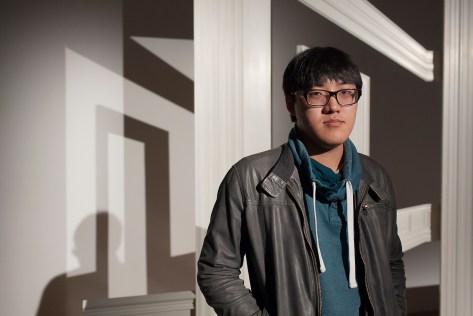

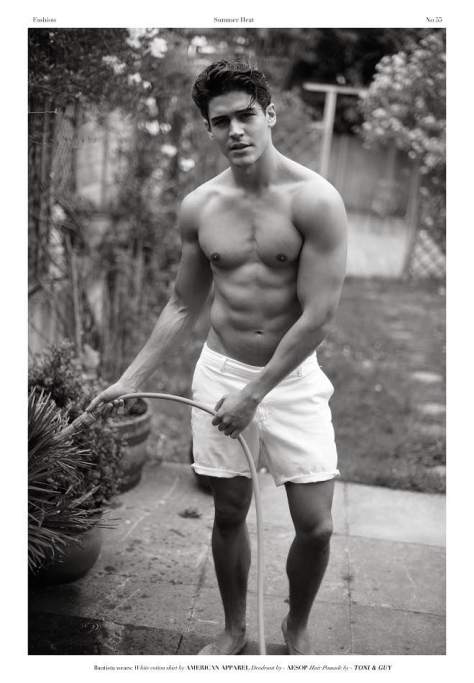
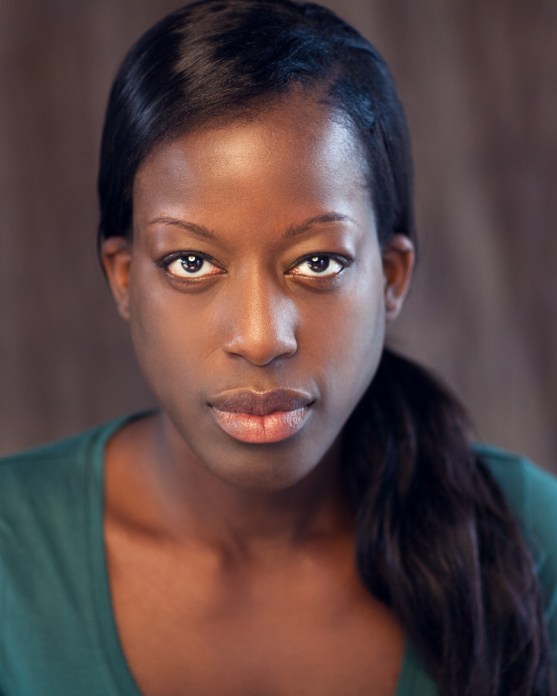


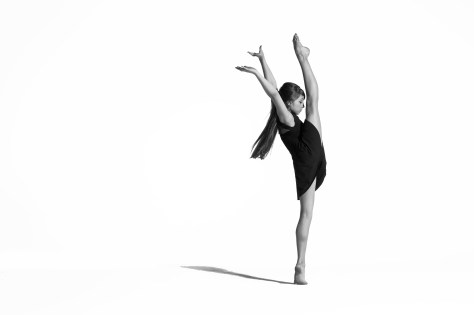
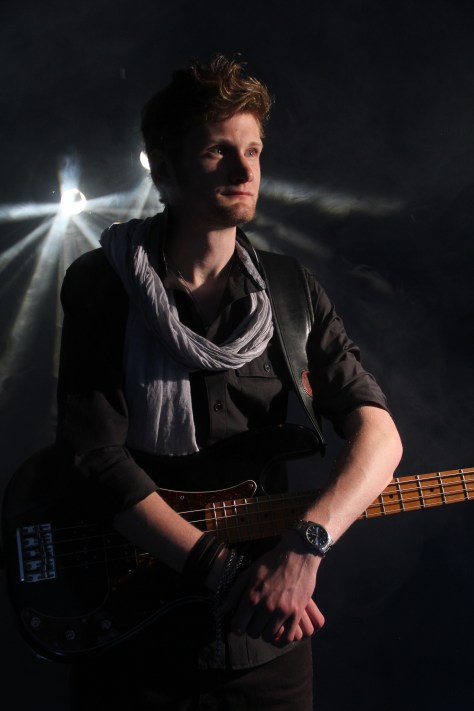
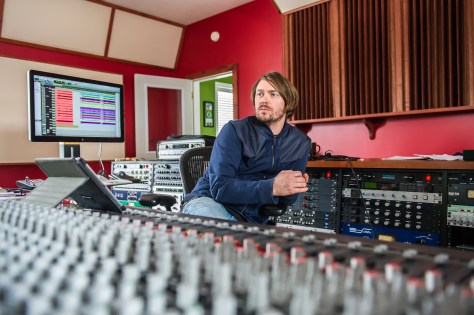
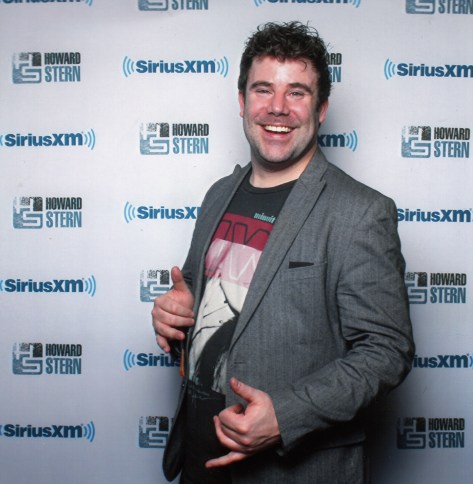

 Tinsel Town News Now