Category Archives: Film

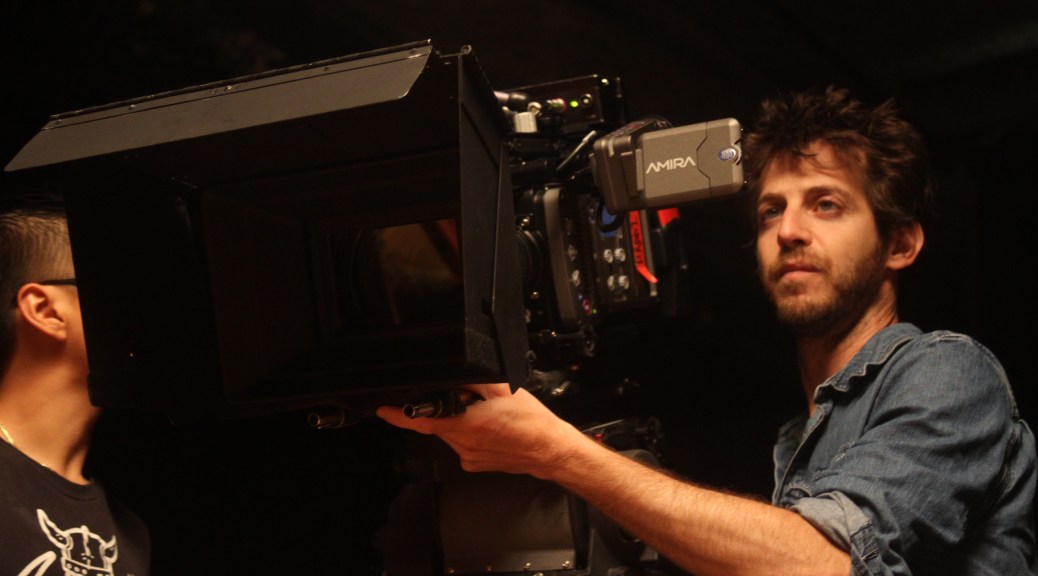
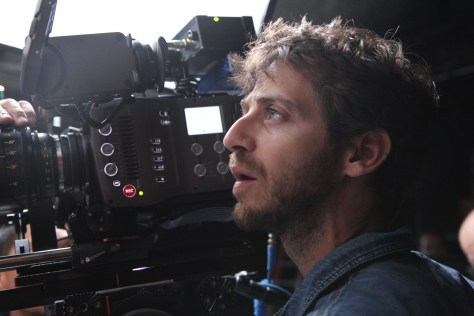
Cinematographer Jon Keng captures beautiful moments in award-winning film “The Stairs”

Growing up in Singapore, Jon Keng was always interested in photography. This love for still images eventually grew into something more. This lifelong passion of looking through a lens transformed from still images to filmmaking, and now he is an internationally successful cinematographer.

Working all over the world, Keng has shown his extraordinary capability as a cinematographer on a variety of films. His work on the award-winning film Fata Morgana was screened at some of some of the world’s most prestigious film festivals, and this trend continued when he worked on Cocoon, Home, and Tadpoles. Last year, his film The Stairs premiered at Ashland International Film Festival 2016, where it won the grand prize of Best Short Film. It also was screened at the Festival 2016, the USA Palm Beach International Film Festival 2016, and the USA River’s Edge International Film Festival where it went on to win the Special Jury Prize for Best Film.

“It feels great to be validated by the success the film has been receiving,” said Keng.

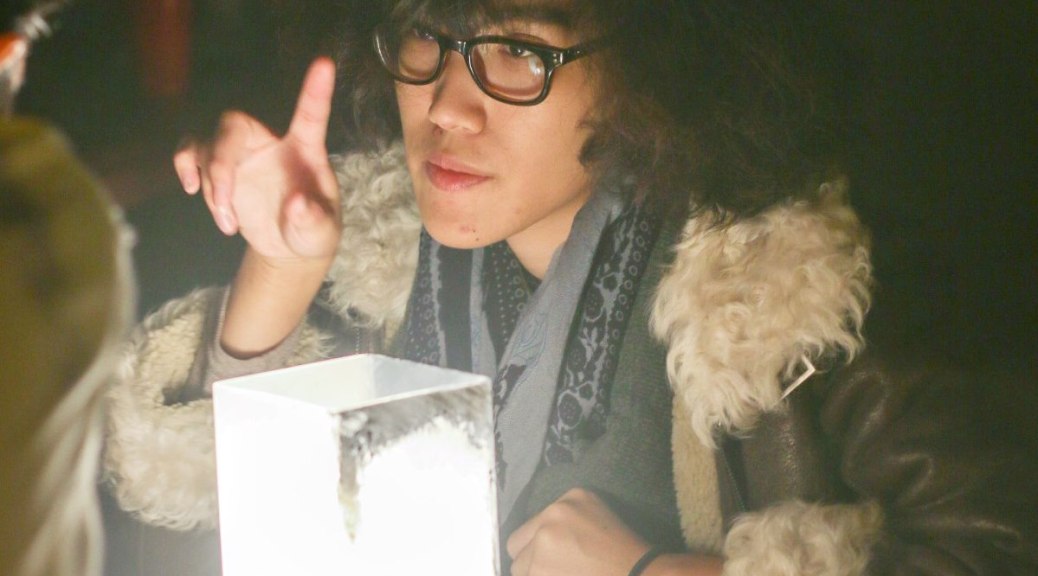
The Stairs was initially conceptualized as a television series, based around a gay, high end male escort and the lonely men he meets each week. The film follows an older man who hires a male escort for company on Christmas Eve, finding an unexpected kinship with the young man in this late-night exploration of solitude, intimacy and the basic human need for connection.

“I was attracted to the script of The Stairs initially. On the surface, it seemed very ‘undramatic’, with the entire story centered around a long conversation scene, but digging deeper, I began to uncover many subtly hidden emotional beats and arcs that each character goes through. I thought this was very tasteful and I made it my challenge to make the piece visually arresting to keep the audience engaged through the long dialogues,” said Keng.

Keng describes the style he filmed in as very calculated, as he tried to focus on emphasizing each specific beat during the long dialogues in the scenes, in order to make sure that the audience fully understood what was occurring, which largely contributed to the success of the film.

“I also played around with themes of escalating visual connection between the two actors in the film, building up to a final point of disconnection,” he said.

Keng worked alongside an all-star cast and crew on The Stairs. The film stars Tony award nominated actor Anthony Heald (Silence of the Lambs, Boston Public, Red Dragon). It also starred Kelly Blatz (NCIS, Fear the Walking Dead, Aaron Stone) who co-directed the film with the writer Zach Bandler (Switched at Birth).

As a director who has worked and will continue to work with Jon at every opportunity, I can say without hesitation that he has the rarest of talent in cinema: instinct. Cinematography isn’t just a technical job where someone points a camera for you at the actors or figures out where the lights should be. A great cinematographer is as much a storyteller as the director or screenwriter. Watching Jon work, he is truly “one” with the camera. It’s an organic part of them. He makes it move like a human being in a way that draws the audience into film. He has a sense for the lighting that evokes the perfect emotional response for that moment in the story on screen. He possesses nuance, sensitivity, he is a leader in their own right, without whom a director would be lost. That type of talent cannot be learned or taught, because it’s God-given. Jon has it. He is an artist in the most profound sense of the word,” said Bandler.

All who worked with Keng on the film were impressed with his cinematographic instincts. Meg Steedle, an actress known for her work in Boardwalk Empire, Grey’s Anatomy, and American Horror Story, was a producer on the film. She describes Zeng’s work as masterful.

“Jon’s was a dream to have on set. He ran the camera, grip and electrical department with an efficiency and effectiveness that kept the film running on time while still capturing beautiful moments on screen. For a producer, someone like Jon is the ideal,” said Steedle. “He’s got a ridiculously bright future ahead of him in this industry and I intend to hire him every chance I get.”

The opportunity for Keng to work with such a distinguished cast and crew was a vital aspect to his experience working on The Stairs. Blatz and Bandler knew what he was capable of, and were very open to collaboration. This gave Keng the freedom he needed me to push himself visually and experiment, and watching the actors provided inspiration.

“It was a privilege to be able to work with Anthony Heald, a veteran actor with such a strong theatrical pedigree. I was really just transfixed watching him go through his long monologues, conveying a deep sense of emotion,” said Keng. “Kelly was amazing to watch on set, as he was both acting and directing the film. He would be acting in one moment, then switch to director’s mode and talk about shots. This takes a great amount of multitasking. Despite doing multiple overnight shoots in a row, he was still filled with energy and concentration, which he was able to bring across to the entire crew.”

Keng was also a multi-tasker on set, working all the way from pre-production to post-production, ensuring everything was executed to perfection. With commitment like that, there is no doubt as to why he is considered such an exemplary cinematographer.
GREENWOOD ISN’T AFRAID OF THE ANTI-SEQUEL

sequence.Still001

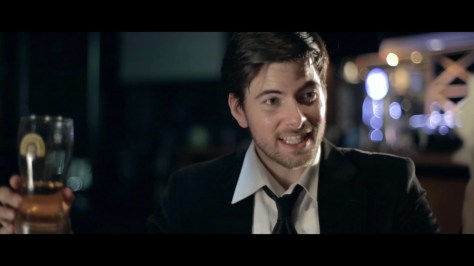
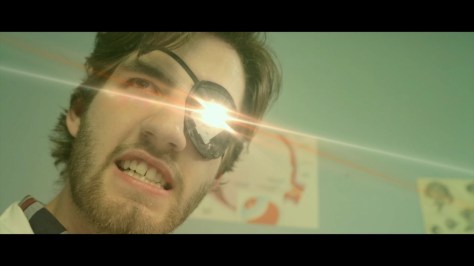
There is a quote that is attributed to many fine actors that states, “Dying is easy. Comedy is difficult.” It has been repeated by Academy Award winners like Gregory Peck and Jack Lemmon (most consider Edmund Kean to be the originator) and speaks to the fact that making something seem spontaneous and light hearted takes a fair bit more convincing than a dire situation. There’s also a fairly common belief that the film industry takes itself too seriously and rejects mockery. This is a notion to which Canadian writer/producer/actor Troy Greenwood does not subscribe. As a part of the FAFC (Film Actors Fight Club), Greenwood helped create the award winning film Diamond Planet. With a very self-deprecating approach, Diamond Planet poked fun at filmmakers, the film industry, and even film students. In this production, fools abounded while intelligence was scarce. The film was so popular that Troy decided to write/produce and act in the sequel…a sequel which is in fact about a film that is not yet a film. As proof that filmmakers revel in self ridicule, Diamond Planet 2: Emerald Horizon was embraced with greater enthusiasm than the original (winning at the Calgary Film Challenge and going on to screen at the Sun and Sand Film Festival in Mississippi). Diamond Planet 2: Emerald Horizon is a testament to the fact that as long as creative individuals take themselves too seriously, there will be peers among them who remind us all how absurd they seem.

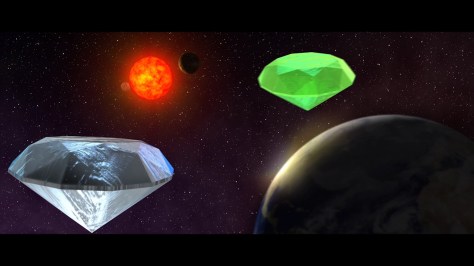
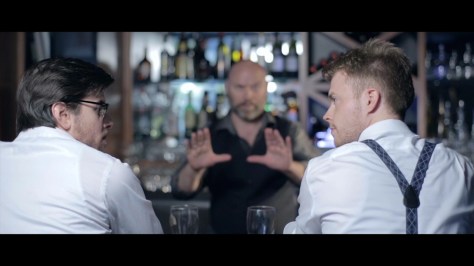
It has increasingly become commonplace for filmmakers to feed upon themselves, recycling films and themes from the past, sometimes even repeating the same current day premise but with different casts. While Diamond Planet shone a light on laughable concepts in modern film, Diamond Planet 2: Emerald Horizon turns its gaze to the film industry’s lack of originality and ingenuity. It seems that the current M.O. is to go for a wide audience that assures box office rather than fosters new ideas and artists; at least for the most part. Greenwood had a clear idea for a sequel which immediately follows the action of the first film. In Diamond Planet 2: Emerald Horizon, Ollie Swagger (the filmmaker from the original Diamond Planet) steals the idea for the “Diamond Planet” that was pitched in the first film. He’s going to try and sell the idea to a studio at the annual pitchtime event. Unfortunately for Ollie, when he was bragging about it the night before the meeting, his nemesis overheard him. The next day when they are seated together, Swagger starts into a pitch about “Diamond Planet”. In the film’s premise, the Diamond Planet will cross between the sun and the earth, magnifying the sun’s rays and burning the earth to a crisp. The government wants to send optometrists into space to change the curvature of the Diamond Planet rendering the rays harmless. However, Swagger’s nemesis jumps in, pitching his movie “Emerald Horizon” about a giant emerald planet and ophthalmologists in space. We, as the actual audience, see cuts back and forth between trailers for these films as they are pitched. Each trailer becomes more and more ridiculous until they’re basically turned into one complete parody of a movie; to which the studio’s representative responds “I like it, but how about a hamster!” The unseen wink with which Greenwood delivers the humor is obvious to all. One need not look too far into recent movie productions to see evidence of this scenario. Cutting to the core of the movie’s lesson, Troy notes, “Anything that tries too hard to purport itself is funny.”

DIAMOND PLANET 2 Final Cut.mp4.Still001

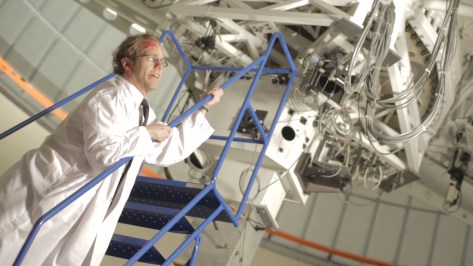
Due to the nature of “Diamond Planet” (the spoof movie) being a science fiction suspense thriller, the production value and the cast for this sequel necessitated a sizable increase from the original Diamond Planet. Because the original was so successful, it helped to propel much of the original cast and crew into busier careers and thus some key players proved unavailable for this sequel. Luckily the popularity of Diamond Planet attracted the interest and involvement of a large number of respected Canadian actors (both films are Canadian productions). This included noted theater and film actor Stuart Bentley. Greenwood’s prowess at a multitude of production roles, in addition to the script is what enticed Bentley to join the cast of Diamond Planet 2: Emerald Horizon. He comments, “Over the years, I’ve had the distinct pleasure of working with Troy Greenwood on stage and in film. In a production of Inherit the Wind Troy gave a masterfully understated and relatable performance of the accused schoolteacher, Bertram Cates. Troy effortlessly navigated this difficult character, drawing in audiences and critical approval. I had the opportunity to act in Diamond Planet 2: Emerald Horizon which Troy wrote, directed, and starred in. Troy had written a wonderfully funny script, and easily navigated the tricky job of acting and directing in his own production. He took great care of his cast and crew, and kept the production flowing on time, while being careful to ensure that every needed master and coverage shot was captured to realize his artistic vision. Diamond Planet 2: Emerald Horizon was a great success with judges and audiences and continues to be one of my favorite film projects of the past several years.” In addition to Bentley, the considerably larger cast included notables such as Jesse Collin (Fargo), Helen Young, and many others. Troy remarks, “Stuart, Louie, and Helen were all a breeze to work with. Stuart’s presence as the president had a great gravitas to it.  He really milked the moments of humour in the script, nailing the timing of lines to keep the pacing moving as the film progressed. Helen was also wonderful to work with. I had an interesting shot envisioned where the camera rotates around her before landing on the president; she was a trooper repeating the sequence a number of times while we worked out the technical kinks with the camera movement.”

DIAMOND PLANET 2 Final Cut.mp4.Still017

Another positive aspect of any sequel is that the success of the initial production allows for a higher production value in the second installment. The aforementioned larger cast and a greater array of interesting locations (including the Rothney Astrophysical Observatory, and the Springbank Airport Flying Club), were augmented by state of the art VFX. Greenwood relates, “I invested money to buy specific models we needed through a 3D modelling page.  Specifically, I got two distinct space ships for the two different versions of the trailer within the film, and planet models for the solar system, and then a diamond model so that my VFX artist could place them into the editor and articulate them to create the sequences you see in the film.” In fact, Troy concedes that he had to make sure the graphics were not too professional, in order to add to the humor of the trailers and the actual film itself.

DIAMOND PLANET 2 Final Cut.mp4.Still012

Diamond Planet 2: Emerald Horizon represents a blind spot in the film industry. While a considerable number of studios and filmmakers steer towards repeating proven ideas rather than creating new ones, Troy Greenwood has found a way to turn that concept around and use it against the very premise it represents…and still be wildly entertaining. Greenwood refers to comedy as a unique beast, remarking that you can plan all you want but often what is required is to just sit back and watch. Be careful filmmakers, you are being watched.

DIAMOND PLANET 2 Final Cut.mp4.Still013

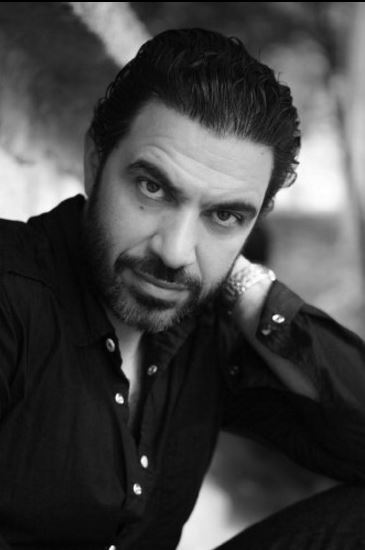
Actor Wadih Dona Thrives on Challenge

Australian actor Wadih Dona is a force to be reckoned with. With an impressive depth of classical theater training, a rich catalog of stage, television and film credits, the handsome, versatile player has achieved a great deal and is poised to ascend to the top of his field. For Dona, it’s been a near-lifelong pursuit.

“I don’t think you choose acting—it chooses you,” Dona said. “From a very early age I was always drawn to it. My father worked all over the Middle East and Europe, and as child I was exposed to many places and different cultures. I was always interested in people, watching them, looking at their behavior, making up stories about them. You see a couple in a restaurant and within seconds you can figure out their relationship based on their behavior. Is this a first date or a break up? I loved that.”

Acting is a particularly demanding endeavor. In order to succeed, a practitioner must demonstrate the ability to create a wholly convincing fictional experience. It’s a complex, sophisticated, painstaking discipline, and Dona does it with a sensitivity and skein of truth that reaches his audience’s empathic core to evoke a genuine response. As Nicholas Buffalo, who directed Dona on medical drama series All Saints, said, “Wadih’s incredible skills as an actor, his talent and versatility not only ensured the series’ commercial success and high viewership but also contributed to the way the show was received by critics and award bodies alike.”

This rare ability was honed and perfected by training alongside some of the world’s most prestigious educators. With studies at the renowned Western Australian Academy of Performing Arts, New England University, New York University and London’s world famous Royal Shakespeare Company, Dona, since finishing his studies in the mid-90’s, has undertaken a steady stream of work and built a career of significant momentum in theatre, film and television.

Currently appearing in the Sydney Theatre Company’s critically-acclaimed revival of Michael Gow’s Away at the Sydney Opera House, Dona’s trove of international include a wide range of theatrical work, recurring roles on some of Australia’s most watched television programs and made his US feature film debut in 2016’s Septembers of Shiraz. But, at home, he is perhaps best known for his role as Dr. Nick Paltos on the top-rated series Underbelly.

“I had watched the first season of Underbelly and loved it,” Dona said. ”Then I heard they were casting the second season leads, and Nick Paltos, the character I played was of Greek Australian heritage and I had a reasonable resemblance to him. Really, it was synchronicity, because the producers were interested in me, so I screen tested for it and the rest is history, as they say.”

“Unconventional stories are always the most interesting to me,” Dona said. “The character was based on a real person, a doctor who was notorious in the 70’s for smuggling the largest import of hashish into Australia—seven tons! Here was a conservative doctor, a GP, the pillar of his community, a church goer and beneath all of it he ran a huge drug racket. That, to me, was fascinating.”

Underbelly had smashed ratings records right out of the gate. As the Australian News reported, the show was “the most watched Australian Television series, with the double episode premiere attracting an average of 2,501,500 viewers nationally. The show has consistently rated highly, being the most watched show on Australian television for all episodes broadcast so far.” Dona’s striking portrayal of this infamous character kept the excitement high, and he relished every moment of it.

Underbelly was a fantastic experience,” Dona said. “But it was shot very quickly and was a true thrill. They cast strong actors because they knew the shooting time was short, so you really had to go with your instinct, as rehearsal time was also very short. Since I was playing a doctor on my first day of shooting the first scene was of me performing a colonoscopy, so it was very interesting getting the medical advisor to show me how to do that at 7 am on set!”

Since that six episode stint on Underbelly, his ongoing professional odyssey, with almost 30 television credits and eight big screen appearances, has been equally rewarding and successful. “Acting is a lifelong pursuit,” Dona said. “It’s organically happening for me now, and the opportunities coming are fantastic. There is no failure, only feedback. You have to plan to some extent but also leave some things to fate. I never want to be someone who regrets not doing something—if something challenges me, I embrace it.”


Taiwanese Filmmaker Diana Chao Directs Visually Stunning Content for Innovative Subjects and Product

The renowned filmmaker Diana Chao has been reaching audiences worldwide through her directorial work for several years. Her past experience spans commercial work, short films, and even features, a few of her most celebrated titles including The Restoration, which Chao both wrote and directed, the informative short film PSA titled Violence in the Closet, and the US-China collaboration, Finding Mr. Right. As a result of her past achievements, Chao was asked to direct two key projects over the past year: an upcoming short film titled Match, and a hit promo video for an innovated product called Emora, both of which have been great successes.

After watching Chao’s first independent short The Restoration, Domingos Antonio, the producer and actor of Match, insisted she direct his forthcoming short. Chao had been referred to Antonio by Brazilian director Alexandre Peralta prior at a film festival.

“Match is a story about the apathy and the emptiness of the virtual relationships through smartphone dating apps,” Chao explained. Initially, because of her strong aversion to dating apps and websites, Chao found it humorous that she was hired as the director of the project. In order to understand the world her characters lived in and accurately depict their loneliness, Chao had to dive deep into the world of online dating and do her research via friends who regularly use various dating apps.

match_01
Diana Chao working on Match

“I didn’t end up enrolling in any dating apps myself,” Chao said. “Some close friends of mine had been using different dating apps (Match, OKCupid, Tinder, etc.) and through them (both male and female users) I got to know the differences between the ways in which these apps functioned and how they targeted different markets. My roommate back then was planning to start online dating, so we went step-by-step through creating her a profile, held discussions involving what types of people would be attracted to certain types of photos and profile descriptions, and then tested our choices and analyzed our results.”

Chao chose to focus on Tinder the most, as the app model created for Match closely resembled the real-life dating app.

Fellow director and 1st AD, Jing Ning, who’s directed commercials for Mercedes Benz, BMW, Audi, and Volkswagen, worked closely with Chao as the 1st AD on both Match and Emora, thus receiving a good impression of her worth ethic in both short film and commercial capacities.

“Chao has a keen insight and fine sentiment,” Ning said of her coworker’s talents. “You can see those qualities in every film that she’s ever done. She created a dark and romantic tone for Match that gave the film a unique and artistic feeling. She brought out our actors’ deepest feelings to tell a story without dialogue, which exemplifies her solid directing skills.”

Match was completed in 2016 and is currently hitting the film festival circuit, including the 2017 CineGlobe International Film Festival at CERN in Switzerland, the 2016 Port Douglas Film Festival in Australia, and the 2016 Los Angeles Brazilian Film Festival in both the United States and Brazil.

Last spring, Chao completed directing the exciting commercial for Emora, a new product created by Innovart, a team of young Taiwanese inventors in the United States. In short, Emora is a smart accessory designed as a bracelet that allows one to express themselves and connect with people via color. This customizable bracelet allows one to show their style and mood by fine-tuning its colors and brightness with elegant gestures, and also has a pulsating light which fades in and out with one’s heartbeat.

Emora_02.jpg
Diana Chao directing Emora

The making of the commercial was comprised of a one-day shoot at a standing set at 2010 Studios in Gardenia, California. According to Chao, the amazing Art Department of the shoot was responsible for creating seven different locations within one space – an apartment hallway, bedroom, dressing room, studio, office, bakery, and café – and did so with astounding success. “Besides the prep day prior to the shoot, the Art Department was basically setting up Location B while we were shooting Location A, and striking Location A while we were shooting Location C. The encounter of a design team, which here in this case is the team that designed and created Emora, and our entire production team must involve labor, but I was thrilled by their passion and faith in their product. Without their patience, flexibility and trust on our ability of execution, this video wouldn’t have been possible,” Chao recollected.

John-Scott Horton played the lead male of the Emora commercial, though this wasn’t his first time working with the accomplished Chao. Horton also starred in Diana’s film The Restoration back in 2013.

emora_04
Diana Chao on the set of Emora

“Truthfully, I wouldn’t have done the project [Emora] if I hadn’t been asked by Diana, but I instantly said yes because I was excited to work with her again. She used much of the same crew that worked on The Restoration and I was reminded of how good she is at assembling the team,” said Horton. “Diana is great at delegating, has an eye for aesthetic, is very efficient, and is a very effective leader. Her artistry is suited for major feature films and was not compromised for a smaller project.”

Emora was ranked as number nine in the top 17 products of CES 2017.

The CES is a global consumer electronics and consumer technology trade show that takes place every January in Las Vegas, Nevada.

Winning it’s 9th position on the best 17 products out of all of the products of 2017 shows that Emora is commercialized. With this being the product’s sole commercial, it shows the impact it’s had on showcasing and promoting the product.


For more information on Diana Chao, please visit:
http://www.imdb.com/name/nm6371027/
https://dianachaos.com/

For more information on Match and Emora, please visit:
For MATCHhttps://vimeo.com/184096007
For Emora: https://myemora.com/


COELHO CREATES MAGIC BEHIND THE LENS

The film You Cast a Spell On Me is about relationships and magic. Movie magic gives us the escapism and captivating storytelling that we all desire. This magic doesn’t happen without the relationships and communication amongst the creative professionals who produce them for our enjoyment. Director of Photography Johanna Coelho’s job title may imply that she is solely focused on imagery but one of the keys to her success is the emphasis she places on communication in filmmaking. No matter what vocation you are involved in, communication may be the most important factor to success. Johanna’s shrewd understanding of this fact and the benevolent manner in which she utilizes it has made her a much sought after DP in the film industry. As a fluent English speaker who was raised on the outskirts of Paris, Coelho has a heightened awareness of the subtleties of communication and how different individuals receive and interpret information. Of course, being from France makes her very aware of romance; which made her the ideal DP for this production. Talent, communication, and a connection with the story being told were the components of the magic that she created for You Cast a Spell On Me.

It’s an obvious statement but, anyone who speaks more than one language has spent a greater amount of time dissecting and contemplating communication. It creates a deeper understanding of your own intentions as well as those of others. Life can be easier or more difficult based on the level of communication. The success of many films are based on the abilities of its creators to establish a rapport with the audience as well as to accurately depict the vision of the film. Fantasy films like You Cast a Spell On Me require someone like Johanna and Tosca Musk (director/producer) who can manifest visuals that don’t exist in our actual world. Speaking about Coelho’s work on the film, Musk declares, “Johanna’s cinematography work on this film was extremely impressive. She lead a full crew in an enjoyable environment and created visuals that were really uplifting to the story. There were also a lot of magic tricks happening in the story, and in collaboration with the art department, she brought these magic effects to life. Almost everything was done practically and it looks amazing; like real magic! She is a pleasure to work with. She was fully committed to the project and the vision I had as a Director. Johanna also was very mindful of the work of other departments, giving them their space when needed but also collaborating with everyone to have a smooth and organized shoot.”

You Cast a Spell On Me is a romance/fantasy film about a young and handsome warlock named Matt. His power is that he can charm women into finding him irresistible, literally. As one can expect, a young man with this power is apprehensive to settle down with one woman. This journey Matt takes towards finding his soulmate and depicts him losing his powers, others gaining powers, and the conflict and happy endings that one finds in romance films. Due to the nature of Matt’s character, many production departments were required to understand and work together to help create the visual “trickery” to produce the action in this film. The responsibilities of the Director of Photography can vary depending on the personality of a director. Some directors like to have a full control of the creative visuals. They have a very specific idea in mind and have a precise shot list with lighting references they want reproduced for the film. Other directors do not really want to (or know how to) deal with the visual part. They just want to focus on the actors. When similar minds meet…Coelho explains, “Sometimes you have a director in the middle of the two previous options, one that will want to share the creative approach with you. It’s a really fun process when this happens because the two of you have imaginative brains talking together about shots and exchanging visual references to find what would be the best for the story. Tosca Musk is that Director, and it was amazing to prep this film with her because we would really support each other in the process. One idea would lead to another idea and so on, giving life to ideas that might have never existed with only one person brainstorming. We were also both very open minded about each other’s input and this really helped the process.”

This template trickled down through Johanna’s ten-person camera crew. This DP makes sure to involve them in the pre-production process (especially the Gaffer and Key Grip) to keep everyone aware of the plan and prepare for lighting, etc. Johanna understands that a happy and respected crew of professionals are more motivated to work and share in a vison than those who are merely “punching the clock”, a mindset we can all relate to and understand. Perhaps one of the most overlooked parts of communicating on set is with one’s self. Coelho reveals, “It is hard to stop for a second, and really look at the frame and lighting and be sure it’s the right setup. Focusing on one thing at a time is very important. If you do everything in order, your job will go much faster. You can switch back and forth between things quickly but each thing needs to be given its own respectful moment. It is also really important to know the blocking of the scene, because you don’t want to start lighting and discover in the middle of a take that your light is in the wrong place for your actor. So following the steps is key. It’s true that with everything going on at the same time, you can get lost in your own thoughts. It happened on one of my early student movies in 2011 at AFI and I was really angry at myself for having lost my point of view on the film. A teacher who watched it pointed this out to me and told me that when he would get confused on set, he would step out into the bathroom, turn the lights off so his eyes wouldn’t get distracted, take a deep breath, and remember what the movie should be for two minutes. Then he would come back on set fresh and clear minded. This is probably one of the best pieces of advice I have ever received. I don’t go hide in the restrooms, but I do step outside into an empty corner where no one is talking to me and take a deep breath and think for two minutes. When I come back on set everything is fine and back in place in my mind.”

While those of us in the audience are blissfully unaware of all the moving parts behind the scenes of the shows and films which entertain us, the talented professionals creating them are always thinking of us and our subconscious desire to not be taken out of the film. None of that would be possible with the oversight of someone like Johanna Coelho. You Cast a Spell On Me was filmed in a staggering fourteen days; an incredible achievement for such a high quality production. This is only possible with someone such as Coelho who is planning out and paying attention to every possible time saving opportunity. Whether communicating with the AD to prep things while waiting for the actors, or planning the lighting so that the post production process runs more smoothly (Johanna states, “Colorist are key and they should have much more recognition as they’re always saving your back and make your work look better. I was happy I could assist in ways that helped the colorist. We would discuss it together for each shot.”).

It’s an obvious statement that every DP needs talent and the eye to find the images which the director needs. There are so many professionals in the world, it is those like Johanna Coelho whose ability to create a positive and efficient environment for filmmakers the set her above the rest.

ok8a1108-copy

Andrew Searles is seriously funny in upcoming film Cereal Killer

While growing up in Montreal, Andrew Searles always knew he wanted to perform. As a child, he would watch Star Trek: The Next Generation and be captivated not only by the special effects and storyline that made the show what it was, but the performances of the actors. He watched every episode he could, studying how the show was made, fascinating him even more. When was watching other movies and shows, recognizing actors but seeing them play different characters, he was enchanted. He knew that he had to follow in the same footsteps. And he has, Searles is an incredibly versatile actor, just like those whom he idolized as a child.

While also being an established stand-up comedian, Searles is of course capable to deliver a comedic scene. He understands improvisation, and exactly how to deliver a joke that will leave the audience in stiches. However, it is his more serious side of acting that leaves audiences bewitched. He really can do it all.

“I like the aspect of portraying somebody else who isn’t me,” said Searles. “Taking on a new persona, a new identity, embodying their traits and creating an entirely new person, or taking on the personality of whomever I’m supposed to be portraying.”

Searles flexibility as an actor is exemplified further in the upcoming film Cereal Killer, written and directed by Fabrice Barthelemy. Cereal Killer is a comedy that follows Jimmy, a young man who loves eating his cereal. However, things take a turn for the worst when someone in his neighborhood keeps breaking into his apartment and eating his cereal. Jimmy, along with his best friend, Sean, team up to begin an investigation of who keeps eating Jimmy’s cereal. Searles plays Gus, the antagonist in the film. Gus is a very mild mannered, quiet, reserved, caretaker of an apartment building. He often says inappropriate things without realizing he said them. When Jimmy is searching for whomever has been breaking into his apartment and eating his cereal, it eventually turns out Gus was the culprit the whole time.

“Portraying a character like Gus allowed me to ‘get my hands dirty’. I wanted Gus to be a very dark, twisted, soulless type of character. I wanted to use this opportunity to break away from being a ‘comedic’ actor in a sense, and shine as someone playing a character who is disturbed. Even though Gus’s lines would still be comedic in nature, I figured his lines would come off even funnier if they were delivered in a dark, morbid tone, rather than from a goofy, comedic character,” said Searles.

Gus was not originally intended to be a dark character, but it was Searles’ intuition that brought the character to life, and the twist added even more humor to the film.

“I created his personality and traits and integrated them into the film. I also learned how to embody a very serious, dark character, darker than I’ve ever played on camera. I learned how to keep the balance of playing a very serious somber character while playing with the comedic lines and aspects of the film. I wanted to be dark enough so the darkness of his character shined through, and the audience felt that, but not too much where the comedy aspect of the film is off balance,” he explained.

And does his technique ever work. In a pivotal scene in the film, when Gus is being confronted for being the cereal thief, he is extremely serious, as if confessing to an actual murder. He even puts his hands up to be handcuffed after his confession, as if he committed a large crime, but he is just being told he is fired.

“Fabrice originally intended the role to be a fun, goofy, type of character, but wanting to play something different than just a type casted comedic role, I played it my way at the table read and Fabrice lost his mind and hollered at how much he loved my angle on Gus. He was so ecstatic and in awe because he never envisioned his character to be that dark, and it’s his dark humor and awkwardness that made Gus even better on screen. I figured that if funny lines from a funny character are expected and normal, then funny lines from an unfunny and dark character would be even funnier, because it’s not what the audience would be expecting,” said Searles.

Although Searles went in to read for the character of Gus, he was actually approached and asked to play the part without an audition. The Assistant Director and Assistant Writer of the film, Sara Sommers, knew that Searles possessed extraordinary acting capabilities that would make the film even better.

“Andrew is an extremely driven and talented individual. During filming, he displayed his incredible acting and comedic talents. There is no doubt in my mind that he was the correct person for the role. No one else could bring this character to life the way Andrew did. His portrayal was done magnificently and effortlessly and I am sure that he will bring these attributes to all his future roles. Andrew is the type of talent that we do not meet on a day to day basis. He is unique, one of a kind and truly remarkable. He is the type of actor that not only would directors and producers love to work with, but also will be loved by audience members as they will be struck by his presence. I would work with Andrew on a future project in a heartbeat. He truly is a talent to look out for,” said Sommers.

Cereal Killer is expected to be released later this year.

Art Director Diego Coutinho tackles award-winning film War on Drugo with perfect execution

4
Part of the crew of War on Drugo

They say when you do what you love, you never work a day in your life. Diego “Couts” Coutinho knows this to be true. The art director and motion graphics designer spends every day living his dream, and enjoys everything he does. But what makes his job even more enjoyable is working on projects that he truly believes in. When a film sends an important message and he is part of creating it, there is a sense of purpose that goes far beyond loving what you do.

This is exactly what happened when Coutinho worked on the Brazilian film War on Drugo. Although the film was recognized internationally and received many awards, it was working on something he believed in that was truly special.

“I can honestly say that this movie wouldn’t have been possible without Diego as Art Director/Production Designer. He was my right hand throughout the whole production, responsible for directing the Concept Art Crew while also working as Lead Concept Artist; overseeing the production of puppets and settings to make sure the original visual concept wouldn’t get lost,” said director Gabriel Nóbrega.

Commissioned by the Global Commission on Drug Policy, developed by Almap/BBDO agency and produced by Vetor Zero/Lobo studio, the film was to created to motivate a reflection on the consequences of 40 years of “war on drugs”, and to foster a broader discussion of drug policy reform. War on Drugo is set in a fairytale setting. The movie explains the disastrous war against drugs by telling the story of a dragon banished from an ancient kingdom, and how people who spent time with the dragon were thrown into jail. The visually appealing metaphor uses a simple narrative that is designed to help overcome these barriers and break taboos when it comes to discussing the issue with the public.

“The good work in this project was to create a tool to raise people’s awareness, so they can better understand the issue of drug abuse in the contemporary world,” said Coutinho.

1
Artwork in War on Drugo

Coutinho took on multiple roles to ensure the film’s success. As production designer of the project, he was responsible for pre-production during the beginning stages. He followed storyboarding, creating and developing characters and scenarios. At the same time, he was the lead artist of the team, so beyond the creation of scenarios, characters and special effects, he was required to pay attention to the development of the project, ensuring other artists were consistent with the conceptual proposal of the film.

After the pre-production was finished, he followed the production and preparation of the pieces so that they were faithful to the concepts. In the sequence, he went to work in the post-production, assuming part of the coordination in the final moment. He also worked as a composer, being responsible for the main special effects of the film.

“It is normal not to have the answer to everything, but you must to be prepared to change what is necessary and correct process failures as soon as possible. So, the sooner we make a mistake, the sooner we correct the problem,” said Coutinho.

Despite War on Drugo being an extremely important project, it became Coutinho’s most-awarded project to date. Besides a lot of print and online press coverage, it was acclaimed by many of the most important awards in the field, and went on to win gold at the London International Advertising Awards for Motion Graphics Design, gold in animation at the Cannes Lions 2015, Gold at the IF Design Awards 2015 in Short Animation, and 16 other awards worldwide.

“Couts isn’t just one of the most talented Art Directors I have worked with, he also has integrity in the way he treats the project and the people,” said the animation director of the film, Lee Peffer.

2
Set from War on Drugo

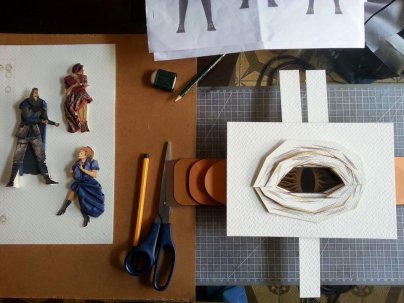
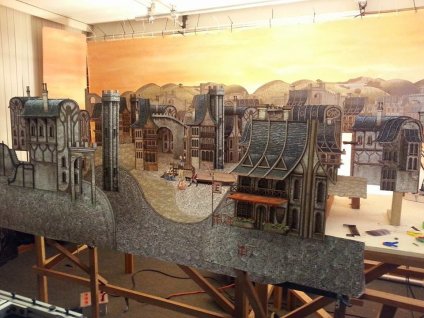
After the success of their previous project, the credits for the Brazilian film Brincante, Coutinho, Nóbrega, and Peffer decided to embark on this project. They knew they worked well together, and therefore used a similar style of artwork for War on Drugo. They used one of the oldest types of animation techniques: stop-motion, using hinged cardboard puppets and miniature sets. Most of the artwork was printed and glued onto pieces of laser-cut MDF, while some settings were hand-painted or created with mixed materials. Coutinho’s team took over 30,000 photographs, and built a total of 13 scenarios and over 300 characters, of which around 80 were animated, meaning they had a structure of articulated joints.

“It was a great time because it was almost like a family, where everyone stopped to talk,” said Coutinho. “We developed the proposal to mix both temporal moments in the film. We can see the logic being applied throughout the film. Early at the beginning of the movie, we see the shot of the king, he’s showed in an American capitol that has a mixed architecture with a castle. The logic also applies to the design of the clothes. In the first scene, you can see two women in medieval clothes walking with shopping bags, as if they were returning from shopping at the mall. The result is a visual of a story of fairytales, but has obvious and direct relationships with today, which helps in having a public identification with the subject, and so we get the opening to about drugs dialogue.”

You can watch the powerful film here.

MAYER BRINGS A BEAUTIFUL SIDE TO “SHUN”

So much of life is about perspective. The way which we view the situation we find ourselves in, the circumstances that surround us, even the interpretation of this by others…all of these things factor into how happy or fulfilled we are at any point in our lives. The 2015 film Shun depicts these factors in the story of two chefs who happen to be father and son. As cinematographer for Shun, Avner Mayer is in charge of so many points of perspective that it’s practically dizzying. Mayer helps the audience (that’s perspective #1) to see things the way that the son (perspective #2) and father (that’s #3) do, by using his (#4) exemplary skills to communicate director/writer Shiyun (Lavi) Hu’s (#5) story. While many might see the cinematographer’s role as sitting at the camera and making sure the action is in focus, they fail to understand the depth of planning and all-seeing overlook of professionals like Mayer. Great cinematographers not only capture the action during filming but they become the eyes of both the production and the audience, coloring the emotional content to heighten what every other aspect of film creation has done, breathing life into the corporal vessel that is film. If that sounds hyperbolic to you, you don’t have experience in the film industry. A smart director understands that a cinematographer will lift a film to new heights or send it all crashing down in spite of its other redeeming qualities. Shun’s director has worked with Avner successfully on two films (the films Beyond and On The River) and it was due to his ability to cultivate depth in a film that she contacted him to be the DP for this production.

Shun is a very emotional movie for a number of reasons. It deals with a conflict between family, work, and self. Kazuki is a fifty-year-old Sushi sous chef and the right hand of his father (Yoshi) in the high-end grip sushi restaurant “Hasimoto”. Kazuki has worked under his father for the past 30 years but they have very different ideologies regarding food and life. Yoshi runs his restaurant with a strict, traditional, and almost sterile approach. He treats his food like a piece of art and believes others should do the same. For Kazuki food is a way to a man’s heart and soul, a tool to connect to people’s emotions. When Yoshi falls ill, he decides to pass the control of the restaurant to his son. Kazuki finds himself trapped between the need to continue his father’s heritage and in his own wishes. The deceptively simple storyline introduces many difficult emotional ideas. Dealing with the ailments and aging of one’s parents, the desire to find your own path in life and career while also desiring the approval of your parents; these are difficulties that many of us can relate to regardless of our country of origin or vocation. The universality of the theme allows everyone to access the filmmaker’s frame of reference but it was Mayer’s role to make it interesting for the audience. It’s obvious that this goal was well attained with Shun as it was an official film selection for such festivals as: Salento international Film festival (2016, Italy), Montreal World Film Festival (2016, Canada), the Toronto Reel Asian international film festival (2016, Canada), and as a finalist in the “Vizio” and “Dolby Vision” Filmmakers Challenge – Cinematography awards – 2016.

The differences between father and son in Shun establish the conflict that Kazuki (and we suspect Yoshi as well) must deal with throughout the film. Kazuki and Yoshi have drastically different approaches and opinions towards food and the process of creating it. Yoshi has an almost surgical, scientific approach to food making. He runs his kitchen like a Swiss clock factory. The work must be done in a precise predetermined order. Improvisation is not allowed. Yoshi’s connection to food is different. Preparing food is instinctual to him, full of flavor and improvisation. For Yoshi, food is a process of connecting with other human beings rather than a planned and organized ritual. To highlight this, Avner explains, “In order to show the differences between the father and son, we used our lights to create different energy. The lighting is clear, blue and bright when Yoshi runs the kitchen. It has an almost ambient/office feeling.  When Kazuki is in charge, the lighting changes to a dimmed yellow-red environment. This creates a much more comfortable and inviting atmosphere; like being at home.”

shun-head-shot-with-camera

Mayer also customized the lighting for the lighting for the restaurant location in Shun. The choice to create the restaurant on set rather than a preexisting location gave the production the availability to take the time and movement needed for their shots. Avner chose to use ambient studio lighting from above to again capitalize on the freedom of movement during filming. He notes, “The general approach to the lighting was high key and natural. We didn’t want the movie to feel lit but we still wanted to establish a high key ambience. In order to create this effect, we rigged big top light sources to create a soft, natural light. We aimed for a natural Japanese look and I feel we were very successful in achieving the proper look and feel. Camera wise, we wanted to be patient and static. We decided to tell the story mostly using the blocking and editing (different camera positions) and to keep it as simple as possible. This is the way the characters in Shun see the world so we adopted this approach in telling their story.”

While you can see a great deal of Mayer’s talent and skill as a cinematographer when viewing Shun, you won’t see the largest part of it. Director Shiyun (Lavi) Hu declares, “Avner is very precise in his planning. This was a great benefit to Shun since we shot almost everything in a studio, which limited our shots selection.  Avner’s preparation work with our Production Designer allowed us to maximize the space to our need’s, using lighting built into the design and creating moveable set walls for extra flexibility. I had the pleasure to collaborate with Avner as my cinematographer on previous projects. At this point we have a blind understanding of each other, which makes the filmmaking process fast and efficient.” Shun’s producer, Cedric Gamelin, states, “Usually when you shoot a movie, you have surprises in every step. In this project the process was the smoothest I have ever encountered, I must say that Avner and the team’s preparation work made it seem easy. Avner did all of that without jeopardizing the images, which were magnificent! I’m very proud to be a part of the team who created Shun.” Avner Mayer is happy to be a cinematographer that is appreciated and respected among his peers in the film industry, whether it be for his work on set or the planning of it. He relates, “Since I discovered in my early twenties that I wanted to be a part of filmmaking, to arouse that same excitement that I felt sitting in a theater…I’ve always been excited about all the parts of the process. I feel that the key for a successful project usually lays in the preparation work. It requires a lot of communication between all the key groups involved in order to be synched on one vision. When everybody is synched like that, the set can be a big celebration…and who doesn’t want to be a part of a big celebration!”

shun-with-director-lavi-hu


ARCIONI’S ECLECTIC TALENTS PAVE A NEW PATH FOR TODAY’S EDITORS

There is no questioning the fact that the way the world disseminates and receives information and entertainment is forever changed. “Appointment TV”, a staple of the home viewing industry only ten short years ago, is almost nonexistent thanks to the DVR. You can watch a film that was released in the theater within almost three month’s time on a plane. Digital Downloads now result in more viewers watching on their computer or smartphone than any of the traditional means previously commanded. News and entertainment go everywhere on the planet and they get there quicker than ever before. While this has caused previous models to take a financial hit, it has also produced an industry that has more creative professionals involved in production that at any point in history. The belief is that that not everyone succeeds but, as the saying goes “the cream rises to the top.” Ana Arcioni is among this new breed of professionals. A highly in demand editor with a widely diverse resume, Arcioni has the ability to work with productions around the globe who seek out her consummate abilities. Empowered with a wider sphere of influence than that afforded to previous professionals means that editors like Ana are offered a host of diverse opportunities, something which is a part of Arcioni’s list of desirable qualities. Productions like the animated film Reality Takes Place, EATV (Educational Access Television), and Premiere Pictures International Inc. are just a short list of the employers who have enlisted this talented editor to make their creations even greater than before.

When Ron Merk, owner/president of San Francisco based Premiere Pictures International Inc. approached Ana about working on the company’s new S.E.Q.U.E.N.C.E. project (as a film/video Editor and Artistic Supervisor for Trailers, Promos, Teasers, and interviews), it seemed to her like an opportunity to be really creative and on the ground floor of something new to the industry. It also gave credence to the company’s belief that Arcioni could display their technology and approach to the best and brightest of the industry. The owner and president of Premiere Pictures International Inc. declares, “Ana’s work with S.E.Q.U.E.N.C.E. proves to the world that It does exactly what I had in mind; it gets the viewer intrigued and want to ask ‘what is this and when can we see it?’ Editing has its own rhythm and pace, and the project itself is going to tell you when to stop. I love that Ana can read my director’s mind and put together a video like if she was? reading my mindWe’re in the business of giving great editors great tools, look no further than Ana Arcioni as proof of this.” In addition, Ana participated in the projects Outrageous, Repeace, and Harvest during her time at Premiere Pictures International Inc..

Ana’s work with EATV is yet another example of the difference in content that she edits. Ana utilized a variety of skills at EATV; doing promos, intros and station ID’s. Some of her editing work with EATV has been viewed at the Festival of Moving Image 2016 (Roxie Theater in San Francisco) and the animation film festival at the Niles Essany Film Museum. Working with producer Jody Yvette Wirt, directed by Maya Prickett, and starring Maya K Chenille, Shoebox Circus was one of the most popular productions at EATV. Shoebox Circus’s content is meant to appeal to a mainly young audience, something that Ana sees as inconsequential to her role as editor. She states, “The fact that the programs are dedicated to children or adults is only a subtle difference, as in the case of a program of urbanism or any other nature. Politics, art, geography, travel, cooking, science, new discoveries, astronomy, there’s an infinity of things. I love them all as long as there is variety. What I love most is the absence of routine. One of the most appealing factors in my line of work is diversity. For Shoebox Circus, Jody raises the idea and gives the tone of the idea. I work with that idea with After Effects editing to have a product which matches that idea. I’m happy to be working with Jody because she has a unique voice and that makes it interesting for me.”

Proving that her work bridges the gap between child and adult is the animated production Reality Takes Place. This inspirational drama discusses friendship, positive perspective and thinking, as well as death vs. life. The topics can be light and then switch quickly to having substantial gravitas. Reality Takes Place was selected and screened at: City Shorts Film Festival at Diego Rivera, Artist Television Access, Festival of the Moving Image, and the Bernal Heights Outdoor Cinema. Ana felt that her work on this production revealed things to her about editing as well as the role of all filmmakers. She explains, “Reality Takes Place is drawn and animated by myself using the Adobe Flash program. The voices are recorded in a small studio through Pro Tools, as well as the Foley effects. The first-line editing was made with AVID. The tweaks, and retouches (including sound design) were made with Final Cut Pro. On and off it was a total one-year project. In my opinion (and I know that not everyone will agree) every independent filmmaking process starts from the editor’s point of view. The more you get to edit and the more you gain experience at it, the more expert you become in shooting and in directing because you know what you want, you know the type of shots that you need. If an editor has a say in the production, or has a good relationship with a director who listens to him/her then the film benefits. I think the editor is the one who understands the most because they have the film in their head and know what shots are needed in order to make the finished piece look good. The editor can advise the director with insight like “don’t do that because it will be impossible to fix in post” or the opposite, “don’t worry about that because I can fix it in post. Being a part of any production is about teamwork. Of course I see the importance of my role as an editor. I also understand that my greatest asset is my ability to make everyone else’s work look even better, that’s why I enjoy editing so much.”

pic-for-ewg-headshot1


PRODUCING A PAINFUL WAR FILM WITH “DAVID” YU HAO SU IN “RESURGENT”

Yu Hao Su is Harvey Keitel. Okay, maybe he isn’t the Oscar nominated actor but just like Keitel’s character Mr. White in Quentin Tarantino’s Reservoir Dogs, David (as Su in known) has a reputation for being a “fixer” in the film industry. When the 2016 Action/Thriller Resurgent needed to do a reshoot for scenes which take place in Afghanistan, David was contacted to contribute his exemplary producing skills. A reshoot is so crucial to a film because it has to match the existing footage in so many ways as to seem and feel that it was part of the original filming. Any deviation from the tone and mood of the existing principal footage could derail the already massive amount of work a production has executed, to say nothing of completely distracting the audience. As the editor of this film, no one is more qualified than James Stiegelbauer to comment on the work of David on the reshoot. Stiegelbauer proclaims, “Yu-Hao was calm under pressure. When our director made last minute script changes, everyone was concerned it couldn’t be pulled off but Yu-Hao didn’t even flinch. He made a few calls and quickly got everything that was needed. Yu-Hao is detail oriented, resourceful, and is never afraid to get his hands dirty. I would ask him to work on every job if I could. We could not have finished Resurgent without his hard work. He coordinated with the actors, locations, and crew quickly making all the necessary arrangements to meet our needs. As an Editor, I’m not on set, but I do need to be in constant communication with the director and cinematographer. Yu-Hao was crucial in this communication. This ability to be able to keep the work flowing even as unforeseen factors arise and must be dealt with…that’s what the truly great producers possess.”
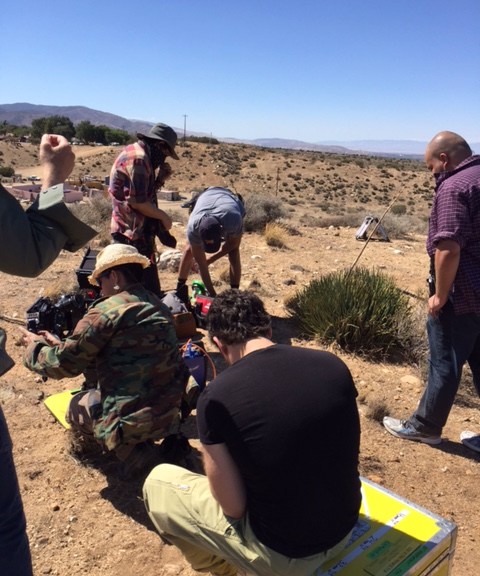
Resurgent is a film which depicts the story of a mercenary who must come to terms with a botched mission in order to return to the battlefield. Max, the main character (played by Manny Cartier) is suffering from the pain of his partner who has died in a military missionary with him in Afghanistan. The action and military theme of this film necessitates stunts, something which David is familiar in dealing with. Setting the table in a safe manner for these stunts is highly important to him. He notes, “We have a lot of stunt in the film. I need to make sure the stunts are done right in order to make sure the actors are completely safe. We not only have the stunt coordinator on set but also a set medic. This may seem obvious but every little situation must be planned for regardless of if it ever needs to be used. We also have a weapon wrangler on set to make sure people are aware on set, even though the weapons are just props. My job is not only to make sure the stunt scenes are well-planned but also to make sure the set is safe. I take stunts very seriously. Because it’s an action film with a lot of stunts (and we filmed in a dessert to cheat it as Afghanistan) I needed to make sure our production was a self-contained unit with everything we could possibly need at a moment’s notice. It’s not easy to shoot stunt scenes with weapon props in the desert. I need to make sure everyone is safe not only because of the stunt actions but also the difficult shooting environment.”

For those of us who don’t work in the film industry, it might be hard to understand exactly what a producer does on set. For those who do work in film, it’s difficult to overemphasize the impact a producer has on any film. A producer’s role can be described as parent, police officer, president, healer, and best friend…all in one person. A producer is the person who supplies what you need even before you understand and comprehend that you need it. It’s a conflicting situation for most producers. They love what they do but they rarely are afforded the opportunity to lose themselves in the fun of watching the movie magic they help to create. David states, “Being in charge of the reshoot for Resurgent was fun, there’s no mistaking that. I just had to always be thinking a few steps ahead. There is really no time for losing yourself in the moment. It’s interesting to shoot an action film. The stunt sequences with the stunt coordinator are fun and look amazing in the film. Watching that when the film is finished is fun. There are always challenges that are unique to each film. The desert location we filmed didn’t have a phone signal or Internet. It’s very hard to run a set without this technical stuff. We ended up planning it well and got the work done in spite of this. There is nothing to complain about for me. I’m so excited to be a part of this industry. To focus on the story and tell the story from an essential human’s point of view. I believe truth and humanity is the key to delivering a story everyone can understand and connect to.”

img_7923