Category Archives: Film

Actor Ryan Davies Comes into His Own

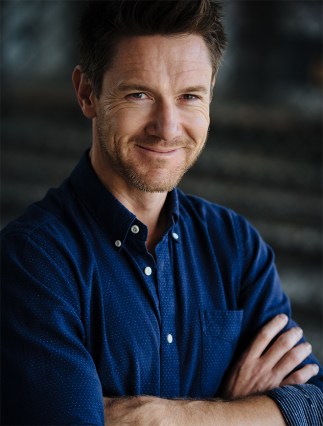
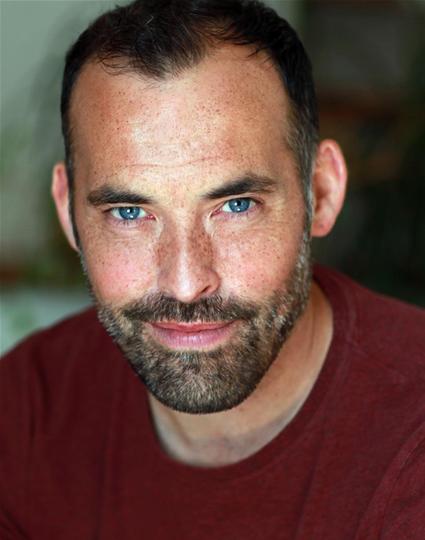
Actor Ryan Davies’ fast moving career has encompassed just about the entire dramatic range in a short decade’s time. The charismatic British-born Davies’ roster of experience includes everything from playing Hamlet and Chekov’s Uncle Vanya at prestigious London proving ground the Workhouse Theater to commercials, music videos, television and feature films, a trove of professional achievements which have placed Davies very close to the apex of the acting world.

Surprisingly, the intense, blue eyed Davies had little interest in the field, until fate intervened. “I grew up in Wells in the West of England, a rural city with few artistic opportunities,” Davies said. “I spent most of my youth working on a building site but knew it wasn’t something I wanted to do for the rest of my life.”

“I was staying with a friend in London for a week and he was taking a 4-day audition course at [drama academy] The Poor School,” Davies said. “And since I was at a loose end, I thought I’d go along and try it too, just something to alleviate being on my own in a strange city. I didn’t intend to pursue a career in acting, but at the end of the 4 days I was offered a place on the course.”

From that unlikely start, Davies entire life was redefined. “I immediately quit my job on the building site, moved to London and the rest, as they say, is history. I trained at The Poor School in London between 2008 and 2010 and I continue to train at The Actor’s Centre, London.

Subsequent high-profile assignments include a memorable turn as the corrupt villain of producer Adi Shankar’s “X-Men” prequel “Grey Café,” a recurring role in the STARZ/BBC Worldwide original series “DaVinci’s Demons” and an upcoming role in another historical period piece, the forthcoming “Fall of the Templars.”

One of the key moments in Davies’ sure, steady rise to prominence was his performance in director-writer Maria Balduzzi’s acclaimed 2016 short “Wolves,” a nuanced drama in which he excelled as the troubled teenaged protagonist’s father.

“’Wolves’ is a lovely film, about a boy who has a very strained relationship with his single parent father,” Davies said. “The boy uses the woods next to their home as a daily escape from the realities of his life. One day he comes across another boy running away from his own problems, their burgeoning friendship allows him to eventually reconnect with his estranged father.”

“It was an interesting and very challenging role,” Davies said. “It required me to convey the whole spectrum of emotions, and as the relationship between father and son was the emotional heartbeat of the film, it was integral that the audience connected with and cared about both of them.”

Davies’ signature combination of subtle restraint and deep involvement served him well, and elevated the film to an impressive level of dramatic craftsmanship.

“’Wolves’ revolves around the complicated relationship between a father and his son and Ryan was able to give the role the emotional gravitas it required,” Balduzzi said. “It’s very much a film about love. I wanted the film to represent the way we experience life and memory in our most intimate moments and much of the film’s success is due to Ryan’s performance.”

The film was well received in the UK, where it was nominated for Best Short Film at the Iris Prize Awards 2017, and was also selected for screening at the prestigious London Short Film Festival. Balduzzi herself went on to pick up the ‘Horizon Award’ for Most Promising Filmmaker at the 24fps Festival in Texas, where the festival organizers characterized it as “an exceptional piece of work.”

“Wolves” was an important step in the Davies career, one that initiated a new professional momentum. “I came into the industry relatively late, so I’m keen to make up for lost time,” he said. “There’s been a real buzz about ‘Wolves’ that opened up some doors and led to many other opportunities for me and I’ve gone on to be cast in a wealth of other projects, so I’m very fortunate in that respect.”

For Davies, timing has been critical, but his steady reliability and dedication to creative expression practically guaranteed the series of successes which he has enjoyed. With a palpable momentum building, the actor is poised for even greater accomplishments, but he always maintains his own coolly authoritative, resolutely professional methodology.

“I approach each role, no matter how big or small, in exactly the same manner,” Davies said. “I look for characters I can get under the skin of, and I try to bring my individual stamp to each role—and I make sure to have fun along the way.”
Graphic Artist Vinita Bakhale contributes to important scene in Academy Award-nominated Feature Film

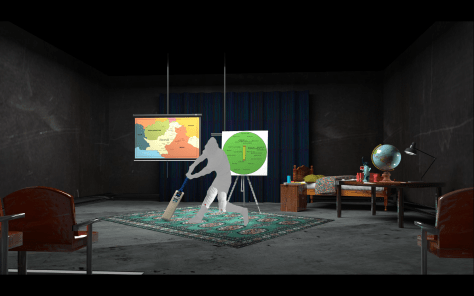
The Big Sick (2017) Children's Playground Theatre Graphic Art by Vinita Rachel Bakhale Property Of Lionsgate
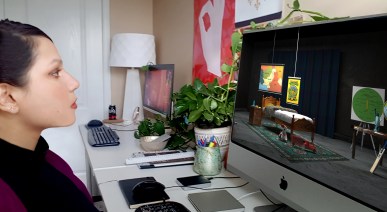
Vinita Bakhale working on artwork for “The Big Sick”

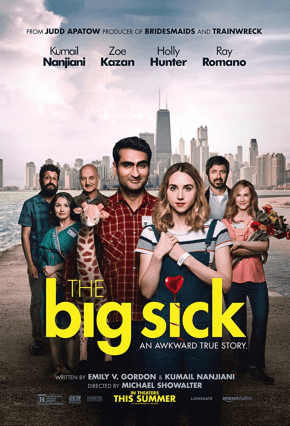
Although Vinita Bakhale grew up in the small town called Oakville, Ontario, located just out of Toronto, she was often inspired by her great-uncle, Diwakar. Diwakar Karkare was a famous Film Poster Artist in the Indian Film Industry. For nearly 30 years, he hand-painted official film posters and key film art for theaters, massive billboards, and building signage. As a child, Vinita really looked up to him, and he inspired her to pursue an interest in the film and television industry. Now she is a working Graphic Artist for Film and Television, where she is often hired early pre-production and is responsible for helping visualize sets and provide her skills in graphics based on the Production Designer’s vision.The Big Sick Poster

Vinita has many celebrated projects on her resume. She worked on the television series shows, Happy, as well as Damien and the Netflix hit Riverdale. She still finds herself surprised at the good fortune for getting to work on such interesting productions.

A year and a half ago, she was hired to create the visual imagery for an important scene on a small indie film with a low-budget of five million dollars. Since then, that indie film, whose name happens to be, The Big Sick went on to gross 55 million dollars in revenue, as well as gain international fame when it was nominated for an Oscar for Best Original Screenplay this past February 2018.

Co-Produced by Judd Apatow, The Big Sick tells the story of Kumail (Kumail Nanjiani), who is in the middle of becoming a budding stand-up comedian when he meets Emily (Zoe Kazan). Meanwhile, a sudden illness sets in forcing Emily to be put into a medically-induced coma. Kumail must navigate being a comedian, dealing with his girlfriend’s tragic illness, and placating his family’s desire to let them fix him up with a spouse, while contemplating and figuring out who he really is and what he truly believes.

“I love how Kumail and Emily as screenwriters took the story of an immigrant’s journey and made it humorous without overwhelming the audience with any slapstick comedy or bombarding them with euphemisms. They made the movie relatable and personal with an amazing and humorous script,” said Vinita. “I am a fan of Judd Apatow, who has produced so many hilarious and memorable films and television shows. When I read somewhere that he was going to be one of the co-producers, I was so excited.”

TheBigSick (2017) Playground Theatre Graphic Art by Vinita Bakhale Property of Lionsgate
Playground Theatre Graphic Art by Vinita Bakhale Property of Lionsgate

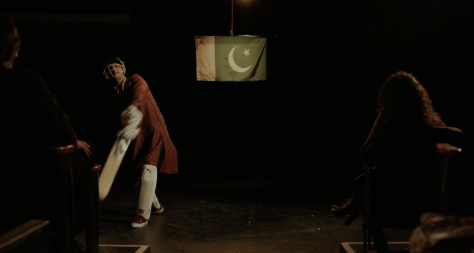
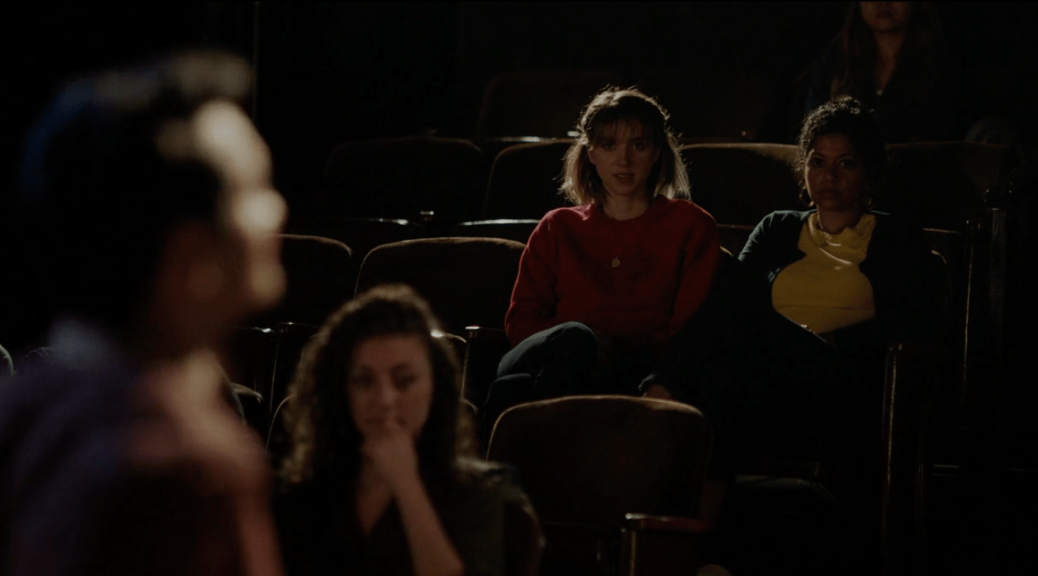
The Production Designer hired Vinita to provide her technical skills as a Graphic Artist and visualize an important scene in the film, when the lead character Kumail performs his one-man-show in front of his future wife, Emily and her friend for the first time. The Graphic Artist did a good job matching the location photographs and created relevant graphic imagery of the Playground Theatre set so that the Production Designer could utilize the imagery to show Producers how the scene would play out.

As a general rule, while working on productions as a Graphic Artist for Film and Television, Vinita’s first point of reference is the script.

She goes through the script and makes notes of all the relevant visual and imagery graphics that would be required of her to produce. After this, she goes about researching specifics. Vinita consults with the Production Designer and coordinates with the key visual departments including, the Props Department, Set Decoration Department, and Costume Department to see what other support they may require of her as the Graphic Artist. Once she consults with everyone, she begins the creative process. This is where her instinct as an Artist comes into play. She creates imagery relevant to the script, and most importantly, by designing an aesthetic that flows with the Creator/Producer’s vision.

“Although it’s always a new experience working with a new script, new design aesthetic, new design references etc., the design process itself is rather pragmatic and structural” according to Vinita. 

“Working on The Big Sick was a short and sweet experience. Knowing that I was going to be creating visual imagery for a scene that would be seen by so many talented members of the production who I actually grew up being a fan of and still to this day admire was pretty cool,” she said.

The Big Sick (2017) The Playground Theatre Graphic Art by Vinita Bakhale Property of Lionsgate
The Big Sick (2017)  “The Playground Theatre”  Property of Lionsgate

This July, Vinita’s latest work, Freaky Friday The Musical, will be premiering on the Disney Channel. Once again, the Graphic Artist puts her style and artistic touch on an endearing story by creating visual imagery for the protagonist, Ellie’s Bedroom.

“I’m drawn to vivid colors and on the contrast, muted tones and textures. As a Designer though, I’d have to say I am now quite versatile. It’s important to be flexible because no one production is the same. On a recent production I was responsible for researching children’s toys and blankets from a specific time period. On another production I was required to research turn-of-the-century telegrams and textural paper. It’s very important to be authentic with whatever you are creating. Film and Television productions are multi-million dollar ventures. With a lot invested, production companies expect to get the best and most authentic version of whatever they’re producing.  Although we aren’t supposed to be a moving picture museum of imagery and graphics that are all historically accurate, because that would be impossible, we strive to be at the very least in the ballpark of the impossible,” she concluded.

Actress Romy Weltman recalls first horror film ‘The Returned’

For Romy Weltman, being an actor means getting the opportunity to not just portray another person, but to become one. She embodies each of her characters with a sense of realism, a passion for the art, and a determination that is unrivaled. It is this dedication that makes her so successful and why she has won over the hearts of audiences all over Canada.

Working in both film and television, Weltman is an extremely in demand actress in her home country. She has starred in successful films such as The Red Maple Leaf and Strike! as well as popular television shows like Shadowhunters: The Mortal Instruments and the Disney Channel hit Backstage.

“When I worked with Romy on Backstage, her talent and natural ability to display true emotion was evident. We had two scenes in particular that were quite emotional and Romy was nothing but an absolute professional. She raised the stakes for everybody and set a very high bar. I felt like my acting and my overall work ethic was improved tenfold when working with Romy simply because of how professional and prepared she was. Romy continues to show how great of an actress she is in all of her other projects that she has done. She is without a doubt one of the strongest actresses that I know,” said Kolton Stewart, Actor (Some Assembly Required, The Swap).

Weltman’s first taste of international success came with her film The Returned. The horror flick takes place in a world where a deadly zombie virus has infected mankind, and a single cure has been found. The cure, a treatment called the “Return Protein” which stays the effects of the virus in its host. With injections every 36 hours, the “Returned” are able to live as though they were never bit, despite the virus still coursing through their veins. When it is discovered that the protein stock is running low, chaos hits the streets. Returned who run out of the protein turn to zombies and wreak havoc, protesters turn to murderers as they try to rid the streets of the returned, and right in the middle of it all are Alex and Kate. Kate, a leading doctor in the field of zombie virus’ and Alex, a musician with a dark secret, he is a Returned. As death and fear run rampant, Alex’s secret becomes known and his dosage runs low, he and Kate must fight for a chance to live before he becomes a zombie.

“The story of The Returned is very cool, as it gives people a completely thrilling look on life. The story was different to many others. For thriller and horror movie fans, I think this story is super up their alley and I can promise there will be scares,” said Weltman.

The film premiered in 2013 and made its way to several international film festivals. At the 2014 Nevermore Film Festival, it even won the Audience Award. Weltman’s work was pivotal for The Returned’s success, as she played the younger version of the main character Kate. Young Kate was a strong character who faces a very difficult challenge in her life when she witnesses her mother being attacked by zombies. Playing the younger version of a character is extremely essential to a story. It is important for the audience to see what the character had been through in their lifetime and why they are who they are. Kate, being the lead, had lots of layers to her story. Playing young Kate gave Weltman the opportunity to bring those layers to the table and show the audience who Kate really was as a child. Weltman was only twelve years of age at the time, but still captivated audiences while providing pivotal backstory required to understand the film.

“This project was so awesome. I had never worked on a horror film or movie set at all yet. At this point of my career, this role was a dream come true. I couldn’t wait to see all the action and how horror movies were really filmed,” said Weltman.

Of course, as Weltman did not have her own life experience to pull from when it came to seeing her character’s mother getting eaten by zombies, her creative juices were flowing to determine how best to portray the child’s horror in such an important scene. She managed to perfectly encapsulate such a difficult emotion, and throughout the filming process, Weltman made sure to take in and connect the thriller ideas to her own life. By doing so, it allowed her to truly get into the mind of her character.

“Even though I was just a kid when I worked on this, it really inspired me to keep working and it made me hungry to be on more sets. I can credit that experience to the success I’ve had since,” said Weltman.

Be sure to check out Weltman in Backstage on the Family Channel in Canada on Fridays at 6:30 p.m. EST.

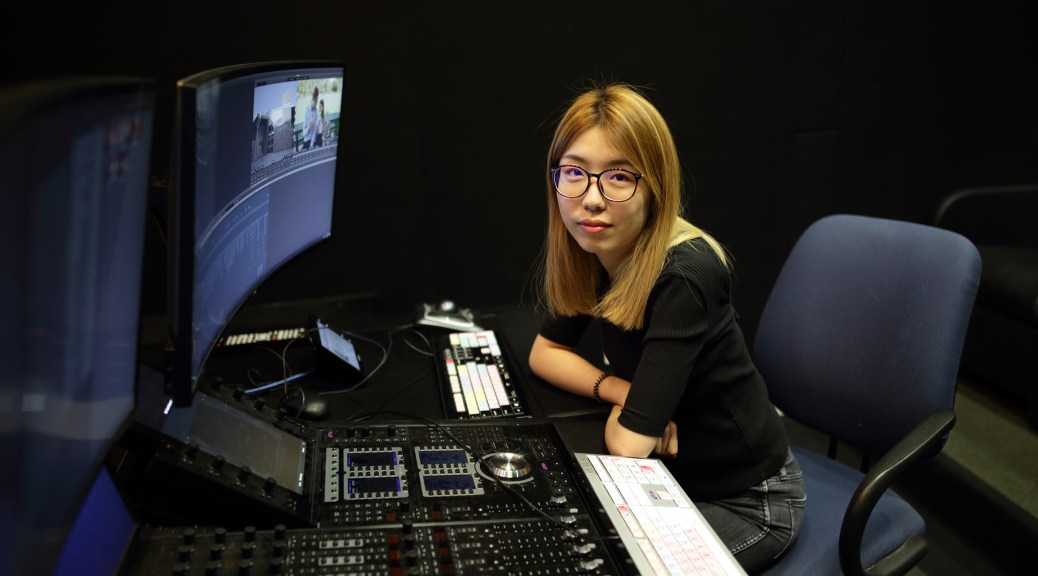
Go behind-the-scenes of ‘Pumpkin and Fried Noodle’ with Editor Meibei Liu

From the time Meibei Liu was a child, growing up in Shanghai, China, she loved watching movies. They would make her laugh, they would make her cry, and spending two hours enjoying a film became her favorite pastime. But being so young she would only take in the entire production, not appreciating the many roles scrolling past in the credits that it took to achieve the movie that just entertained her. However, this all changed when she was a teenager and decided to try making a movie of her own for fun. Despite enjoying films all her life, she knew nothing when it came to actually making one. It was a much harder process than she could have ever imagined, but she found herself constantly playing, pausing, rewinding, and cutting down parts of the film that she had made. She was a natural editor, and it was then when she fell in love with the art of editing. Now, years later, she has never looked back.

“Although the story was as naïve as it could be, the fun of making and editing the film just aroused my huge interest in filmmaking and also changed my life,” she said.

This past year, Liu has seen a lot of success worldwide. Her work on The Ballerina, The Shoemaker, and His Apprentice,Headshot, Dear Mamá, and Faith Need Not Change Her Gown have been celebrated at many international film festivals. Her first taste of such success, however, came back in 2013 when she worked on the documentary Pumpkin and Fried Noodle.

Pumpkin and Fried Noodleis a short documentary shot in Taiwan. It tells the stories of how two different families make their living as an outsider in a small village. Though tough, they still find their ways for inner peace and happiness. The film was selected for the Golden Sugarcane Film Festival, Taiwan’s first film festival where the filmmakers have to shoot and edit on site.

“I really liked that the documentary showed the culture of the village, and documented that beautiful, peaceful and friendly place, which was very different to the culture I was in growing up. It tells stories of outsiders in the villages and shows how they fight to live a better life and struggle to be part of the society over there. It’s also a story about women empowerment, telling how they managed to support the whole family without any help. Making a documentary about them was important because their way of living life and being in a difficult situation needed to be seen by others,” said Liu.

Because of the circumstances of the Golden Sugarcane Film Festival, only a pitch was submitted in hopes of qualifying as one of the ten slots. Once Liu and the rest of her team were selected, they were invited to Taiwan to make the film. During the week, Liu was with other filmmakers finding the subject to shoot and finding structure and stories. This allowed for faster editing, as she was able to spot what would work while filming. Then she finished each day with the editing. On top of this, she conducted interviews each day.

“Going there to make the documentary without knowing whether it will work or not; finding the story during shooting was like an adventure that needed a great sense of filmmaking, which I liked and wanted to be part of,” Liu recalled.

The film exemplifies how important editing is. Liu and the other nine filmmakers on the crew conducted several interviews with over ten different people, but in the editing room, Liu cut that down drastically, only showing two of the subjects that were interviewed. The film focused on their lives in detail, showing their philosophy of living rather than small aspects of many lives. Liu also made the decision of blending the two stories rather than showing one after the other, which helped lead to the warm and touching climax at the end.

“Meibei is very hard working. She edited our entire film within three days. She was very easy to work with, always there in the pre-production, making sure everything was right and very insightful about the story and production. In the post-production, she sacrificed her own personal time, which made the impossible schedule work in the end. Meibei is an editor who is very insightful and creative about creating story structure. She is amazing in terms of editing skills and at the same time, also very sensitive of capturing emotions of characters,” said Song Huang, Director.

Because of the competition, time was limited when making Pumpkin and Fried Noodle, requiring a fast, hardworking and passionate editor like Liu. On top of this, she was able to connect with the two women’s stories in a way that audiences can instantly see when watching the film, making it a true masterpiece.


Maria Venturini’s Style Reminds Viewers of the Creative Power of Cinema

Maria C. Venturini
Maria C. Venturini on set of “Waiting for Adams”

Throughout cinematic history, the most exalted and iconic filmmakers have been those who’ve had the vision and audacity to defy convention and blur the line between narrative and art. Italian director Maria Chiara Venturini is reminding audiences of cinema’s origin as an extension of the imagination.

Through her films, Venturini lovingly channels a nostalgic, avant-garde aesthetic that’s been absent from the silver screen for too long. Among her productions is the 2015 film “Ancien Régime,” an ode to the French New Wave and a thinly-veiled critique of vapid materialism. The film captured critics’ attention at festivals around the globe, and was chosen as the winner by judges at the Sprockets Film Festival in Toronto. At the heart of the sophisticated send-up is the iconic brand Chanel and its instantly recognizable style of highbrow black-and-white advertising.

“This was my first approach to black-and-white 16mm film. I liked the idea of creating something that would fit the look of the media itself — a dystopian world where a fashion dictator imposes his fashion rules on society seemed perfect,” Venturini described. “The film takes place in a classroom where the only word that people are allowed to say and teach is ‘Chanel,’ and the only solution for arithmetic problems is ‘N°5,’ like the perfume.”

To the untrained eye “Ancien Régime” is virtually indistinguishable from any of Chanel’s countless ad campaigns. Stark black-and-white cinematography, minimalist mise en scène and a strong focus on physical acting and borderline absurdism are defining characteristics of both “Ancien Régime” and the perfume giant it satirizes. To a great extent, however, Venturini’s affectionately ironic admonishment uses the iconic brand as a synecdochic catch-all for the kind of fanatical devotion many high-fashion brands elicit.

“We live in a society where sometimes we [confuse] real priorities with what’s [secondary]. Fashion… for some people comes before many more important issues. I wanted to pay homage to such a great brand, but also shake that part of the audience that behaves this way,” explained Venturini adding that, “with a smile you can make people understand the concept better too.”

Drawing inspiration from the surrealism of Salvador Dali and the eccentricity of Henry Selick, her 2015 film “The Laboratory of Dr. Enerd” offers a brilliantly dreamlike glimpse into the director’s mind.

“‘The Laboratory of Dr. Enerd’ is made with a stop-motion technique called pixelation that merges animation with human characters,” Venturini described. “I was exploring this new part of the world of animation but I still wanted to make a piece that will make the audience feel the same way I feel when I see other pixelation projects.”

Using the experimental new technology in combination with her years of experience in fine art photography, Venturini created a film which can only be described as simultaneously stop-motion and live-action. What may sound like a contradiction in terms is actually a mesmerizing, almost magical film about a young scientist and the outré experiments she conducts in her laboratory.

“Dr. Enerd is trying to follow her mother’s recipe to make something a little unusual,” explained Venturini. “Also bizarre are the ingredients and tools she decides to use in this preparation: unicorns, gummy bears, syringes and a stethoscope.”

The film is a meticulously calculated spectacle of imagination. From costuming and set design down to the finest details of every prop in the whimsical lab, every frame of “The Laboratory of Dr. Enerd” was crafted and vetted by Venturini with enormous care. That level of attention to color and design are perhaps what most distinguish the director as an artist first, filmmaker second. It’s also what earned the film the honor of being an official selection at the Citizen Jane Film Festival, as well as enabling it to reach audiences as far away as the Chinese festival circuit.

Venturini built on some of the stylistic eccentricities of “The Laboratory of Dr. Enerd” with her 2016 film “Waiting For Adams.” A much less vibrant film in comparison, “Waiting For Adams” instead takes on a more dreary aesthetic in its focus on a mysterious waiting room that seems disconnected from time and reality.

“‘Waiting for Adams’ is so far the most ethereal piece I’ve ever done. The whole project could be seen as just a dream,” she described. “People gave me lots of different interpretations of the story, and I felt like a psychiatrist that shows those inkblots to his patients.”

The film opens on a nun signing in at the reception desk of an indescript doctor’s office. As she takes a seat, keen-eyed cinephiles will recognize that she and the other waiting room patients are all characters from films that were nominated-but-snubbed at the Academy Awards.

“Only a movie geek could possibly know that all those characters are from movies that were nominated for an Oscar but lost. Thus, a desire for redemption brought them to consult one of the craziest plastic surgery doctors in order to change their look and have a second chance,” Venturini explained “Dr. Adams, inspired by Patch Adams, has no real surgery skills and ends up transforming everybody into monsters.”

One-by-one, a string of familiar characters enter the office of the insane Dr. Adams, and one-by-one they return as horrific beasts that would seem right at home in a Tim Burton movie. Meanwhile, the characters in the waiting room engage in awkward banter and show off their idiosyncrasies. The entire film is delightfully unusual and thoroughly original. Every detail is deliberately and painstakingly crafted to be like a dream — ethereal and open to interpretation. With “Waiting For Adams,” Venturini once again proved herself both a visionary director and artiste. Critics in Venturini’s native Italy rallied behind “Waiting For Adams,” choosing the film as an official selection at the Scrittura e Immagine Corto Film Festival.

More than a century ago, cinema began as an exciting new medium for artistic experimentation. Every few years since then, some brilliant mind will break through the mundane and familiar, uncovering for the first time some virgin territory in the limitless expanse of cinema’s artistic potential. In this generation of filmmakers, there are few figures as likely to follow in those revolutionary footsteps as Maria Venturini.


From Mermaids to Mental Health, Actress Brie Kristiansen Does it All in TV, Film, and New Media

Article Written By: Ashley Bower

It’s not always easy to keep up with an industry that is constantly evolving, but when it comes to navigating the busy world of entertainment, working actress Brie Kristiansen is a pro.

“It all started with a musical in Iceland when I was a teenager,” stated Kristiansen, and right from the start, she was propelled into learning how to adapt to the unpredictable curves that life – and the film and television industry – are known for. “The musical was Bugsy Malone and hundreds of people auditioned. In the end, I was cast in the leading role of “Dandy Dan,” which was changed into a female role since they thought I fit very well for the villainous character. Funny story, at the dress rehearsal I fell down and broke my leg and had to do all of the remaining shows in a wheelchair. It actually turned out great in the end, as the wheelchair seemed to add almost another level of authority for this villain.” Ever since this debut, Kristiansen’s career has skyrocketed.

While Kristiansen has numerous projects that span film, television, and new media under her belt, she’s most known for her work on It Takes a Killer, Delirium: What’s Your Worst Fear?, Corrupt Crimes, and her latest role as a series regular on season two of Life as Mermaid.

With over 25 million views and more than 155k subscribers, it’s safe to say that the hit YouTube Series Life as a Mermaid has a passionately committed following. The story follows two mermaid sisters and their journey on land as they work their way around obstacles while adjusting to life with the humans. Kristiansen plays Astrid, a ruthless European villain with an icy demeanor, whose mission is to hunt down the mermaids with the intention of selling them for billions.

life as a mermaid
Brie Kristiansen as “Astrid” in Life as a Mermaid

“From the start of when season two started airing, we received such fantastic reactions from people all over the world. We started getting asked for autographs and receiving fan mail which has all been an amazing experience. We truly have the best fans, and they are what made all the hard work worth it in the end,” Kristiansen reminisced.

Though Life as a Mermaid airs on YouTube, one of the entertainment industry’s newer media platforms to publish episodic content on, the production process was exactly the same as any other television show. The only difference: the website makes its content accessible to anyone anywhere in the world.

Starring opposite Kristiansen in the series is Marcella Di Pasquale, who is also credited as casting director and one of the producers of the show.

“Brie is the sweetest person, so it is so interesting to see her play such a brilliantly evil villain,” explained Di Pasquale. “To be able to switch into such a strong character within a matter of seconds just really goes to show Brie’s true talents and acting skills. She is also great at stage combat and I loved watching her film her fight scenes on the show. Brie is very charismatic and naturally talented, which makes her a great addition to any set, and us on the Life as a Mermaid team always love having her around.”

In addition to villainous roles, it’s apparent that Kristiansen has a gift for securing and excelling in roles that encompass very serious, emotional qualities, such as the roles she played in It Takes a Killer, Delirium: What’s Your Worst Fear?, and Corrupt Crimes. Elaborating on her love of playing and process of preparing for such kind of a role, Kristiansen explained, “I always think it’s really funny since I’m actually quite a goofy person, but I guess I look very serious. However, I love doing these roles, especially when there’s an added challenge or something I haven’t done before.” An example of such is Kristiansen’s work she did on Delirium: What’s Your Worst Fear?” where she plays the character of Ava, a teenager with schizophrenia.

Prior to being cast as Ava, Kristiansen wasn’t familiar with the mental disorder outside of what she had seen in other film and television shows. Therefore, it was a role that require extensive research – something which was already a very major component of Kristiansen’s character preparation process. “I try to get closer to my character’s mindset and who they are. I’m a total nerd when it comes to this and will dive into research for significant amounts of time until I feel that I have managed a full understanding of the character, and then I go into the next steps of my preparation,” Kristiansen said.  “With Ava, I did so much research, probably more than I’d ever done before. I thought it was vital for the authenticity of my character to absolutely dive into research. I went to libraries, read books, and even spoke to people with experience in the field.”

Currently, Delirium: What’s Your Worst Fear? is being screened at multiple film festivals around the world.

delirium.png
Brie Kristiansen as “Ava” in Delirium: What’s Your Worst Fear?

Coincidentally, on Kristiansen’s episode of Corrupt Crimes titled Vulture Feeder Fiend, the topic of schizophrenia arose yet again for the actress, though this time the character with the disorder was not her own. Taking place in California in the 1970’s, the storyline of the episode follows a schizophrenic serial killer named Herbert who murders a homeless man while in his altered state of mind. Kristiansen plays a hippie named Mary, who attempts to hitchhike her way to an event only to suffer a similar fate after she’s given a ride by Herbert himself.

Kristiansen not only loves the roles she’s been given the opportunity to play but is also passionate about the impact they make on her viewers, along with the awareness they bring to mental illness in film and television. “I’m a very open and honest person who comes from a very liberal society. The way I was raised is that if there’s a problem, you speak about it, and that you should never judge others for their feelings or behaviors because you don’t know what they’ve been through or are going through. Mental illness is a very serious issue, and the shame and stigma surrounding these issues need to stop. We need to be able to speak about our feelings, experiences, and illnesses openly in order to help or even fix them. There are so many tools one can learn from speaking to a professional, or by simply opening up to a friend. Love conquers all,” she said.

While some roles help to expand the knowledge and understanding of one’s mind, others do the same for the heart. This is the case for one of Kristiansen’s earlier television series: It Takes a Killer. “In my role as Charlotte, I played an emotionally unstable teenager who goes through a horrible tragedy,” Kristiansen discussed, revealing her journey of portraying the sixteen-year-old character left parentless after discovering her father murdered her mother.  “Charlotte is extremely vulnerable and has moments where she has emotional breakdowns. For me personally, this role was a great opportunity to showcase my talents with vulnerability and fully diving into the character. It was a great experience, and also helped me become more vulnerable and open as a person.”

There’s no question that Kristiansen’s vast experience and success as an actress has helped her grow not only as an artist within the film and television industry, but also as a person. There’s no doubt that this is something she’ll continue to do throughout her acting career in the years to come. Regarding this idea of both personal and career evolution, Kristiansen stated, “I’m incredibly lucky to be a working actress in different parts of the world, and on a variety of project types portraying completely diverse characters. Each time I take on a new role there’s something new I learn about people from the character I’m portraying. As a people person, this job will never become boring. The challenges, in drama, in comedy – all of it – just makes you really grow as an individual and you learn so much about yourself. I’m all about figuring out your dream and making it happen, and I find it to be one of the perks that I am able to grow both personally and professionally while living mine.”

17191018_10155909301804942_8971055201274809684_n
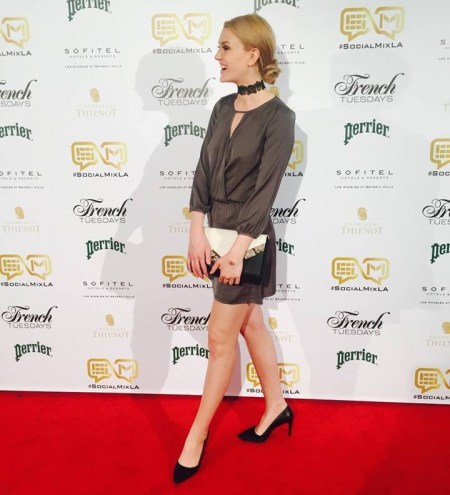
Brie Kristiansen walking the red carpet

For more information on Brie Kristiansen, please visit:

www.imdb.me/briekristiansen
https://www.briekristiansen.com/

Actor Ben Prendergast takes up boxing to play Australian icon Jo Sparro

Ben 2
Ben Prendergast

Ben Prendergast says his love of film is genetic. His mother’s side of the family constantly watched classic “talkies” on repeat, watched Sunday matinees, and had a general love for iconic starlets and stories. His father’s side still had that same love for movies, but there was a passion for science-fiction and action films, with regular trips to the video store. As a child, Prendergast was immersed in all aspects of film from a young age, loving Star Wars and Casablanca before even Mickey Mouse.

“In Australia, the notion of being in the movies is so foreign, but as I got older and started to build a profile it became evident that I could actually make a go of being involved in an industry that I’d loved for decades,” he said.

As an acclaimed film and television actor, Prendergast has many notable projects on his resume. He has worked alongside Hollywood’s best, including Ethan Hawke in the feature Predestination, and starred in award-winning films like The Marker and Post Apocalyptic Man. Australians everywhere recognize his voice and face from many national commercials, and his versatility is constantly evident, ranging from genres and mediums. With every character he embodies, he does not just portray them, he becomes them. This is perhaps most evident when he took on the role of the iconic boxer Jo Sparro in the celebrated film Punch Drunk.

“Punch Drunk deals with a very real issue in Australia: the marginalization of the elderly and mentally unwell. I loved that the main protagonist was a hero in his day, someone that was very much valued as part of society, but after an unfortunate event he’s literally left to rot in an institution until he fights his way out. I wanted to be a part of the project as it dealt with a sport I love and tackled a real issue within the heart of a fantastic story,” he said.

Punch Drunk is the story of the Mighty Joe Sparro, a champion boxer who is cut down in his prime. Years later, he is in a care facility that shuts down and he needs to fend for himself one last time. Prendergast played the younger Joe Sparro, depicting his early career, showing his courage and man-of-the-people charm, and illustrating for the audience what might have been.

“Jo Sparro was a post-war young man trying to make a living to support his wife and child, so in a lot of ways his natural gift for fighting made him a more loving partner. He loves his wife Millie to death, so when they are separated it is heartbreaking. For so long, he has been confused about where he is, but when the film starts we realize he is coming out of an extremely long coma,” Prendergast explained.

Punch Drunk was distributed to a number of festivals, including Telluride and the New York Short Film Festival where it played in Times Square to an estimated 50,000 people. From there it went to the St Kilda Film Festival, where it was nominated for best screenplay, Young at Heart Film Festival, where it won the Audience Award for Best Film, Adelaide Shorts Film Festival, where it took home the Audience Merit Award, Byron Bay Film Festival, winning Best Cinematography, and an Official Selection at Dungog Film Festival, Heart of Gold International Film Festival, Little Rock Film Festival Official Selection, and Woods Hold Film Festival. After its film festival run, Punch Drunk was distributed digitally and has since been viewed millions of times online. The Director, Sam Wark, believes Prendergast’s portrayal of the young Jo Sparro was pivotal to the film’s success.

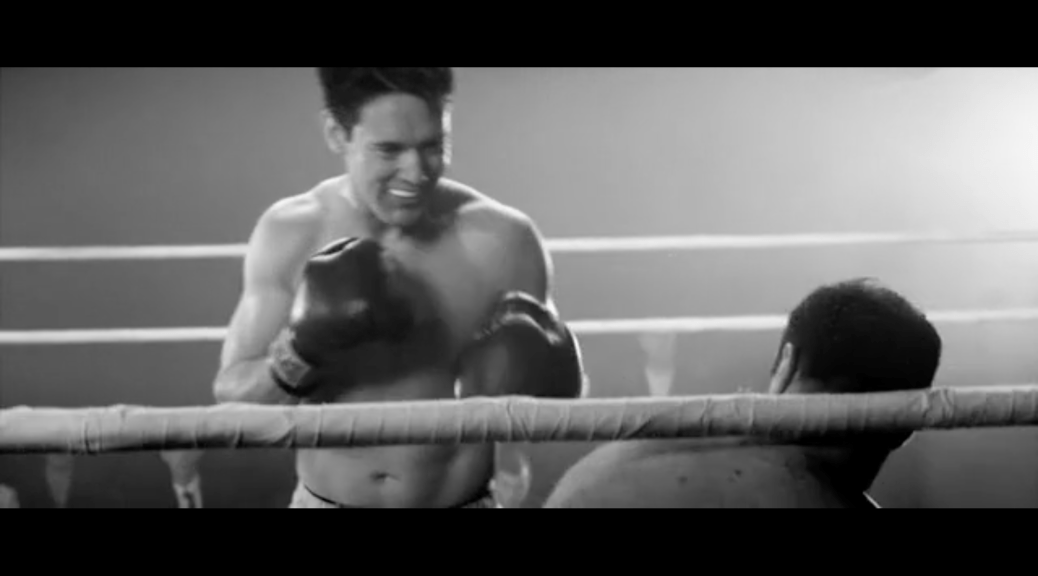
“Ben is a pro. He is so proactive in finding the way into his characters and has a limitless supply of positivity and fresh ideas. As a director looking to fulfill a vision and shape a story, it’s a joy to have someone who can bring me a hundred different bold choices on any one idea and then go further and further into the rabbit hole as the story unveils itself. He’s an actor’s actor, so he goes way beyond what you’d think an actor should do in order to prepare for a role, not only mentally and spiritually, but also physically. In the boxing scenes, he worked over the course of three months to not only become fit enough to perform the role, but also to perfectly imitate a 1950s’ boxer style, and then also the stunt falls required. The miraculous thing though is he’s able to do all of this while embodying a character and creating the empathy in the audience needed to touch people. Our audiences fell in love with that character,” said Wark.

Wark had the script for Punch Drunk in his drawer for seven years with no real plans on making it. He knew the script was a gem but didn’t know just how to turn such an important story into a film. That was until he sent the script to Prendergast, who was so passionate about the project, the director knew he had something there. Immediately, Prendergast was the only choice for the role of Jo.

“The film needed someone who could play a champion boxer without the arrogance or coldness that we see from boxers in the modern era. He needed to be a people’s champion, and completely likeable, even to his opponents. By doing this, the film could create the payoff needed to touch audiences and make them think about the mentally ill in a new and perhaps impactful way. That is what I kept in mind when preparing, and while filming,” Prendergast described.

When preparing for the film, Prendergast relentlessly trained for three months to not only get in the shape of a professional boxer, but to realistically fight in required scenes. He also took extensive stunt training in order to be ready to be hit and fall on command. In one boxing scene, he chose to fall a lot heavier than he had initially planned and ended up knocking himself out. The shot was so brilliant, it was used in the final cut of the film.

“I was introduced to the sport of boxing in a new way. I always loved to watch, but to participate and continue to practice to this day is something that the film gave me. I was also drawn into the world of past champions and the history of the sport,” said Prendergast.

Punch Drunk depicts an Australian sporting hero that never made it, someone who showed so much promise but was robbed of it, and audiences ultimately see him victorious after 60 years of solitude. Getting to be a part of such a story was truly one of the most satisfying parts of working on the film for Prendergast, beyond all the awards and accolades they later received. The best part for the actor, however, audiences may not have noticed.

“This ended up being a family affair. My Nana was featured as an extra in the film,” he said.

Check out Punch Drunk to see Prendergast’s outstanding performance.

Editor Xiaodan Yang refines artistic story in upcoming film “Summer Orange”

Xiaodan “Christy” Yang was a teenager when she realized she was meant to be a filmmaker. At the time, she and her friends at their high school in China were just having fun with a video camera. They were so excited and curious about the tool and would pretend to interview students during lunch breaks. Quickly, this transformed to casting classmates in small productions, and Yang was the leader.

“The most classic one was a Titanic parody where I picked two leading characters to play Jack and Rose from the “audition”. Then we shot the “I’m flying” scene. Their acting was so hilarious and the whole process was a lot of fun. I really enjoyed it and that’s the first time I started thinking that maybe I could be a real filmmaker someday. I wanted to bring larger audiences to tears of laughter and allow them to experience all sorts of emotions through my work,” said Yang.

Despite being in charge of her high school short films, Yang found her way to a more behind-the-scenes role in editing. Now, she is an award-winning editor and is recognized far beyond China for her talent. Through her work on dramatic films such as Kayla, Witness, Sixteen and It’s Not Just About a Film, Yang’s contributions as an editor shape these important stories into pieces of art, and all those who work with her know what an asset she is.

“I worked with Xiaodan on my film, Ashram, as well as a short film called The Review. I directed the films and she was my editor for both of them. To work with Xiaodan is to have a very smart, skilled and sensitive creative partner. She is very thoughtful about her editing decisions, and a very even-keeled and well-balanced guiding creative force for the project. She’s very competent and efficient, but also artistic and intuitive. She has strong communication and learning skills, which make us work efficiently,” said Matt Marlin, Writer and Director. “Xiaodan is a strong creative presence and also very flexible with working with different types of personalities. She often juggled multiple projects when working with me, and still made me feel like my project was at least an equal priority with the other things she was working on. She can roll with any notes I throw her way, and also push back when she believes in a creative decision strongly. She has a great intuition for how to best bring out the story from the footage provided.”

When working on the upcoming film Summer Orange, an artistic story, Yang knew it would be defined by the editing. When she first read the script, she was immediately captured by the characters and could feel the desolation they felt in every word. She instantly said yes to the project.

Summer Orange is about a filmmaker dealing with his real life and the film he’s shooting. As a filmmaker myself, I felt close to him. As I was editing the film, the film also affected me in many ways. I was thinking deeply while working on this one,” said Yang.

The film follows Da, a film student in Los Angeles. During the time shooting his thesis film, his old friend, Lu, comes to visit him. It has been a few years since the two have seen each other, and they both have changed. At the same time, the relationship between Da and Xintong, the leading actress of his film, becomes ambiguous. With so many things going on, Da feels confused about film and reality.

“This is a very personal story for the director. Some plots and details come from his actual life experience. If other films are considered novels, this one is more like a prose. The story is sincere, but also abstract. Although nothing dramatic happens, the tone of the story is attractive. Sometimes life is just overwhelming, and people can’t do anything about it. The best part of this story is the dynamic between the characters. That was also my emphasis during editing,” said Yang.

Summer Orange is directed by Chen Xu, who also wrote the film. He had previously worked with Yang on Witness and It’s Not Just About a Film and knew her extraordinary editing talents would help captivate audiences to his subtle story. As the editor, Yang understood the director’s intentions of this story precisely. When going through the footage, every decision Xu made while shooting made sense to her and she knew just how to approach the editing. She could transform and breakdown the script without disrupting the artistic conception. As it was a calm story, the director chose to shoot the film in an objective way, meaning most of the shots were long takes. When Yang was editing, she watched each shot over and over to make sure she was choosing to highlight the best performances from each actor. After doing this, she still made sure not to cut the long takes, therefore ensuring the dynamic between each character was as close as possible to how it was originally shot, refining every take. She also slowed down her pace while editing and instead of simply thinking about what would be useful, she cared more about what felt right for the atmosphere.

Undoubtedly, Summer Orange will be a tremendous film and showcase what a formidable editor Yang is. It will premiere this May at none other than the prestigious Cannes Film Festival Short Film Corner and will expectedly make its way to several more festivals in the coming year.

“I feel so excited about the Cannes Film Festival, since it’s one of the best film festivals in the world. I believe this is just a good beginning, and more and more will come,” Yang concluded.

China’s Xingpei Shen creates animation masterpiece with ‘Lotus Lantern’

shen_Xingpei
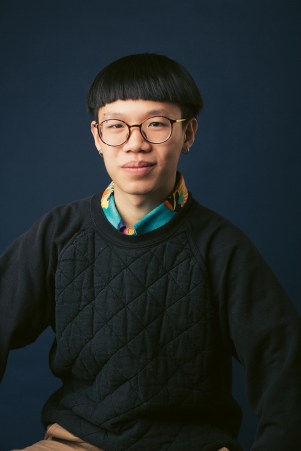
Xingpei Shen, photo by Rob Chron

Despite loving drawing since he was a child, it took Xingpei Shen much longer to discover he was meant to be in animation. He loved art, but in his late teenage years, he did not know how to turn that passion into a career. However, after attending a presentation from Chinese animator Lei Lei (Ray), he started to become intrigued by the idea of a career in animation. One of Lei Lei’s films, This Is Love, stuck with Shen. It was a candy-colored graphic animation paired with a silly yet sweet poem. It made everyone laugh and reminded him why he wanted to be an artist in the first place. Now, years later, he is an in-demand animator impressing worldwide audiences with his work.

Shen has had an expansive career as an animator, working on solo projects and group endeavors. His first independent film, Good Game, Bad Time, and Killer Sportsmanship, went on to international acclaim at several film festivals. This pattern continued with his work on the Huffington Post project What It Means to be Muslim in America, where Shen was one of only nine animators who were invited to make a short animation based on an audio anecdote provided on the topics of Muslim experience in America. He was also one of seven video artists featured in the traveling show Internet Yami-Ichi on December 9th, 2017at the renowned Tate Museum, where he has two animation pieces in the show.

“As a queer Chinese artist, I find my work often looks at overlooked boundaries of existences, the places of in-between, and the sweet vulnerabilities of outsiders,” said Shen.

This is exemplified by Shen’s latest film, Lotus Lantern. Lotus Lantern is a tribute to late Chinese singer Zhou Xuan, a missing link between filmmaker’s queer identity and Chinese heritage. Shen wrote, directed and animated the film entirely on his own. He had a vision in the very beginning that he wanted to make a lush and dreamy film that talks about his queerness and Chinese heritage, and he worked intensely hard to realize the goal.

“I think Lotus Lantern is important, because for one, it is a personal story about both queer experience and Chinese heritage. In the media nowadays, there is a tendency to homogenize queerness and overlook the intersectionality of different facets of identities. I believe Lotus Lantern is a genuine and vulnerable film that resists that tendency,” said Shen.

LotusLantern_Stills1
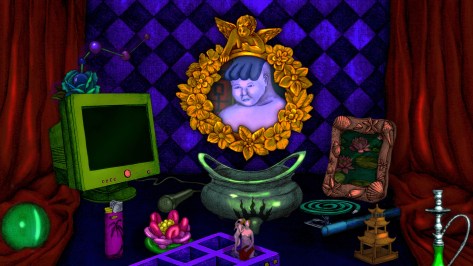
Still from Lotus Lantern

After months of work, Lotus Lantern premiered on July 30th, 2017 at BAMcinématek in Brooklyn for the 14th Animation Block Party. It then made its way to dozens more festivals and is still continuing its run with three upcoming festivals in the next few months. It was featured as Vimeo Staff Pick and Shen was also invited to talk about his process on Animation World Network.

“It feels surreal how far Lotus Lantern has gotten after I finished the film not long ago. I am still currently processing and trying not to go over my head with all the good news. I am very proud and happy, because this film is incredibly personal and vulnerable. It gives me a lot of encouragement to carry out future projects,” he said.

Shen had three main inspirations when creating the concept for his film. The first was to create a tribute for Zhou Xuan, whose music was a large part of Shen’s childhood. Growing up queer in China, Shen did not have many icons in the media that he could look up to or relate with, but he was always fascinated by the singer and related her to a goddess. When he looked back on these pivotal years, he realized his sentiments towards Zhou Xuan all tied into his understanding of his own queerness, ultimately shaping his life. He wanted to reflect that through his art.

Second, he took the visual style from his grandmother’s praying shrine. His grandmother has a shrine that she prays to daily. When Shen was a child, he was always fascinated by the strange aesthetic of all the artifacts where a gorgeous antique brass double ear incense bowl paired with a cheap oversized disposable lighter she bought at a drug store and crackling chants pour out from a lotus-shaped electronic Buddhist mantra box. The sensibility extruded from his grandmother’s shrine table inspired the campy aesthetic of this film.

LotusLantern_Stills3
Still from Lotus Lantern

“Wow, I am mightily impressed by Xingpei’s work on Lotus Lantern. It’s a steadily emerging style of film that I’m seeing more and more of and this one goes close to top of the class in that style. One of its strengths really struck me as being the very restrained and almost understated way he managed its pacing even as it poured in more and more and more visual elements – in lesser hands the temptation to wind up the tempo would have been succumbed to,” said Malcolm Turner, Animator and Director of the Melbourne International Film Festival.

Shen’s last source of inspiration for his film was his friend and former employer Suzan Pitt, an animator who created the 1979 short film Asparagus. A few years ago, Shen emailed the filmmaker and told her what an inspiration she had been to him. She responded and invited Shen for coffee at her home and a screening of Asparagus, where they had a long conversation about the art of animation. Throughout his entire time making Lotus Lantern, Shen kept the idea and style of Asparagus in his mind. He was haunted by the intricate psychedelic interior space of sexuality and desire in the film. He wanted to create something that was as complex and captivating.

“I really enjoyed Xingpei’s film Lotus Lantern. It seemed to be a deliberate homage to Suzan Pitt’s Asparagus, and it was really great to see an animation refer to another (great) animator’s work in a thoughtful and considerate way rather than just ripping off their style or film for effect. The deep underlying reference to Asparagus opens up ideas about identity, beauty and self, the state of reverie, but Xingpei takes them into new and compelling territory. We are made to think about the common ground of each film and the differences too. It was beautifully made and very thought provoking,” said Artist and Animator, Edwin Rostron.

LotusLantern_Stills7
Still from Lotus Lantern

One of the more outstanding aspects of Lotus Lantern is that Shen made the film with a combination of digital tools (3D software like Maya, and 2D software like Photoshop and AfterEffects) and traditional animation techniques (hand-drawn and rotoscope). It balances two different methods creatively to achieve a lush painterly quality, which is very unique in current animation. The use of these methods exemplifies why Shen is such a formidable animator.

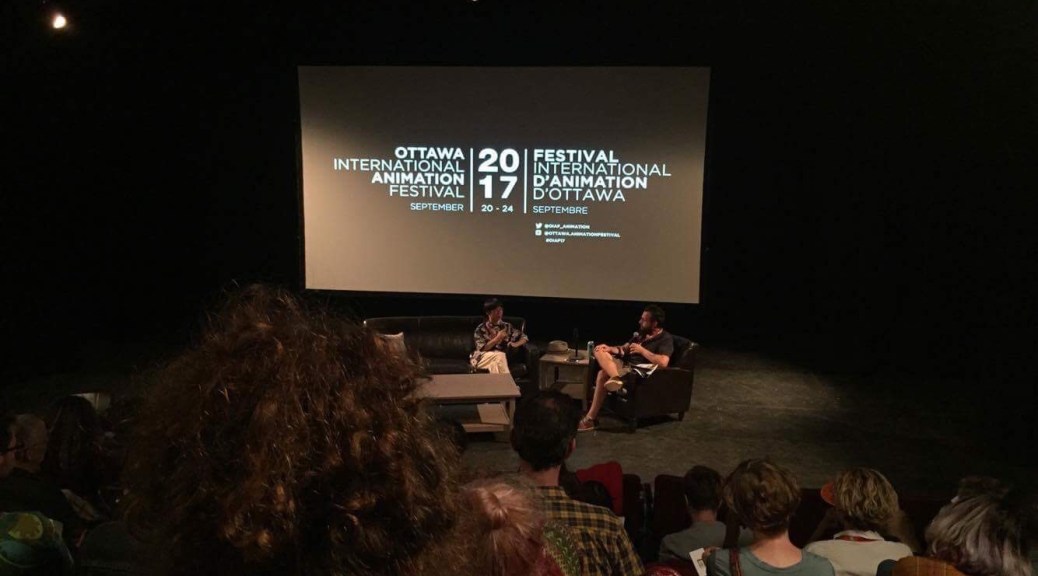
Despite all the critical acclaim and recognition Lotus Lantern has received, the greatest accolade came at the 41st Ottawa International Animation Festival last year. On the last day of the festival, Shen was sitting alone after his film’s second and final screening. A woman from South Africa approached him and told him that Lotus Lantern truly struck her, especially when Shen talked about the influences of women in his family to him as a queer artist. She put her hand on his chest and told him she was touched before tearing up. The women then left in a hurry before Shen could get her name or her story. He calls the experience the highlight of his career.

“It was an incredibly sweet moment. I have never gotten such a genuine and strong response for my work. It reminded me of the reason why I wanted to make films and tell stories in the first place,” he concluded.

Watch Shen’s moving work on Lotus Lantern here.

Actor Donald Heng’s Thoughtful Brand of Sci-Fi Storytelling

donald-heng-NEW


If you’re a fan of fantasy/horror, chances are good you know  Donald Heng’s work. The Vancouver-based actor has been seen in a wide variety of settings—comedies, drama, made for TV movies, weekly series, indie films—but in recently, Heng had settled into a shadowy niche in the unpredictable, spine-tingling world of the SyFy television network’s original thriller content. With guest appearances on several different SyFy shows and his recurring Ghost Wars role as the edgy Deputy Larry Foon, the talented, versatile Heng is making dramatic tension his calling card. Tinseltown News Now caught up with Heng between shoots to discuss this latest upshift in an already impressive career


Q: You have had some good professional fortune at SyFy — do you feel career momentum is building at the network?

A: Definitely. This whole business is not for the impatient that’s for sure. Someone once told me that acting is a marathon, not a sprint, and that has always stuck with me. There may often be little rhyme or reason in this industry, but if you’re in it long enough and are prepared and constantly working on your craft, momentum will occur.

Q: You have previously appeared in “The Flash,” and “Supernatural,” please discuss these experiences

A: It was a relief to finally get to work on “Supernatural.” That show has been [produced] in Vancouver for 12, going on 13-14 seasons. My entire circle of actor friends have been on it, so it was great to get any kind of part on the show. But my character got to interact with Jared and Jensen and that was incredibly fun. They were really nice and welcoming and the jokes and pranks are non-stop whenever they yell cut. “The Flash” was also incredibly exciting in its own right. I read the comics as a kid and so there was of course that part of me that was freaking about getting my ass saved by the Flash not once, not twice, but three times. Some of the stunts in that show were also the most fun I ever had on set. It was like riding a go-kart down an empty street and my fear was not hard to fake [laughs].

Donald-Heng-The Flash

Q: How did you come to meet “Ghost Wars” creator-writer-producer Simon Barry?

A: I may have met him earlier when I auditioned for “Continuum” but I can’t say that definitively. But I definitely did meet him for “Van Helsing,” and then again later for “Ghost Wars.” He is an incredibly humble, personable human being and, of all the producers I’ve worked with, definitely made the biggest effort of including and inviting the cast to collaborate in his projects. During the table read for the first episode, Simon told everyone that he wanted to build these characters with us and if there were certain lines that didn’t sit well with our characters, to bring it up to him and he would work with us to change it.

Q: Were you cast on “Continuum?”

A: No, I did audition for it a couple times but unfortunately that show ended its run before I had a chance to be in it.

Q: Discuss your experience on “Van Helsing”

A: When I got cast in “Van Helsing,” I was very excited to work with Michael Nankin, who has had a long tenure with SyFy. I had done a couple workshops with him while studying at the Actor’s Foundry, so it brought me a sense of validity to be able to work with him in that capacity.

Q; How did Mr. Barry come to select you for “Ghost Wars?”

A: That’s something you would have to ask him [laughs]. I’m sure the decision didn’t rest solely with Simon, but that is a very interesting question that I wonder about all the time. When I show up on set after every casting, I always have the urge to ask the director/producer ‘why was I selected?’ Truth be told, in this industry, the best actor often doesn’t get the job.

Q: How has it been working on “Ghost Wars?”

A: It was great, it was one of the most fulfilling experiences of my career. The cast and crew were great. We spent some time up in Squamish for the shoot and it was absolutely beautiful. We had dinner with Simon and David (the director) and they told us some of the funniest stories I’ve ever heard in my life regarding their experiences in the industry. I had always wanted to play a police officer so that was a huge checkmark off the bucket list.

Q: Your character is particularly nuanced for a horror/thriller, please discuss
A: My character, along with most of the characters in the fiction town of Port Moore, treats Roman Mercer [Avan Jogia] as an outcast. Roman’s mother was into witchcraft and the rumor goes that she has put a curse on this town. After a paranormal bus accident, my mother is among the dead and I blame Roman for the incident until his supernatural abilities are revealed.

Donald Heng-Ghost Wars

Q: How do you prepare a characterization like that?

A: I try to find the everything that is relate-able between my character and myself. Fortunately, Deputy Larry is a very human character, much like the rest of the other characters. When it’s boiled down, it needs to make sense behind the horror and the gore, this was a project that really tried to make sense of every nuance, character motivation and plot. So, as Deputy Larry, I had to find in me what it meant to lose the most important person in my life, and what I would want to do to the person who took that away from me. Apart from envisioning supernatural entities, there wasn’t a whole lot else I needed to work on besides those two dichotomies.

Q: The horror/fantasy genre offers limitless possibilities in plot and action, please discuss working in this style

A: Well, it’s always fun because it is, in a way, the epitome of acting. It’s the reason why kids grow up loving Superman and Batman and the Power Rangers—it brings you into a world of fantasy where you don’t need to be yourself, but it is also constantly evolving. A movie about Batman 20 years ago is considerably different than a movie about Batman today. I just watched “Black Panther” and that movie is so good because it successfully ties in so any historical themes and elements into the fantasy. That way, the films are marketed not only to kids who adore the superheroes, but also the teenagers and adults who just want a film that touches them.

Q: The “Ghost Wars” cast also features some other notable talents, please discuss.

A:  The best part about working on this show was definitely the cast. I didn’t see the cast list until a week after I had been cast the project and I was floored when I saw that Vincent D’Onofrio and Meatloaf were involved in it. It was also nostalgic for me to be able to work with Avan Jogia because he was in the first project I’d ever auditioned for (“The Gym Teacher”). I didn’t end up getting that one but it was still a nostalgic feeling to be able to work with him.  But D’Onofrio—man! I have a story. We were in the midst of a break while crew was turning over the cameras and Vincent and Jesse (Deputy Norm) are walking by me about to go outside for a smoke. Vincent turns to me and asks “do you want one?” as he’s pointing to his box of Cohiba cigars. I responded, “uh…uh..yeah… I’ll do some.” And Vincent goes, ‘Do some?, it’s a cigar, it’s not drugs.’ I laughed sheepishly and followed the up to the rooftop. The thing is, I never smoked a darn cigar in my life and I inhaled my first bit before being told I wasn’t supposed to do that. I didn’t care, I just couldn’t say no to being able to tell people I had a cigar with Vincent D’Onofrio!

Q: Does SyFy feel like home to you now?

A: I definitely feel comfortable with the science fiction genre. I know what to expect when I do work on it and it makes me all the more excited when I have the opportunity work on that type of show. Though like I mentioned before, all shows are constantly trying to find the best way to connect with their viewers and the core of all good shows are the same, they have to respond with a story that’s human at its core.